
The Colorado potato beetle, the potato's main enemy, originated alongside this magnificent fruit. Its appearance in Russia dates back to the late 17th century and is associated with Emperor Peter the Great. While the fight against it is ongoing, no gardener has succeeded in completely eliminating this insidious pest.
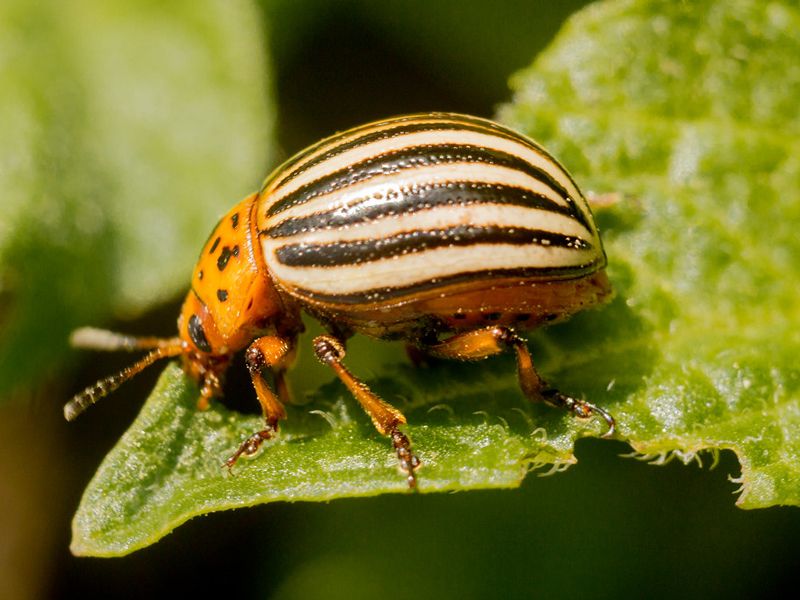
Colorado potato beetle: characteristics
The striped potato beetle quickly adapts to any means used against it. Ignoring them is absolutely essential; they are so voracious that they can destroy an entire crop, and they also reproduce and grow very quickly. A single female can lay up to 1,000 eggs in a single summer. Colorado potato beetles easily adapt to any conditions; burrowing into the ground, they survive even the harshest winters. If a year is lean and nightshades aren't planted, they hibernate, which can last up to three years. Therefore, anyone lucky enough to own a plot of land or a small house in the countryside is constantly faced with the question: how to get rid of the Colorado potato beetle?
The main methods of fighting the Colorado potato beetle:
- chemical;
- agrotechnical;
- folk;
- biological.

Classification of drugs against the Colorado potato beetle
Colorado potato beetle control products can be classified according to several parameters:
- By specialization:
- narrow, aimed at combating a specific species: adult, eggs or larvae;
- Broad-spectrum or universal. They are equally effective at all stages of the life cycle. They are more toxic than more targeted agents.
- By method of use:
- dressings for treating tubers;
- Sprays are applied to the leaves and stems of the plant.
- By method of action:
- Contact treatments. The advantage of these products is that they don't accumulate in the stems or the fruit itself, but remain on the surface and act directly on the beetles. This means they have no effect on the harvest and don't contaminate the potatoes with unnecessary chemicals. However, they are quickly washed away by watering or rain, so treatments must be repeated several times per season. The Colorado potato beetle adapts very quickly to these types of treatments, so a more modern product should be selected each season.
- Biological. Biological treatments are the safest and are designed to deprive beetles of their appetite and starve them to death. They are harmless to humans and can be used on early potato varieties. The main drawback is that treatment must be repeated several times. Three treatments, with a week between each, are usually sufficient.
- Systemic. These products are considered the most effective in controlling the Colorado potato beetle on potatoes. Some of them, such as Prestige and Shedevr, are designed to be applied to tubers before planting, allowing for a worry-free harvest throughout the season. However, this method cannot be used on early potato varieties due to their high toxicity. These products penetrate the stems and tubers of the plant, making them poisonous to the beetles.
- By active substance:
- Avermictins are safe for humans, but can be dangerous for bees or other insects; they are obtained naturally or industrially from streptomycete fungi;
- Pyrethrins – derived from Asteraceae plants; non-toxic to humans but hazardous to bees. Ineffective at temperatures above 25°C;
- Phosphorus - with regular use, they quickly lose their effectiveness due to the fact that beetles become accustomed to them; preparations of this class should be changed at least once a season;
- Neonicotinoids – used in systemic drugs.
Destroying the Colorado potato beetle with safe means
The use of chemicals in the fight against the Colorado potato beetle is undoubtedly effective, but not everyone decides to use them.
Harsh chemicals can be harmful to health and the environment. This is especially true given the popularity of organic products among those who lead a healthy lifestyle. However, when growing high-quality produce, the use of artificial additives in any form is highly undesirable. Potatoes, especially those treated in the tubers, despite all the safety certificates, cannot be considered 100% organic.
How can you protect your crop and get rid of Colorado potato beetles without chemicals? The most cost-effective and simple method is hand picking. However, despite its apparent simplicity, this method is also the most labor-intensive. It's impossible to collect all the pests in one day, not forgetting the larvae and eggs. This is especially true given that the Colorado potato beetle moves very quickly from place to place, is carried on clothing and animal fur, and reproduces very quickly. This method is suitable for those with a small plot of land dedicated to potatoes. Pay close attention to the leaves, as the young larvae and eggs are found on the underside of the leaves. After collecting the beetles, burn them.
If you have a large plot of land dedicated to potato growing, this method won't be very effective. The beetles will fly from place to place, laying new eggs, and the enormous effort will simply be wasted.
A popular folk remedy for protecting potatoes is to plant a plant between rows whose odor is extremely unpleasant to Colorado potato beetles. Dill is most often used. It's low-maintenance and requires little care, but the pests don't like such a presence. Onion peels, buried in holes or furrows, will repel Colorado potato beetles. The smell of rotting peels, while unpleasant to pests, is completely environmentally friendly and doesn't affect the quality of the potatoes.
Another non-chemical way to combat Colorado potato beetles is mulching. To do this, prepare a mulch—hay made from young, seedless weeds, straw, and leaves. It's laid out in the fall, before wintering. Fermentation occurs during the winter. The mulch should be about 30 cm high; after planting, maintain the required height by adding new materials. This method significantly reduces the number of Colorado potato beetles in the area and helps preserve the harvest. After harvesting, the hay can be left in place and plowed into the soil, providing a good organic fertilizer for the soil.
The second method is to lay a 5-7 cm layer of freshly cut grass or sawdust between the rows after the potatoes have sprouted. Coniferous sawdust works especially well.
Biological methods
Natural control is also possible, but control may be ineffective because the Colorado potato beetle has few natural enemies in the Russian climate. In its native Colorado, the population is kept in check by predatory bugs and mites. However, unlike its more resilient competitor, these species do not thrive in Russia due to the climate, so Colorado potato beetles thrive.
Ground beetles, lacewings and ladybugs may eat larvae and eggs, but they do not attack adults.
Turkeys and guinea fowl can be trained to hunt adult birds. This can be done by feeding them crushed Colorado beetles, starting at as early an age as possible. The birds also provide additional protection—their droppings can repel unwanted insects. However, this method has a drawback: the birds can damage the seedlings and significantly reduce the final harvest.
Agrotechnical methods
Proper soil cultivation can significantly reduce pest populations. Controlling the Colorado potato beetle with mechanical and agricultural methods is effective, yet labor-intensive, and cannot be accomplished overnight. It requires careful preparation. Each stage must be planned in advance.
- To prevent pests from surviving the winter, the soil should be dug to a depth of at least half a meter after harvesting. This will allow the soil to freeze deeper, which will affect the number of pests.
- After autumn digging, the soil should be generously sprinkled with ash.
- When planting in holes or furrows, a large amount of organic fertilizer should be added.
- Early hilling of potatoes will help get rid of most of the eggs.
- Don't neglect mulching. It's one of the most reliable ways to protect your garden.
- Avoid planting nightshade crops close together. It's best to plant tomatoes, eggplants, and potatoes as far apart as possible.
- Ideally, the planting location of crops susceptible to infestation should be rotated each year.
- Traps. Before planting season, but when daytime temperatures are above 10°C, scatter chopped tubers around the area where you plan to plant potatoes. Beetles, hungry after hibernation, will emerge from their hiding places in search of food, and they can be easily collected along with the unwanted potatoes.
Top.tomathouse.com recommends: folk remedies and methods for fighting the Colorado potato beetle
Here are a few recipes that will also help reduce the Colorado potato beetle population without using harsh chemicals:
- Vinegar and baking soda. To prepare the solution, you will need 100 ml of vinegar, 100 g of baking soda, and 10 liters of water. Mix immediately before spraying. This amount will cover approximately 200 square meters.
- Pour 10 liters of hot, but not boiling water over the onion and garlic tops, leave for 1 day, strain and apply to the beds.
- A glass of vegetable oil diluted in 10 liters of water will also effectively deal with uninvited guests.
- Dusting with bitumen or cement dust will protect the tops and make them unsuitable for feeding by the Colorado potato beetle.
- Infusions of wormwood, celandine, elecampane, and white acacia bark are deadly to insects. To prepare, pour boiling water over the plants in a 1:1 ratio, let steep for 24 hours, then dilute 1 liter of the infusion with 20 liters of room-temperature water and apply to the seedlings.
- Tobacco dust's scent will repel insects from your yard. To prepare it, grind the tobacco leaves as finely as possible. Both commercial and home-grown tobacco are suitable. The key is to make sure the leaves are dry enough to easily grind and spray them on your yard.
To enhance the effect, you can add a small bar of laundry soap to any mixture. For easier dissolution, you can grate it first.
Chemicals
The easiest way to permanently get rid of the Colorado potato beetle is chemically. Industry has advanced significantly, and numerous products have been developed that can help protect crops without harming the environment or human health, provided the instructions for use are strictly followed.
Any product must be used strictly according to the instructions. Otherwise, either the product will be ineffective, or the potatoes themselves will absorb the excess poison, making them unfit for consumption. When dealing with the Colorado potato beetle, precautions must be taken. Choose a dry, windless day to treat the potatoes.

It's advisable to choose a period when there's no rain expected to prevent the poison from washing off the stems immediately after spraying. The best time is early morning or evening, when it's not too hot, to avoid evaporation of the product. Watering is also not recommended for about 24 hours after spraying. When spraying potatoes, wear protective clothing and gloves to protect your skin. Eye protection should be provided, and a respirator should be worn. Avoid eating, smoking, or talking during spraying to avoid getting the product in your mouth. If the poison comes into contact with your skin, rinse immediately with plenty of running water. If the poison comes into contact with the mucous membranes of your nose, mouth, or eyes, rinse thoroughly with water and consult a doctor.
The most common products for controlling the Colorado potato beetle on potatoes include Aktara, Ivanhoe, Alatar, Bitoksibacillin, Batsikol, Dendrobacillin, Komandor, Musson, Tabu, Korado, and Killer.
Modern methods of destruction
Potato varieties that are not attractive to insects already exist. The Kamensky and Nikulinsky varieties are virtually immune to infestation; they have tough stems and tops that are unsuitable for larvae to consume. However, their flavor is significantly inferior to less resistant varieties.
Breeders and scientists are trying to develop genetically modified foods that won't attract parasites, but there's still too little information about the effects of these introduced genes on the human body. Public attitudes toward GMOs are largely negative precisely because of the lack of verified and reliable information about the consequences of consuming the latest revolutionary development.
For these reasons, the battle for the nightshade crop continues each season. To permanently eliminate potato pests, using just one method is not enough. A comprehensive approach over a long period of time, even years, is required. Perhaps one day a new, universal method for getting rid of insects will emerge, but for now, gardeners can only dream of such a thing, fighting the Colorado potato beetle with all available means.


I recommend Insector. I don't have a garden, even though I live in a house. But I really love hanging flowers in pots and small flowerbeds. It's quite frustrating when they're lost to pests, and it's also unpleasant to see aphids and gnats instead of a beautiful, thriving flower. I care for them myself and try to buy them before they bloom (although this isn't crucial for flowers). I treat them with Insector about every three weeks and have had no problems.