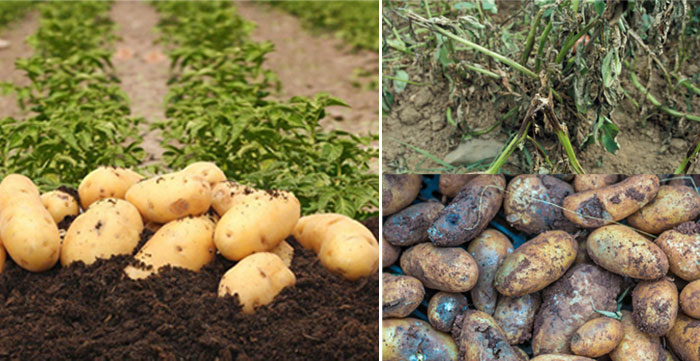
Potato diseases can develop for various reasons, including improper care and maintenance. In this case, simply correcting the problem is sufficient. Infections caused by pathogenic microorganisms are much more difficult to manage, and they require additional treatment. In both cases, potatoes must be treated immediately, otherwise the vegetable will die or the roots will lose their flavor.
Content
- 1 Causes of potato diseases
- 2 How to distinguish diseases from micronutrient deficiencies and errors in cultivation and care
- 3 Fungal diseases of potatoes: types, symptoms, causes, control measures, prevention, resistant varieties
- 4 Bacterial diseases of potatoes: photos, descriptions, treatment and prevention
- 5 Viral diseases of potatoes: characteristics, photos, prevention and treatment
- 6 General preventive measures against all potato diseases
- 7 Tips and recommendations from Top.tomathouse.com
Causes of potato diseases
Non-infectious potato diseases occur under stressful conditions. For example, during sudden temperature fluctuations, frosts, drought or high humidity, mineral deficiencies, etc. This disrupts the plant's physiological processes, affecting its development.
Potato top and tuber diseases can also be caused by pathogens: viruses, bacteria, and fungi (the latter include ergot, smut, tinder fungus, and others). The most favorable environment for their development is when the crop is under stress, as mentioned above.
Pathogens can be spread on the paws of pests (for example, Colorado potato beetles, wireworms, etc.), on the bodies of birds and animals, with water and undisinfected garden tools.
How to distinguish diseases from micronutrient deficiencies and errors in cultivation and care
Potato diseases and those caused by inadequate care are called physiological. They differ from infectious diseases in the following ways:
- no pathogen;
- almost all crops in the garden are affected;
- The pathological condition can be stopped or the plant can be cured completely if the factor that caused it is eliminated.
Please note! Physiological diseases typically affect all parts of the plant. However, despite this, the plant does not die; its leaves may only turn yellow and become deformed, and the buds may die. The bush will also lag in development.
Description of signs of nutrient deficiency:
| Name of the microelement | Symptoms | |
| In case of deficiency | In case of excess | |
| Nitrogen | The foliage has a faint yellowish tint. The bush is lagging behind in development. | Leaf burns, delayed or absent flowering. In this case, the bush may even die. |
| Calcium | The leaves at the top become pinkish and curl into tubes. | It doesn't show up at all. |
| Phosphorus | The leaf blades become smaller, lighter, and grow at an angle to the stem. | Symptoms appear rarely, in the form of chlorosis. |
| Bor | The growing point dies off, and lateral shoots develop abundantly. The internodes become short, giving the bush a squat appearance. | Drought conditions can cause delayed germination, slow development, and signs of chlorosis. With sufficient moisture, the crop recovers. |
| Potassium | At first, the foliage turns a dark emerald color, then bronze. Over time, it begins to wrinkle and curl downwards. | The greenery becomes smaller and darker. |
| Copper | The leaves at the tops are dying off. | The foliage turns dark emerald. |
| Manganese | Chlorosis appears between the veins on the foliage. Severe micronutrient deficiency can lead to necrotic spots. | Excess of microelements causes chlorosis along the perimeter of old foliage. |
| Zinc | The condition can be identified by necrotic spots on the underside of the leaves. Chlorosis is observed, spreading from the base to the tips of the leaves. | The greenery turns red and dies. |
In this article, we'll discuss the different types of potato top diseases and what to do to prevent crop failure. In general, it's important to know the signs of fungal, bacterial, and viral diseases. Following these instructions, treatment should begin immediately.
Fungal diseases of potatoes: types, symptoms, causes, control measures, prevention, resistant varieties
Fungal spores penetrate through mechanical damage. The mycelium grows, penetrates deeper, and absorbs plant juices. This disrupts metabolic processes. The plant stunts, produces a poor harvest, and the roots cannot be stored.
Late blight
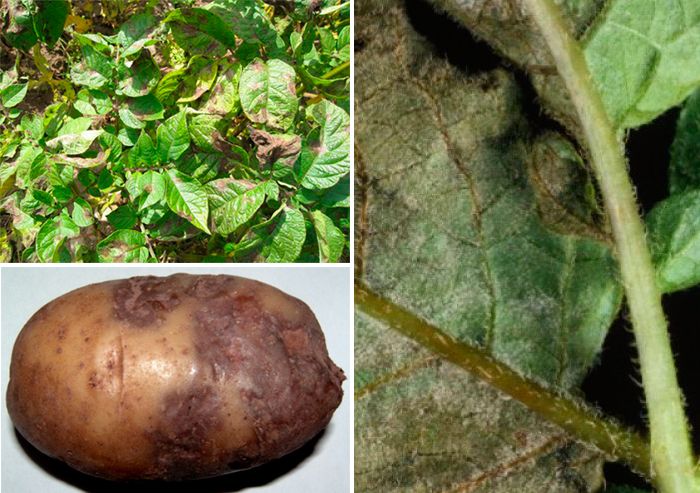
Signs appear at the beginning of flowering. Late blight appears as brown spots on the underside of the leaves. If the air is humid, a whitish coating separates the healthy and diseased areas. It looks as if flour has been sprinkled on the bushes.
In hot weather, the greens dry out and die, and in rainy weather, they begin to rot. Elongated brown spots appear on the stems. This is a dangerous disease, as the pathogen (late blight) persists on the seed and in the soil. This means that the potato sprouts are already infected when they are planted.
At the first signs of damage, it is necessary to treat the bushes with the following preparations: Maxim, Bravo, Oxyhom.
Potato varieties resistant to late blight: Rosara, Vesna, Lazar, Golubizna, Nevsky, Red Scarlett, Agatha and Udacha.
Alternaria (dry spot)
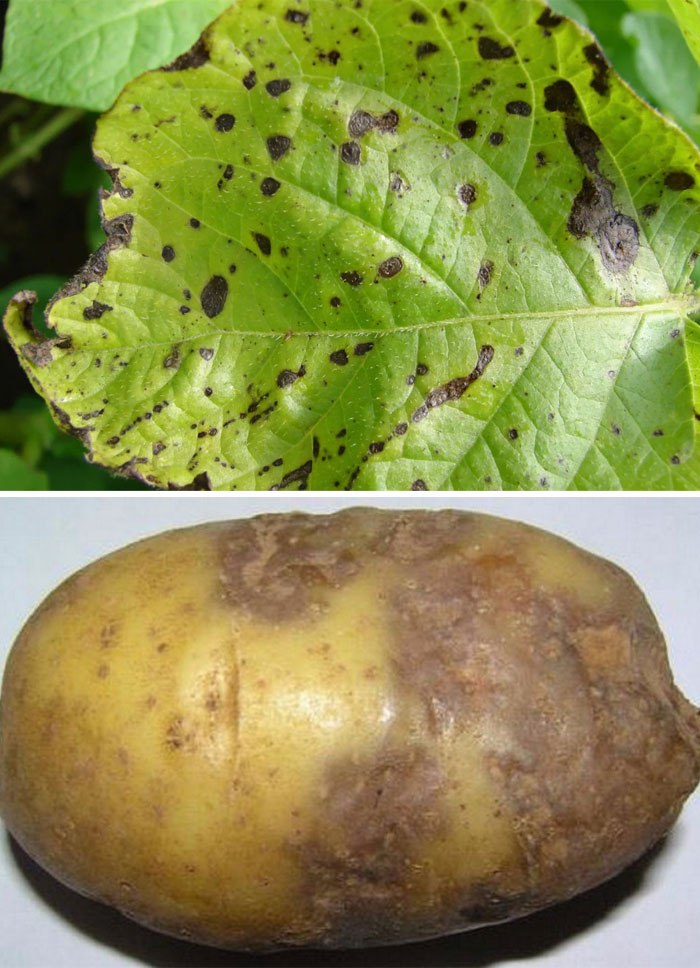
It develops during the growing season, when budding begins.
Alternaria leaf spot is a sign of brown or black spots on the lower leaves. Over time, these spots begin to merge together. It appears as if the entire foliage is dark. The foliage dries out and dies.
The most favorable conditions for infection development are hot weather with frequent rainfall and heavy morning dew. Nitrogen deficiency also contributes to the disease.
Control measures:
- When symptoms appear, it is necessary to treat the infected bushes with a 1% Bordeaux mixture daily, 4 times a day, for a week.
- You can use copper oxychloride and treat it daily for a week, but twice a day is enough.
- Treatment with the fungicide Arcerid.
Prevention: fertilizing with phosphorus and potassium fertilizers.
Resistant varieties: Adretta, Rosinka, Lazurit, Bronnitsky and Lyubava.
Fusarium wilt (Fusarium)
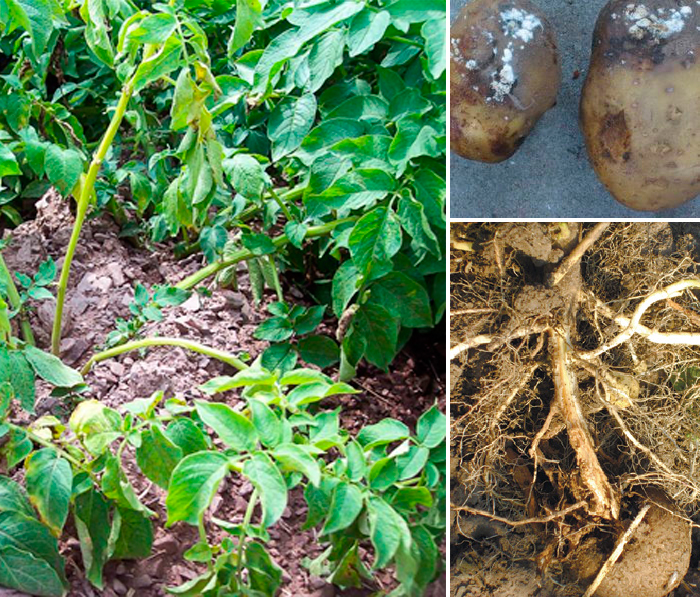
Crops are most often affected in the southern and southeastern regions of our country. Symptoms typically appear during the growing season during flowering.
This fungus causes the greenery at the top of the seedlings to lighten. The lower part of the seedlings turns brown, developing a pinkish coating. Over time, this area dies. The tops turn yellow and dry out. This happens in just a few days.
For reference! In scientific papers and articles, you may encounter another name for this disease: fusarium.
Varieties resistant to fusarium: Udacha, Riviera, Timo, Karatop,
Verticillium wilt
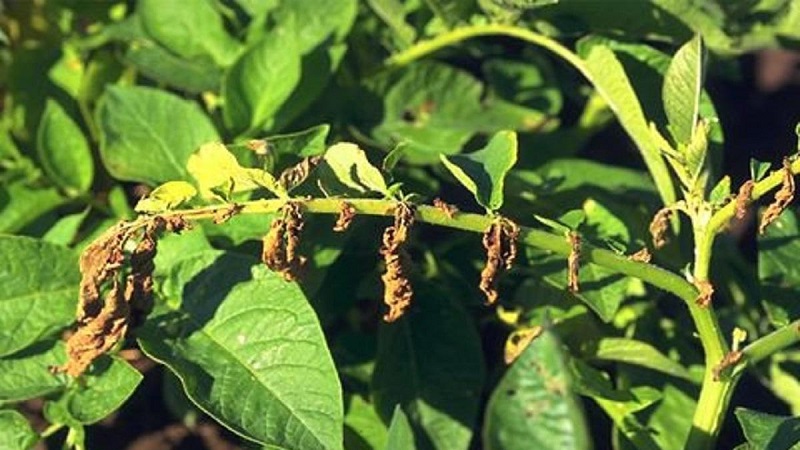
The main symptom is a golden yellow tint along the leaf edges. Over time, light brown spots with a lemon-colored border appear across the entire leaf surface. In high humidity, the stem and lower leaves become covered with an ashy coating.
Affected bushes should be removed and burned. Treat the soil with a fungicide, and healthy bushes with Fitosporin.
Black scab or rhizoctonia
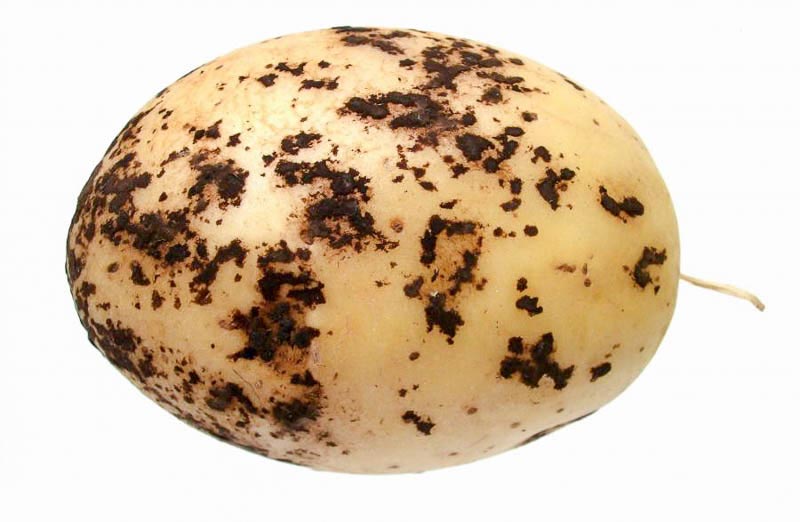
This disease is especially dangerous in cold regions with long springs. Scab attacks the stem, causing plant rot, which ultimately leads to crop failure.
If the seedlings were infected with rhizoctonia before planting, the seedlings will be covered in brown spots and die before they can grow. If some areas are unaffected, they will inevitably rot during flowering and become covered with a felty coating. This condition is known as "white leg."
Infected bushes should be treated with Ditan M-46.
The Lazurit and Skarb varieties are resistant to this disease.
Phoma (black spot)
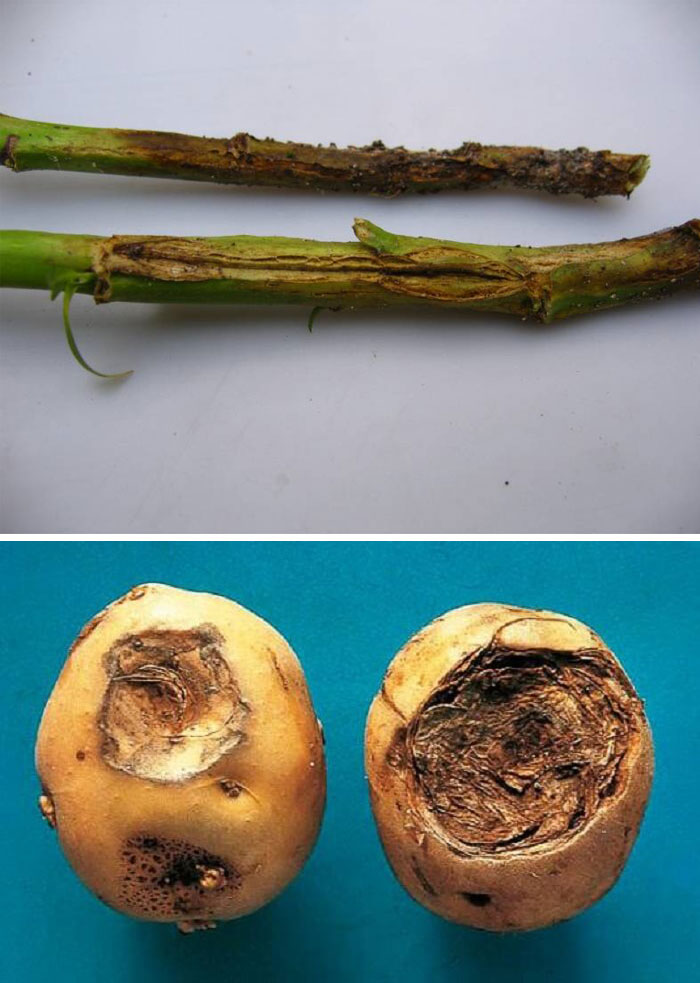
Typically appears in midsummer. The internal structures of the plant are affected. Dark spots appear on the shoots, which lighten over time. Dry rot develops on the fruit, preventing them from storing until spring.
To prevent disease, planting material should be disinfected with a solution of Maxim or Fundazol. Already infected bushes cannot be treated.
Macrospariasis or patchy dryness
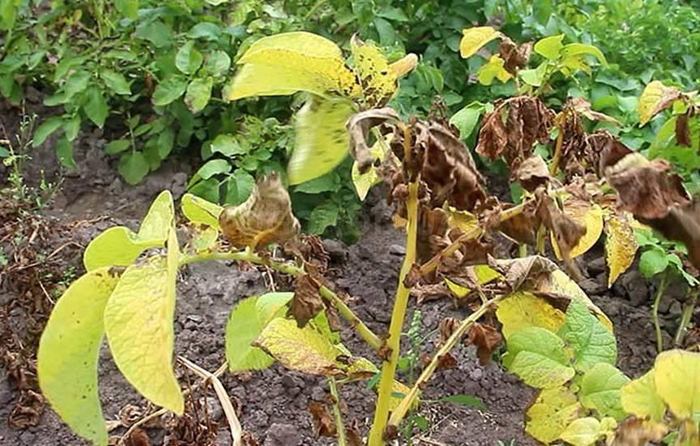
The causative agent is Macrosporium solani Ellis et Martin. The infection is caused by mechanical damage to the tubers during harvesting. Additionally, pathogens can be transmitted through the tops of the tubers and affect the roots and stems.
At the very initial stage, the following symptoms are observed:
- gray or brown spots up to 15 mm in size;
- slight dark coating;
- clear outlines of the lesion boundaries;
- drying of greens.
At a later stage:
- roundish inclusions along the perimeter of the plates;
- velvety brown spots with an olive tint;
- twisting of leaf blades into a tube.
Signs of stem damage:
- oblong spots on shoots;
- merging them together as the disease progresses;
- stem ringing with spots;
- dying off of shoots.
If tubers are affected:
- grey and brown spots on root crops, similar to rust;
plaque; - hardening of the affected area.
Helpful information! By closely monitoring the crop at all stages of growth, you can detect the disease early and take action. To prevent spotting, it's important to carry out pre-planting treatment and allow potatoes to germinate for a month.
Dry rot
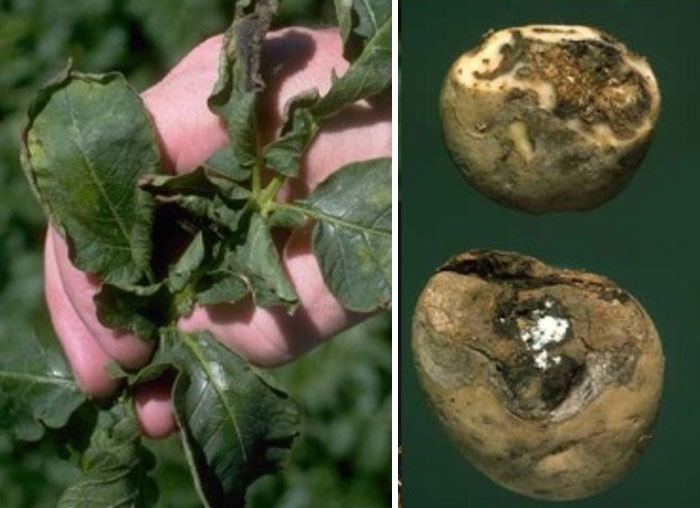
This disease affects tubers. Its peculiarity is that after infection, it takes 7-8 years for the soil to recover. This means that only after this period can the plot be planted.
Symptoms as the disease progresses:
- the appearance of dry spots on tubers;
- development of mycelium underneath them;
- drying out of the pulp of root vegetables;
- crop damage.
Please note! This disease is very dangerous and cannot be cured. Therefore, preventative measures should be used to protect potatoes.
Potato cancer
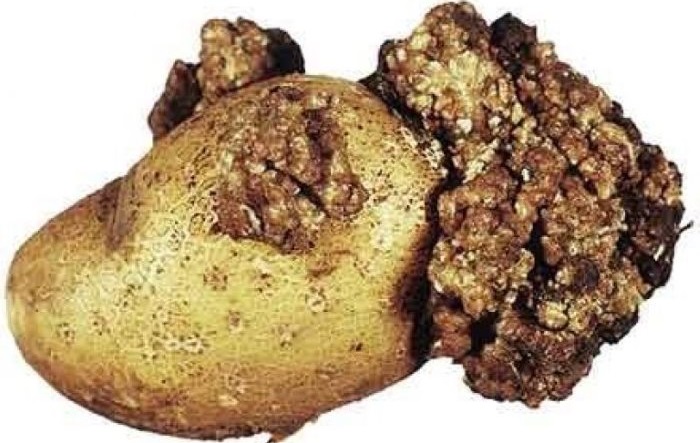
The disease is caused by the fungus Synchytrium endobioticum (Schilb.) Perc. This pathogen does not tolerate heat and cold well, so it is rarely found in northern and southern regions.
You can distinguish diseased potatoes from healthy ones by the so-called "eyes." These are wart-like bumps on the tubers. Initially whitish, they then grow larger and turn brown. Bumps can also appear on the above-ground parts, but they are greenish in color. This makes the crop unfit for consumption.
General methods of treatment and prevention of fungal infections
If the damage is not severe, biological agents can help against fungal infections:
- Baktofit;
- Gibbersib;
- Fitosporin;
- Acrobat MC.
Please note! Biological preparations are used 2-3 times with an interval of 1-1.5 weeks.
Also, in the early stages and as preventative measures, folk remedies can help:
- carry out pre-sowing treatment of tubers with copper sulfate (2 g per 10 l) or potassium permanganate (10 g per 10 l);
- Spray the tops during the growing season with 100 g of copper sulfate or soda ash diluted in 10 liters of water.
If the disease is advanced, you will have to fight it with chemical fungicides:
- Thanos;
- Mancozeb;
- Novosir;
- Profit.
During the entire growing season, the tops should be sprayed several times with a 0.2-0.3% solution.
Bacterial diseases of potatoes: photos, descriptions, treatment and prevention
Infection can occur from soil, from nightshade weeds, or through infected tubers.
Ring rot
Potato plants begin to wilt from the top down. This occurs more quickly in hot weather, while moderate temperatures and high humidity slow the spread of the infection.
Preventive measures: disinfection of the soil and the use of varieties resistant to this disease: Lazurit, Rosinka, Skarb.
Brown rot (bacterial wilt)
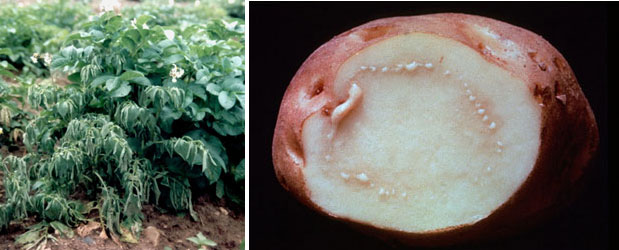
The infection can be identified by the following signs:
- sudden wilting;
- yellowing and wrinkling of leaves;
- root zone rotting;
- putrid odor when pressing on the fruit;
- brown mucous discharge when making a transverse incision.
The causative agent is Ralstonia solanacearum (Smith) Yabuuchi et al. The bacteria enter through mechanical damage to tubers, stomata, stolons, and roots.
Infection control measures:
- treatment of planting material with fungicide;
- regular weeding;
- spraying with Baktofit before flowering;
- drying potatoes before storing them;
- Disinfection of the fruit storage area.
Blackleg
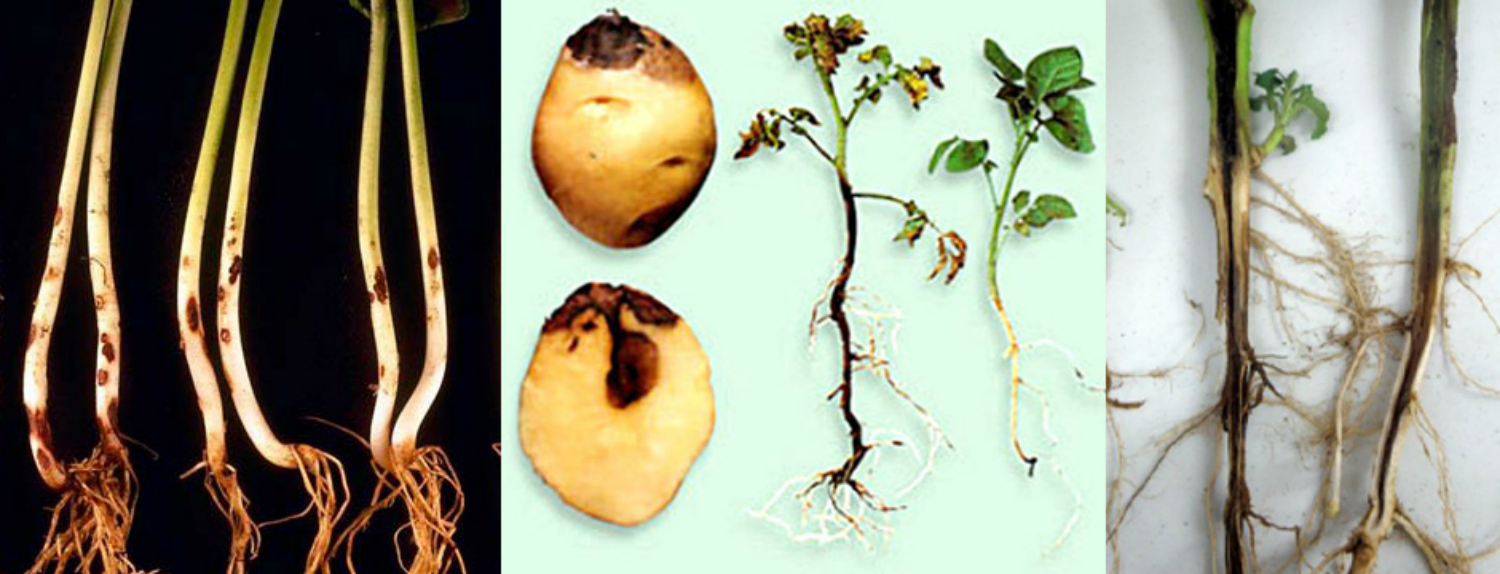
It starts with the lower leaves, which turn yellow. The upper leaves are angled and turn yellowish a little later. The shoots rot, become soft, and break easily at the ground.
Mixed internal rot
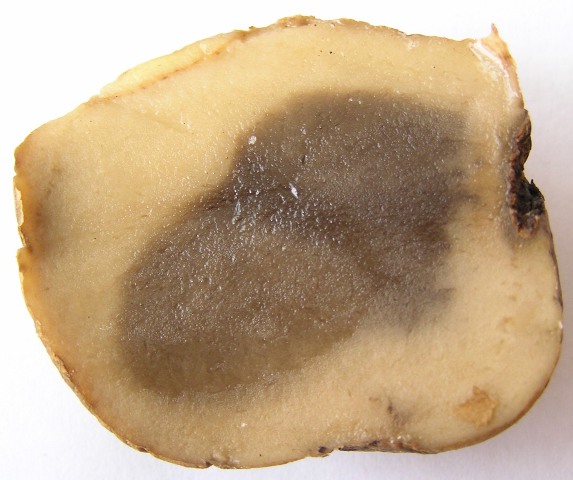
With this disease, tubers completely rot and crack. The infection typically develops during storage. A distinctive feature of this disease is that tubers are susceptible to two types of pathogens: bacteria and viruses. These enter the tubers through surface damage.
Methods of treatment and prevention of bacterial infections
Affected crops should be destroyed immediately to prevent the infection from spreading to other plants. It's also important to promptly mow down the tops and remove them from the area.
Folk remedies for the prevention of biological contamination
Recipe for preparing an effective folk remedy:
- Infuse 1 kg of dry bird droppings in a small amount of water for a couple of days.
- Boil 1 kg of dried wormwood in a small amount of water for 10-15 minutes.
- Add 1 liter of bird droppings infusion to the grass.
- Strain and add 10 liters of water.
- Add 10 g of laundry soap shavings to the solution.
- Treat potatoes with this fertilizer from the moment of budding 2-3 times with an interval of a couple of weeks.
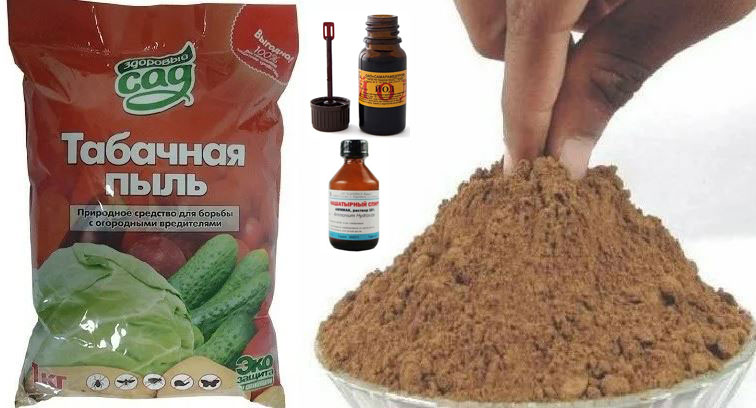
Helpful information! To prevent disease, you can also spray with tobacco decoction, iodine solution, or ammonia.
Chemical agents for combating biological infections
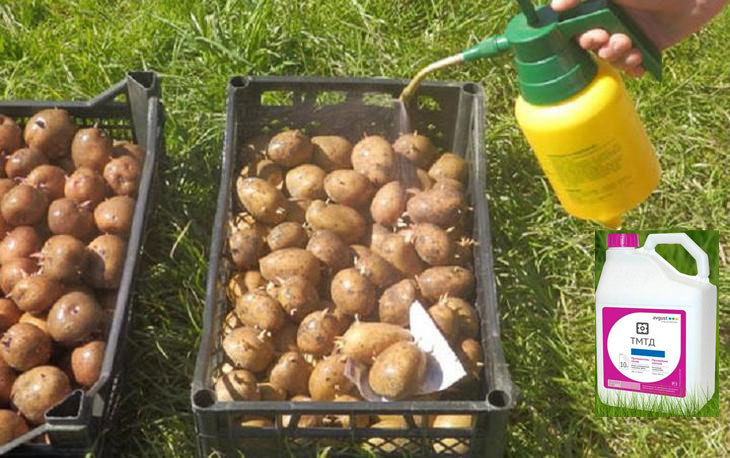
Before planting, treat the tubers with TMTD (2.1-2.5 l/t). After harvesting, before storing, treat with Maxim. Dilute 5 ml of the chemical in 50 ml of water and spray the potatoes.
You can also use the biological fungicide Planriz. For every 100 kg of crop, you'll need 1 liter of a 1% solution.
Viral diseases of potatoes: characteristics, photos, prevention and treatment
These diseases are incurable. Moreover, the infection is transmitted to the next generation of tubers. It spreads on insect legs, nematodes, fungi, unsterile gardening tools, and through contact between stems and leaves and diseased plants.
Speckled mosaic
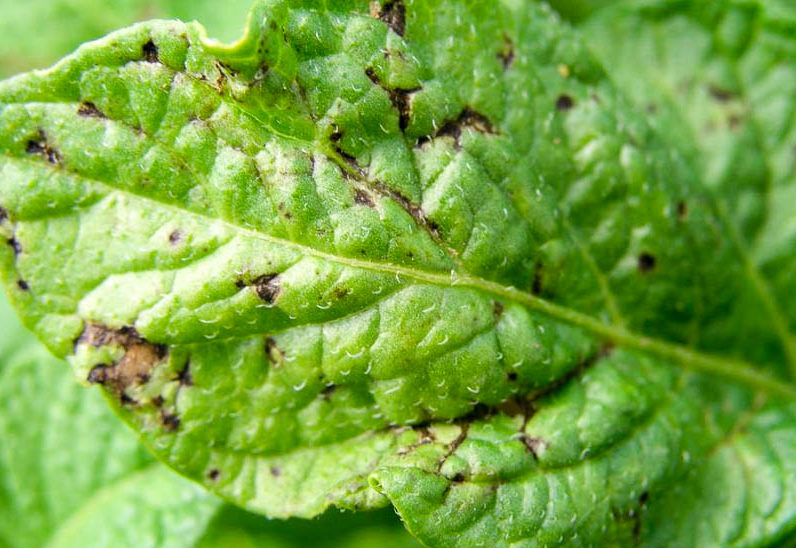
Mosaic disease causes a decline in photosynthesis. This causes light spots of varying shapes and sizes to appear on the foliage. Aboveground growth slows, and the leaves turn yellow and fall off.
Striped mosaic
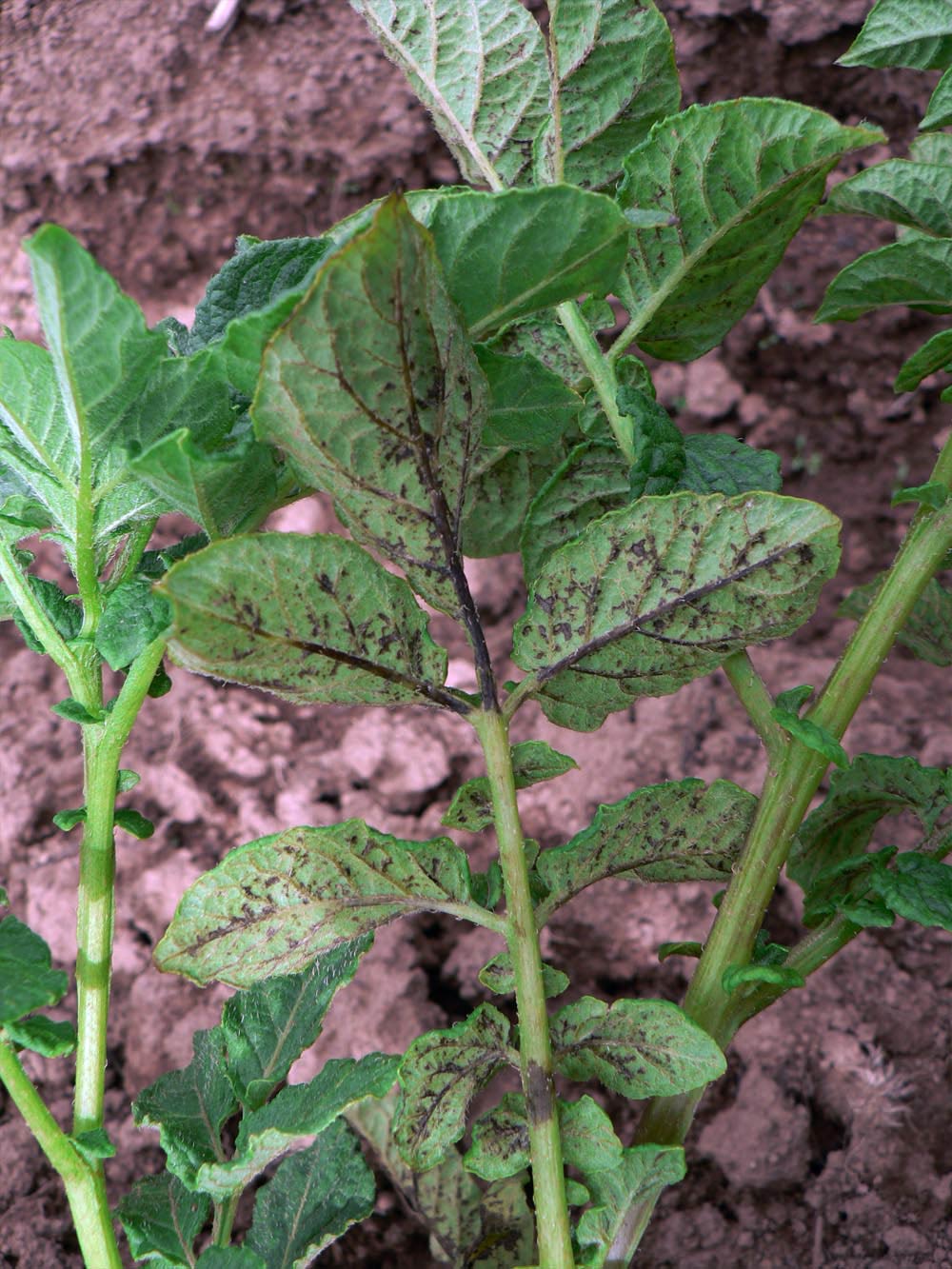
Necrotic streaks, spots, and mosaic-like patterns appear on the foliage. Brown streaks and stains appear on the undersides of the leaves. Veins become waterlogged, and the foliage dies. The damage first affects the lower parts, gradually spreading toward the tops. By the end of the growing season, the leaves fall off.
Wrinkled mosaic
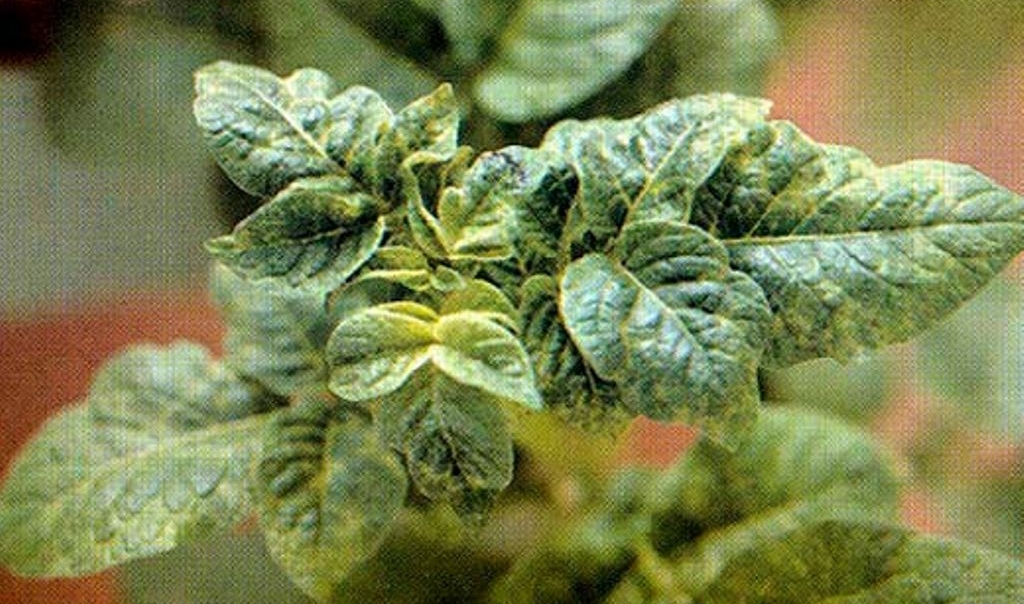
This disease destroys approximately 30% of the crop. The foliage fades, the edges become deformed and curled. The leaves die and hang on the shoots without falling.
Infection usually manifests itself during hot weather in the middle of the growing season. The plant fails to flower, stopping development 2-3 weeks earlier.
Gothic Tubers
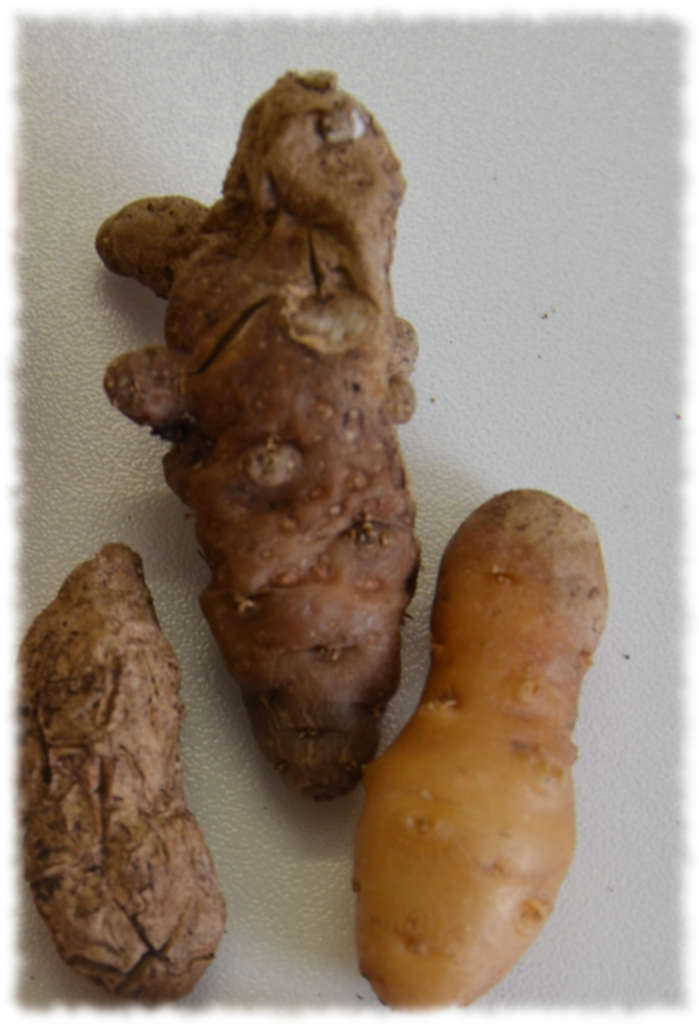
Pathogenic microorganisms penetrate the plant at the slightest contact. The pathogen can survive in dry soil for about two months, and in dried plant foliage for up to two years, so vegetation must be removed from the area promptly.
Signs of the virus:
- a large number of eyes located in the pits on the tubers;
- oblongness of root crops;
- reduction of foliage;
- bumpy surface of potatoes;
- cracks and spots on the skin;
- leaf growth at a right angle.
Important! Infection can occur at any stage of potato development.
Tuber necrosis
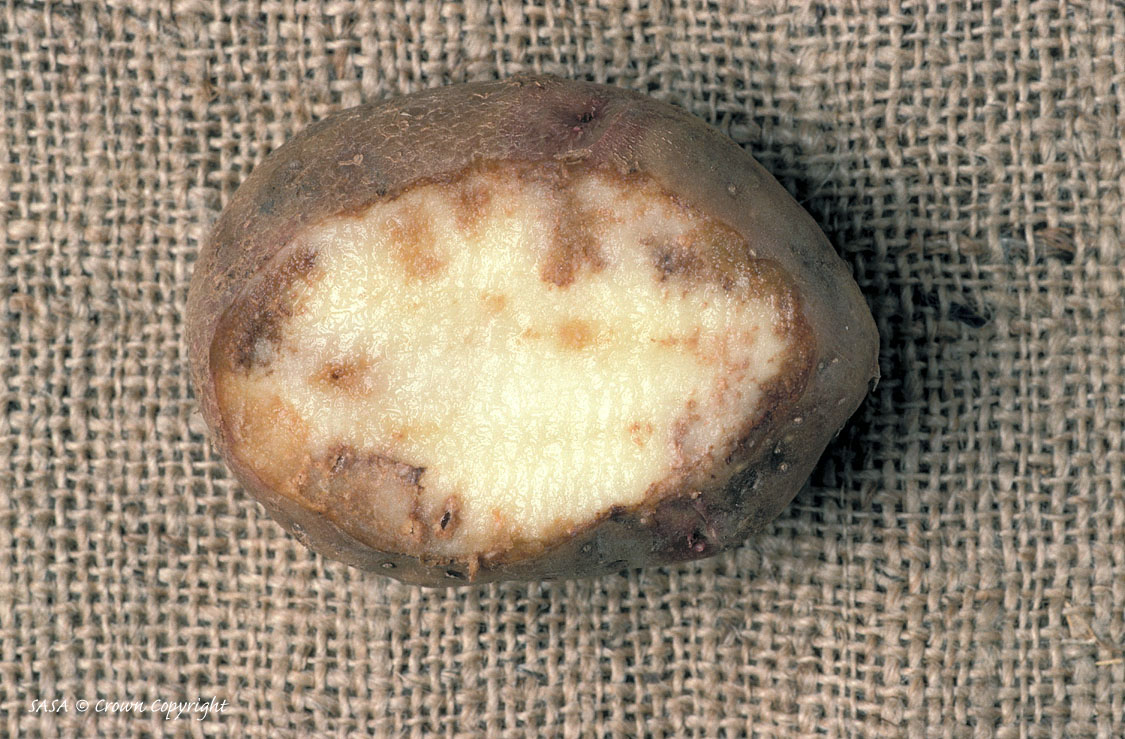
If you cut the root vegetables, you can see:
- dark arc-shaped stripes;
- rings;
- necrotic inclusions with rot;
- rottenness of the frame;
- cream-colored mucus in spots.
It is difficult to detect this infection, since there are no external signs on the tops.
Reticulated necrosis of tubers
This disease causes leaf curling, reducing yield by 50%. The leaf blades at the base of the bush curl along the midrib and become stiff and rustling. Drought and lack of moisture contribute to the disease.
Fight against viral diseases
As stated earlier, it is not possible to cure viral diseases.
The only way out is preventative treatment with drugs:
- Agate 25 K;
- Biosil;
- Fitosporin-M;
- Gumi-20M.
Soak the tubers in fungicides for 60 minutes. This will develop resistance to viruses.
General preventive measures against all potato diseases
To prevent the development of any type of disease, it is essential to practice crop rotation. Potatoes should not be planted in the same location for at least three years. The best predecessors are legumes, grains (including wheat), and melons.
Before storing or planting, tubers should be heated at a temperature of 14 to 18°C for 2-3 weeks. This is necessary to discard diseased potatoes and use only healthy ones.
Please note: Early-ripening varieties are more susceptible to disease.
Pest control is essential, as they carry pathogens. Periodically, clear the area of tops and plant debris. Potato plants that grew from tubers left in the ground over the winter will need to be destroyed.
Tips and recommendations from Top.tomathouse.com
In conclusion, I would like to provide a couple of useful recommendations from experienced gardeners:
Potatoes should be inspected daily to detect infection early. If signs of ring rot are detected, it is recommended to remove the plant and add 1 liter of copper sulfate (100 g per 10 liters) to the hole.
Copper sulfate or copper oxychloride (1 tablespoon per 10 liters of water, 0.5 liters per square meter) also helps against fungus. After a few days, spray with Bordeaux mixture (0.5 liters per square meter). This treatment is performed before planting the tubers in the ground.
Following simple recommendations will help reduce the risk of potato diseases and ensure a bountiful harvest. The most important thing is to take preventative measures and detect the infection early, diagnose it, and take immediate action, as it's easier to treat in the early stages and may still save the harvest.