The Golubizna potato variety is in high demand not only among Russians but also among gardeners in Moldova, Belarus, and Ukraine. It has a pleasant flavor, high starch content, and is tolerant of environmental conditions.
Let's take a closer look at this potato variety.
Content
- 1 Table with characteristics of the Golubizna potato variety
- 2 Historical background of the Golubizna potato variety
- 3 Description
- 4 Positive and negative characteristics of the Golubizna potato variety
- 5 Growing the Golubizna potato variety from seeds
- 6 Features of planting the Golubizna potato variety
- 7 Caring for the Golubizna potato variety
- 8 Protection from diseases and pests
- 9 Harvesting and storing Golubizna potatoes
- 10 Top.tomathouse.com's tips on rejuvenating planting material
- 11 Comparison of the Golubizna potato variety with other varieties in the table
- 12 User reviews of the Golubizna potato variety
Table with characteristics of the Golubizna potato variety
|
Parameter |
Characteristics |
|
General information |
Mid-season variety of medium height. |
|
Ripening period |
90-110 days. |
|
Productivity |
400-500 c/ha. |
|
Marketability |
91-95%. |
|
Shelf life |
Average to good. |
|
Starch concentration |
17-19%. |
|
Color of pulp |
Cream. |
|
Peel color |
Delicate milky. |
|
Weight of commercial tubers |
90-110 g |
|
Number of tubers on one bush, pcs. |
9-11. |
|
Taste characteristics |
Excellent. Cooks well, the flesh doesn't darken. |
|
Class and purpose in cooking |
"C" - Tabletop use. Suitable for the production of starch, French fries, chips, and dried mashed potatoes. |
|
Regions |
Central, Volga-Vyatka, Central Black Earth District, North Caucasus. |
|
Immunity |
To cancer, pathotype I. |
|
Growing specifics |
Standard cultivation practices apply. The variety grows well in any soil, but loamy or sandy loam soils are preferred. |
|
|
1993 |
|
Country of origin |
Russia. |
Photo gallery of the Golubizna potato variety
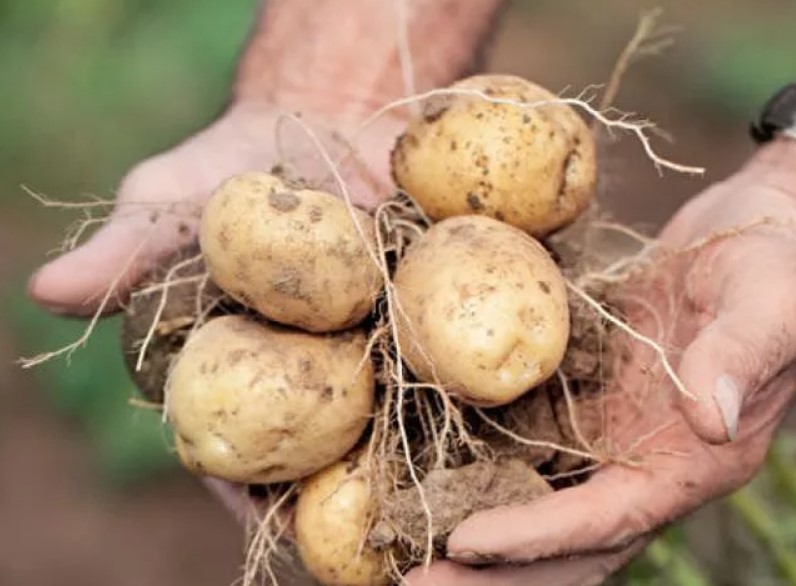
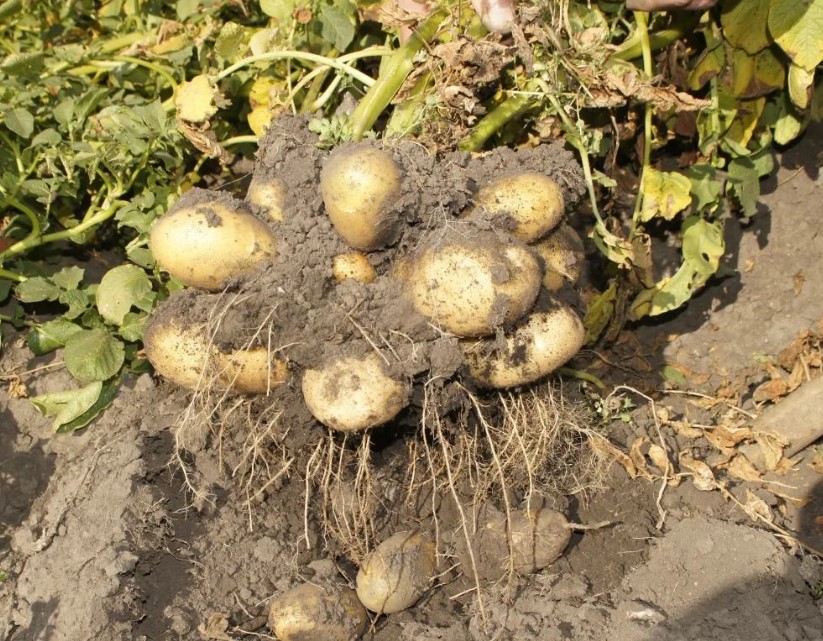
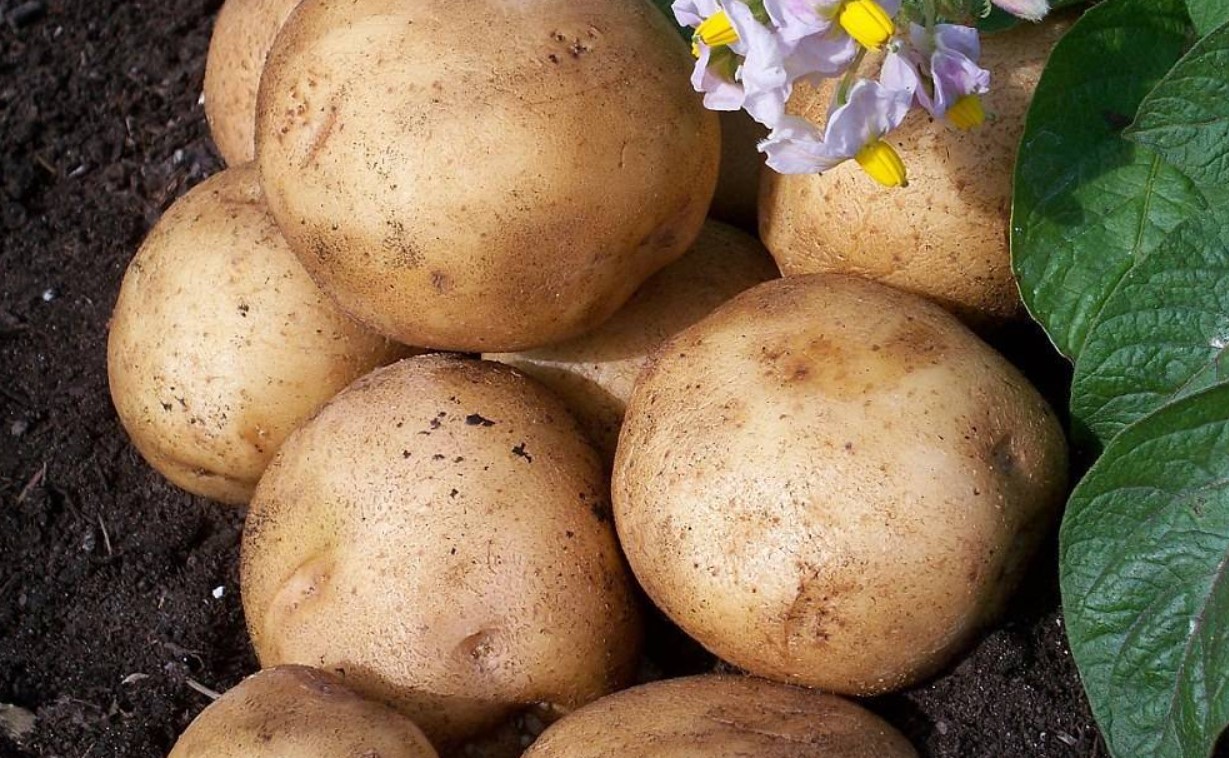
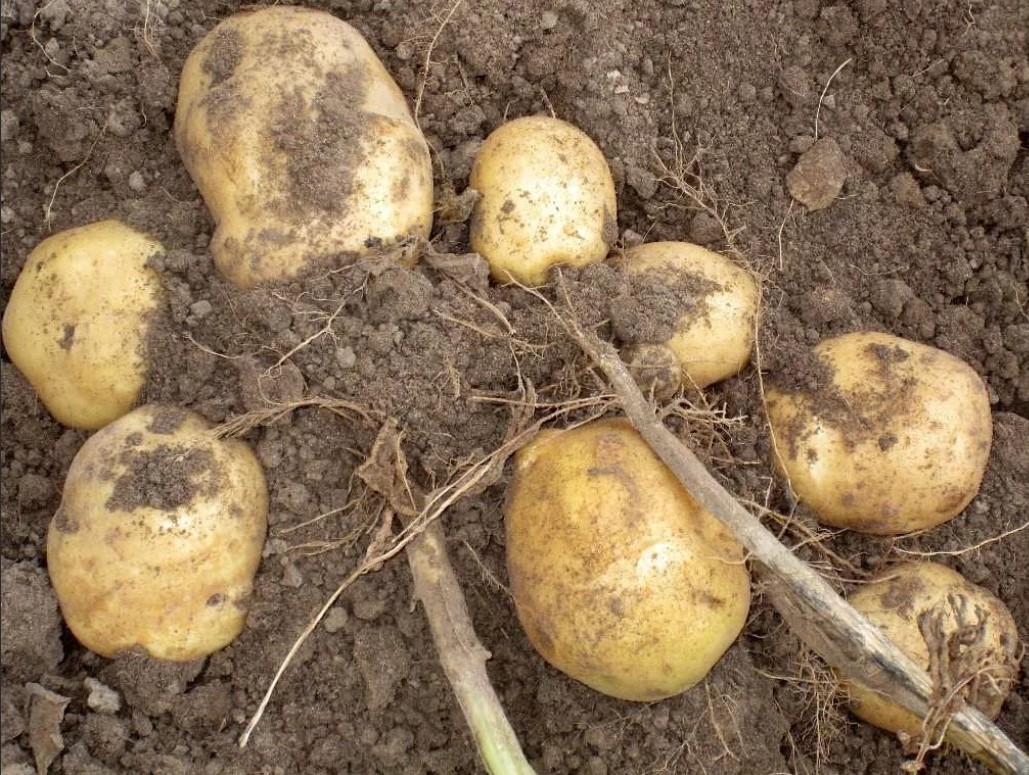
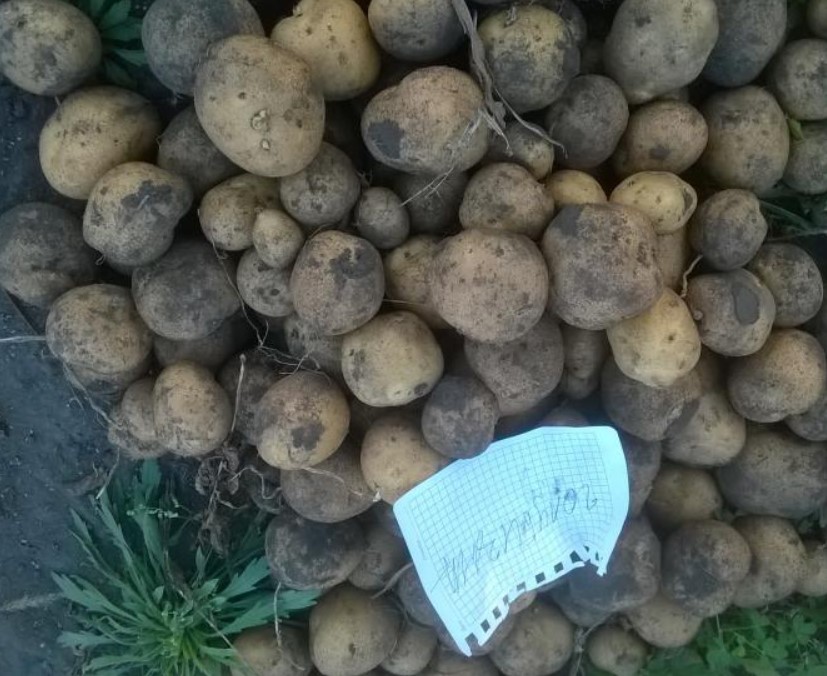
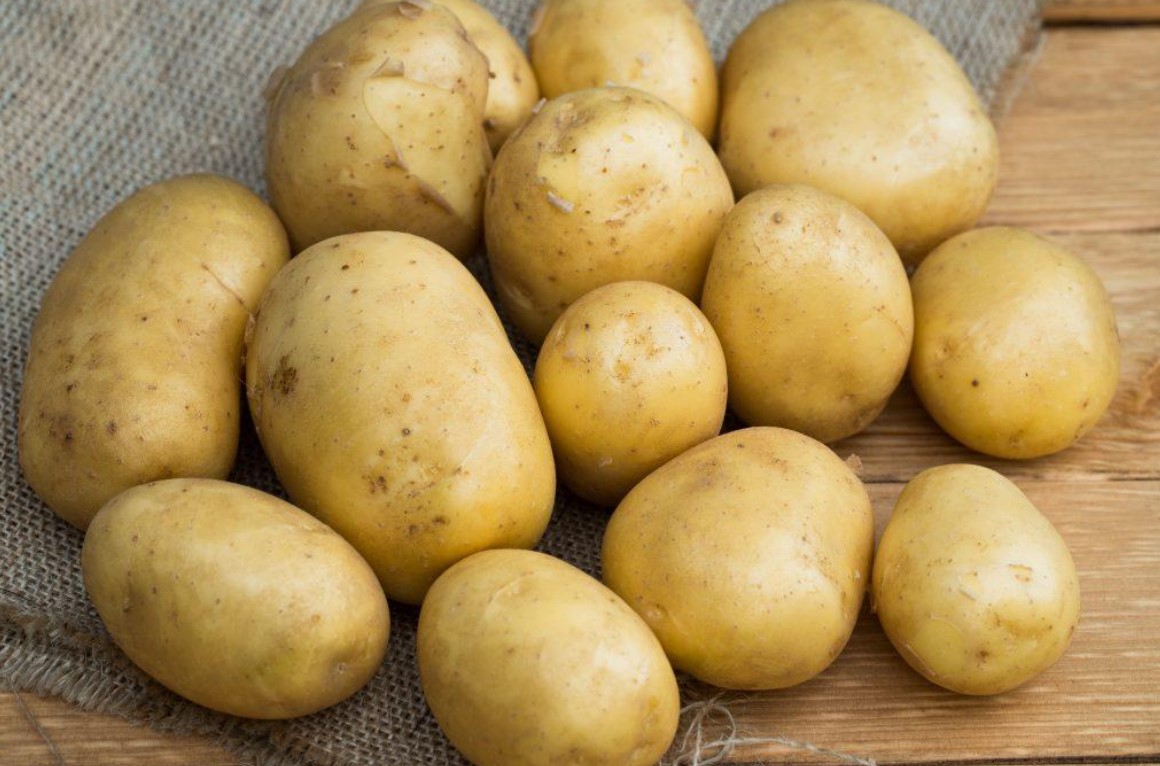
Historical background of the Golubizna potato variety
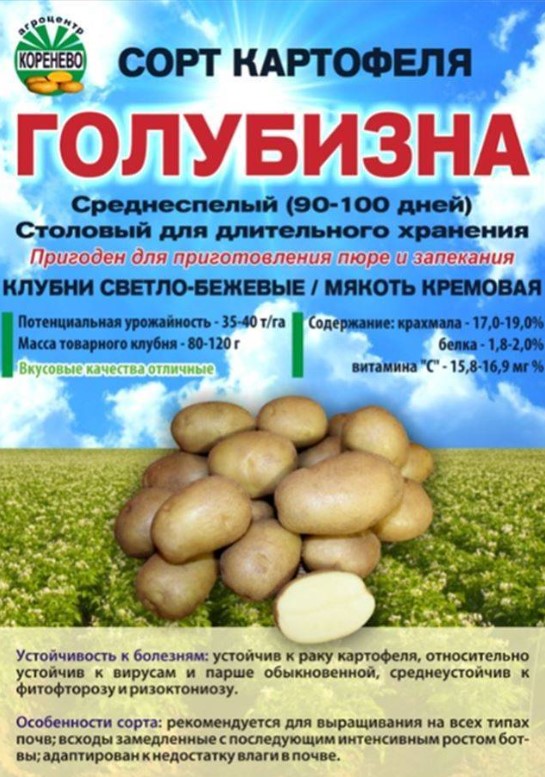
This variety was developed in 1988 by scientists at the A.G. Lorkh All-Russian Research Institute of Potato Farming. It was created by crossing two potato varieties: Gatchinsky and hybrid 128-6. In 1993, Golubizna was added to the State Register.
Description
Let's take a closer look at the main characteristics.
Bushes
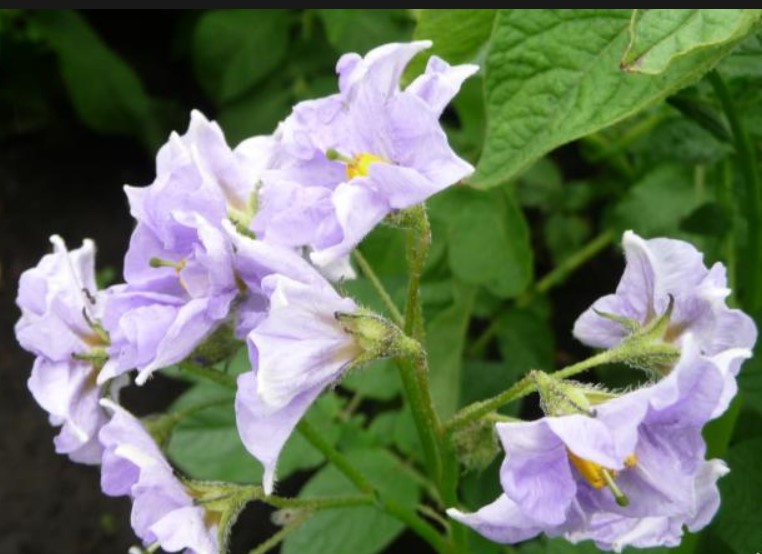
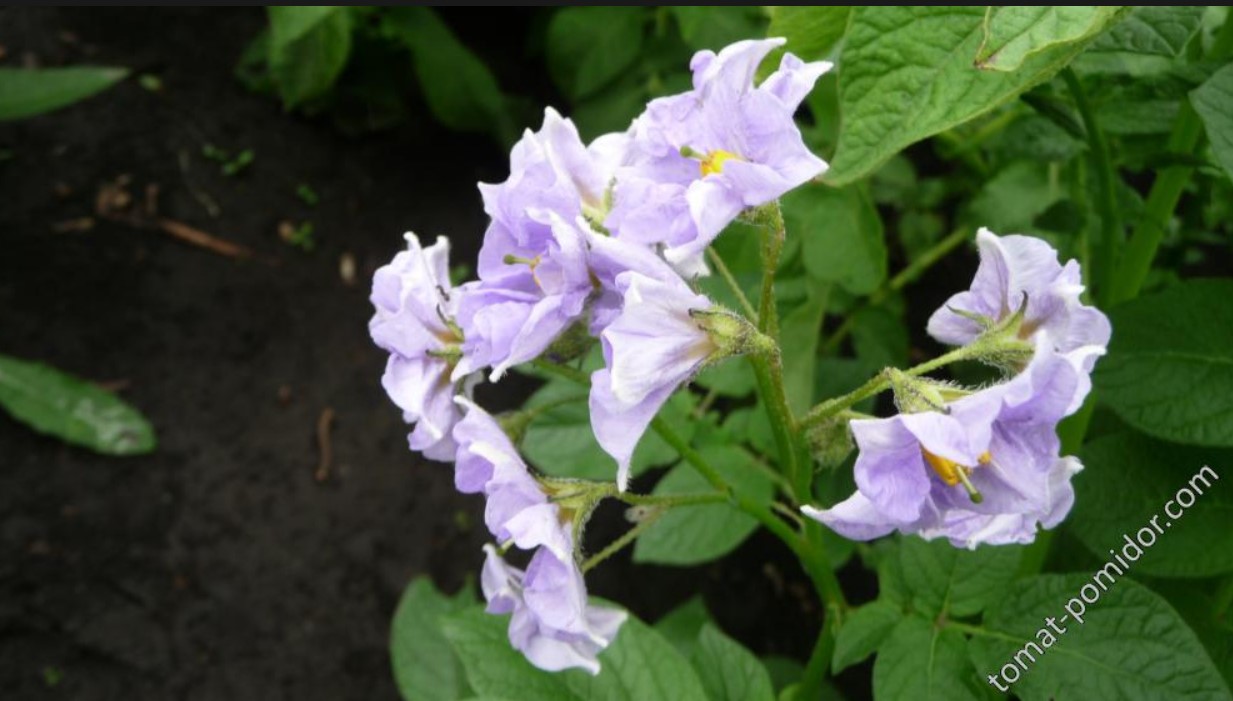
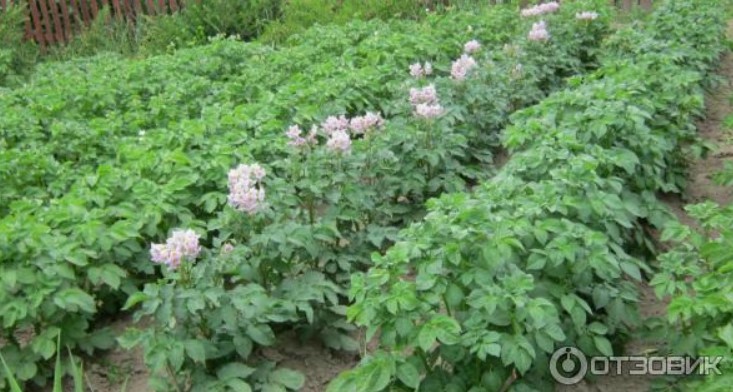
Medium-sized, upright shrubs with medium-thick dark green leaves. During flowering, the bushes are adorned with small, blue-green flowers.
Tubers
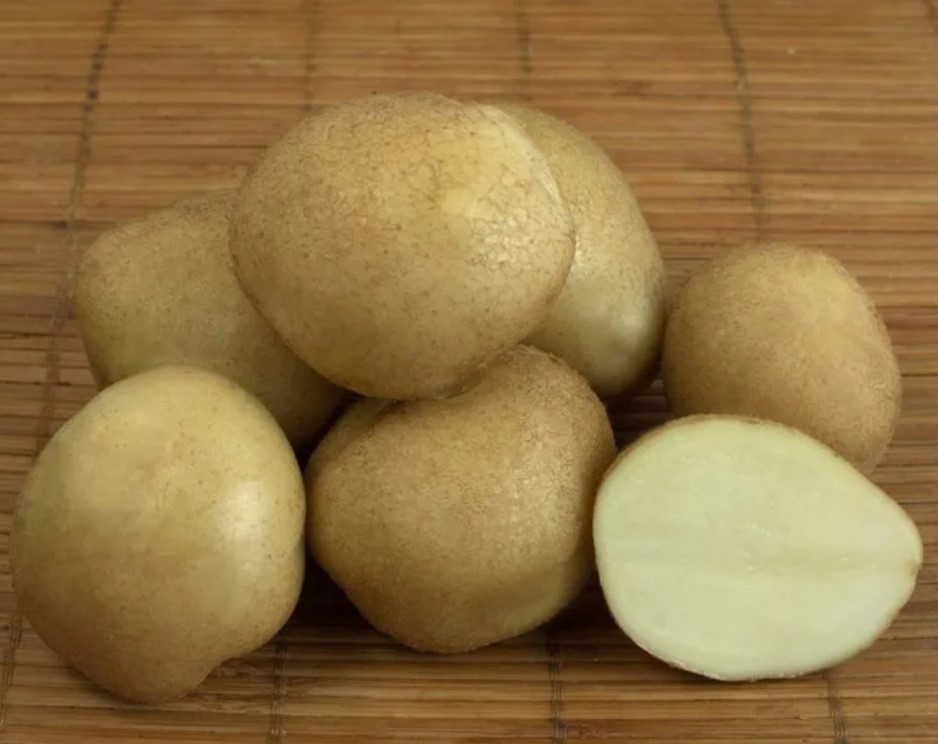
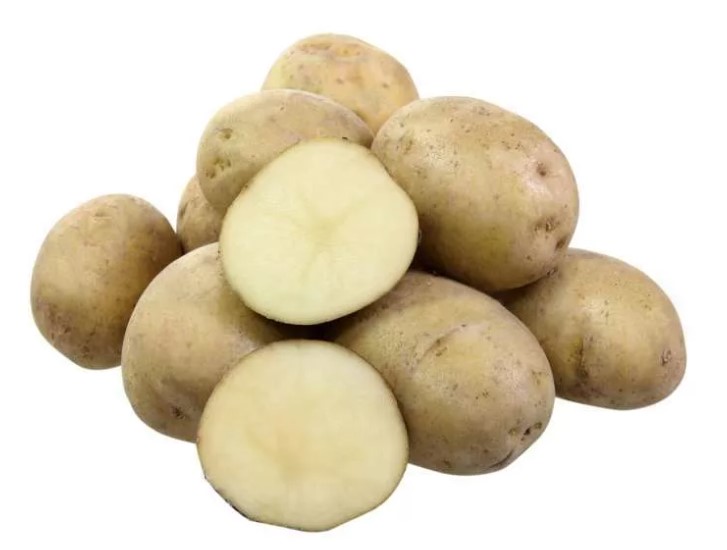
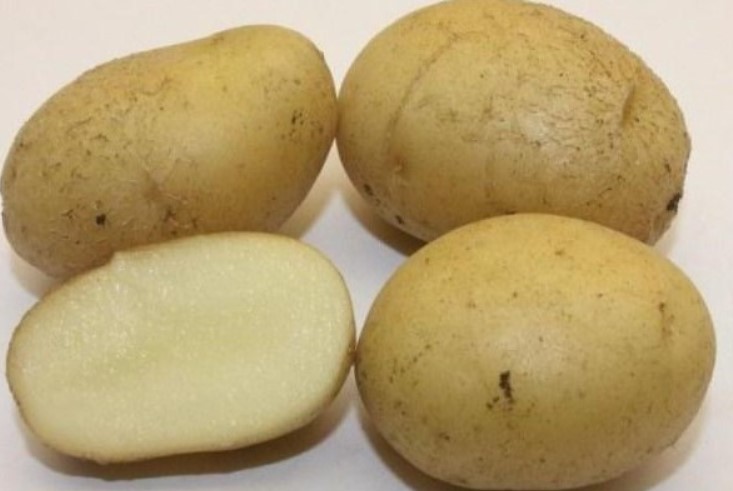
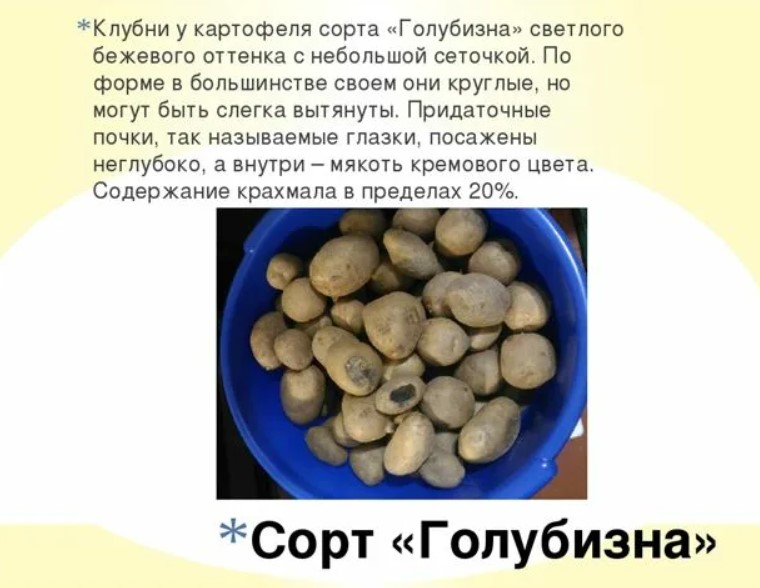
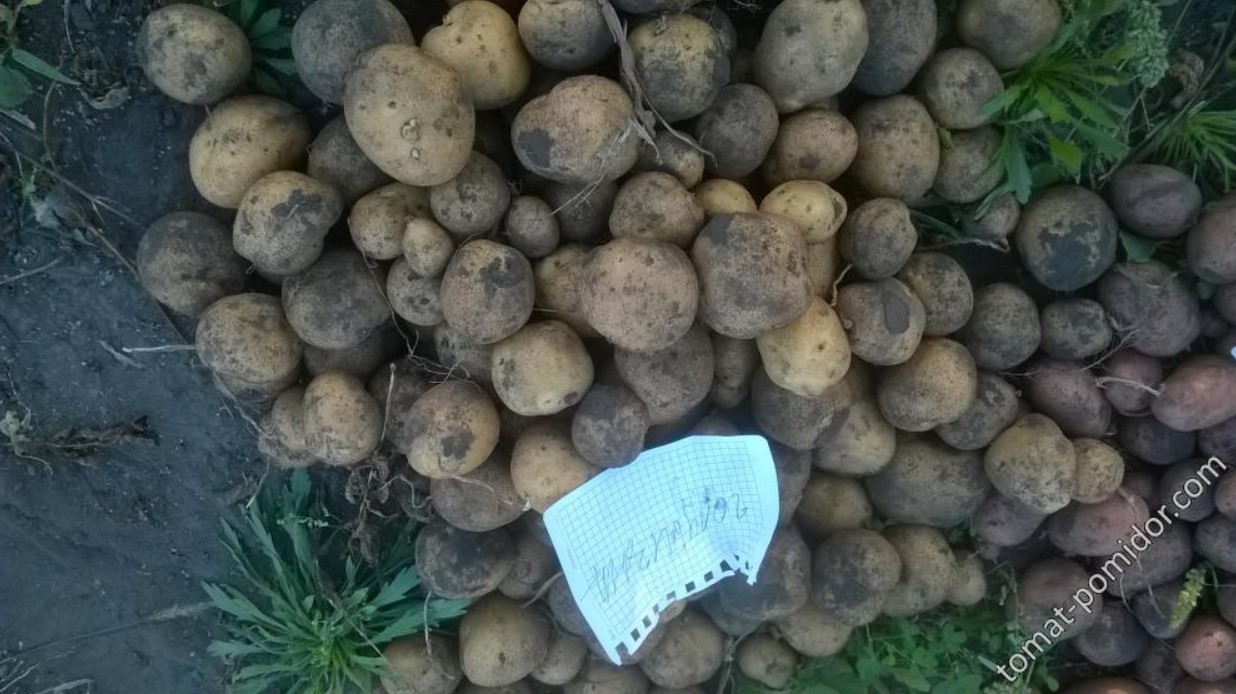
Oval-round in shape with a fine roughness. The average potato weight is 85-115 g. The skin is light beige, and the flesh is creamy white.
Taste and application
It has a pleasant and delicate flavor. When cooked, the potatoes become crispy but not overcooked.
Potatoes contain 16-19% starch. They can be used to make a variety of dishes, including mashed potatoes, jacket potatoes, French fries, and chips.
Productivity, ripening time
This variety is considered high-yielding. Up to 3 kg of potatoes can be harvested from a single bush, and up to 50 tons can be obtained from one hectare.
Golubizna is a mid-season variety. Ripening occurs in 90-110 days. To determine if the potato is ready for harvesting, look at the tops; they will wilt or change color.
Immunity of culture
|
Name |
Stability indicator |
|
Virus (PVY) Y |
High durability. |
|
Potato crayfish |
|
|
Alternaria |
|
|
Viruses (PVX) X and (PLRV) L |
Moderate durability |
|
Black and common scab |
|
|
Late blight |
Moderate susceptibility |
|
Golden nematode |
Unstable |
Positive and negative characteristics of the Golubizna potato variety
|
Pros |
Cons |
|
Resistance to sudden temperature changes |
Low resistance to late blight and golden nematode |
|
A well-developed root system allows the bushes to more easily endure dry periods |
Risk of hollow formations in root crops under unfavorable climatic conditions (hollow formations in root crops) |
|
Good resistance to many infectious diseases |
|
|
High yield |
|
|
Standard planting technology and agricultural technology |
|
|
High starch content |
Growing the Golubizna potato variety from seeds
When potatoes are grown from tubers, viral and fungal diseases cause them to become smaller and yields to decline. However, the Golubizna variety can be grown from seed.
Seed collection
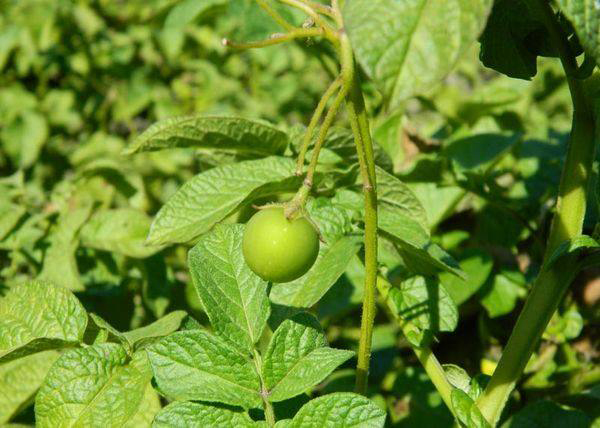
Sometimes, after flowering, some bushes produce green fruit. It's important to harvest them before the leaves turn yellow. Place them on a warm windowsill to ripen. Once they soften, cut them in half, remove the seeds, dry them, and store them until next planting.
Sowing
Prepare the soil for sowing in advance. Of course, the seeds will germinate in any substrate, but to increase germination, it should be airy and treated to prevent pathogens. To do this, you can preheat the soil in the oven at 100°C or scald it with boiling water. Sow the seeds in early spring so they can be dug up in late summer.
Step-by-step sowing:
- Scatter the seeds over the surface of the soil and lightly press them into the soil with a match.
- Cover with glass or a plastic bag.
- Keep in a warm place.
Please note: Before planting the seeds in the soil, be sure to water it.
Caring for seedlings
Basic rules:
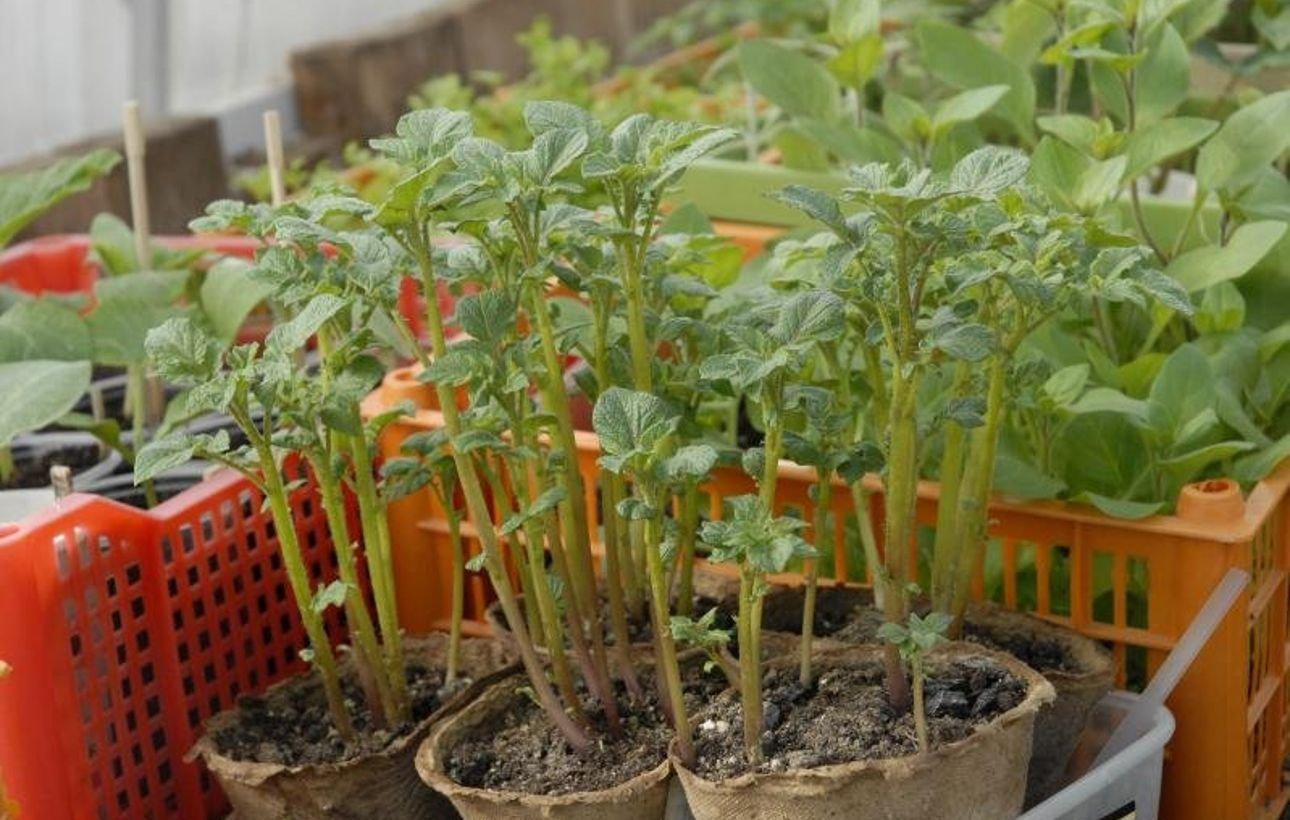
- When the seedlings first emerge, their roots will be located on the surface. They should be covered with nutrient-rich substrate up to the lower layer of leaves.
- Water with a thin stream along the wall or from a syringe.
- Seedlings require bright light. To achieve this, install a grow light on the window.
- From March until planting, transplant 2-3 times. With each transplant, deepen or hill the seedlings.
It is important to follow these rules, as the strength and health of the bushes will depend on them.
More details about growing potatoes from seeds Read on our website Top.tomathouse.com.
Features of planting the Golubizna potato variety
Let's take a step-by-step look at how to plant potatoes correctly.
Requirements for the landing site and its preparation
The site should be sunny and protected from drafts. Loamy and sandy loam soils are most suitable.
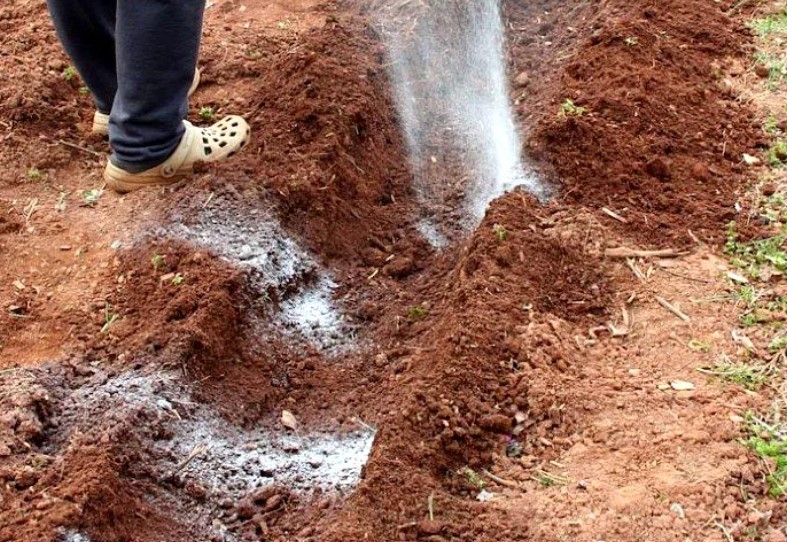
It's recommended to prepare the soil for potatoes in the fall, immediately after harvesting. You should dig the area and add fertilizer. It's a good idea to remove couch grass.
Selection and preparation of tubers
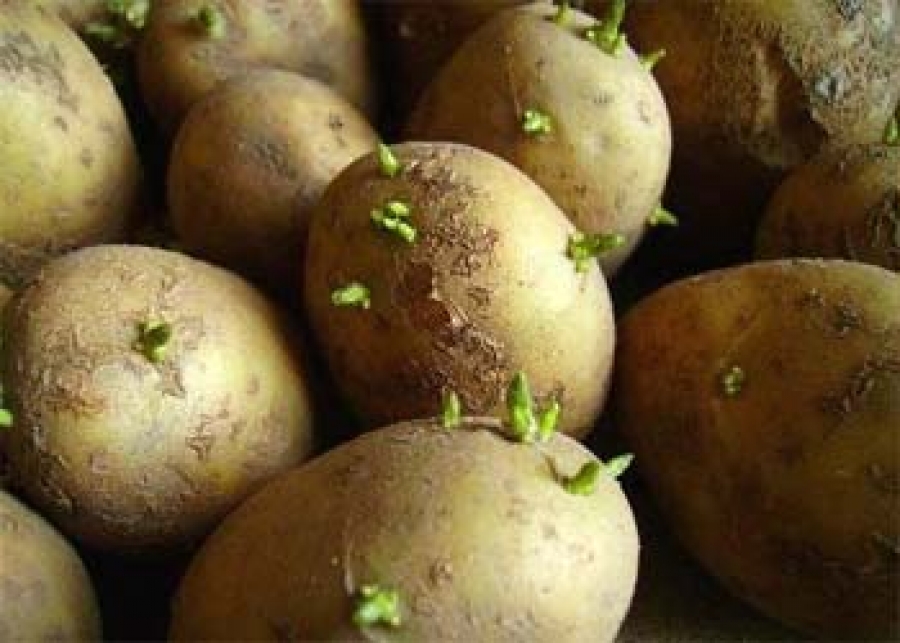
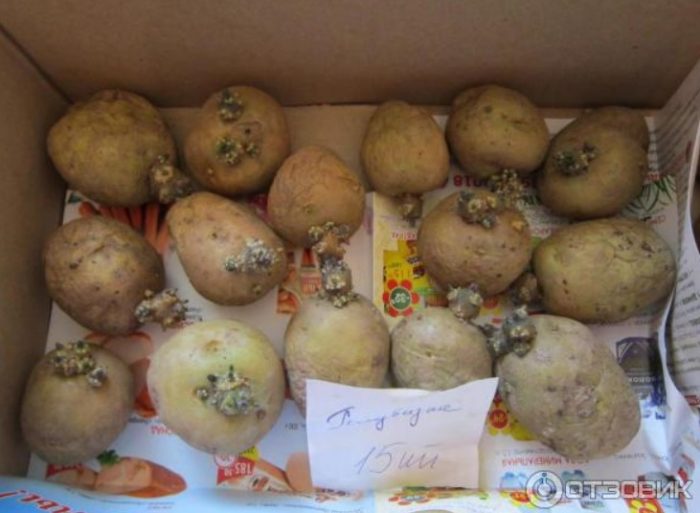
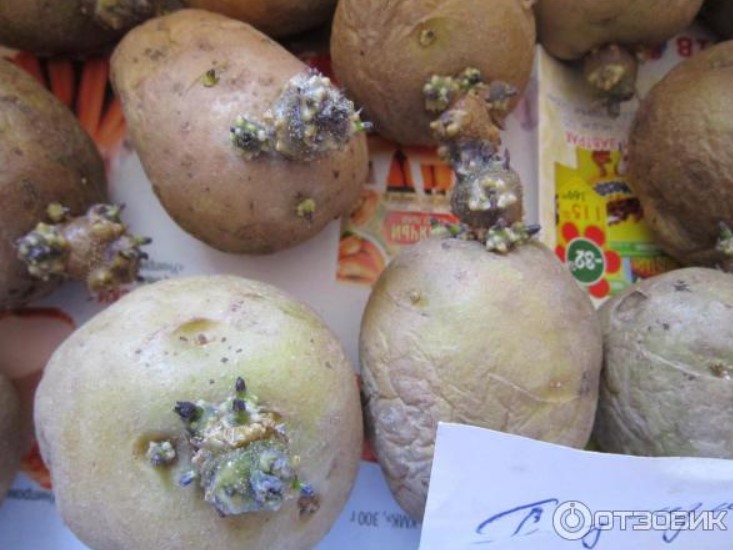
To increase potato yields, prepare the tubers for planting. Sort the potatoes, discarding any spoiled ones. Potatoes weighing 50-100 g are suitable for planting. Place them in boxes in 2-3 layers and store in a warm, bright place to allow the sprouts to form. Disinfect the tubers before planting. Soak them in a solution of potassium permanganate with copper sulfate for 30 minutes and then dry thoroughly.
Timing and rules for planting tubers
They are planted in two ways:
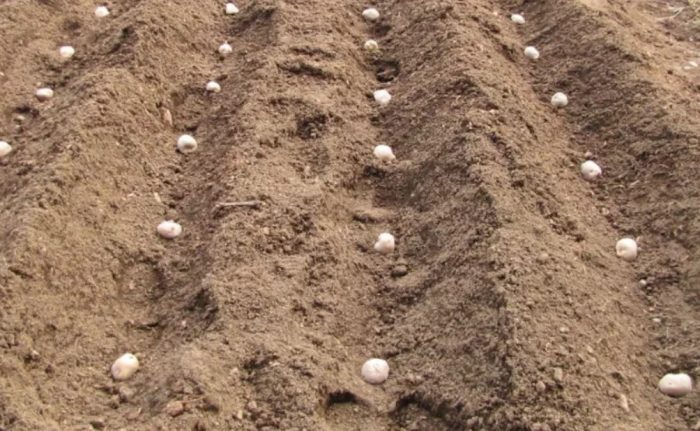
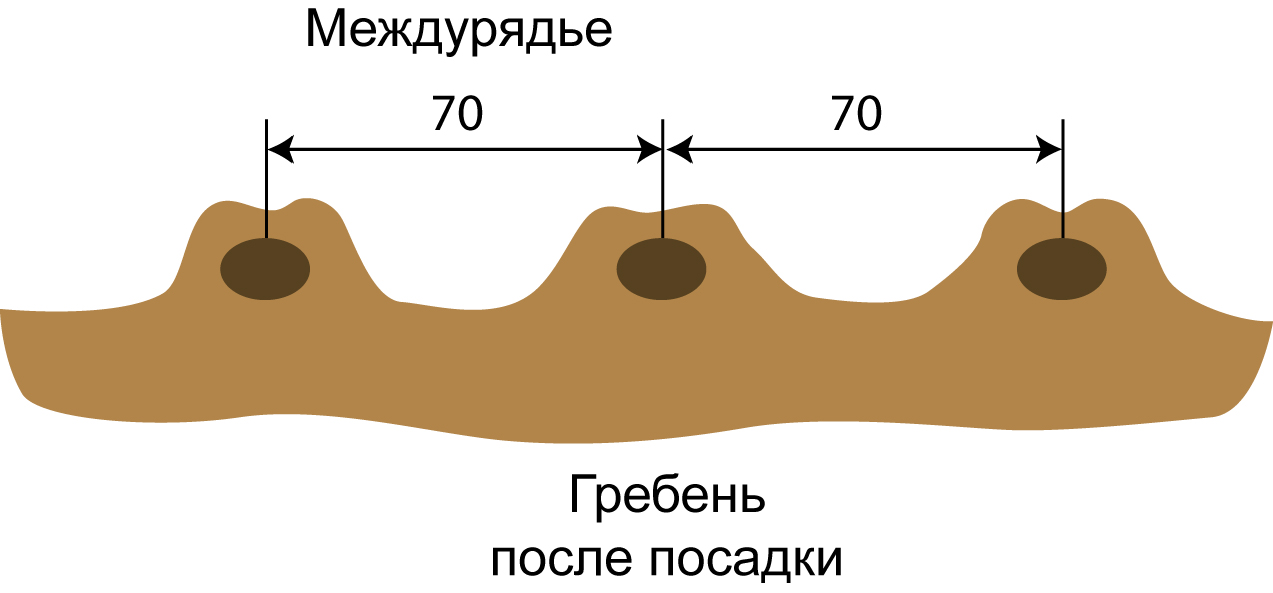
- Ridge planting. Used in regions with high humidity. Suitable for heavy soils. Create rows of 20 cm high ridges and place the tubers in them.
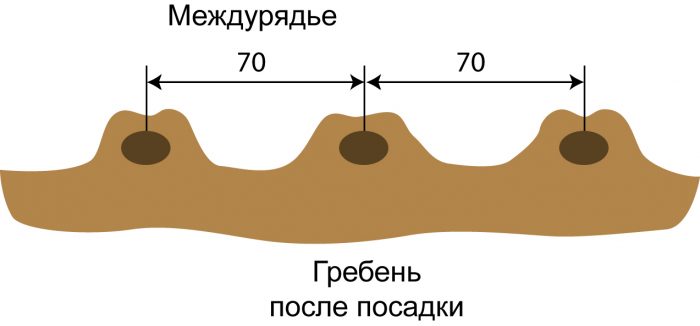
- Ridge planting. Suitable for arid climates and dry soils. Tubers should be planted in two rows in 100 cm wide beds.
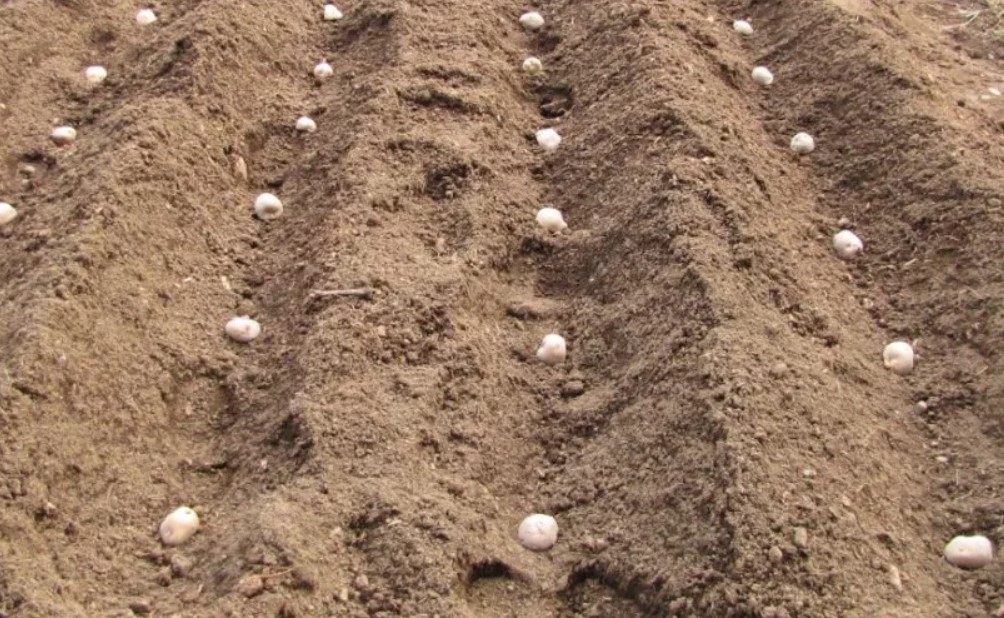
When planting, it is important to consider the following rules:
- The distance between bushes should be 30-35 cm, and between rows - 70-90, depending on the climate.
- The holes for tubers should be 6-8 cm, and in hot climates they can be made 10-12 cm.
- Add a small amount of a mixture of 1 cup of manure or compost, 1/2 cup of ash, and 1 tablespoon of chicken manure to each hole. Cover with 2 cm of soil and place the tubers upside down. Fill again and rake the soil evenly.
If you follow these rules, germination will be maximum.
Timing and rules for planting seedlings
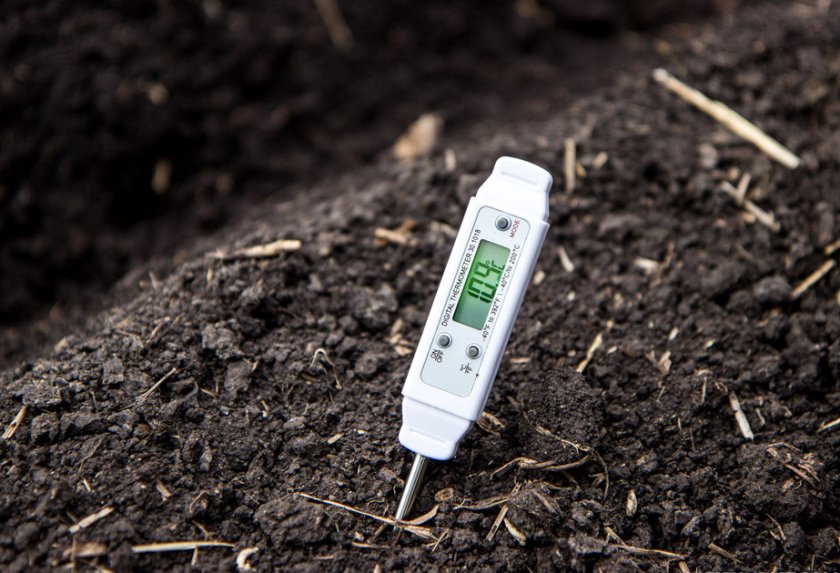
Plant in the soil when nighttime temperatures are no longer below freezing. You can plant in any pattern, as long as it's easy to care for each individual plant. You can plant several roots in a hole at once or one at a time, leaving 15-30 cm between each plant.
Caring for the Golubizna potato variety
Although the variety is undemanding in terms of care, basic agricultural technology requirements must be observed.
Watering
Garden beds need to be watered at least three times per season. During drought, this frequency should be increased to twice every 1.5 weeks.
Top dressing
Fertilization is done twice: at planting and during flowering. It receives most of its nutrients from rotted green manure. You can also fertilize the beds with cow manure or chicken manure. When flowering begins, the bushes are fed with foliar solutions. The best of these are nitrophoska and sodium humate.
Loosening, weeding
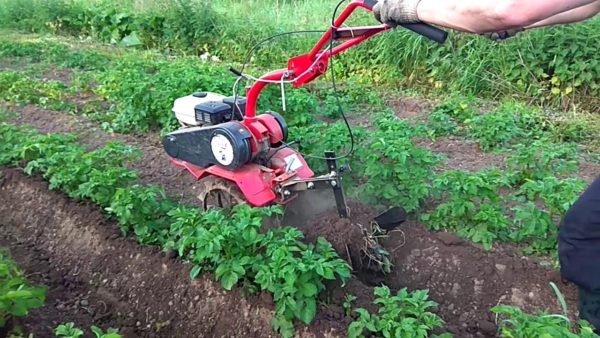
Loosen the soil after each watering to allow additional air flow to the plant roots and accelerate tuber formation due to the increased supply of nutrients.
Weeding is necessary once a week. Otherwise, weeds will drain moisture and nutrients, leaving none for the vegetable crop. Furthermore, weeds that are too tall can shade young seedlings.
Hilling
The first hilling should be done a week after planting the tubers, when the sprouts are 5-10 cm above the surface. The second hilling should be done when the flowering period begins.
Protection from diseases and pests
|
Infection, pest |
Characteristic |
Prevention |
Methods of control |
|
Late blight |
It develops in conditions of high humidity, which is accompanied by a decrease in temperature. |
Preventive measures consist of observing basic agricultural rules:
|
Processing: Dissolve 150 g of slaked lime and 100 g of copper sulfate in 10 liters of water. You can also add Hom. |
|
Chlorosis |
Darkening and wrinkling of veins on leaf blades. |
||
|
Colorado beetle |
The beetle lays eggs, from which larvae emerge. A single bush can contain insects at various life stages—that is, eggs, larvae, and adults. |
Poisonous drugs:
It is recommended to alternate them with treatment with soap and herbal solutions. |
|
|
Mole cricket |
Lives underground, feeding on roots and tubers. |
Use of the drug Medvetox strictly according to the instructions. |
|
|
Golden nematode |
It lays its eggs underground. This causes plants to develop poorly and turn yellow. This causes tubers to be small or nonexistent. |
There are no effective remedies, so it is recommended to pay special attention to preventive measures. |
Harvesting and storing Golubizna potatoes
Harvesting can begin in late summer or early fall. To determine if the crop is ripe, pay attention to the above-ground portions. They should be wilted, and the foliage should no longer be as richly green as before.
How and when to harvest potatoes Read more on our website. And, you know what? Potato harvesting devices can be made independently.
Two weeks before harvesting, it's best to trim the potato tops to a depth of 15 cm. Start harvesting on a sunny day so the crop can air-dry. During this time, most of the soil will fall off the potatoes on its own, and the remaining soil can be removed by shaking. The easiest way to harvest is with a pitchfork: dig under the potato plant and pull it out by the tops. Transfer the tubers to a bucket and then lay them out on a non-woven cloth to dry.
Useful Tips on how to store potatoes.
Before storing the harvest, it must be sorted. Diseased, damaged, and rotten tubers should be discarded. Sort the tubers according to their intended use: for quick consumption, for storage, or for planting next season.
It's best to store potatoes in a specialized vegetable storage facility or a root cellar. The ideal temperature is between 1 and 4°C. If it's colder, the potatoes will freeze. If it's warmer, they'll sprout. In either case, the potatoes will lose most of their nutrients and rich flavor.
It is best to use wooden boxes with walls 150 cm high for storage. Ensure good air circulation and condensation evaporation.
To prevent potatoes from spoiling, you can place fern, rowan, wormwood, or goutweed leaves between each layer of tubers. Even so, the crop should be inspected periodically and any rotten ones removed.
Helpful tip! To increase shelf life, we recommend treating the tubers with a copper sulfate solution. To do this, dilute 2 grams of the solution in a bucket of water and spray the potatoes.
Top.tomathouse.com's tips on rejuvenating planting material
If your potatoes have stopped producing planting material, you can rejuvenate them:
- After flowering, cut 1-2 shoots from the strongest bushes.
- Remove the top and bottom parts from them.
- Place the shoots in a dark place on a 20-centimeter layer of straw.
Closer to September, small tubers the size of a pea will form in the leaf axils.
Comparison of the Golubizna potato variety with other varieties in the table
| Variety | Ripening period (number of days to maturity) | Starch (%) | Yield (c/ha) | Weight of tubers (g)
Number of tubers per bush Color of tuber, pulp |
Shelf life (%) |
| Blue | Mid-season*** | 17-19 | up to 500 | 90-150
9-11 creamy, soft milky |
90-95 |
| Meteor | Early ripening* | 10-16 | 210-405 | 100-150
10-12 creamy, yellowish |
95 |
| Jewel | Early ripening* | 10-15 | 700 | 80-150
15-20 yellow, light yellow |
94 |
| Innovator | Mid-early** | 12-15 | 320-344 | 83-147
6-11 creamy, soft yellow |
94 |
| Lapis lazuli | Early ripening* | 13.5-15.7 | Up to 270 | 92-120
6-11 yellow, white |
96-98 |
| Treasures | Mid-season*** | 12-18 | up to 650 | 95-250
12-18 yellow, yellow |
94 |
| Banker | Mid-early** | 15-16 | 200-350 | 70-160
10-15 soft yellow, light yellow |
90 |
| Luck | Early ripening* | 11-15 | 420-430 | 100-150
10-15 creamy yellow (brown), snow-white |
88-97 |
| Strongman | Mid-early** | 10-12 | 127-275 | 78-105
15-20 yellow, cream |
97 |
| Nikulinsky | Mid-late**** | 12.5-21.3 | 170-410 | 70-135
12 beige, cream |
95 |
| Riviera | Early ripening* | 11.5-15.9 | 189-366 | 101-177
11-12 light beige, cream |
94 |
*Early ripening – 50-65 days.
**Mid-early – 65-80 days.
***Mid-season – 80-95 days.
****Mid-late – 95-110 days.
User reviews of the Golubizna potato variety
A mid-season variety. Unpretentious to soil and weather conditions, productive and delicious!
Photo credits: Ksyu from Korolev, shy
Description in the registry:
Mid-season, table variety. The plant is medium-height, semi-erect. The leaves are medium-sized, dark green, and glossy. The tuber is light beige. The flesh is creamy. Commercial yield is 400-500 c/ha. Marketability is 91-95%. Commercial tuber weight is 90-110 g. Starch content is 17-19%. The taste is excellent.
Moderately susceptible to late blight on tops and tubers.
I really liked this variety. It's productive, the tubers are large and tasty. We bought the seeds from a farmer, not just any random ones. Because of their large size, it was very difficult to select them for seed, so we gradually lost the variety. I really regret it and want to restore it, but I can't find any seeds anywhere nearby.
Good afternoon, Otzovik guests!
As promised, I'm writing a review of the fifth potato variety, "Golubizna," which I tested this year. I'll say right away that this isn't my first time planting it. My first attempt was in 2000. We bought seeds to test from the Kostroma seed company, OOO KTM. Back then, we dug the soil before planting, like everyone else, so the harvest was excellent. The tubers were numerous and large. We also really liked the taste. But it's very difficult to select seed potatoes from large potatoes, so after five years, this variety disappeared from our collection. We decided to buy more for seed. But when spring came and I went to buy seeds, this variety was no longer available. I was told they had stopped growing it. So, for over 10 years, I've been searching for this variety. In 2017, the Kostroma seed company, KTM LLC, resumed growing the Golubizna variety. I didn't buy many seeds, just 15 tubers. That's enough for one small borovok.
At home, the tubers sprouted well and produced healthy shoots. Not a single sprout rotted.
I concluded that the sprouts of varieties susceptible to late blight had rotted. For me, these were the varieties "Skarb," "Gala," and "Adretta." The varieties "Irbitsky" and "Golubizna" are less susceptible to late blight, and the tops of these varieties lasted the longest.
This is what the Golubizna bushes looked like on July 1st. The Irbitsky variety is in the middle with the flowers, and our Golubizna variety is to the right of it.
You can see that the tops are a healthy, light green. The bushes are wide, compared to the Irbitsky variety. They bloomed with lilac flowers, but very discreetly and modestly. The stems are also green, without a lilac tint. I dug up the potatoes on August 20th. From 15 tubers, I got one and a half buckets, or 12 kg. All the potatoes are large and medium-sized. Again, it was difficult to select them for seed. It's a shame I didn't take photos of the harvest. The tubers are beautifully evenly shaped with small eyes. The skin is a creamy, mesh-like color. The flesh is also creamy. This is a mid-season variety, ripening well in our area.
And Golubizna is a variety for those who like crisp, fluffy potatoes. We tested its flavor right in the garden with our neighbors. They hadn't bought this variety, so they were curious to try it. While they were picking cucumbers, tomatoes, and various greens, our potatoes had already fallen apart. They took less than 10 minutes to cook. The flavor is wonderful. We and our neighbors liked the variety, so we exchanged our Golubizna for their Vega potato variety, which they also bought from the Kostroma seed company, OOO KTM, and which has proven to be a very productive and tasty variety. Golubizna also keeps well. In general, all my potatoes store well. Before storing, I wash them all and keep them in a warm place for two weeks before putting them in the hole. After two weeks, any diseased tubers are visible, and they are removed.
Let's sum it up.
Harvest – 5 stars.
Tuber size – 5 stars.
Susceptibility to late blight – 5 stars.
Taste quality – 5 stars.
Storage and shelf life – 5 stars.
I give this variety an overall rating of five stars.
I ordered super-elite seed from Korenevo two years ago. We planted in mid-May and dug it up in mid-September. The potatoes were productive, but didn't produce large tubers—they were medium-sized. The flesh was white, and the skin was light and rough, almost mesh-like. The eyes were quite deep, making peeling a bit difficult. They bloomed beautifully, with bright blue flowers. They were very crumbly when boiled; if you overcook them, they would quickly turn into mashed potatoes. They stored well.
This variety is suited to our climate and loamy soil. It's mid-season. It's productive, and the tubers are resistant to FF. It blooms beautifully with large blue flowers. The seeds were originally from Timiryazevka. The tubers are uniform and productive. It stores well. It's crisp and tasty. The eyes don't interfere with the fruit. It cooks for 20 minutes after the water boils. So, for now, it's our permanent home.
The Golubizna potato is a variety that we have been growing for several years.
The variety's name stems from the blue flowers during flowering, which are very different from other varieties. The foliage is also noticeably more robust and spreading.
The potatoes have white flesh. This variety is characterized by a very high yield—not only in the number of potatoes per plant, but also in size. The potatoes are simply enormous. However, larger specimens develop dark cavities that need to be cut out.
Potatoes are very crumbly and contain a large amount of starch. They cook faster than other varieties. If overcooked, they will simply become mushy and turn into a smooth paste.
I especially like to use these potatoes in roasts or fried with mushrooms. But they also make excellent mashed potatoes—smooth and lump-free.
In a word, it's a loose potato. Beautiful white flesh. But you can't fry this variety. It falls apart. It's not good for salads either. But what a puree it is. Fragrant white potatoes. Somewhat reminiscent of good old blue-eyed potatoes. You might give it a try.