The Lazurit potato variety is widely used for planting in home gardens. Lazurit potatoes are actively grown by gardeners in central Russia. Thanks to their rapid ripening, under favorable conditions, they can be harvested twice per season.

Content
- 1 Table with characteristics of the Lazurit potato variety
- 2 The origin of the Lazurit potato variety
- 3 Description of the Lazurit potato variety
- 4 Advantages and disadvantages of the Lazurit potato variety
- 5 Planting Features of the Lazurit Potato Variety
- 6 Caring for the Lazurit potato variety
- 7 Protecting the Lazurit potato variety from diseases and pests
- 8 Harvesting and storing the Lazurit potato variety
- 9 Comparison of the Lazurit potato variety with other varieties in the table
- 10 Reviews of the Lazurit potato variety
Table with characteristics of the Lazurit potato variety
| Characteristic | An early-ripening potato variety with strong immunity. |
| General information | A medium-sized potato variety, distinguished by excellent yield and pleasant taste. |
| Ripening time | 60-70 days |
| Productivity | Up to 270 c/ha |
| Marketability | 87-98% |
| Shelf life | 96-98% |
| Starch concentration | 13.5-15.7% |
| Color of pulp | white |
| Peel color | Yellow |
| Weight of commercial tubers | 92-120 g. |
| Number of tubers per bush, pcs. | 6-11 pcs. |
| Taste characteristics | Pleasant taste |
| Class and purpose in cooking | Table purpose, culinary class AB |
| Suitable regions for growing | Central, Central Black Earth, Volga-Vyatka |
| Disease resistance | High resistance to nematodes, cancer, viruses, average resistance to tuber blight and susceptible to top blight. |
| Growing specifics | Needs prevention of leaf blight. |
| 2002 | |
| Country of origin | Belarus |
Photo gallery of the Lazurit potato variety
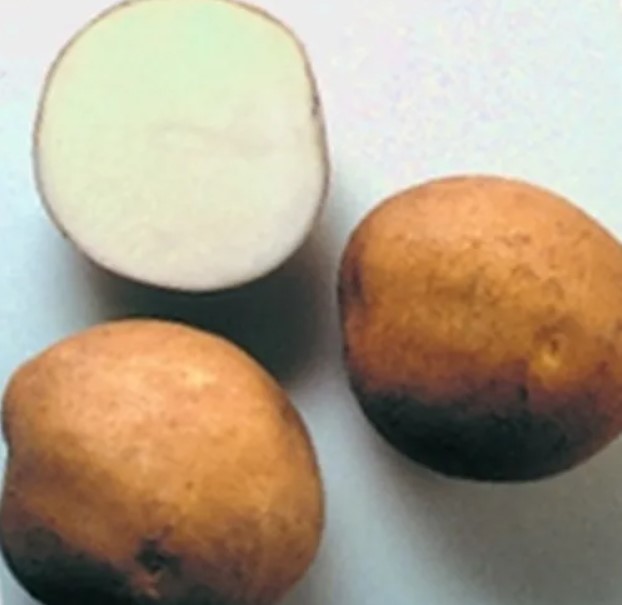
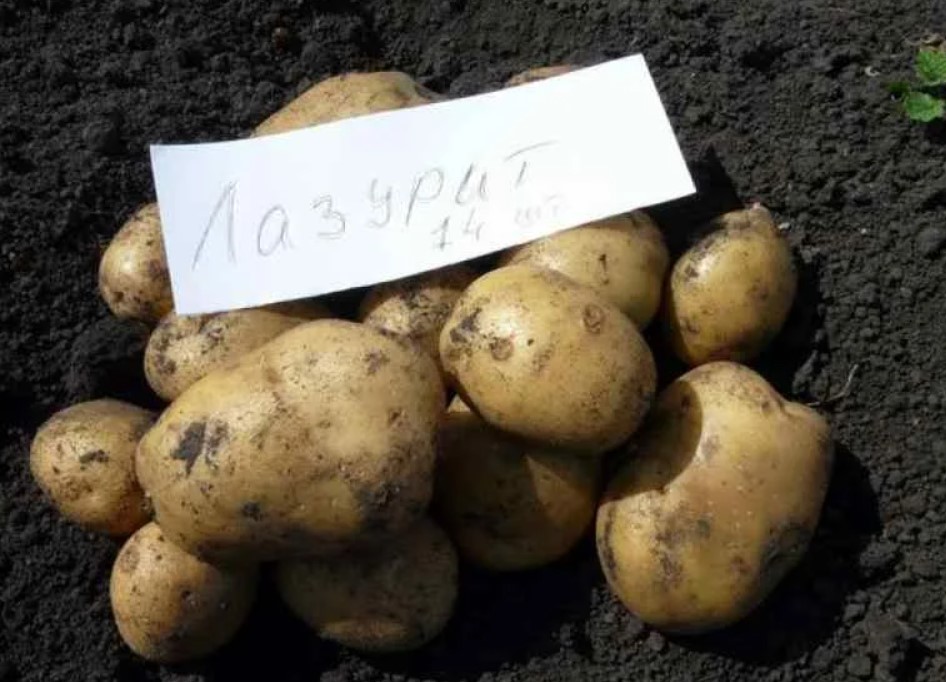
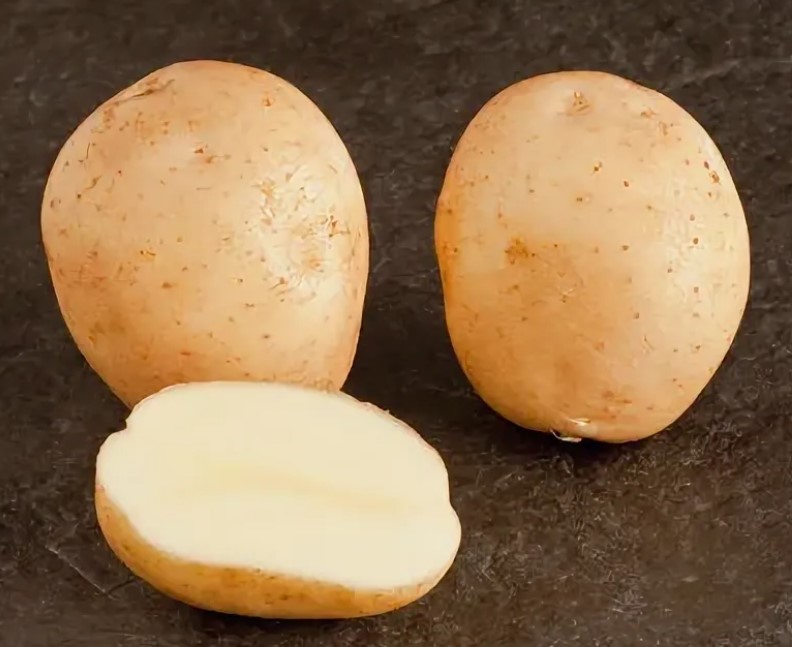
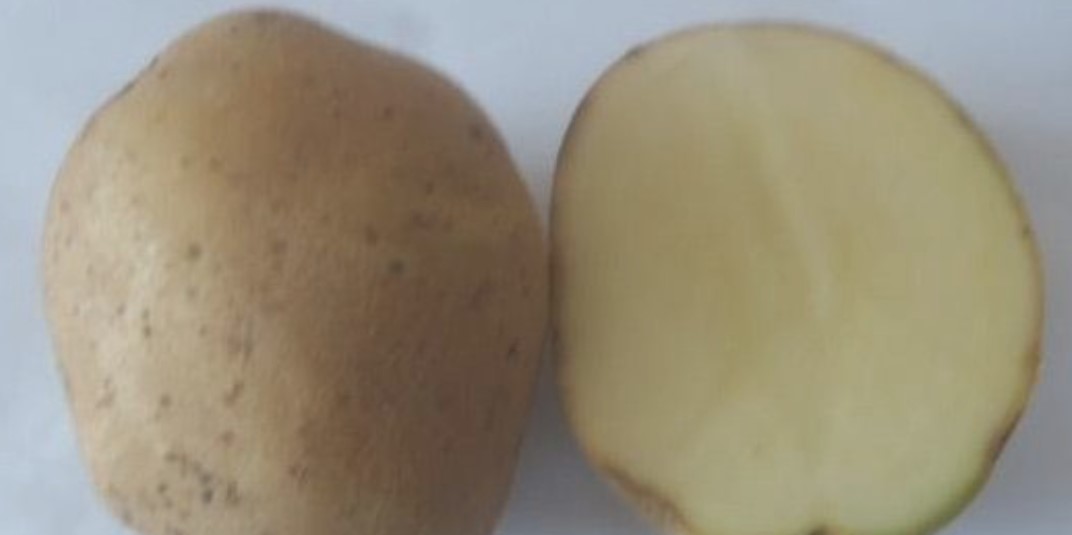
The origin of the Lazurit potato variety
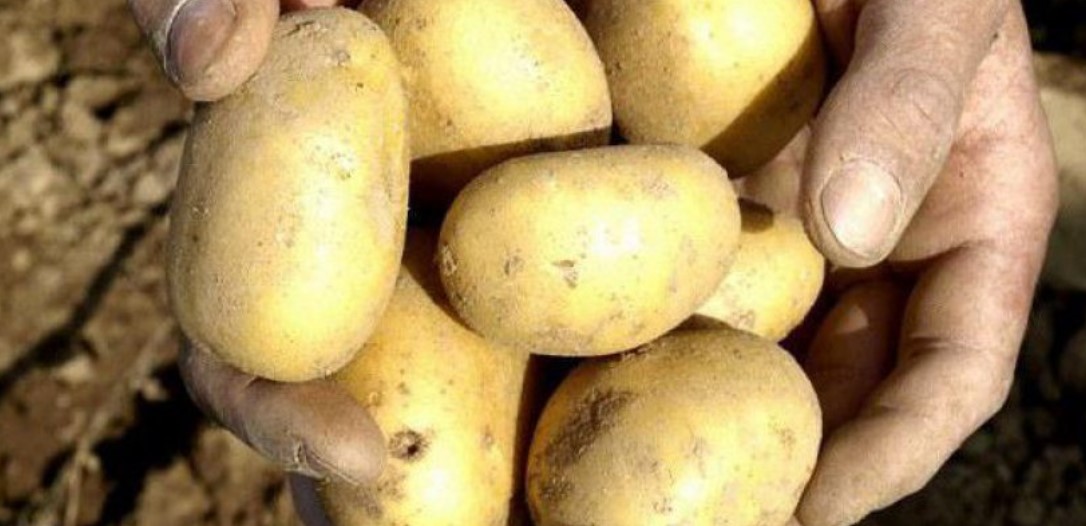
The Lazurit potato variety was developed by breeders from Belarus. In 1999, they applied for its inclusion in the register, which was approved in 2002.
Description of the Lazurit potato variety
Lazurit potatoes are distinguished by their early ripening period and strong immunity.
Bushes
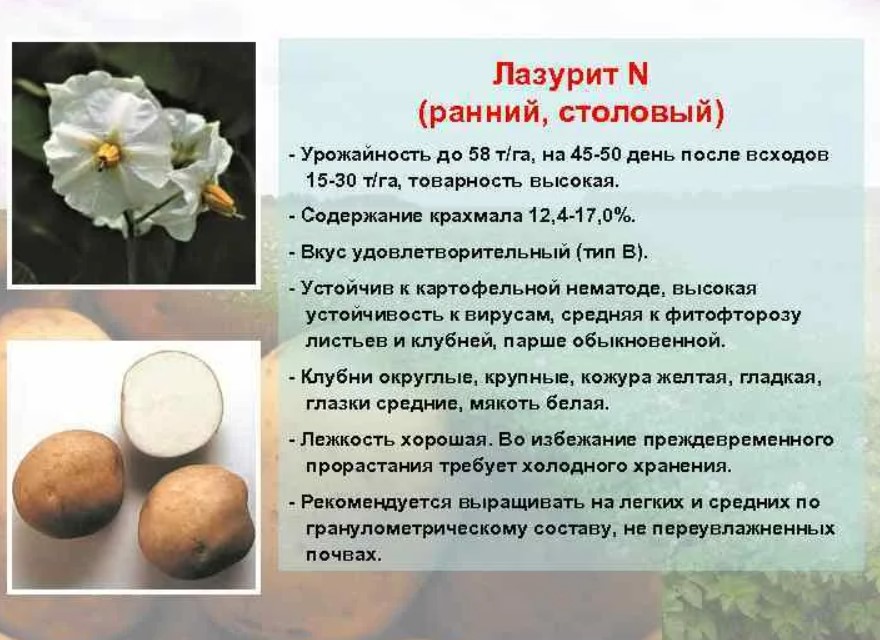
The bushes are upright, with intermediate-sized shoots, medium to tall. The leaves are small, light green, with little or no wavy edges. The flowers are medium-sized and white.
Tubers
The tubers are round, weighing from 92 to 120 g. The skin is thin but firm, yellow in color. The flesh is tender and white. There are few, shallow, eyes on the surface.
Nutrients and nutritional value
The Lazurit variety contains 13.5 to 15.7% starch in its tuber pulp. Its nutritional composition includes sodium, phosphorus, zinc, cobalt, and other elements.
Productivity, ripening time
Lazurit potatoes ripen 60-70 days after the first shoots emerge. In some regions with favorable climates, gardeners can harvest two crops per season.
Potato yields range from 210 to 270 centners per hectare. The exact yield will depend on growing conditions.
Resistance to diseases and pests
The table below shows the main diseases of the Lazurit potato and the degree of resistance to them.
| Name | Degree of stability |
| Virus (PVY) Y | High |
| Virus (PLRV) L | High |
| Cancer | High |
| Golden nematode | High |
| Leaf blight | Low |
| Tuber blight | Average |
For which regions is the Lazurit potato variety suitable?
The Lazurit variety grows and produces fruit well in central Russia. According to the cultivar's description, it is zoned for the Central, Central Black Earth, and Volga-Vyatka regions.
Advantages and disadvantages of the Lazurit potato variety
The Lazurit variety has both advantages and disadvantages. These are listed in the table below.
| Advantages | Flaws |
|
|
Planting Features of the Lazurit Potato Variety
The Lazurit potato does not require any special approach to growing conditions; it is sufficient to take into account the universal requirements for this crop.
Requirements for the landing site and its preparation
Lazurit potatoes grow best in light, fertile soil. If the soil is heavy and clayey, it's recommended to add some sand when digging.
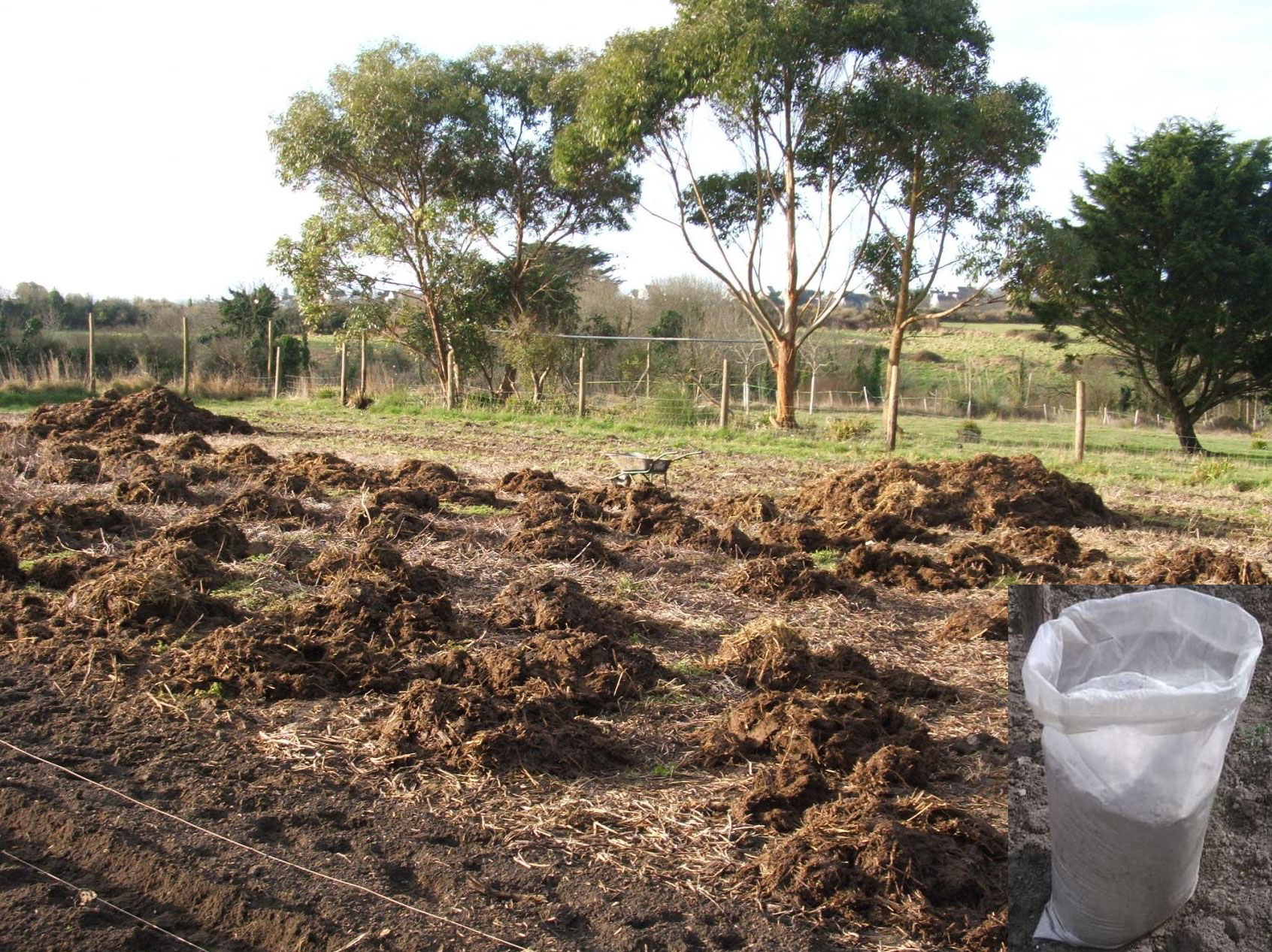
In the fall and spring, the plot is dug over and organic fertilizer is added. It's crucial to ensure proper crop rotation. Potatoes will become diseased and produce poorly if planted in the same area where tomatoes or beets grew last year. However, they will thrive after cucumbers, grains, and legumes.
Another important factor is the presence of groundwater. If it's too close, or the site is in a low-lying area, you'll need to consider drainage. In such conditions, you shouldn't expect a bountiful harvest, but late blight will be rampant.
Selection and preparation of seed tubers
Potatoes for planting are removed from storage approximately 30 days before planting to allow them to germinate. It's best to use boxes filled with moist peat for this purpose, with the potatoes placed in two or three layers. To maintain humidity, it's recommended to periodically mist the potatoes.
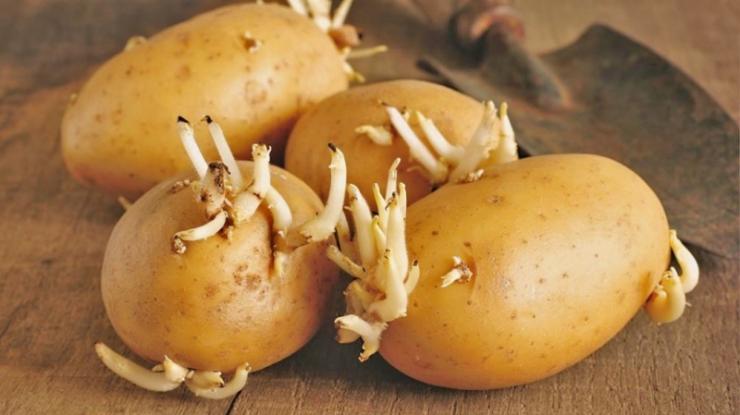
If there are few sprouts, their height barely reaches 2 cm, then a week before planting you can use a phytolamp.
Planting times and rules
The Lazurit potato is characterized by early ripening. In central Russia, planting begins in the first half of May, provided the soil has warmed to 9°C (43°F) and the threat of frost has passed. Otherwise, sprouting will be very slow, and ripening will be delayed.
For planting, dig holes 10-15 cm deep; the lighter the soil, the shallower the hole. A handful of ash and peat mixed with soil can be added to the bottom. Space the seeds 30 cm apart, and the rows 70 cm apart.
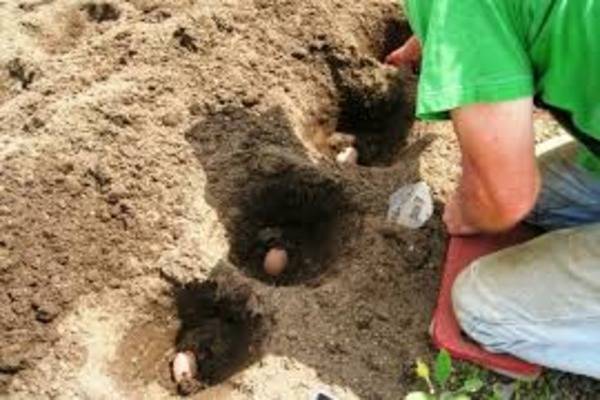
The potatoes are placed in the hole with the sprouts facing up and carefully covered with soil.
Caring for the Lazurit potato variety
The Lazurit potato grows well even with minimal care, which is why it is loved by gardeners in central Russia.
Watering
It's not recommended to water Lazurit potatoes too frequently. The soil should be moistened first before planting, when the potatoes are placed in the holes. After that, you should monitor the weather.
If it's hot, the air temperature is very high both day and night, and there is no precipitation, then you need to water the plants at least once a week.
If the summer is typical for the temperate climate with occasional rains, then water the potatoes as needed. Typically, this is done before flowering and two weeks before harvest.
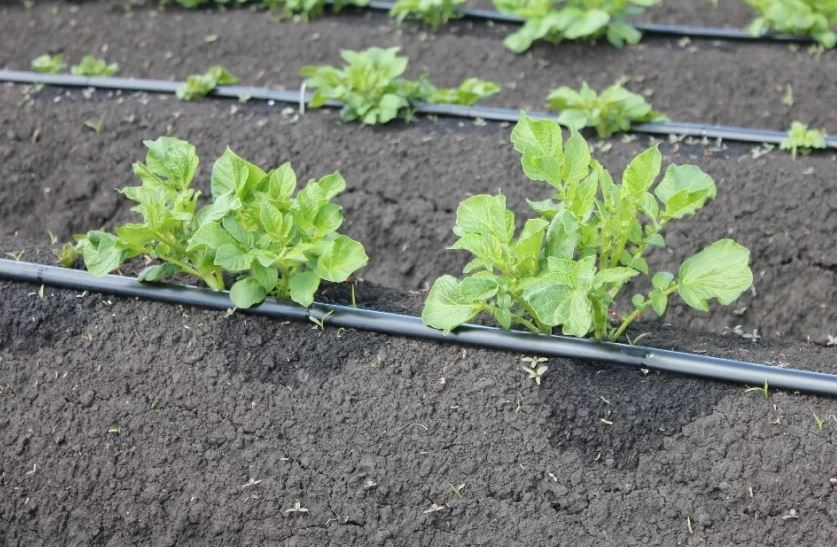
Drip irrigation is best. If this isn't possible, water the potatoes with a hose very carefully to avoid splashing water on the leaves. Otherwise, there's a risk of burns or blight.
Top dressing
The Lazurit potato plant responds well to fertilizing. However, it's best to prepare the soil in the fall by digging it up with organic fertilizer, such as manure. In winter, digging will kill the weed roots, making potato care much easier.
In the spring, re-digging is carried out with humus or peat; some gardeners add superphosphates to the soil for greater nutrition.
If the soil is not very rich, or if it was not prepared properly before the new season, then fertilizer can be applied as the bushes grow.
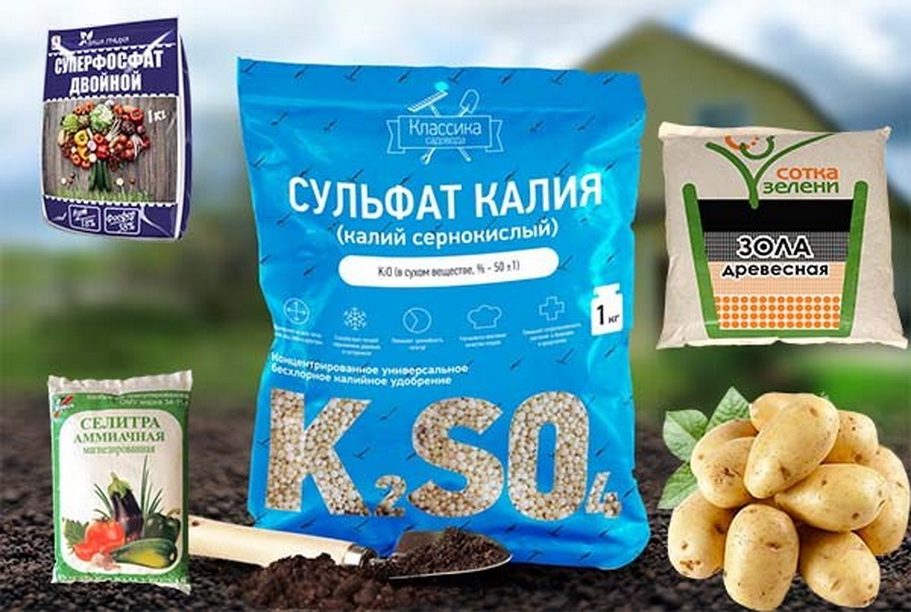
The first time potatoes are fed before hilling, watering them with a solution of 20 g of urea per 10 liters of water. Alternatively, you can use 20 g of potassium sulfate and 60 g of superphosphate per 10 liters of water.
The second feeding is combined with the second hilling and is carried out using complex fertilizers. This should be done before flowering.
If necessary, this feeding can be repeated after budding has completed.
Loosening, weeding
Loosening and weeding the soil should be done at least once or twice per season, combining these two procedures. An abundance of weeds attracts pests, and the weed roots begin to compete with the potatoes for water, oxygen, and nutrients.
Hilling
To ensure faster development of tubers and to prevent them from experiencing cold, heat, or nutrient deficiencies in the soil, hilling is done periodically. This is done three times per season by mounding soil onto the stems.
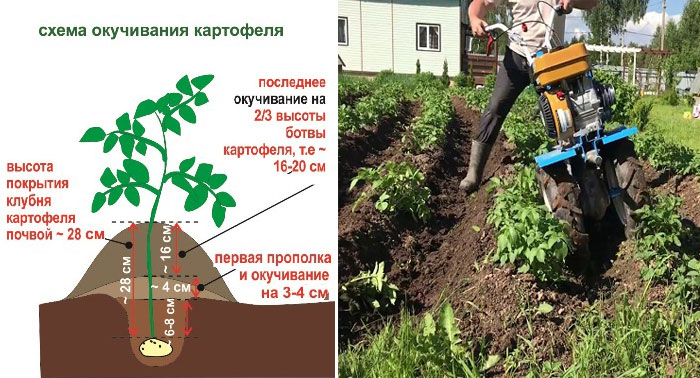
The first hilling is carried out when the shoots reach a height of 12-15 cm.
The procedure is repeated a second time after 2 weeks.
The final hilling is carried out when the shoots reach a height of 25 cm (approximately 20 days after the second time).
Protecting the Lazurit potato variety from diseases and pests
The table lists the main diseases and pests of Lazurit potatoes.
| Disease, pest | Characteristic | Prevention and treatment | Treatment |
| Late blight
|
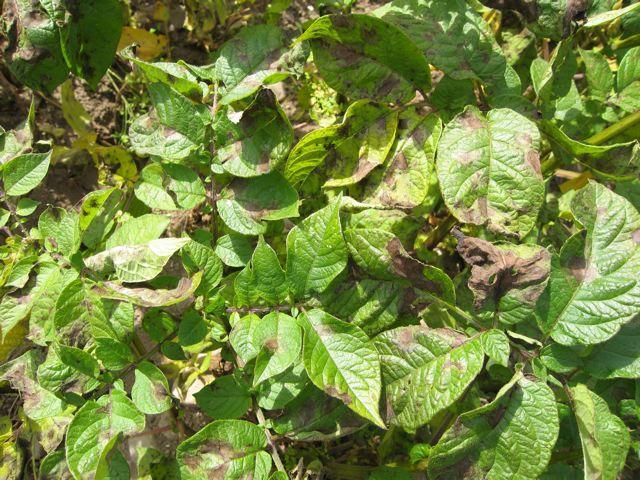
Leaves become covered in brown spots, begin to curl, and wilt. The spots can then spread to the stem, and the plant dies. | To prevent late blight, follow watering guidelines and avoid overwatering. Plants can also be treated with a copper sulfate solution. | With the onset of illness Specialized products such as Acrobat, Ridomil Gold, Abiga-Peak, and others will help. If there are too many affected bushes, they should be removed from the garden bed and burned. |
| Colorado beetle
|
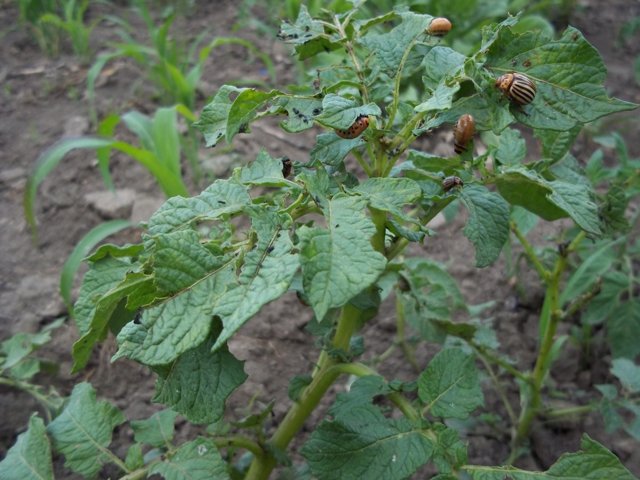
Instead of leaves, only the veins remain on the bushes, as the majority of the leaves are consumed by adult Colorado potato beetles. Yellow-orange eggs can be seen on the undersides of the remaining leaves and on the shoots. | To prevent pests, weeding is essential. Planting marigolds nearby and disinfecting the soil when planting potatoes will also help repel insects.
It is recommended to collect the insects manually, destroying the larvae. |
For large planting areas, treatment is carried out with Aktara, Corado and other preparations. |
Harvesting and storing the Lazurit potato variety
Lazurit potatoes are harvested 60-70 days after the first shoots emerge. Two weeks before harvesting, the tops should be cut back. This will allow the tubers to gain strength and the skin to harden, preparing them for harvesting.
It's best to choose a dry, warm day for digging potatoes. Once all the tubers have been harvested, they are laid out under a canopy and left to dry for several hours. The key here is to avoid exposure to sunlight (if the potatoes are to be eaten and not planted). Exposure to sunlight causes the tubers to actively synthesize solanine, a toxic substance to humans, and the flesh takes on a greenish tint.
Ah, you know that Can you make a potato digger yourself?
Once the potatoes have dried, they need to be sorted and placed into bags or boxes. It's important to ensure that no damaged or rotten potatoes are stored.
The harvest must be stored in a dark, dry place with a temperature of 2-4 degrees and humidity no higher than 75-80%.
How to store potatoes, methods, and varieties with excellent shelf life.
Comparison of the Lazurit potato variety with other varieties in the table
| Variety | Ripening period (number of days to maturity) | Starch (%) | Yield (c/ha) | Weight of tubers (g)
Number of tubers per bush Color of tuber, pulp |
Shelf life (%) |
| Lapis lazuli | Early ripening* | 13.5-15.7 | Up to 270 | 92-120 6-11 yellow, white |
96-98 |
| Ariel | Mid-early** | 14.3-18.5 | 304-533 | 106-235
10-15 yellow, yellowish-white |
96 |
| Treasures | Mid-season*** | 12-18 | up to 650 | 95-250
12-18 yellow, yellow |
94 |
| Banker | Mid-early** | 15-16 | 200-350 | 70-160
10-15 soft yellow, light yellow |
90 |
| Luck | Early ripening* | 11-15 | 420-430 | 100-150
10-15 creamy yellow (brown), snow-white |
88-97 |
| Uladar | Early ripening* | 11.5-17.8 | 127-353 | 91-140
6-11 yellow, light yellow |
94 |
| Strongman | Mid-early** | 10-12 | 127-275 | 78-105
15-20 yellow, cream |
97 |
| Nikulinsky | Mid-late**** | 12.5-21.3 | 170-410 | 70-135
12 beige, cream |
95 |
| Molly | Early ripening* | 11.4-13.4 | 171-308 | 98-142
20-25 yellow, yellow |
82 |
| Nandina | Early ripening | 12.8-15 | 146-322 | 72-132
8-12 yellow, yellow |
93 |
| Impala | Ultra-early | 10-15 | 180-360 | 90-160
15-21 yellow, light yellow |
95 |
| Karatop | Ultra-early | 11-15 | 200-430 | 60-100
16-25 yellow, light yellow |
97 |
| Empress | Ultra-early | 14-16 | up to 400 | 70-145
8-12 yellow, yellow |
91-95 |
| Lilly | Mid-season | 11.9-13.8%. | 108-196 | 96-157
6-9 yellow, yellow |
93 |
| The Beauty of Meshchera | Mid-season*** | 13.9-16.7 | 197-493 | 100-110
up to 18 yellow, light yellow |
95 |
| Blue-eyed | Mid-season | 15-17 | up to 500 | 70-150
8-12 pinkish-gray, white |
25 |
| Blue-Eyed 2016 | Mid-season | 11-14 | 120-293 | 70-195
up to 14 bluish, white |
93 |
| Riviera | Early ripening* | 11.5-15.9 | 189-366 | 101-177
11-12 light beige, cream |
94 |
| Charoite | Ultra-early | 14-17 | 104-269 | 100-145
8-12 light yellow, pale yellow |
96 |
| Blue | Mid-season | 17-19 | up to 500 | 90-150
9-11 creamy, soft milky |
90-95 |
| Dolphin | Early ripening* | 11.2-15.1 | 170-256 | 80-132
8-12 yellow, light yellow |
90-99 |
Ultra-early – 35-50 days.
*Early ripening – 50-65 days.
**Mid-early – 65-80 days.
***Mid-season – 80-95 days.
****Mid-late – 95-110 (115) days
*****Late ripening – 110 days or more.
Reviews of the Lazurit potato variety
The "red-skinned" varieties clearly lost to the "white-skinned" ones in terms of heat and drought resistance.
The most productive and large-fruited varieties were the "white-skinned" ones: Zhigulevsky, Udacha, Juliana, Kolette, Charodey, Russky Souvenir, and Lazurit. And there were fewer sprouts on the potatoes.
Of the "redskins" I can only single out Arosa and Claretta.
Bullfinch, Red Rose, and Baritone clearly lacked in yield and sprouted heavily.The dolphin was growing.
I liked the late blight resistance, especially in the tops. The tops "burned" later than other varieties.
The sheer number of tubers in the nest was shocking. Hence the enormous yield.
But I abandoned the variety. The main reason was the many misshapen, unmarketable tubers. They looked like crooked potato dolphins!
And very long stolons. The nest is not compact. A lot of cuttings are made. Dolphin didn't like digging. You don't know where to stick the pitchfork.
Lots of green potatoes, standing out in the sun.
In short, there's a big loss of life on Dolphin. And no livestock.
So there is no Dolphin.
I kept Lazurit. Although it's less resistant to late blight on the tops and the yield is lower, the tubers are yellow, smooth, and round, like billiard balls, and the flavor is just right!
You're contradicting the statistics: Delfin is the most popular Belarusian variety in Russia (this data isn't mine, but comes from the Ministry of Agriculture of Belarus and our own Federal Service for Agricultural Control). Other varieties that are well adapted to Russian conditions include:
Vetraz and Vesnyanka (for the Central region), Lazurit (for the Central Black Earth region), Dina (for the Central, Central Black Earth, and Middle Volga regions), Dubrava (for the Northwestern region), Zhivitsa (for the Middle Volga region)—they all have one important advantage: they are resistant to closed root systems. And in our country, this plague has spread from the Pacific Ocean to the Baltic Sea…
But can’t a highly marketable, high-yielding, early, but tasteless variety occupy the first place in terms of area?
In commercial cultivation, marketability (small eyes and a small number of them) and yield are paramount, while stability and taste are not so important; what matters are the qualities that help sell more and better.
Typically, only early varieties are grown, which, due to their short growing season, require minimal treatment. This is why varieties like Lazurit and Dolphin are grown.
For us, taste, stability, and yield are paramount. Resistance to temporary waterlogging is also important, as the soil is loamy and located in a small depression, so waterlogging is possible.
I can't comment on the varieties you mentioned, as I haven't grown them. Researchers at the Potato Institute had good reviews of Dina, but they said it prefers lighter soils, as did Zhivitsa. I think Vetraz and Vesnyanka should be tasty and resilient, as they're late-ripening varieties. Dubrava was only praised for its good taste.
I've only mentioned varieties that have proven themselves in my loam soil and that suit my taste perfectly. For example, Orbita is considered one of the benchmarks for taste, and I agree; it's delicious in our soil conditions, as is Ragneda.
This year we will plant the following varieties: Orbita, Ragneda, Uladar, Zdabutak, and from the new ones, Lad (mid-season) and Yavar (mid-early).