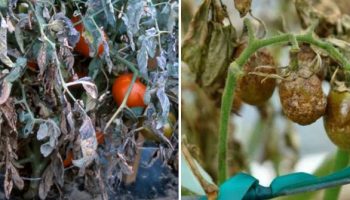
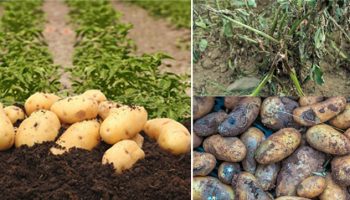
Among the fungal infections affecting vegetable crops, late blight is considered the most insidious on potatoes, tomatoes, and other plants. Now we'll focus on root vegetables. Over many years of experience growing nutritious tubers, I've learned to cope with this scourge. Although it's impossible to completely eradicate the pathogen, prevention helps keep the disease in check. Under unfavorable conditions, the harvest can be saved if treatment is started early.
Description of late blight
Late blight is a rot disease caused by mycelial microorganisms called Phytophthora. These fungi can infect many crops. Once they penetrate the soil, they persist for many years, awaiting favorable conditions for development.
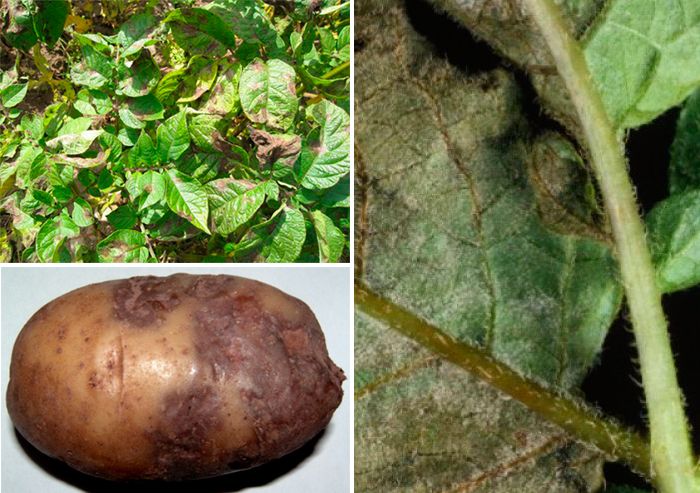
What do late blight lesions look like?
- Dark, water-soaked spots appear on the leaves; they grow larger and turn brown. A whitish coating appears on the underside of the leaves—these are asci, where spores develop. The fungus eats away all the tissue of the plant. The foliage may darken completely and dry out on the roots.
- Gray-brown spots appear on the tubers, making the potatoes uneven and dented. During storage, the spots enlarge, turning dark brown and soft. Rotten flesh is clearly visible when cut and is recognizable by its unpleasant odor. Over time, it turns slimy.
If you don't combat the fungus when the first signs of infection appear, the entire crop in the basement and cellar will be lost by spring. In the event of widespread infestation, fungicides can help save at least some of the crop, which I'll discuss later.
Causes and symptoms of potato blight
First, a few words about how spores are spread. Besides wind, they are carried by:
- rodents;
- people on clothes, shoes;
- pets;
- birds;
- insects, the same Colorado potato beetle, butterflies.
The infection can be introduced into the soil:
- when planting infected seed material, the insidious late blight on the tubers does not immediately appear;
- using unprocessed tools and containers;
- if you add compost from rotted diseased tops;
- with manure;
- when watering with contaminated water from open reservoirs or barrels; when favorable conditions arise: the temperature drops, rain begins.
With increased humidity and contrasting night and day temperatures, the mycelia swell and begin to develop. They burst, seeding nearby plants. Even isolated, spotty outbreaks of rot are dangerous. Incidentally, if tomatoes in a greenhouse are affected or spotting appears on apple or berry trees, potato crops should be immediately monitored and sprayed to prevent late blight.
Incidentally, it's best to dig up infected potatoes early if they're isolated plants. Harvest infected plants and store them separately from the rest of the potato crop. They're eaten first.
The infection spreads through the plant from the bottom up, first to the leaf blades near the ground, then to the trunk and the top. Cells dry out and become dehydrated, and the leaves and trunk become brittle.
How is late blight dangerous for potatoes and humans?
I wasn't surprised to read that late blight destroys up to 25% of crops annually. In cool, rainy years, gardeners lose significantly more. Under favorable conditions, late blight spreads very quickly, transferring to other crops and entering the soil and water. Spores remain viable in soil and compost for at least four years.
Other diseases develop alongside rot, and the spots are a gateway for other infections. The chemicals some farmers use to disinfect harvested root vegetables leach into the flesh. Eating such potatoes is unsafe.
Treating potatoes against late blight
From personal experience, I know that the best control is prevention. The main measures to reduce the risk of late blight are:
- In late autumn, I always treat all buckets, rakes, shovels, and other equipment with a concentrated solution of furacilin or potassium permanganate.
- In spring, we always green up the seedlings and keep them in the sun for several days. The solanine formed under the skin is toxic, and these tubers rarely get sick. When planting, neighbors sprinkle a handful of a 4:1 mixture of wood ash and Fitosporin into the holes. Agronomists recommend treating the tubers with a fungicide: soak the tubers prepared for planting in the solution for up to 30 minutes.
- If fungus has appeared in your neighbors' or greenhouse nightshade plants, you need to treat your potato crops immediately, otherwise it will be too late.
- Every fall, I sow rye in the same spot where I plant tubers every year. In the spring, we dig the green manure sprouts into the soil. This is an effective way to improve the soil, and it also provides additional nutrition. I've noticed that no matter how much rye I sow, the potatoes don't store as well. Every now and then, I come across a rotten tuber.
I've noticed that varietal seed material is less susceptible to disease. Scientists have indeed learned to select varieties resistant to late blight.
Insect and animal safe fungicides
If potato blight does occur, I use herbal infusions, mineral supplements, and folk remedies for small lesions. If the infestation is severe, chemicals are essential. I spray at the first signs of late blight. The frequency of treatments depends on weather conditions and the effectiveness of the solution.
Copper-based mineral compounds, the most popular being Bordeaux mixture. I dilute 100 g of copper sulfate in hot water to bring the volume to 10 liters, then add ½ cup of chalk.
Copper oxychloride is found in the following preparations:
- Abiga-Peak is a moderately toxic composition;
- Oxychom is copper oxychloride and oxadixyl, a rather toxic agent;
- Hom is pure copper chloride.
When working with mineral compounds, it is recommended to wear a respirator and gloves. Repeat treatments are carried out at intervals of 5-7 days if late blight is not eliminated the first time.
Biological products act superficially on plants and consist of microorganisms that develop on the spores of pathogenic fungi. There are quite a few of them, but I'll list the ones I've used in greenhouses to treat tomatoes and eggplants and to spray potato crops: Gliokladin, Fitosporin or Fitosporin-M, Gamair, and Alirin-B. Universal products against all types of fungi include Trichodermin, Planriz, and Rizoplan.
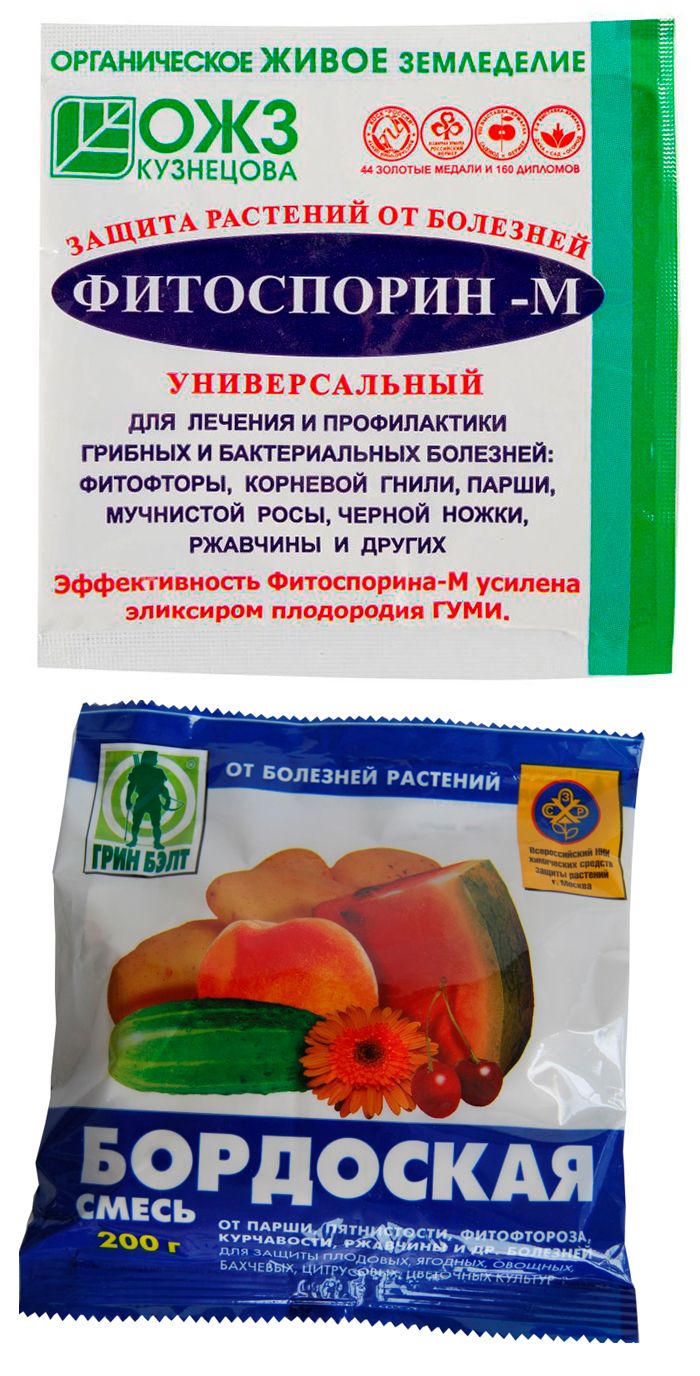
Apply the products in the evening, when no precipitation is expected. I use dry powders in the morning, spraying them on damp leaves before the dew dries.
Treatment with biological preparations is permitted to be carried out every three days.
Folk remedies are needed to prevent late blight; they boost plant immunity and create conditions unfavorable for the development of fungal diseases. Treating damaged bushes with them is useless.
- Ash dries out soil and leaves well. The best ash is from birch firewood. I don't sift it much when I spread it under bushes with a shovel. A sieve is convenient for dusting.
- Whey and fermented milk products are effective for individual beds; they are not suitable for large plantings. Expired kefir, whey, or sour milk are diluted with water 1:10.
- Polypores, a fungus that grows on the trunks of deciduous trees, are dried and crushed. Add 100 grams of the fungus to a liter of boiling water. Let the mixture steep for three hours, strain, and pour into a spray bottle.
- To make a garlic infusion, pour 100 grams of the paste into 10 liters of water, let it steep for 24 hours, then add 50 ml of liquid soap. The smell from this treatment lasts for up to two days.
Chemicals must be diluted according to the instructions. The final treatment of the tops should be done no later than three weeks before harvesting. There are many different treatments, and each one works well.
- Ditan-M-45;
- Efal;
- Ridomil;
- Bravo;
- Syngenta;
- Epin or Epin-plus;
- Thanos;
- Topaz.
This is far from a complete list of chemicals. But it's best to avoid serious damage to your crops.
Potato varieties resistant to late blight
In garden plots, it is recommended to grow varieties that have good resistance to late blight.
Early ripening varieties that are harvested in August before the autumn rains:
- Spring White – with light skin, round tubers, 80–140 grams in size;
- Spring Pink – oval, with red eyes, average potato size 135 g;
- Bullfinch – with tubers up to 90 g, stable, suitable for long-term storage;
- Desiree – with pink skin, yellowish flesh;
- Polish lotus – oval-round light tubers measuring 90-135 g, creamy flesh.
Mid-early varieties:
- Snow White is resistant to many diseases and cooks well.
- Skazka – light with pink spots near the eyes, valued for its taste, medium-sized tubers;
- Charodey ii – is distinguished by its productivity, the tubers are of medium size;
- Rainbow – with oval tubers up to 150 g, valued for its taste and shelf life;
- Sante – round with light skin and yellowish flesh.
Late varieties:
- Tempo – large oval tubers with light skin;
- Golubizna – round with a mesh skin and white flesh;
- Asterix - with purple skin and light flesh;
- Seagull – pink, oval tubers, light yellow flesh.
I've noticed that early-ripening varieties are much less susceptible to disease, as they usually become infected before conditions become favorable for late blight. However, they can't be stored for long periods; the tubers quickly become limp in the spring. For long-term storage, we grow the late-ripening varieties Asterix and Golubizna. We collect them in separate bags.