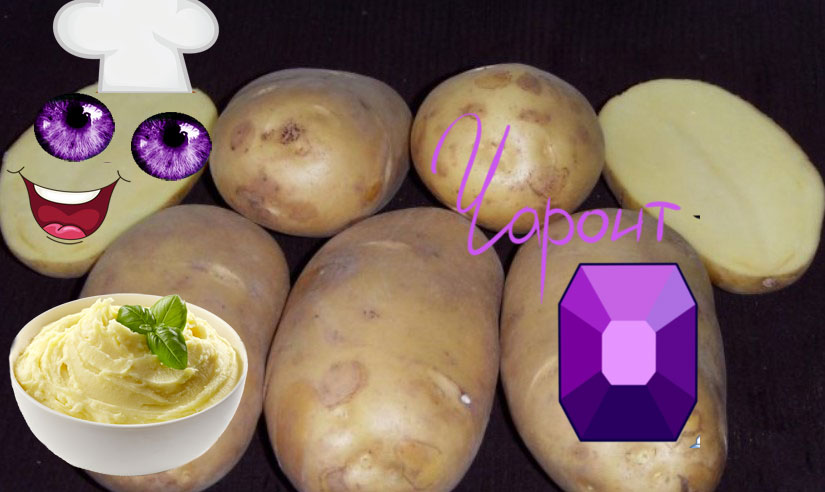
The Charoite potato variety is widely used for planting in home gardens due to its high yield and relative ease of cultivation.
Content
- 1 Table with characteristics of the Charoite potato variety
- 2 The origin of the Charoite potato variety
- 3 Description of the Charoite potato variety
- 4 Advantages and disadvantages of the Charoite potato variety
- 5 Planting Features of the Charoit Potato Variety
- 6 Caring for the Charoit potato variety
- 7 Protecting the Charoit potato variety from diseases and pests
- 8 Harvesting and storing the Charoit potato variety
- 9 Comparison of the Charoite potato variety with other varieties in the table
- 10 Reviews of the Charoit potato variety
Table with characteristics of the Charoite potato variety
| Characteristic | A potato variety with early ripening periods, allowing for two harvests per season. |
| General information | Medium-sized compact potato bushes with good yield and high starch content in tubers. |
| Ripening time | 45 days |
| Productivity | 104-269 c/ha |
| Marketability | 82-90% |
| Shelf life | 96% |
| Starch concentration | 14-17% |
| Color of pulp | Pale yellow |
| Peel color | Light yellow |
| Weight of commercial tubers | 100-145 g. |
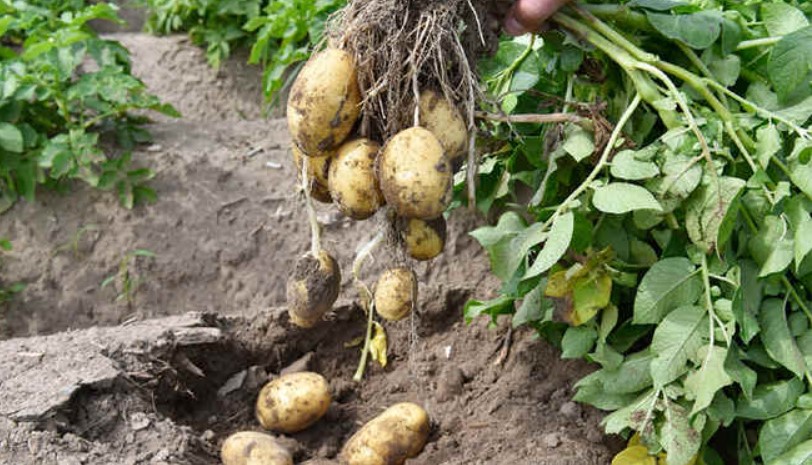
| Number of tubers per bush, pcs. | 8-12 pcs. |
| Taste characteristics | Excellent taste, boils down slowly |
| Class and purpose in cooking | Table purpose, class C/D |
| Suitable regions for growing | Northwestern, East Siberian, West Siberian, Northern, Lower Volga, Ural, Central |
| Disease resistance | Resistant to potato cancer. Rarely affected by late blight and striped mosaic. Susceptible to potato cyst nematode. |
| Growing specifics | It does not tolerate waterlogged soil. If growing conditions are not met, it is susceptible to late blight. |
| 2014 | |
| Country of origin | Russia |
Photo gallery of the Charoite potato variety
The origin of the Charoite potato variety
The Charoit potato variety was developed by St. Petersburg breeders in 2011. It was added to the register three years later, in 2014.
Description of the Charoite potato variety
The main characteristics of the Charoite potato are its rapid ripening and high starch content. More detailed characteristics are described below.
Bushes
The bushes are not very tall. The shoots are gently spreading, growing from 60 to 70 cm. The leaves are large, light green, with wavy edges. The flowers are lilac-colored on the underside.
Tubers
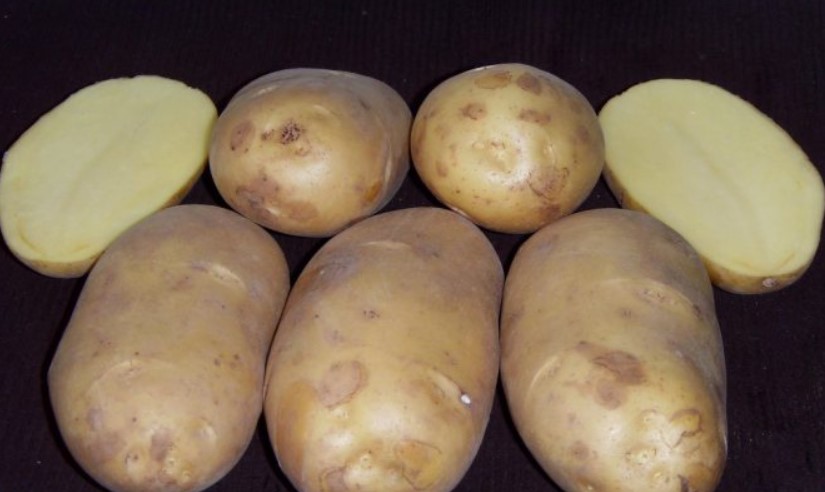
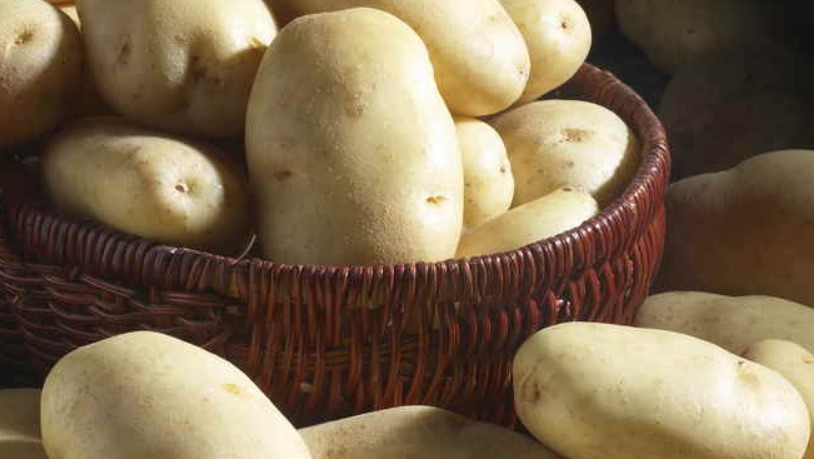
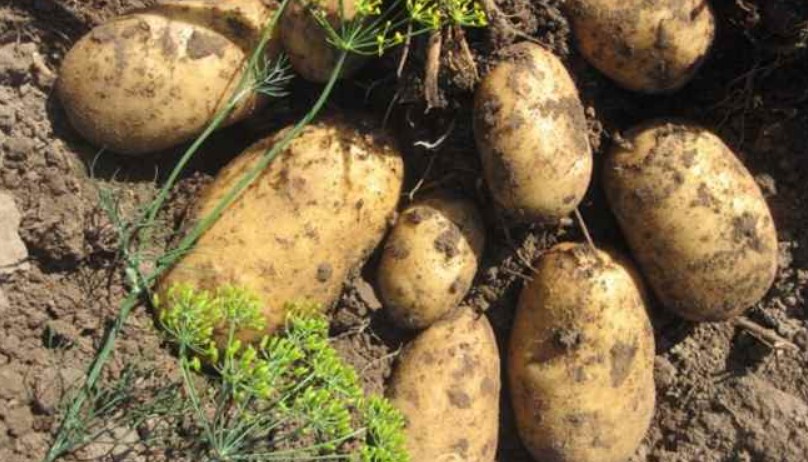
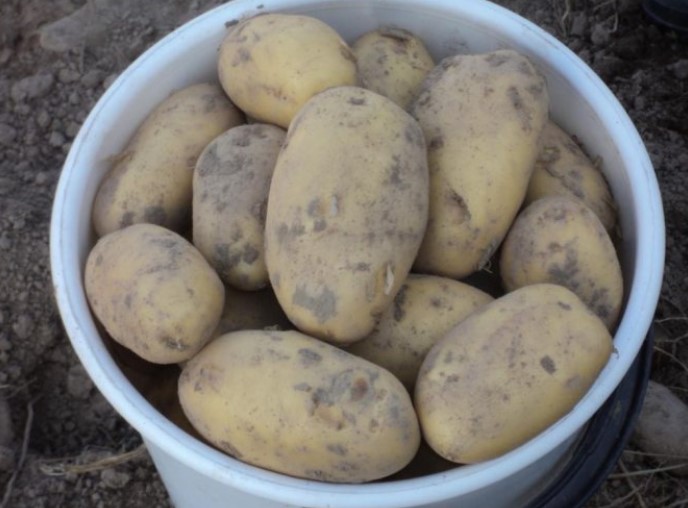
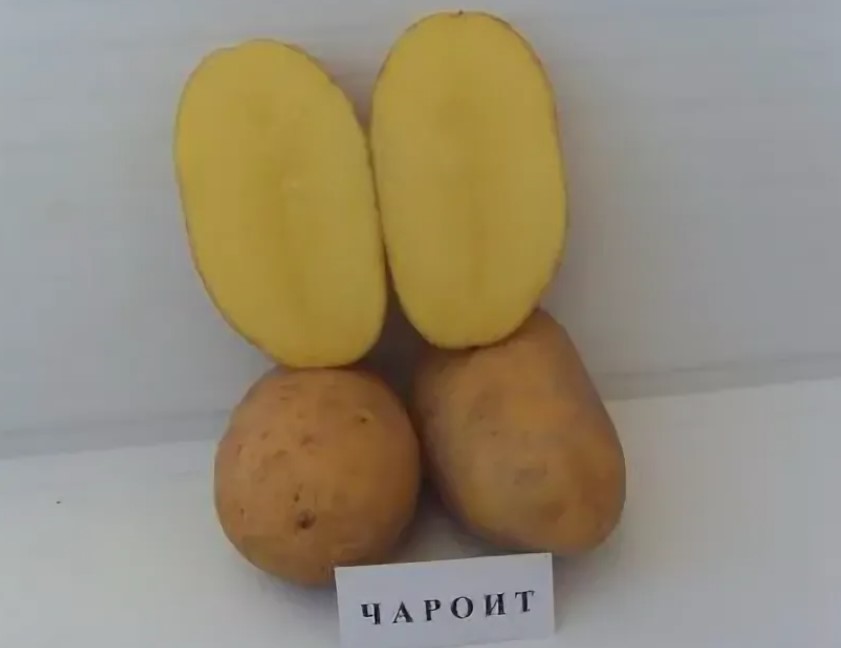
The tubers are elongated-oval in shape, with light yellow skin and small eyes on the surface. The flesh is pale yellow and cooks poorly due to its high starch content. Each tuber weighs 100-145 g.
Nutrients and nutritional value
The Charoite variety is distinguished by its high starch content (up to 20%). Furthermore, its pulp contains a large number of beneficial substances: cobalt, phosphorus, sodium, magnesium, zinc, and others. It makes an excellent puree and is used for baking, boiling, and stewing.
Productivity, ripening time
Charoit potatoes mature in just 45 days from germination. The tubers reach technical maturity in 50-60 days, so this variety can be planted twice per season.
Yields vary depending on growing season and range from 104 to 269 centners per hectare. Under favorable conditions, they can be up to 30% higher.
Resistance to diseases and pests
The table below shows the main potato diseases and the degree of resistance to them in the Charoit variety.
| Name | Degree of stability |
| Virus (PVY) Y | High |
| Virus (PLRV) L | High |
| Cancer | High |
| Golden nematode | Low |
| Leaf blight | Average |
| Tuber blight | Average |
| Striped mosaic | Average |
For which regions is the Charoit potato variety suitable?
The Charoit variety was zoned by its originator for cultivation in the Northwest, East Siberia, West Siberia, Northern, Lower Volga, Ural, and Central regions. However, experience has shown that the potato grows and produces well in other regions as well, provided there is no excessive rainfall or high humidity.
Advantages and disadvantages of the Charoite potato variety
The Charoite variety has both advantages and disadvantages. These are listed in the table below.
| Advantages | Flaws |
|
|
Planting Features of the Charoit Potato Variety
The Charoite potato requires fertile soil and limited moisture; these conditions will promote an excellent harvest and reduce the risk of disease.
Requirements for the landing site and its preparation
The Charoite potato requires fertile soil. If the soil is poor, you won't get a good harvest.
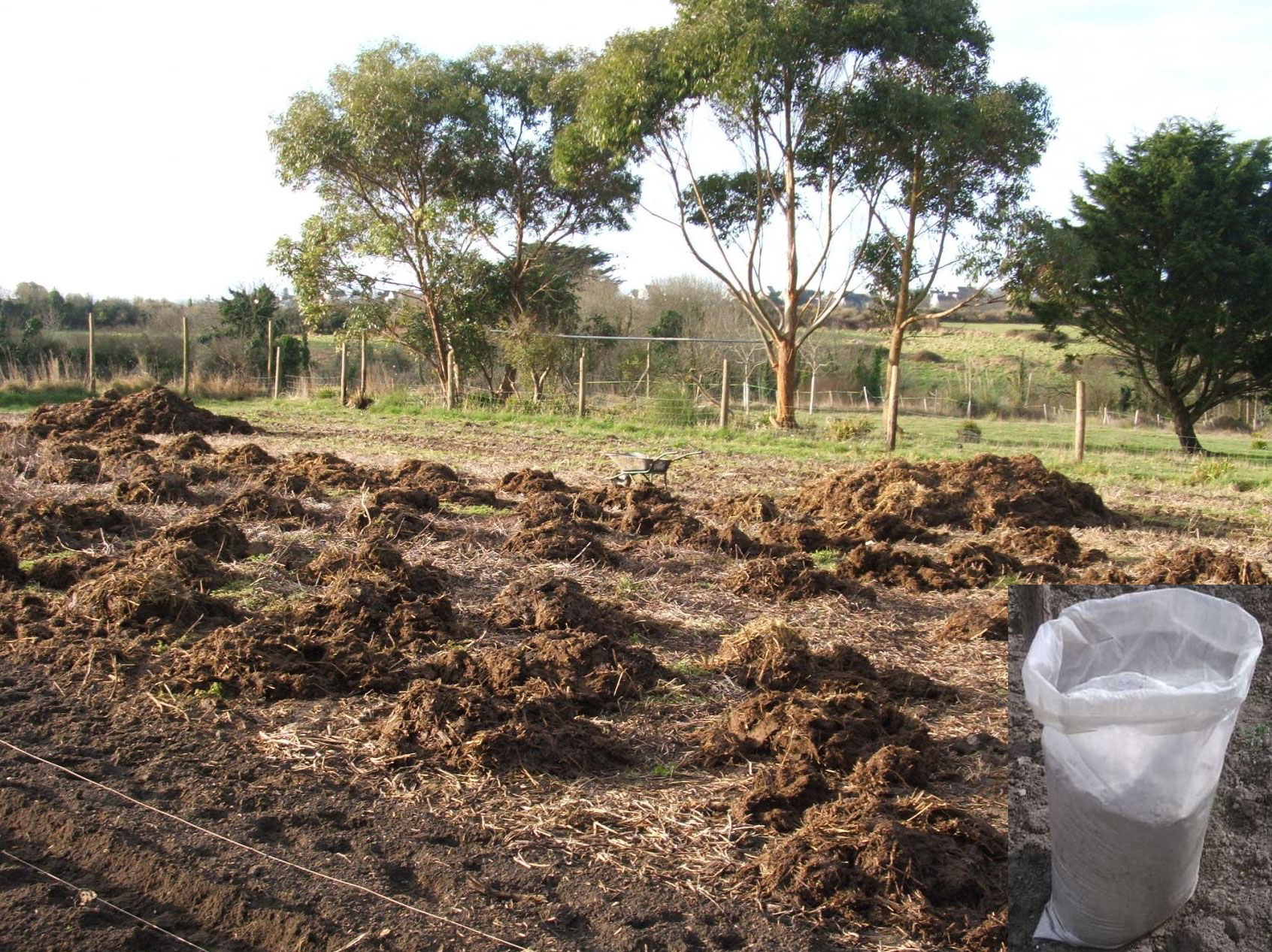
In the fall, the beds are dug over, adding manure and humus. In the spring, they are dug again, adding organic fertilizer.
An important factor when choosing a site for planting potatoes is crop rotation, which must be taken into account. Potatoes will suffer from diseases and bear fruit poorly in areas where beets and tomatoes were previously grown. Cucumbers, legumes, and grains make good predecessors.
Avoid planting potatoes in locations with close groundwater levels or in low-lying areas where moisture stagnates. Charoite does not tolerate overwatering very well, and will become diseased and produce a modest harvest.
Selection and preparation of seed tubers
To plant potatoes, select uniformly sized tubers weighing 60-70 grams without damage or signs of disease. One to two months before planting, place the tubers in boxes and place them in a warm place to germinate. Turn the potatoes periodically to ensure uniform sprouting.
1-2 days before planting potatoes in the garden, it is recommended to harden them off - place them in a room with a temperature of 12 degrees, after covering them with a dark cloth.
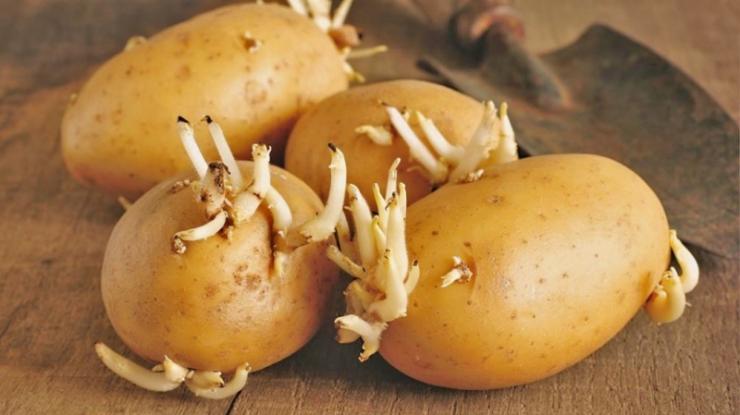
If the height of the sprouts has not reached 2 cm, then the tubers need to be additionally illuminated with a phytolamp.
Planting times and rules
The Charoite potato is an early variety, so if planted in May, the first harvest can be harvested as early as June. In many regions, the harvest can be harvested twice during the season.
Potatoes are planted when the soil warms up to 10 degrees, which usually coincides with the opening of birch buds.
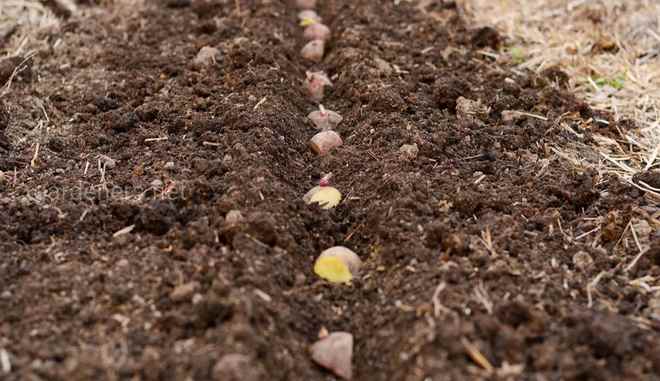
Holes 10 cm deep are spaced 30-40 cm apart. A 60 cm gap is left between rows. A handful of ash and complex fertilizer is placed in each hole, mixed with soil, and a tuber is placed on top, sprout-side up, and covered with soil.
Caring for the Charoit potato variety
The Charoite potato is demanding of soil composition; a good harvest can only be obtained if it contains sufficient nutrients.
Watering
The soil should be moistened for the first time after planting. Subsequently, it's important to be mindful of weather conditions. If there's been no rain and the soil is dry and cracked, watering is necessary. This should be done in the morning or evening, avoiding contact with the leaves. The recommended watering rate for each bush is 6-10 liters during the initial stages of growth. Subsequently, it increases to 20 liters. If it rains, watering is not necessary, as this can increase the risk of various diseases, such as late blight.
Top dressing
Charoite bears well only in fertilized areas, so organic fertilizers should be added to the soil in the fall and spring. Be careful with nitrogen; it's only suitable for the initial stages of potato cultivation. After that, it's best to use complex fertilizers.

For better yield, you can fertilize potatoes 3 times per season:
- 2 weeks after planting.
- At the stage of active tuber formation.
- 21 days before harvest.
Loosening, weeding
Loosening and weeding should be carried out several times per season to improve soil aeration and reduce the risk of pests and diseases.
Hilling
Hilling is the process of piling soil onto the stem of a plant. The resulting mound protects the tubers from freezing, overheating, and pests. It also improves their nutrition, which increases yields by 25-30%.
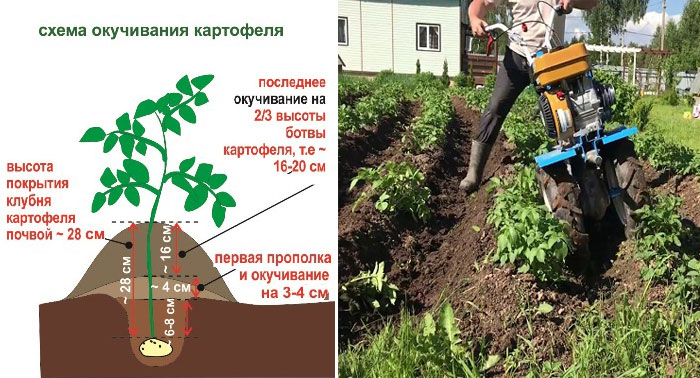
Hilling is carried out 3 times per season:
- When the shoots reach a height of 10-15 cm.
- 21 days after the first procedure.
- When the bushes grow to 25 cm.
Protecting the Charoit potato variety from diseases and pests
The table lists the main diseases and pests of the Charoite potato.
| Disease, pest | Characteristic | Prevention and treatment |
| Late blight
|
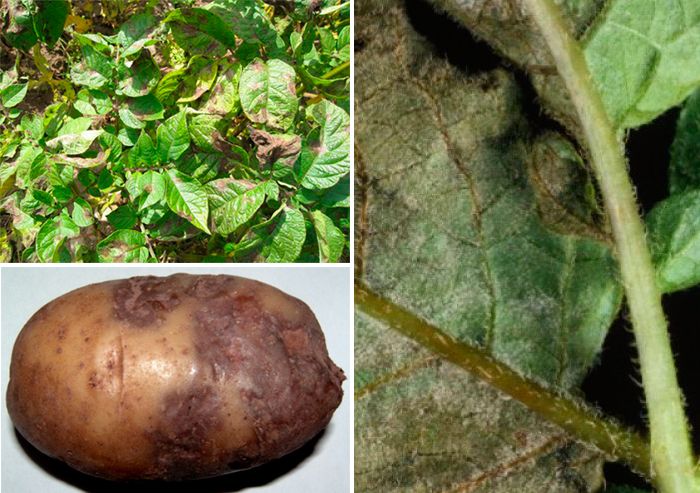
Brown spots appear on the leaves, and spores can be seen on the underside. The leaves curl and wilt. The tubers become affected by rot and also become spotted. | As a preventative measure, it's recommended not to overwater the plantings and to treat the potatoes with a copper sulfate solution. In cases of mild infestation, spray the plants with fungicides such as Acrobat or Ridomil Gold. If the infestation is extensive, dig up and burn the plants. |
| Golden nematode | When digging up tubers, golden balls—cysts—are visible on the root system. These cysts eventually hatch into worms, which consume the tubers and cause them to rot. The bushes turn yellow and become stunted. | Nematicide agents can help kill the parasite. However, it's best to dig up and destroy already infected bushes. Then, thoroughly cultivate the soil. |
| Colorado beetle
|
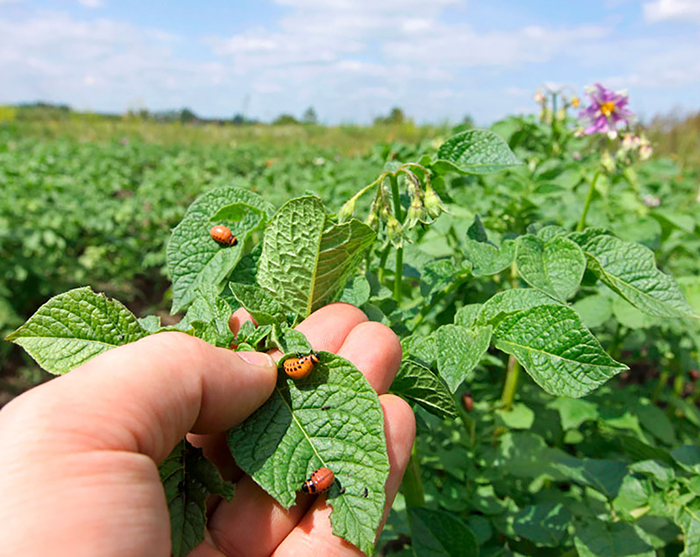
Striped beetles are visible on the bushes, devouring potato leaves. Orange-yellow eggs are visible on the underside of the leaf blades. | As a preventative measure, weeding and hilling of plantings is recommended. It's best to collect beetles by hand; if there are large numbers, spray with specialized products such as Aktara, Corado, and others. |
Harvesting and storing the Charoit potato variety
Experienced gardeners recommend cutting off all the tops two weeks before harvesting. This helps harden the tubers' skins, making them easier to dig up.
More details about the harvesting times for different potato varieties, About potato diggers and how to make them yourself You can find out more on the website Top.tomathouse.com.
Harvesting should be done in warm, dry weather. Potatoes are laid out under a canopy to dry. If part of the harvest is to be used for future planting, it will need to be left in the sun.
Next, the tubers are sorted: damaged or rotten potatoes are removed; if they are stored, they could harm the entire crop.
Find out rules for storing potato tubers, and also, as keep it in purified form.
Charoite potatoes don't have a long shelf life, so they should be eaten first. The tubers are placed in boxes or cloth bags and stored in a dark room with a temperature of 2 to 4 degrees Celsius and humidity no higher than 80%.
Comparison of the Charoite potato variety with other varieties in the table
| Variety | Ripening period (number of days to maturity) | Starch (%) | Yield (c/ha) | Weight of tubers (g)
Number of tubers per bush Color of tuber, pulp |
Shelf life (%) |
| Charoite | Ultra-early | 14-17 | 104-269 | 100-145
8-12 light yellow, pale yellow |
96 |
| Impala | Ultra-early | 10-15 | 180-360 | 90-160
15-21 yellow, light yellow |
95 |
| Empress | Ultra-early | 14-16 | up to 400 | 70-145
8-12 yellow, yellow |
91-95 |
| Vineta (Veneta) | Early ripening* | 13-15 | 160-228 | 67-130
13 yellow, light yellow |
87-90 |
| Assol | Early ripening* | 12-16 | up to 345 | 80-120
8-12 light yellow, cream |
92 |
| Luck | Early ripening* | 11-15 | 420-430 | 100-150
10-15 creamy yellow (brown), snow-white |
88-97 |
| Ariel | Mid-early** | 14.3-18.5 | 304-533 | 106-235
10-15 yellow, yellowish-white |
96 |
| Adretta | Mid-early** | 13-18 | 450 | 100-150
10-25 yellowish, light yellow |
95 |
| Gala | Mid-early** | 10.2-13.2 | 216-263 | 71-122
8-15 yellow, yellow |
89 |
| Zekura | Mid-early** | 13-18 | 350-370 | 60-150
12-20 sandy, light yellow |
98 |
| Lilly | Mid-season*** | 11.9-13.8%. | 108-196 | 96-157
6-9 yellow, yellow |
93 |
| Treasures | Mid-season*** | 12-18 | up to 650 | 95-250
12-18 yellow, yellow |
94 |
Ultra-early – 35-50 days.
*Early ripening – 50-65 days.
**Mid-early – 65-80 days.
***Mid-season – 80-95 days.
****Mid-late – 95-110 days.
Reviews of the Charoit potato variety
Now a little about tasting the varieties (I dug everything up at the very beginning of August (I dug one up every day or two), some of the varieties could have been dug up a month earlier, since most of the skins were already ready for winter storage, meaning the potatoes were no longer young), the potatoes were grown on a high, warm bed (about 60 centimeters high), they were pre-sprouted in very low light (almost in the dark), meaning the sprouts were almost white, grown without hilling (I sprinkled a little sawdust, wood chips, and grass around), watered a lot and often (the bed dries out very quickly), periodically (once every couple of weeks) with highly diluted complex fertilizers (6-9 times thinner than according to the instructions), and passed microelements over the leaves a couple of times.
At the very beginning, I watered them once with fuble (green fermentation solution). I'm specifically describing the conditions in detail, as they greatly affect the taste, as well as the crispness and other factors, so some varieties turned out crispy when they shouldn't have. All the varieties are suitable, as they were picked from a trusted source and verified there, meaning they were tested for compliance, and these are the right varieties. The potatoes were grown separately from the rest of the crop and specifically for summer consumption; they've all been dug up now.
1. Charoite. The tubers are white (well, actually, the tubers are more yellow, with light yellow flesh), slightly elongated, with small eyes. The yield is average (it's okay for an early variety; it all fits easily (2/3) in a saucepan (I'll use it to measure, I boil potatoes in it, but I don't know the volume).), but all the tubers are quite large, with no medium or small ones at all. The second bush (I dug up later) had a few medium ones in addition to the large ones, but there were practically no small ones either.
As far as I understand, the yield won't increase any further. I could have dug them a month earlier; the skins are already quite thick (I boiled them in their jackets, and almost all of the skin peeled off). The flavor is good (my family said they were delicious, and I'd say they tasted good), but they're no longer young potatoes. Mine were overcooked. There was no scab on the tubers, but in mid-August, the tops started drying out, and there was a bit of late blight on the tops. As an extra-early variety, it's very good, meaning it's definitely ready to be dug by early July. There are people in Kolpashevo who grow it twice a season. But the overall yield isn't very high. The potatoes bloomed with single purple flowers.
2. Red Lady. The bush is significantly more robust than Charoite. The tubers are red (a deep pink), slightly elongated, the flesh is light yellow, the eyes are shallow, and the tubers vary greatly in size, from pea-sized to large. All tubers are smooth (easy to peel).Some tubers already have thick skins (they fall apart when boiled), while others are still young (those don't fall apart, but acquire an oily consistency; I liked them, but not everyone in the household liked them). The taste varies depending on the ripeness of the skin; the skin itself is slightly bitter if boiled in its skin, which is common with red-skinned varieties. This variety of potato is more productive; I barely managed to squeeze all the potatoes from one plant into the same pot, with some sticking out of the water. I dug it up early; if it had sat longer, the yield, I think, would have been almost double that.
A little later, late blight also appeared on the bush and the tops began to dry out. I think this was due to late blight (it is definitely not resistant to it), and not natural drying out. The second bush was also variegated, but overall this variety is very productive. Where the first bush was located, I then dug everything up again and found four more healthy tubers (that is, tubers are forming and a little to the side). As a result, the variety turned out to be the most productive of those that I am describing today. If not for the late blight damage, the yield would have been simply record-breaking.
I had this variety starting to flower, but then the buds fell off.
There were isolated scabs on the tubers, but there were few of them.
3. Timo. The bush isn't very vigorous and hasn't bloomed at all. The tubers are white (well, sort of light yellow, the flesh is the same, but very light. I found gray strands in the flesh of a couple of tubers, but they're barely noticeable, perhaps due to my unconventional growing methods), flattened, with fairly deep-set apical eyes (I'll have to dig them out in winter).The bush produces a lot of tubers, but they're all a mixed bag, from pea-sized to slightly above average, with none of them being particularly large. The potatoes are already a bit old, although the smaller tubers have thinner skins. The variety is quite productive; the pot didn't fit all of them (!), but I'm not sure how much the yield will increase by fall, as the bush looks like it's almost time to finish its growing season. A little later, the same thing happened with the second bush: the tops began to dry out, and the second bush was also a mixed bag and less productive. But overall, the yield is good. The flavor is good, although the skin is already thick and slightly bitter. It doesn't boil over, meaning it's not too crumbly. The mashed potatoes are tasty. A couple of tubers had a few scabs.
4. Rosara. I had mixed feelings about this variety. The bush is slowly drying out (affected by late blight). The potatoes weren't blooming. I started digging and found quite a lot of them in the bush, and the potatoes were very diverse and large, almost like peas. There aren't many marketable potatoes, but judging by the condition of the bush, I'm afraid there will be a lot of unmarketable ones later.The potatoes themselves were a bit uneven, I think. The eyes were small, but sometimes they were cracked, sometimes they were crooked (I only picked two unblemished potatoes from the second plant; the rest had some damage or blemishes). Overall, I didn't really like them at first. Then I started cooking them. The skin was pink, the eyes were a bit brighter, the flesh was yellow, they were soft but not mushy, they were tolerably soft, and I liked the taste (delicious). There was a little bit of scab, but not much at all.
5. Vega. The bush is quite spreading and still green (it's susceptible to late blight, but much less so than the above-mentioned problems. If it had been growing alone and treated with hay bacillus, it likely wouldn't have had late blight). It recently bloomed with single white flowers. There are quite a lot of potatoes on the bush. The potatoes are a bit variegated, with many small ones, but very few "peas." There aren't many marketable potatoes at the moment, but judging by the tops, they should grow more by fall. The potatoes are spindle-shaped, with small eyes, but unlike Red Lady, they're slightly crooked, less attractive in appearance, and don't have very large tubers. The potatoes themselves are yellow, with a rich yellow flesh.The plants are quite dense and close together (I suspect that's why they're crooked, because they're so close together), although the second bush wasn't as dense. The flavor is good. It softens moderately. The skin isn't like the younger ones. There's some scab, not much, but it seems the variety is predisposed to it, as it was slightly more so than the others.
That is, the others had isolated scab lesions, with only a couple of tubers in the entire plant affected. Conversely, with Vega, only a couple were completely unaffected. The others had isolated lesions, and one potato in the plant was severely affected. This variety is also a favorite of slugs, and they ate a significant number of tubers, whereas other varieties had almost no such problems.
6. Snegiri. The bush is now green, clean, and quite fluffy (the tops are quite resistant to late blight). There are a lot of potatoes, about the same as Timo, maybe a little less (I cooked it in a different pot, so I'm not sure).The potatoes are pink, the flesh is white, they vary quite a bit in size, many are crooked, cracked, and so on, meaning they're not marketable. But the taste was disappointing; they're not very tasty. Well, they're edible, of course, but my family told me not to plant them again, saying the first one wasn't tasty.
7. Darenka. The bush is still green, but it's fallen apart. The potatoes have finished blooming, after a long bloom. The potatoes (in volume) are about the same as Vega. They're mostly large and medium. They're a little crooked, as they've had several growth waves—that's when growths start to grow on a smooth tuber, initially round, resulting in a "crazy mess." This hasn't happened yet, but the trend is clear. The skin is already firm. The eyes are slightly larger than Vega's, but it's not a big deal. The flesh is light yellow (almost white); mine tended to overcook. The flavor is average; for example, Vega and Rosara seemed tastier to me, but Darenka is tastier than Snegiri. It's moderately susceptible to scab. This year, I only saw no scab on Charoita, but that might just be coincidence.
8. Variety unknown. I was told it was Charoite, but it's definitely not that, as the bush is different in shape, the flowers are white, not purple, and the tuber morphology is different. It's simply early, not super-early like Charoite.So, I didn't want to write about it until I tried it. It turned out to have a very unusual flavor. I understand it's what's called a waxy potato (I'll say for sure only in the spring, after storage; you can also check the density in salted water). This is a potato with a thin skin, like a new potato, even in spring. The flavor is also interesting, a bit like a young potato, quite sweet, although the potato is only slightly overcooked and, judging by the size of the tubers, is no longer young (the skin peels off a bit when boiled in its skin). My family really liked it; they say they definitely need to plant it next year.
The skin itself is bitter (even though the potato is light yellow, not pink), but the flesh is tasty. The yield is good, on par with Vega. Currently, there are almost no small tubers on the bush, only medium and large ones, and there's quite a bit of scab on them. The tubers are light yellow, with deep-set eyes (especially the apical ones) (not very convenient for peeling). I suspect that the skin's characteristics may impair storage (it will certainly withstand mechanical damage less well), but I'll test that. The flavor will likely be significantly worse during storage; this type of potato is used for early consumption and isn't used in winter. Such varieties are not grown commercially. This is a rather complex but interesting variety, but I don't know its name.
When planted in early May, I had my first harvest by mid-June. I experimented with the Charoite potato variety. It's advertised as ultra-early, so it developed a decent amount of starch and was excellent when boiled. But that was a one-time occurrence; I haven't bothered with such complications since. With the usual May planting of early varieties, it's quite possible to enjoy young potatoes in early July without any tricks. You don't even have to dig up the entire plant. I'll rummage through the beds with my hands, gather large tubers for food, and the potatoes will continue to grow.
Some people are already seeing potato sprouts, but in Eastern Siberia they haven't even been taken out into the open to germinate yet.
I'll share my favorite varieties.
Early-ripening Charoite :super: Productive, large, oblong tubers with smooth yellow skin and yellowish flesh. Tasty and easy to store. The first one to be sampled is in early August. You can safely sample it on St. Elijah's Day.
Mid-early Tuleevsky :super:A productive, low-maintenance variety with excellent flavor. The tubers are large, oblong, with a yellowish, slightly rough skin. They taste very similar to Adretta, but unlike Adretta, they remain with thick green tops until harvest, in both dry and rainy summers. A bush will always contain 2-3 large tubers, but usually the entire bush will be empty, with very large and medium-sized potatoes and seeds.
The mid-season Spiridon :super: also delivers high yields and large tubers. Delicious. The skin is pinkish-red and smooth, the tubers are oblong and store well. The flesh is yellow.
A purple variety called Gzhel. I was sold at a store with that name. I couldn't find any information about it online, but I've been growing it for three years. The tubers are elongated, medium-sized, and blend in with the soil when dug. Try finding them.To be honest, I don't share the enthusiasm for the taste of colored potatoes. Perhaps I should grow some more colored ones. But I still grow a few, add them to vegetable stews, and they liven up the overall picture of the dish.
In general, we tried growing different varieties, and here I described those that I selected as constantly grown and the most favorite ones. Perhaps someone will find the review useful.