The Gala potato variety has earned the love of gardeners thanks to its excellent yield, pleasant flavor, and good shelf life. It's relatively easy to care for and is virtually unaffected by unpredictable weather conditions, which is highly appreciated in our climate.
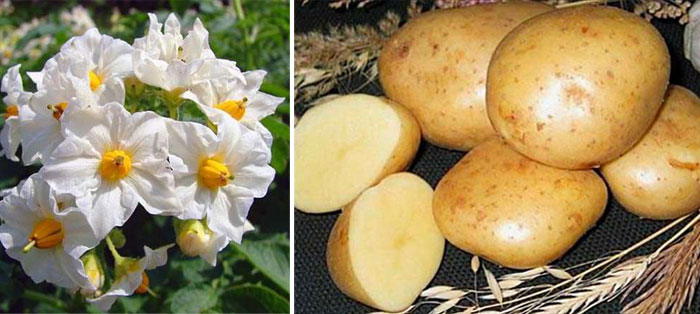
Content
- 1 General characteristics of Gala potatoes in the table
- 2 The origin of the Gala potato variety
- 3 Detailed description of the Gala potato variety
- 4 Advantages and disadvantages of the Gala variety
- 5 Planting Features of the Gala Potato Variety
- 6 Caring for the Gala potato variety
- 7 Protection of the Gala potato variety from diseases and pests (table)
- 8 The nuances of harvesting and storing the Gala potato variety
- 9 Tips from Top.tomathouse.com for growing the Gala variety
- 10 Comparison of the Gala potato variety with other varieties in the table
- 11 Real reviews from gardeners about the Gala potato variety
General characteristics of Gala potatoes in the table
This mid-early variety is popular due to its high resistance to variable weather conditions, frost damage, and several dangerous diseases. It also offers good transportability, a long shelf life, and high yields.
| Parameter | Characteristic |
| Ripening period | 70-80 days. |
| Starch content | 11-13% |
| Weight of commercial tubers | 70-120 g |
| Number of tubers in a bush | up to 25 pcs. |
| Productivity | 220-263 c/ha |
| Consumer and taste qualities | It belongs to culinary type A/B, meaning it's slightly crumbly. Most gardeners report it's delicious; see reviews at the end of the article. |
| Marketability of tubers | 71-94% |
| Shelf life | 89% |
| Bushes, stems, leaves | The bushes are of medium height, the stems are semi-erect, the leaves are matte with a wavy edge. |
| Peel color | Yellow |
| Pulp color | Yellow |
| Color of buds | White |
| Eyes | A little, quite small, but they can go up to 1.3 mm deep. |
| Preferred growing regions | North-West, Central, Volga-Vyatka. |
| Disease resistance | Resistant to potato cancer pathogen and golden potato cyst nematode. |
| Features of cultivation | It is recommended to increase the distance between tubers by 2-4 cm relative to the standard. This is due to the variety’s “multi-tuber” nature; it needs space for the harvest. |
| Year of entry into the Russian Federation register | 2008 |
| Originator | Company NORIKA GMBH (Germany) |
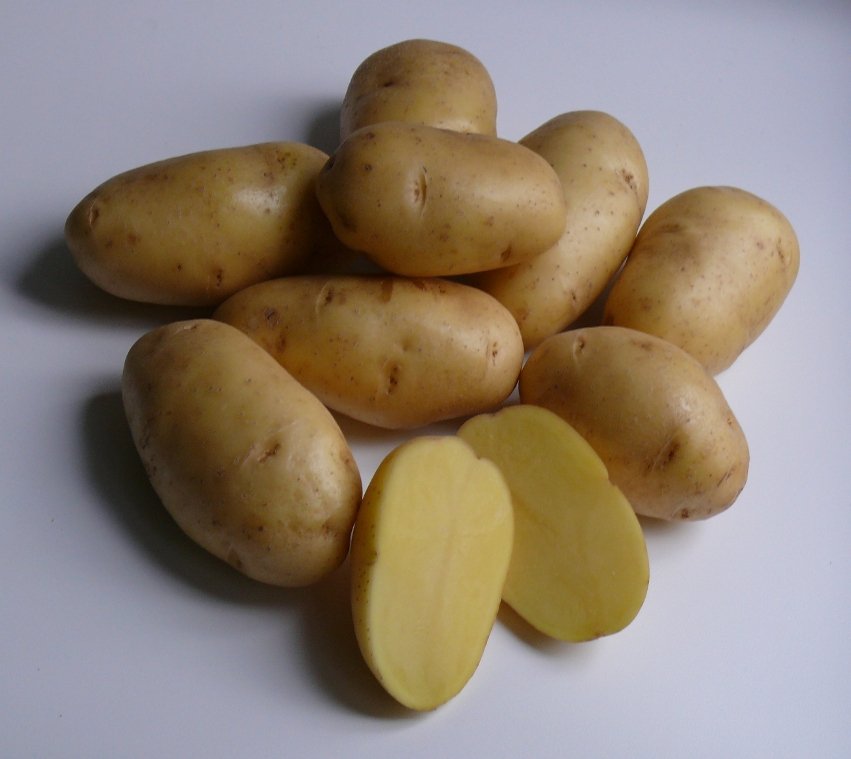
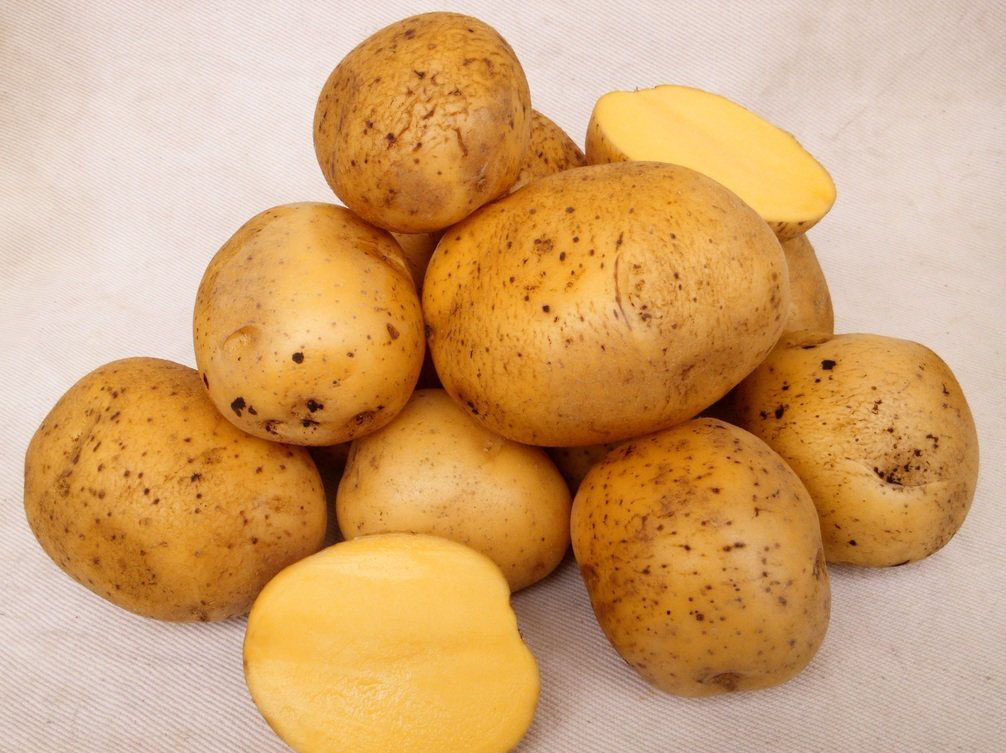
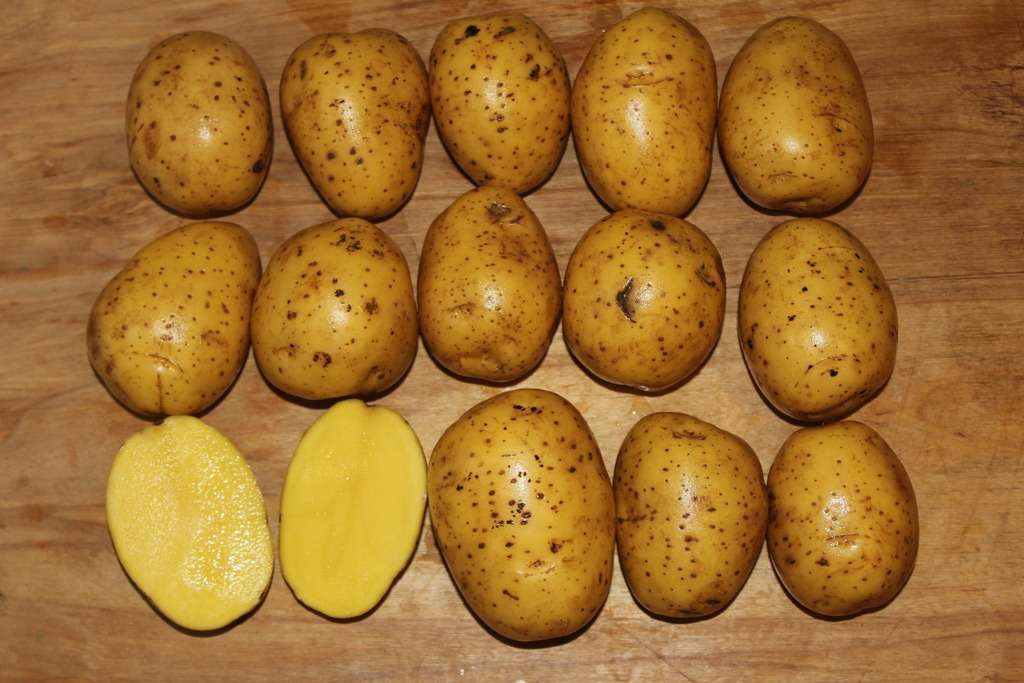
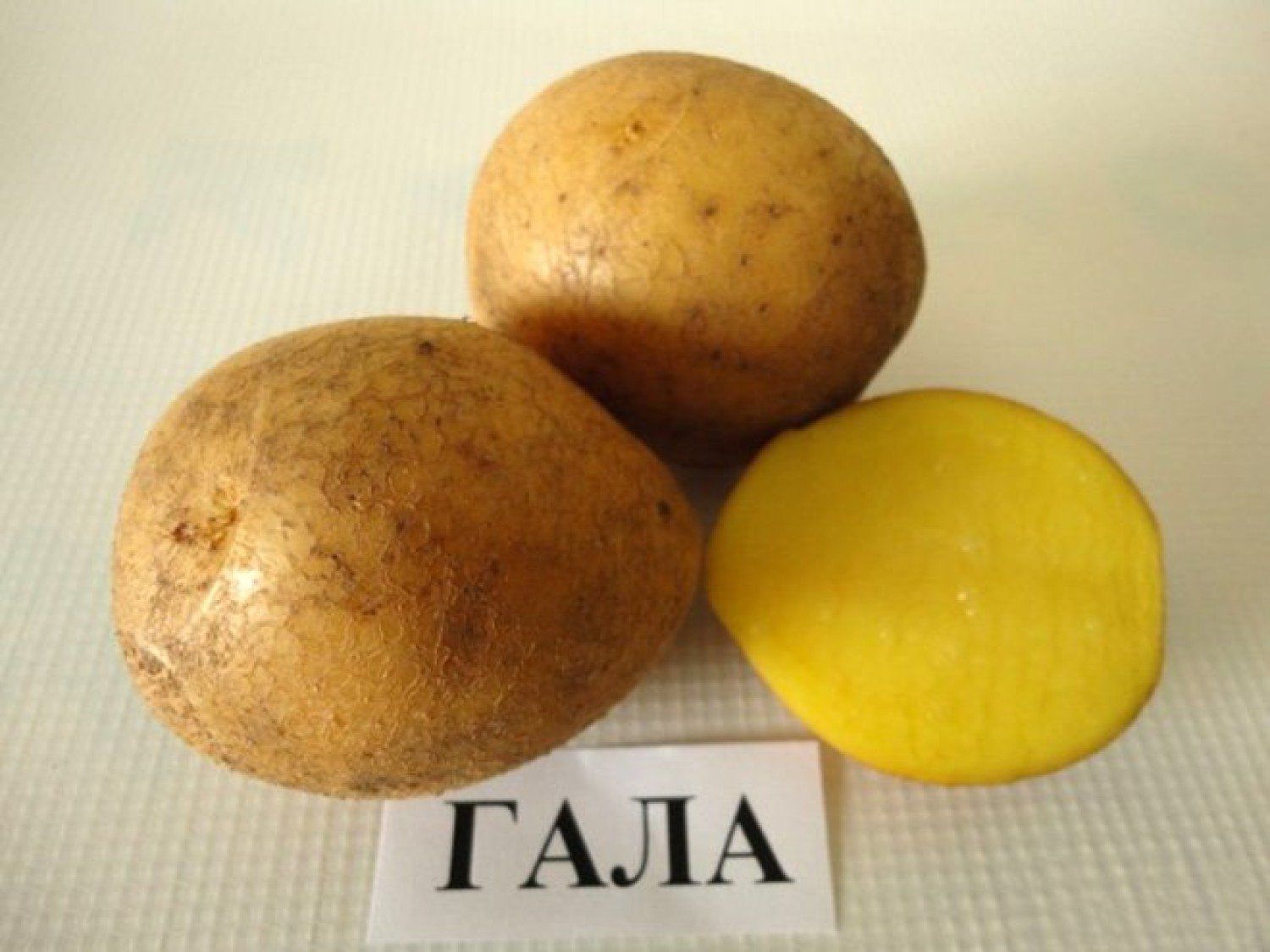
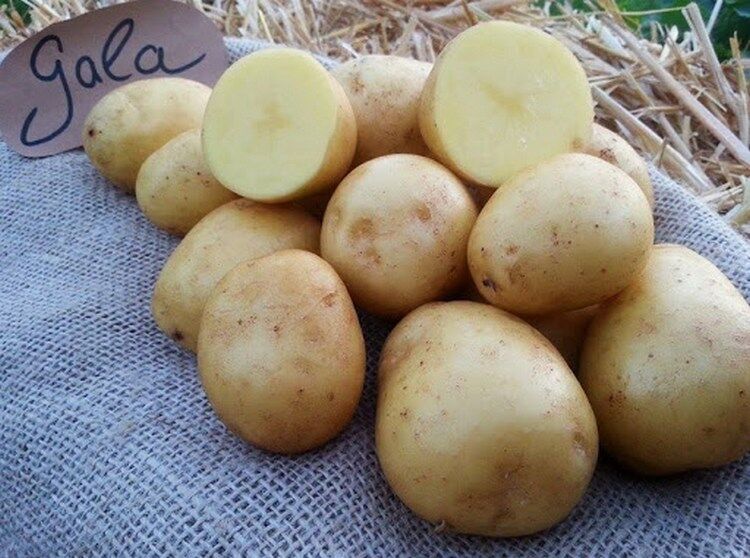
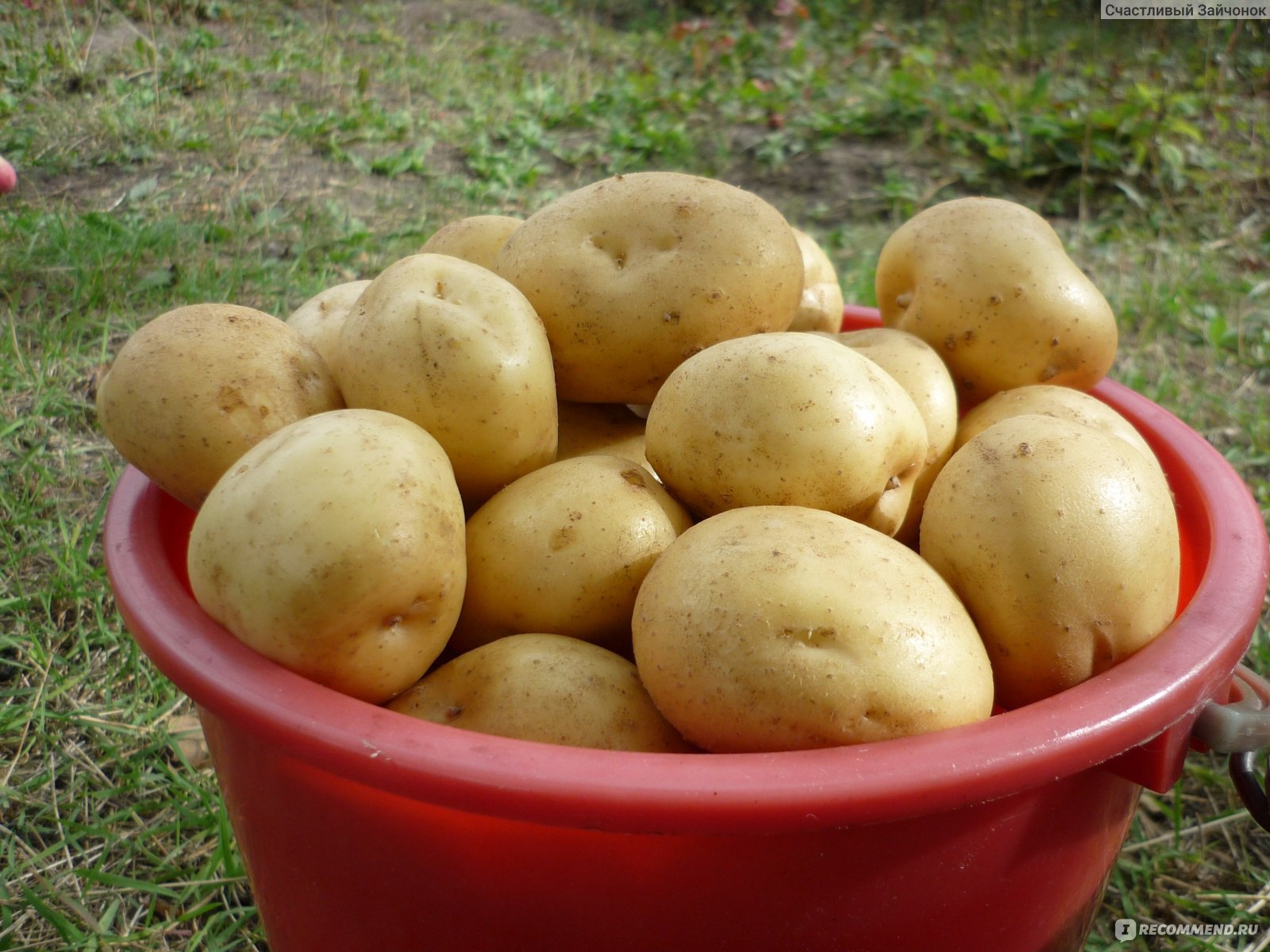
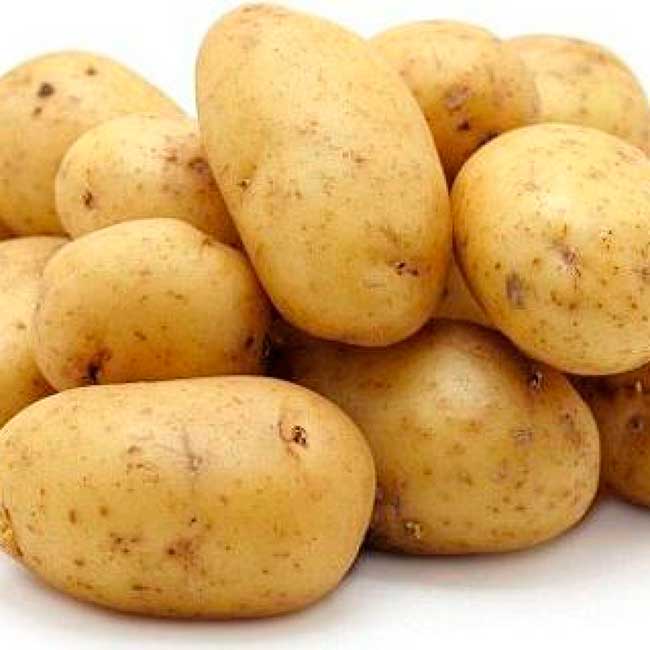
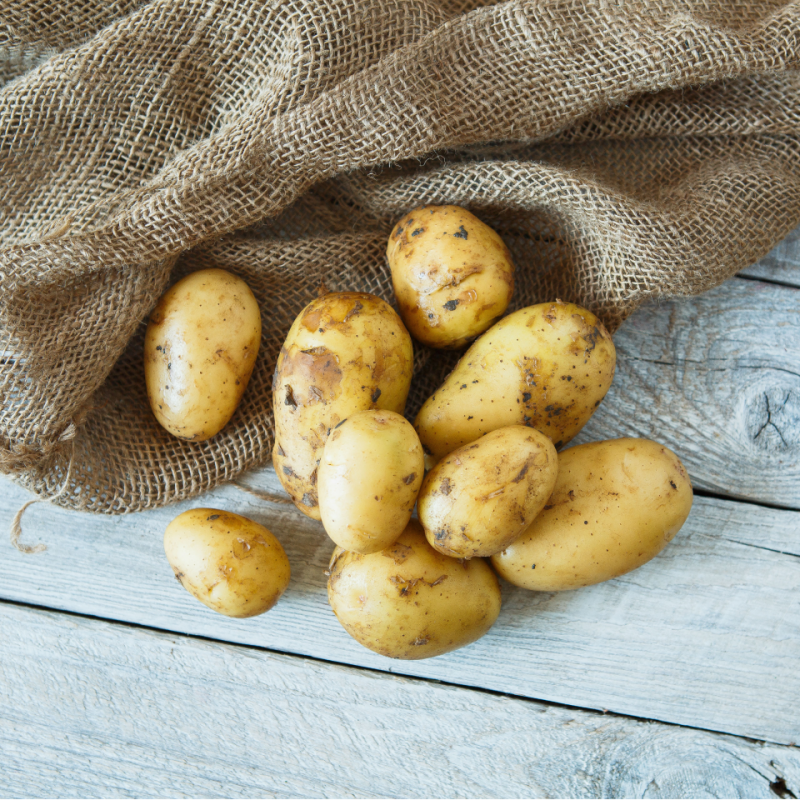
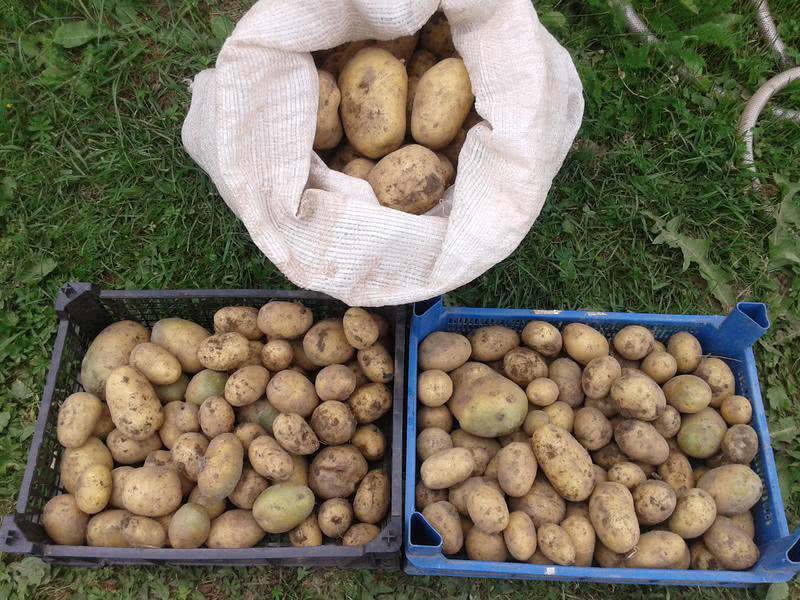
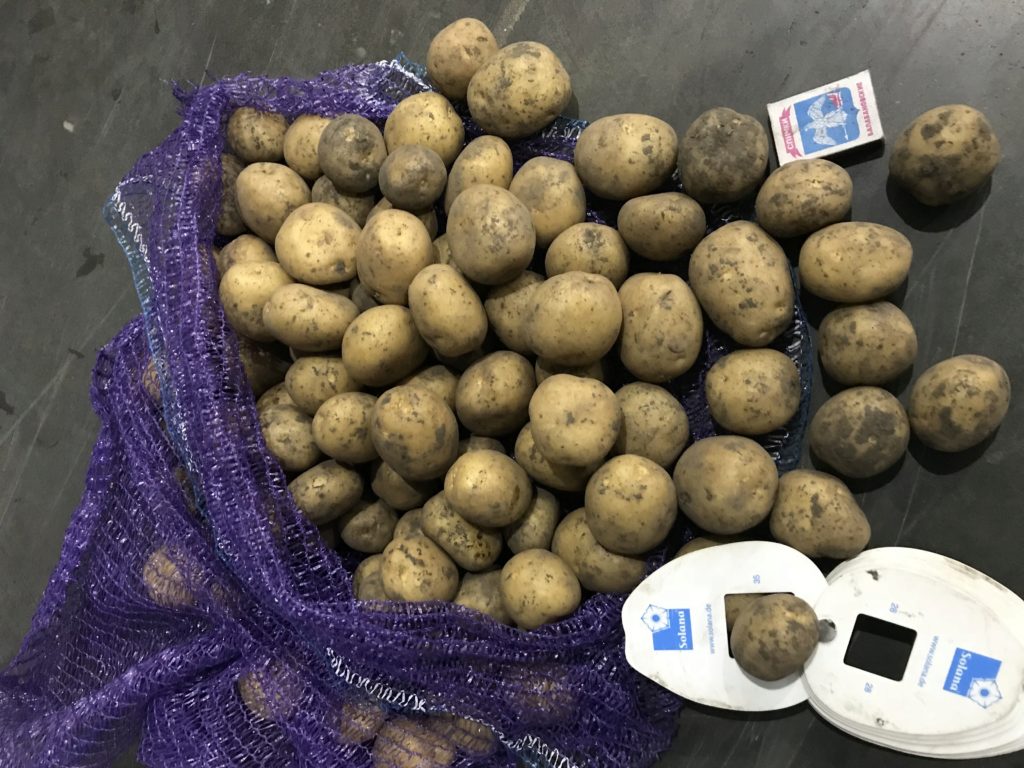
Photo of the Gala potato variety:
The origin of the Gala potato variety
The Gala hybrid was developed thanks to the efforts of German breeders from Norika. After being fully tested, it was distributed worldwide, but was only officially registered in our country in 2008. It arrived in Belarus only in 2011, and in Ukraine only in 2012. It was so beloved by gardeners that it topped the list of best-selling potatoes in 2013.
Detailed description of the Gala potato variety
The Gala variety has demonstrated excellent performance throughout virtually all of Russia, but has reached its peak in the Northwest, Volga-Vyatka, and Central regions. It is widely used not only in small farms but also in mass production, as it is ideal for mechanical harvesting, tolerates transportation well, and has a long shelf life without losing its flavor.
Potatoes reach full maturity approximately 70-80 days after germination, making them a mid-early variety. However, after just 45 days, you can dig up the first tubers to enjoy a fresh harvest.
Bushes
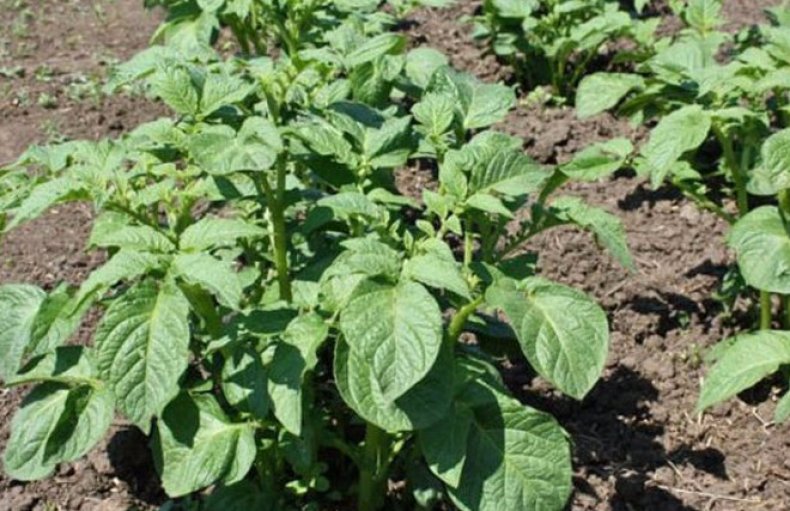
The bushes are medium-height, with semi-erect stems. The leaves have a matte finish and wavy edges.
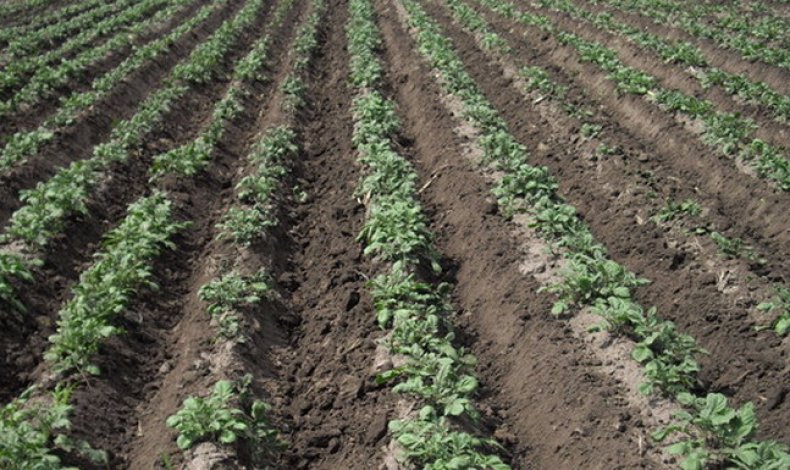
Seedlings emerge fairly quickly, with all shoots growing and developing evenly. Although Gala isn't a very spreading variety, the tops close up very quickly, leaving the potato field looking like a continuous green carpet.
Tubers
The tubers are uniform in size, weighing between 70 and 120 grams. Their shape resembles an elongated, slightly rounded oval. The skin has a yellow tint and can be smooth, although a netted texture is also acceptable. There are few eyes, which are quite small but can extend up to 1.3 mm deep.
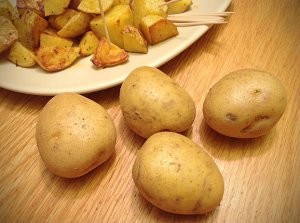
The tubers' structure allows for mechanical peeling, a definite advantage in mass production. The flesh ranges from pale yellow to deep yellow; if peeled potatoes are left without water, they may darken slightly within a short period of time.
This potato belongs to the A/B culinary type, meaning it doesn't crumble easily during cooking, making it a versatile variety. It's suitable for salads, soups, baking, frying, and even mashed potatoes with a longer cooking time.
Nutrients and nutritional value
The yellowish tint of the flesh is due to the presence of carotene. Besides carotene, the tubers also contain a number of other beneficial substances:
| Useful substances | Concentration |
| Starch | 10.2-13.2% |
| Squirrels | 1.8% |
| Reducing sugars | 0.31% |
| Vitamin C | 22.3 mg per 100 g |
Thanks to this composition, the Gala variety is used in the preparation of dietary dishes.
Productivity, ripening time
On average, one bush can yield up to 25 tubers. They are all nearly identical in size and shape.
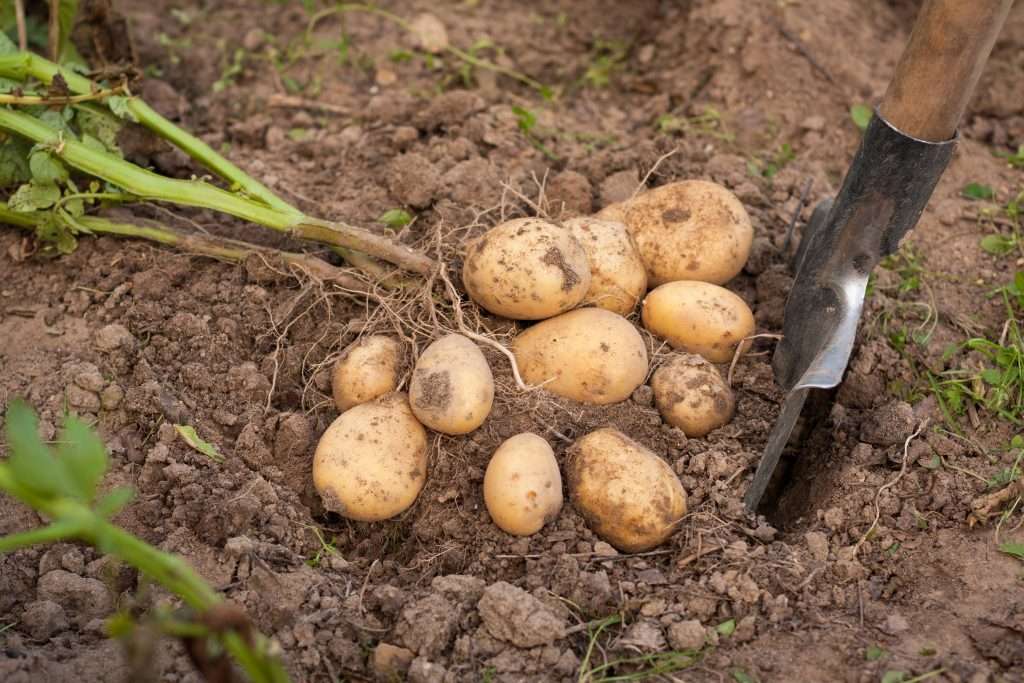
40 days after emergence, the yield is about 170 c/ha, and by the 70th day this figure increases and amounts to:
- 216-263 c/ha for the regions of Russia, the maximum figure was recorded in the Vologda region - 390 c/ha.
- 337 c/ha in Belarus, the absolute maximum was 568 c/ha reached in 2008.
The yield of marketable tubers at the output ranges from 71% to 94%, and the shelf life reaches 96%, which is an excellent indicator for the transportation and storage of tubers.
Resistance to diseases and pests
In addition to its excellent shelf life and transportability, the variety is distinguished by its high resistance to diseases and pests typical of potatoes.
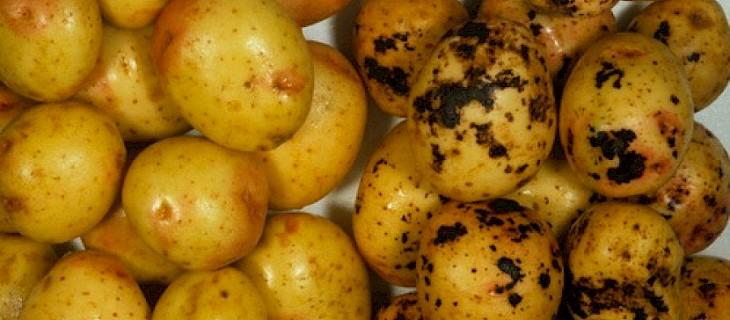
| Stability indicator | Diseases |
| High | Golden and pale nematodes, potato cancer, virus Y, tuber late blight, black leg, glandular spot, common scab. |
| Average | Late blight of tops, leaf roll virus, rhizoctinia. |
What regions is it suitable for?
The Gala variety is highly adaptable to growing conditions and is susceptible to damage only in Arctic frosts. It produces good yields in all other regions of the country, but its varietal characteristics are at their peak in the following regions:
- East Siberian,
- Central,
- Volga-Vyatka,
- Far Eastern,
- Lower Volga,
- Northwestern,
- Ural,
- West Siberian.
Advantages and disadvantages of the Gala variety
The Gala variety has a number of advantages and a few minor disadvantages.
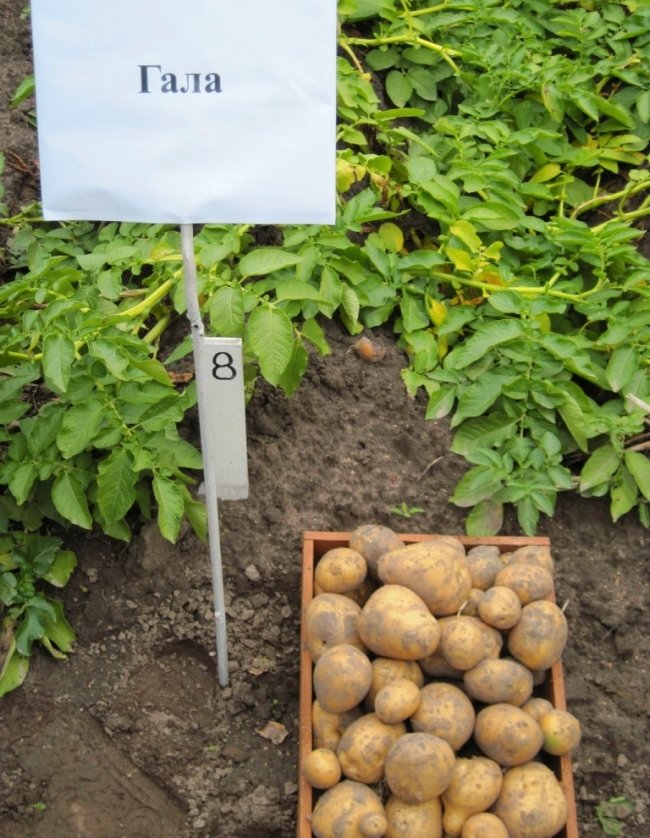
Advantages:
- It does not require much effort to grow and adapts well to almost any weather conditions in the country.
- The harvest ripens in a short time.
- It does not require regular preventative treatments, as it is resistant to many common diseases.
- In just two months of vegetation, you can get an excellent harvest of up to 260 c/ha.
- High tasting score from consumers.
- Adapts well to different types of soil.
- It is suitable for preparing dietary dishes and contains a lot of nutrients.
- Grows well even with minimal humus content in the soil.
- The tubers have excellent shelf life.
- During the cooking process, the potatoes do not crumble and do not lose nutritional value.
- Used in folk medicine to treat heart disease, gastrointestinal tract disease, and skin disease.
Flaws:
- When the soil is over-watered in combination with low air temperatures, there is a risk of late blight infection.
- Tubers may lose marketability if you are late in digging them up.
Planting Features of the Gala Potato Variety
For planting, it's essential to purchase high-quality seeds—your future harvest directly depends on them. The tubers should be uniform, free of disease and damage.
They are buried 10-15 cm deep, and it is recommended to leave a distance of at least 80 cm between the holes so that after the tops close, you can walk along the rows.
Important! Covering the emerging young sprouts with soil will help increase potato yield.
Gala doesn't have any particular soil requirements. If it's adequately moist and fertile, you'll be sure to enjoy a bountiful harvest.
It is recommended to apply fertilizer twice per season:
- When preparing holes.
- During the second hilling.
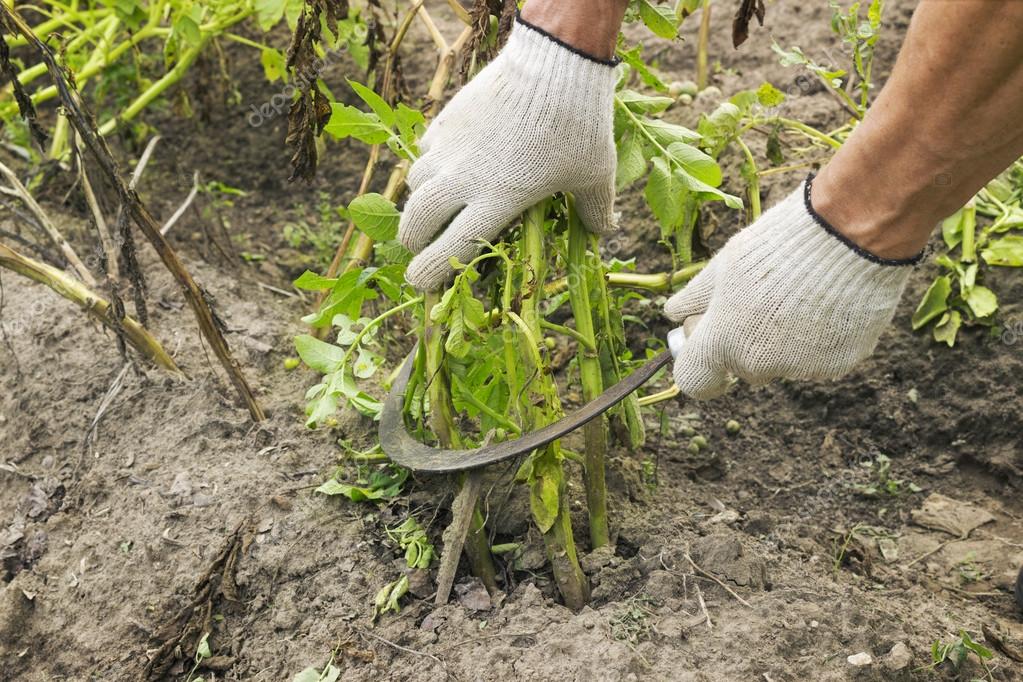
Tip! Experienced gardeners recommend cutting off all the tops 10 days before harvesting. This will allow the skin to harden slightly, extending the shelf life of the tubers.
Requirements for the landing site and its preparation
Preparation for planting potatoes begins in the fall and consists of several stages:
- The area is cleared of bushes, stumps, weeds and organic matter.
- For each square meter add 1 bucket of peat and humus.
- For poor soil, it is recommended to add specialized granular fertilizer Autumn.
- The soil is dug up manually or using a cultivator.
Potatoes grow best in soil with neutral or low acidity. If your soil is acidic, you'll need to add chalk or ash in the spring.
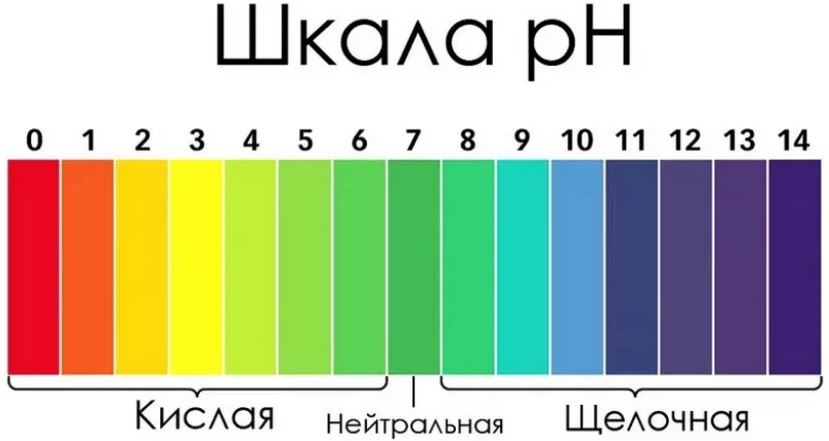
If buttercup, horsetail, or sorrel grows profusely in your area, this indicates increased soil acidity.
Note: You can determine pH using another folk method: pour a cup of boiling water over five bird cherry leaves. Then add a lump of soil to the solution. If the liquid turns red, the acidity is high, blue indicates neutral, and green indicates low pH.
In the spring, the area must be dug up, removing branches that have fallen over the winter and scattering granulated saltpeter (this is done once every 5 years).
Selection and preparation of seed tubers
Many gardeners use their own planting material year after year, but experts still recommend purchasing it from producers. Industrial-scale processing and preparation are much better, and the harvest is larger.
Medium-sized tubers without visible damage are selected for planting; small potatoes contain fewer nutrients.
With tubers from your own garden, you will have to do some preparatory work:
- In good weather, the tubers are poured out onto pre-laid burlap and warmed in the sun.
- Sorting is carried out, damaged tubers are put aside and cannot be used for planting.
- To stimulate growth and strengthen immunity, potatoes are treated with growth stimulants.
- Once several sprouts appear, you can begin planting.
The optimal length of the shoots is 1 cm; the skin of properly prepared potatoes should turn slightly green and become denser.
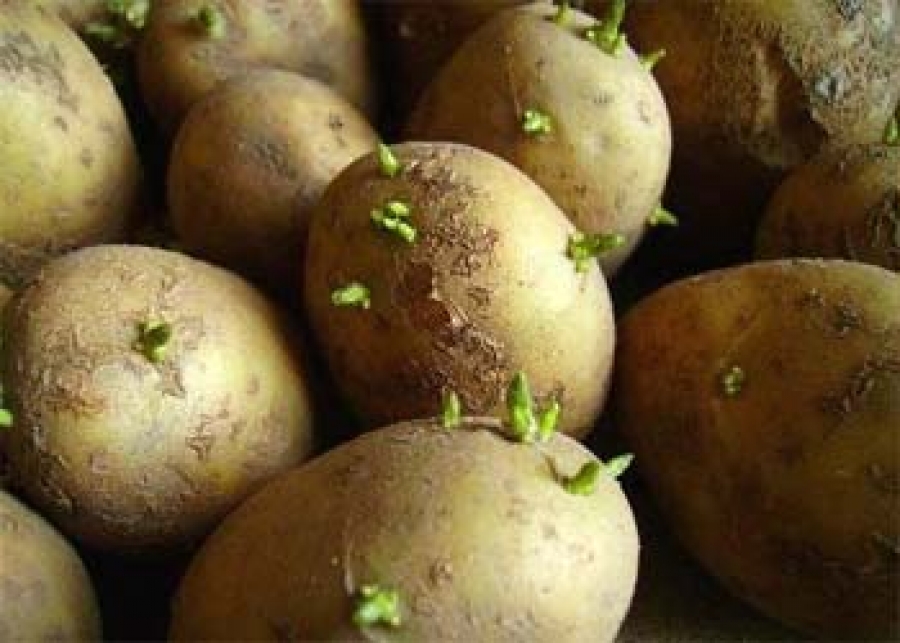
Important! If there is a shortage of planting material, the tuber can be divided crosswise, leaving at least one bud on each half. To prevent rot, it is recommended to sprinkle the cut areas with ash.
Planting dates
Potato planting timing depends on the growing region. Work can begin when the soil warms up to 10°C and the risk of frost is minimal. This typically occurs between mid-March and early May, depending on the region.
Landing rules
Gala potatoes are recommended to be planted in rows or pits. The seeding depth should be approximately 5 cm and no more than 15 cm, with a 30 cm spacing between seeds and 60-70 cm between rows.
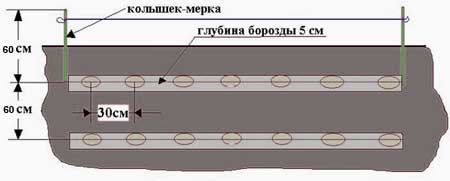
Planting is carried out in several stages:
- Using pegs and twine, a diagram of the location of future rows is outlined.
- Potatoes can be planted in holes or in rows, adding ash or organic fertilizers if necessary.
- The tubers are placed with the sprouts facing upwards.
- Digging and watering are carried out.
Tip! After planting, level the area with a rake to remove any large clods of soil.
Read more in the article about planting potatoes.
Caring for the Gala potato variety
Gala potatoes require basic care, including proper watering, fertilizing, loosening the soil, and hilling.
Watering
Gala requires moderate watering, avoiding overwatering. After planting, water each hole with two buckets of water. Subsequently, water as needed, reducing the amount to 1.5 liters. If the weather is extremely hot, you can increase the frequency of watering.
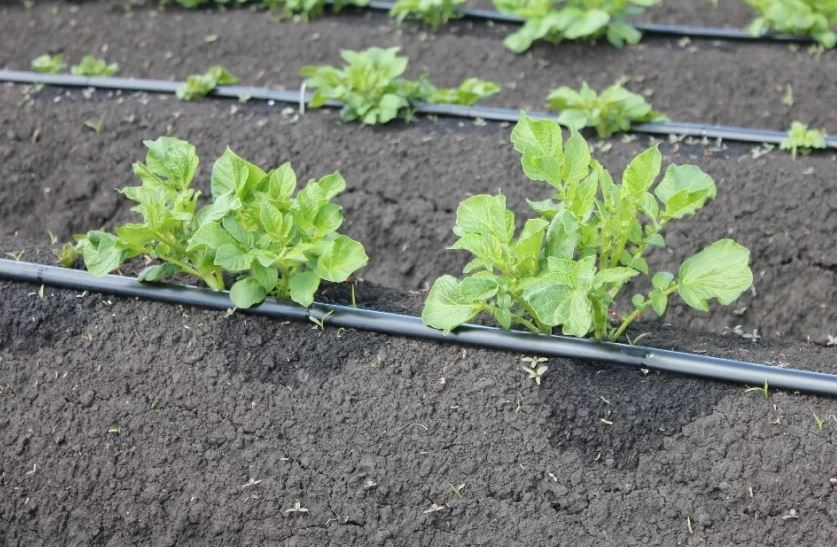
To ensure uniform moisture distribution into the soil, some gardeners install a drip irrigation system.
Top dressing
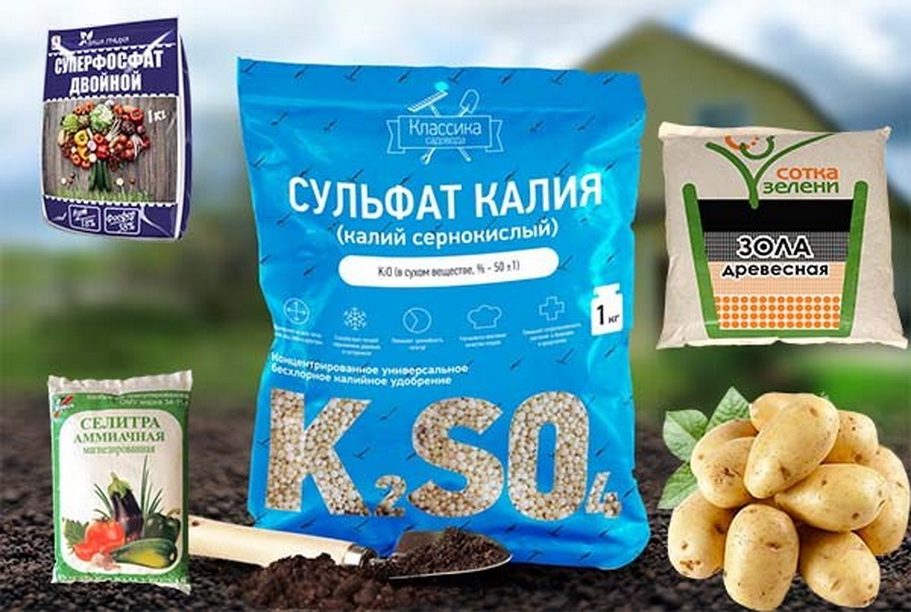
For a better harvest, it's recommended to provide additional fertilizing for potatoes. In the fall, the soil is dug over, and 15 grams of potassium sulfate and 6 kilograms of compost are added per square meter. In the spring, the soil is dug again, and 4 kilograms of compost, 30 grams of nitrophoska, 20 grams each of ammonium nitrate, and potassium sulfate are added.
Hilling
Hilling is a crucial procedure for normal potato growth. It improves aeration at the roots and protects them from adverse conditions. When raking soil under the plant, it must cover part of the stem; otherwise, the whole point of the procedure is lost.
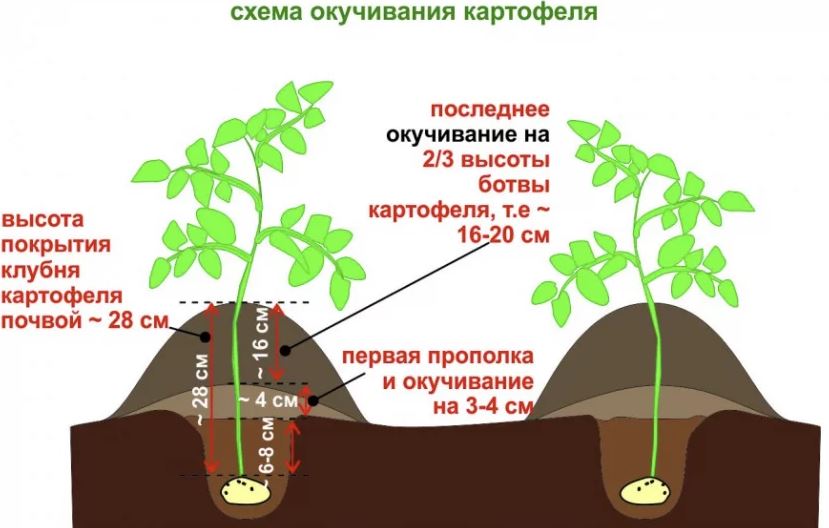
Advice! It is recommended to hill up the plants during the day or in the morning after watering or rain.
Trimming the tops
To allow the tubers to gain strength and their skins to harden and become firmer, experienced gardeners recommend trimming the tops 10 days before harvest. This will also significantly simplify the process of digging up the potatoes.
Protection of the Gala potato variety from diseases and pests (table)
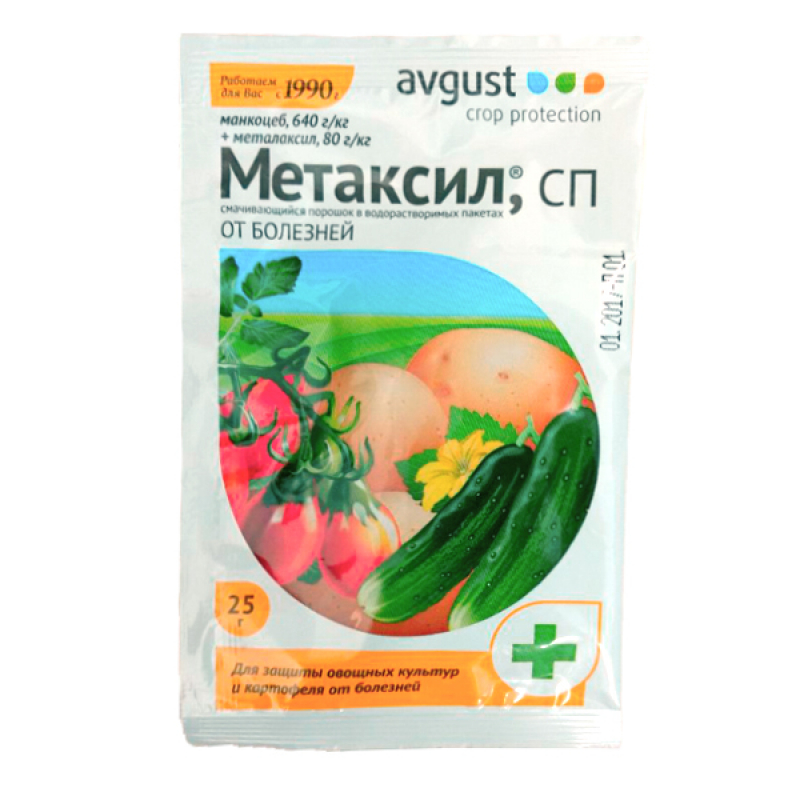
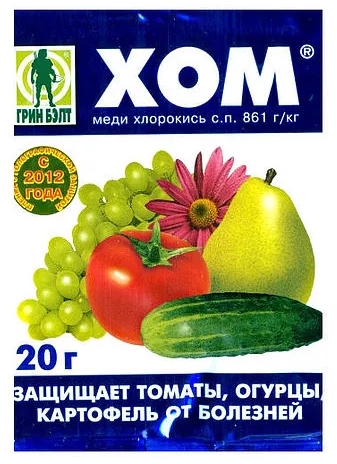
The Gala variety has developed excellent immunity, allowing it to resist attacks from many viruses, fungi, and bacteria. However, if the weather is unfavorable and care instructions are not always followed, there is a risk of disease development. Therefore, to ensure the best possible survival of the plantings, preventative treatments with Aktara, Corado, Regent, and Prestige are recommended. Among fungicides, Kuprosat, HOM, and copper oxychloride are highly effective.
In the table below, we will consider diseases typical for the Gala variety, to which the potato has average resistance.
| Name of the disease | Description | Treatment and prevention |
| Late blight tops
|
The disease manifests itself through dark spots that quickly spread over the surface of the lower leaves and then move to the stem and shoots. Leaves turn black and dry out. As humidity increases, the border between healthy tissue and the spot becomes coated with a film. If treatment is delayed, more than half the crop can be damaged. |
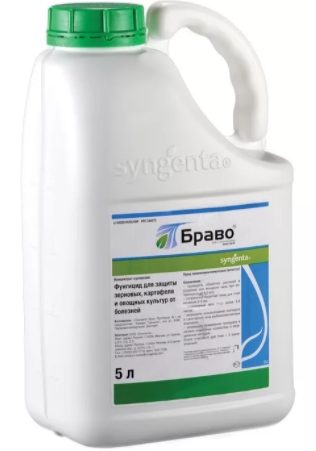
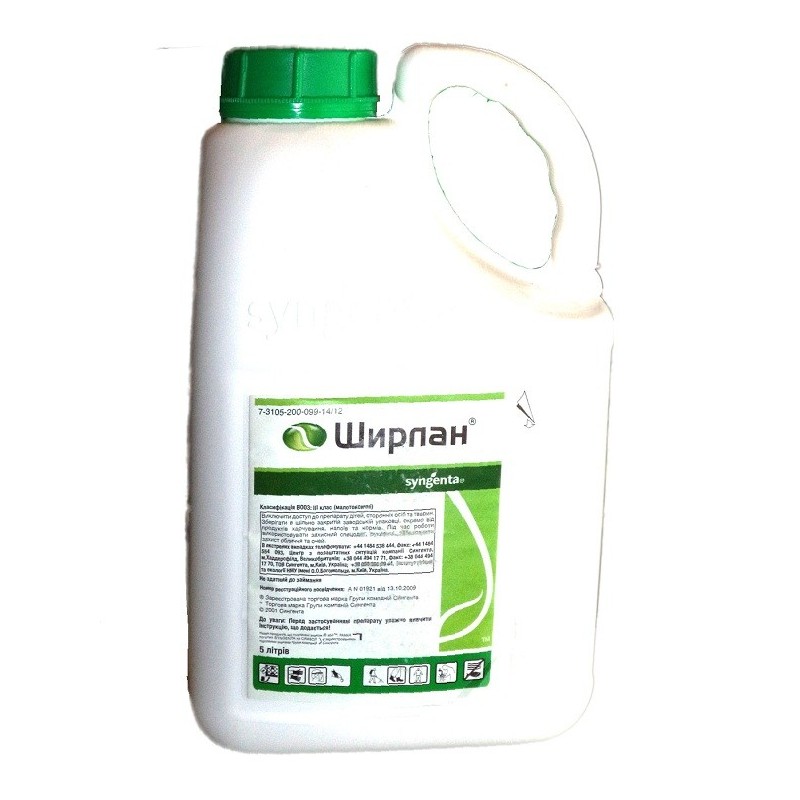
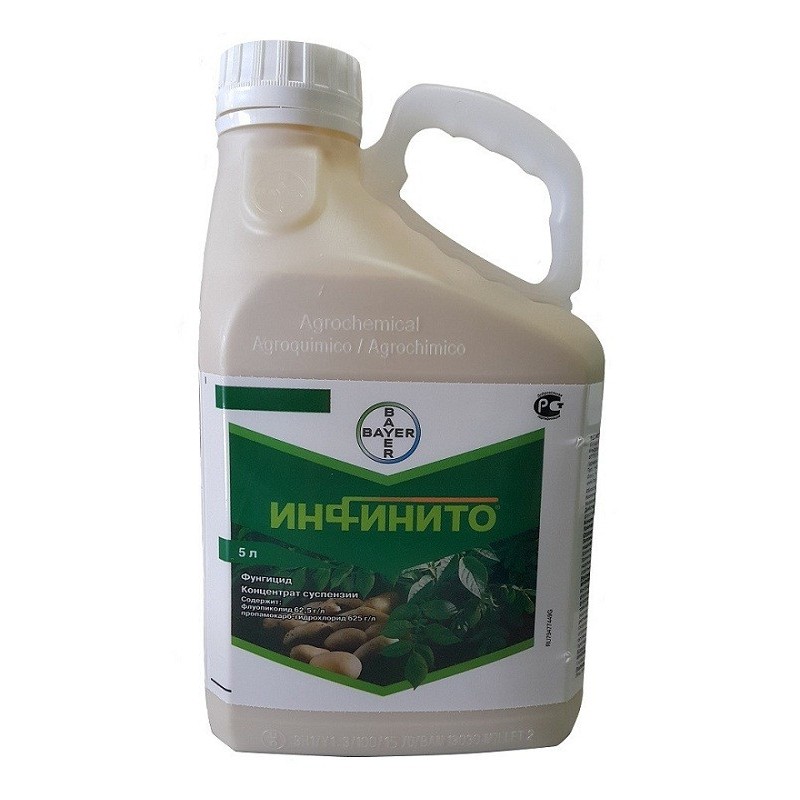
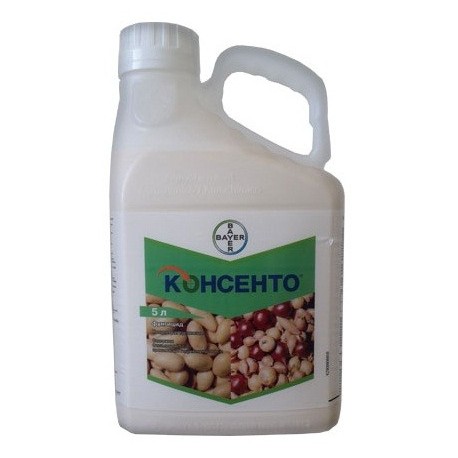
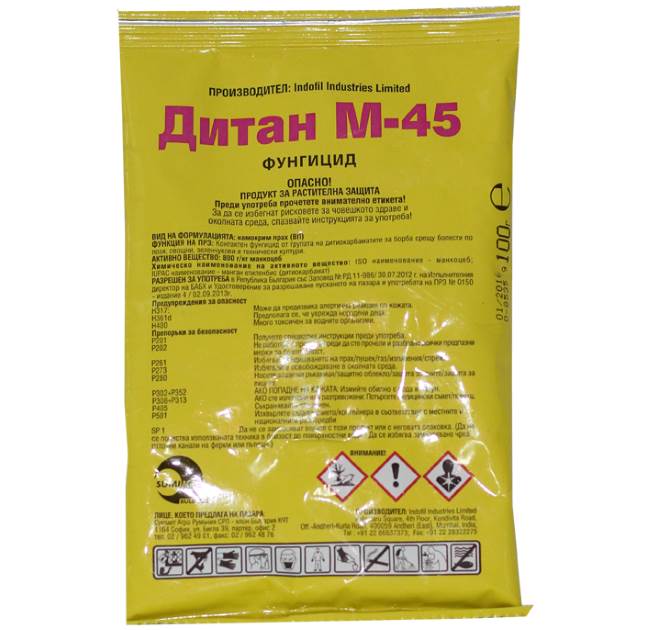
During the period of growth of shoots and leaves, you can use contact agents: Bravo, Ditan M-45, Shirlan, Infinito, Consento, Metaxil, copper-containing preparations.
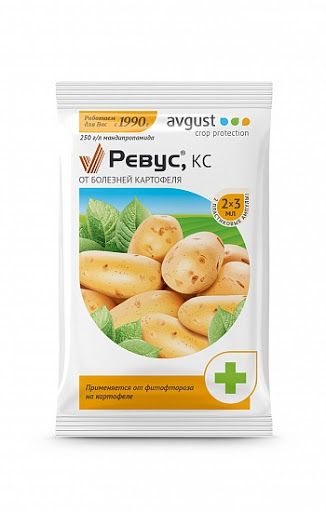
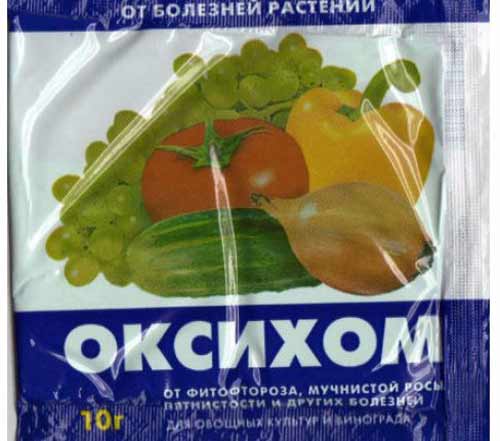
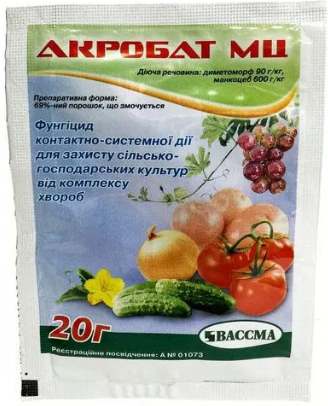
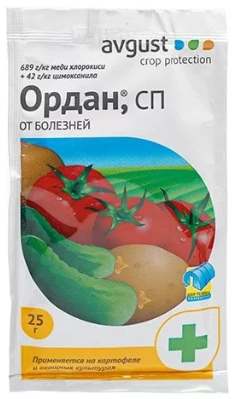
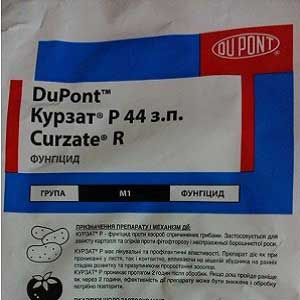
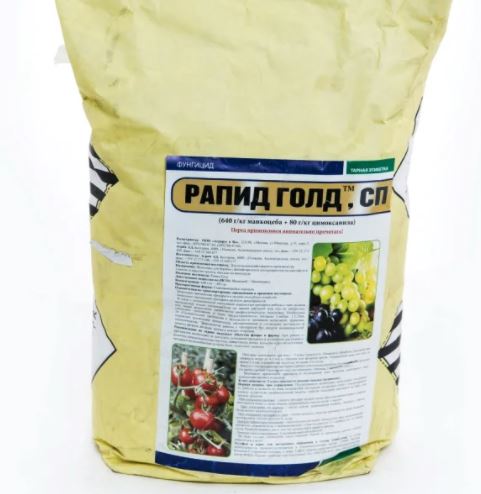
When the bushes grow to 40 cm and buds appear on them, you can use not only contact but also systemic agents: Ridomil Gold, Revus, etc. After flowering ends and the foliage begins to die back, switch back to contact fungicides: Shirlan, Ditan M-45, and Hom. Topical and systemic fungicides such as Oxychom, Acrobat MC, Ordan, Kurzat R, and Rapid Gold are also acceptable. The frequency of treatments depends on the severity of the disease. For prevention, spraying once at each stage of plant development is sufficient, and for treatment, repeat every 10-14 days. |
| Leaf roll virus
|
The first signs of the disease appear on the lower leaves, which begin to curl upward. The underside of the leaf takes on a reddish-purple hue, and tissue necrosis develops. The leaf becomes rough, veins become clearly visible, and the anthocyanin coloration becomes intense. Flowering is most often absent when the disease is present. |
The disease cannot be cured; the only solution is to remove infected plants from the garden bed to prevent the infection from spreading to neighboring plants. To prevent the disease, it's important to follow watering guidelines, especially during tuber formation. Furthermore, avoid over-fertilizing the soil, as too much fertilizer is detrimental to the plants. Planting material must be treated with special solutions and excessive germination must not be allowed. |
| Rhizoctiniasis
|
This disease can affect any part of the plant. On tubers, it manifests as black scab or net-like necrosis. This is exacerbated by improper watering practices. Ulcers form on the stem in its underground part and dry rot appears. The growth of the plantings slows down, the leaves curl up, and green aerial tubers begin to appear in the axils of the shoots. |
Prevention is better than cure. To achieve this, it's essential to follow all cultivation practices: plant on time, plant tubers at proper depth, avoid over-fertilizing, and water and dig promptly. However, even these measures don't always provide complete protection against rhizoctonia. It hasn't yet been possible to develop varieties with complete resistance. Treatment is usually ineffective; infected plants are removed from the garden bed and burned. As a preventative measure, the fungicide Maxim can be applied to the tubers before planting. In the early stages, the crop can be saved by applying Quadris to the soil. The products are diluted according to the instructions; it is strictly forbidden to exceed the dosage. |
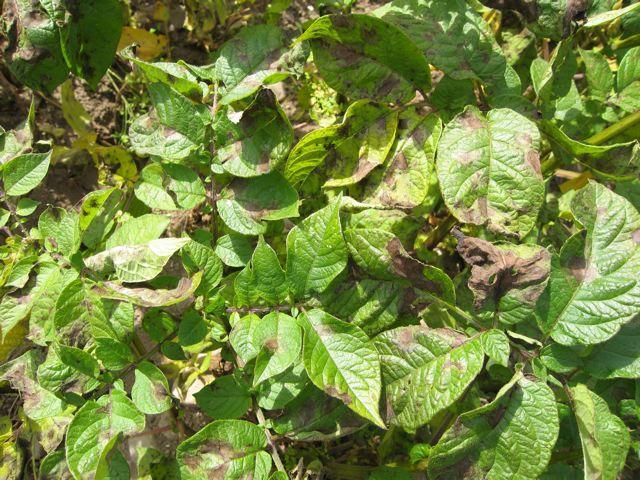
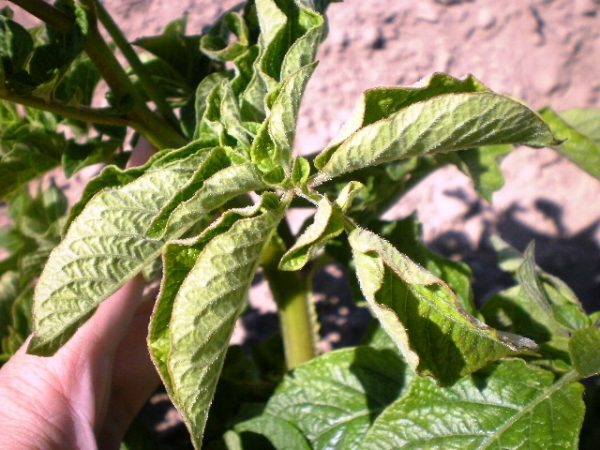
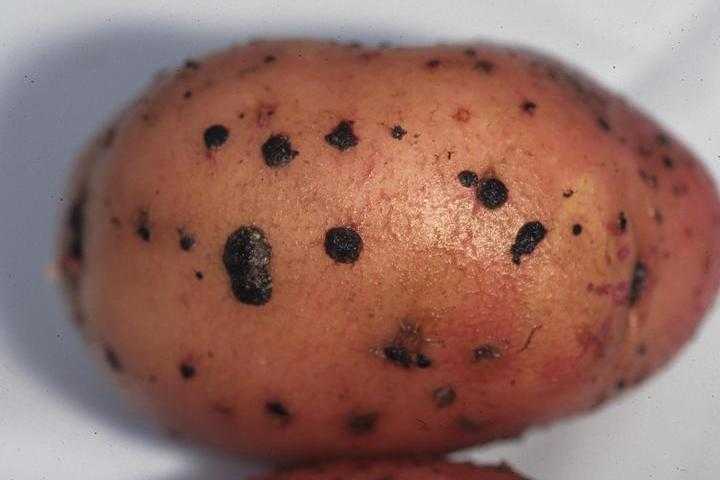
Photo gallery of pest and disease control products for the Gala potato variety:

The nuances of harvesting and storing the Gala potato variety
The Gala variety has a good shelf life. To extend this shelf life, gardeners strongly recommend cutting off all the tops 10 days before digging. This will cause the skin to harden slightly, allowing the tubers to easily store until spring.
Immediately after the potatoes are removed from the ground, you need to carefully clean off any remaining soil and leave them in the sun for a couple of hours to dry.
Important! Prolonged exposure to sunlight causes the pulp to synthesize solanine, which is toxic to humans.
The optimal place to store vegetables is a basement or cellar, where the air temperature varies between +1…+4 °C and ventilation is provided.
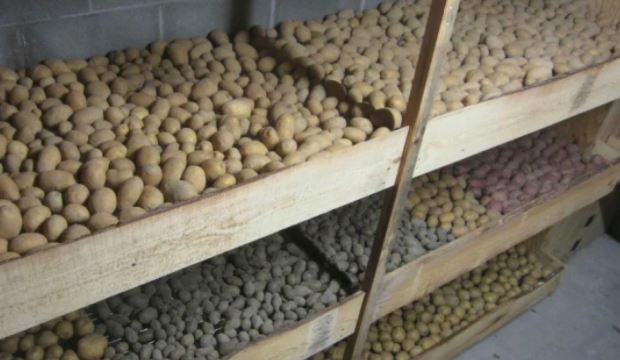
Read more in the article about methods and rules for storing potatoes.
Tips from Top.tomathouse.com for growing the Gala variety
To get an excellent harvest from Gala potatoes, our portal http://top.tomathouse.com recommends:
- Follow crop rotation rules. Potatoes planted in the same spot year after year won't show their best qualities. If your plot is small and changing locations isn't feasible, then replace your planting stock annually.
- Regularly inspect your bushes for pests or signs of disease. Any illness is much easier to combat in its early stages.
- Consider the variety's requirements and strive to adhere to all agricultural practices. This is the only way to maximize your yield.
- For storage, choose places with suitable temperature and humidity.
Comparison of the Gala potato variety with other varieties in the table
| Variety | Ripening period (number of days to maturity) | Starch (%) | Yield (c/ha) | Weight of tubers (g)
Number of tubers per bush |
Shelf life (%) |
| Gala | Mid-early** | 10.2-13.2 | 216-263 | 71-122
8-15 |
89 |
| Granada | Mid-late**** | 10-17 | 132-306 | 80-100
10-15 |
97 |
| Lux | Early ripening* | 11-15 | 193-432 | 100-150
8-13 |
95 |
| Robin | Mid-late | 17-18 | 380-400 | 100-110
6-10 |
96 |
| Ramona | Mid-season*** | 14-17 | 110-340 | 80-85
17-20 |
98 |
| Ramos | Mid-season | 13.4-16 | 208-364 | 100-150
8-13 |
97 |
| Rocco | Mid-season | 13-16 | 350-400 | 100-120
8-12 |
89 |
| Openwork | Mid-early | 18 | 460-500 | 93-115
7-13 |
95 |
| Vineta | Early ripening | 13-15 | 160-228 | 67-130
13 |
87-90 |
| Crane | Mid-late | 14-19.5 | 177-242 | 90-140
14-25 |
93 |
| Rosara | Early ripening | 12-16 | 350-400 | 81-115
15-20 |
97 |
| Rowanberry | Mid-early | 12-15 | 220-234 | 91-133
10-15 |
90 |
*Early ripening – 50-65 days.
**Mid-early – 65-80 days.
***Mid-season – 80-95 days.
****Mid-late – 95-110 days.
Real reviews from gardeners about the Gala potato variety
Let's look at gardeners' reviews of the Gala variety.
User Medinilla, Russia, Kostroma
Good afternoon, Otzovik guests!
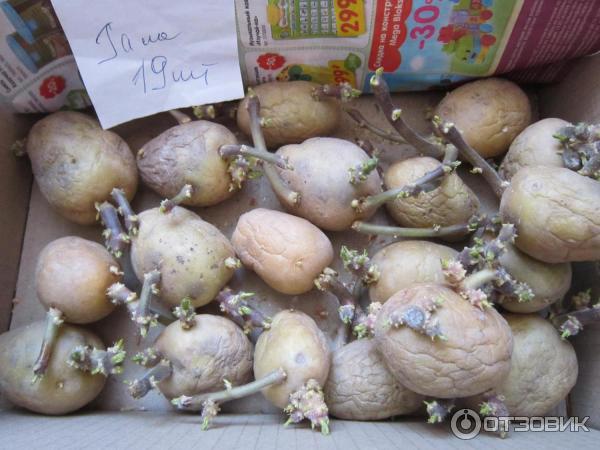
I'd like to introduce you to another potato variety, which I purchased from the Kostroma seed company, OOO KTM. I've heard a lot about this variety. The Gala variety is distinguished by its high yield and the fact that it grows well in any soil. And that's exactly what I need. Given my poor agricultural practices, these are key characteristics. I bought, as with all the other varieties, a small amount—19 potatoes. They promised to give me first-generation seeds, so let's hope they are. I've been sprouting the tubers since February. The sprouts grew quickly, and by mid-May the potatoes were ready for planting.
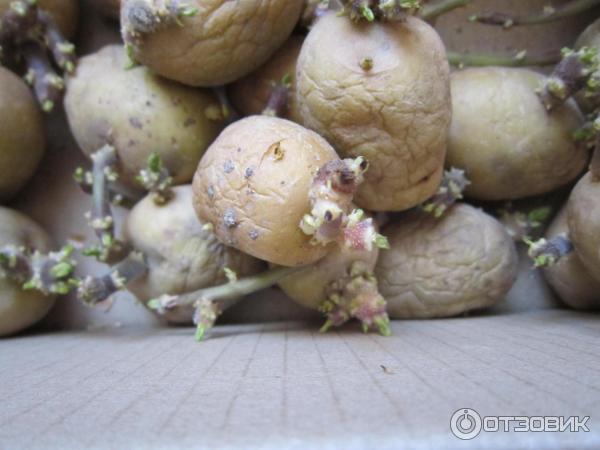
I found rotten sprouts on several tubers, just like on the Adretta variety. I removed the rotted parts and sprinkled them with ash.
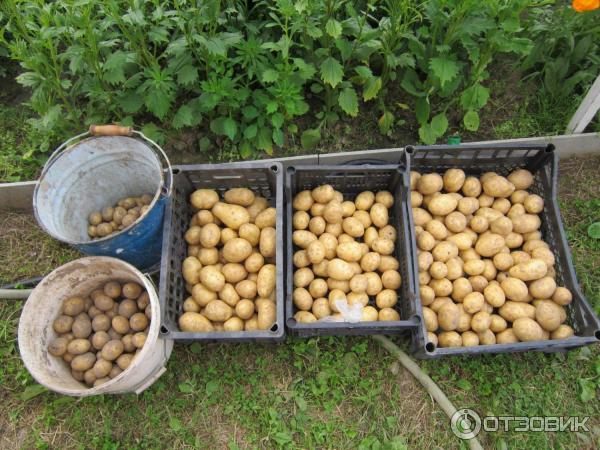
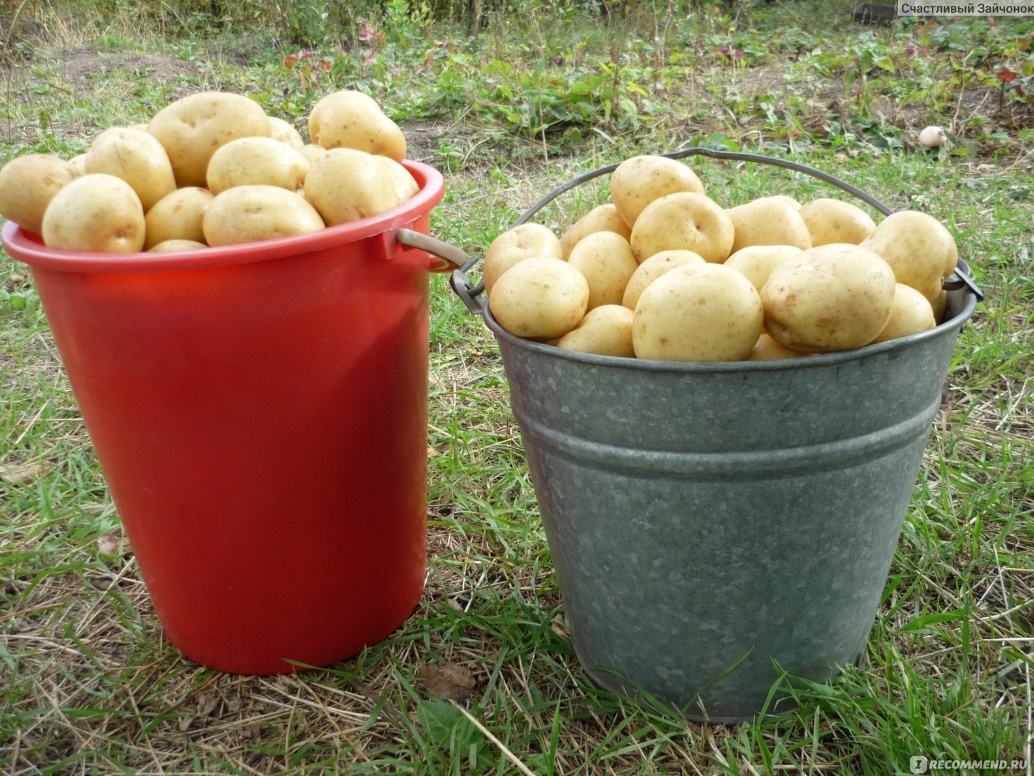
We planted potatoes, like all the other varieties. We didn't dig the soil before planting. We dug trenches 70 cm apart, filled them with manure, ash, and fertilizer, laid out the potatoes, and covered them with soil. Then we hilled them twice and watered them occasionally, if possible. Of the five new varieties this year, the most susceptible to late blight were Adretta, Skarb (I decided to update this variety this year), and Gala. So, this is the first and only drawback of this variety. However, despite this, it turned out to be a truly productive variety. From 19 potatoes, we grew 2.5 buckets of large potatoes. In the photo, they are in boxes. The advantage of this variety in buckets is that the potatoes are also on the small side.
The plants produced a very productive crop. Some contained as many as 30 potatoes. The potatoes were beautiful, perfectly shaped, smooth, and had small eyes. There weren't any particularly large ones, and the description said the marketable tubers weigh 100-140 grams. The skin and flesh were yellow. The potatoes didn't overcook when boiled, but they weren't hard either, and the mashed potatoes were delicious. I washed all the potatoes, including the seed potatoes and those for storage. This procedure made all the defects visible. This year, I also treated the seed potatoes with phytosporin. I want to delay the onset of late blight during cultivation.
I give this variety four stars and recommend it for planting. I've deducted one star for its susceptibility to fungal diseases and late blight.
This year's potato variety, Vega, was a revelation. I was surprised by its high yield. It wasn't me who grew it, but my neighbors. Next year, I'll try growing Vega too.
Photos by Medinilla:
User Termit13y, Russia, Yekaterinburg
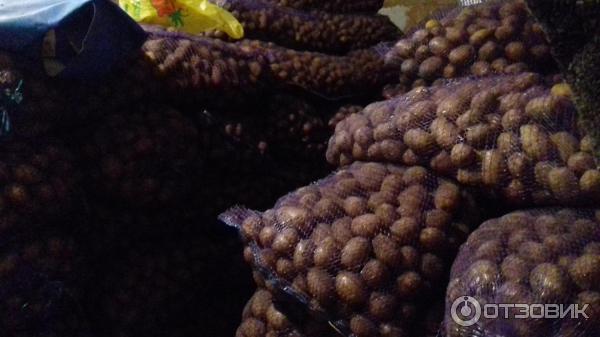
This variety is very productive. On average, a bush yields about 20-25 potatoes. I've had a maximum of 43 tubers from one bush. It's very capricious. It loves watering, warm weather, and fertilization. Without these, you could be left without a harvest. This means there will be a lot of potatoes, but they will all be small. We begin harvesting in late September or early October (preferably in October). Since it has a lot of tubers, it needs time to "feed" them all. Don't believe those who say it's an early variety. Experience has proven that it's closer to a late variety. (It ripens earlier if you add 800 kg of nitroammophoska per hectare and provide constant watering, but not everyone likes this). It has a very good taste. Yellow flesh. It's excellent for frying and mashed potatoes. The eyes of the potatoes are not deep, and the potatoes themselves are perfectly round. Personally, I prefer planting early varieties because of the easy harvest. For those who don't mind harvesting in October, this is one of the best varieties.
Photo by user Termit13y:
User grechko2001, Russia, Murmansk
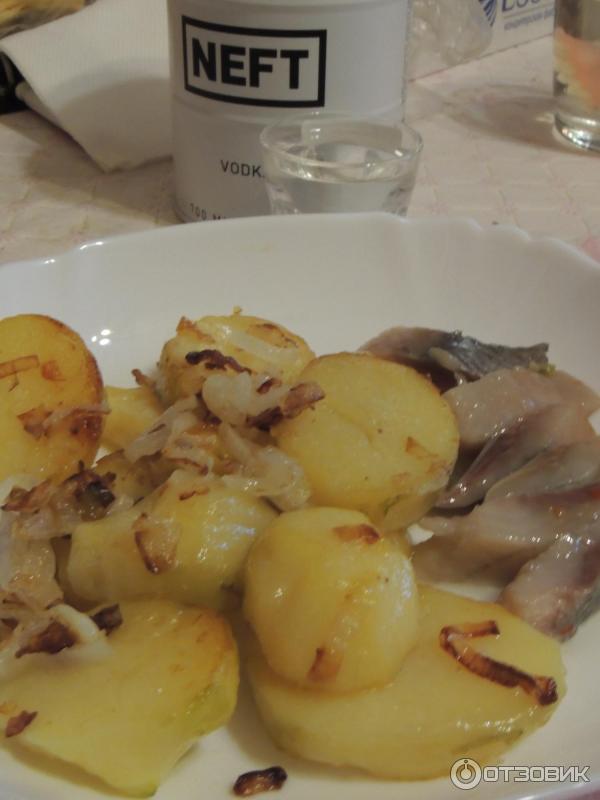
I was inspired to write this review by a photo of a side dish on the menu called "home-style potatoes," which is boiled potatoes fried in a frying pan with vegetable oil. I'm not a big fan of potatoes, but this really made me want some.
Especially when the potatoes are home-grown (my parents have been planting the "Gala" variety in Belarus for many years, and naturally, when my mom leaves her parents' home, she'll definitely pack 2-3 kilos into a box of home-grown vegetables.)
So, I boiled a few potatoes in their skins, fried them with onions, and of course, some herring))) Well, what kind of herring with potatoes and without vodka!?))
I had a blast, so to speak!) I didn't salt the potatoes at all because I had herring. The dinner was a great success! Everything was delicious! The onions, the herring with vodka, and, of course, the potatoes themselves!
I certainly recommend it to everyone!)
Photo by user grechko2001:
User Happy Bunny
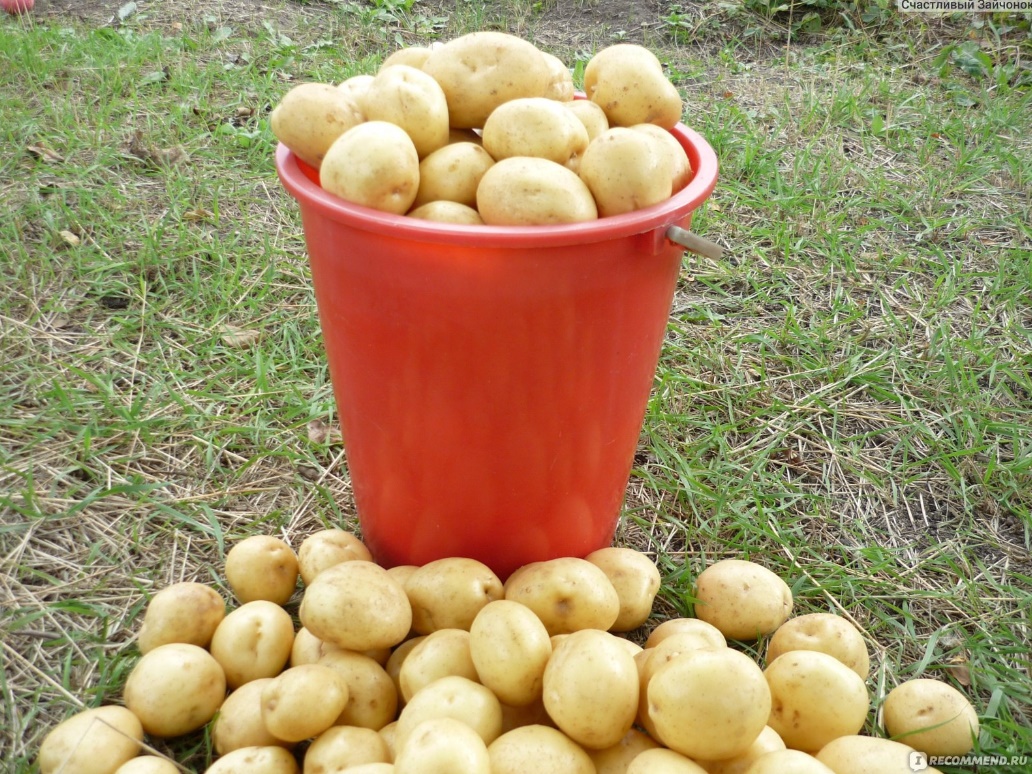
We came across the Gala potato variety by accident. We usually plant other varieties, including red ones, which we're accustomed to and have stood the test of time. My relatives raved about the Gala variety and gave me a bucket of seeds. Looking ahead, I'm very pleased with this variety, and we've been harvesting a wonderful crop for two years now.
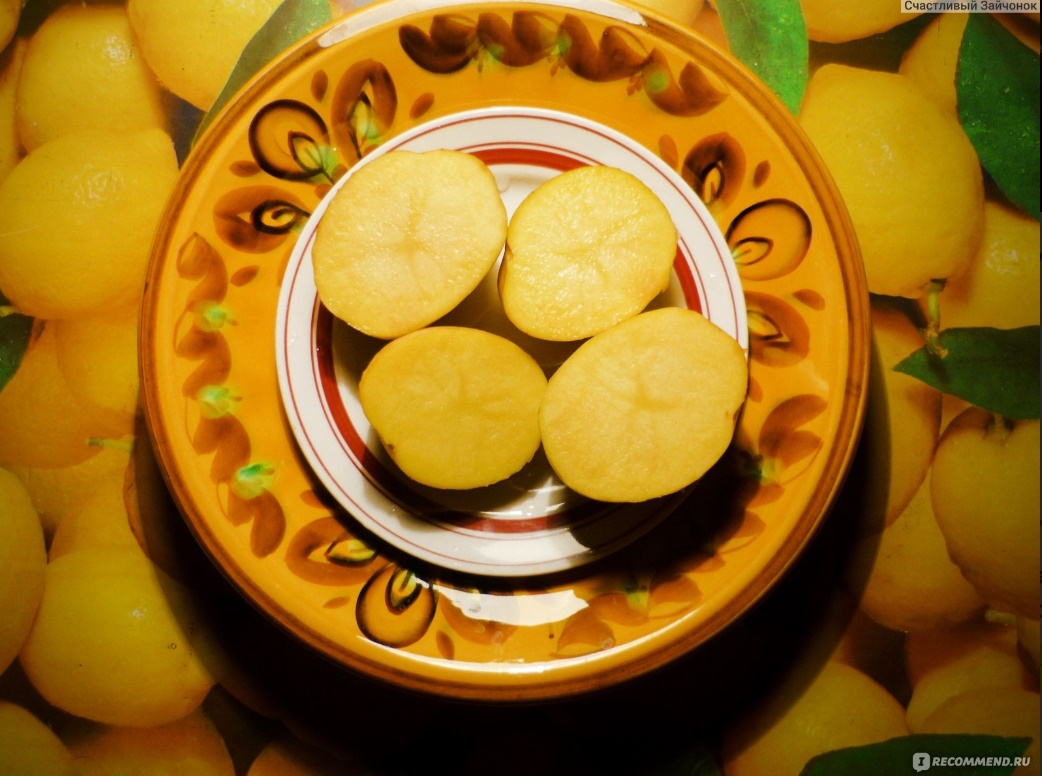
Description of the variety: Smooth tubers of a round or oval shape, store well, have a low starch content, and are not susceptible to diseases common to most popular varieties.
Characteristics of the variety and yieldThis variety is very productive. We harvest nine buckets of very high-quality potatoes from one bucket of seeds. What I personally like about this variety is that the potatoes are very clean—easy to wash and peel. Eyes, if present, are few and shallow. As I already mentioned, the Gala potato variety is very productive, 1.5 times more productive than regular potatoes.
Taste qualitiesThe Gala potato variety is very good in terms of taste. It's a delicious, pleasant variety. But we tend to breed tasty varieties, so this variety is no worse or better than ours. What's appealing is its clean, uniform appearance, as if hand-picked, and its high yield.
Before planting, I treat the potato seeds with Fitosporin (an affordable natural fertilizer) and soak them. We plant the potatoes 80 cm apart between rows, and we dig the holes fairly close together.
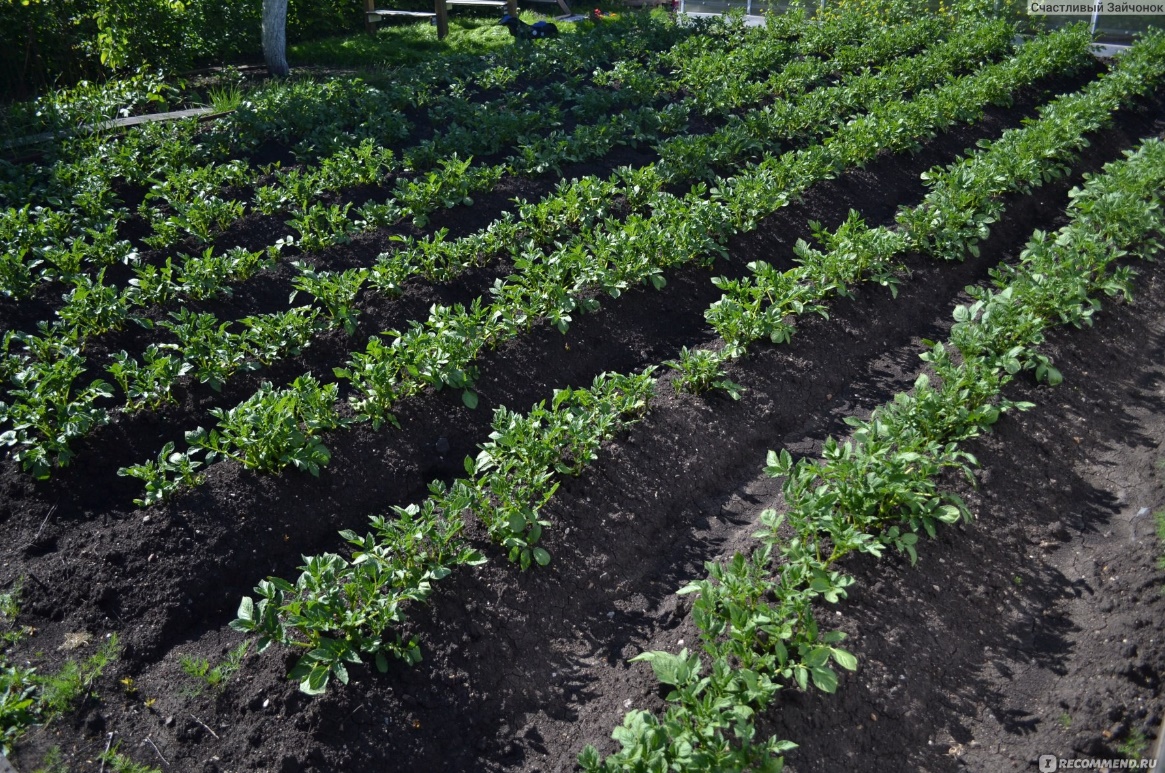
We hill the plants once, when the potato tops reach approximately 25 cm. (In this photo, you can see our polycarbonate greenhouse in the distance—see review)
We almost completely cover the bushes with soil, creating deep trenches and high mounds from which the leaves are barely visible.
It's not recommended to hill the potatoes a second time to avoid damaging the delicate roots that grow close to the surface. This hilling technique makes watering the potatoes very easy—just drop the hose into the trench and move it around periodically.
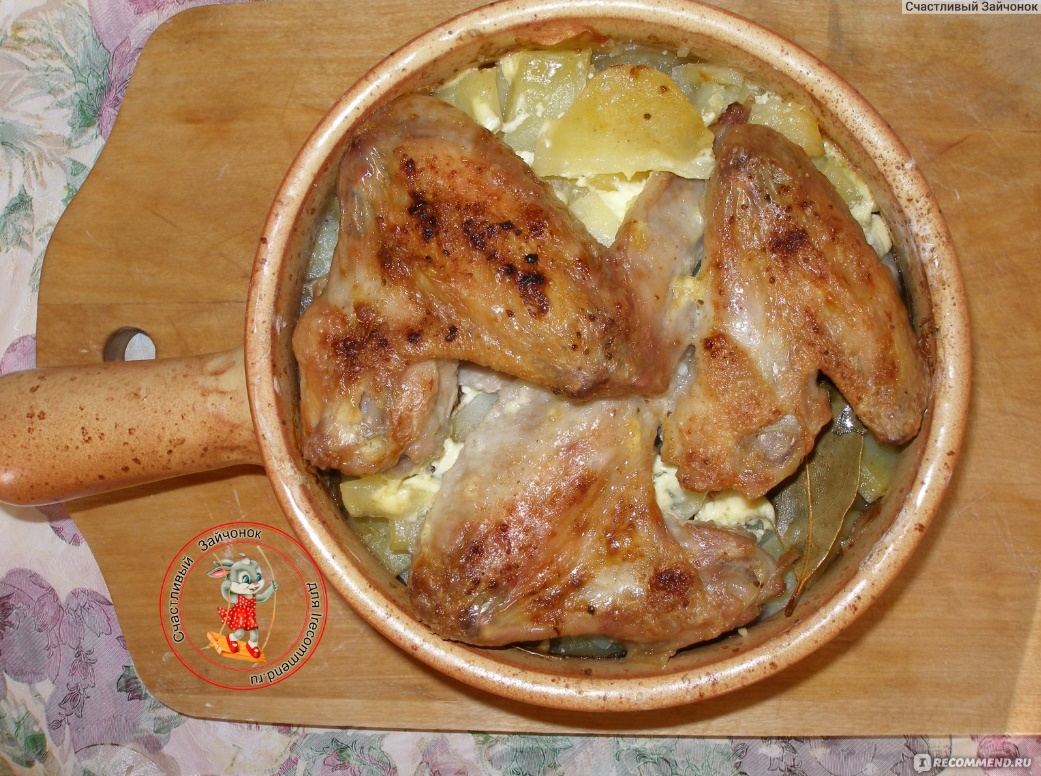
I recommend the Gala potato variety! They're good in any form: boiled, fried, baked.
Photos by Happy Bunny:
User lionells, Russia, Krasnodar
I bought this potato variety by chance. It's yellow and good for frying and making French fries. While growing it, I encountered a problem with late blight. I had to treat it three times, but it still didn't help. I was immediately disappointed. When harvesting, I discovered it produced a decent number of potatoes, but not large ones, just medium-sized ones. They store well, but I had to remove them from the garden. I was selling potatoes at the time and wasn't happy with the yield. Also, not everyone likes yellow potato varieties, as not all of them taste good. So, I don't think I'll go back to planting them.
User anygma, Luhansk, Ukraine
This year, I spent a long time choosing the right potato variety to buy for the winter and trusted the opinions of people experienced in this matter.
I have a bad impression of this variety. I don't know how it performs in cultivation, but I'm not at all satisfied with the taste.This variety is considered to have a lower starch content, which is why I chose Gala, as I don’t like it to be too overcooked.
I usually separate potatoes into two types: those for frying, which are firm and smooth, and those that are a bit looser for mashed potatoes and soups. So, when the potatoes failed the frying pan test—they fell apart into mush—I decided to boil them. But! I didn't like this method either. It's all about the excessive dryness! The mashed potatoes turn out bland and unappealing, no matter how much oil you add! It's impossible to cook these potatoes in chunks—they crumble into mush, and if you don't cook them thoroughly, they're as hard as glass. Therefore, stewing and baking are out of the question. Boiling the potatoes in their skins for okroshka also failed—they fell apart into molecules! The next test was our beloved French fries. That was also a failure. They absorb too much oil! Half of a liter of refined oil remained in the saucepan. And the potatoes were still completely dry! I'll never buy this variety again, except maybe in soups and borscht. It's a good thing we didn't buy that much.
The only advantage is that it is stored well in the cellar, without rot or odor.