The Vineta potato appeared in our country in the early 2000s and quickly gained popularity among both gardeners and farmers. It has excellent flavor, ripens quickly, and its thick skin and firm tubers allow for the use of mechanical harvesting.
Content
- 1 Table with characteristics of the Vineta potato variety
- 2 The origin of the Vineta potato variety
- 3 Vineta or Veneta
- 4 Description of the Vineta potato variety
- 5 Advantages and disadvantages of the Vineta potato variety
- 6 Planting Features of the Vineta Potato Variety
- 7 Caring for the Vineta potato variety
- 8 Protection from diseases and pests
- 9 Harvesting and storing the Vineta potato variety
- 10 Top.tomathouse.com's tips on growing the Vineta potato variety
- 11 Comparison of the Vineta potato variety with other varieties in the table
- 12 Reviews of the Vineta potato variety
Table with characteristics of the Vineta potato variety
| Characteristic | A productive potato variety that can be harvested twice per season in warm regions. |
| General information | An early potato variety with excellent immunity. Suitable for mechanical harvesting. |
| Ripening time | 60-70 days |
| Productivity | 160-228 c/ha |
| Marketability | 87-97% |
| Shelf life | 87% |
| Starch concentration | 12.9-15.2% |
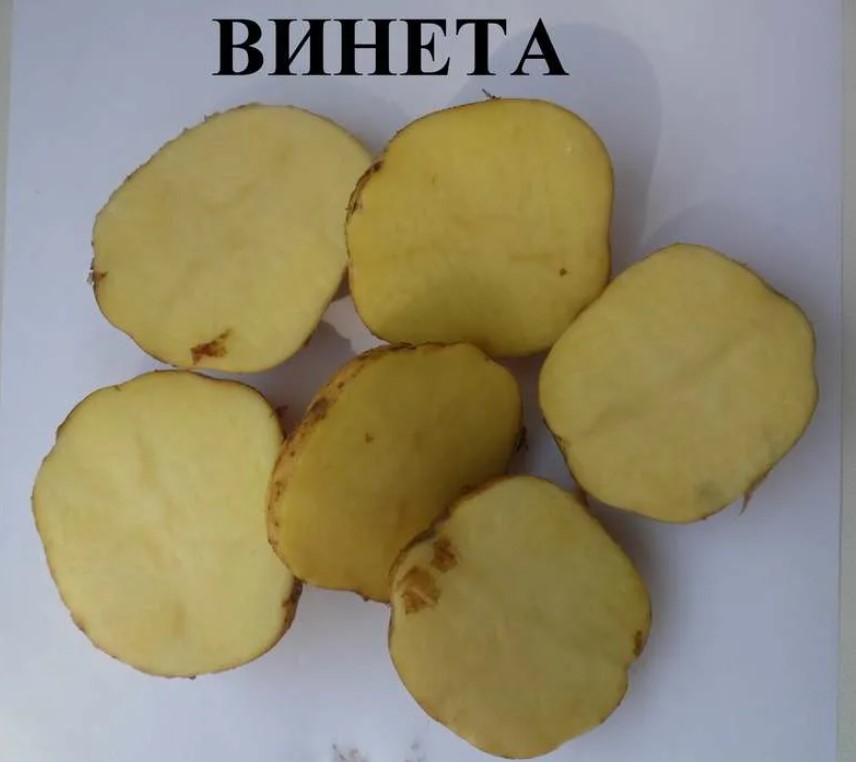
| Color of pulp | Light yellow |
| Peel color | Yellow |
| Weight of commercial tubers | 67-95 BC |
| Number of tubers per bush, pcs. | 10-12 pcs. |
| Taste characteristics | Pleasant taste |
| Class and purpose in cooking | Class B, table purpose |
| Suitable regions for growing | Central, North Caucasian, Central Black Earth Region, Ural, Volga-Vyatka |
| Disease resistance | High resistance to canker, golden nematode, stripe mosaic, and leaf curl. Moderate resistance to tuber blight. Susceptible to leaf blight. |
| Growing specifics | The variety does not require watering and does not tolerate excess nitrogen. |
| 2001 | |
| Country of origin | Germany |
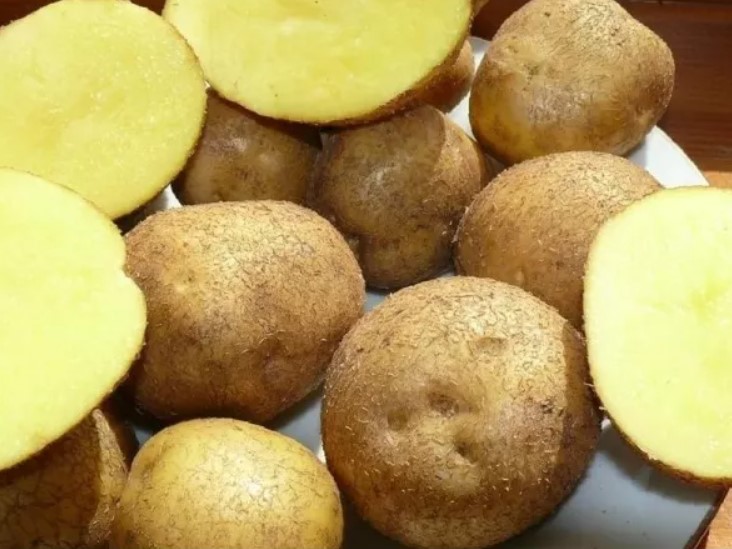
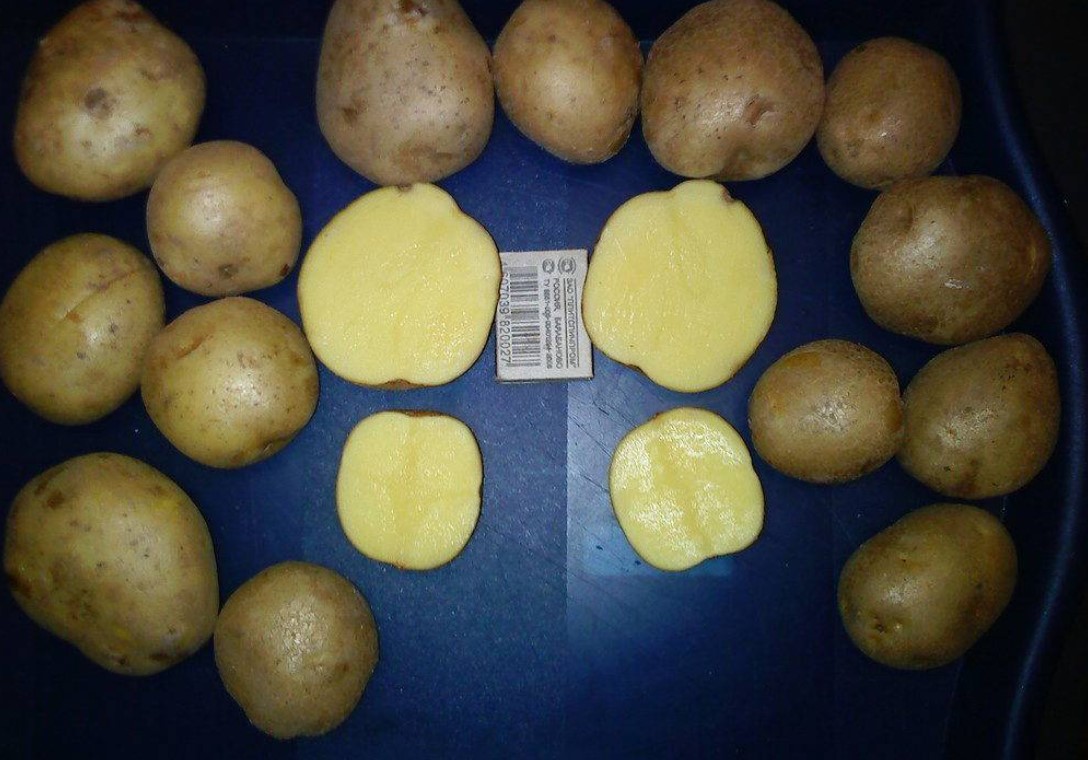
Photo gallery of the Vineta potato variety
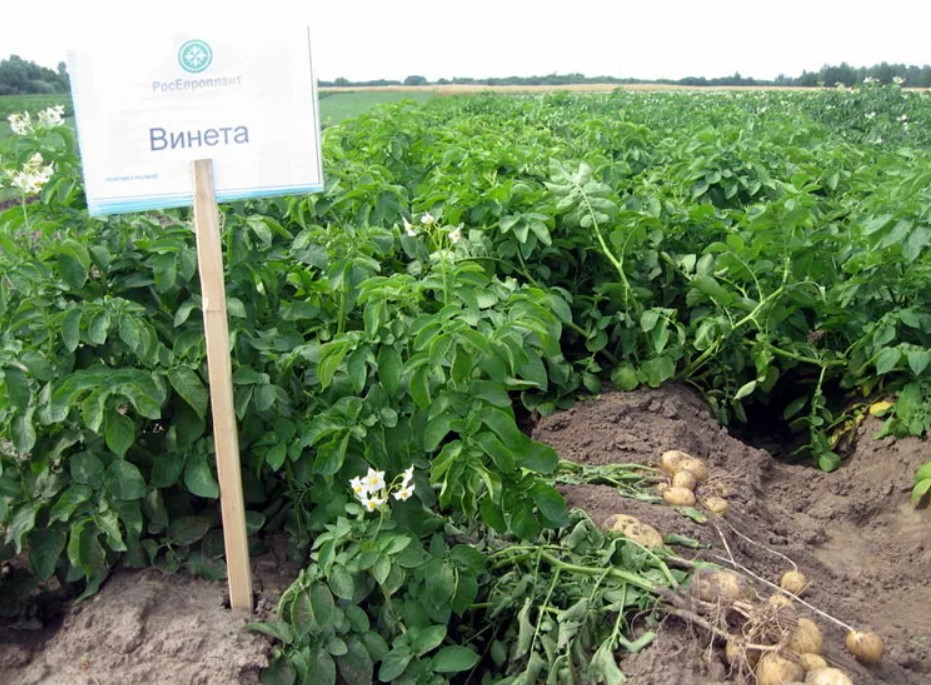
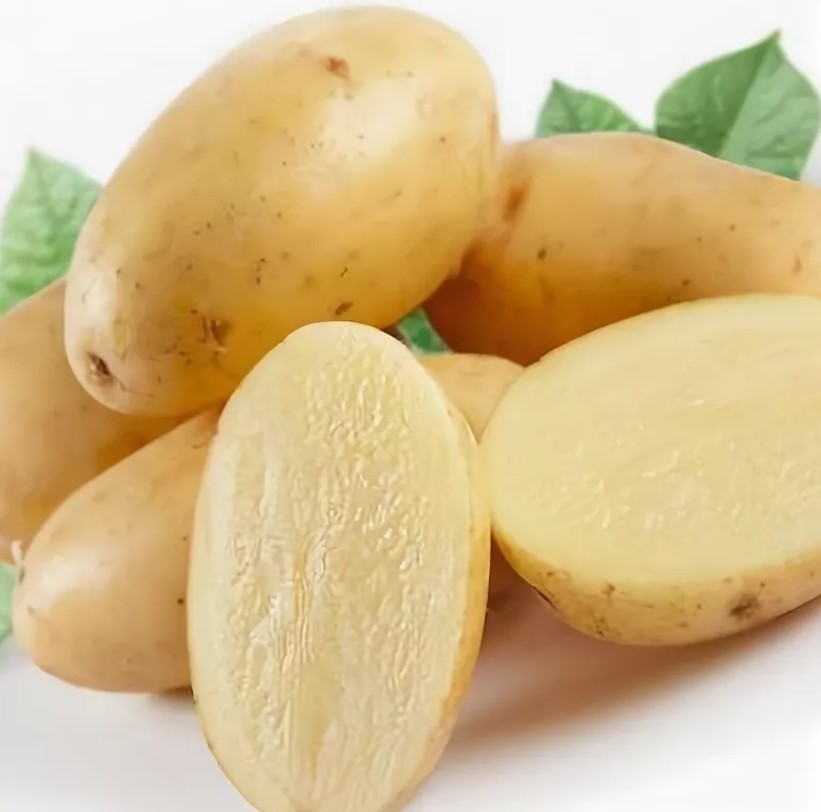
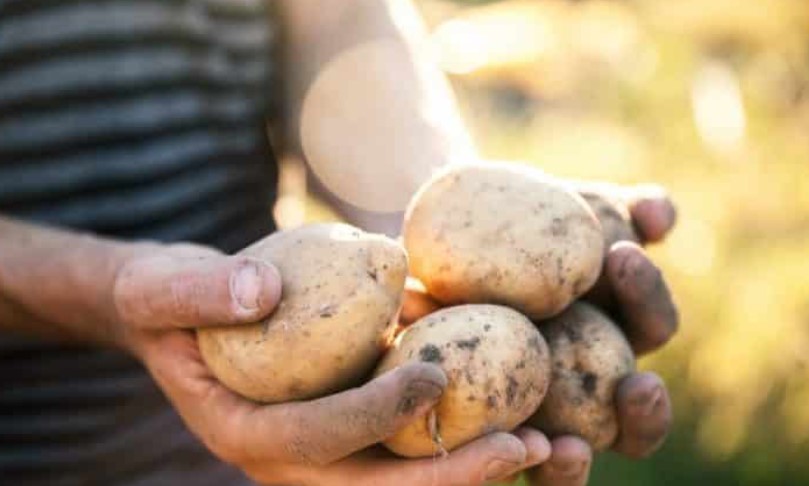
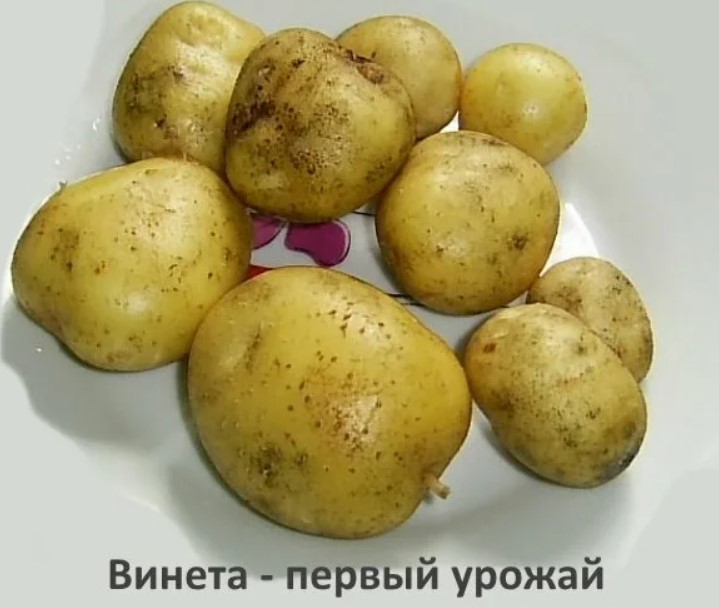
The origin of the Vineta potato variety
The Vineta variety was developed by German breeder Klaus Günther. Initially popular in Germany, it received official recognition in Russia in 2001 and was added to the register.
Vineta or Veneta
The foreign name for this variety is Vineta, so it's listed as Vineta in the registry. However, some sources often refer to it as Veneta.
Description of the Vineta potato variety
Vineta potatoes are widely used in both industrial and home gardening due to their excellent characteristics.
Bushes
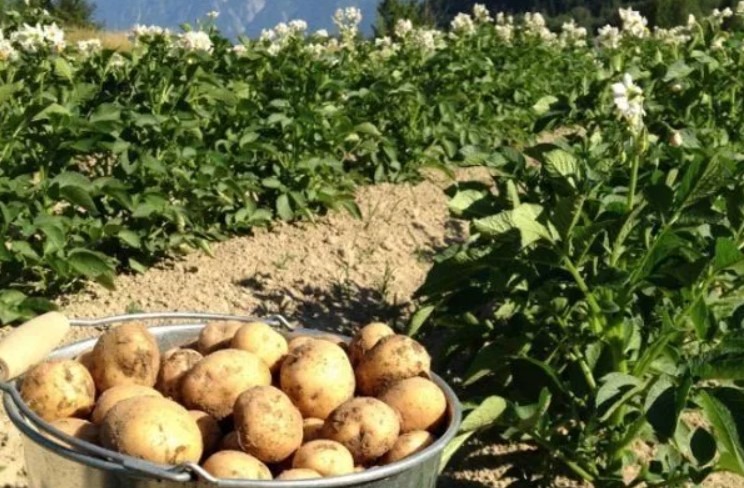
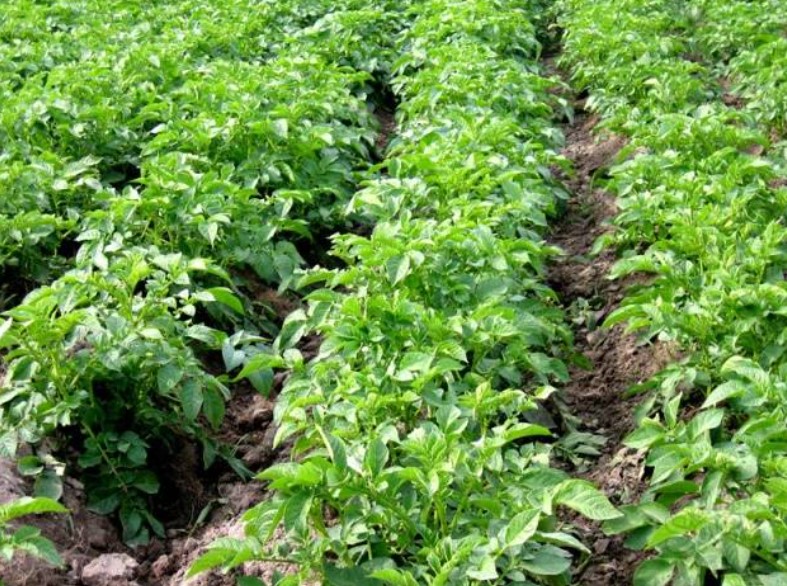
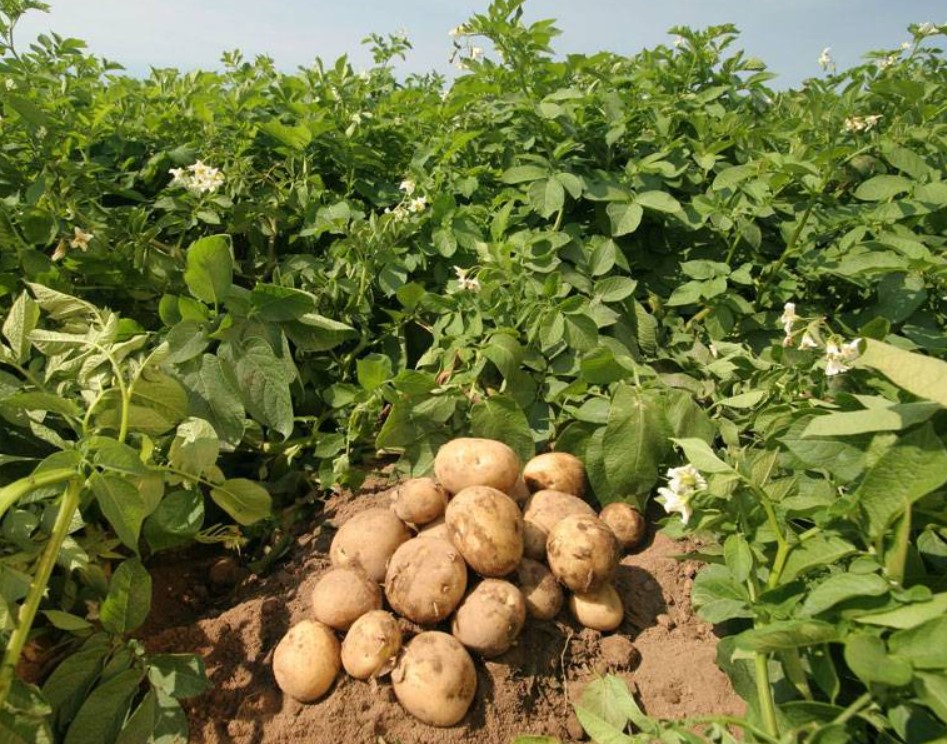
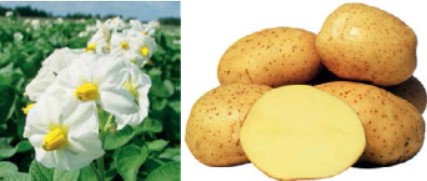
The bushes are tall and spreading. The leaves are medium-sized, light green, and slightly wavy. The flowers are white.
Tubers
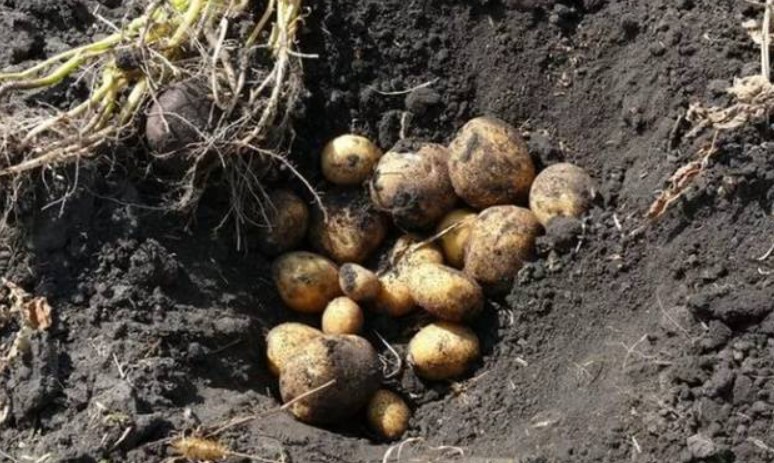
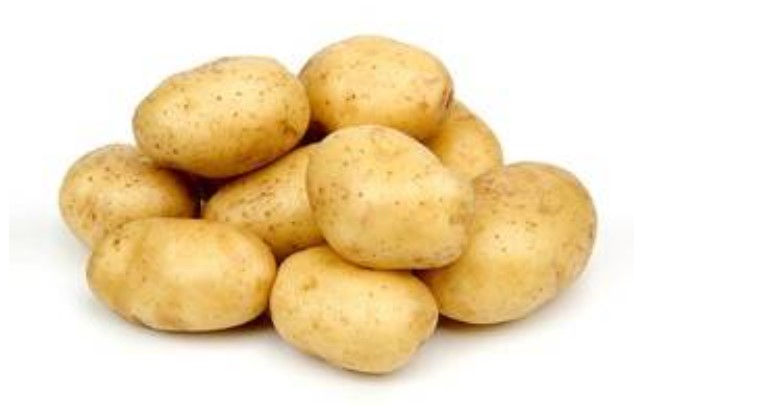
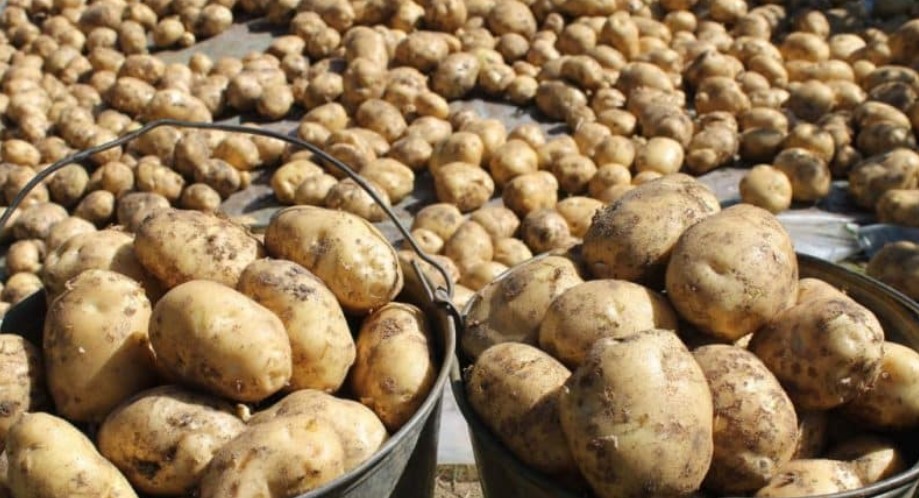
The tubers are oval-round, and the skin color can vary depending on the soil composition, ranging from light brown to dark yellow. They weigh between 65 and 90 grams, and each plant typically produces up to 10 tubers.
The pulp is crumbly, with a delicate texture, dark yellow or brownish in color.
Nutrients and nutritional value
The starch content of potatoes is 12.8-14.9%. They also contain a large amount of vitamins and minerals, such as vitamins B, C, and PP. The tubers cook slowly and are good for frying. This variety is used for making chips.
Productivity, ripening time
The Vineta variety yields 160-228 centners per hectare. The potato matures in 60-70 days from germination.
Resistance to diseases and pests
| Name | Stability indicator |
| Cancer | High |
| Blackleg | High |
| Scab | High |
| Golden nematode | High |
| Wrinkled mosaic | High |
| Fusarium | High |
| Late blight | Low |
For which regions is the Vineta potato variety suitable?
The Vineta potato variety is zoned for cultivation in the Central, North Caucasian, Middle Volga, Ural, Volga-Vyatka and Central Black Earth regions.
Advantages and disadvantages of the Vineta potato variety
Like any other potato, Vineta has its drawbacks. These are listed in the table below.
| Advantages | Flaws |
|
|
Planting Features of the Vineta Potato Variety
To ensure a rewarding harvest from Vineta, it is essential to take a responsible approach to planting it, despite its unpretentiousness.
Requirements for the landing site and its preparation
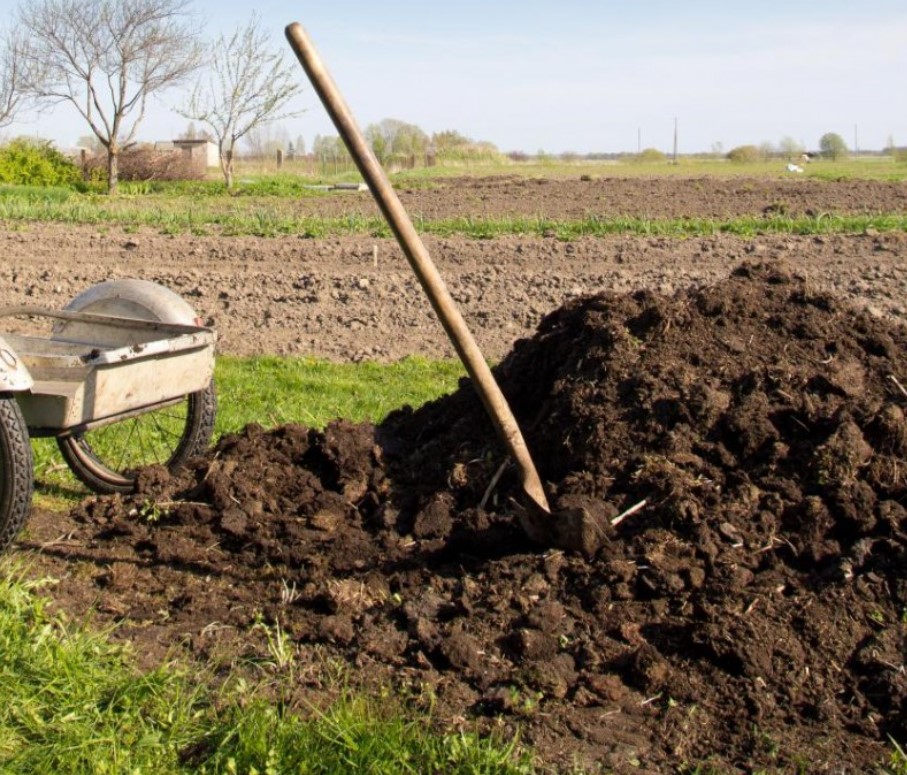
The potato plot is dug over with organic fertilizer in the fall. Avoid planting potatoes where members of the nightshade family were previously grown. However, grains, legumes, and herbs make good predecessors.
Potatoes do not tolerate waterlogging well, so the site should not be located in lowlands or where groundwater is too close to the soil surface.
The ideal location would be a flat, well-lit area in a sunny part of the garden.
Selection and preparation of seed tubers
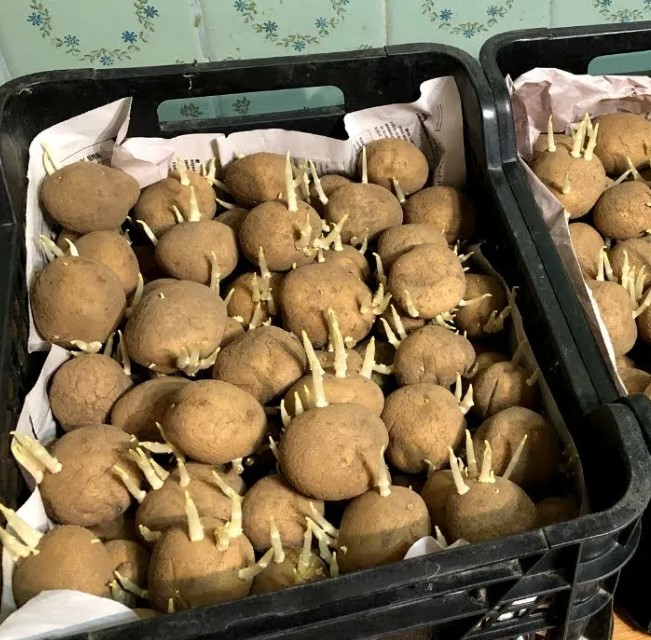
Seed tubers are prepared for planting 3-4 weeks in advance. First, they are sorted, selecting potatoes of uniform size, free from visible damage and signs of disease. The optimal weight is 45-85 g. Ideally, a couple of sprouts should already be visible on the surface.
To prevent the appearance of rot and strengthen the protective functions of the potato, pre-treat it with the following preparations:
- With copper sulfate.
- Manganese.
- Boric acid.
- Wood ash.
Next, it is recommended to place the potatoes in a dry and bright place so that the alkaloid solanine begins to synthesize in them, which will serve as a natural modulator.
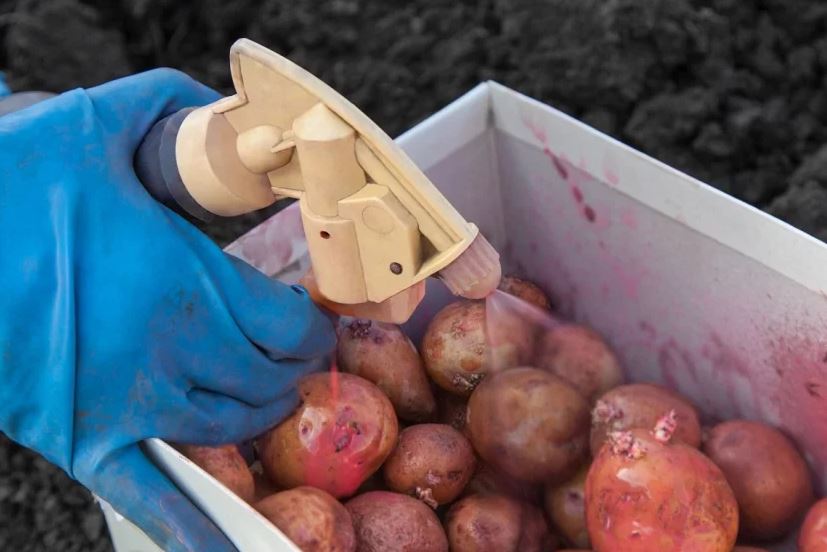
If desired, growth stimulants can be used. Apply them to the tubers 24 hours before planting. Products such as Epin and Planriz are excellent for this purpose.
Growing from seeds
Varietal potatoes tend to yield less over time if you use tubers for planting annually without renewing the seed. Therefore, you can grow Vineta from seeds and use them to produce seed potatoes.
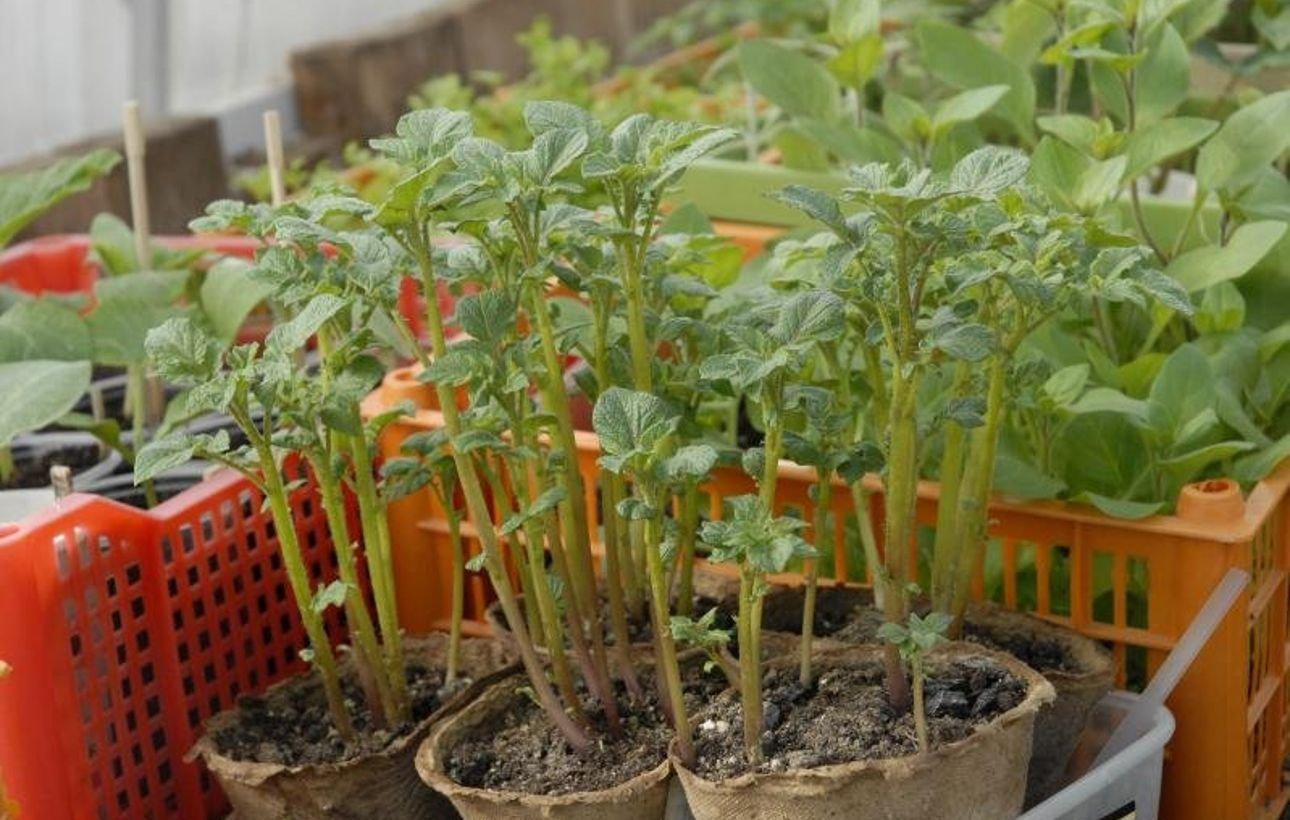
To do this, fill a wooden container with a soil mixture of soil, peat, sand, and humus. Next, plant the potato seeds, cover with soil, and water them carefully.
Cover the container with plastic and place it in a warm place until the seedlings emerge. Periodically lift the covers for ventilation and watering.
Once the seedlings emerge, the cover is removed and the container is moved to a cooler room. Watering and supplemental lighting are provided as needed in some regions.
10-14 days before planting, seedlings begin hardening off in the open air. Initially, they are taken outside for a couple of hours, and eventually left there for the entire day.
Find out more about growing potatoes and seeds.
Planting times and rules
Potatoes are planted once the threat of frost has passed and the soil has warmed to 9 degrees Celsius. This usually coincides with the emergence of birch leaves.
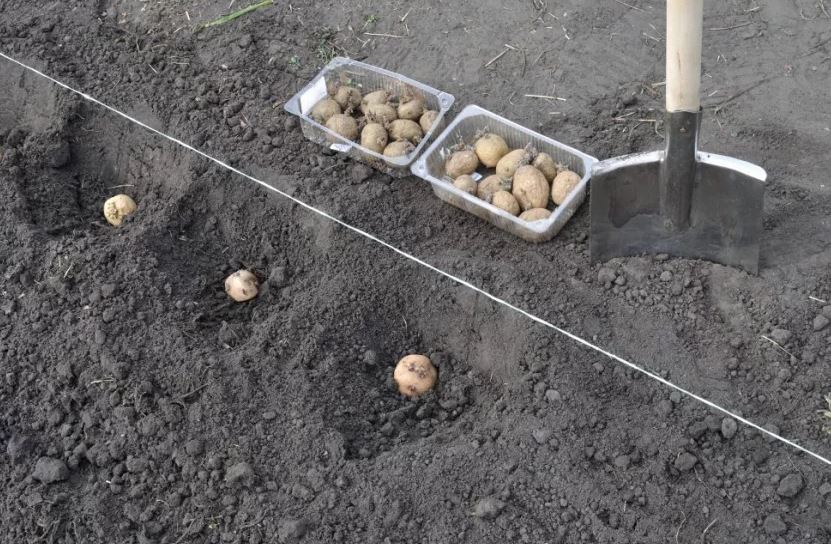
Planting takes place in warm, dry weather. Using rope and stakes, divide the plot into furrows, digging holes 7-10 cm deep and spaced 25-35 cm apart. It's recommended to leave a 65-70 cm gap between rows. Place the potatoes in the holes, sprout-side up, and carefully cover them with soil to avoid damaging the sprouts.
Caring for the Vineta potato variety
With proper care of potatoes, the yield, as well as the weight of the tubers, invariably increases.
Watering
The Vineta variety is considered drought-resistant; it does not require abundant watering and does not tolerate waterlogged soil.
In a dry summer, potatoes are watered only three times per season:
- During landing.
- During the period of bud filling.
- After flowering.
If the weather is rainy, there's no need to water the plants. In a dry summer, monitor the soil's dryness; if it's dry to a depth of 8 cm, additional watering is needed.
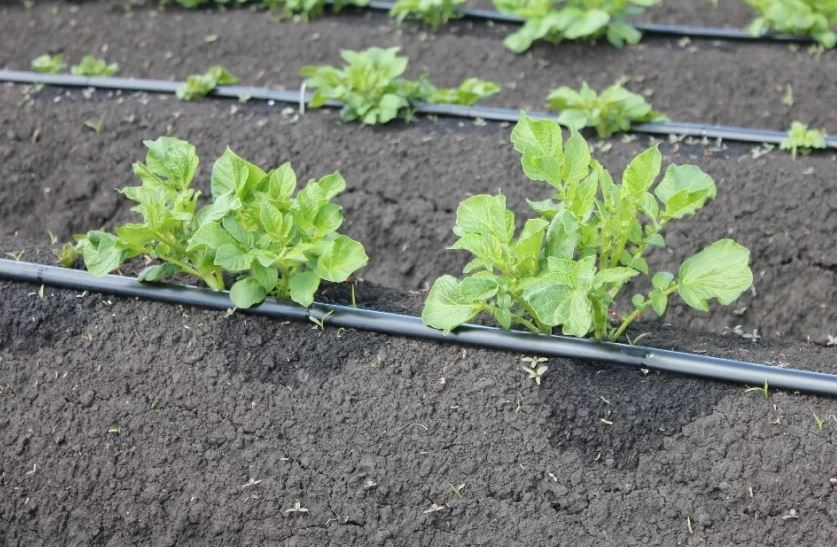
Approximately 50 liters of water are required per square meter. Watering should be done strictly at the roots, as contact with the leaves poses a risk of sunburn.
Top dressing
Vineta potatoes are fertilized a maximum of three times per season; no more is needed; they bear fruit well even without additional fertilizers.
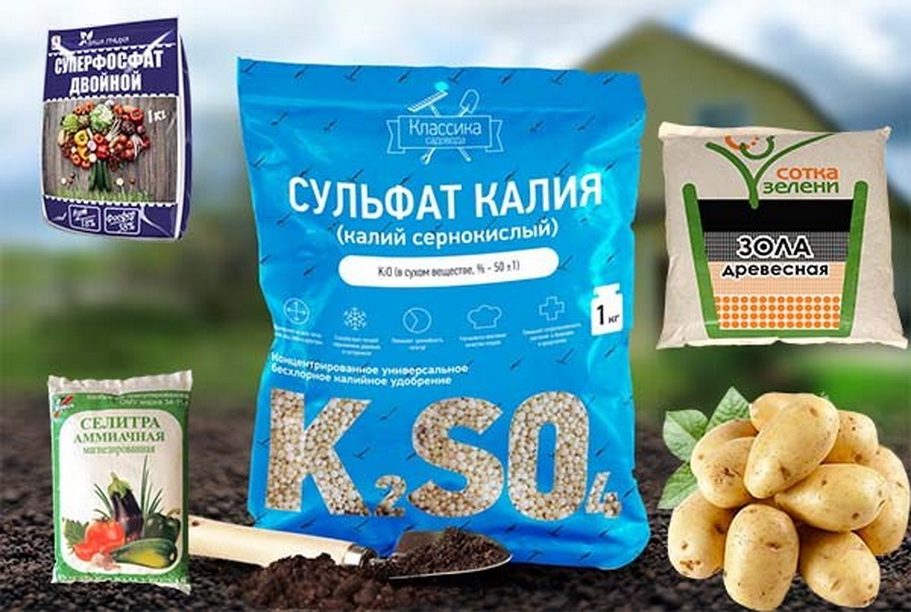
- The first fertilizer is applied in the spring during soil tillage. A mixture of humus, superphosphate, and potassium fertilizer in a ratio of 1:6:5 can be used.
- When the first shoots appear, it is recommended to add ammonium nitrate; it will accelerate growth and strengthen the immunity of the plantings.
- Before the buds open on the shoots, you can fertilize them with potassium fertilizers and superphosphates.
Loosening, weeding
Potatoes are hoeed as needed to improve soil aeration. This is combined with weeding, which helps reduce the risk of pest infestations.
Hilling
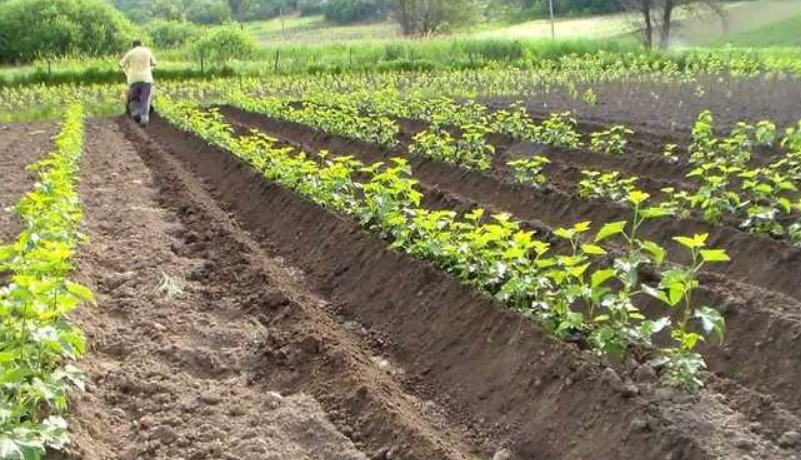
Potatoes are hilled at least three times during the growing season:
- After the seedlings reach a height of 15 cm.
- During the flowering period.
- When the tops begin to spread.
Hilling involves raking a mound of soil onto the stem, which helps protect the root system from sunlight and cold temperatures. It also improves the nutrition of the tubers.
Protection from diseases and pests
The Vineta variety is distinguished by its strong immunity and resistance to most common potato diseases.
| Disease, pest | Characteristic | Prevention and treatment |
| Late blight tops
|
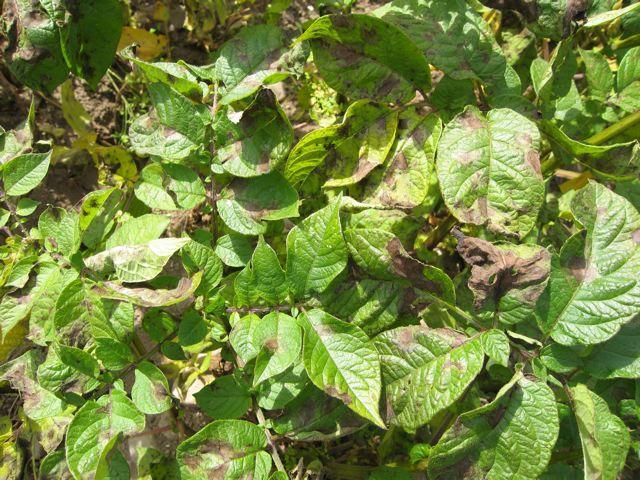
The leaves are starting to curl and fall off. Brown spots are clearly visible on them. | To prevent the disease, it's important to regularly hill up the plantings, weed, and treat with Ridomil Gold or Acrobat. Diseased bushes should be removed from the area and destroyed. |
| Colorado beetle
|
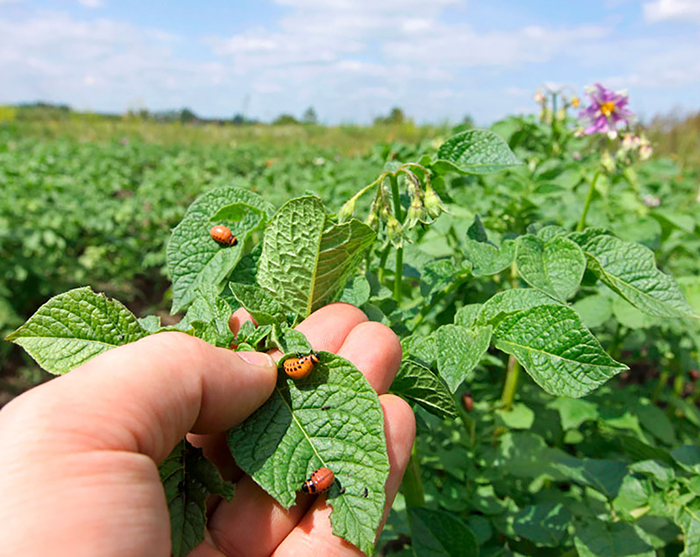
On the reverse side of the leaf, yellowish-orange clutches appear. | In small areas, beetles and their larvae can be controlled mechanically by removing them manually. For larger plantings, you can spray the potatoes with a urea solution (100 g per 10 liters of water). |
Harvesting and storing the Vineta potato variety
Harvesting begins 60-70 days after germination. The first potatoes can be dug up within a month and a half.
The harvest takes place in dry, sunny weather. All harvested potatoes are dried under a canopy for several hours. Only those strawberries that will be used for further planting may be left in the sun.
Find out the correct timing for harvesting potatoes And rules for its storage. And also We make cleaning tools ourselves.
It is essential to sort the tubers; damaged or rotten tubers should not be stored.
After drying, the entire harvest is placed in bags, nets or boxes and stored in a cool room with a temperature of 4-5 degrees and good ventilation.
Top.tomathouse.com's tips on growing the Vineta potato variety
- You shouldn't expect a good harvest if potatoes are growing in clay soil or in an area with high humidity.
- Vineta does not require a lot of nitrogen fertilizers, so it is better not to overuse such fertilizers.
- Carefully monitor the watering regime; if it is not followed, late blight may occur.
- Do not plant potatoes in a plot after nightshades and change the location every 3-4 years.
Comparison of the Vineta potato variety with other varieties in the table
| Variety | Ripening period (number of days to maturity) | Starch (%) | Yield (c/ha) | Weight of tubers (g)
Number of tubers per bush Color of tuber, pulp |
Shelf life (%) |
| Vineta (Veneta) | Early ripening* | 13-15 | 160-228 | 67-130
13 yellow, light yellow |
87-90 |
| Assol | Early ripening* | 12-16 | up to 345 | 80-120
8-12 light yellow, cream |
92 |
| Luck | Early ripening* | 11-15 | 420-430 | 100-150
10-15 creamy yellow (brown), snow-white |
88-97 |
| Ariel | Mid-early** | 14.3-18.5 | 304-533 | 106-235
10-15 yellow, yellowish-white |
96 |
| Adretta | Mid-early** | 13-18 | 450 | 100-150
10-25 yellowish, light yellow |
95 |
| Gala | Mid-early** | 10.2-13.2 | 216-263 | 71-122
8-15 yellow, yellow |
89 |
| Zekura | Mid-early** | 13-18 | 350-370 | 60-150
12-20 sandy, light yellow |
98 |
| Colombo | Early ripening* | 11-15 | 230-450 | 100-130
12-14 yellow, light yellow |
95 |
| Queen Anne | Early ripening* | 13.1-14.4 | 393-604 | 84-137
14-16 yellow, yellow |
93 |
| Kolobok | Mid-season*** | 11-13 | 130-250 | 90-140
15-18 yellow, yellow |
96 |
| Latona | Early ripening* | 16-20 | 400-450 | 90-140
10-15 yellow, yellow |
96 |
| Breeze | Mid-early** | 10-16 | 160-395 | 130-150
8-12 yellow, yellow |
97 |
| Meteor | Early ripening* | 10-16 | 210-405 | 100-150
10-12 creamy, yellowish |
95 |
| Jewel | Early ripening* | 10-15 | 700 | 80-150
15-20 yellow, light yellow |
94 |
| Treasures | Mid-season*** | 12-18 | up to 650 | 95-250
12-18 yellow, yellow |
94 |
*Early ripening – 50-65 days.
**Mid-early – 65-80 days.
***Mid-season – 80-95 days.
****Mid-late – 95-110 days.
Reviews of the Vineta potato variety
A very high-quality potato variety, it is not subject to damage during harvesting, rarely gets sick and has a pleasant taste.
An early table variety with excellent flavor. Resistant to mechanical damage, drought, and disease, especially common scab. Ideal for regions with unfavorable soil and climate conditions. Suitable for packaging. With sufficient moisture, the skin evens out. This variety is well known for its outstanding flavor. Heat-resistant.
Characteristics
Culinary quality (EAPR): B
Tuber shape: round-oval
Eye depth: shallow to medium
Skin: rough
Tuber size: medium to very large
Consumer quality:
Darkening after cooking: very low
Flesh color: YellowI liked the variety: productive and tasty. It was mid-early in our area, ripening after Evgeniya and Colette.
Our collection has been around for several years. Soon we'll need to update it by purchasing seeds of an earlier breed or find a way to rejuvenate it at home.
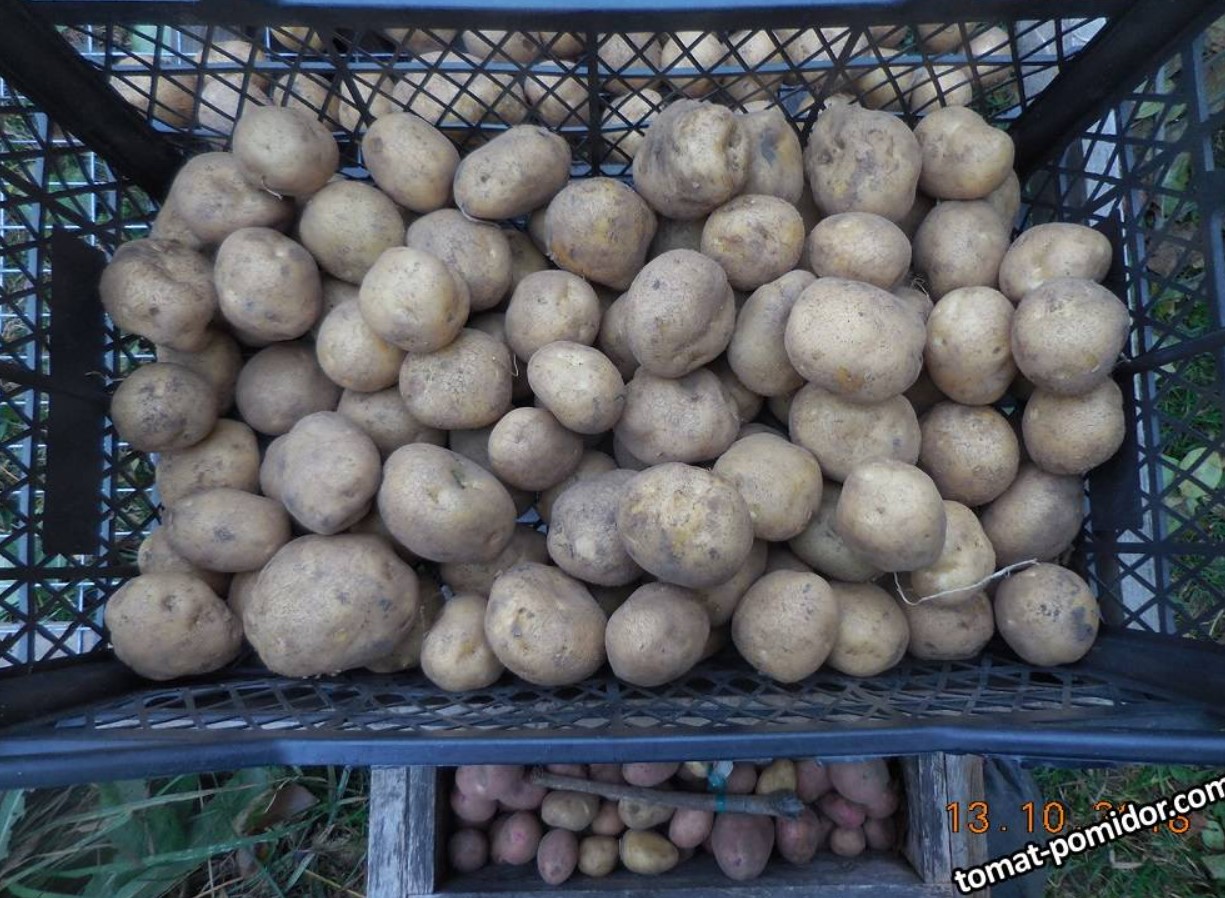
The Vineta potato variety is one of my favorites. It's supposedly an improved version of the Adretta variety, developed by German breeders. I believe this potato has the best flavor. It's also one of my favorite very early potato varieties. Besides its excellent flavor, it's perfectly round, with shallow eyes. Peeling it is a pleasure. The skin has a rough surface, which is its distinguishing feature. Another distinctive feature is that the tubers grow upward, resulting in a large number of green tubers. A bush yields about 12. It is also drought-resistant. An excellent choice for planting in your garden. I recommend it.
In previous years, we've grown the following varieties: Ideal (excellent flavor, very soft and succulent, although not listed in the registry, but well-known and widely grown in the northern European part of the country), but they've degenerated over time. Symphony (a late variety, so it doesn't always have time to ripen, although it's also delicious and very resistant to late blight, which in our area mows down the tops within 2-5 days. Considering that potatoes are planted from May 25th to June 10th, depending on the weather, and harvested when the tops die, which usually happens between September 1st and 7th, depending on the weather, late potatoes simply don't ripen), Izora, and Nevsky—they've also degenerated, and the flavor wasn't very good. Furthermore, disease resistance has dropped significantly, so it's time to replace the seed potatoes (renew them).
In general, my parents brought Vineta potatoes from the All-Russian Exhibition Center a few years ago (we call them "German"). They have a good yield (I harvest 60-65 buckets from 1.4 acres in a damp and cold summer), they are early, and always have time to ripen in our conditions. This year, they even managed to ripen, although they were planted from June 3-8, and on August 29-30, there was a frost of -2-4 degrees, all the tops were crushed, and we dug up 63 buckets (considering that the whole summer was 10-15 degrees, and only 2-2.5 weeks it stayed above 18-20).
In the spring, we brought Udacha and Sante (from VNIIKH) from Moscow, I ordered by mail from Sad i Ogorod (Chelyabinsk), Red Scarlett, Alvara, Charodey, Snegir, and bought a second reproduction of Rosara from visiting Kirov residents.
I've already written about Vineta, I can add that it has a good taste, I compared all other potatoes by taste and yield to it.
I would like to point out right away that the planting material of the ordered (new) potatoes was worse (smaller) than Vineta. I usually choose for planting ones the size of a large goose egg, since the development (speed and size) of the bush in the initial stage depends very much on the planting material.
Vineta - there are usually 15-17 tubers on a bush, not counting small ones, 8-10 large, 5-7 medium (just the size of a large goose egg - tuber length 65-75 mm, thickness 50-60 mm)
Sante is worse than Vineta (I think it's due to the size of the tubers I planted - I planted tubers measuring 55 x 45 mm). There were only 6-8 tubers on the bush, but they were all quite large. Although everyone says it's delicious when fried, it turned out to be tasteless, tasteless. I'll plant a little next year just for fun, but if the taste is confirmed, I won't plant it again.
Luck is slightly worse than Vineta (I think it's due to the size of the seed tubers—I planted tubers measuring 55 x 45 mm). There are 12-14 tubers per plant, a few large, the rest medium, and no small ones. I think if the year had been warm, all these medium tubers would have been large. The flavor is so-so, slightly worse than Vineta, but if the yield is good next year, I'll keep it.
The Snegiri (Bullfinch) that I received from Garden and Vegetable Garden looks nothing like Snegiri. When it grew, I realized what it looked like—it was definitely Charodei (Charodei). I planted 30 x 30 mm tubers, sometimes two per nest, and the yield was no worse than Vineta, and the flavor was similar, quite good. If the yield is similar next year, I'll definitely be growing it (and considering I'll be planting normal-sized tubers next year, the yield should be higher).
Charodey — I planted 30 x 30 mm tubers. I don't know what they sent me, but it looks like a Charodey, but the yield is poor. Snegiri (which is like a Charodey) is twice as productive. I haven't tasted it yet. I'll plant 15 next year to be on the safe side and see.
Rosara — I planted 60 x 45 mm tubers. The yield was worse than Vineta, similar to Udacha, and slightly better than Sante. The flavor was good, slightly better than Vineta.
Red Scarlet — I planted 40 x 30 mm tubers. The yield was on par with Vineta, maybe a little worse (I think due to the size of the tubers I was planting). The taste is also similar, not bad, maybe a little worse, but still quite good. If the yield is similar next year, I'll definitely grow it (and considering I'll be planting normal-sized tubers next year, the yield should be higher).
Alvara: I planted 40 x 30 mm tubers, and the yield was on par with Vineta. There are about 20 tubers in a bush, and it's clear they have plenty of room to grow, as there are many medium-sized ones. The flavor is very good, definitely better than Vineta's, and it's more plump. I'll definitely be planting more; it's delicious and productive, and considering I'll be planting normal-sized tubers next year, the yield should be higher.
I've decided that next year's main varieties will be Vineta, Alvara, and all the others for control purposes. I'll select another 1-2 varieties for growing in subsequent years. Vineta and Alvara satisfied me in terms of yield and flavor, and I'll let the others prove themselves. One year isn't a good indicator; perhaps one variety didn't like the damp and cold summer. So we'll see.