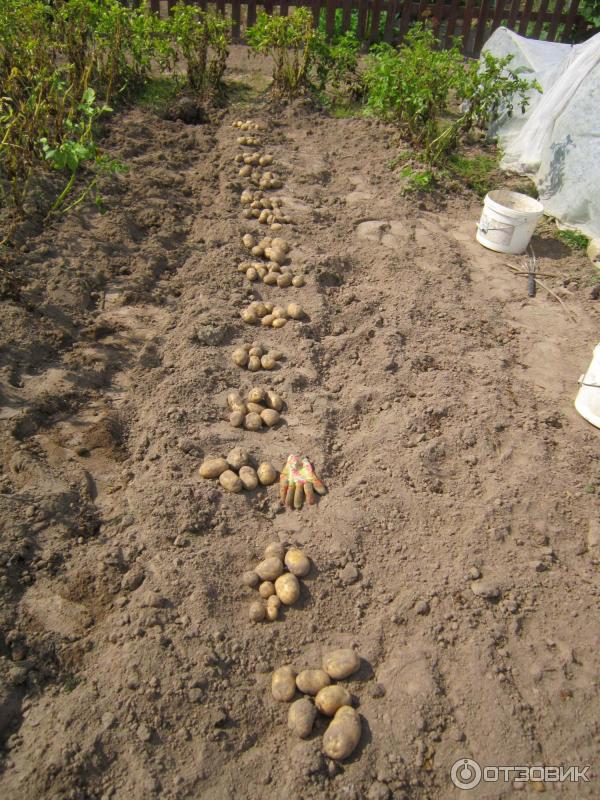
It's no exaggeration to call the Skarb potato the pride of Belarusian breeding. Not only does it adapt well to a variety of growing conditions, but it also produces a bountiful harvest that will impress even the most demanding gardener. It's no coincidence that the word "skarb" literally means treasure. We'll cover this variety in more detail in this article.
Content
- 1 Table with characteristics of the potato variety Skarb
- 2 The origin of the Skarb potato variety
- 3 Detailed description of the Skarb potato variety
- 4 For which regions is the Skarb potato variety suitable?
- 5 Advantages and disadvantages of the Skarb potato variety
- 6 Planting Features of the Skarb Potato Variety
- 7 Caring for the Skarb potato variety
- 8 Protection of the Skarb potato variety from diseases and pests in the table
- 9 The nuances of harvesting and storing the Skarb potato variety
- 10 Comparison of the Skarb potato variety with other varieties in the table
- 11 Real reviews from gardeners about the Skarb potato variety
Table with characteristics of the potato variety Skarb
| Characteristic | Description |
| General characteristics | A mid-season variety that produces a good yield, easily adapts to soil type and weather conditions, but is characterized by average drought resistance. |
| Ripening period | 80-95 days. |
| Starch content | 10.8-17.7% |
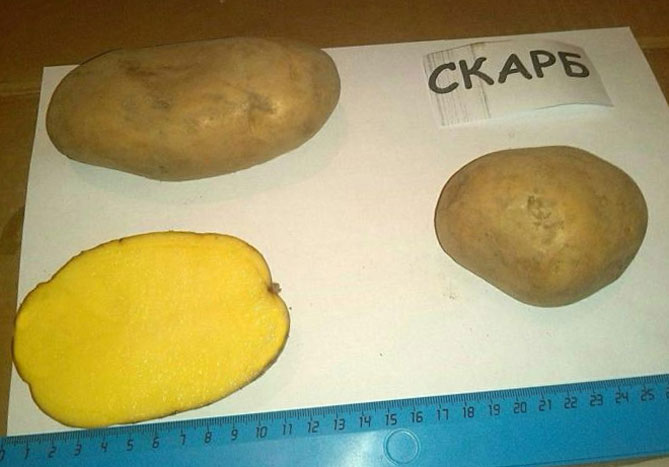
| Weight of commercial tubers | 94-138 g, individual tubers can reach a weight of 150-200 g. |
| Number of tubers in a bush | 8-12 pcs. |
| Productivity | 253-411 c/ha, maximum - 508 c/ha. |
| Taste qualities | The taste is good. |
| Marketability | 84-99% |
| Shelf life | 88-99% |
| Peel color | Yellow |
| Pulp color | Yellow |
| Color of inflorescences | White |
| Cooking class | Culinary type B (does not boil over easily, is ideal for baking, salads, and is suitable for mashed potatoes and soups). |
| Preferred growing regions | Northwestern, Central, Volga-Vyatka, and Ural. It has proven itself in Ukraine, Belarus, and Mordovia. |
| Disease resistance | The variety is highly resistant to canker, viruses, scab, and nematodes. If care is not provided, rot may occur. It is also susceptible to late blight. |
| Features of cultivation | When planting the variety, it is necessary to adhere to the classic growing scheme; it does not tolerate excess moisture in the early stages of vegetation. |
| 2002 | |
| Country of origin | Belarus |
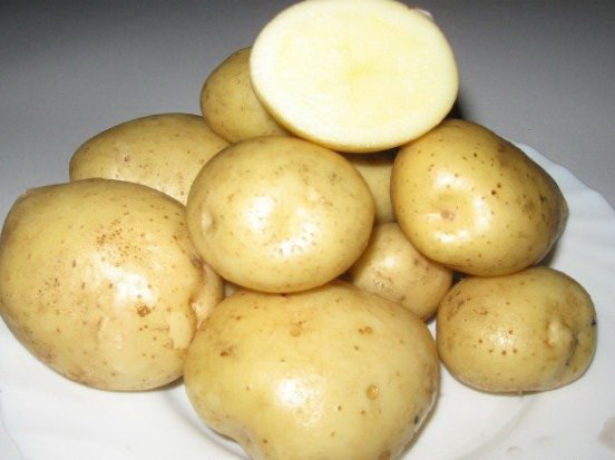
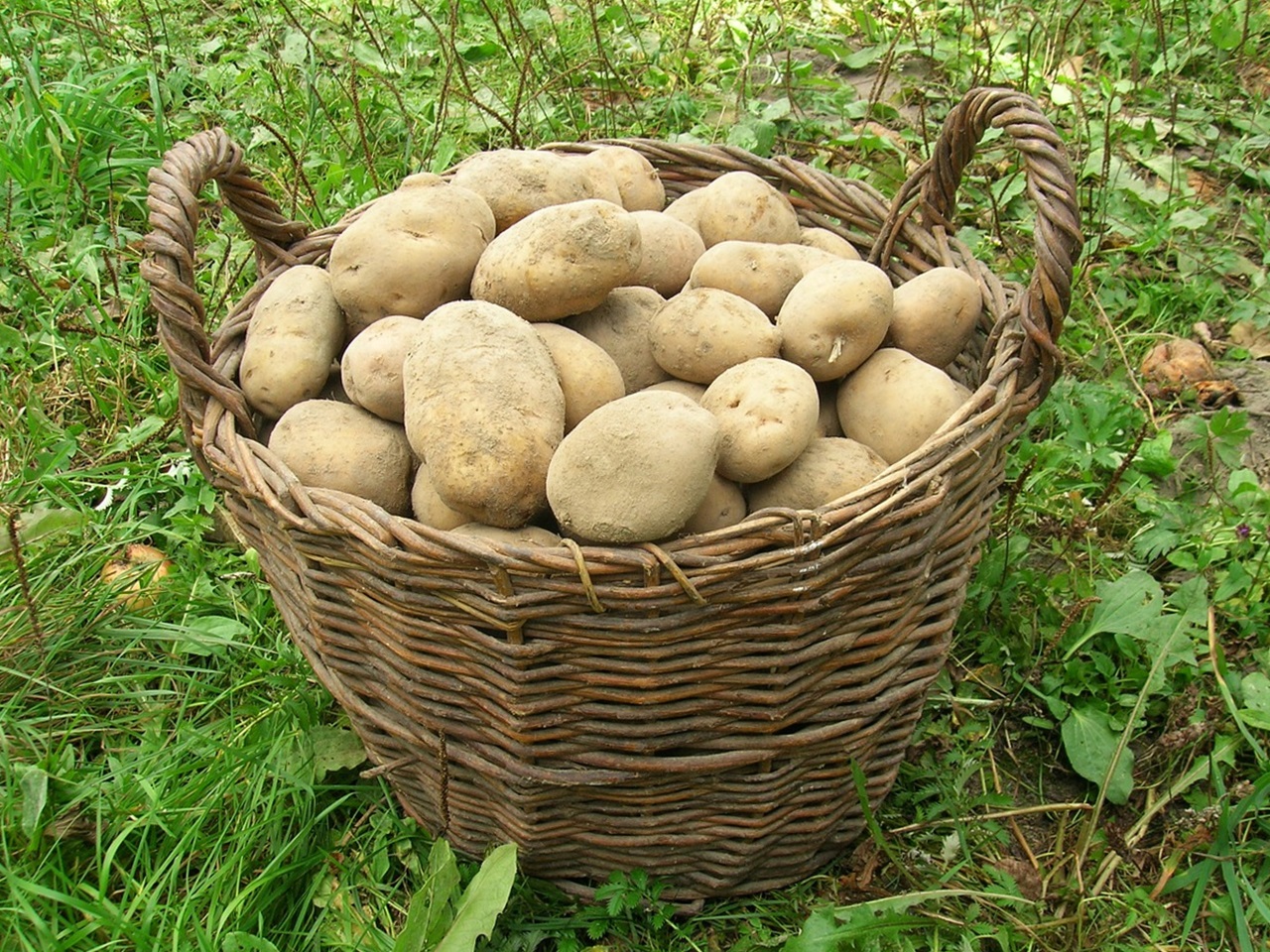
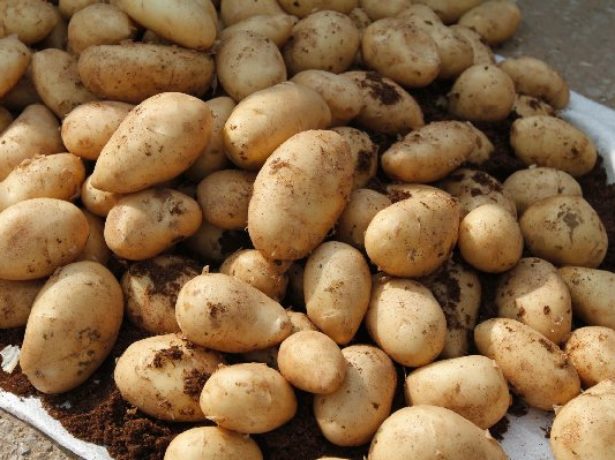
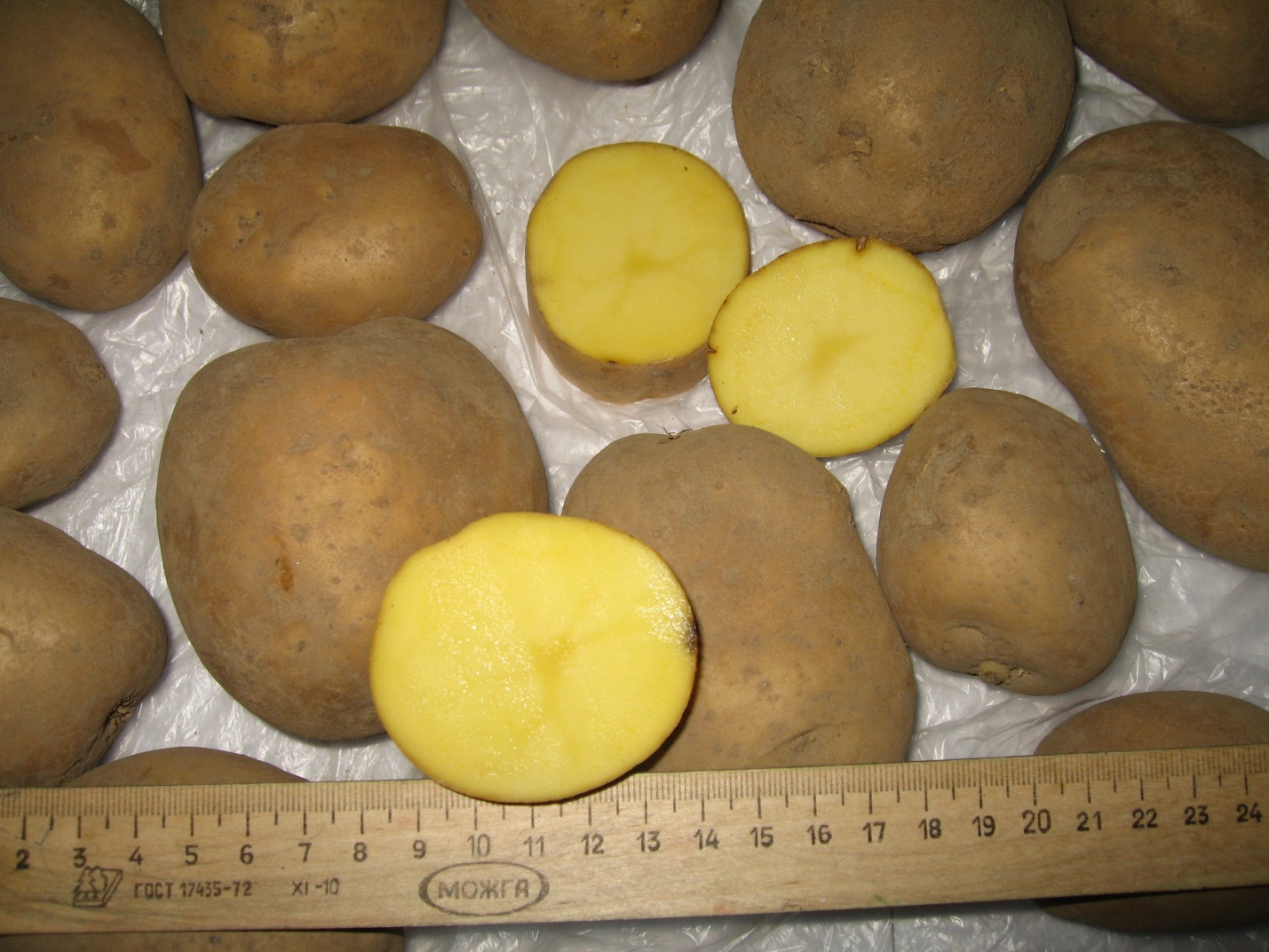
Photo gallery of the potato variety Skarb:
The origin of the Skarb potato variety
The Skarb variety was developed by Belarusian potato breeders, leaders in the industry. It was developed in their experimental field in 1997. It then came to our country, where specialists worked on zoning the variety and perfecting its key characteristics for our climate. Skarb received official recognition in 2002 after being added to the register.
Detailed description of the Skarb potato variety
The Skarb variety has a medium ripening time. Gardeners can harvest the fruit in 80-95 days. However, caution should be exercised when planting—if the soil temperature drops below 12°C, germination will be significantly delayed.
Bushes
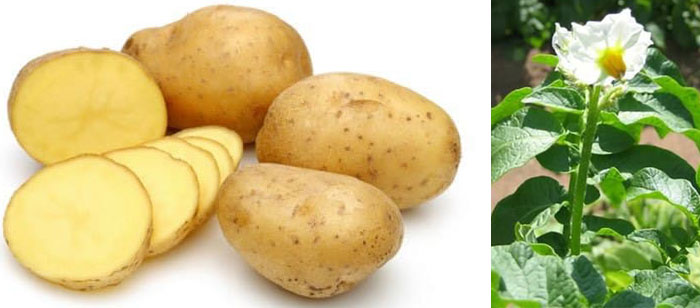
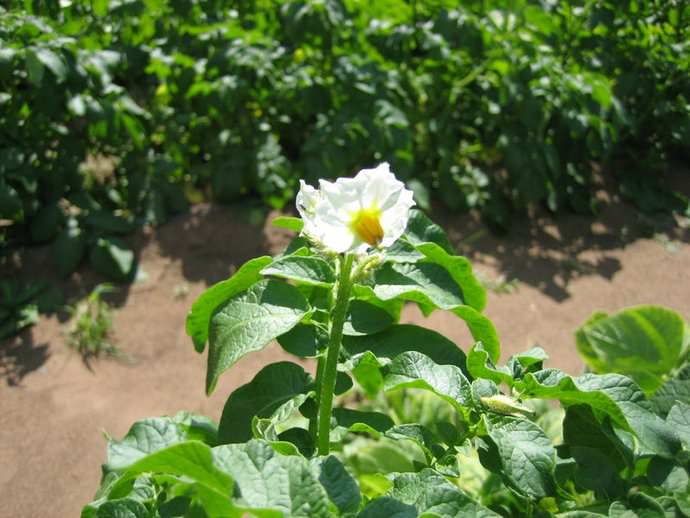
The bushes are relatively compact, with medium-height shoots. A distinctive feature of this variety is its extended germination process. The shoots emerge from the ground unevenly, varying in height and vigor. This is considered normal, as by flowering, the plantings become uniform, with laggards quickly catching up with the "leaders." This characteristic does not affect yield. The leaves are dark green and dense, and the flowers are white.
Tubers
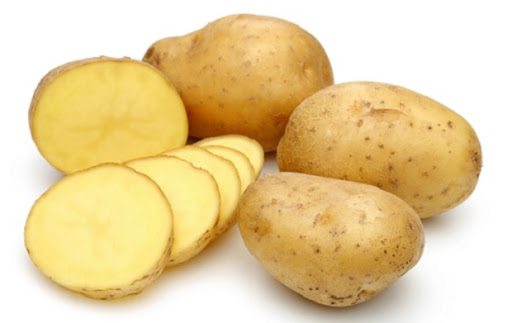
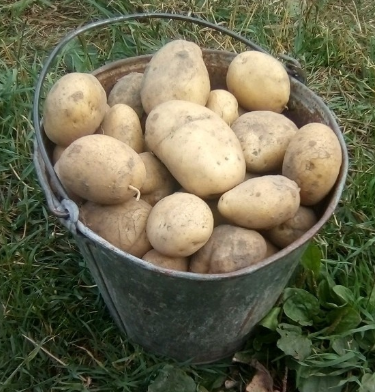
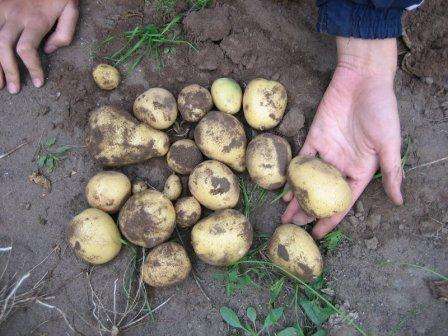
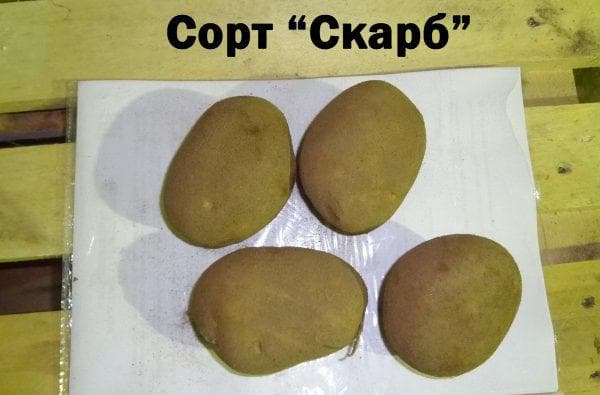
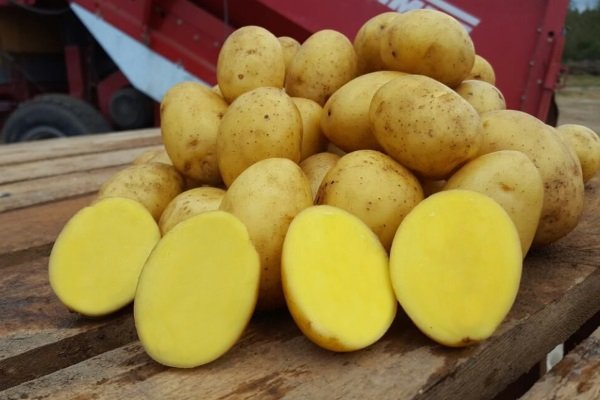
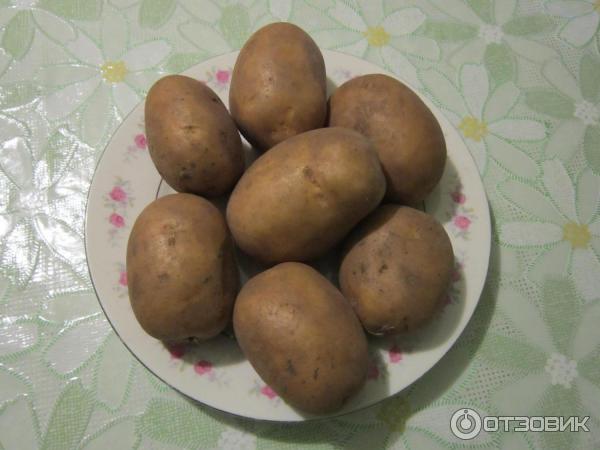
Each plant produces up to 12 healthy tubers at a time. They are a regular oval shape, slightly elongated, with a smooth, even surface. The skin, like the flesh, is yellowish. There are few eyes, all of which are quite shallow. If the soil is loose and fertile, a plant can yield up to 20 tubers. With proper cultivation techniques, they can weigh up to 150-200 g.
Nutrients and nutritional value
The tubers contain 10.8-17.7% starch. This figure depends on the quality of irrigation and the nutrient content of the soil. Furthermore, the potato flesh contains a host of elements and vitamins: manganese, carotene, iron, iodine, B vitamins, vitamin C, biotin, niacin, and pantothenic acid. All of these are found only in the flesh, but their concentrations decrease during heat treatment.
To preserve them as long as possible, it's recommended to cook them whole, as many of their nutrients are water-soluble. Some of these nutrients are lost during cooking. The longer a potato dish is stored, the fewer beneficial properties it retains.
Productivity, ripening time
Under ideal conditions, with loose, fertile soil and adequate moisture, a single plant can produce up to 20 tubers. Typically, the marketable yield of slort is between 253 and 411 centners per hectare. The maximum yield of 508 centners per hectare was recorded in the Vologda Oblast.
Resistance to diseases and pests
The treasure has high immunity to many diseases.
| Disease | Stability indicator |
| Cancer | High |
| Scab | High |
| Nematode | High |
| Wrinkled mosaic | High |
| Striped mosaic | High |
| Blackleg | Above average |
| Wet rot | Above average |
| Phytophthora blight of tops | Medium to low |
| Tuber blight | Medium to low |
For which regions is the Skarb potato variety suitable?
The Skarb potato is characterized by good adaptability, so it is successfully grown in almost all regions of our country. However, it exhibits its best varietal characteristics in the Central, Northwestern, and Volga-Vyatka regions. It has shown excellent results in Ukraine, Belarus, and Moldova.
Advantages and disadvantages of the Skarb potato variety
The Skarb variety has a number of advantages and disadvantages, which we have described in the table below.
| Advantages | Flaws |
|
|
Planting Features of the Skarb Potato Variety
The key to obtaining a rich harvest is compliance with agricultural cultivation rules.
Requirements for the landing site and its preparation
Skarb prefers fertile, slightly acidic soil. Clover and plantain growing in it serve as indicators.
The area should be well lit and dry, as potatoes do not tolerate moisture accumulation.
Experienced gardeners strongly recommend following crop rotation rules and planting potatoes in beds after winter crops, legumes, cabbage, onions, or cucumbers.
If it is not possible to change the planting location, then you should at least alternate the rows and spaces between rows to allow the soil to renew itself a little.
Prepare the plot in the fall. Dig the soil to a depth of 25-30 cm and add 1 bucket of compost or humus, 4 tablespoons of superphosphate, and 2 tablespoons of potassium salt per square meter.
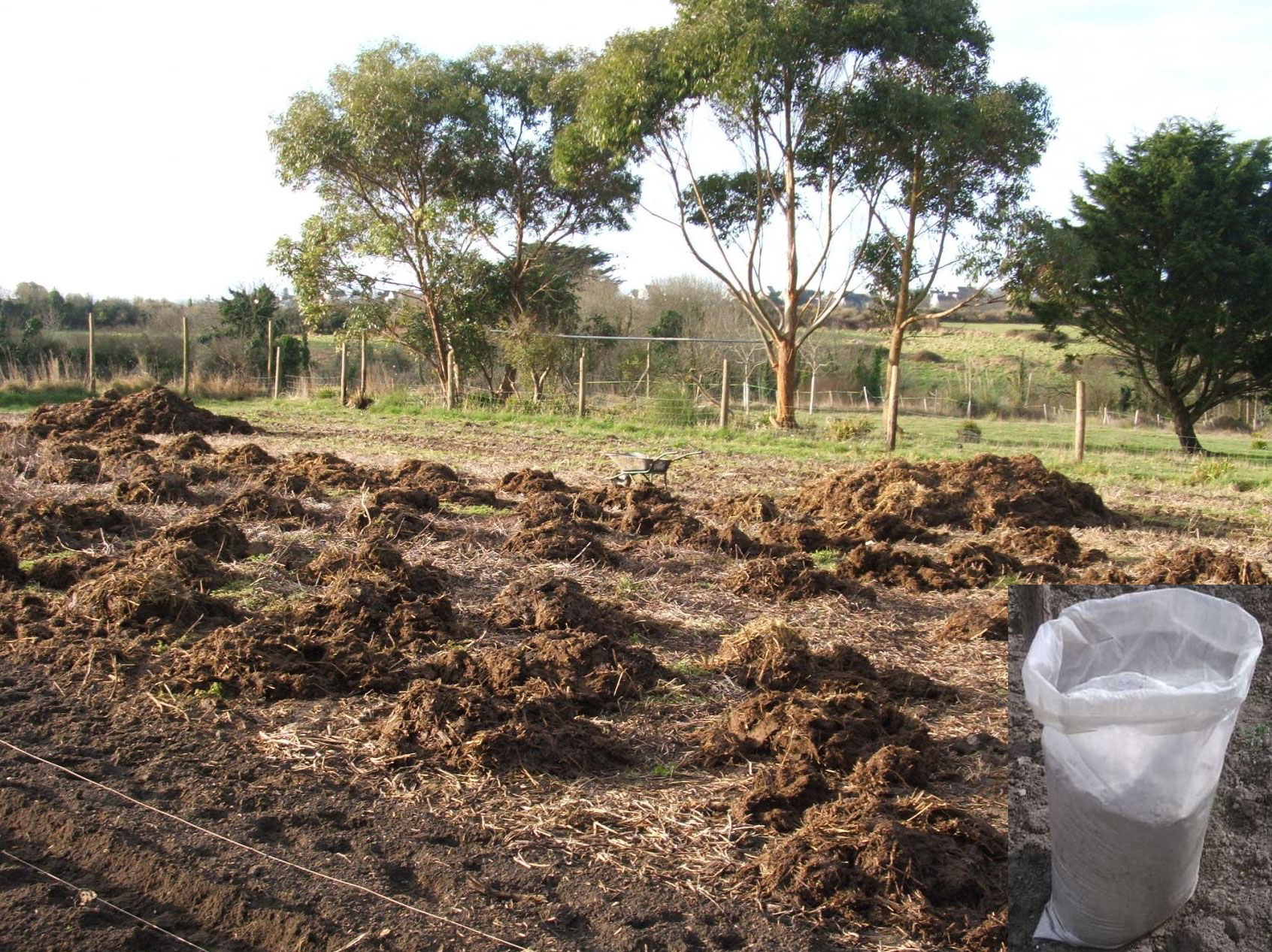
If the soil is very dense and clayey, you will have to add 1 bucket of sand per square meter.
In autumn, digging is repeated and nitrogen-containing fertilizers are added.
Selection and preparation of seed tubers
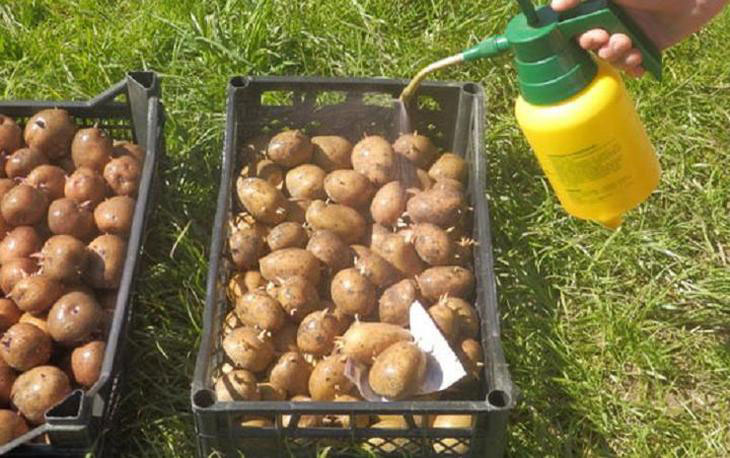
Preparation of planting material begins about a month before planting. First, the tubers are sorted, removing any damaged or rotten ones. Choose medium-sized potatoes; larger isn't necessarily better.
The selected tubers are placed in boxes and placed in a very warm room for two days. Ideally, the temperature should reach 35–40°C. Many gardeners use a heated greenhouse for this purpose. After this, the boxes are returned to a well-lit room and left there until the sprouts appear. Once they reach 3–4 cm in length, they can begin planting.
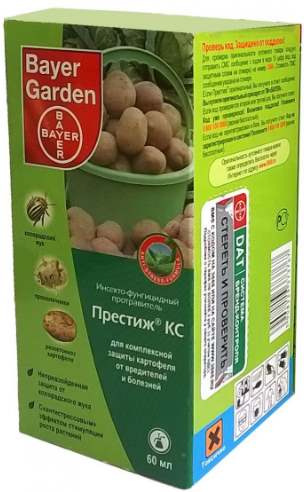
To strengthen the immunity of tubers, some gardeners carry out additional treatment with Matador or Prestige preparations, diluted in accordance with the instructions.
Planting times and rules
You can plant the tubers in the ground when the soil has warmed up sufficiently and the thermometer consistently reads 10°C. In temperate climates, this period typically occurs in the second half of May. Don't rush, as potatoes will sprout very slowly in cold soil. They may also begin to rot and become diseased.
The tubers are placed sprout-side up in pre-prepared holes spaced 35 cm apart. It is recommended to leave a gap of 60-70 cm between rows to facilitate subsequent care.
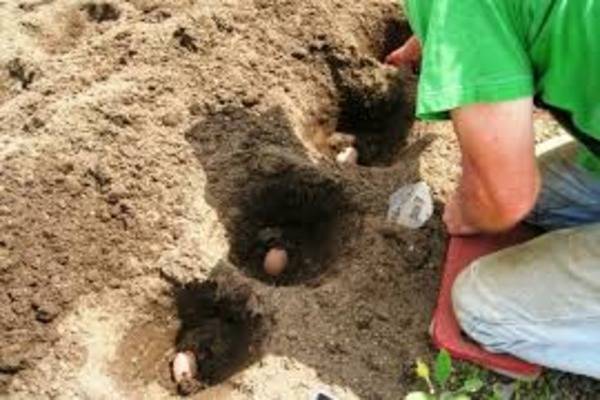
The soil surface is leveled with a rake. If the plants weren't fertilized in the fall, add a handful of compost and ash to each hole when planting.
Experienced gardeners advise adding a teaspoon of potassium salt and the same amount of superphosphate to this list.
Caring for the Skarb potato variety
For a good harvest, the Skarb potato requires optimal watering, loosening, weeding and hilling.
Watering
During the entire period, you will have to water three times per season, pouring 10 liters of water under each bush.
If the summer is cloudy and rainy, then you need to focus on the soil moisture.
In hot weather, on the contrary, additional hydration may be required.
You should completely stop watering 2 weeks before the scheduled time for digging up potatoes.
Top dressing
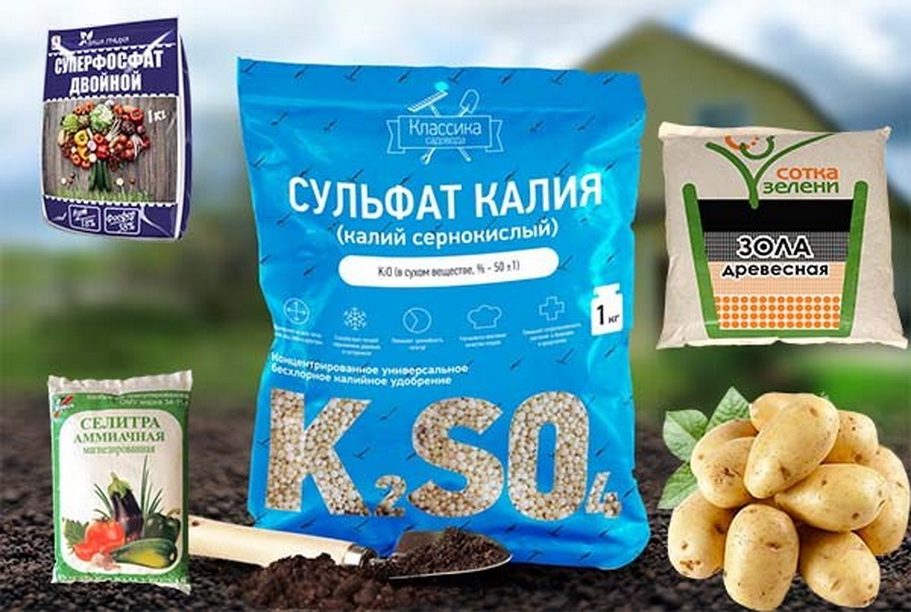
To maximize the harvest, it's important to fertilize your plants. This should be done three times per season:
- Spraying the tops during their formation period is done with a solution of 10 liters of water and 300 g of ash. You can also use an infusion of weeds that has fermented in a barrel for several days.
- Watering during budding. Use a solution of 10 liters of water, 1 tablespoon of potassium sulfate, and 3 tablespoons of ash. Apply 1 liter per bush.
- Apply superphosphate to the soil at a rate of 2 tablespoons per bush. This fertilizer can be replaced with a solution of 10 liters of water, 2 tablespoons of nitrophoska, and 1 cup of mullein; each bush will require 500 ml of the solution.
Loosening, weeding
It's best to combine soil loosening with weeding. The first time should be done 7-10 days after planting. Small weeds can be raked, while larger ones are removed by hand. It's recommended to repeat this process twice more during the season.
Hilling
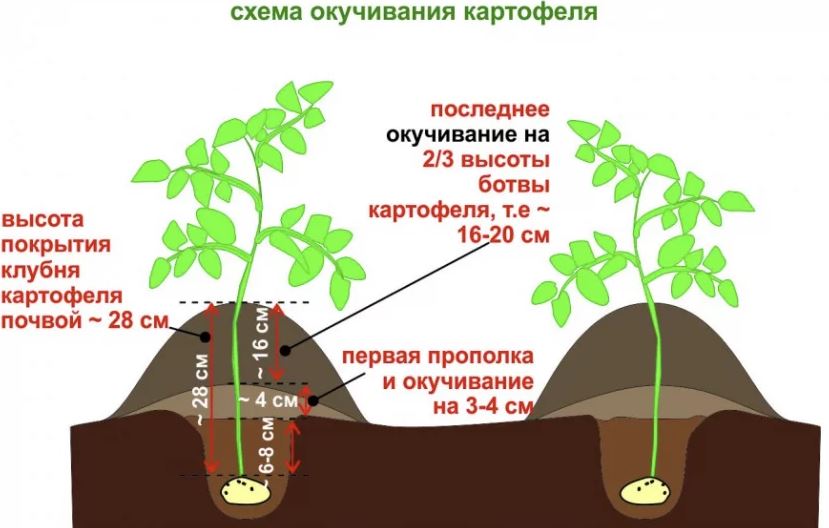
Experienced gardeners say that hilling can increase potato productivity by 20%. It's done by raking soil onto the plant and is done three times per season:
- When the shoots reach 10 cm in height.
- 14 days after the first hilling.
- During the flowering period.
Hilling improves root nutrition and aeration within the soil, protects against bright sunlight, over-watering or drought, and possible temperature changes.
Protection of the Skarb potato variety from diseases and pests in the table
Potatoes have high immunity to many diseases, but if care rules are not followed, they can become infected with late blight.
| Disease or pest | Description | Prevention and treatment |
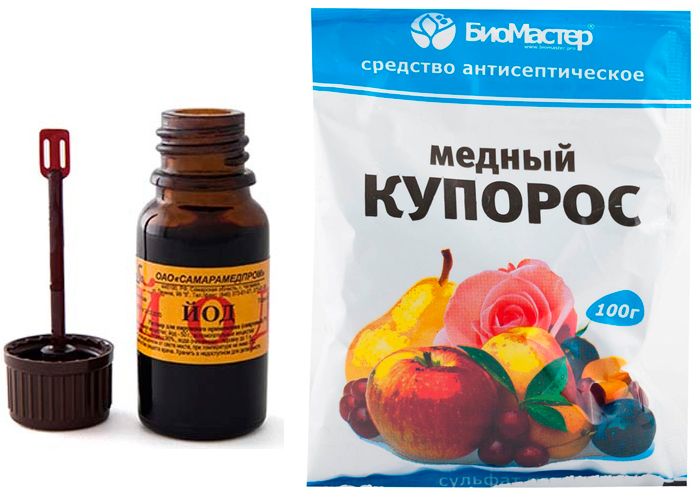
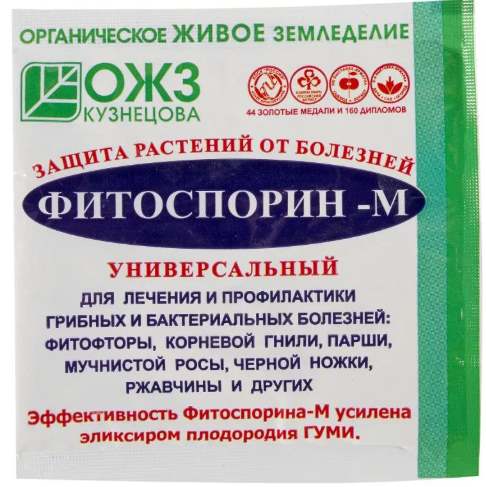
| Late blight
|
Tubers and shoots become covered with dark spots | Pre-treatment of planting material with specialized preparations, such as Fitosporin, is very helpful in preventing the disease. Spraying the plants with a copper sulfate solution at a rate of 10 g per 10 liters of water has proven quite effective. This is done every 7-10 days until flowering, until signs of the disease disappear. |
| Potato wireworm, Colorado beetle
|
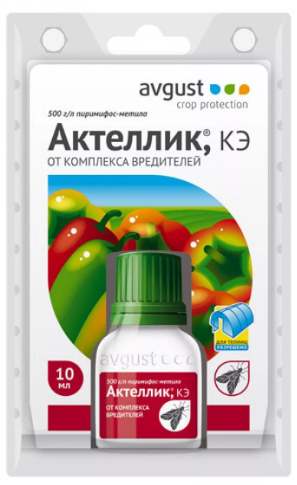
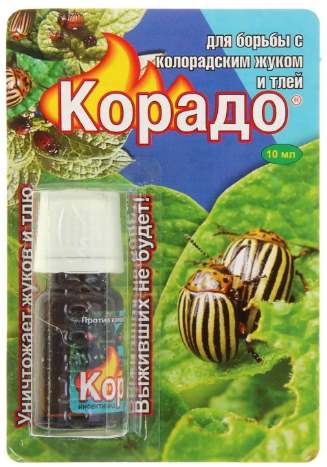
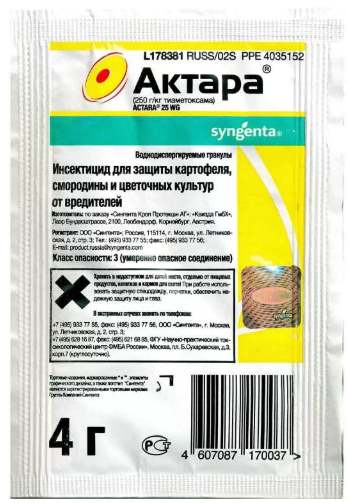
These insect pests significantly reduce the quality of the harvest. While the beetle and its larvae are immediately visible on the bushes, wireworms can only be discovered when digging up the tubers. | Some gardeners recommend adding a handful of onion peels to the hole during planting. Colorado potato beetles, if present in small numbers, can be collected by hand. Treatments with pesticides can help eliminate large numbers of insects. Aktara, Corado, Aktellik. |
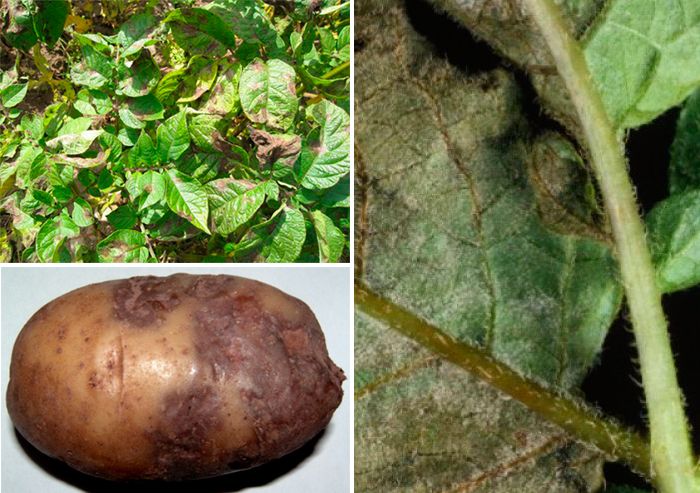
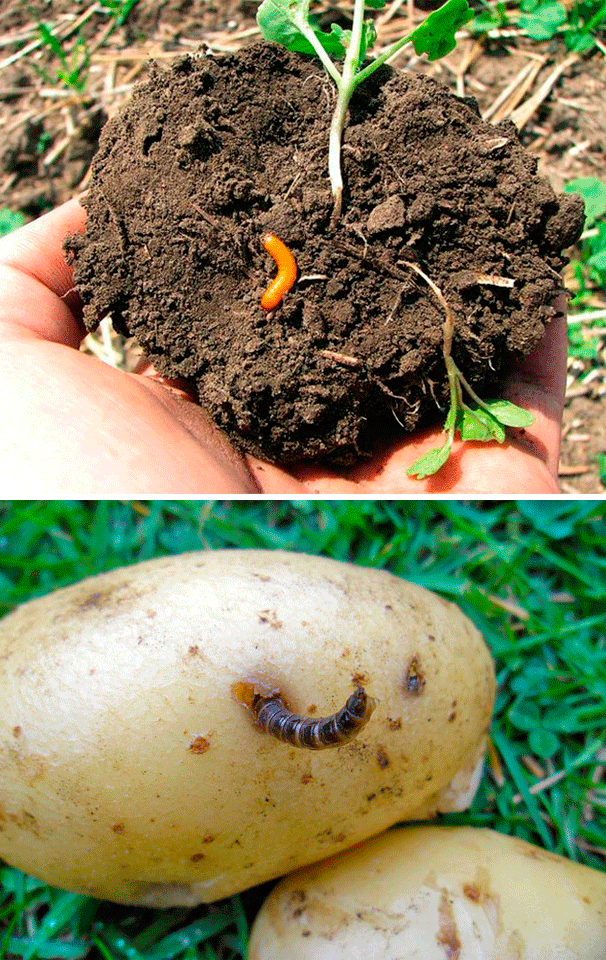
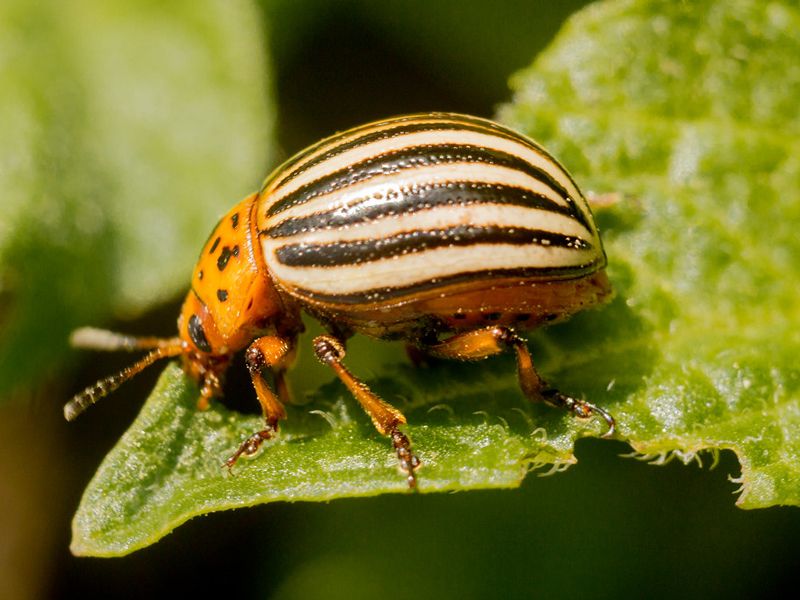
Photo gallery of preparations against diseases and pests of the potato variety Skarb:
The nuances of harvesting and storing the Skarb potato variety
14 days before the start of potato harvesting, it is necessary to stop watering and mow down all the above-ground parts of the plants, leaving no more than 15 cm of stems.
Potato harvesting times and rules, DIY potato diggerRead all about it on our website Top.tomathouse.com.
Digging is best done in dry, cloudy weather. All tubers are spread out under a canopy to dry. The exception is potatoes that will be used for planting next season—they can be left in the sun to green up. Damaged potatoes are stored separately. If they show no signs of rot, they are safe to eat. However, this must be done quickly, as these potatoes will not keep for long.
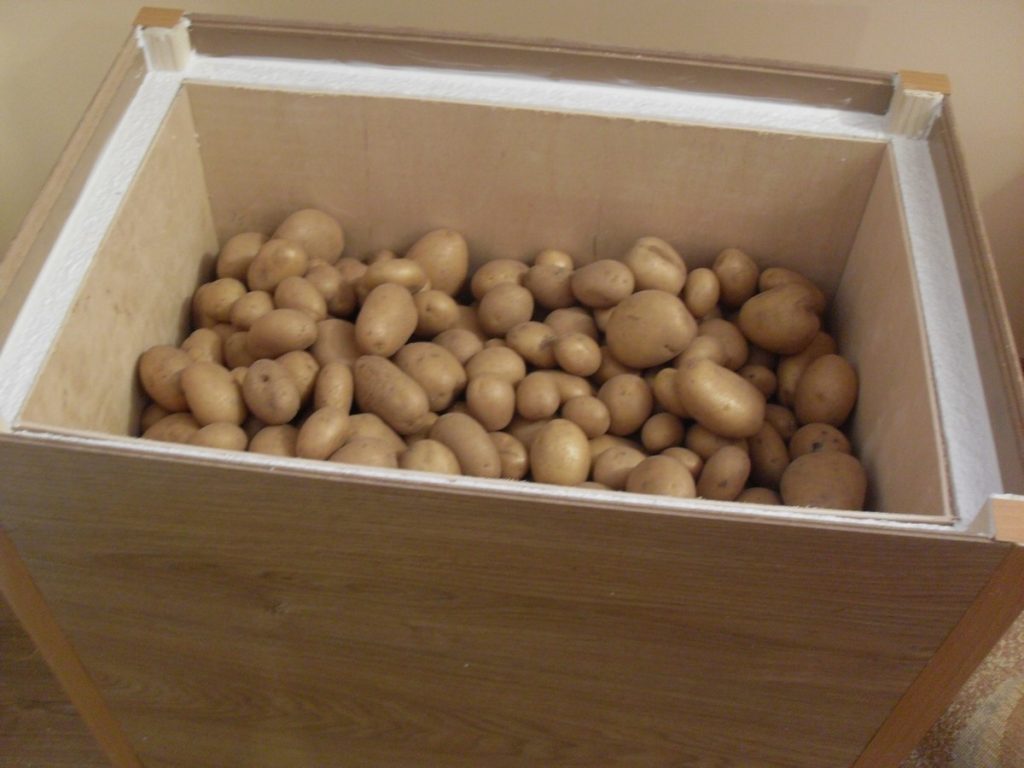
After 2-3 days, the fully dried potatoes are placed in boxes or bags and stored in a cool room with an air temperature of +2…+4°C. Due to their high marketability and shelf life, the potatoes will last in these conditions until the next season.
Comparison of the Skarb potato variety with other varieties in the table
| Variety | Ripening period (number of days to maturity) | Starch (%) | Yield (c/ha) | Weight of tubers (g)
Number of tubers per bush Color of tuber, pulp |
Shelf life (%) |
| Treasures | Mid-season*** | 12-18 | up to 650 | 95-250 12-18 yellow, yellow |
94 |
| Banker | Mid-early** | 15-16 | 200-350 | 70-160
10-15 soft yellow, light yellow |
90 |
| Strongman | Mid-early** | 10-12 | 127-275 | 78-105 15-20 yellow, cream |
97 |
| Nikulinsky | Mid-late**** | 12.5-21.3 | 170-410 | 70-135
12 beige, cream |
95 |
| Molly | Early ripening* | 11.4-13.4 | 171-308 | 98-142
20-25 yellow, yellow |
82 |
| Nandina | Early ripening | 12.8-15 | 146-322 | 72-132
8-12 yellow, yellow |
93 |
| Impala | Ultra-early | 10-15 | 180-360 | 90-160
15-21 yellow, light yellow |
95 |
| Karatop | Ultra-early | 11-15 | 200-430 | 60-100
16-25 yellow, light yellow |
97 |
| Empress | Ultra-early | 14-16 | up to 400 | 70-145
8-12 yellow, yellow |
91-95 |
| Lilly | Mid-season | 11.9-13.8%. | 108-196 | 96-157
6-9 yellow, yellow |
93 |
| The Beauty of Meshchera | Mid-season*** | 13.9-16.7 | 197-493 | 100-110
up to 18 yellow, light yellow |
95 |
*Early ripening – 50-65 days.
**Mid-early – 65-80 days.
***Mid-season – 80-95 days.
****Late ripening – 110 days or more.
Real reviews from gardeners about the Skarb potato variety
Consumers note the slightly sweet taste of the Skarb potato, which isn't to everyone's taste. However, excellent yields and ease of cultivation are cited as clear advantages.
User mokpo, Russia, Veliky Novgorod, July 6, 2015
One of my favorite potato varieties is "Skarb." The word "skarb" translates from Belarusian as "treasure trove" or "wealth."
What I like about this potato is its taste, first and foremost. We store its tubers in the basement, and other potato varieties begin to sprout around February, while the first sprouts of the "Skarb" potato appear around May.
Since these potatoes are slow to sprout, we sprout them before planting. We do this by cutting off the tops of five- or six-liter drinking water containers (available at most grocery stores), placing the potatoes in them, and placing them in a dry, sunny spot. After about three weeks, small sprouts will appear, ready to plant.
The potato variety "Skarb" is resistant to many diseases, including the "golden nematode".
User Serval2011, Russia, Donskoy, Tula Oblast, October 27, 2015
Excellent potatoes—no change when planted or harvested—they stay yellow. They take a long time to cook, but they're delicious. They can be eaten boiled, fried, or baked. This variety isn't picky about sowing; it will grow wherever you throw it. The main thing is manure or humus. Don't add fertilizer. Otherwise, it will absorb everything, and you'll end up eating it. They're resistant to the Colorado potato beetle. They like to be picked. The density increases, and with it, the yield. After harvesting, serve with herring or roast pork, and a few alcoholic drinks on holidays. Don't forget the cabbage. Bon appétit and good health to everyone.
User luna1982, Russia, Moscow, December 22, 2015
The Skarb potato variety occupies a place of honor on my plot. I have twelve hundred square meters of land dedicated to planting this crop. When I kept cows, the soil was well-fertilized, so I devoted six hundred square meters specifically to this variety one year.
So, this fall, I collected sixty bags. They're a treasure, yellow, cook quickly, and cook well. My plot is at an altitude, so I start planting early, at the end of April. Others are just starting to plant, but mine is already sprouting. And the beetles aren't as bad; they manage to devour them. I use a walk-behind tractor to cut the boundaries, add manure, and, of course, the potatoes, top them off, and let the darlings grow. The bush grows squat and dense, with many offsets, which speaks to its productivity. And of course, I hill up the soil and fight the beetles. Interestingly, we've had few of them for the last two years. I start digging in mid-August; it's a mid-season variety. The tubers are large, golden, and can yield up to a quarter of a bucket from a single bush. The taste is excellent, as are the dishes. As you remember from the film "Girls," Tosya the Cook listed so many potato dishes. I didn't know about it before, but when I moved to my wife's homeland, I tried it, and I still eat kolob often. They roll out the dough into a pancake, fry it so it's not too oiled, add mashed potatoes, and fold the pancake. It's ready, quick and delicious, especially with sour cream or milk. As they say here, it's mind-blowing.
https://otzovik.com/review_2746499.html
User prettylotta, Russia, Moscow region, November 23, 2020 A week ago, we closed out the 2020 gardening season, brought out the harvest, and are now happily enjoying it. I never thought I'd write a review about potatoes, but I will. We bought seed potatoes at the end of March, as usual—three different varieties. And the salesperson was gushing about how wonderful the "Skarb" variety was, how much more space there was, how much of the field—no problem—expand it, keep planting, it's pure joy. No, we haven't expanded; on the contrary, we're increasing the area we plant each year. But we still bought the "Skarb" variety, it's just curious. It was the treasure that first started sprouting in the field. We planted it at the end of April (Vladimir region). A month later, the greenery was already like this: In the foreground are rows of treasures —> What I don't like: the potatoes are a bit crumbly. Whether you fry, stew, or boil them, they crumble on top. I don't like using these potatoes in soups and mashed potatoes; that's why we only use crumbly red potatoes. This is what the potatoes look like when they are cut and fried with vegetables; Not the kind you want for frying at all. I'd still give it an excellent rating. It's a matter of personal preference. The potatoes have no shortcomings: germination and yield are decent. Thank you for your attention to the review! All the best
It's not for nothing that they say potatoes are a Russian's second bread. Anyone with a small plot of land tries to plant at least a few potato plants there. Homegrown potatoes can't compare to store-bought ones, especially in taste. So, of my 800 square meters (200 square meters), I devote about 200 square meters (0.75 square feet) to potatoes. I grow several varieties, as you can't rely on just one. Summers vary from year to year: sometimes cold, sometimes wet, sometimes drying out everything. Each variety reacts differently to weather conditions, so I have to experiment with different varieties. The "Skarb" variety turned out to be my most productive and consistent. I purchased this variety, along with many others, from the KTM Seed Breeding Company in Kostroma. The tubers of this variety are very beautiful, a perfect oval or round-oval shape. The color is yellow, both on the skin and the flesh. I also really like the taste of this variety. The potatoes are crumbly but don't fall apart when boiled. The mashed potatoes are light yellow and fluffy. This potato is also distinguished by its excellent storage properties. Its eyes begin to open late. Unlike other varieties, the seeds have to be removed from cold storage earlier. I usually bring them into a warm place in late March or early April. I also read a very interesting fact about this variety online. When planting potatoes, if they are very large, never cut them into pieces. It turns out that after cutting the tuber, the sprouted eyes stop growing. We plant potatoes from May 10th to 20th, when the soil has warmed up. We don't dig the soil for the potatoes. We use a shovel to make a trench along a rope and fill it with humus, ash, and ammophoska. We place the potatoes in the trench at a distance of 25-30 cm. We cover them with the soil we dug out of the trench. We space the rows 70 cm apart. We hill the potatoes twice and spray them once to repel Colorado beetles. Water is a problem, so we rarely water the potatoes during hot weather. After the final hilling, I pile grass, strawberry leaves from processing the strawberries, and any other plant debris into the trench. Later, after digging the potatoes, I cover all this debris with soil. Everyone knows that potatoes degenerate over time, the tubers accumulate diseases, and therefore the seed material must be renewed from time to time. There are many options for renewing seed potatoes. One of them is growing from sprouts. Potatoes grown from sprouts are not infected with diseases from the old mother tuber, and the seeds are healthy. Two years ago, I conducted a similar experiment with my potato varieties. True, I started the experiment late; I should have started earlier. In mid-April, I took one potato each from five varieties, placed them in a single row in a box, and covered them with soil. I watered the soil occasionally. Over time, the potatoes sprouted and produced sprouts. In mid-May, I separated these sprouts from the mother tubers and planted them. I planted them according to the standard planting method. Since the sprouts were different sizes, they developed differently. Several of the smallest sprouts died. But I should have cared for them accordingly, but I let the experiment slide. I should have fed them, loosened and hilled them more often, weeded them, and sprayed them for late blight. I didn't do any of that. I planted them and forgot about them. The remaining plants eventually grew very well, but they got infected with late blight earlier than the regular potatoes. The "Skarb" variety had only two sprouts, so I observed them. The results are shown in the photo. One plant produced only two potatoes, the other five, and even then, they were all different sizes. As for the "Skarb" variety, I have to say it's excellent; I'll be buying it again to replenish my seed stock. If you haven't planted it yet, give it a try. Supplement to the review based on the results of summer 2018. This year, I decided to update my seed collection a bit. I bought five varieties and wrote reviews for all of them. The new varieties were Adretta potatoes, the red Irbitsky variety, and the very productive Vega variety. I bought tubers again from the KTM Seed Company in Kostroma. To try again, I also bought the Skarb variety. I collected the seeds myself, choosing 15. I planted them in mid-May, in this condition.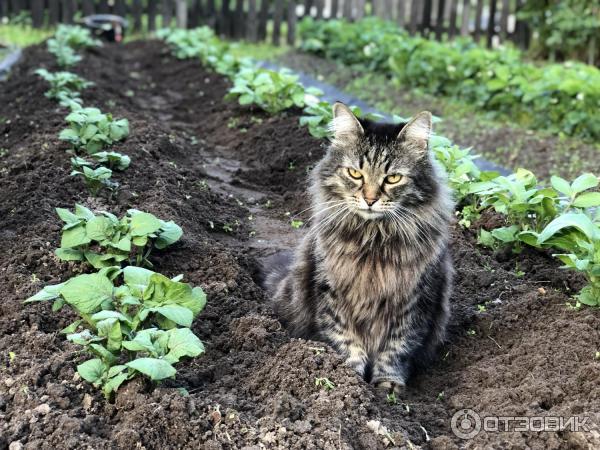
The tops are strong. Other varieties (Breeze and some red one) haven't caught up all summer.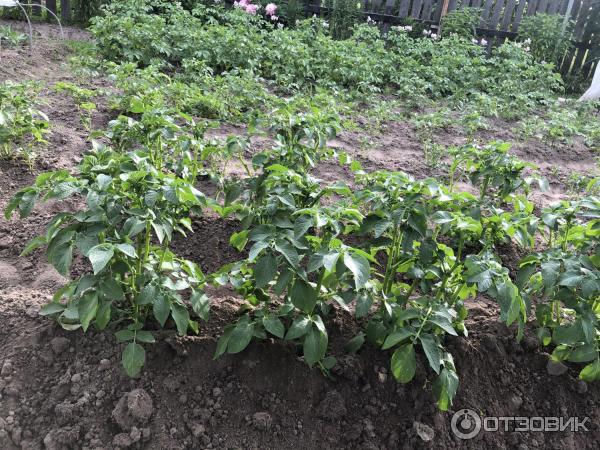
The variety produces a good yield. This year, all our potatoes were small. But the "peas" we had were very few, and they were good tubers.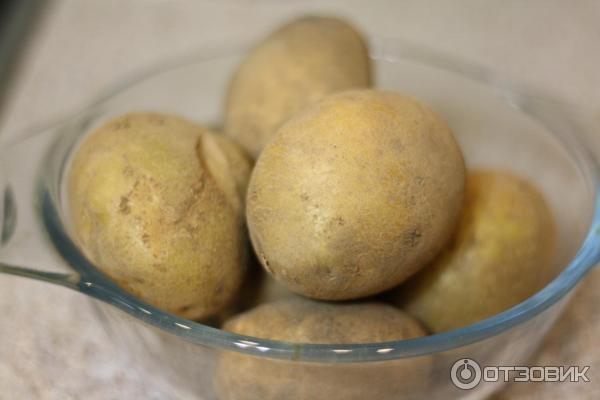
I like the appearance of the treasure; I love this kind of potato - when it's yellow.
The tubers are perfectly shaped, the potatoes are perfectly even. There were only a few gnarled tubers throughout the entire harvest.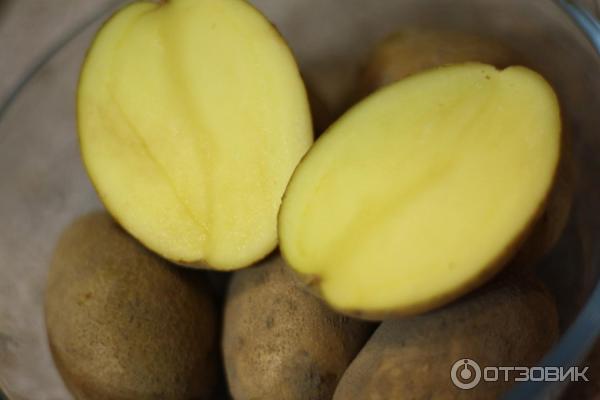
The skin is smooth, so there's no need to cut anything. I don't even peel it for baking; I just wash and slice it.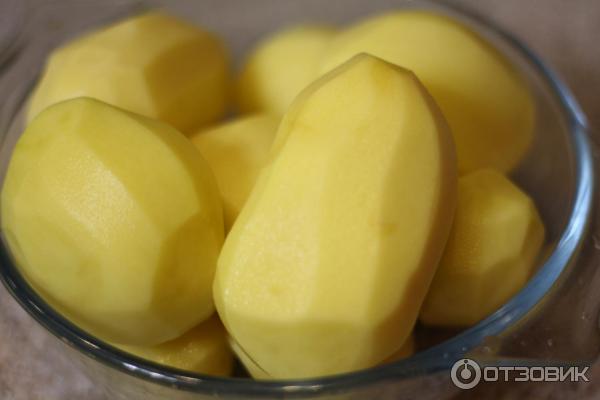
And the taste of the treasure is like good potatoes.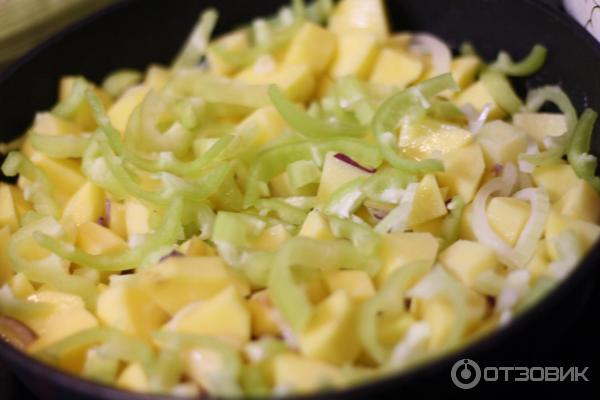
And when ready it becomes crumbly;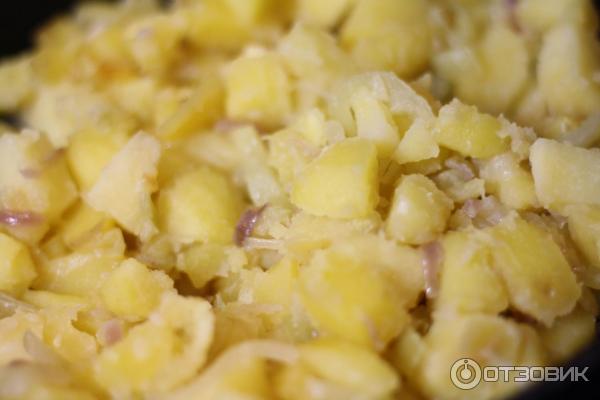
As a result, the potatoes are an attractive yellow color and delicious. However, I'm not happy with their slightly crumbly texture. Had I known, I would have chosen a different variety, one that's not crumbly at all.
But this variety also has a drawback, and a rather significant one at that. It's resistant to nematodes and canker, but the tops, unlike the tubers, are susceptible to late blight. After harvesting the potatoes, I sow the field with oats or mustard. This leaves the green area for the winter.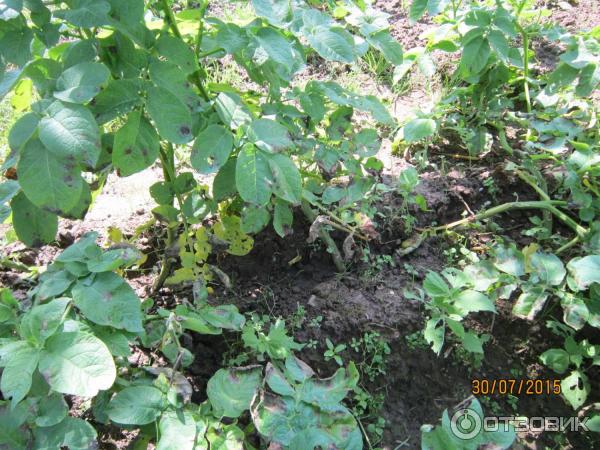
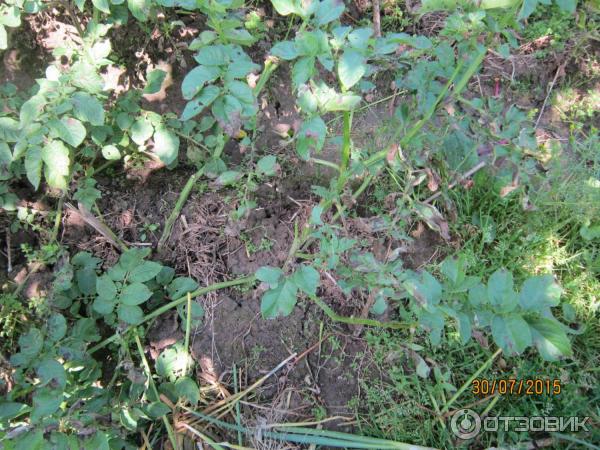
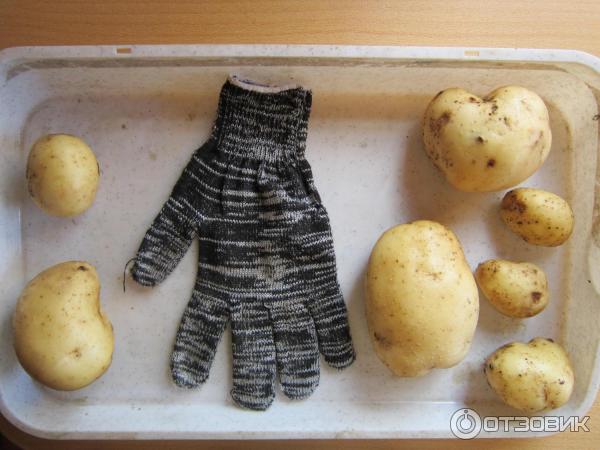
The experiment also included the "Zhuravinka" variety. The harvest from five sprouts is also pictured.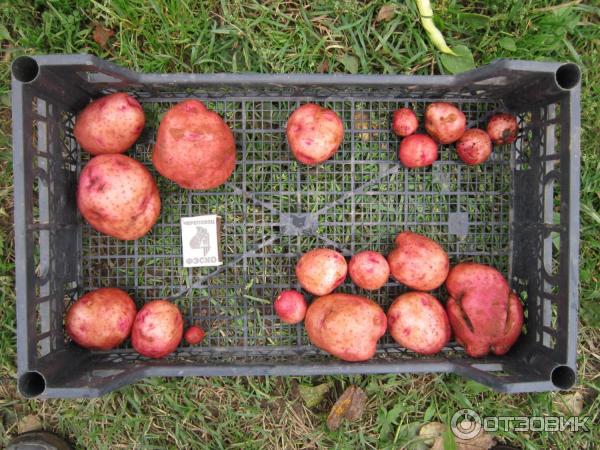
I planted all the experimental seed potatoes the following year for further growth. The results were disappointing. The plants were no different from regular ones, and there was no extra yield. So, I can say that the experiment was done, and I won't repeat it again.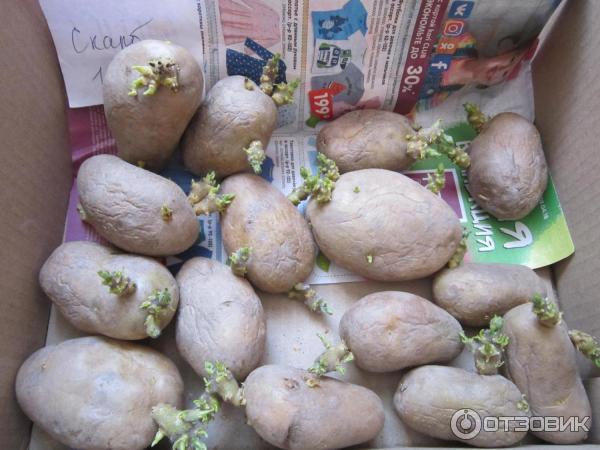
One tuber turned out to be diseased. I had to remove the rotten sprouts.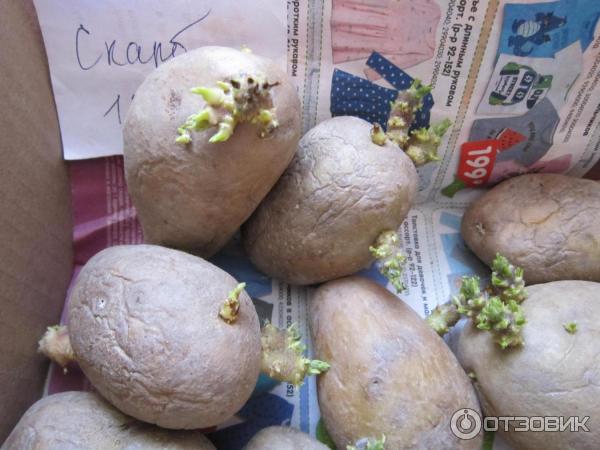
Late blight hit this variety again, one of the first. Here's the final result. There's no problem, the potatoes are perfectly formed, but there aren't many tubers in the nest, just 5-8. But I think, given my poor farming practices, the result is quite good; it's enough for me. From 15 tubers, I got 12 kg.