Breeders have developed a huge number of potato varieties. One of the most popular among Russian gardeners is Karatop. It quickly adapts to various climates, has excellent flavor, and doesn't overcook or darken. Let's take a closer look at this variety's characteristics.
Content
- 1 Characteristics of the Karatop potato variety
- 2 The origin of the Karatop potato variety
- 3 Description of the Karatop potato variety
- 4 Advantages and disadvantages of the Karatop potato variety
- 5 Features of planting Karatop potato variety
- 6 Caring for the Karatop potato variety
- 7 Protection from diseases and pests
- 8 Harvesting and storing Karatop potatoes
- 9 Tips from Top.tomathouse.com on growing the Karatop potato variety
- 10 Comparison of the Karatop potato variety with other varieties in the table
- 11 User reviews of the Karatop potato variety
Characteristics of the Karatop potato variety
|
Characteristics |
Description |
|
General information |
Early ripening, light-loving variety. |
|
Ripening time |
50 days after full formation of seedlings. |
|
Productivity |
Varies depending on the growing region:
|
|
Marketability |
72-93%. |
|
Shelf life |
97-99%. |
|
Starch concentration |
10.6-14.4%. |
|
Cooking class |
"IN". |
|
Color of pulp |
Light yellowish. |
|
Peel color |
Yellow. |
|
Weight of commercial tubers |
58-105 BC |
|
Number of tubers on one bush, pcs. |
Up to 25. |
|
Taste characteristics |
Good ones. |
|
Culinary uses |
Tableware. |
|
Regions |
North-West, Middle Volga, Western Siberia, Volga-Vyatka. |
|
Disease resistance |
Potato cancer, golden nematode, leaf roll virus. |
|
Color of inflorescences |
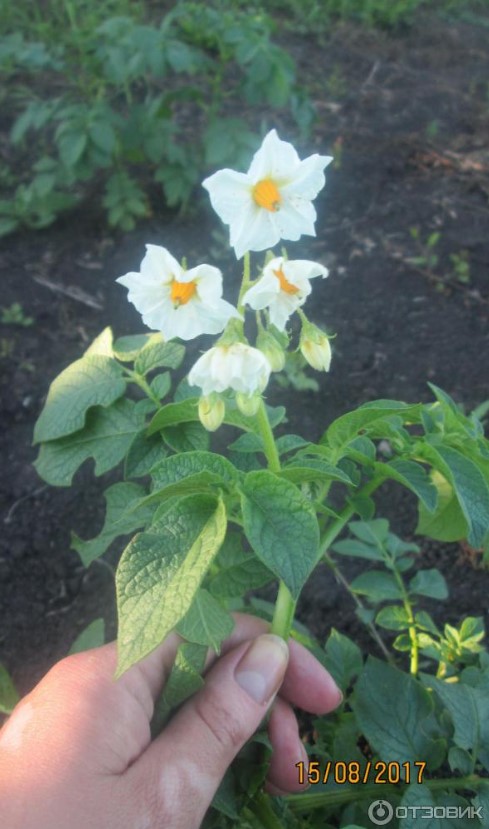
White. |
|
Growing specifics |
Planting in light, fertile soil is preferred. The site should be well-lit. |
|
|
1998 |
Photo gallery of the Karatop potato variety
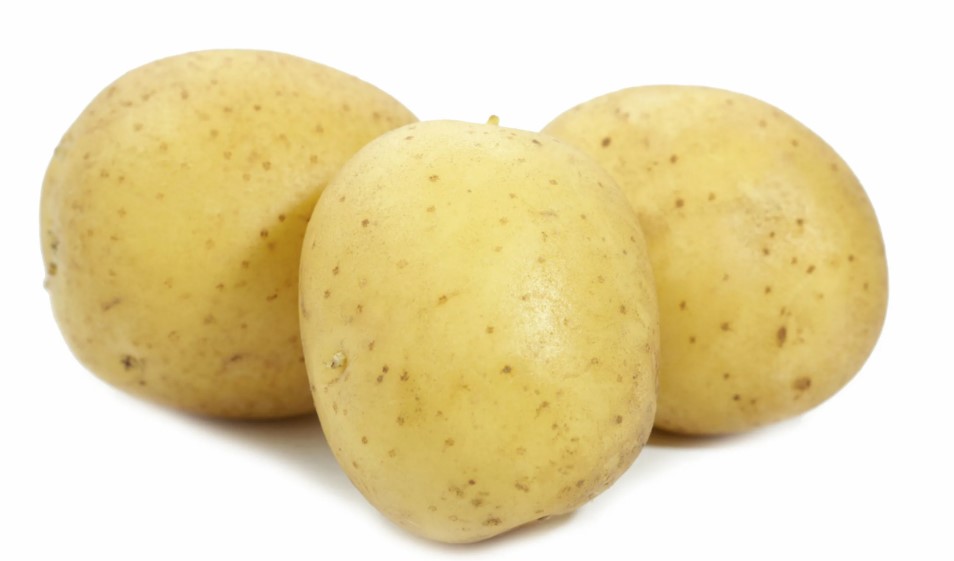
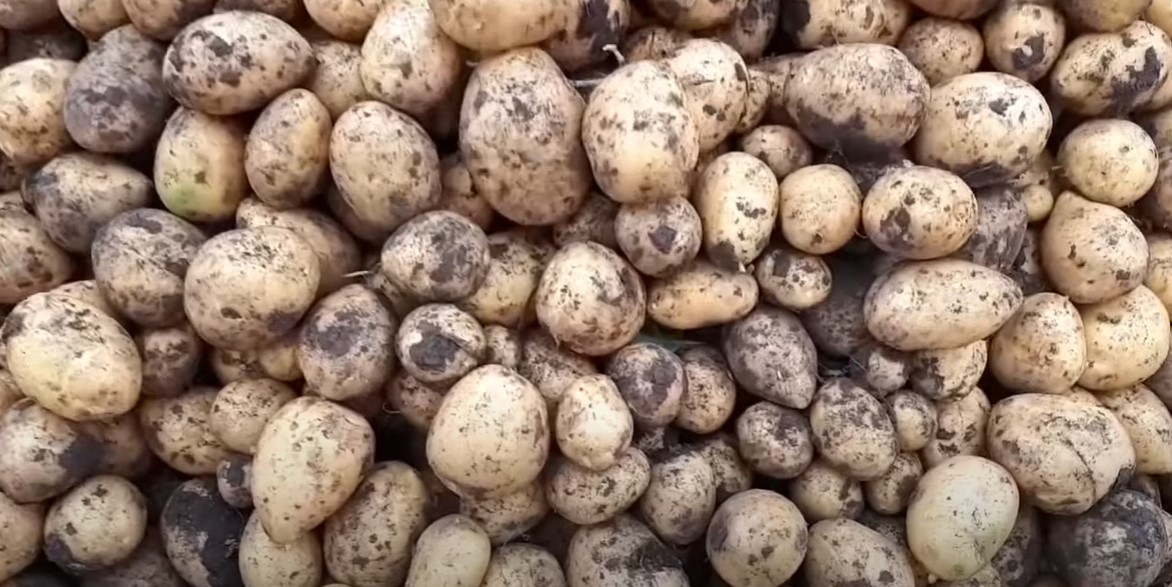
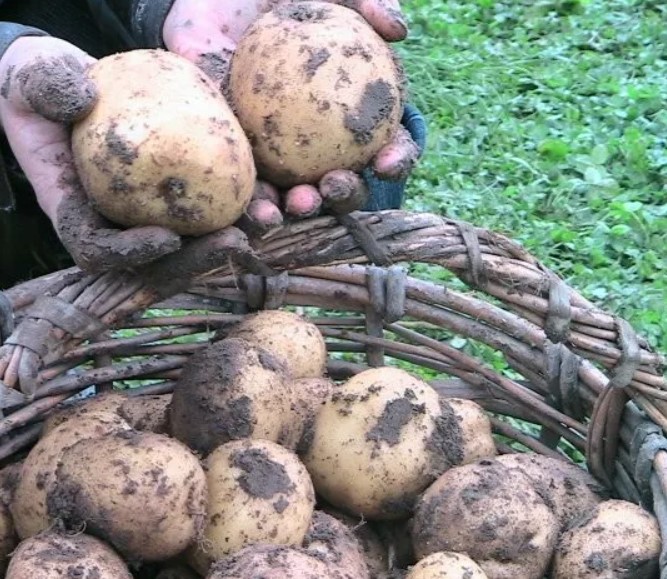
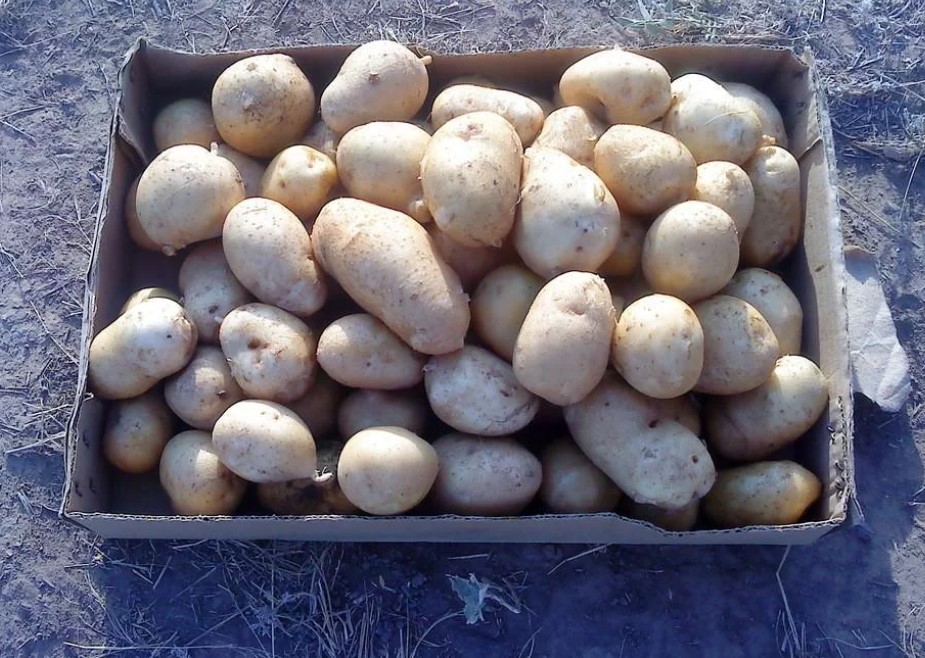
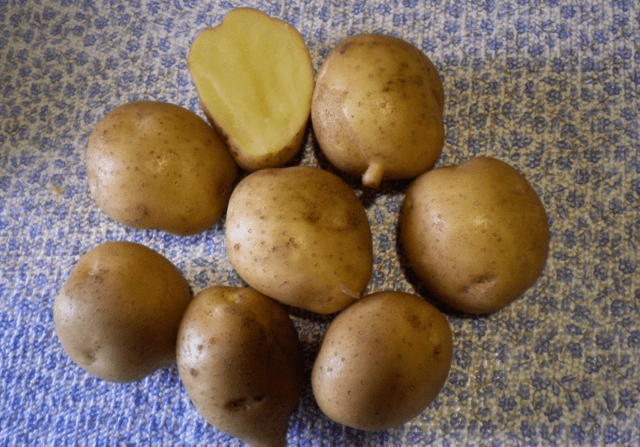
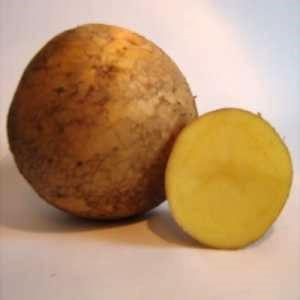
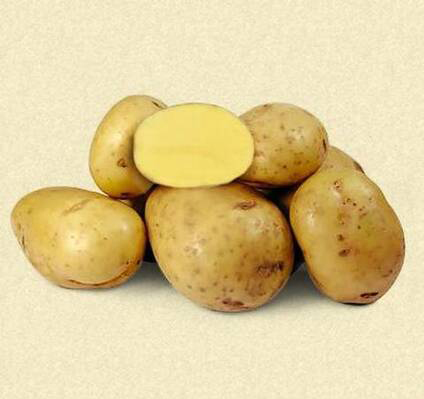
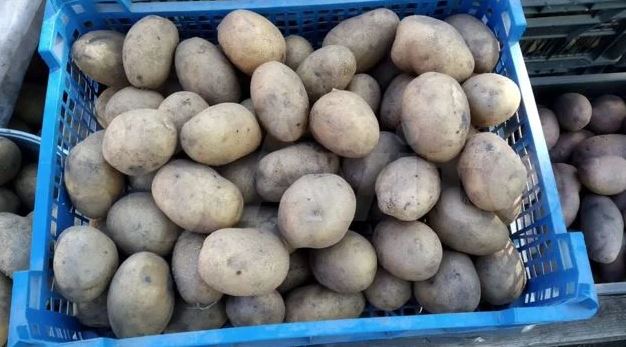
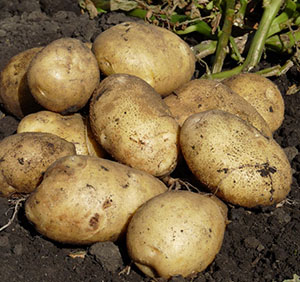
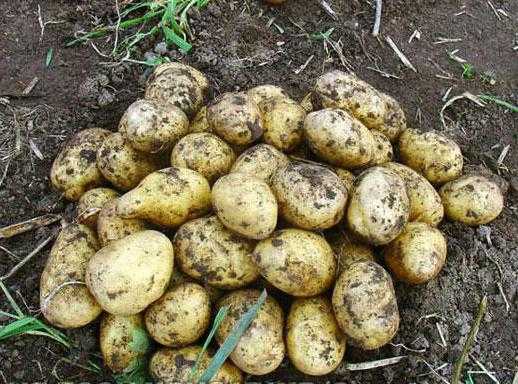
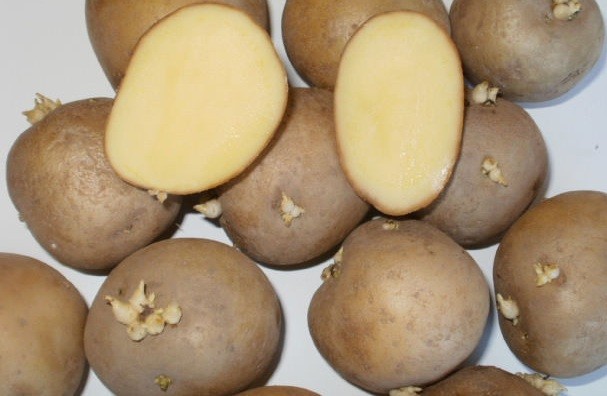
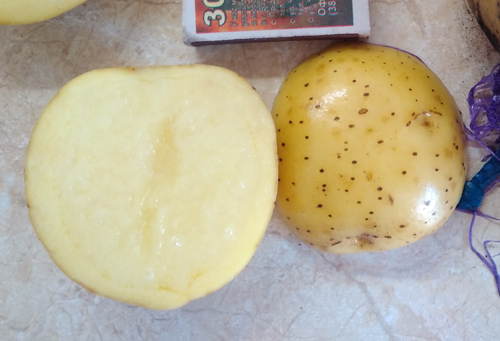
The origin of the Karatop potato variety
The Karatop potato variety was developed by German breeders in 1996. A few years later, it was included in the Russian State Register of Breeding Achievements. Popular regions for its cultivation in our country include the Northwest, Volga-Vyatka, West Siberian, and Middle Volga regions.
Description of the Karatop potato variety
Let's take a closer look at the main characteristics.
Bushes
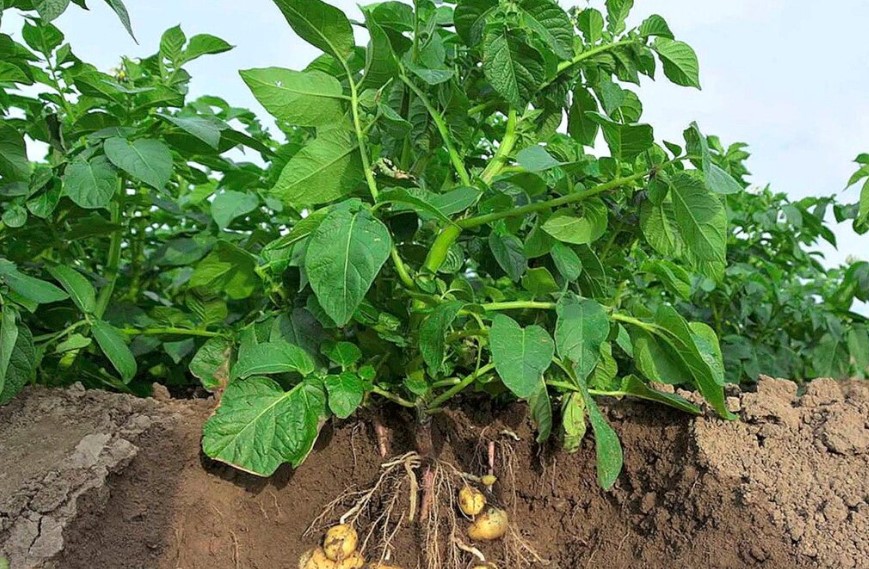
The Karatop variety grows as small, semi-erect bushes. The leaves are green, medium to small in size, and have slightly wavy edges.
Tubers
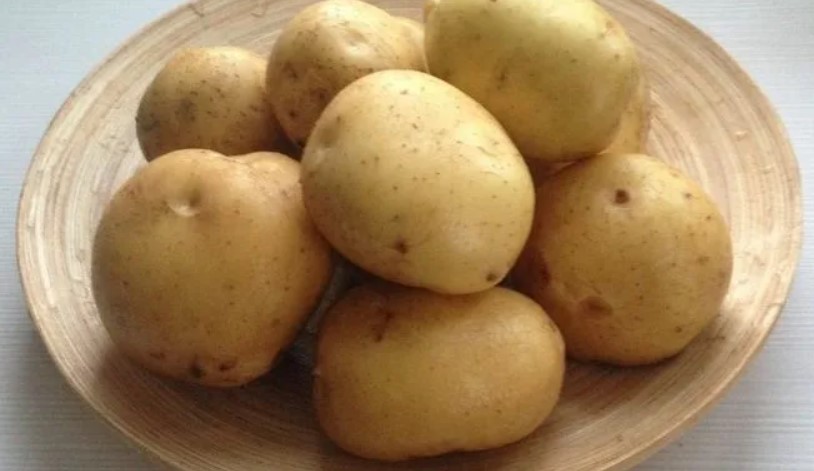
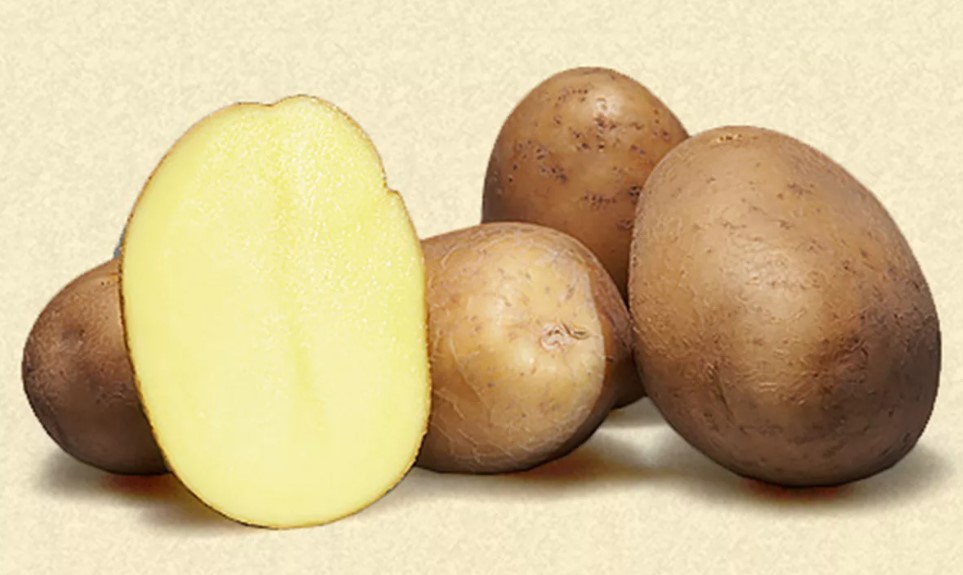
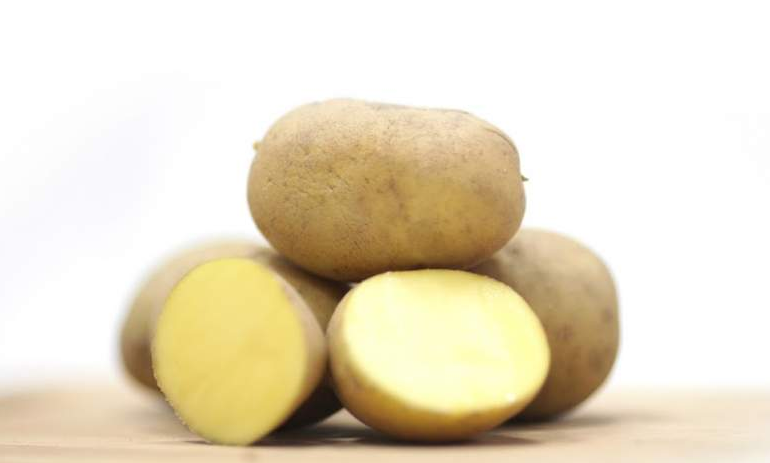
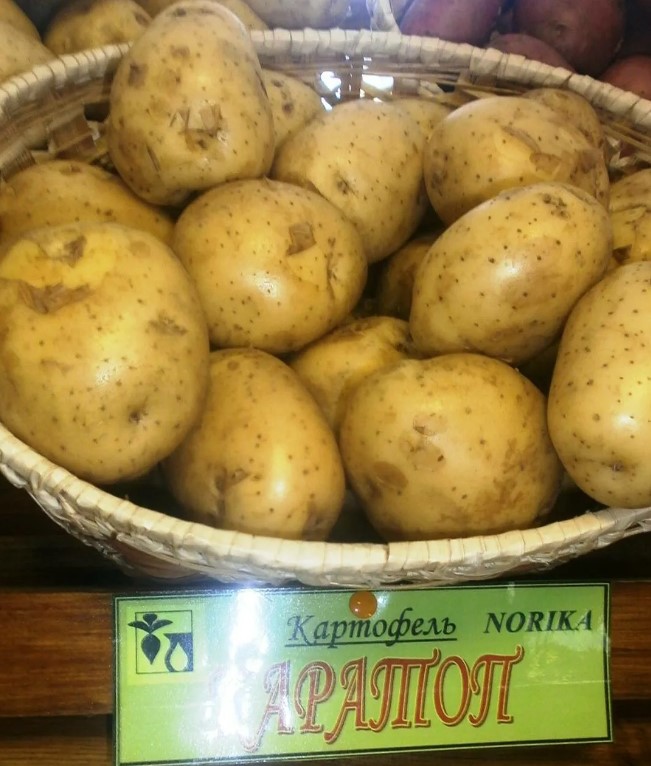
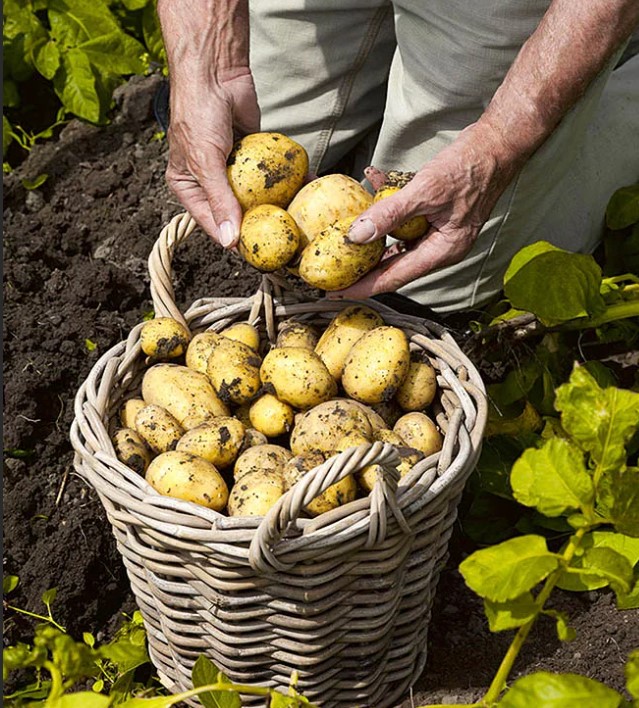
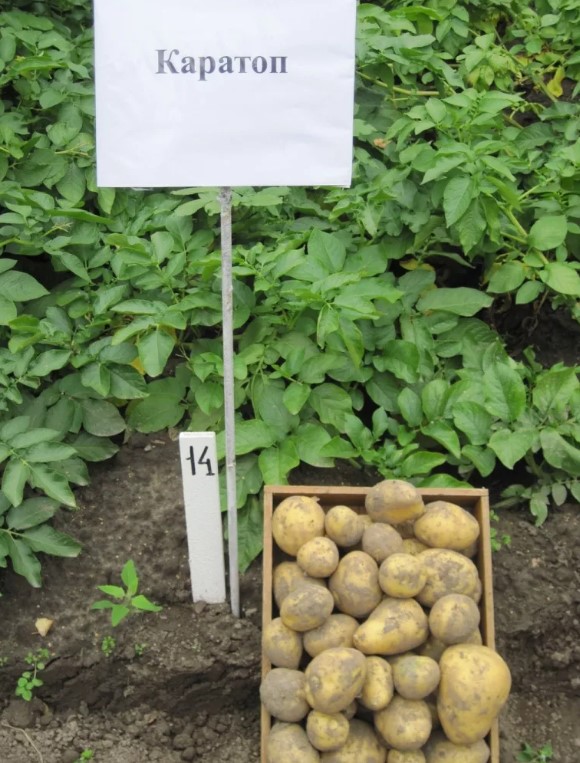
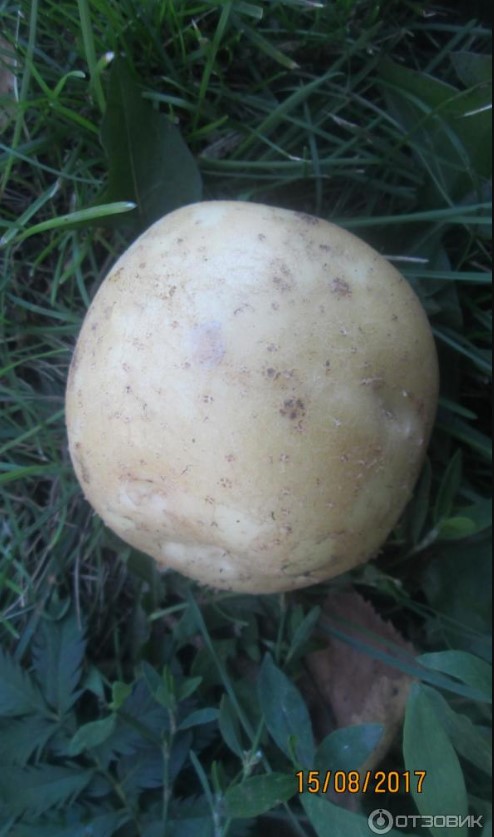
Small in size, their shape is oval-round. The average weight of one potato is 50-100 g. The skin is smooth and even, yellow in color. The flesh is dense, light yellow.
Taste qualities, application
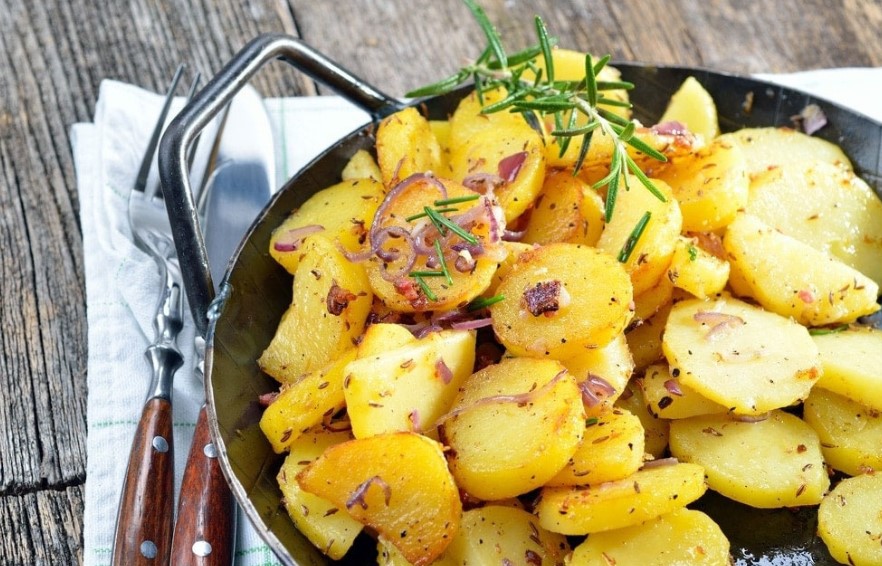
Karatop is considered a table variety. It has a rich, full-bodied flavor and contains 10 to 14% starch. When cooked, the tubers become moderately crisp and do not overcook. They can be used in a variety of dishes, from soups to potato chips.
Productivity, ripening time
The Karatop potato is listed as an early-ripening variety, but users consider it ultra-early. The first harvest can be harvested for sampling after 40-50 days. Full maturity occurs after 60-75 days. This variety is considered high-yielding. However, data may vary depending on the growing region. Maximum yields are achieved in the Kaliningrad region, at approximately 50 tons per hectare. In the Northwestern region, yields range from 20 to 44 tons, and in the Middle Volga region, 18-28 tons.
Resistance to diseases and pests
|
Name |
Stability indicator |
|
Various viruses, including (PVY) Y, (PLRV) L, leaf roll |
High durability |
|
Cancer |
|
|
Iron spot |
|
|
Golden nematode |
|
|
Phytophthora |
Weak susceptibility |
|
Common and black scab |
Moderate susceptibility |
|
Blackleg |
Moderate durability |
 Advantages and disadvantages of the Karatop potato variety
|
Pros |
Cons |
|
No need for frequent and thorough care. |
Intolerance of drought. |
|
The variety can be grown in any type of soil. |
Insufficient watering of the plant leads to a decrease in yield. |
|
Resistance to potato diseases. |
|
|
Fast ripening period. |
|
|
Good taste and appearance. |
|
|
Long shelf life. |
Features of planting Karatop potato variety
Despite the fact that the variety is quite unpretentious in care, it is still necessary to follow certain rules when planting.
Requirements for the landing site and its preparation
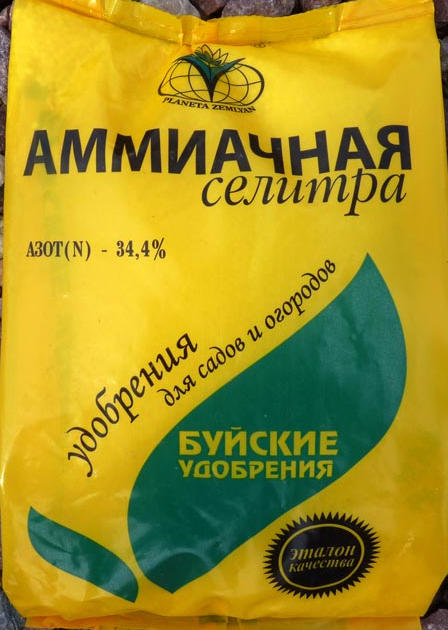
The Karatop potato variety is undemanding when it comes to soil conditions. However, it is still recommended to plant it in fertile soil. Beginning in the fall, the plot must be prepared. This requires adding organic or mineral fertilizers to the soil and digging it over. A second preparation is performed in the spring. Seven days before planting, the plot is tilled and saltpeter is scattered over the soil.
Selection and preparation of planting material
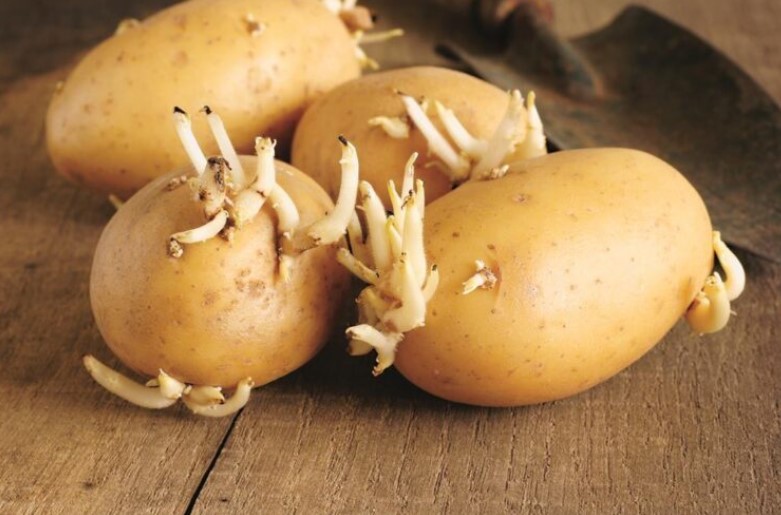
It's recommended to select tubers for planting in the fall. They should be uniformly sized, slightly larger than a chicken egg. A month before planting, they should be placed in a warm, bright location to germinate. Just before planting, it's important to inspect the tubers again and remove any that haven't sprouted. To protect the potatoes from fungal diseases, it's a good idea to treat them with a solution of potassium permanganate or copper sulfate.
Planting dates
Planting should be done when spring frosts have passed and the soil has warmed up to at least +10 °C.
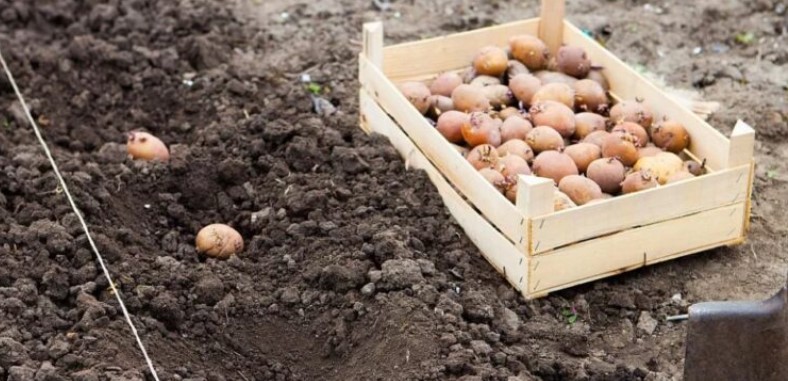
Landing rules
It is important to carry out disembarkation according to the following rules:
- The space between rows should be from 50 to 80 cm, and between bushes – from 30 to 50 cm.
- The holes should be 15-20 cm deep. First, fill them 1/3 full with wood ash and humus.
- After planting potatoes, you should carefully loosen the beds with a rake and water them well.
Please note! Dense planting increases the risk of diseases and pests to which the variety has low resistance. Crop rotation requirements should also be considered.
Caring for the Karatop potato variety
Important points when growing Karatop potatoes are mandatory watering and proper fertilizing.
Watering
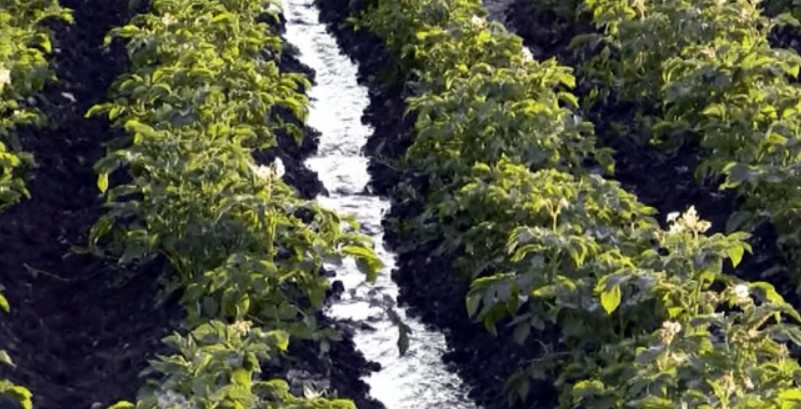
The Karatop variety doesn't tolerate drought well, so proper watering is essential. Its yield depends on this. Until flowering begins, the plants need to be watered at least once a week, and up to 3-4 times a week in hot weather. Once flowering begins, water twice a week or more, depending on weather conditions.
Top dressing
If the soil is fertile and nutrient mixtures have already been added in the fall, then additional feeding is not necessary.
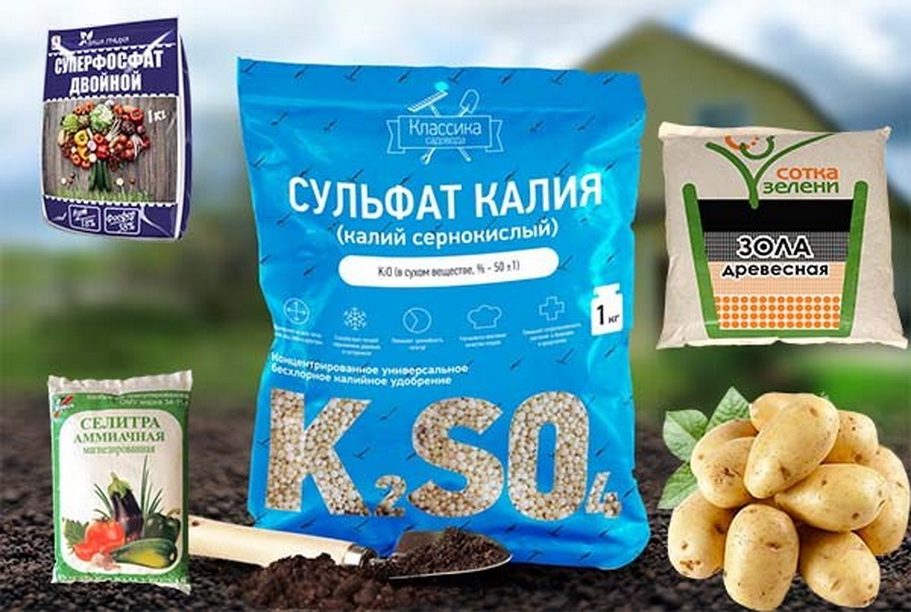
If the area is not rich in nutrients, fertilizers are used three times per season:
- the first time - 10 days after planting the tubers (phosphorus);
- the 2nd time - before flowering, during the budding period (phosphorus mixture);
- for the 3rd time - 3 weeks before harvesting potatoes (potassium fertilizers).
Please note that fertilizing should only be done during watering or after rain. Applying fertilizer to dry soil risks burning the root system, which will prevent the potato plants from producing a bountiful harvest and may even kill the plants.
Furthermore, if the soil is moist, nutrients will penetrate the roots more quickly. For fertilizing, use phosphorus and potassium mixtures.
Loosening, weeding, hilling
To achieve maximum yield, the following procedures should be performed regularly:
- loosening the soil between rows (carried out 5-7 days after planting the tubers);
- thorough weeding of the beds (weeds will take away nutrients and moisture, causing the crop to lag in development);
- mulching with peat to protect against drought, which the variety does not tolerate, possible frosts and sunburn, and the appearance of weeds;
- hilling to a height of 2-25 cm.
Weeding is extremely important for potatoes, but it's best to avoid it during periods of extreme heat and drought. This will help keep the weeds from burning the plants and preventing the soil around them from drying out and cracking. Of course, you need to be careful not to let the weeds grow too much and take over the entire garden.
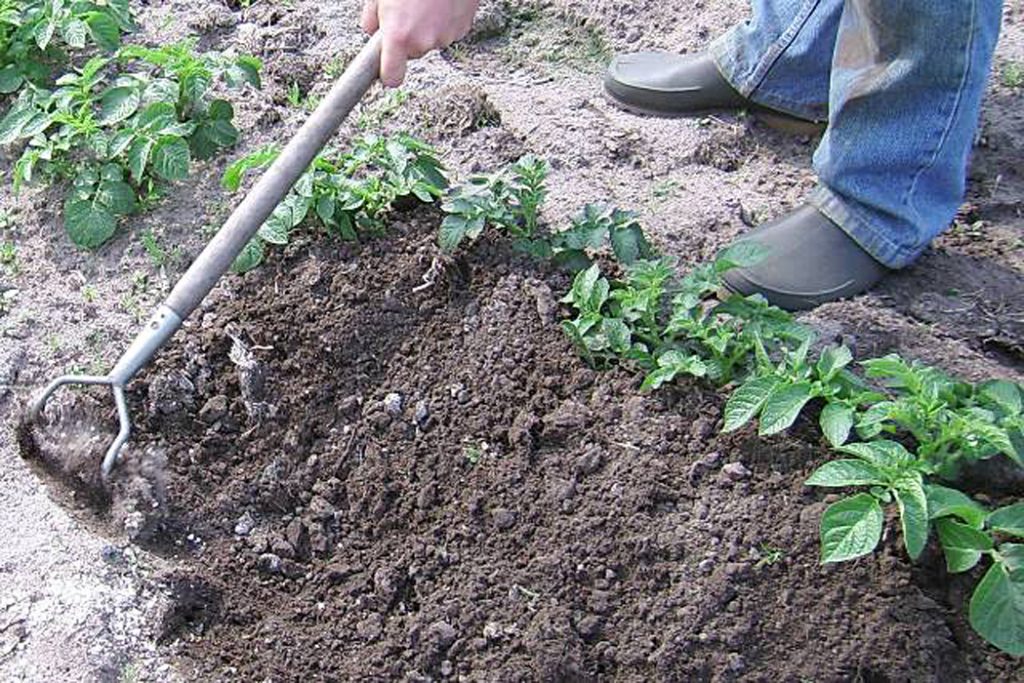
To carry out the work you will need the following gardening tools:
- pointed hoe;
- lightweight yet durable rake.
Specialized modern soil looseners are also useful. Gardening tools can be purchased at a specialty store.
Protection from diseases and pests
Overall, this potato variety exhibits good resistance to diseases and pests. However, like any other crop, it does have its weaknesses.
|
Disease |
Characteristic |
Treatment |
Prevention |
|
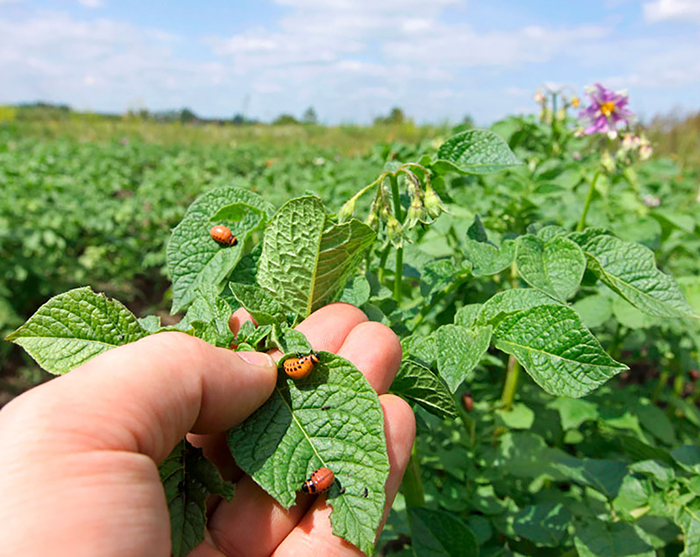
Colorado beetle
|
Beetles that lay eggs on the above-ground parts of the plant. From these eggs emerge larvae that feed on the plant. |
Insecticides such as Karate, Fastak, and others. When choosing the right product, pay attention to its duration of action. This should be shorter than the potato's growing season. |
|
|
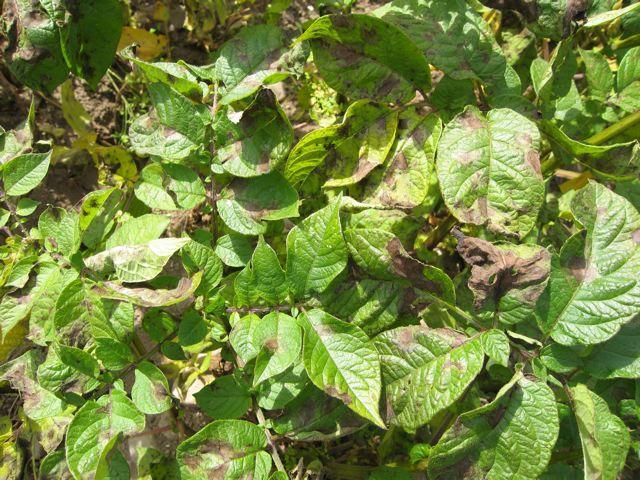
Late blight
|
Gray-brown spots surrounded or covered by a whitish coating. The affected areas die, which in severe cases leads to the death of the plant. |
Fungicides Ridomil, Revus and others |
|
|
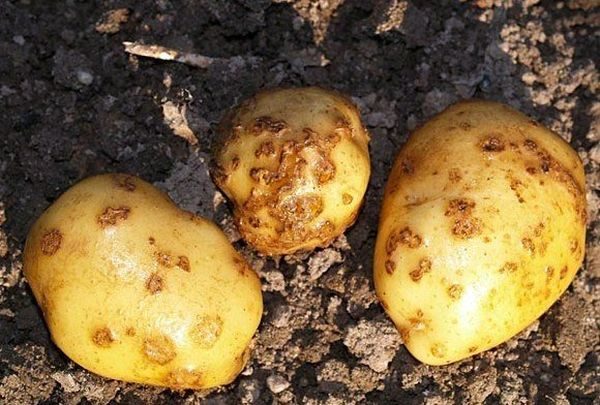
Common scab
|
Small ulcers that often affect not only the skin but also deeper tissues. |
If the disease has already begun to develop, there are no effective treatments. Therefore, it is important to focus on preventative measures. |
|
|
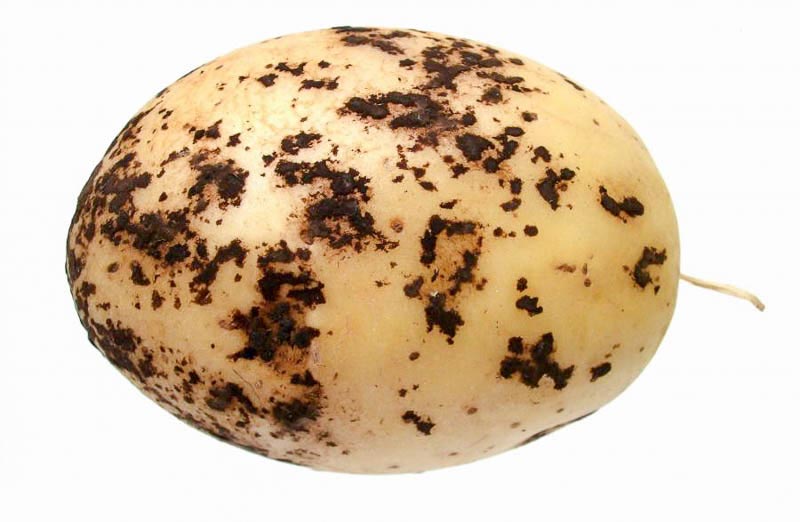
Black scab
|
|||
|
Blackleg
|
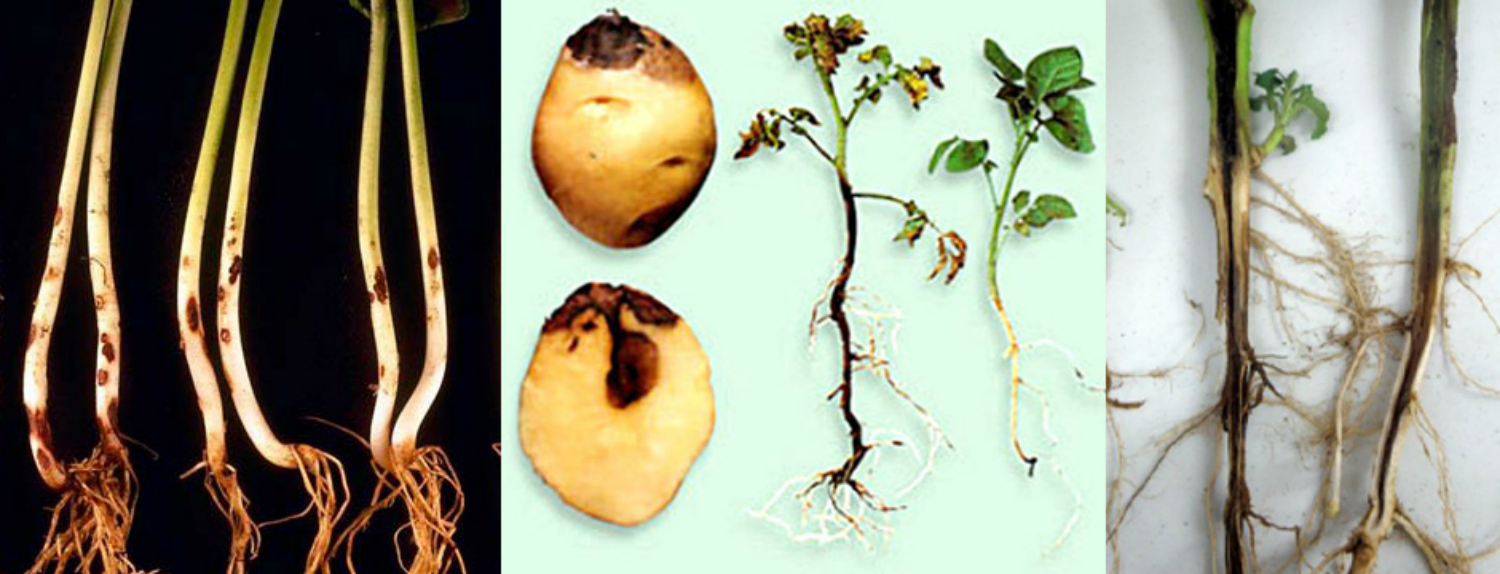
Brown spots appear, and the foliage becomes wilted. After about 2-3 days, the leaf blades curl and dry out. The roots begin to blacken, soften, become covered in green mucus, and develop an unpleasant odor. |
There are no effective treatments. Affected bushes should be dug up and burned. They should not be composted. |
|
Harvesting and storing Karatop potatoes
You can begin harvesting when two-thirds of the tops have dried and the plants have fallen over. To be sure the potatoes are ripe, it's recommended to dig up two or three plants in different locations. If they're ripe, the tubers should no longer have a greenish tint. The skin should be dry, firm, and resistant to mechanical damage.
For digging, you can use a regular shovel or a specialized walk-behind tractor.
Ah, you know that You can make a potato digger yourself.?
Potatoes tolerate mechanical harvesting well. After harvesting, dry the tubers under a canopy in partial shade for 2-3 days until the dried soil crumbles.
After this, sort the harvest. Discard damaged, rotten, wilted, and green potatoes. Store large specimens for later use. Save smaller ones for planting next year.
It's recommended to store potatoes in wooden boxes. Place them in a special vegetable storage area, cellar, or basement. They can also be placed on a balcony or loggia during cooler months. However, in this case, protect them from direct sunlight to prevent the production of toxic solanine.
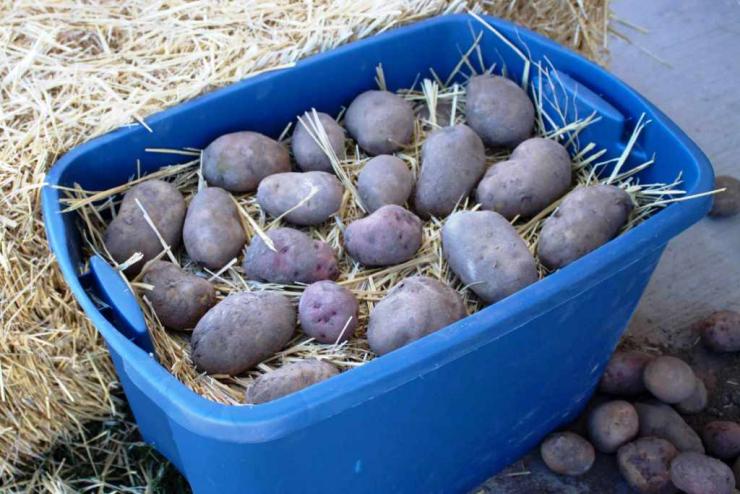
The optimal humidity is 85-90%, and the storage temperature is between 2 and 4°C. This should be achieved 1.5 to 2 weeks before storing the potatoes. Under these conditions, the tubers will last until spring. If there is a risk of low temperatures, it is recommended to insulate the crop with bags or straw.
ABOUT methods of storing potatoes Read on our website.
Tips from Top.tomathouse.com on growing the Karatop potato variety
This variety isn't particularly demanding in terms of care. The key is to ensure consistent watering, as this directly impacts the yield. If your plot doesn't have direct access to water, consider purchasing a storage container to collect rainwater.
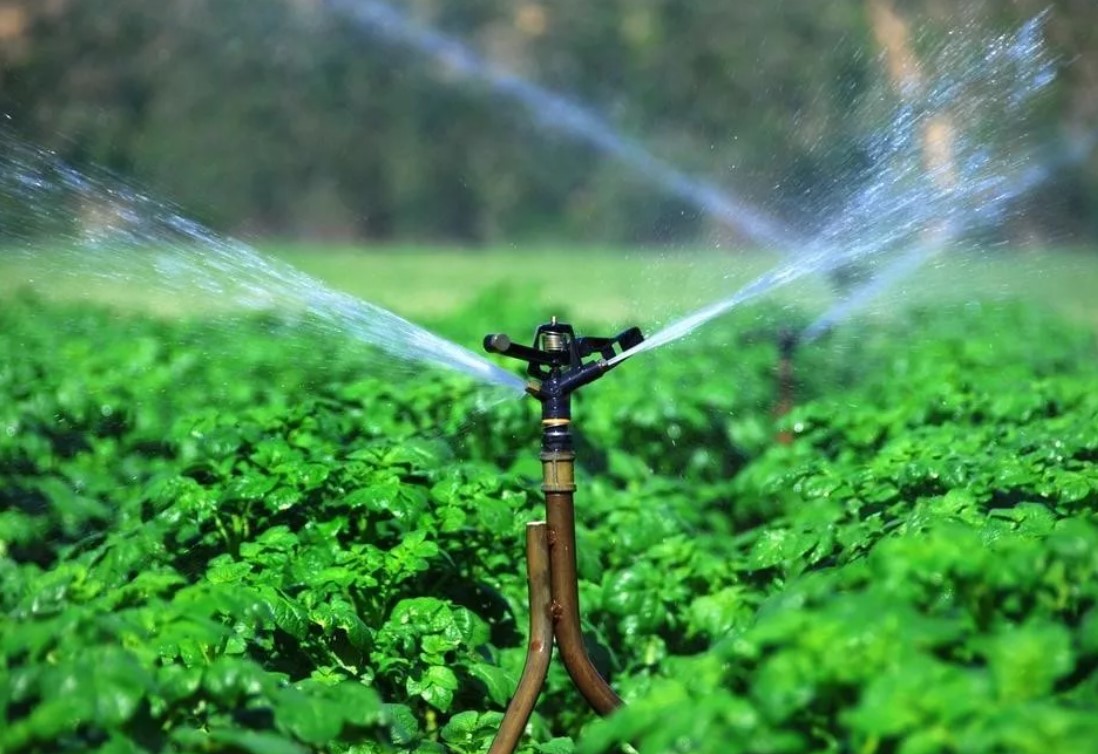
If water is available on the site, a special sprinkler placed in the beds will make the work easier. It will ensure constant soil moisture, which is essential for the crop.
Comparison of the Karatop potato variety with other varieties in the table
| Variety | Ripening period (number of days to maturity) | Starch (%) | Yield (c/ha) | Weight of tubers (g)
Number of tubers per bush Color of tuber, pulp |
Shelf life (%) |
| Karatop | Early ripening* | 11-15 | 200-430 | 60-100
16-25 yellow, light yellow |
97 |
| Impala | Ultra-early | 10-15 | 180-360 | 90-160
15-21 yellow, light yellow |
95 |
| Empress | Ultra-early | 14-16 | up to 400 | 70-145
8-12 yellow, yellow |
91-95 |
| Vega | Mid-early** | 10-16 | 230-380 | 90-120
8-12 yellow, light yellow |
99 |
| Vineta (Veneta) | Early ripening | 12.9-15.2 | 160-228 | 67-95
13 yellow, light yellow |
87 |
| Gala | Mid-early** | 12-14 | 263 | 71-120
8-15 yellow, yellow |
95 |
| Colombo | Early ripening* | 11-15 | 230-450 | 100-130
12-14 yellow, light yellow |
95 |
| Queen Anne | Early ripening* | 13.1-14.4 | 393-604 | 84-137
14-16 yellow, yellow |
93 |
| Kolobok | Mid-season*** | 11-13 | 130-250 | 90-140
15-18 yellow, yellow |
96 |
| Latona | Early ripening* | 16-20 | 400-450 | 90-140
10-15 yellow, yellow |
96 |
| Breeze | Mid-early** | 10-16 | 160-395 | 130-150
8-12 yellow, yellow |
97 |
| Treasures | Mid-season*** | 12-18 | up to 650 | 95-250
12-18 yellow, yellow |
94 |
| Banker | Mid-early** | 15-16 | 200-350 | 70-160
10-15 soft yellow, light yellow |
90 |
Ultra-early – 35-50 days.
*Early ripening – 50-65 days.
**Mid-early – 65-80 days.
***Mid-season – 80-95 days.
****Mid-late – 95-110 days.
User reviews of the Karatop potato variety
We planted the Karatop potato for the first time, and to say we're pleased is an understatement! It was recently bred in Germany and is an early-ripening variety (60-65 days).
Indeed, by the end of July, some tubers were already reaching 8-9 centimeters in diameter. Now, that's the minimum, and a bush produces a whole bucket.
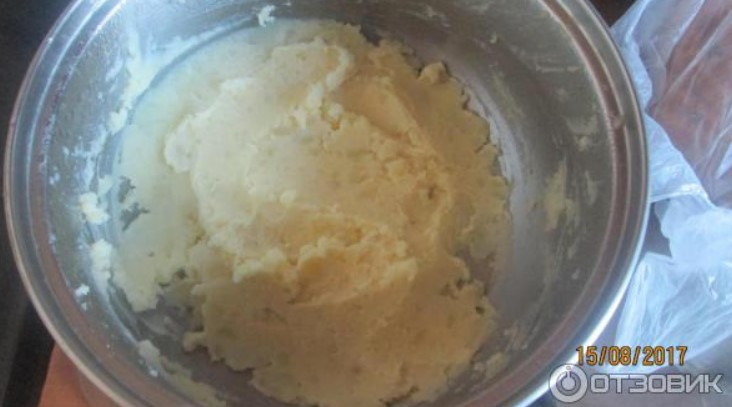
Peeled potatoes are yellow and cook fairly quickly. Karatop makes a delicious mashed potato. They soften quickly when fried, so if you prefer crispy potatoes, eat them right away.
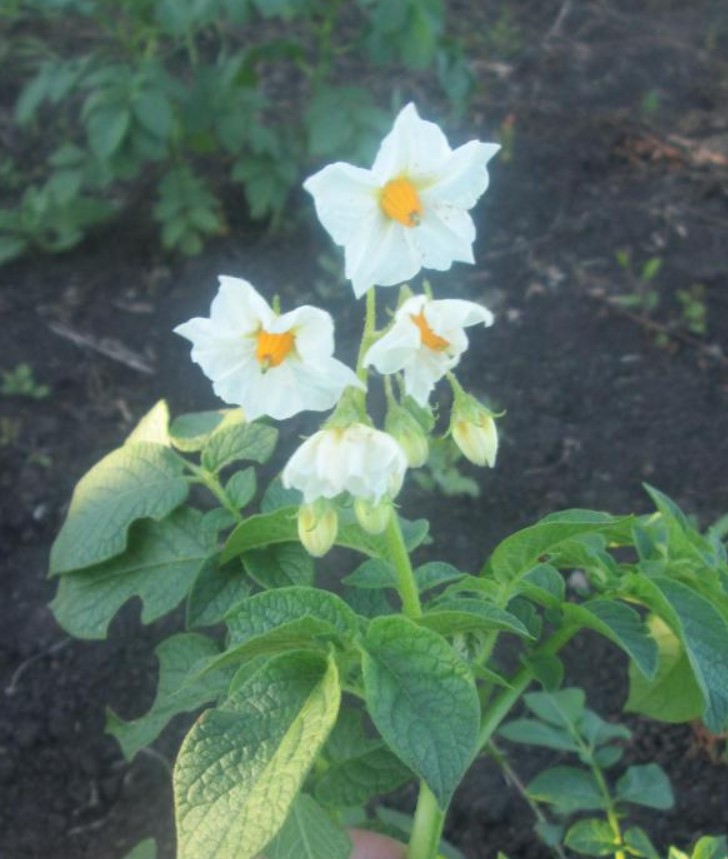
Blooms with white wavy flowers.
We planted, I must say, a small amount—just 30 bushes, just for testing. But from those 30 bushes, the total yield will probably be equal to almost half the garden.
The variety is prolific in every respect!
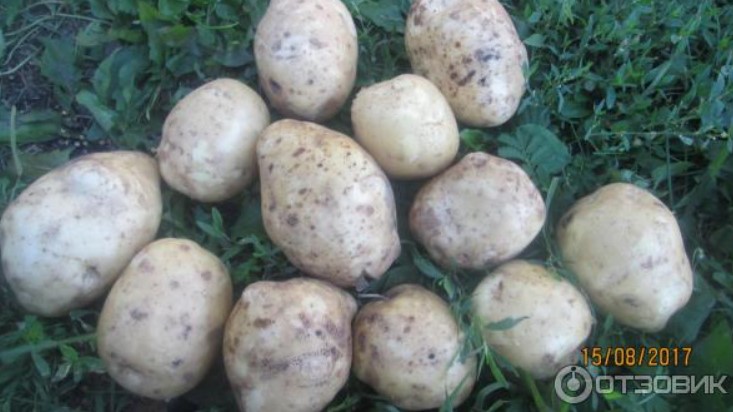
Potatoes Agrofirm "Vyatskie Zori" Karatop - Potatoes are our everything.
January 12, 2018
ADVANTAGES:
Very tasty.
FLAWS:
It doesn't store well.
What would a Russian be without this American product? We've gotten used to it. It's called "second bread" for a reason. I got my hands on this variety, too, a couple of years ago. I planted a couple of buckets to try it out.
Perhaps it's because the variety changed drastically. Or maybe because the soil had a year's rest. But the harvest was excellent. Of course, not a bucket per plant, but half a bucket, for sure. And what's especially strange is that the Colorado potato beetle didn't like it. The older varieties suffered greatly, even though I sprayed them. But this one didn't seem to care. I kept a close eye on it every day. No beetles. Maybe it will get used to it later? Our soil is poor, sandy. It needs manure every year. But I planted this variety in unfertilized soil. And here's the result. It tastes very good. But storage is a problem. I store it in the cellar, albeit separately from other varieties, but with the cold weather it started spoiling rapidly. I tried storing it indoors, and it started sprouting. It was a real disaster. In the end, there was nothing left for seed. And there were no deliveries to the market. Potatoes are good in every way, but I don't know how to store them. And there's nothing about this on the internet. Maybe one of the readers can recommend something?
Well, I tried to get a harvest in June, but I did wet sprouting in sawdust. When planted in early May, I had my first harvest by mid-June. I experimented with the Charoite potato variety. It's advertised as ultra-early, so it developed a decent amount of starch and was excellent when boiled. But that was a one-time effort; I haven't bothered with such complications since. With the usual May planting of early varieties, it's quite possible to enjoy young potatoes in early July without any tricks. You don't even have to dig up the entire plant. I'll rummage through the beds with my hands, gather large tubers for food, and the potatoes will continue to grow.
Perhaps the German variety Karatop would be a good early variety, especially since it was recommended to you. This year, I dug up Gala (I looked at my notes and it was July 11, 2015). The nest contained 12 tubers, seven of which were marketable, and all looked the same. I was so impressed that I weighed each tuber at home and got the following results: 95, 97, 102, 105, 112, 115, and 120 g. I planted it on May 7th; if you plant it a week earlier, you can easily enjoy Gala in early July. Karatop should be even earlier. Despite all this, unlike Zhukovsky, Gala is still storing well and the taste hasn't deteriorated.
Masha Petrova said: ↑
I also picked Karatop for an early harvest. Does Karatop require any special cultivation techniques?
I didn't notice that the karatop needed anything special. It's a productive variety—17-19 tubers per bush, with no small ones at all this year. But the taste wasn't particularly good... We'll be gradually weeding it out.