The Colombo potato variety (originally translated as "Colomba") is beloved by gardeners for its low maintenance, high yield, quick ripening, and long shelf life. We've provided a more detailed description in this article.
Content
- 1 The origin of the Colomba potato variety
- 2 General characteristics of the Colomba potato variety in the table
- 3 A detailed description of the Colomba potato variety
- 4 Advantages and disadvantages of the Colomba potato variety
- 5 Peculiarities of growing the Colomba potato variety
- 6 Caring for the Colomba potato variety
- 7 Protecting the Colomba potato variety from diseases and pests
- 8 The nuances of harvesting and storing the Colomba potato variety
- 9 Comparison of the Colomba potato variety with other varieties in the table
- 10 Real reviews from gardeners about the Colombo potato variety
The origin of the Colomba potato variety
The Colomba variety originally appeared in the Netherlands. For 10 years, breeders studied its characteristics, gradually refining them. The potato then traveled to Finland, and only then did it reach Russia.
In our country, it quickly gained popularity among gardeners and in 2013 was officially recognized and entered into the register under the name Colomba, but we are all more accustomed to calling it Colombo.
In Belarus, Colombo was recognized in 2014, and in Ukraine a year later, in 2015.
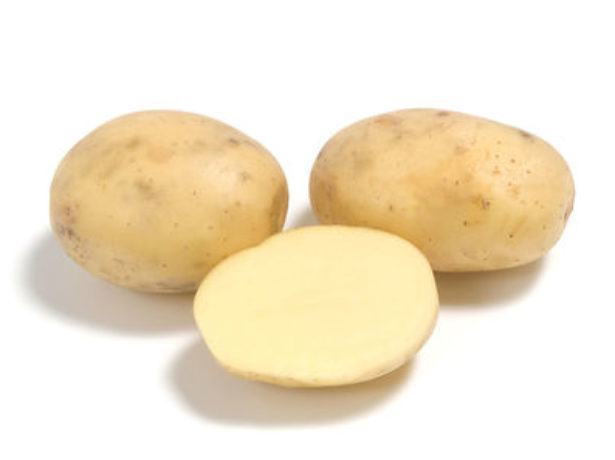
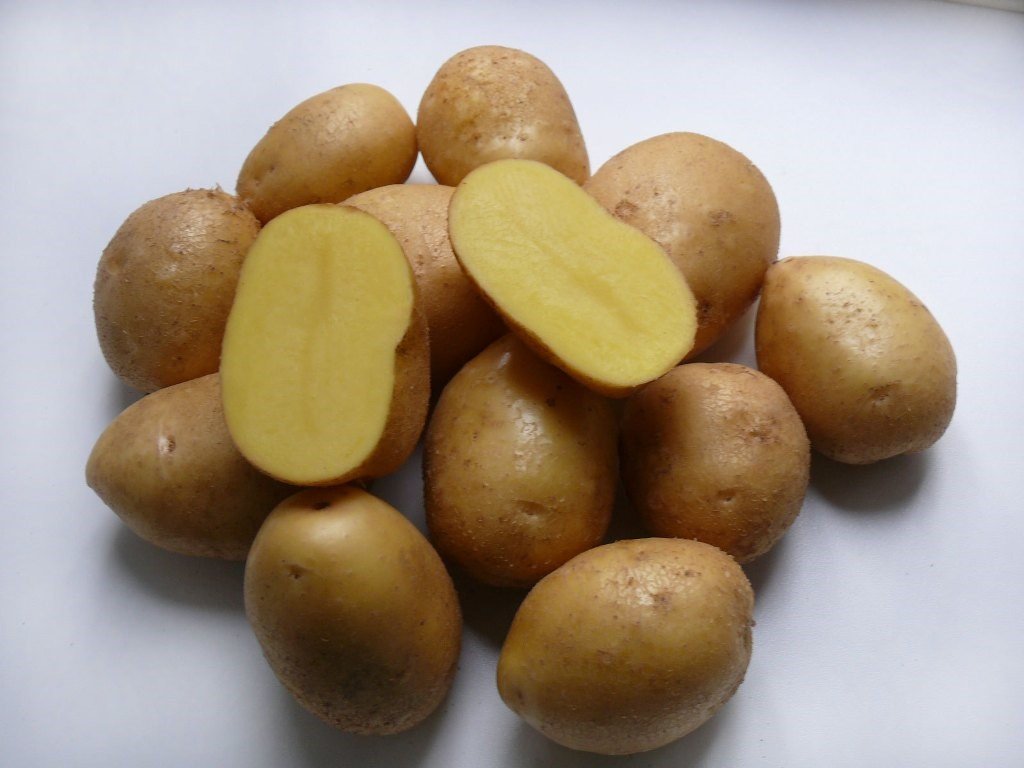
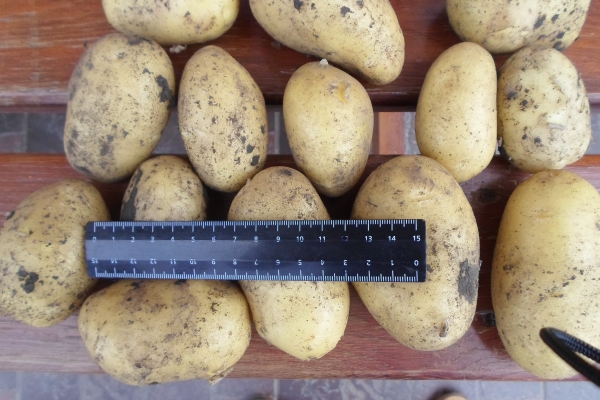
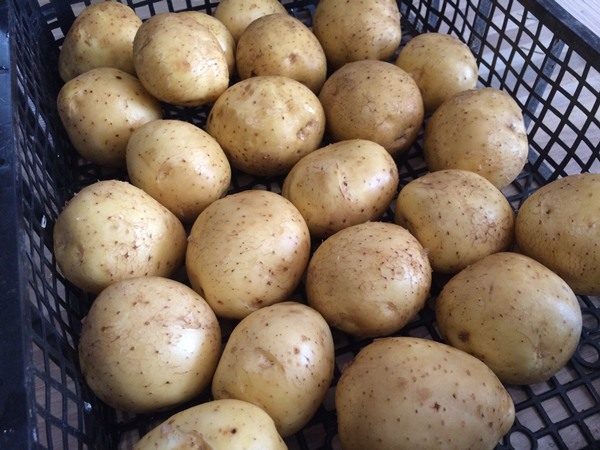
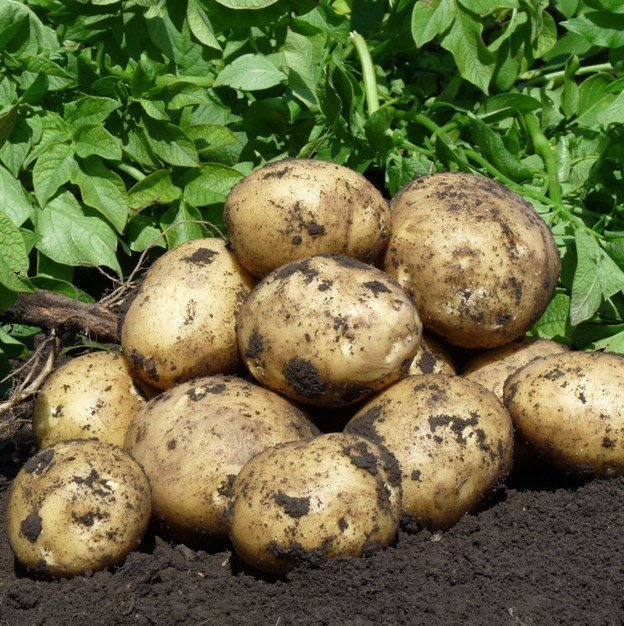
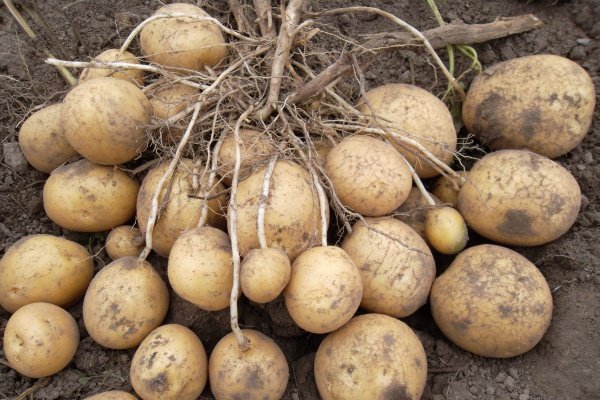
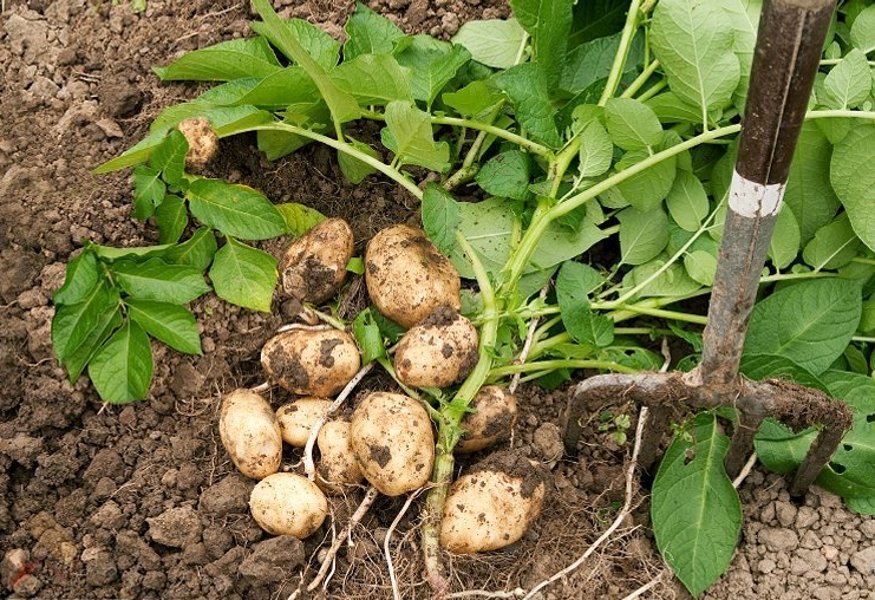
Photo of the Colombo potato variety:
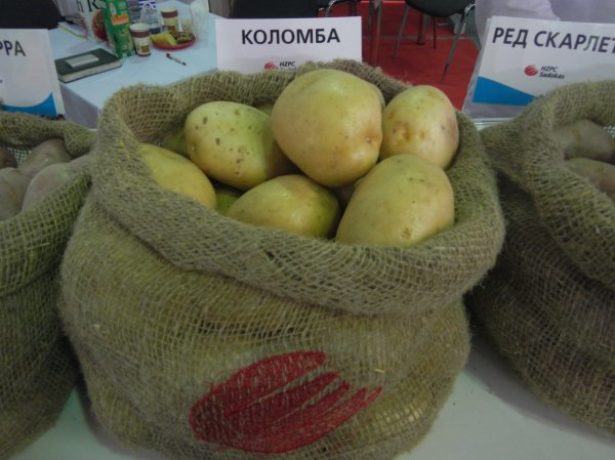
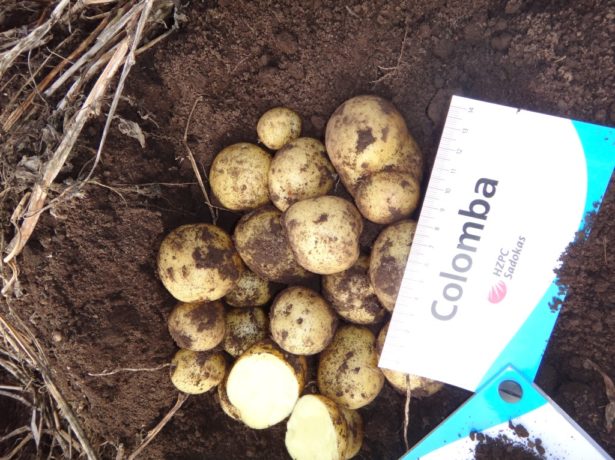
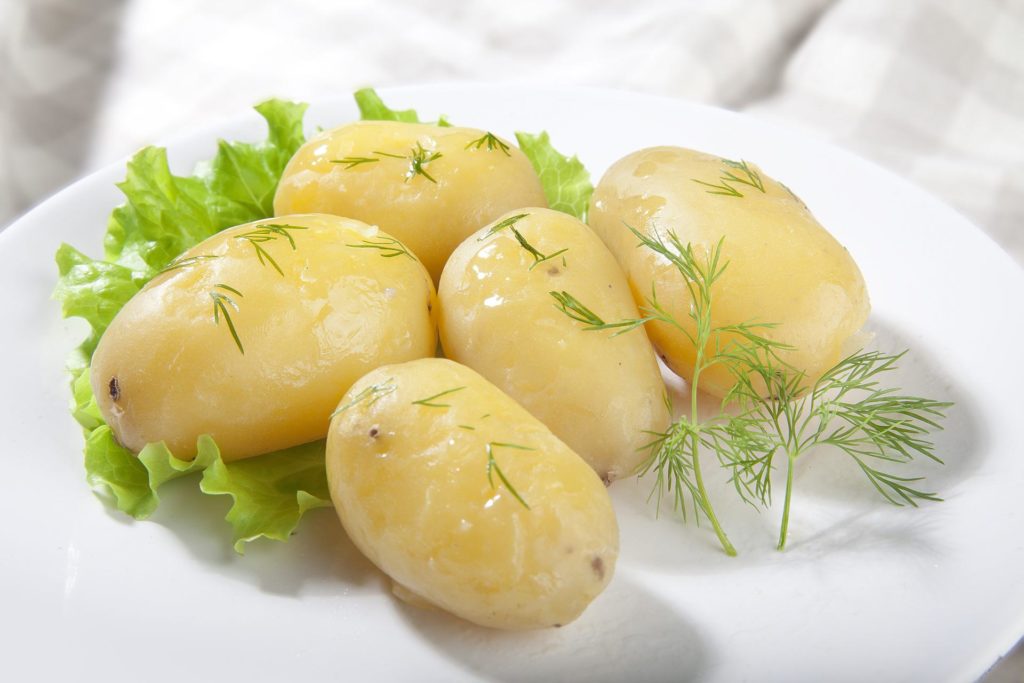
General characteristics of the Colomba potato variety in the table
This variety ripens extremely quickly; the first harvest, ideal for grilling, can be harvested as early as 35 days after harvest. More detailed characteristics are presented in the table below:
| Characteristic | It adapts well to various weather conditions, grows well in different types of soil, and can easily tolerate heat and lack of moisture. |
| Ripening period | After 55-65 days from the moment the shoots appear, the tubers are considered ready for harvesting, and the very first harvest can be collected on the 35th day. |
| Harvest volume | In Russia, the yield reaches 422 centners per hectare. In Belarus, it is an order of magnitude higher, at 857 centners per hectare. |
| Marketability of tubers | 81-98% |
| Shelf life indicator | Up to 95% |
| Starch concentration | 10.3-15% |
| Culinary type | Belongs to type A/B, during cooking the potatoes do not crumble or become overcooked |
| Pulp color | Light yellow |
| Peel color | Yellow |
| Tuber weight | Tuber weight from 82 to 132 g. |
| Number of tubers per bush | From 10 to 15 pieces. The total harvest weight per bush reaches 1.9 kg. |
| Taste qualities | Colombo received high consumer ratings, scoring 6 out of 9 possible points. It's versatile and ideal for soups and stir-fries. |
| Suitable regions for growing | Northwestern, Central, Volga-Vyatka, Central Black Earth, and North Caucasus regions. Grows well in Belarus, northwestern, and central Ukraine. |
| Disease resistance | It has good resistance to canker, golden nematode, virus Y, tuber blight, and scab. It is less tolerant of foliar blight. |
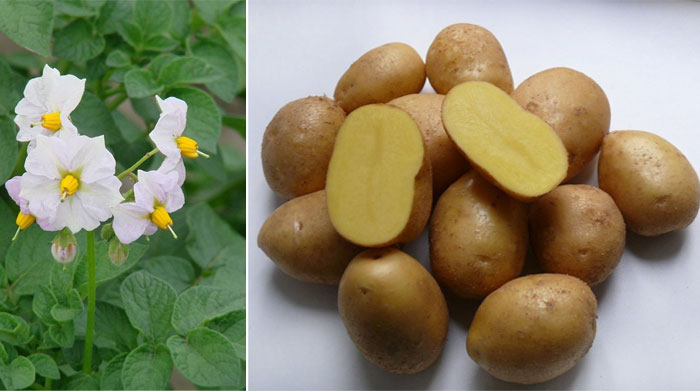
| Flower color | White |
| Growing specifics | It is not recommended to cut the tubers before planting, nor to plant them in insufficiently warmed soil. To increase productivity, germinate the seeds by removing excess apical shoots. The holes are spaced 25-35 cm apart, and the holes themselves are sunk approximately 10 cm into the bed. The distance between furrows or ridges is 75 cm. Potatoes respond favorably to the addition of fertilizers, such as magnesium and manganese. |
| 2013 |
A detailed description of the Colomba potato variety
Potatoes thrive in almost any soil and don't require any special tricks to get a rich harvest.
Bush
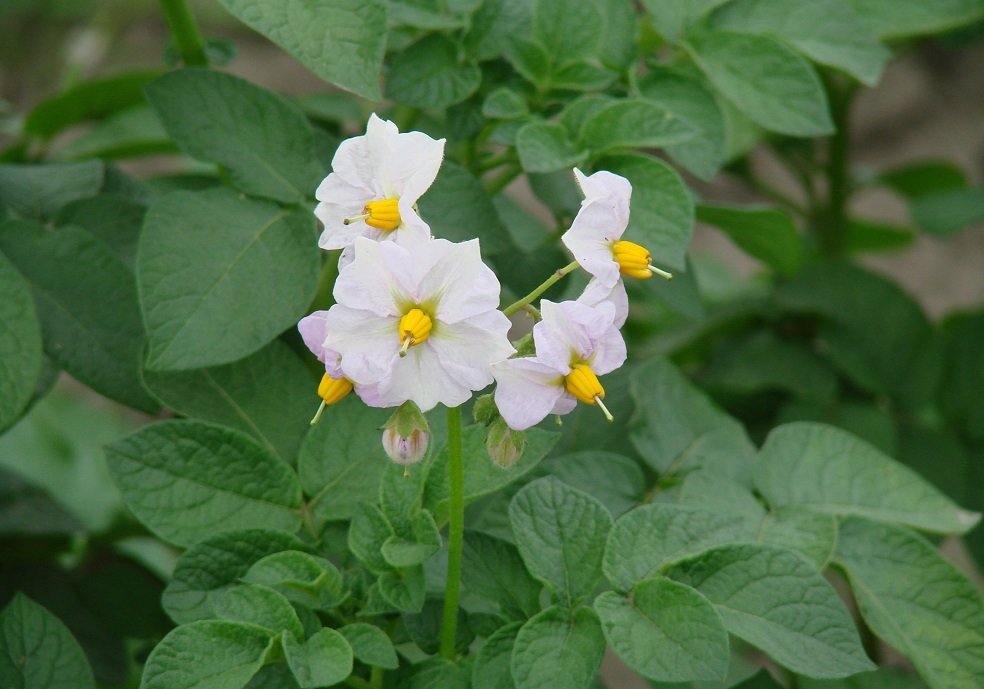
This variety is characterized by spreading bushes with upright shoots that grow up to 55 cm. The leaves are large, emerald, and closely spaced along the stem. During flowering, buds with purple petals appear.
Tubers
The entire harvest looks very attractive: the tubers are uniform, even, weighing from 82 to 132 grams.
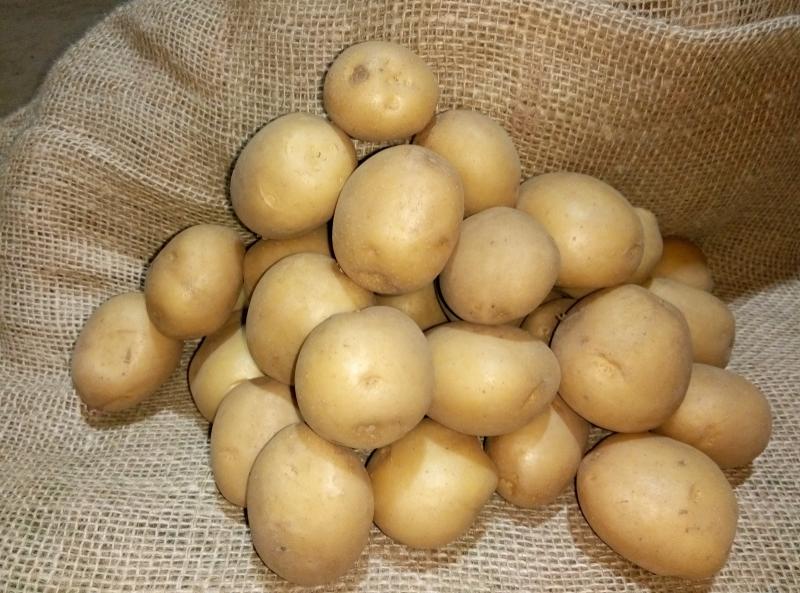
The skin is yellowish and very smooth. This makes the potato easy to peel – it has very few eyes, all located on the surface and not deeply embedded. After cutting, the flesh stays dark for a long time due to its high carotene content.
Nutrients and nutritional value
In total, each tuber contains from 14.8 to 16.9% dry matter.
| Name | Average concentration index |
| Starch | 10.3% |
| Protein | 1.8% |
| Reducing sugars | 0.5% |
| Vitamin C | 18.5 mg per 100 g. |
Productivity, ripening time
Colombo is an extremely early potato variety, with an average maturity of approximately 50 days from germination. If you want to harvest new potatoes, the first tubers can be dug up as early as 35 days.
The yield of the variety was studied over several years:
- The absolute maximum in Russia was recorded in the Stavropol Territory and amounted to 422 c/ha.
- In other regions of the country, yields ranged from 224 to 422 centners per hectare. The first digging, conducted 45 days after emergence, yielded 111-345 centners per hectare. After the second digging, 10 days later, yields increased to 244-364 centners per hectare. Accordingly, Colombo has higher yields than the Pushkinets, Delfin, and Zhukovsky Ranniy varieties.
- In Belarus, the maximum result was the most impressive and amounted to 857 c/ha, but the average yield in the country is at the level of 522 c/ha.
Resistance to diseases and pests
Colombo has good resistance to many common diseases, but if not properly cared for, it can be susceptible to late blight.
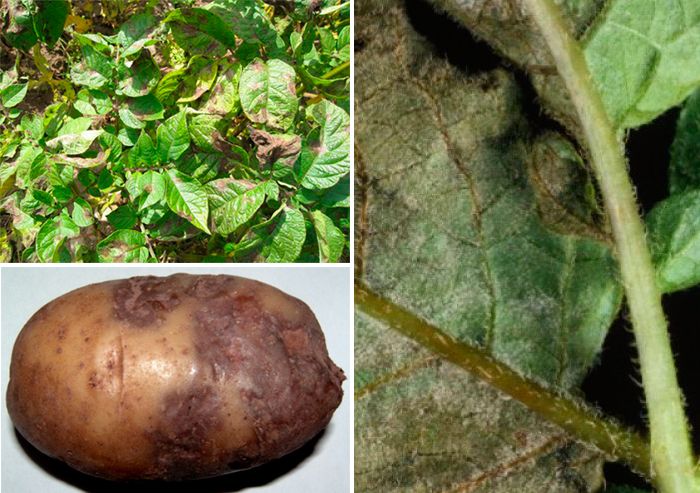
For a more detailed description, see the table below.
| Name of the disease |
Degree of stability | Expert assessment on a scale (from 1 to 9) |
| Cancer | Absolute | 9 |
| Golden potato cyst nematode | Absolute | 9 |
| Virus Y | Above average | 6 |
| Tuber blight | Above average | 6 |
| Scab | Increased | 6.5 |
| Phytophthora blight of tops | Average | 4 |
To ensure a bountiful harvest year after year, it is recommended to regularly renew the seed material and carry out preventative preparatory treatment.
What regions is it suitable for?
Colombo has achieved record-breaking results throughout Belarus. It grows well in Ukraine. In Russia, it is recommended for planting in the Northwestern, Central, Volga-Vyatka, Central Black Earth, and North Caucasus regions.
Advantages and disadvantages of the Colomba potato variety
Colombo has a number of advantages, thanks to which gardeners all over the world choose it for planting in their plots:
- The ability to be stored for a long time without deteriorating the taste of the pulp.
- Tolerates transportation well.
- During storage, a large number of shoots do not appear.
- Excellent taste.
- High resistance to most potato diseases.
- Does not crumble during cooking.
- It does not require special growing conditions regarding weather conditions and soil quality.
The disadvantages include several characteristics of the variety:
- A good yield can be achieved by applying fertilizers.
- Does not tolerate drought well and requires watering.
- Even if all storage rules are followed, it will not last longer than January.
Peculiarities of growing the Colomba potato variety
Colombo is an easy-to-grow potato, so standard agricultural practices are used for its cultivation. The key is proper soil preparation and pre-treatment of the tubers.
Site requirements and soil preparation
Despite its love of watering and moisture, planting Colombo in marshy areas or low-lying areas is not recommended. As a last resort, use 40-cm-high ridges rather than planting the tubers deep into the soil, where they could rot.
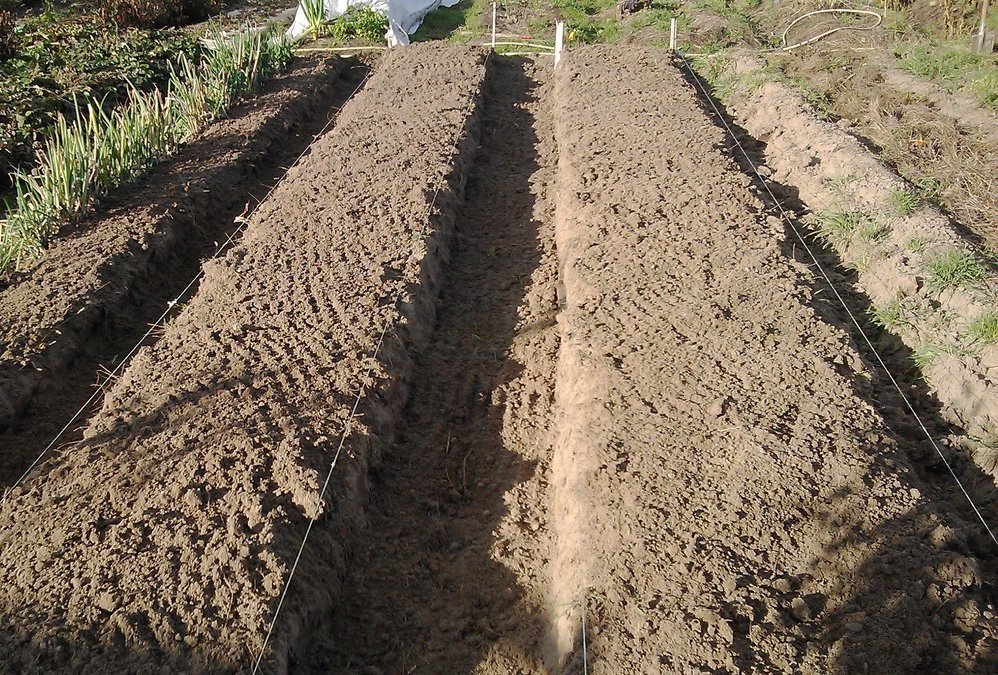
A bountiful harvest is achieved in light, well-drained soils: super-sandy, loamy, and black earth. It is in such soil that the root system develops quickly, and the tubers absorb the maximum amount of nutrients.
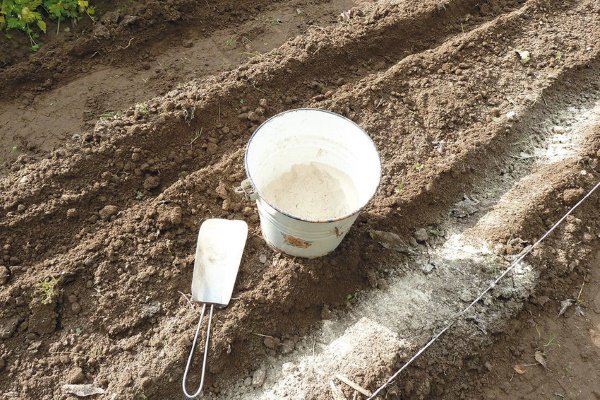
Colombo doesn't like highly acidic soil. Adding lime or ash can help improve the situation. It also doesn't grow well in virgin soil.
Tip! Indicator plants can help you determine if your garden bed is too acidic: if you see horsetail or buttercup, your soil is acidic.
The Colombo planting site should be well-lit. The soil should be fertilized, weeded, and dug. If your soil is heavy or clayey, this should be done in the fall.
Selection and preparation of seed tubers
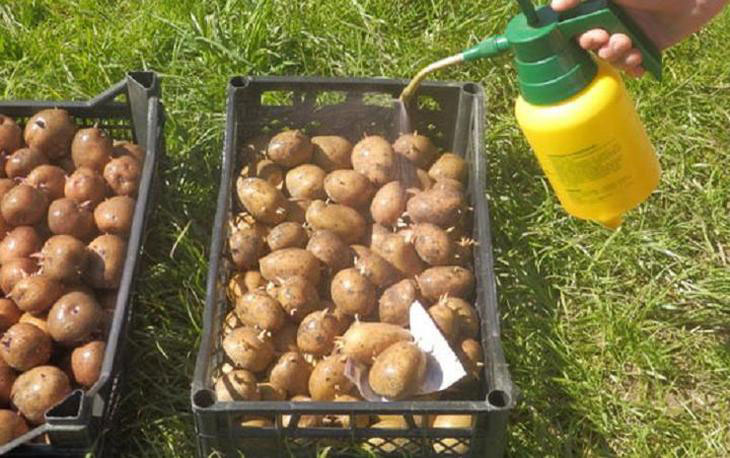
Two months before planting, potatoes should begin sprouting. For this, it is recommended to place the tubers in a well-ventilated, bright room. If it is too dry, you will need to spray the tubers additionally to stimulate shoot growth. You can place the planting material in a box, but no more than one layer. If daytime temperatures do not drop below 13°C, you can place the boxes outside on sunny days.
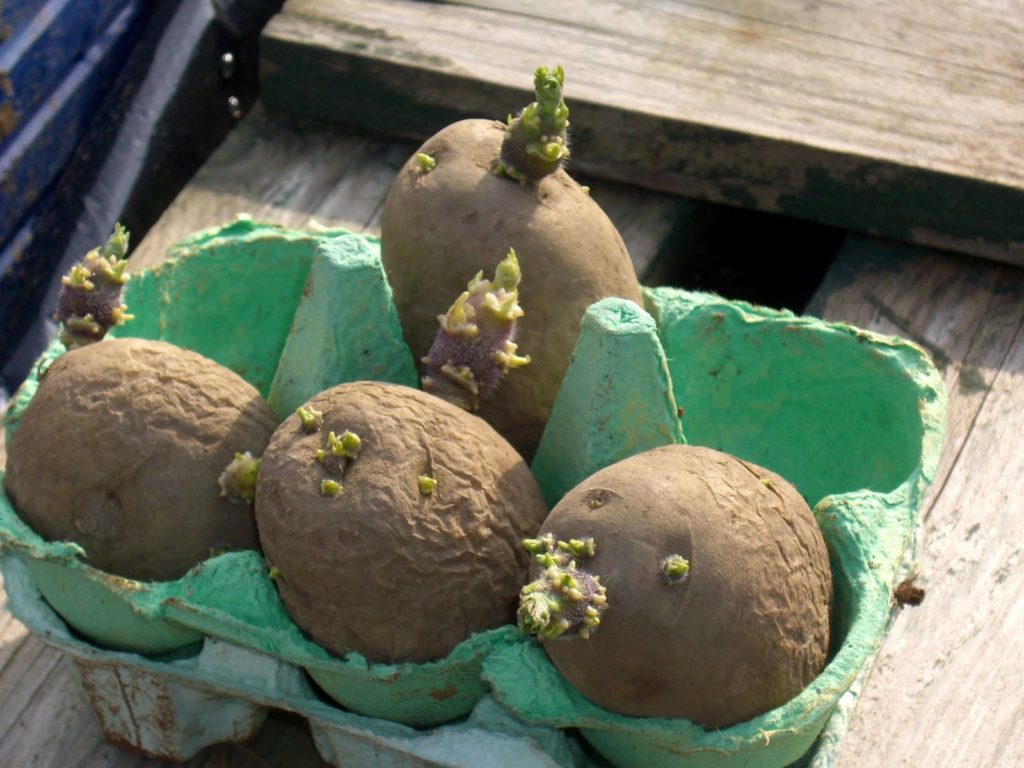
After two weeks, the potatoes should be moved to a cool room with a temperature no higher than 10°C. They will remain there until planting.
Some gardeners prefer the wet germination method because it reduces germination time to 2-3 weeks. It involves several steps:
- The tubers are placed in a box.
- Sawdust or wet soil is poured on top.
- As the covering substrate dries, it is moistened.
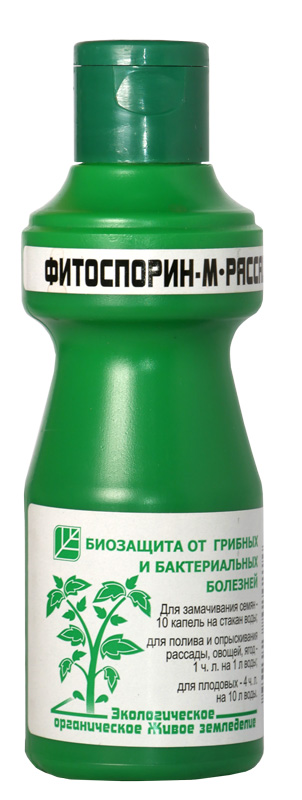
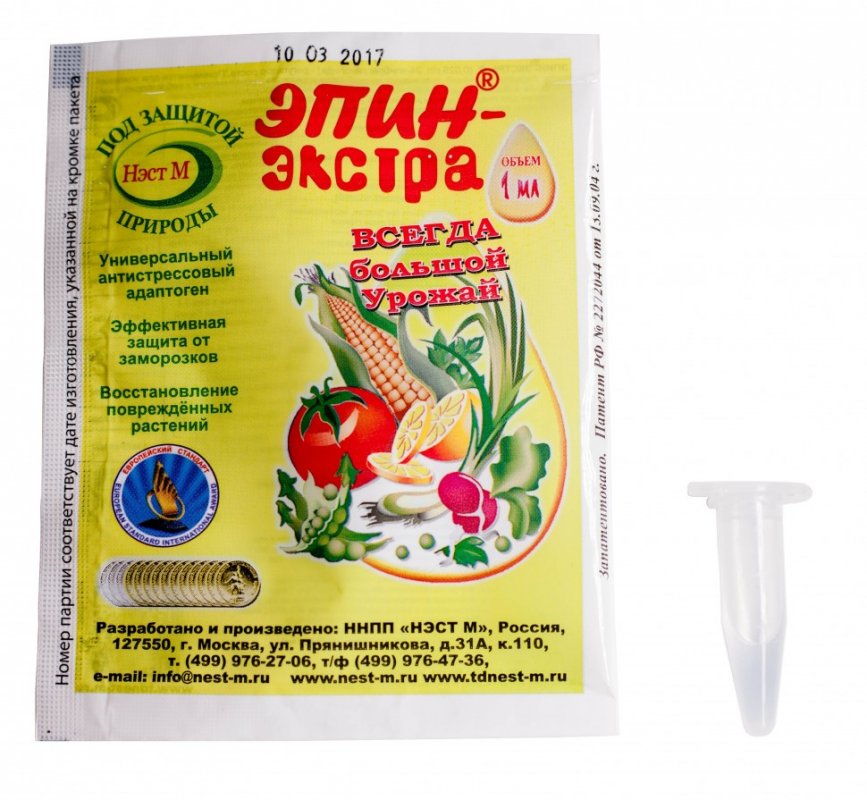
- To minimize the risk of disease, it is advisable to additionally treat the tubers with the fungicide Fitosporin or the insectofungicide Celeste Top. A light pink solution of potassium permanganate can also be used. It is also recommended to treat the tubers with growth stimulants (Epin, Poteytin, Bioglobin).
 ;
;



Planting times and rules
Colombo can be planted in beds only when they have warmed up to a depth of 10 cm and the thermometer has risen to 10°C. This usually occurs in the second half of April to early May. Everything depends on the weather conditions in your region.

In some parts of our country, for example, in the Southeast, the harvest can be collected twice: at the end of June after the first planting and in September-October after the second.
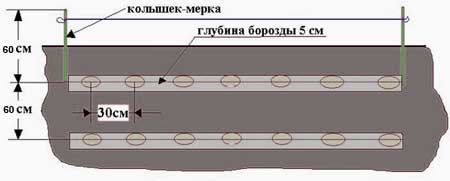
For planting potatoes, prepare holes 10 cm deep. The recommended distance between holes is approximately 30 cm, and it is best to leave more space between ridges or furrows, making the passage 60-70 cm wide.
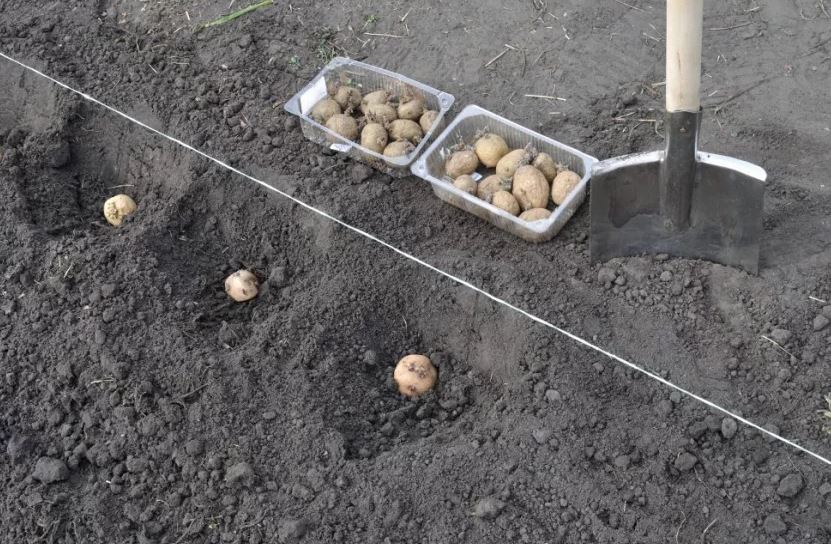

Planting potatoes occurs as follows:
- The tubers are placed in prepared holes.
- Next, 300 g of ash or humus are placed in them.
- The holes are filled with soil 5 cm above the surface of the bed.
- If necessary, the plantings can be covered with agrofibre to speed up germination.
Caring for the Colomba potato variety
Experienced gardeners love Colombo for its low maintenance. To obtain an excellent harvest, just hilling and watering the plantings at the right time are sufficient.
Watering potatoes
Colombo grows worse in drought conditions, so it responds gratefully to watering.

It is recommended to carry it out according to the following scheme:
- The first time - as soon as the shoots grow to 15 cm.
- The second is during the period of flower appearance.
- The third (last) - when the bush sheds its buds.
Important! During the tuber formation stage after flowering, do not water the plants, as this can cause late blight.
It's best to use warm water for watering, so leave the watering can or bucket in the sun for a few hours. Each bush requires at least 4 liters of water to moisten the soil to a depth of approximately 20 cm. However, this amount should be poured gradually to avoid washing away the roots.
Top dressing
After watering, you can begin fertilizing the soil. The optimal time is one month after planting. Gardeners recommend using the root-feeding method. To do this, drive a stake approximately 15-20 cm into the ground between two bushes. Then remove the stake, leaving a depression where you can apply the nutrient mixture.
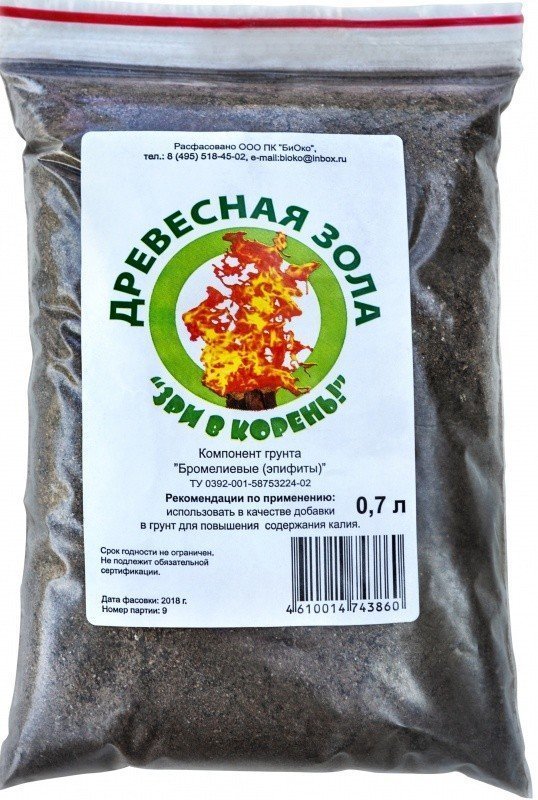
For potatoes, a solution of manure and water in a 1:2 ratio, as well as wood ash, are ideal.
Loosening, weeding and hilling
Weeding and loosening the soil are carried out together once the seedlings reach 20 cm. Weeds must be removed thoroughly, making sure to include the space between rows. However, loosening should not be done too deeply to avoid damaging the tubers.
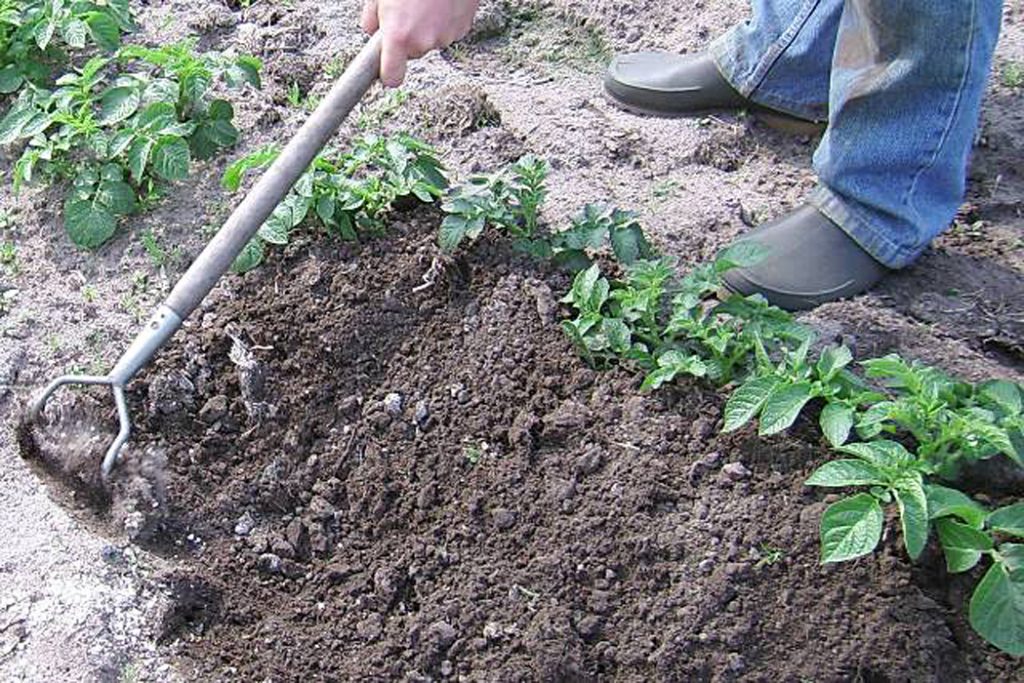
Hilling is especially recommended for black soil; in such areas, it will need to be done twice per season. In other cases, one hilling is sufficient. Hilling can be started after weeding, using a hoe to rake the soil down to the roots of the bush. It's advisable to repeat the process after three weeks.
Protecting the Colomba potato variety from diseases and pests
Colomba is considered a variety with good disease resistance, but it's still best to take preventative measures in advance. Sometimes bacteria and viruses prove stronger than the immune system.
To catch the disease at the earliest stages of its development, it is necessary to regularly inspect the plantings, paying attention to any changes in the appearance of the bushes.
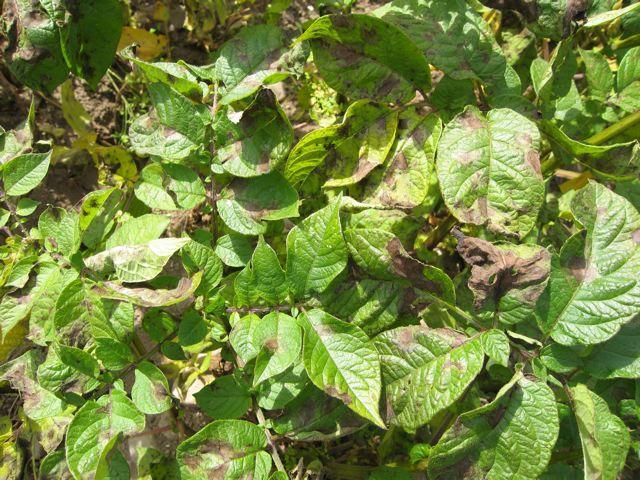
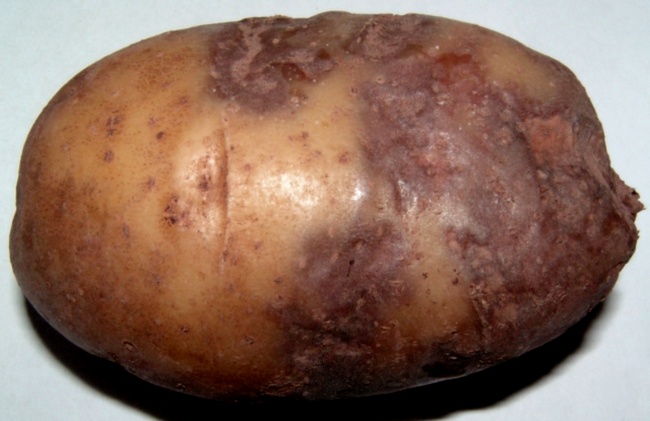
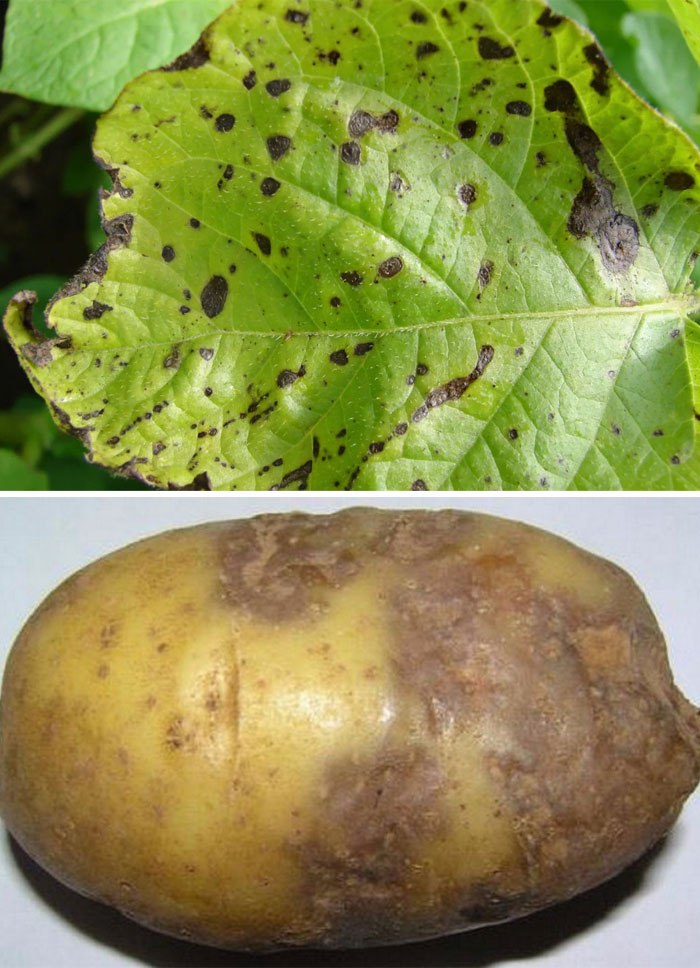
- If signs of late blight appear on plantings (dark brown spots on the lower leaves and certain sections of the stem, leaves turning black and drying out, and if the weather is damp, rotting), it's best to remove and burn the infected parts before the disease spreads. Healthy remains should be treated with fungicides containing a high copper content, such as Hom.
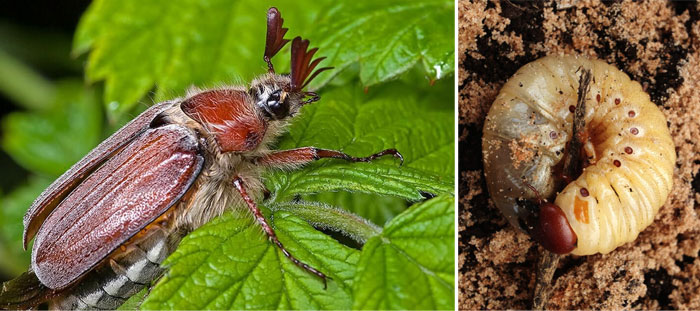
- Sometimes, during hilling, cockchafer larvae are discovered in the soil. These are removed by hand.
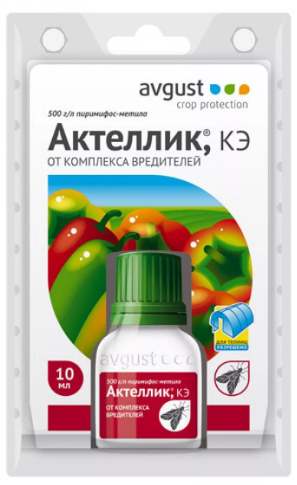
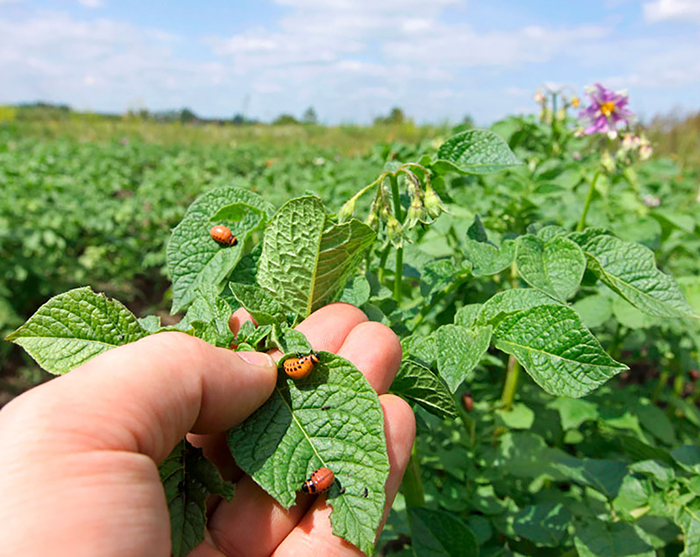
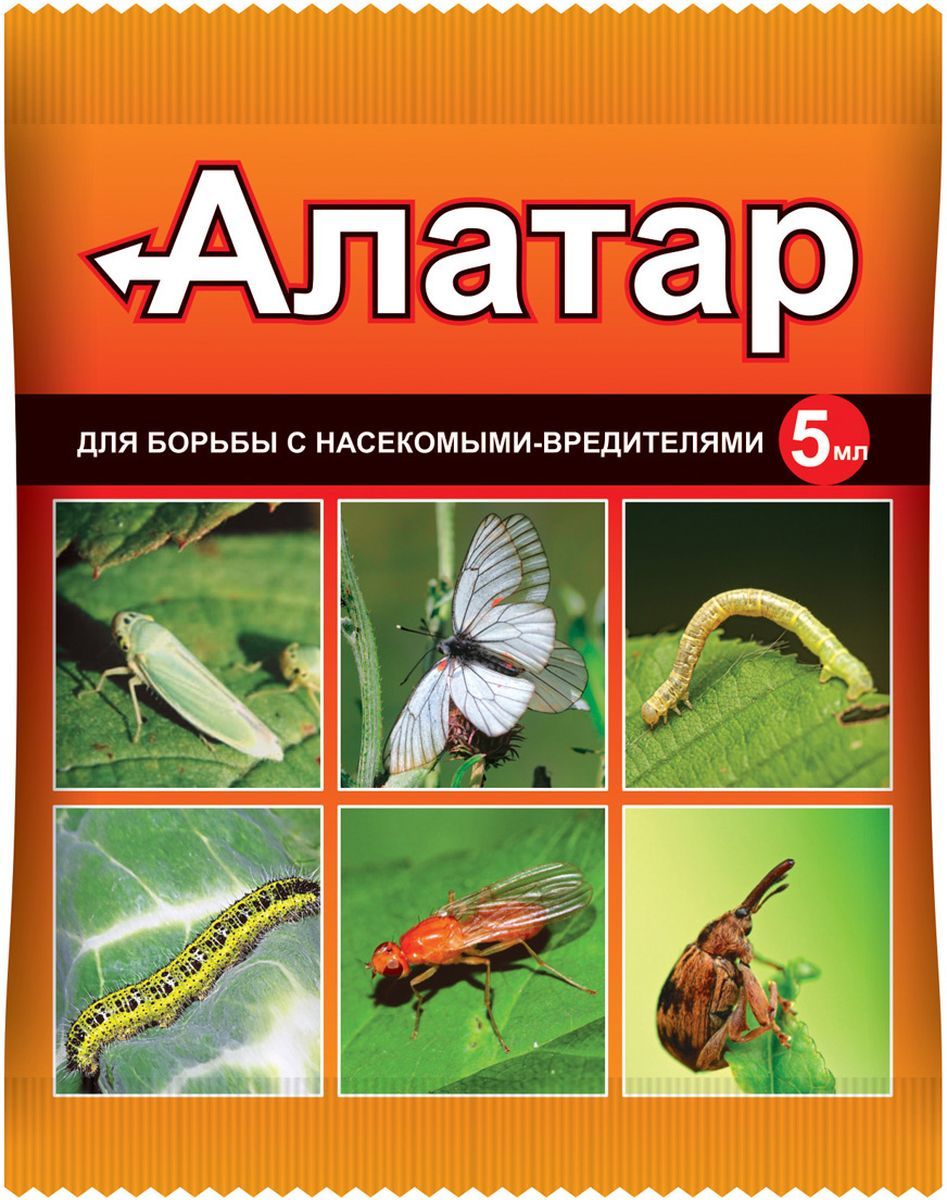
- Colorado potato beetle The most effective method is to collect the larvae by hand. To prevent larval accumulation (the underside of the leaf), treat the areas where the larvae gather with Actellic or Alatar.
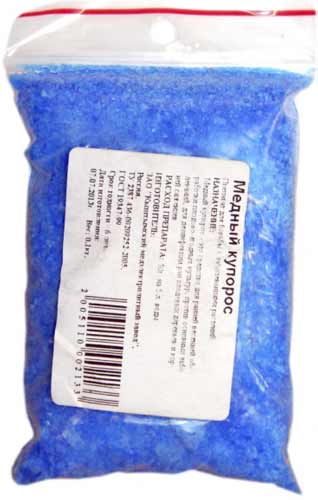
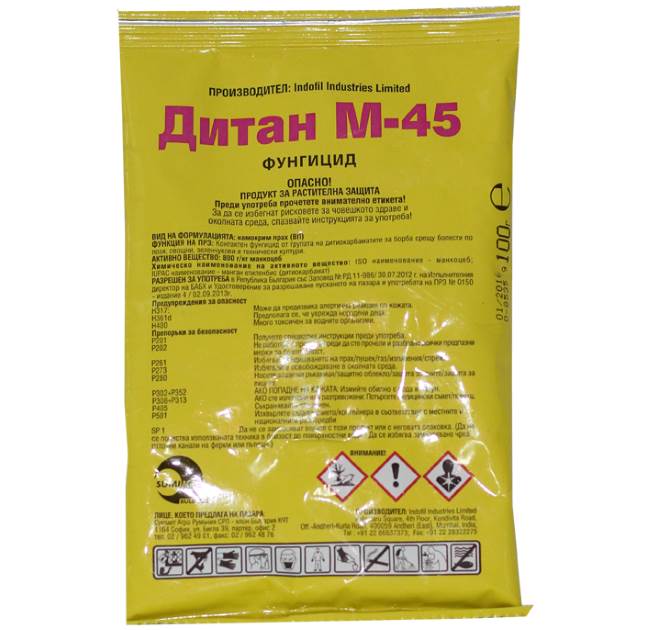
- To rid plantings of fungus, treat them with Ditan M-45, Krezatsin, Epin, or a solution of copper sulfate.
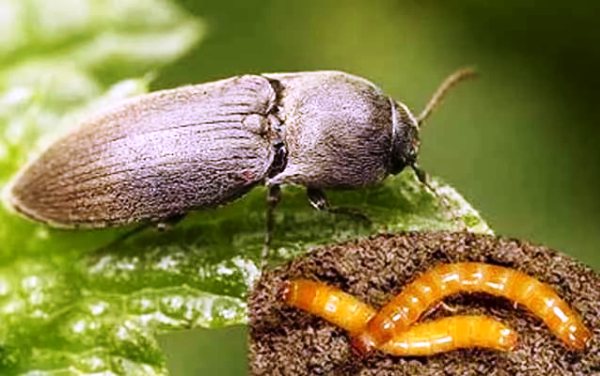
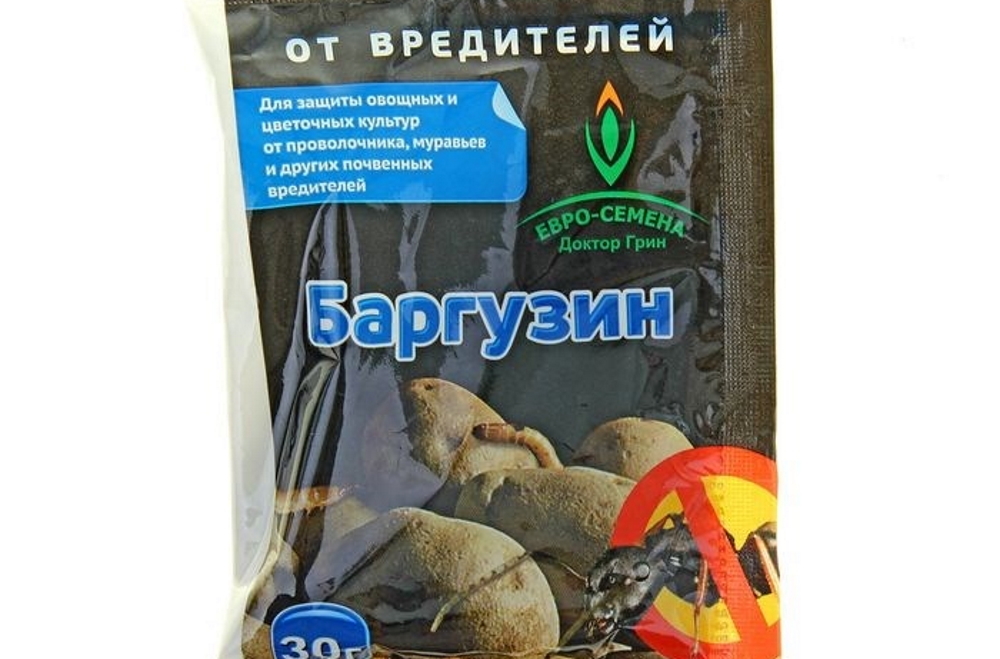
- To prevent the appearance of click beetles and their larvae, granulated Barguzin is used, which is pre-added to the soil during planting.
Photo gallery of problems with the Colombo variety and how to combat them:


The nuances of harvesting and storing the Colomba potato variety
Colomba potatoes ripen very early, and harvesting can begin even before all the tops have wilted and yellowed. A test harvest determines the tubers' readiness. If the tubers are approximately 5 cm in diameter, the remaining plants can be safely dug up.
Many gardeners stimulate the ripening process of the fruit in the ground by cutting off the tops. This is done about a week before harvesting. Only 10-15 cm of shoots are left above the ground.
The entire harvest must be sorted after harvesting. It's best to set aside any suspect tubers with minor damage—they won't keep for long and will also spoil nearby fruits. Good tubers are left in the beds to dry for a few hours.
Important! Prolonged exposure to sunlight can lead to the formation of solanine, which gives the flesh a green color and is toxic to humans.
Next, the tubers are stored. Before this, any remaining soil must be removed.
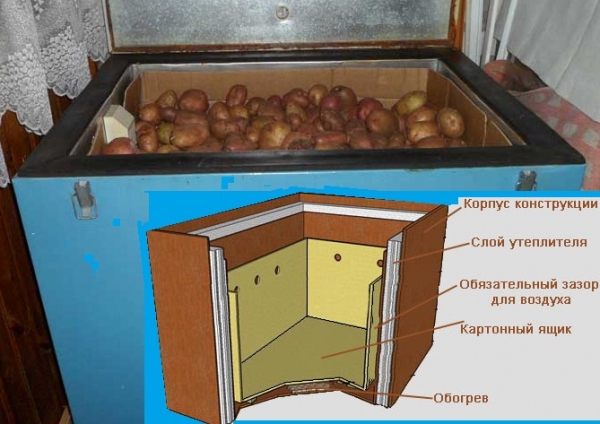
When stored properly, Colombo will last for about 6 months. It requires a well-ventilated, cool room with a temperature of 1 to 3°C.
Thanks to their dense skin, the tubers tolerate transportation well and are resistant to mechanical damage.
At home, potatoes can be placed on an insulated balcony, ensuring the temperature there does not drop below 4°C. The optimal humidity level is 75%-85%.
Read more in the article about How to store potatoes.
Comparison of the Colomba potato variety with other varieties in the table
| Variety | Ripening period (number of days to maturity) | Starch (%) | Yield (c/ha) | Weight of tubers (g)
Number of tubers per bush |
Shelf life (%) |
| Colomba | Early ripening* | 11-15 | 230-450 | 100-130
12-14 |
95 |
| Jewel | Early ripening* | 10-15 | 700 | 80-150
15-20 |
94 |
| Innovator | Mid-early** | 12-15 | 320-344 | 83-147
6-11 |
94 |
| Strongman | Mid-early** | 10-12 | 127-275 | 78-105
15-20 |
97 |
| Latona | Early ripening* | 16-20 | 400-450 | 90-140
10-15 |
96 |
| Meteor | Early ripening* | 10-16 | 210-405 | 100-150
10-12 |
95 |
| Teddy bear | Early ripening* | 14.2-17.7 | 201-306, 417 | 112-126
7-11 |
97 |
| Molly | Early ripening* | 11.4-13.4 | 171-308 | 98-142
20-25 |
82 |
| Rosalind | Early ripening* | 12-17 | 203-223 | 60-115
10-16 |
94 |
| Luck | Early ripening* | 11-15 | 420-430 | 100-150
10-15 |
88-97 |
*Early ripening – 50-65 days.
**Mid-early – 65-80 days.
***Mid-season – 80-95 days.
****Mid-late – 95-110 days.
Real reviews from gardeners about the Colombo potato variety
Numerous reviews of this potato can be found online. Almost all gardeners note the Colombo's extremely early ripening time and ease of cultivation.
User Pavlusha-63, Russia, Gorodets
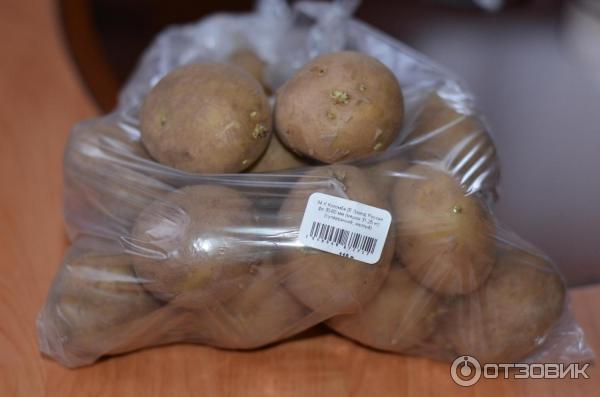
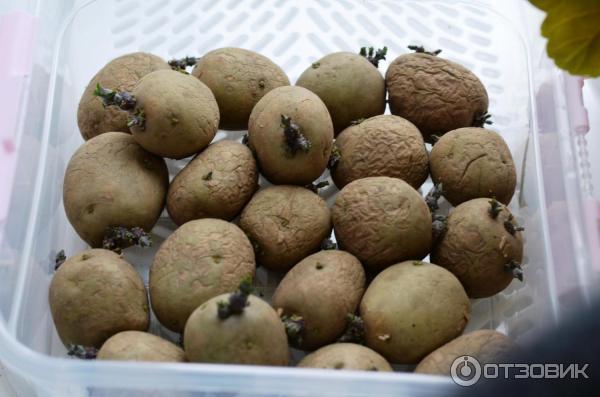
Before planting potatoes in their gardens, gardeners search for information about different varieties, growing techniques, and taste characteristics. One relatively new and noteworthy variety is the Dutch-bred "Colombo" (sometimes called "Colomba"). This spring, I purchased a kilogram of seed tubers, 21 of them, for planting. I immediately placed the seeds on the windowsill for vernalization. The potatoes turned green and the buds began to pop.
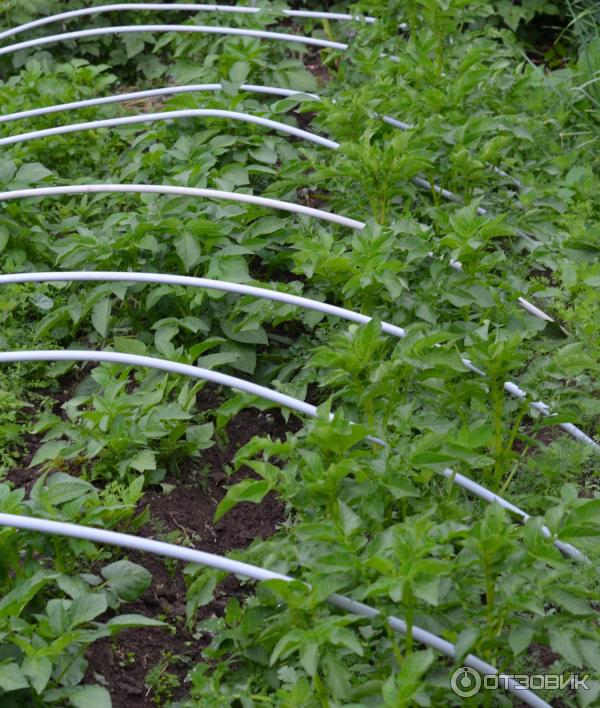
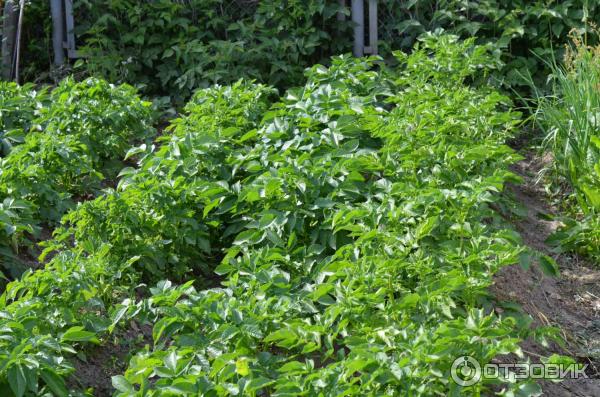
In early May, as soon as the soil warmed up, I planted potatoes in a raised bed of pine forest, and within a week and a half or two, I had a steady crop of sprouts. I was pleased to see that all the tubers sprouted almost simultaneously. The 'Colombo' variety is in the right row; it's taller than the 'Timo' variety growing nearby. These varieties had to be covered with acrylic sheeting because we still had frosts in early May. (That's why the arches are visible in the photo.)
When the seedlings grew, I earthed them up and, since the summer was dry, I watered the planted borovok once during flowering.
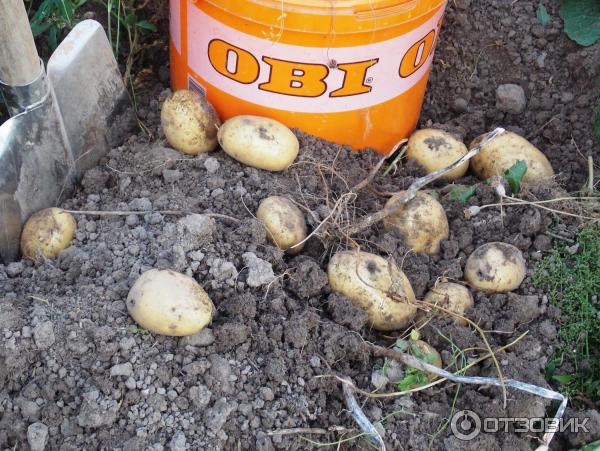
In early July, I decided to dig up a single vine to test it, as this variety is advertised as early maturing (no more than six weeks should pass from planting to harvest). By this time, the tops of some plants had wilted, due to late blight. I didn't use any chemical treatments on the early potatoes, not even for Colorado potato beetles, as there were almost no pests this season, and I didn't want to expose the potatoes (or myself) to unnecessary pesticides. As you can see, I got a fairly good harvest in a very short time.
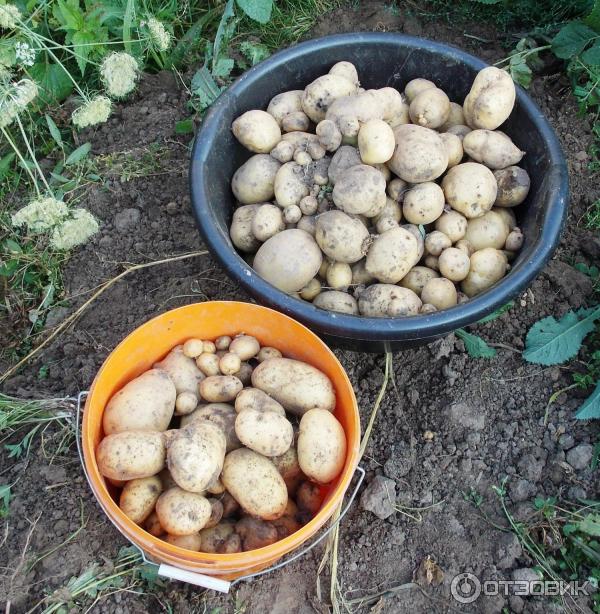
Then the entire experimental row of this variety was dug up and this is what we got from twenty bushes.
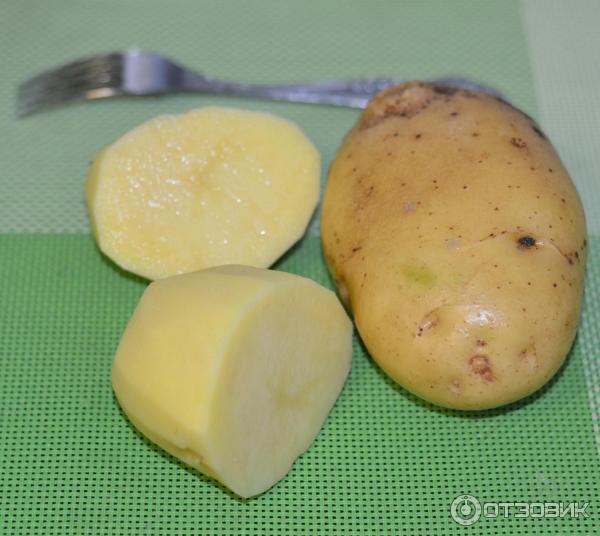
This variety has yellow flesh and a light yellow skin. Colombo potatoes are distinguished by their exceptionally delicate flavor and texture. They don't overcook when cooked, yet they're not watery and have a moderately crumbly texture. These qualities make them ideal for any dish.
The potatoes cook quite quickly, without becoming overcooked (they don’t fall apart while cooking).
The excellent flavor of young potatoes and their early maturity proved a favorable combination for gardeners. I will reserve a certain portion of my potato planting for this variety based on the balance of maturity, yield, and flavor.
I recommend you try the super-early variety "Colombo"—maybe it'll take root! Wishing everyone the best and a bountiful harvest!
Photos by user Pavlusha-63:
User Liberta, Khabarovsk
The harvest from a five-meter row is two buckets (last year, with other varieties, it was also two, only the buckets were larger, from Terraka). The Colomba suffered from excess moisture, but less than an unknown variety planted on April 18th, and Rubin, planted in early May (Colobma a little later). Last year's tubers were so-so—I pulled them out before the flood, and transplanted some of the bushes to my new dacha, but they got sick and dried out. However, this didn't affect the harvest. I'll report on the taste later; I haven't tried it yet.
User IrinaA, Khabarovsk
This year we tried the "Colombo" variety. The first potatoes we got were very tasty. Each plant yielded 25-30 medium-sized tubers, all smooth and clean, a pleasure to handle. I decided to save them for planting next year. However, many of the tubers are already starting to rot, meaning they're apparently not suitable for long-term storage.
User si555ma, Yantarny, Kaliningrad region.
Hello, dear forum members. I'm here with a belated story about Valmix potatoes. I bought Vega, Wendy, Colomba, La Perla, and Balitk Rose. The summer was hot and dry, the soil in the plot was sandy, and all the potatoes were watered at night between the rows.
Colomba was the first to start drying out its tops. The potatoes aren't very large, but there aren't any small ones either. I'll try planting a few seedlings this year to "eat the new potatoes early." La Perla followed suit; the yield isn't bad, the tubers are large, but the seed fraction is badly damaged by scab. Vega and Wendy started drying out at the same time. Vega produced a good crop, but Wendy was a bit small.
The one that stood the longest, with its gorgeous green tops, was B. Rose. It's a clever, beautiful variety, with large, very large tubers, beautiful, smooth little piglets; I barely collected enough for planting. The flesh is very, very yellow, so yellow that it stained an old enamel saucepan. The taste is excellent.
There's been no winter this year, so to speak. The day before yesterday it was almost +9 outside, and now it's +5.5 in the basement. The basement itself is still German, all brick, and takes a long time to cool down and warm up. Colomba started waking up back in November, but the others are still dormant. Mice gnawed at the Vega and Wendy seedlings, but all the gnaws have dried up nicely. I'll be planting the ones I gnawed.
With identical care, feeding, and watering, this is what happened. Upon digging, I discovered new stolons with tiny tubers on all the varieties except Colomba. Apparently, after the heat subsided, the bushes began to set another crop. None of the varieties had a distinctly pea-like flavor, except for the new stolons. I personally found La Perla a bit watery in taste. I've left all the varieties for seed, but I'm hesitant to keep La Perla, since it's so fragile.
Unable to store different varieties in separate drawers, I piled the edible potatoes all in one pile. So I can't comment on the taste during storage, but I haven't encountered any that are downright bad. Next season, I might expand the basement, and then I'll store everything in separate drawers.
User Sadovnik-xxi, Ivanovo
My Colomba showed good results. I planted 1 kg of seeds and harvested 40 kg in a 3 m2 area.