The Mishka potato variety is very popular among Russian farmers and gardeners. This is due to its excellent taste, adaptability to various growing conditions, and ease of care.
Content
- 1 Table with characteristics of the Mishka potato variety
- 2 The origin of the Mishka potato variety
- 3 A detailed description of the Mishka potato variety
- 4 Advantages and disadvantages of the Mishka potato variety
- 5 Planting Features of the Mishka Potato Variety
- 6 Caring for the Mishka potato variety
- 7 Protection of the Mishka potato variety from diseases and pests in the table
- 8 The nuances of harvesting and storing the Mishka potato variety
- 9 Comparison of the Mishka potato variety with other varieties in the table
- 10 Real expert reviews of the Mishka potato variety
Table with characteristics of the Mishka potato variety
| Characteristic | Description |
| General characteristics | An early-ripening table potato with oval-round tubers. A domestic variety. |
| Ripening time | 50-65 days. |
| Starch concentration | 14.2-17.7% |
| Weight of commercial tubers | 112-126 g |
| Number of tubers in a bush | 7-11 pcs. |
| Productivity | 201-306, maximum 417 c/ha |
| Consumer qualities | Culinary class: AB. Taste: good/excellent. Purpose: Universal. |
| Marketability | 85-95% |
| Shelf life | 97% |
| Peel color | Reddish |
| Pulp color | Creamy beige |
| Color of inflorescences | Creamy beige |
| Suitable regions for growing | Volga-Vyatka. |
| Disease resistance | High: rugose and streak mosaic, potato cancer, golden cyst nematode.
Low: late blight of tops and tubers. |
| Features of cultivation | Standard agrotechnical requirements. |
| Originator | Ural Research Institute of Agriculture of the Russian Agricultural Academy and LLC Agrofirma KRIMM. |
| Year of inclusion in the register | 2018. |
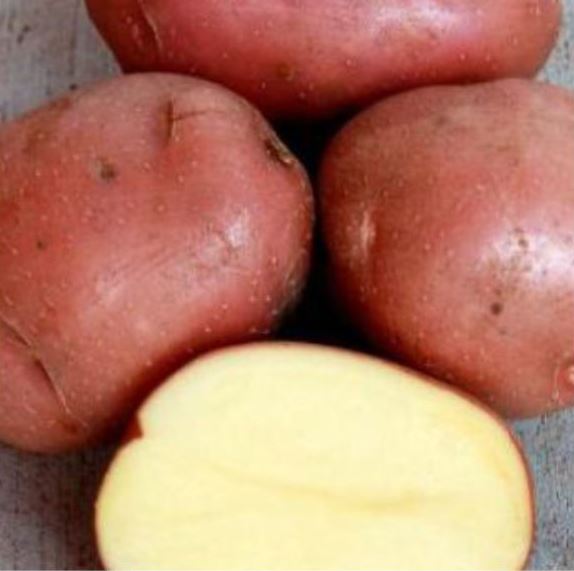
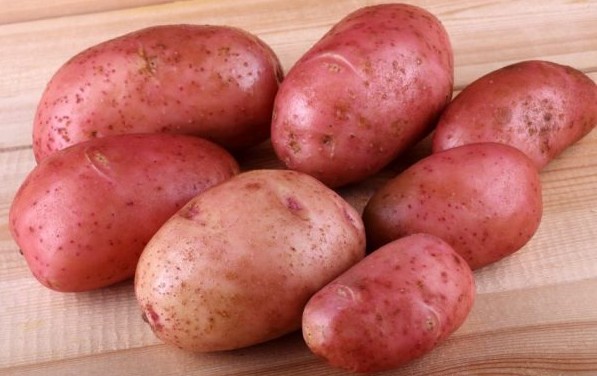
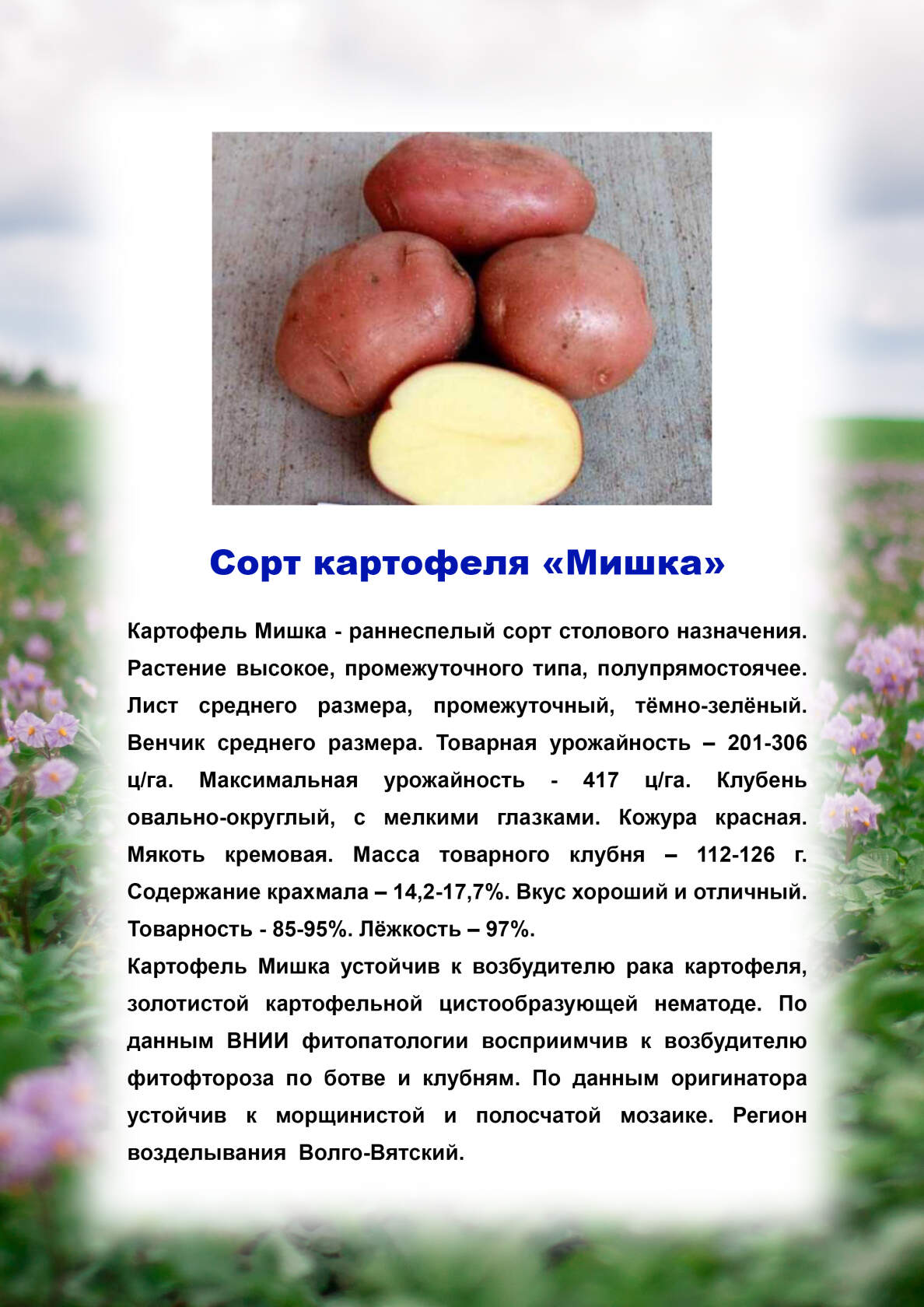
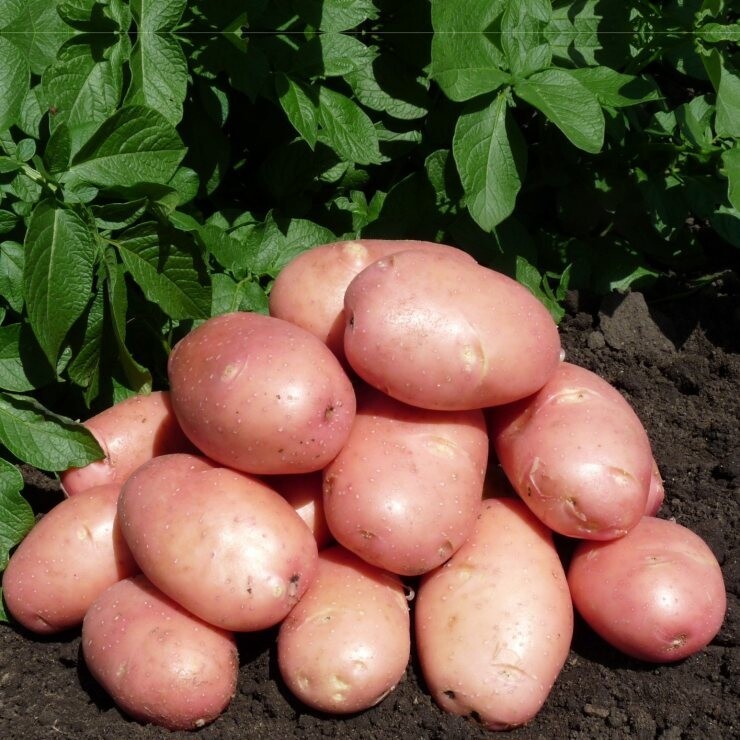
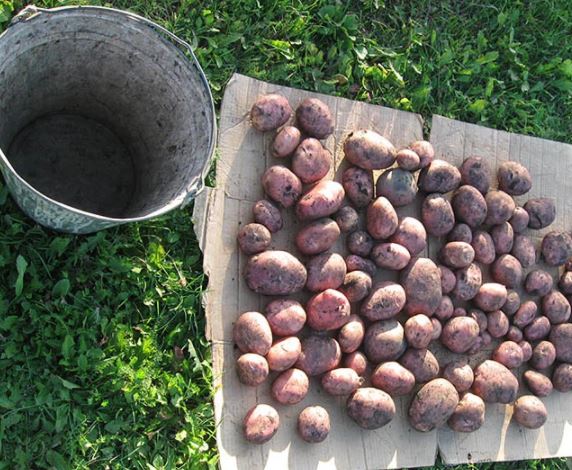
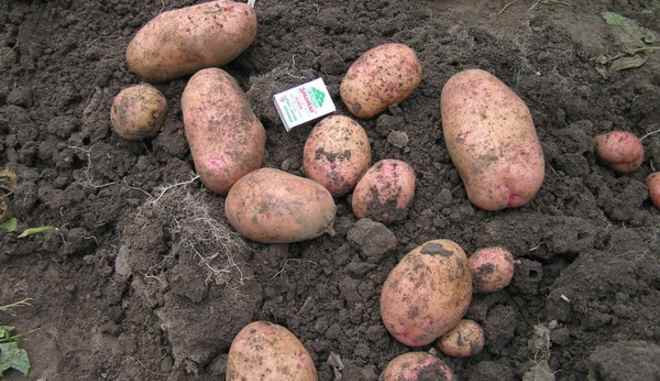
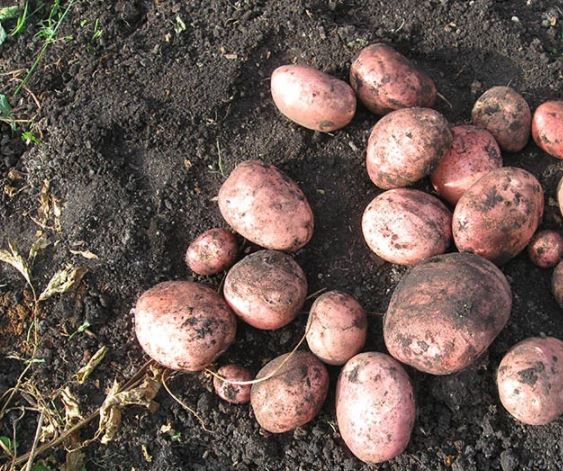
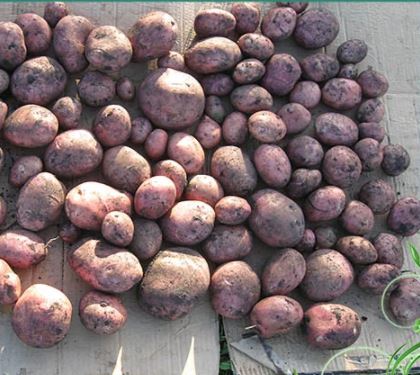
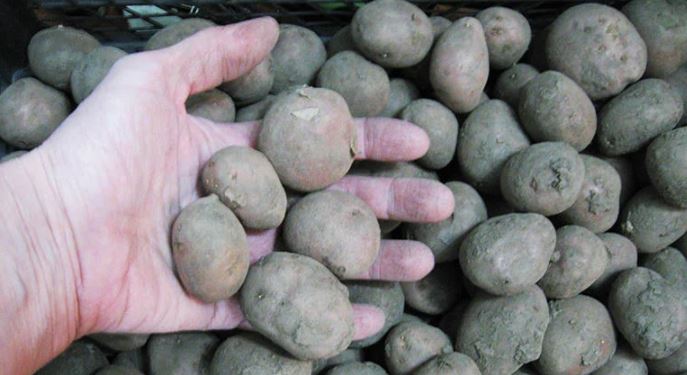
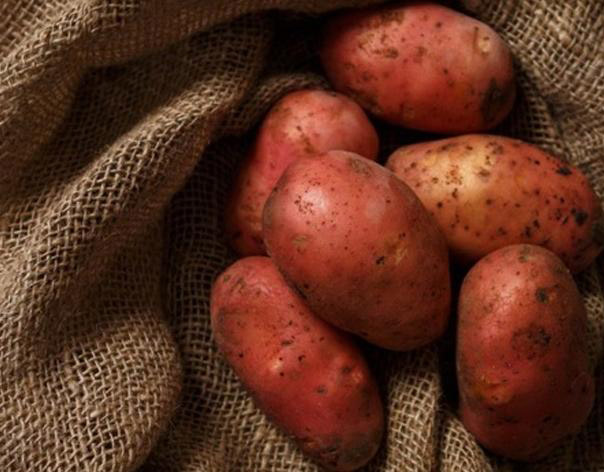
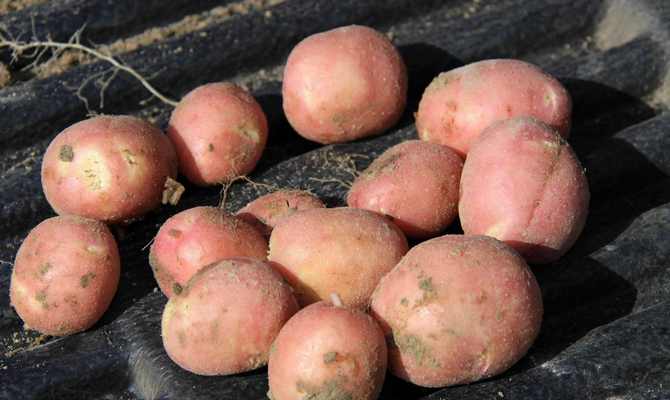
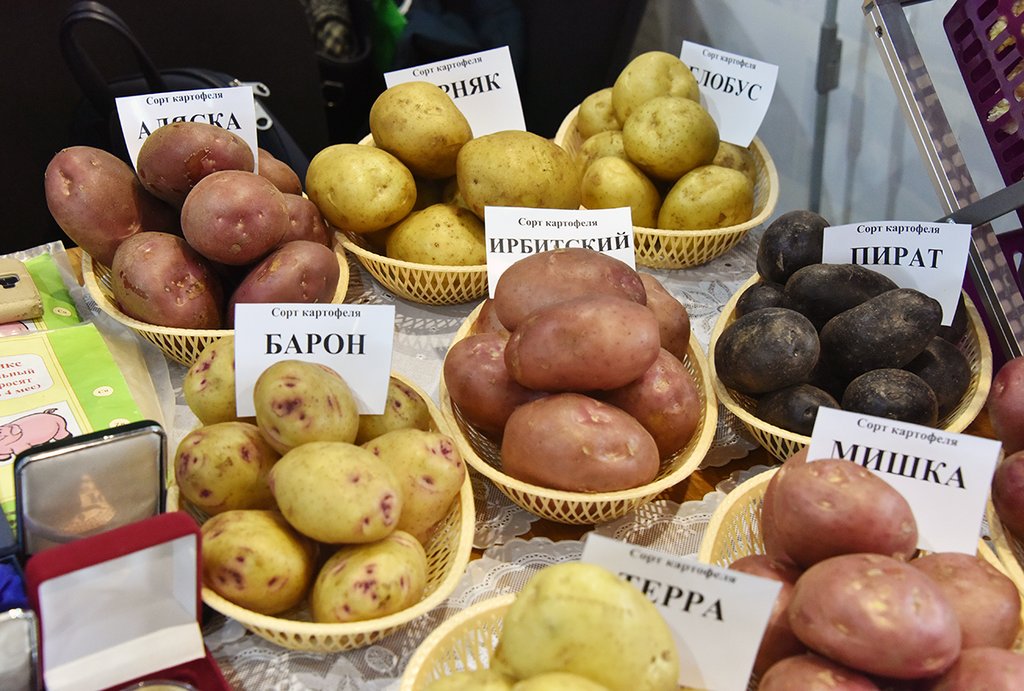
Photo of the Mishka potato variety:
The origin of the Mishka potato variety
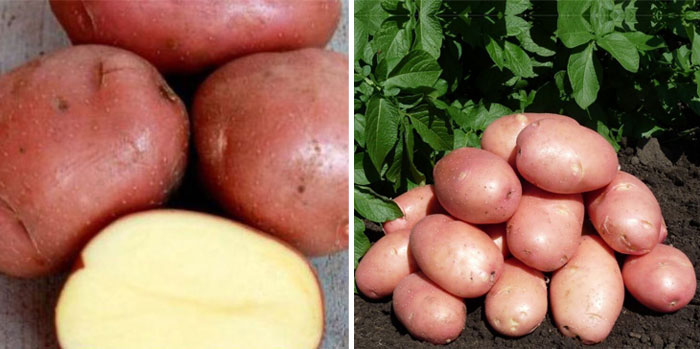
This variety was developed by Ural breeders for cultivation in the Volga-Vyatka region. Its distinctive feature is its early harvest. If planted in early May, young potatoes for quick consumption can be harvested as early as the second ten days of June. In terms of tuber appearance, taste, and yield, Mishka is similar to the Gloria variety.
A detailed description of the Mishka potato variety
Let's look at the main features of the Mishka variety.
Bushes
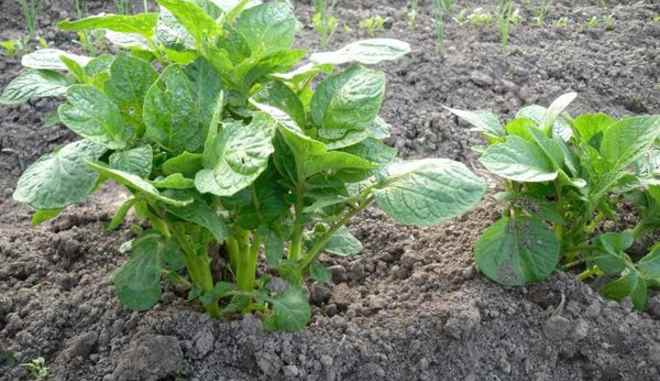
The bushes are fairly tall with upright stems of intermediate type. The leaf blades are medium-sized, dark emerald in color. The corolla is small, with anthocyanin coloration of medium intensity within the inner area.
Tubers
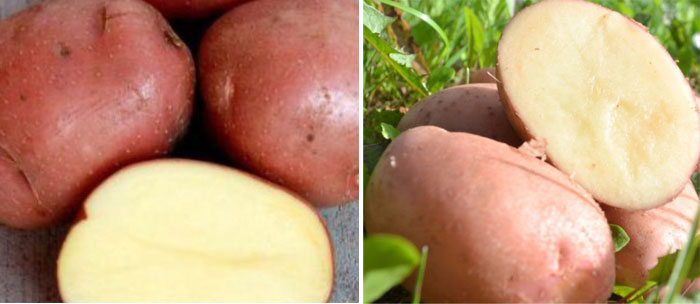
The tubers have a smooth surface with a reddish skin. The eyes are few, shallow, and small (no more than 2-3 mm).
The flesh is creamy, pleasant to the taste, and has a fairly dense texture.
Nutrients and nutritional value
Potatoes contain a huge number of nutrients beneficial to the human body. They are especially rich in calcium, silicon, cobalt, and vitamin C.
The energy value per 100 g of product is 75-80 kcal.
Productivity, ripening time
On average, 201-306 centners of potatoes can be harvested from one hectare of land. However, there have been cases where 417 centners were dug up from the same plot (in the Sverdlovsk region).
Only 50-65 days pass between the first shoots appearing and technical maturity. However, the young crop can be harvested even earlier.
Resistance to diseases and pests
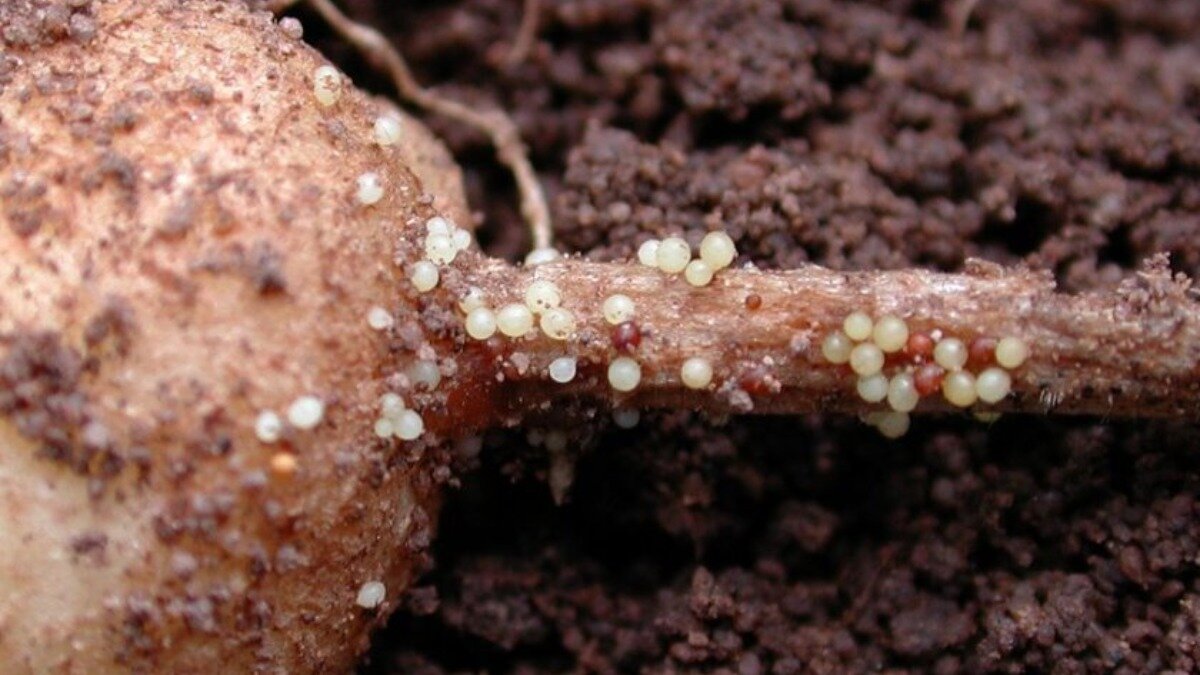
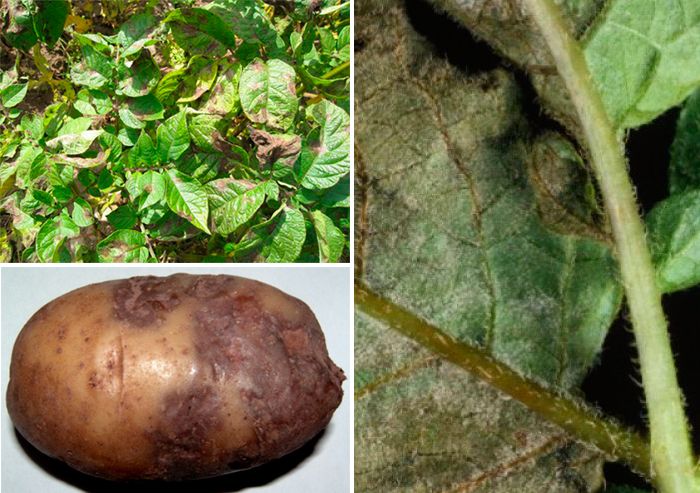
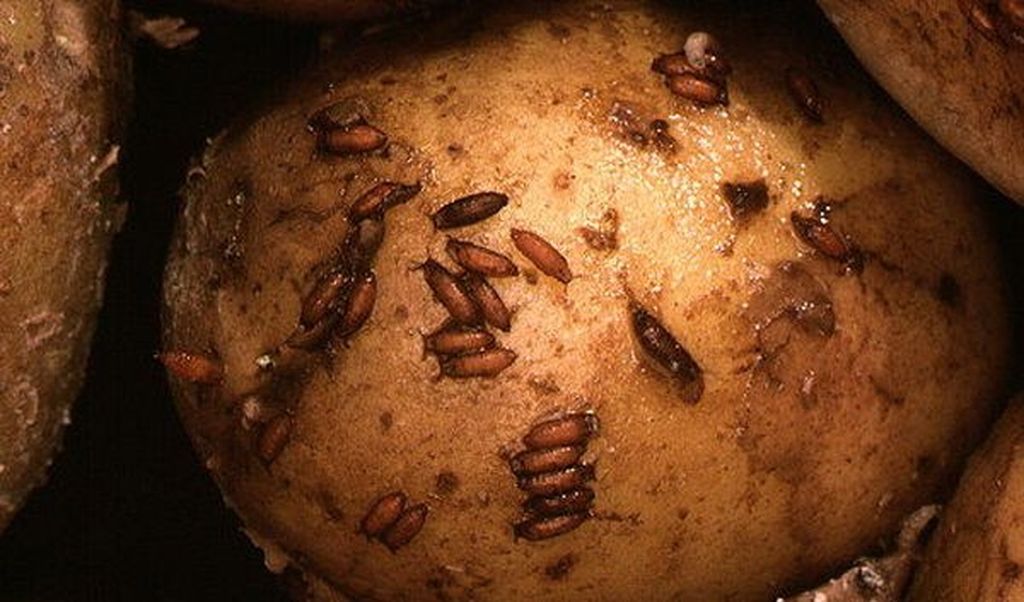
The variety is resistant to rugose and stripe mosaic, canker, and golden cyst nematode. Mishka is particularly susceptible to late blight of tubers and foliage. It is also frequently attacked by the Colorado potato beetle and potato fly.
For which regions is the Mishka potato variety suitable?
Potatoes are intended for cultivation in the Volga-Vyatka region. However, due to their adaptability to various climates, they can be planted in the south and central regions of Russia.
Advantages and disadvantages of the Mishka potato variety
The bear has the following advantages:
- high yield;
- resistance to bad weather conditions, including drought and short-term frosts;
- early ripening;
- ease of cultivation;
- attractive appearance of tubers with resistance to mechanical damage;
- excellent taste;
- Possibility of long-distance transportation, long-term storage.
Disadvantages include susceptibility to late blight, Colorado potato beetle, and potato fly. However, with proper agricultural practices and timely prevention, the risk of their development can be significantly reduced.
Planting Features of the Mishka Potato Variety
The bear grows well in a variety of locations. This is why it's so popular with gardeners.
Requirements for the landing site and its preparation
The richest harvest is achieved in loose, fertile soil. Preferably, the soil should be neutral or slightly acidic. Potato beds should be located in a sunny spot, with some partial shade permitted.
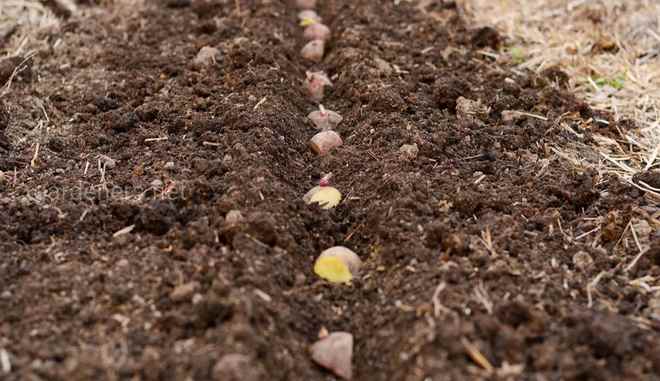
Preparation of the area for potatoes should begin in the fall:
- Destroy weeds.
- Do deep digging while simultaneously adding organic fertilizers (for example, humus or rotted manure at a rate of 5-8 kg per 1 sq. m).
- In the spring, dig up the beds again.
Important! When planting potatoes, it's essential to practice crop rotation. Potatoes should not be grown in the same spot two years in a row.
Selection and preparation of seed tubers
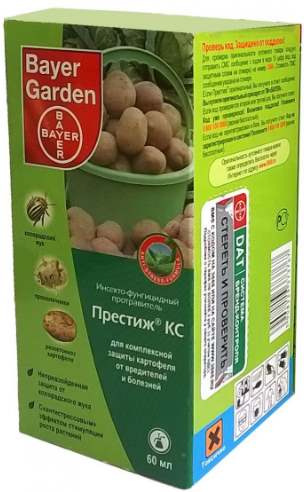
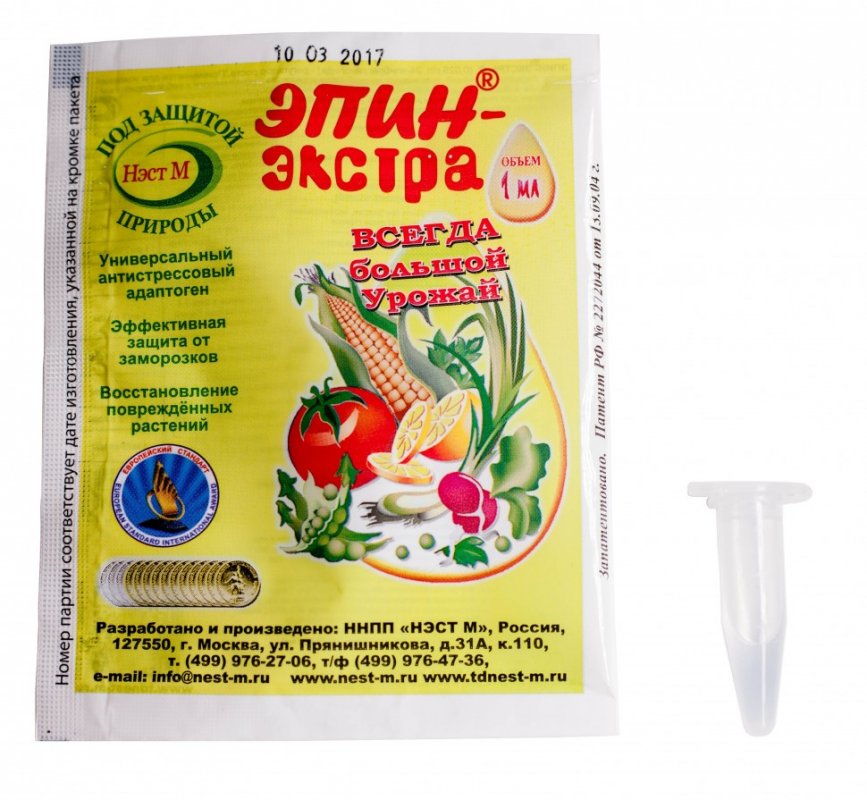
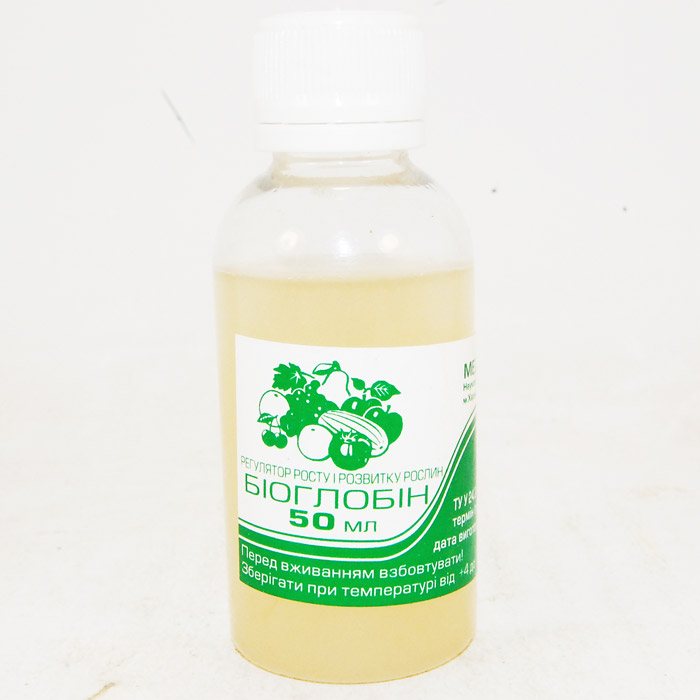
Tubers measuring 3-6 cm in circumference and weighing 40-65 g are suitable for sprouting. A month before planting outdoors, they should be spread in a single layer in a room with a temperature of 14 to 16 °C to encourage sprouting. To prevent diseases and pests, it is recommended to treat the planting material with Prestige or Regent. To ensure proper development, the tubers should be soaked in a solution of Epin or Bioglobin.

Important! Only healthy potatoes with no signs of disease or mechanical damage are suitable for planting.
Planting times and rules
Planting times depend on the region where Mishka will be grown. In central Russia, it can be planted in the first ten days of May, and even earlier in the south.
The depth of the planting holes depends on the soil type:
- Sand - 10-12 cm. First, you need to add a handful of compost, 1 tbsp. of wood ash and 20 g of nitrophoska to the holes.
- Loam - 5-7 cm. Put humus and 15 g of Kemira in the holes.
The distance between holes in one row should be 35-40 cm. The distance between beds is 75-80 cm.
Caring for the Mishka potato variety
This variety doesn't require any special care. Standard agricultural practices are sufficient.
Watering
Watering should not be done in the following cases:
- groundwater is too close to the surface (due to this, the soil always remains moist);
- it rains frequently;
- The potato bushes have not yet grown to 15 cm.
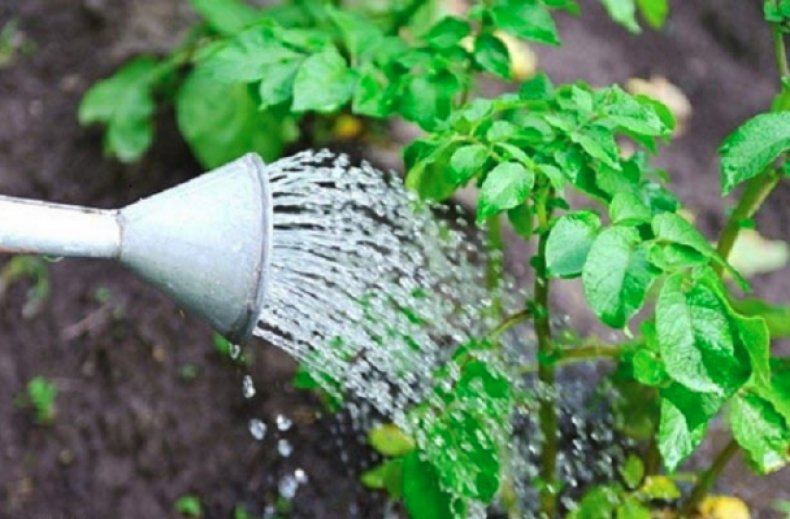
The first watering occurs when the bushes reach the size specified above. Each bush requires 3-5 liters of water. If drought conditions persist, it is recommended to double the amount. Subsequently, water once every 3 weeks until budding occurs. If the region experiences extreme heat, watering should be done more frequently, approximately once a week at a rate of 10 liters per bush.
During flowering, the bushes need to be watered every 2-3 weeks, with 15-20 liters of water per bush. During tuber formation, watering should be even more frequent, increasing the water volume to 20 liters.
Please note! When watering, always monitor the soil moisture. To do this, push the handle of a shovel into the soil. If clumps of soil remain, this means there is enough moisture. In this case, no further watering is necessary.
Top dressing
Fertilizer application scheme:
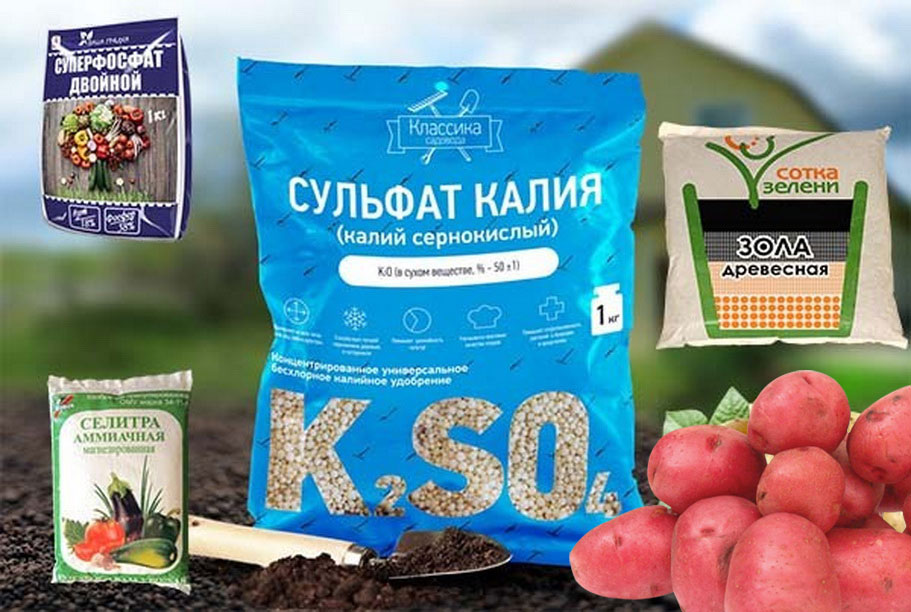
- with active growth of green mass - mixtures with nitrogen (for example, ammonium nitrate);
- during budding - fertilizers with potassium (wood ash, potassium sulfate);
during flowering - mixtures with phosphorus (for example, superphosphate).
Please note: In the spring, organic matter is added to the beds before planting.
Loosening, weeding, hilling
After precipitation or watering, a hard crust forms on potato beds. This prevents oxygen and nutrients from reaching the root system. To break this crust, loosen the soil, but not too deeply. Otherwise, there's a risk of damaging the roots, which could kill the plants.
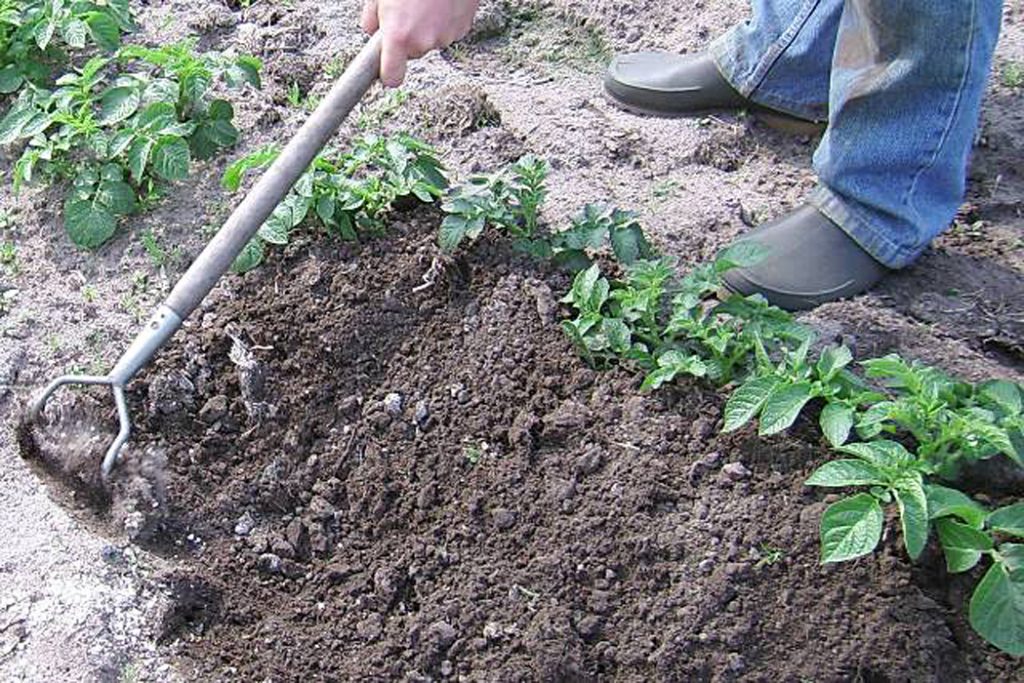
It's also very important to control weeds in potato beds. Otherwise, they will take up all the nutrients, which will hinder the crop's growth.
It is recommended to hill up twice during the growing season:
- when the stems grow to 10 cm;
- 3 weeks after the first manipulation.
Please note! It is recommended to perform this procedure during watering or after rain. The soil for hilling should be taken from between the rows.
Protection of the Mishka potato variety from diseases and pests in the table
The table below provides recommendations for the prevention and treatment of diseases and pests.
| Disease/pest | Prevention and treatment | Control measures |
| Late blight of tops and tubers
|
|
|
| Colorado beetle
|
|
|
| Potato fly
|
|
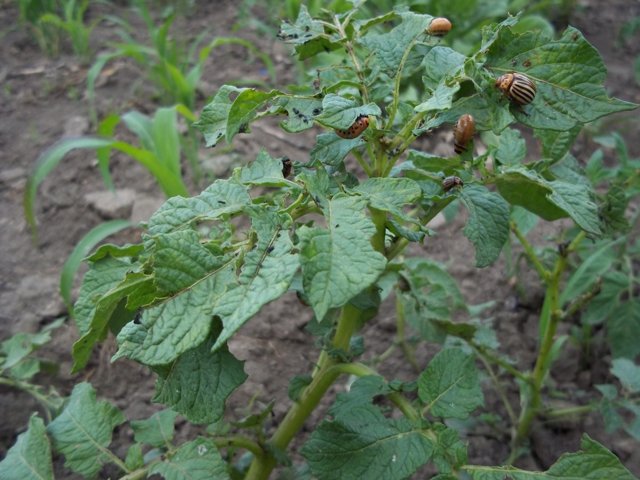
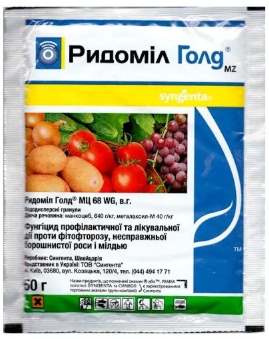
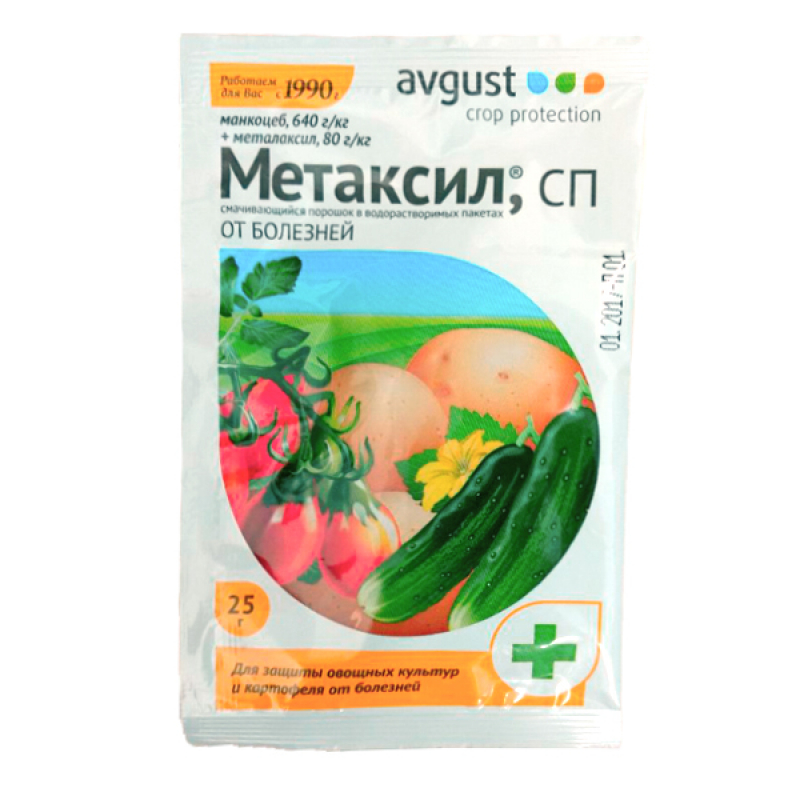
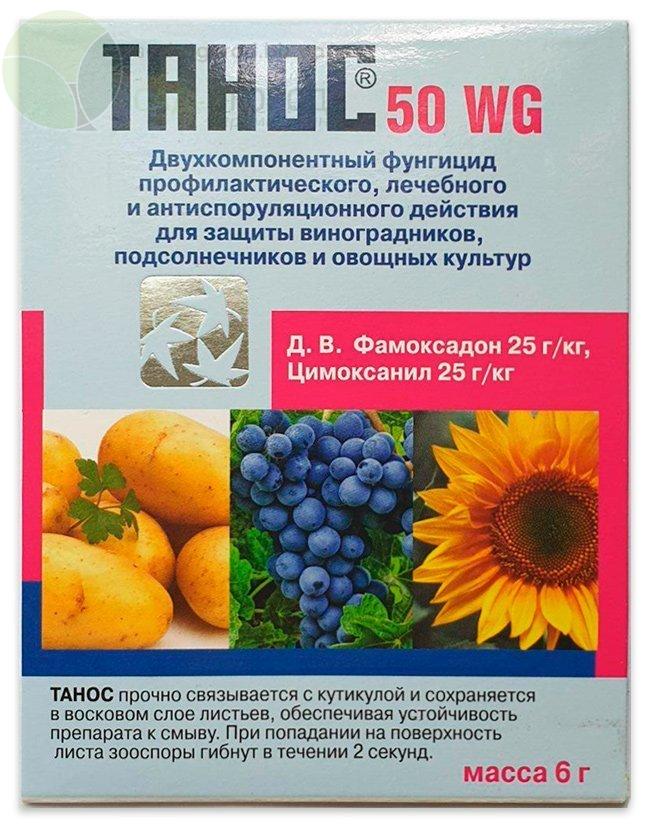
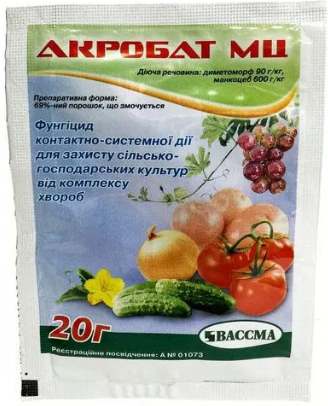
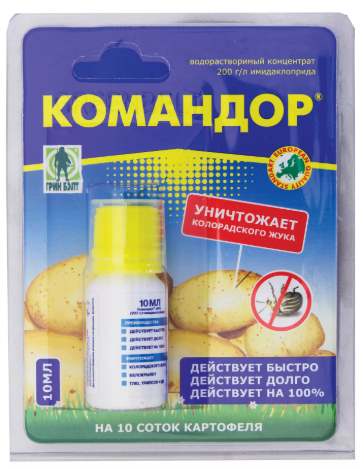
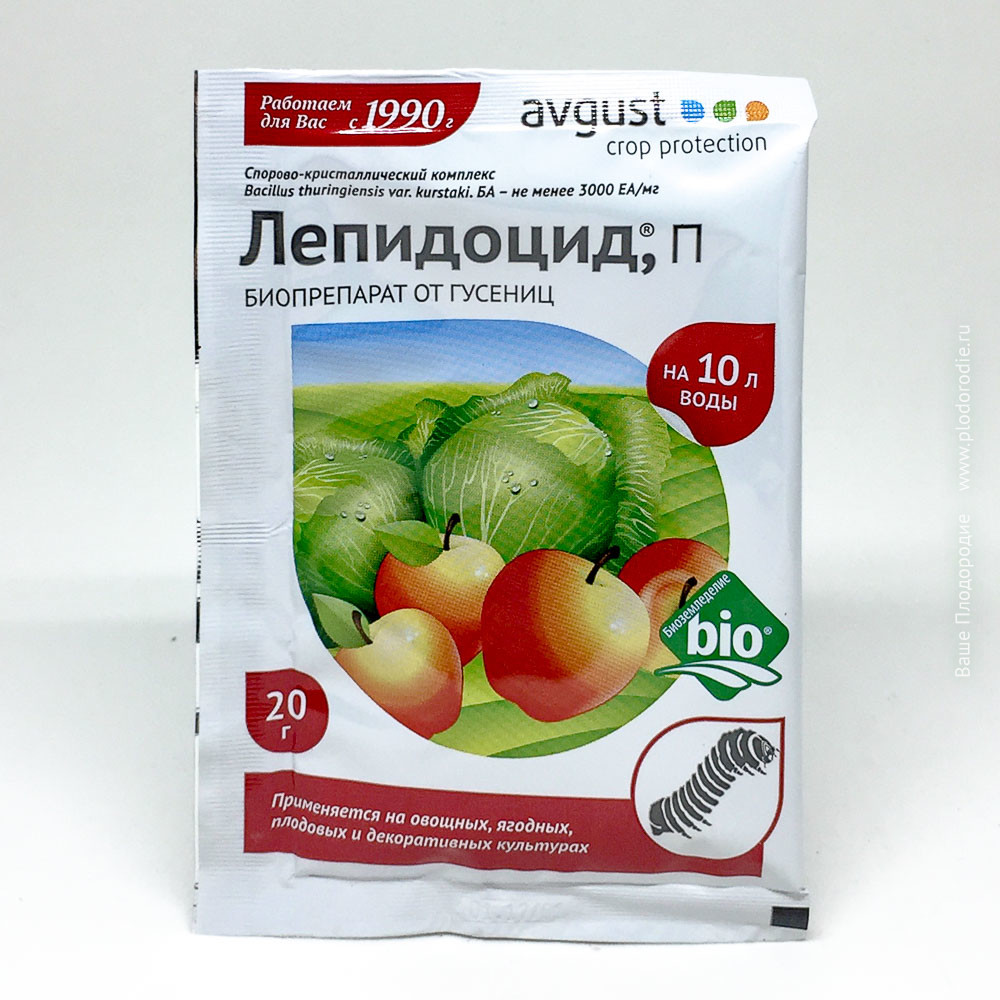
Photo gallery of pest and disease control products for the Mishka potato variety:






The nuances of harvesting and storing the Mishka potato variety
For storage, potatoes can be dug up 65-70 days after emergence.
This should be done on a clear, windless day. After harvesting, dry the tubers outdoors. If precipitation is forecast, this can be done under a canopy. Next, select only the healthy harvest and sort it into bags and/or wooden crates. Store the potatoes in a dry, dark, well-ventilated area.
Comparison of the Mishka potato variety with other varieties in the table
| Variety | Ripening period (number of days to maturity) | Starch (%) | Yield (c/ha) | Weight of tubers (g)
Number of tubers per bush |
Shelf life (%) |
| Teddy bear | Early ripening* | 14.2-17.7 | 201-306, 417 | 112-126
7-11 |
97 |
| Prime | Mid-early** | 11.2-13.4 | 170-415 | 92-148 7-12 |
96 |
| Molly | Early ripening | 11.4-13.4 | 171-308 | 98-142
20-25 |
82 |
| Nakra | Mid-season*** | 18-22 | 203-308 | 65-160
6-11 |
95 |
| Nikulinsky | Mid-late**** (late*****) | 21.3 | 170-420 | 70-120
12 |
95 |
| Rosalind | Early ripening* | 12-17 | 203-223 | 60-115 10-16 |
94 |
*Early ripening – 50-65 days.
**Mid-early – 65-80 days.
***Mid-season – 80-95 days.
****Mid-late – 95-110 days.
*****Late – 110 days or more.
Real expert reviews of the Mishka potato variety
AUTHOR: OUR NEWSPAPER
Breeders from the Tyumen-based agrofirm KRIMM, together with the Ural Research Institute of Agriculture, have developed a new potato variety. It has been named "Mishka" and patented by the Ministry of Agriculture.
According to Gennady Ryazanov, CEO of the KRIMM agrofirm, the "Mishka" potato is the result of our many years of experimentation:
We've been involved in breeding for quite some time now, collaborating with scientists as part of a special federal program to create competitive domestically bred potato varieties.
The main goal of the program is to overcome dependence on foreign patent holders, as well as on supplies of seed material from Western Europe.
"They're being held within the framework of the potato market in our country, which is quite large. And we believe 'Mishka' is a promising, early, table variety with excellent flavor," says Gennady Ryazanov.
The new variety has large, oval-shaped, red tubers. They will soon be planted in KRIMM fields.
The Mishka potato produces a good, high-quality harvest both in commercial fields and in garden plots. The most important thing is to follow standard agricultural guidelines. Then you can enjoy new potatoes as early as mid-summer.