The German variety Jewel has demonstrated excellent results when grown in various regions of the country. It adapts well to any weather conditions, has a strong immune system, and is characterized by early ripening. In the southern regions, gardeners are able to harvest twice a season.
Content
- 1 Table with characteristics of the Jewel potato variety
- 2 The origin of the Jewel potato variety
- 3 A detailed description of the Jewel potato variety
- 4 For which regions is the Jewel potato variety suitable?
- 5 Advantages and disadvantages of the Jewel potato variety
- 6 Planting Features of the Jewel Potato Variety
- 7 Caring for the Jewel potato variety
- 8 The nuances of harvesting and storing the Jewel potato variety
- 9 Comparison of the Jewel potato variety with other varieties in the table
- 10 Real reviews from gardeners about the Jewel potato variety
Table with characteristics of the Jewel potato variety
| Characteristic | Description |
| General characteristics | The bushes are very compact, allowing for space savings. They are highly resistant to weather changes and common potato diseases. They ripen early and produce high yields. |
| Ripening period | 50-60 days. |
| Starch content | 10-15% |
| Weight of commercial tubers | 80-150 g |
| Number of tubers in a bush | 15-20 pcs. |
| Productivity | 450-750 c/ha |
| Consumer qualities | This variety is suitable for frying, salads, and soups. It doesn't have a strong flavor. |
| Marketability | 94% |
| Shelf life | 95% |
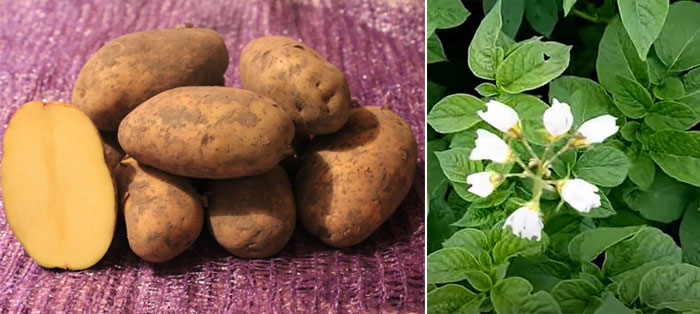
| Peel color | Yellow |
| Pulp color | Light yellow |
| Color of inflorescences | Violet |
| Cooking class | Belongs to type B, which means medium crumbliness when cooked. |
| Preferred growing regions | Since the variety is not registered, a definitive list of the most favorable regions has not yet been created. However, the variety has proven itself to be excellent in various climate zones with different soil types. |
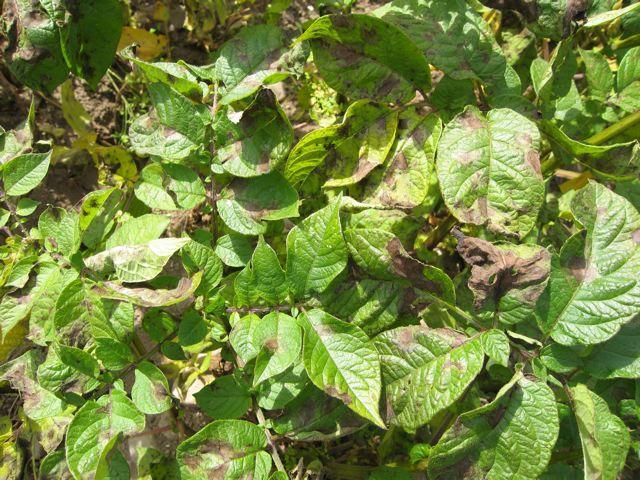
| Disease resistance | It exhibits resistance to tuber blight, canker, and nematodes. Under unfavorable conditions, it is prone to blight of the tops. |
| Features of cultivation | Planted in well-lit areas, requires additional watering during drought. |
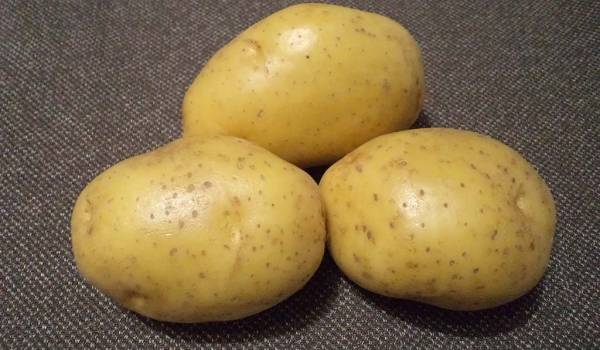
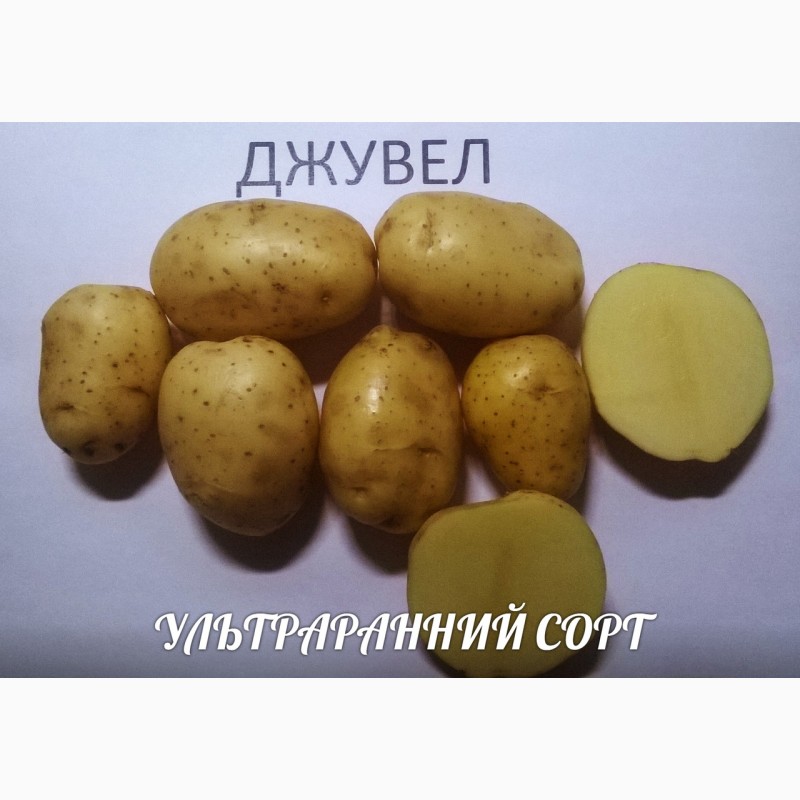
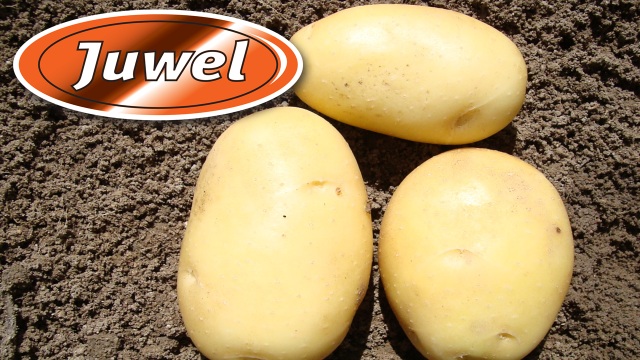
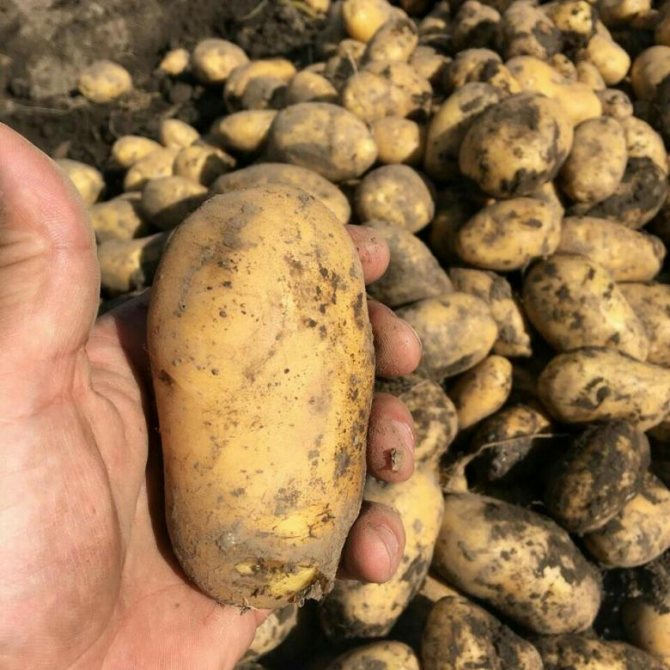
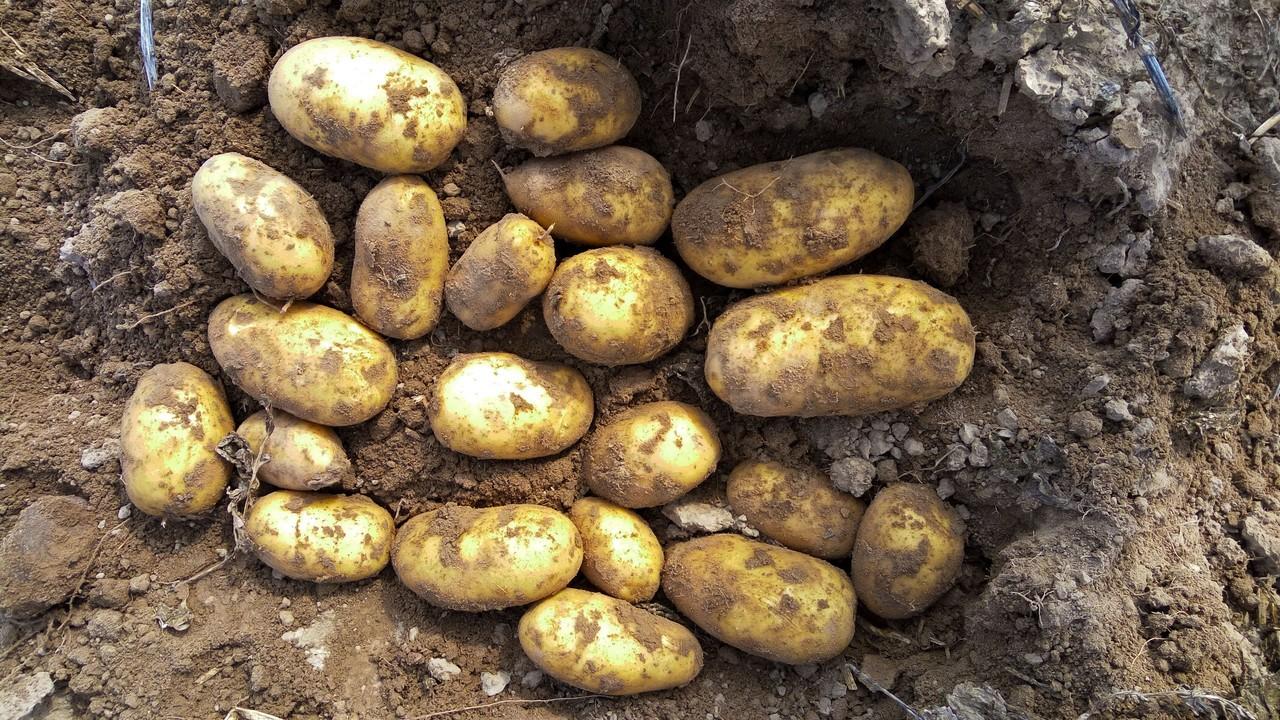
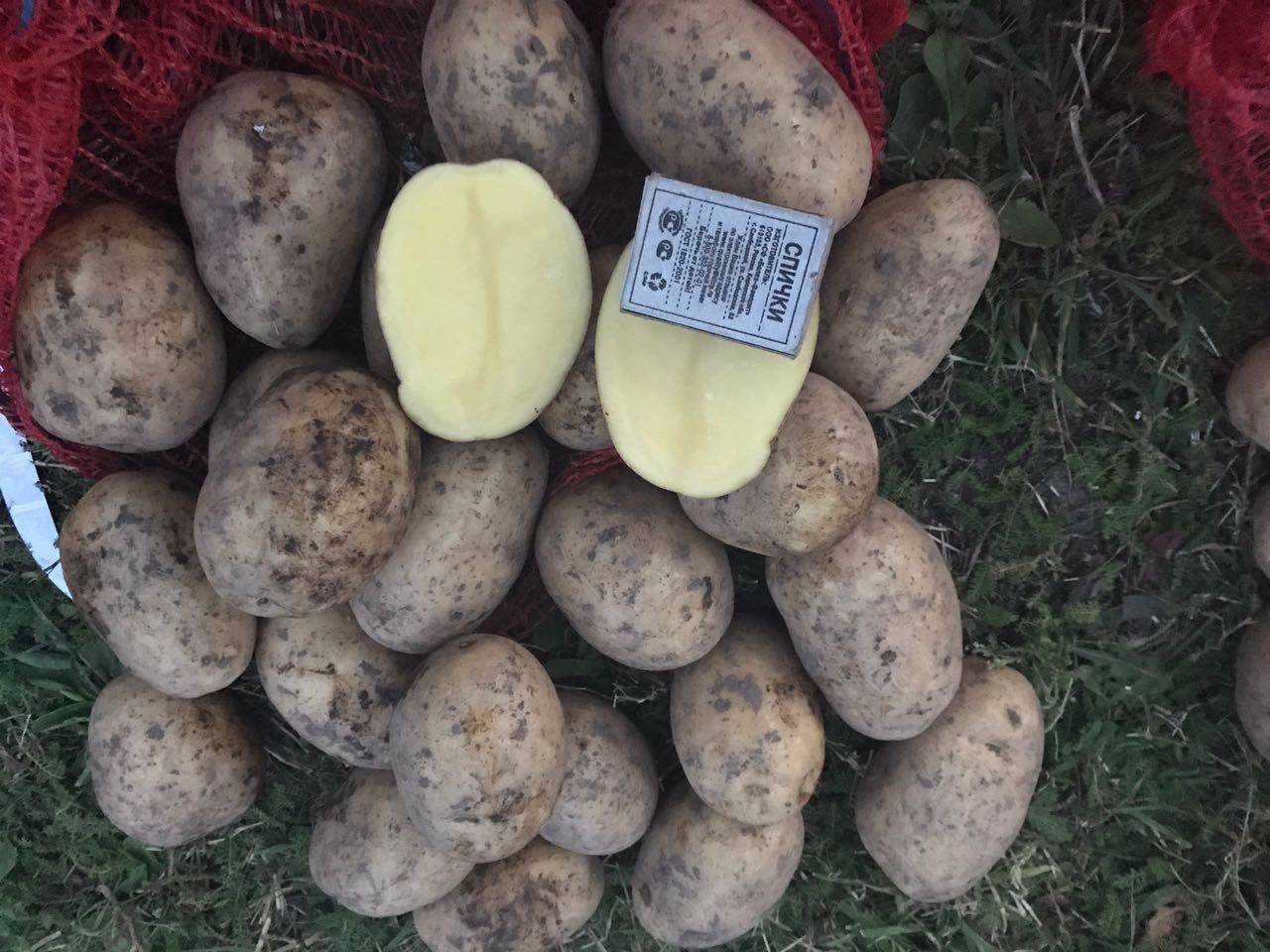
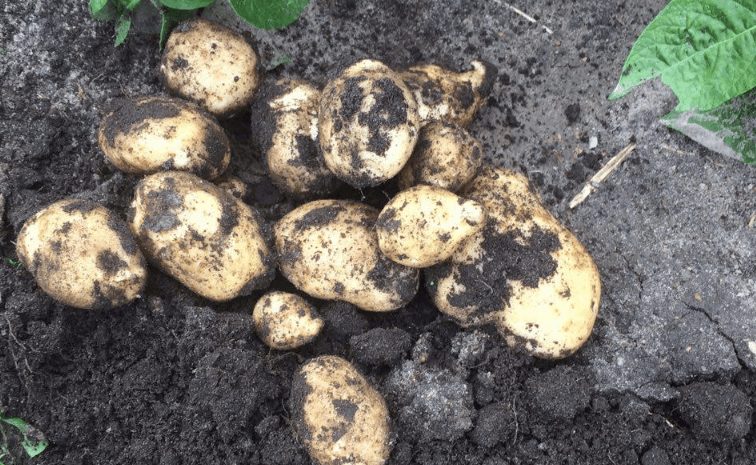
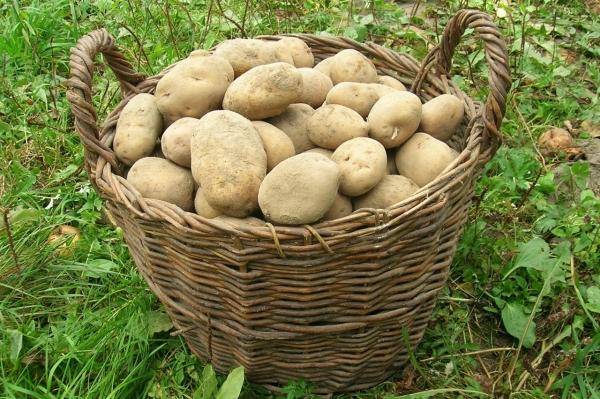
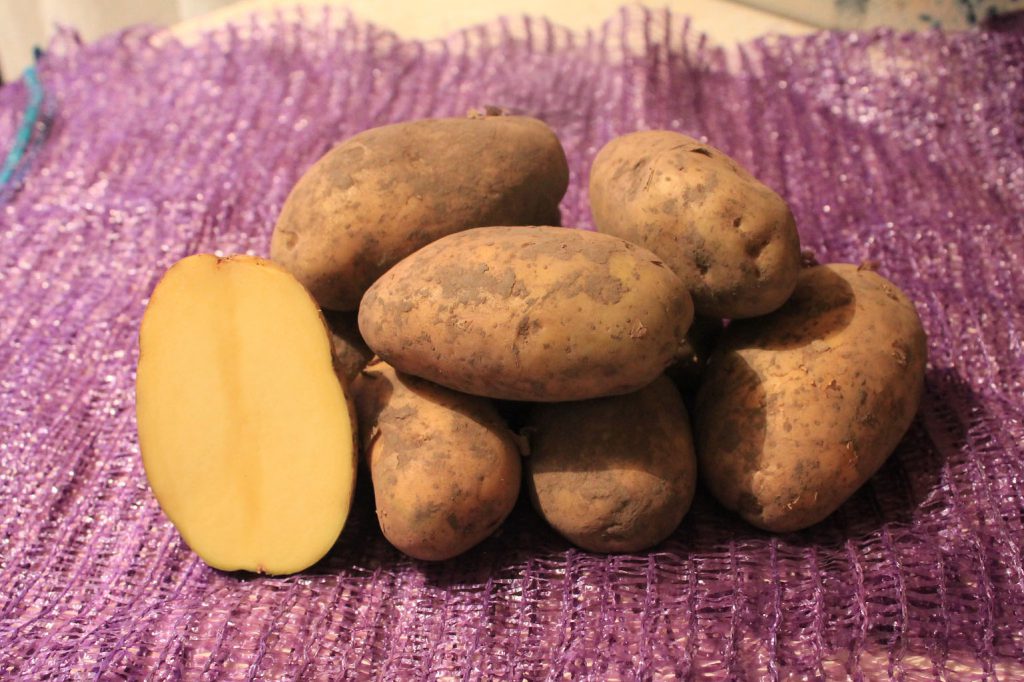
Photo of the Jewel potato variety:
The origin of the Jewel potato variety
The new Jewel variety was developed by German breeders working at Bavaria-Saat Vertriebs GmbH. Thanks to these specialists, high-quality seeds were distributed to neighboring countries, and Jewel soon made its way to Russia. It is currently planted throughout the country, but has not yet received official recognition through registration.
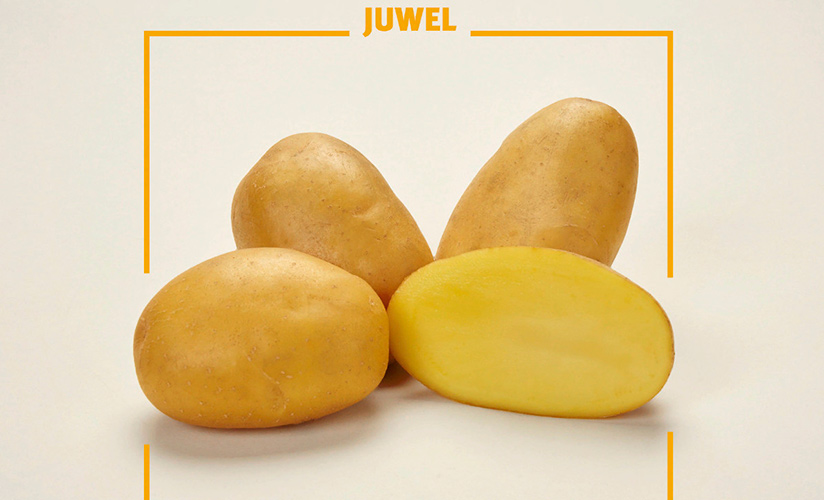
A detailed description of the Jewel potato variety
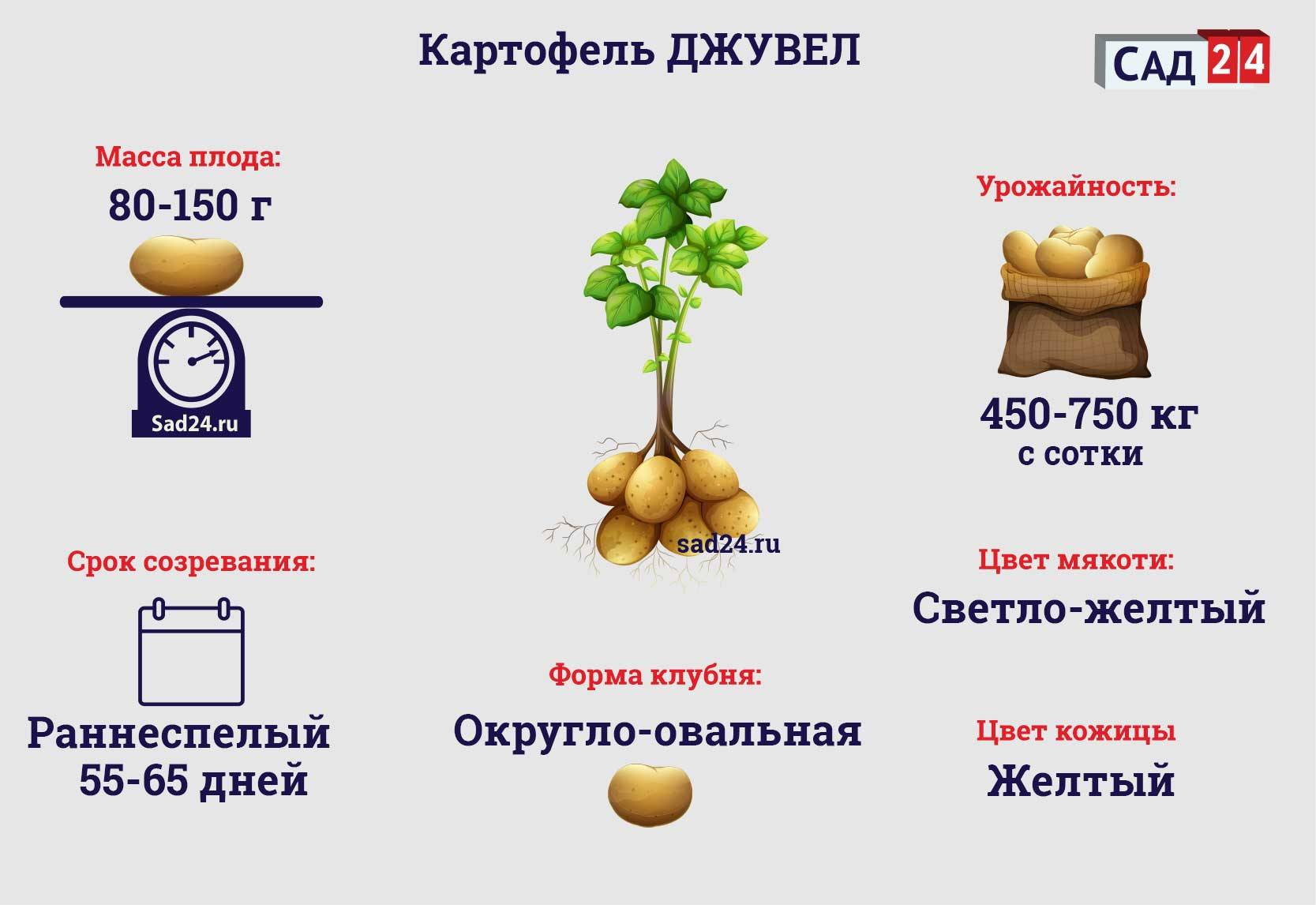
The Jewel variety is distinguished by its very early ripening period; the first harvest can be enjoyed within 50 days of germination. The tubers are smooth and neat, weighing between 80 and 150 grams, but the bush produces numerous fruits—up to 20. Not only do they have a pleasant flavor and versatile culinary uses, but they also contain protein and carotene.
Bushes
Jewel is distinguished by its very compact bushes with upright stems. This creates a neat appearance, preventing rows from becoming densely packed, making the potato easier to care for. The leaves are not overly numerous, medium-sized, and have a slightly wavy edge.
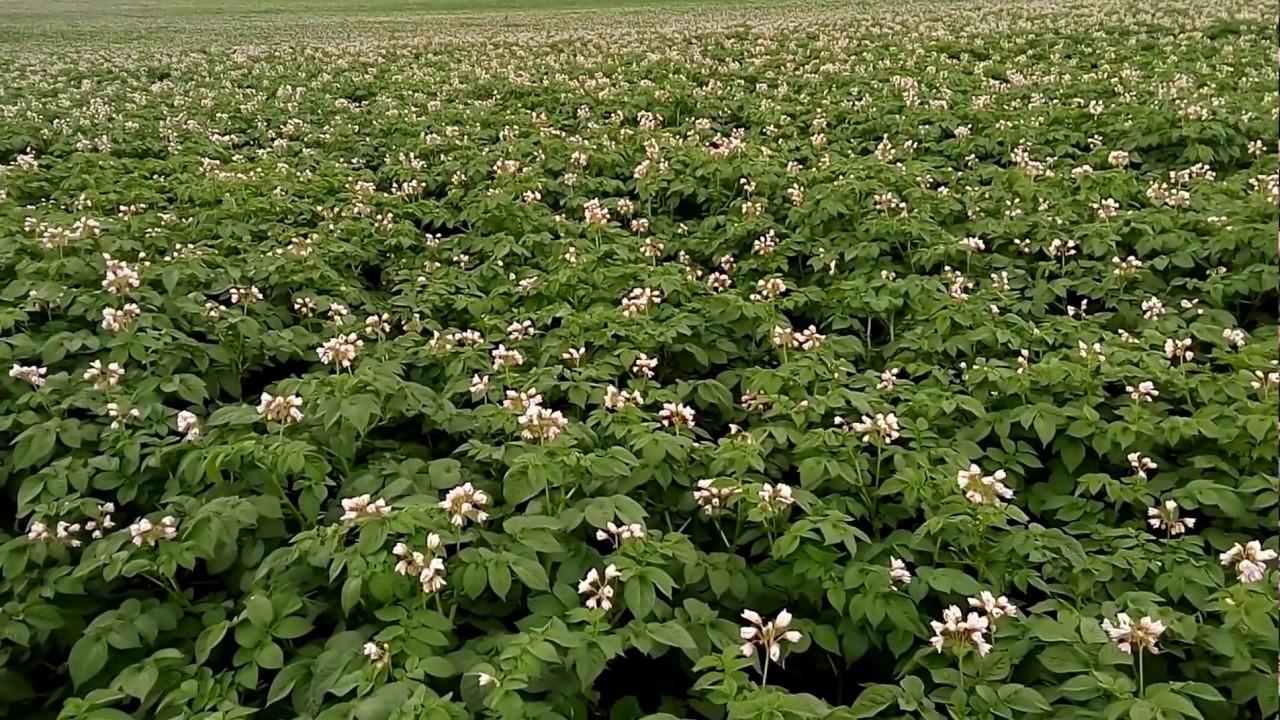
During the flowering period, compact corollas appear on the bushes, which bloom in purple.
The root system is very well developed, therefore the number of tubers is quite high – from 10 to 20 pieces.
Tubers
The tubers are smooth and even. There are a few small eyes on the surface. The skin and flesh are almost identical in color—yellow. Once cut, the potatoes remain dark for a long time. The weight of a single tuber ranges from 80 to 140 g, depending on the harvesting time. New potatoes will be smaller on the 50th day of the growing season than on the 65th.
Marketability and shelf life are quite high and are at the level of 94-95%.
Taste qualities
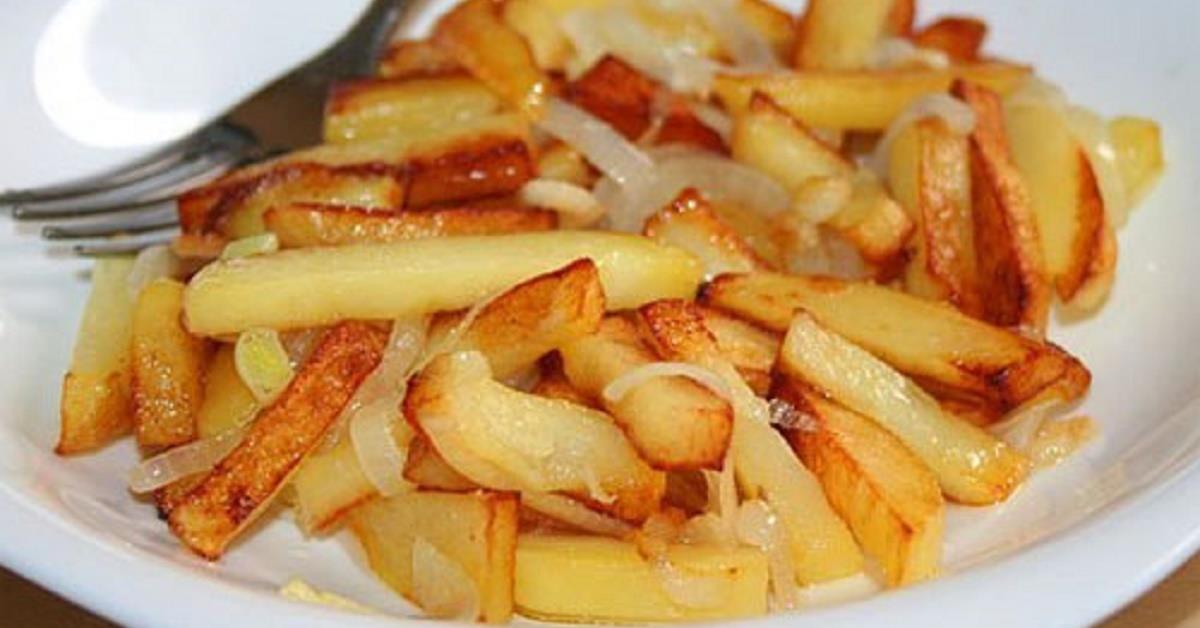
No official research has been conducted on the Jewel variety, but consumer reviews indicate that the potato's flavor is rather simple and not particularly strong. Therefore, it's recommended for use in salads or soups, but it's best suited for frying.
Productivity, ripening time
The Jewel variety is distinguished by its very high yield:
- At the first digging it reaches 450 c/ha.
- After the second – up to 750 c/ha.
This figure is an order of magnitude higher than other varieties with early ripening periods.
Resistance to diseases and pests
Jewel has high immunity to many diseases.
|
Disease |
Stability indicator |
|
Viruses |
High |
| Scab |
High |
|
Cancer |
High |
| Golden potato cyst nematode |
High |
|
Tuber blight |
High |
| Phytophthora blight of tops |
Average |
For which regions is the Jewel potato variety suitable?
There's no definitive information about suitable growing regions in Russia, as the variety has no official status and isn't listed in the registry. However, judging by consumer reviews, it exhibits excellent varietal characteristics in various regions of the country.
Advantages and disadvantages of the Jewel potato variety
The Jewel variety has a number of advantages and disadvantages compared to other varieties. These are listed in the table below.
| Advantages | Flaws |
|
|
Planting Features of the Jewel Potato Variety
The Jewel variety adapts well to virtually any weather conditions and has few soil requirements. In southern regions, two harvests per season are possible. The only caveat is that during severe drought, additional watering will be required.
Requirements for the landing site and its preparation
Potatoes prefer well-lit areas of the garden. Avoid planting them in the same spot every year. It's recommended to let the soil rest for 3-4 years. If this isn't possible, you can alternate between planting in rows and between rows.
Good predecessors for potatoes include legumes, zucchini, and cucumbers. However, it's best not to plant potatoes after peppers, tomatoes, eggplants, and other members of the nightshade family.
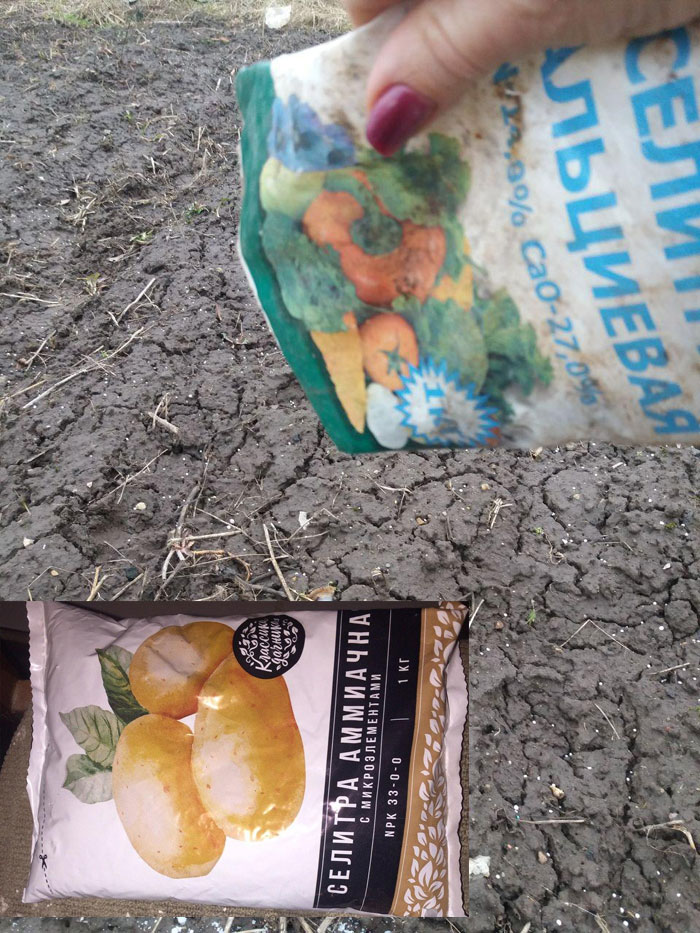
The soil must be prepared in advance in the fall. Before the onset of frost, the area should be dug over along with the fertilizer. At this time, it's best to add mullein to the soil at a rate of 0.5 buckets per square meter and a handful of superphosphate per square meter.
If this wasn't done in the fall, then fertilizer is added directly to the hole before planting. In this case, the concentration of organic fertilizer should be reduced.
Selection and preparation of seed tubers
Only the largest, healthiest, and most beautiful tubers are selected for planting. Otherwise, a good harvest is unlikely. Experienced gardeners recommend sprouting the potatoes first. To do this, place them in boxes and place them in a well-lit area with a temperature of at least 19°C for 10 days.
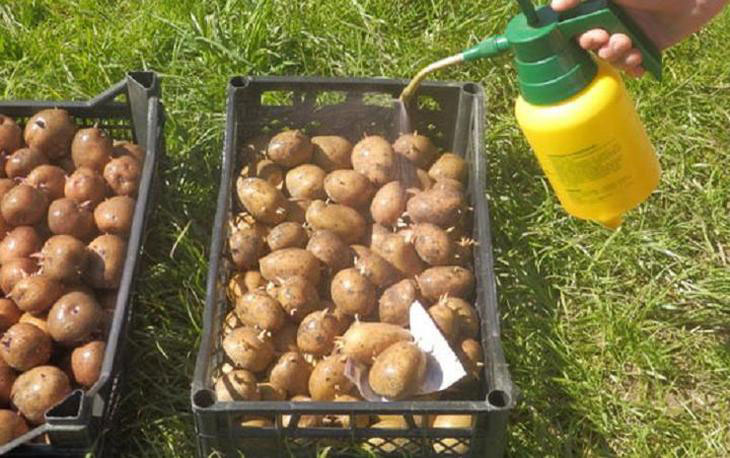
Then it drops by 4...7 °C so that the sprouts get stronger and stop stretching.
To strengthen the immunity of planting material and reduce the risk of diseases, you can treat the tubers with a solution of Matador or Prestige.
Planting times and rules
Jewel, like other potato varieties, is planted in late April-early May. In cold climates, this period may be delayed by a week, while in southern latitudes, it may begin earlier.
It's crucial to ensure that the weather forecast doesn't predict night frosts at the time of planting. Although the Jewel variety is considered frost-hardy, it's still not worth the risk.
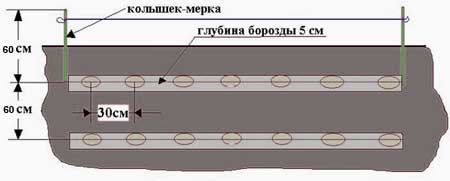
Despite the fact that this potato grows compactly, the distance between tubers should not be less than 25 cm, and between rows – less than 60 cm.
Caring for the Jewel potato variety
To obtain a good harvest, it is necessary to follow standard agricultural practices: watering, fertilizing, loosening, weeding, and hilling.
Important! During dry periods, Jewel requires especially thorough watering to ensure proper tuber development.
Watering
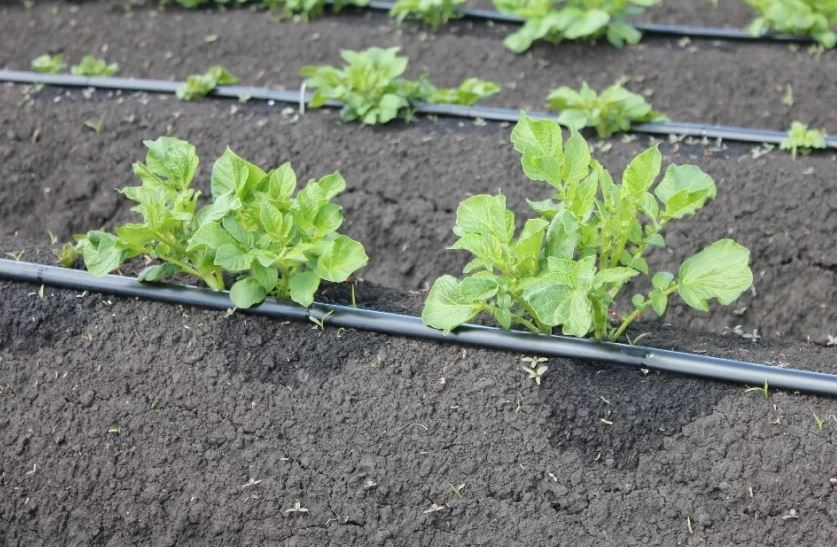
For regions with hot climates, you will have to water the plantings more often, so it is recommended to consider the possibility of organizing drip irrigation systems.
Each bush requires up to 10 liters of water. This amount will moisten the soil to a depth of 50 cm.
During hot months, watering frequency reaches 5-6 times, and during cooler months, 3-4 times. No additional watering is necessary during rainy periods.
Top dressing
Fertilizer for the variety is applied three times per season:
- When planting potatoes, ash and peat are added to each hole.
- At the time of the first hilling, cow dung or manure is added.
- During the period of bud formation before flowering, mineral complexes are added to the soil.
Important! The Jewel variety is prone to nitrate accumulation in its tubers, so fertilizer should be used sparingly.
Loosening, weeding, hilling
As soon as the sprouts appear above the soil surface, you can water and lightly loosen the soil to prevent a crust from forming. At the same time, remove weeds from the bed itself and between the rows.
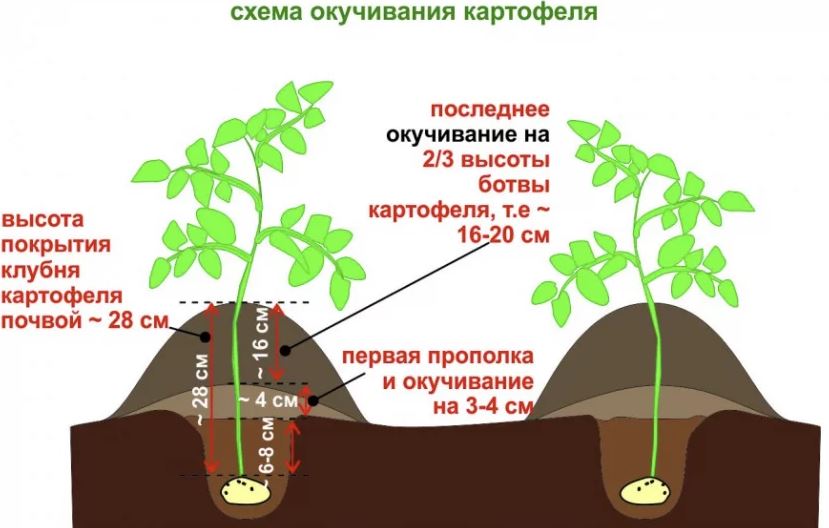
When the shoots reach 15 cm in height, the first hilling is performed. A second hilling is performed after the potatoes have flowered, and weeds are again removed. These can harbor pests and diseases.
Protection from diseases and pests in the table
Jewel has good immunity. An additional advantage is its early ripening, before the Colorado potato beetle and late blight are widespread. Potential diseases and pests of this variety, along with control methods, are listed in the table below.
| Disease or pest | Description | Prevention and treatment |
| Late blight tops
|
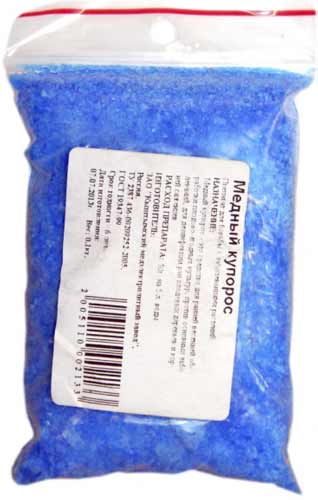
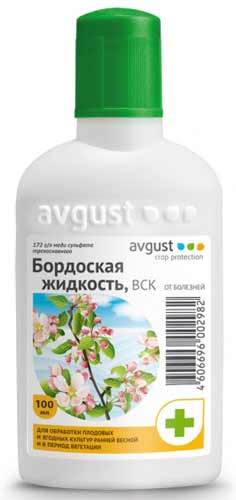
Rotten spots appear on the shoots | Good prevention is compliance with agricultural practices and crop rotation, but if the disease has manifested itself, you can spray the plantings with a solution of copper sulfate (10 g/10 l of water) or a 1% solution of Bordeaux mixture. |
| Potato wireworm
|
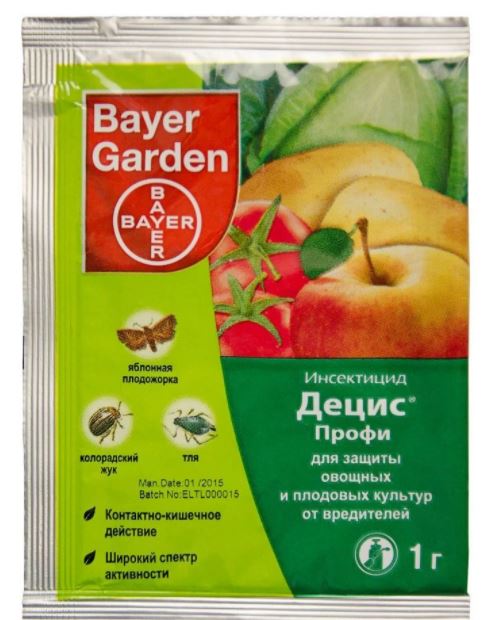
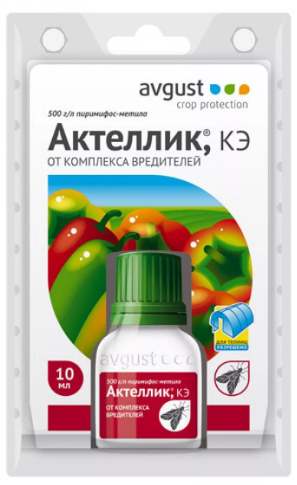
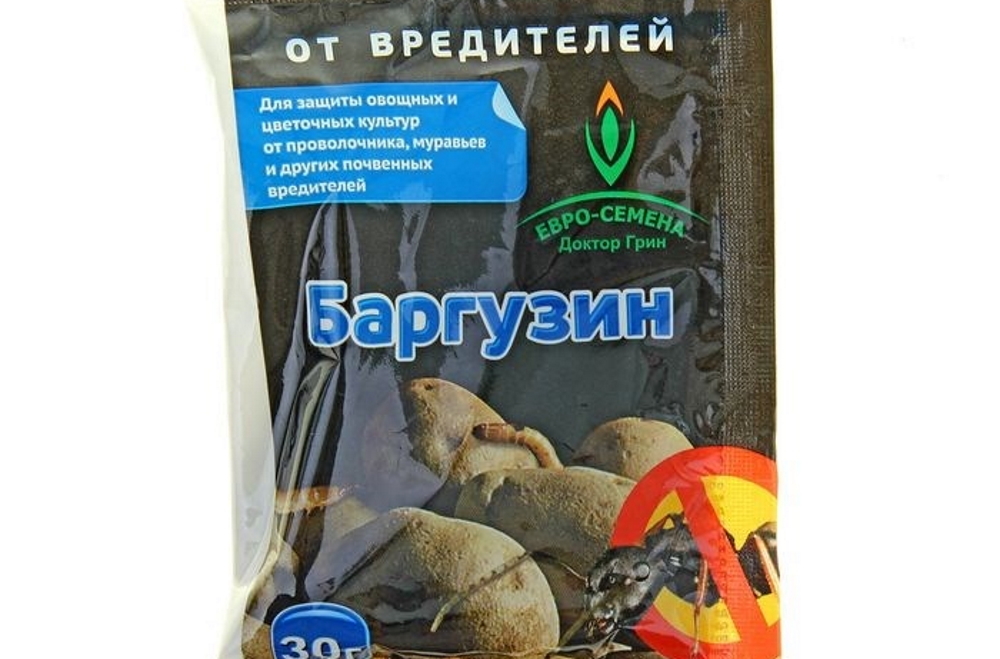
This dense and very thin worm reaches 4 cm in length and lives near tubers, gnawing numerous passages in them. | As a preventative measure, add onion peels to each hole, add ammonium nitrate to the soil at a rate of 30 g per 1 sq. m, and sprinkle the surface of the beds with crushed eggshells. If a pest is detected, the plantings are treated with Decis, Actellik, and Barguzin. |
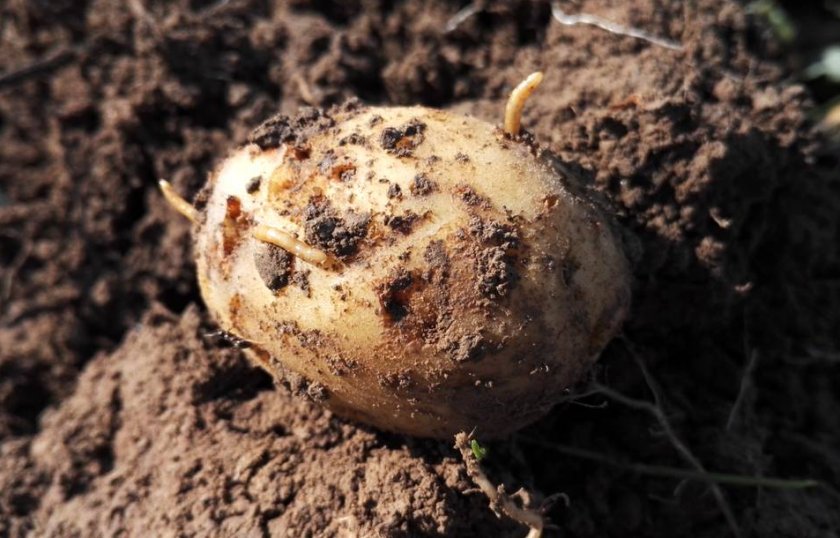
Photo gallery of pest and disease control products for the Jewel potato variety:
The nuances of harvesting and storing the Jewel potato variety
Potatoes planted in early May can be dug up in late June. However, they won't store for long. This applies not only to the Jewel variety, but to all other early-ripening varieties as well. The best they can do is keep without losing their quality until November.
Before harvesting, it's recommended to trim the tops about 10 days beforehand. The harvested tubers are sorted and stored in a cool, well-ventilated area. They are then placed in bags or boxes for storage. A basement or cellar is ideal, but a suitable storage space can be created on a balcony using double-walled boxes with a foam core between them.
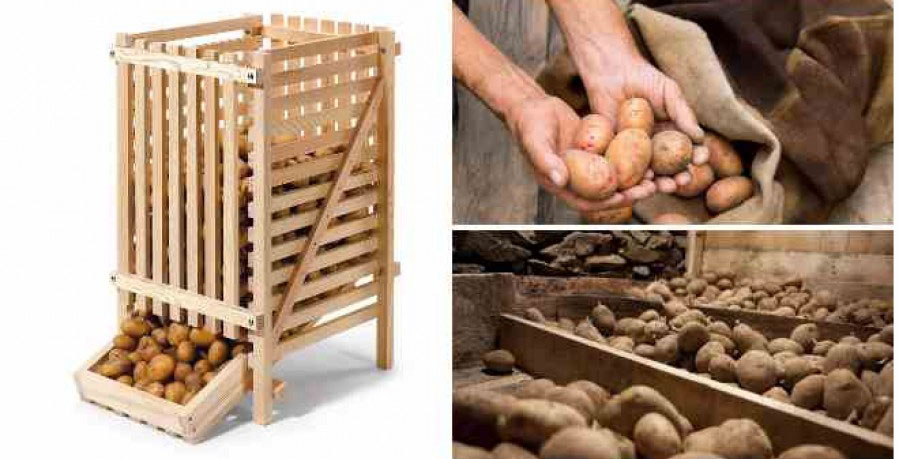
Read more in the article about rules and methods for storing potatoes.
Tip! Beets are an ideal storage companion for potatoes, as they absorb excess moisture and prevent the tubers from rotting.
Comparison of the Jewel potato variety with other varieties in the table
| Variety | Ripening period (number of days to maturity) | Starch (%) | Yield (c/ha) | Weight of tubers (g)
Number of tubers per bush |
Shelf life (%) |
| Jewel | Early ripening* | 10-15 | 700 | 80-150
15-20 |
94 |
| Gala | Early ripening* | 12-14 | 263 | 71-120
8-15 |
95 |
| Colombo | Early ripening* | 11-15 | 230-450 | 100-130
12-14 |
95 |
| Queen Anne | Mid-early** | 13.1-14.4 | 393-604 | 84-137
14-16 |
93-97 |
| Labella | Early ripening* | 12-15 | 176-342 | 78-102
13-16 |
94 |
| Nikulinsky | Mid-late**** | 12.5-21.3 | 170-410 | 70-135
12 |
95 |
| Uladar | Early ripening* | 11.5-17.8 | 127-716 | 91-180
6-11 |
94 |
| Prime | Mid-early** | 11.2-13.4 | 170-415 | 92-148
7-12 |
96 |
| Strongman | Mid-early** | 10-12 | 127-275 | 78-105
15-20 |
97 |
| Molly | Early ripening* | 11.4-13.4 | 171-308 | 98-142
20-25 |
82 |
| Nevsky | Mid-early** | 12-12.8 | 380-500 | 95-125
12-15 |
91-96 |
*Early ripening – 50-65 days.
**Mid-early – 65-80 days.
***Mid-late – 95-110 days.
Real reviews from gardeners about the Jewel potato variety
Consumers note the record-breaking speed of potato ripening and their excellent marketability. Gardeners report that the potatoes have a distinctive, slightly sweet flavor. A single plant can yield up to 20 fist-sized potatoes.
User Nadfi, Lipetsk
I'm not a big fan of yellow potatoes either. But Adretta is very tasty. Another delicious yellow variety: Jewel. It's yellow and smooth, with small eyes. The flesh is very yellow. The yield was average, the tubers were medium-sized (100-180g, but compared to Bellarosa, for example, which can weigh up to 400g, they looked quite small), tasty and very attractive. They don't fall apart when cooked and are delicious fried. From the description: starch content: 10.0-15.0%. They're also beautiful fried, with the flesh retaining a distinct yellow color.
Photos by user Nadfi:
User Stanichnitsa, Russia, Rostov Oblast
We're planting the Jewel variety, but I don't have a field, I just have a vegetable garden. I really like the variety; everything matches the description. Before planting, we treat it with Prestige. Fertilize according to the growth stage. We use regular, frequent drip irrigation. We try to plant in late March or early April, while the soil still has moisture.