The Queen Anna potato variety has earned well-deserved popularity in recent years among both novice and experienced gardeners. In this article, we'll detail its characteristics and growing guidelines to help you achieve a bountiful and delicious harvest.
Content
- 1 The origin of the Queen Anne potato variety
- 2 Characteristics of the Queen Anne potato variety in the table
- 3 Description of the Queen Anna potato variety
- 4 Advantages and disadvantages of the Queen Anna variety
- 5 Growing the Queen Anna potato variety
- 6 Caring for the Queen Anne potato variety
- 7 The nuances of harvesting and storing the Queen Anna variety
- 8 Comparison of the Queen Anne potato variety with other varieties in the table
- 9 Real reviews from gardeners about the Queen Anna potato variety
The origin of the Queen Anne potato variety
This variety was developed by German breeders from Hamburg. It was developed by employees of SaKa Pflanzenzucht Gbr, the company to whom we are also indebted for many other vegetable seeds.
In Russia, it was officially recognized in 2015, when it was registered in the registry. At the same time, it acquired the status of "Approved for Use" in Belarus and Ukraine.
This is interesting! There are reports that the head of Belarus grows this particular potato variety at his residence. He also personally participates in the harvest.
Characteristics of the Queen Anne potato variety in the table
| Parameter | Characteristic |
| General information | This is a table variety with an early or mid-early ripening period. It can be used commercially, as it is resistant to mechanical damage, transports well, and has a long shelf life. |
| Ripening time | From the moment the first shoots appear until harvest, 60-70 days pass, which is almost 100 days from the moment the tubers are planted. |
| Productivity | In Russia, the maximum harvest volume was recorded at 495 centners per hectare. In Belarus, this figure was significantly higher – 604 centners per hectare. |
| Marketability | Up to 96% of the total harvested crop |
| Shelf life | From 93% |
| Starch concentration | From 13.1% to 14.4% |
| Cooking class | Belongs to type B, meaning it holds up well when cooked. It's considered a slightly crumbly variety. |
| Color of pulp | Yellow |
| Peel color | Yellow |
| Weight of commercial tubers | According to average statistics, the weight of one tuber fluctuates around 100 g. The minimum weight is 84 g, and the maximum is 137 g. |
| Number of tubers per bush, pcs. | From 14 to 16 |
| Taste characteristics | Consumers note the excellent taste of the potato, which received a tasting score of 7 points out of a possible 9. |
| Culinary uses | It has universal properties and can be used to prepare any dish. |
| Suitable regions for growing | The Middle Volga, Central, Volga-Vyatka, Central Black Earth, Northwestern, North Caucasian, West and East Siberian regions of Russia. It is successfully grown throughout Belarus and Ukraine. |
| Disease resistance |
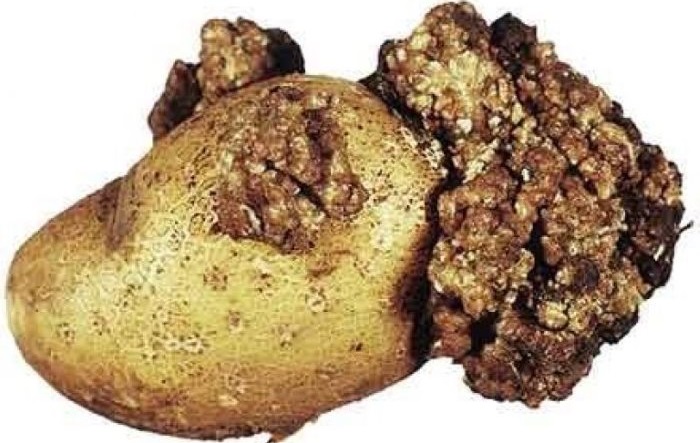
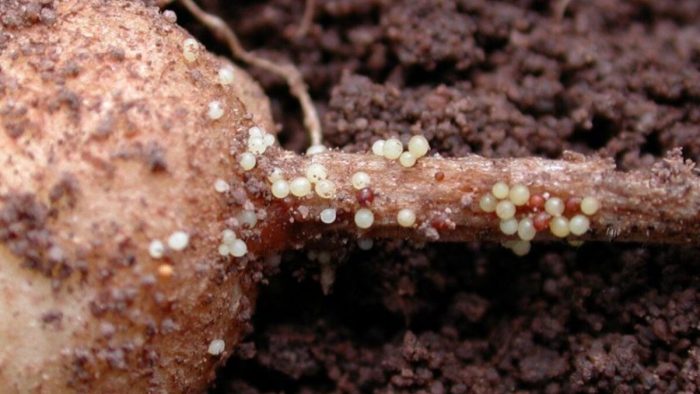
It is resistant to many common diseases: golden nematode, cancer, rugose streak mosaic, late blight, common and silver scab, leaf curl, late blight, black leg, rhizoctonia, black and glandular spot. |
| Color of inflorescences | White |
| Growing specifics | It does not require special agricultural cultivation techniques; a planting pattern of 35-40 x 70-75 cm is used. |
| 2015 |
Description of the Queen Anna potato variety
This variety is suitable for cultivation in many regions of our country and is very popular due to its low maintenance, high yield, excellent taste, and suitability for mechanical planting and harvesting. The growing regions are described in more detail in the table above.
Read about it, How to make a potato digger with your own hands + review of store-bought ones.
Queen Anne ripens quite early. After planting the tubers, you can begin harvesting the crop in just 95-100 days.
Bushes
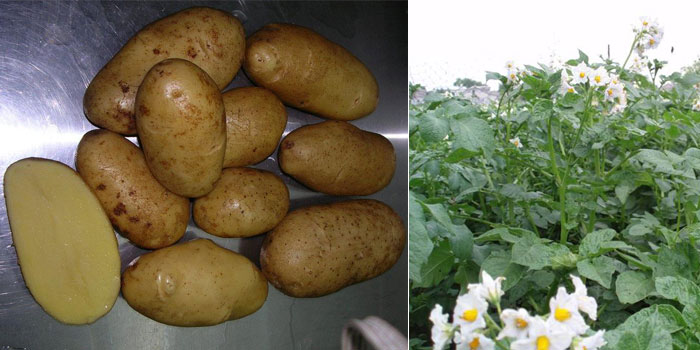
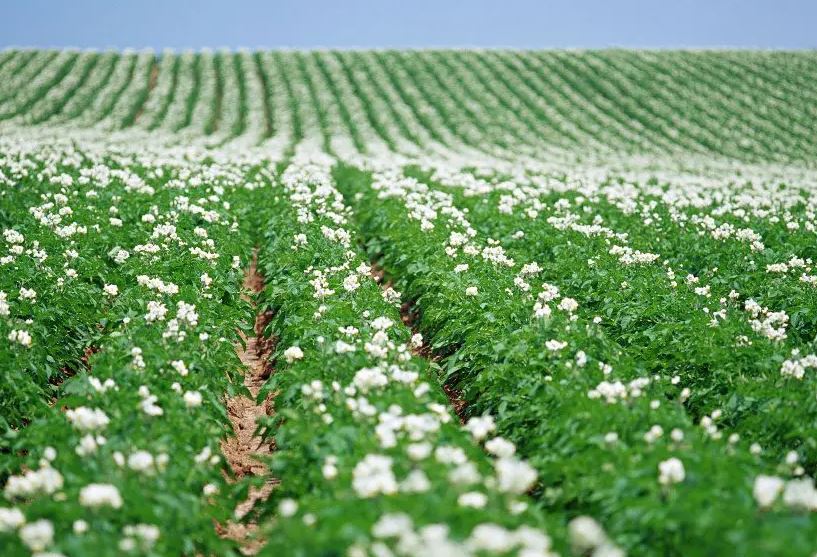
The bushes are medium-height, with most of their growth occurring in the early stages of development. The leaves are robust, dark green, large, and succulent. During flowering, the potato is covered with large white flowers with white corollas and a light, egg-shaped shoot.
Tubers
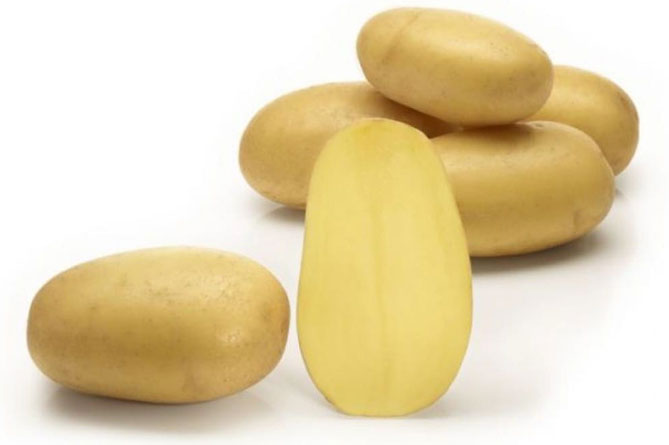
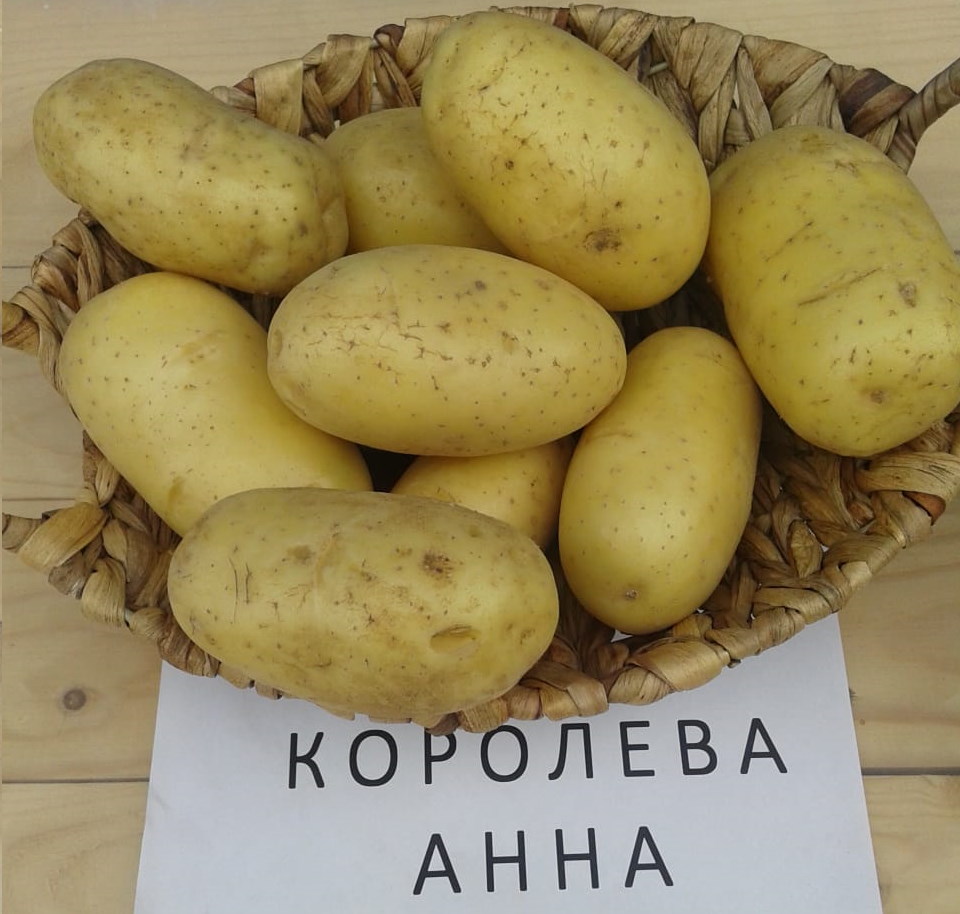
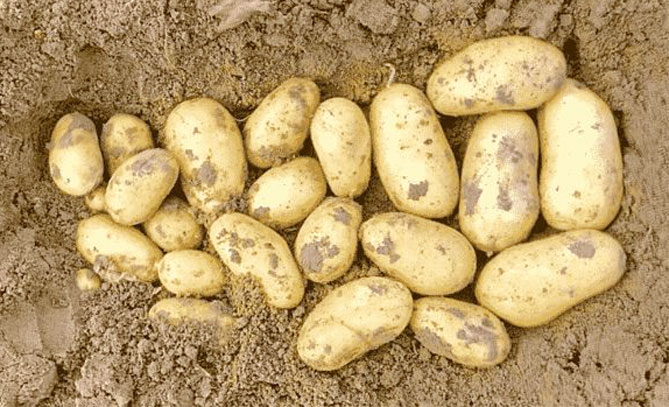
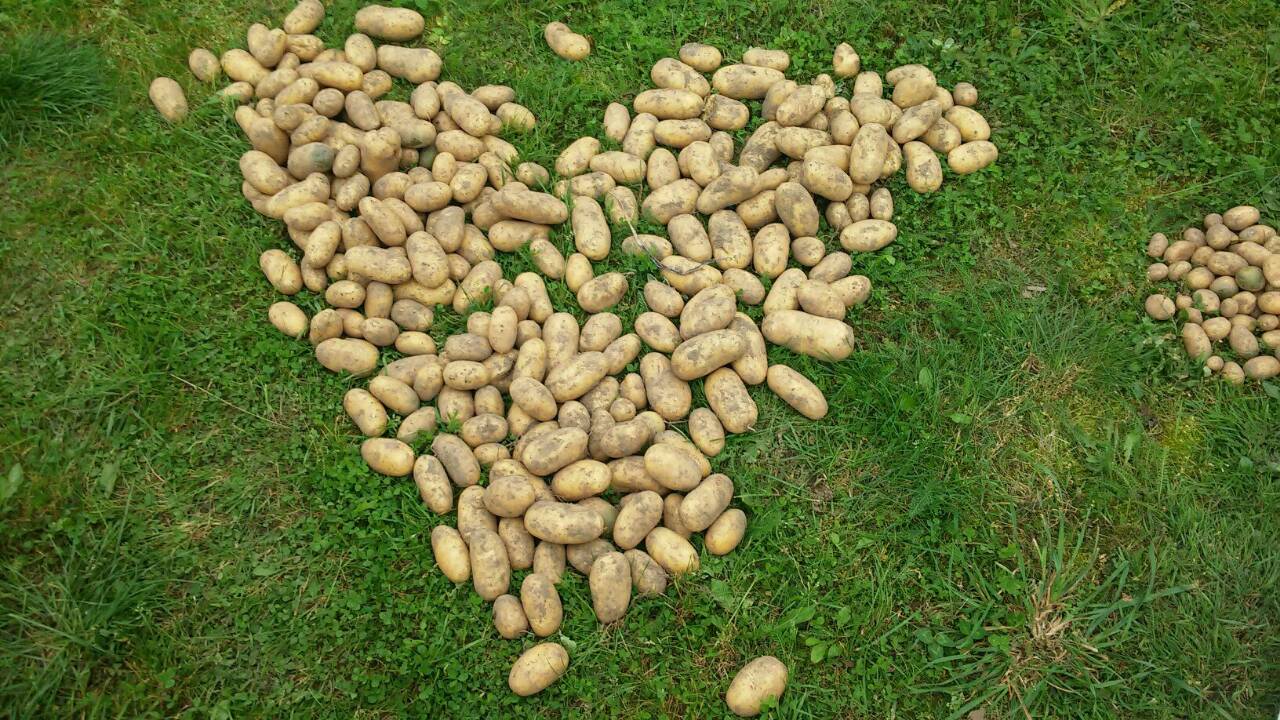
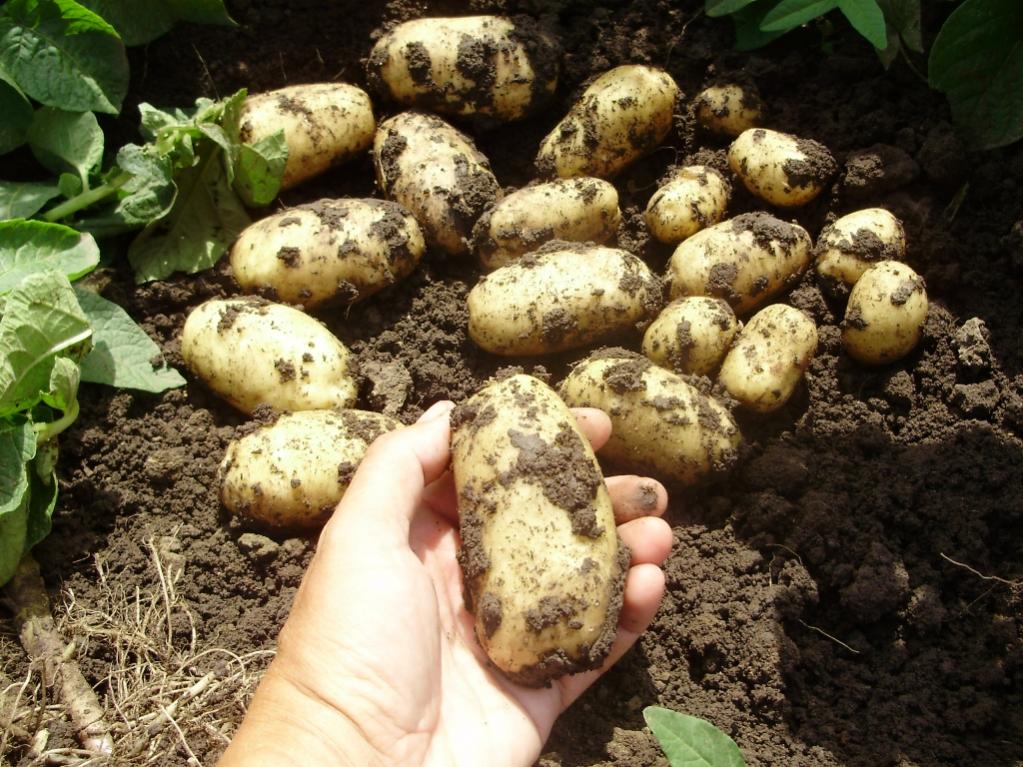
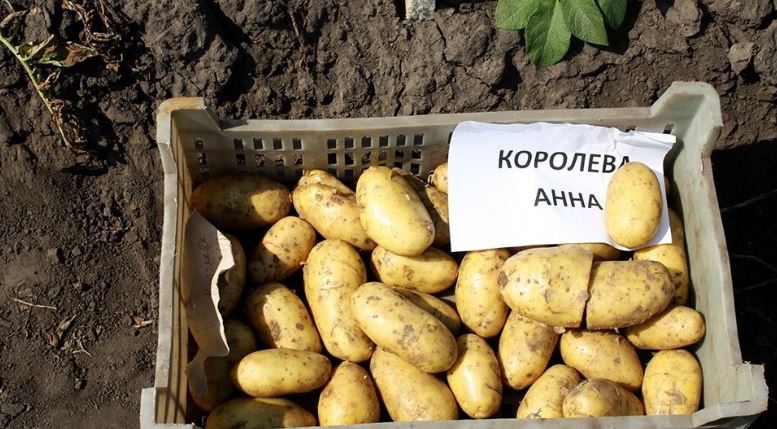
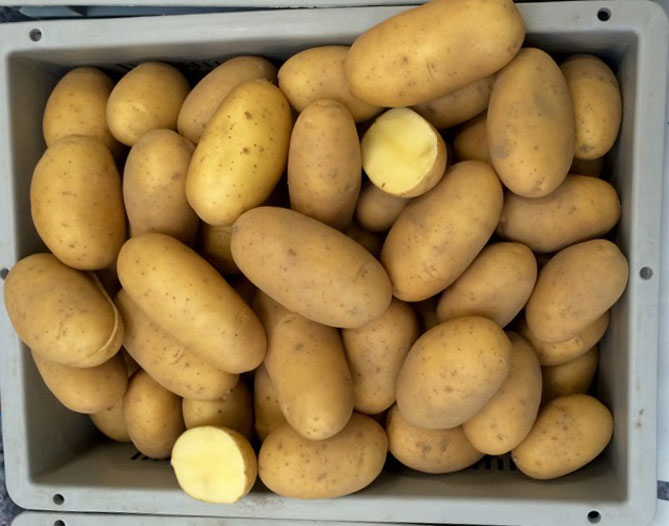
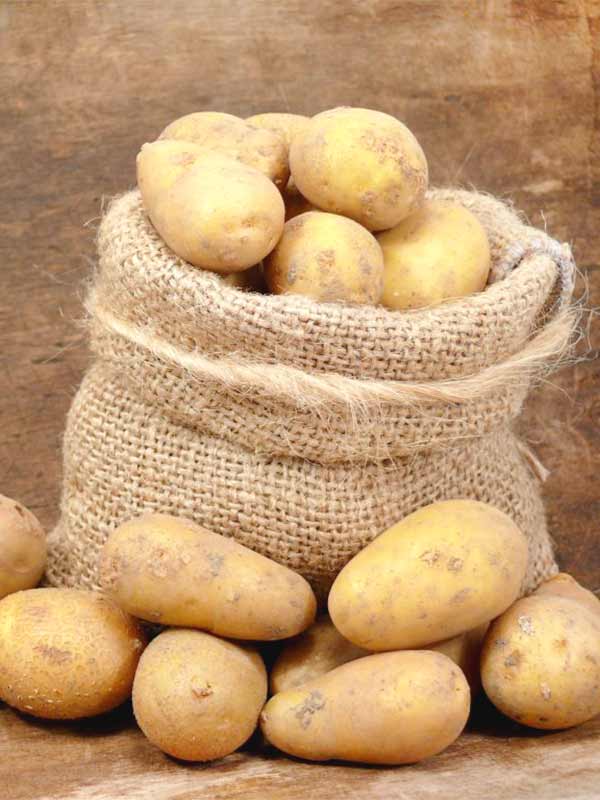
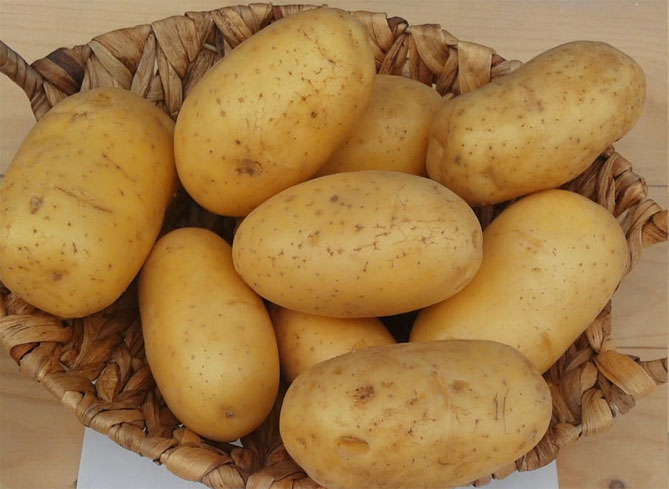
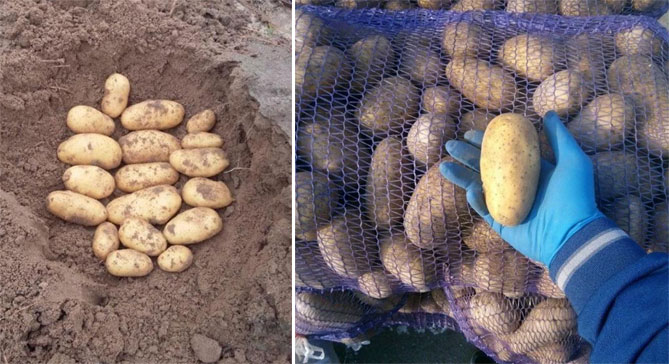
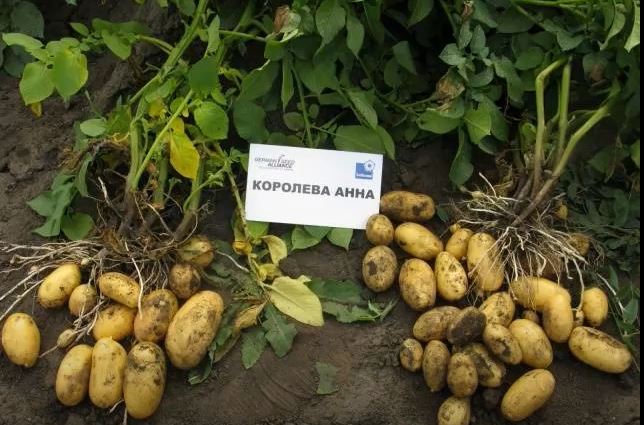
The tubers grow oval, smooth, weighing approximately 100 grams with slight variations both up and down.
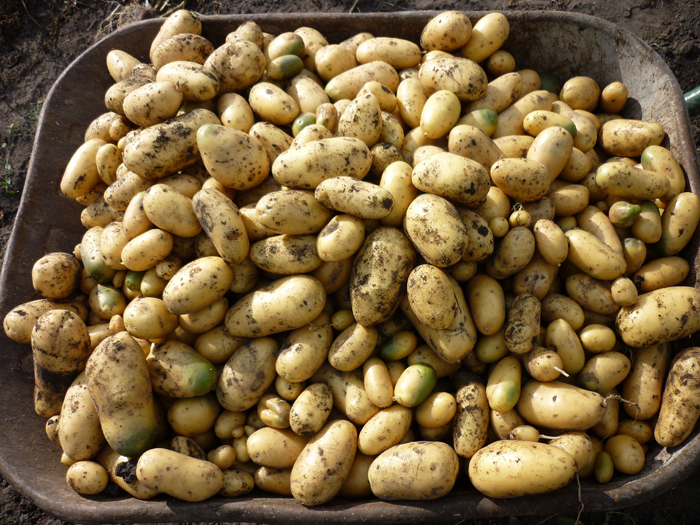
The skin and flesh are yellowish. They may darken slightly after peeling. The eyes are very small and quite superficial.
It doesn't fall apart when cooked, and consumers rated the taste at 7 out of 9 points.
Nutrients and nutritional value
The tubers contain approximately 18% dry matter, which includes the following elements:
| Element | Concentration |
| Starch | From 13.1% to 14.4% |
| Protein | 1.9% |
| Reducing sugars | 0.28% |
| Vitamin C | 18.2 mg |
The Queen Anna variety boasts excellent shelf life and marketability. This means that virtually the entire harvest can be used productively. Furthermore, it will store for a long time without losing its marketable quality and will withstand transportation well. Due to its long dormancy, potatoes for sale or cooking will easily last until spring, and seed can be stored indefinitely.
Queen Anne's aubergines can be baked, stewed, boiled, or used as a salad ingredient. They have a very pleasant flavor and remain virtually color-neutral after cooking.
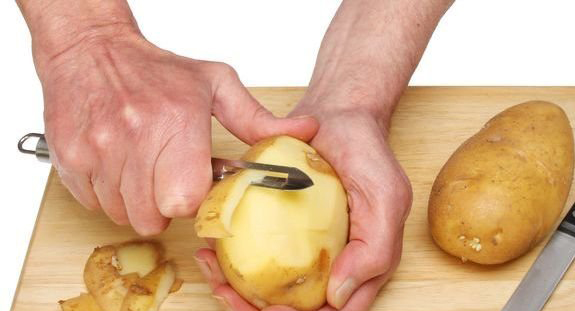
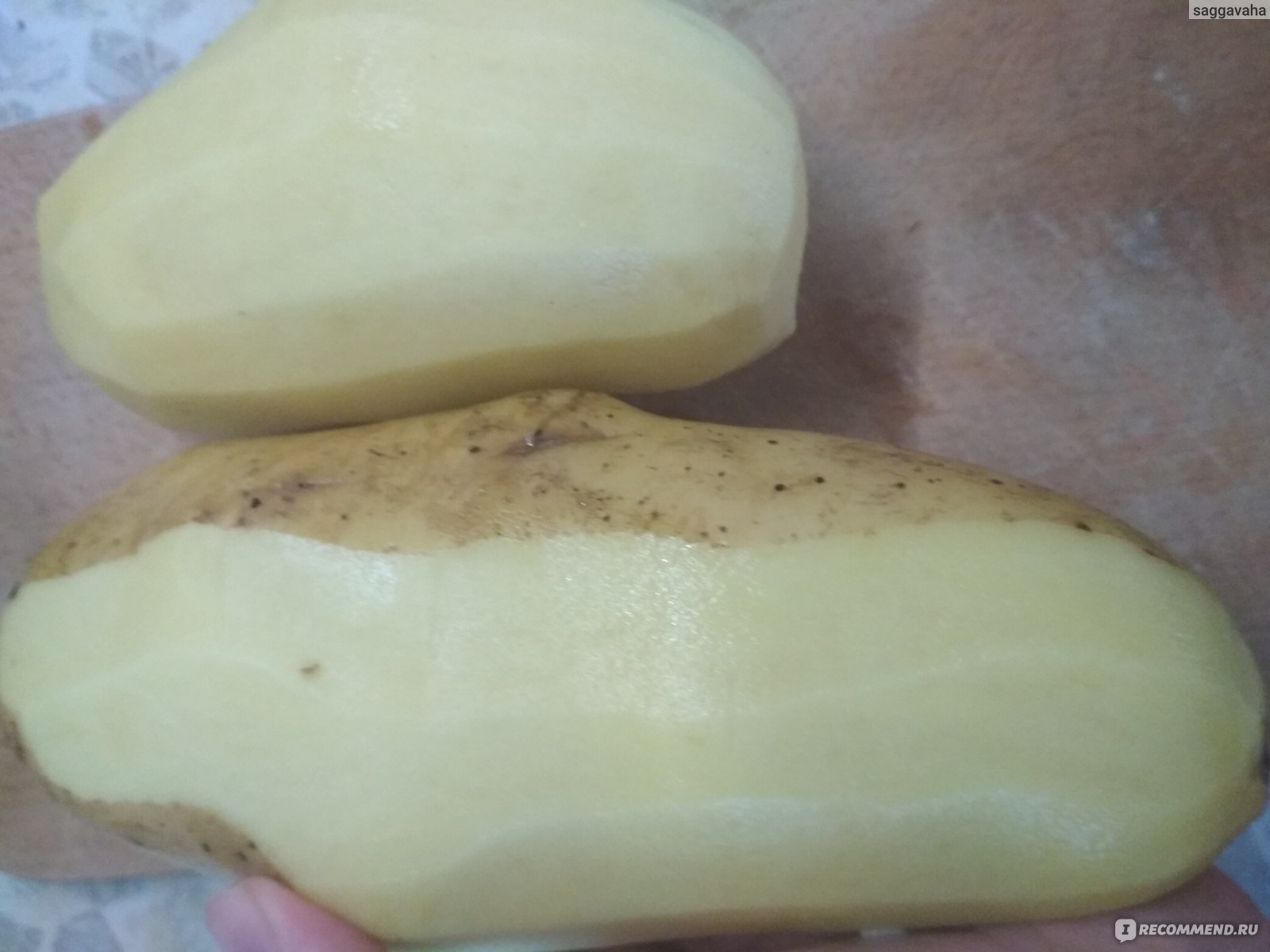
The tubers are very easy to peel; the eyes are not embedded in the flesh and can simply be removed along with the skin.
Productivity, ripening time
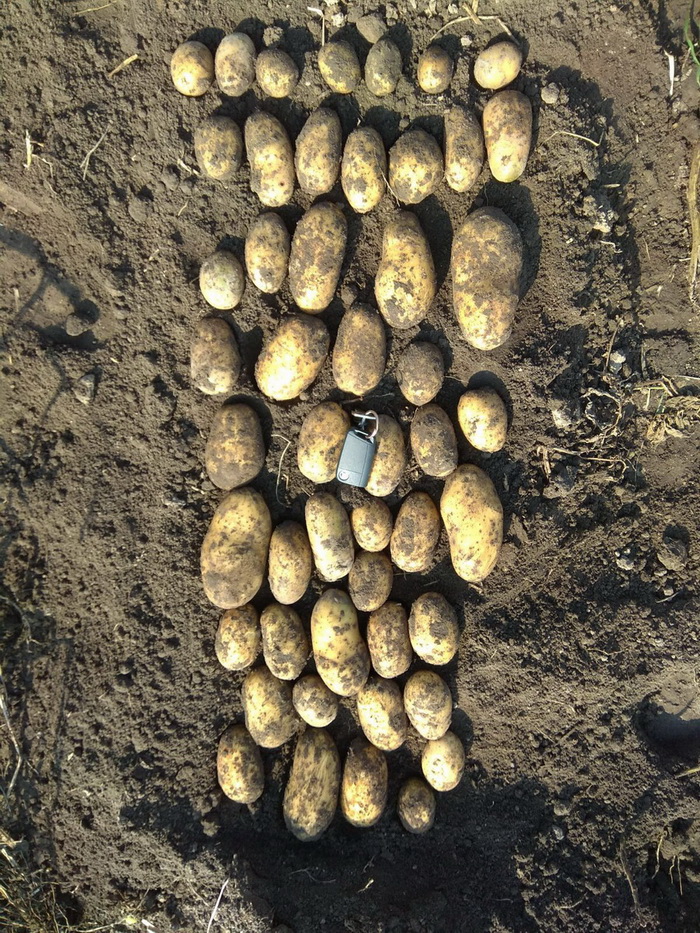
The Queen Anna variety is distinguished by its early ripening period, which lasts approximately 80 days from germination. According to the originator, up to 60 tons of excellent quality can be harvested from one hectare.
Field trials were conducted over several years, which established the following characteristics of the variety:
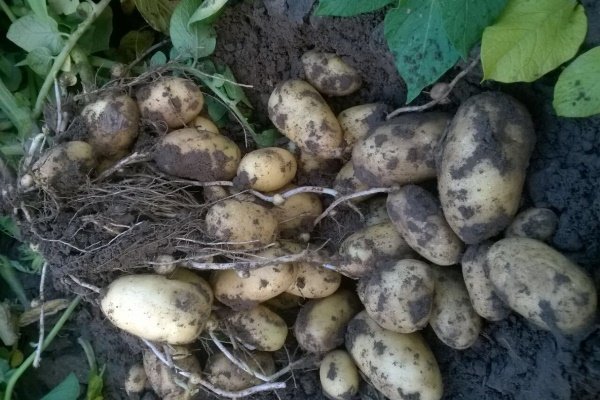
- Productivity in Russia ranges from 113 to 304 centners per hectare. The first digging, which took place 45 days after emergence, recorded yields of 56 to 140 centners per hectare. The second digging, on the 55th day, reached 82 to 215 centners per hectare. The absolute maximum was achieved in Mordovia, where it reached 495 centners per hectare.
- At the Mozyrskaya testing station in Belarus, extremely high yields of 604 centners per hectare were achieved. The national average was 419 centners per hectare.
Resistance to diseases and pests
The Queen Anne potato variety is resistant to many common diseases that commonly appear in crops:
| Name of the disease | Sustainability level | Number of points scored (scale of 10 units) |
| Potato cancer
|
Immunity | 10 |
| Golden cyst nematode |
Immunity | 10 |
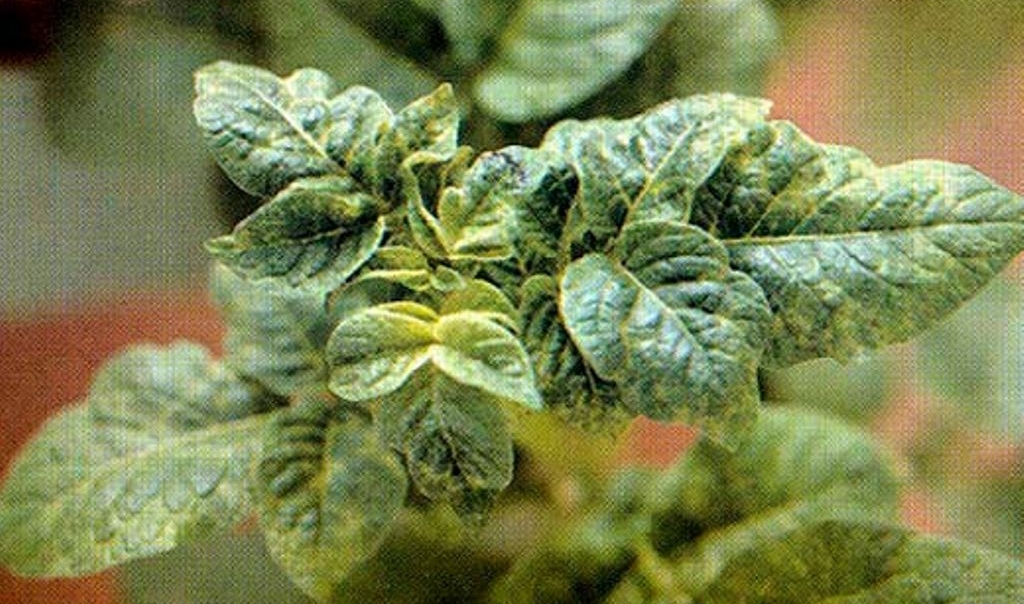
| Rugose streak mosaic and leaf roll viruses
|
Very high | 9 |
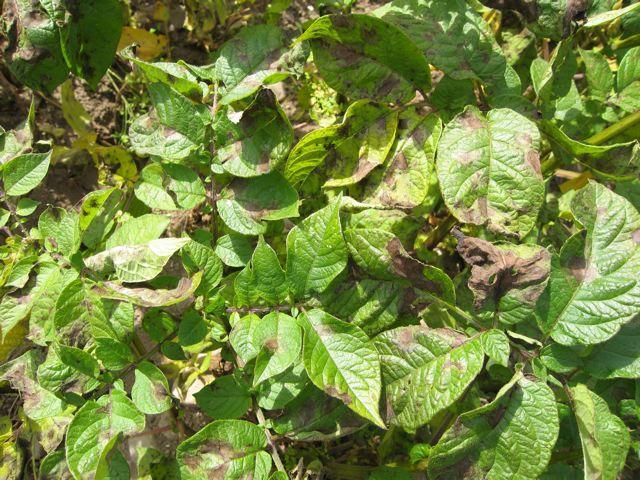
| Late blight of a bush
|
Medium to high | 7-8 |
| Tuber late blight
|
High | 8 |
| Silver and common scab
|
High | 10 |
| Rhizoctonia
|
Very high | 9 |
| Blackleg
|
Very high | 8-9 |
| Iron spot
|
High | 8 |
| Black spot
|
Very high | 9 |
What regions is it suitable for?
When developing the Queen Anna variety, breeders were tasked with developing a potato that would thrive in various regions of the country. They accomplished their goal with excellence, making this variety suitable for planting throughout virtually all of Russia. However, it is most common in Central Russia, Western and Eastern Siberia, the North Caucasus, and the Volga-Vyatka and Middle Volga regions.
In addition, as we already wrote above, Queen Anne is also successfully grown in Ukraine and Belarus.
Advantages and disadvantages of the Queen Anna variety
Queen Anne has a number of undeniable advantages, which is why many gardeners choose this variety:
- Early ripening period.
- Excellent taste.
- High immunity to many diseases.
- Uniform, large fruits.
- Ability to be stored for a long time without losing its marketable appearance.
- Unpretentiousness to climatic conditions.
- Minimum of low-quality tubers.
- High safety during mechanical assembly and transportation.
- No specific requirements for soil quality.
- Versatility in culinary use: does not boil over or darken at the cut.
The variety does have some disadvantages, but they are very few:
- Despite good immunity, potatoes can be susceptible to some fungal diseases.
- The variety grows worse in drought conditions and requires regular watering.
Growing the Queen Anna potato variety
Planting tubers typically begins in May, but you should be aware of weather forecasts and local weather conditions. The key is no night frosts and a soil temperature of at least 15°C.
Requirements for the landing site and its preparation
Queen Anne prefers well-lit areas, so it's best to place the bed on a sunny side of the garden. If the tops don't receive enough sun, they will stretch, growth will slow, fewer flowers will form, and the tubers will be small.
In addition, it is not advisable to plant this variety in lowlands and places where water constantly stands.
The soil should be prepared in the fall. This involves removing weeds from the bed and digging it up. Although Queen Anne is undemanding regarding soil quality, a larger harvest is produced in fertile soil. Therefore, experienced gardeners recommend adding organic fertilizer.
Important! If your soil is acidic, apply dolomite flour every three years to reduce the acidity.
In the spring, re-dig the soil, removing roots and adding saltpeter, organic matter, and compost. This should be done approximately two weeks before planting.
Important! It is strongly recommended not to plant potatoes in beds where nightshade crops were previously grown. The best predecessors are considered to be mustard, radishes, horseradish, rutabagas, cabbage, pumpkin, and onions.
Selection and preparation of seed tubers
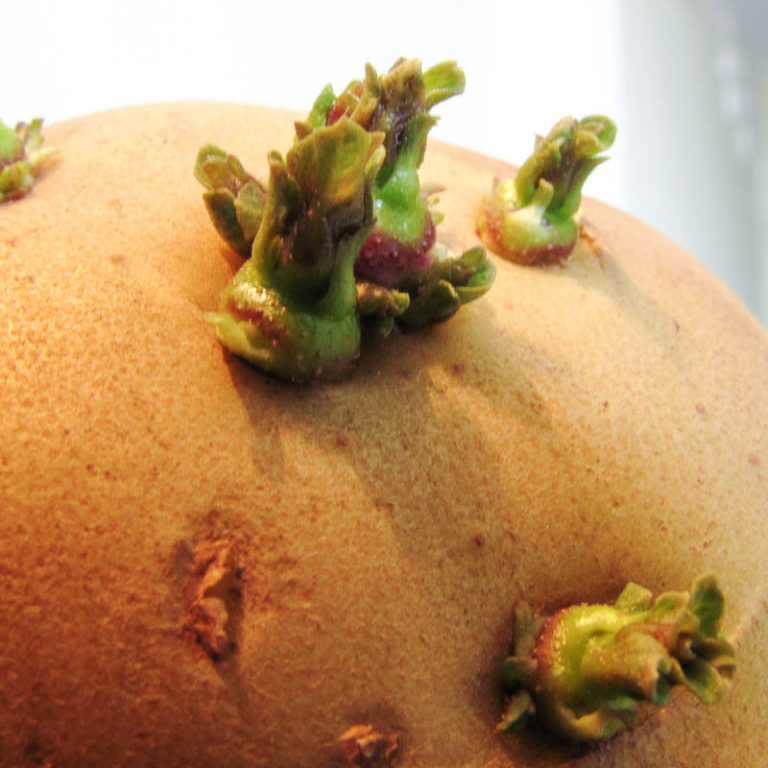
To grow potatoes from sprouted seeds, it is necessary to carry out preparatory work, which includes:
- Selection of planting materialThis is done either in the fall after harvesting or in the spring before planting. The tubers should be smooth, undamaged, and weigh no more than 65 g.
- Warming upThe selected seeds are placed in a box and placed in a warm, well-lit area. This will help the sprouts form faster. The optimal length for planting is considered to be 2.5 cm. They should be firm and not appear elongated. If a suitable container or box is unavailable, the seedlings can be poured onto a pre-prepared surface in a 15 cm layer.
- Preventive treatmentThis is done to reduce the risk of fungal diseases. To do this, the tubers are thoroughly treated with a weak solution of potassium permanganate or boric acid before being placed in the holes.
Planting times and rules
Both high and low temperatures can affect seed germination. Soil that is too wet hinders oxygen flow.
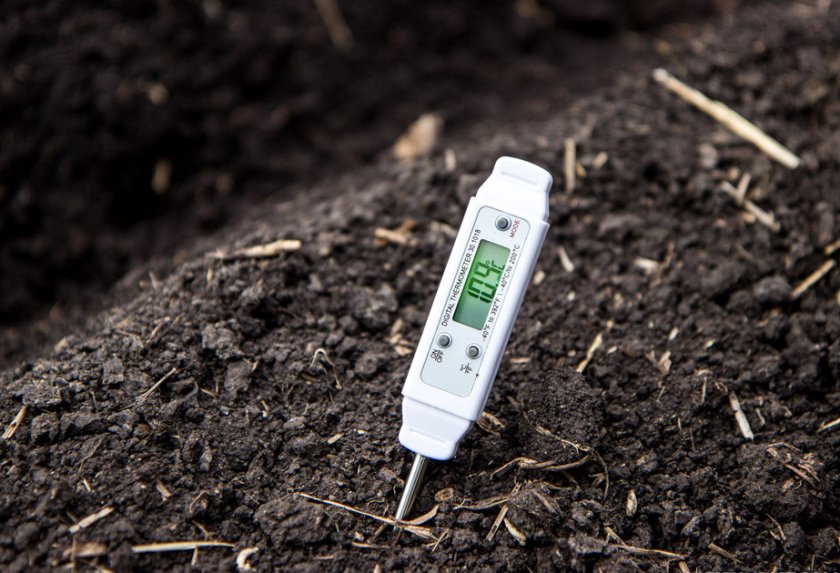
Therefore, it is very important to adhere to the recommended temperature regime:
- The soil temperature is measured at a depth of 10 cm and should be +10 °C.
- The air should warm up to +11 °C.
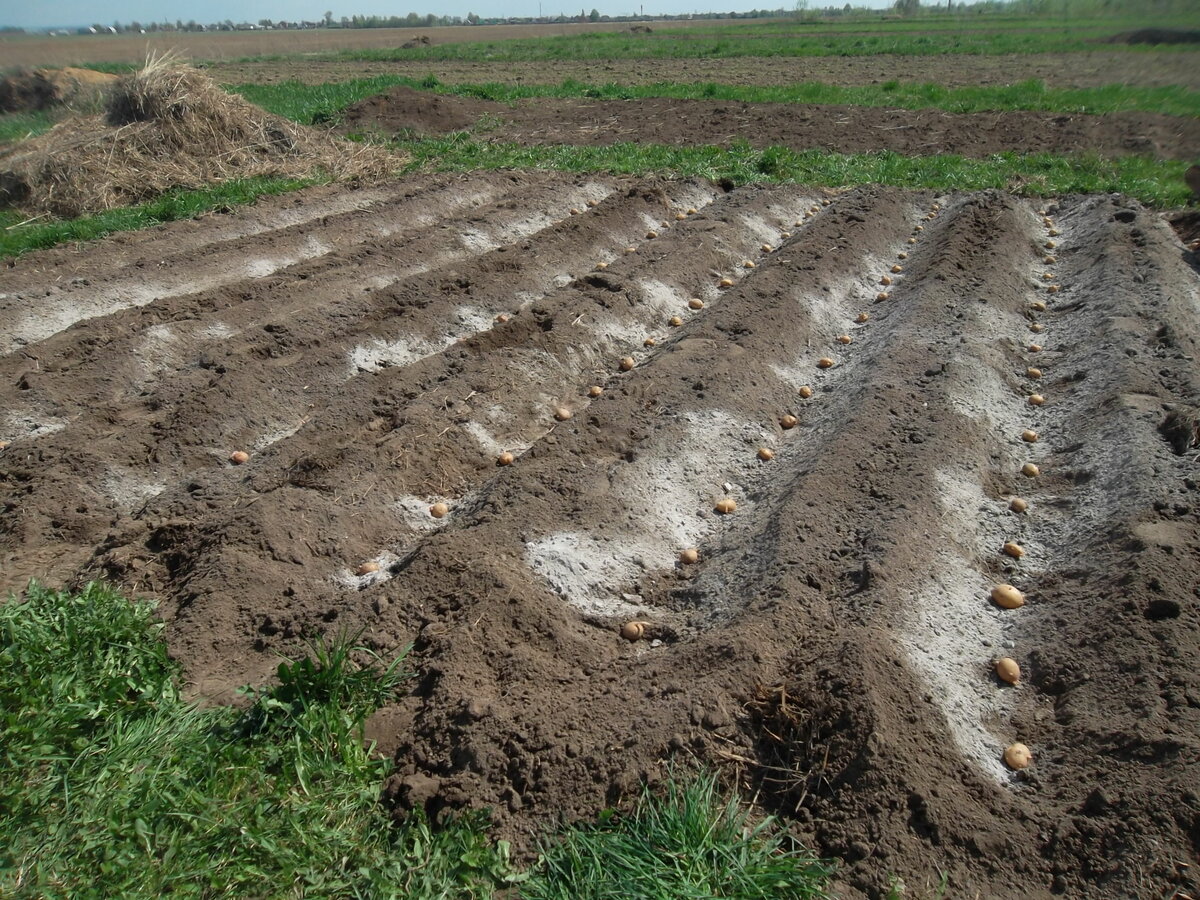
Potatoes are planted in a pre-prepared bed according to the following scheme:
- Using a cord and wooden pegs, mark out the area, along which the future potato furrows will be located.
- The optimal distance between rows is 60-70 cm; this will allow you to move freely between plantings and easily care for the potatoes, for example, hilling them or collecting Colorado potato beetles.
- In each furrow, make small depressions, the size of which depends on the size of the planting material—the smaller the tuber, the closer it should be to the surface of the bed. A distance of 15-20 cm is considered optimal.
- Place the tubers one by one in each hole, sprout-side up. Avoid placing several tubers in a single hole at once—they won't have enough space to develop properly, resulting in a very small harvest.
- To prevent the planting material from drying out, the hole should be immediately filled in.
- Queen Anne potatoes respond gratefully to fertilizing, so it is recommended to cover the bed with a 2-3 cm layer of peat after planting the seeds.
Caring for the Queen Anne potato variety
Queen Anne doesn't require any special care; to ensure good growth and high yields, it's enough to weed and loosen the soil, water the soil regularly during drought, hill up the plantings, and treat them with pesticides.
Watering
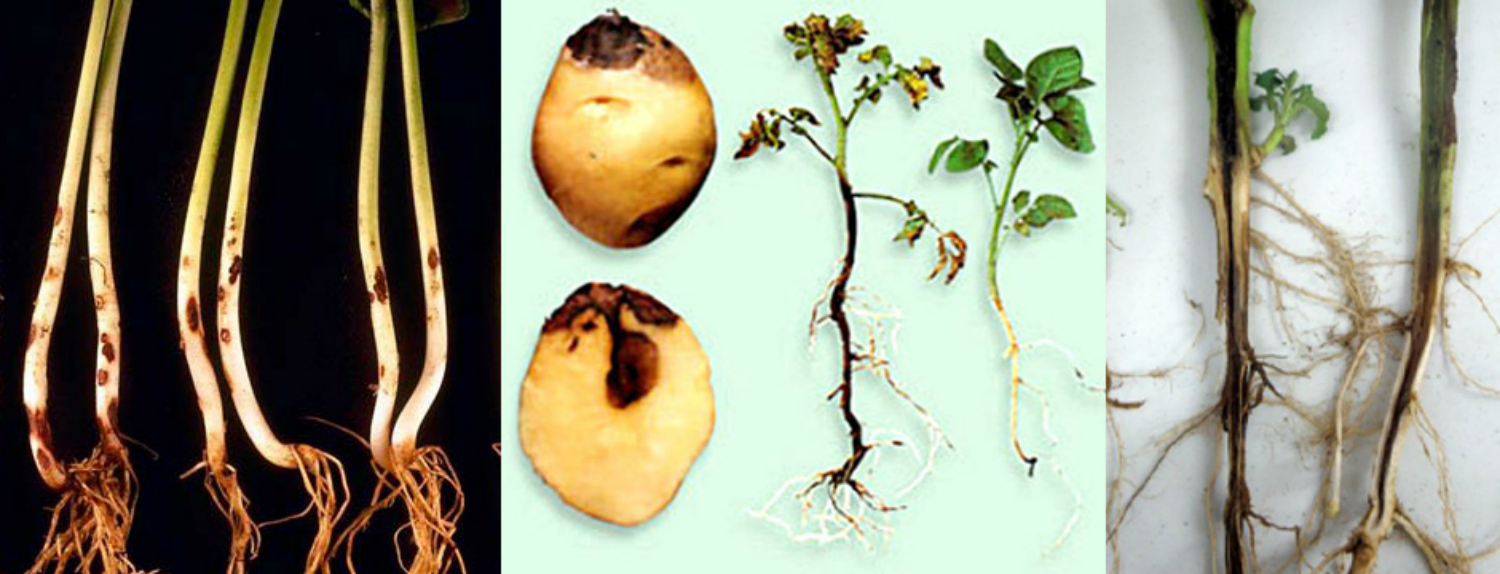
Like many other crops, the Queen Anna variety does not tolerate stagnant soil or excessive waterlogging very well. Fungal diseases become active, leading to blackening of parts of the bush and eventually the death of the plant.
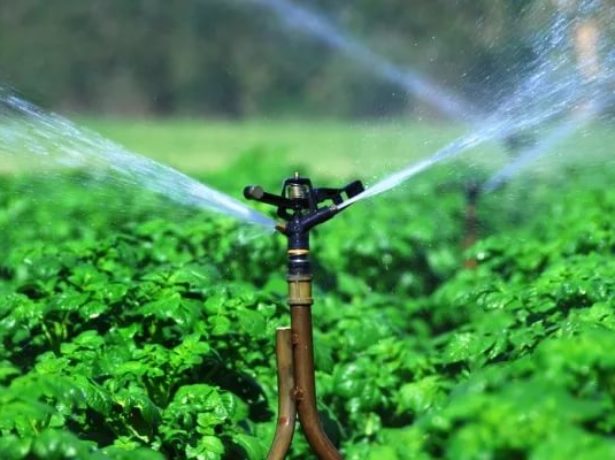
Under normal growing conditions, potatoes will need to be watered three times throughout the season: seven days after planting, during bud formation, and after flowering. This work is carried out in the morning, before the heat sets in.
In southern regions, where rainfall is rare and temperatures are consistently high, watering the beds more frequently is necessary—the variety does not tolerate prolonged drought. When watering, several rules must be followed:
- The most critical phase in potato growth is the formation of buds on the vines. This is when the tubers undergo intensive development. This period continues until the tops stop growing and begin to turn yellow. Therefore, it is crucial to provide the potatoes with sufficient moisture.
- It is recommended to water at least once every 7 days.
- To avoid root erosion, you can use a spray irrigation system.
- All plantings must be watered evenly.
- In regions with high temperatures, it is better to water in the evening.
- For each bush the water consumption is approximately 3 liters.
- A day after watering, it is recommended to loosen the soil to retain moisture and ensure better access to the roots.
Top dressing
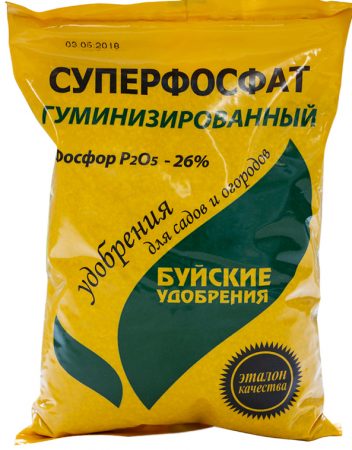
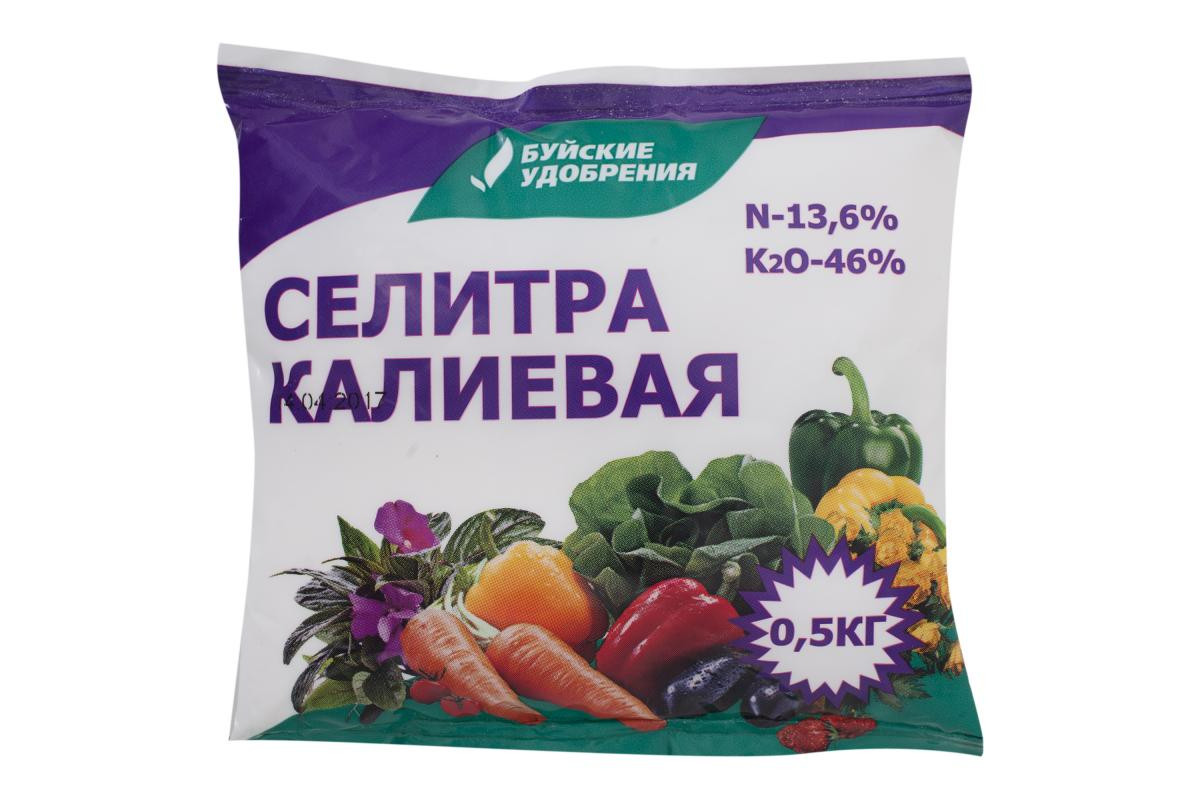
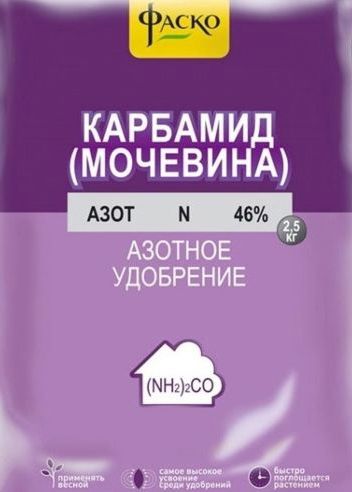
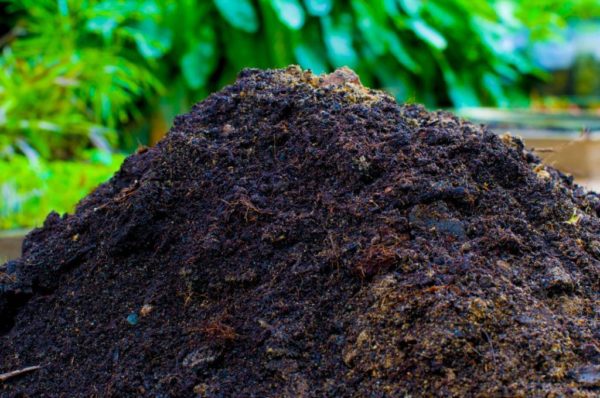
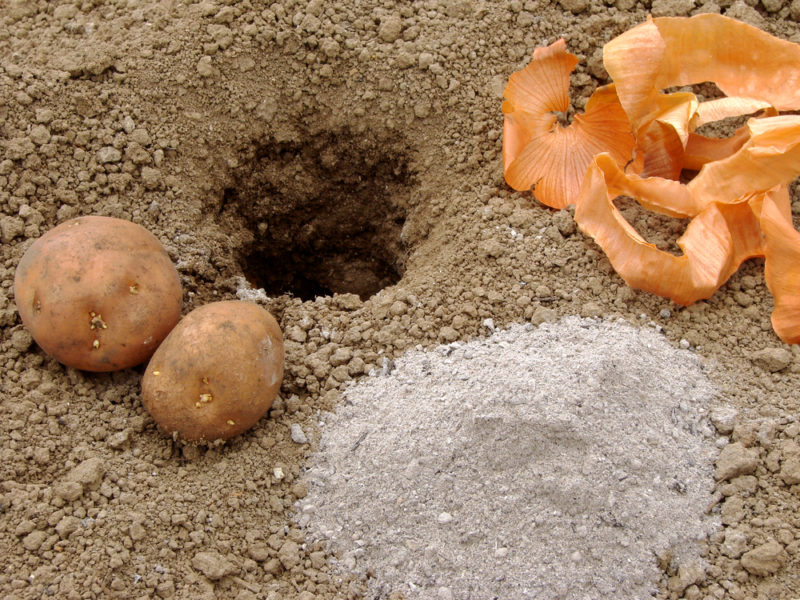
The first fertilizers should be applied to the soil in the fall, after the entire harvest has been gathered. First, dig the soil, remove the roots, and then apply the fertilizer. You can use either mineral fertilizers (superphosphate, urea, potassium nitrate) or organic fertilizers (humus, ash).
Once the tubers are planted in the ground and the potato growing process has begun, it is recommended to fertilize the plantings three times:
- at the stage of vegetative mass growth;
- during the period of bud formation;
- during flowering.
The following feeding options can be used:
- Sand + peat. Makes the soil looser, which improves aeration.
- Lime. Helps protect crops from fungal and infectious diseases.
- Wood ash. Helps normalize soil acidity.
- Potassium nitrate or ammonium nitrate. They provide the soil with additional nutrients and correct acidity.
- Superphosphates. Suitable for individual use; mixing them with other fertilizers is not recommended.
Tip! If your soil is sandy, you can use potassium magnesium sulfate as a fertilizer.
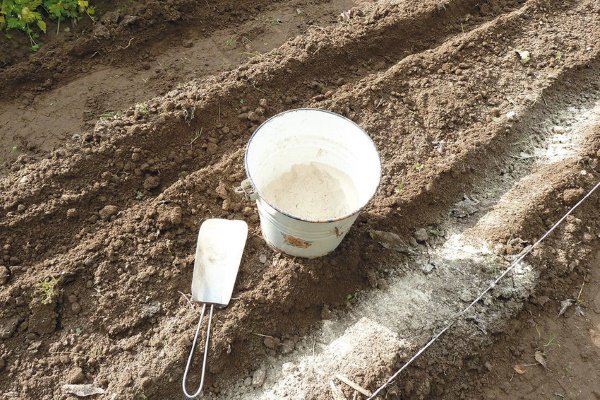
Fertilizer application guidelines:
- A month after planting potatoes, you can apply urea, phosphate or sulfate fertilizers.
- During the flowering period, it is best to add nitrogen-containing fertilizers.
- After flowering, the potatoes are watered with a solution of manure, which helps the tubers to develop more actively and gain strength.
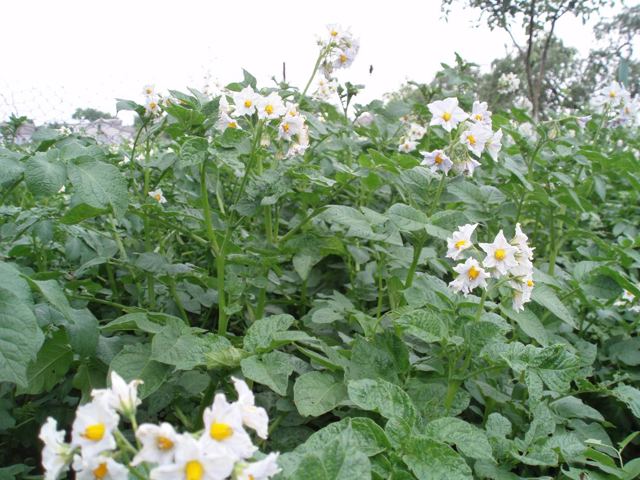
Before flowering begins, you need to have time to treat the plantings twice with Bordeaux mixture and superphosphate, and then repeat this after the flowers have lived out their time.
Loosening, weeding, hilling
The first shoots will appear in about two weeks. This is when you can begin the first weeding and light loosening of the soil. Repeat this process when the plants reach 15 cm in height. If your potatoes are growing in a hot and dry climate, loosen the soil after each watering.
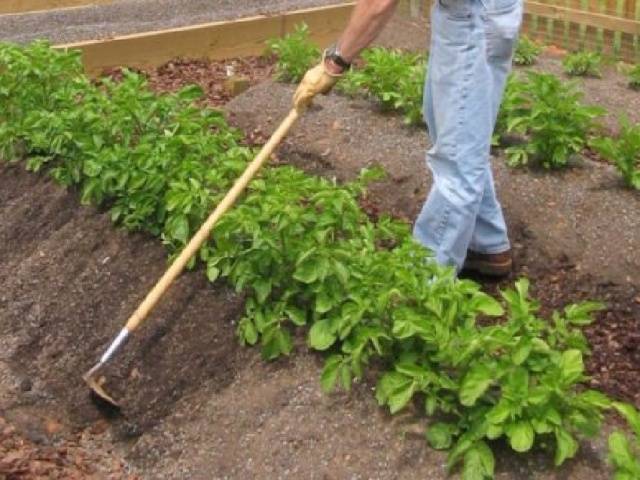
The Queen Anne potato variety can be planted in ridges rather than holes. In this case, only the top layer needs to be loosened.
Hilling of the hole plantings begins when the bushes reach 25 cm in height. Soil is raked up from all sides of the stem, eventually forming a mound up to the first leaves. To prevent weeds from becoming entangled in the mound, they must first be removed from the space between the rows.
After two weeks, repeat hilling is carried out using the same scheme.
Protection from diseases and pests
The Queen Anne variety is highly resistant to various common diseases. This natural immunity can be enhanced by maintaining the plantings with preventative measures.
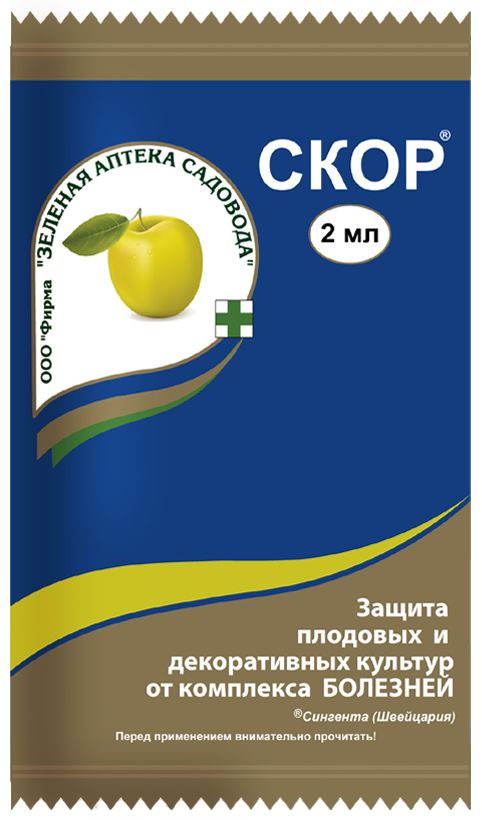
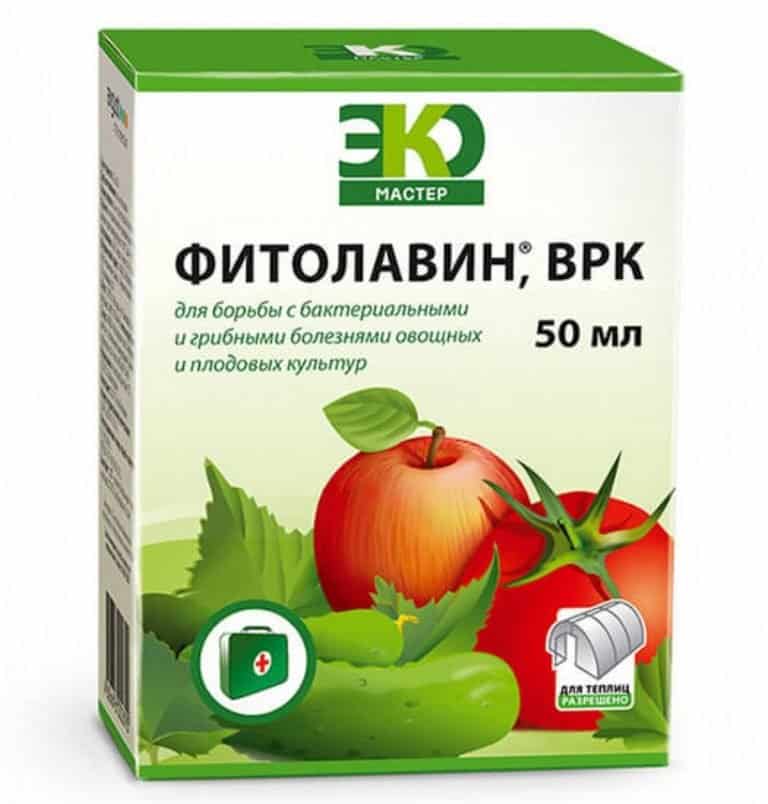
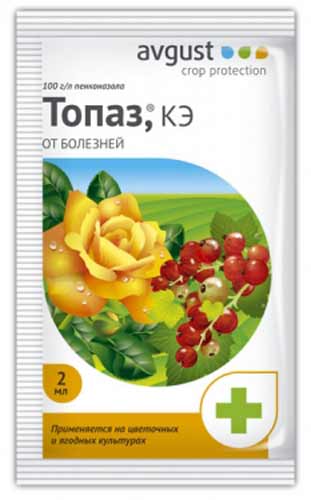
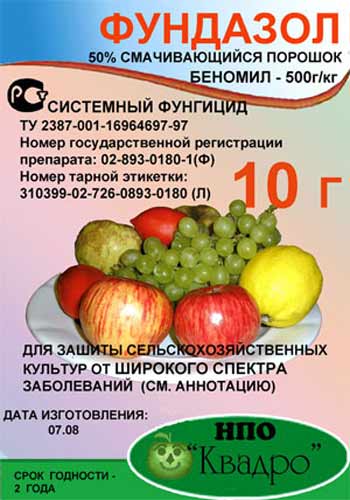
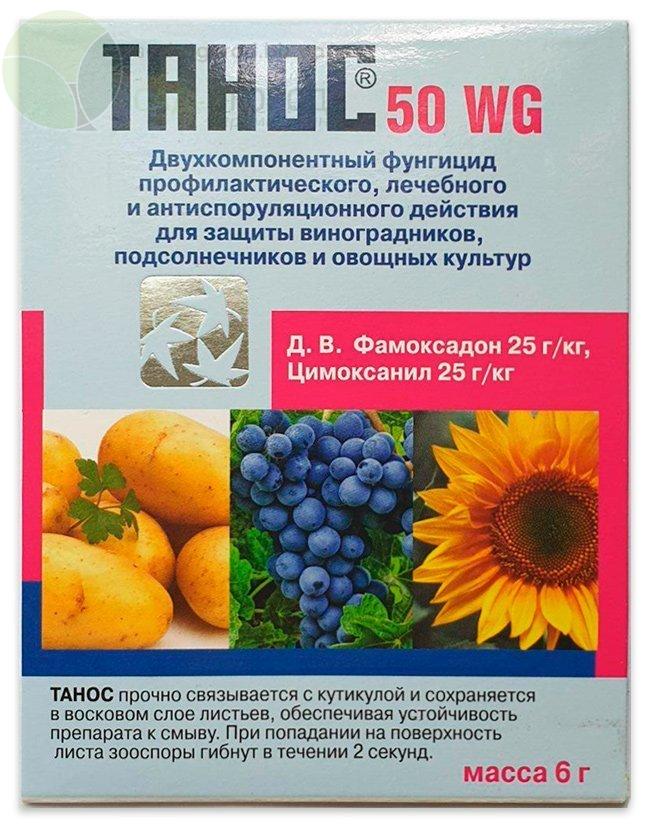
Spraying the bushes with fungicides (Skor, Fitolavin, Fundazol, Topaz, Thanos, etc.) will help repel insects and protect them from their attacks. This should only be done in dry, windless weather.
Avoid planting potatoes, tomatoes, and peppers next to each other. These crops attract the same pests, so if one planting is affected, the disease will quickly spread throughout the entire garden.
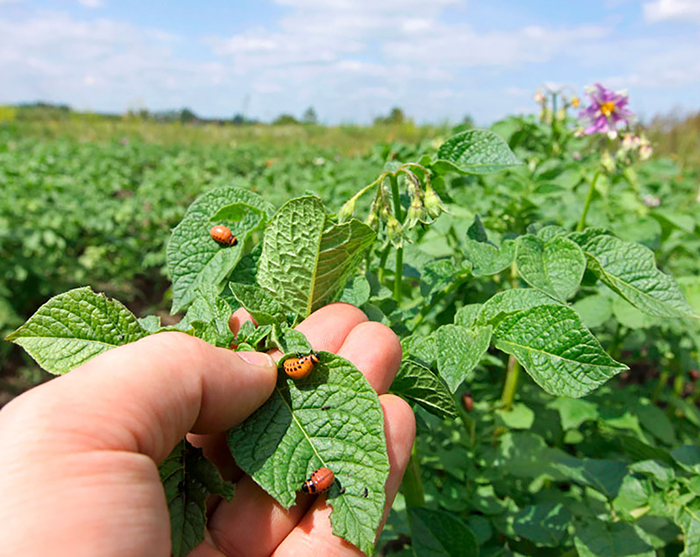
Many pests can be seen with the naked eye, so it's important to regularly inspect your bushes for them. For preventative measures, spraying with Antizhuk, Napoval, Bankol, Bi-58 Korado, and Decis is recommended. At an early stage, manually removing the insects and treating the bushes can help.
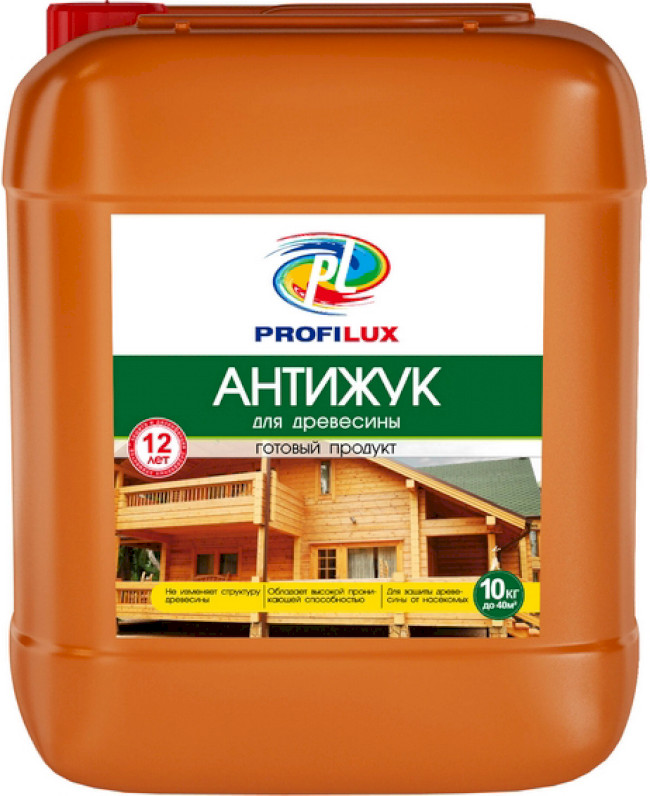
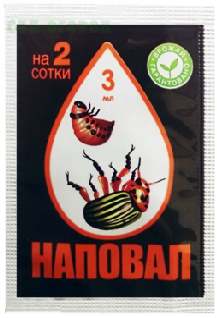
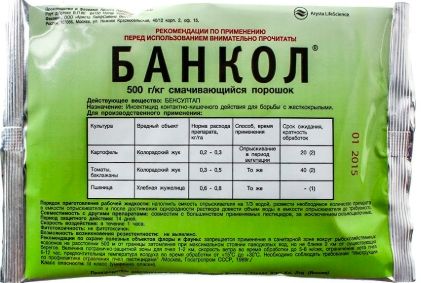
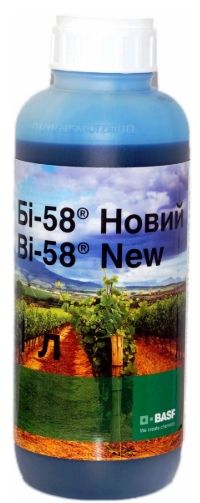
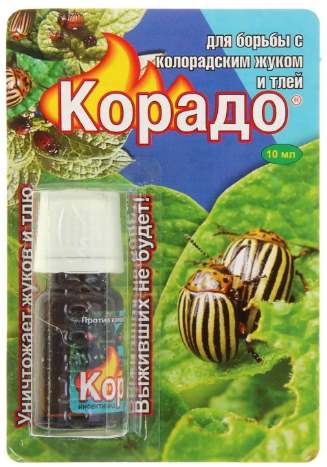
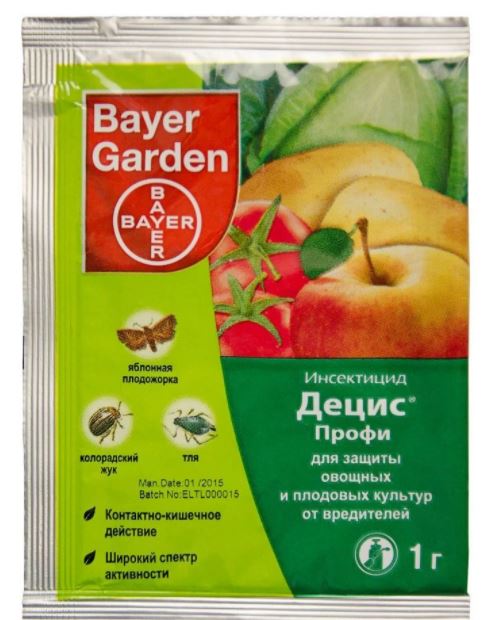
However, if the infestation is extensive, chemical treatment of the crops is the only solution. It is recommended to do this two weeks before harvest.
To avoid attracting pests, it is best to promptly remove weeds not only in the garden bed, but also between the rows.
Read the article about What is the most effective way to get rid of the Colorado potato beetle?.
In some regions, summer temperatures can drop, accompanied by prolonged rainfall. In this case, it's best to be on the safe side and treat the planting material with potassium permanganate or boric acid, which will help reduce the risk of rot. However, if fungus does appear, spray the plants with fungicides.
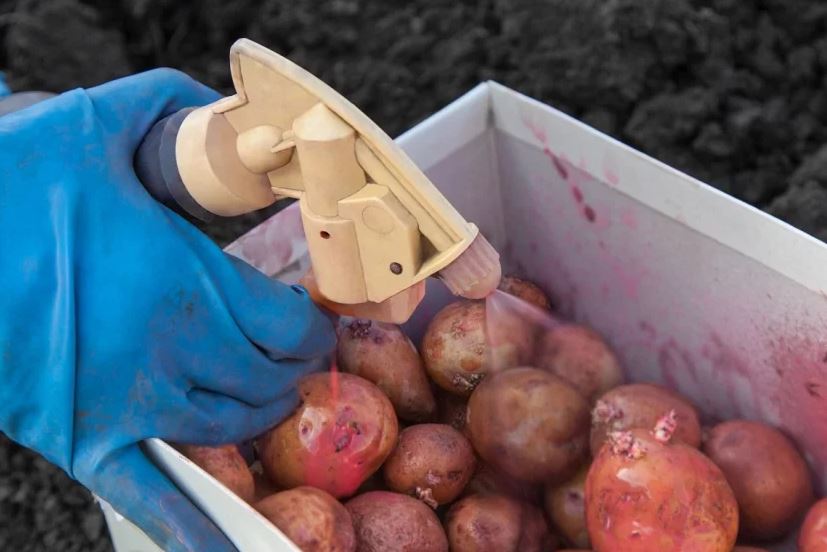
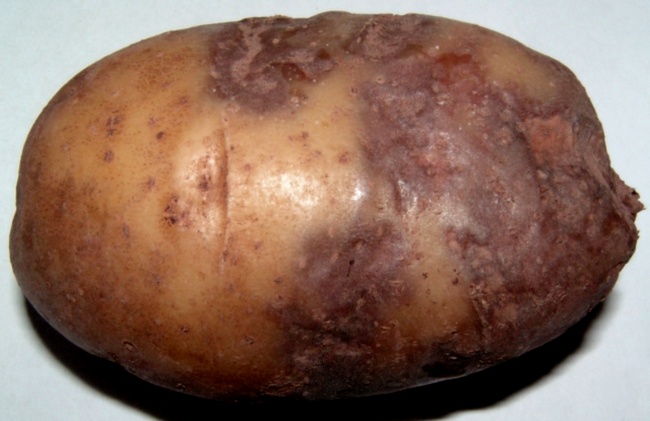
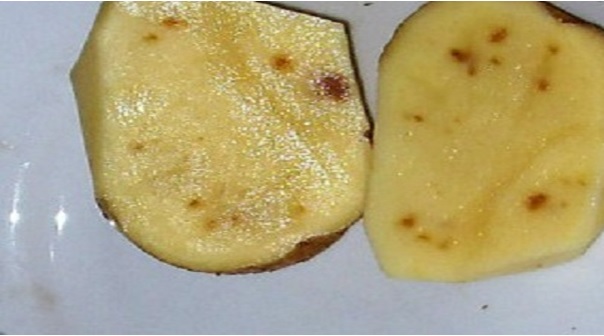
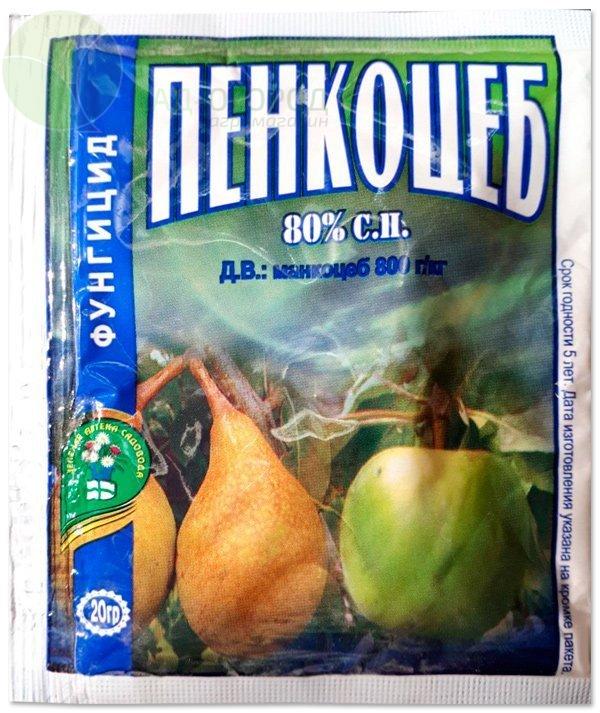
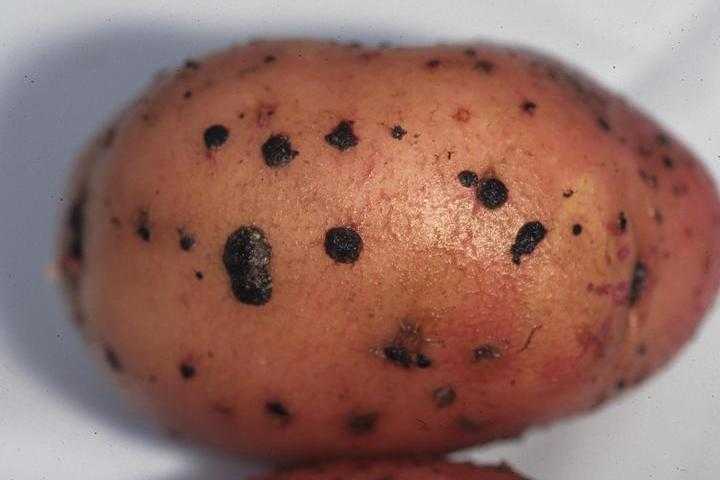
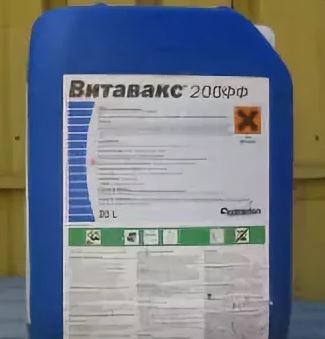
Queen Anne has a moderate resistance to rhizoctonia, so sometimes black spots can be seen on plantings, which eventually spread to the tubers. This occurs due to poor cultivation practices and prolonged deterioration in weather conditions. Infected tubers should not be stored, as they will quickly infect all neighboring tubers. All blackened foliage should be removed from the bush and sprayed with Penkozeb and Vitavax 200.
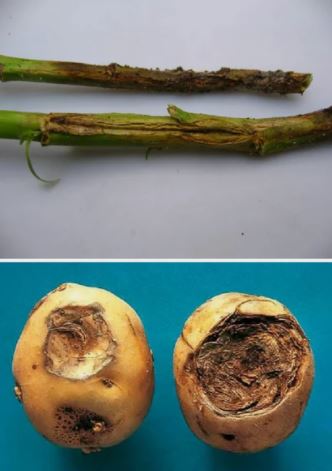
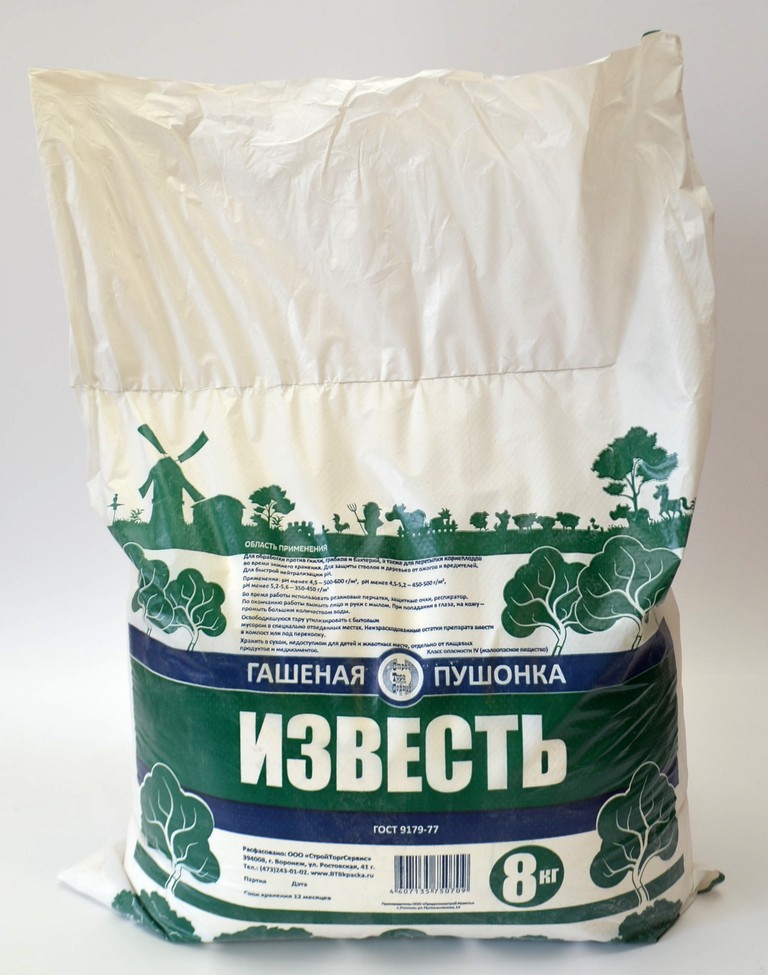
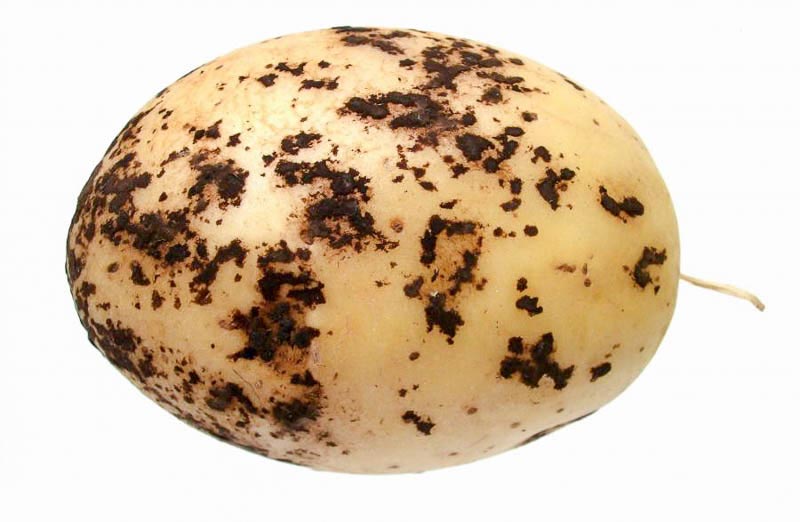
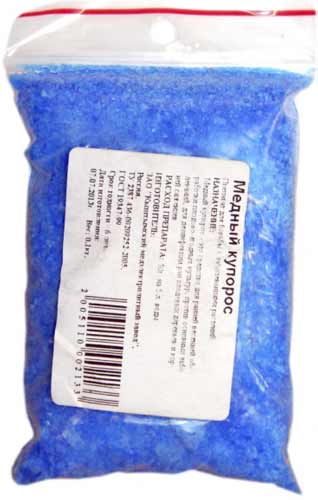
Sometimes the variety is striking scabThis disease can be recognized by raised bumps on the leaves and tubers that swell and burst open, leaving behind brown hollows. Harvests from infected plants should not be stored, as the infection will quickly spread to other tubers. As a preventative measure, you can add bleach to the soil and spray all plantings with copper sulfate.
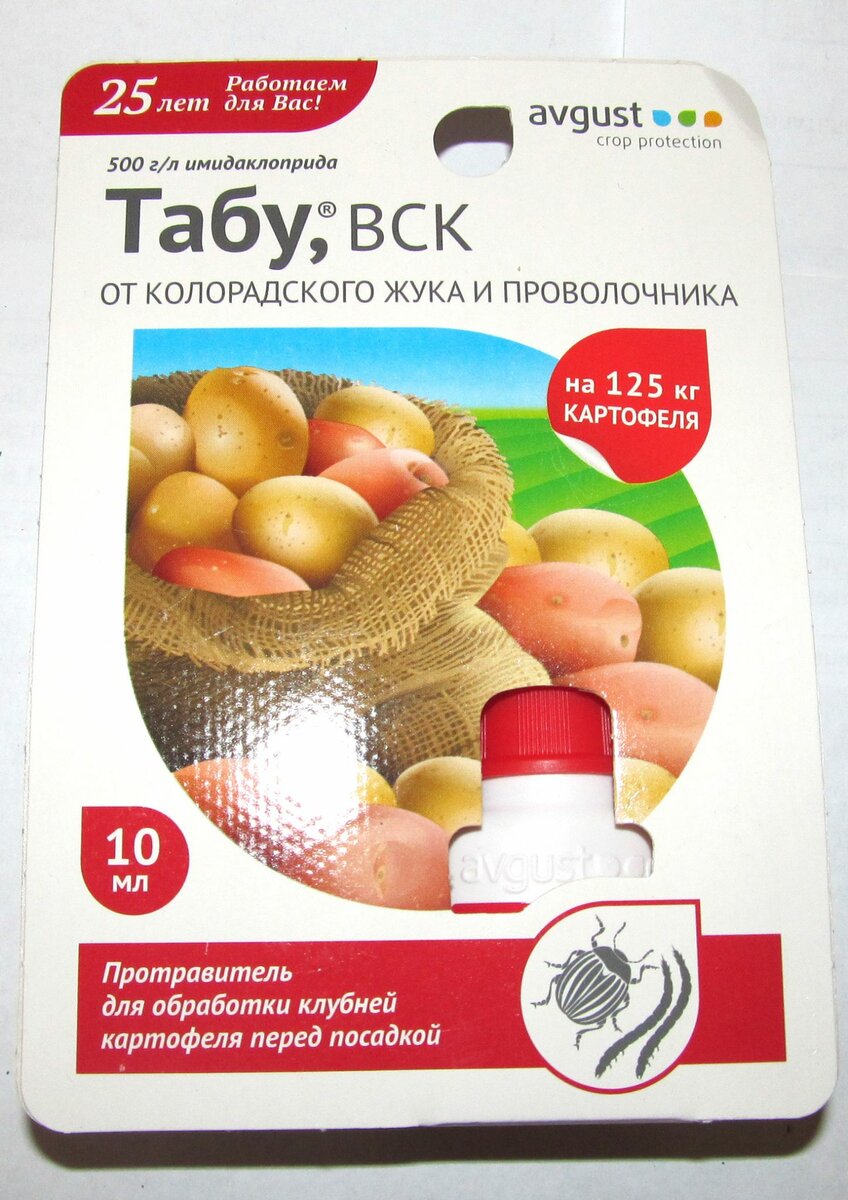
But the main pest is rightfully considered to be Colorado beetleIts larvae are so voracious that they can devour the entire crown of a bush in a short period of time. Contact pest control agents are used, including Tabu and Prestige. Spraying should be carried out before flowering.
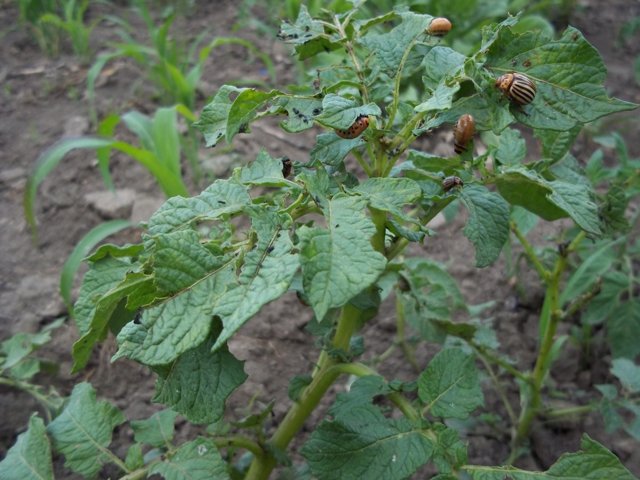
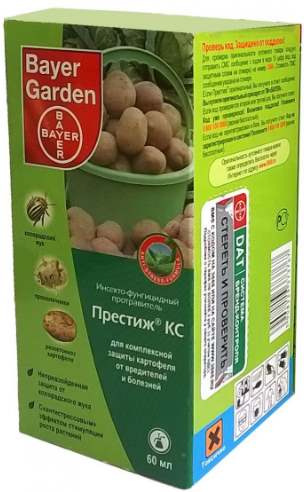
Once the first flowers appear on the plants, larvae and beetles can only be collected by hand. After the buds fall, the beetle no longer poses a threat to the crop.
The nuances of harvesting and storing the Queen Anna variety
Many gardeners love to harvest young tubers, which they use throughout the season to prepare various grilled and barbecued dishes.
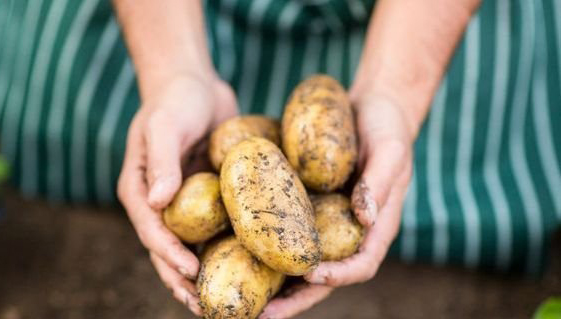
The Queen Anne variety allows you to harvest two crops.
| Serial number | How many days after emergence is it carried out? | What yield can be obtained, c/ha |
| 1 | 45 | From 55 to 140 |
| 2 | 55 | From 80 to 210 |
The harvest is fully ready for harvest at the end of summer. This will be indicated by yellowing of the tops.
To avoid the formation of harmful salt in the tubers, do not leave them in the sun for a long time after digging them up.
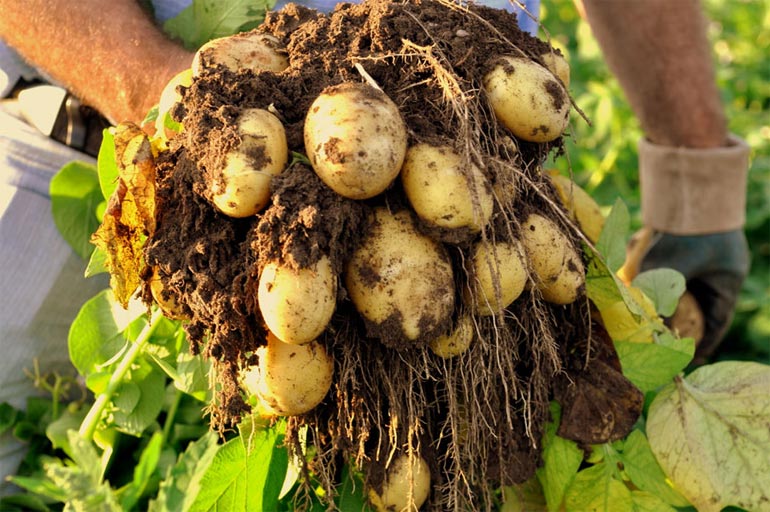
It's important to remember! Solanine is a toxic organic compound synthesized in potatoes when exposed to sunlight. This formation causes the tubers to acquire a greenish tint, which can spread to the entire flesh. Consuming such a crop is strictly prohibited.
To dry the harvested potatoes, they are placed in a cool, dry place with a temperature no higher than +6 °C and laid out in a single layer on a pre-prepared surface.
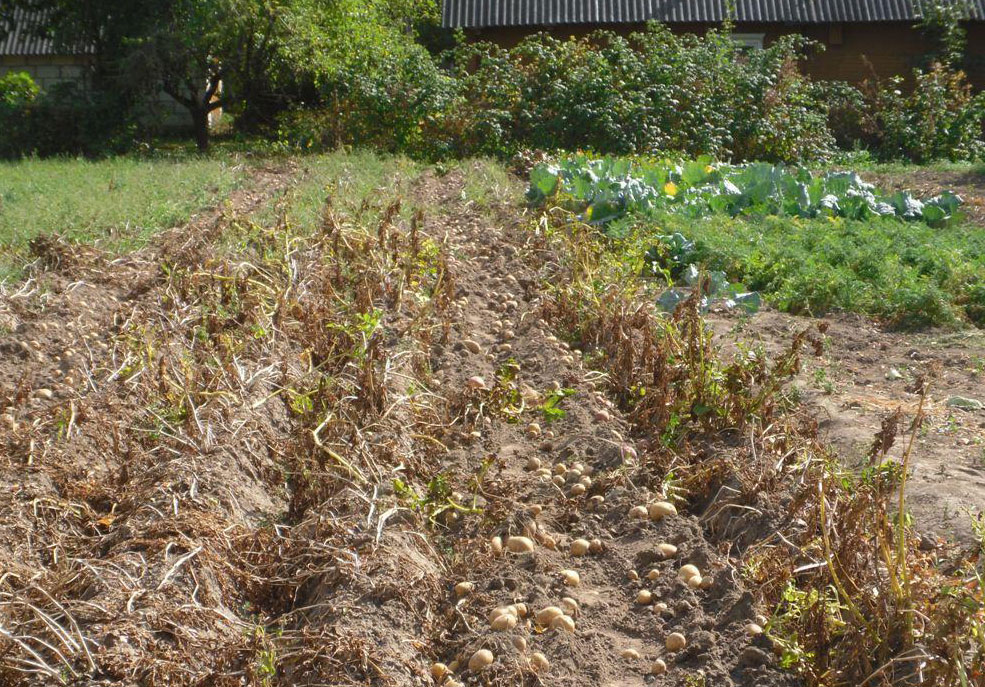
To increase shelf life, gardeners recommend cutting off all the tops some time before digging – this way, all the plant's energy will go towards forming a dense skin.
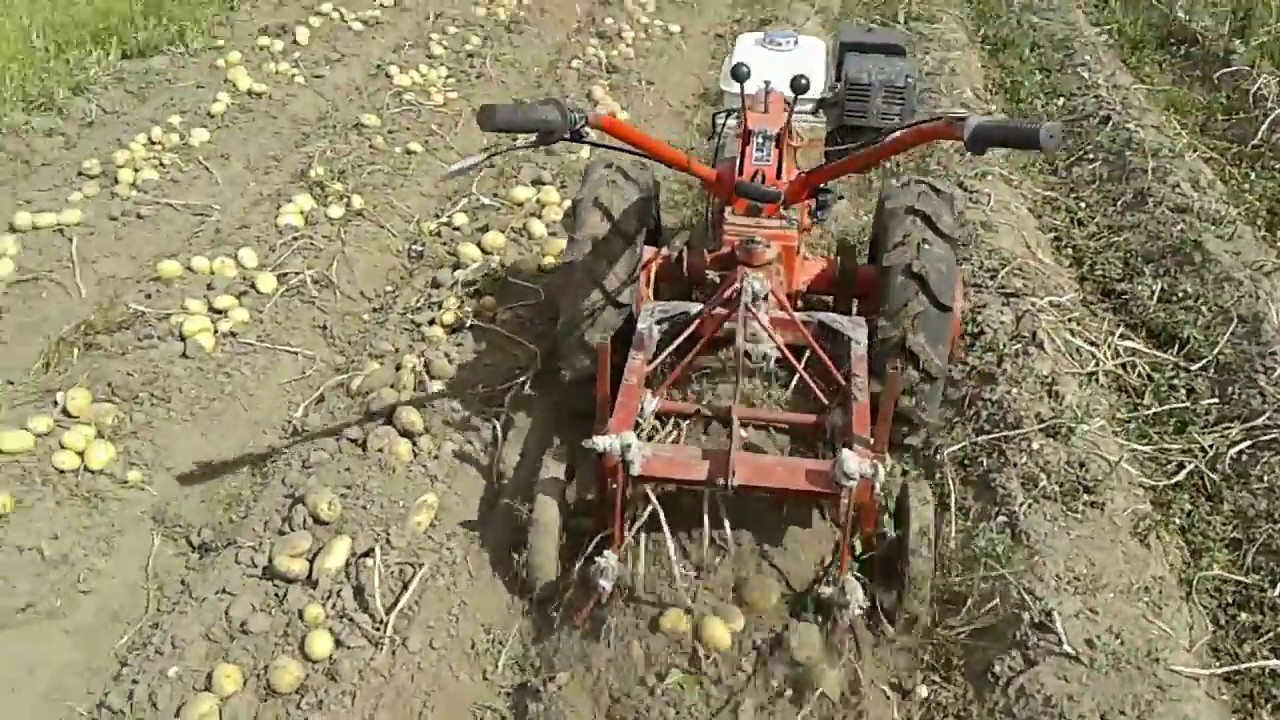
Queen Anne is highly prized by gardeners who use mechanical harvesting. The potato is resistant to mechanical damage, ensuring excellent shelf life after harvest.
Comparison of the Queen Anne potato variety with other varieties in the table
| Variety | Ripening period (number of days to maturity) | Starch (%) | Yield (c/ha) | Weight of tubers (g)
Number of tubers per bush |
Shelf life (%) |
| Queen Anne | Mid-early** | 13.1-14.4 | 393-604 | 84-137
14-16 |
93-97 |
| Zoraczka | Early ripening* | 12-14 | 300-320 | 100-120
9-12 |
96 |
| Lorkh | Mid-late**** | 15-20 | 250-350 | 90-120
9-11 |
88-92 |
| Natasha | Early ripening* | 12-14 | 130-190 | 100-130
6-16 |
93 |
| Nevsky | Mid-early** | 12-12.8 | 380-500 | 95-125
12-15 |
91-96 |
| Ragneda | Mid-late**** | 12.7-18.4 | 187-431 | 78-120
12-14 |
97 |
| Sylvanas | Mid-early** | 13.6-15.3 | 170-448 | 92-148
7-14 |
95 |
| Blue-eyed | Mid-season*** | 15-17 | up to 500 | 70-150
8-12 |
25 |
| Timo (Timo Hankiyan) | Early ripening* | 13-14 | up to 300 | 75-130
5-9 |
96 |
| Felox | Early ripening* | 16-17 | 248 | 90-115
19-25 |
90 |
*Early ripening – 50-65 days.
**Mid-early – 65-80 days.
***Mid-season – 80-95 days.
****Mid-late – 95-110 days.
Real reviews from gardeners about the Queen Anna potato variety
Let's look at reviews of the Queen Anna variety from gardeners and summer residents.
User saggavaha
I certainly didn't think I'd be writing a review about potatoes here. But a recent, mundane supermarket purchase prompted me to write a brief note about a specific variety. There won't be anything about additional properties, masks, or anything like that—only their intended culinary use.
I love cooking—it distracts me from the hustle and bustle of life and bad thoughts. But with all the variety of potato dishes, peeling them is my least favorite process. I have a fancy vegetable peeler from Tescom and fancy knives... But when you buy a seemingly beautiful, select potato at the supermarket, only to find less than half the tuber left and sit there cutting out all that black stuff, the eyes, and so on—it's not very pleasant. Now, as spring draws to a close, I'm finding such surprises inside more and more often.
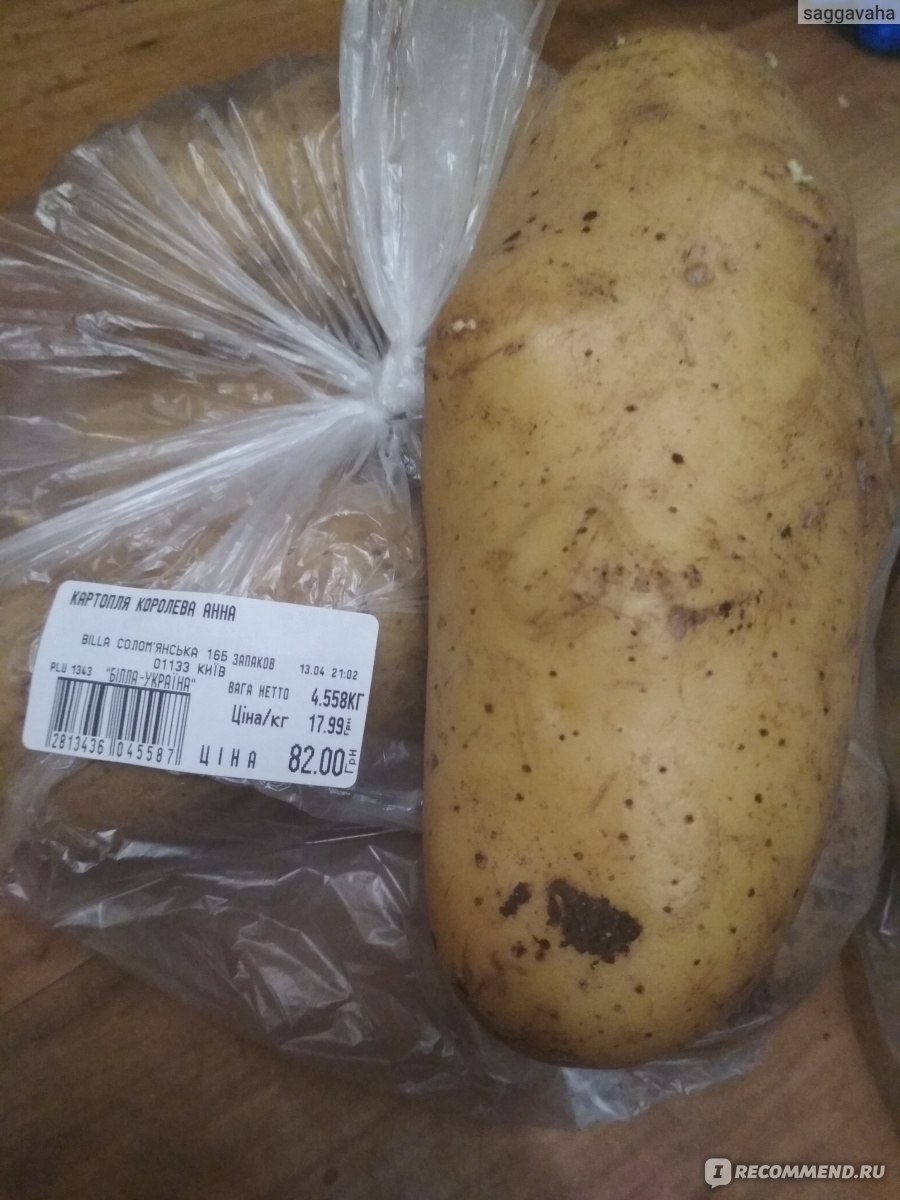
I bought the Queen Anna potato variety out of spite—it was the only one in the store, and it was more expensive than the select packaged and regular loose potatoes. I had to buy it. You can't run around the store during quarantine. The variety seems to be German; I've only recently started seeing it in our area. I won't describe the Queen Anna variety.
The first time I cooked it, it was my wife, not me. After tasting the borscht she made, I had a question, which I put in the title. The son was the suspect in the crime—I immediately thought the little rascal had dropped a couple of spoonfuls of sugar into the pot of borscht—the taste was so unusual. Sometimes beets can add excessive sweetness, but this time it was the potatoes. Their flavor was so unusual, reminiscent of African yams and sweet potatoes. That's why Queen Anne wasn't a big hit in the first course.
But on all other fronts, it's beyond praise. It's no wonder the variety bears its royal name.
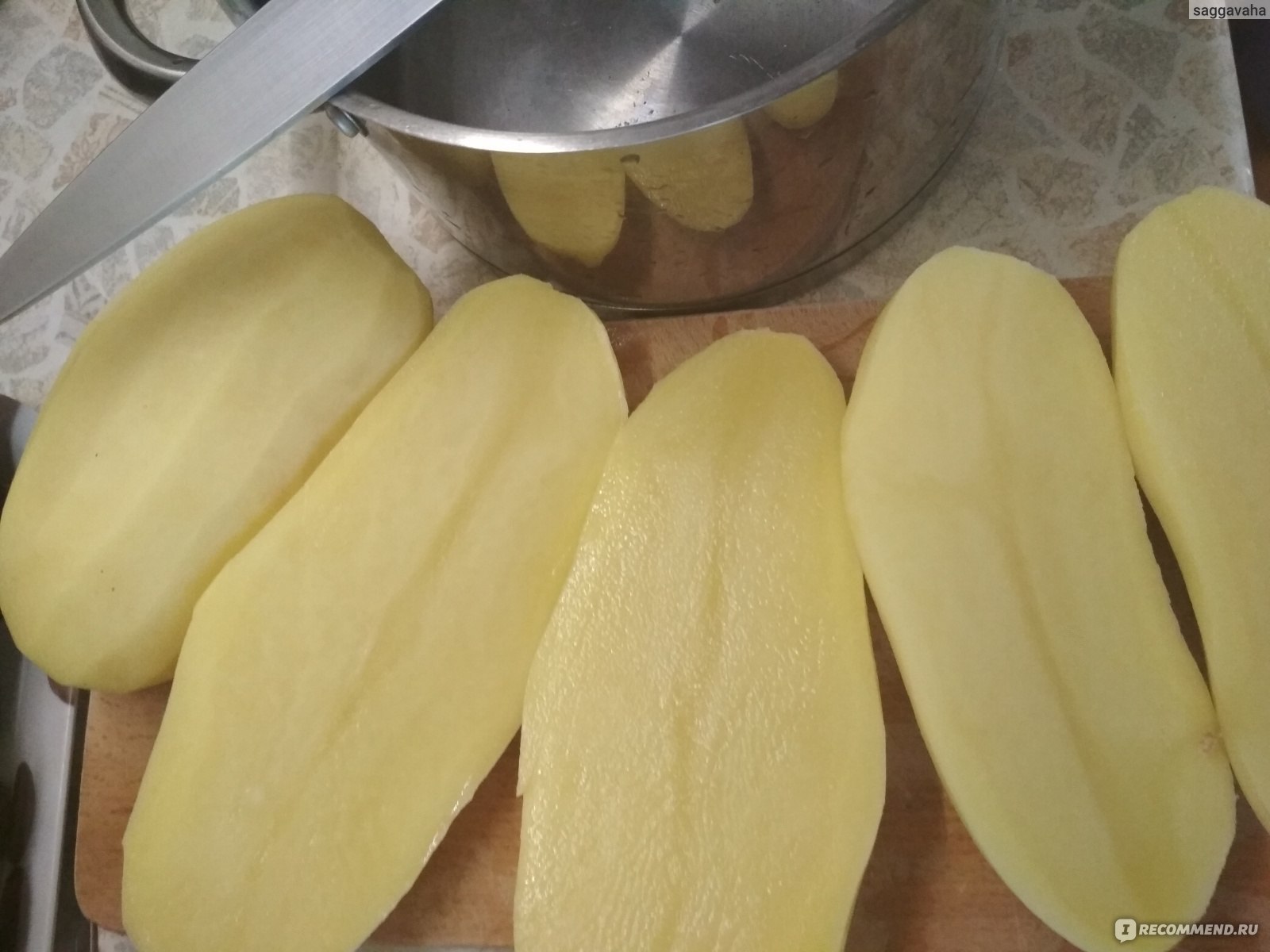
Firstly, you don’t have to cut off a third of the potato when peeling it. When I read the variety's description after the fact on various gardening and dacha forums about the 94% marketability rate, I can confirm that figure didn't surprise me. There were no deep holes, and out of a total of four kilograms, two potatoes had some damage. You don't sit there picking at a potato for half an hour, hoping to find a spot. A regular vegetable peeler—and in less than thirty seconds, an entire, enormous potato is peeled.
Secondly, size. I'm not a fan of huge tubers, they usually have all sorts of surprises inside that end up in the trash.
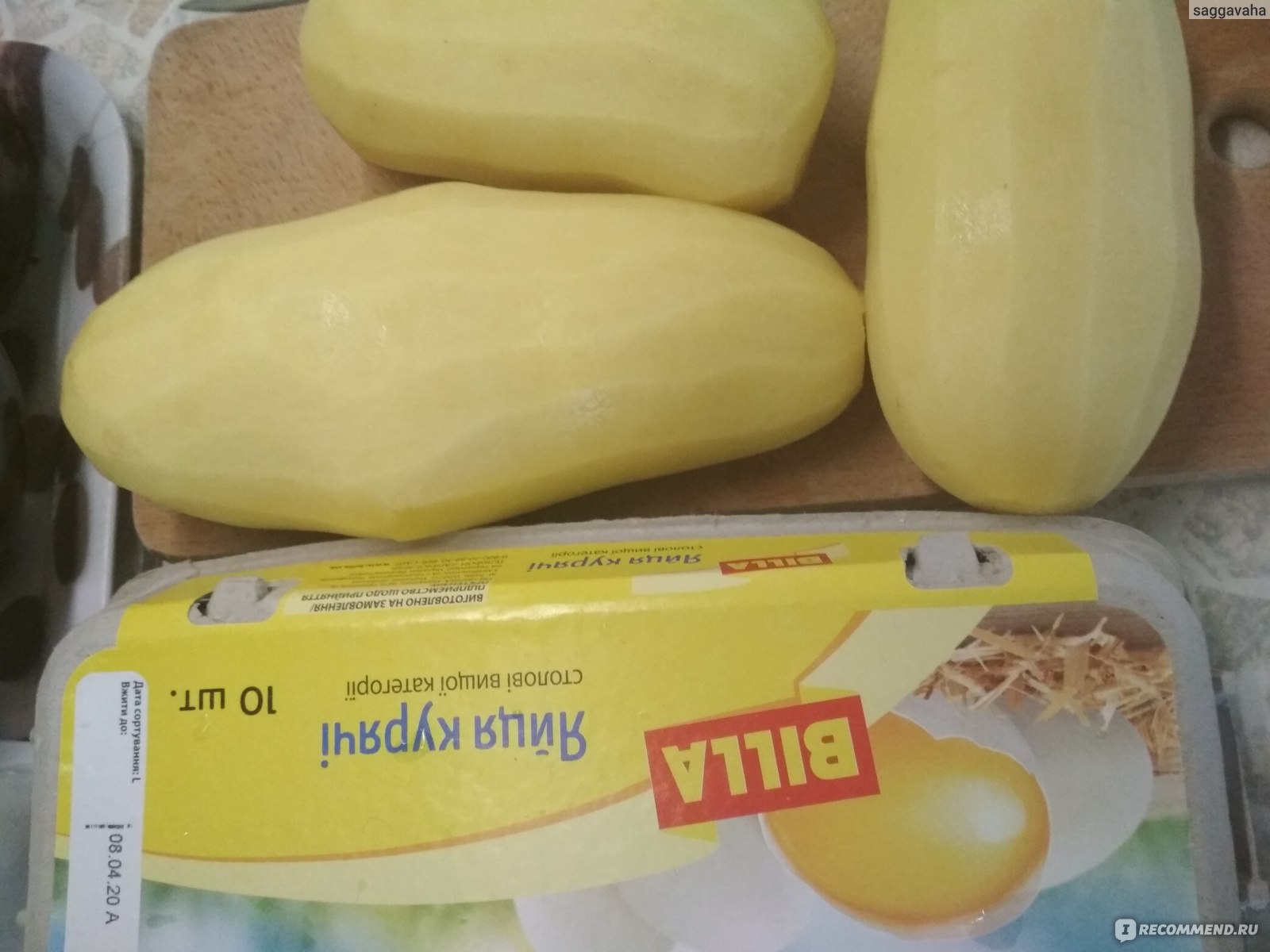
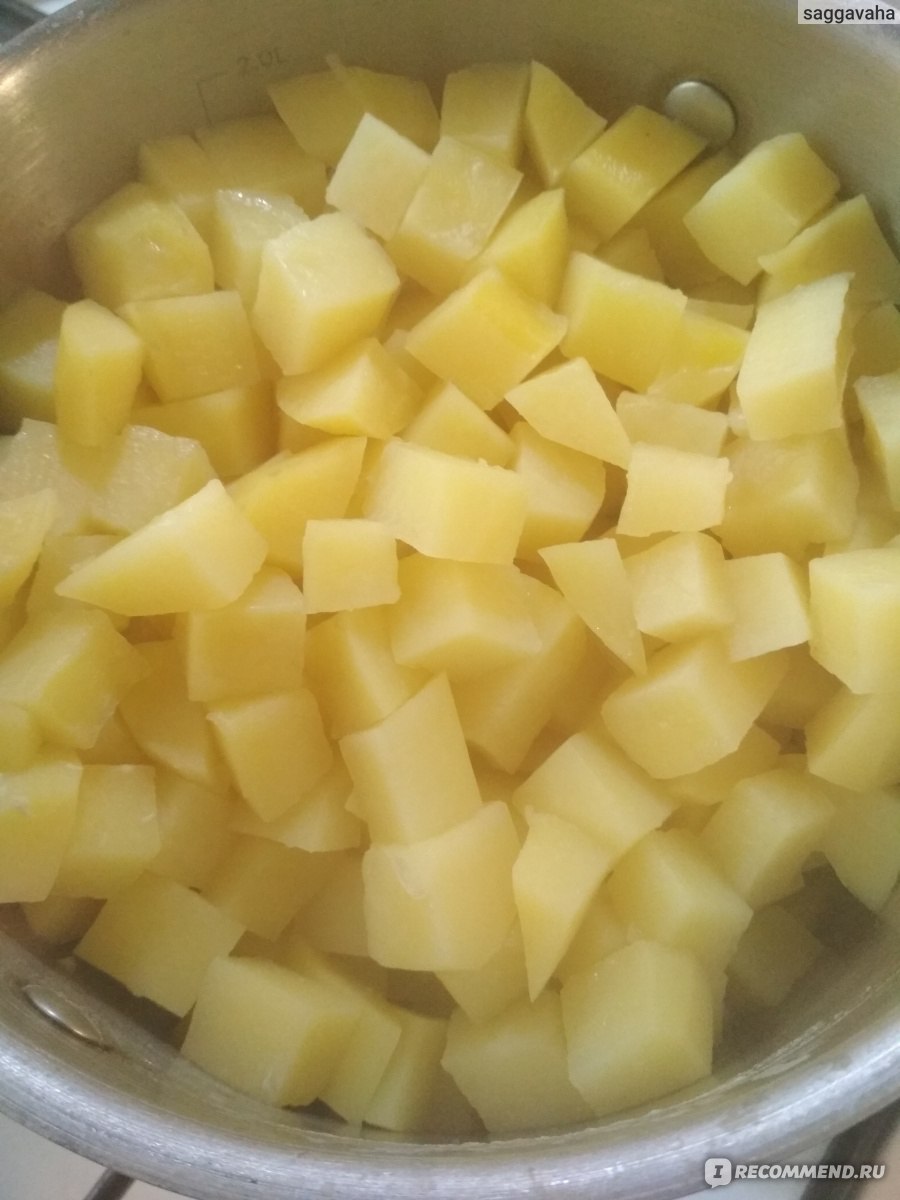
There was no other way—I used whatever was available. Three potatoes filled a two-liter saucepan. The size, compared to a tray of eggs, is impressive to me. The whole peeling took two minutes (I'm willing to peel potatoes that big).
Thirdly, the appearance of the finished product. Aside from the fact that I didn't like the flavor of this variety in the first course, everything else was brilliant. The boiled potatoes turned out beautifully, not turning into mush. Since Vanya isn't much of a chewer and prefers mashed potatoes, I mashed them for him. The mashed potatoes were light, without any lumps or undercooked bits. What's more, this particular characteristic, with its subtle sweetness, was a great help in getting him to eat proper food instead of running to his mom for milk eight times a day (I've been ranting for two and a half years, when will he give me my wife back?).
It's also brilliant for potato pancakes (draniki) and frying. It's just the right amount of juicy, and it holds its shape without falling apart.
After the first boil, I gained another 15 kilograms out of boredom. I'm not a gardener, just a child of the asphalt and the big city, so I won't grow potatoes. I'm interested in them only as a culinary ingredient, and nothing else.
It's clear that most stores don't list the varieties, simply stating "white/pink/selected" potatoes. However, if you see a specific variety mentioned, I recommend trying them. You can transition your baby from fruit purees to adult food, and it won't be difficult to peel and cook them yourself.
P.S. This review was born out of a simple desire to cook potatoes. It's a pleasure to work with a good product, with excellent performance, not only on gardening forums but also in real life. I hope this was helpful to someone.
Photo by user saggavaha:
User Zloy Zayats, Russia, Krasnoyarsk
In addition to sharing my review of this potato, I'll also tell you about the growing method, as this is very important in this particular case.
This year, my husband and I decided to conduct a kind of experiment and try growing potatoes with minimal care, namely, growing them in mulch.
This method isn't new, but it's not particularly common among gardeners. Since we minimize our efforts—that is, work less, get more—we constantly experiment in our garden plots, and to make a truly sound assessment, we plant using both the standard and the "lazy" method.
In early May, we bought 2 kg of "Queen Anna" potatoes. The label indicated that this variety was from the "Elite Potato" agrofirm. The potatoes weren't sprouted, so we left them in a warm, dark place for a week to germinate.
A week later, some pretty good sprouts appeared, and we decided to start planting.
We planted the first kilogram of potatoes using the standard method, using a spade. We decided to plant the second kilogram using a spade, but cover them with a layer of mulch. In our case, the mulch was freshly mown weeds.After some time, the potatoes planted using the standard method (Plant #1) showed their first sprouts. The potatoes planted using the "lazy" method (Plant #2) didn't even think of sprouting for another two weeks. Frankly, I started to worry, because by that point all the potatoes had already sprouted and even been hilled and weeded. At one point, I even started looking for where they'd been buried. I found it. I saw decent sprouts and roots. I buried them again. A week later, the potatoes finally started sprouting. Hooray.
Visual observation revealed that, although potato #1 sprouted faster, the plants weren't as lush as those grown under mulch. Furthermore, potato #2 bloomed much longer and more luxuriantly than #1. Incidentally, over the summer, potato #1 was watered repeatedly during dry weather, hilled, and weeded. Potato #2 skipped all these procedures, only receiving mulch.
In early July, I noticed that one of the plants in planting #2 had drooped. It turned out that the tuber in question had been infected with blackleg. However, it was the only tuber.
In early August, the first signs of late blight were detected on plant #2. By mid-August, the blight had already spread to all the plants in this bed, so the potatoes were dug up earlier than the typical time in our region, namely mid-August. You can see the potatoes being dug up in the video.
At the end of August, they began to dig up bushes from a bed planted using the traditional method.
Conclusions. The potatoes taste wonderful; we've fried them, boiled them, mashed them, made soup, and baked them. On a scale of 1 to 10, they deserve a well-deserved 8 for taste.
As for the harvest, things aren't so simple. Potatoes grown in mulch yielded higher results, with more tubers and larger ones.
The potatoes planted using the traditional method unfortunately didn't produce a great harvest, but not a single tuber was rotten or showed signs of late blight. However, as I mentioned above, the potatoes in the mulch had blackleg and were eventually attacked by late blight. This is why you see rotten tubers.
Next year, we'll try growing this variety in mulch again and decide for ourselves whether it's worth further cultivation. We were pleased with the yield and the flavor.
User tep, Ryazan Oblast
Today I hosted a tasting of new potatoes with my family and neighbors. Three varieties were boiled in their skins: Kurazh, Kolobok (our favorite), and Koroleva Anna. I'll note right away that Koroleva Anna cooked 20 minutes faster than the other varieties. Koroleva Anna turned out to be the best in terms of flavor, with a crumbly, very dry flesh. Kolobok is more watery this year, but the flavor is not bad. Kurazh is slightly sour and is better fried. I recommend Koroleva Anna to anyone who loves crisp, tasty potatoes.
User TanKor, Note.kr., Partizansky district, village of Sergeevka
The 2017 planting yielded a good harvest, with my favorite oval shape. I can't say it was excellent, as there were only a few tubers per bush, but the flavor was excellent—creamy, delicate, and starchy. It should be noted that the soil in the open ground is poor, sandy, and dry.