The Sineglazka potato is considered one of the most popular varieties; it received its name due to the unusual color of the fruit.
Content
- 1 Table with characteristics of the Sineglazka potato variety
- 2 The origin of the Sineglazka potato variety
- 3 Description of the Sineglazka potato variety
- 4 Advantages and disadvantages of the Sineglazka potato variety
- 5 A variety with a similar name, Sineglazka 2016
- 6 Planting Features of the Sineglazka Potato Variety
- 7 Caring for the Sineglazka potato variety
- 8 Protecting the Sineglazka potato variety from diseases and pests
- 9 Harvesting and storing the Sineglazka potato variety
- 10 Comparison of the Sineglazka potato variety with other varieties in the table
- 11 Reviews of the Sineglazka potato variety
Table with characteristics of the Sineglazka potato variety
| Characteristic | The bush is large, with dense spreading shoots and a large number of leaves. |
| General information | A mid-season variety of Russian origin with excellent yields but not the best shelf life. Not used for commercial cultivation. |
| Ripening time | 85-90 days |
| Productivity | Up to 500 c/ha |
| Marketability | Average |
| Shelf life | Not tall |
| Starch concentration | 15% |
| Color of pulp | White |
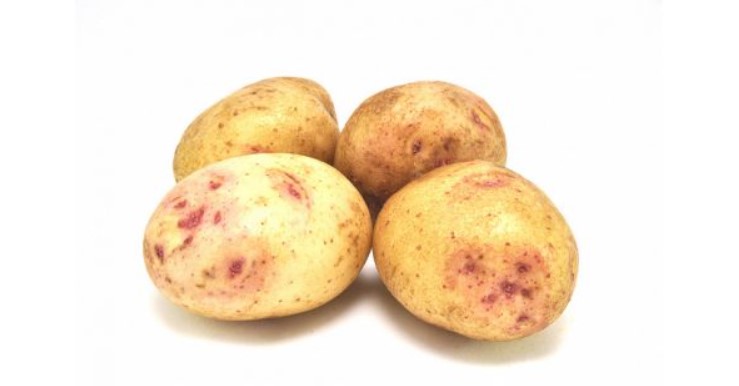
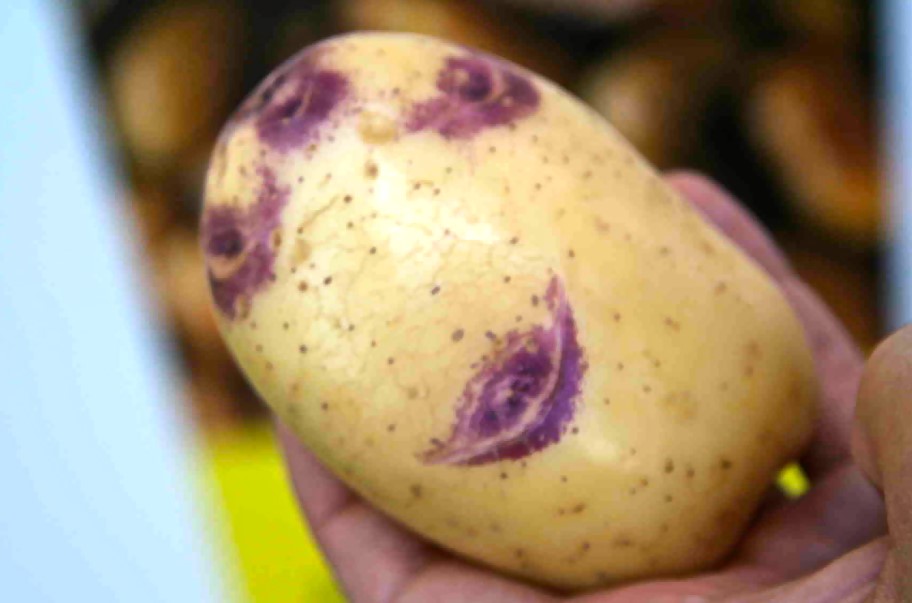
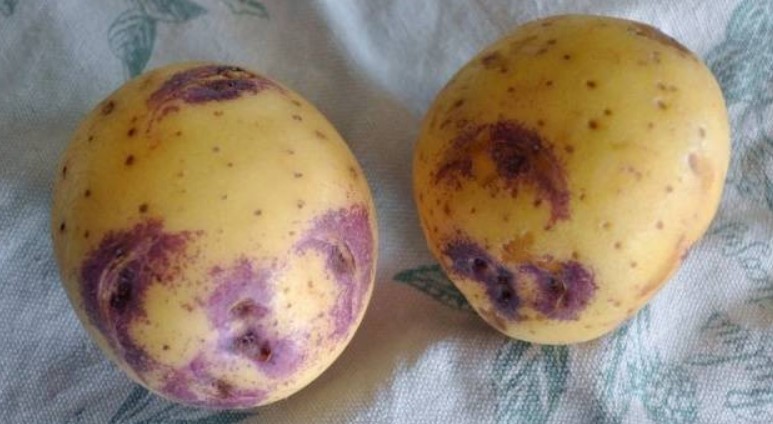
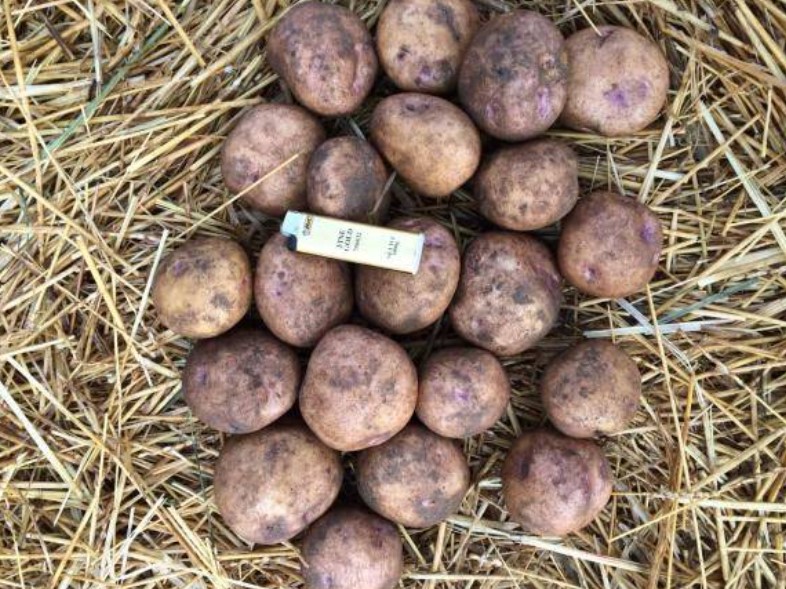
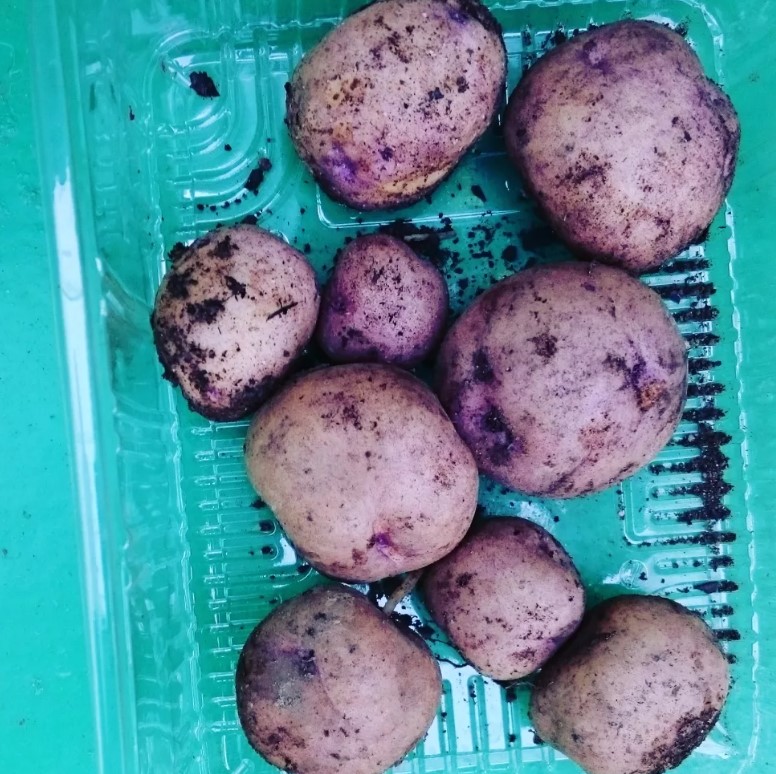
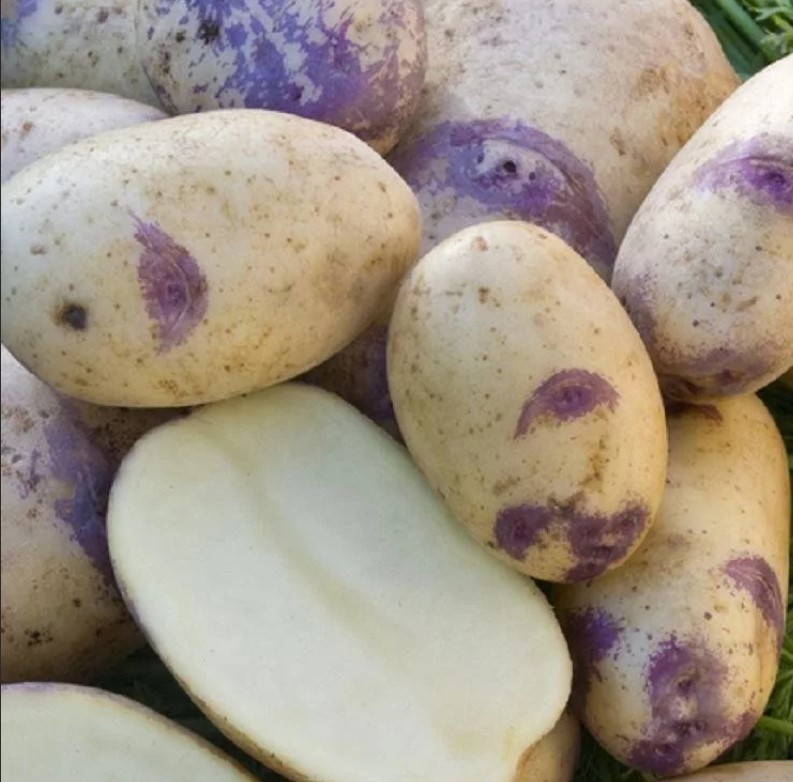
| Peel color | The color is pinkish-gray, with bluish dots clearly visible on the surface. |
| Weight of commercial tubers | From 70 to 150 g. |
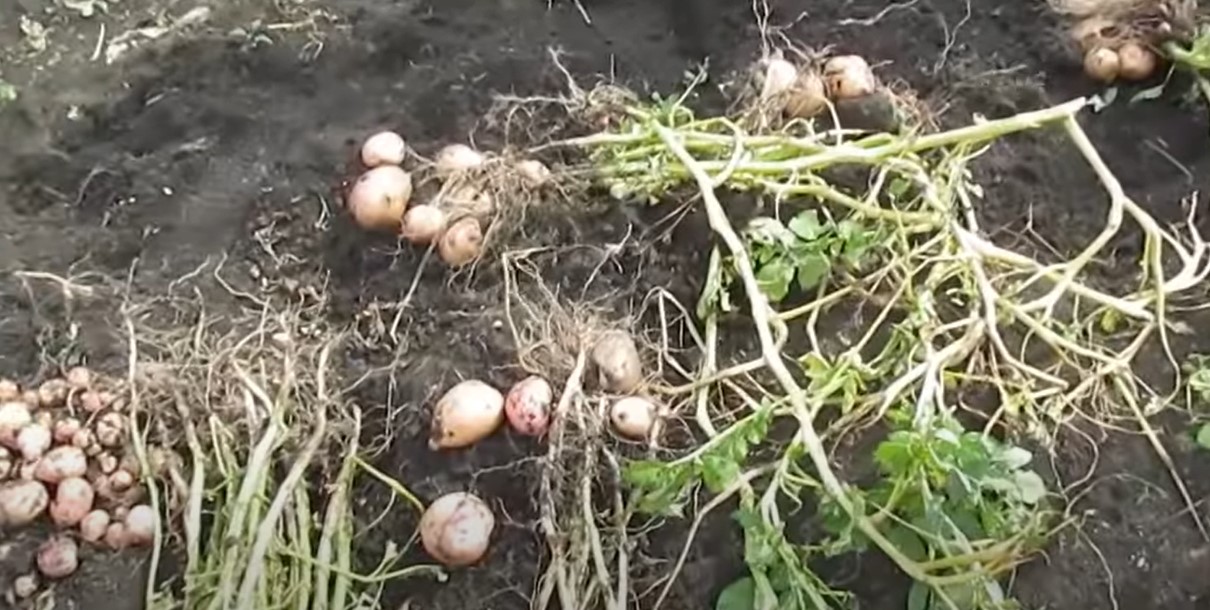
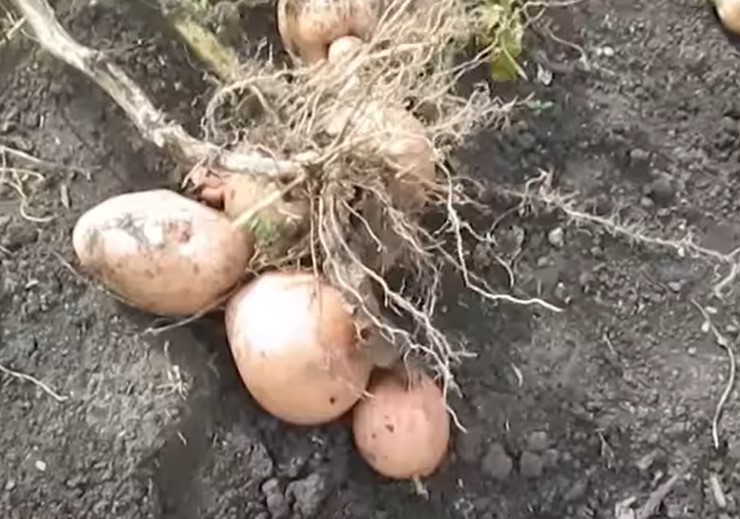
| Number of tubers per bush, pcs. | From 8 to 12 pcs. |
| Taste characteristics | Pleasant taste, moderate cooking time |
| Class and purpose in cooking | General purpose |
| Suitable regions for growing | Central Russia and southern regions. |
| Disease resistance | Resistant to the Colorado potato beetle, rarely affected by common scab and late blight, but attractive to wireworms. |
| Growing specifics | Prefers light, open areas with fertile soil of neutral acidity. |
| Not included | |
| Country of origin | Russia |
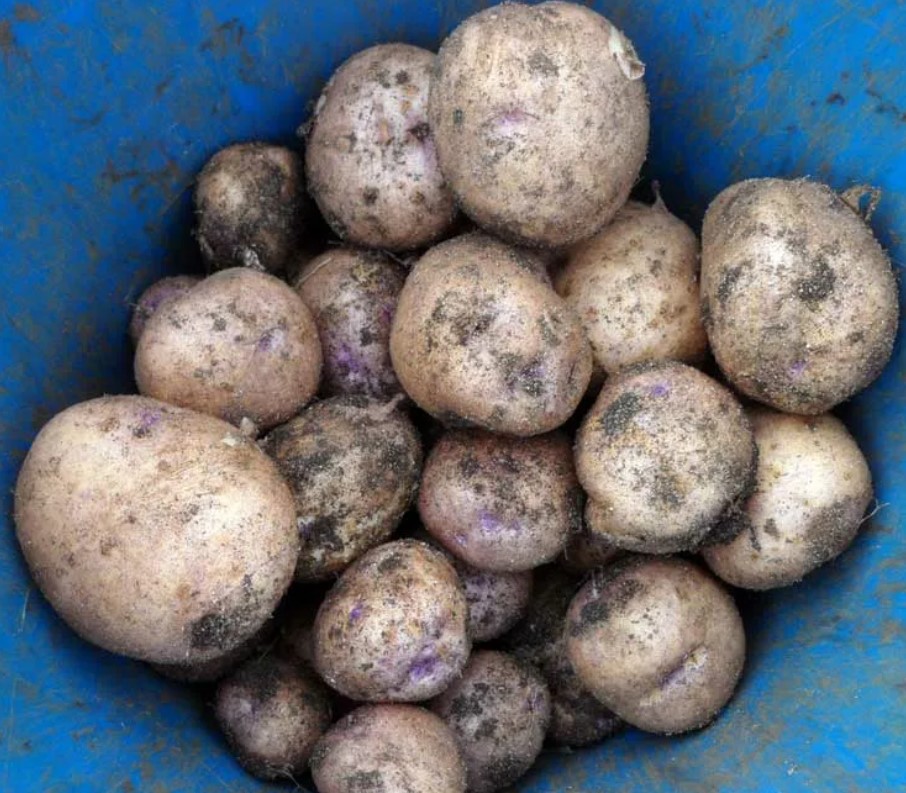
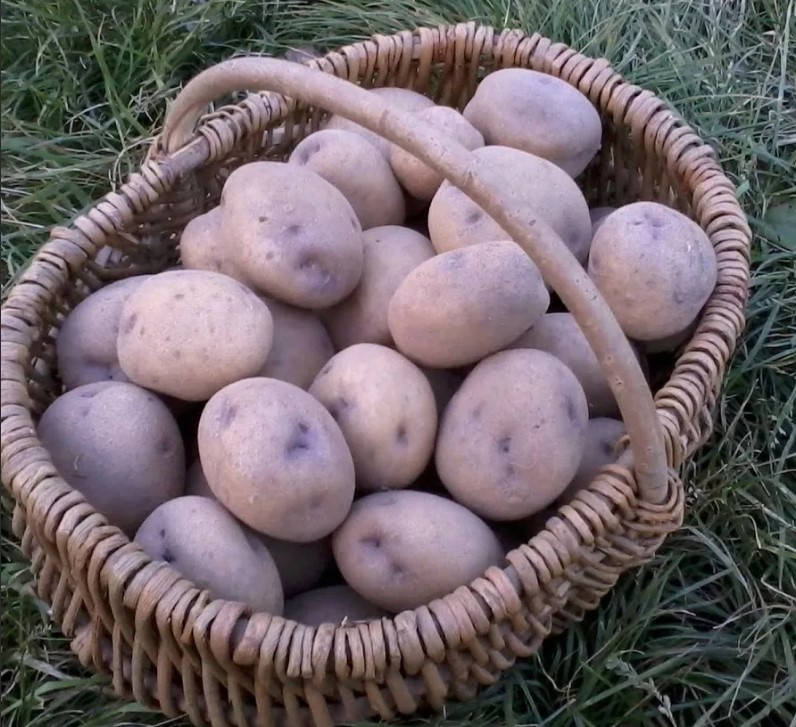
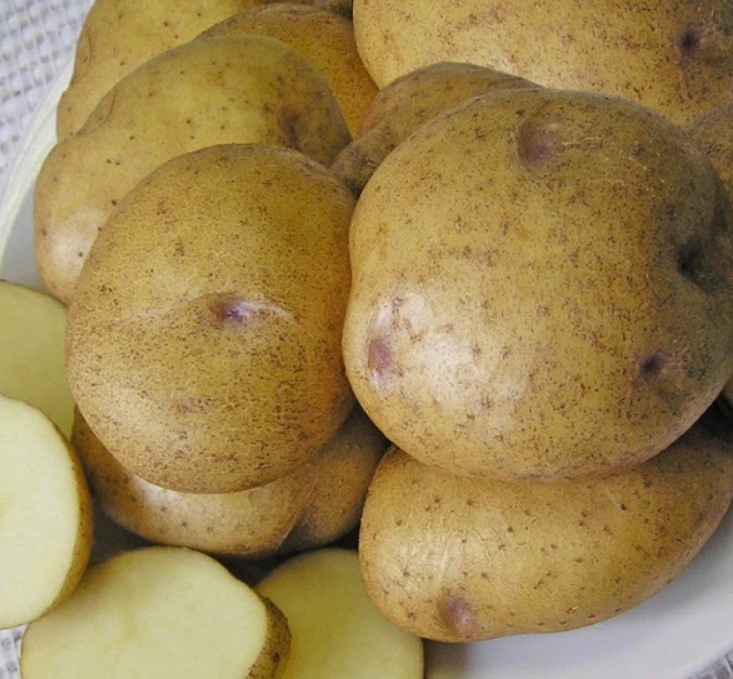
Photo gallery of the Sineglazka potato variety
The origin of the Sineglazka potato variety
The Sineglazka variety was very popular in warmer regions in the post-war period. People loved it for its pleasant flavor, as it produces an exceptionally aromatic mashed potato.
But the variety was considered unpromising because the tubers didn't store well, reacted poorly to changing weather conditions, and the yield remained a surprise to gardeners until the very end. Therefore, Sineglazka never received official recognition and wasn't included in the registry.
However, a new variety, Sineglazka 2016, was later developed from the classic Sineglazka. It was added to the register in 2019.
Description of the Sineglazka potato variety
The Sineglazka variety is intended for home garden cultivation; due to its poor shelf life, the tubers require proper storage conditions.
Bushes
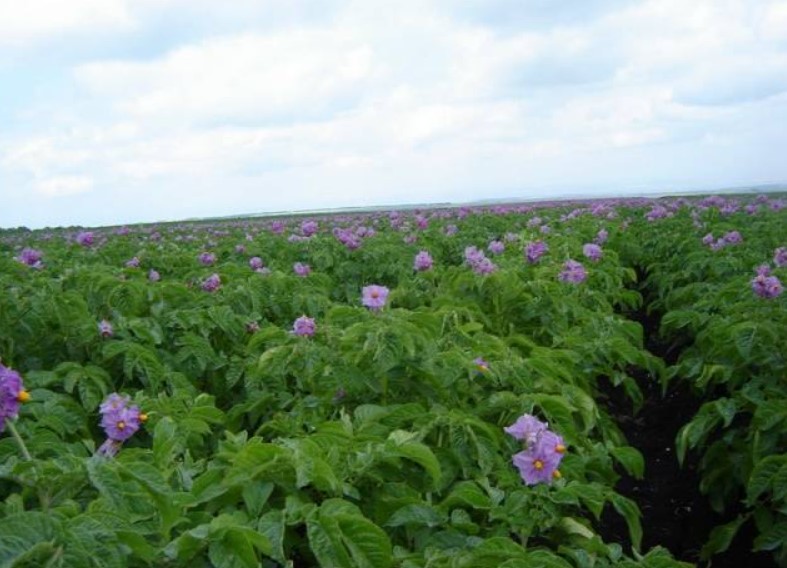
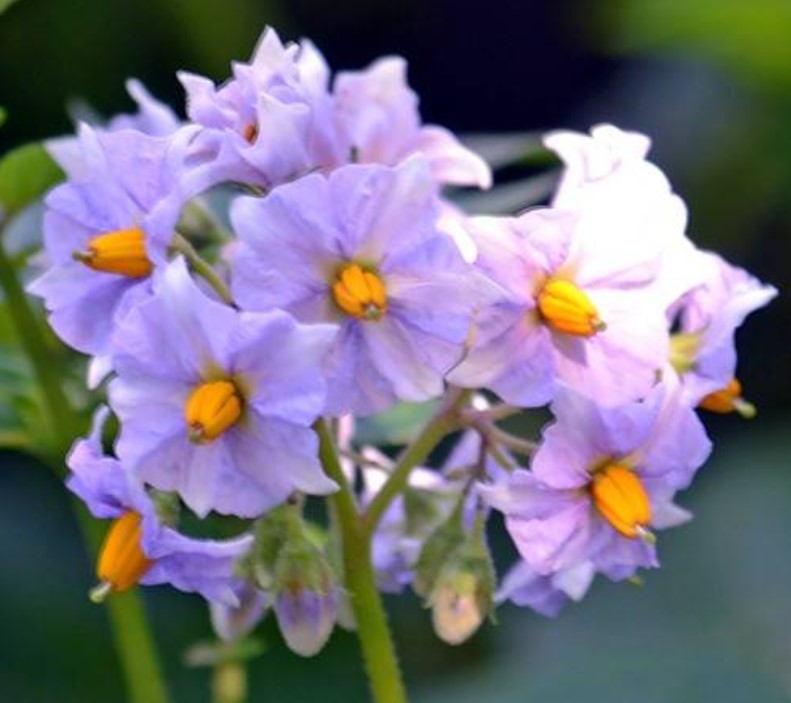
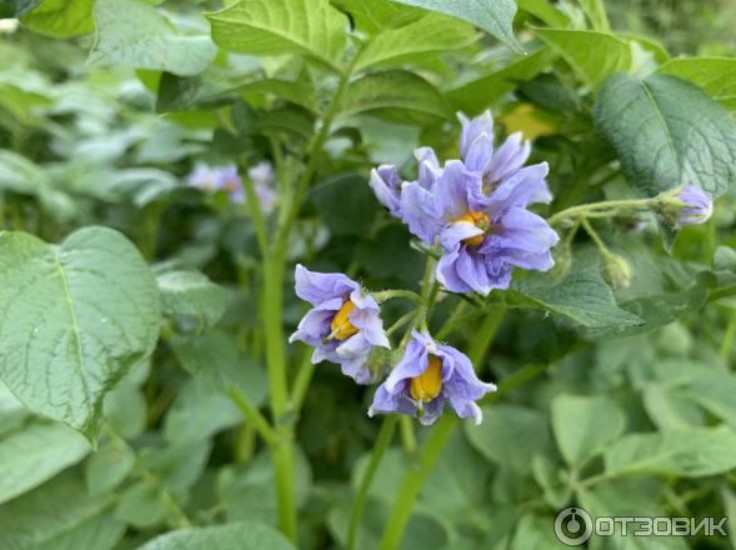
The bushes are tall, with vigorous, spreading shoots covered in dark green foliage. Small blue or light blue flowers appear during flowering.
Tubers
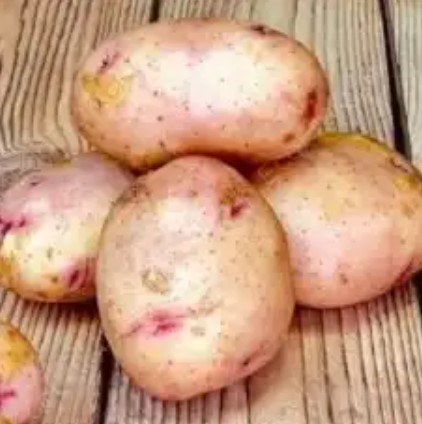
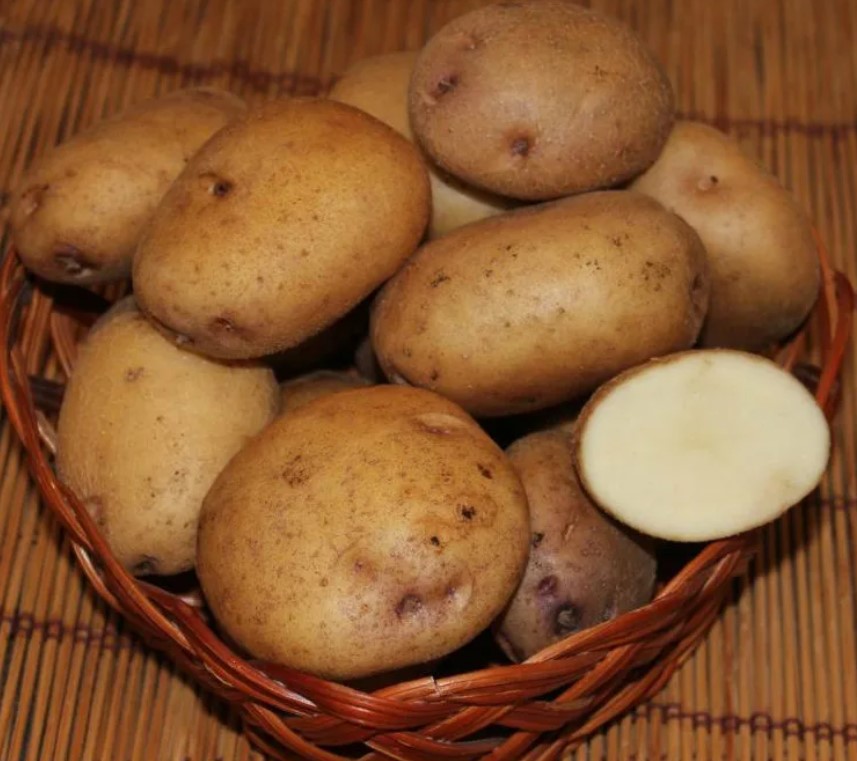
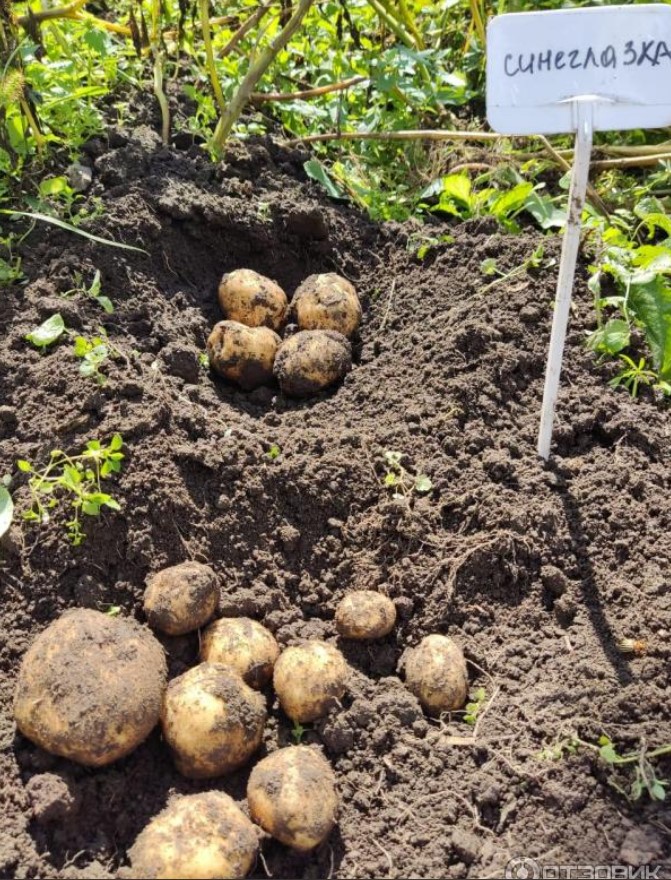
The tubers are quite large, weighing between 70 and 150 g. They are oval in shape, sometimes slightly flattened at the ends. The skin is thick, light pink, with bluish spots on the surface and a small number of eyes.
Nutrients and nutritional value
Potatoes contain about 15% starch, as well as a large amount of protein, B vitamins and mineral salts.
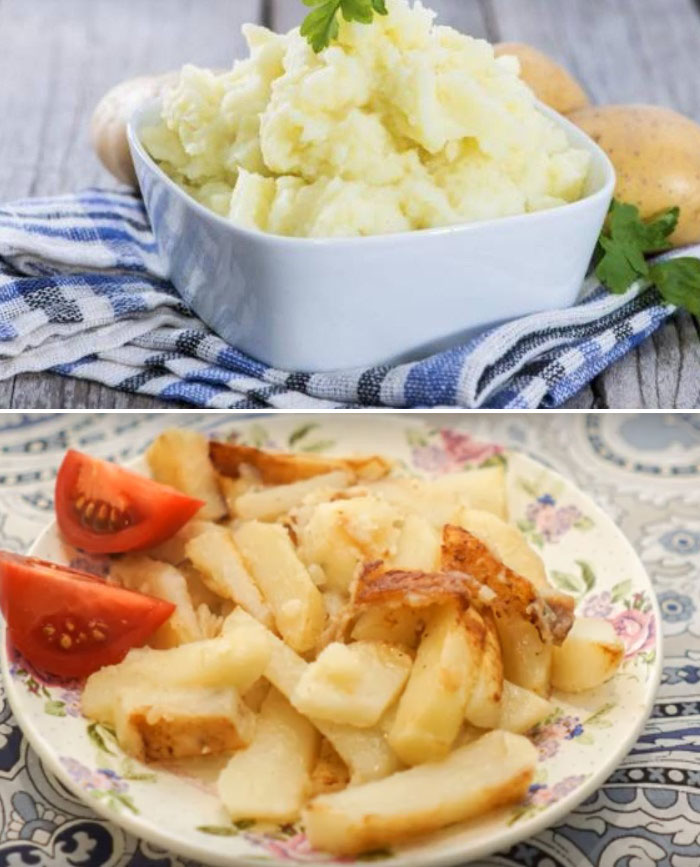
The blue-eyed potato is considered a versatile variety, perfect for baking, frying, and boiling. But it's best used for mashed potatoes.
Productivity, ripening time
Ripening occurs 70-90 days after the first shoots emerge. Tubers form early, and the growing season is extended.
Resistance to diseases and pests
The table below shows the variety's resistance to major diseases and pests.
| Name | Stability indicator |
| Colorado beetle | High |
| Wireworm | Low |
| Leaf blight | Average |
| Tuber blight | Average |
| Common scab | Average |
For which regions is the Sineglazka potato variety suitable?
The Sineglazka potato is zoned for central Russia and produces well in southern regions. In cold climates and high rainfall, the tubers will be small and easily rot.
Advantages and disadvantages of the Sineglazka potato variety
The Sineglazka potato has a number of advantages and disadvantages, which are listed in the table below.
| Advantages | Flaws |
|
|
A variety with a similar name, Sineglazka 2016
The Sineglazka variety has a similar variant, the Sineglazka 16 variety. It is a hybrid mix with more stable characteristics.
| Characteristic | Mid-season potato variety |
| General information | A tall, intermediate-type bush with spreading shoots and large, dark green leaves. A mid-season variety. |
| Ripening time | 90-95 days |
| Productivity | 120-293 c/ha |
| Marketability | High |
| Shelf life | 93% |
| Starch concentration | 11-14% |
| Color of pulp | white |
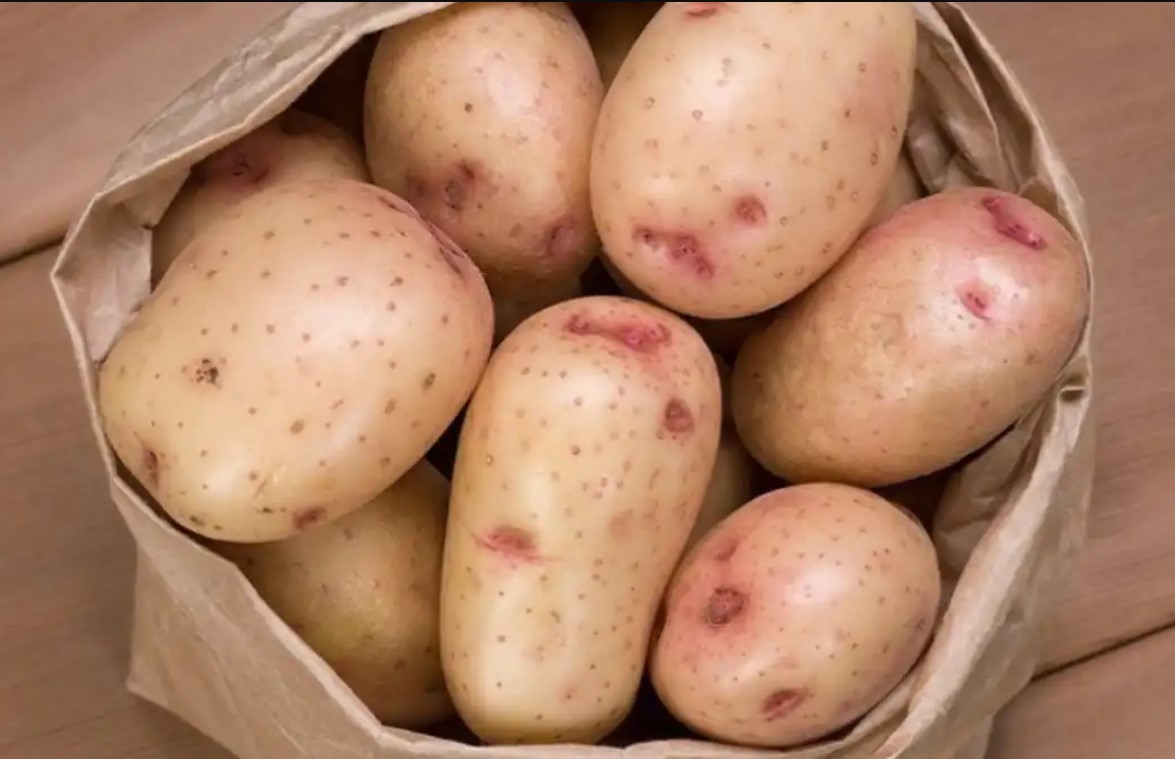
| Peel color | Partially blue |
| Weight of commercial tubers | 70-195 BC |
| Number of tubers per bush, pcs. | Up to 14 pcs. |
| Taste characteristics | Pleasant taste |
| Class and purpose in cooking | Table variety for general use |
| Suitable regions for growing | Central regions |
| Disease resistance | Highly resistant to cancer, prone to attack by golden cyst nematode. |
| Growing specifics | It grows in well-lit areas, loves warmth, and does not tolerate excess moisture. |
| 2019 | |
| Country of origin | Russia |
Photo gallery of the Sineglazka 2016 potato variety
Planting Features of the Sineglazka Potato Variety
The Sineglazka variety is relatively easy to grow, but if certain conditions are not met, the yield may be small, and the tubers may begin to rot even in the ground. Therefore, it's important to choose the right location, prepare the planting material, and properly carry out all care procedures.
Requirements for the landing site and its preparation
To grow the Sineglazka variety, it's best to choose a well-lit area of the garden. The soil should be light, fertile, and neutral in pH. If necessary, enrich it with manure, compost, and sand if the soil is too heavy.
Digging is done in the fall, at which time all necessary fertilizers are added to the soil. After digging, remove weed roots from the soil. There's no need to break up clods of soil—frost and wind will do that for you.
Selection and preparation of seed tubers
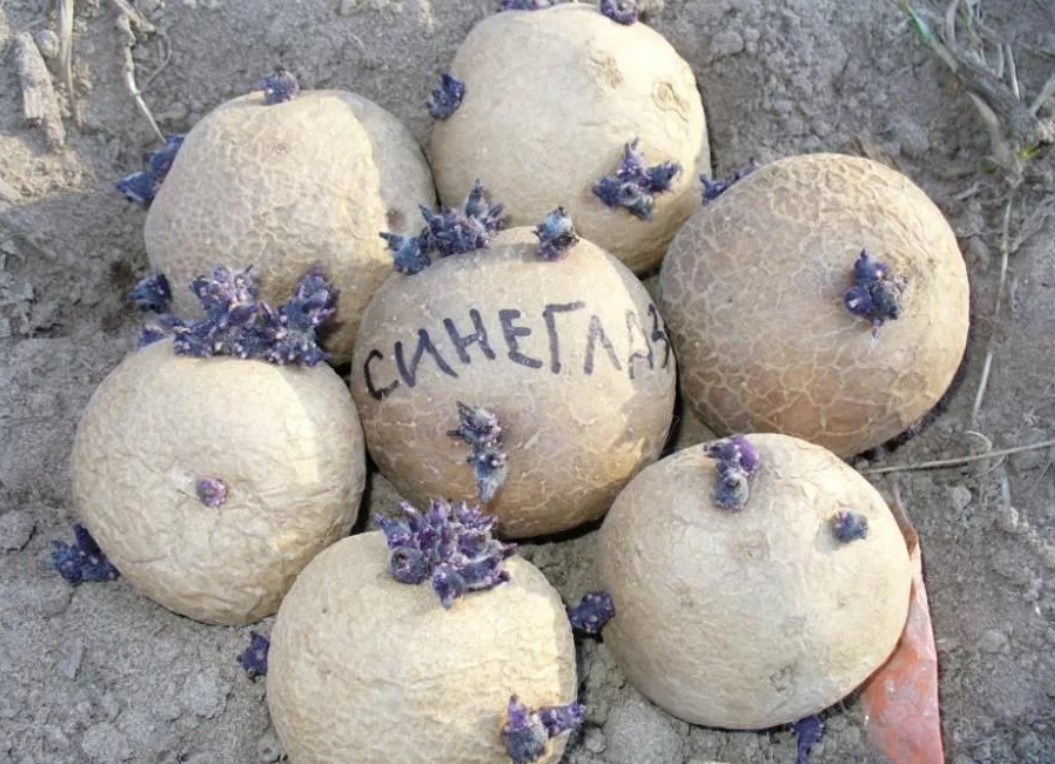
It's best to purchase seed tubers from reputable producers. You can use your own planting material, but choose tubers that show no signs of damage or disease. Also, sprouts should appear on the surface; otherwise, germination will take a very long time.
Planting times and rules
Potato planting in the Central Region begins in May. The exact date depends on weather conditions. Work can begin once the birch trees have budded and the soil has warmed to 9 degrees Celsius.
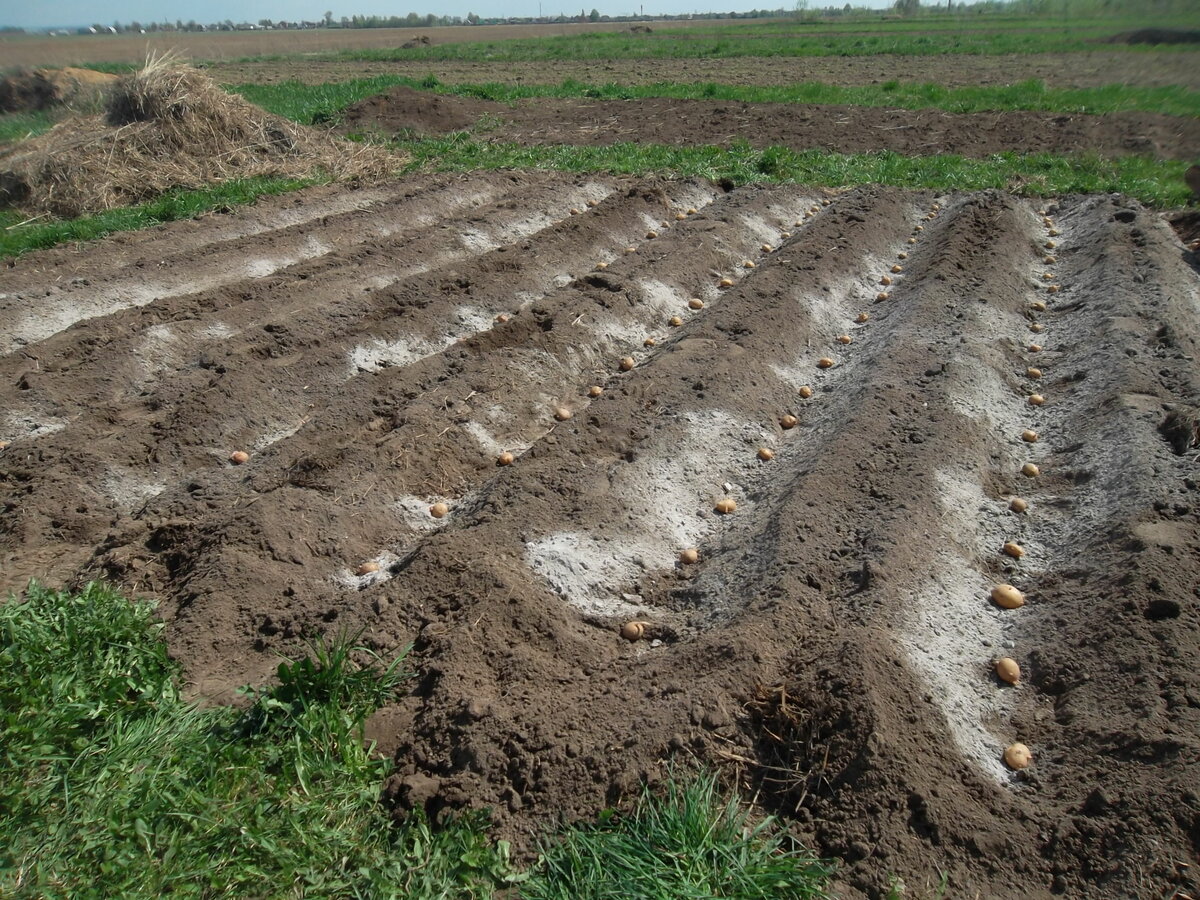
Using string and pegs, mark out the future bed on the plot, along which holes will be dug at intervals of up to 40 cm. It is advisable to arrange them in a staggered pattern, leaving at least 70 cm between rows, as Sineglazka bushes are quite spreading.
The depth of the hole will depend on the soil type. In clay soil, it should be no more than 8 cm, while in sandy loam soil, it should be 10 to 12 cm.
Caring for the Sineglazka potato variety
With proper care of the Sineglazka potato, you will certainly be able to harvest an excellent and tasty crop.
Watering
Blue-eyed potatoes don't tolerate excess moisture well, so after planting, the first watering should be done only after hilling. Further watering should be done depending on the weather; during hot periods, additional watering is possible, but if temperatures aren't critical, a second watering is done after the first buds appear. This is then repeated after the flowers have fallen and active tuber growth has begun.
Top dressing
The first feeding should contain nitrogen to allow the potatoes to gain strength and develop vegetative mass. Therefore, a solution of bird droppings (1:15) works well for this purpose. It is added to the soil after hilling and watering. Further feeding is not necessary; otherwise, the bush will branch out, but tuber development will be inhibited.
Loosening, weeding
When growing potatoes, it's essential to promptly remove all weeds. Not only do weeds compete with the crop for nutrients and water, but they also actively attract pests that can infest the potatoes.
Loosening the soil around the plantings is done superficially to avoid damaging the tubers. This is done infrequently and combined with hilling.
Hilling
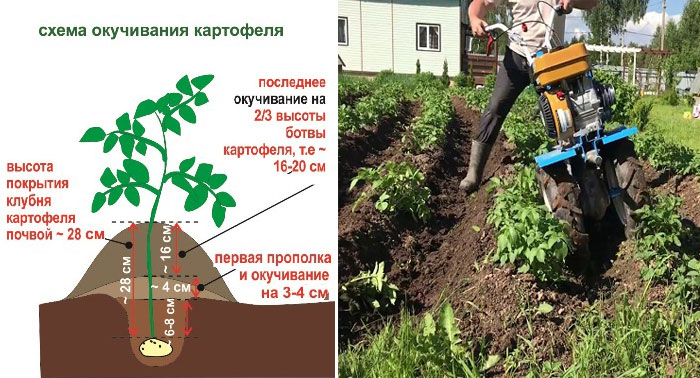
The first hilling of Sineglazka strawberries should be done when shoots reach 10-12 cm in height. Using any convenient garden tool, pile the soil over the stem, forming a mound up to 10-15 cm high. This will protect the strawberries from sunlight and also provide them with nutrients and moisture.
Hilling should be repeated as needed 2-3 times per season.
Protecting the Sineglazka potato variety from diseases and pests
The table below lists the main problems of the Sineglazka potato and how to solve them.
| Disease, pest | Characteristic | Prevention and treatment |
| Wireworm
|
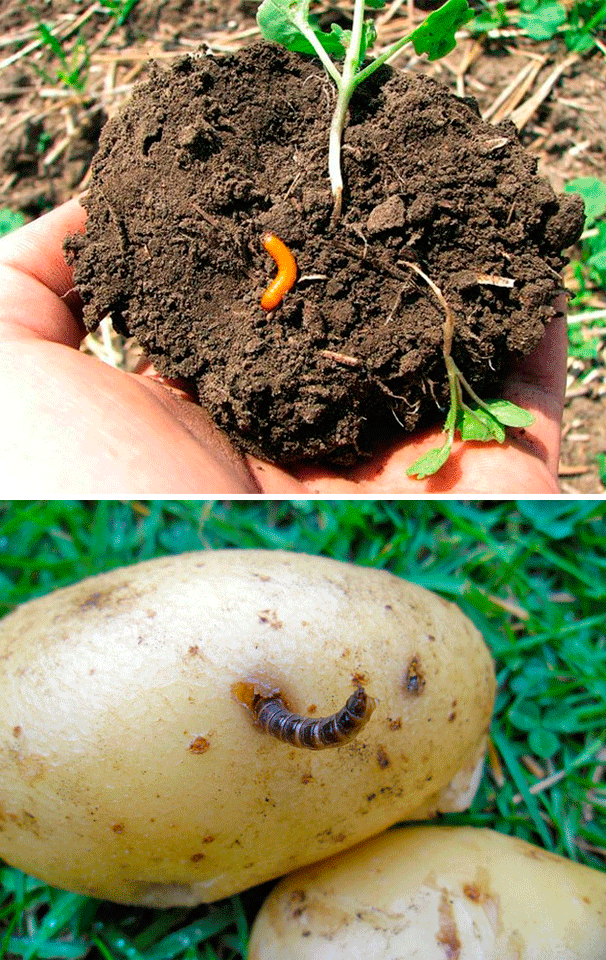
Wireworms can be detected by digging up a tuber and noticing numerous pinholes. Typically, the plant is infested in a single location, as the wireworms move primarily horizontally and do not migrate from one plant to another. | To prevent wireworm infestations, lower the soil's acidity. If the pest appears, bait it with potatoes soaked in insecticide. Bury the potatoes in the soil for two days. Then, remove and destroy them, along with any larvae that may have crawled in. Crushed eggshells scattered along the garden bed will also repel the pest. If the pest infestation is large, only chemical treatments will be effective, but these should only be used in extreme cases. |
| Late blight
|
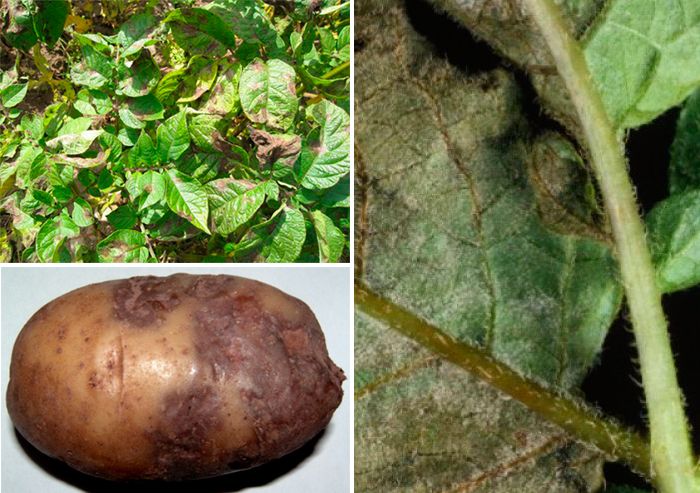
The above-ground part of the bush turns brown, the leaves begin to curl and dry out, and a white coating is visible on their reverse side – the first signs of fungus. | Late blight rarely appears on blue-eyed sineglazka, so planting it in a sunny spot and following watering guidelines is a good preventative measure. If the disease does appear, only fungicides will help, but it's best to remove the affected bush from the garden and destroy it. |
Harvesting and storing the Sineglazka potato variety
Harvesting begins 90 days after the first shoots emerge. However, as early as mid-July, if planted early, you can dig up a few tubers and use them for food.
Potato digging work is carried out in dry weather, preferably on a sunny day.
How to dig up potatoes mechanically and How to make a potato digger yourself Find out on our website.
The dug-up tubers are laid out on plastic wrap or cardboard to dry. Avoid keeping them in the heat for too long, as this will cause the liquid to evaporate, causing the potatoes to shrivel and lose their firmness.
Once the tubers have dried, they need to be sorted. If they are damaged, do not store them; they should be eaten immediately.
Rules and methods of storage in different conditions on the website Top.tomathouse.com.
Whole and healthy tubers are placed in boxes or cloth bags and stored in a cool room with a temperature of 3-5 degrees.
Comparison of the Sineglazka potato variety with other varieties in the table
| Variety | Ripening period (number of days to maturity) | Starch (%) | Yield (c/ha) | Weight of tubers (g)
Number of tubers per bush Color of tuber, pulp |
Shelf life (%) |
| Blue-eyed | Mid-season*** | 15-17 | up to 500 | 70-150
8-12 pinkish-gray, white |
25 |
| Blue-Eyed 2016 | Mid-season*** | 11-14 | 120-293 | 70-195
up to 14 bluish, white |
93 |
| Riviera | Early ripening* | 11.5-15.9 | 189-366 | 101-177
11-12 light beige, cream |
94 |
| Charoite | Ultra-early | 14-17 | 104-269 | 100-145
8-12 light yellow, pale yellow |
96 |
| Blue | Mid-season | 17-19 | up to 500 | 90-150
9-11 creamy, soft milky |
90-95 |
| Meteor | Early ripening* | 10-16 | 210-405 | 100-150
10-12 cream, light yellow |
95 |
| Lorkh | Mid-late | 15-20 | 250-350 | 90-120
9-11 light beige, white |
88-92 |
| Nevsky | Mid-early** | 10-12 | 380-500 | 90-130
12-15 beige, white |
91-96 |
| Armada | Early ripening* | 17-18 | 230-370 | 96-130
9-14 beige-yellow, light yellow |
80-85 |
| Dolphin | Early ripening* | 11.2-15.1 | 170-256 | 80-132
8-12 yellow, light yellow |
90-99 |
| Lugovskoy | Mid-season*** | 12-19 | up to 514 | 85-125
8-15 light pink, white |
97 |
| Innovator | Mid-early** | 12-15 | 320-344 | 83-147
6-11 creamy, soft yellow |
94 |
| Lapis lazuli | Early ripening* | 13.5-15.7 | Up to 270 | 92-120
6-11 yellow, white |
96-98 |
Ultra-early – 35-50 days.
*Early ripening – 50-65 days.
**Mid-early – 65-80 days.
***Mid-season – 80-95 days.
****Mid-late – 95-110 days.
Reviews of the Sineglazka potato variety
The Sineglazka potato is excellent for making the most delicate mashed potatoes and is highly resistant to disease. However, rain can sometimes cause the tubers to rot in the hole. Gardeners note that the classic Sineglazka variety doesn't store well.
NK Russkiy Ogorod's "Sineglazka" seed potatoes are sold in a 2-kilogram net bag for 259 rubles. The tubers are of the "Super Elite" category. The seeds arrived in excellent quality, all even, with small, strong sprouts.
The germination was not very uniform. The bushes were quite fluffy, and the leaves were typical potato leaves.
The bushes were noticeably lower in height than other varieties at the beginning of growth, but then they caught up with the rest of the potatoes.
The potato blossomed with pretty blue flowers.
The yield varies from bush to bush; there are bushes that produce only 3-4 potatoes, while others produce more than 10.
The potatoes are round, slightly flattened, but for some reason mine don't have blue eyes, and the flesh is white. They're tasty and crisp. A very respectable variety with good-quality seeds. I highly recommend them.
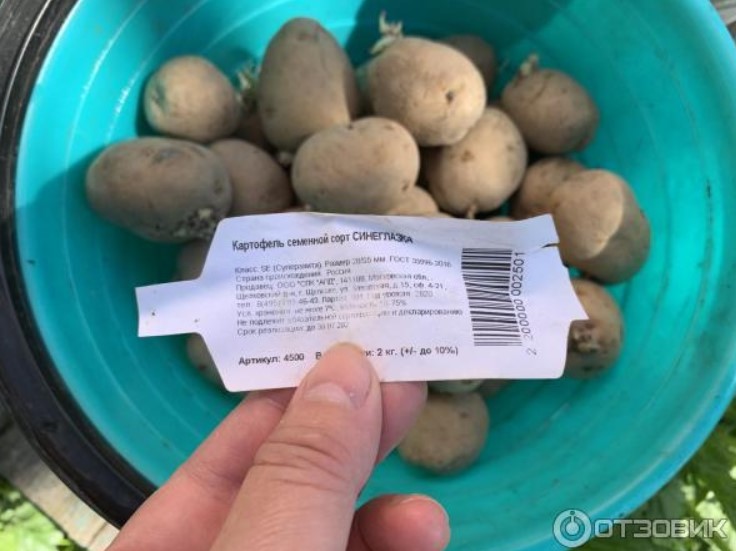
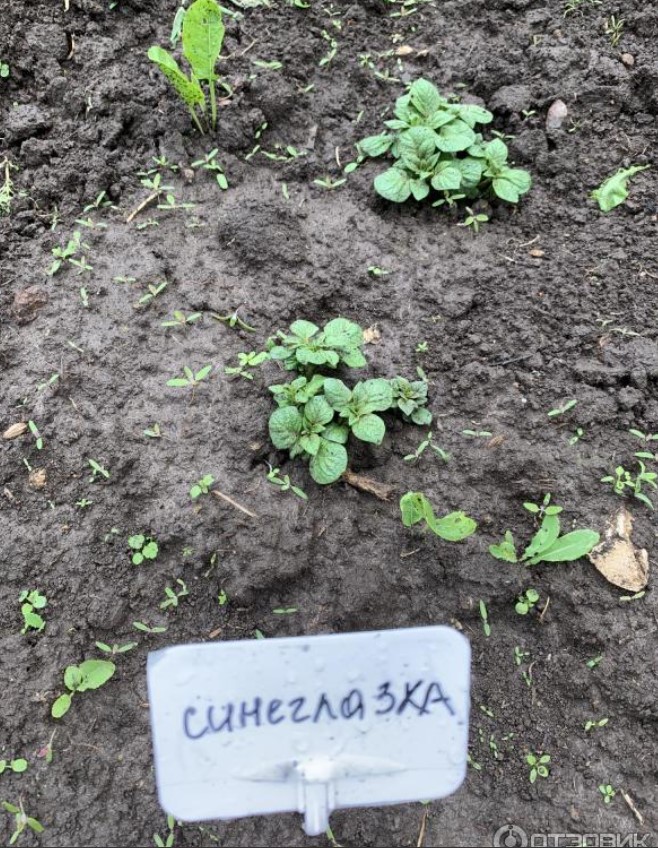
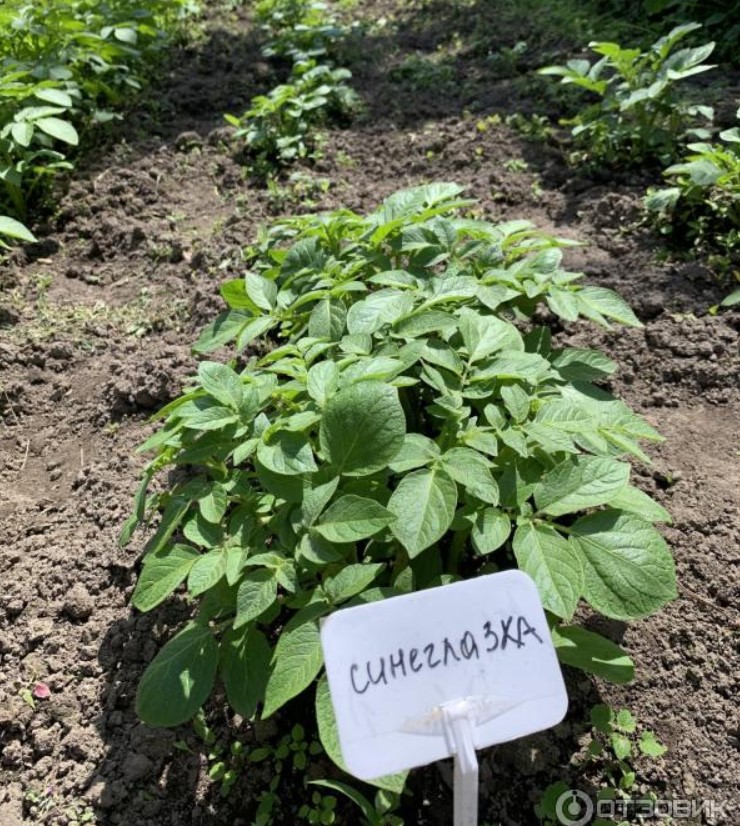
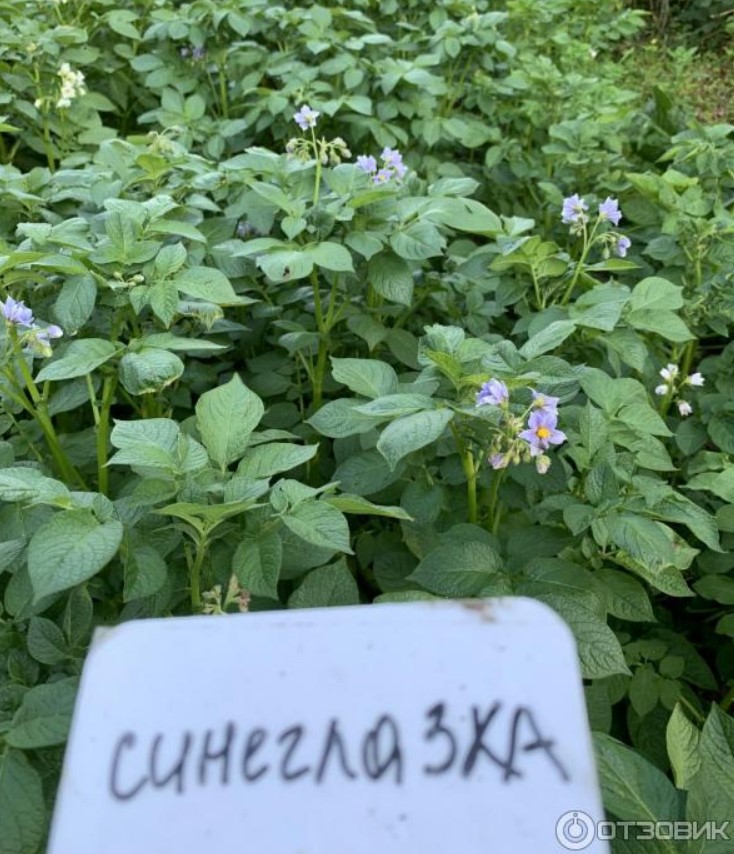
I also have Sineglazka from the “times of Ochakov and the conquest of Crimea…”
Here it is, greened and laid out for germination:
And this one is for food, stored in the dark. I specifically found one with both eyes and sprouts:
I didn't like the taste of Sineglazka either. My grandparents loved it and grew it deliberately.
It can be stored perfectly in private farms, but it doesn't keep well on an industrial scale, which is why it's not included in the state register.
The taste declines by spring. The difference between when the new one ripens and last year's is striking. It's a fact.
Blue-eyed mushrooms don't store well. That's why they weren't initially cultivated on an industrial scale.
Plus, its eyes are recessed. Previously, industrial potato production was aimed at consumers who peeled potatoes mechanically.
Here are two main reasons why Sineglazka was rejected in Soviet times. :hello:
Moreover, it doesn't have a very high yield. And the tubers often become overcooked.
But Sineglazka has spread to private farms. But the variety hasn't died out. Precisely because it's attractive to private growers. Its flavor outweighs any other drawbacks. We'll pick out the eyes with a knife and try to eat the bulk of the Sineglazka before spring. And we'll sort them out, if necessary. :aga:
Masha Petrova said: ↑
I just can't understand why the sellers are misleading us. After all, these potatoes are sold for eating, not for planting, so what's the point of hiding the variety?
Because it's delicious. Golubizna is similar, but not quite the same. Far from it.
A typical marketing ploy. They sell what's in demand. And 80 percent of buyers no longer remember the real taste of Sineglazka. So they can deceive with virtually no consequences. The buyer believes, the seller profits. Everyone is happy!
Blue-eyed potatoes—ahhh, the taste of childhood and memories of grandma. They were delicious, but they easily pick up diseases. You can't buy them at the market now, but I really want to plant some myself.
I've started and abandoned growing the Sineglazka potato variety many times. And the reasons are the same as why the variety, developed by domestic breeders before the war, has yet to be registered. It's not suitable for commercial cultivation.
This potato variety used to be easy to buy from private sellers at the market. Nowadays, seeing this potato at the market is a rare and rare occurrence. It's quite easy to identify it by its blue-lilac eyes. It's much easier to buy Sineglazka from companies that specialize in planting material. However, the price can be exorbitant, ranging from 250 to 500-600 rubles per net bag, which typically contains 2 kg.
Many who purchased Sineglazka planting stock ended up saying, like the driver in "Kidnapping, Caucasian Style," "Cursed be the day I got behind the wheel of this vacuum cleaner." There may have been variations, but the essence is the same: I won't grow it again.
So what's the matter here? This variety produces a decent potato harvest with unrivaled flavor. Ask any gardener who has given up on this variety, and the answer will be roughly the same. They'll cite two main reasons: too many small peas, and poor storage.
I've come to understand this variety and can say it's suitable for small garden plots, not for large areas. What's the big deal?
Before planting this potato, you need to prepare the soil. Light soil with a high organic content is preferable. Once planted, the potatoes sprout very evenly. They grow relatively large bushes with a strong root system. The more roots, the more tubers they produce. Therefore, to produce large fruits and a large harvest, this variety requires additional feeding. The best fertilizer is manure infused in water with the addition of chicken manure.
Fertilizers are needed at the roots. First, water lightly, then fertilize, and then water again. This will help you get many large tubers. This is unrealistic in large areas.
You've got a bountiful harvest of delicious potatoes, but don't get too excited. Try preserving them. More than half of a large harvest can rot. It's best to store them in wooden boxes, sorting them 2-3 times a month. Faced with such difficulties, even despite the excellent taste, many give up on growing them.
But if you're persistent and still decide to grow this variety, you'll face another problem in 4-5 years. The variety will begin to lose its quality. The potatoes will become smaller and lose their resistance to many diseases. You'll need to replace the seed. There are two options. First, you can spend a considerable amount of money on ready-made seed. Second, you can collect your own seeds, which retain all the characteristics of the variety, and grow your own planting material through seedlings.
And again, expect a surprise. Potatoes bloom abundantly with pretty blue flowers. But as a rule, almost all of them fall off without producing fruit. Fruit is very rare. Only occasionally do there appear to be exceptions, which I can't explain. Perhaps some pollination by insects suitable for the variety has occurred. But such bushes are quite noticeable. We even mark them specifically by sticking sticks with red ribbons tied to them nearby. The main thing is not to lose the seeds.
Even after collecting the seeds, you'll face another challenge. You need a lot of seedlings, which means you need space and containers to grow them. This takes up so much of your time and space that you have no time for anything else. I have two friends who get their seeds from seedlings, but they don't even have the time or resources to grow cucumbers and tomatoes.
For these reasons, I grow this potato variety only in my garden plots, despite its excellent taste. And the potatoes are truly wonderful. Boil them, and these crumbly potatoes easily turn into snow-white mashed potatoes that don't darken at all. Fry them in a pan, and the potato aroma fills the entire apartment, and the taste is simply superb. These potatoes go well with any dish.
And one more secret. Potatoes fully mature in 90-110 days. But you can dig them up after 40-50 days. This is why Sineglazka is also called a 40-day potato. Potatoes simply have a long growing season. It's easy to get young, early potatoes if you take the planting material out of the cellar and spread it out in the light at least two weeks before planting. Place a container of water nearby. Then, plant and harvest in 40 days.
I simply don't know what grade to give this productive and delicious potato. The initial signs definitely get an A. The aforementioned shortcomings could be worth a F. But I'd probably give it a A for its unique flavor. You decide for yourself whether you can get a decent harvest.
A Tale of the Potato "Sineglazka" by Sergei Galkin
Whether the "blue-eyed" mushroom really has a unique taste was tested in a private experiment.
This was reported by Sergei Viktorovich Galkin, mentor of the Children's Farmer's School of the AGRO XXI portal.
"All schools—general education, music schools, even dance and art schools—have summer vacations. But at our Children's Farming School at the AGRO XXI portal, there are no vacations. Even in winter, my heart aches—whether everything will freeze, or rot, or they forgot to plant again... But since it's a vacation, after all, the current topic is agricultural tales, fables, and legends..."
Surely every farmer, peasant farmer, private farmer, and summer resident knows, grows, and loves, when mashed with salt, the "Sineglazka" potato variety. But few know that such a variety simply doesn't exist.
Each variety must undergo state variety testing and, based on its results, it is either included or NOT included in the register.
"Sineglazka" has not undergone any variety testing; its characteristics, economic qualities, and the most favorable regions for cultivation have not been determined, and accordingly, this variety is not included in the register.
Of course, one could say that this is an empty formality. Yes, it is a formality, but it is not at all empty.
Thanks to the internet and agricultural websites, including our portal, we read and know that there are thousands of descriptions of cultivated "sineglazka" (blue-eyed scallops), and they all vary greatly. Some consider the "sineglazka" to be an early variety, others grow it as a late variety, some complain that it's too small, while others imagine it to be large. Still others consider it a forage variety. And the descriptions of the colors of the flesh, skin, and eyes are a veritable rainbow.
But there is no information about yield, resistance to drought, waterlogging, cold, diseases, pests, or shelf life.
The only thing everyone insists on is "tasty." So, any potato you like can safely be called "blue-eyed."
But it turns out there's also a problem with taste. I was once invited to a farmer's anniversary party, a literal "fan" of this very same "blue-eyed" potato, who insisted that neither he nor his family had ever eaten, nor would ever eat, any potato other than their beloved "blue-eyed" potato.
All other varieties are impossible to even put in their mouths, they are disgusting.
As usual, the host showed his guests his domain, and at the same time, everyone could pick a cucumber, a tomato, or a bunch of greens for the table.
Of course, they also plucked the famous "blue-eyed" mushroom. The tubers were neither distinctive in size nor in marketable appearance.
Since I was planning an experiment, I volunteered to peel the potatoes myself.
I went to the river to clean the potatoes. As I passed my car, I swapped the owner's "blue-eyed" potatoes for some I'd bought at Pyaterochka. They were perfectly clean, unrotted, and undamaged by wireworms and mole crickets. They were yellow and completely eyeless, imported Egyptian potatoes. I peeled them, brought them back, boiled them, fried them, and they ate them with relish, and they raved about their beloved "blue-eyed" potatoes.
And not a single ardent fan could distinguish the taste of the "Egyptian" from their unloved "blue-eyed" one. Such are these rural tales and fables, or, in modern parlance, fakes.