Thanks to its low maintenance, the Vega potato variety is suitable even for regions with unpredictable weather conditions. It is immune to many diseases common to nightshade crops. In this article, we'll provide a more detailed description of the Vega variety and outline the basic growing guidelines for ensuring an excellent harvest.
Content
- 1 Table with characteristics of the Vega potato variety
- 2 The origin of the Vega potato variety
- 3 Detailed description of the Vega potato variety
- 4 For which regions is the Vega potato variety suitable?
- 5 Advantages and disadvantages of the Vega potato variety
- 6 Planting Features of the Vega Potato Variety
- 7 Caring for the Vega potato variety
- 8 The nuances of harvesting and storing the Vega potato variety
- 9 Comparison of the Vega potato variety with other varieties in the table
- 10 Real reviews from gardeners about the Vega potato variety
Table with characteristics of the Vega potato variety
| Characteristic | Description |
| General characteristics | Vega is an early table potato variety. It quickly adapts to changing weather conditions. |
| Ripening period | 50-65 days. |
| Starch content | 10.1-15.9% |
| Weight of commercial tubers | 87-120 g |
| Number of tubers in a bush | 8-10 pcs. |
| Productivity | 229-377 c/ha, maximum 484 c/ha. |
| Taste qualities | Vega has received high consumer ratings for its taste and is ideal for baby food. It belongs to culinary grade B, meaning it has medium cooking times. |
| Marketability | 87-95% |
| Shelf life | 99% |
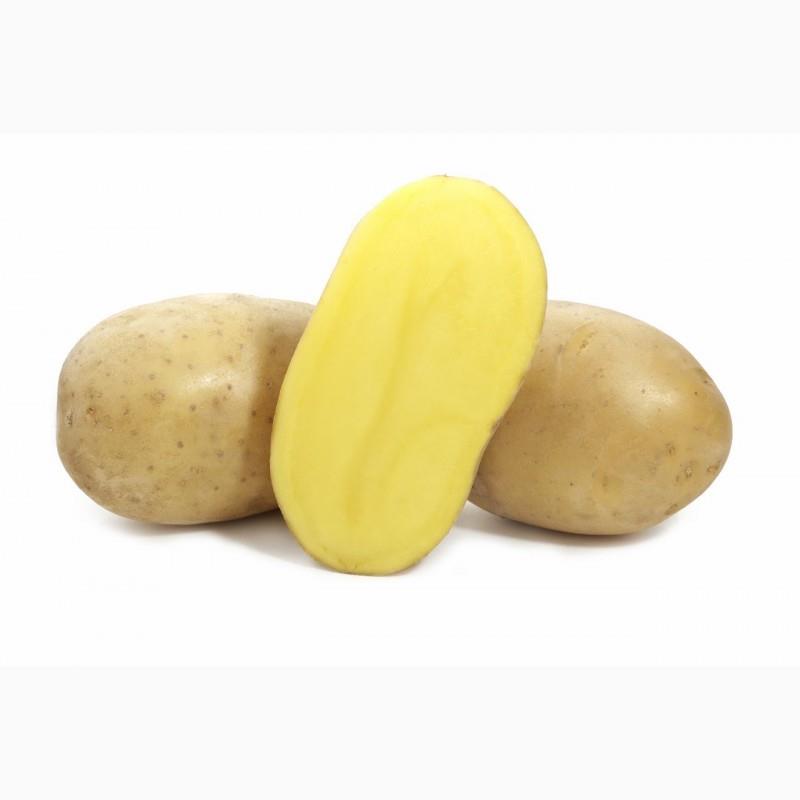
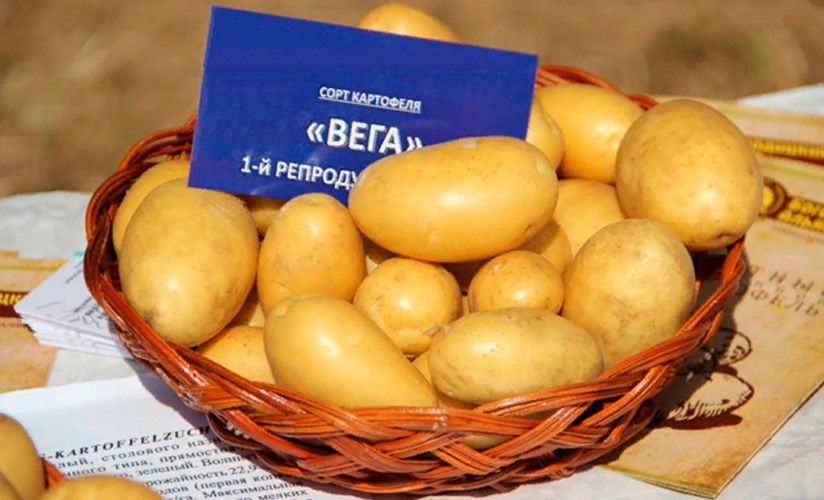
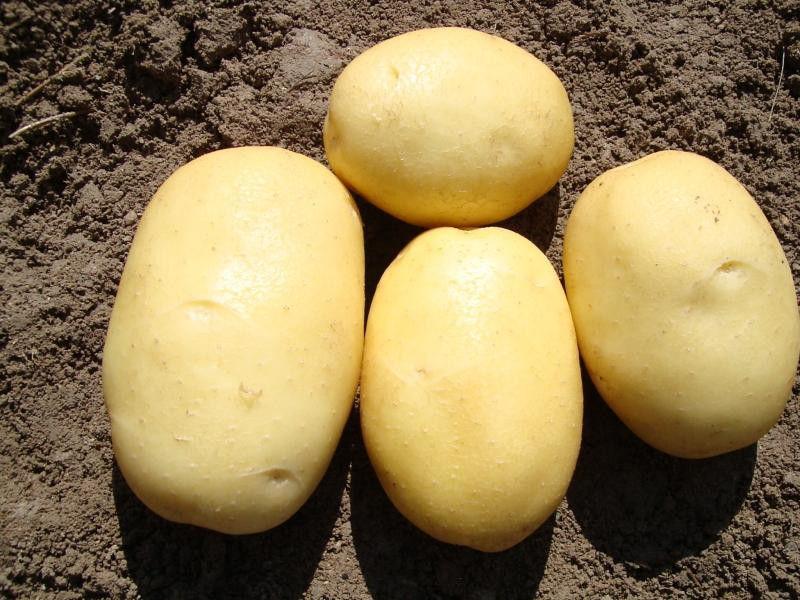
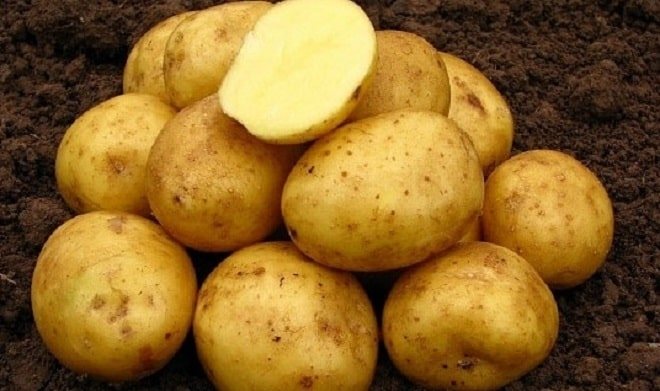
| Peel color | Yellow |
| Pulp color | Light yellow |
| Preferred growing regions | The variety grows best in the central part of Russia. |
| Disease resistance | It is resistant to late blight, cancer and nematodes, and moderately resistant to rugose mosaic. |
| Features of cultivation | For better similarity and higher yield, it is recommended to germinate the tubers before planting. |
| Originator | Norika Germany |
| Year of entry into the Russian Federation register | 2013 |
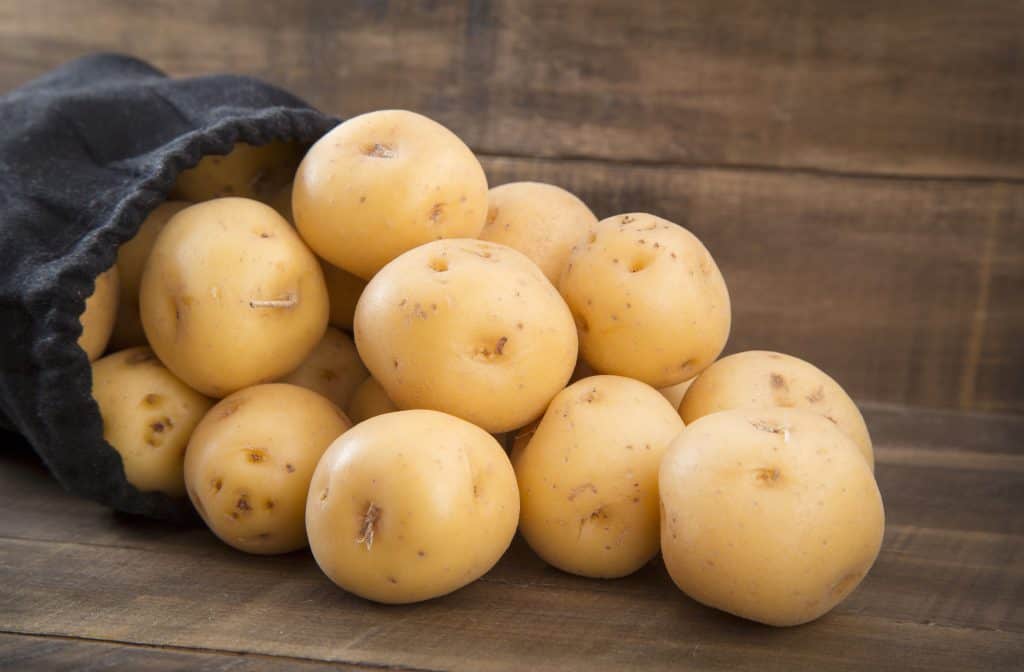
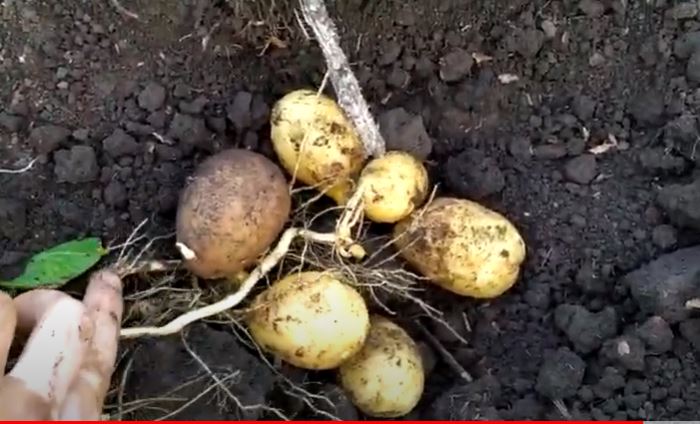
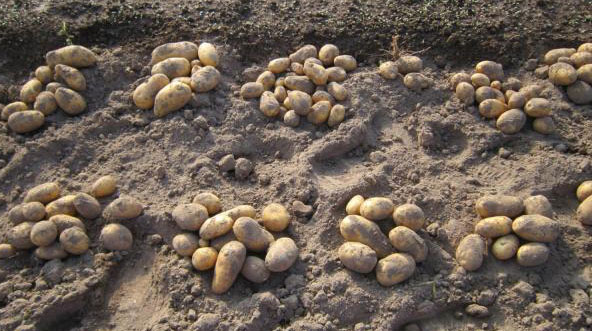
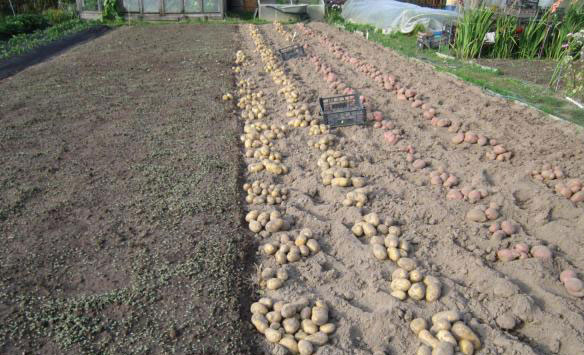
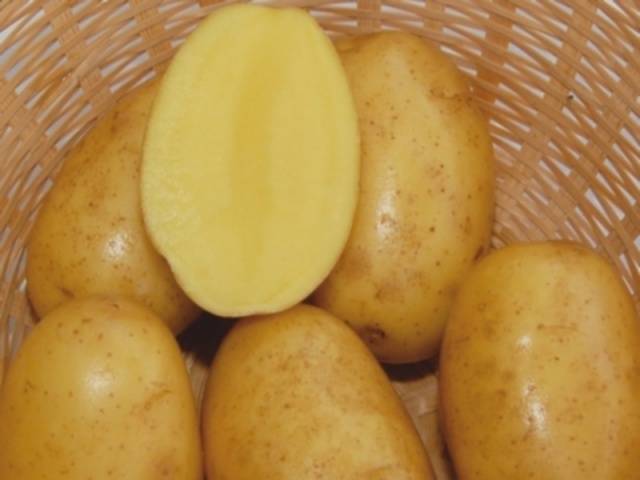
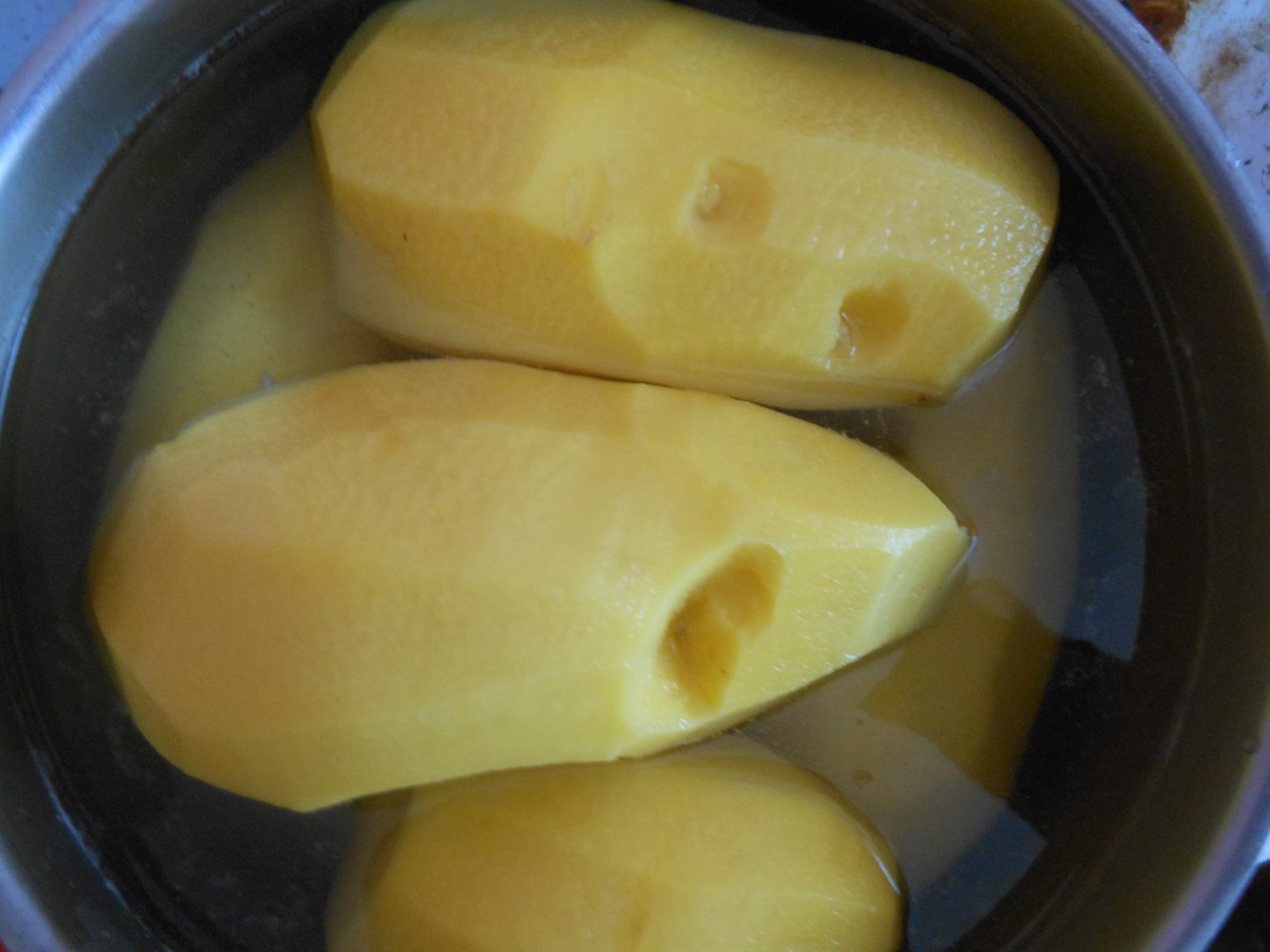
Photo of the Vega potato variety:
The origin of the Vega potato variety
The Vega variety was developed thanks to the efforts of German breeders from Norika. Their goal was to develop an early-ripening potato that adapts well to weather conditions and is disease-resistant. After numerous test plantings, the goal was achieved, and the potato began to spread throughout Western countries, eventually reaching Russia, Ukraine, and Belarus. In our country, it was officially recognized and added to the register in 2013.
Detailed description of the Vega potato variety
A mid-early table variety, Vega is characterized by a relatively short maturation period. From germination to harvest, it takes 50-65 days. Vega boasts a record-breaking shelf life of 99%. The potato is ideal for commercial use: the tubers are uniform, attractive, transport well, and have a pleasant flavor.
The yield is also above average; with ideal, good weather, you can harvest up to 500 centners of potatoes per hectare. However, in most cases, this figure is an order of magnitude lower due to various factors that are not always the gardener's control. The average yield across the country ranges from 230 to 380 centners per hectare.
Bushes
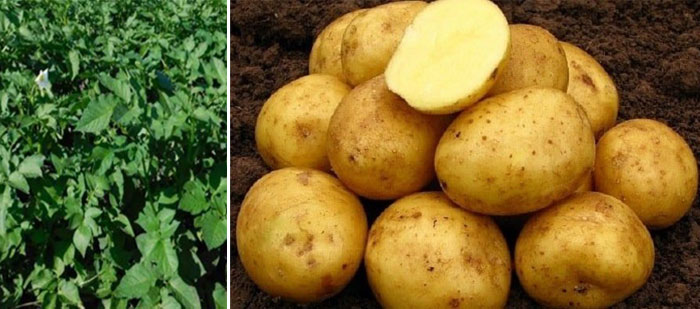
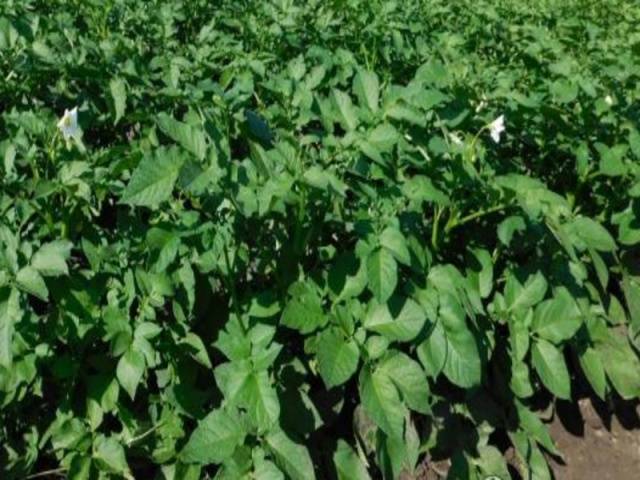
Vega potato plants are medium-sized, with semi-erect shoots. The leaves are large, sometimes with slightly wavy edges.
Flowering is not very abundant, the buds are colored white or cream tones.
Each bush produces up to 10 tubers of equal size, even and neat. Small and damaged ones are very rare.
Tubers
Ripe tubers weigh between 90 and 130 grams and are typically oval in shape. The skin is thick, allowing the harvest to be stored for a long time and withstand transportation well.
Potatoes have excellent shelf life, reaching 99% of their total weight. The flesh is light yellow and does not darken during cooking. The starch concentration is 10-15%. This figure directly depends on the nutrient content of the soil: the richer it is, the more starch will be produced.
Nutrients, nutritional value and taste
Consumers appreciate the excellent flavor of Vega potatoes. They belong to culinary grade B, meaning they cook moderately. The tubers can be boiled, baked, and are well-suited for soups and salads. Longer cooking produces a good mashed potato, but it may not meet the expectations of gourmets, as do more easily cooked varieties. Vega potatoes are suitable for dietary and baby food.
Productivity, ripening time
The Vega variety has a fairly high yield, averaging between 229 and 377 centners per hectare. The absolute maximum was reached in the Tula region, reaching 484 centners per hectare. The harvest has excellent shelf life—it can easily be stored until spring, retaining its flavor and virtually eliminating sprouting.
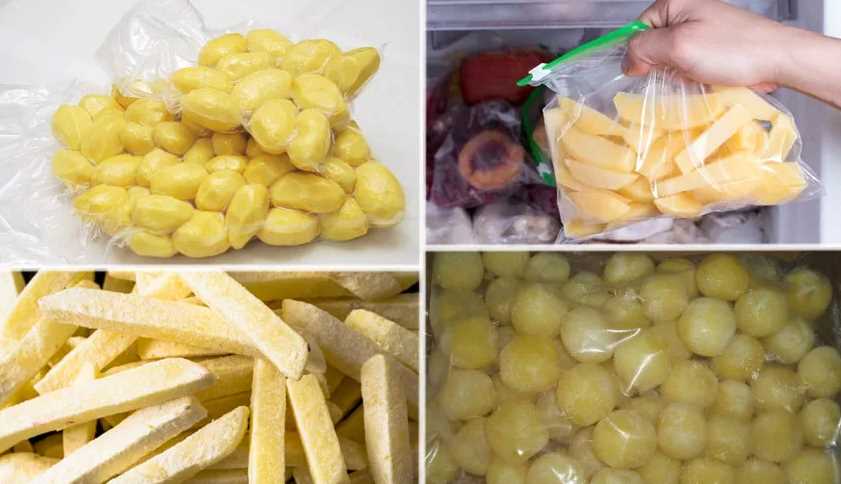
Potatoes can be frozen, making them ideal for prepping vegetable mixes for the winter. To do this, they are washed, peeled, and dried. Then they are sliced, placed in containers or bags, and placed in the freezer.
For which regions is the Vega potato variety suitable?
The Vega variety is suitable for virtually all regions of our country. The best results are achieved in the Central Region. In the south, it is loved for its virtually blight-resistant potato, and in the north, for its early ripening.
Advantages and disadvantages of the Vega potato variety
The Vega potato has excellent varietal characteristics with its own advantages and disadvantages.
| Advantages | Flaws |
|
|
Planting Features of the Vega Potato Variety
To obtain a good harvest, proper cultivation techniques are essential. However, care is made easier by the fact that Vega tolerates temperature fluctuations well and has no particular soil requirements.
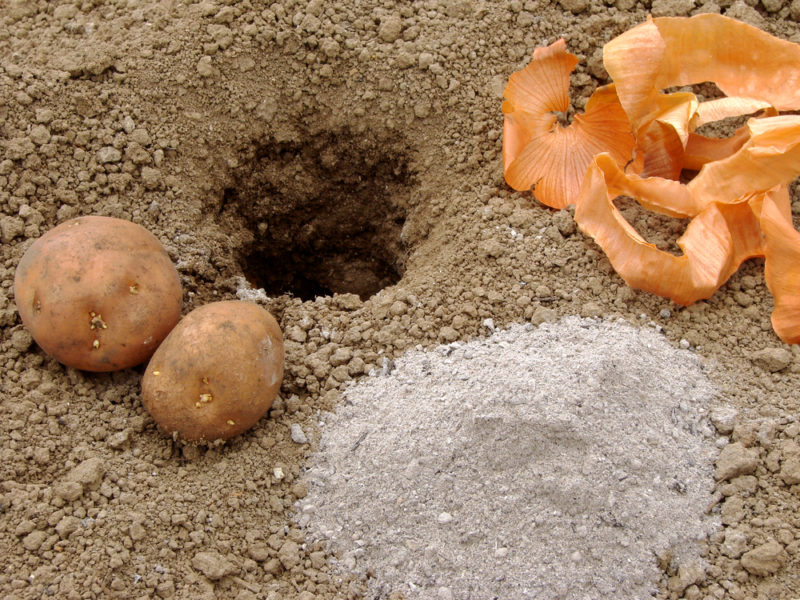
Requirements for the landing site and its preparation
A larger harvest can be obtained from light sandy soil, which must be prepared in advance:
- In mid-September, the beds are sown with green manure (barley, wheat or rye).
- At the end of autumn, the garden bed is dug over. To reduce weed growth, it's recommended not to break up the clods of soil, as this will allow the weed roots to freeze more easily.
- In the spring, the soil is dug or loosened again. Ash and compost are added to the holes and placed at the bottom.
Selection and preparation of seed tubers
Vega potatoes have a thick skin and few eyes, making them relatively slow to germinate in natural conditions. Therefore, before planting, the tubers need to be provided with special conditions that will stimulate shoot growth. This will ensure an excellent harvest in a short time.
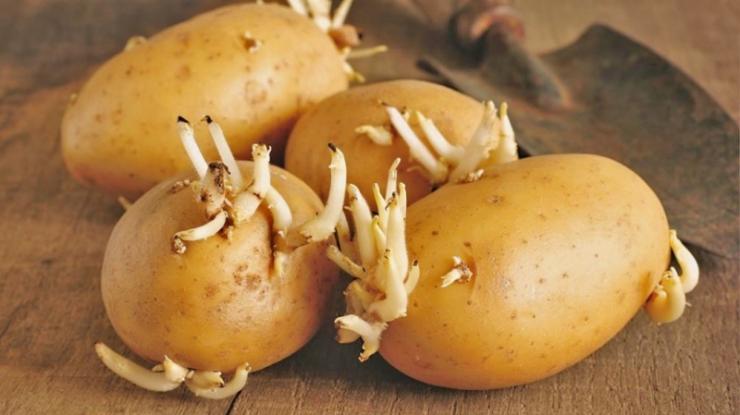
Preparation of tubers takes place in three stages:
- SortingOnly high-quality tubers of uniform shape and size are selected for planting. Potatoes that are damaged, small, or irregularly shaped cannot be used as seeds.
- GerminationYou can stimulate shoot growth by placing potatoes in boxes with damp sawdust. These boxes should be stored in a room with a temperature of 15–17°C and periodically moistened as they dry out.
- HardeningTo help the plants adapt to future conditions more quickly, it's important to harden them off in advance. The temperature is lowered by 6°C (for example, by moving the tubers to another room), and then raised again. This process is repeated 2-3 times.
After this, the tubers are ready for planting. This must be done carefully to avoid damaging the tender sprouts.
Planting times and rules
The optimal time for planting Vega potatoes is considered to be late April to the first half of May. A more specific period is determined depending on the weather conditions in the growing region.
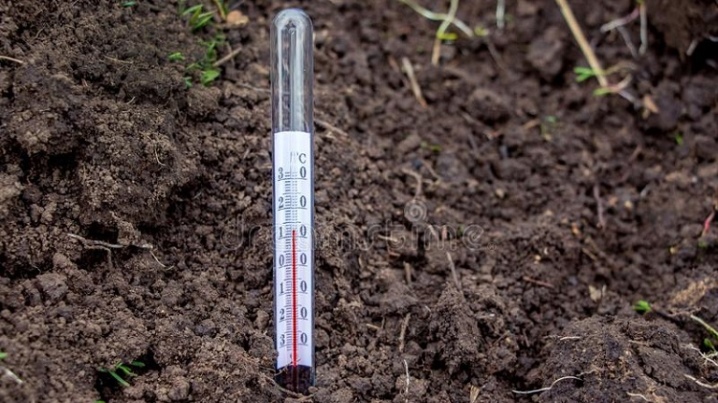
Important! The key to healthy potato growth is warm soil, with temperatures not falling below +8…+10°C.
Planting potatoes is carried out in several stages:
- SortingOnly strong tubers with good sprouts are selected for planting.
- Preparing furrows or holesUsing stakes and string, mark out the future rows. The tubers are placed in the soil to a depth of 10 cm, with a distance of at least 35 cm between them and a width of 70-80 cm between rows.
- Top dressingWhen planting in the ground, it is recommended to add ash and compost.
- Spreading out seeds and burying.
- Leveling the area with a rake.
Experienced gardeners who have been growing the Vega variety for many years recommend not watering the bed after finishing work.
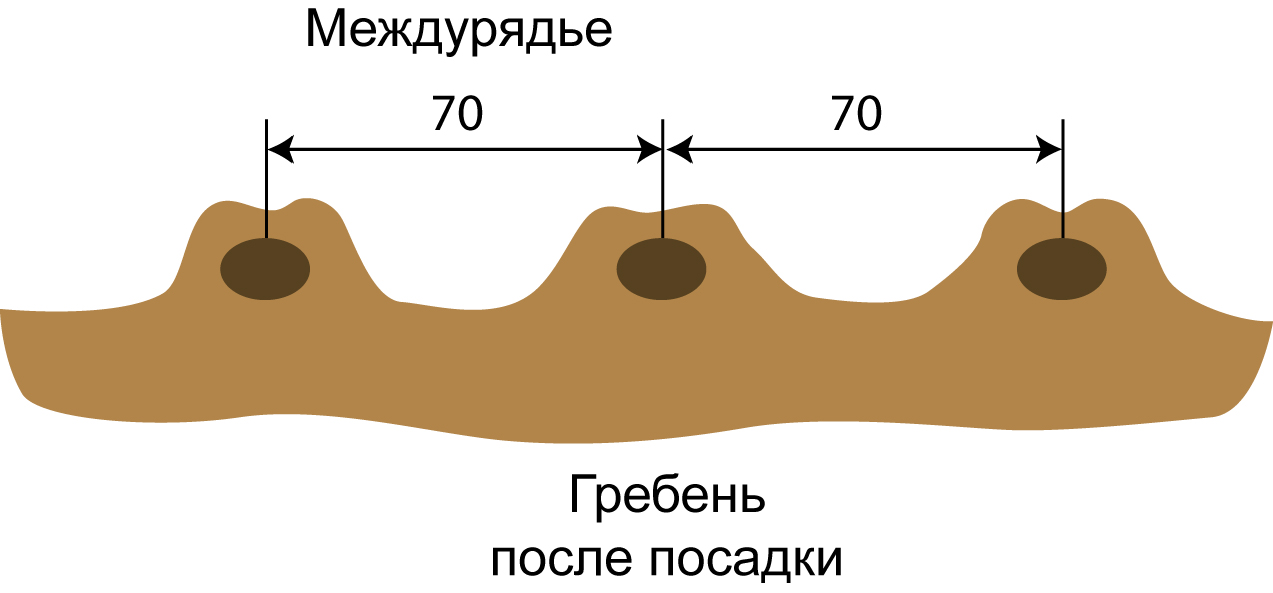
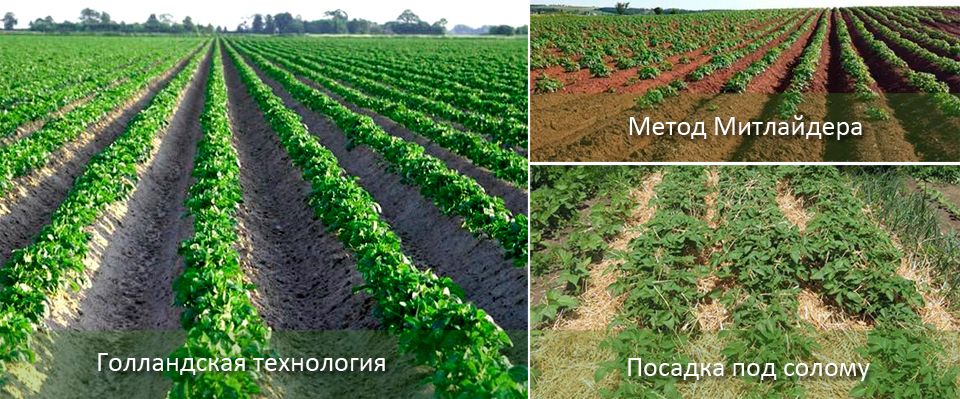
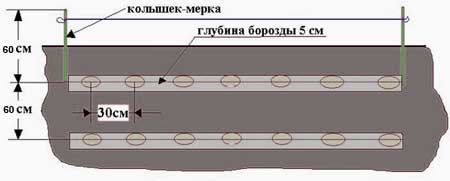
There may be several planting methods (trench, film, ridge, etc.), they depend on the weather conditions of the region and the characteristics of the soil.
Important! It is not recommended to dust tubers with ash, as experience shows that such seeds germinate 7 days later than untreated ones.
Caring for the Vega potato variety
Vega potatoes don't require any special growing conditions; following standard agricultural practices is sufficient. The key to obtaining a bountiful and delicious harvest is choosing the optimal watering schedule to prevent the soil from becoming overwatered or drying out.
Watering
Experts recommend not watering potatoes immediately after planting the seeds. They need time to acclimate to the soil. Afterward, water generously, but not too frequently. Water only when the soil at a depth of 30-40 cm has dried out.
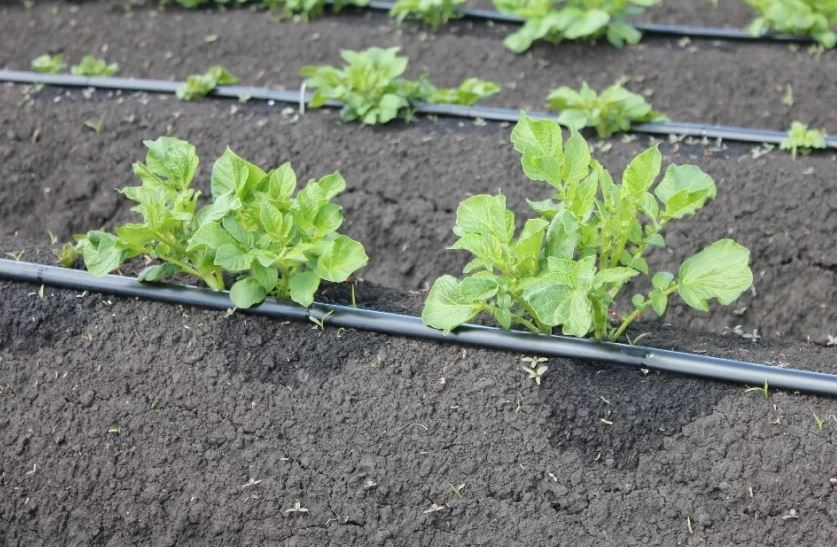
Many gardeners prefer to build on their plots drip irrigation system, which allows for uniform moistening of plantings.
Top dressing
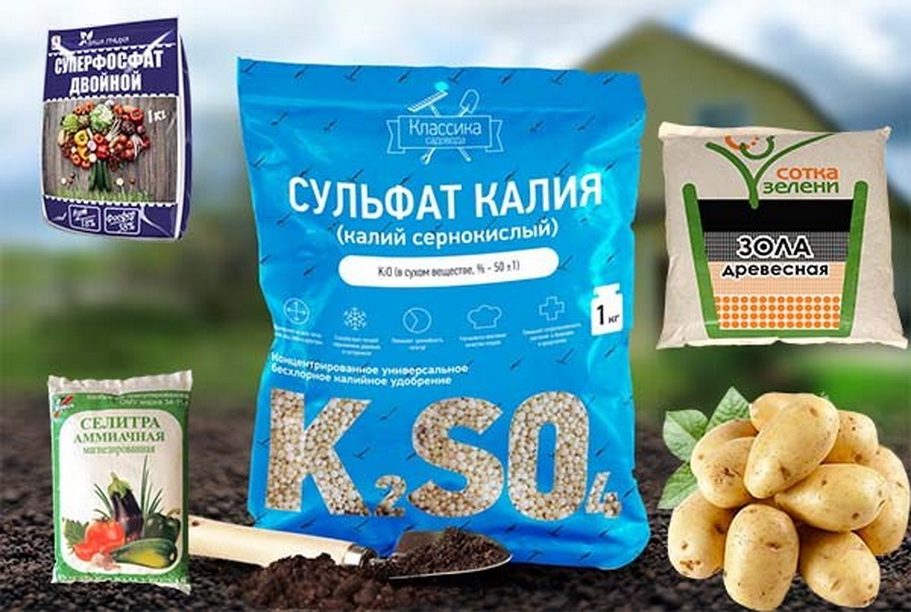
It is recommended to feed the Vega variety only twice per season.
- The first feeding is done during the tuber formation stage. During this period, nitrogen-containing fertilizers, such as ammonium nitrate or urea, will be needed.
- The second time the plants are fertilized is when flowers appear on the bushes. Superphosphates and sulfates are used here, which stimulate tuber growth.
Important! The second stage of fertilization must be completed before the tops begin to wilt.
Loosening, weeding, hilling
Weeds not only rob plants of water and nutrients but also attract insect pests. Therefore, weeding is crucial, especially during the growth period. At the same time, shallow loosening of the soil is also recommended.
To protect the tubers from temperature fluctuations, improve aeration, and retain moisture in the bed, hilling is necessary. Vega is first hilled when shoots emerge from the ground. This process is repeated twice more, depending on weather conditions and soil quality.
Protection from diseases and pests in the table
The Vega potato is resistant to several common diseases: potato cancer, tobacco mosaic, scab, and blackleg. However, it is sometimes affected by other diseases, which are crucial to catch early, or even better, to take preventative measures in advance.
| Disease or pest | Description | Prevention and treatment |
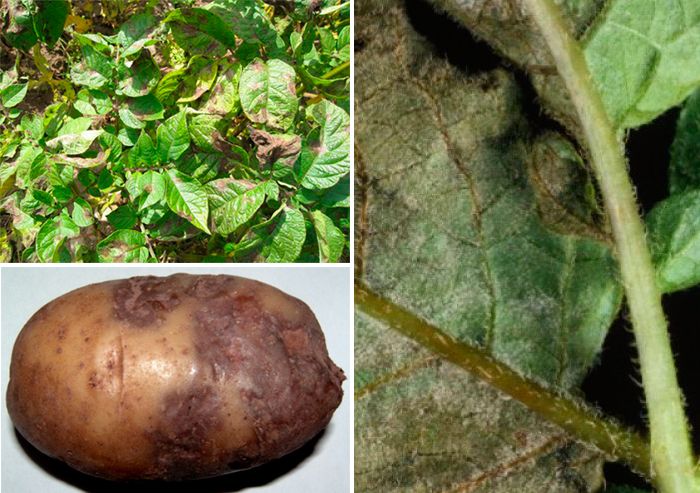
| Late blight
|
It appears as brown spots on leaves, stems and tubers. | Treating plantings with a solution of 10 liters of water and 10 grams of copper sulfate will help prevent late blight. A 1% Bordeaux mixture also works well. |
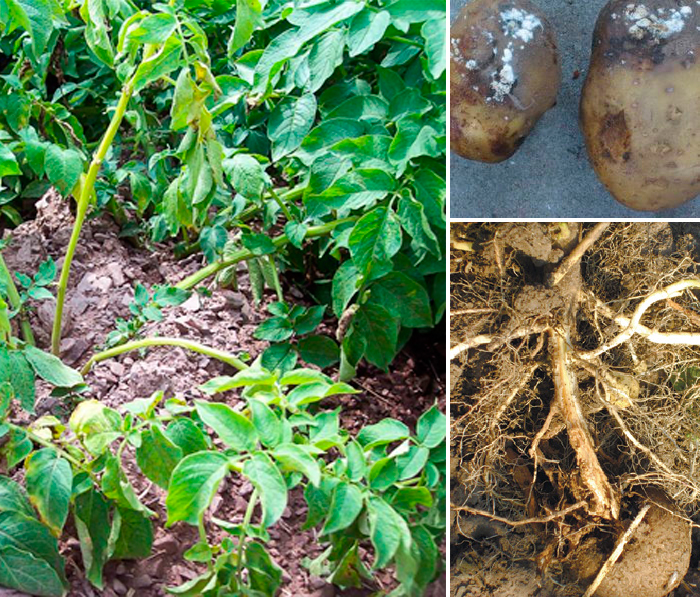
| Verticillium and Fusarium wilt
|
Verticillium wilt is a fungal disease that most often manifests itself at the beginning of flowering as the lower leaves wilt, after which the disease spreads to the shoots and upper leaf blades. Tubers are also often affected, with buds rotting. Fusarium, on the other hand, starts at the top of the bush and progresses downwards. The fungus is most often caused by soil and seed contamination. |
Infected plantings must be removed from the garden bed, and the remaining plants must be treated with special preparations diluted strictly according to the instructions: Ditan, Maxim, Griffin, Rovral Aquaflo. |
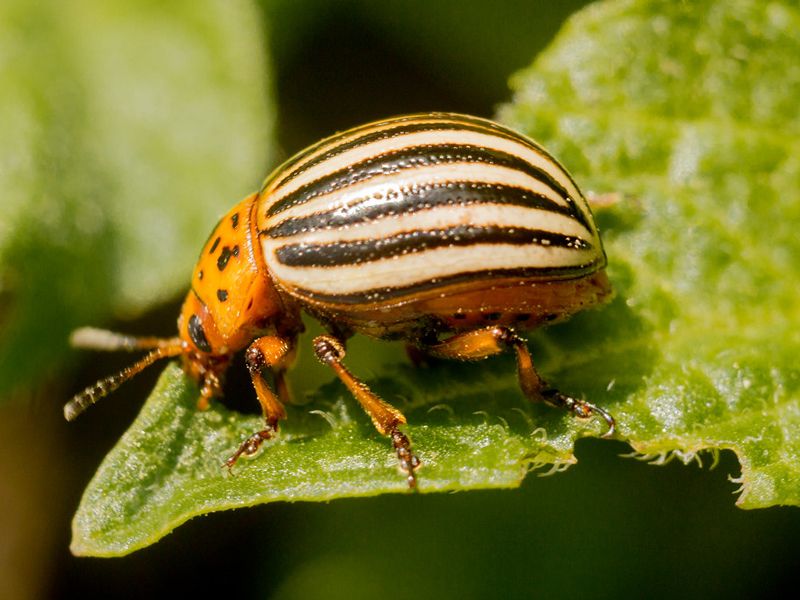
| Colorado beetle
|
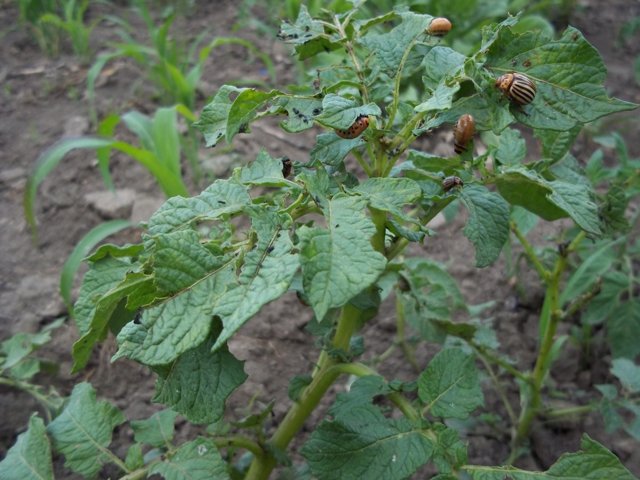
This striped beetle and its larvae can destroy potato fields in a short period of time.
|
If the infestation is small, they can be collected by hand, placed in a jar, and covered with water. Leave the mixture for a week; during this time, the insects will release their toxin, and the resulting solution can be sprayed on crops—the scent will repel any remaining beetles. If the voracious pests are numerous, only specialized products will help: Sonnet, Prestige, and Confidor. Directions for use are provided in the instructions for each medication. |
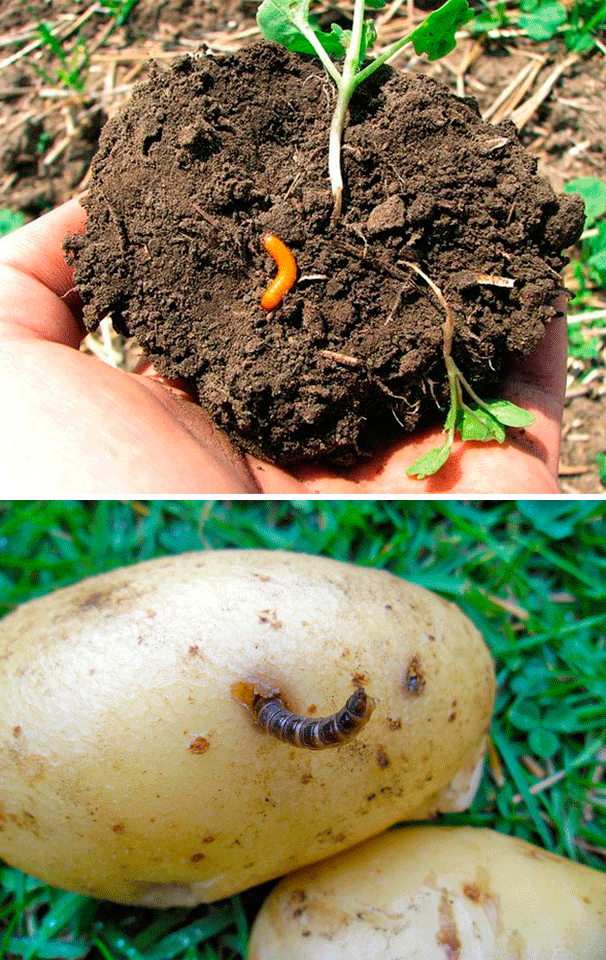
| Potato wireworm
|
A very dense, thin and long worm (up to 4 cm) loves to feast on potato pulp and makes numerous tunnels in the tubers. | When planting, it's recommended to add a handful of onion peels or Bazudin or Nemabact to the hole. Small numbers of live plants found during digging can be chopped up with a shovel. |
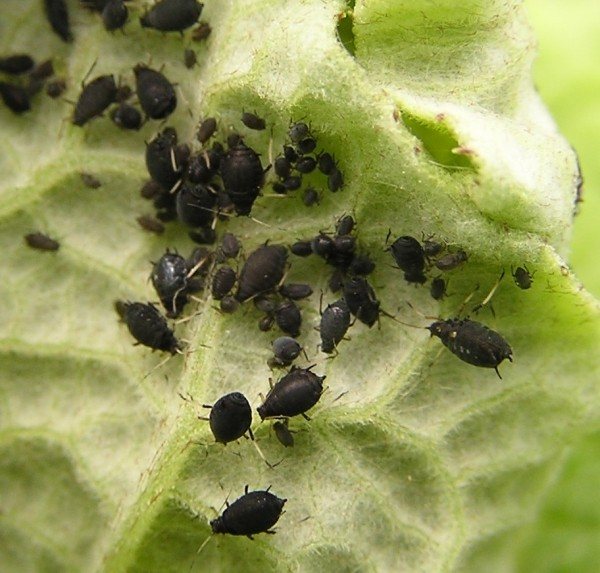
| Aphid
|
This small greenish or brown insect prefers to feed on the juices it sucks from potato leaves and stems. The waste products they excrete provide a breeding ground for fungus. | Aphids don't tolerate tobacco infusion. It's prepared by adding 400 grams of tobacco to 2 liters of water. Bring the mixture to a boil and let it steep for 24 hours. After it cools, add 40 grams of grated laundry soap to improve the adhesion of the mixture to the plant surface. Next, spraying is continued until the insects disappear. |
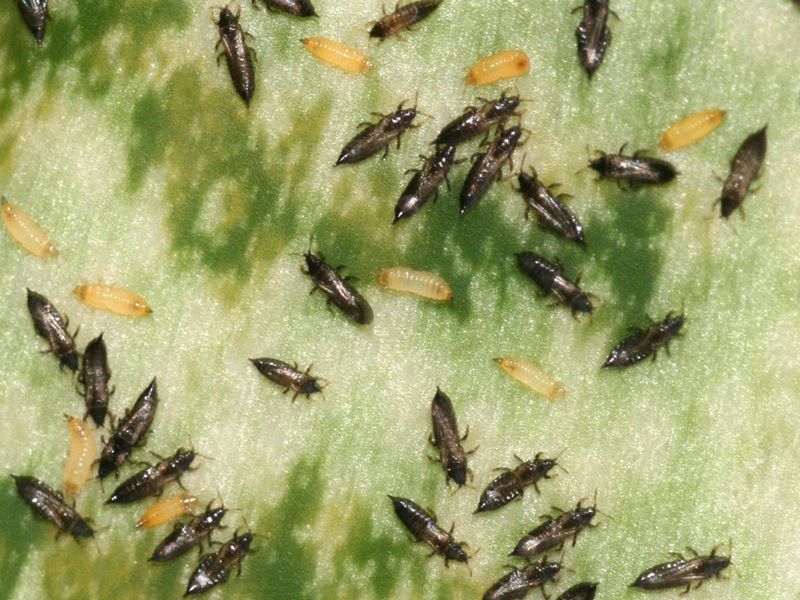
| Thrips
|
These small (up to 2 mm) winged insects resemble common specks of dust. They eat bushes, leaving behind dark spots that quickly turn black. | You can repel thrips from your plants with a garlic infusion. To prepare it, you'll need 200 g of garlic and 1 liter of water. Let the mixture steep for 5 days. Then, add 60 g of the mixture to 10 liters of water, along with 40 g of grated laundry soap, and spray. |
Important! Potato diseases are much easier to prevent than to cure. Because potato plants grow very close together, they spread very quickly. Therefore, preventative measures are essential to preserve the harvest.
The nuances of harvesting and storing the Vega potato variety
It's recommended to trim the tops 10-14 days before harvesting. The wilting of the leaves and shoots will signal the plant's readiness. This procedure will stimulate tuber formation.
Freshly dug potatoes are cleared of clods of soil, left outside for a short time to dry, and then stored in a prepared area. Before storing, the tubers should be sorted to ensure that damaged or diseased potatoes are not included in the pile.
Comparison of the Vega potato variety with other varieties in the table
| Variety | Ripening period (number of days to maturity) | Starch (%) | Yield (c/ha) | Weight of tubers (g)
Number of tubers per bush |
Shelf life (%) |
| Vega | Early ripening* | 10-16 | 230-380 | 90-120 8-12 |
99 |
| Ilyinsky | Mid-early** | 15.7-18 | 176-346 | 55-160
8-13 |
93 |
| Armada | Early ripening* | 17-18 | 230-370 | 96-130
9-14 |
80-85 |
| Giant | Mid-season*** | 16-19 | 290-424 | 100-140
8-13 |
97 |
| Explosive | Early ripening* | 16-17 | 156-240 | 110-150 8-14 |
95 |
| Zekura | Mid-early** | 13-18 | 350-370 | 60-150
12-20 |
98 |
| Kolobok | Mid-season*** | 11-13 | 130-250 | 90-140
15-18 |
96 |
| Handsome | Mid-early** | 12.4-17.8 | 169-201 | 90-170
6-10 |
97 |
| Latona | Early ripening* | 16-20 | 400-450 | 90-140
10-15 |
96 |
| Memphis | Mid-early** | 14.2-16.7 | 330-610 | 80-160
9-11 |
94 |
| Meteor | Early ripening* | 10-16 | 210-405 | 100-150
10-12 |
95 |
*Early ripening – 50-65 days.
**Mid-early – 65-80 days.
***Mid-season – 80-95 days.
Real reviews from gardeners about the Vega potato variety
Now let's look at what gardeners and horticulturists have to say about the Vega variety. All reviews are taken from forums or well-known review sites. To ensure their authenticity, we've included a link to the source of each review.
User Medinilla, Russia, Kostroma
Good afternoon, Otzovik guests!
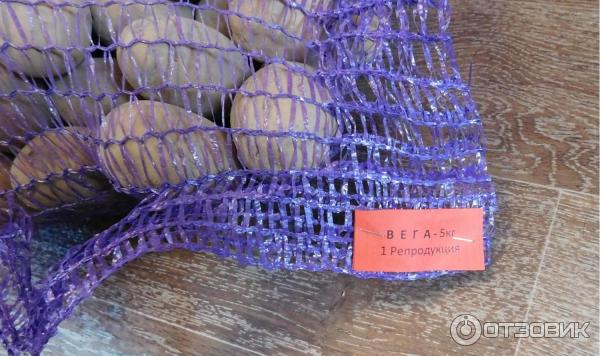
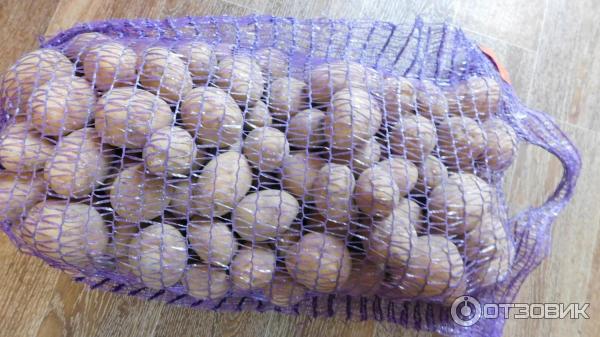
I thought I'd finished writing reviews on potatoes, but I can't resist writing about another wonderful potato variety, Vega. I haven't grown it, but I've watched my neighbors grow it periodically, just as they do with my varieties. They, like me, bought seeds from the Kostroma seed company OOO KTM. We sampled a 5 kg net. The potatoes were first-generation. The price per kg is 38 rubles. I'll describe their cultivation techniques in detail to understand why they produced such a magnificent harvest. I'm nowhere near their level. And so it goes.
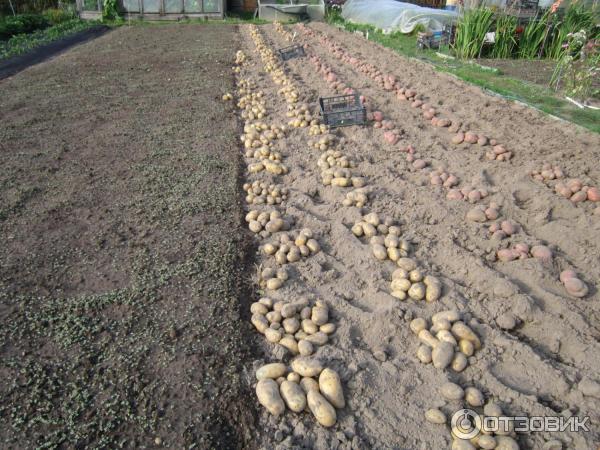
Last fall, after harvesting potatoes, the owner plowed the plot with a walk-behind tractor. He then sowed mustard and oats. This spring, he spread dolomite and potato fertilizer over the plot. He then plowed the plot again. The potatoes are planted in rows in holes dug with a shovel. Ash and humus are added to each hole. Before planting, the seed potatoes are allowed to germinate well. The tubers were sprayed with a special product, I believe it was Komandor, to protect against Colorado potato beetles. Before placing the tuber in the hole, it is watered. Our soil is sandy, so by the time of planting, it was already dry. The hole is covered with soil from the hole in the next row. That's it, the potatoes are planted. As soon as shoots appear, the neighbor loosens the space between the rows with a walk-behind tractor. Then, as the potatoes grow, he makes two high hillings with a walk-behind tractor. Before the potatoes bloom, he begins watering them. This year, there was enough rain, so he only watered them once. In early July, he sprayed them for late blight with Profit Gold for the first time, and then twice more. The last spraying was with Bordeaux mixture. During the summer, he fed the plants with liquid herbal fertilizer. The tops were as tall as a man. They wondered if the entire harvest had disappeared into the tops. Two weeks before harvest, a neighbor cut off the tops. And this is what happened. Vega is a light-colored potato, the red one is the Irbitsky variety.
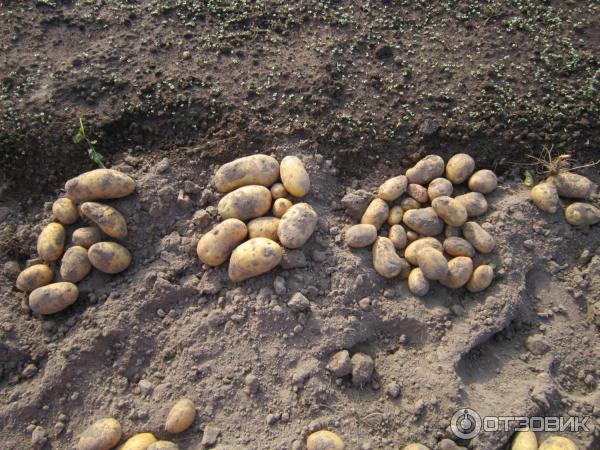
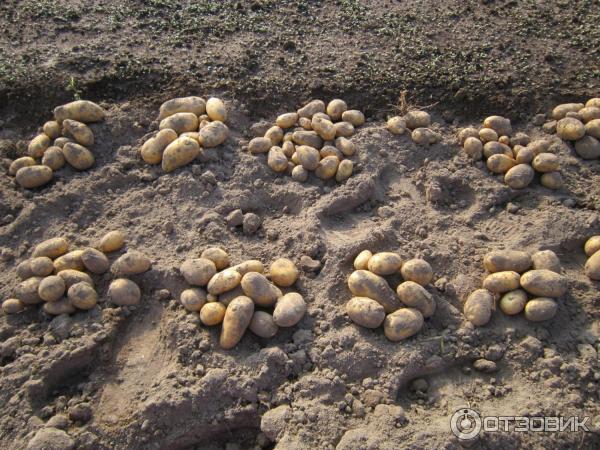
We'd never seen such a productive variety before. The potatoes were large, with almost no small parts, uniform and clean. Some bushes contained around 30 tubers. To be clear, a "bunch" is one bush.The variety description states that the average weight is 90-120 g. However, these potatoes were significantly larger. The tubers are oval or round-oval in shape.
The skin and flesh are yellow. The Vega variety is also stated to be resistant to nematodes, potato cancer, and late blight. This was true this year. The top photo shows that other neighboring varieties have long since been harvested and replaced with green manure, which has already sprouted. The Vega and Irbitsky varieties were the last to be harvested.
We boiled and tasted these potatoes right in the garden. They were delicious, not crumbly, but not hard either, and not at all soapy or sticky. Even though the Vega variety is an early one, they promise very good storage. I think my neighbor's potatoes will also keep well, especially since he always washes them and keeps them in a warm place for two weeks before planting them. Next year, I'll also be testing this variety in my garden. I've already swapped varieties. I swapped the Golubizna variety for the Vega variety. I don't expect a similar harvest; it's not suitable for my growing methods.
Let me sum it upYield – 5 stars. Tuber size – 5 stars. Susceptibility to late blight, or rather, resistance – 5 stars. Taste – 5 stars. Storage and shelf life – 5 stars.
I give this variety an overall rating of five stars and recommend it for planting.
Also, in addition to the Golubizna and Irbitsky varieties, I also bought the Skarb, Adretta, and Gala varieties to try at the Kostroma seed-growing company OOO KTM.
Photos by Medinilla
User Roman S., Ryazan
This variety replaced Gala. It has fewer tubers per cluster (10-15), resulting in larger tubers. It is more drought-tolerant and highly resistant to viruses and late blight. It has slightly deeper eyes than Gala and an oval tuber shape. It tastes similar to Gala, which is not surprising, as both its parents are Gala. This variety is suitable for gardeners.
…
I picked out Vega and Wendy for myself and took them home. I washed them and put them out to dry. I took 8 kg of each for myself, and it was just enough. That's what it means to never have dealt with normal, high-quality material. All the potatoes were the same size: 102 Vega potatoes weighed 8 kg (I immediately rejected two of them, they had marks from the digger, and the tuber was pretty crushed), and Wendy potatoes were larger – 93. It was just right for the bed, and I was planning on planting them at the dacha. I should have taken 10 kg for myself. Vega was very clean, but Wendy was worse. Many of the tubers were scabby, some were really bad. It was better not to wash them, it seemed like everything was fine.
The skins on many tubers are peeled, but the wounds are healed, so they will store well. There's no silver scurf, but I found rhizoctonia on two Wendy tubers. Judging by the soil, Wendy and Vega were grown in different fields. I didn't notice any difference in the depth of the eyes on Vega and Gala. The tuber is oval and very smooth, while Wendy is more gnarled. I don't have Merlot, so I didn't wash or examine it.
User Lubka61, Russia, Rostov Oblast
I managed to dig up all the potatoes, just in time for a good rain, even though I was tired. I've already told you about my favorite variety, Gala, and about a new but equally productive variety, Inara, and now I'll tell you about another potato variety—VEGA.
I bought one bag of these potatoes (one reproduction) for 250 rubles to try. Each bag contained 5 kg of potatoes (the price is per kg at the bottom of the review). The tubers were round and undamaged. I transferred them to a box at home and kept them in the light for a few days to green them up. I think they grow better that way. Afterwards, I covered them with a damp cloth, and they quickly sprouted vigorously, something I never saw from the Inara variety.
I planted them in the second ten days of March, like all the other potatoes, the weather was already favorable, and the possible morning frosts did not frighten me as much as the suddenly approaching heat, which does not allow the tubers to grow to a normal size.
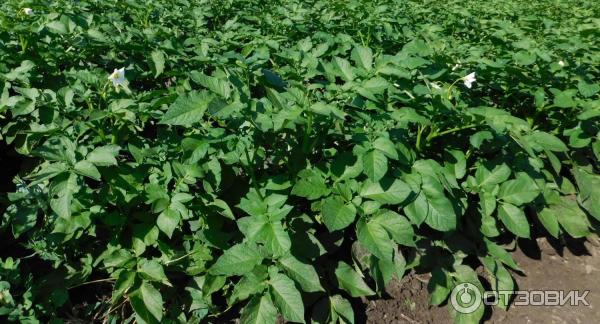
I planted them using a 60 x 25 cm pattern, drawing lines in the prepared soil. I watered this potato variety, like all the others, the same way: infrequently but deeply. I weeded, tilled, hilled, and fought Colorado potato beetles. The potatoes grew cheerfully: green leaves, white flowers. The stems were medium-sized.
I read online about Vega, which boasts a starch content of approximately 13%, yields around 300 centners per hectare, is versatile, drought-resistant, and generally about the same as the aforementioned varieties. But the seller, upon selling it, said, on the contrary, Vega loves watering, and the potatoes don't cook well, aren't suitable for mashed potatoes, and are only good fried or stuffed. So, I'd like to have some of these interesting potatoes!
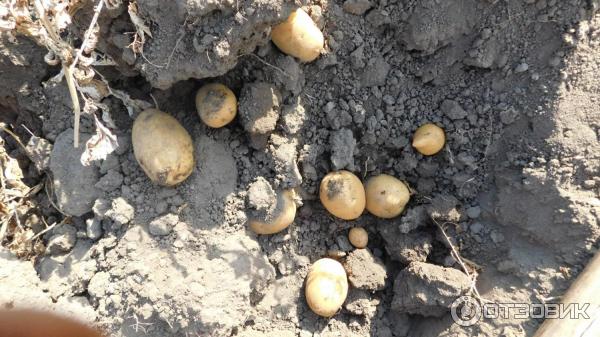
It was time to dig up the potatoes. Her yield turned out to be less than Inara's and much less than Gala's: 5 kg of seed potatoes (about half a bucket) yielded 7 buckets of potatoes, not counting the small ones that will be used for animal feed.
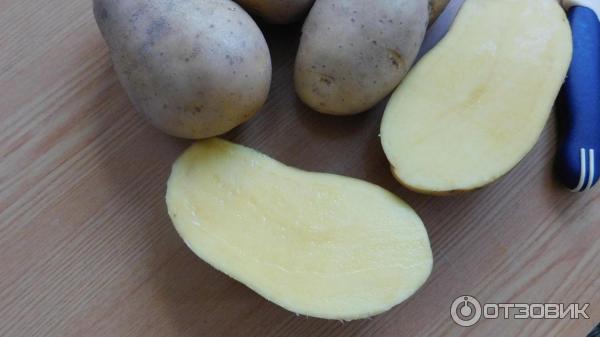
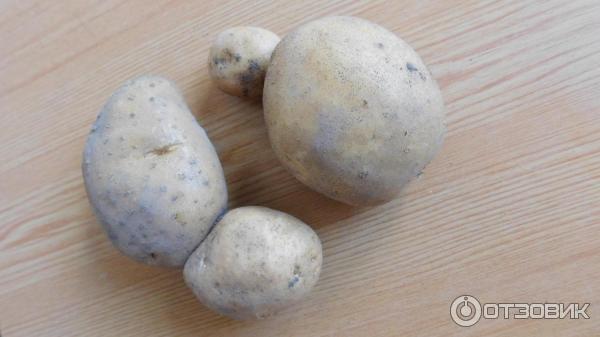
Each bush produced 8-10 tubers. They are round, with light yellow skin and shallow "eyes." The tubers are approximately the same size, not large, but medium-sized.
The flesh (you can see it when cut) is light yellow. I haven't tried frying them yet; I don't have time to stuff them right now, but I think they'll be delicious. These potatoes also turned out well for mashed potatoes; they boiled well.
Perhaps it turned out so soft that I watered it like all the others and didn't create the special conditions for increased humidity. Perhaps for the same reason, it didn't yield as much as I expected.
And also (apparently also due to a lack of moisture for this variety) many ugly tubers formed; in the photo below, these are still decent forms.
To sum it upWould I recommend this variety to my friends? I do, it's a good variety, but it does require more care, including more frequent watering. I'll continue growing this variety next year (maybe next year will be a fruitful one for Vega); I've already selected some potatoes for seed.
I haven't had to store this variety of potato yet, but I hope it keeps well, as stated in the variety description. If not, I'll update this review in the spring.
Photos by user Lubka61:
User Sandra71, Tula
Vlad, do you have Vega potatoes that are sweet? I ate a bright yellow potato the other day, either Vega or Wendy, probably Vega, the long tubers. They were really sweet. I thought they were frozen, but other white or cream-colored varieties from the same package aren't sweet at all. We eat our potatoes without salt, so the different flavors are really noticeable.
Reply from Vlad (weather), Kaluga to Sandra71
Oksana, I haven't gotten around to the Vega yet. Honestly, I don't even remember whether I was putting it off trying it or not. I'll check it out when I get it to the garage.
I wasn't very happy with Vega this year; out of 10 bushes, I only took seeds from 2 or 3.
Have you tried it straight from the cellar? It's a common occurrence that when stored at low temperatures, the starch turns to sugar, making the potatoes sweeter. You need to keep them at room temperature for a few days. Maybe this is more pronounced with Vega?
Sandra71's response to Vlad
It was sitting at home for about a week, in a bag under the balcony door, the bag in a box. The frosts weren't very severe, so it shouldn't have frozen; it was about +3 degrees in the basement.
I'm still not sure if I like the taste of bright yellow potatoes. I've been used to white ones since childhood; light yellow or cream-colored ones aren't particularly different from white ones, and we usually eat them mixed together. But this time I tried them separately.