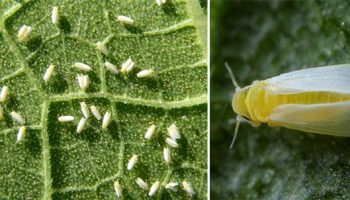
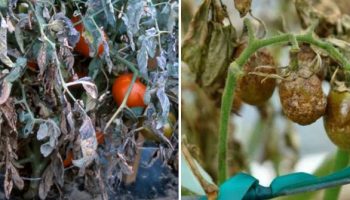
The whitefly is a cunning and stealthy insect that causes serious damage to houseplants, garden plants, and greenhouses. Its white wings are usually visible to the naked eye, but the pest resides on the underside of the leaf, allowing it to remain undetected.
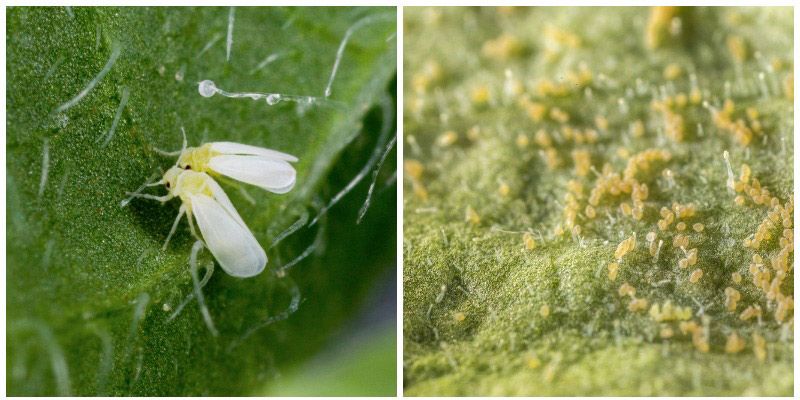
Description of whitefly and its reproduction
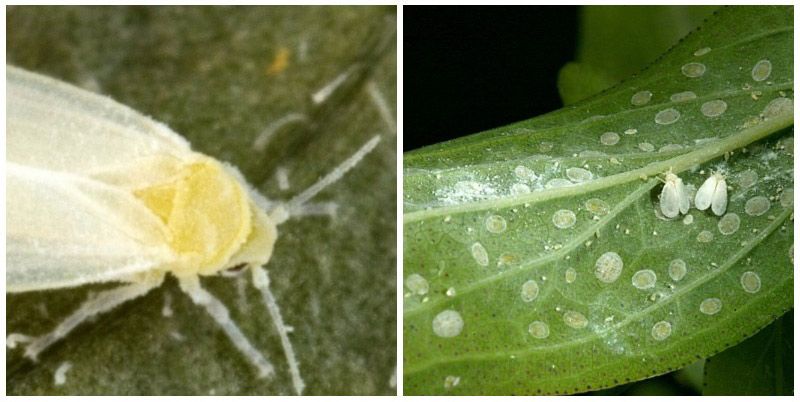
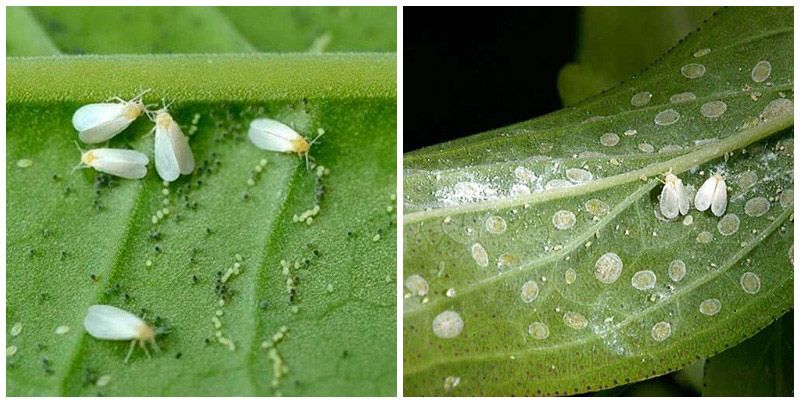
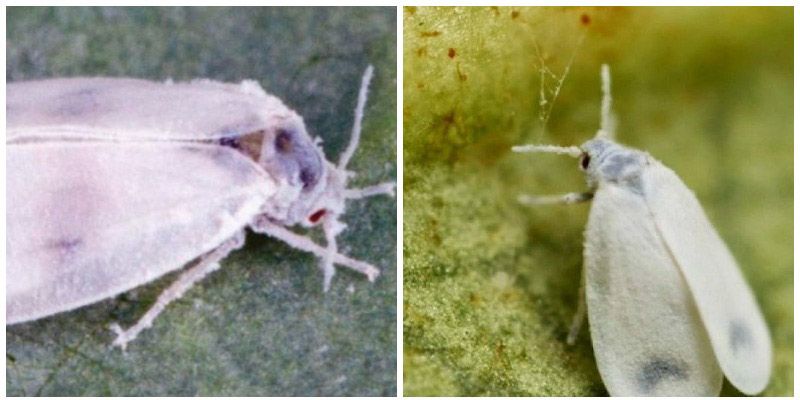
The whitefly is a tiny sucking parasite. It resembles a cream-colored moth with a small body measuring 1-2 mm, covered in a transparent, waxy coating resembling flour. The female lays grayish eggs on the underside of leaves, attached to small stalks. Under favorable conditions, 300 eggs can be laid per season, 10-20 at a time.
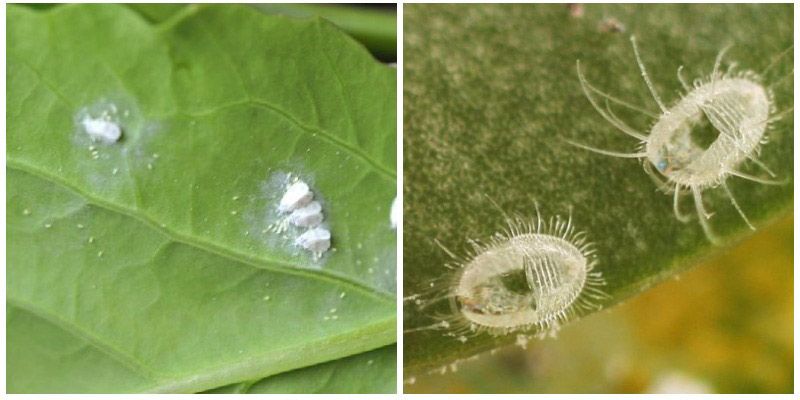
The hatched greenish larvae are elongated, with antennae and three pairs of legs. Having found a favorable feeding site, they attach themselves and become immobile, resembling whitish scales. They primarily feed on young leaves, but if they hatch in large numbers, they will settle on other parts of the plant. Their sugary secretions are dangerous because they provide a breeding ground for sooty mold, which clogs leaf stomata and blocks sunlight. It is the larvae that cause the most damage. Gradually, they increase in size and undergo several molting stages. In the final stage, the white coating covering the larva hardens. It is ready to transform into a butterfly.
The development cycle is 3-5 weeks.
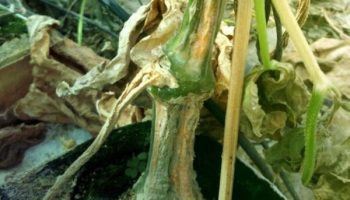
Whitefly infestations cause leaves to dry out and flower buds to become deformed. It prefers to reproduce on fuchsia, impatiens, begonia, lantana, and geranium (pelargonium), but can also attack other species. In greenhouses, it infests cucumbers, tomatoes, eggplants, and peppers.
Types of whiteflies
There are over 100 known species of this parasite, found in many regions. The most damaging are:
- The tobacco butterfly is omnivorous and even feeds on medicinal herbs. It is distinguished by the tilt of its wings.
- Greenhouse or conservatory variety. Prolific, resistant to poor conditions. The body of an adult is yellow.
- Citrus. The butterfly has an icon similar to a Y.
- Mulberry. Larvae are black with white fringe. Common on citrus fruits.
- Cabbage. In its absence, it takes over other vegetable beds.
- The bordered moth inhabits cotton and melon crops. It is distinguished by its gray body and black stripes on its wings.
- Strawberry. Prefers berry plants (strawberries, raspberries, etc.).
- Giant. The largest butterfly, up to 5 mm. Found on roses, tomatoes, trees, and ornamental shrubs.
- Honeysuckle. Forewings are speckled. Found on grapes.
- Iris. Also prefers gladioli. Switches to other flowers when they are unavailable.
- Ashy caterpillar. The caterpillar's body has fine fringes with waxy droplets at the ends. It damages trees and shrubs.
- Crowned. The larva is black with a waxy crown on its head. It lives in oak and chestnut groves.
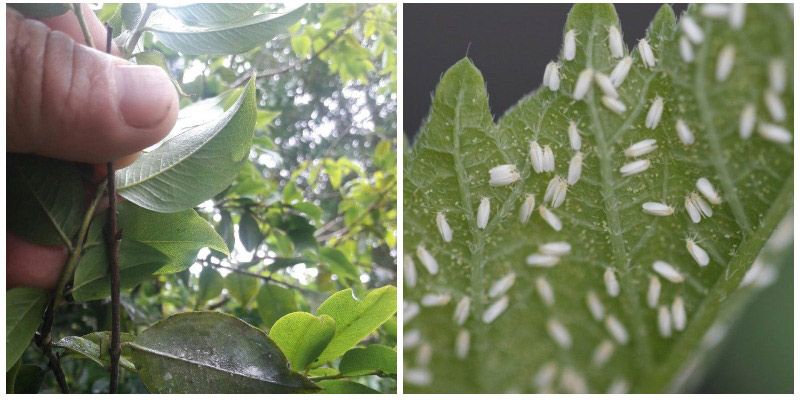
Causes of whitefly infestation
It's quite difficult to determine how the pest got onto the plant. It can be brought in by a person on clothing, along with purchased seedlings, through an open window, etc. If the indoor conditions are favorable, it immediately begins to reproduce. It requires warmth and high humidity, which is especially typical in greenhouses and hotbeds.
In open ground, active reproduction of the parasite begins in the second half of summer, when hot weather sets in. It thrives in dense plantings where air circulation is restricted. The rapid reproduction rate of this pest requires regular inspection to detect its presence and initiate prompt treatment.
Means and methods of combating whiteflies
Whiteflies damage plants and transmit dangerous viruses, including leaf curl, yellows, and chlorosis. Control methods rely on creating conditions that inhibit their active reproduction. A more effective treatment approach, including the following recommendations, will maximize effectiveness:
- In open ground: biological and chemical preparations are best. Their toxicity is monitored.
- Indoors: biological and folk remedies that are safe for humans.
Mechanical removal of whiteflies
This method is applicable if there are only a few plants. It means:
- Placing adhesive traps to attract adult flies. Fly tape is sometimes used instead.
- Collecting midges by hand is a labor-intensive process, but it is possible.
- Wiping and spraying with soapy water.
Use of traps
They are produced by the following companies: "Pheromone," "ARGUS," "Bona Forte," and others. The traps are yellow sheets of paper or getinax coated with a special glue. It is colorless, odorless, and non-toxic. Pests are attracted to the color and stick. Many species of flying parasites are caught.
You can make your own. Take a square piece of paper, wood, or composite material, paint it bright yellow, and coat it with castor oil, Vaseline, or a mixture of rosin and honey. Place it above the plants using special holders:
- 1 piece per 0.1 hundredths;
- in the room - on every window.
Folk remedies
They are presented in the form of aqueous solutions that are sprayed or wiped onto plants.
|
Ingredients |
Preparation |
Usage |
| Soap | 100 g is crushed and dissolved in 600 ml. | 1 time within 7 days. |
| Garlic | Grind 3 cloves, add 1 liter of water. Let stand for 24 hours. Filter. | 2-3 treatments for small amounts of pests. |
| Yarrow | 100 g of fresh grass and 1 liter of water. Leave for 2 days, then strain. | 1 time every 7 days with a spray bottle 2-3 times in a row. |
| Tobacco | Grind cigarettes in 1 liter of hot water. Leave in a dark place for a week. | Spray every 3 days until destroyed. |
| Dandelion | Crush 50 g of leaves and 50 g of root in 1 liter of warm water. Keep away from light for 5 days. Filter. | Twice with a weekly interval. Helps in the initial stages of parasite infestation. |
| Ammonia | 35 ml of 10% ammonia solution per 10 l. | Treat only before flowering at intervals of 3 days. |
Biological agents and chemical preparations
Using these products together helps completely eliminate or significantly reduce pest infestations. The following effective products are used:
- Neonicotinoids: Aktara, Confidor. They have a broad spectrum of activity, both contact and stomach. They act quickly and for a long time. They are effective against many types of insects. They spread throughout the plant but do not accumulate in the fruit. They are moderately toxic to humans and animals, but are toxic to pollinating insects.
- Pyrethroids: Decis, Iskra Bio or Zolotaya, Caesar. Affects adults and larvae. Have contact and stomach activity. Resistant to rain. Broad-spectrum.
- Organophosphorus: Fufafon, Actellic. Safe for humans and animals. Odorless. Quickly neutralized.
- The tried and true Karbofos. Developed long ago, it's quite effective. It's applied with protective agents. It shouldn't be used more than twice per season.
- Dichlorvos. Its low price is an advantage. Newer versions don't have a strong odor. It is toxic, so it's best used only when other treatments fail.
- Insectoacaricides (latest-generation biological products): Vermitek, Fitoverm. Pest control regardless of location. Causes paralysis. Plants tolerate them well. Harvesting is possible 2 days after treatment.
To enhance the effect, add dishwashing liquid or laundry soap, which helps the product adhere better to the leaves. It's important to strictly follow the instructions to avoid harming yourself or others.
Top.tomathouse.com recommends: preventative measures to protect against whiteflies at home and outdoors
To prevent whitefly attacks, it's essential to take preventative measures. In the garden:
- plant plants at a distance;
- provide good care;
- use drugs to strengthen health and immunity;
- In the fall, remove all the tops and weeds;
- dig up the area;
- Place the compost heap in a different place, as various pests like to overwinter there.
Indoors:
- cover the windows with mosquito nets;
- prevent moisture from stagnating in the trays;
- do not place pots close to the windowsill;
- ventilate regularly;
- use biostimulants for growth and feeding.
In the greenhouse:
- They are partially dismantled for the winter, since the butterfly does not tolerate low temperatures.
- They fumigate with sulfur smoke bombs to destroy the larvae.
- Treat with a solution of potassium permanganate if the material is polycarbonate.
- In spring, repeat treatment is carried out.