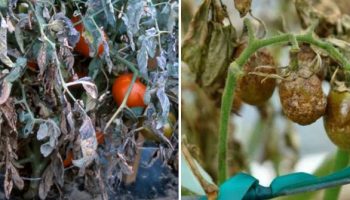
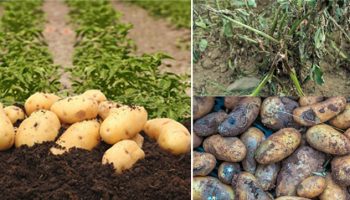
Lawn grass begins to suffer from diseases if it's not properly maintained. Its immunity can be weakened by unfavorable climatic conditions and mechanical damage. Mistakes made when choosing the right grass seed mixture will also affect the appearance of the lawn.
When determining the factor that triggered the development of the disease, the following nuances must be taken into account:
- lawn grasses tolerate the same diseases differently;
- Fungi are the most common infectious agents. They can parasitize within a limited area or spread rapidly, expanding the affected area.
Content
Anthracnose
Crops such as annual bluegrass and bentgrass are particularly susceptible to this disease. The disease begins to progress after any stress factor, such as excessive pressure on the grass, heat, overwatering, or insufficient water.
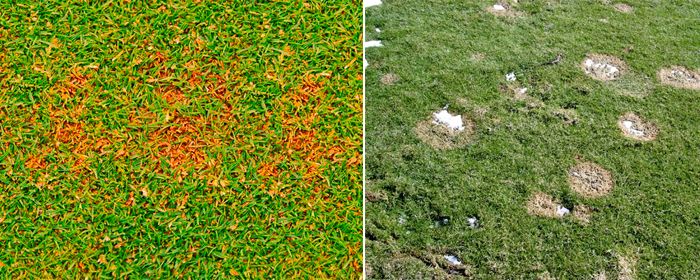
Red, yellow and bronze spots appear on the basal part of the stem and leaf blades.
Subsequently, the affected area spreads to young roots and tillering nodes. Affected areas of the lawn completely change color.
Fungi overwinter in diseased plants. They become active in high humidity. Lack of preventative measures can damage healthy plants. Regular mowing, fertilizing, and monitoring watering are essential.
If an infection does occur, the lawn is treated with preparations containing substances such as pyraclostrobin, propiconazole, tebuconazole, and azoxystrobin.
Fusarium
This disease is often called snow mold. This is caused by the leaves of affected plants becoming covered with orange and brown spots, bordered by light-colored mycelium. The lawn becomes wet with slime.
Fusarium wilt is considered one of the most aggressive diseases. The extent of damage directly depends on the variety of the selected crop and on proper care. The disease can be caused by overwatering, high nitrogen concentrations, and alkaline conditions.
The list of effective preventive measures is quite extensive, among them are:
- a well-thought-out drainage system;
- timely aeration;
- cleaning up cut grass and lawn felt;
- avoidance of liming and nitrogen-containing fertilizers;
- sanding dense soil.
Treatment with fungicides.
Rhizoctonia
Rhizoctonia, unlike other diseases, is relatively rare. The fungus attacks young shoots, which can lead to the death of the entire lawn. The pathogen remains active throughout the growing season. It is particularly dangerous for varieties such as Festuca and Agrostis.
The fungus gets into the garden area along with infected seed material.
Rapid growth of the fungus is promoted by a lack of magnesium and potassium with a high concentration of phosphorus and nitrogen.
To protect healthy plants from rhizoctonia infection, seeds should be treated before planting.
Dollar spot
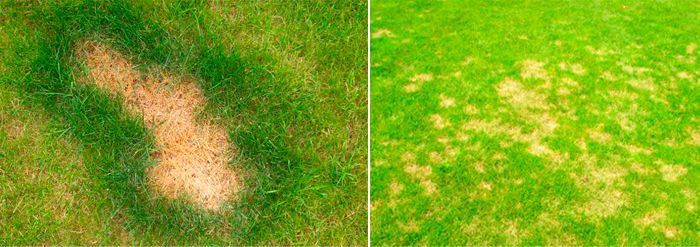
Symptoms indicating this disease can be seen in certain regions, especially on intensively maintained lawns. Slow-growing grasses, such as fescue, are at risk. This disease is similar to fusarium, but dollar spot's distinctive feature is round spots no larger than 50 mm in diameter.
As the disease progresses, the grass within them begins to dry out, causing it to take on a straw-colored appearance. Dollar spot is often accompanied by red threads. Effective preventative measures include:
- timely scarification, aeration, sanding;
- Balanced plant nutrition. Particular attention should be paid to the nitrogen content of the soil.
The disease is controlled with fungicides.
Leaf spot
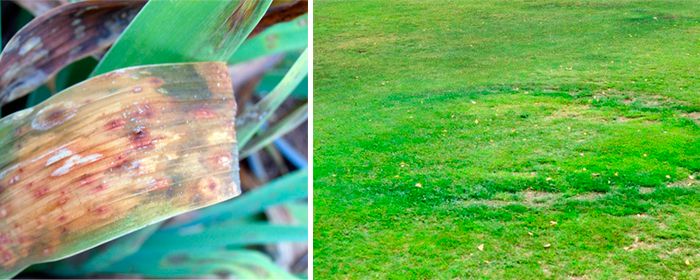
Leaf spot (heterosporium) can develop at any time of year. The color, shape, and size of the spots can vary. Most commonly, purple, brown, olive-green, and black spots appear on leaf blades. The type of lawn and the variety of grass planted are not particularly important. The disease can appear on both meadow and elite lawns. To avoid such problems, gardeners should promptly remove grass clippings, remove dead plants, and monitor moisture levels.
Witch rings
Fairy rings can develop over many years. Symptoms characteristic of this disease appear in dry, warm weather. There are three types of the disease. The first type destroys the grass cover over a fairly large area.
A bald spot forms between the two circular rings. This negative impact places lawn plants in hydrophobic conditions. Under the ring, gardeners may notice whitish mycelium, which emits a mildew smell. Overwatering is one of the factors that can trigger the disease.
Type II fairy rings typically appear on greens and ornamental lawns. Treatment is urgently needed if dark green arcs, rings, and streaks become visible on the lawn surface. Signs also include the absence of significant damage and the presence of basidiomycete colonies. Experts believe the disease is exacerbated by a nitrogen deficiency.
The third type of disease is the most common. Although the fungus grows year-round, the rings become especially noticeable only in the fall. The grass in the affected area turns dark green, with the mycelium clearly visible. In this case, the disease will not cause serious damage to the lawn.
Rust
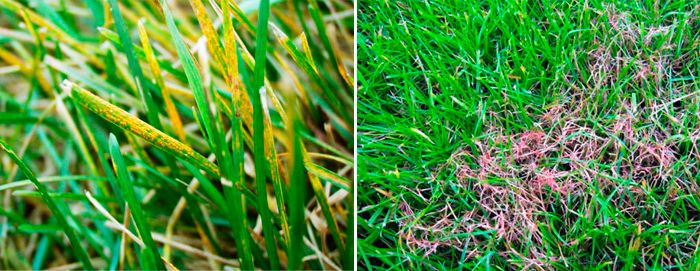
It can be seen on lawns in summer or early fall. The disease is identified by brightly colored pustules. They can be unevenly distributed. Lawn crops from the Poaceae family are at risk. The risk of rust infection is quite high if:
- the lawn is very overgrown;
- the climate is humid and warm;
- seed material is not resistant to infectious diseases;
In case of defeat:
- trim the damaged area every two days until it is renewed;
- In case of drought, water well.
Red threadiness
The pathogen becomes active during warmer months. The disease manifests itself as reddish and pink spots, which is why it is sometimes called pink mosaic. These spots lack a clear boundary. The diameter of the spots varies from 20 to 350 mm. Areas affected by this disease often need to be completely restored, as the lawn loses its decorative appeal.
The defeat can be caused by rare feeding or its complete absence.
To prevent the disease, nitrogen-containing fertilizers must be applied regularly.
Powdery mildew
This disease most often affects plants grown in shade. Factors that increase the risk of infection include soil compaction, over-cutting, excessive moisture, and heat. Bluegrass is most often affected.
On leaves affected by powdery mildew, a cobwebby coating forms (at first white, then dark).
The list of preventive measures includes aeration and verticalization of the soil cover.
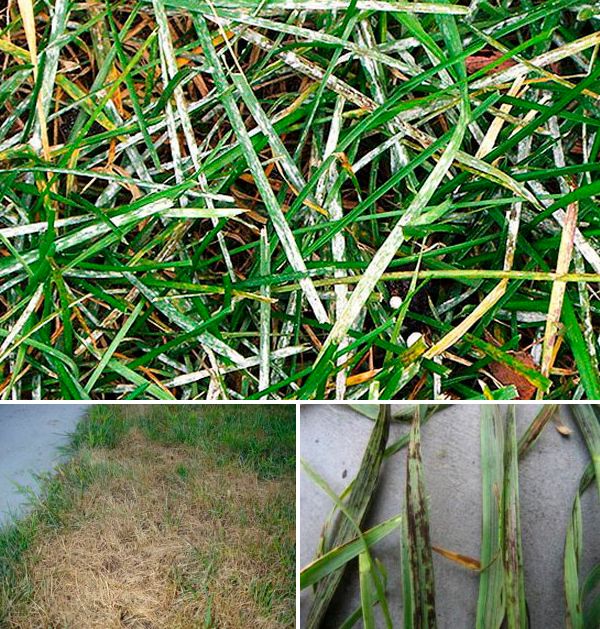
Control measures include treating with fungicides. If this isn't done promptly, the lawn may die completely.
Root collar necrosis
This disease causes significant damage to lawn grasses. The fungus becomes active in winter and fall, infecting the root system. As a result, the plants die. The development of the disease is indicated by the appearance of round spots of dead grass. Mowing heights before winter should be between 3 and 3.5 cm.
Smut
Smut is a fungal disease that causes the affected areas to dry out. A dark coating appears on the surface of a green lawn. Characteristic signs of the disease include brown bumps and sooty deposits. To avoid problems, gardeners must adhere to all agricultural practices.
The sooner the cause of the disease is identified, the less potential damage. Gardeners should not ignore warning signs or neglect diagnostics. Each disease has its own treatment. There are no universal remedies for restoring a lawn.