By planting spring garlic in the spring, you can cut the tops off in the summer, add them to salads, and harvest the bulbs and cloves in the fall. They don't spoil, even in long-term storage. Winter varieties are germinated in the fall. It might seem like there's no need for garlic to grow for several extra months. There seems to be no reason, and the harvest is due a little earlier in the new year anyway. This is the advantage of winter varieties. Besides, it gives farmers more free time in the spring.
Content
Strong immunity
Different varieties differ in flavor. Some are more pungent, others less so. Gulliver, for example, is less pungent than Yershovsky. Both are spring varieties. All types of garlic have different numbers of cloves per bulb. Some produce scapes, while others do not. All of them strengthen the human immune system thanks to the presence of allicin, zinc, molybdenum, phosphorus, silene, potassium, calcium, chromium, iron, B vitamins, and more. This balance is created by nature and is considered ideal by many scientists.
The feathers, cloves, and scapes are used in cooking. They are always cut off to promote vigorous growth. There are varieties without them, which are easier to care for in the garden, but this does not diminish their biological value. Their juice contains no fewer vitamins and minerals than other parts of the garlic. They are eaten frozen, stewed, fried, and pickled. They also make delicious jam.
Although garlic is a gift to humans, it's unfortunately not invulnerable. Fungi, viruses, bacteria, and insects all pose a threat. Anyone who grows garlic themselves should be aware of the signs of diseases dangerous to this crop, as well as prevention and treatment methods.
Fungal infections
Fungal spores are the biggest problem. These microorganisms are an integral, vital part of the planet's biosphere. They perform a regulatory function as part of natural selection. This is the main purpose of their existence. However, this is not beneficial to humans. Every year, they make their presence known, invading garden beds. Understanding garlic diseases and their early signs will help protect the food supply.
Fungicides, copper sulfate, and Bordeaux mixture are used to treat plants.
Spraying will save the crop in one case, and not in another, but will prevent fungi from causing damage in the new year.
Garlic rust is treatable. In the case of fusarium wilt, the crop is burned and the soil is treated to restore the microflora.
If neck or white rot is detected, the harvested garlic is sprayed with copper sulfate and a fungicide. It is then dried and sorted. Some of the harvest can be saved, but its marketability will be compromised.
In the case of downy mildew, the primary goal is to save uninfected seedlings. Infected ones are burned. Black mold is treated no later than 20 days before harvest.
Fusarium wilt or root rot
Warm winters prevent Fusarium spores from remaining dormant. They can remain dormant for several years. Despite this, in the southern regions, where the climate is favorable, farmers anticipate their arrival each season, even fearing it. These microorganisms appear most frequently in the south of the country and in the central part of the country. Isolated cases of plant diseases are reported only because effective prevention and treatment methods exist.
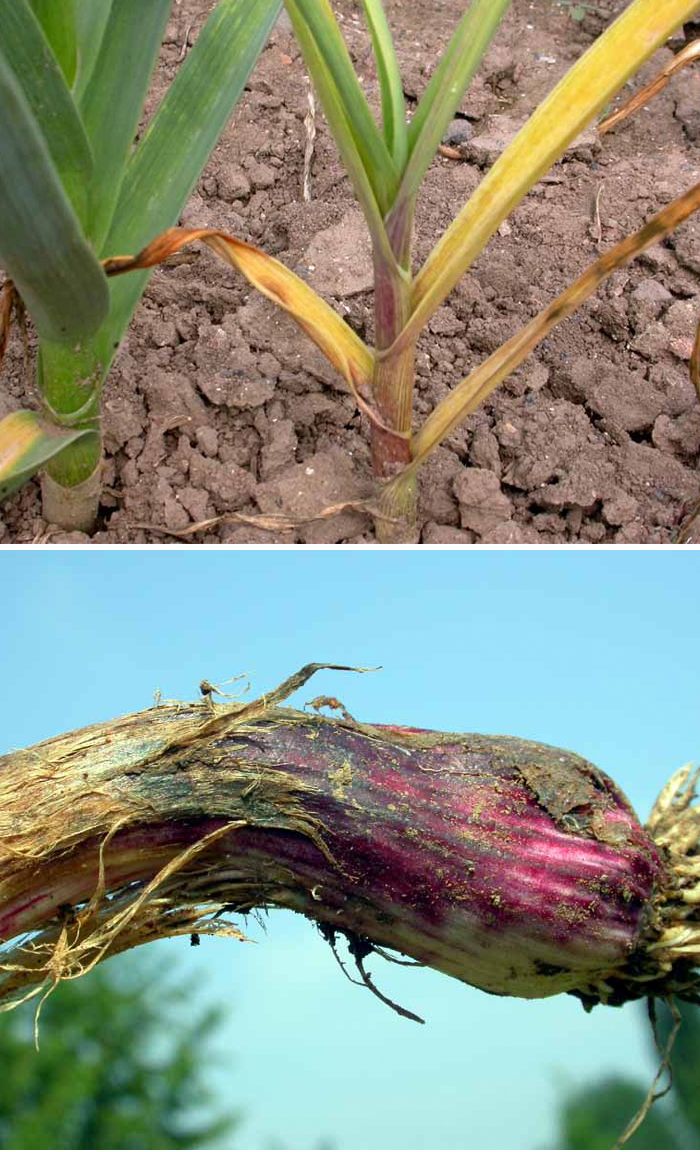
Spores thrive on rainy summer days, brief cold spells, and subsequent warming. Garlic fusarium can be identified by the following characteristic signs:
- the feathers are the color of lemon;
- in the leaf axils, as well as on the garlic cloves, if you remove the husk, a creamy-pink coating and veins are visible;
- the teeth are soft.
The infection often appears after harvesting. Fungal spores release toxins, rendering the harvested garlic unfit for consumption. Eating it can cause serious poisoning. A doctor will be needed.
Downy mildew
The first symptom of downy mildew is oval spots on the above-ground parts that are pale green, yellow, brown, gray, or purple. Then, curled feathers appear.
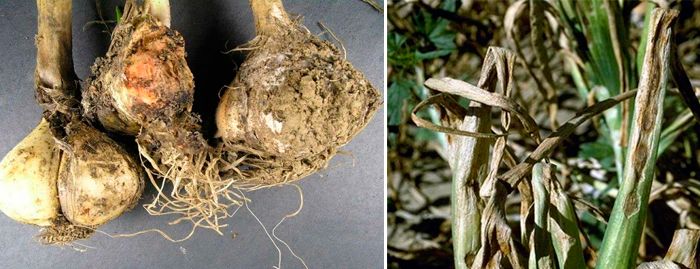
At the same time, completely ordinary bushes grow nearby, creating a contrast and increasing suspicion.
Rust
Metal corrosion looks similar to the deformation of a garlic leaf infected with the fungus Puccinia or Melampsora. The surface is covered with fiery orange, raised spots.
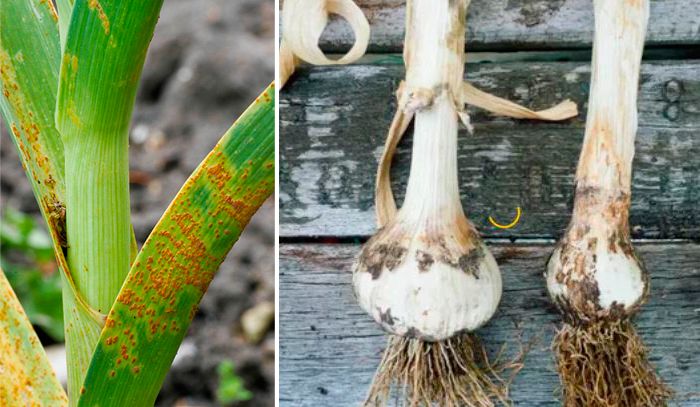
Their area increases. The color of each garlic leaf changes, one after another. Soon, the seedling dies.
Neck rot
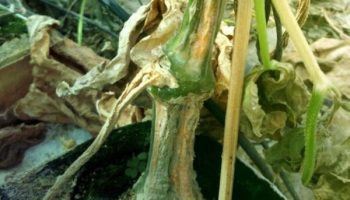
Neck rot remains undetected for a long time. The garlic bulb becomes filled with gray mold. The stem breaks off at the base along a neat white line with a green border. This is the border of pathogenic microorganisms' domain.
White rot
The mycelium forms after harvest or in the spring. Planting garlic is no longer practical due to the presence of spores in the upper soil layers. But no one knows about this. They were carried by the wind, and there's a good chance other fungi are involved as well. Cool air (9…12°C) and high humidity are what white rot needs to thrive.
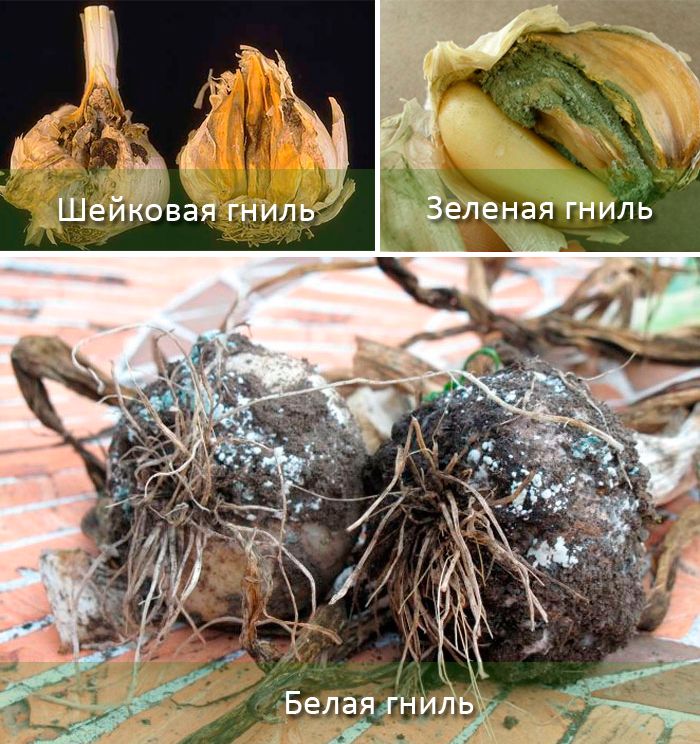
The bulbs become waterlogged and begin to rot. White fungal mycelium appears on the roots. The above-ground portion suddenly dies. During storage, these myceliums penetrate the bulb. The mycelium completely covers the base, and the cloves begin to dry out.
Green or blue rot
Penicillium wilt, or green rot, once it appears in a garden, doesn't cause much damage compared to other parasitic microorganisms. Its spores quickly die in the soil and don't persist for the following season. However, the infected crop has already been harvested and stored. Even uninfected garlic will soon be covered in mycelium. The cloves will develop sunken spots with a green coating.
Black mold or aspergillosis
In this case, a black coating appears on the teeth. It initially accumulates near the hair follicle and gradually spreads downward and laterally within the bulb. It may be visible through the scales or remain unnoticeable.
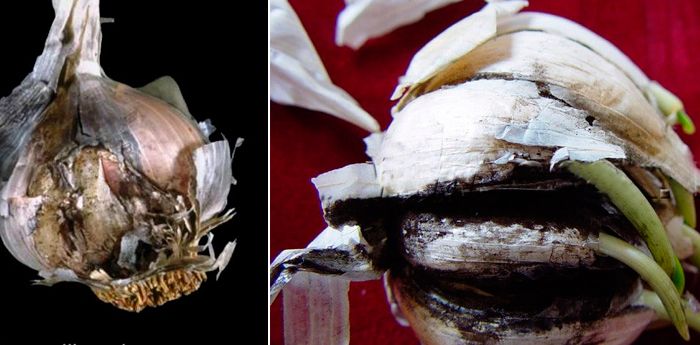
The mycelium grows, causing all the cloves in the garlic bulb to rot, destroying the harvest.
Viral diseases of garlic
Currently, there are no medications that can prevent plant viral infections. However, garlic is not susceptible to many viral infections that affect other garden crops. It can be susceptible to mosaic and yellow stunting. Control of these diseases involves proper disposal of sprouts and infection prevention.
Viral mosaic
Allium virus I (Allium virus I) is active in the summer, during hot, humid weather. Symptoms may include:
- spots, stripes on the above-ground part - white, yellow or brown;
- the leaves are wilted and drooping;
- many feathers are withering.
It is transmitted by ticks. The virus can survive for some time in soil and compost. Infected seedlings are burned, and the soil and compost are treated with an insecticide or acaricide, such as copper sulfate. These measures are sufficient to prevent further spread and reinfection the following season.
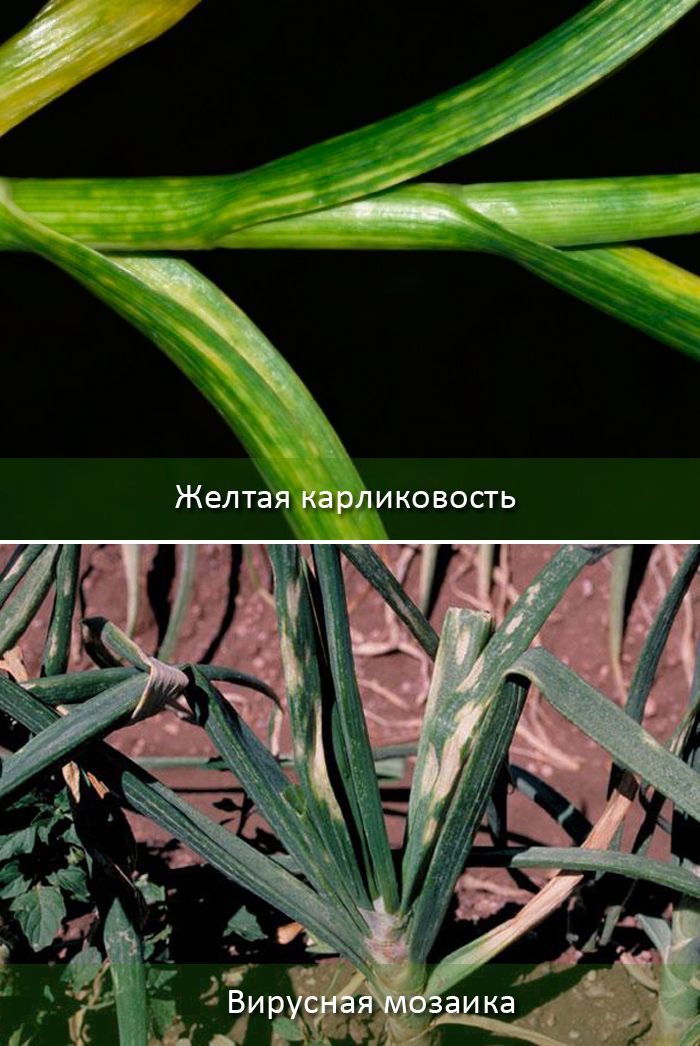
Yellow dwarfism
Onion yellow dwarf virus is transmitted by mites, aphids, and the weed dodder. The onion feathers become covered with lemon-colored streaks, become limp, and dry out. Plant growth stops.
Bacterial diseases of garlic
Garlic is generally immune to both viral and bacterial infections. Bacterial rot is an exception. Understanding its symptoms will help protect your garden beds from an epidemic. It's important to remember that garlic can sometimes become infected with viruses or bacteria from using contaminated tools, such as gardening gloves, shovels, rakes, sickles, and scissors. Treatments such as calcination and disinfection with soap and water can help protect plants.
Bacterial rot or ball rot
The bacteria can be brought to the site by insect pests. It enters the soil and infects seedlings. It remains undetected throughout the plant's growth period. The harvested crop soon begins to spoil.
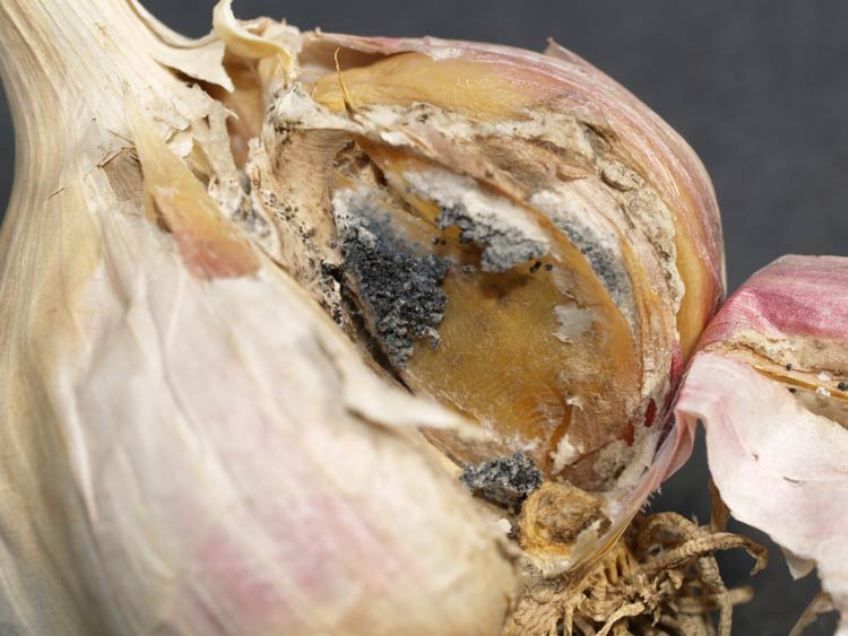
The cloves become covered with brown ulcers and rot. Garlic mites, onion flies, and nematodes are carriers of this bacteria. They must be controlled and antibacterial fungicides used.
Dangerous garlic pests
Garlic infusion is a popular folk remedy for repelling insect pests. Essential oils and sulfur compounds are toxic to them.
However, some species enjoy its juice and are not averse to settling on garlic.
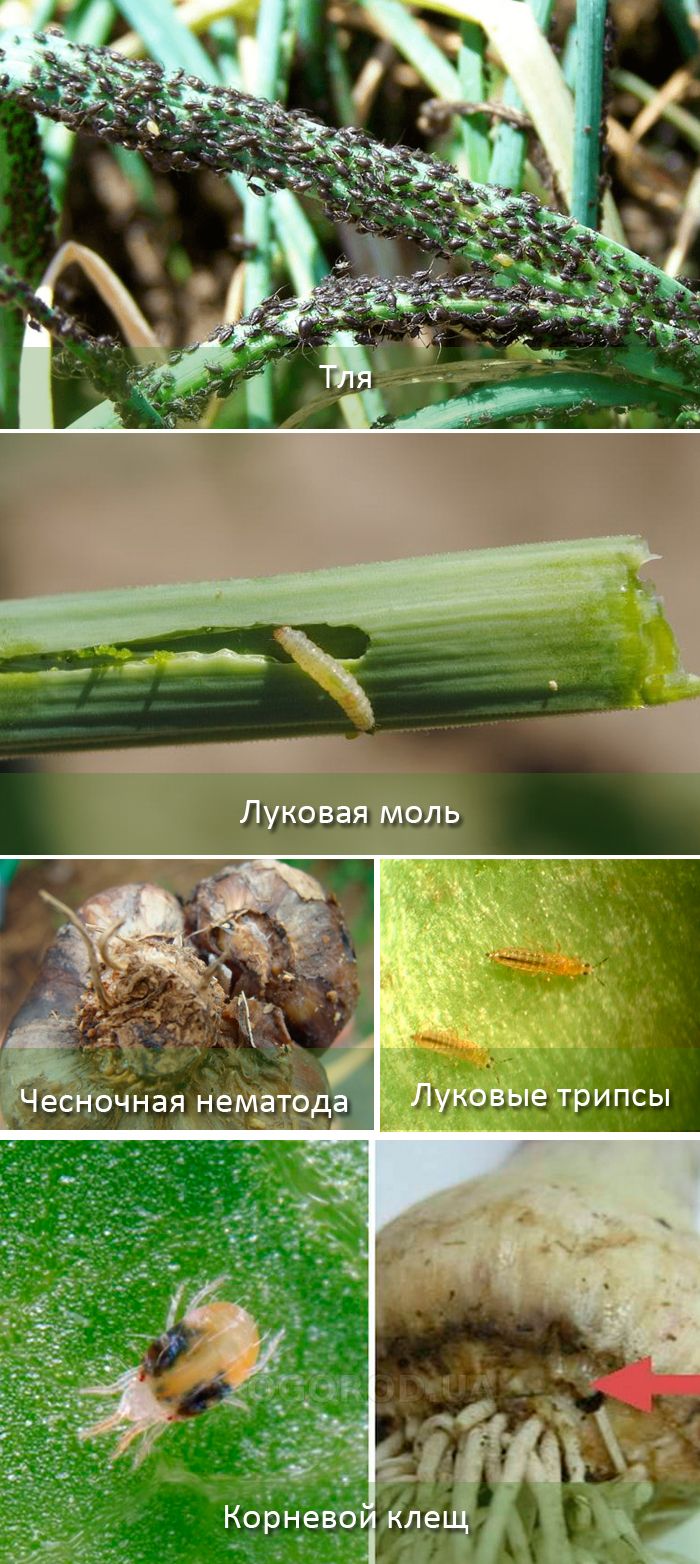
Aphid
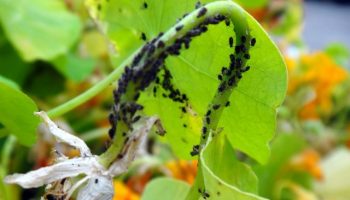
Small black beetles appear on plants between April and June. They feed on the sap of young leaves, hiding on their undersides. This causes the garlic leaves to become deformed, curl, and wilt. To combat this, an insecticide is recommended.
Onion moth
The insect emerges in the spring. It settles on garlic leaves, forming noticeable dark stripes. If detected early, treatment is quick. Insecticides, red pepper solutions, and tobacco are popular and effective methods of control and prevention.
Garlic nematode
Root-knot nematodes, stem nematodes, and root nematodes, including garlic nematodes and less commonly onion nematodes, remain unnoticed, desiccating the plants. Garlic heads disintegrate at the base. A microscope is required to detect them. Laboratory testing allows for precise identification of the species.
They can survive in open ground without a host. However, stem worms, for example, cannot travel long distances. If garlic seedlings are spaced 20 cm apart, only one plant will become infected.
Spraying with nematicides is the primary treatment. Growing marigolds near garlic plants and treating the soil with copper sulfate and a manganese solution are the main disease prevention methods.
Onion thrips
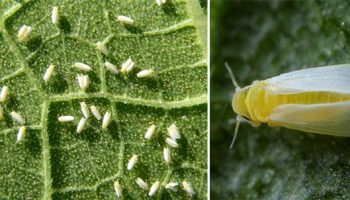
Tobacco (onion) thrips feed on the sap of the leaves, preventing them from growing. If the garlic leaves are deformed and have white-yellow flies or larvae on them, it's time to use an insecticide.
Root mite
These insects, with a transparent, oval body and four pairs of legs, quickly migrate from the soil into damaged garlic bulbs. They prefer onions, not garlic, but are also willing to eat them. Their population can spread to storage areas where crops are stored, where they can begin to grow. Acaricidal solutions inhibit their growth, protecting the plants.