Evergreen cedars, pines, spruces, and juniper thickets require minimal care. However, even they can turn yellow and become covered with a white coating. Over many years of gardening experience, I've learned how to treat virtually all coniferous tree diseases. Preserving the decorative appearance of the needles is possible if the cause of the disease is correctly identified.
The main diseases of ornamental conifers
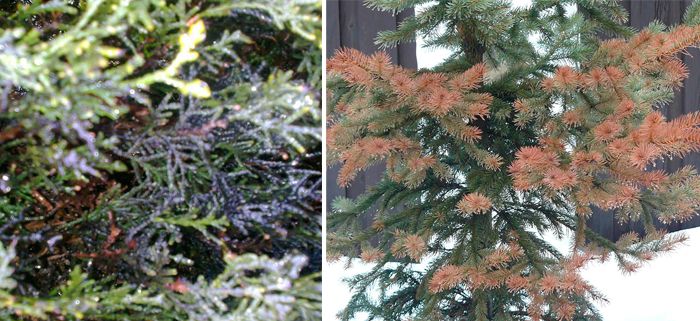
Needle tips begin to turn yellow for various reasons. In spring, bright sun burns them, causing a bronzing effect. Fungal infections are common. Rust most often appears on pine trees, and junipers are also affected. Spores from swellings on branches are carried to currants and pears. Fusarium wilt, cytosporosis, and phoma are considered dangerous diseases. Thuja suffers from these diseases. Defects appear on the bark and branches. The needles darken and fall off.
Old, neglected trees are susceptible to disease. Some conifer species are resistant to fungal diseases. However, they are not immune to caterpillar attacks. The bottom line is: if you've introduced evergreen forest trees to your property, learn how to combat infections and pests.
Non-infectious diseases of conifers and measures to eliminate them
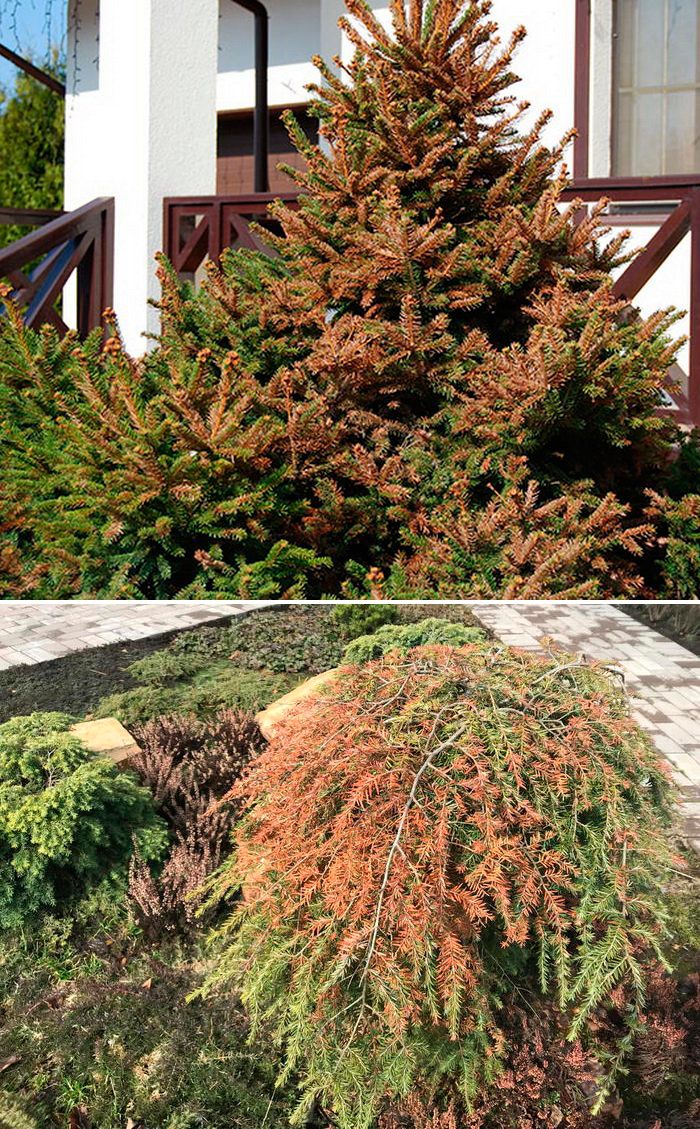
Sunburn. Solar radiation is especially dangerous for young trees. Snow cover reflects rays, increasing moisture evaporation. Roots in frozen soil are unable to compensate for the loss. Sap flow begins when the soil warms to 4°C; roots become dormant below this temperature. Young conifers planted in the fall can die from sunburn. My young pine died because we didn't cover it for the winter. I've noticed that glare from greenhouses, house windows, and shiny roofs acts like mirrors. If brown or yellowish spots appear on the crown, you need to look for the source of the bright light.
Protective measures against the spring sun:
- Young trees are helped by spraying - the branches are generously moistened with a spray bottle or garden sprayer.
- In spring or fall, you can cover small trees with burlap or covering material. This will protect them from the scorching sun and drying wind.
- By scattering black soil or ash on the snow, the process of snow melting is “started”, and the roots begin to absorb moisture.
When planting trees, it's important to maintain the integrity of the root ball. Seedlings purchased in pots take root better. Pines are more resilient to transplanting; their needles reattach after rooting. The most capricious is the wild spruce. It tends to be susceptible to illness for a long time, so it's best to shade it in the spring for the first three years. Among junipers, I recommend the 'Skyrocket' and 'Bluealps' (Cossack) varieties.
Other reasons for yellowing of needles:
- Mechanical injuries to trees occur due to snow loads and damage by animals.
- An underdeveloped root system is typical of weakened seedlings; it is better to choose suitable planting material from the very beginning.
- During severe recurrent frosts and active melting of snow, the bark cracks; it must be checked and the cracks sealed with pitch.
- In flooded areas, stagnant water provokes the development of root rot and changes the acidity of the soil.
The resistance of conifers to non-infectious diseases is increased by bioactive preparations:
- Kornevin (stimulates root system growth)
- Super Humisol is a balanced mixture of microelements and minerals;
- Zircon is a complex action drug;
- Siliplant is a silicon-containing chelated micronutrient fertilizer.
Timely fertilizing strengthens the plant's immune system, making it less susceptible to burns and promoting faster growth in the spring.
Infectious diseases of conifers: prevention and treatment
Fungal diseases are treated in roughly the same way on all crops. When preserving fruit and vegetable crops, we always treat conifers with Bordeaux mixture. If a plant does become infected, we resort to commercially available treatments. It's important to correctly determine the cause of the infection to determine which product to purchase.
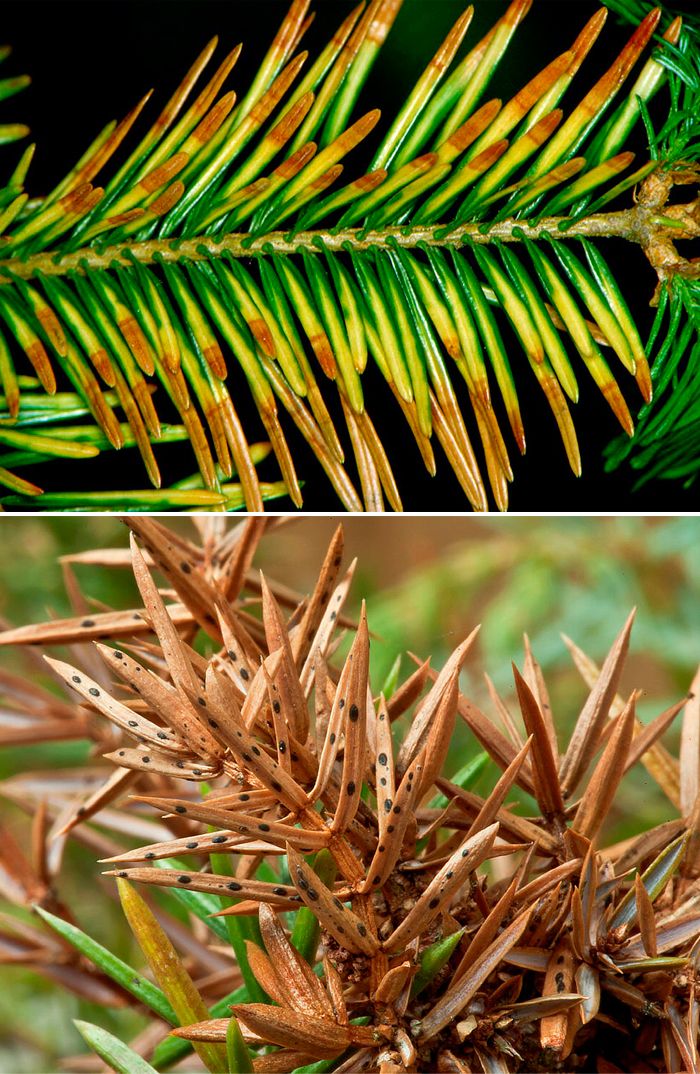
I'll start with winter needle disease, Schütte. The fungus develops under snow at temperatures around 0°C. Symptoms appear in spring or summer. The disease is not described as similar to other fungal infections, appearing on needles:
- gray-black coating;
- small dots.
The needles darken or turn yellow and fall off.
Control measures:
- sulfur-lime decoction – 3 times during the summer;
- Two treatments with Abiga-Peak and HOM preparations are enough.
Be sure to water the soil to a depth of 5 cm.
Rust is similar to fruit tree diseases. Traditional treatment methods include fungicides and copper-containing preparations.
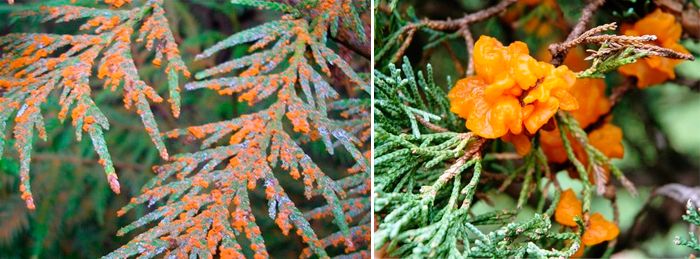
Pine twig blight manifests itself as distorted growth. Yellow-orange swellings appear. Treatment requires Fundazol; two applications are sufficient.
Fusarium develops in the soil around the roots of pine, spruce, larch, and fir trees when the soil is too damp. The central part of the crown collapses.
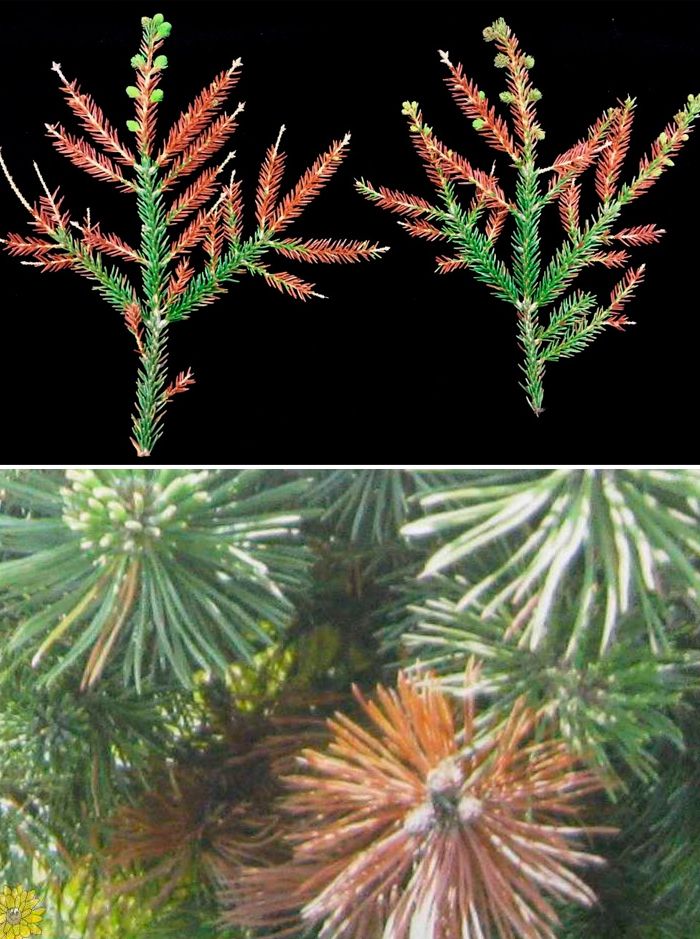
Drainage is carried out, the use of "Fitosporin" and "Alirin" will help revive the trees; they will turn green again if the branches do not have time to dry out completely.
Alternaria blight is devastating to junipers and arborvitaes growing in the shade. Blackish, dark gray spots spread along the needles. Affected branches are removed. Copper sulfate solutions or celandine infusions are used to treat conifers. The fungus must be suppressed until late fall.
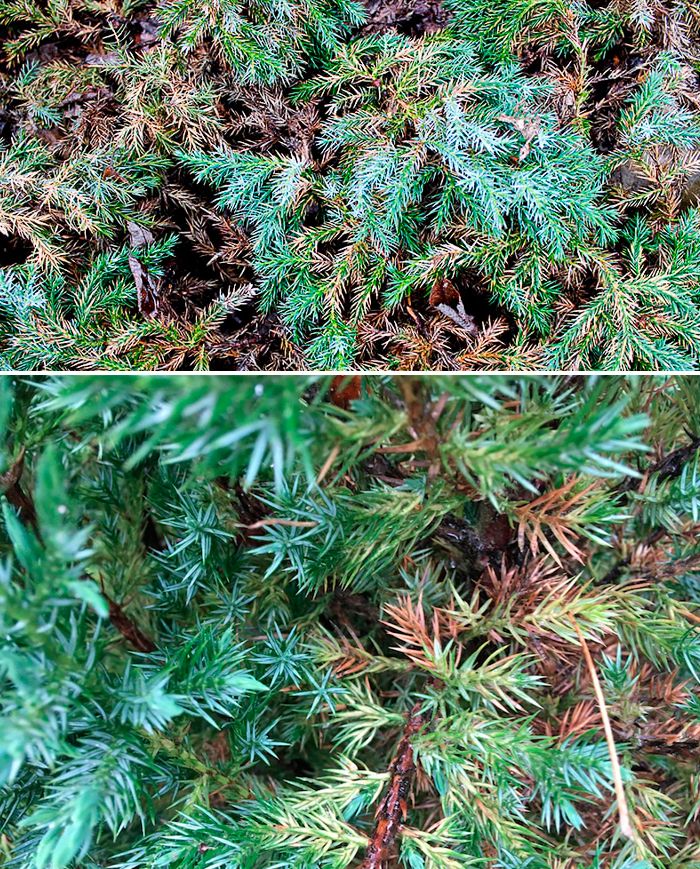
Bacterial blight is characterized by pale needles, which begin to fall off at the slightest touch. This disease is incurable. For prevention, treat with Fitosporin.
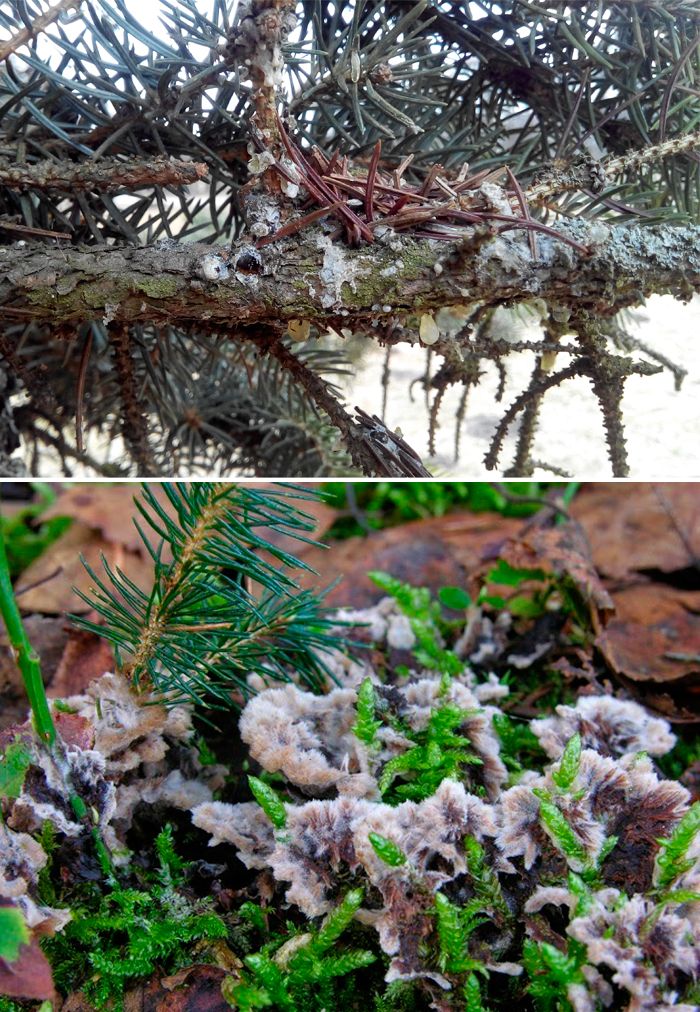
Biatorella canker is dangerous because it attacks wood. When infected, young bark changes color, turning brown, then cracking and dying. Long, elongated ulcers form, covered with resinous fungal growths.
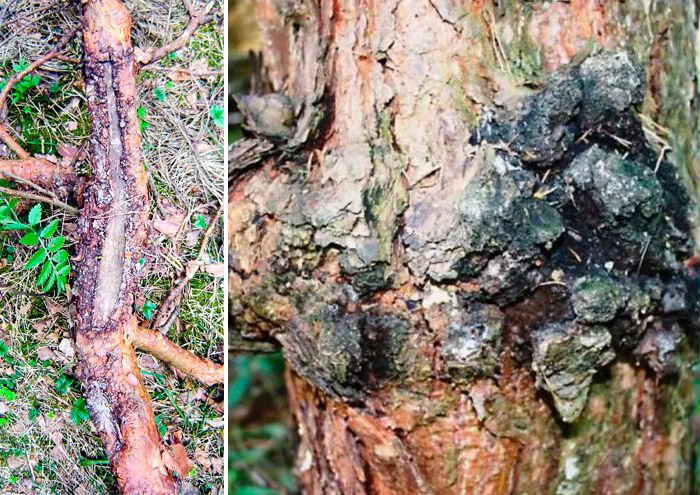
The tree gradually dies, the needles turn yellow and fall off. Treatment requires triple application at two-week intervals. It's important to thoroughly soak the soil with the treatments.
Pests of conifers: prevention and control methods
It's best to treat trees in early spring, as soon as the snow melts and daytime temperatures rise to 6°C. If you treat in the fall, you won't be able to get rid of pests and diseases; insects are preparing for hibernation and retreating to secluded corners. I dilute the products according to the instructions and always use protective equipment when working.
Now about the insects that we have to fight and how to treat them:
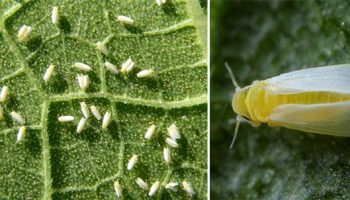
Fir, Siberian pine, Scots pine, spruce, and larch are sometimes infested by the rapidly reproducing pine aphid. Identifying the pest is easy by the appearance of a white coating.
These transparent-winged, sucking insects grow up to 2.5 mm in length and are green, dark brown, or blackish-gray in color. Hermes moths use their small antennae to suck the sap from young shoots.
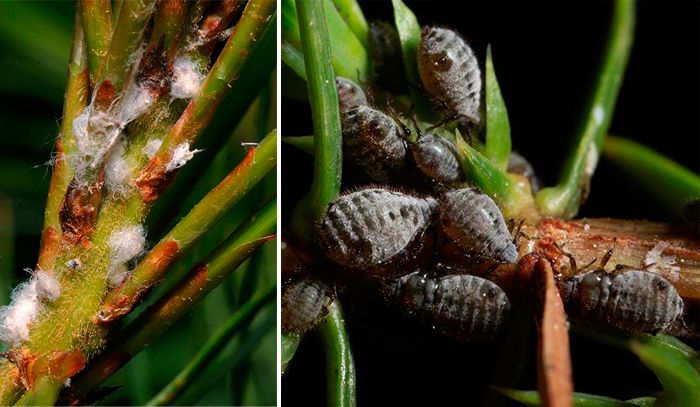
The best remedy for hermes is the universal pest control product Pinocid. The instructions indicate the dosage for different types of insects.
Bark beetles migrate from the forest; if the site is located away from a forest, there's no need to worry about a bark beetle infestation. The beetles lay eggs under the bark, burrowing tunnels to do so. The dark larvae, reaching 15 mm in length, continue their parents' work, digging new nests for themselves.
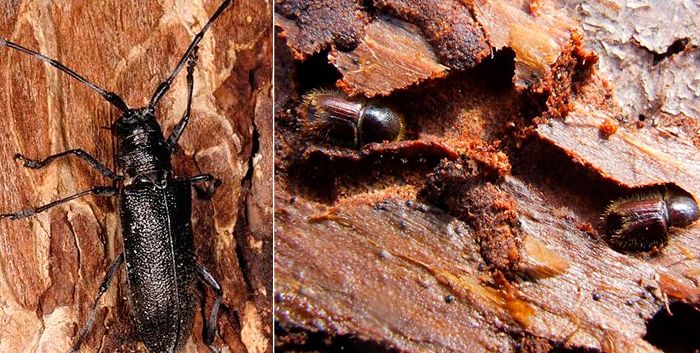
After hibernation, the larvae and beetles emerge, and it's time to kill them. Modern insecticides with stomach action are recommended.
Red and common sawflies are a threat to pine trees. These insects resemble bees, only smaller. They lay eggs in the bark. The light green caterpillars are difficult to see in young needles. When dried branches appear, treat them with the following preparations:
- Iskra Double Effect (the most effective product);
- Spark Golden (recommended for cedar spruce trees);
- Senpai is a universal insecticide;
- Alatar is a drug with complex action.
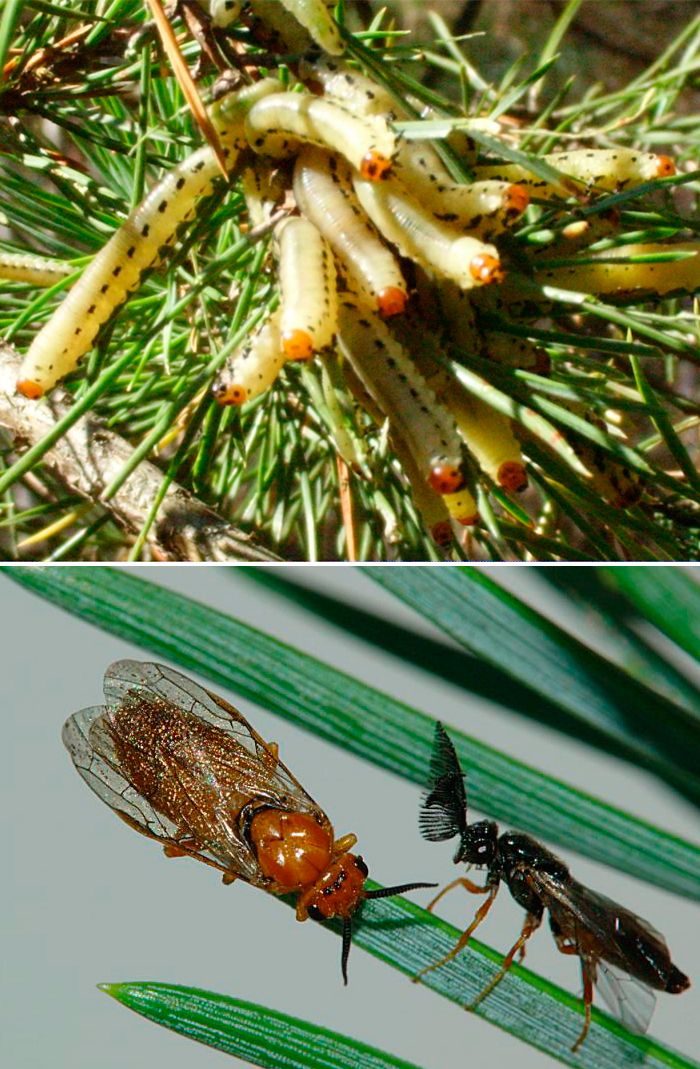
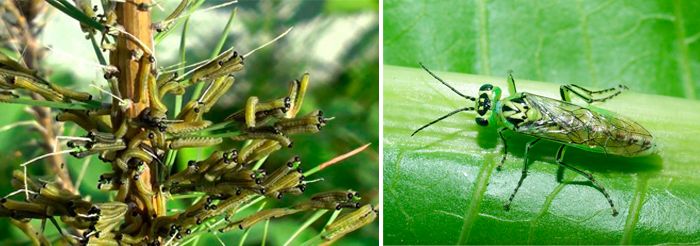
Green sawfly caterpillars have never appeared in our garden, but they are harmful to junipers. These are small caterpillars with contrasting stripes and a brown head. They overwinter in bark crevices, in branch nodes, and under a layer of needles. All parts of the plant need to be treated, and the soil needs to be thoroughly watered. It's best to rake up the needles completely and replace them with mulch.
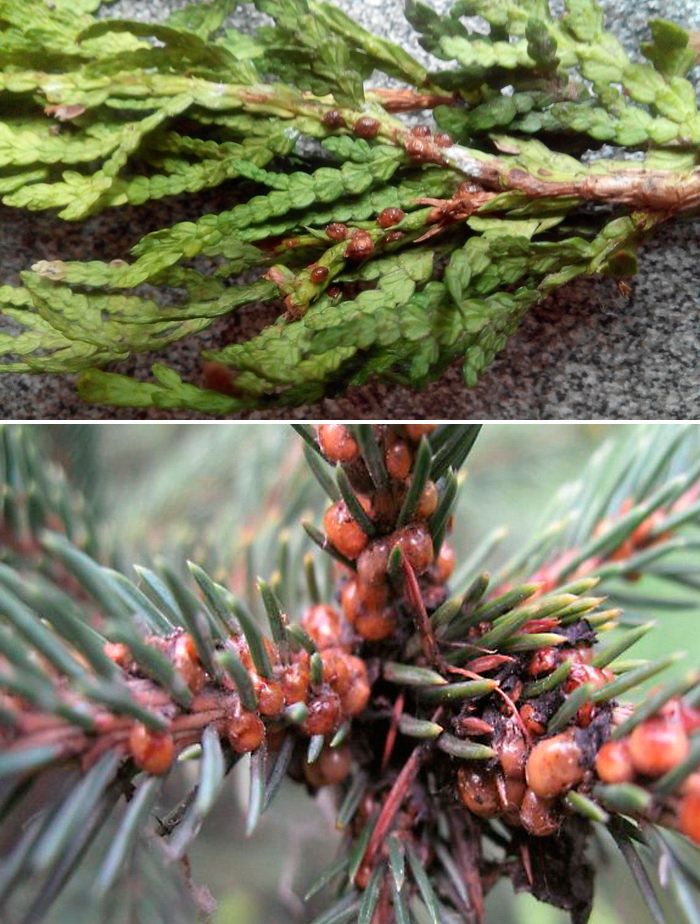
False scale insects prefer junipers, thujas, and yews. These insects have a hard shell. Females are round, while males are elongated. The legged larvae are especially dangerous. They quickly spread throughout the tree canopy. Acaricides such as Fufanon or Iskra-M are effective against them.
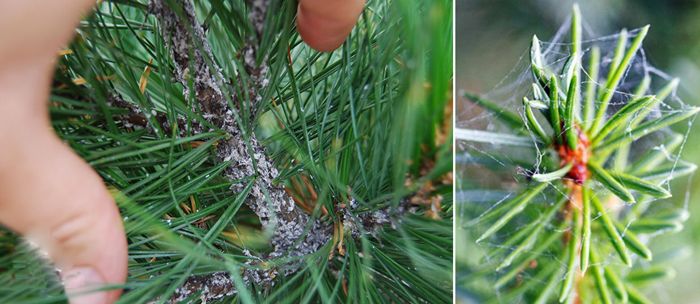
Spider mites envelop the tree tops in an instant, a common occurrence. These microscopic insects are especially active on hot, rainy days. I use Actellic, Fufano, and Karbofos against them.
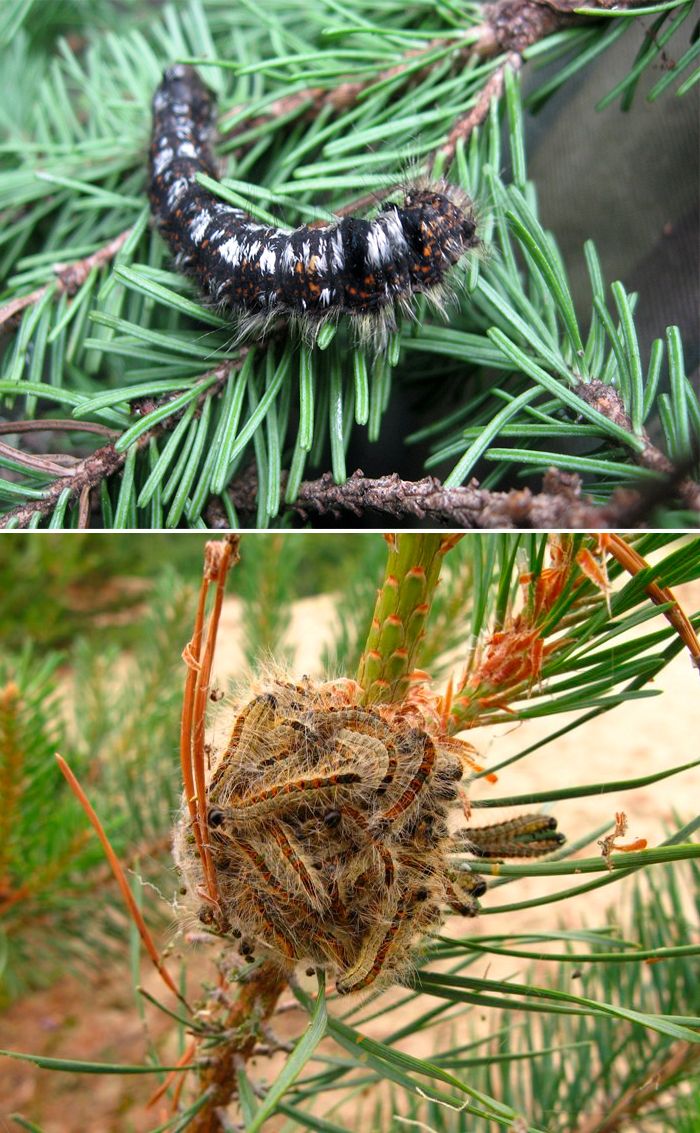
Pine moths are the larvae of colorful butterflies with a wingspan of 7–8 cm. Caterpillars emerge in early spring, and pupae can be seen in temperate climates by the end of June. The larvae gnaw at the bark of young shoots, causing the branches to dry out. Early treatments with Bordeaux mixture will help preserve the conifers.
Evergreen trees have other problems, but they are typical for warmer growing regions.