The beloved beauty of the rose is a jewel in any garden, whether home or park. Although this flower is relatively low-maintenance, there are times when this queen of flowers requires more attention. This happens when the first signs of disease appear on the plant.
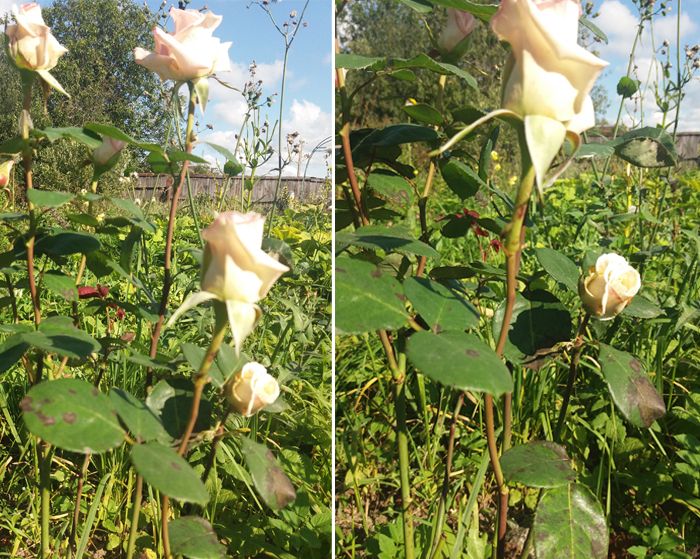
The plant's decorative appearance is marred by purple-white spots that appear on the leaves, eventually turning black. The leaves turn grayish-brown, curl, and fall off. This fungal disease is called rose black spot, or marsonina.
Symptoms and causes of black spot
One of the most common diseases, it affects not only the leaves but also other plant tissues. The first characteristic symptom is round, black spots ranging in size from 5 to 16 mm. The plant needs immediate treatment. Over time, the spot begins to turn brown, yellowing at the edges, and numerous small black spots appear on the leaf. Within 1 to 2 weeks, these spots merge into a single, large spot, and the leaf dies.
The infection is transmitted by droplets, which can be caused by rain, fog, or artificial irrigation. By autumn, some of the most vulnerable varieties may be completely leafless. There are no roses that are completely resistant to this disease.
Favorable conditions for the development of fungus are created by warm, humid weather, usually in the second half of summer.
The first dark, blurry spots begin to appear on the lower leaves, which turn yellow and fall off. Gradually, from the bottom up, the stem and the bush become bare. In severe cases, the bushes are left bare except for the buds.
If left untreated, this disease will continue to infect plants year after year. Fungal spores thrive in warm, humid conditions, and with enough rain, the process becomes unstoppable.
Therefore, if a disease appears on a plant, it must be treated immediately, and not only treated, but also the causes of the fungus must be eliminated.
- Even a healthy plant can become ill if not properly cared for. Its immunity weakens, and infections occur very quickly.
- Planting is very important; if they are planted densely, there is practically no ventilation, infection occurs quickly.
- The presence of weeds promotes the development of fungal spores.
- Shading of bushes and high groundwater levels affect both flowering and the development of the entire plant.
- Black spot can appear due to excessive application of nitrogen fertilizers and insufficient potassium fertilizers.
- To reduce the risk of disease, remove and burn all leaves from under the bushes in the fall. The fungus survives the winter in fallen leaves.
- Rainy, warm summers promote the development of microorganisms.
- Temperature fluctuations can also trigger black spot.
Therefore, to prevent the disease as early as possible, it is necessary to spray and carry out preventative measures. And at the first sign of spotting, treatment measures should be taken.
Treatments for Black Spot on Roses
It is a well-known fact that it is easier to prevent a disease than to treat it long and hard later, and this applies not only to people, but also to plants.
For prevention, in the spring, at the beginning of leaf blooming, treatment with chemical solutions is carried out twice.
If the disease does appear, treatment measures are applied.
First of all, all the leaves under the bush are collected, those that have not yet fallen, but are already affected, are torn off and burned.
They are treated with a copper-containing composition – Bordeaux mixture, which consists of copper sulfate and lime.
Hom, Kuproksat, and Oxyhom are also used.
Systemic and systemic-contact fungicides are used at least three times - Topaz, Fundazol, Previkul, Rodomil and many other preparations available in the region where you live.
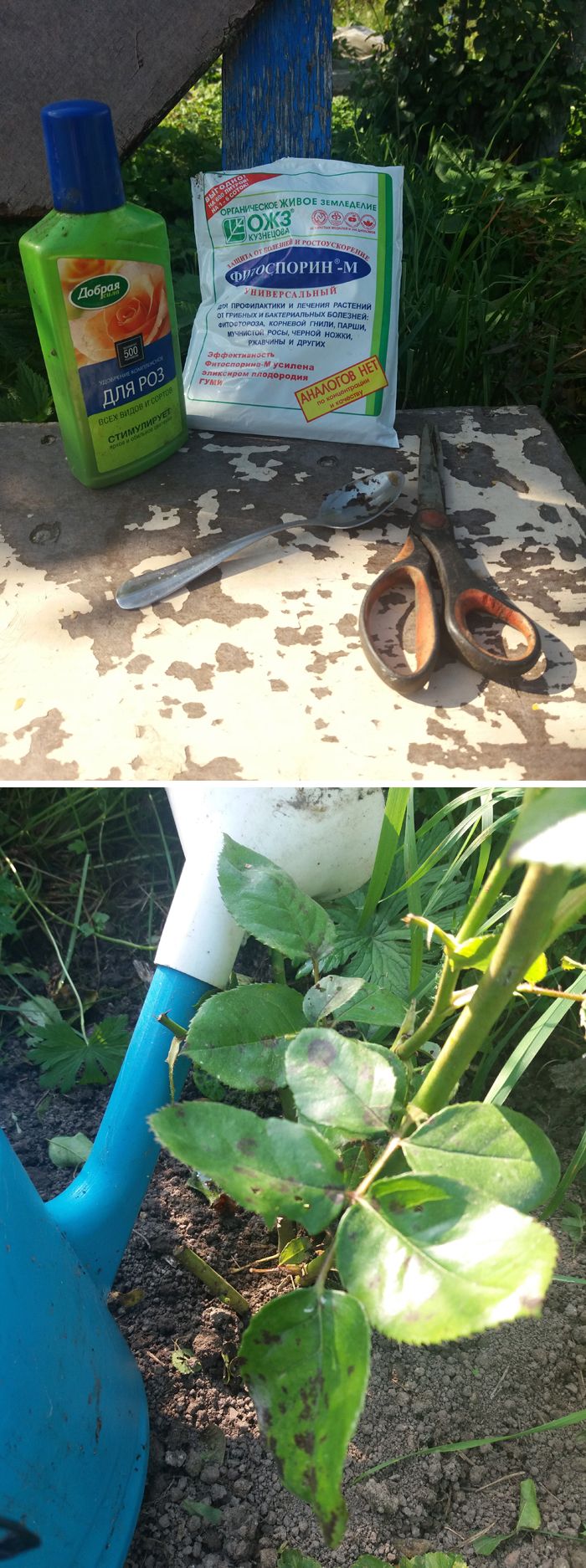
Of the biological products, Fitosporin-M is preferred. It is used in combination with Zircon or Siliplant. Spray at least four times, every five days. For greater effectiveness, water the plant between treatments (in dry weather).
Systemic fungicides penetrate the plant through tissue, but microorganisms can become resistant to these chemical compounds. Therefore, it's necessary to periodically change the fungicide; continuous use of the same one will lose its effectiveness over time.
Folk remedies for prevention
Why are we talking about prevention rather than treatment? Because folk remedies are used as a complement to the main medication.
Onion peels have a beneficial effect. They help fight infection and are also a good fertilizer. How to prepare a decoction: Take a large handful of peels, place them in a saucepan, add three liters of water, bring to a boil, and let it steep. You can make this in the evening and water the bush in the morning. This mixture is used before the buds open.
Used as mulch, onion peels have a detrimental effect on fungus that may remain in the root zone of the bush.
Ash infusion: Place 1 kg of ash in a bucket, add water at approximately 70–80°C, and let it steep overnight. Drain the water in the morning and bring the volume up to 20 liters. Use this infusion to water rose bushes in dry weather.
By following simple rose care recommendations, your beauty will bloom long and abundantly, filling the air with rich, fragrant aromas.