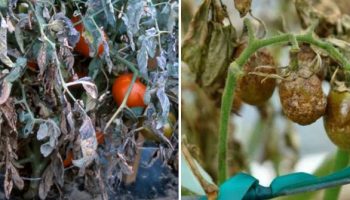
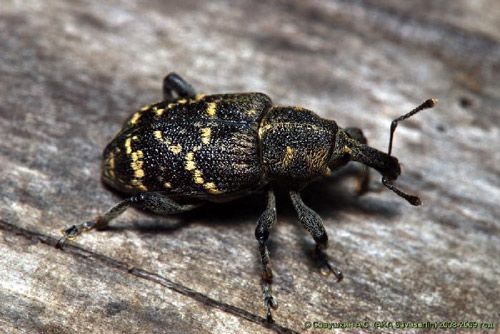
In spring, not only plants awaken, but also their inhabitants, parasites being no exception. The weevil, also known as the elephant weevil, is considered a serious pest because it consumes virtually all plant species.
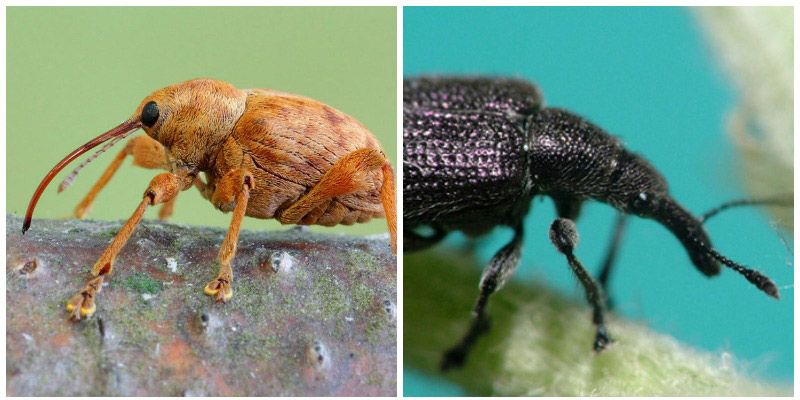
Description of the weevil
Weevils vary in appearance and developmental stages. Their larvae are thick, light-colored worms with a chitinous shell on their heads, usually C-shaped, and their bodies covered in small hairs.
During their development, they live underground and feed on plant roots; only a few species live on the surface and feed on above-ground shoots. The larvae evolve into light-colored pupae, which can now be identified by legs, wings, and a proboscis. They then metamorphose into adults.
The following groups of weevils are distinguished:
- by the size of the nose (short-proboscis and long-proboscis);
- by color (yellow, brown, black, red, with or without a pattern on the shell);
- by body size (from 1 mm to 3 cm);
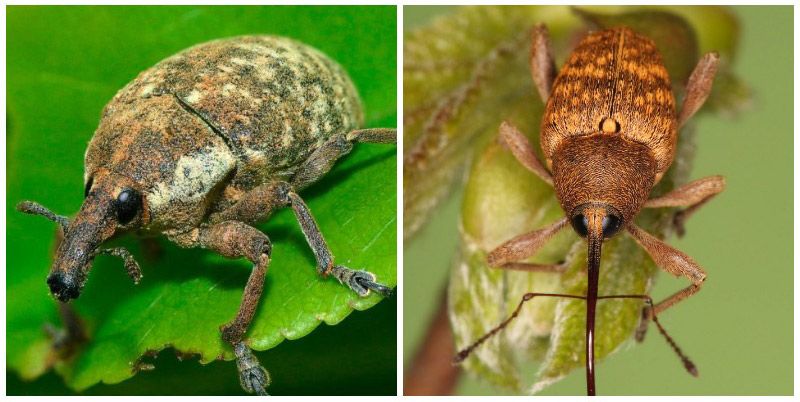
- by body shape (rod-shaped, diamond-shaped, pear-shaped, spherical).
Types of weevils
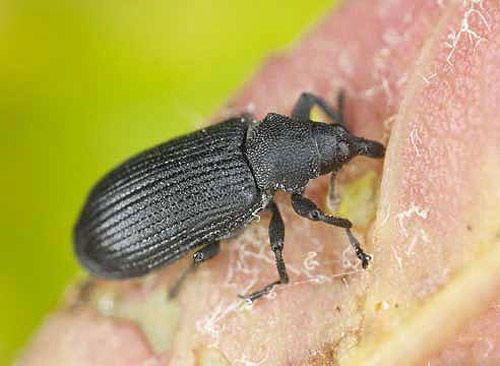
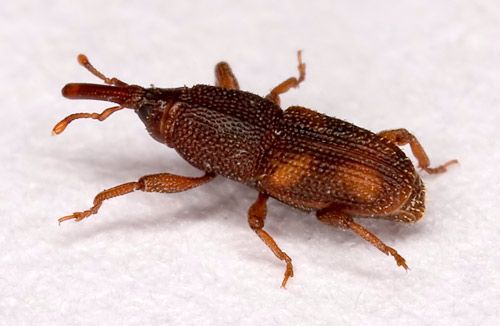
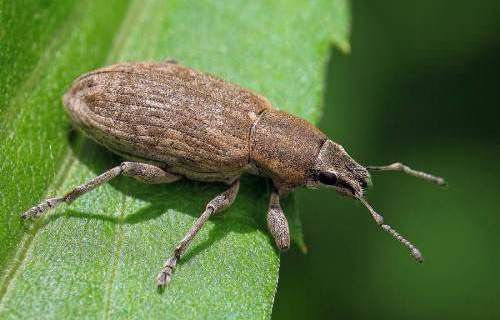
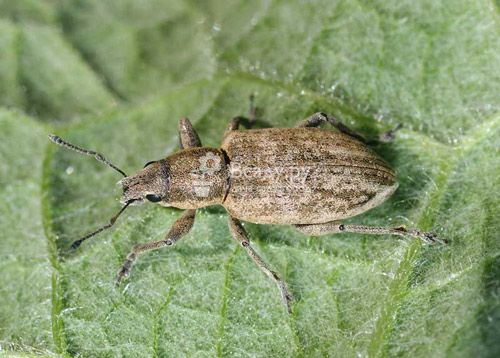
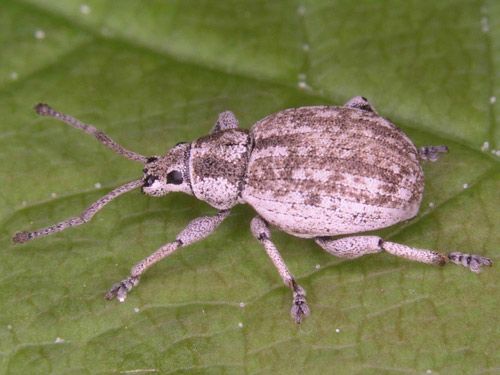
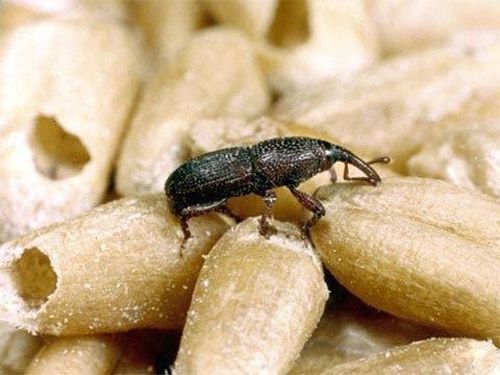
There are over 5,000 representatives of this type. The table shows the most common ones in gardens and vegetable plots.
| View | Description | Plants susceptible to damage |
| Strawberry-raspberry
|
Height: 3 mm. Wings have gray, grooved hairs. Larvae are white. Appear when the first greenery appears. | Strawberries, raspberries, blackberries, strawberries. |
| Rice
|
Grows up to 3 mm. It is the most dangerous because it easily tolerates drought and readily feeds on dry plant matter. | Cereal crops. |
| Beetroot
|
Length: 15 mm. Abdomen: gray, back: brown, body: black, covered with small hairs. It lays white larvae that feed on plant roots. Thanks to its ability to burrow up to 60 cm deep, it easily survives severe frosts. | Beets, carrots, cabbage, cucumbers, legumes. |
| Southern Gray
|
Up to 8 mm. Has a dark body. Capable of traveling vast distances. Unfussy, it will even eat a weed. | Sunflower, corn, winter crops. |
| Fruity
|
No more than 6 mm in size. It becomes active during bud formation, feeding on inflorescences and buds. It lays eggs in the fruit, making small indentations. | Fruit trees: peach, pear, cherry, apple, sweet cherry, quince. |
| Barn
|
Up to 4 mm. Dark brown. Affects not only grains but also products made from them. A single clutch can contain 300 eggs. | Cereals (wheat, oats, millet, rye, barley, etc.) |
| Pine:
|
|
|
How to get rid of weevils in open ground
In combating weevils, all methods are good – from biological to chemical.
Once a pest is detected, action must be taken immediately.
Two solutions can help get rid of it on strawberries.
- The first is done like this: dissolve 1 teaspoon of iodine in 10 liters of water.
- The second option is to dissolve 3 Intra-vir tablets in a bucket of water.
Spraying is done 5-6 days before flowering, then in mid-summer.
Cherry trees should have loose bark removed and the cleared areas treated with lime. Inspect for pests, preferably by laying a white cloth under the tree and shaking it. If more than 10 pests are detected, begin treatment. Regularly remove fallen leaves and fruit.
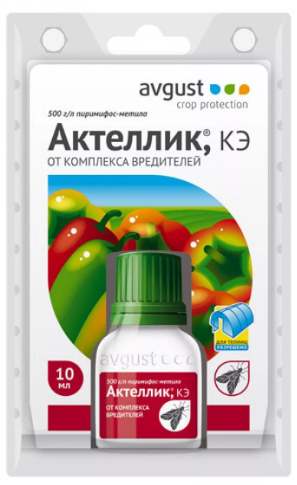
Plum beetle control is the same as cherry control. Effective products include Bazudin, Fufanon, and Actellic, which contain pyrethrins and organic phosphorus compounds.
If you find raspberry moths on raspberries, use the same solutions as on strawberries. Alatar is the most effective.
To keep the nuts healthy, spray them with Fufanon or Actellic. It's also important to dig the soil around the tree trunk to a depth of 20-25 cm and clear the area of fallen leaves and unwanted fruit.
Products such as Karbofos, Aktellik, and Metaphos will protect pine and spruce trees from pests. Attracting their natural enemies (magpies, starlings, woodpeckers, rooks, crows, jays, ground beetles, and hawks) is an excellent solution.
How to get rid of weevils in your home
A beetle can appear in an apartment as a result of purchasing infested grains. This type of beetle is called a barn beetle. You can protect yourself from it by following a few simple steps:
- Store grains in tightly sealed containers. Add peeled garlic to pasta and grain containers, a couple of nutmegs to flour containers, and pepper to peas and beans.
- Heat the purchases in the oven at 60 degrees for 6 hours.
- Do not store food products.
- Wipe storage shelves with soapy water, followed by water and vinegar. Place lavender flowers, cloves, and bay leaves in the treated areas.
- Place purchased cereals, pasta, and flour in the freezer for a short period of time, or better yet, for 2 days.
- View the products you purchase (tea, pasta, coffee, cocoa, cereals).
Folk remedies for weevils
There are several effective remedies that are easy to prepare:
- 150 g of chamomile is infused in a bucket of water for 24 hours, then 50 g of soap is placed there.
- Add 400 g of dried, crushed wormwood to 10 liters of water and let sit for 24 hours. After 24 hours, add 40 g of soap and boil the mixture for half an hour.
- Garlic and onion peels, along with pine branches, are placed in a prepared container and filled with water. The mixture is then filtered and mixed with water at a ratio of 1:10.
The affected area is treated every 5 days.
Biological methods of controlling the elephant beetle
All beetles are at risk of being eaten by natural inhabitants such as birds, ants, and wasps. Their presence will help eliminate weevils.
Nematode powder, available at a specialist store, can be used against them. Apply according to the instructions. Spray the infested plants after sunset.
Use of chemicals in weevil control
This method is more effective than others because it takes the least amount of time to combat the parasite. The following medications will help combat it:
- Kinmix (2.5 mg of the product per 1 bucket of water);
- Detis (per 1 bucket of water – 2 mg of the drug);
- Fufanon, Iskra M, Kemifos, Karbafos-500 (per 1 liter of water - 1 mg);
- Fitoverm (per 1 liter of water – 2 mg);
- Karate (per 10 liters of water – 1 ml).
To kill leafhopper larvae, use Bazudin and Diazinon. Karachar and Sensei are used before flowering.
They should be alternated to prevent the pest from becoming accustomed to them.
The first spraying is done 5 days before flowering, with the next one occurring 9-11 days later. This procedure is recommended to be repeated a couple of times during the crop's development period.
Top.tomathouse.com recommends: preventative measures
To prevent its occurrence, you can take a number of preventative measures, which include the following:
- Clear the area of leaves and unnecessary branches in a timely manner.
- Cultivate the land around trees systematically.
- Plant repellent plants near growing crops, such as wormwood.
- Using lime, treat trees.
- Encourage the appearance of beetle-loving birds by using birdhouses and hanging them on trees.
- Periodically treat with a harmless special agent, for example, Fitoverm.
- Grow away from wild crops.
- In the spring, when the buds appear, the elephants should be dropped, and trapping belts will be excellent helpers.
- Alternate crop planting.
A comprehensive and timely impact on the weevil will lead to the desired result: the beetle will be defeated.