A strawberry weevil infestation can reduce the yield by two-thirds. The beetles are especially dangerous in the spring when the buds are ripening.
Description of the weevil
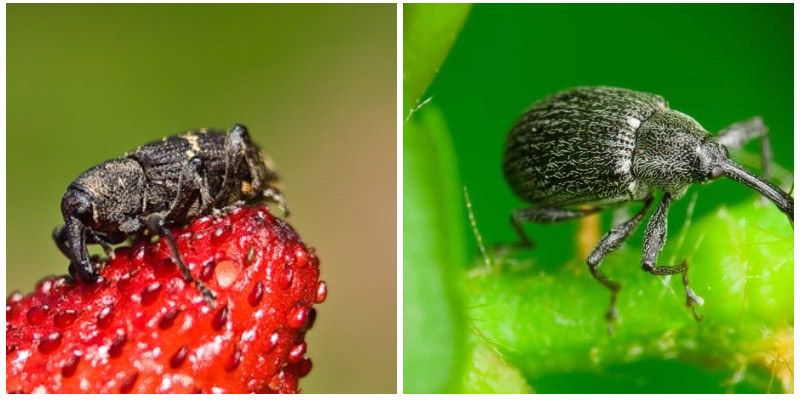
The strawberry weevil, or raspberry blossom weevil, is a black beetle up to 3 mm long, covered in gray bristles. It is distinguished by its long proboscis.
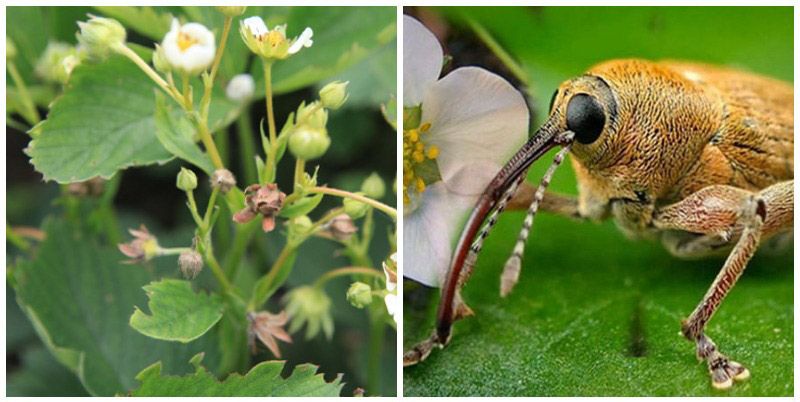
The pests emerge in mid-April in the spring. Strawberries are the insects' first target, along with raspberries and blackberries. Strawberry leaves and stems are a favorite delicacy for the beetles. The weevils lay their eggs inside the buds, an average of one egg per bud, and this constitutes their main danger. A single female can infect up to 100 buds. After 6-7 days, a larva emerges and eats the inside of the bud.
It is white, curved, and has a yellowish-brown head. On average, the larva pupates after 24 days, and after another 10 days, in the second ten days of July, the mature individuals emerge from the pupae. Early strawberry varieties are particularly affected. By the second half of August, the insects cease their activity and enter hibernation.
Beetles survive unfavorable conditions, including winter, under dried leaves or in the top layer of soil.
Timing and methods of processing strawberries
The insect becomes active from mid-spring, when ambient temperatures begin to rise above 10°C—the ideal time for female weevils to lay eggs. In summer, bushes can also become targets for beetles. Seasonal insect activity affects control measures.
Spring
After winter, remove dried-out plants. The soil should be loosened, nitrogen fertilizer applied, and a thin layer of mulch laid.
Folk remedies for spring treatment
The arsenal of useful folk remedies includes:
- A garlic tincture is prepared by pouring 100 g of dried garlic scapes into a bucket of water (8 liters). After 24-48 hours, strain the solution and spray the garden bed at a rate of 1 liter of solution per square meter. Repeat the process after a week.
- Ash. Prepare a solution using 1 cup of ash per 1 bucket of warm water (8 liters). A few crystals of potassium nitrate (KMnO4) are usually added to the solution. Apply 1 liter of the solution per 1 square meter. Spray the green parts of the plant.
- Ammonia (aqueous ammonia solution). Ammonia has a pungent odor that repels insects. Dilute half a tablespoon of ammonia in a liter of water. One liter of the solution is enough to treat 1-1.5 square meters of soil. Water with a regular watering can.
- A mustard-based solution has a repellent effect. To prepare it, dissolve 100 g of dry mustard powder in 3 liters of water. Apply it to the green mass using a spray bottle.
- Soap solution. Forms a thin protective film on stems and leaves. To prepare the solution, dissolve 100 g of laundry soap shavings in a bucket of warm water. Spray three times, once a week. Sometimes, to enhance the effect, add 30 drops of an iodine alcohol solution to the prepared solution.
- Onion peel and celandine. To prepare the remedy, the dried ingredients are ground in a 2:1 ratio and used to fill a saucepan to 33% of the required volume. Boiling water is poured over the plant material. After straining, the remedy is sprayed onto the green plant material. For a stronger effect, it is recommended to repeat the procedure after 2-3 weeks.
- Infusions of tobacco, garlic (200 g dry mass per 10 liters of water), or hot pepper (500 g per 10 liters) are recommended for treating plants during bud formation.
- A solution of baking soda at the rate of 2 tablespoons per 10 liters of water (for watering).
- Tansy flower decoction. Prepare by steeping 300-400 g of dried flowers, or 1.5-2 kg of fresh flowers, in 5 liters of water. Let it steep for 48 hours. Then boil the solution and add 50 g of laundry soap shavings, then bring the volume to 10 liters with water.
- A fir oil-based solution. To prepare, mix 2 tablespoons of green soap, 2 tablespoons of fir oil, and 10 liters of water. Apply the resulting solution to the plant's green foliage.
Mechanical methods
It is used when insect pests have attacked fruit-bearing bushes.
Manual picking of strawberry pests involves three simple steps:
- Spreading newspaper sheets around the plant.
- Shaking the bush in the morning.
- Rolling up newspaper sheets and then burning them along with the fallen insects.
You can use a trap made from a saucer filled with sweet syrup. If you place such a container near a strawberry bush, some of the insects will swim in it the next morning.
In the spring, before shoots appear, effective methods of controlling the weevil include digging the soil, collecting infected buds by hand, and watering with hot water (+60…+65 °C), which is considered safe for the plant, since the strawberry roots are not harmed.
Chemicals in spring and during fruiting
It's important to remember that chemicals with a strong odor can repel bees that pollinate plants. Therefore, be selective when choosing chemical pesticides.
Approximately 28 days before harvesting the fruit, you should stop using pesticides so that the ripening berries do not absorb them.
Weather conditions should also be taken into account. Treatment should only be carried out in dry, windless weather. Rain or strong winds will negatively impact the treatment, as the chemicals will be washed away or blown away.
Chemical pesticides are used when other insect control methods prove ineffective. Biological pesticides such as Fitoverm and Iskra have proven effective, protecting plants for several weeks. They are recommended for use in spring and fall.
Insecticides (Karbofos, Intavir (Inta-vir), Metaphos) can not only protect crops from insect pests but also cause significant harm to human health. Therefore, they should be used only as a last resort, with strict safety precautions. To avoid poisoning, personal protective equipment for skin and respiratory organs must be used. Typically, 10 ml of insecticide is diluted in 10 liters of water before spraying.
Autumn
In the fall, suspicious plants with thickened stems and deformed leaves are disposed of. The remaining bushes are treated with broad-spectrum insecticides.
Top.tomathouse.com recommends: weevil prevention
Preventative measures can minimize potential damage or even eliminate a weevil infestation. It's recommended to follow these simple guidelines:
- grow strawberries away from other fruit crops (raspberries, currants);
- use varieties with a short flowering period;
- dig up the soil in the spring, sprinkling it with ash;
- remove dried leaves and shoots;
- plant garlic, onions, mint, and calendula around the periphery of the strawberry beds;
- In late autumn, dig up the soil, mulching it with pine needles.