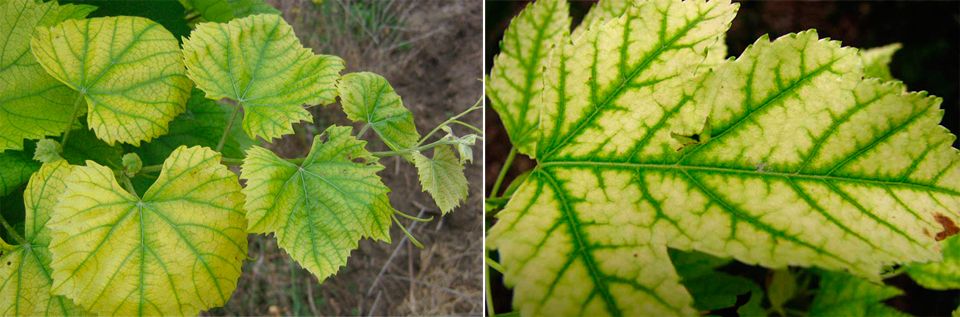
A grape disease associated with impaired chlorophyll synthesis is commonly known as "pale blight." Leaf blades turn yellow, and the color pigment appears. Chlorosis requires immediate treatment to normalize cellular metabolism; otherwise, buds begin to fall off and leaves begin to shed. The disease is easy to recognize, but identifying its causes is quite challenging. Affected plants overwinter poorly, and yields are reduced. Some varieties prone to chlorosis are treated regularly as a preventative measure.
Types, causes, and symptoms of grape chlorosis
Chlorosis can be infectious and non-infectious.
Viral chlorosis
The infectious form occurs when the virus enters:
- through wounds from blood-sucking insects;
- from an infected seedling brought to the plantation;
- through the scion site if the rootstock was taken from an infected vine.
It manifests itself as yellow spots on the leaves, especially near the veins and the veins themselves. The leaves take on a mosaic-like appearance. Therefore, this infectious form of cellular metabolic disorder in grapevines is called yellow mosaic.
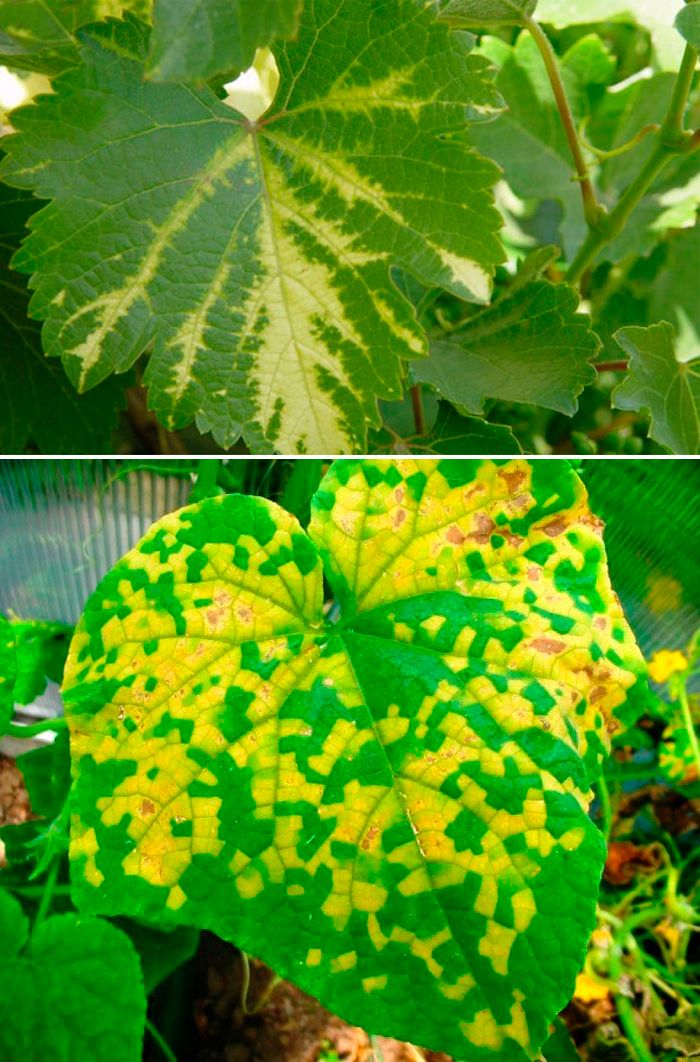
This disease is not common in Russia, but in warm climates, infections often become widespread. Roots and all parts of the plant are affected, and the vines must be discarded. The viruses are resistant to frost and pesticides. Grapevines infected with this disease are burned.
Types of physiological chlorosis
Non-infectious chlorosis has many causes of yellowing foliage. It typically occurs in early spring due to a lack of nitrogen, zinc, sulfur, magnesium, and iron. Introducing minerals through the roots or leaf blades stabilizes the plant's condition. Fertilizing is a reliable remedy.
Edaphic is associated with excess moisture in the soil and abnormal weather conditions:
- sudden changes in temperature;
- unexpected cold snaps at night;
- dry period.
Treatment methods are selected based on the severity of the disease, eliminating the underlying causes of the chlorophyll deficiency. If left untreated, damaged leaves dry out, short nodes form, and shoots grow back stunted.
Carbonate is typical in alkaline soils; iron is present, but it's not absorbed. Calcium blocks the movement of metal ions, causing the plants to wilt before our eyes.
Iron deficiency chlorosis develops slowly. Diagnosis is difficult. The disease appears similar to water stress. However, after watering, the vine's condition worsens. Iron deficiency occurs due to an excess of copper in the soil (the mineral is introduced through Bordeaux mixture).
Deficiency of other microelements, symptoms in grapes:
- when a plant needs bromine, the flowers tend to fall off and the ovaries become spotty;
- Zinc fertilization is required if the leaves become light green, fade, or curl slightly;
- Magnesium determines the age of grapes; if there is a lack of it, the lower leaves fall off, the trunk becomes bare and darkens;
- Manganese is also involved in the synthesis of chlorophyll; when there is a deficiency of this microelement, a yellowish border appears on the leaves.
Actions upon detection of chlorosis and treatment methods
First, you need to make sure there's no infectious disease. A sure sign is green veins on the leaf. Inspect the vine from all sides. Chlorosis usually appears on several nearby plants at once. It's a good idea to check the soil pH immediately to select the right fertilizer or iron-containing product.
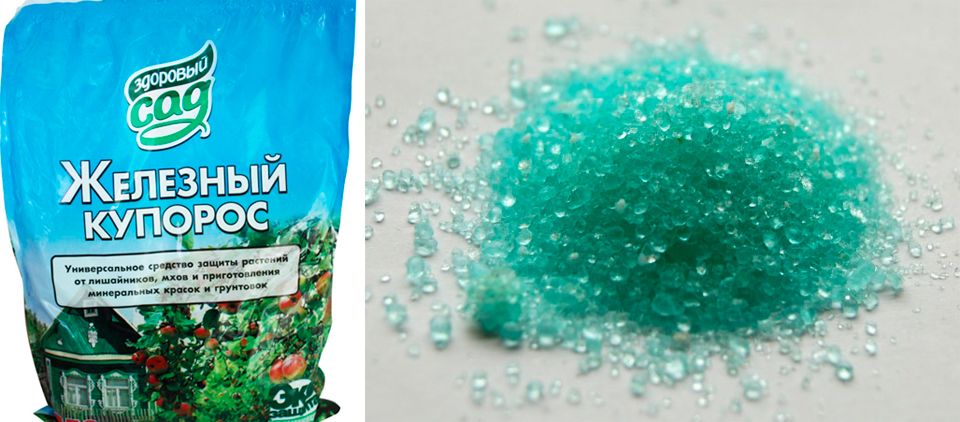
The carbonate form is the most common. Grapes are treated with ready-made or homemade chelates when iron deficiency occurs. In early spring, 200-400 g of ferrous sulfate is applied to the soil under each bush. The same procedure is repeated in the fall. In summer, the grapes are sprayed with 1% ferrous sulfate or iron chelate (10 liters of water, 7 g of citric acid, 10 g of ferrous sulfate). With increased soil moisture, ammonium nitrate or sulfate improves the absorption of micronutrients by the roots, binding excess nitrogen.
Avoid applying fertilizers and preparations directly under the bush. It's better to do this in a special furrow 40 cm deep, approximately 80 cm around the bush's diameter. Water the plant before and after fertilizing.
For lime chlorosis, sulfuric acid mixed with water (add the acid to the water in a 1:10 ratio) helps. Water each bush with 5 liters of this solution.
Also, to prevent chlorosis, legumes, alfalfa, clover, and cereals are planted between rows.
It's advisable to carry out a comprehensive foliar feeding to support the grapes' immunity. A visible improvement will be seen within a couple of days. However, if the root system is failing to absorb the necessary nutrients—chlorophyll synthesis—is the underlying cause, the leaves will turn yellow again.
Fertilizing the soil with urea produces good results; it provides the necessary acidity and is quickly absorbed by the vines. Other complex nitrogen sources include nitrophoska and azofoska.
Potassium nitrate and superphosphate are added to them. Bordeaux mixture, which contains copper and calcium, can be used as a preventative measure. All macro- and microelements are necessary for proper photosynthesis.
Chlorosis-resistant grape varieties
There's no cure for viral infections. When talking about resistant grape rootstocks, we're talking about non-infectious forms of the disease. Among the varieties with good immunity, capable of withstanding weather stress without chlorosis, are wine and table grapes:
- Alexa;
- Venus;
- Delight;
- Eastern talisman;
- Zaporizhzhya raisins;
- Cabernet Sauvignon;
- Limberger;
- Muscatel;
- Müller-Thurgau;
- Pinot Meunier;
- Portuguese
- Pink Timur;
- Trolling;
- Saint Laurent;
- Chasselas;
- Elbling.
The list of varieties susceptible to the disease is much shorter. By following proper agricultural practices, chlorosis can be avoided in grapes.