Ticks are among the most dangerous pests because they are considered carriers of infectious diseases. Appropriate measures should be taken to prevent their occurrence.
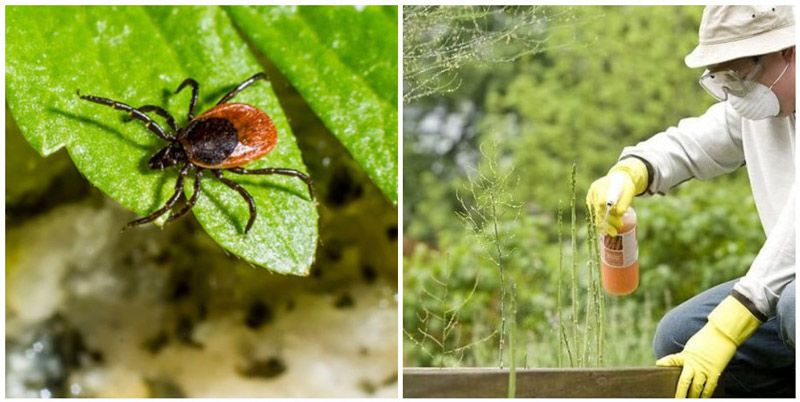
Reasons why ticks appear in your garden
The following can be highlighted:
- Food shortages stimulate the search for new places. They can travel up to 10 meters per day to find food.
- Location of a summer cottage near a forest.
- The appearance of parasites in neighbors.
- Bringing them in with the help of domestic animals.
- When purchasing a plot, there's a risk of ticks. If they appear after 18-24 months, they were present from the start, as their eggs mature during this time.
Methods for combating ticks in your garden
It's recommended to combat arthropods immediately after their detection. This can be done using chemicals or folk remedies. The former is much more effective, especially for large areas. However, the latter is more environmentally friendly. Depending on the specific goal, the appropriate method is chosen.
Moreover, it is necessary to treat not only the soil, but also the things of the owner and his pets.
Folk remedies for tick control
The most effective recipes are given in the table.
| Name | Description |
| Garlic tincture | Take a head of garlic and grate it. Add 2 liters of water to the resulting paste and leave it in a shaded area for 24 hours. Then strain the mixture and add another 2 liters of water. Spray the affected area with a spray bottle. Onions can be used instead of garlic. |
| Citrus juice | You'll need lemons, grapefruits, oranges, and tangerines. Cut the chosen fruit in half and squeeze out all the juice. Then add 3 liters of water and irrigate. |
| Herbal infusion | Geranium, garlic, chamomile, and sage flowers are collected and placed in boiling water, simmered for 5 minutes over low heat. The resulting solution is poured into a container to settle for 48 hours. It is then filtered and applied to the affected area using a spray bottle. |
| Essential oils | 5 ml of each peppermint and rosemary essential oil is diluted in 1 liter of water. This solution is applied to the area every 60 days. |
To protect your clothes from arachnids, you can prepare a special solution. You'll need: 1-1.5 cups of water (preferably cool), a few drops of eucalyptus oil, 2-3 drops of peppermint and citrus oils, and 2 cups of white vinegar. Mix all the ingredients together and apply the mixture to your clothes.
To protect the body, you can prepare a remedy from 20 drops of rose geranium and lavender oil, 1 cup of aloe vera, 2 cups of vegetable oil.
Some gardeners plant special plants to repel ticks, the smell of which the pests cannot stand:
- Lavender angustifolia;
- rosemary;
- common tansy;
- catnip;
- Dalmatian chamomile (pyrentrum).
If folk remedies fail to eliminate parasites, then they resort to chemical ones.
Chemicals for tick control
When using chemicals, follow the instructions included with the products, as failure to follow them puts animals and people at risk. Before spraying the poison, mow the grass, paying particular attention to the lower branches of plants.
There are a huge number of products designed to combat arthropods. The most effective and affordable ones are presented in the table.
| Preparation | Description | Volume, units of measurement | Price, RUB |
| Cyfox | It's used against scabies and ixodid mites, as well as fleas, flies, and ants. It has a distinctive odor and is based on cypermethrin. The effect lasts for 3 months. | 50 ml | 166 |
| Akaritoks | Eliminates ixodid ticks. Protection lasts for 1.5 months. Harmless to humans. | 1 kg | 1700 |
| Titanium | A very powerful tick repellent. Protects your property from pests for the entire season. | 1 l | 1136 |
| Sipaz Super | It is used against many types of insects, including arachnids. Its safety is considered an advantage, as it leaves virtually no traces of chemical exposure. | 1 l | 3060 |
| Force site | It kills all their varieties and has a strong smell that quickly disappears. | 50 ml | 191 |
| Ram | An effective, acute insecticide that is harmless to crops. Lasts for 1.5–2 months. | 50 ml | 270 |
Insectoacaricides, insecticides, and acaricides help get rid of pests.
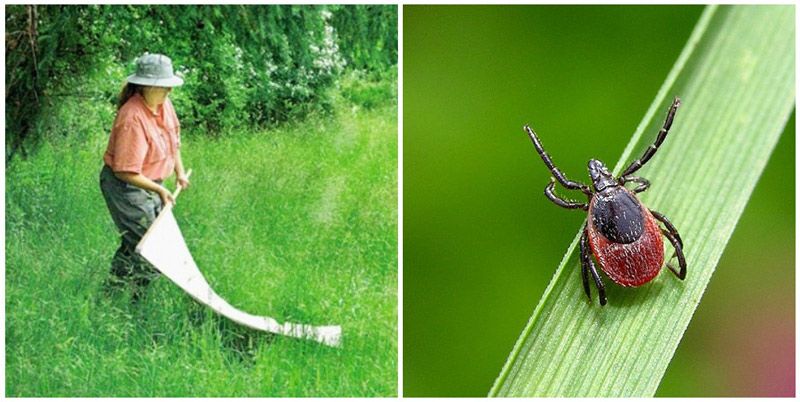
Preventing tick infestation in your garden
By taking a number of steps, you can protect your property from arthropods. These include:
- Removal of waste from the territory.
- Treatment of pets' fur with a special agent and their thorough examination.
- Planting repellent plants.
- Systematic clearing of the ground from stale branches and grass, regular mowing of the lawn.
- Installing feeders for birds (starlings, thrushes) – natural enemies of ticks.
- Elimination of rodents – the main carriers of insects.
- Create a barrier next to the fence itself, using a 100 cm wide path of sawdust or gravel. This structure will prevent neighbors from entering the property.
Mistakes made when exterminating ticks in the country
Many gardeners make the following mistakes when controlling ticks, which are becoming increasingly common:
- Exceeding the permissible possible dose of chemicals, which leads to intoxication of the human and animal body, as well as harm to future harvests.
- Incorrect timing of sprinkling. Favorable conditions: sunny and dry weather. No later than 40 days before harvest.
- Starting the procedure without preliminary cleaning of the area (removing debris, mowing the grass).
Top.tomathouse.com recommends: what to do if a tick has bitten your skin
If you discover a parasite on your body, you should immediately contact a doctor who will provide the necessary assistance: completely and painlessly remove the insect, send it to a laboratory for testing, and give an injection if necessary.
You can also remove it yourself using a thread or tweezers. Use the thread to make a knot near the proboscis and gradually pull upward, removing the arachnid. The movements should be smooth and not abrupt.
Ideally, remove the tick without damaging the body, preventing infection. However, if it is damaged, the area should be cleaned with an alcohol solution, and the remaining part (the head) should be removed with a needle, after which the area should be treated again. The removed arthropod should be placed in a glass container and taken to a specialized facility.