The mole cricket is a dangerous pest that not only looks menacing but can also destroy a large number of vegetable crops. At the first sign of an insect's presence in the garden, it's essential to begin a comprehensive control program to ensure good results and a healthy harvest.
Content
Mole cricket: description
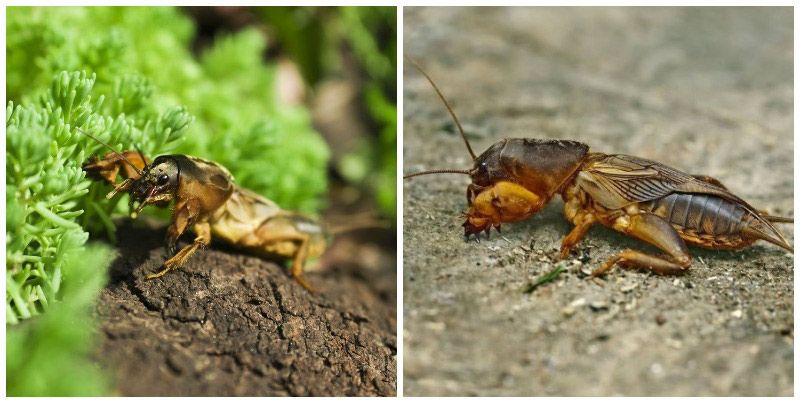
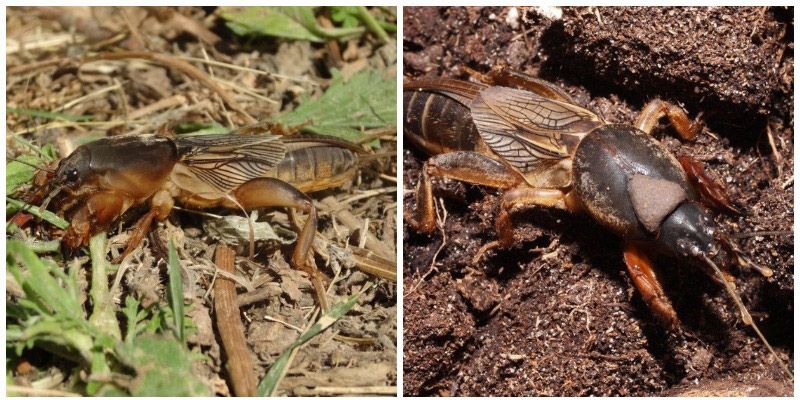
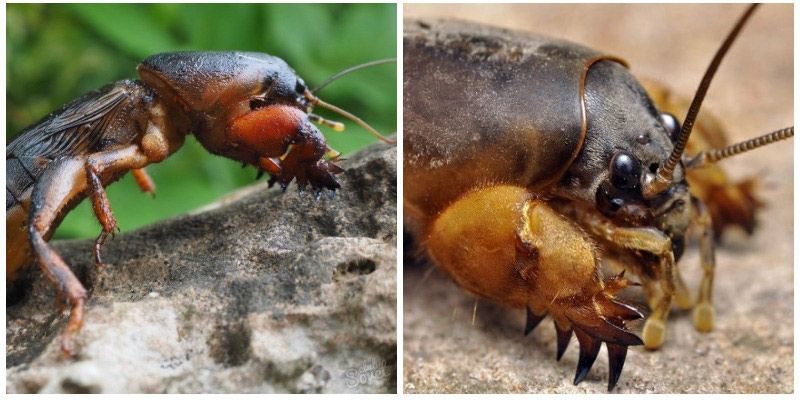
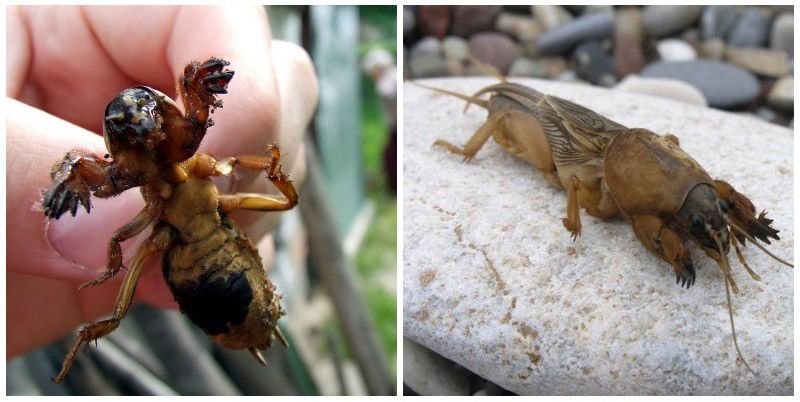
It is an orthopterous insect 5 cm long, although larger specimens can reach 6 cm or more. The body is covered with fine hairs. The cephalothorax is 3 times smaller than the soft, thick, spindle-shaped abdomen, at the end of which are cerci—thin appendages. The carapace on the upper part of the body is hard, like that of crustaceans, and helps compact the soil when digging tunnels and partially protects the head. The head bears antennae, two intricately structured eyes on the sides, and a mouthpart with powerful jaws and four tentacles along the edges. The upper part of the chitinous layer is dark brown, while the abdomen has a lighter yellow hue.
The forelimbs, with short claws designed for digging tunnels in the ground, are very different from the rest. The hind legs are rarely used for jumping, but the mole cricket can reach considerable heights of 3-5 meters.
To fly, the insect has a pair of wings with membranes and veins. When folded, these resemble thin cords and often extend longer than the body. Two short leathery fans are located on top of the wings, but they do not participate in lift. It is the friction of these elytra that causes the insect to produce sounds that can be heard up to 0.5 km away. This is how males invite females to mate. The mole cricket larva does not fly.
Because adult insects move quickly across the soil surface and underground, fly, swim, and jump quite high, they are considered the most ancient insect species on Earth. Due to their skills, body structure, and diet, this pest has several names: cabbage mole, mole cricket, ground crayfish, or mole cricket. Their lifespan is 3-5 years.
Reasons for occurrence
The mole cricket prefers well-tended areas with loose, nutritious soil. The insect is also found in hard and poor soil, but much less frequently. Gardeners often encourage the pest's presence by fertilizing their beds with manure, which contains both larvae and adults.
Damage caused by the mole cricket
The mole cricket most often attacks vegetables, especially the underground parts of seedlings. It does not feed on weeds or grass, preferring cultivated plants. The following are most commonly affected:
- tomatoes;
- radish;
- beet;
- potato;
- cucumbers;
- roots of shrubs;
- flowers;
- parsley;
- carrot;
- cabbage;
- eggplants;
- pepper;
- melons;
- radish.
The mole cricket is unique in that it spends most of its time underground, digging tunnels in the soil to build nests for laying eggs. It prefers moist, loose soil, and in such conditions, it nests close to the soil surface: 5-10 cm. If moisture is low, it can burrow to a depth of 0.5 m or more.
The mole cricket also overwinters in the soil, very far below the surface, about 2 meters. With the arrival of warm weather, rapid and massive reproduction begins. The presence of mole crickets in the garden is indicated by areas with cut vegetation; females remove this to better warm the clutches located in the soil. The eggs hatch in 10-14 days, and initially the larvae feed on the mother's saliva. After 7-8 days, they grow in size and begin gnawing stems, tubers, and the roots of plants, just like the adults. The offspring are very voracious and also cause significant damage to crops. A single insect can destroy up to 14-15 bushes in one night.
The best time to control the pest is spring or autumn.
In warmer climates, mole crickets enjoy tea, citrus fruits, and peanuts. In orchards, apple, pear, cherry, apricot, and peach trees are susceptible. In forests, young oaks, pines, and spruces are susceptible. The larvae have poorly developed jaws, so they feed on small insects, seeds, and young plant roots.
Effective methods of fighting mole crickets
Controlling mole crickets in your garden is quite difficult, but necessary, as failure to eradicate the pests promptly can result in the loss of a large portion of your garden's harvest. Many methods will need to be used throughout the entire gardening season, sometimes for two or three years in a row. Today, there are numerous effective methods, ranging from setting traps and manually catching the pests to using chemicals.
Mechanical methods
They are considered very simple; all you need to do is thoroughly dig up the area where mole crickets are concentrated. Any individuals and egg clutches found are destroyed.
It's best to loosen the soil in the fall after harvest or in early spring. The quality of tillage is crucial; the more thoroughly this procedure is carried out, the fewer mole crickets will appear next season. A large number of destroyed nests and underground passages will force the insects to seek new habitat elsewhere.
An effective method involves pouring 8-10 drops of sunflower oil into the discovered vertical tunnels, which prevents the mole cricket from breathing underground. Water is then added; if the soil is dry, a whole bucket of liquid may be required. This will cause the pest to drown or crawl to the surface, where it can be easily caught.
You can dig aspen or alder stakes 2-4 cm thick, covered with a layer of bark, into the soil to a depth of 25-30 cm. The distance between the stakes should be 1-2 m, and they will need to be replaced with fresh ones 2-3 times during the season.
Setting traps
An effective method for pest control is placing traps around your property. Many of these can be made at home using household items. Below are a few simple ideas:
- A plastic container filled with partially rotted manure at a depth of 0.5 meters. Destroying the pest is easy: simply rake away the manure during the first frost; the insects, larvae, and egg clutches will die. In the spring, it's best to check such traps every 20-25 days, disposing of any insects caught in them.
- Glass jars buried in the ground where mole crickets have been found. The mole cricket will fall into the trap without noticing. You can also half-fill the jars with water; the moist environment will act as an additional bait.
- A transparent container, coated with honey on the inside up to ¼ of its height, deepened into the substrate and covered with an iron or plywood sheet with a layer of straw on top.
- A 0.5 ml bottle filled with 100 grams of beer is buried at an angle in a hole dug in moist soil. The neck of the bottle, preferably tied with a single layer of gauze, should not be visible above the ground. The hole is covered with metal or tiles. The trap can be replaced or moved after 7-10 days.
- Thick cardboard laid out in the beds before planting vegetables and flowers. Over time, tunnels will appear under the sheets, and with a little dexterity, you can catch the pests. The key is to act quietly and quickly. Black fabric, roofing felt, or film, which effectively absorb sunlight, are also suitable for creating warm spots.
- Large beets or carrots, buried completely in the ground, will attract adult beetles. Place bait pellets, such as Medvedoks, nearby.
Another insect control option is mixtures containing toxic substances. Boil pearl barley, buckwheat, or oatmeal, add 1 tablespoon of sunflower oil, stir, and pour in an ampoule of Regent or B-58. Add half a teaspoon of the mixture to the soil and place it near each entrance to the insect's underground burrows. The toxic mixture is best used in the spring, when vegetable crops emerge.
Instead of grains, you can use pieces of stale bread treated with insecticide.
Ultrasonic repellents
A modern method of repelling mole cricket attacks is the use of ultrasonic devices:
- Chiston III;
- Tornado 0ЗВ.01;
- Topaz.
They work by generating special waves that trigger a sense of danger and panic in insects. This method also helps repel moles, shrews, and snakes from a plot and is completely harmless to pets and humans. Models are available that run on solar or alkaline batteries, and one device is sufficient for 4-6 acres of land. However, gardeners note the low effectiveness of this method and the high cost of the devices.
Folk methods of struggle
Instead of chemicals, many gardeners prefer to use folk remedies to combat mole crickets, due to their availability and ease of preparation at home.
The most common tips are:
- Eggshells. Crush and add 1-2 tablespoons of flavored sunflower oil. Spread into furrows and holes during planting and sowing seeds. This mixture also makes a good fertilizer.
- Tar. Add 2-3 tablespoons to sawdust covered with boiling water and stir. Then spread it at a depth of 2-3 cm from the surface of the substrate.
- Ammonia. 1 tablespoon per 10 liters. Water the planted crops with a watering can, being careful not to get the solution on the leaves. After the solution has been absorbed, apply a layer of mulch on top. For long-term protection, water 1-2 more times at intervals of 10-12 days. This method can also be used when growing vegetables in a greenhouse.
- Kerosene. Add a few drops to the sand and mix, then spread the mixture at the entrances to the mole crickets' tunnels. Naphthalene can also be used for the same purpose.
- Soap. Pour it into the burrows and destroy the pest as soon as it emerges from the soil surface. You can simply use 50 grams of laundry detergent per bucket of water; it's best not to use a higher concentration, as it can damage the plants in your garden. However, experienced gardeners recommend using a tar or laundry detergent solution.
- Unrefined oil. Drop 0.5 teaspoon into the holes in the soil and add water, preferably from a hose.
- Iodine. Dilute and treat the substrate, 20-40 drops per 10 liters.
- Onion peel. Make an infusion and water the intended passages.
- Garlic. Place a crushed clove in each hole when planting.
- Chicken manure. Dilute 200 grams per 10 liters and pour between the rows. The nitrogen contained in the mixture will significantly impede the crayfish's ability to breathe in the substrate.
- A barrier made of plastic containers. Cut the bottles into rings and place them in the ground around the seedlings.
- Fish heads. Bury them at the edges of your garden; the strong smell of decomposing fish will repel adults.
- Marigolds, chrysanthemums, and calendula. Plant them along the edge of the garden. Lay out pine branches or sprinkle the bed with strongly scented pine needles.
- Nylon stockings. These should be wrapped around the root system; this method is convenient because the fabric will stretch easily as the young seedlings grow.
- Repellent devices made from improvised means. Dig a metal rod and a thick wire 30-40 cm long into the ground. Next, attach upside-down aluminum cans or tin lids on strings to the rods, stringing them together. The wind will create a noise and ringing sound that will carry far underground, repelling the pests.
- Mulching layer of light straw.
Biological agents
If you don’t want to use chemicals, you can try biological preparations that do not poison the soil and plants:
- Boverin. Infects pests with a fungal disease. Safe for humans, animals, and birds.
- Bio-bed. The product is also harmless and contains natural ingredients with strong odors.
- Nemabact. Contains fungal spores that kill pests. Do not use at temperatures above 25°C; store in the refrigerator.
Natural enemies of the mole cricket can also help in the fight against the pest:
- Larra wasps;
- crows and starlings feed their chicks these insects;
- ants feed on the eggs of the cabbage moth;
- Hedgehogs, moles and lizards eat both larvae and adults.
Chemical means of control
If other pest control methods have been tried and folk remedies do not produce a positive effect over the course of one or two seasons, you should resort to chemicals that will help get rid of the mole cricket on your property.
|
Name |
Features of use |
| Aktara | Suitable for seed treatment before planting. |
| Anti-mosquito (granules) | Neutralizes all stages of ground cancer. Not suitable for radishes and green vegetables. |
| Vofatox (Metafox) | Protects seedlings and roots of young plants. |
| Grizzly | The bait is in granular form. After use, the soil must be moistened. |
| Thunder | |
| Creolin | Pest control in a month. |
| Medvedoks | It is better to place it in the soil at a depth of 5-6 cm. On a natural basis. |
| Medvecide | The mole cricket dies within 4 hours. It's good for strawberries, potatoes, and flower crops. |
| Regent (Bug Off) | Does not require repeated treatments. |
| Rembeck | It has a long-lasting effect. |
| Rubit Rofatox | Apply 3 times per season. |
| Frontier | The effect occurs within 3-4 hours. |
| Fenaxin Plus | Decomposes quickly without accumulating in the soil. |
| ExtraFlor | Contains garlic and fir oil esters. Non-toxic. |
Some gardeners suggest using products that kill the Colorado potato beetle against the mole cricket, however, such preparations are expensive and ineffective.
You should also try sprinkling 5 grams of calcium carbide into the soil holes. Afterward, watering is essential to trigger a reaction that produces acetylene, which is lethal to the mole cricket.
Another important rule: all work on an area watered with chemicals can only be carried out after 7-8 days.
Top.tomathouse.com recommends: preventing mole crickets
Due to the insect's rapid reproduction, tenacity, and structural features, mole crickets are quite difficult to control. To prevent mole crickets from appearing, take the following preventative measures:
- Do not use fresh manure as fertilizer.
- When planting seedlings in open ground, place their roots in cups made from plastic bottles with the bottom cut off.
- Create a mulch layer on the beds. Pine needles work well.
- Add chicken manure to compost heaps to prevent the reproduction and emergence of mole crickets.
- Sow marigold seeds around the perimeter of the beds or simply bury the leaves or flowers in the soil. You can also use chrysanthemums, which have a distinctive scent that crabs dislike.
- Plow the soil before the onset of frost, as cold air is destructive to insect egg clutches.
The mole cricket is a serious pest that causes numerous problems and destroys crops. However, by understanding the characteristics of the mole cricket, its lifestyle, and by familiarizing yourself with the variety of pest control methods, you can choose the most convenient and effective one.