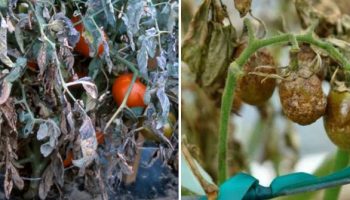
Powdery mildew is a fungal disease of plants. It is caused by parasitic fungi that live on green parts of the plant, most often leaves.
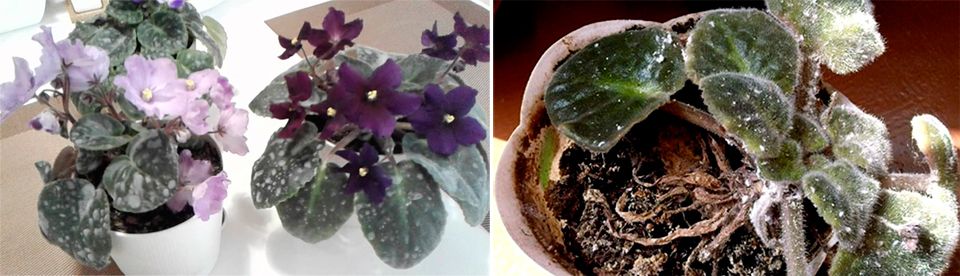
It's dangerous because it causes depletion, rotting, and ultimately death of the plant. Powdery mildew can infect not only indoor plants but also garden fruit bushes and mature, robust trees.
Often the disease is very difficult to treat and it is not possible to save the plants.
Content
- 1 Causes and symptoms of powdery mildew on houseplants
- 2 Why is powdery mildew dangerous?
- 3 Controlling Powdery Mildew on Houseplants at Home: Products and Methods
- 4 Folk remedies for combating powdery mildew
- 5 Biopreparations for powdery mildew on indoor plants
- 6 Chemical remedies against powdery mildew at home
- 7 Top.tomathouse.com informs: Preventing powdery mildew on houseplants
Causes and symptoms of powdery mildew on houseplants
Identifying the disease is easy; just know what it looks like on houseplants: leaf blades and stems become covered in voluminous white spots. The flower looks as if flour has been spilled on it. These are parasitic spores that, once mature, secrete droplets of liquid resembling dew.
In the early stages of the disease, fungal spores are mistaken for ordinary dust and attempts are made to simply wipe them away. But this measure is ineffective.
The bloom grows again. First, the basal leaves are affected on the outer and back sides, then other parts of the plant, including stems, flowers, and buds, become covered with white spots with jagged edges. Over time, the spots turn brown.
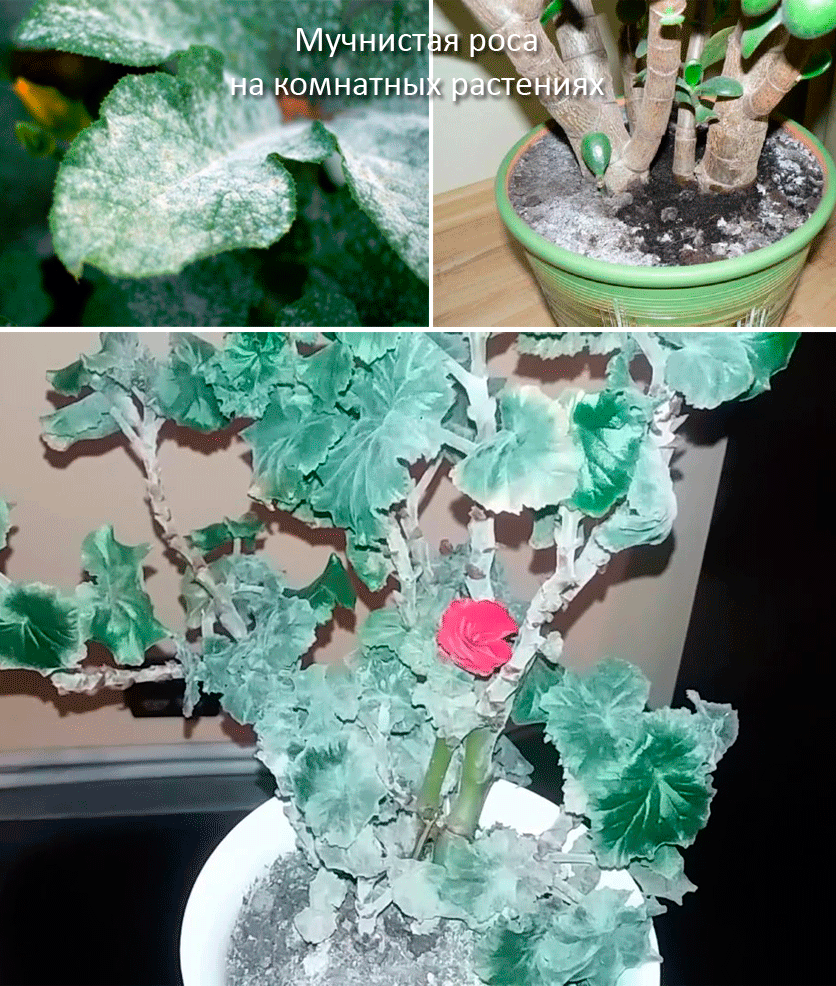
Dormant spores are often present in the soil. Under certain conditions, they awaken and begin active life.
Causes of powdery mildew on indoor plants:
- Incorrect watering, both excessive and insufficient.
- Too frequent and abundant spraying, after which drops of moisture remain on the leaves.
- Excessive planting density.
- Weakening of indoor plants as a result of damage by insects, other diseases, or improper care.
- Lack of potassium in the soil.
- Excess nitrogen.
- High humidity in the room – above 60%.
- Very high air temperature – +25 °C and above.
- Contact with infected plants through humans, insects, drafts.
- Unfiltered water for irrigation.
Why is powdery mildew dangerous?
Up to 60% of affected plants die. Harmful spores spread very easily, and the disease is difficult to treat.
Here are just some of the consequences of powdery mildew:
- A difficult process of photosynthesis, which causes the plant as a whole to suffer.
- Lack of nutrients.
- Slowing growth.
- Suppression of flowering.
- Dying of leaves and buds.
Very often, decorative flowering indoor plants with large flowers and leaves, such as gerbera, violet, chrysanthemum, etc., suffer from this disease.
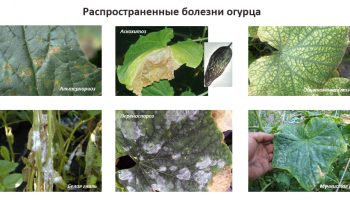
It's important to distinguish between true powdery mildew and downy mildew (peronosporosis). They look almost identical. With downy mildew, the coating only covers the back of the leaf.
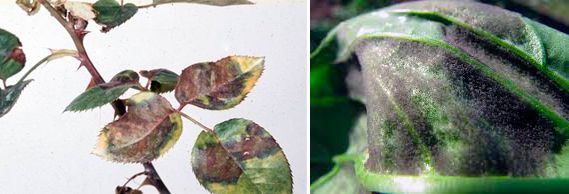
Very soon it turns yellow and then brown. There are different methods for dealing with them.
Controlling Powdery Mildew on Houseplants at Home: Products and Methods
An infected flower becomes a carrier of infection, so immediately after detecting symptoms of powdery mildew, the pot or planter containing the flower must be isolated and contact with other indoor plants must be limited, otherwise the disease can quickly spread.
For the same reason, purchased or gifted indoor flowers should be quarantined for up to 10 days.
Immediately before and during treatment, the plant's maintenance regime should be adjusted. To do this, follow these guidelines:
- Remove all affected leaves, buds, and stems. Also, remove lower leaves and branches that are in direct contact with the ground.
- Remove the top portion of the soil and replace it with new soil.
- Thoroughly wash and disinfect the tray or planter used to collect excess moisture during watering.
- Reduce watering and do not spray the plant while using medicinal products.
- Do not use additional fertilizers. If the disease resolves successfully, discontinue nitrogen fertilizers and replace them with phosphorus-potassium fertilizers as a preventative measure.
- It is better to choose a well-lit, but not hot and ventilated place for keeping the plant in quarantine.
There are different remedies used to combat powdery mildew on houseplants:
- chemical;
- biological;
- folk.
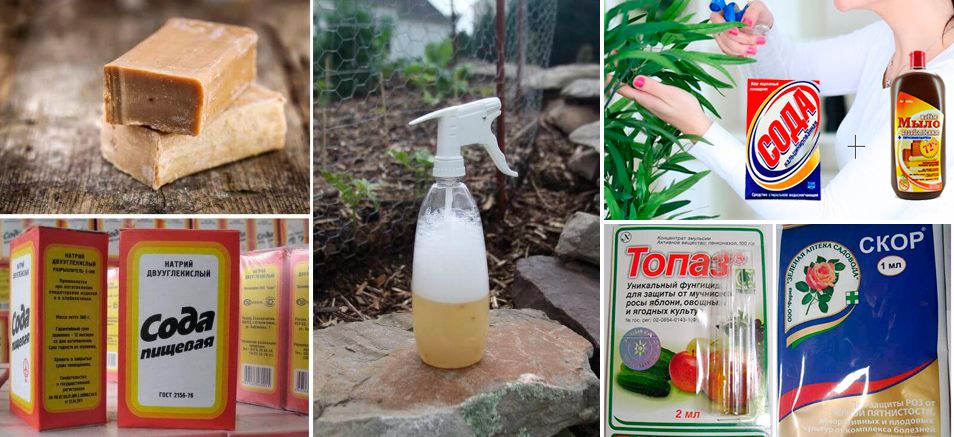
Folk remedies for combating powdery mildew
Folk remedies are readily available, can be found in almost every home, and won't cause any harm. They can also be used preventatively. Here are a few recipes for spray mixtures:
Ash + soap
Add 100 grams of sifted wood ash to a liter of warm water. Stir and let steep for about a week, shaking occasionally. After this time, drain the liquid, being careful not to disturb the sediment. Add 50 grams of shavings of laundry soap and wait until completely dissolved. Liquid soap can also be used. Spray the plant with this solution daily for a week.
Copper sulfate + soap
Dissolve 50 g of soap, prepared as in the previous recipe, in 5 liters of warm water. Separately, stir 5 g of copper sulfate powder into a glass of water (250 g). Gradually pour it into the soap solution in a thin stream. Spray the affected flowers every other day until the powdery mildew symptoms disappear.
Mustard
Mix mustard powder (2 level tablespoons) in 10 liters of water. The infusion is ready after 24 hours. You can use it to water the soil and spray the above-ground parts of the plant. It's best to alternate between the two for 10 days.
Milk
You'll need sour milk, yogurt, or, even better, whey. Dilute it with water at a ratio of 1:3 and apply it to the plaque on your houseplants once every three days for two weeks. This method is great because the solution can be used immediately, without having to steep it, and you can always make a fresh batch.
Biopreparations for powdery mildew on indoor plants
Biological products are less effective than chemical ones. But they are less harmful. They are safe for the plant itself, as well as for humans and anyone else who comes into contact with the plant.
Their action is based on live bacteria that naturally fight the fungal mycelium, suppressing and inhibiting it.
The most common and accessible drugs are: Fitosporin, Alirin, Gamair, etc.
Use strictly according to the instructions. To achieve lasting results, treatment with biopreparations should be repeated several times.
Chemical remedies against powdery mildew at home
The harmful effects of fungicidal (chemical) preparations are well known. They are used only in extreme cases, when the disease is very advanced, but you don't want to lose a particularly valuable specimen from your home collection.
To avoid injury when using toxic products, you should carefully read the recommendations for use and personal safety measures.
At home, it is permitted to use: Topaz, Fundazol, Vitaros, etc.
Complex application of different means
The most significant effect comes from the combined use of various means. The fight must be waged on all fronts.
Severely damaged plants are treated with fungicides. The effect is reinforced with biological products. Folk remedies are used for prevention.
It's important to wear gloves and even protective clothing whenever in contact with a diseased plant. Otherwise, the gardener risks spreading the harmful fungal spores if they touch healthy plants after handling the diseased flower.
Top.tomathouse.com informs: Preventing powdery mildew on houseplants
Getting rid of powdery mildew is difficult, so it's easier to focus on preventative measures. Simple tips will also protect plants from other diseases and pests.
- Preventatively spray with a solution of potassium permanganate (manganese) or sulfur. These are available at regular pharmacies. This procedure is especially important during warm weather and long daylight hours, namely from May to September. One such spray per month is sufficient to protect the plants.
- Houseplants in stuffy rooms or, conversely, those exposed to drafts are at risk. It's important to create comfortable conditions for your green pets to ensure their health.
- Avoid excessively humid conditions, which can occur on the balcony during prolonged rains or with the onset of cold weather.
Do not allow the soil to overwater or dry out. - Remove wilted leaves and flowers promptly to prevent rotting.
- Prevent scale insects and aphids. They carry other diseases and weaken the plant's immune system.
For the same reason, do not use soil from garden plots, compost, or purchased soil without heat treatment. They may be contaminated.