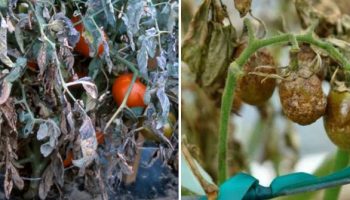
Powdery mildew (powdery mildew) is a plant disease caused by microscopic fungi that often damages greenhouse cucumbers and open-field cucumbers. The fungus responsible for this particular crop is Oidium erysiphoides. The mycelium typically develops in June, first affecting the leaves, then the stems and fruits. Early treatment and preventative measures help preserve the harvest and harvest the fruit.
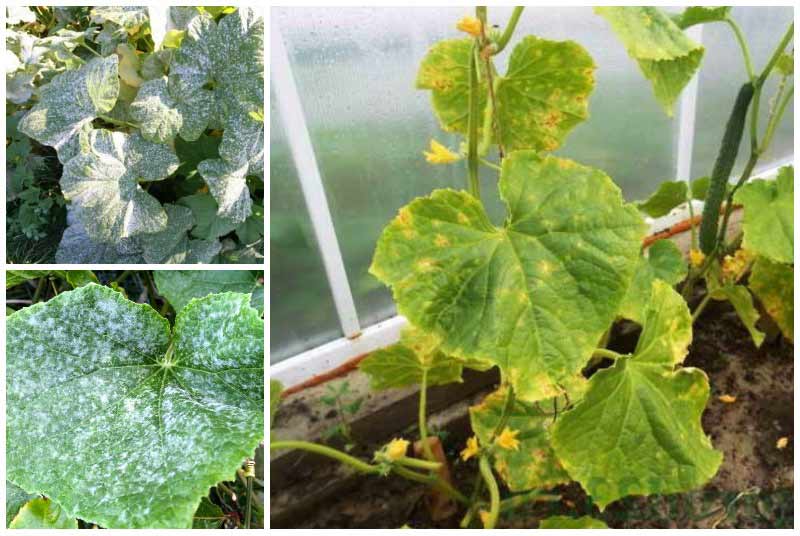
What does powdery mildew look like on cucumbers?
It is easy to recognize the disease on cucumbers by the following characteristic signs:
- small white or red spots on the lower leaf blades;
- plaque on petioles and stems;
- the size of the spots increases and merges;
- leaf blades, shoots in white dust;
- the spots change color to brown;
- the plates curl up and dry out quickly;
- fruits are deformed and crack;
- the shoots dry out and darken.
Fungal spores resemble small brown balls. The humid microclimate in a greenhouse creates the most favorable conditions for its development. Therefore, cucumbers there are more susceptible to the disease. The fungus typically overwinters in vegetation uprooted in the fall. With the onset of warm weather in spring, it awakens, attaches to the surface of leaf blades, and feeds on their sap. Its spores germinate rapidly, the higher the humidity, the faster—3-7 days.
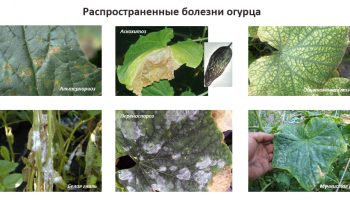
Downy mildew is caused by the fungus Pseudoperonospora cubensis. It is characterized by irregular, veined, yellow-green spots on the leaves. These then become oily and brown. The undersides of the leaves develop a white-purple coating. After a few days, the leaves dry out.
If control measures are not taken, the bushes will quickly die.
Causes of fungus: rainy, foggy weather, temperature fluctuations, dense plantings, soil with a high nitrogen content, frequent watering with cold liquid, and uncollected weeds in the beds.
Preventing powdery mildew on cucumbers
To prevent the disease, gardeners should follow basic rules:
- plant cucumbers in one area at intervals of four years (crop rotation);
- constantly remove remaining weeds;
- in autumn, disinfect the soil with potassium permanganate;
- treat seeds with Grandsil, Trichodermin.
- maintain the temperature in the greenhouse above +20 °C;
- water the bushes at the roots with warm water;
- spray with special preparations (Quadris);
- feed vegetables in moderation;
- When watering, avoid contact with leaves and stems;
- do not plant vegetables in lowlands or shade;
- disinfect seeds;
- fertilize in moderation.
As a preventative measure, seedlings can be sprayed with Topaz, Strobi, or manganese. Plants should not be planted too close together to allow air circulation, otherwise the fungus will quickly spread to other bushes.
Controlling powdery mildew on cucumbers
To detect the appearance of fungus early, you need to regularly inspect your bushes. It's easier to get rid of the disease in its early stages.
If fungus is detected, stop watering and fertilizing the plants, remove the infected bushes, and burn them along with their roots. If the fungus is still present on the undersides of the leaves, trim them and destroy them. The plants are weeded, old, diseased parts are removed, and flower stalks are pinched off. Effective treatments include folk remedies or fungicides.
Popular biological products include Albit, Alirin-B, Gamair, and Thiovit Jet. They are non-toxic and harmless to plants. They are also used for preventative measures at various stages of development.
Downy mildew or peronosporosis is destroyed only by chemical means: HOM, Abiga-Peak, Ordan, Quadris, Consento, Previkur.
Folk remedies for powdery mildew on cucumbers
At the first stage of the disease, traditional methods of control are effective. To get rid of the fungus, spray the bushes with prepared solutions, preferably in the evening:
|
Means |
Preparation |
Application, frequency |
| Soap and milk | A liter of milk, 25 drops of iodine, 20 g of grated laundry soap. | Once every ten days. |
| Whey | Combine with water 1:10 until smooth. | 3 times, interval 3 days. |
| Rotted manure | Mix with water (1:3), leave for 3 days. | 3 times every 7 days. |
| Weeds | The herbs from the garden are poured with hot water (1:1). After 3 days, they are strained. | Every day. |
| Soda ash and soap | Mix 25 g of soda with 5 liters of hot water, add 5 g of liquid soap. | 2 times a day with a week interval. |
| Wood ash | Combine grated soap with 200 g of ash and add warm water. | Generously every week. |
| Garlic | Pour water into the garlic and let it steep for 12 hours. | 2 weeks. |
| Mustard | Mustard powder is diluted in 10 liters of warm water. | Every 7 days 3 times. |
| Potassium permanganate | A bucket of water and 2 g of substance. | 2 weeks. |
| Horsetail | Pour 10 liters of hot liquid over 1 kg of fresh plant and let steep. After 24 hours, simmer for 2 hours, strain, and dilute with water 1:5. | Three times every 5 days. |
Chemicals for treating powdery mildew on cucumbers
In advanced cases, chemicals are used; after treatment, vegetables should not be eaten for about 20 days.
|
Preparation |
Characteristic |
Application |
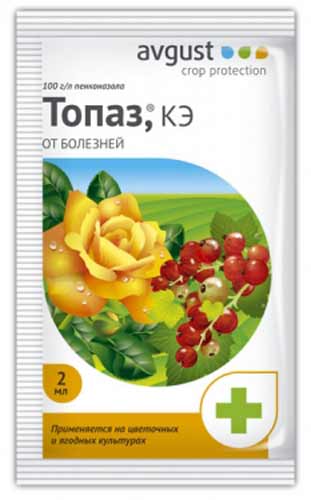
| Topaz
|
Resistant to temperature fluctuations. Active ingredient: penconazole. Harmful to humans and animals. | One ampoule per 10 liters. Spray with fresh solution every two, then discard the rest. |
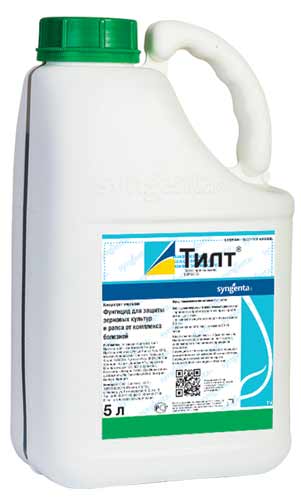
| Tilt KE
|
Inhibits sporulation, acting within 2-3 hours. Creates a protective layer that lasts for two weeks. | Dilute 40 g per 10 liters of water. |
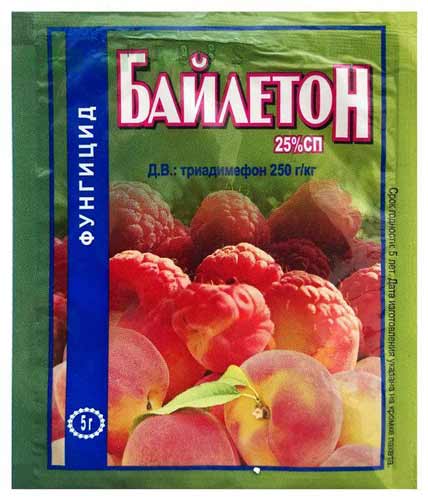
| Bayleton
|
Broad-spectrum fungicide, acts within 4 hours, duration from 2 weeks to 2 months. | One gram per liter of water. |
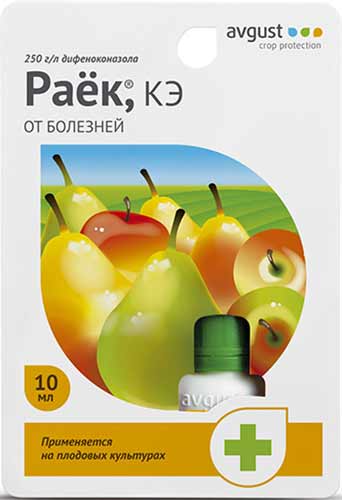
| Rayek
|
The active ingredient is difenoconazole. It quickly destroys fungal spores. Its effectiveness is not affected by weather. | Milliliter per liter of water. |
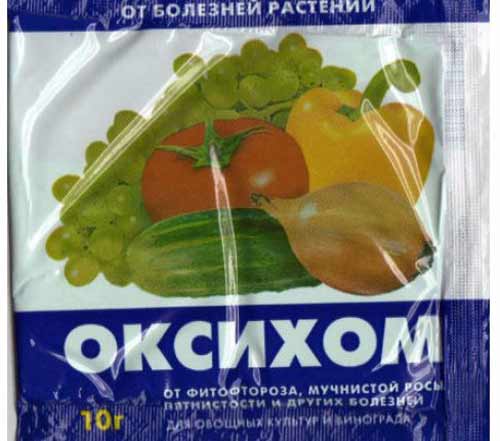
| Oxychom
|
Active ingredients: copper oxychloride and oxadixyl. | 30 g per 10 l of water, treated 3 times with an interval of 10-12 days. |
| Fundazol
|
The active substance is benomyl, which disrupts the reproduction of fungi. | 1 g is diluted in a small amount of liquid, then topped up to 1 l. |
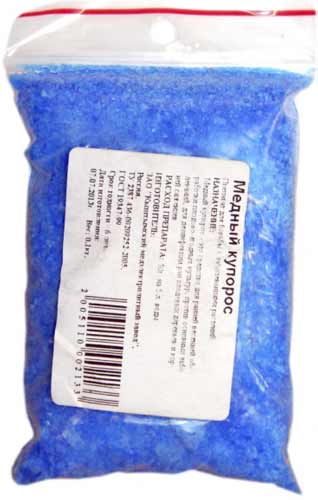
| Copper sulfate
|
Toxic, destroys fungal and bacterial cells. | Mix 100g of soda and 75g of copper sulfate in 10 liters of water. |
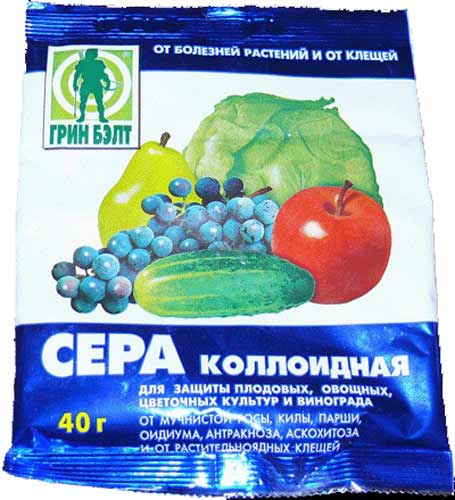
| Colloidal sulfur
|
Safe for humans and animals, but instructions must be followed. Process at temperatures of 27 to 32°C. | Mix 20-30 g of sulfur with 10 liters of water. |

Top.tomathouse.com recommends: cucumber varieties resistant to powdery mildew
To prevent crop damage, gardeners choose varieties resistant to powdery mildew and other diseases. Parthenocarpic hybrids are currently popular; they tolerate temperature fluctuations well, don't require pollination, and grow well in greenhouses and open ground. These include:
- Regina-plus F1;
- Arina F1;
- Zador F1;
- Adam F1;
- Alex F1;
- Hermann;
- Amur;
- April;
- Artist.
Bee-pollinated hybrids:
- Competitor;
- Murashka F1;
- Fontanelle;
- Natalie;
- Phoenix Plus;
- Delicatessen;
- Erofey;
- Nezhinsky.
Newly developed varieties:
- Zhukovsky;
- Caprice;
- Bunny.
Preventative measures and resistant cucumber varieties will help avoid fungal diseases and ensure a good harvest.