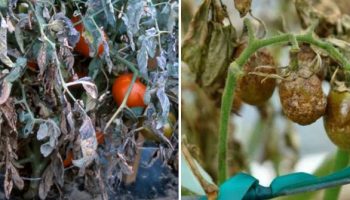
Mealybugs, or felt bugs, are sucking pests that attack many plant species. This is the common name for insects from the order Coccidae, closely related to scale insects.
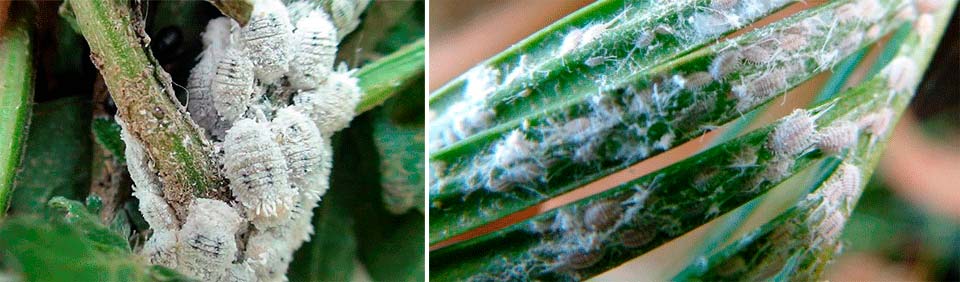
Pests can be found in the garden on fruit and stone fruit trees, in greenhouses, film shelters, in hothouses and in apartments on indoor plants.
Mealybug or hairy louse affects:
- roots of domestic citrus fruits and violets;
- dracaena leaves - the leaves become sticky and fall off;
- on the orchid there are buds and blossoming leaves;
- money tree - the trunk is covered with white fluff.
Monstera, fuchsia, croton, camellia, anthurium, and many other houseplants become habitats and breeding grounds for mealybugs. Flowers are stunted, and photosynthesis is disrupted.
Content
Description of the mealybug
Mealybugs get their name from the white coating on their bodies, which resembles grains or bristles. This coating is produced only by adult insects. There are over two thousand species of mealybugs worldwide, ranging in size from 500 microns to 12 mm. These pests have a vast habitat, living in all climates:
- subtropics;
- tropics;
- temperate latitudes.
Females and larvae cause damage to houseplants, fruit trees, and industrial crops. They suck the sap from the roots or above-ground parts of the plant, preventing proper development, and often leading to death.
Males are harmless, lacking mouthparts, and resemble powdered mosquitoes in appearance. Females are flat, soft, and oval-shaped, with a distinct head, thorax, and abdomen.
By absorbing plant sap, the pests secrete honeydew, which is where sooty mold spores actively develop. Because of this honeydew, scale insects are favored by ants, who spread them to plants and protect the colony from predatory insects.
In gardens, mealybugs overwinter in the bark of fruit trees or stone fruits or in secluded areas of greenhouses. They tolerate temperatures down to -15°C and become active in the spring.
Reproduction and development of mealybugs
Species of mealybugs found on houseplants and in greenhouses are capable of reproducing without the help of flying males. Females lay 2 to 4 clutches per year, containing 300 to 2,000 eggs. With such fecundity, they quickly occupy nearby flowers.
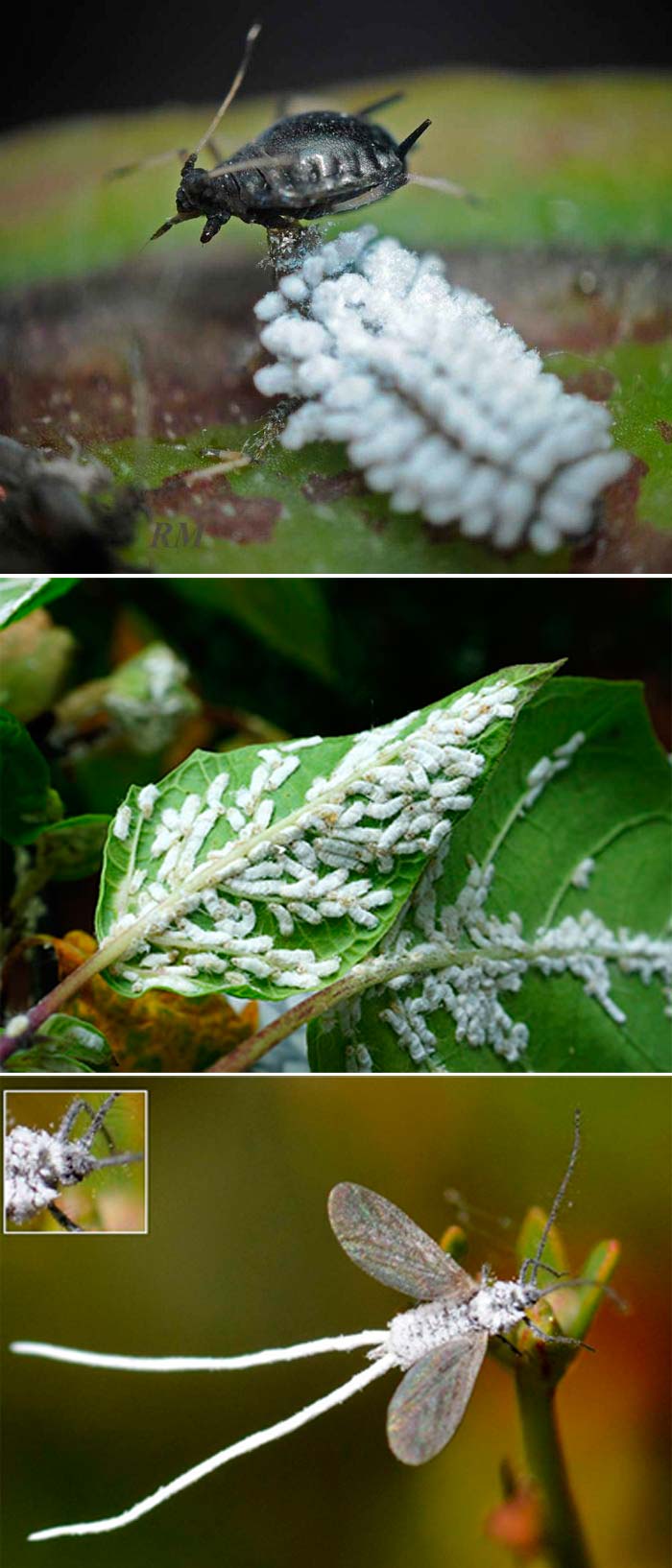
Mealybugs breed on crops that prefer fertile soil. Females are sedentary, moving to other locations only when they begin to struggle for survival with their growing offspring. They are easily identified by their white fluff—the loose fibers of the remains of their nests.
Egg
The female lays her eggs in a cocoon woven from secretions—a round or oval sac attached to the leaf axils or between the central veins of the leaf blade. The fiber mesh repels water well but allows air to pass through. The eggs are translucent, with a gelatinous interior, and a whitish exterior. They can be round or elliptical.
Larva
Within 5–10 days, almost the entire clutch hatches. Only at low temperatures do some eggs die. The larvae are very active and have a high survival rate. Controlling them is difficult. They quickly emerge from the cocoon and crawl throughout the plant. Due to their agility, the larvae are called "wanderers," with their three pairs of legs constantly in motion. Only during molting do the individuals become still. Drafts carry the young pests to other flowers, where they quickly adapt to the new location. As they mature, the females become less active, and in some species, their legs disappear.
Types of mealybugs
Three types of pests are considered the most resilient and difficult to eradicate. Each is worth discussing in detail. If they appear in greenhouses or on indoor plants, immediate treatment is necessary for industrial and greenhouse crops.
Bristly
The plaque on the body of this scale insect forms small growths. Females are elongated ovals and reach 3.5 mm in length. Their bodies, with three pairs of legs, are orange or pinkish in color. Treatment of plants infested by these insects is difficult due to the species' genetic characteristics. Viviparous females inhabit the lower leaf blades and hidden areas of the trunk.
Females quickly form colonies, inhibiting plant growth and ultimately causing death. In bulbous plants, they attack the roots, eating away the central portion of the bulb. Bristly scale insects can be detected by drying leaves, drops of honeydew, and the development of sooty mold, which forms dark brown or black spots of varying sizes.
Grape
The mealybug's broad, yellowish-brown or pinkish-cream body is uniformly covered with a mealy, waxy coating. The females are fertilized by the males, who are few in number and fly off the plant in response to any threat.
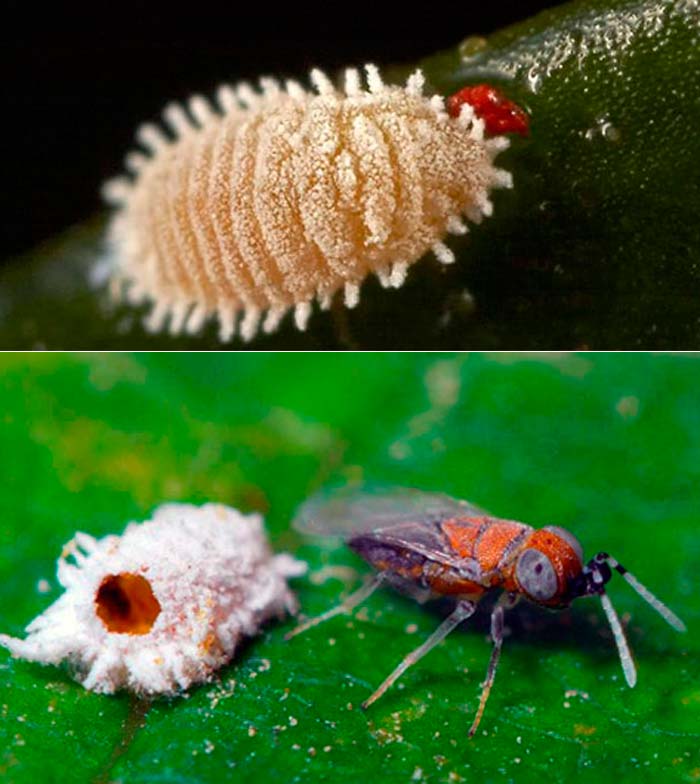
The larvae prefer to attach themselves along textured veins, making it easier to access nutrients. They form nests between uncurling young leaves. Small, cotton-like fibers are visible on the shoots.
For mass population growth, humidity levels should be no higher than 75% and temperatures between 22°C and 25°C. It's best to move affected houseplants to a cool location and isolate them from other plants during mealybug treatment.
Seaside
The most common type of scale insect looks like a flattened rice grain with jagged edges, three pairs of legs, and lower hairy appendages. To lay eggs, females weave egg sacs and attach them:
- from the underside of the leaves;
- in the cracks of the bark;
- at the base of the petiole;
- between the leaves of young shoots.
After their first molt, young females are capable of laying up to 50 eggs during their growing period. It takes up to a month for the scale insect to fully mature. An adult scale insect can lay up to 600 eggs. The larvae quickly spread throughout the plant, in loose soil invading the roots.
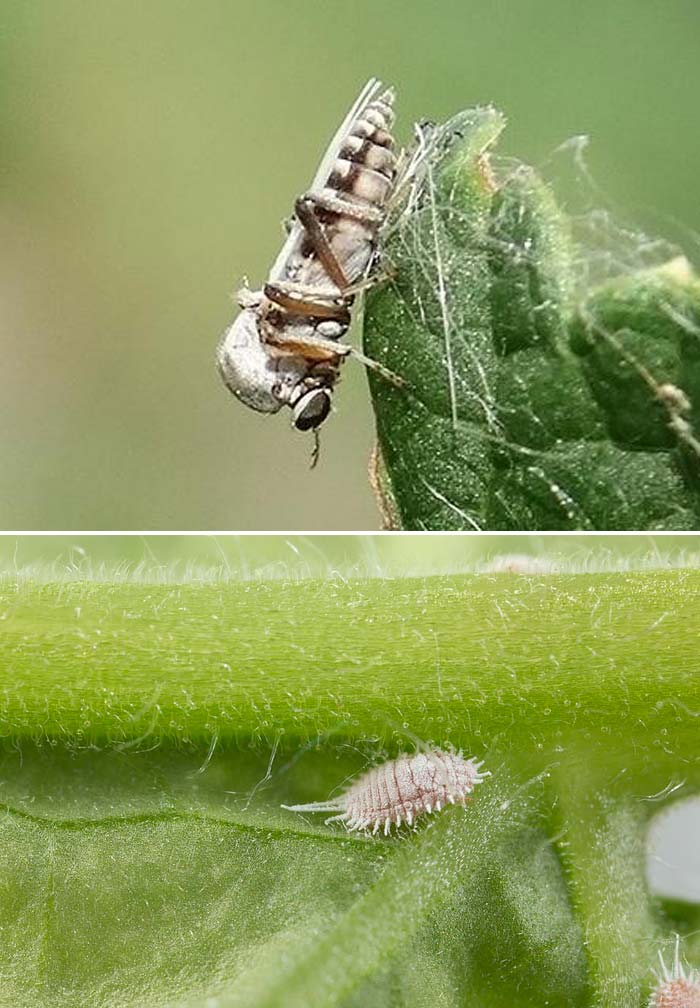
They remain motionless while feeding and molting. They produce large quantities of honeydew, a favorite delicacy of small black ants. If these insects appear on fruit trees or in greenhouses, it is advisable to preventatively treat areas where mealybugs may nest with soap.
Signs of plant infestation by mealybugs
Signs of pest infestation:
- drooping leaves and young shoots;
- small mosquitoes on the windows of greenhouses, hothouses or apartments;
- powdery white coating on the stems, "cotton wool" fibers;
- sticky substance on the upper part of the leaf blade;
- white oval insects in the soil, discovered during transplanting or loosening of the soil.
Methods of combating mealybugs
At the first sign of pest infestation, it's advisable to treat the affected plants using time-tested folk remedies. If the insect population is large, resort to the "heavy artillery" of pesticides.
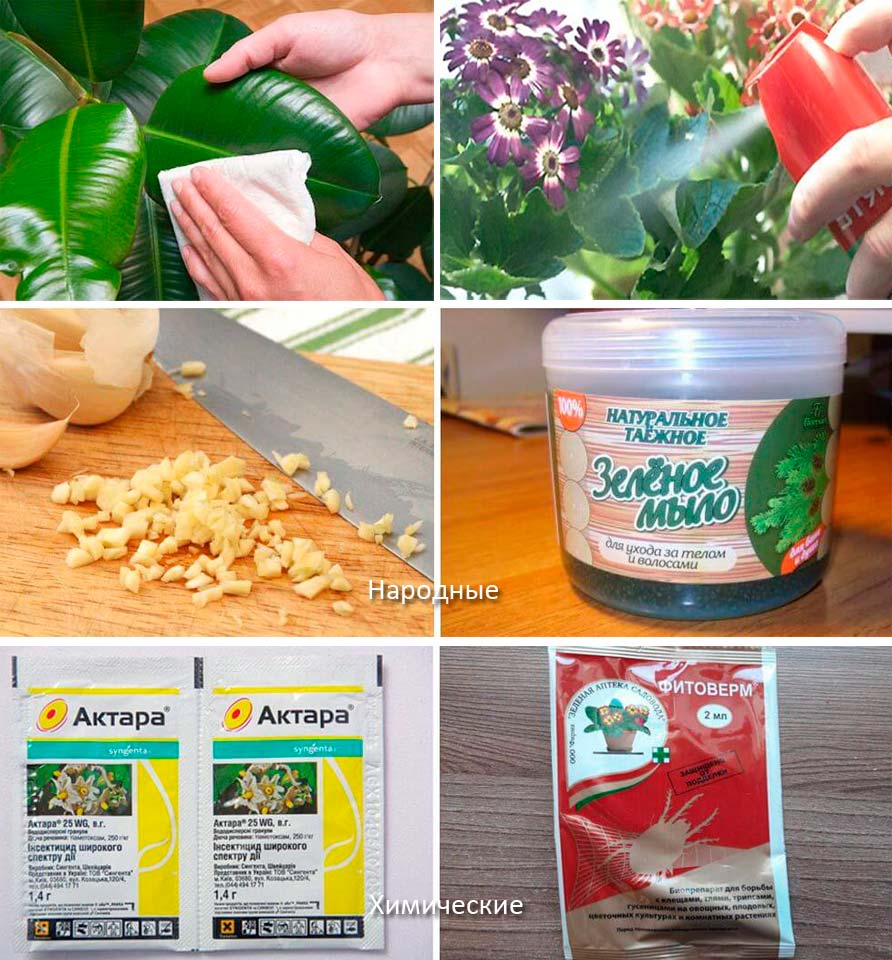
Heavily infested plants are pre-cleaned with a soft brush. Remove any sticky residue and egg sacs. It's easier to get rid of the pests before the colony grows.
Folk remedies
Indoor flowers and greenhouse crops are washed with a soap solution; 15 g of laundry or green soap is dissolved in a liter of water.
The cottony coating on hard leaves is removed with a soft cloth or sponge.
A garlic tincture is harmless to bees: pour 0.5 liters of boiling water over 5 medium-sized cloves and wrap them for 6 hours. Strain and thoroughly soak the entire plant.
Emulsions based on any vegetable oil are an effective and gentle solution. Add 1 tablespoon of oil to 0.5 liters of water.
Horsetail tincture is made in a water bath for 20 minutes. Add 1 teaspoon of dried horsetail to a glass of warm water.
An infusion of citrus peels is made by adding 15 grams of crushed dried peels (a heaping tablespoon) to a liter of boiling water. After cooling, the solution is filtered.
Rinsing or spraying with biologically safe solutions is carried out three times, every 5 days. Newly hatched larvae are particularly vulnerable. Their mouthparts are damaged, they are unable to feed, die, and fall off the leaves or stems.
Chemicals
According to gardeners, of the numerous products used to treat garden and greenhouse crops, Aktara and Fitoverm Forte are the best at home. Spray the flowers twice a month until the bloom disappears completely.
These oil-based products adhere well to leaves. Apply the product to the underside of each leaf with a spray bottle. Dilute the solution according to the instructions. Take precautions and wear personal protective equipment.
Top.tomathouse.com recommends: Mealybug prevention
Difficulties in pest control arise when indoor flowers and greenhouse plants are affected.
If you carry out regular sprinkling, reduce the frequency of watering, and increase the air humidity in winter when the central heating is on, the risk of flower damage will decrease.
When applying fertilizer, it is important to observe moderation.
Excess nitrogen fertilizers have a depressing effect on plants, weakening their natural protective functions.
Essential micronutrients such as potassium, calcium, and phosphorus should be regularly added. Plants breathe through their leaves, so accumulated dust should be removed from them promptly.
It's best to keep a gifted or purchased flower isolated for the first few weeks until you're absolutely sure it's pest-free. If you follow preventative measures and proper gardening practices, there's no need to worry about your houseplants. Mealybugs prefer weakened flowers with dusty leaves.