Spider mites are microscopic parasites measuring 0.5-1 mm. They colonize indoor plants, interfering with their normal growth. These insects prefer to live near roots, in the soil, on stems, and on leaves. A number of effective treatments and folk remedies are now available for controlling this pest.
Content
- 1 The danger of spider mites for houseplants
- 2 Signs of spider mites on houseplants
- 3 Causes of spider mites on houseplants
- 4 Houseplants most susceptible to spider mite infestation
- 5 Spider Mite Control Methods: General Rules
- 6 A detailed description of the infestation and methods for controlling spider mites on specific houseplants
- 7 Top.tomathouse.com recommends: preventing spider mite infestations on indoor plants
The danger of spider mites for houseplants
The spider mite poses a threat because it feeds on plant sap. Adult spider mites pierce stems with their proboscis and inject specialized enzymes that destroy the chloroplasts of plant cells.
When the affected plant is sufficiently weakened, the pest colony moves on to a healthier one. It's highly likely that the insects found on one flower have already infested all the pots on the windowsill.
Signs of spider mites on houseplants
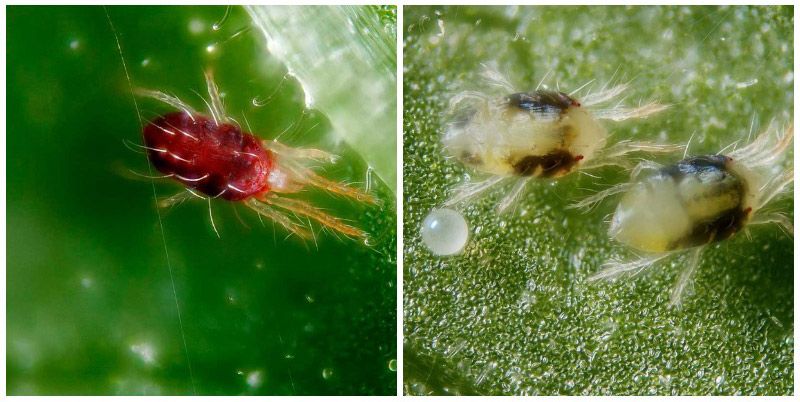
Due to their tiny size, spider mites are virtually impossible to spot without glasses or a magnifying glass. They hide well on the undersides of leaves or simply in clumps of soil. Adults are mimics, blending in with foliage and having similar color tones. Overwintering females are easier to recognize; they have a reddish tint.
The main signs of ticks are:
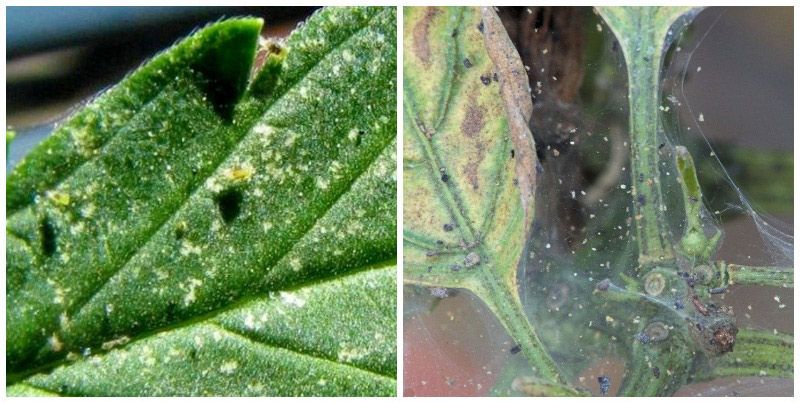
- Light-colored, isolated punctures on leaf blades that can be seen when held up to the light. Initially, they are few in number, but gradually increase in number. Over time, the lesions grow and merge into large, brown, distinct spots.
- The greenery loses its natural color: it becomes yellow, gray, or acquires bronze or red hues.
- The leaves change: they curl and become deformed. The same applies to the buds.
- Growth and development stop. Photosynthesis is disrupted, and cells stop functioning properly and absorbing nutrients.
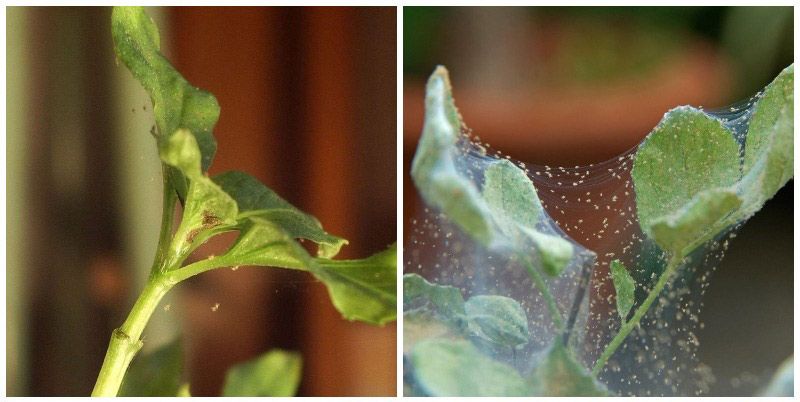
- In the later stages, a network of fine, barely visible webs appears. Sometimes, they can only be seen when there is a large infestation of pests or on a completely dead plant.
First, look for the skins that adults shed after molting. These appear as white, dandruff-like particles on the underside of the leaf. In the early stages, webbing appears between the veins and can only be seen with a magnifying glass.
If the plant is severely damaged by pests, it will look sick, weak, lose green mass and may die.
Causes of spider mites on houseplants
Gardeners who grow a large variety of plants on windowsills or balconies sooner or later encounter mite attacks. Knowing the triggers for mite infestations in the home can help prevent their reappearance and secondary infestations.
There may be several reasons for the abundance of ticks:
- A new plant from a store or a friend. It's best to keep the newly arrived plant separately in a so-called quarantine for 1-2 weeks.
- An open window. Residents of lower floors are most at risk, as a colony of pests can reach them from a nearby tree. Flowers on unglazed balconies are also at risk. People can bring in ticks on their clothing or shoe soles.
- Contaminated substrate purchased at the store. Another option is soil taken from a flowerbed for replanting.
- Long unused tubs and trays.
- The heating season is winter. During cold weather, females hibernate, becoming inactive until favorable conditions arrive. Eggs can remain dormant for up to 5 years.
Gardeners should inspect their houseplants daily, as low humidity and high temperatures cause mite populations to increase dramatically. Despite their short lifespan, a female can lay 150-200 eggs in 2-3 weeks, which mature within 1-3 days.
Houseplants most susceptible to spider mite infestation
All species of this insect can infest virtually any houseplant. However, spider mites have individual preferences and often attack plant families such as:
- dogbane;
- aroids;
- citrus;
- Marantaceae.
Spider Mite Control Methods: General Rules
Control of the pest must be consistent and methodical. Without systematic spraying, the pest becomes resistant to toxic substances, continues to reproduce, and destroys flowers.
The general rules of treatment are as follows:
- If ticks are detected, all plants on the windowsill should be sprayed, and in case of a severe infestation, the entire house should be sprayed.
- Affected and dry leaves should be removed and disposed of.
- Give your houseplants a shower at a water temperature of 40°C to 48°C. For those plants that can't tolerate water, a steam bath is suitable. Turn on the hot faucet in the bathroom, but close the door, leaving the pots in for at least 15-20 minutes. Repeat this process every 3-5 days.
- Disinfect the trays with boiling water.
- Treat the leaves and water the soil with the selected preparation in accordance with the instructions.
- Increase the concentration of poison by placing a plastic bag around the infected specimen and tying it, making sure to remove the container from the sunny area.
- Thoroughly wipe the surface of the pot, window, windowsill, frame and glass with alcohol.
- To destroy parasites, repeat the treatment 2 times after 6 days, and also change the drug or use additional folk remedies.
First aid measures depend on the severity of the mite infestation. If the infestation is small, they can be removed mechanically: wipe the leaves with a cloth soaked in hot, soapy water. For a small number of adult parasites and their larvae, treating the leaves with decoctions of strongly scented plants, vegetables, and flowers will help. If the infestation is severe, it's best to use biological treatments, but if cobwebs have appeared and the green foliage is beginning to fall off, a chemical treatment is necessary.
After defeating the mite, the plant should be transplanted into a new container, the substrate completely replaced, and the root system treated with protective biopreparations.
Chemicals
When using products in this group, it's important to strictly adhere to the dosage and number of treatments as per the instructions provided. Chemical tick killers are divided into two groups:
- insectoacaricides;
- acaricides.
To effectively get rid of pests, alternate products with different ingredients. Many products stop working after repeated treatment.
If it is necessary to use chemicals, it is necessary to follow a number of simple but important rules:
- When using, wear long sleeves, gloves, and a hat to protect your skin, mucous membranes, and hair. The best place to spray the chemicals is on a balcony or loggia.
- For indoor plants, choose products with toxicity classes 3-4. Highly toxic substances are only suitable for outdoor plants.
- In case of serious infestation, it is necessary to carry out not one, but 4 treatments at intervals of 5-7 days.
Examples of chemicals and their uses are presented in the table:
|
Name |
Protection time (days) |
Peculiarities |
| Akarin | 8-15 | Provides relief within 48 hours. Suitable for roses, violets, and orchids. |
| Aktara | 14 | It does not have an unpleasant odor, but is considered ineffective against ticks. |
| Actellic | Poisonous, best sprayed outdoors. Avoid contact with soil. | |
| Anti-tick | 7-9 | Defeats various types of pests. |
| Apollo | 60-90 | Sterilizes adults. |
| Bi-58 | 21 | Prevents the emergence of new colonies of parasites. |
| Nissan | 50 | The effect is visible after 11 days. |
| Neoron | 10:40 | Can be used at any humidity and air temperature. |
| Omayt 30 and 57 | 14 | Available in different dosages. |
| Oberon | 20-25 | Destroys all stages of insects: eggs, larvae, adult females, except males. |
| Sunmite | 30-35 | The impact on the masonry is minimal. |
| Skelta | 80-85 | Pests die within a week. Requires repeat spraying after 8 days. |
| Fitoverm | 20 | Low toxicity, but requires repeated treatment. |
Because all mites are similar in structure, gardeners use medications used in veterinary medicine to treat animals, such as Neostomosan.
For effective treatment, it's best to alternate the use of acaricides and water treatments. Plants in large tubs, as well as those with curled leaves or dense, curly crowns, such as ficus, are best dipped green-side down in a bucket of diluted solutions for 1-2 minutes.
Sometimes forums suggest using dichlorvos. This shouldn't be done; it doesn't repel ticks, but when sprayed in an apartment, it can be harmful to human health.
Folk remedies
They are used in the early stages of the disease, when the pests are barely noticeable and cobwebs and leaf drop have not yet appeared. Examples of recipes are provided in the table:
|
Ingredient |
Quantity (g per 1 liter of water) |
Recipe |
| Garlic | 50 | Let it steep for 5 days. Dilute the prepared solution in a 1:1 ratio. |
| Onion peel | 20 | |
| Alcohol, vodka | 3 | Wipe the greenery with a cotton swab. This method is suitable for plants with dense leaf blades. |
| Soap (boric, tar, sulfur) | 20-25 | Add a few drops of ammonia. |
| Dandelion roots | 30 | Chop finely and place in a dark place for 1-2 days. |
| Calendula | 250 | Pour fresh or dried flowers into boiling water. |
| Cyclamen | 1-2 pcs. | Boil the chopped tubers for 30-40 minutes. Let cool. Repeat the treatment after 5 days. |
| Chamomile | 100 | Grind and leave for 12-16 hours. |
A detailed description of the infestation and methods for controlling spider mites on specific houseplants
Some plants are more susceptible to spider mites than others. Each plant has its own specific care requirements, and knowing these can help you quickly get rid of a colony of pests without causing further damage.
Orchid
A key aspect of orchid care is that it should not be soaked in solutions and should be protected from stagnant moisture in the leaf axils. After treatment for overwatering, orchids can develop various types of rot. To prevent this problem, dip the orchid and its pot once in an acaricide diluted in water and then dry thoroughly, patting with folded paper towels.
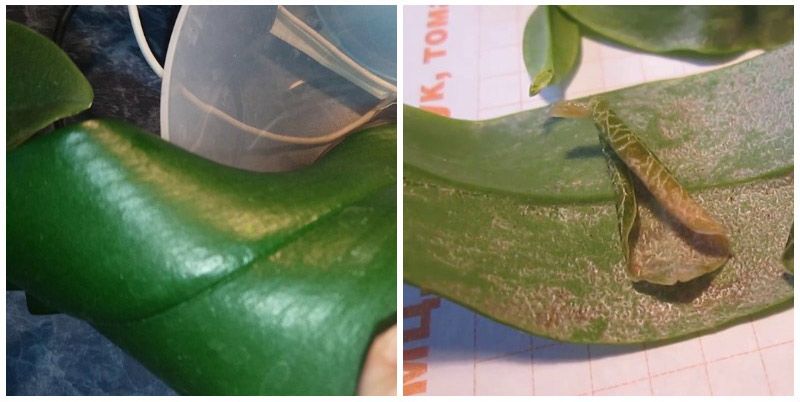
You can also treat the plant with gentle products such as Akarin or Fitoverm. After the bark or substrate has completely dried, you can add Fitosporin-m to the irrigation liquid at a rate of 5 g per 500 ml.
Rose
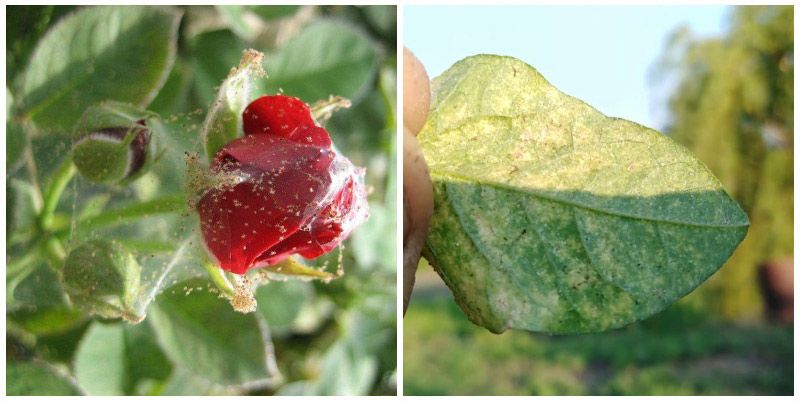
Roses are more often than other flowers affected by spider mites and require special protection and mandatory preventative measures.
At the first sign of infestation, wash the plant with water at 45–55°C (113–133°F) with laundry soap and wrap it in a plastic bag for 24 hours. After 24 hours, rinse again under a hot shower, then spray with garlic infusion, or, if there are numerous mites, with Neoron.
Balsam
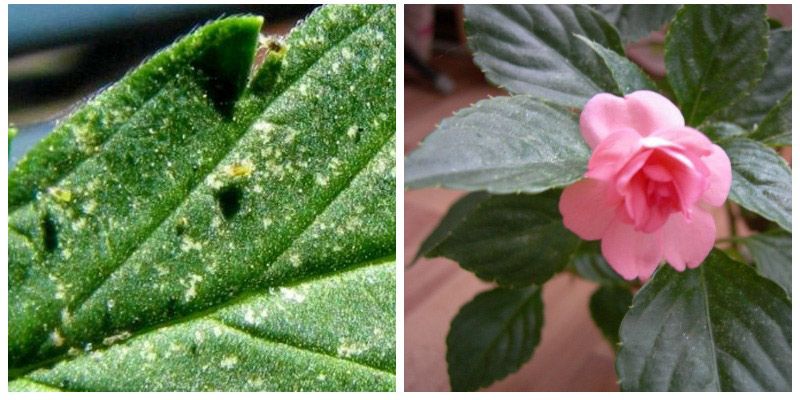
This plant also attracts pests due to its fleshy leaves and stems. Damaged balsam requires pruning, which can be done in the fall or winter. The remaining parts should be thoroughly washed and treated with Sanmite.
If the infestation appears in spring or summer, the plant can be treated with soapy water and then with an insecticide. Repeat the treatment after 3-5 days. If the mite colony is very large, it's best to dispose of the infected plant.
Ficus
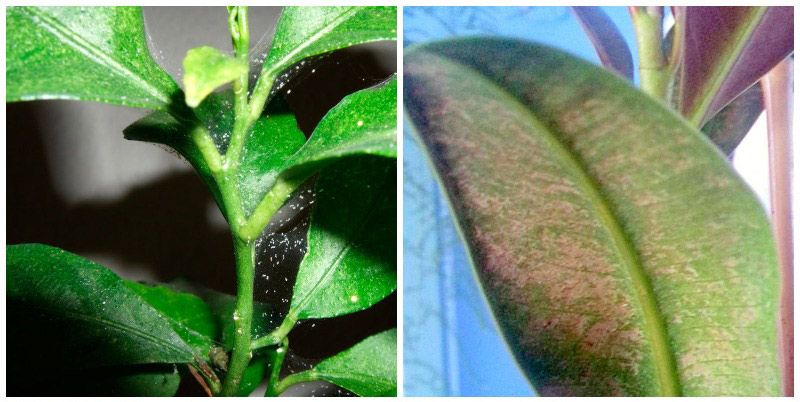
To protect your ficus from pests, periodic spraying is necessary. If pests are detected on the plant, wipe the leaves with a cloth soaked in soap and cover with plastic for 24 hours. Then, rinse with warm water and spray with a diluted tincture of calendula flowers in alcohol.
Violet
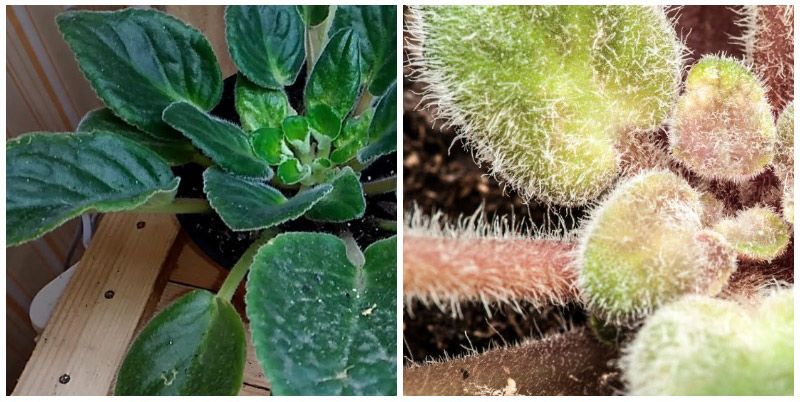
Violets don't tolerate liquid on their leaves, so watering them is contraindicated. Inspect the plant and remove any damaged foliage, then spray twice with Fitoverm, 10 days apart.
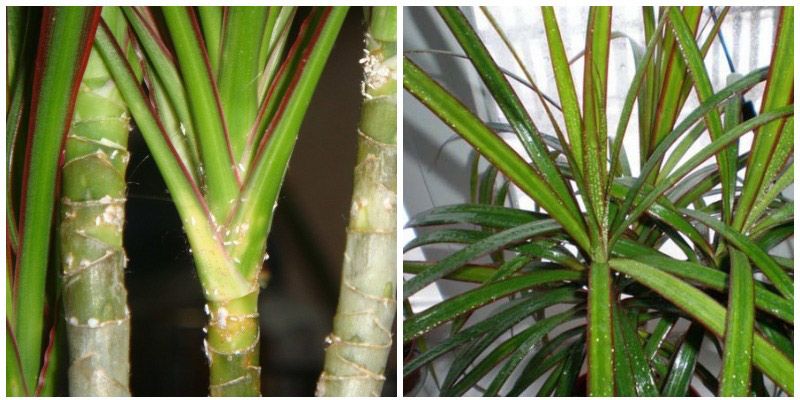
Dracaena
To get rid of spider mites, wash the dracaena's leaves in the shower using laundry soap or tar soap. If several such treatments fail, try folk remedies or gentle chemicals, such as Fitoverm. As a preventative measure, you can treat the plant with Green Soap.
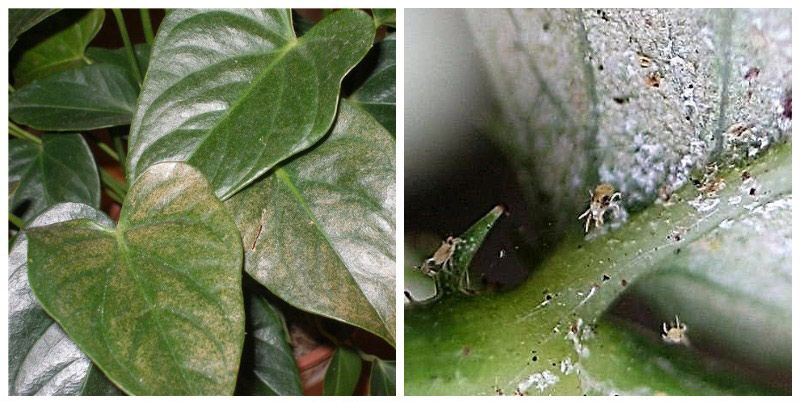
Anthurium
If spider mites are detected, wash the plant with warm, soapy water. Next, carefully inspect the leaves and prune out any heavily infested ones. Remove the anthurium from the pot, remove damaged root sections, and repot, adding fresh soil. Additional treatment with Akarin can be used. If this treatment is ineffective, consider using chemical treatments such as Bi-58.
Top.tomathouse.com recommends: preventing spider mite infestations on indoor plants
To protect your flowers, minimize the risk of infection, and avoid wasting time on treatment, it's best to take the following preventative measures:
- Use caution when purchasing new plants or replanting existing ones.
- Conduct regular inspection for parasites.
- Disinfect the substrate and expanded clay for drainage, purchased from the store, with a solution of potassium permanganate or bake it on a baking sheet (or baking sleeve) in the oven for 40 minutes at 180°C. Another method is to steam the soil in a sieve lined with cheesecloth in a water bath for 20 to 90 minutes. After these procedures, it is important to add yeast or another bacterial fertilizer.
- Treat with special fungicides such as Fitosporin, Alerin, Agat, Baktofit.
- Conduct a 2-3 week quarantine for newly arrived specimens.
- Give your greenery a periodic shower.
- You can humidify the air by spraying it with a spray bottle, but it is best to purchase a humidifier.
Spider mites are a dangerous pest that damage a wide variety of houseplants and cause problems for gardeners. However, by following simple rules, taking preventative measures, and implementing consistent, systematic treatment, you can minimize the risk of infestation.