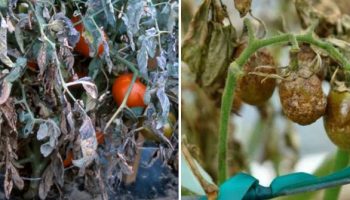
Every gardener should be aware of the pests that attack their crops so they can detect them promptly and provide the necessary treatment. Among the most dangerous are spider mites, or tetranychid mites, which can destroy young and mature plants and their fruits.
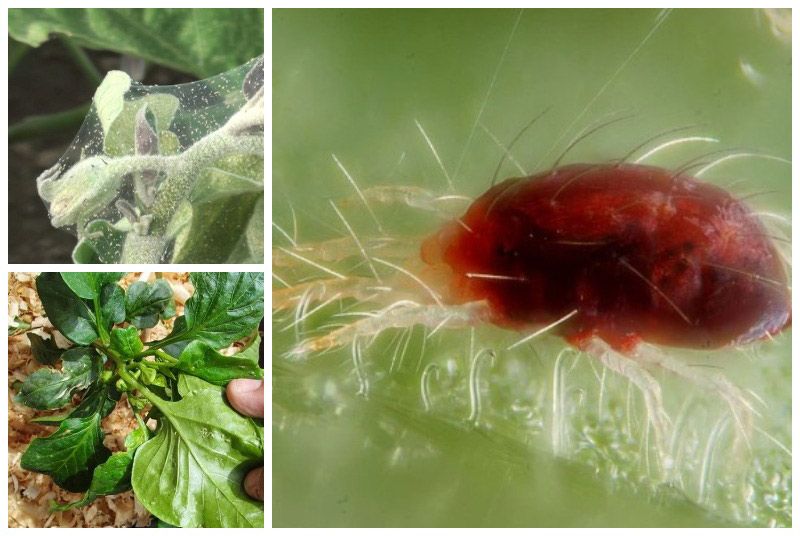
The danger of spider mites for seedlings
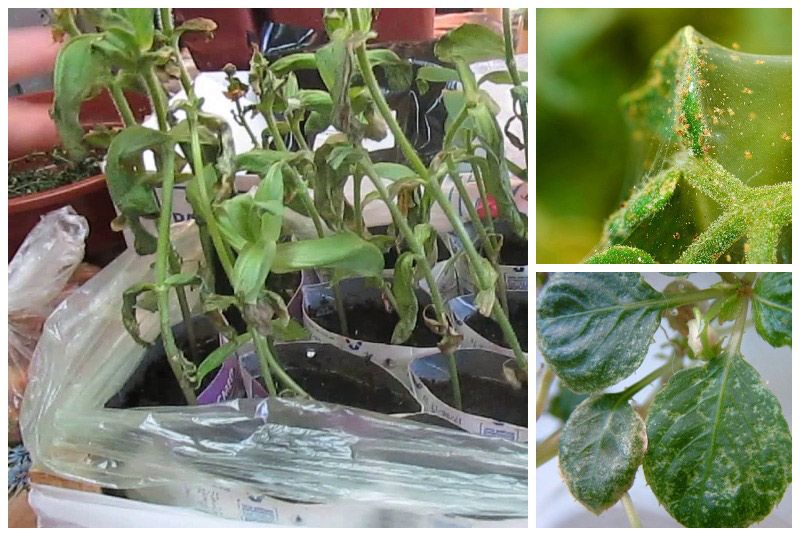
It poses a serious threat to young and emerging seedlings. In this case, death occurs even when optimal growing conditions (the necessary microclimate) are maintained. Seedlings of sensitive tomatoes, bell peppers, cabbage, and eggplant perish at the slightest pest attack, so it's crucial to promptly treat the plants with effective treatments to preserve them and prevent further spread of the disease.
Seedlings of plants most often affected by spider mites
Each individual of this parasite sucks the contents of the main tissue cells. It cannot feed on sap, as the small size of its jaws prevents it from reaching the xylem vessels (the water-conducting tissue of plants) through which it moves. The damage caused by the mite leads to the formation of patches of dead parenchyma cells, which gradually expand and eventually cover the entire leaf. These patches vary in color: brown, yellow, or matte white.
A visual inspection suggests the plant is infected with a viral or fungal disease, as the pests are not visible. They live on the underside of the leaves.
Plants begin to fall and wither when the mite infestation is significant and difficult to control. These insects reproduce very quickly, and within two weeks, there can be several hundred individuals per square meter. The conditions gardeners create when growing seedlings are also ideal for tetranychids, so death occurs very quickly.
All types of spider mites are considered dangerous, but the most vicious are the common, red, and two-spotted spider mites.
This parasite doesn't choose the best plant to infest. Its small size prevents it from traveling, so it feeds on whatever's closest. Different types of seedlings have varying resistance to mite attacks:
- zucchini, pumpkins – slightly affected;
- Tomatoes and other nightshades are especially susceptible;
- young cabbage, strawberry and cucumber seedlings suffer greatly;
- Umbelliferae and alliums are resistant, but they are rarely grown this way;
- seedlings of fruit trees and shrubs - very often.
Thus, it can be said that tetranychids are found almost everywhere.
Causes of plant infection
Spider mites can destroy all plants grown in gardens, greenhouses, and even indoors. They are very undemanding and can live anywhere. Active reproduction occurs throughout the warm season. They overwinter in the upper layers of soil and leaf litter and survive frost. They can be carried by the wind.
Creating favorable conditions (nitrogen fertilizers, insufficient watering, temperatures above 25°C) promotes its active reproduction. It is impossible to completely protect plants from infection, so preventative measures and the destruction of diseased plants are necessary.
Type of affected plant
It's impossible to immediately determine that the mite has taken up residence on the seedlings. Its small size allows it to hide well, so it's important to periodically examine the plants with a magnifying glass, especially the undersides of the leaves. Tetranychid mites range in color from pale green to brown.
The appearance of colorless spots on the leaves, cobwebs, yellowing, and slow development are signs of the presence of mites.
Methods of controlling spider mites
There are several control methods that are optimal for different conditions: mechanical, traditional, biological (not suitable for home use), and chemical. Protection begins with the first method, then moves on to the second, and finally, spraying with special preparations if the results are ineffective.
Mechanical
These are the simplest ways:
- Apply pressure with your fingers or a trowel. If the seedlings have a small number of leaves, this is possible, although it will take some time. If you're growing more than 50 plants, this approach is impractical.
- They wash it off with water. There's a risk of damaging the plant or drowning it, so it's technically difficult to do.
Folk
These are fairly affordable and safe methods. They don't affect vegetation and control both larvae and adult insects. The downside is low effectiveness (in case of large-scale infestations) and frequent use (1-2 times a week).
| Ingredients | Peculiarities | Application/spraying | Receipt |
| Soap, water. | A protective film is created. The pest's legs are glued together, preventing it from moving. | Use a spray bottle or mister. Apply weekly as a preventative measure. If an infestation occurs, apply every three days. | Grate on a coarse grater and dissolve completely in warm water. |
| Alcohol, vodka. | Burns the tick's skin and repels it with its smell. | Apply to leaves and stems. | High content in the mixture. |
| Cola, Pepsi. | The most effective method, but expensive for large areas. | For prevention at intervals of 7 days, while there is a threat. | Open to remove bubbles. |
| Spices: red and black pepper, cinnamon and mustard, garlic tincture. | Drives away with smell. | Twice a week. | Mix in equal proportions. Tincture: soak garlic in cold water for 24 hours. |
| Marigold. | They can't stand the aroma. | Spray. Plant between rows. | Infusion: half a bucket of plant per 10 liters of water. Add 40 g of soap. |
Chemicals
These are quite good and effective methods. Using expired insecticides also has a positive effect. It's enough to buy inexpensive products.
| Preparation | Peculiarities | Application/spraying |
| Fitoverm | It decomposes quickly, does not penetrate the plant, and does not accumulate. Low application rate. Paralyzes the pest. Larvae are not killed. | Dilute with water. Use special adhesives. Repeat 3-4 times. |
| Karbofos | A powerful insecticide based on malathion. It works only when it comes into contact with the pest. Do not use during flowering to avoid killing beneficial insects. | Abundant moistening with the prepared solution at a temperature of +15 °C. |
| Ditox | The active ingredient is dimethoate. It is an organophosphorus compound. It is not washed off by rain. It causes paralysis. | 1-2 times throughout the season. |
| Karate-Zeon | An innovative product based on lambda-cyhalothrin. Affects other invertebrates. | Apply fresh mixture in the morning. Apply completely. The dosage depends on the number of pests. |
| Kinfos | Contact-intestinal type. Contains two types of pesticides. Highly effective. | Treat the entire plant evenly in dry weather. |
| Clipper | The product contains a pyrethroid compound called bifetrin. It works quickly. | For prevention throughout the growing season. Not hazardous to humans or animals. |
Top.tomathouse.com recommends: preventative measures to prevent spider mite infestation in seedlings
This pest can be a source of infectious diseases. Its webbing protects it during spraying, so it should be removed beforehand. It provides a haven for other parasites. Treating an infestation is always more difficult than preventing one.
There are several methods that are used for preventive purposes:
- Disinfection: soil and seeds. You can freeze or steam the soil, or use biological products.
- Spraying: with water or a soapy solution. Ticks don't tolerate moisture, so treatment every 7 days is effective.
- Weeding and removing debris is essential because pests overwinter in these areas.
- Loosening the soil prevents parasite development from eggs.
- Inspection is carried out regularly to ensure timely detection and the necessary countermeasures.