Bud mites are dangerous to currants. The insects feed on bud sap, overwinter in the buds, and re-infest the plants in the spring.
Content
Description of the pest
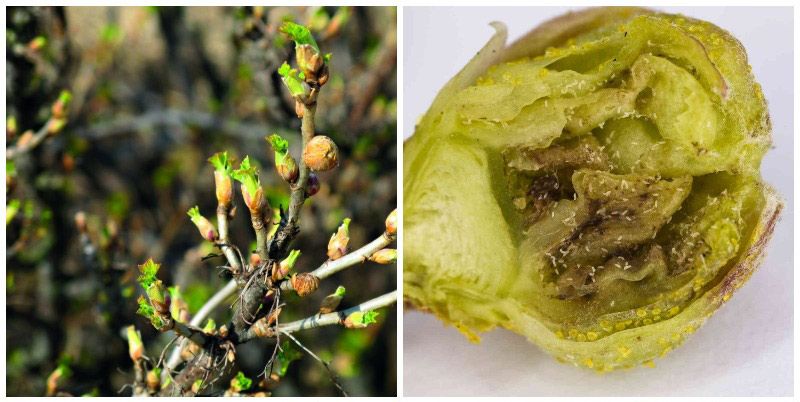
The mite is approximately 0.2 mm long. A single bud can contain up to 3,000 to 8,000 insects. In early spring, the pests lay eggs inside the buds. The development of the larvae within the eggs lasts 6 to 12 days. After the flower clusters emerge, the parasites emerge from the buds. The risk of infesting other plants increases significantly.
Signs of insect pest damage
At different times of the year, seasonal signs of infection can be recognized on currants.
In spring and summer
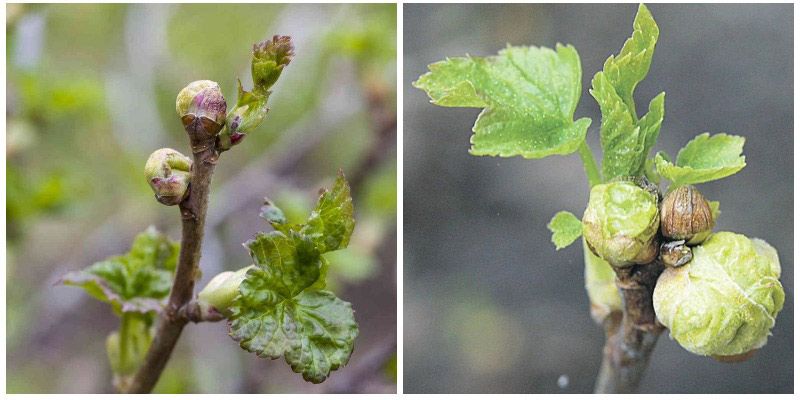
The leaves of annual shoots become lighter in color, their surface becomes rougher, and their apex becomes smaller and curled. Shoot growth ceases. Multiple thin, reddish shoots, resembling brooms in shape, appear. These shoots do not flower or bear fruit, but consume large amounts of nutrients and gradually deplete the plant. Fungal or viral infestation is the etiology of this pathological process.
The disease is incurable, and the currant bush eventually dies. The currant mite is the carrier of the pathogenic microflora.
In the fall
Buds infected by the mite swell, appearing like a shaggy head of cabbage. They contain thousands of females, ready to lay eggs come spring.
The danger of the currant bud mite
The insect pest poses a threat due to:
- direct impact on shoots - mites feed on plant juices;
- the spread of fungal and viral diseases dangerous to currants.
Control measures for kidney mites
To get rid of the pest, remove diseased buds from the bush, treat the plants, and follow proper agricultural practices. Control measures can be combined to increase their effectiveness.
Removing buds and shoots
In early spring (mid- to late April), if swollen buds are discovered, the infected shoots are cut off and burned. After the affected part of the plant is destroyed, the bush will produce new healthy growth. There are no pests in the soil.
Processing bushes
Plant treatment involves the use of folk remedies, biological and chemical preparations, among which organophosphorus compounds stand out due to their high toxicity.
Folk remedies
Before bud break, the plants can be treated with hot water. The optimal temperature is 80°C. One bucket of water is used per mature plant. This is one of the most accessible and safe methods of pest control.
Currants are treated during the flowering period (second half of May) and after it with a lime-sulfur solution, or a solution of colloidal sulfur suspension, for which 75 g of suspension is dissolved in 10 liters of water.
Common folk remedies for treating the plant are infusions (ingredients are mixed with 10 liters of water):
|
Name of the infusion |
Ingredients |
Steeping time, hours |
| Garlic | 200 g chopped garlic | 3 |
| Mustard | 200 g mustard powder | 8 |
| Dandelion | 200 g of roots and 50 g of leaves, chopped in a meat grinder | 2 (stirring) |
Before use, strain the infusions.
Chemicals
The use of acaricides or insectoacaricides (Apollo, Kontos) is permitted. Sprays are applied two or three times at 10-day intervals. The air temperature should be above 5°C with low humidity and no wind. The latter should be done during the budding period.
Organophosphorus compounds
Organophosphorus agents (Phosphamide, Nitrafen) may only be used after harvesting.
Biological drugs
Biological products (Fitoverm, Actofit) are effective at temperatures above 19°C in dry, calm air. Three treatments, seven days apart, are recommended. It's beneficial to alternate biological products and combine them with biofungicides.
In autumn, the bushes are sprayed with any acaricides.
Prevention of tick-borne infestations
To avoid or minimize damage from ticks, follow these simple rules:
- Plant seedlings at the recommended distance, avoiding crowding.
- Avoid proximity to gooseberries, which are also often attacked by spider mites.
- Conduct pre-planting treatment of seedlings:
- soaking in water at a temperature of +45 °C for 15 minutes;
- Actovertin (10 g per 10 l of water) or Colloidal sulfur (40 g per 10 l of water) for 20 hours.
- Adhere to the watering and fertilizing schedule.
- Plant garlic or onions near currants; their phytoncides have an insect-repellent effect.
- Remove any weeds, pruned branches, spider mite-infested buds, fallen leaves and old mulch.
- Use acaricides for preventive purposes.
- Treat tools to prevent tick transfer when moving to another bush.
Top.tomathouse.com recommends: mite-resistant currant varieties
Breeders have developed currant varieties resistant to bud mites:
|
Name |
Ripening time |
Description |
| A curiosity | Early ripening | It is characterized by high yield and frost resistance. It requires frequent watering. The berries are oval, sweet and sour, and have a dense skin. |
| Selechenskaya | Frost- and drought-resistant. The fruits are large, glossy, black, and sweet, with thin skin, weighing up to 5 g. | |
| Kipiana | Mid-late | The berries are black, medium-sized, sweet and sour. |
| Nuclear | Late-ripening | The fruits are oval, large (up to 8 g), and refreshingly sour. Requires regular pruning. |