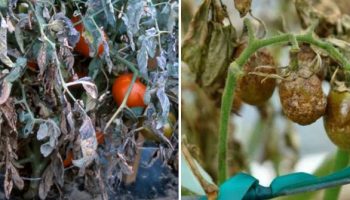
The Colorado potato beetle damages young potatoes. It also feeds on the leaves of tomatoes, sweet peppers, and eggplants. Due to its high resistance to pesticides and its ability to develop immunity, the pest spreads rapidly. It lays eggs several times per season. A female can lay up to a thousand eggs per day. The larvae hatch as early as five days after the eggs hatch, or after two weeks under unfavorable weather conditions.
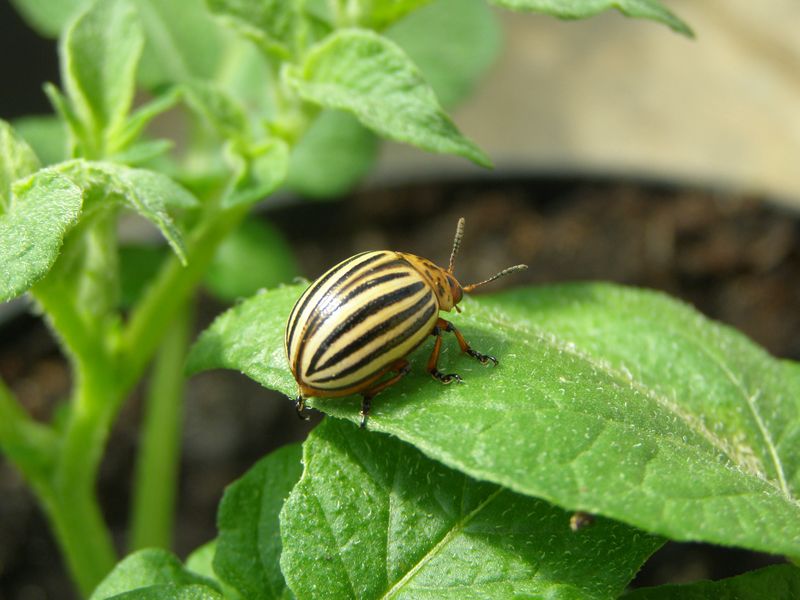
The Colorado potato beetle has become established in many regions of Russia. It is not affected by winter frosts, but only by late, recurrent frosts, when adult beetles emerge from a depth of 40–50 cm to the surface to lay eggs.
New generation pesticides offer a comprehensive approach to pest control, killing eggs, larvae, and adult insects. Their use helps preserve nightshade crops.
Content
Colorado potato beetle remedies: rating and review
Plant treatment products are divided into three categories: chemical, biological, and seed dressings.
Chemical poisons
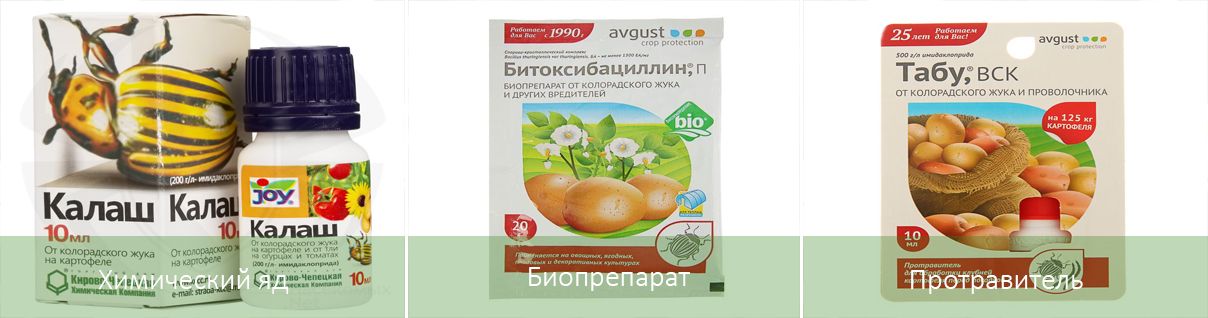
Aktara, Inta-Vir, Grinda, Karbofos, Killer, Komandor, Confidor, Napoval, Palach, Regent, Sonet, Sherpa, and other chemical insecticides have a systemic effect on insects, disrupting digestive, respiratory, and motor functions. Beetles and larvae are destroyed after a single treatment; less frequently, two or three treatments are required.
Many preparations accumulate in leaves and roots and persist in plants for up to 4 weeks.
The main components of chemicals:
- hexaflumuron;
- deltamethrin;
- difenoconazole;
- imidacloprid;
- metalax;
- pencycuron;
- triamethoxam;
- fipronil;
- fludioxonil;
- cymoxanil;
- cypermethrin.
Advantages of pesticides:
- high efficiency;
- single treatment;
- resistance to washout by precipitation;
- duration of action;
- versatility, effective against many pests.
Disadvantages: Any chemical is dangerous to bees, birds, and pets, and is toxic to humans. Plants can only be treated before flowering and tuber formation.
Biopreparations
Biological pesticides against the Colorado potato beetle rely on the bacteria's ability to attack larvae or adult beetles, gradually reducing the insect population. Actarofit, Actofit, Fitoverm, Boverin, and Bitoxibacillin are selective and do not affect bee colonies. Biological pesticides are classified as safe for birds and animals. Biological pesticides are less effective than chemical pesticides. Plants should be treated periodically. Biological pesticides do not accumulate in crop tissues, are washed away by dew and rain, and are destroyed at temperatures below 18°C. Biological pesticides should not be stored for long periods of time, as the bacteria will die.
Seed treatment agents
Chemicals used to protect potatoes are effective during the first month of growth. The tubers are treated before planting, so precipitation is not a problem for the treatment. Cruiser, Prestige Tabu, and Tirana are also used to water young shoots, which are a favorite food source for hatchling larvae.
Seed treatments contain the same poisons as chemical treatments for the Colorado potato beetle. They can form a film on the tuber and are gradually absorbed into the plant tissue. Some seed treatments change color upon exposure to air, making treated potato tubers immediately visible.
Advantages of seed dressings:
- ease of use;
- safety for bees, birds, and pets;
- there is no need to create an aerosol cloud that affects the human respiratory system.
Cons:
- monthly duration of action;
- The solution contains a high concentration of harmful components, so care must be taken when working with them. Plant protectants cannot be used for spraying plants.
If there is a high concentration of beetles during potato planting, it is recommended to thoroughly water the holes with a seed dressing so that the beetles die during the migration to the surface.
The best chemical pest control methods for the Colorado potato beetle
Consumer demand ratings, based on social media surveys, align with the opinions of farmers engaged in industrial potato production. Many note the limited effectiveness of specialized pest control products designed to target Colorado potato beetles at specific growth stages: eggs, larvae, and adults. Universal biological and chemical pesticides are detrimental to pests at any stage of development. They are among the top-rated pest control products for the Colorado potato beetle.
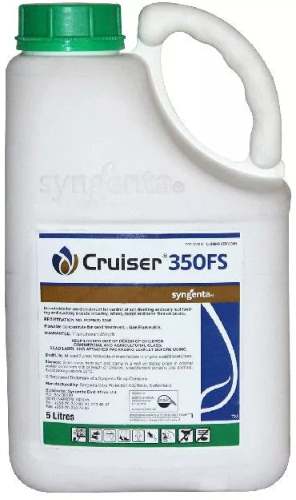
Treater Cruiser 350 FS
An effective product that protects potatoes during the first two months of growth. Thiamethoxam, a neonicotinoid, attacks wireworms and other soil-dwelling pests. It is used by vegetable growers with their own apiaries and stocked ponds located near their fields. The product is not cheap, costing 13,000 rubles per liter.
Knocked out
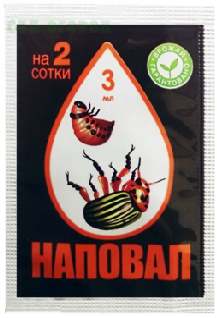
The chemical Napoval is used to protect potatoes and other greenhouse-grown nightshade crops, including eggplant, bell peppers, tomato, and physalis. It has a comprehensive effect and is capable of killing aphids and whiteflies. It costs 3.40 hryvnias per 3 ml (per 200 square meters), or about 10 rubles.
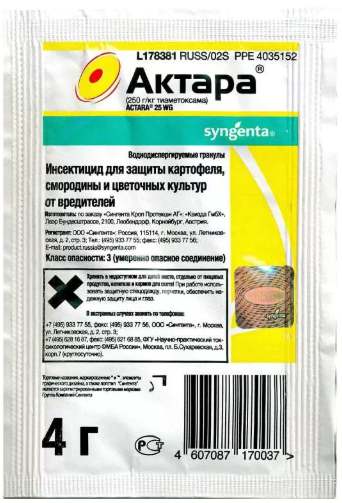
Aktara
The Swiss-made pesticide Aktara contains thiamethoxam, which blocks the nervous system of Colorado potato beetles and their larvae. The pests die within 24 hours of treatment; they lose their ability to feed, fall off the leaves, and fall to the ground. The pesticide remains on the plant throughout the season after a single treatment. The final treatment is administered during the flowering stage. Aktara is prohibited during the tuber growth phase, as the potatoes will contain toxins that are harmful to the liver and kidneys. Four grams cost 140 rubles.
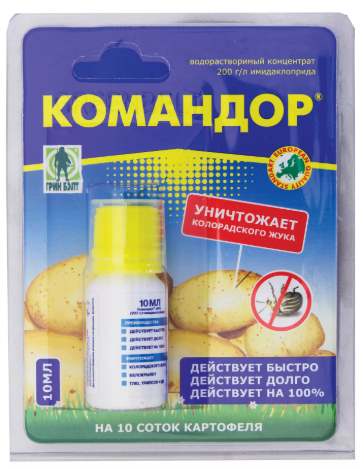
Commander
The insecticide Komandor is based on imidacloprid. It is recommended against Colorado potato beetles, flies, aphids, wireworms, codling moths, and cabbage butterflies. The product accumulates in all parts of the plant and affects pests at all stages of development. It costs 58 rubles per 10 ml bottle.
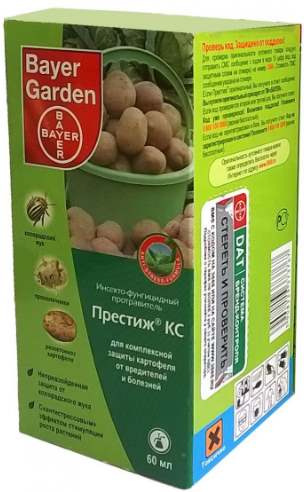
Prestige (complex)
Imidacloprid acts systemically, affecting the nerve endings of insects and paralyzing them. Pencycuron destroys microorganisms that cause root rot. After treating potatoes for Colorado potato beetles, the risk of developing late blight, rhizoctonia, and soft rot is reduced. It costs 580 rubles for 60 ml.
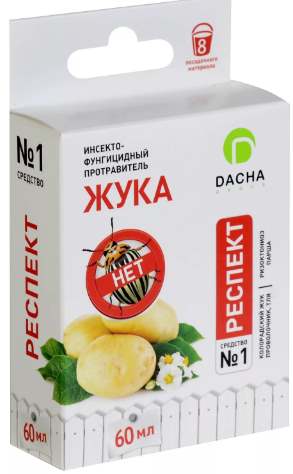
Respect
The new product, Respect, has a broad spectrum of action. It effectively kills wireworms, overwintering cabbage white larvae, tortoiseshell moths, and other butterflies. This two-component product, based on imidacloprid and pencycuron, is similar in action to Prestige. A single treatment is administered at the first sign of beetle infestation. During migration, the insects will avoid fields treated with Respect. A 30 ml bottle costs between 120 and 250 rubles, depending on the store; 60 ml is also available.
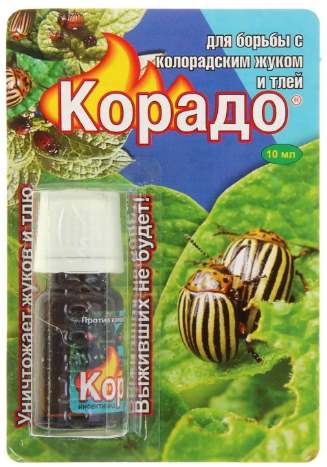
Corado
Corado, an imidacloprid-based pesticide, is used once per season. As a preventative measure, young shoots are treated. The beetles are unable to lay eggs and die from paralysis while feeding. The poison is effective for 35–40 days. Afterward, the chemical concentration decreases to levels safe for humans. The cost of 10 ml is approximately 100 rubles.
When working with protective equipment, ensure your own safety: wear gloves, a respirator, and goggles. Spraying should be done in calm, windless weather in the evening, when the sun is not very strong.