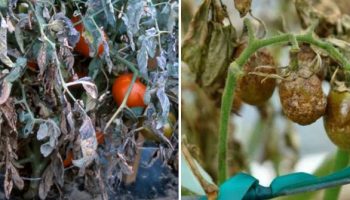
Every gardener has encountered at least once the unpleasant plant disease known as powdery mildew. This fungal infection is caused by tiny parasites. Control isn't so much difficult as it is time-consuming and unpleasant. Infected plants must be sprayed several times, and even proper treatment doesn't always produce immediate results. To prevent pests, preventative measures are used, using any available remedy in the gardener's arsenal.
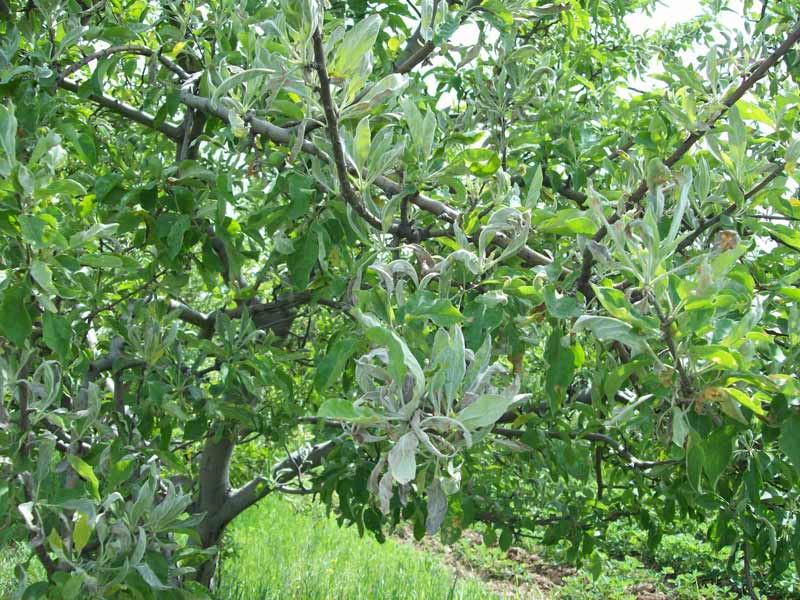
Chemicals against powdery mildew
A disease known as ash leaf spot spreads quickly, infecting neighboring plants. The infection manifests as a white, powdery coating on visible plant parts, and treatment should be initiated at the first sign of infection. To eliminate the pathogen, fungicides—complex-spectrum antifungal agents—or various folk remedies are used.
Fungicides
Let's consider the variety of chemical compounds that can defeat the parasite.
|
Preparation |
Description |
Application |
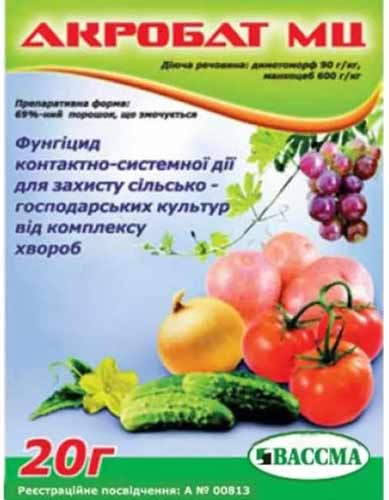
| Acrobat MC
|
Easily water-soluble granules containing dimethomorph and mancozeb. This combination provides superior antifungal treatment through easy penetration into plant tissue. | The package contains 20 grams of the substance, which is diluted in 5 liters of liquid. Repeat spraying after 2-3 weeks.
Spraying is carried out before vegetable crops bloom. Non-edible plants can be treated at any time. |
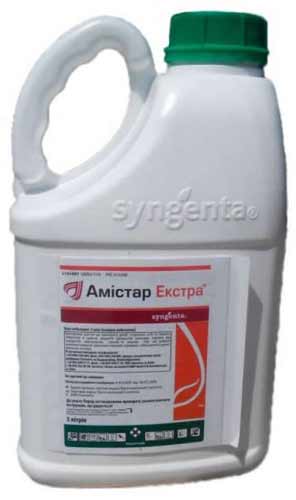
| Amistar Extra
|
It consists of two active ingredients: azoxystrobin and cyproconazole. The former is therapeutic, blocking the pathogen's ability to breathe, thereby destroying the source of the disease. The latter is prophylactic, quickly penetrating plant cells and circulating within them, along with the plant's sap, providing a protective effect. | It is sold as a liquid sprayed onto crops; the chemical is dissolved in water in a 1/2:1 ratio. The procedure is repeated after 15 days.
Grains are treated to strengthen the immune system and increase resistance to adverse conditions, and gardeners use it to protect flower beds from fungi. |
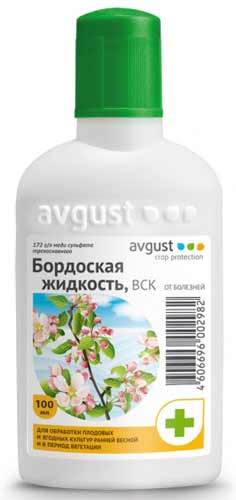
| Bordeaux mixture
|
One of the oldest preparations used to combat fungi. The package contains two dry ingredients that must be mixed with water before use. Copper sulfate and slaked lime interact to provide the best results against powdery mildew. | Spraying is performed after the reaction in the mixing container is complete. When the active ingredients combine, a large amount of heat is generated, which can cause harm if it comes into contact with human skin. |
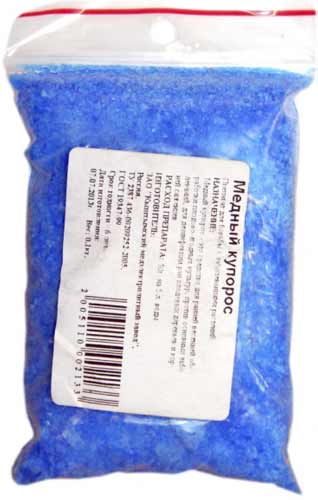
| Copper sulfate
|
A blue powder dissolved in water has medicinal properties, killing pathogenic fungi. The product is considered safe because it does not penetrate deeply into plant cells and is suitable for treating fruit-bearing crops. | Spraying is done in spring and autumn, when there are no leaves.
It's important to strictly adhere to the dosage. If there's a lack of fluoride in the soil, fertilize the plants, as copper sulfate binds fluoride molecules in the soil and causes a deficiency. |
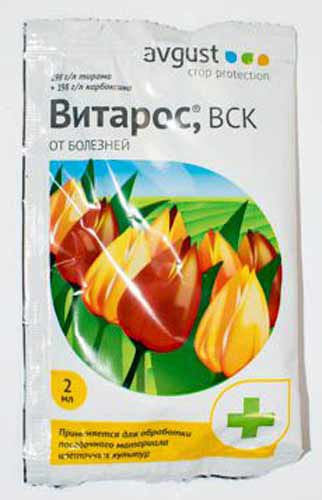
| Vitaros
|
It's a preventative medication, but it's effective against fungi thanks to its active ingredients, thiram and carboxin. Thiram combats the effects of infection, while carboxin destroys the pathogen. This long-acting medication provides protection for 6 months. | It is used to treat seeds and bulbs of flowering plants during storage. Colored additives allow the composition to be evenly applied to the surface of the seed. A special adhesive component envelops the seed and forms a protective cocoon. |
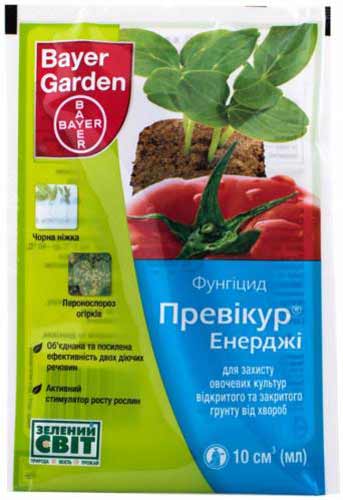
| Previkur
|
A soluble concentrate with a protective and prophylactic spectrum of action. The active ingredient is propamocarb hydrochloride, which effectively combats fungal infections. | Suitable for treating vegetable crops. The solution is used for watering and spraying plants morning and evening. |
| Skor
|
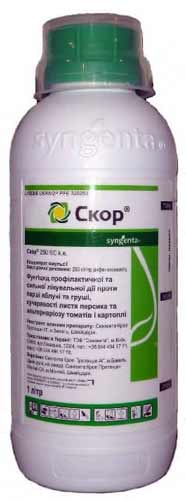
A preventative product is used to combat infections of vegetable crops and trees. The active ingredient is effective only in the early stages of infection, so treatment is recommended for disease prevention. | After spraying, the active ingredient quickly penetrates the plant and circulates within it for some time along with the plant's juices. It has a positive effect on the growth and development of tomatoes, eggplants, and other vegetable crops. Plant immunity is enhanced, photosynthesis is improved and lasts longer, increasing yields. |
| Topaz
|
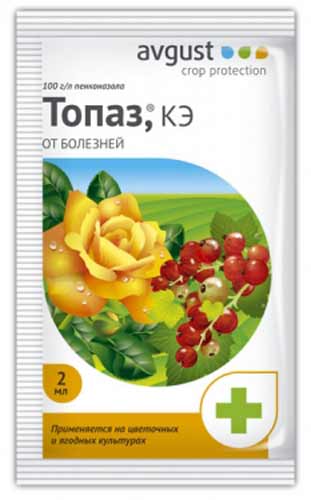
A single-component solution containing penconazole as the active ingredient. Suitable for treating garden and indoor plants. It is most effective against powdery mildew. It is used for preventative treatment during the early growing season. | A small dose of concentrate is required for spraying. One ampoule per 10 liters of water for garden crops and the same dose per 5 liters for indoor plants. Spraying should be done on a dry, windless day to allow the active ingredient to penetrate the plants. |
| Fundazol
|
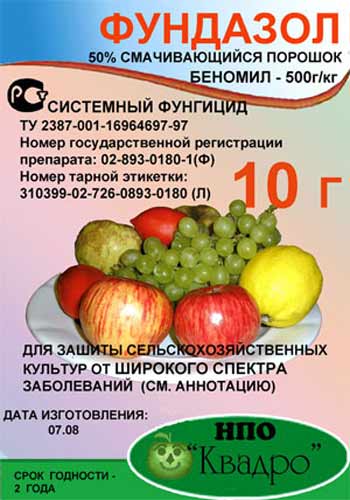
The product is based on fenomyl powder. It is effective against fungi, some types of mites, and aphids. | Spray treatment is performed once and provides plant protection for a week. Maintaining the correct concentration of the solution is important to maximize effectiveness. |
Chemical pesticides are highly effective and offer a number of additional benefits. However, there is still a risk of toxic substances contaminating food products. Therefore, many gardeners prefer alternative pest control methods.
Biopreparations against powdery mildew
Considering the meticulousness of many farmers and their desire to grow only organic produce, special safe products have been developed to combat fungal plant infections, called biofungicides. The active ingredients of these products are live bacteria that suppress pathogens.
These compounds are harmless to humans, animals, and plants and can be used at any stage of crop development, even during fruit formation. They are not as effective as chemicals and do not provide long-term protection, but they can be applied frequently without risk of harm.
The most popular products for combating powdery mildew include Fitosporin-M, Alirin-B, Gamair, Pseudobacterin-2, and Planriz. These products are inexpensive and available at any specialty store.
Top.tomathouse.com recommends: folk remedies against powdery mildew
For those who want to save money, there are folk remedies that can be prepared independently from available materials.
|
Means |
Preparation |
Application |
| Serum | Sour milk, kefir, or yogurt are diluted with cold water at a ratio of 1:10. The solution is ready for spraying. | Treatment is carried out early in the morning or after sunset. The composition is sprayed on the visible parts of the plant. |
| Ash | Add ½ cup of dry wood ash to a liter of boiling water and let it steep for 2 days. After this time, strain the solution and add liquid soap or grated laundry soap. | The prepared composition is used for spraying twice with an interval of 7 days. |
| Iodine | Thoroughly mix 1 ml of iodine, a liter of skim milk or whey, and 9 liters of water. Some gardeners may add a spoonful of liquid soap if desired. | Spray the mixture every two weeks until complete recovery. Considering that a side effect of such treatments is increased yield, it is recommended to protect cucumbers, zucchini, and eggplants in this manner. |
| Soda and soap | Common sodium bicarbonate, which is present in every home, is mixed with grated soap, using 4 grams of each. The mixture is diluted in a liter of water and stirred. | Plants are sprayed once a week until complete recovery; it is advisable to shake the mixture during treatment. |
| Field horsetail | Fresh herbs (100 g) are poured into a liter of water and left to steep for 24 hours. Then, the mixture is boiled for 2 hours, strained, and the remaining concentrate is diluted with water at a ratio of 1:5. | Treatment can be carried out twice a year, in spring and autumn. |
| Potassium permanganate | Half a teaspoon of potassium permanganate is diluted in 10 liters of water. | The composition should be distributed not only to the plants but also to the soil, garden tools, and greenhouse walls. Treatments should be carried out every two days, at least three times per season. |
| Mullein | Fill a third of the bucket with fresh manure and add cold water. Let it sit for three days, stirring occasionally. Strain and dilute the remaining liquid with water at a ratio of 1:10. | Spraying is carried out before or after sunset to prevent burns. A new composition is prepared for each treatment. |
| Garlic | Garlic is crushed (25 g) and poured with a liter of water, infused for 24 hours and filtered. | Spray all plants. |
| Onion peel | Onion peel infusion is made at your own discretion: the stronger the concentrate, the greater the benefit. This treatment will not cause any harm. | Spraying is done during rotation of the clock; the solution can be poured onto the soil as a fertilizer and pest prevention. |
While folk remedies don't guarantee a cure, it's worth trying these methods before resorting to chemical treatments. In most cases, powdery mildew can be controlled in its early stages. Furthermore, all the treatments used for protection also provide excellent fertilization and nutrition for plants.