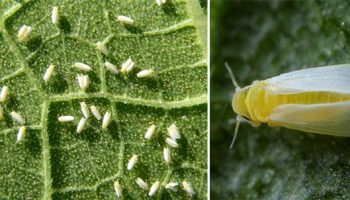
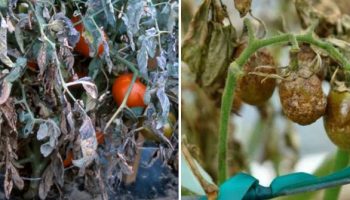
Thrips are a pest insect, with 6,000 species in nature. Their elongated bodies, no more than 0.3 cm long, have six thin legs.
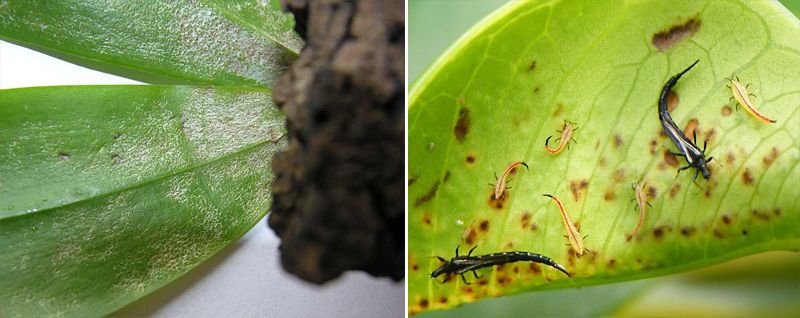
It prefers indoor plants, including orchids. Both amateur gardeners and experienced professionals face questions and problems about pest control. The insect is not limited to one habitat.
Description of thrips
There are predatory species that prey on spider mites, but the vast majority prefer plants. Several hundred species are found in Russia and adjacent countries, destroying agricultural and ornamental crops, including houseplants. Two pairs of hairy wings are located on the back. They are yellow-brown and striped. The insects hatch from eggs laid by the female in leaf tissue. As they mature, they pass through four stages (larvae, protonymphs, nymphs, and adults).
Within a few weeks, the larva, which bears only vague characteristics of the adult insect, becomes a mature individual. Within one year, under favorable conditions (temperature, humidity, and lighting), approximately 10 generations can develop.
Signs of thrips infestation on orchids
The pest is attracted to the plant's sap. It pierces the leaf and extracts the nutrients it needs. The affected area takes on a silvery hue, eventually turning black.
An additional symptom—the appearance of black spots on orchids—is nothing more than the waste products of thrips. Young shoots, buds, and flower stalks are among the first to be affected. The presence of pollen on flowers also indicates the presence of the pest.
Types of thrips that parasitize orchids
Among several thousand species, the most likely to affect indoor orchids are the following varieties:
| View | Description | Peculiarities |
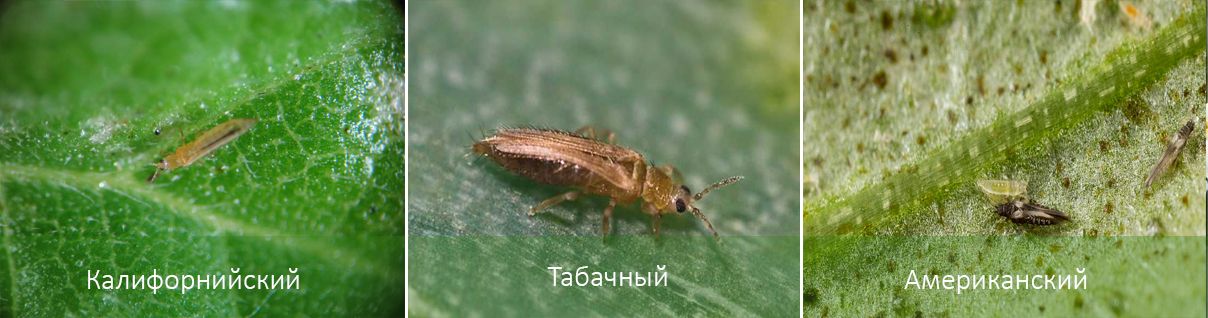
| Californian or Western Floral | One of the largest representatives of this pest, it grows up to 0.2 cm. Its light yellow hue is distinctive; the larvae are much more saturated. It nests on orchid petals and leaves. It thrives at room temperature. | It is a carrier of a tomato virus that is dangerous to the flower and causes leaf discoloration. |
| Tobacco | A widespread species, small in size compared to its relatives (up to 0.1 cm in length). | The larvae are dark in color, while the larvae are light in color. |
| American | It was first encountered relatively recently on a young specimen of Miltonia and Spathoglottis Caractea (hybrid). | Very dangerous. |
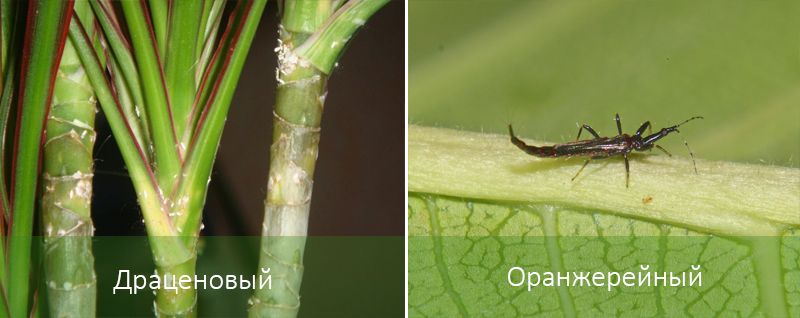
| Dracaena | It grows up to 0.1 cm in length, the body is black and white, and the larvae are transparent. | Favorite place - leaves. |
| Greenhouse (black) | This pest is a standard-sized thrips insect (about 0.1 cm). It has a darker coloration on the front, and there's also a slight contrast between the body and the wings, antennae, and legs, which are slightly lighter in color than those of other species. | Orchids prefer to be placed in partial shade and with soil that practically never dries out. |
| Decorative | They are practically the smallest insects of their kind. The female, larger than the male, rarely reaches more than 0.1 cm in length. | They thrive in warmth and inhabit only indoors. They are unpretentious in their diet, so after ruining an orchid, they can move on to any other plant. Their modest size allows them to lead a relatively open life. |
| Roseanny | A large black specimen growing up to 3 mm in length. | A very fast-growing species, it prefers to nest in flower buds. It's very difficult to detect. It damages the plant, including its immune system, making it vulnerable to fungi and significantly reducing its viability. |
Methods for controlling thrips on orchids
Thrips are most often brought into the home through bouquets or new flowers. Therefore, the most effective method of preventing insect pests is quarantine. Thrips do not tolerate high humidity and intense light, so it's best to provide these conditions for flowers as a preventative measure.
If you notice symptoms on your flower that indicate the presence of a pest insect, you should:
- To prevent the spread of thrips, isolate the affected plant from healthy ones;
- Rinse the orchid with warm water (this measure will significantly reduce the number of insects);
- Apply an infusion of garlic juice, previously poured with 0.5 liters of boiling water and infused for several hours, to the affected areas;
- Destroy any remaining parasites using any of the following methods.
Folk remedies for thrips control
| Means | Preparation | Application |
| Soap solution | Dissolve a small particle of soap in 1/4 liter of water (not cold). | Spray the flower thoroughly with the resulting mixture and rinse off after at least 20 minutes. In rare cases, the solution may damage the plant's appearance, which can occur if its stomata become clogged. If this happens, find an alternative. |
| Tobacco infusion | Mix 1 liter of liquid with 0.1 kg of tobacco dust and pass through a sieve. | Spray the orchid. |
| Marigold decoction | Take 60 grams of florets, chop them, and bring them to a boil in 1 liter of water. Cook over low heat for 1-2 minutes. Cool and let sit for 3 days, then strain through a sieve. | |
| Emulsion | Dissolve 2 tablespoons of sunflower oil in 1 liter of liquid and stir vigorously. | |
| Orange peel infusion | Ingredients:
Mix everything together until finely chopped, add 1 liter of boiling water, and simmer over high heat for 1/4 hour. Strain the resulting mixture through a sieve. |
|
| Celandine decoction | Take 0.5 kg of fresh celandine and brew it in 1 liter of boiling water, then let it sit for 1-2 days. | |
| Dandelion infusion | Brew dandelion root in boiling water and let it steep for several hours, then use. |
Chemical means against thrips
Chemicals are also used to control pests, primarily various insecticides, but their effectiveness against thrips varies greatly. The following examples demonstrate the best results:
| Means | Description | Price (RUB/ml) |
| Aktara | A systemic insecticide with intestinal and contact action based on thiamethoxam. Provides protection for a month. | 40 |
| Confidor | Systemic insecticide based on imidacloprid. | 35 |
| Tanrek | A stomach and contact insecticide. It targets the nervous system of insects of all ages. Its effectiveness lasts from two weeks to a month. | 24 |
Systemic products are preferable because some stages of insect development are not accompanied by any feeding, meaning thrips can easily survive treatment with non-systemic products that act through the intestines. Such products are unlikely to reach the larvae located inside the leaf tissue.
Biological remedies against thrips
Such products are used relatively rarely, but their effectiveness is higher because insects do not develop tolerance to biological substances. The following samples demonstrate the best results:
| Means | Preparation | Price |
| Vertimek | Dissolve 5 ml of the product in 10 liters of water. After treatment, cover the plants with a plastic bag for 24 hours. Controls thrips in 2-3 treatments. |
45 rubles for 2 ml |
| Spintor | A new generation insecticide. Be sure to follow the instructions. It works quickly.
Guaranteed to destroy thrips in 2 treatments with an interval of 5 days. |
51 rubles per 1 ml |
| Fitoverm | A popular product. Dissolve 5 ml of the product in 0.5 liters of water. Spray and cover with plastic. Remove the plastic after a day.
Controls thrips in 3 treatments with an interval of 4-5 days. |
65 rubles for 10 ml |
It's worth noting that thrips can hide in the soil. In this case, spraying won't have any effect on them. Watering the soil with biological products will have no effect.
You can eliminate insect pests by using Entonem-F. It contains a concentrate of live nematodes that destroy adult thrips, larvae, and even their eggs.
Top.tomathouse.com's advice on controlling thrips on orchids
It's difficult to get rid of thrips that have already been introduced into an orchidarium. The best approach in this case is to apply two insecticides sequentially. The products should have different active ingredients. For example, use Aktara first, then Confidor. Allow at least seven days between applications.