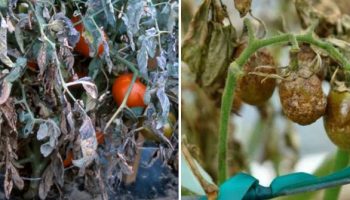
Not only various diseases but also pests can ruin the appearance of a lawn. These include not only insects but also animals and birds. Let's look at the most common ones and methods for preventing their negative impact on your lawn.
Content
Earthworms
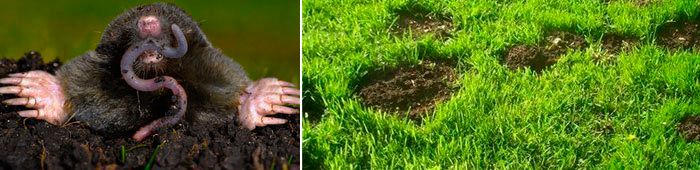
Earthworms are believed to be beneficial to the soil. They burrow through it, promoting drainage. However, some species significantly spoil the appearance of the lawn with their waste products. Furthermore, worms attract another pest: moles.
To prevent their appearance, remove plant debris after mowing. If worms do appear on the plot, mulch the soil with peat.
Mole
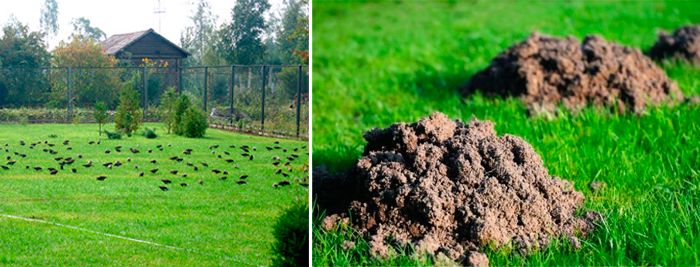
This animal can reach 10-15 cm in length and has a velvety skin. In search of food (insects and larvae), it digs into the soil with its long-clawed front paws. Moles are predators, but when digging, they damage the root system of plants. Furthermore, the piles thrown to the surface spoil the aesthetic appearance of the lawn. The tunnels made by moles can become a haven for rodents.
To get rid of an unwanted guest, you need to do the following:
- place special devices on the site - mole traps;
- destroy underground passages;
- install whirligigs whose sound will scare away moles;
- Put tar in the holes, animals can't stand the smell.
If the above steps do not produce results, you can call in specialists to get rid of the pests.
Cereal mite
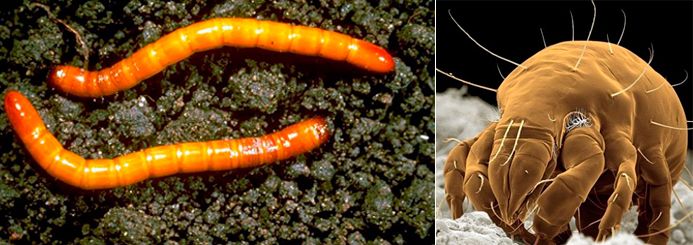
This insect has an elongated, soft pink body and bristles. It overwinters at the base of leaves, in plant debris. After warmer weather, it migrates to young shoots and begins its life cycle there. It attacks cereal plants. The presence of the pest can be identified by slow or stunted grass growth and an unusual pale coloration of the greenery.
To prevent insect infestations, remove plant debris and debris from the area in early spring. It's also important to mow the lawn regularly.
Wireworm
Adults are dark or brown in color. However, their yellow or brown larvae cause more damage. They live in the substrate and feed on seeds or grass roots. As a result, plants die. To prevent insect infestations, it's important to apply nutrient mixtures promptly, perform deep cultivation, and treat the seeds before sowing.
Grass moth
This is a grayish-yellow butterfly. Its caterpillars, which are ashen in color and have stripes on their backs and sides, cause damage. They feed on young shoots, causing the plants to die.
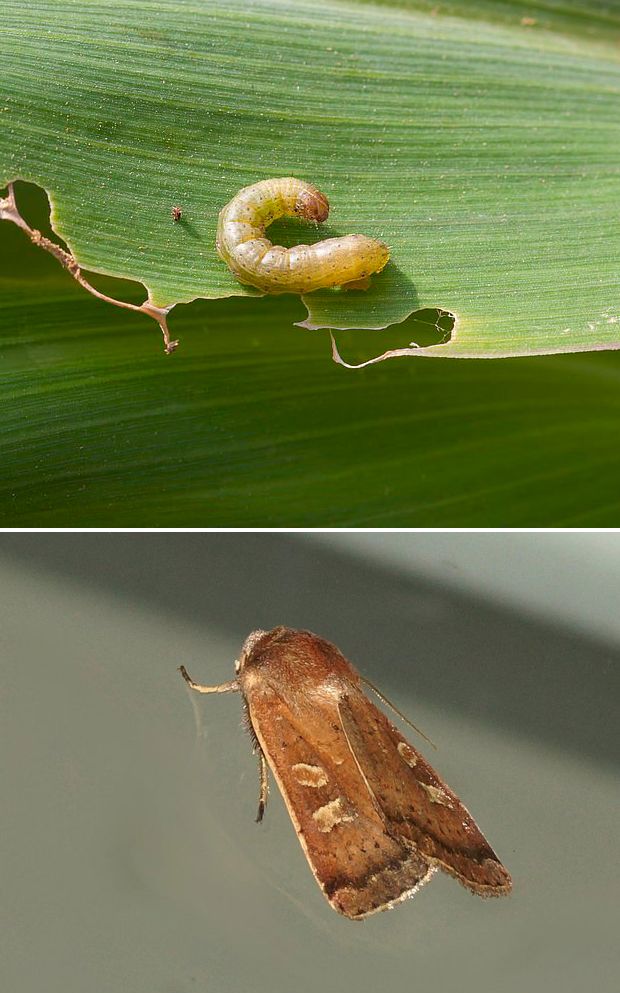
To prevent pests from eating your lawn, you need to fertilize it regularly and follow watering guidelines. It's also important to mow it low periodically and remove the clippings afterward.
Mole cricket
A dangerous pest, it has wings, so it flies from one place to another. It prefers soil fertilized with manure. This insect uses its strong legs to dig tunnels, eating the roots of plants, causing their death. It lays eggs in these tunnels.
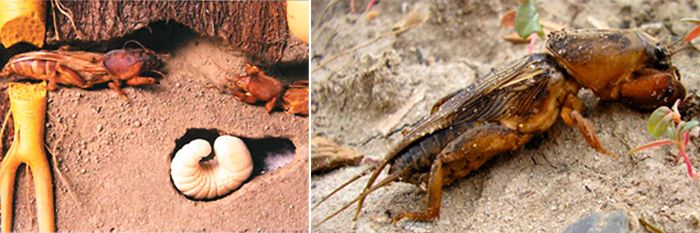
Sometimes the mole cricket emerges to the surface, leaving holes in the lawn. To kill this pest, insecticides such as Fufanon and Regent are used. After applying the insecticides, be sure to water the lawn to ensure the insecticides penetrate the soil. It is not recommended to walk on the treated grass for six months.
Swedish fly
These are small flying insects with a dark body and a yellowish abdomen. Their larvae damage lawns by feeding on shoots at the base. They overwinter in the hollows of the stems. To prevent these insects from infesting your property, seed the lawn in early spring and at the end of the season, collect and burn dead grass. It's also essential to mow the grass several times throughout the summer and remove any debris.
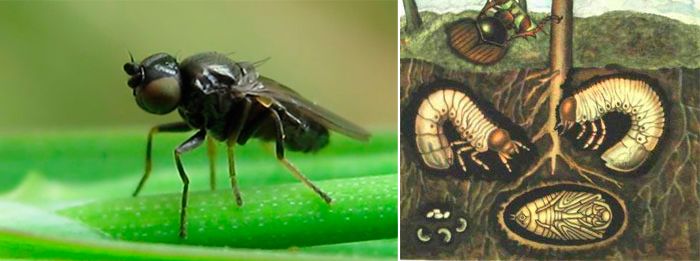
May beetle larvae
Flat, arched in shape. They are very voracious and consume large quantities of plant roots. They prefer sandy soils and become active in late May-June. Pests can be identified by a brownish tint to the green foliage and the ability to easily pull grass from the substrate.
During insect activity, the lawn should be rolled with a specialized roller. This will kill most of the larvae. In severe infestations, it's advisable to use chemical insecticides.
Mouse-like rodents
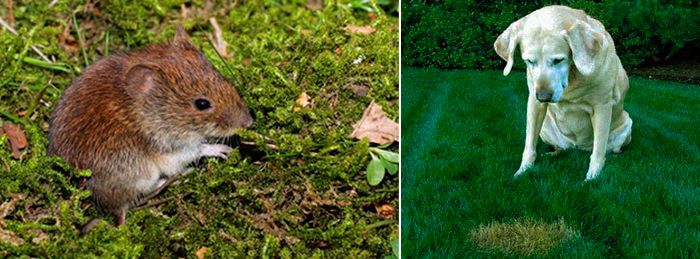
This group of pests includes voles, house mice, and shrews. These rodents inhabit fields, greenhouses, hotbeds, and garden plots. They create burrows up to 0.3 meters deep in the ground, interconnecting and with multiple exits to the surface. Some cavities are used for storing food, while others serve as shelter. Their populations grow rapidly, and rodents carry a huge number of diseases.
Pests are controlled with specialized baits—rodenticides. However, this method of control is harmful to the environment and can harm pets.
Pets (dogs and cats)
Animals running across the lawn trample it. Their excrement can also corrode the lawn, causing spots and bald spots. To prevent pets from damaging your lawn, you should:
- do not let them run around on it, allocate a separate area for walking;
- If the previous recommendation cannot be followed for any reason, water regularly, especially in damaged areas;
- If the grass is still damaged, remove that part of the lawn and reseed.
To avoid problems with pets, they should be taught from childhood that running on the lawn is not allowed.
Birds
Birds damage immature crops. They aren't interested in the plants themselves; they're attracted to the area by the seeds and insect larvae. To prevent birds from damaging the grass, string black threads over the area after sowing. Remove them once the seedlings have established themselves.
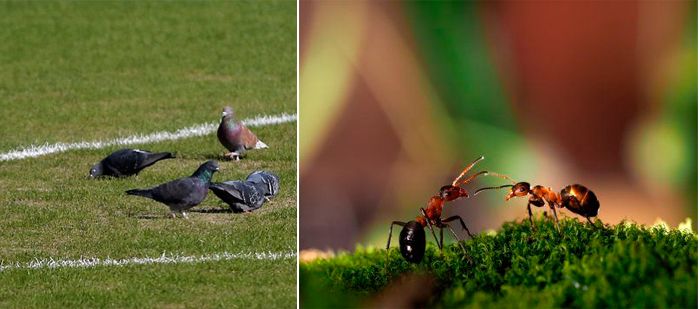
Ants
They pose no threat to the plants themselves. They are harmful because they build nests in the middle of the lawn, which spoils the appearance of the surrounding area. If an ant nest is discovered, it should be destroyed and treated with insecticides. While this method isn't entirely humane, it is the most effective.
It's much easier to prevent the negative impact of pests on your lawn than to spend a long time trying to fix the problem. To reduce the likelihood of unwanted guests appearing on your property, clear the area of plant debris and rubbish before winter and in early spring, and mow, water, and fertilize it regularly. The main cause of insect infestations is poor lawn care, and beetles and caterpillars, in turn, attract birds and animals.