Grape pests are a serious problem for gardeners. They damage every part of the vine. Severe infestations weaken the plant, leading to various infections that eventually lead to the death of the crop. To preserve your harvest, you need to know which pests pose the greatest threat and how to prevent or eliminate them.
Phylloxera
In case of widespread spread, quarantine zones are established, as they can destroy hectares of crops. It is also known as grape aphid, as it resembles this insect.
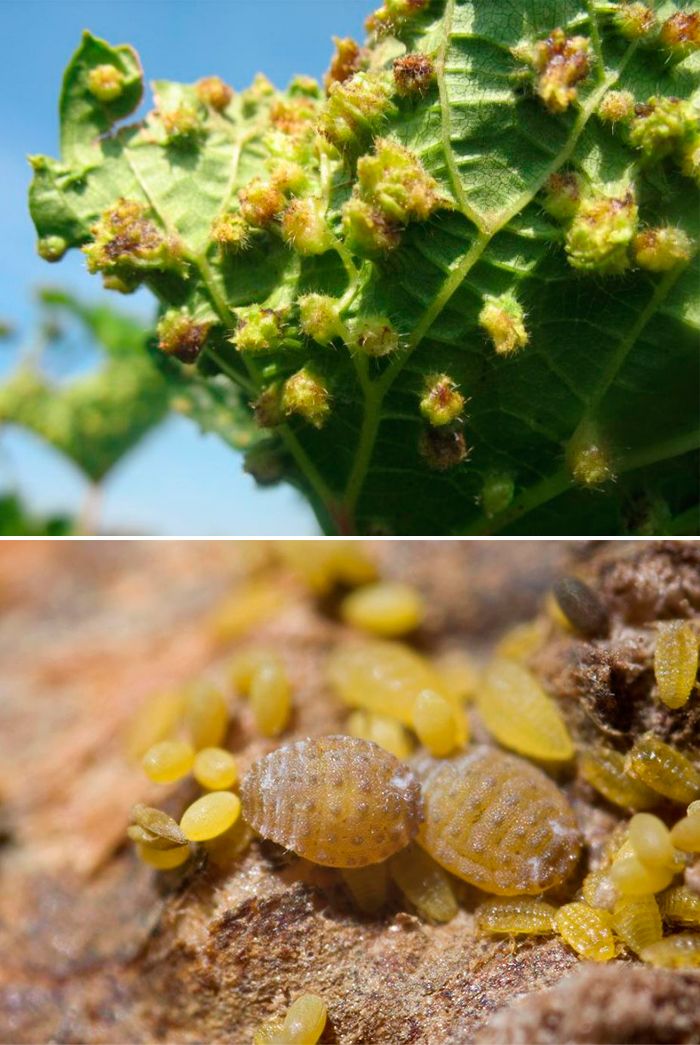
All biological forms of phylloxera pose a threat to crops: larvae (vagrants), nymphs, winged and flightless adults.
It is difficult to detect grape aphids on a tree with the naked eye.
The translucent yellow-lemon or greenish insect is 1-2.5 mm in size.
There are 2 varieties:
- Leaf phylloxera: The larvae pierce the leaves with their proboscis and suck out the sap. A special secretion in the parasite's saliva causes the foliage to become deformed, and galls (swellings and bumps) surrounded by hairs appear. The larvae live inside these growths, metamorphose into adults, reproduce, and die. The new larvae infest adjacent leaves. This species of phylloxera overwinters on tree trunks and in perennial branches as eggs.
- Root damage affects the underground system. It weakens, and fungal, viral, and bacterial infections develop. Diseased roots stop developing, and the tree eventually dies.
Insects are difficult to eradicate, but not impossible. Control involves:
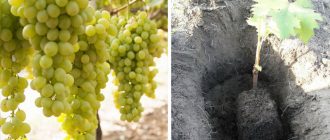
- Deep planting, cutting off the upper roots.
- Pre-planting treatment: Bi-58, Karbofos, Fufanon. Seedlings are placed in a solution of the preparations and then kept in plastic bags for 24 hours.
- Treatment with Fastak and Actellic (twice during the growing season). The first treatment is carried out when the buds open at the 2-3 leaf stage. The procedure is repeated in July.
Treatment is carried out according to the scheme described in the annotation to the drug.
The pest enters through wind, water, animals and birds, through garden tools, and with infected seedlings.
Ticks
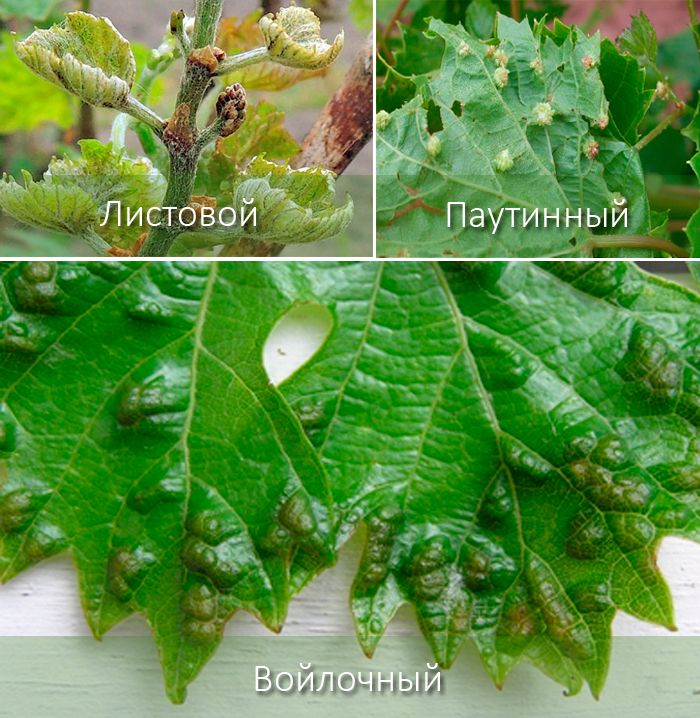
There are several types of mites that affect fruit trees, their description:
- The grapevine spider mite is a yellowish-grass-colored arthropod insect, 0.4-0.6 mm in size. It thrives at temperatures above 15°C (59°F) that persist for several days. Within a week, it begins to destroy foliage. Spider mites are virtually undetectable. Infestations are identified by a whitish-canary-colored coating and lighter spots on the foliage. The leaves dry out, and the plant dies.
- Felt - 0.2 mm. Sunken spots covered with snow-white fluff form on the greenery. They turn brown and bumpy. This leads to stunted development of bunches, greenery, shoots, and tendrils. The grapevine soon dies. The mite spreads through seedlings and neighboring vines.
- Grape leaf mold—no more than 0.15 mm. In winter, it feeds on buds, causing damage. Weakened and twisted shoots emerge, often mistaken for frost damage. Due to damage, the leaves become wrinkled and deformed, appearing as if they were cut with a blade.
What can be used for treatment, the most effective methods:
- Before bud swelling, treat with a 5% lime-sulfur solution strictly according to the instructions.
- If symptoms are detected, spray the foliage with Bi-58, Actellic, Neoron, or Omite. Repeat treatment two to three times, spaced 1.5 to 2 weeks apart.
- Throughout the growing season, spray the trees with a 2% solution of Fozalon and Karate.
To prevent this, pull out weeds, burn plant debris in the fall and diseased planting material.
Leaf rollers
Grapes are affected by 3 varieties of this insect pest:
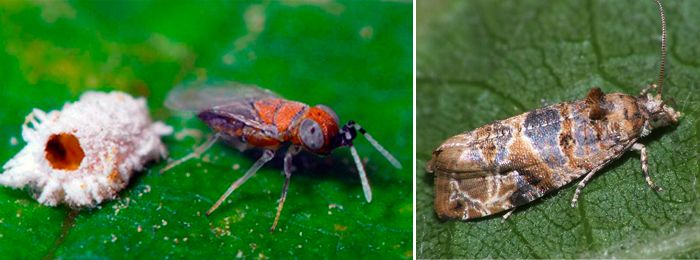
The grape leaf roller is a small moth with a wingspan of 2-3 cm. It is dark brown with a coppery sheen and features two oblique, almost black stripes. The caterpillars change color from green to brown. They begin feeding during bud swelling, first feeding on the buds, then moving on to other parts of the plant. Their natural enemy is extreme heat.
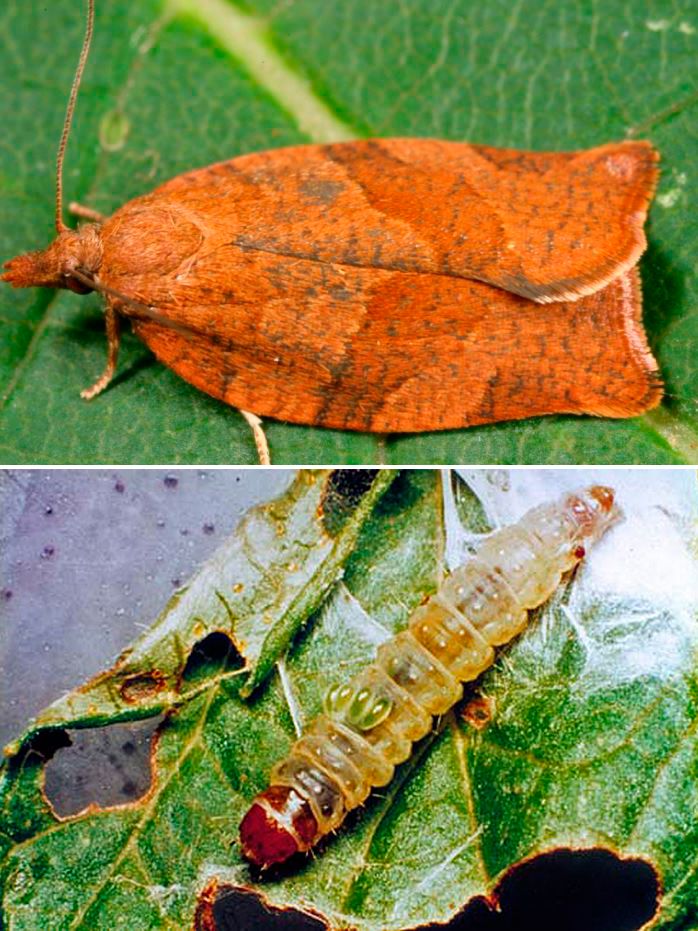
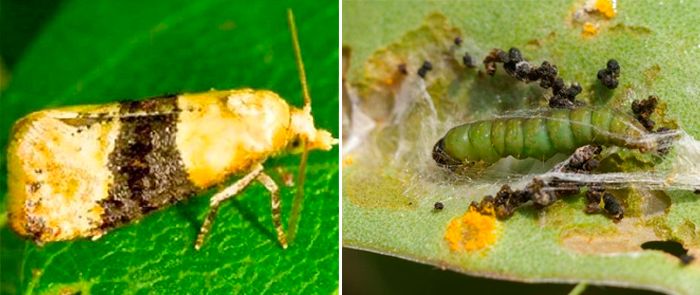
The biennial leaf roller is 12-15 mm long. Its wings are light lemon with a dark brown trapezoidal stripe. The caterpillars have a black head, and their body color varies from a soft grassy green to scarlet. They feed on ovaries and flowers, then move on to the fruits. This species of leaf roller can destroy up to 80% of a crop over the summer.
The grape moth has brownish-olive wings with a variegated pattern. The wingspan is up to 1-1.3 cm. The caterpillars are a delicate emerald green, voracious, and move quickly. They consume all parts of the bush. They can be detected by their sticky web.
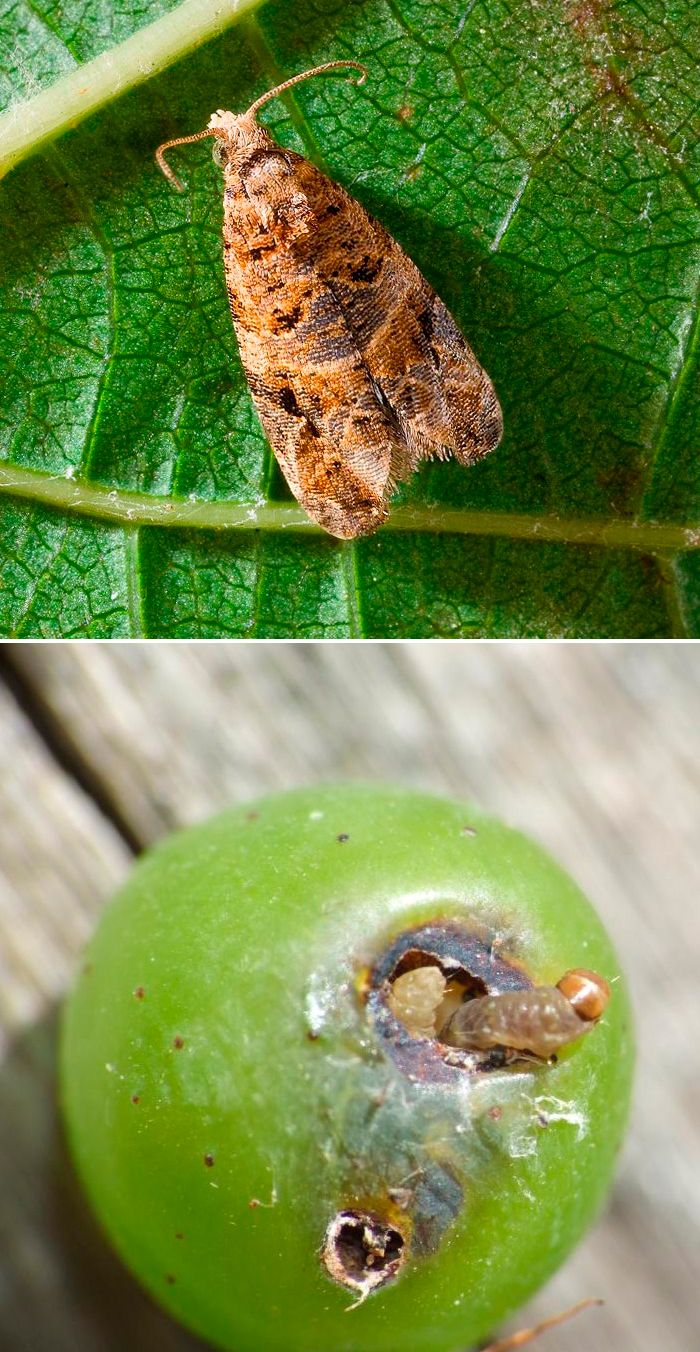
Treatment of grapes against these pests can be carried out:
- Tokutionm. Trees are treated four times during the growing season. The emulsion for spraying is diluted at a rate of 0.6-2 l/ha. This product is also harmful to beneficial insects (ladybugs, wasps, etc.).
- Cymbush. Available in 10% and 25% concentrations. Doses: 0.7-0.9 l/ha (10%) and 0.26-0.4 l/ha (25%). Apply three times per season.
- Ecomet. Application rate: 1.5-2 l/ha. Apply five times per season, the last time 40-45 days before berry ripening.
Any preparations cannot be used during the flowering period.
Woodworm
This is a nocturnal moth from the woodworm family. This large, dark gray or brown moth has a wingspan of 6.5-9 cm. Its wings are covered with numerous black dots and streaks. The caterpillars overwinter in tunnels made in perennial shoots. In the spring, they burrow deeply into the wood, damaging it. The bark dies, and sap containing the pest's excrement flows from the holes. The insects pupate in May, and the moth's flight begins in early June. The female can lay up to 800 eggs. The caterpillars are pinkish-red and have a distinctive odor.
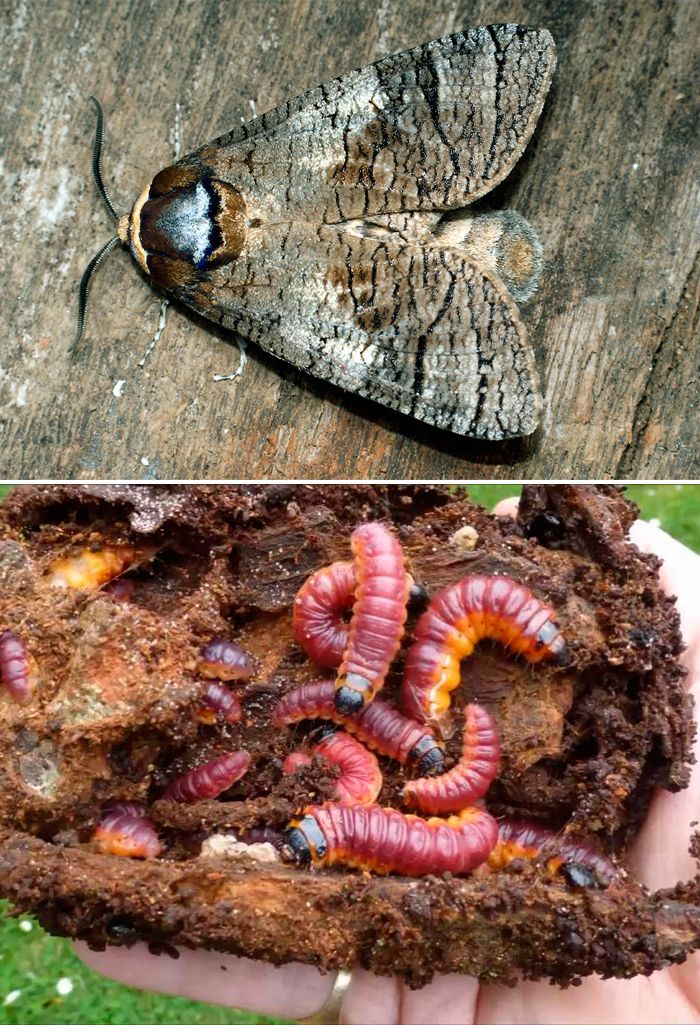
To prevent insect infestation, the following measures should be taken:
- treating damaged bark with garden pitch;
- coating tree trunks with a mixture of clay and casein glue (200 g per bucket), Karbofos (90 g per 10 l);
- whitewashing tree trunks with Zashchit emulsion or water-based paint before wintering;
- timely removal of damaged and dry branches and peeling bark.
If a pest does appear on trees, the following preparations will help to deal with it:
- Bitoxybacillin (60 g per 10 l of water);
- Lepidocide (25 g per bucket);
- Fitoverm (20 ml per 10 l).
To help kill insects, you can attract natural feathered enemies to your garden.
Marbled beetle
This is a large brown beetle with marbled elytra, up to 7-8 cm in length. The larvae burrow deep into the soil for the winter.
After the weather warms and the snow melts, they emerge and feed on the rhizomes. They are distinguished by their white bodies and black heads, as well as their well-developed jaws. Just two individuals can destroy an entire one-year-old grapevine in a single season.
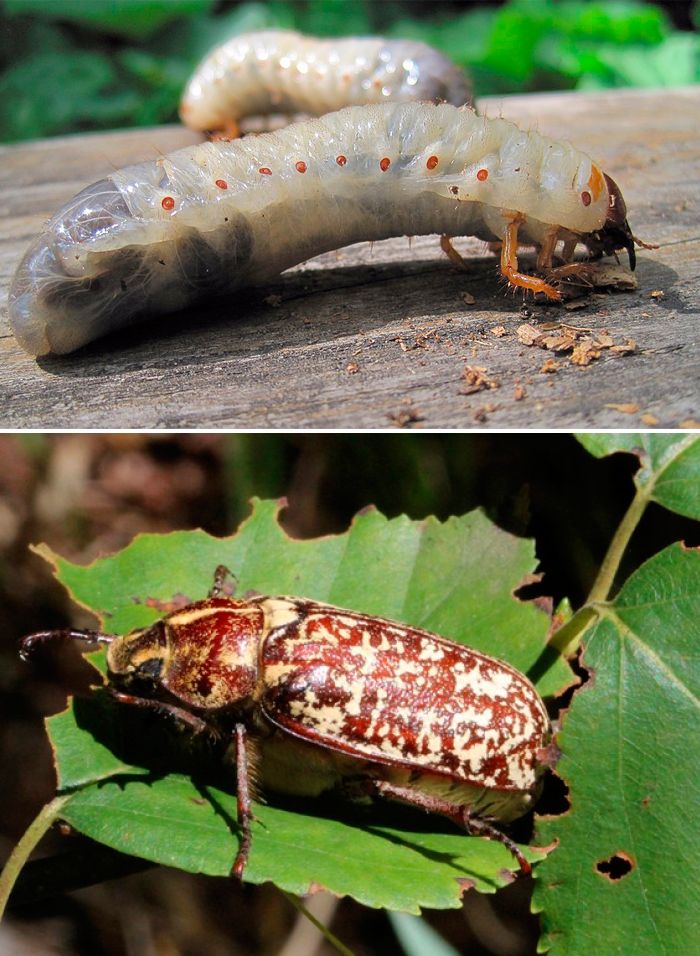
To reduce the beetle population, they need to be collected by hand. Store-bought products such as Grom-2, Bazudin, and Diazinon have proven effective as control methods.
Mealybug
If the grapes appear drooping and covered in white fluff, they're under attack from mealybugs. When infested, the leaves and bunches dry out and lose their marketable appearance.
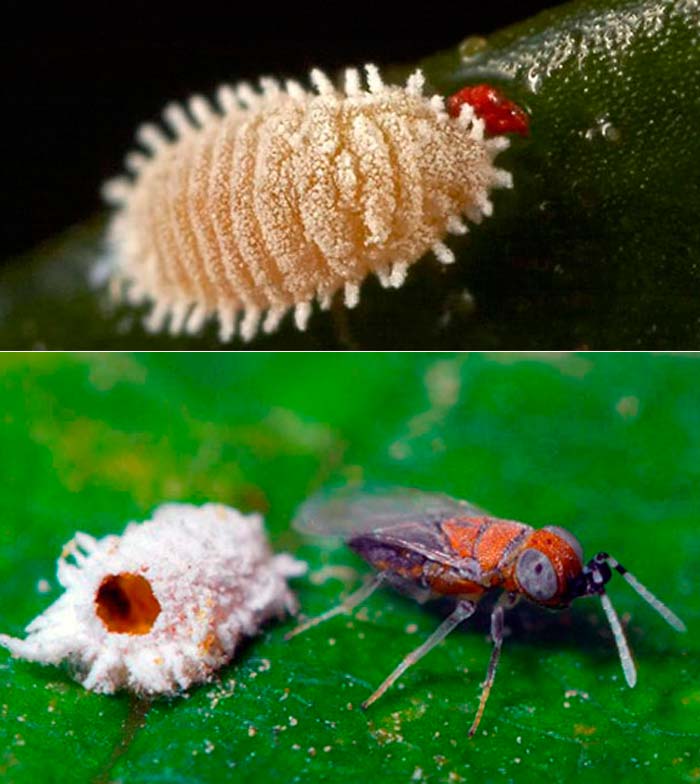
When the scale insect appears, the old bark should be scraped off and burned. When the pest population is large, the following products will help: Aktara, Actellic, Iskra Zolotaya, and Confidor. Treatment should begin as early as early May, when the female scale insects lay their eggs.
Fight the ants that carry this pest. For example, pour boiling water over the anthill.
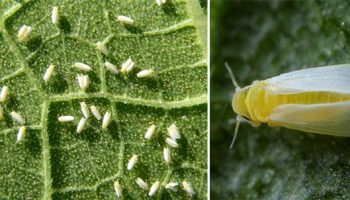
In conclusion, I'd like to add that whiteflies and leafhoppers can also attack grapes, but less frequently than the pests listed above. Biopreparations such as Aktara, Akarin, and Iskra can help combat these pests.
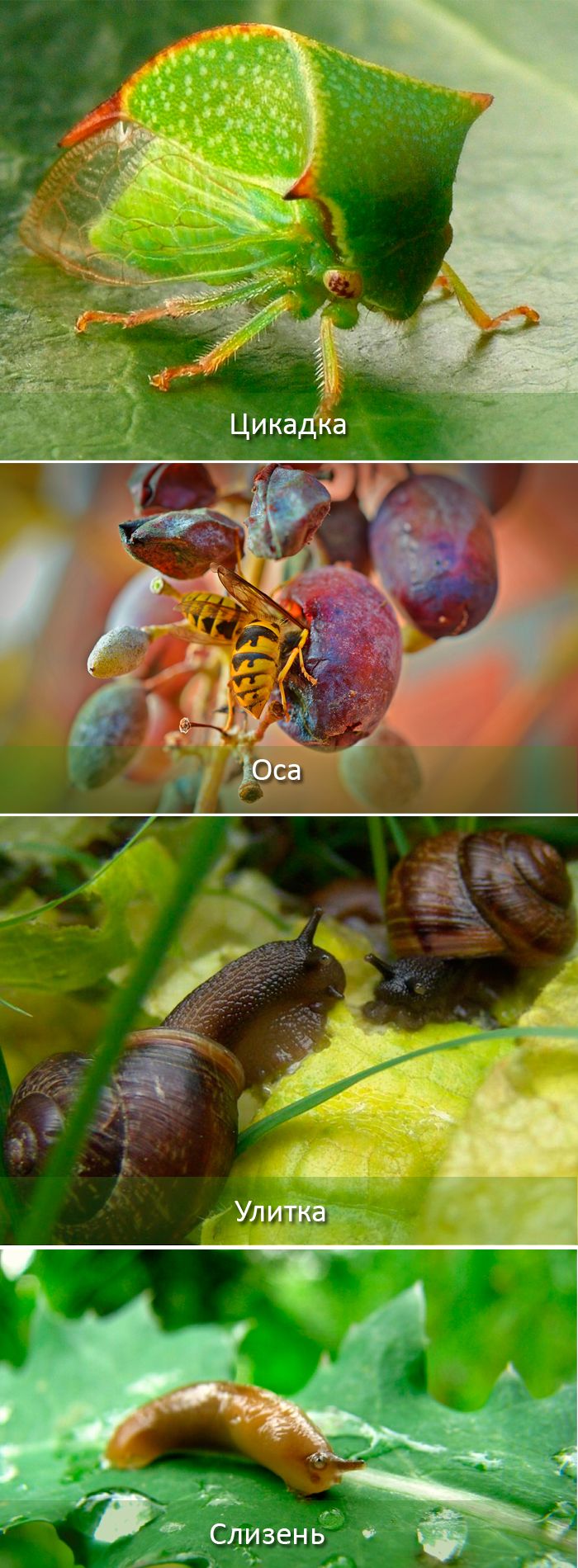
High humidity can lead to snails or slugs appearing. Mechanical collection and sprinkling with table salt will help.
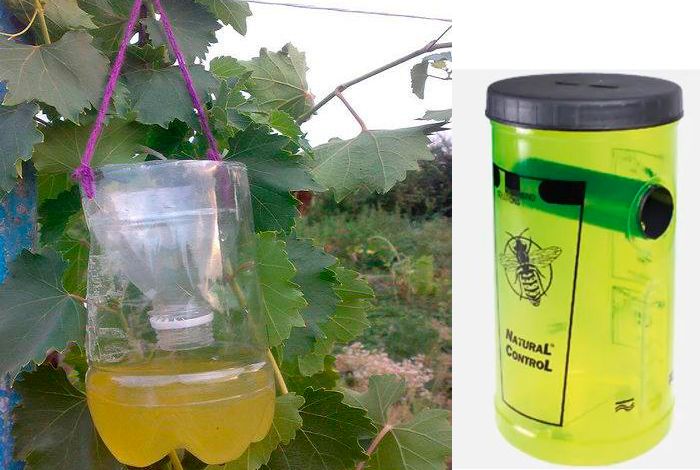
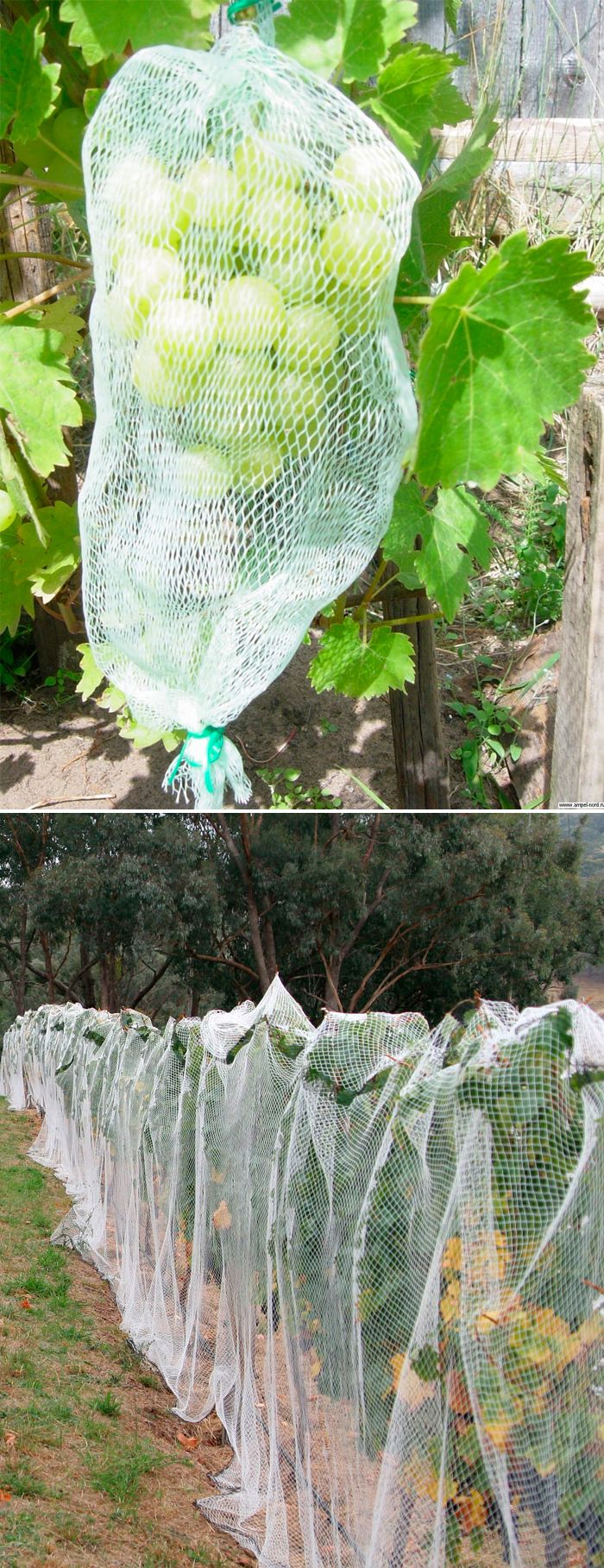
It's also worth mentioning wasps and birds, which act as pollinators during grape blossoming and as destructive pests once the fruit is ripening. To control wasps, traps and nets are used to prevent the birds from reaching the grapes.
Any pest, if present in large numbers, can destroy a huge amount of crops. Therefore, prevention, timely detection, and eradication of harmful insects are crucial.