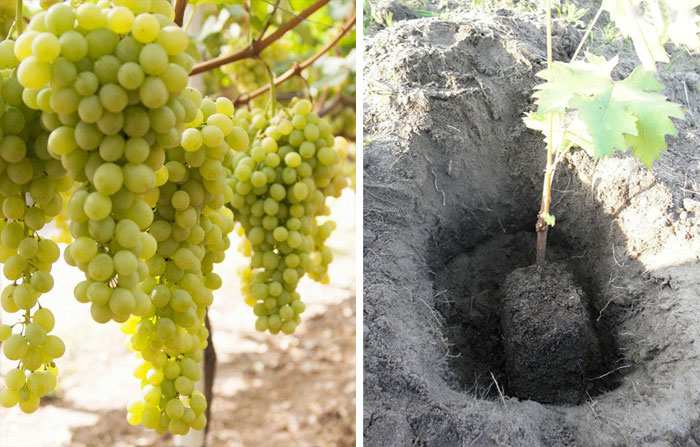
In this article, we'll discuss how to properly plant grapes in the fall, providing step-by-step instructions and tips. We'll also discuss the varieties you're sure to enjoy.
Content
- 1 When is the best time to plant grapes: in spring or autumn?
- 2 Pros and cons of planting grapes in the fall
- 3 Timing of autumn planting of grapes
- 4 Planting grapes in the fall with seedlings: step-by-step instructions
- 5 Planting grapes with cuttings in autumn
- 6 Features of planting grapes with cuttings in autumn
- 7 Planting grapes using layering
- 8 Planting grapes in a greenhouse
- 9 Protecting autumn grape plantings in open ground during winter
- 10 Top.tomathouse.com warns: mistakes to avoid when planting grapes in the fall
When is the best time to plant grapes: in spring or autumn?
Planting grapes is possible in both fall and spring. The only thing that matters is the planting method. In spring, propagating grapes from cuttings is acceptable, as the entire warm season is still ahead, giving them ample time to take root and adapt. In fall, however, the situation is different. Only seedlings with a well-developed root system will survive the winter and establish roots before the first frost (unless they're growing in the south).
Pros and cons of planting grapes in the fall
Planting grapes in the fall has a number of advantages:
- In September and October, a huge selection of fresh seedlings of various varieties appears at garden markets, so you can choose exactly the grapes you want, and not just the ones left over, as happens in the spring.
- Seedlings planted in the fall take root better, and with the onset of warm weather, they begin to grow more actively than their spring counterparts due to their more powerful root system.
- In autumn, the soil is better prepared for planting, and most pests have already moderated their activity.
- At the end of the season, gardeners have more free time, so planting grapes during this period is more appropriate.
The following disadvantages can be highlighted:
- In a warm autumn, grapes can mistakenly begin to develop, producing buds. This will negatively impact the plant's immunity and reduce yield.
- There is a possibility that the seedlings will die from frost, so it is necessary to think through a system for covering them.
- A sudden cold snap can prevent normal rooting of grapes.
Timing of autumn planting of grapes
The timing of autumn grape planting depends entirely on the region and its weather conditions.
General rules for determining the correct term
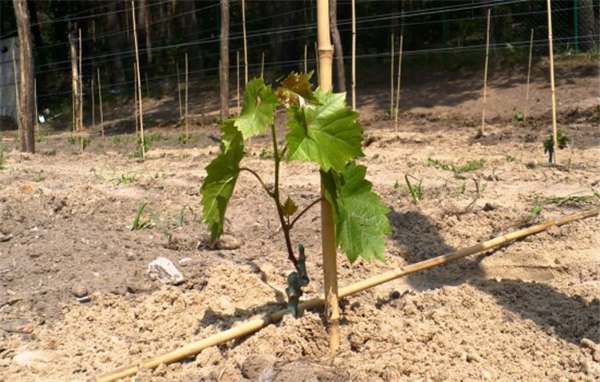
For central Russia, the optimal time for autumn grape planting is considered to be late September to early October. By this time, the vines have matured sufficiently, and the leaves have typically already fallen. Any remaining foliage should be removed from the shoots manually.
The optimal air temperature for planting grapes is +10 °C.
If this figure is significantly higher, there is a risk that the plant will begin to form buds, which can have serious consequences for future yields in winter.
If the planting period is delayed, night frosts may occur, which will also have a detrimental effect on the grapes.
Autumn grape planting dates by region
| Region | Planting time |
| Crimea, Kuban and other southern regions | Mid-October – mid-November |
| Moscow region and central Russia | From the first to the third ten days of October |
| Leningrad Oblast | Late August – early September |
| Ural and Siberian regions | The first ten days of September |
When to plant grapes in the fall according to the 2021 lunar calendar
Many gardeners try to adhere to the recommendations of the Lunar Calendar, as the influence of the Earth's satellite on plantings has long been proven in practice.

According to the lunar calendar, the following days will be favorable for autumn grape planting in 2021:
- August 27-29;
- 8-10, 19-28 September;
- 1-5, 8-11, 21-25, 31 October.
- November 1-3.
Of course, the weather may not always be good on the specified dates, or the weekend may not fall on the desired date, making it impossible to visit the garden. In such cases, planting can be done on any other day. However, it's advisable to avoid unfavorable days, such as the Full Moon, New Moon, and the Moon in Aquarius.
All unfavorable dates in the Lunar Calendar 2021 are listed below:
- 8, 20, 21, 22 August.
- September 6, 7, 16, 17, 21.
- October 6, 7, 14, 15, 20, 21.
- November 4, 5, 10, 11, 19.
Planting grapes in the fall with seedlings: step-by-step instructions
Let's look at planting grapes from seedlings step by step. Let's start with the variety.
Selecting a variety
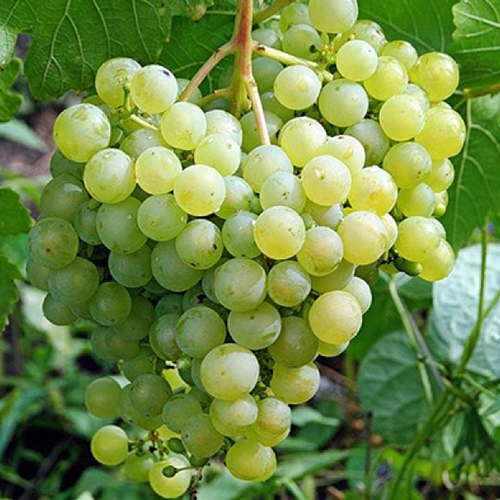
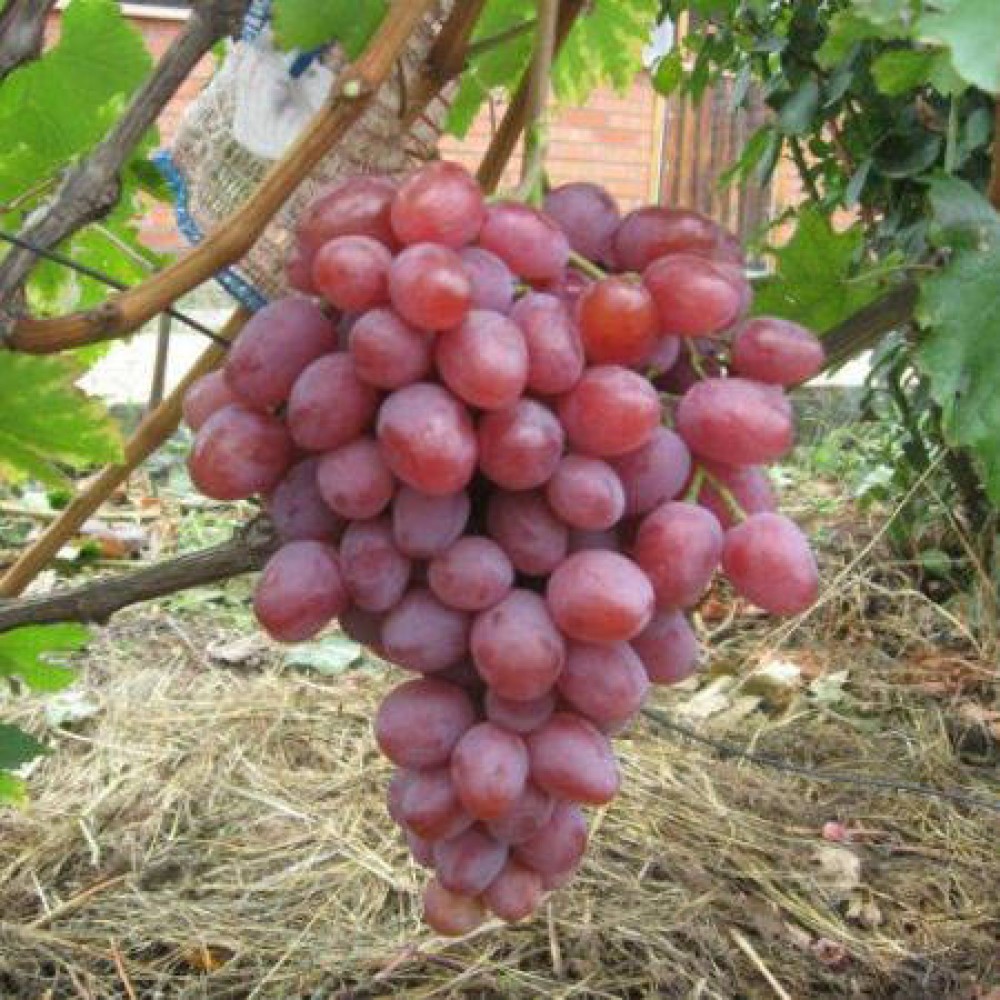
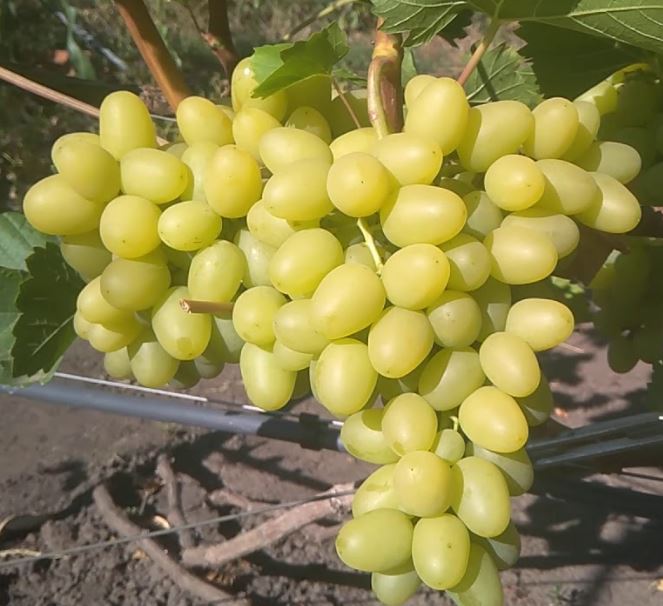
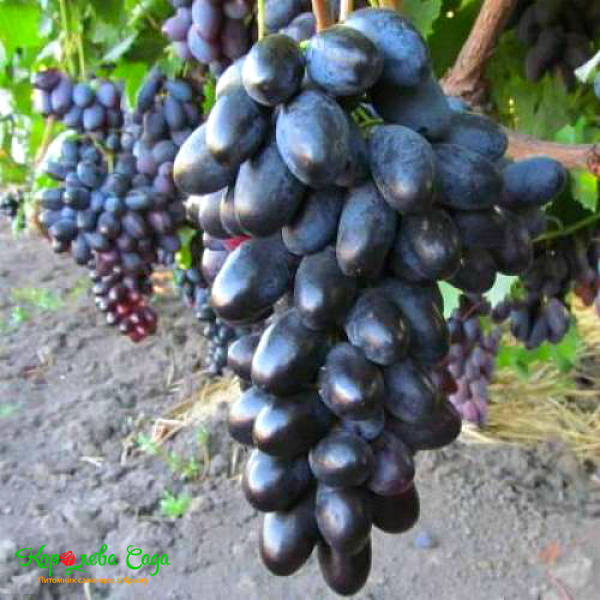
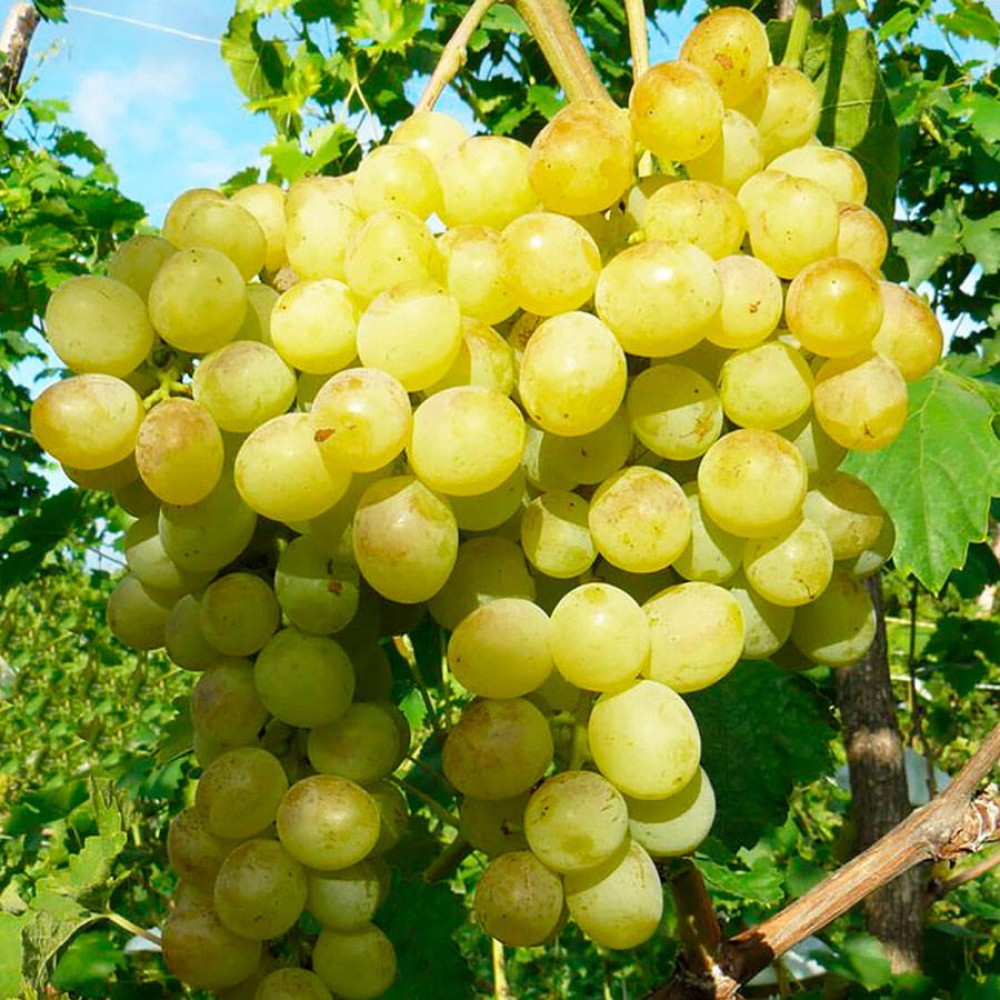
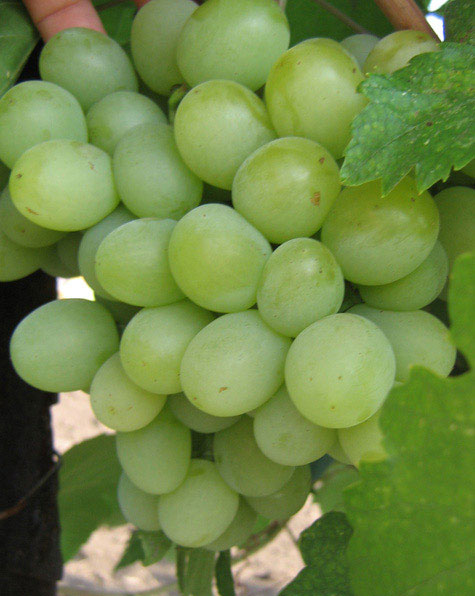
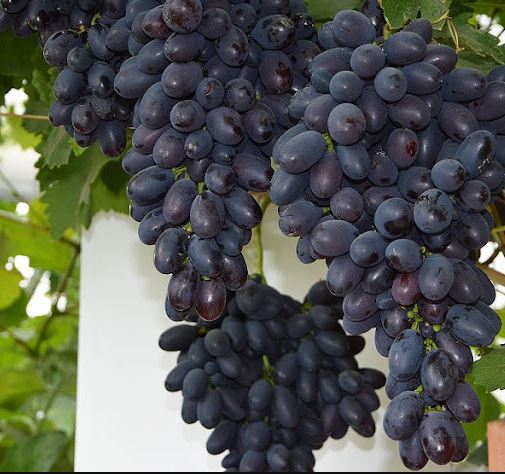
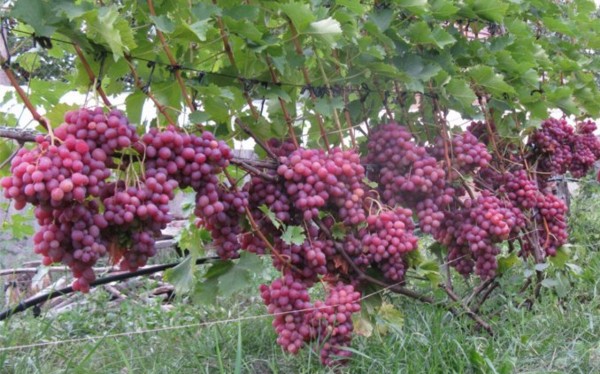
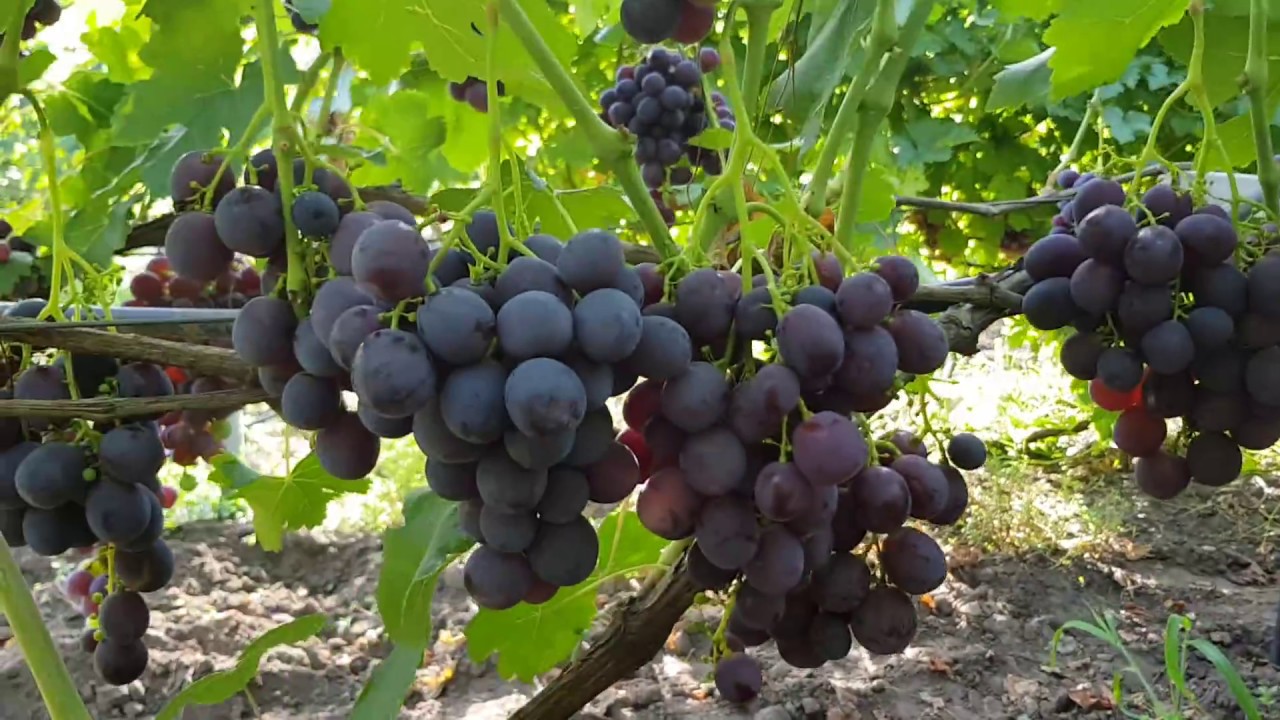
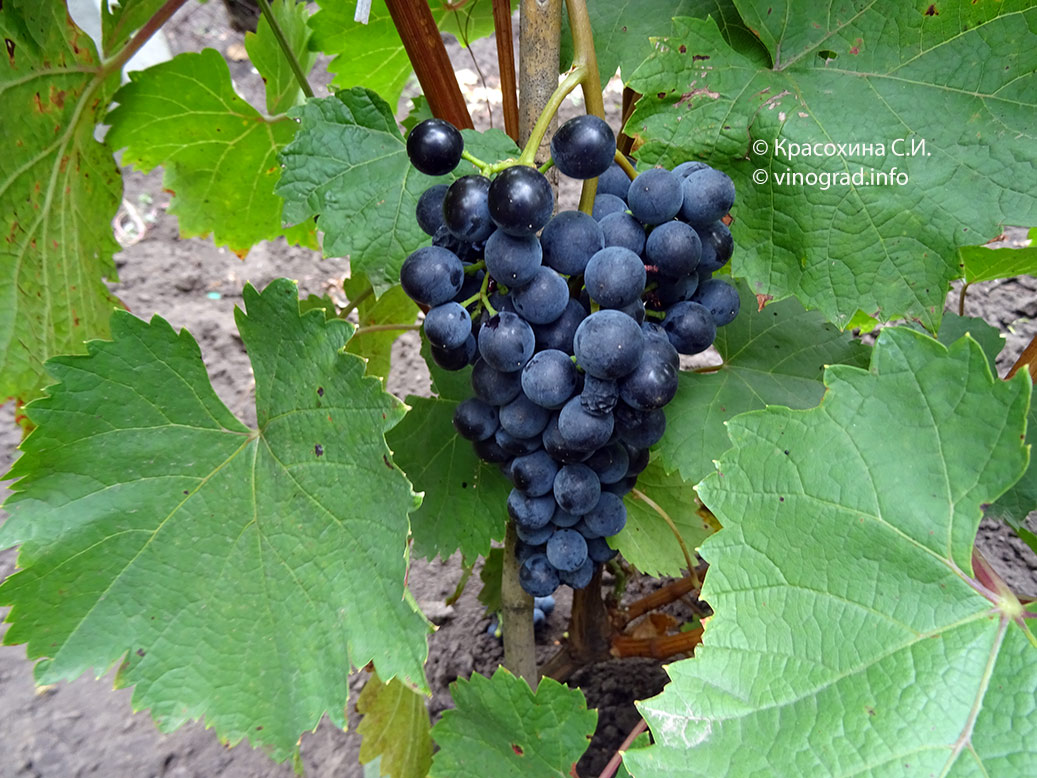
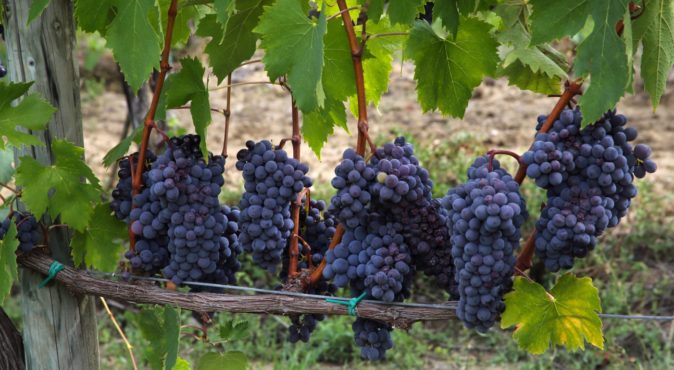
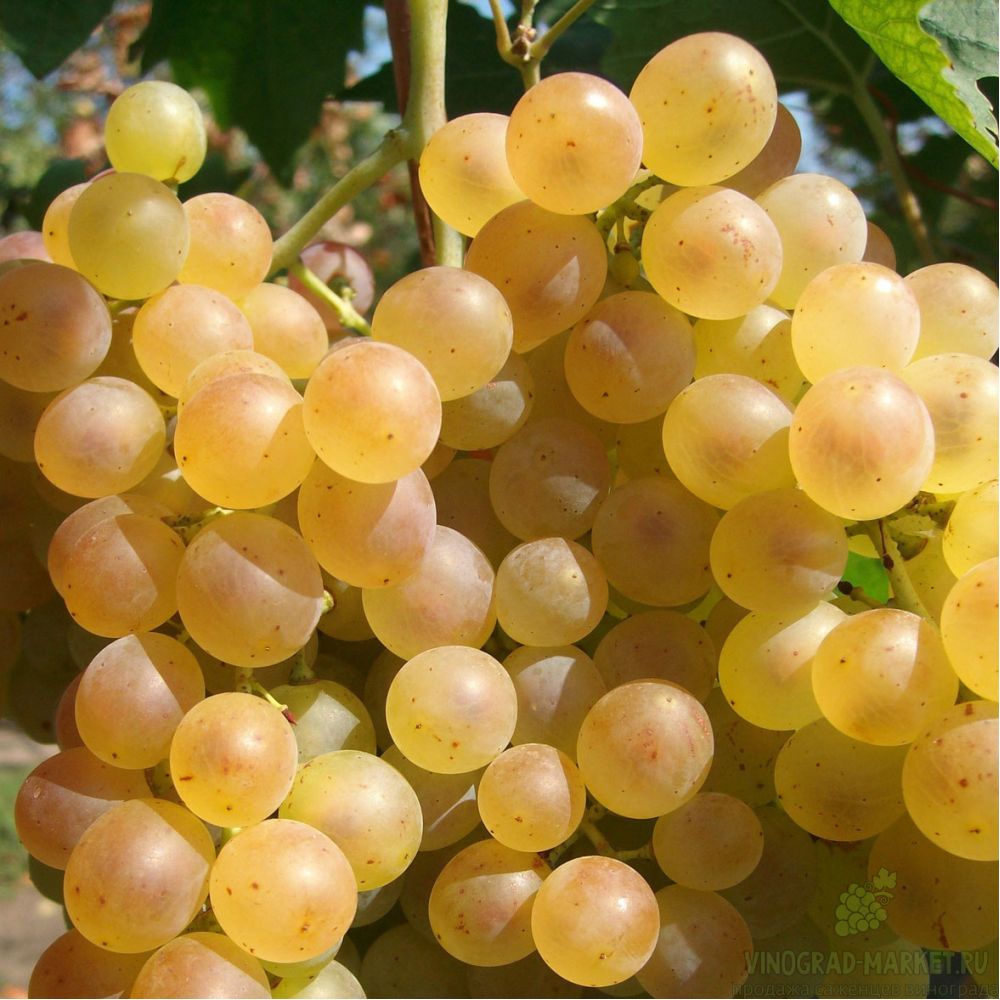
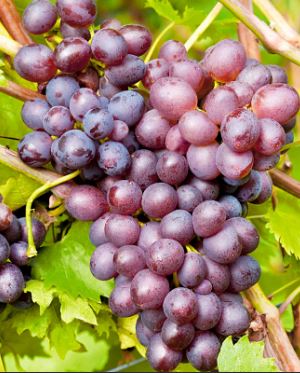
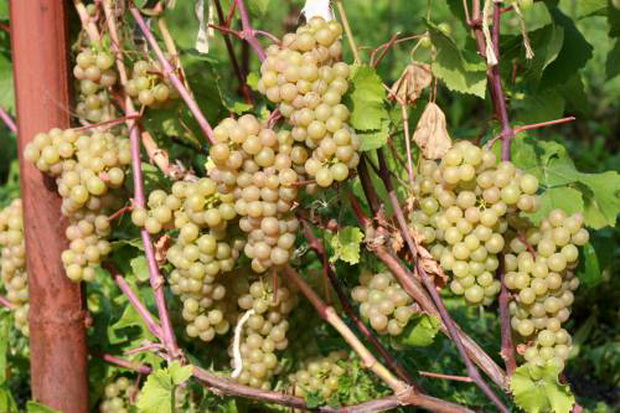
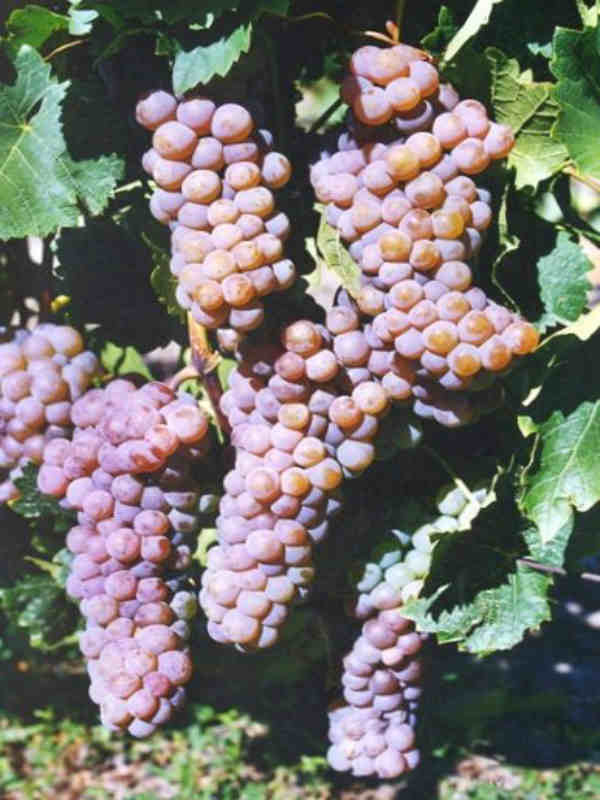
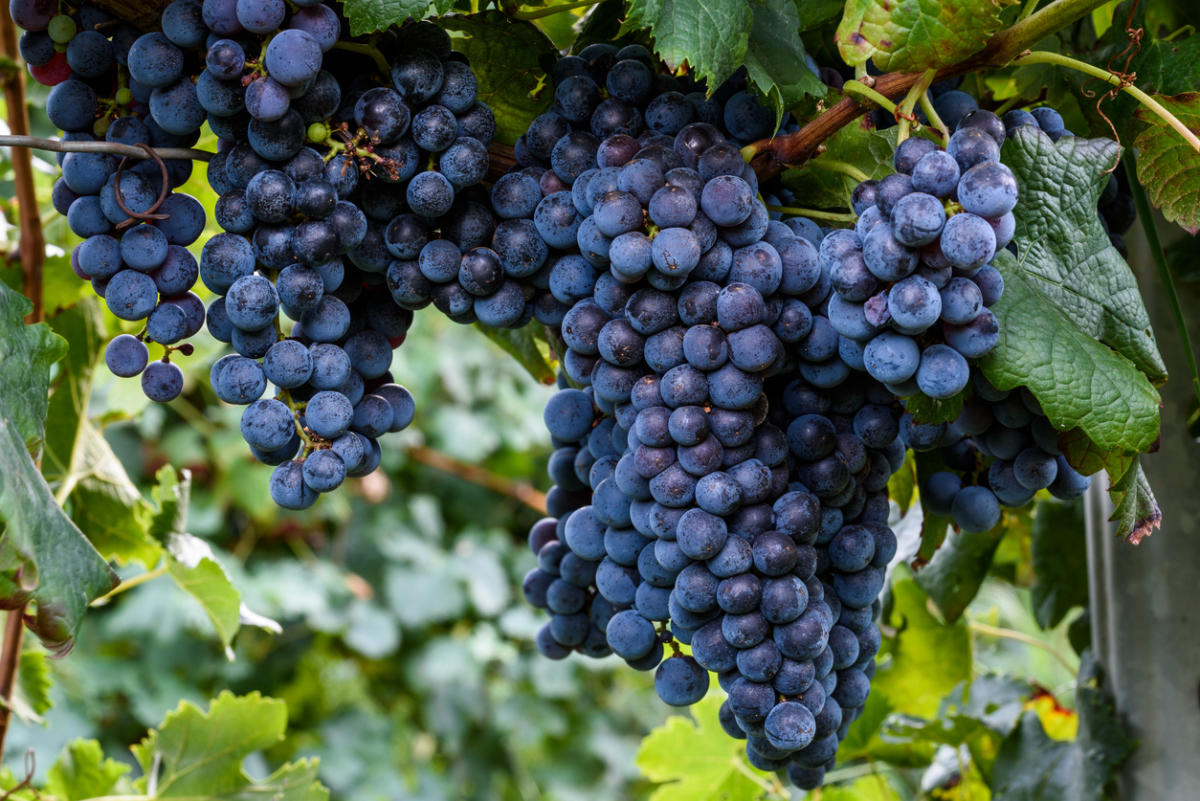
Today, there are a huge number of different grape varieties. The most common and popular ones are presented in the table.
| Variety | Type, characteristics | Advantages | Flaws |
| Alyosha
|
Canteen.
A vigorous bush with large, loose clusters. The berries are juicy, sweet, amber-colored, and have firm skin. Ripens in 110-115 days, yielding up to 10 kg per bush. Pruning to 8-10 buds is recommended. Tolerates temperatures down to -24°C. |
High yield. Pleasant taste. Bisexual flowers. Good rooting. |
Susceptible to fungi.
Needs to be standardized at the rate of 1 brush per shoot. Prone to pea-like growth. |
| Anyuta
|
Canteen.
A hybrid variety with tall shoots and large clusters weighing from 700 to 1500 g. The berries are dark pink, juicy, large, weighing up to 15 g. The ripening period is 140 days, it tolerates frosts down to -23 °C, the maximum bud load is 50. Pruning to 8-10 buds is recommended. |
Bisexual flowers. Not prone to peas. The cuttings take root quickly. Does not attract wasps. Relative resistance to diseases. The crop tolerates transportation well. |
The berries in a bunch may be unevenly colored.
Prone to overload. |
| Arkadia (Nastya)
|
Canteen.
Large clusters can grow up to 2.5 kg in weight. The berries are white and weigh 7-10 g. The flavor is simple. The flesh is juicy, and the skin is firm. Ripening period is 115 to 125 days. Each bush produces up to 50 kg of fruit. Pruning to 8-12 buds is required. It can withstand temperatures down to -23°C. |
Friendly ripening.
Relative resistance to rot and mildew. Not damaged by wasps. Tolerates transportation well. Not prone to pea formation. |
Prone to oidium.
The berry may crack if there is a violation of watering. Ripening of shoots is slowed down by overload. |
| Great
|
Canteen.
Very vigorous growth, forming in the year of planting. Clusters weigh up to 600 g, conical berries weighing up to 14 g. Seeds are medium-sized, and the flesh is juicy. Ripens in 130-140 days. Yield per bush is 9.8 kg. Pruning is done to 5-7 buds. Tolerates frosts down to -22°C. |
Tolerates transportation well.
Can be stored for a long time (for example, in a cellar). Does not attract wasps. The berries hold their shape and do not crack. The vine adapts and ripens quickly. |
If growing conditions are not met, it is susceptible to various types of rot. |
| Victor
|
Canteen. A vigorous variety with large clusters weighing up to 2 kg. The berries change color from pinkish to lilac as they ripen, and the skin is thin and edible. Weight ranges from 9 to 20 g. Ripens in 100-110 days, with 30-40 buds. Hardy down to -23°C, pruning is done at 8-10 buds. |
Flowers are bisexual.
Not prone to peas. Disease resistance. The shoots ripen well. |
Needs vaccination.
Attracts wasps. Flowers appear early, so there is a risk of their destruction due to late frosts. |
| Delight
|
Canteen.
A vigorous variety, suitable for arched cultivation. Clusters are irregular in shape, weighing up to 800 g. Cream-colored fruits weigh up to 8 g. Ripens in 100-120 days. Bud load is 35-45. Pruning is done to 6-10 buds, but 2-4 buds are also acceptable. |
Pleasant taste.
Bisexual flowers. The vine ripens well. Fast rooting. Unattractive to wasps. Good transportability. |
Susceptible to oidium and phylloxera.
Requires strong rootstocks. |
| Delight Improved (Kesha White)
|
Canteen.
Vigorous bushes with conical clusters weighing up to 900 g. The berries are amber-colored, oval-shaped, weighing up to 12 g. Ripening occurs in 120-130 days. The number of clusters per bush is 1.6. The bud load varies from 35 to 40. Pruning is done at 8-12 buds. Frost-resistant to -23°C. |
Pleasant taste.
Bisexual flowers. Resistance to mildew. Not prone to pea formation. Tolerates transportation well. It hangs on the bushes for a long time without shedding or losing quality. |
The berries become smaller when there is a lot of pressure on the brushes.
Does not tolerate temperature changes. |
| Codryanka
|
Canteen.
A vigorous variety with clusters weighing 600 g, some reaching 1.5 kg. The berries are purple, oval, and weigh approximately 8 g. The ripening period is 110-120 days. There are up to 1.7 clusters per shoot. Pruning is done at 8-10 buds, with the load being 40-50 buds. It can withstand frosts down to -24°C. |
Highly rated by consumers.
Disease resistance. Good ripening. Weakly attracts wasps. The fruits do not lose their quality even after being on the bushes for a long time. Tolerates transportation well. |
Prone to pea-shaped growth. |
| Libya
|
Canteen.
A vigorous variety with long, cylindrical clusters. The berries are pink and can weigh up to 15 g. They are renowned for their aroma, which lingers for a month. Ripens in 105-110 days. Pruning is done to 2-6 buds. Tolerates frosts down to -21°C. |
Good yield.
Bisexual flowers. The shoots ripen well. Excellent marketability. High transportability. |
Prone to illness.
If overloaded, the vine ripens poorly. The color of the berries is uneven. |
| Laura (Flora)
|
Canteen.
A medium-sized bush that requires little side-shooting. The clusters are cone-shaped, weighing from 600 to 1000 g. The berries are light green and white, weighing from 6 to 10 g. Early ripening period ranges from 110 to 115 days. The number of clusters on the shoots is 1.3-1.5. Pruning is carried out to 5-6 buds, but 2-4 buds are also acceptable. |
Excellent taste.
Flowers of female type. Strong immunity to diseases. The vine ripens well. Does not suffer from pea-shaped lesions. The fruits do not crack and can hang on the bushes for a long time. Excellent transportability and shelf life. |
Attracts wasps.
May suffer from oidium. |
| Moldova
|
Canteen.
Vigorous bushes suitable for arbor cultivation. The cylindrical clusters weigh 400 to 600 g, with individual specimens weighing up to 1 kg. The berries are purple and weigh 5-6 g. The skin is thick. Ripening occurs in 155-165 days. It can bear up to 65 buds. Pruning is done at 6-8 buds. It can withstand temperatures down to -23°C. |
Highly rated by consumers.
Fruiting begins early. Flowers are bisexual. Disease resistant. Not prone to pea formation. The berries do not crack. Excellent shelf life. Withstands transportation well. Does not attract wasps. |
Susceptible to chlorosis and phomopsis (black spot). |
| Nadezhda AZOS
|
Canteen.
A vigorous variety with large conical clusters weighing up to 900 g. The berries are oval, dark blue, weighing up to 8 g. Ripens in 120-130 days, with 1.6 clusters per shoot. Pruning is done at 8-10 buds, with a 35-45-bud load. The variety is frost-resistant to -23°C. |
Good resistance to fungal diseases.
Does not attract wasps. Excellent marketability. High shelf life. Good ripening of shoots. It hangs quietly on the bushes for a long time without losing its taste and commercial qualities. |
Rooting of cuttings occurs slowly.
Needs standardization. |
| Transfiguration
|
Canteen.
A hybrid variety with vigorous shoots and numerous side shoots. The clusters are conical and very large, weighing up to 1,500 g. The berries are pinkish and unevenly colored. The ripening period is 105-110 days. Pruning can be done either to 2-4 buds or to 6-8 buds. Frost resistance is at least -23°C. |
Bisexual flowers.
Rot resistance. Tolerates transportation well. High shelf life. Not prone to pea formation. The vine ripens well. |
Some resistance to common diseases.
Needs standardization. Attracts wasps. |
| Taifi pink
|
Canteen.
A vigorous variety with very large clusters. In some regions, they reached up to 6 kg in weight. The berries are pinkish with a purple tint. A late-ripening variety, ripening in 163 days. Frost resistance is low, reaching -18°C. The average number of clusters per fruiting stem is 0.7. |
The bush can withstand a heavy load.
Bisexual flowers. Unpretentious in cultivation. Can hang on the bushes for a long time. Transportable. |
Low resistance to spider mites, mildew and oidium. |
| Rochefort
|
Canteen.
A vigorous variety with medium-sized bunches weighing 300-400 g. The berries are round, dark blue, weighing up to 7 g. Very early ripening period – from 95 to 110 days. Frost resistance is low (-15 to -18 °C). |
Excellent ripening.
Does not attract wasps. Strong immunity. The berries do not crack and can hang on the bushes for a long time. |
Prone to oidium. |
| Augusta
|
Wine.
Vigorous shoots with small, cone-shaped clusters weighing about 120 g. The berries are round, dark blue, weighing up to 1.7 g. The skin is dense and slightly bloomy. It is used for dry and dessert wines. The ripening period is 128-130 days. The fruiting coefficient reaches 1.6. The yield is 110 centners per hectare. Pruning is done to 3-4 buds. It tolerates frosts down to -25°C. |
Highly rated by consumers.
Resistance to oidium. The cuttings root well. |
Forms too many side shoots.
Grows poorly when there is a lack of moisture. |
| Alpha
|
Wine.
Bred in the USA. The bushes are medium to vigorous. The clusters are cylindrical-conical, weighing up to 120 g. The berries are black-purple, round, and small. The skin is dense. The aroma is intense, similar to strawberry. Ripens in 140-145 days. Yields reach 180 c/ha. |
Bisexual flowers.
Strong immunity. Good ripening of the vines. |
High acidity.
Prone to spotting. Attracts pests. |
| Crystal
|
Wine.
Hungarian selection. Medium-sized bush with clusters weighing up to 220 g. Oval berries, up to 2.1 g each, white or yellow-green. Used for dry wine production. Does not tolerate dense plantings. Ripening occurs in 110-115 days. It can bear up to 60 buds; pruning is done to 3-4 buds. The variety is frost-hardy, surviving temperatures down to -29°C. |
High rate of maturation.
The harvest can hang on the bushes for a long time without losing quality. Does not suffer from gray mold. Characterized by strong immunity. Tolerates frost well. |
Low acidity. |
| Pink Muscat
|
Wine.
Medium-sized bushes with cylindrical clusters weighing from 108 to 204 g. The berries are round, dark red, medium to small. The skin is dense and covered with a bloom. Used for the production of vintage wines. Ripens in 140 days. Yields are average, ranging from 60 to 80 centners per hectare. Frost resistance is low, with the grapes surviving temperatures down to -15°C. |
Good ripening of shoots.
Pleasant taste. |
Low frost resistance.
Weak immunity. It cracks and rots on the bushes. |
| Platovsky
|
Wine.
A medium-sized bush with clusters weighing up to 200 g. The berries are white-pink in color, each weighing 2-3 g. Ripens in 110-115 days. The cluster ratio is 1.3. Pruning is done at 3-4 buds with a load of 60-80 buds. Frost tolerance down to -29°C. |
Excellent taste.
The shoots ripen well. Strong immunity. Good shelf life. |
Needs pinching and rationing.
Does not grow without the special rootstock Kober 555. |
| Gurzuf pink
|
Universal.
Ukrainian selection. Vigorous grape variety. Clusters are cylindrical, weighing up to 250 g. The berries are round and dark red. The flesh is juicy and has a light Muscat aroma. Suitable for dessert wines. Ripens in 110-115 days. Yields are high, up to 150 centners per hectare. Pruning is done to 2-4 buds with a load of up to 40 buds. Frost-resistant to -25°C. |
Flowers are bisexual.
Excellent taste. Good ripening. Strong immunity. |
Dense skin.
Susceptibility to phylloxera. |
| Zilga
|
Universal.
Latvian selection. Vigorous shoots with clusters weighing approximately 400 g. The berries are large, up to 4.3 g, and dark blue. The aroma is similar to the Isabella variety, and the flesh is slimy in texture. Ripens early, in 102-108 days. Pruning is done at 3-4 buds with a 30-40 bud load. Frost-resistant to -25°C. |
Does not lose its commercial qualities for a long time.
Bisexual flowers. Transportability. Good immunity. |
Specific taste.
Thick skin. |
| Isabel
|
Universal.
A hybrid variety with tall bushes. The clusters are not too large, weighing up to 140 g. The berries are round and dark blue. The skin is dense. The flesh is aromatic. The ripening period is long, ranging from 150 to 180 days. The yield is average, reaching 70 centners per hectare. |
Bisexual flowers.
Strong immunity. Excellent tolerance to high humidity. Fruit-bearing shoots emerge from old wood. |
Does not tolerate drought well.
Doesn't like to grow too densely. |
| Lydia
|
Universal.
Belongs to the Isabella group. Vigorous bushes are covered with conical clusters weighing up to 200 g. The berries are round, dark red, weighing up to 3 g. The pulp is slimy with a strawberry aroma. Ripens in 140-150 days. Yields are high – up to 120 centners per hectare. Tolerates temperatures down to -29°C. |
Bisexual flowers.
Strong immunity. Unpretentious in cultivation. Drought resistance. |
Does not tolerate overwatering.
Requires regular pinching. Susceptible to lime chlorosis. |
Muscat of Hamburg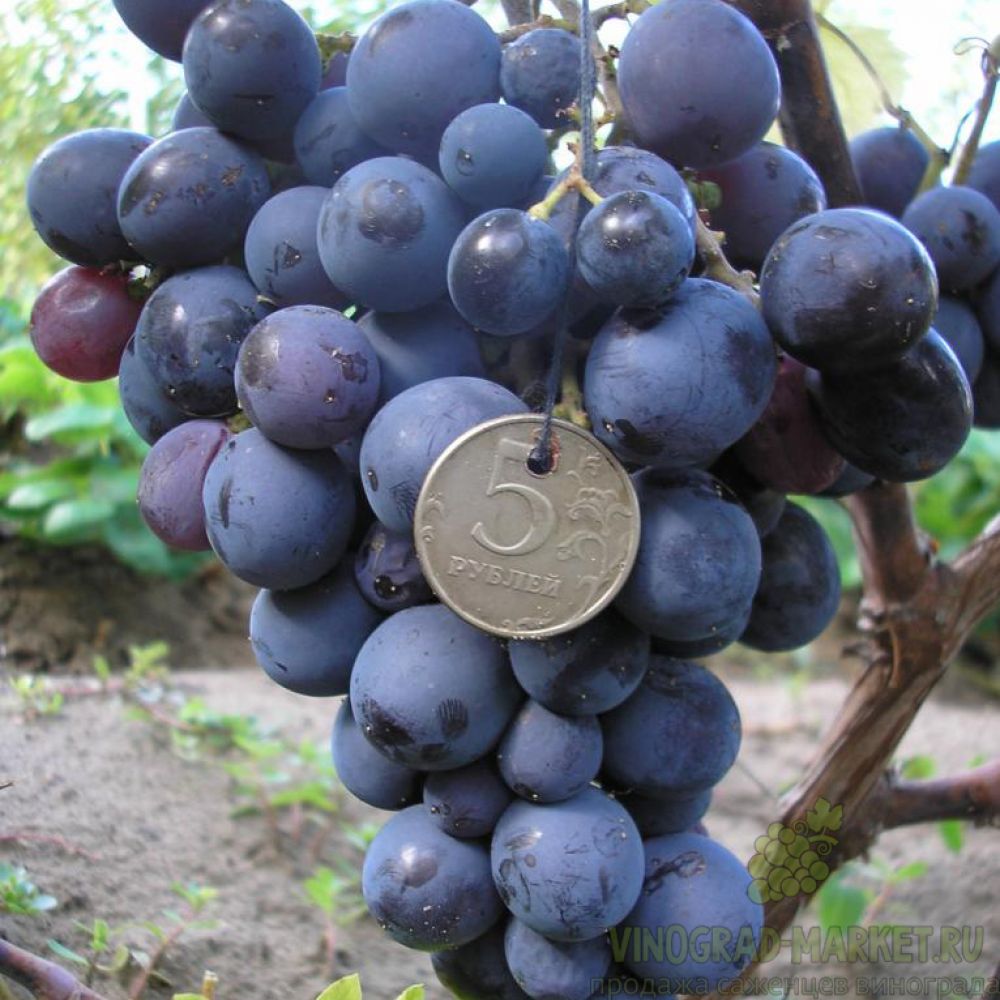 |
Universal.
An English-bred variety. Medium-sized bushes with conical clusters weighing 168 to 267 g. The berries are round, purple-blue, and weigh up to 4 g. The flesh is juicy and has a nutmeg aroma. Suitable for juices, jams, and other preserves. Ripens in 150 days. The cluster coefficient is 1.58. Frost resistance is average – down to -18°C. |
Pleasant taste.
Bisexual flowers. Strong immunity. Does not attract wasps. High shelf life. Excellent transportability |
Unstable yield.
Low frost resistance. Prone to pea-shaped growth. Average ripening of shoots. |
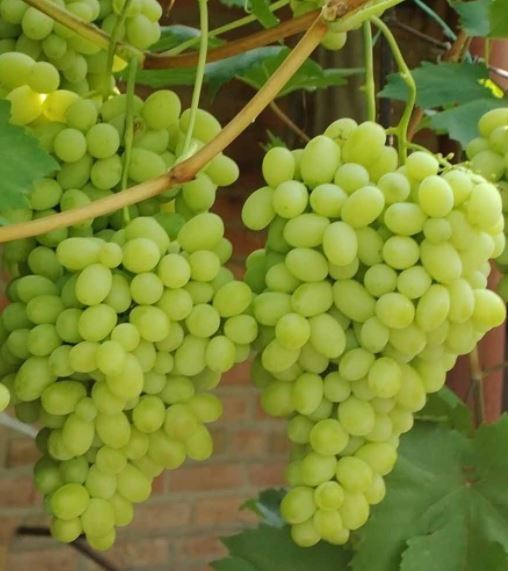
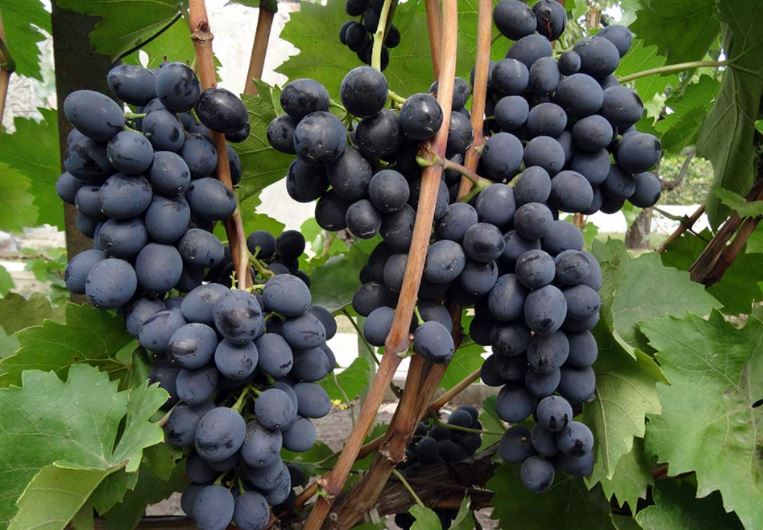
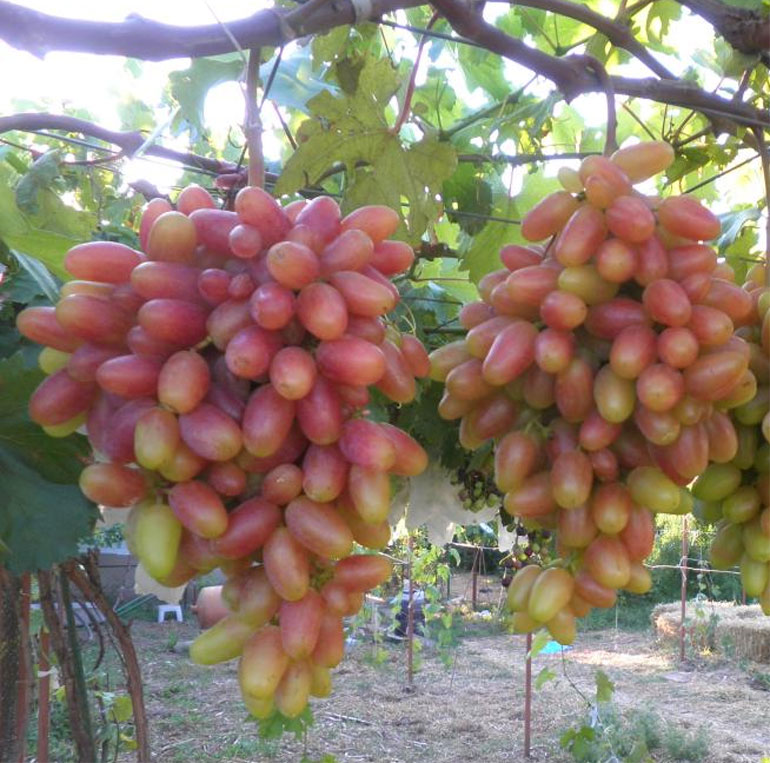
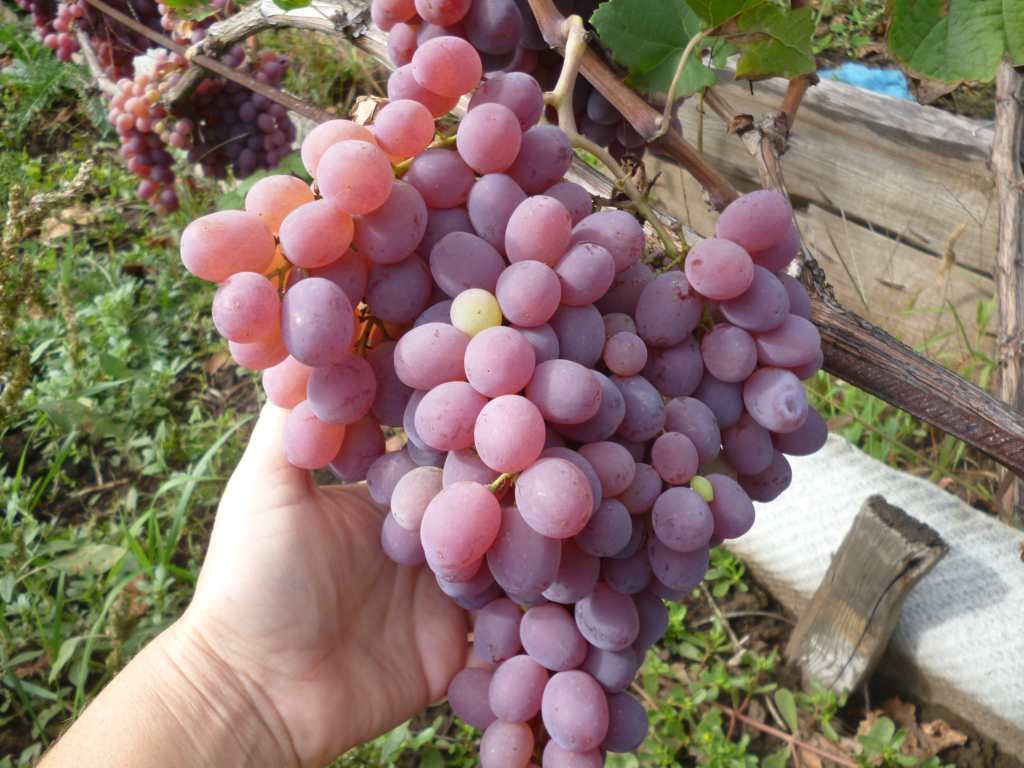
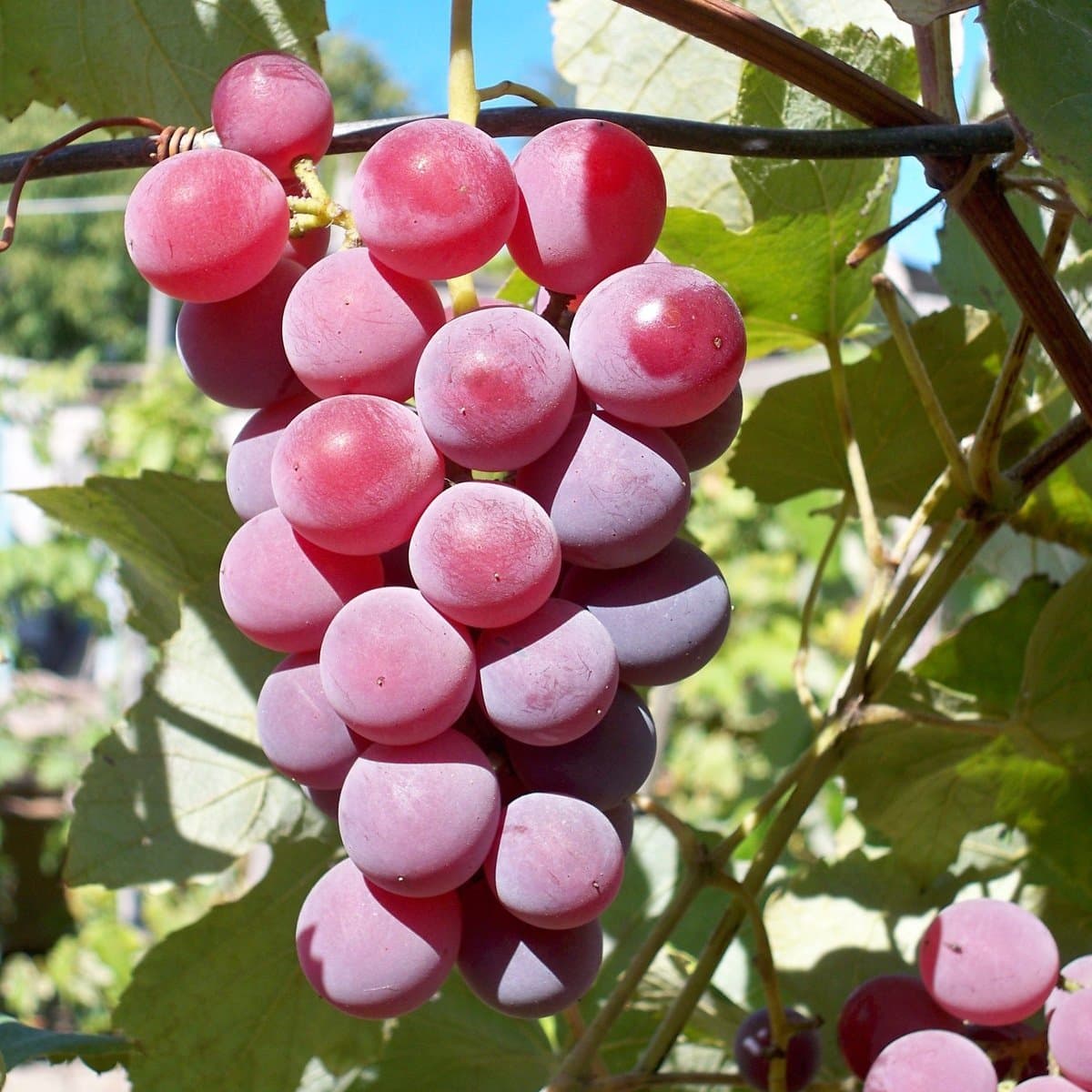
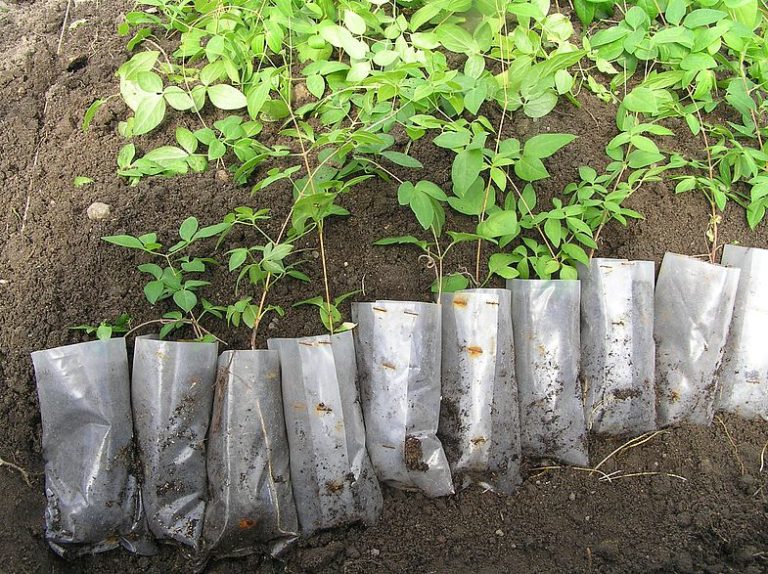
Selecting a quality grape seedling
When choosing a high-quality one-year-old seedling, you need to pay attention to the following points:
- the root system should be well developed, it should have 3 to 6 healthy roots with a diameter of 2-3 mm at the base;
- The variety you choose must be suitable for your growing region;
- the recommended height of the above-ground part is 10-15 cm;
- There should be no leaves on the shoot; if there are, they must be removed (if the seedling is not sold in a container);
- the vines must be ripe;
- There are no cracks or other damage on the bark.
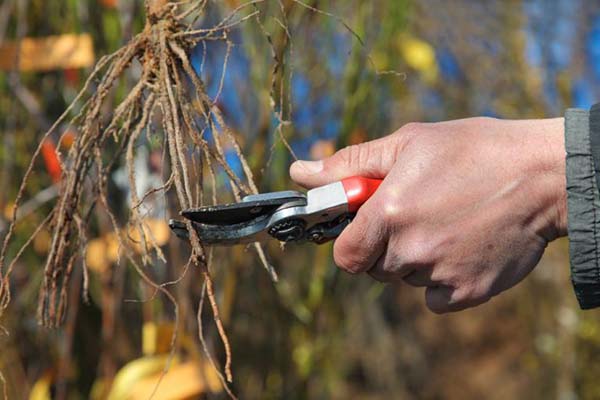
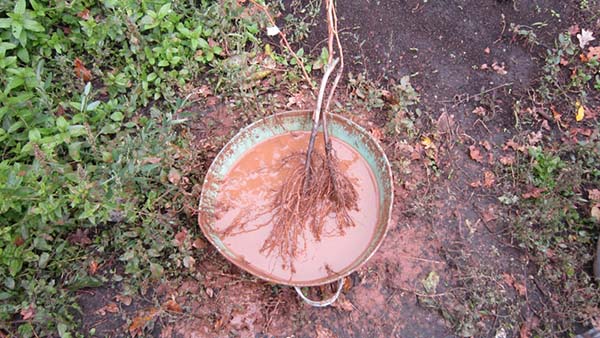
Preparing grape seedlings for planting
Transplanting is extremely stressful for any plant. To ensure a grape seedling takes root well, preparatory work is necessary. This involves several steps:
- Health checkA small piece of the seedling's crown is cut off, after which the cut is carefully examined. A healthy grapevine's cut is light green, indicating its readiness for planting.
- Root pruningThe heel or main lower roots are shortened by 1-2 cm; their cut color should be milky white. The roots are then shortened by another 10-15 cm. Some gardeners gather all the roots in a fist and cut off everything below. If the roots are too long, they will bend upward when planted and will not be able to function fully, which will reduce the survival rate of the grapes.
- SoakingPlace the seedling in a bucket of room-temperature water and leave it there for 12-24 hours. You can add any growth stimulant (Kornevin, Potassium Humate, etc.) to the water.
- ProcessingExperienced gardeners recommend dipping the roots in a clay slurry just before planting.
Choosing a location for planting grapes in autumn
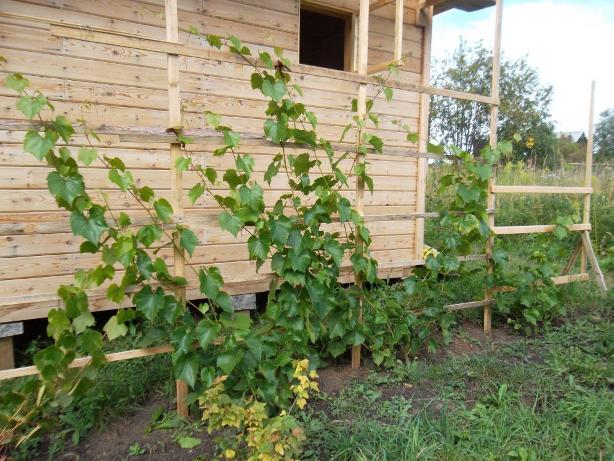
Grapes love sunlight, so choose the sunniest spot in the garden for planting. The key is to avoid drafts and stagnant water around the roots.
In addition, grapes have a detrimental effect on their neighbors, so it is better not to plant them near other fruit crops.
The optimal solution would be to choose the southern or southwestern side of the garden, protected from the winds by any building or fence, from which the grapes are planted at a distance of 1 meter.
Another important point is that groundwater should not be closer than 1 meter to the roots, otherwise you can’t expect a good harvest.
Preparing the planting hole
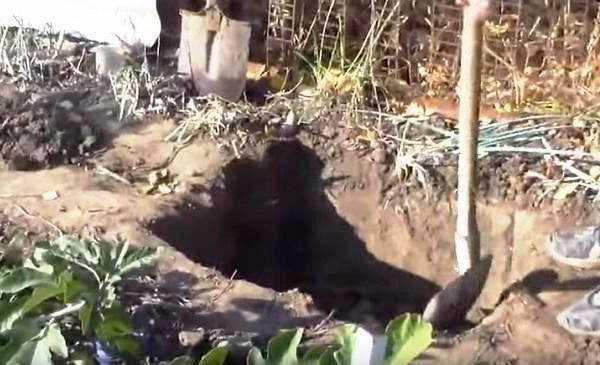
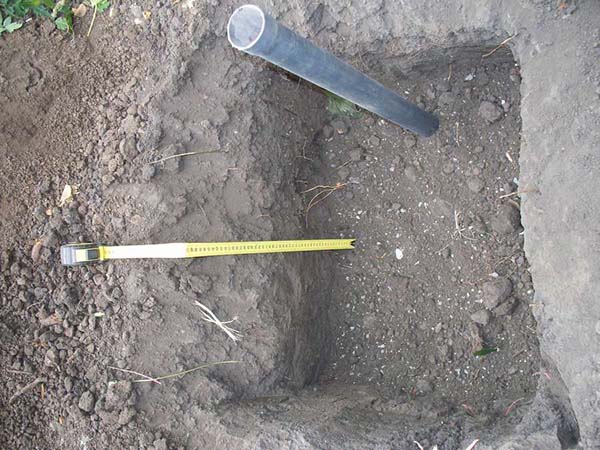
The soil for grapes must be permeable to air and moisture. It must contain sufficient nutrients, so the planting hole is prepared 35-45 days before planting.
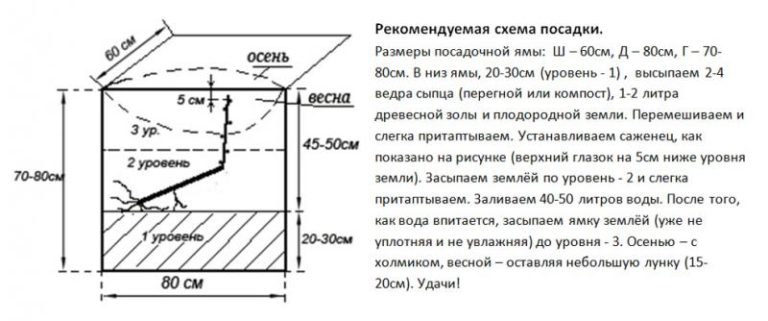
The planting depth is 60 cm, with the same distance remaining between the adjacent seedlings. The lighter the soil, the deeper the root system can be placed. For example, in clay soil, the plant doesn't need to be planted deep; a 15 cm hole is sufficient.
If the soil is heavy, add a 10 cm layer of sand to the bottom of the hole. Next, add a nutrient mixture, which will provide the seedling with nutrients for several years:
A mixture of 2-3 buckets of compost or humus, 200 g of superphosphate, and 300 g of wood ash is prepared. This mixture is thoroughly mixed with 3-4 buckets of topsoil and poured into the hole to a depth of 20-30 cm.
Another 10 cm higher are filled with fresh garden soil.
Once the hole is almost half full, water it (2-3 buckets). It's then recommended to leave it alone for 35-45 days. However, if time is of the essence, this period can be reduced to 14 days. Otherwise, the roots may be burned by the fertilizer.
Planting grape seedlings
The main rule for planting seedlings is one plant per hole. Some gardeners, in an effort to save space, plant two plants in a single hole. However, this not only fails to increase the yield but also significantly reduces it, as grapes do not grow well in cramped conditions.
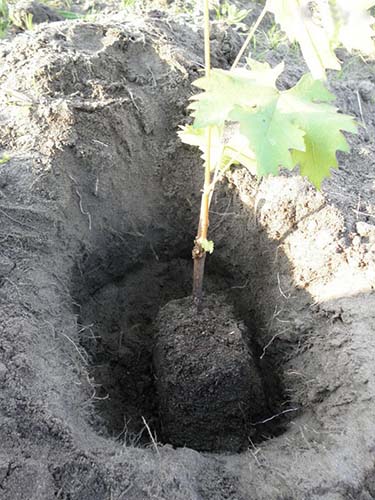
The seedlings with a lump of earth are planted into the hole very simply, as if rolling from one container to another.
Bare-root grapes require a different approach:
- a mound of earth is poured into the bottom of the hole;
- a seedling is placed in the central part of the mound;
- the roots are straightened out strictly downwards;
- a 10 cm layer of fertile soil is poured on top (at least 10-20 cm should remain below the ground surface);
- watering is being carried out.
It is very important when planting any seedling, whether it is a container plant or a vine with an open root system, to ensure that at least 10 cm remains below ground level after planting.
Another important point concerns grafted seedlings: when planting them, you must not bury the grafting site.
Planting grapes with cuttings in autumn
After pruning your grapevines, you'll be left with a large amount of material that can be used for cuttings. Choose the strongest, most developed vine for the cuttings, then cut off its tip with 3-4 developed buds. Your cutting is ready.
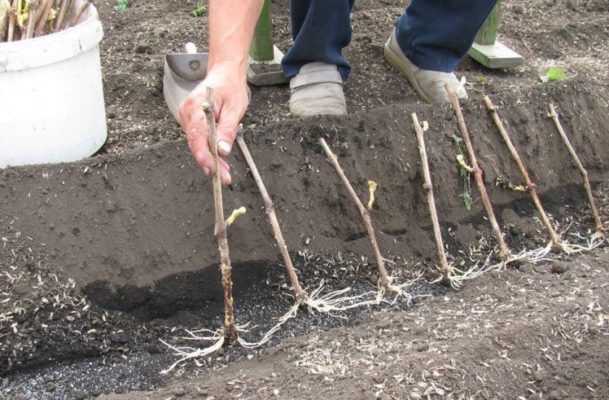
The landing pattern is as follows:
- a trench 25 cm deep is dug;
- a layer of humus mixed with soil is poured onto the bottom;
- cuttings are laid out at a distance of 20 cm in the direction of the south;
- only the 2 lower buds are deepened into the ground;
- the trench is watered with warm water;
- The cuttings are covered with cut plastic bottles or any covering material on arches.
Features of planting grapes with cuttings in autumn
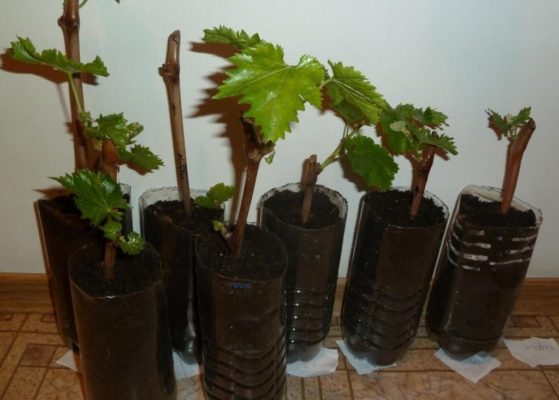
Cuttings are essentially sprouted shoots. To prepare them, the top of the vine with 3-4 buds is cut off and prepared as follows:
- the cutting is disinfected by soaking it in a weak solution of manganese for 3-4 hours;
- the top and bottom parts are cut off;
- the cutting is placed in a growth stimulant solution (Kornevin, Zircon, etc.) for 2-3 days;
- then it is moved into a container with clean water at room temperature;
- After the roots reach 5-7 cm in length, they are transplanted into open ground.
Planting grapes using layering
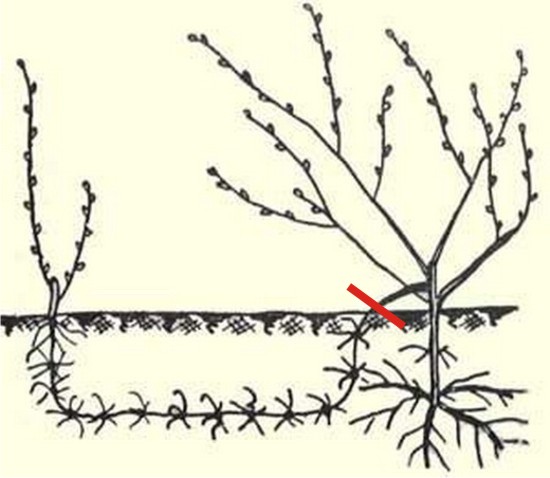
The layering method is considered the easiest. The gist of it is as follows:
- During fall pruning, 1-2 vines are removed. It's important to ensure that all new growth is mature.
- The shoot is moved to the desired location and dug in. A depth of 10-15 cm is sufficient.
- The tip with 2-3 eyes emerges from the ground.
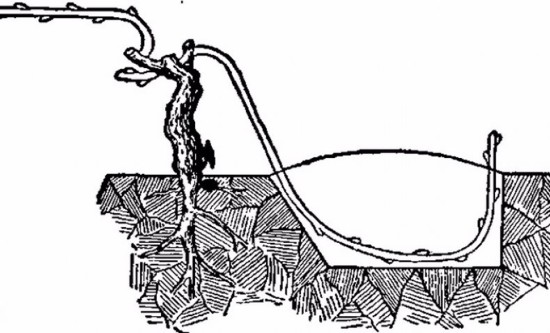
Please note! You can dig in the ground either in the fall during pruning or in the spring after the tree has opened.
Next year, the section of the plant in the ground will begin to root. One or two shoots will emerge from the buds. In the fall, after the end of the growing season, the vine should be cut along the red line (see the picture below). The seedling, with its roots already formed, should be dug up and planted where needed.
Propagation by green shoots
In southern regions, where the growing season is longer, grapes can be propagated using green shoots. This method is similar to the previous one, except that the long green shoot is dug into the ground.
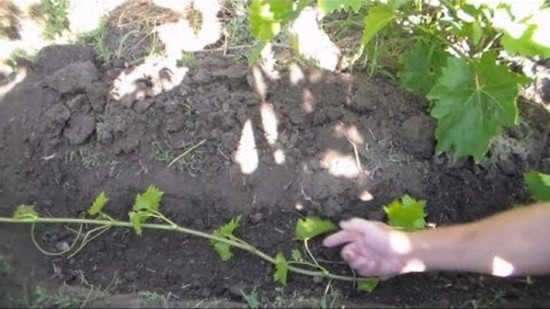
It is best to use strong shoots that extend from the base:
- The green shoot is moved to the side.
- The greenery is removed from the part to be dug in.
- The soil is dug in to a depth of 10-15 cm.
- The tip of the shoot is brought out for further development.
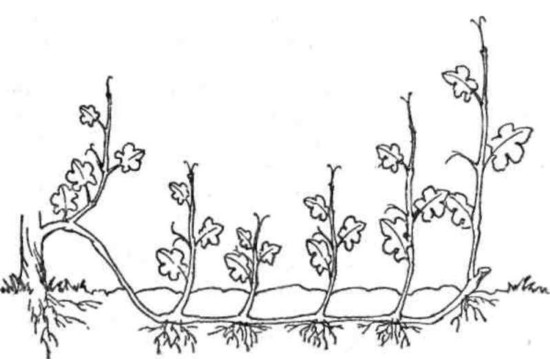
Please note that if the shoots have developed, you can get several grapevine seedlings from it. They do not need to be removed. The shoots are bred and continue to develop. In the fall, the shoot is divided into seedlings.
Additionally, you can gird the shoot at the location marked with the yellow line in the figure below. This will slow the loss of nutrients and accelerate root formation. Alternatively, instead of girdling, you can lightly tie the shoot at the base with wire. The result will be similar.
Air layering of grapes
Sometimes it's impossible to bend shoots (for example, with tall standard trees). In this case, air layering can be used.
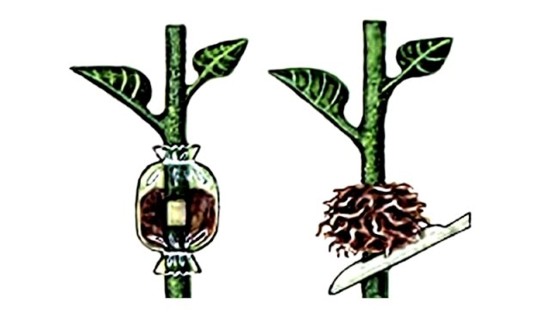
Its principle is simple: when the shoots can't reach the ground, you need to lift the soil up to them:
- Apply a ring to the green shoot. Remove a ring of bark approximately 0.5 cm wide. This is crucial because it will slow the loss of nutrients. The vine will try to heal the damage more quickly, and callus and root shoots will form in this area.
- Apply sphagnum moss or a breathable substrate to the damaged area. A dark, sturdy bag, plastic bottle, or other container can be used for soil. The key is to make sure it holds at least 1-1.5 liters of soil.
- After the vegetation period is complete, separate the resulting seedling and transplant it.
Please note! All three methods should only be used in areas free of phylloxera. Throughout the growing season, ensure the cuttings are regularly watered to promote root development.
Planting grapes in a greenhouse
Grapes can be planted indoors (in greenhouses) just like other crops. This makes them suitable for cultivation even in northern regions.
Selecting a variety
The following varieties are best suited:
- Galahard;
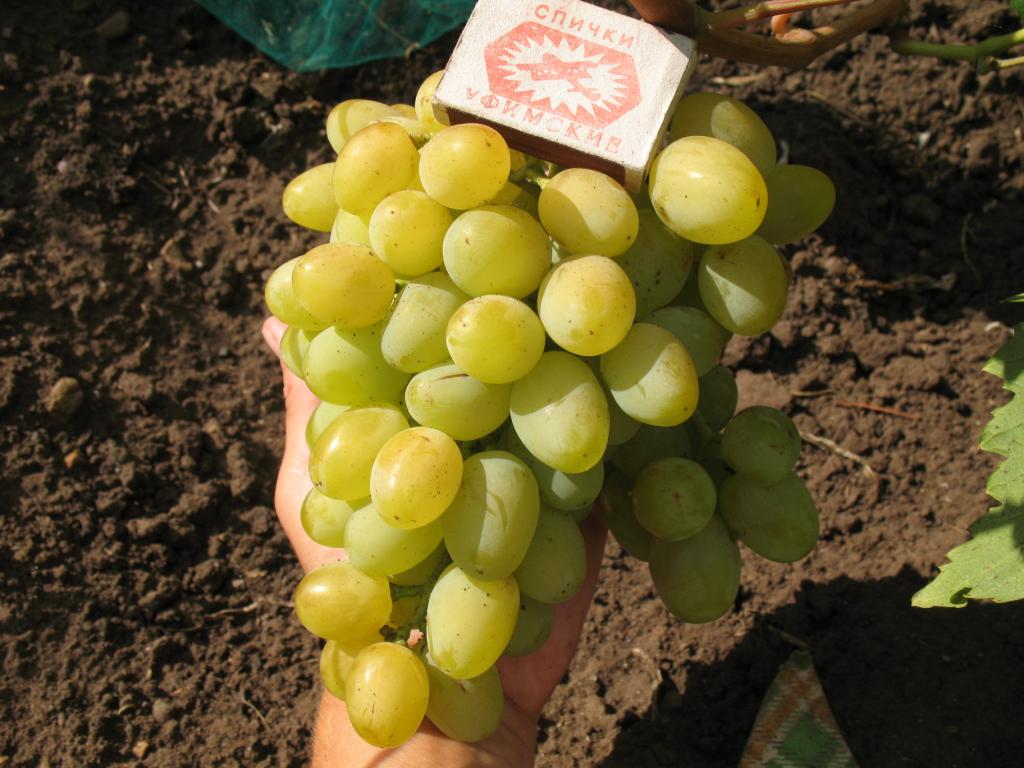
- Carmen;
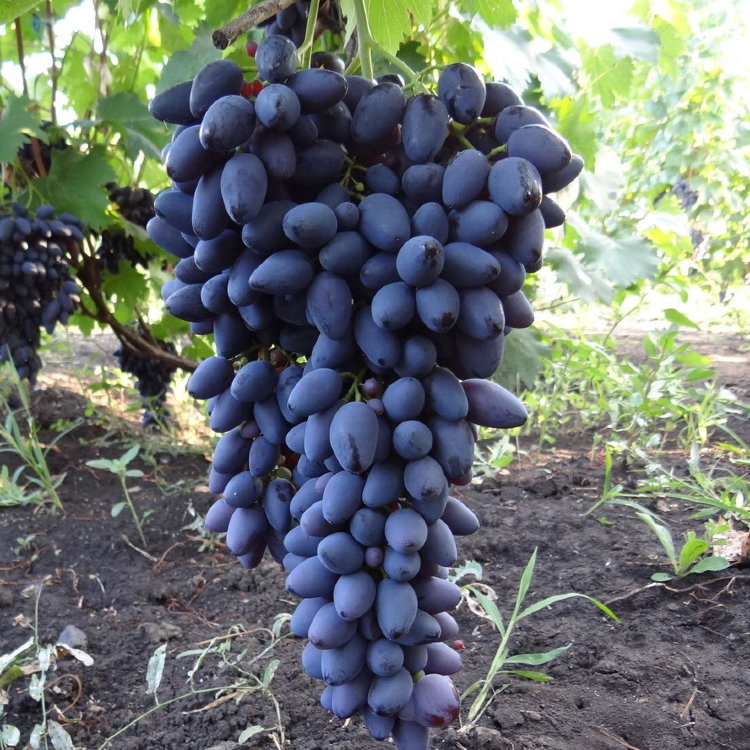
- Nadezhda AZOS;
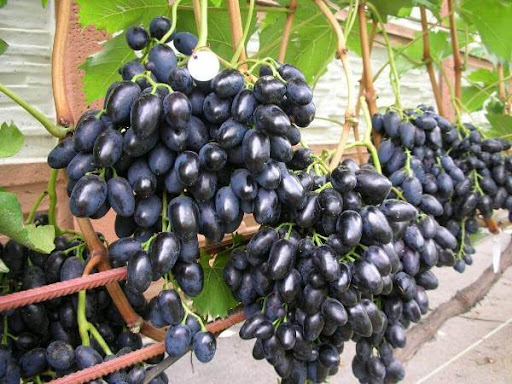
- Long awaited;
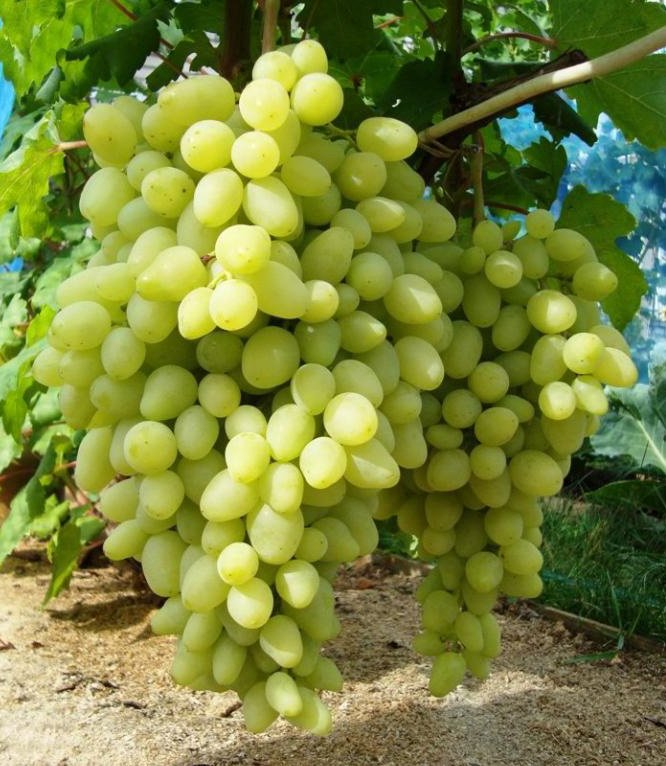
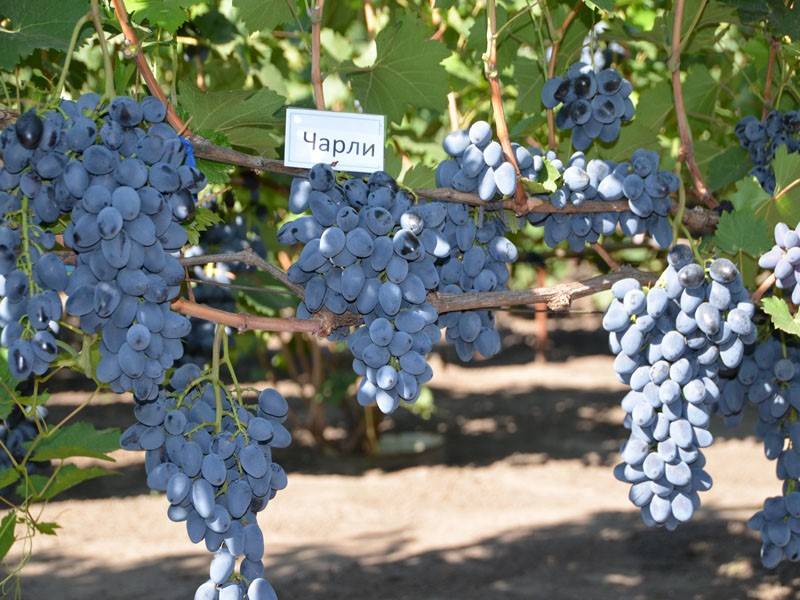
- Charlie;
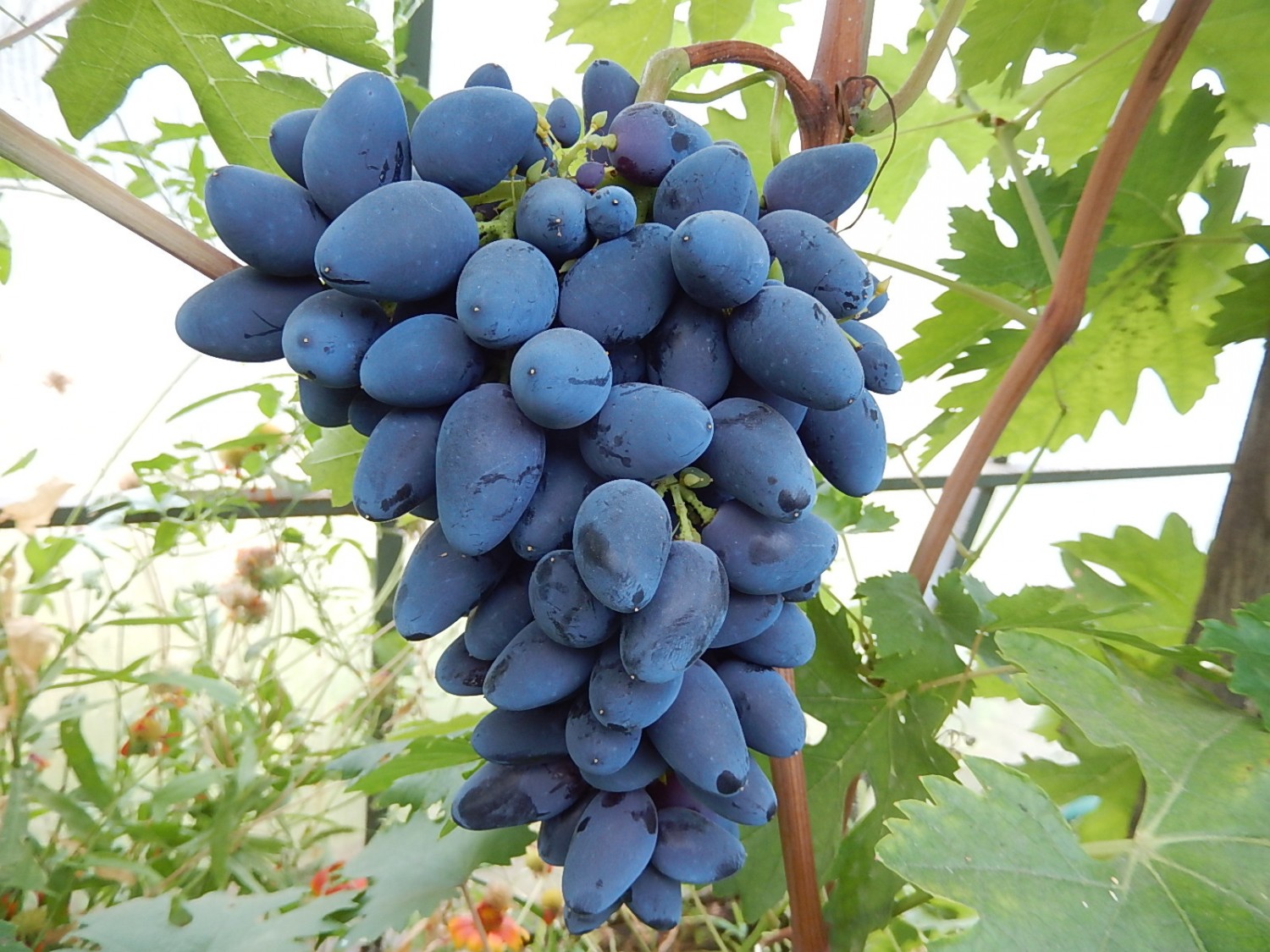
- Viking;
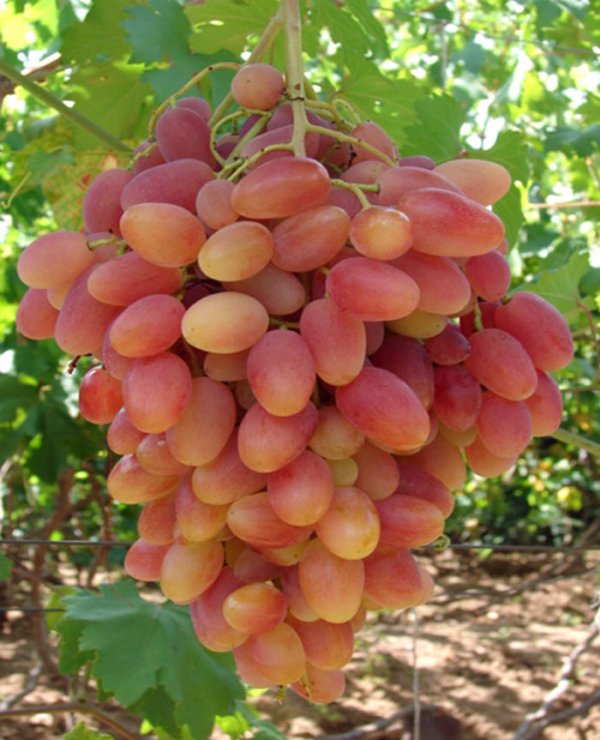
- Victor;
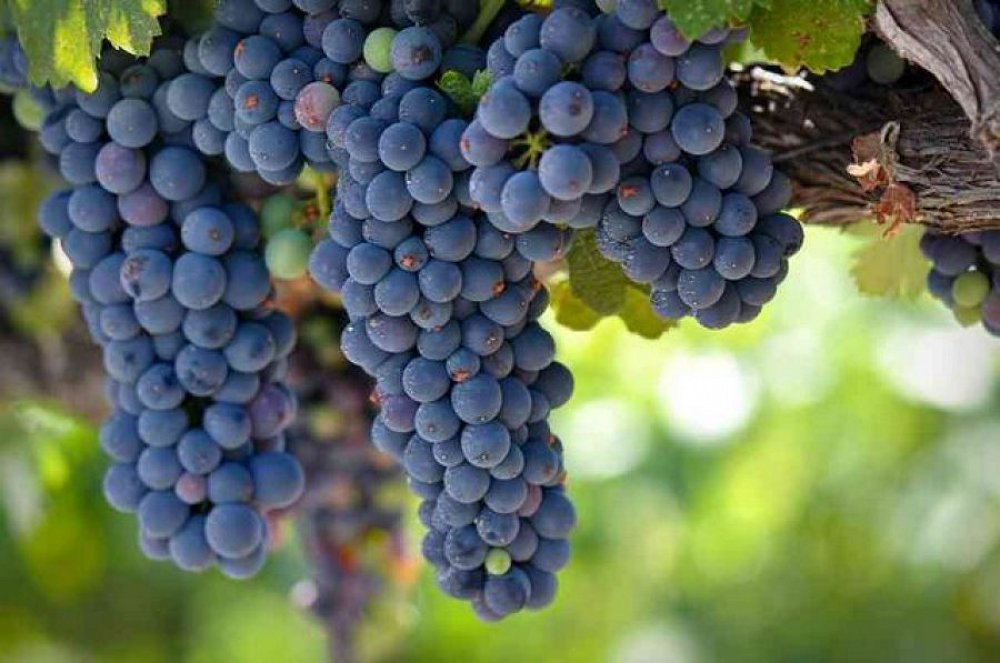
- Zilga;
- In memory of Dombkovskaya
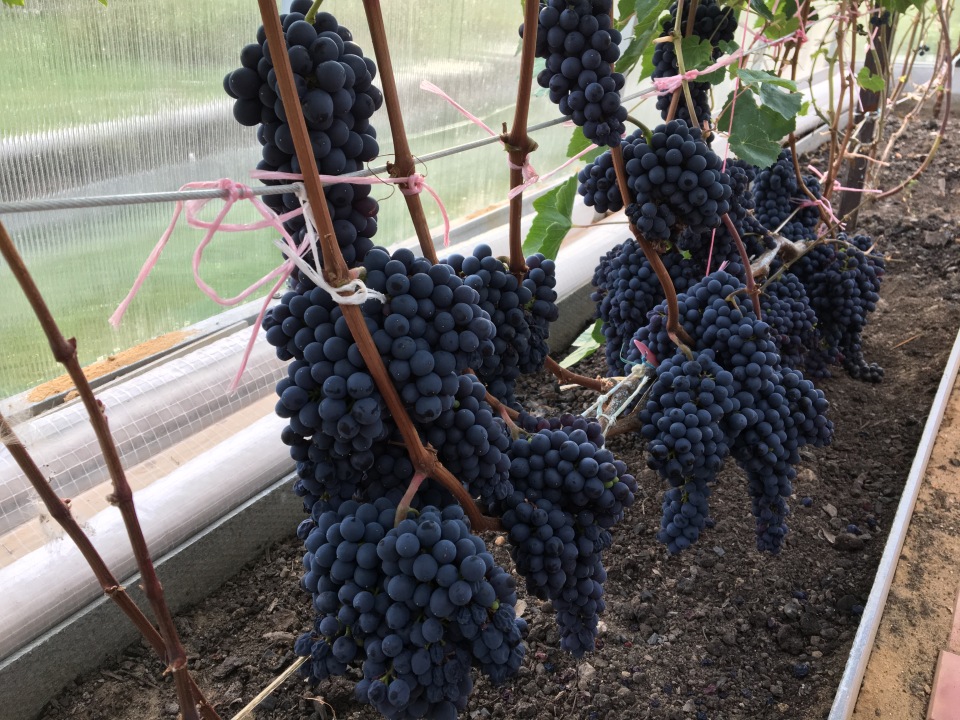
and other frost-resistant varieties.
Did you know? Grapes can be found not only in the wild and in gardens, but also in domesticated plants! There's a plant (vine) called cissus, which belongs to the grape family and can be grown in a pot right indoors or on the balcony. And it produces edible fruit. Read about it. cissus, about its planting and care in the article on our website Top.tomathouse.com.
Landing
Planting in a vineyard (greenhouse) is no different from planting in open ground. Dig holes 40 x 40 cm, spaced 1.5-2 m apart. Add 20-30 liters of compost, ½ cup of superphosphate, and 250-300 g of wood ash.
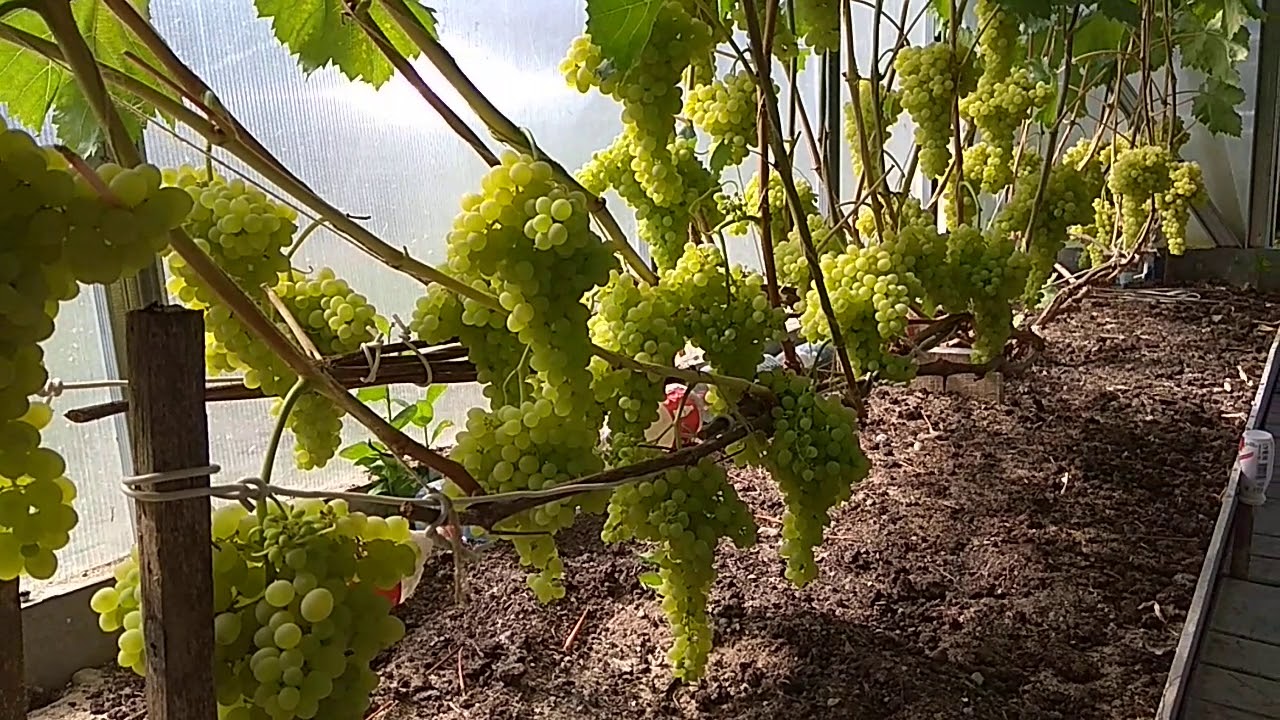
After planting, proper care is important, let's look at it.
Fertilizers
In the spring, young seedlings should be fertilized with urea at a rate of 60 g/sq. m. This will give the grapes an excellent start. The following fall, apply double superphosphate and potassium sulfate according to the package instructions.
Watering mode
Water should be applied only to the roots. Otherwise, fungal infections can develop. In June, grapes should be watered generously as the top layer of soil dries out.
In the first half of July, reduce watering to once every 1.5 weeks. Water sparingly. In the second ten days of the month, stop watering as ripening and sugar accumulation begin.
Wintering
Until October, the grapes are kept in a greenhouse under agro-film for better ripening. At the end of the month, they are pruned, the shortened shoots are bent to the ground and secured with pins. The top is covered again with several layers of film.
After the first snow falls, you can pile it on top. This will provide additional protection from frost.
Please note! Many people mulch with fallen leaves. However, this method is not very effective, as rodents can nest inside.
Protecting autumn grape plantings in open ground during winter
After planting seedlings in the fall, they need to be provided with sufficient moisture. Watering should be done at a rate of 1-2 buckets per plant. However, this should only be done if the weather is dry and no overnight frosts are forecast.
If the autumn is abnormally warm and the grapes have started to produce leaves, then watering should be stopped and all plantings should be treated with potassium fertilizer.
But the main task for gardeners is to provide reliable protection for the seedlings from the upcoming frosts. To do this, they are pruned back to 3-5 buds below the woody part, so that no immature vines remain above ground.
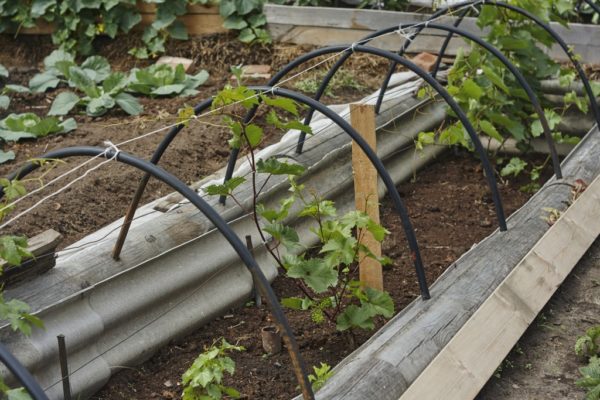
Grapevines should only be covered when temperatures drop below freezing, otherwise the buds may rot. The easiest way is to place cut-off plastic bottles over the seedlings and cover them with soil, allowing the soil to rise 5-10 cm above the bottle.
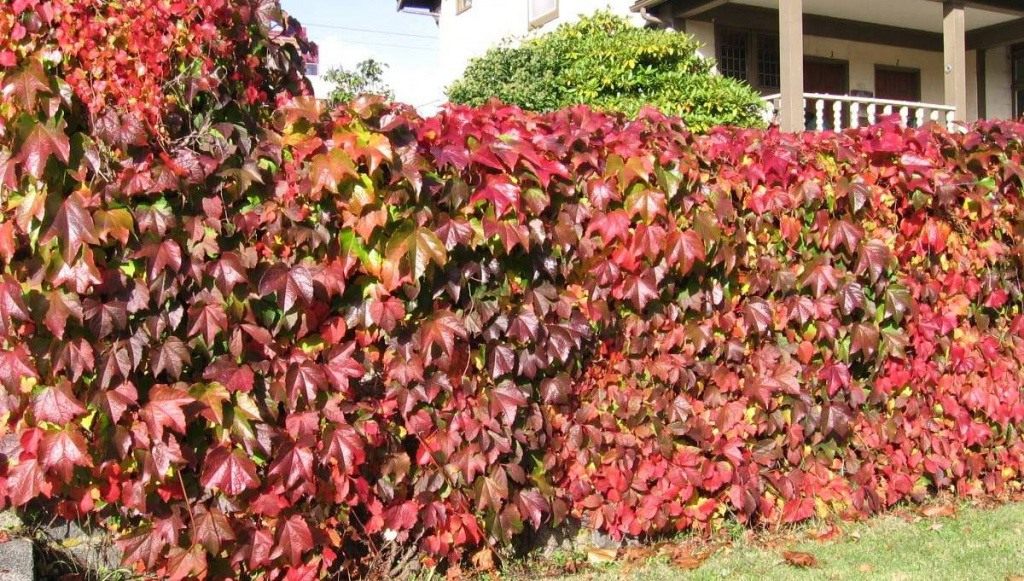
Tip! You can use grapes (particularly maidenhair) as a hedge. Although they're not edible, they're very beautiful and can help hide unsightly buildings or an old fence. By the way, we had an article about... How else can you improve the appearance of your dacha plot?.
Top.tomathouse.com warns: mistakes to avoid when planting grapes in the fall
When planting grapes in the fall, novice gardeners make many mistakes that not only lead to reduced yields but also to the death of the seedlings. The most common ones are listed below.
- A poor-quality seedling was selected. It may be unsuitable for a particular region, or have immature vines or a dead root system.
- Incorrect preparation of the planting hole.
- Planting too early, when there are more than 30-40 days left before the first frost.
- Deep planting or, conversely, superficial placement of the seedling.
- Incorrect winter cover or lack thereof.
Read more about grapes and caring for them on our website.