Echinacea is a perennial herbaceous plant belonging to the Asteraceae family. It is native to North America and the Caucasus. In Russia, it only became a favorite of many gardeners in the early 21st century.
Echinacea was first described as a herbaceous plant by Carl Linnaeus in the mid-1750s. However, it was not until 40 years later that it was recognized as a genus.
Content
- 1 Description of Echinacea
- 2 Types of Echinacea
- 3 Growing Echinacea from Seeds and Sowing in Open Ground
- 4 Growing Echinacea seedlings and planting them in open ground
- 5 Methods of propagation of echinacea
- 6 Caring for Echinacea
- 7 Top.tomathouse.com recommends: the medicinal properties of echinacea
- 8 Echinacea in the landscape
Description of Echinacea
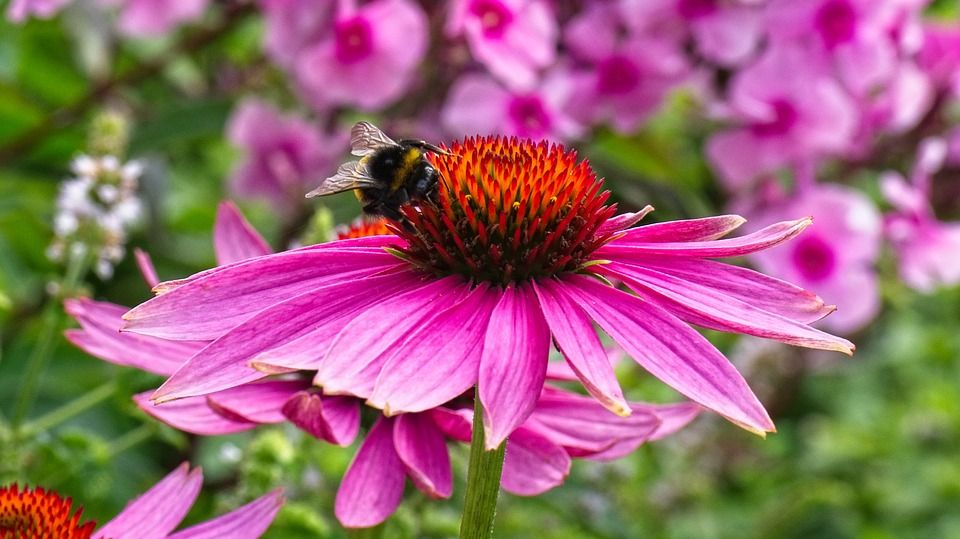
Echinacea is the most popular medicinal plant in the world. It has a creeping, rooting rhizome, straight stems approximately 2 meters tall, and small flower heads. The foliage is extensive, almond-shaped, and serrated. The petals come in shades of purple, yellow, and scarlet. The central half of the flower head is a pure burgundy with a brownish tint. Flowering occurs from mid-July to September. It is a perfect addition to gardens, parks, and wooded areas. Many flower lovers prefer it.
But, admiring the beautiful flowers, people do not realize that this miracle plant is a healer of many ailments and strengthens the immune system.
Types of Echinacea
The most common types among florists are:
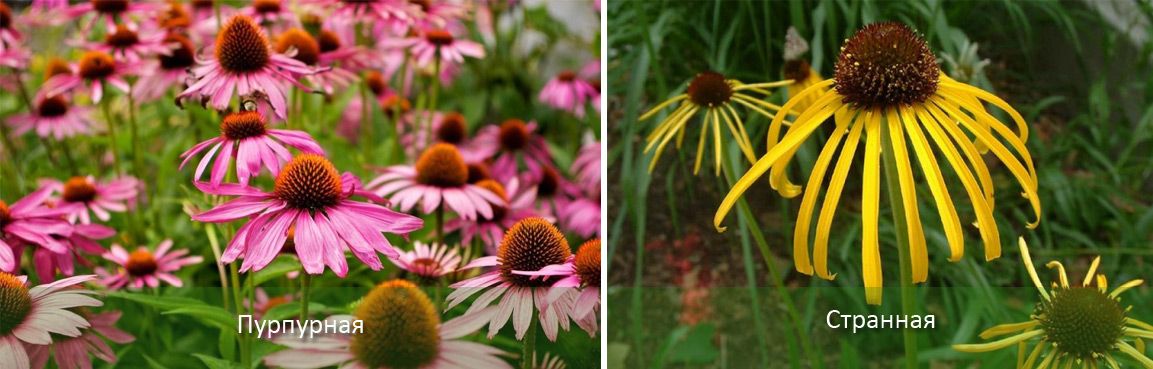
| View | Description | Flowers |
| Purple | Height 10-20 cm. The center shape is a cone. |
Large. Contrasting shades. |
| Strange | Decorative. Winter-hardy. |
Yellow. |
Varieties of purple coneflower
The most popular in the middle zone:
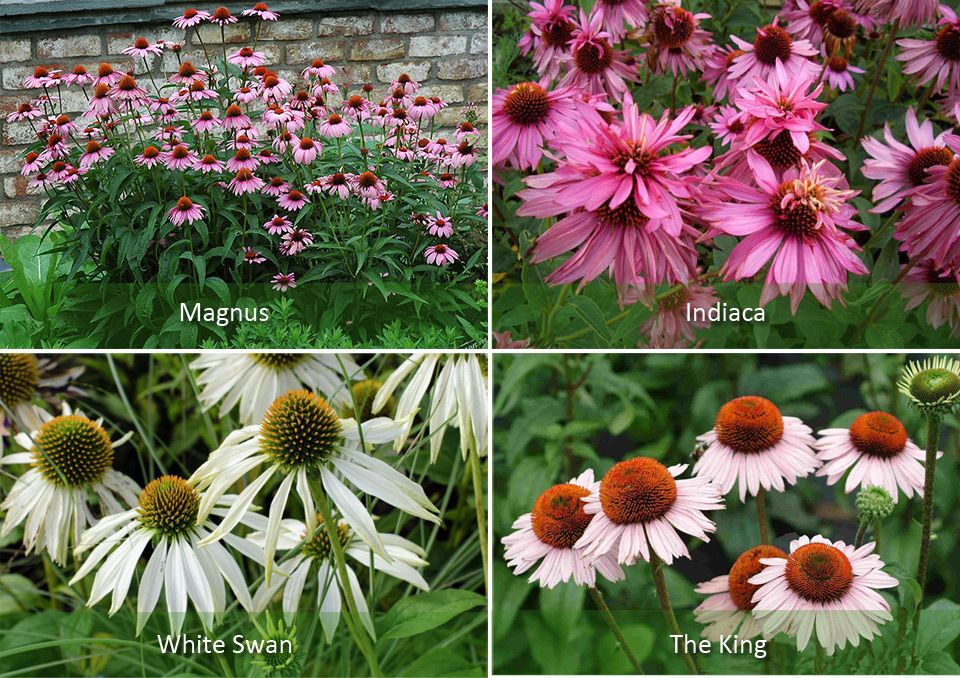
| Variety | Description | Flowers |
| White Swan | Convexity of the center. Large. Requires garter. |
Snow-white. |
| Cranberry Cupcake | Height 40-60 cm. Petiolate leaves. Drought-resistant. |
Inflorescences are baskets. Dark pink. |
| The King | Height: 100-150 cm. Light-loving. Rhizome plant. |
Light pink. Purple-red. The center of the flower is convex. |
| Indiaca | Tall. The core is made up of hedgehog-shaped cones. |
Different shades. |
| Magnus | High. Grows up to 1 m. |
Raspberry. Bright red. Size – 12 cm |
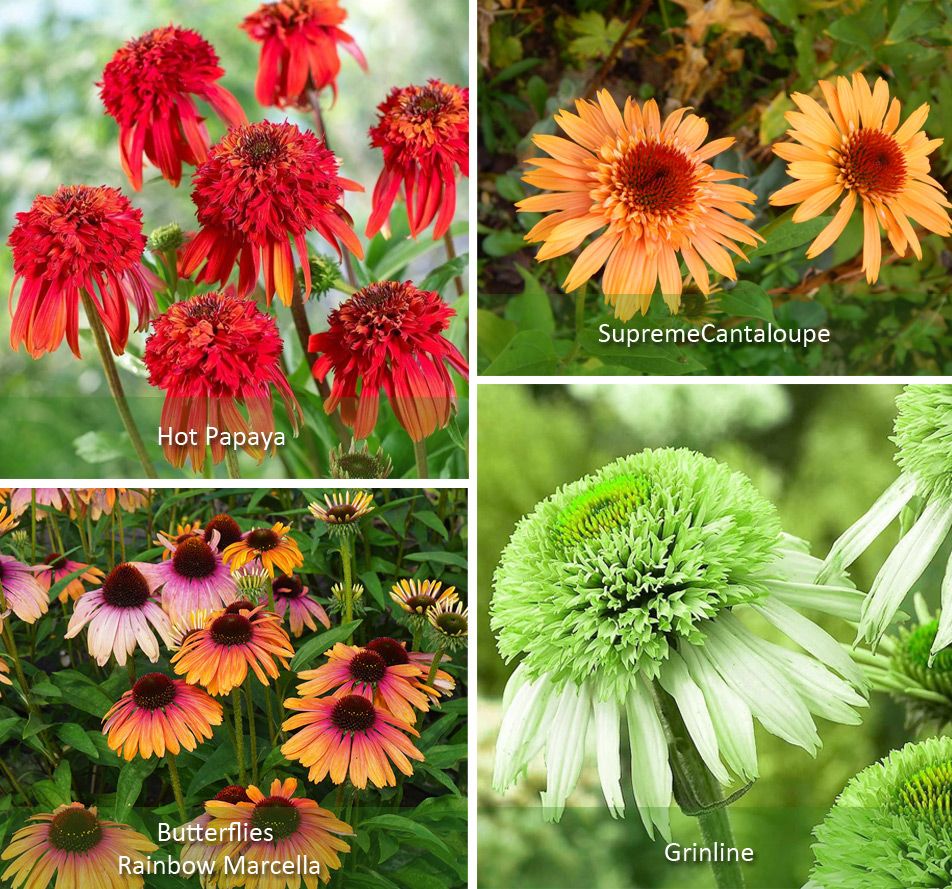
| Colorbust Orange | Height up to 2 m. | Terry. Orange |
|
Butterflies Rainbow Marcella |
Large. | Two-tone. Pink gradually turning into peach. |
|
Supreme Cantaloupe |
The leaves are large and richly green. | Terry, mango-colored. |
| Greenline | Massive, thick shoots. | Light green thick center with small lime petals. |
|
Cone Fections Hot Papaya |
Original variety. | A red cap framed by long, hanging scarlet tongues. |
| Aloha | Modest, reminiscent of a daisy. | Simple, sunny color, with an orange center. |
Growing Echinacea from Seeds and Sowing in Open Ground
A common method among gardeners is seed propagation. This method of propagation applies only to cultivated plants. Mixed varieties do not retain their characteristics when grown generatively.
Purchase high-quality seeds and prepare a tray with soil. In early March or late October, sow them 1-2 cm deep in trenches spaced 20 cm apart, then cover with a thin layer of soil. Monitor the soil moisture daily to avoid drying out the soil. The first sprouts appear 14 days after sowing.
At the end of spring, they can be planted outdoors in a flowerbed. It's important to monitor the sprouts' adaptation.
Growing Echinacea seedlings and planting them in open ground
To grow seedlings, soak seeds in a growth stimulant. Sow in February in containers with light, airy soil, planting them approximately 7 cm deep and leaving about 5 cm between them. Moisten the seeds, cover with a transparent lid (or film), and place them in a well-lit area at temperatures between 13°C and 15°C. Germination takes about a month. Once the seedlings have grown, remove the film and water them periodically. In early May, the seedlings are moved outdoors, gradually increasing their time outdoors. Planting occurs after the threat of frost has passed.
For planting seedlings, choose a well-lit location. The soil should be fertile and not sandy. If necessary, add fertilizer, peat, or, in acidic soil, lime.
Dig holes 5 cm deep and keep a distance of about 25 cm between each hole. Add a small amount of special compost to the bottom. Place the seedling in the soil along with the root ball.
Methods of propagation of echinacea
In addition to the seed method, new echinacea can be grown using bush propagation and cuttings.
Dividing the bush
Most gardeners prefer to propagate the plant by dividing the bush. This method is recommended for echinacea plants 3-6 years old. This procedure can be performed in the fall and spring. Carefully dig up the plant and divide it into sections with three growth buds. Then plant them in the prepared holes.
cuttings
This method is performed in June. The cuttings are trimmed, leaving two leaves on the stem, and the cut sites are treated with a growth stimulant. They are then planted in fertilized and moistened soil. The room temperature should be between +20 and +25°C. After one and a half to two months, the formed shoots are transplanted into open soil.
Caring for Echinacea
Since echinacea is an unpretentious plant, care is simple:
- It's crucial to spray it frequently and consistently. Experienced gardeners recommend doing this in the evening after sunset.
- Regular weeding, fertilizing, loosening of the soil and protection from insects are required.
- Fertilizing is recommended twice a year: in March and after flowering. Seeds are collected from cut, faded flowers the following year. If this isn't necessary, trim the dried inflorescences down to the green petals.
- In autumn, be sure to cover the flowers with a mixture of soil and peat compost or humus, and complex fertilizer.
Diseases and pests of Echinacea
Echinacea has a fairly strong immunity to parasites and infections, but some diseases can still affect it. Therefore, it's important to know the causes for rapid treatment:
- Fusarium is a soil-borne fungus. To eliminate the disease, remove the affected plant and burn it.
- Powdery mildew is caused by damp soil. Treatment with Bordeaux mixture will restore the flowers to their original appearance.
- Whitefly – high humidity. To combat them, use a soap solution, garlic infusion, water sprays, and chemicals such as Bona Forte.
If you follow the above recommendations, growing echinacea won't be difficult. Each plant requires its own care and attention.
Overwintering Echinacea
Echinacea is a heat-loving plant that tolerates frosts without cover only during snowy winters and in warm climates. Therefore, to be on the safe side, experts recommend covering the flowers with dry leaves or pine needles to help them survive frost. This promotes a smooth wintering and early blooming in the spring.
Top.tomathouse.com recommends: the medicinal properties of echinacea
This beautiful flower possesses numerous healing properties. In folk medicine, echinacea is an indispensable source of vitamins and microelements. It is used to make decoctions, masks, balms, and ointments that help combat colds, stomach, liver, and eye ailments.
To quickly and effectively heal wounds and burns without scarring, herbal compresses and poultices are made. To use the remedies year-round, home remedies enthusiasts prepare them in advance. They collect flowers, leaves, roots, and stems, drying them in moderate daylight, shade, or in the oven on a piece of cloth. Then they place them in a glass jar or container, seal tightly, and store at 20–25°C. The roots are best harvested in the fall.
Remedies can be easily prepared at home:
- For flu, make a tea: pour 100 ml of boiling water over 1 teaspoon and let steep for an hour. It is recommended to take it three times a day after meals.
- In case of burns, juice from fresh flowers helps reduce swelling and promote rapid healing.
- Echinacea tincture for insomnia and depression: add 15 g of grated root to 120 ml of alcohol and let steep for 24 hours. Take 15-20 drops 3-4 times daily.
- A decoction of the stems for infections and fatigue: add 1 tablespoon of dried herbs to 300 ml of water and simmer for 30 minutes. Cool and take 1-2 tablespoons 3-4 times daily before meals.
Echinacea is contraindicated for people with allergies, pregnant women, arthritis, leukemia, tuberculosis, and sore throat.
Echinacea in the landscape
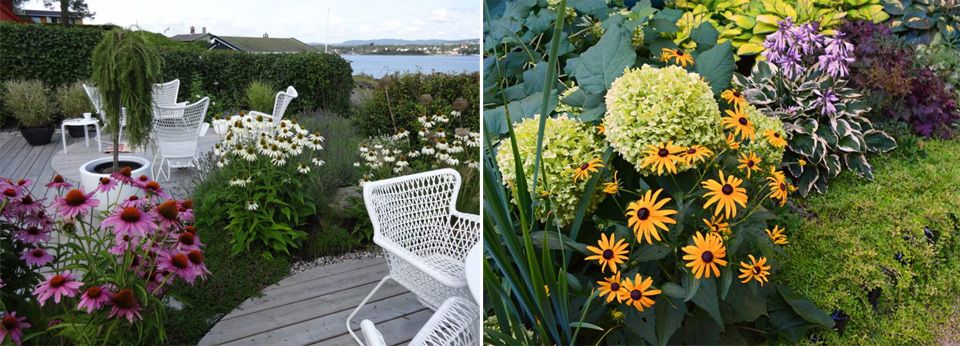
Echinacea is used in garden design. It's planted in groups, but asters, phlox, and monarda make good companions.