Amsonia is a plant that's not yet common in local gardens, but it's increasingly attracting attention with its unique appearance. 🌿 It's easy to grow and requires little effort from the gardener. It thrives in a variety of soil types and requires little maintenance. 💧
While Amsonia looks beautiful when planted alone, its beauty blossoms when grouped together, creating a magnificent ensemble. 🌸 This plant is also known for its longevity: it can delight the eye for up to 10-15 years without needing to be repotted and without losing its attractive appearance.
Content
- 1 Brief characteristics of Amsonia in the table
- 2 Amsonia photo gallery
- 3 Description of Amsonia
- 4 Types and varieties of Amsonia
- 5 Amsonia Growing and Care Chart
- 6 Rules for planting and caring for amsonia
- 7 Reproduction of Amsonia
- 8 Potential problems when growing amsonia
- 9 Use of Amsonia in the landscape
Brief characteristics of Amsonia in the table
| Characteristic | Description |
|---|---|
| Family | Cutraceae (Apocynaceae) |
| Spreading | They are found in Central, Southern, and Eastern North America, as well as Southern Europe, Greece, Turkey, Japan, Korea, and China. 🌏 |
| Appearance | Herbaceous perennials with woody branches that form compact bushes. 🌿 |
| Stem | Multiple, upright, they form dense bushes, giving the plant structure and compactness. 🌱 |
| Leaves | Alternate, sessile, their sizes vary from 0.2 to 2.5 cm, which gives the plant an elegant appearance. 🍃 |
| Flowers | Simple, they can have a variety of shapes, from broadly ovoid to linear and thread-like, and their colors range from pale blue to azure, adding sophistication and color to your garden. 🌸 |
| Flowering time | The flowering period begins in May and continues until June, during this short period they delight the eye with their colors and aroma. 🌼 |
| Fruit | Long pods filled with cylindrical seeds. As they ripen, the seed coat gradually turns from green to bright red, making the plant even more decorative. 🍓 |
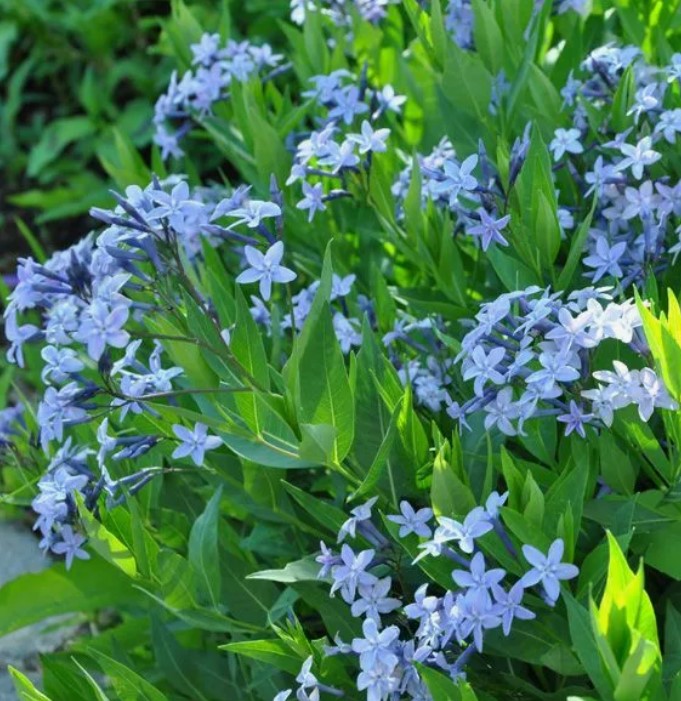
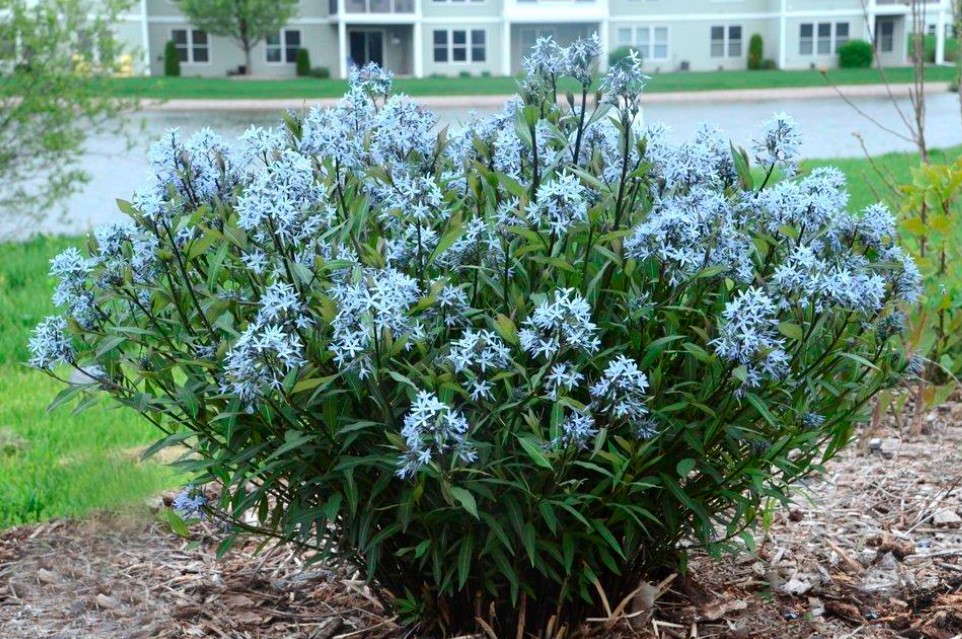
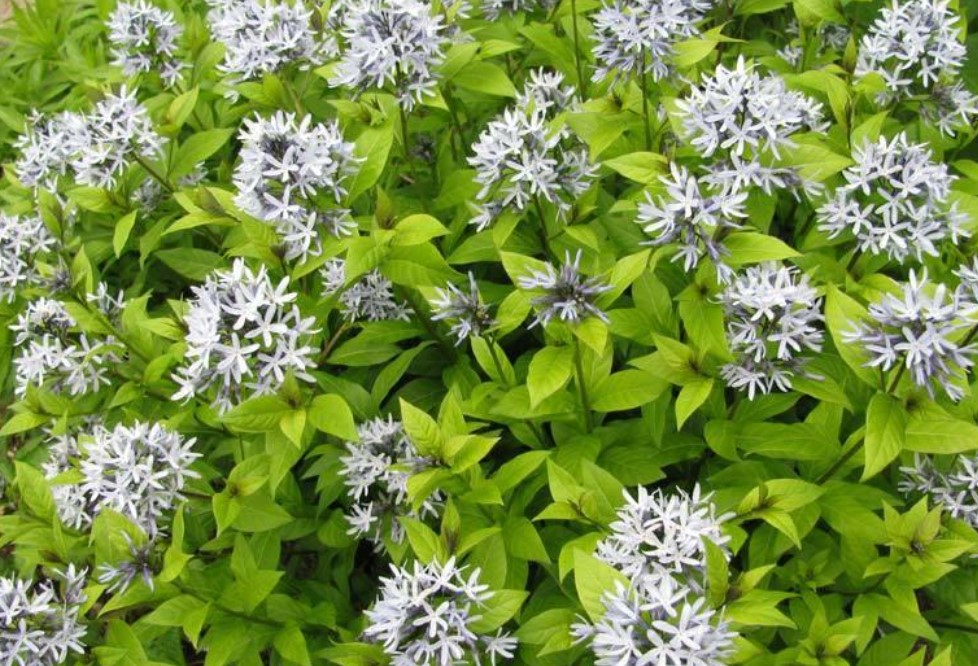
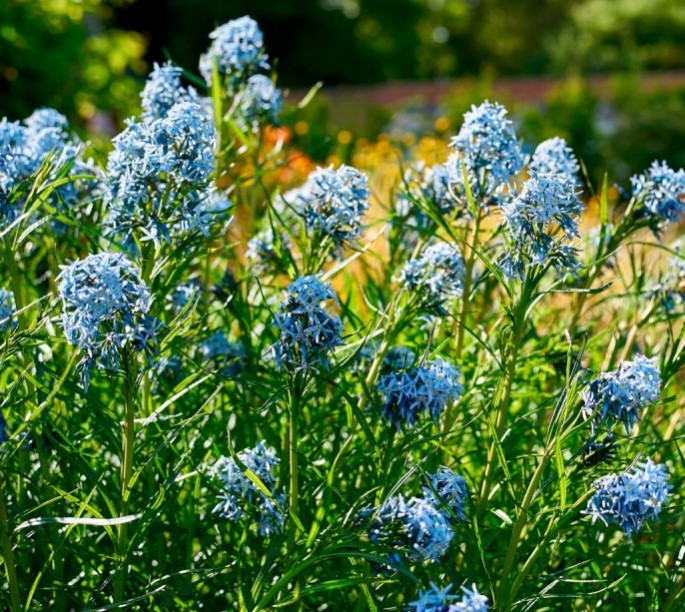
Amsonia photo gallery
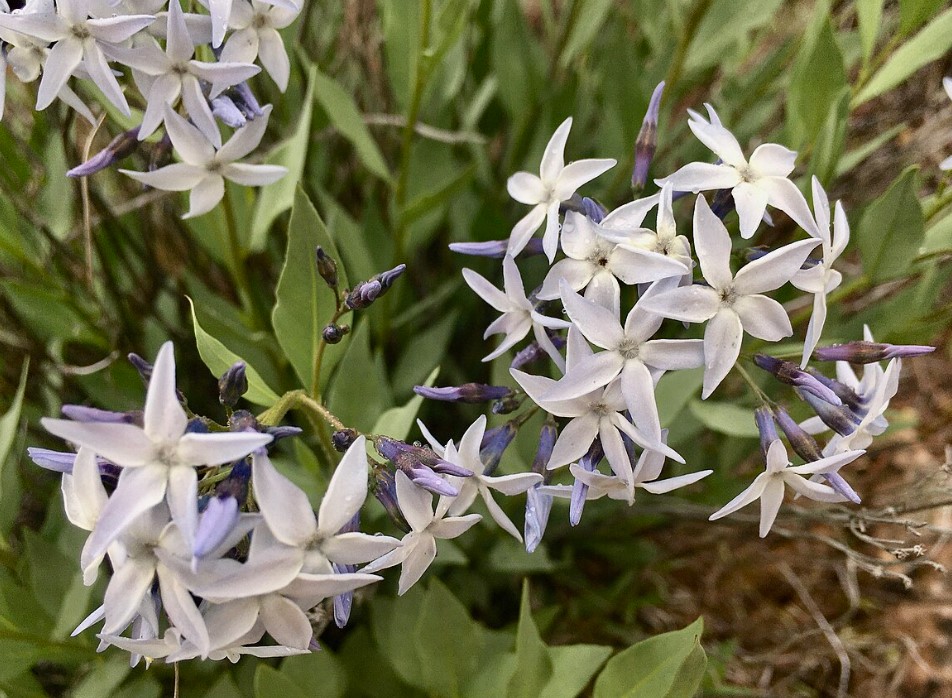
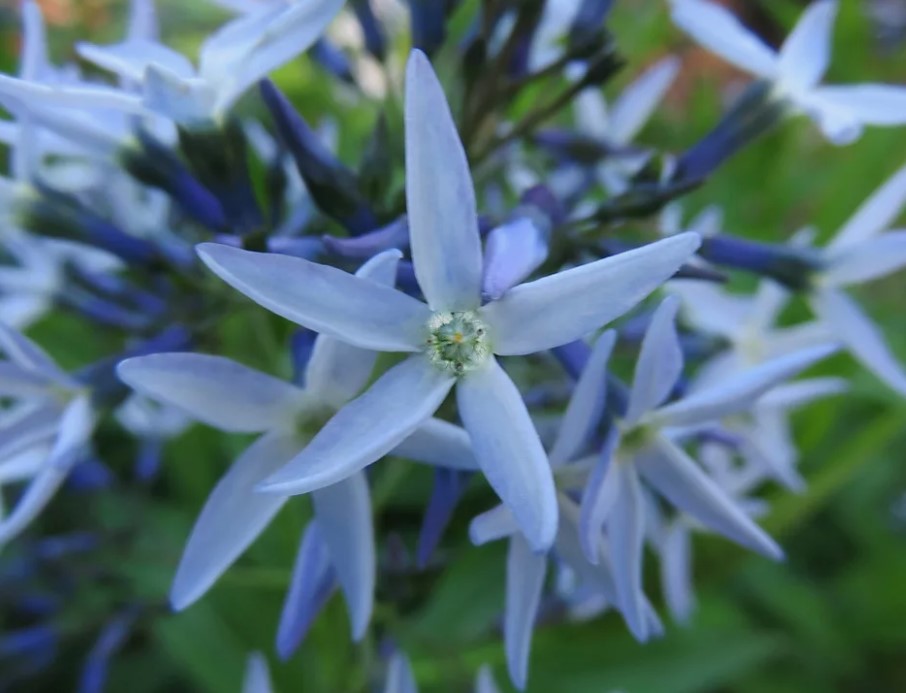
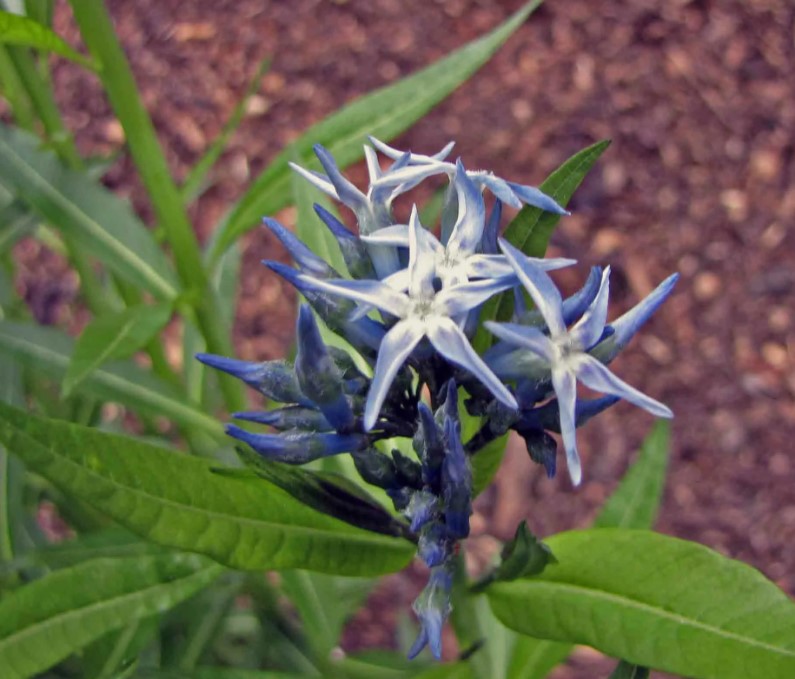
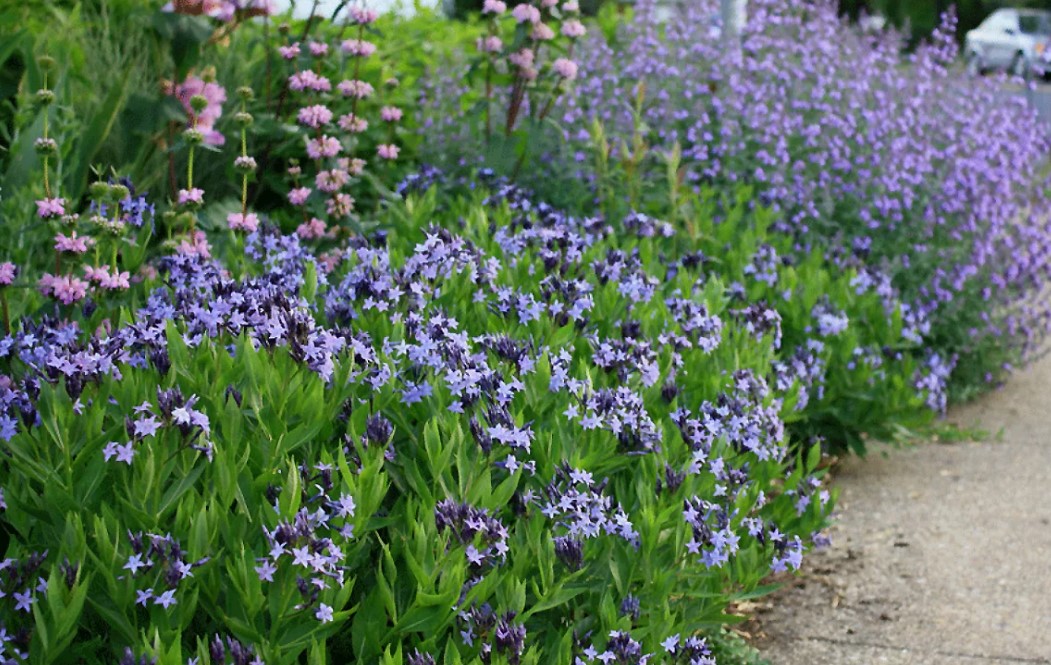
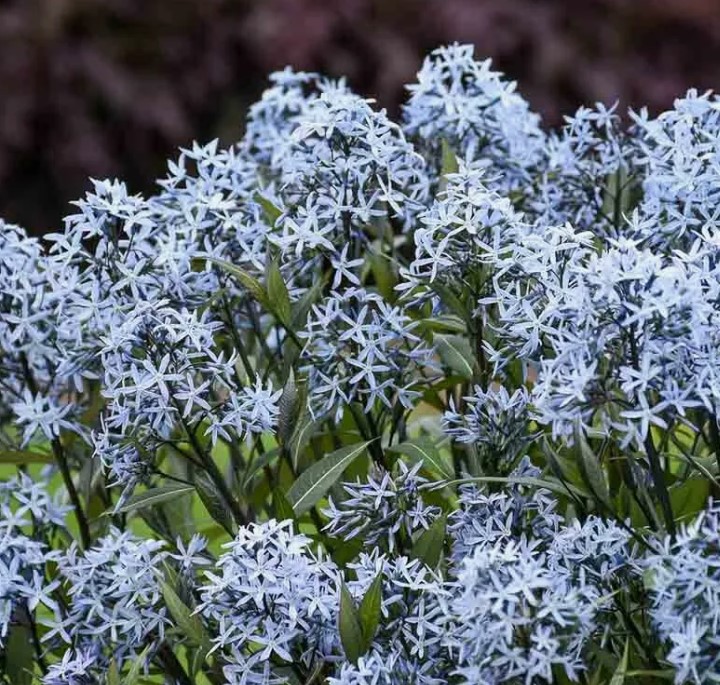
Description of Amsonia
The genus Amsonia comprises various species of perennial herbs and subshrubs with woody branches. This plant is a member of the Curtaceae family, which also includes cultivated plants such as mandevilla, oleander, and periwinkle. 🌱 In its natural habitat, Amsonia can be found in sandy areas and wooded areas of Turkey, Greece, and North America, as well as on prairies.
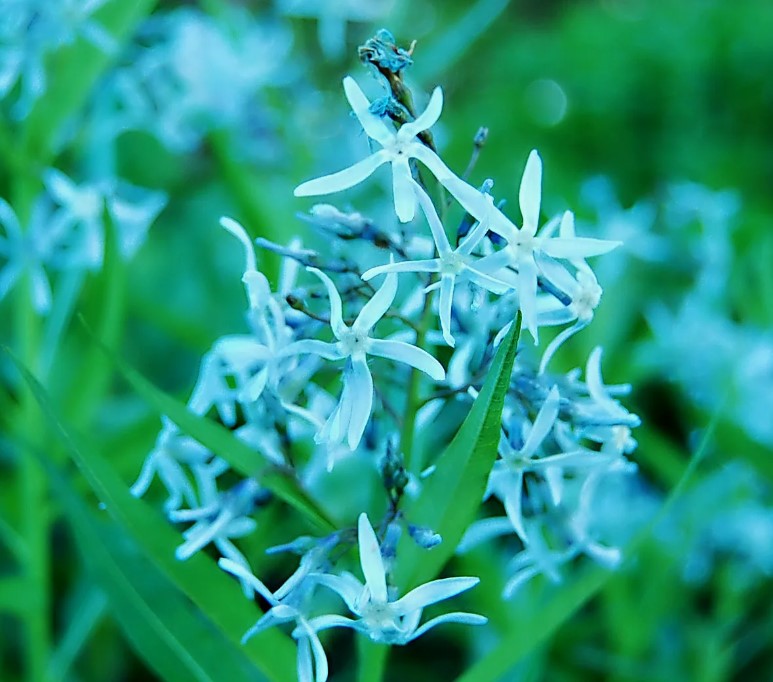
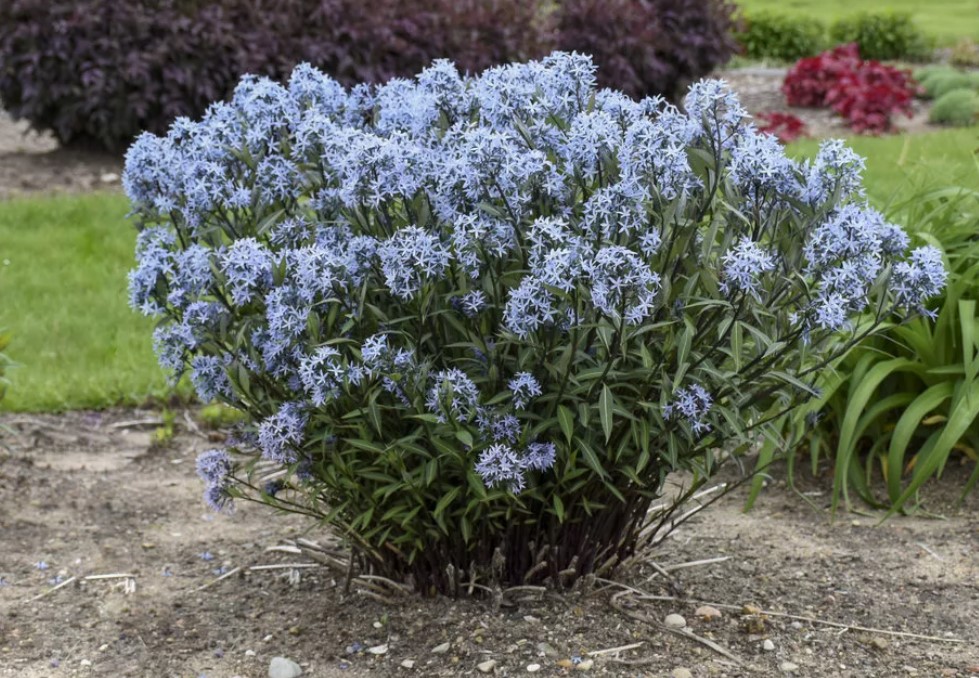
This plant is often called "Blue Star" or "Blue Amsonia" due to the beautiful color of its flowers. 🌟 In autumn, the plant's leaves can take on delicate yellow hues, giving them a special charm.
Amsonia develops dense bushes from upright stems that can reach a height of up to 100 cm, depending on the species. After planting, the plant may require 2 to 5 years to fully adapt to environmental conditions. However, after this time, it delights with abundant flowering and becomes more resilient to adverse conditions. 🌼
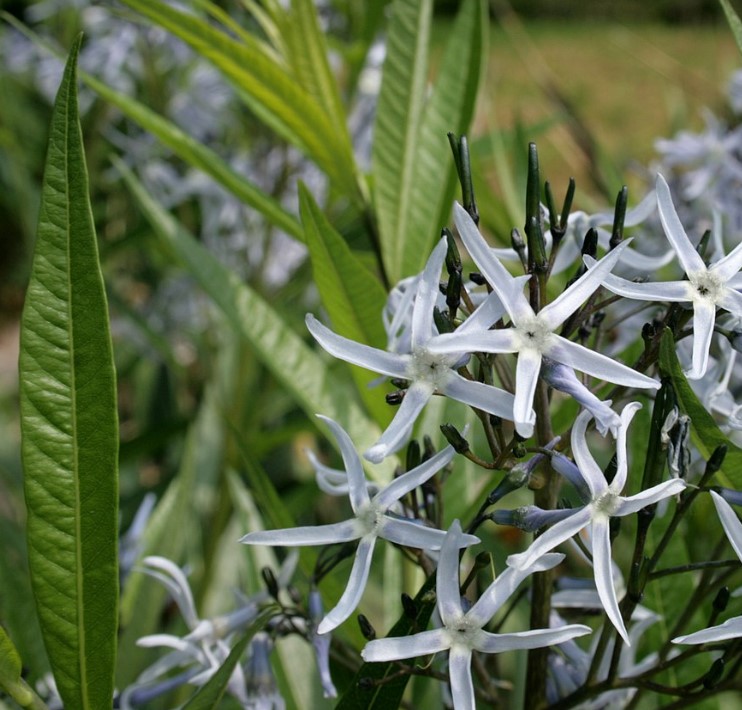
Amsonia leaves come in a variety of shapes and sizes, and their color depends on the plant variety. Flowering occurs from May to September, when the plant is crowned with numerous lush inflorescences. Amsonia flowers are star-shaped and come in shades of blue, from azure to bright lilac.
Amsonia is an important food source for bees, butterflies, and other beneficial insects during the summer due to its nectar-producing nature. After flowering, the plant produces small pod-like fruits containing winged seeds. 🐝🌿
Types and varieties of Amsonia
This genus includes as many as 22 species! 😮 However, not all of them are equally popular among gardeners.
Amsonia salicaria thrives in Russia's fourth climate zone. 🌿 It stands out for its undemanding nature and ability to survive winter frosts.
Amsonia habrichtii is ideal for zone 5 and warmer areas. 🌞 However, it should be protected before winter to avoid frost damage.
The most demanding plant to grow is Amsonia ciliata. 🌼
Amsonia tabernaemontana
Native to North America, it grows in forest clearings and thickets in Missouri. This species has good winter hardiness, suitable for zones 3-9, making it an ideal choice for central Russia.
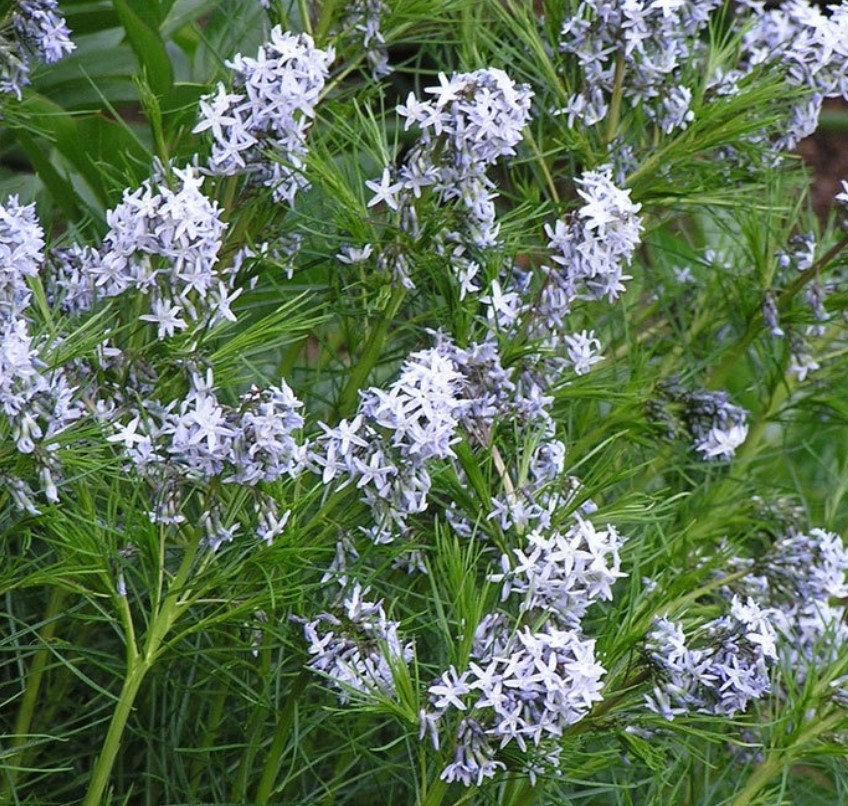
This upright perennial plant with abundant shoots forms lush bushes reaching a height of up to 60 cm and a width of 45 cm. Its leaves range from oval to elliptical or lanceolate, 3-7 cm long, and have a dull green hue. The flowers are a rather soft blue, star-shaped, up to 1.9 cm in diameter, gathered in terminal pyramidal inflorescences. Amsonia salicifolia blooms for about a month, beginning in late spring, forming tall peduncles 60-90 cm high.
| Variety | Description |
|---|---|
| Blue Ice
|
A compact shrub reaching a height of 20 to 40 centimeters. Its leaves are covered with dark green, pointed blades, and blooming from May to June, it decorates the garden with bright blue, star-shaped flowers. 🌟 |
| Storm Cloud
|
A tall variety that can reach a height of up to 70 centimeters and a width of 96 centimeters. Its leaves are adorned with silvery veins, and its blue flowers give the plant a special grandeur. 🌩️ |
| Short Stack
|
A dwarf variety, 25-30 cm tall. It blooms in late April to early May, decorating the garden with sky-blue flowers. The plant prefers sunny locations but can also grow in partial shade. After flowering, it can be pruned to maintain a neat appearance. 🌱 |
Amsonia orientalis
Native to northeastern Greece and northwestern Turkey, this variety is winter-hardy and hardy in USDA zones 6-9.
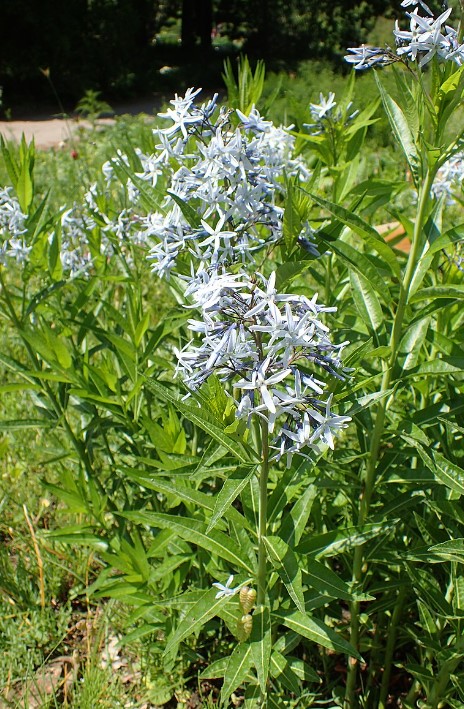
The plant is a fairly spreading perennial with erect stems that have woody bases. They grow up to 50 cm in height and up to 30 cm in width. The leaves of Amsonia orientalis vary from oval to lanceolate, reminiscent of willow leaves. They are grayish in color and reach a length of 3 to 7 cm.
The flowers of this plant are small, 1-2 cm in diameter, violet-blue in color, and gathered in short, compact panicles. Amsonia orientalis blooms from early summer until mid-season.
Amsonia illustris
Native to the central and southern regions of the United States, this variety is winter-hardy and tolerates USDA zones 5-9.
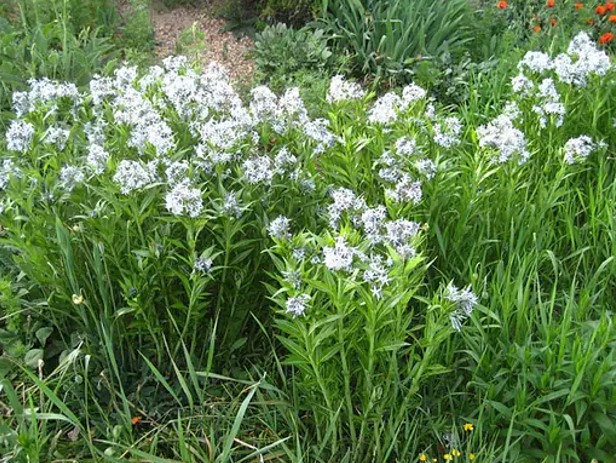
The plant is a bushy perennial that can reach a height of up to 1.2 m and a width of up to 45 cm. The leaves of the Amsonia splendens are broadly oval, lanceolate, or elliptical in shape, shiny and bright green, and range from 3 to 7 cm in length.
The flowers of this species are light blue, up to 1.5 cm in diameter, and borne in open panicles on erect stems. Amsonia splendens blooms in May, delighting the eye with its beautiful flowers.
Amsonia hubrichtii
Native to the south-central United States, it is winter hardy to USDA zones 5-8.
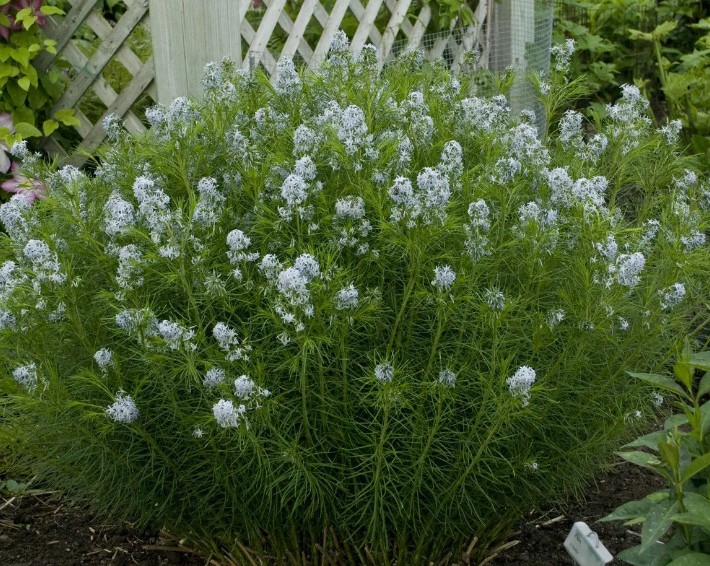
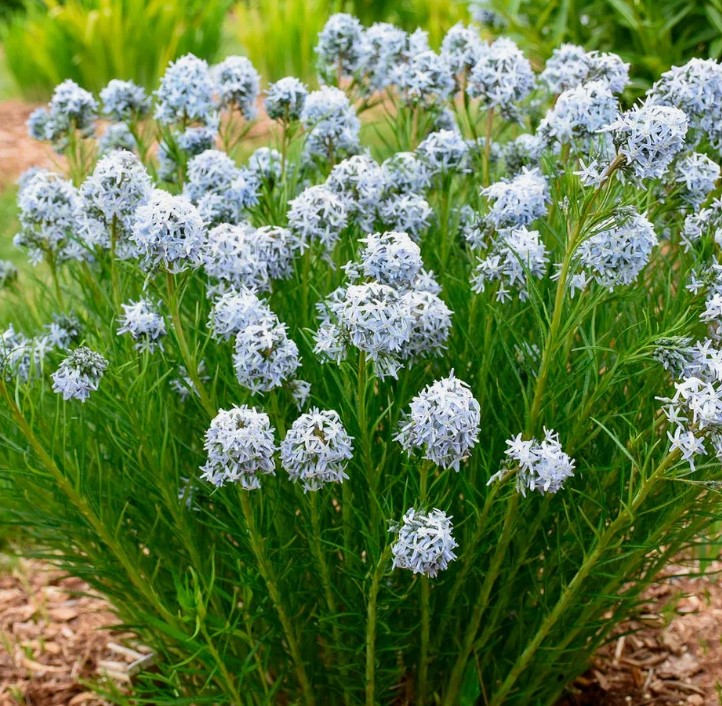
This perennial has erect stems and narrow, needle-like leaves of a bright green, almost hairless color. In late spring, its flowers turn a pale blue and are star-shaped.
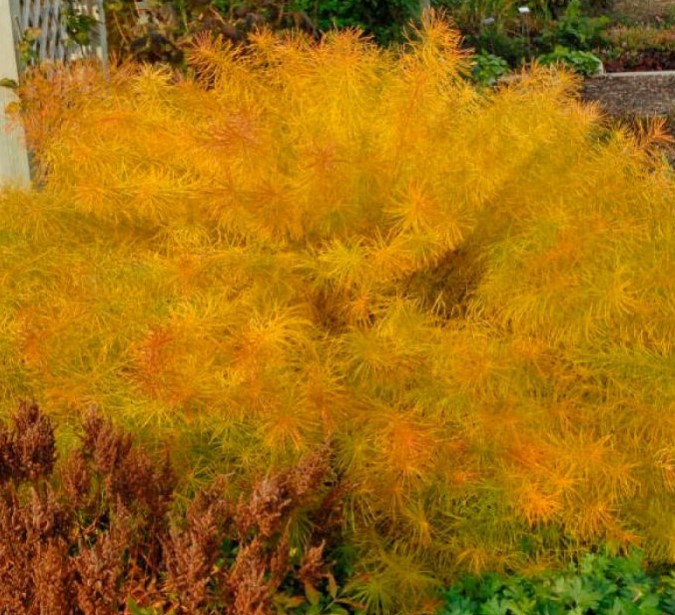
Amsonia habrichtii grows well in both sun and partial shade, where it continues to bloom longer. This plant is especially decorative in autumn, when its bushes turn golden-yellow, creating an attractive garden display.
Amsonia ciliata
It is distinguished by beautiful variegated leaf blades and blue flowers that glow with a light steel tint.
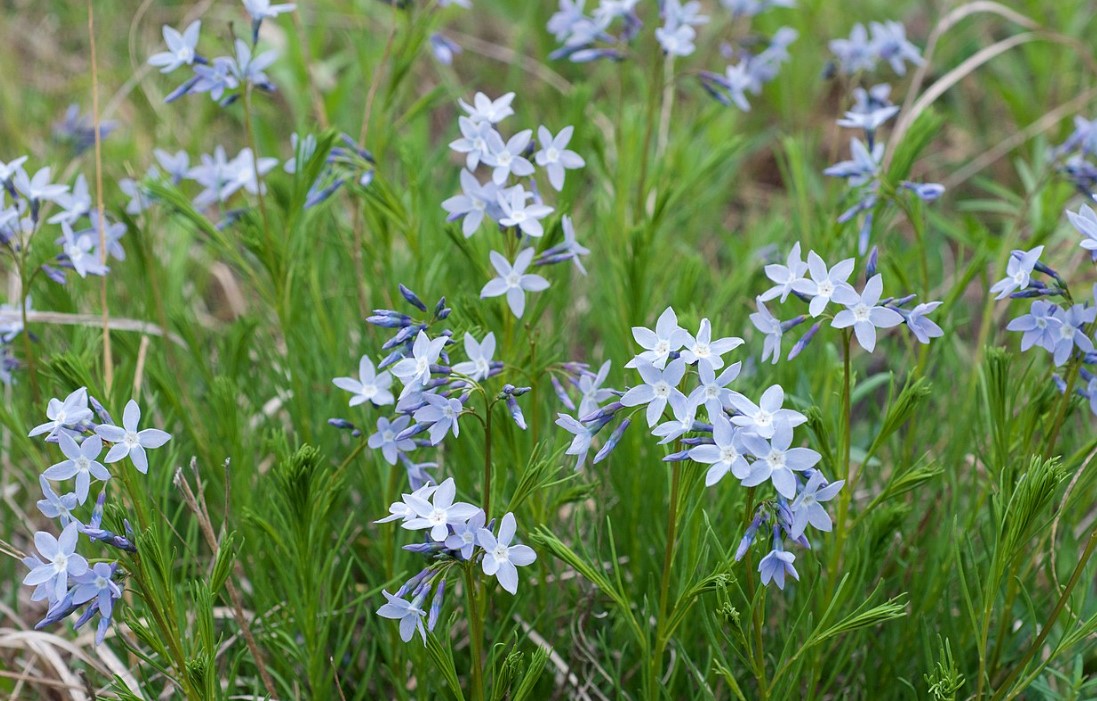
There is a subspecies of Amsonia ciliata filifera, which is more compact compared to the main species, which makes it even more attractive for landscaping garden plots.
Amsonia Ernst Pagels
This hybrid species of Amsonia has attractive pale green leaves that turn a delicate yellow in autumn. It's ideal for creating beautiful perennial flowerbeds. From June to July, this shrub delights with its blooms, reaching a height of up to 100 cm.
Amsonia Growing and Care Chart
| Characteristic | Description |
|---|---|
| Location | Amsonia prefers sunny locations, but can also tolerate partial shade, making it a versatile plant for a variety of conditions. 🌞 |
| Soil | For successful cultivation, garden soil with good drainage is necessary, which helps prevent waterlogging and root rot. 🏞️ |
| Planting dates | It's recommended to plant amsonia in the spring for best winter preparation. Planting in the fall can be risky due to the risk of plant death in winters with little snow. 🌱 |
| Watering, humidity | Regular watering 2-3 times a week will ensure amsonia receives sufficient moisture. The plant is not fussy about humidity, making it easy to care for. 🚿 |
| Top dressing | Amsonia doesn't require frequent fertilizing. Simply use the nutrients from your soil or apply a light fertilizer to maintain healthy growth. 🌿 |
| Pests and diseases | This plant is resistant to diseases and pests, making it an excellent choice for gardeners who prefer minimal intervention. 🦠 |
| Features of cultivation | To retain moisture in the root zone and suppress weed growth, mulching the root system with compost or wood chips is recommended. In winter, mulch also serves as protection from the cold. ❄️ |
| Reproduction | Amsonia can be propagated by both seed and division. This allows gardeners to choose the most convenient propagation method and ensure the growth of new plants. 🌱 |
Rules for planting and caring for amsonia
Amsonia, with its graceful flowers and low maintenance, is a wonderful addition to any garden or flowerbed. This stunning perennial plant attracts attention with its vibrant blue flowers and easy care.
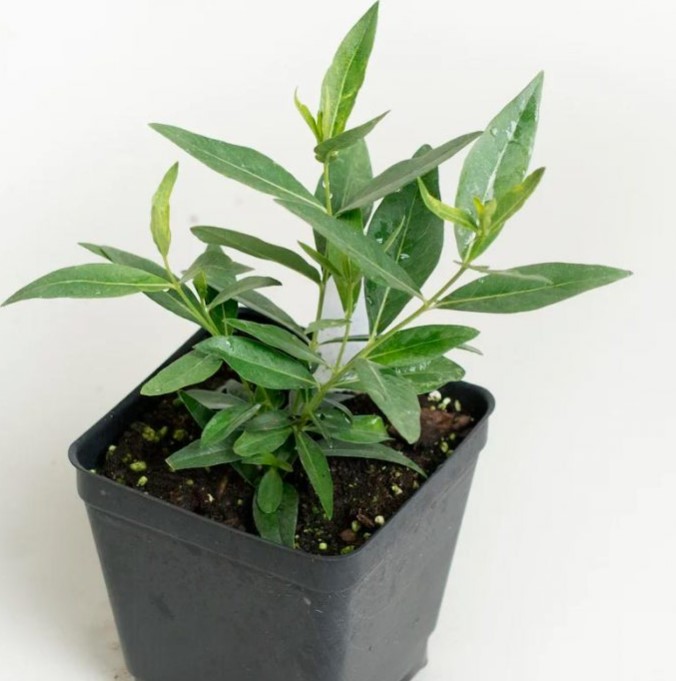
However, to ensure your amsonia thrives and delights you with its colors, you need to know the basic rules of planting and care. In this guide, we'll cover all aspects of growing amsonia: from choosing a location and preparing the soil to watering, fertilizing, and protecting against diseases. By following these recommendations, you can create a beautiful amsonia corner that will delight you with its splendor and beauty all season long.
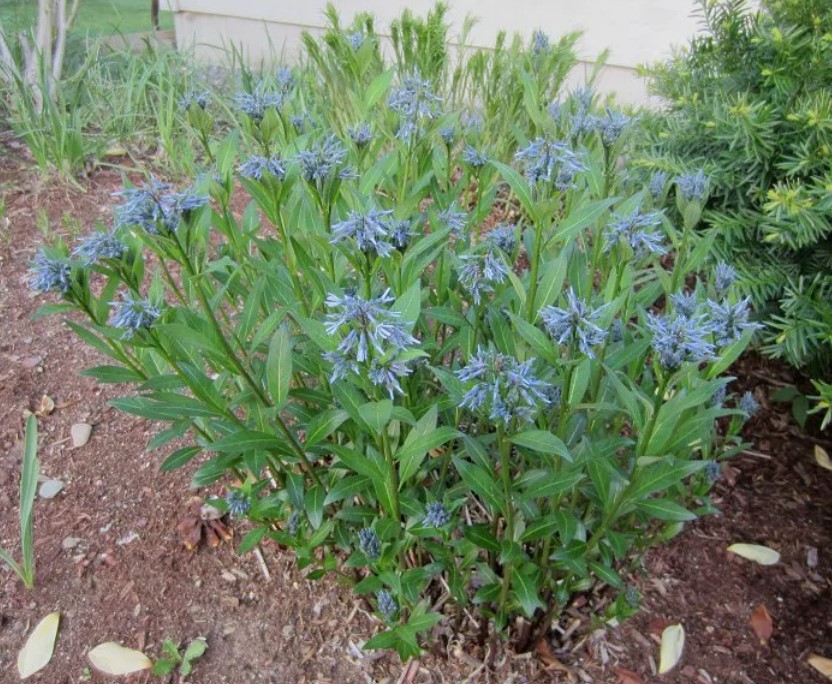
Landing site
Choosing a planting site for Amsonia plays a crucial role in its successful growth and prosperity 🌱. The plant is quite frost-resistant and thrives in temperate climates. It can withstand temperatures down to -25 degrees Celsius. Maintaining soil moisture during hot weather is key.
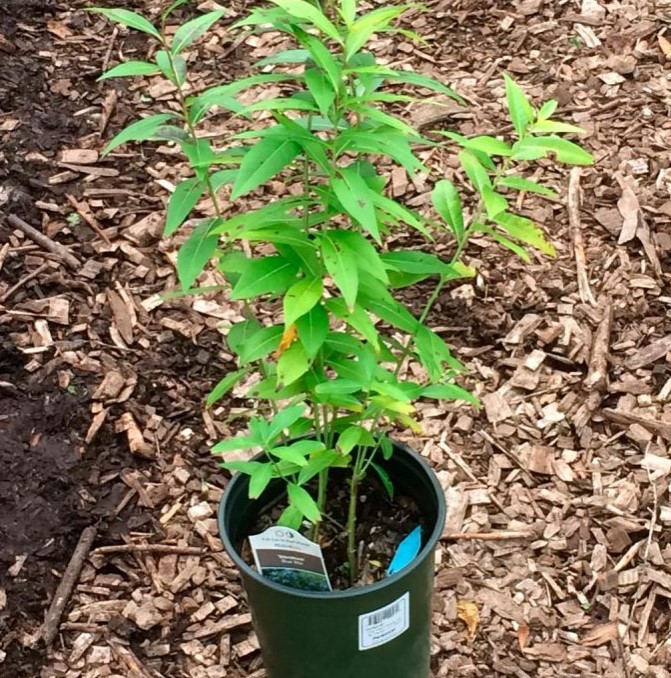
Amsonia prefers well-drained soil, whether sandy, calcareous, or loamy. It thrives in light, permeable, and fertile soil.
Regions with hot, dry summers are not ideal for amsonia. However, with regular watering, it can thrive in these conditions, ensuring the soil does not dry out.
When choosing a planting site, it's important to avoid waterlogging in the root system, especially in winter, to prevent disease. Shady or partially sunlit areas are ideal for this plant, where it can receive several hours of sunlight per day.
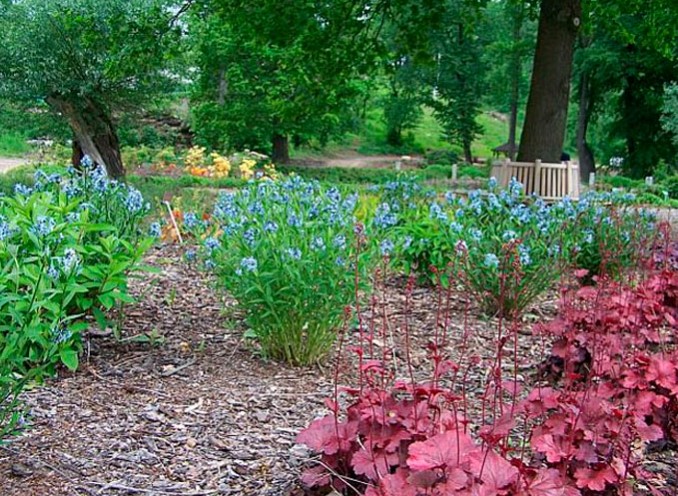
Amsonia is perfect for garden beds and mixed borders, provided the soil remains moist during the summer months. It also thrives in the shade of deciduous trees, creating a cozy atmosphere in the garden. 🌿
Landing rules
The optimal time for planting outdoors is May, after the threat of frost has passed. In southern regions, plants can be planted in the fall, in September or October.
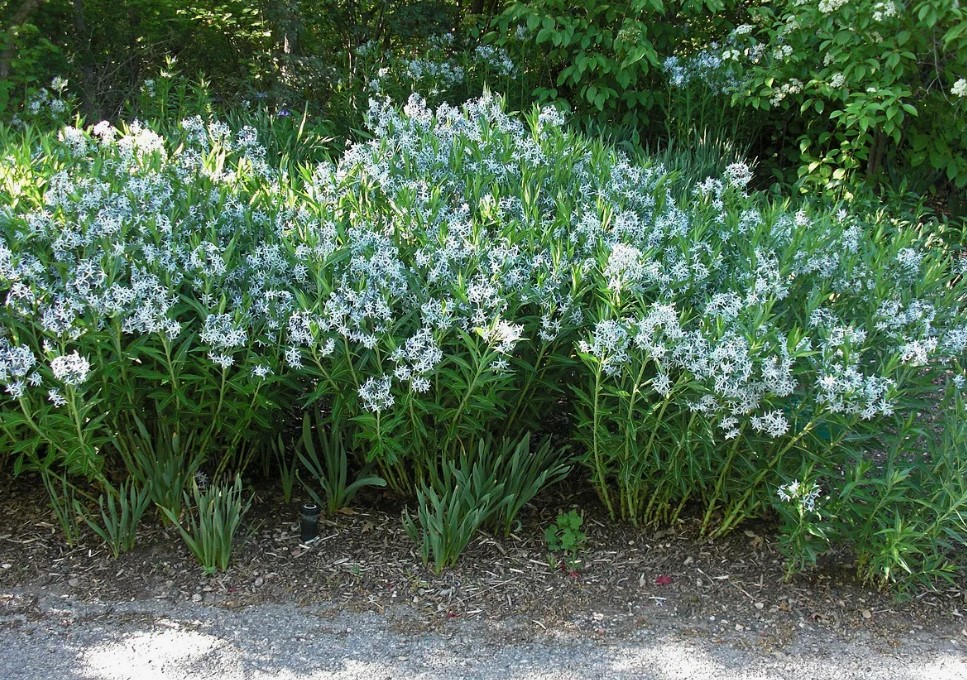
To create a striking garden appearance, amsonia is recommended to be planted in groups. The ideal planting density is 3 to 6 plants per square meter. The distance between plants should be 30 to 50 centimeters, depending on the mature size of the bush.
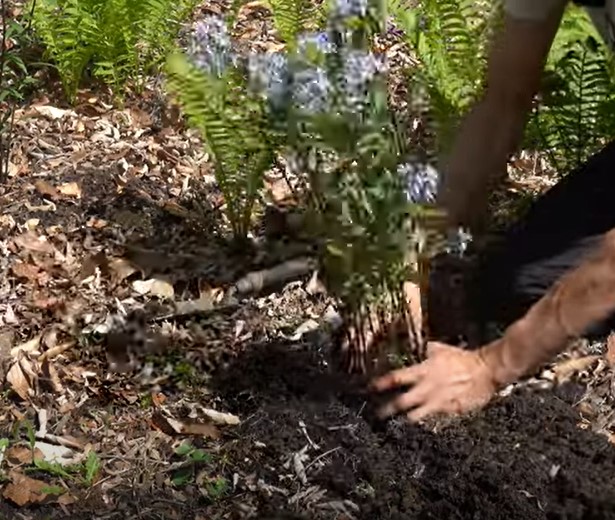
Step-by-step instructions for planting amsonia:
- Dig over the area, removing large stones and weed roots. Keep in mind that excess moisture during winter can be harmful to the plant. If the soil is heavy or clayey, improve its drainage by adding coarse sand or gravel.
- Submerge the amsonia roots in water before planting them in the ground.
- Prepare a planting hole that is twice the size of the plant's root ball.
- Create a drainage layer at the bottom of the hole using gravel or coarse sand.
- Add some compost to the soil to enrich it with nutrients.
- Transfer the plant to the hole.
- It is necessary to compact the soil surface around the plant slightly with your hands and water it generously.
- It is recommended to mulch the soil surface to prevent it from drying out and weed growth.
- The first few weeks after planting require regular watering so that the plant can better take root in its new location.
- Caring for amsonia in open ground is simple and includes regular watering and fertilizing.
Watering
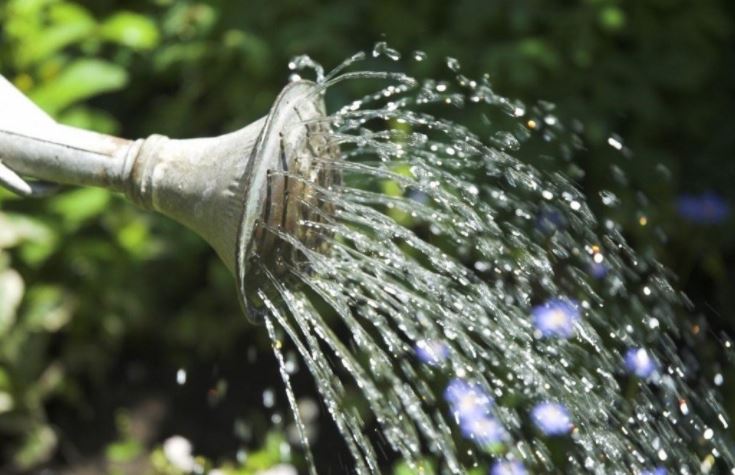
Amsonia requires regular but moderate watering from spring to fall to keep the soil moist but not waterlogged. During dry periods, water the plant several times a week, preferably early morning or late evening, directing the water under the bush and avoiding contact with the leaves. Loosening the soil and removing weeds will also promote growth and flowering.
Top dressing
Fertilizers are best applied to the soil in spring and summer, but no more than 2-3 times per season. An ideal combination is achieved by alternating organic and mineral fertilizers. During bud formation, it's beneficial to use complex mineral supplements, while in midsummer, after flowering, organic fertilizers are preferable.
Trimming
When growing Amsonia in a sunny location, pruning or staking is usually not necessary, but stems may sometimes bend under the weight of the blooms. In shade or fertile soil, shoots may be more flexible and require support or pruning. To maintain a neat appearance, especially for plants grown in the shade, it is recommended to prune the stems by 1/2-1/3 after flowering, which promotes a fuller bush. Some tall plants may require support, especially if they are grown in the shade and not pruned after flowering.
Wintering
To protect against winter frosts, most amsonia varieties are covered with spruce branches, dry leaves, or non-woven material. They are also mulched with a layer of peat or sawdust.
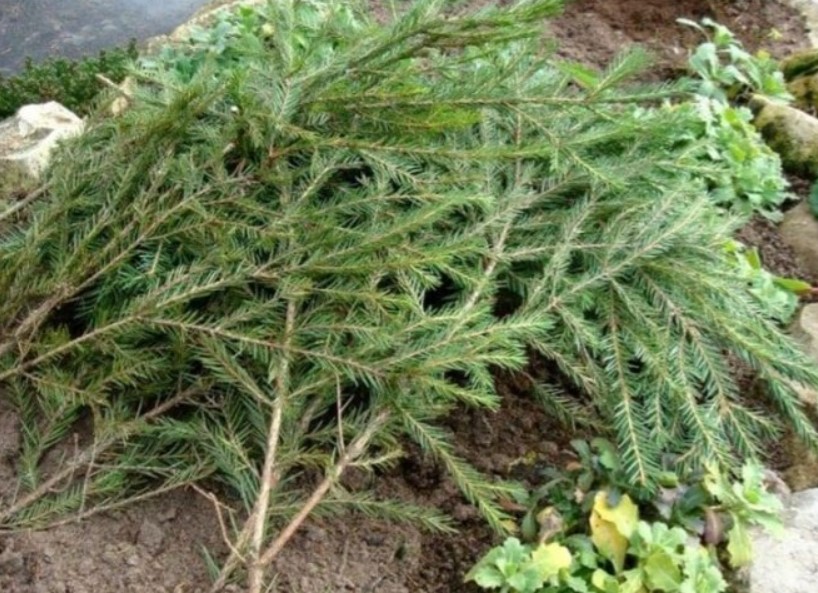
The top layer can be protected with plastic film. Before the onset of cold weather, the stems are shortened to 10 centimeters to prevent the development of rot diseases. The cover is removed in the spring, when stable above-zero temperatures are reached. 🍂
Reproduction of Amsonia
Propagating amsonia is quite simple. You can divide the plant in early fall or spring, take cuttings in the first weeks of summer, or sow seeds in a greenhouse or indoors in the spring. Seed propagation is the most popular among gardeners. 🌱
Dividing the bush
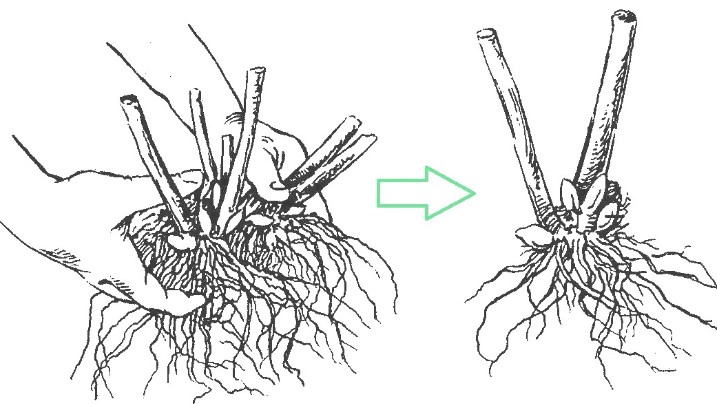
It's recommended to divide a fully established woody bush regularly—about every four years. To do this, you can use a sharp shovel to remove the bush from the soil and then separate several sections. After this, the divisions should be immediately planted in a new permanent location. 🌿
Cuttings
It is recommended to take semi-hardwood cuttings in the summer, when the plant is actively growing. The optimal length is about 15 centimeters.
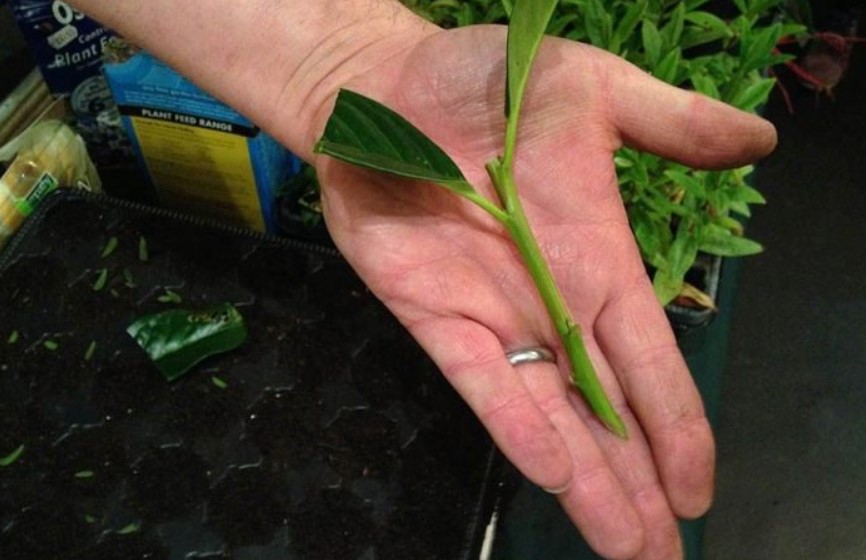
To root, they are placed in containers with a moist substrate consisting of a mixture of soil and sand. The soil around the cuttings is then compacted slightly. To create favorable conditions for rooting, the cuttings are covered with a transparent cover, such as a plastic bag. The cuttings can be planted in the spring after the last frost or the following fall. 🌱
Growing from seeds
Under favorable conditions, amsonia can propagate by self-seeding, which is considered the easiest method. When the bush is flowering and the seeds are ripe, collect them or purchase them from a store. To stratify the seeds, place them in the refrigerator for 2 months at a temperature of 1 to 5 degrees Celsius. Before sowing, soak the seeds in clean water for 24 hours.
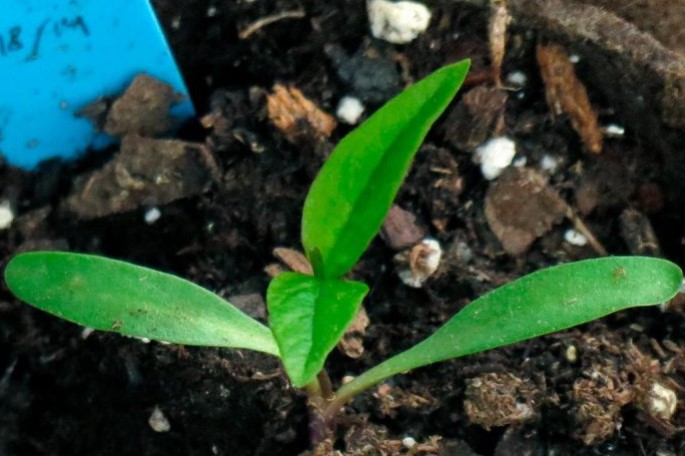
Seeds can be sown in the fall or spring; they can be sown directly into the soil before winter, while spring is best for growing seedlings. In early spring, plant the seeds in trays and grow the seedlings indoors. Spread the seeds evenly over the surface of a well-drained substrate. Once the seedlings have developed several true leaves, transplant them into individual containers. Planting outdoors is recommended after the danger of frost has passed.
Potential problems when growing amsonia
Amsonia, despite its strong immunity, can be attacked by various diseases and pests.
| Pest | Signs of infection | Methods of control |
|---|---|---|
| Root rot | Wilting leaves, brown spots | Destroy affected plants, ensure good drainage, and treat the soil with Fitosporin |
| Aphid | Sucking juice, spreading infections | Application of insecticides Tanrek, Molniya, Aktara |
| Spider mite | Fine webbing on leaves and stems, brown spots, stunted growth | Removing damaged leaves, weeding, treating plants with Iskra, Kleshchevit, Actellic |
| Scale insect | Dense scales on stems and leaves, brown spots, dying off of plant parts | Manual removal of pests, treatment of plants with Aktara solution |
Use of Amsonia in the landscape
Amsonias are the perfect choice for your garden! 🌼 They can help you create magical corners where native plants and exotic species blend. They're perfect for both shady corners and bright, sunny spots in your yard. You can plant them along fences or the edges of your dacha, creating picturesque mixed borders. 💫
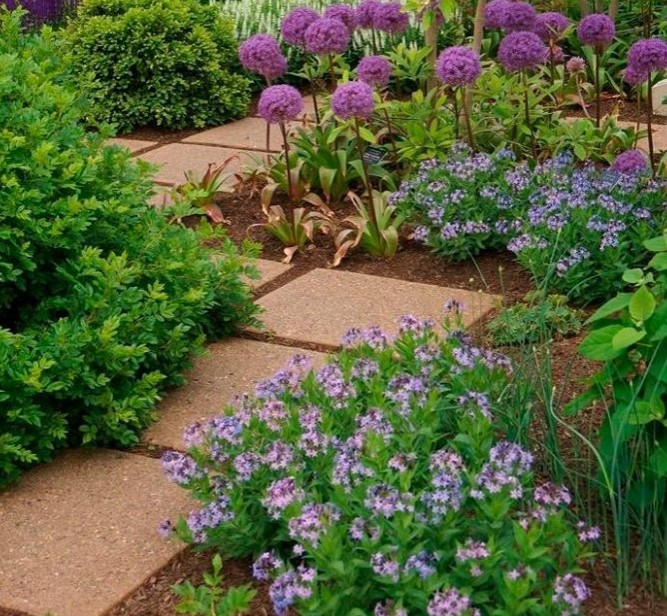
When in bloom, amsonias transform your garden into a veritable garden of blue wonder! Along with them, bellflowers, bearded irises, aconites, Viola wittrockiana, agapanthus, columbine, large-leaved brunnera, hostas, creeping bugleweed, and many other plants bloom, creating stunning compositions. They can be placed near ponds, among evergreens, or in gravel gardens, adding a splash of color to your property. 🌺
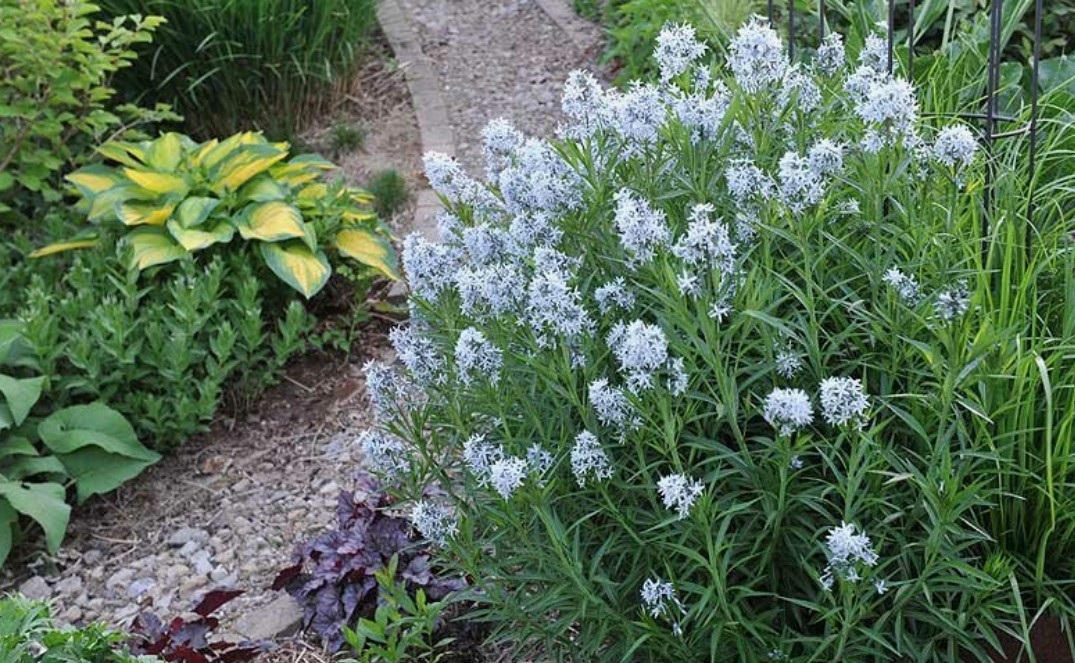
Amsonias also pair perfectly with cool-toned grasses and other plants. Together with burnet, alchemilla, heuchera, hosta, crassifolia bergenia, miniature spirea, and more, they create stunning compositions that add a special charm to the garden. 💐
Speaking of autumn, amsonias continue to delight the eye with their colors! They'll be a wonderful addition to fall-blooming asters and anemones, adding a special charm to your garden. 🍂
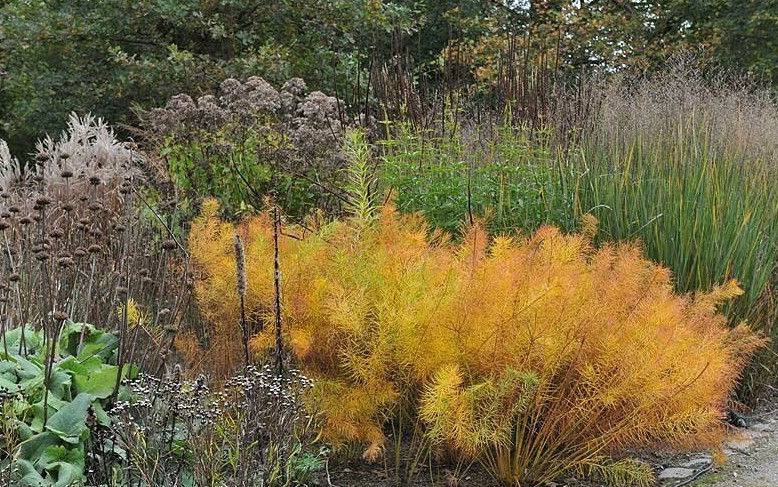
These are just a few of the many ways to use amsonia! You can experiment with combining them with various plants, creating unique compositions both around the house and in the background with conifers. 🌿