Marshmallow is a plant of the Malvaceae family, which can be either annual or perennial. 🌿
Perennial marshmallow species boast beautiful blooms and medicinal properties, making them popular among gardeners and herbalists. 💐
Although marshmallow is often grown commercially, it can also be successfully grown in a garden or homestead to provide raw materials for traditional medicine. 🏡
Content
- 1 Brief characteristics of marshmallow in the table
- 2 Althea photo gallery
- 3 Description of Marshmallow
- 4 Marshmallow Growing and Care Chart
- 5 Types and varieties of marshmallow
- 6 Marshmallow, mallow, and hollyhock comparison
- 7 Sowing marshmallow seedlings 🌱
- 8 Sowing and planting marshmallow in open ground
- 9 Caring for Marshmallow
- 10 Marshmallow diseases and pests, possible difficulties
- 11 Uses of Marshmallow
- 12 Harvesting marshmallow raw materials
Brief characteristics of marshmallow in the table
| Characteristic | Description |
|---|---|
| Spreading | Marshmallow is common throughout much of Europe, Asia, North Africa, and North America, as well as in the Caucasus Mountains, the Carpathians, and the Altai Mountains. It is also cultivated for medicinal purposes in Ukraine and the steppe regions of Russia. |
| Appearance | It resembles wild mallow in appearance, with a tall peduncle reaching up to 2.5 m. The flowers are large, collected in long, spike-shaped inflorescences. |
| Flowers and inflorescences | Marshmallow flowers come in a variety of colors: white, pink, purple, and others. They are borne in long, spike-shaped inflorescences, giving the plant a charming and elegant appearance. |
| Leaves | Large, lobed, with serrated edges, and slightly pubescent, they form a basal rosette in the first year. They can be used in cooking and medicine. |
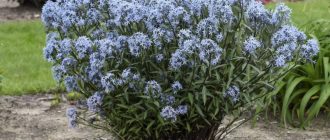
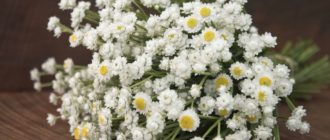
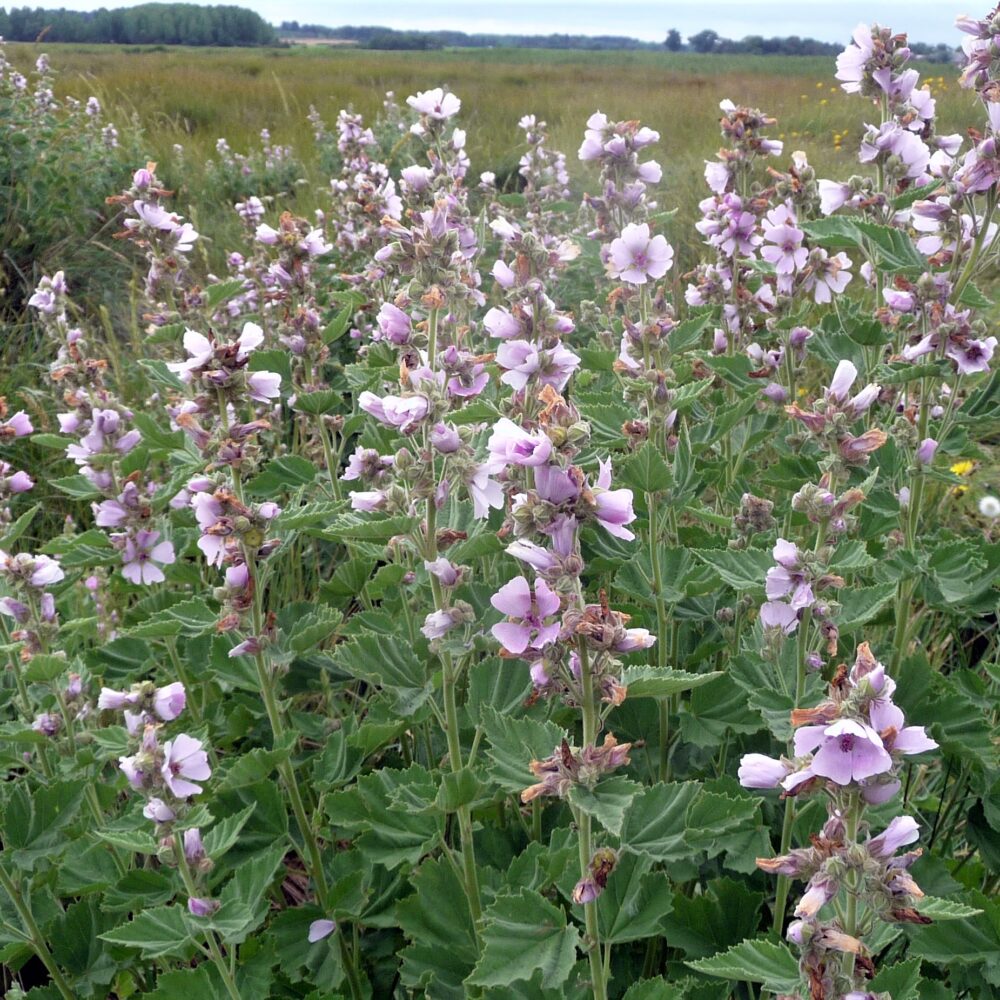
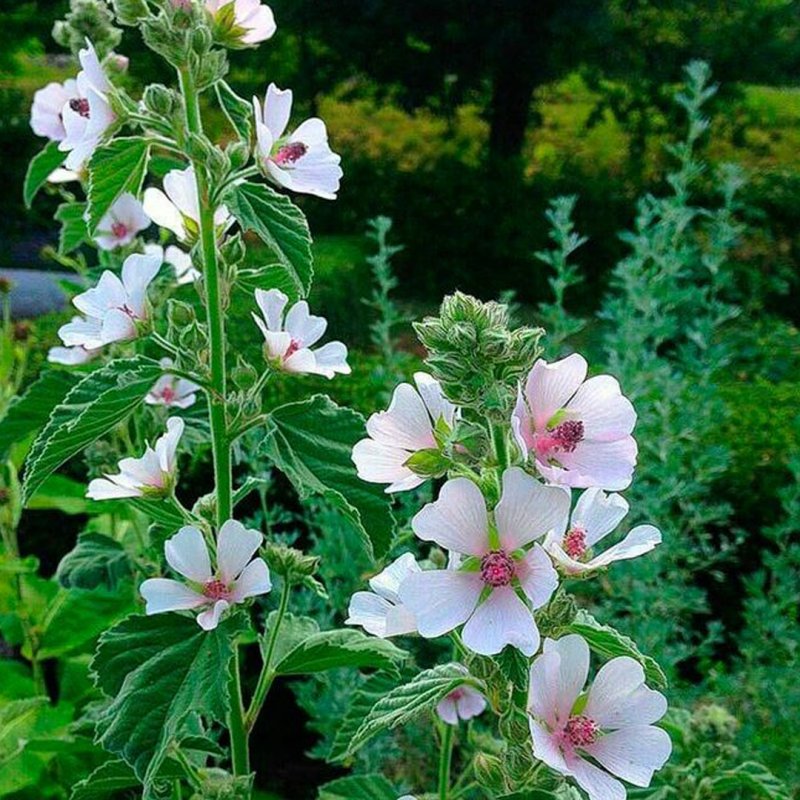
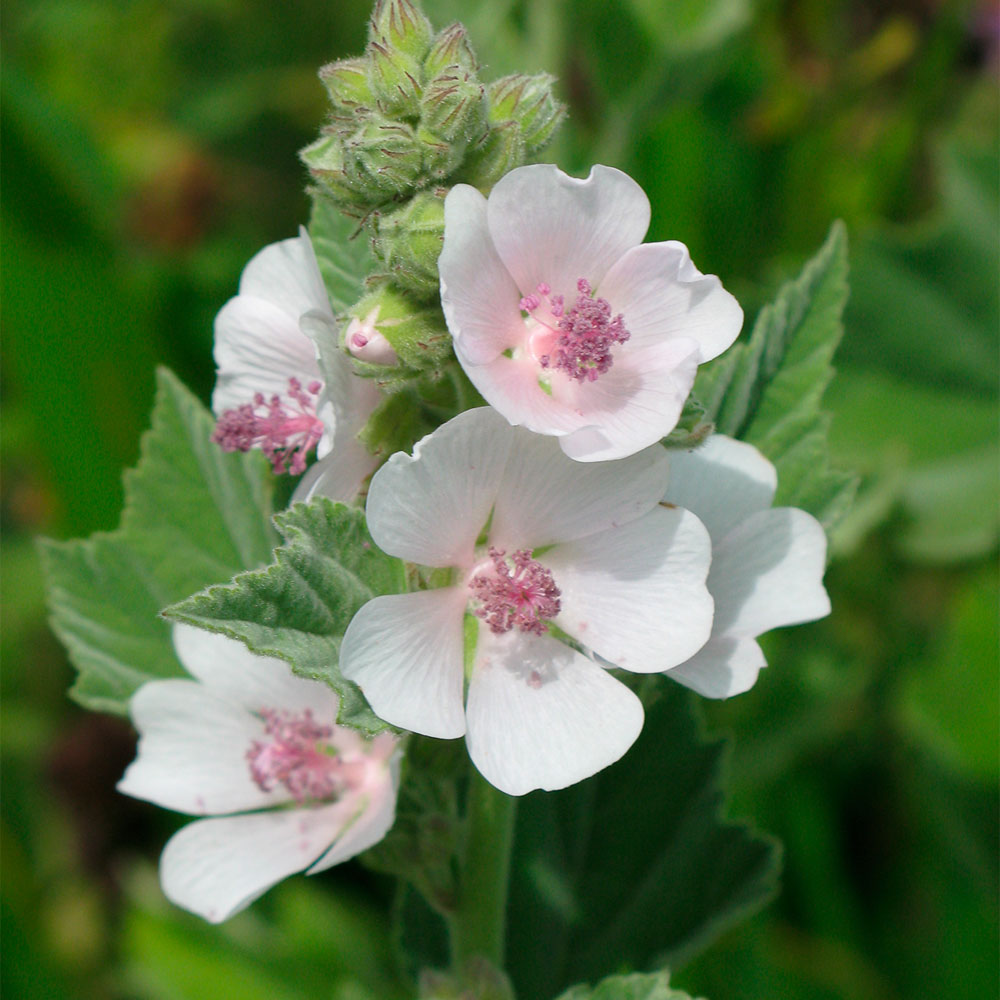
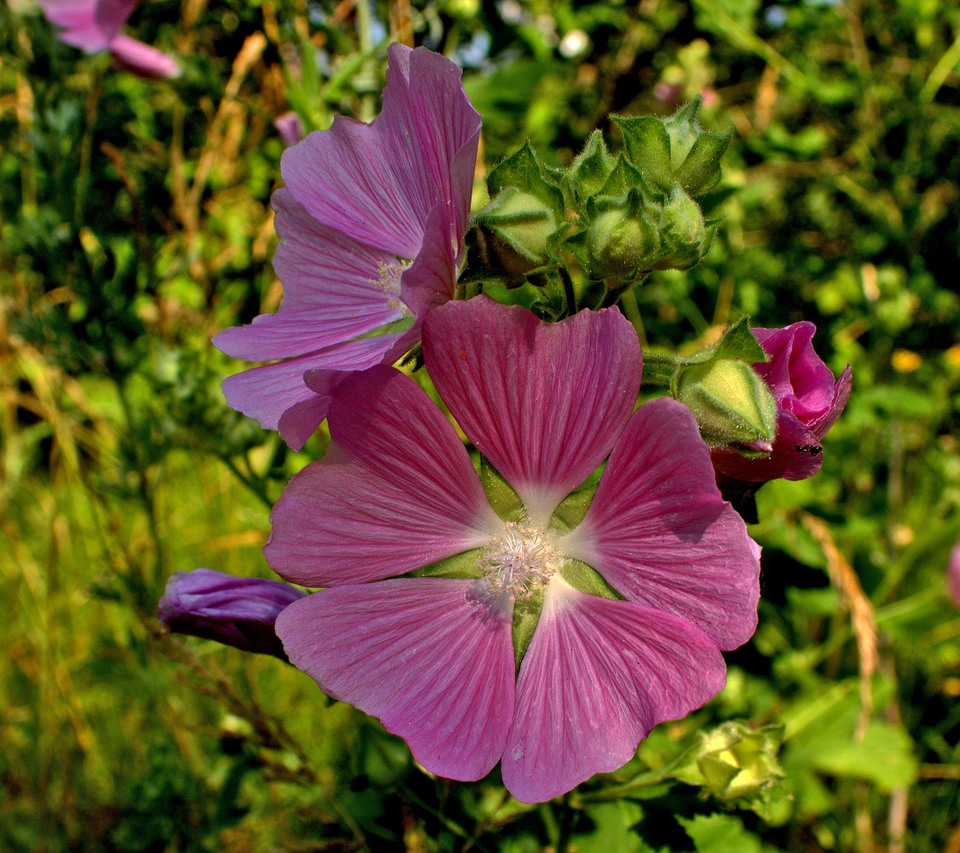
Althea photo gallery
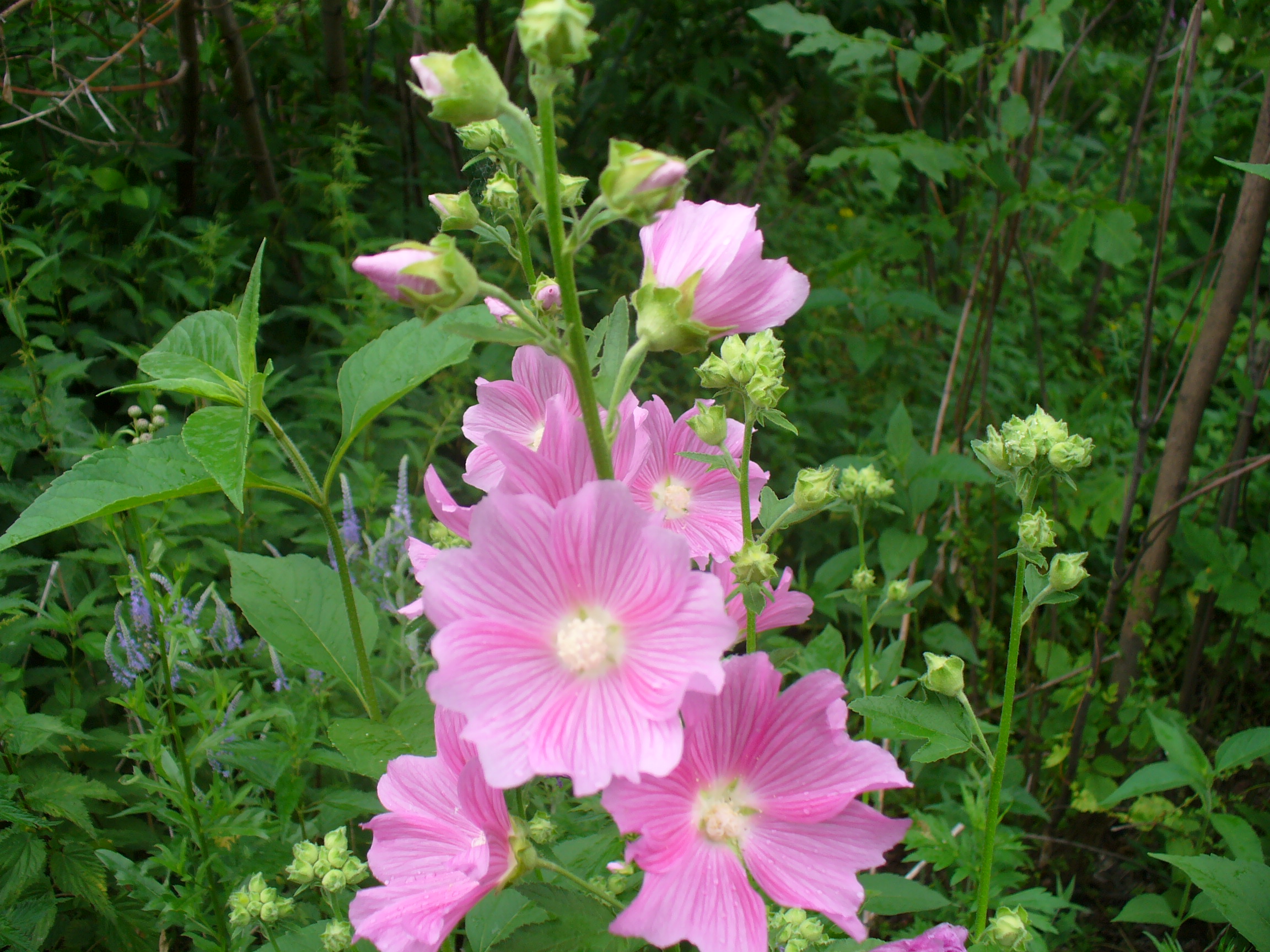
Description of Marshmallow
The herb's name comes from the Greek word Althaca, which translates as "to heal" or "many-useful."
In Russian and Ukrainian, marshmallow has several popular names: proskurnyak, prosvirnyak, kalachik, rozha, dikaya roza, palyanitsya, sobacha, patsirnik, ruzha psyacha and others.
In nature, marshmallow is found in river floodplains, shrub thickets, swamps, lowlands and along the shores of lakes.
Young flowers have straight, sometimes branching, stems. Mature plants develop several (up to 10) additional stems.
The shoots and leaves are covered with light fluff.
The leaves are ovate, petiolate, and green in color.
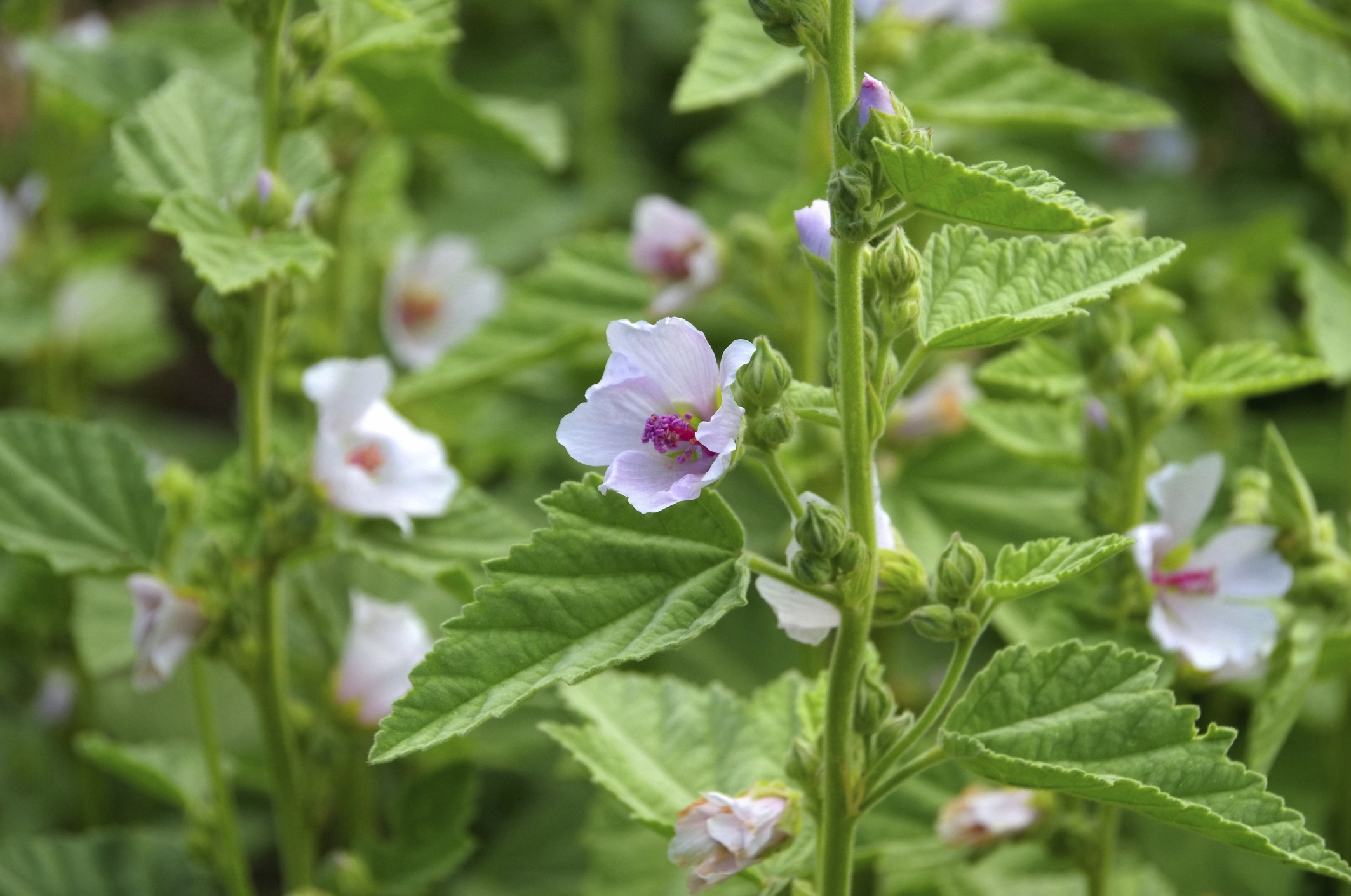
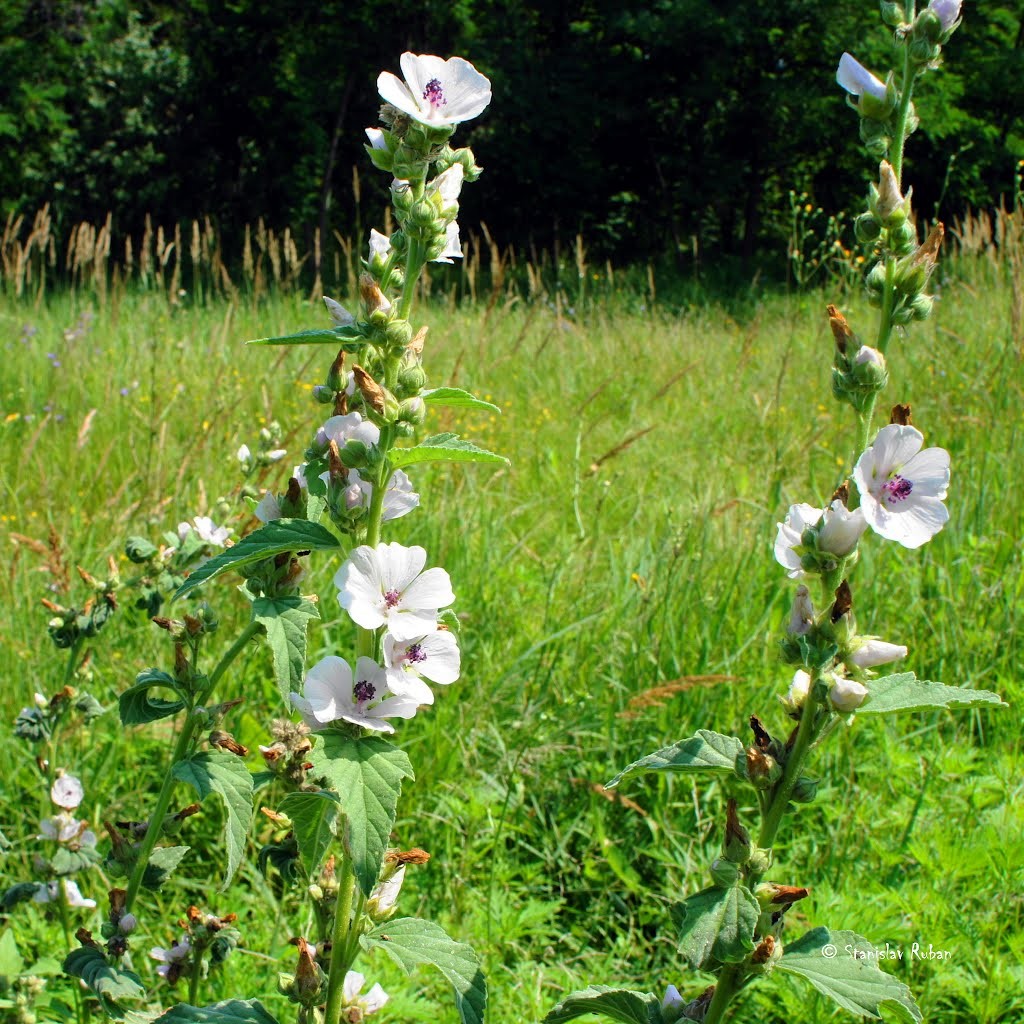
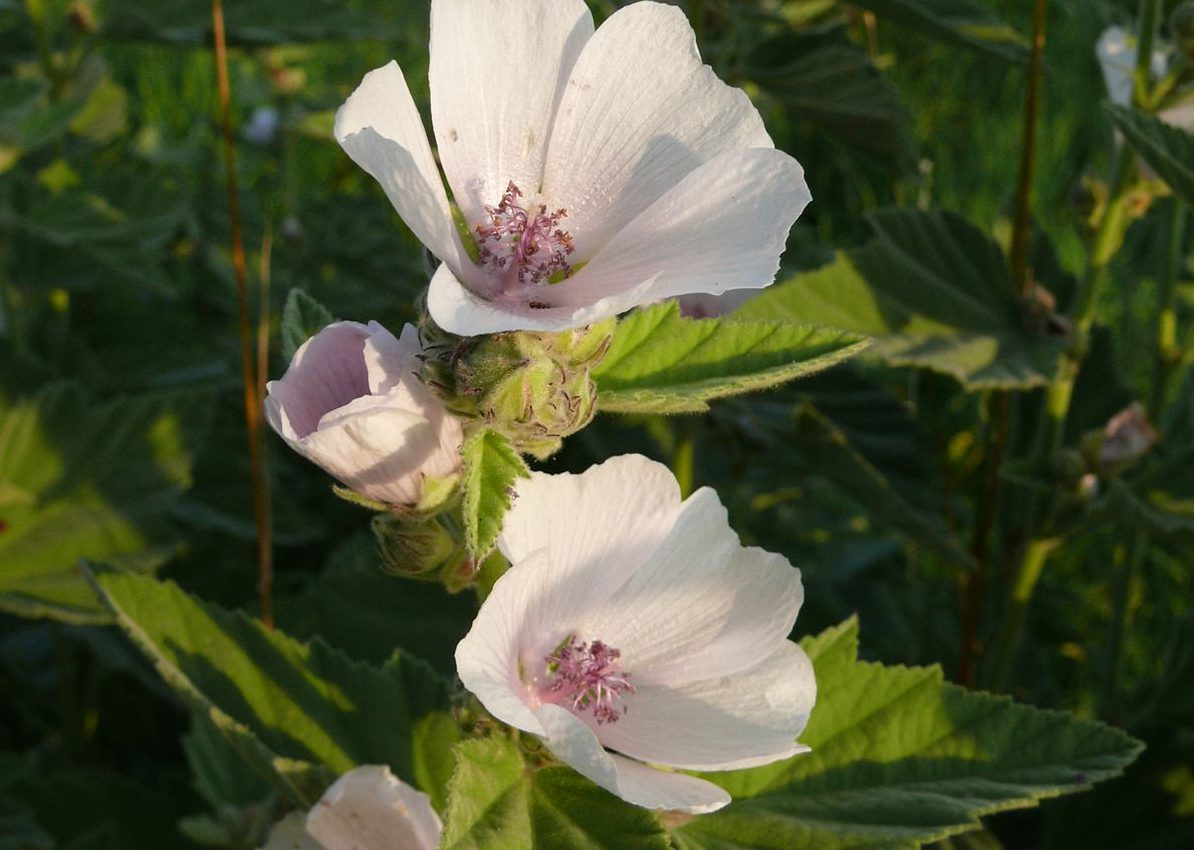
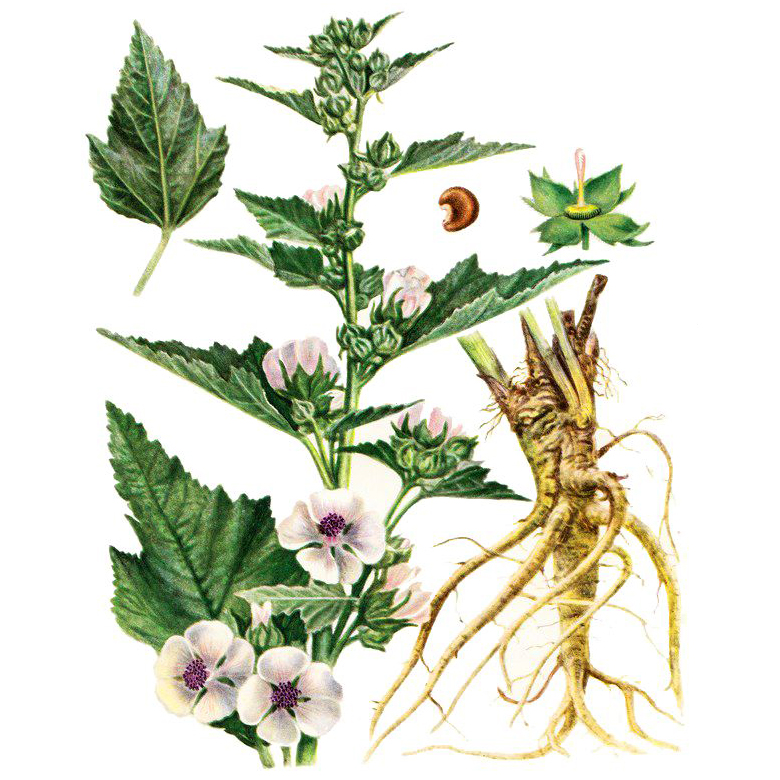
Flowers appear in the leaf axils and are collected in racemes. The petals are white, pink, or lilac. The stamens are a distinctive purple color.
After flowering, disc-shaped fruits filled with seeds are formed.
The marshmallow root is small and dense, with numerous branches that penetrate deep into the soil. Over time, the upper part of the root becomes woody.
Marshmallow Growing and Care Chart
| Characteristic | Description |
|---|---|
| Illumination | 🌞 Medium. Direct sunlight for several hours a day is acceptable, with an east or west exposure preferred. |
| Soil | 🌱 Loose, fertile. |
| Humidity | 💧 Moderate humidity (at least 35%), but can also grow in the shade at normal outdoor humidity. |
| Reproduction | 🌱 Can be propagated by seeds or by dividing the rhizome. |
| Sowing period | 🌱 Mid-April. |
| Landing period | 🌱 Sowing in early May, seedlings are planted in late spring. |
| Landing plan | 🌱 At a distance of 15–20 cm from each other. |
| Watering | 💦 Requires regular watering. It needs consistently moist soil; watering more than three times a week is recommended. |
| Top dressing | 🌿 Apply fertilizer for flowering plants every 2 weeks. If the marshmallow is grown for medicinal purposes, it's best to avoid fertilizing. |
| Special requirements | 🌿 Generally unpretentious, adapts well to various conditions. |
| Flowering time | 🌸 July-September. |
This information will help you successfully grow and care for marshmallows in your garden or backyard! 🌱🌼
Types and varieties of marshmallow
This genus comprises approximately 60 species native to the temperate climates of Eurasia and North Africa. Altheas are distinguished by their beautiful flowers in a variety of shades, and their tall stems and inflorescences make a magnificent ornamental feature in gardens and parks. Some species, such as the marshmallow (Althaea officinalis), have valuable medicinal properties and are widely used in folk and scientific medicine.
Marshmallow (Althaea officinalis)
Marshmallow (Althaea officinalis) is a valuable plant. It grows in the steppe and forest-steppe zones of Europe, Western Siberia, Kazakhstan, and also in some areas of Central Asia and the Caucasus. In Ukraine, it is most commonly found in the Dnieper, Seversky Donets, and Southern Bug river basins.
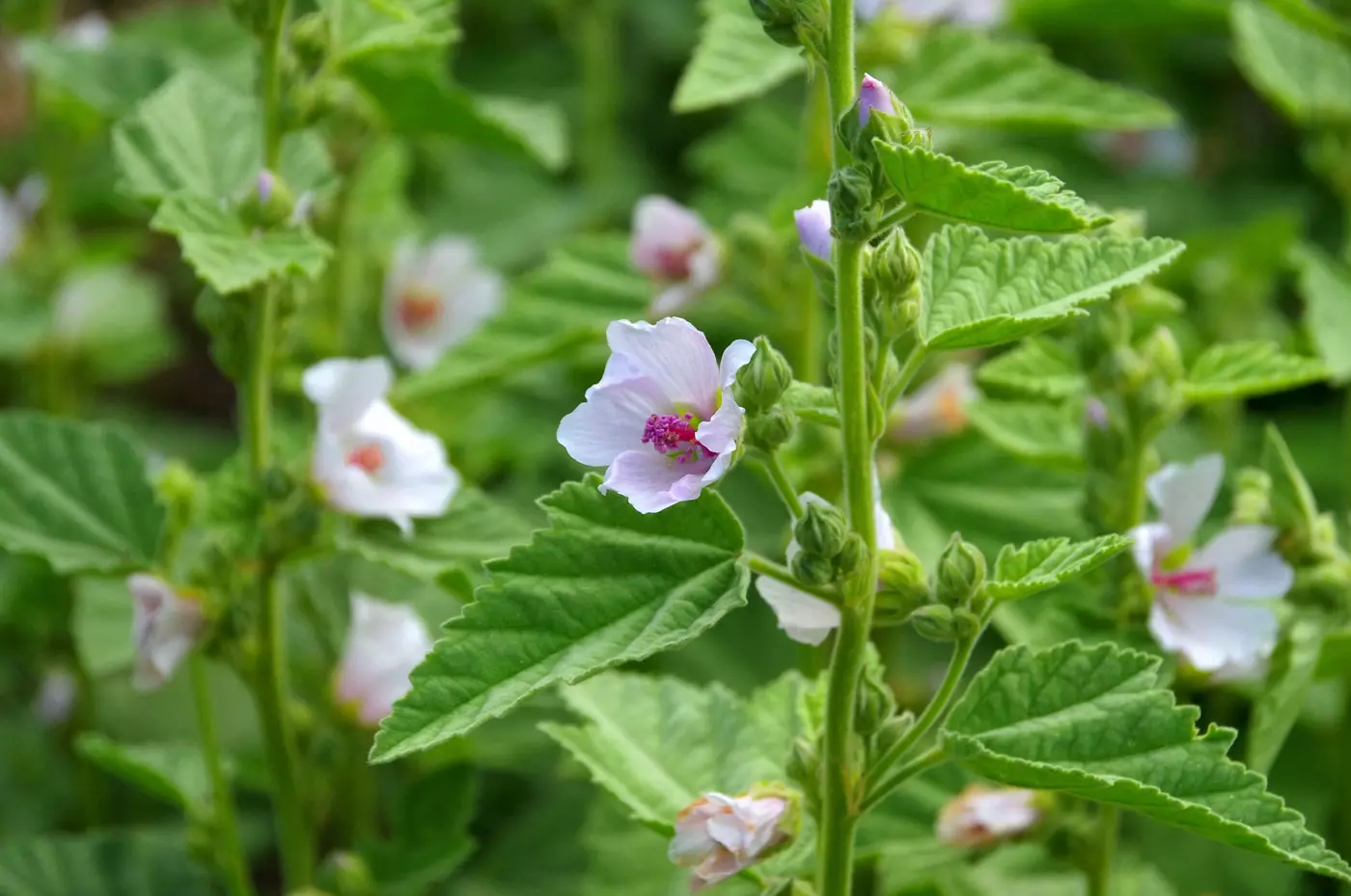
Widely known for its healing properties, it is widely used in folk medicine. The roots, leaves, and flowers of this plant are used to prepare tinctures, decoctions, and syrups that help with respiratory ailments, gastrointestinal problems, and other ailments.
It grows on riverbanks, in shrub thickets, and in swamps. Stems can reach heights of 1 to 2 meters. Flowers can be white, pink, or purple, making it attractive to gardeners and nature lovers.
| Characteristic | Description |
|---|---|
| Description | 🌿 Marshmallow is a perennial herbaceous plant that can reach a height of 1.8 to 2 meters. Its stems bear soft, almost felt-like, elliptical leaves, divided into 3 or 5 segments. The stem is covered with soft hairs. Two to three flower clusters form at the tops of the stems, bearing large, delicate pink flowers. The root system consists of a main woody root from which numerous fleshy lateral branches extend. |
| Flowering, fruiting | 🌸 This plant blooms from June to August, and bears fruit in August-October. |
| Application | 💊🌿 Marshmallow is used in cooking, cosmetology, and the paint and varnish industry. The plant's roots are used to treat gastritis and gastric and duodenal ulcers. The stems are used to make paper, and the fibers are used to create sacks and ropes. |
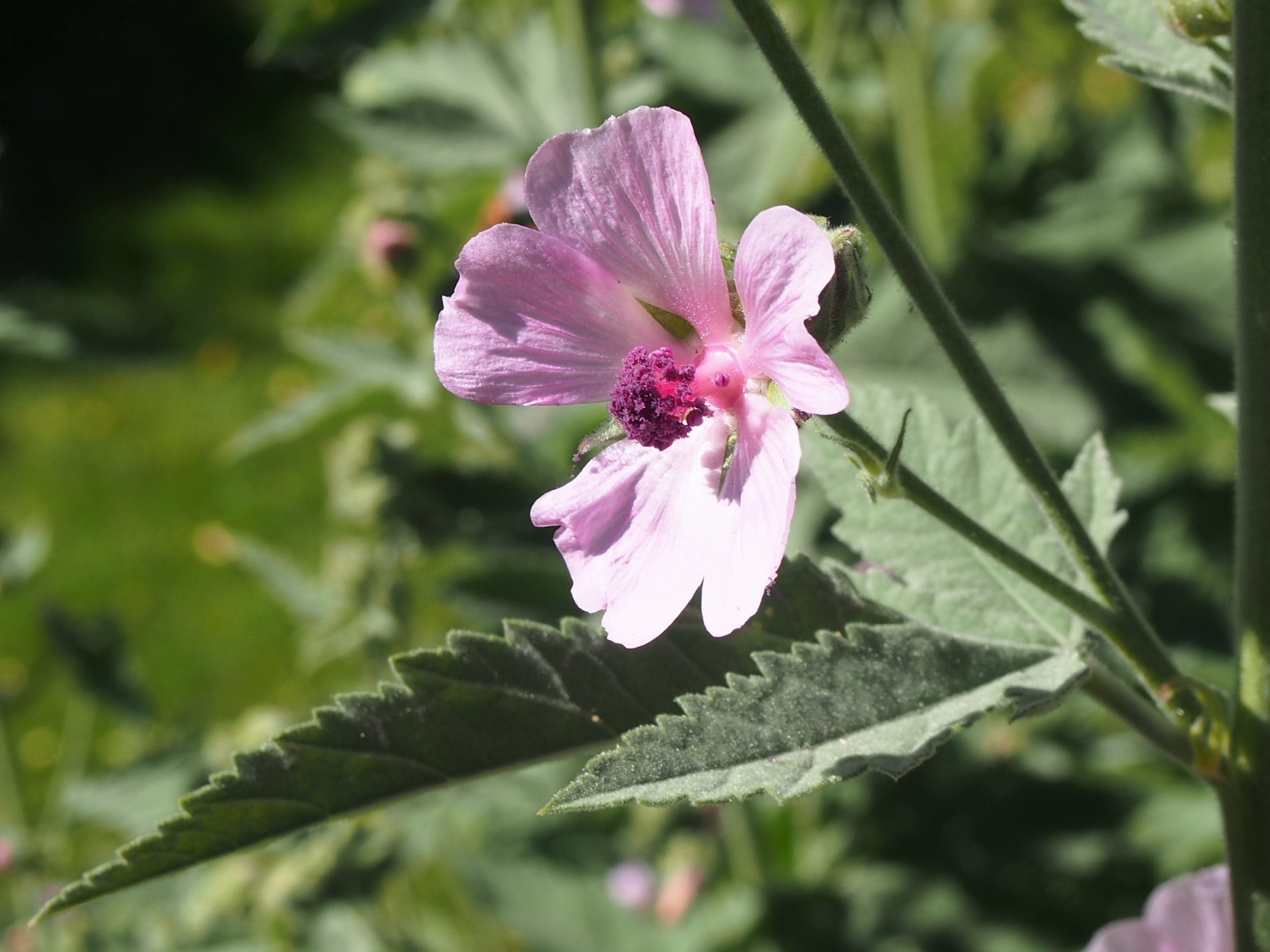
Armenian marshmallow (Althaea armeniаca)
Armenian marshmallow (Althaea armeniaca) is a plant found in the lower reaches of the Volga and Don rivers, the North Caucasus, and Kazakhstan. It grows in river floodplains and floodplain meadows.
| Characteristic | Description |
|---|---|
| Description | 🌿 Armenian marshmallow is a perennial herbaceous plant reaching a height of 50 to 200 cm. Its stems are erect, cylindrical, sparsely branched, and often almost bare at the base. The leaves are divided into five segments, reminiscent of blackcurrant leaves. The flowers are large, bell-shaped, and a beautiful deep pink. |
| Flowering, fruiting | 🌸 Armenian marshmallow blooms from June to September, and the fruits ripen from July to October. |
| Application | 💊 In medicine, the roots of the Armenian marshmallow are used as a decoction, dry and liquid extract, and syrup. The aerial parts are used to produce the drug Mucaltin, which is used as an antitussive and expectorant for respiratory diseases, as well as an enveloping and anti-inflammatory agent for gastritis and peptic ulcers. |
Marshmallow is another amazing plant with health benefits! 🌿🌸💊
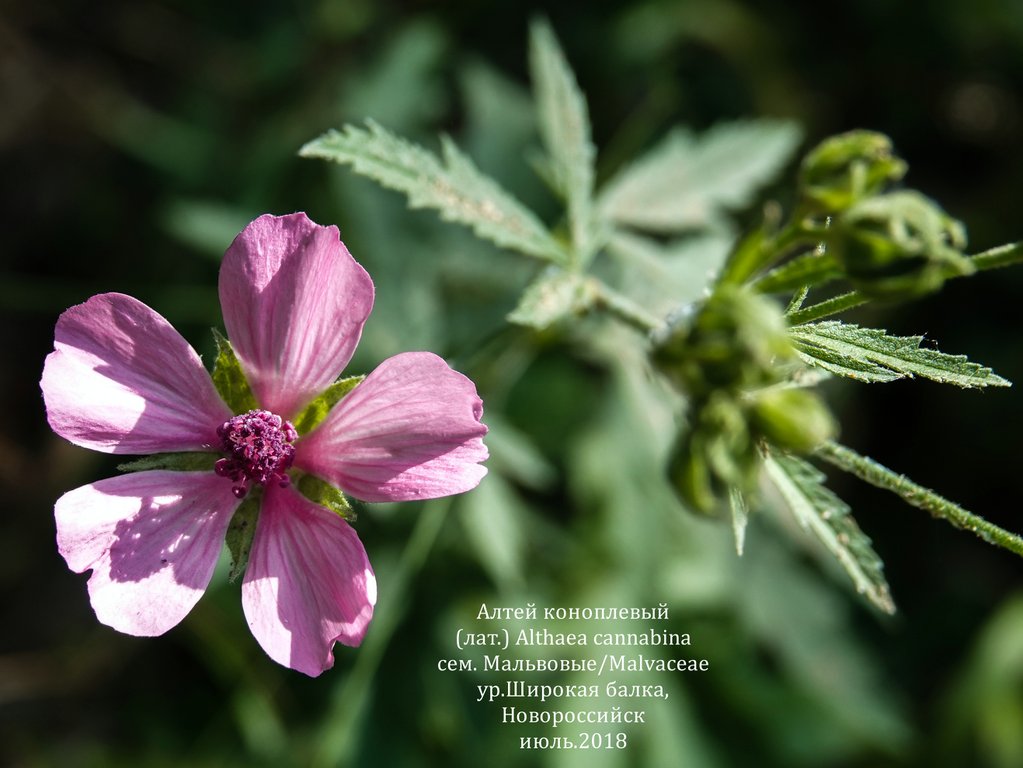
Marshmallow (Althaea cannabina)
Marshmallow (Althaea cannabina) is found in various regions, including Central and Southern Europe, the Middle East, and Central Asia. This plant grows in open, broadleaf forests, forest edges, shrub thickets, and rocky slopes. It is also found in meadows, steppes, and wastelands, such as roadsides, vacant lots, and pastures.
| Characteristic | Description |
|---|---|
| Description | 🌿 This is a perennial herbaceous plant that can reach heights of 50 to 180 cm. Its stems are strongly rod-shaped and branched, and its roots are thick. The stems are mostly straight, cylindrical, and pubescent from the base. This species is distinguished by its narrower leaves compared to other marshmallow species. |
| Flowering, fruiting | 🌸 This marshmallow blooms from June to September, and its fruits ripen from July to October. |
| Application | 💼 Marshmallow roots are rich in potassium, iron, calcium, manganese, magnesium, and copper. Its leaves contain essential oils, rubber-like substances, carotene, and ascorbic acid. The stems can be used to make paper and rope, and the oil from the seeds is used in the chemical industry as an additive to varnishes and paints. |
Marshmallow, rough (Althaea hirsuta)
Marshmallow (Althaea hirsuta) grows in various regions, including North Africa, central and southern Europe, and Western and Central Asia. In Russia, this species can be found in Crimea and the Black Sea region.
| Characteristic | Description |
|---|---|
| Description | 🌿 The plant grows to 25-50 cm in height. The stems can be straight and solitary or branched from the base, covered with soft hairs. The leaves are petiolate. The flowers are solitary, borne in the leaf axils on long peduncles, and are white or pink in color and have five petals. |
| Flowering, fruiting | 🌸 Blooms from April to July. Fruit forms from June to September. |
| Application | 💊 The seeds contain about 16% yellow fatty oil, which is widely used in medicine and cosmetology. |
Marshmallow (Althaea ludwigii L.)
Marshmallow (Althaea ludwigii L.) grows in various regions, including South Africa, the Mediterranean, and Western and Central Asia.
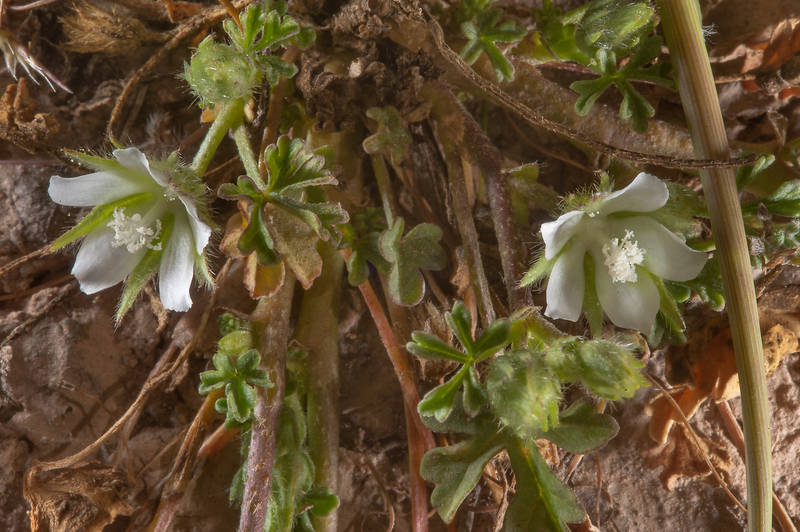
| Characteristic | Description |
|---|---|
| Description | A perennial plant 5–35 cm tall. It has several stems, rarely a single stem, ascending or prostrate, cylindrical, and mostly glaucous-green. One to three flowers are borne in the leaf axils; there is also sometimes a short flowering branch. |
| Flowering, fruiting | Flowering: April – July. Fruits: June – September. |
Marshmallow, mallow, and hollyhock comparison
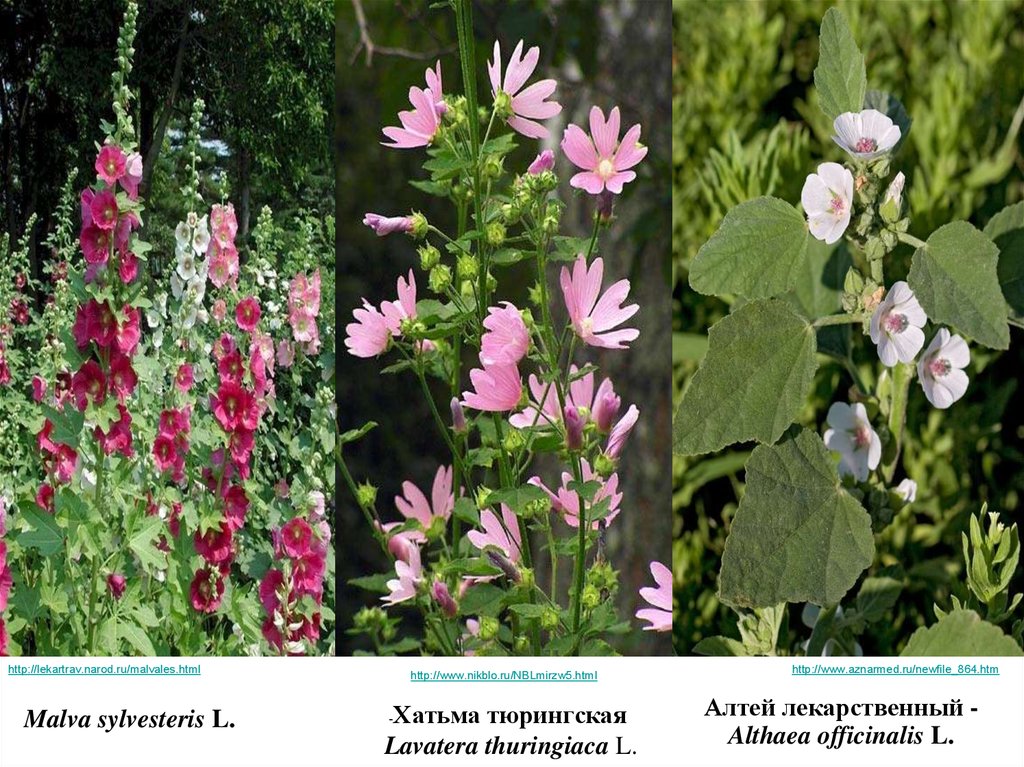
Marshmallow (Althaea officinalis) resembles the wild mallow (Malva sylvestris) and the Thuringian hollyhock (Lavatera thuringiaca), but they have their own characteristics by which they can be distinguished.
- 🌿 The marshmallow's sub-cup consists of 8-12 leaves, while the mallow's and hollyhock's cups consist of three.
- 🍃 The leaves of marshmallow are 3-5-lobed, ovate, while those of mallow and hollyhock are broadly ovate or round-kidney-shaped, 5-7-lobed.
- 🌺 Marshmallow's petals are pale pink, mallow's are bright pink, and mallow's are pink with dark stripes.
Sowing marshmallow seedlings 🌱
To successfully grow marshmallow seedlings, you should pay attention to several key steps:
- Selecting seedsIt's best to use seeds that have been stored for at least two years. As they age, their shell softens, which promotes better germination.
- Landing timeThe best time to sow marshmallow seedlings is late March or early April. This period provides sufficient light and warmth for seed germination.
- Pre-sowing preparationBefore sowing, seeds should be specially prepared:
- Soaking the seeds in warm boiled water for 24 hours helps soften the seed coat, accelerating germination.
- Scarification in dry sand allows for mechanical damage to the seed coat, which promotes faster germination.
- Treating seeds with hexachlorane powder protects seedlings from underground pests.
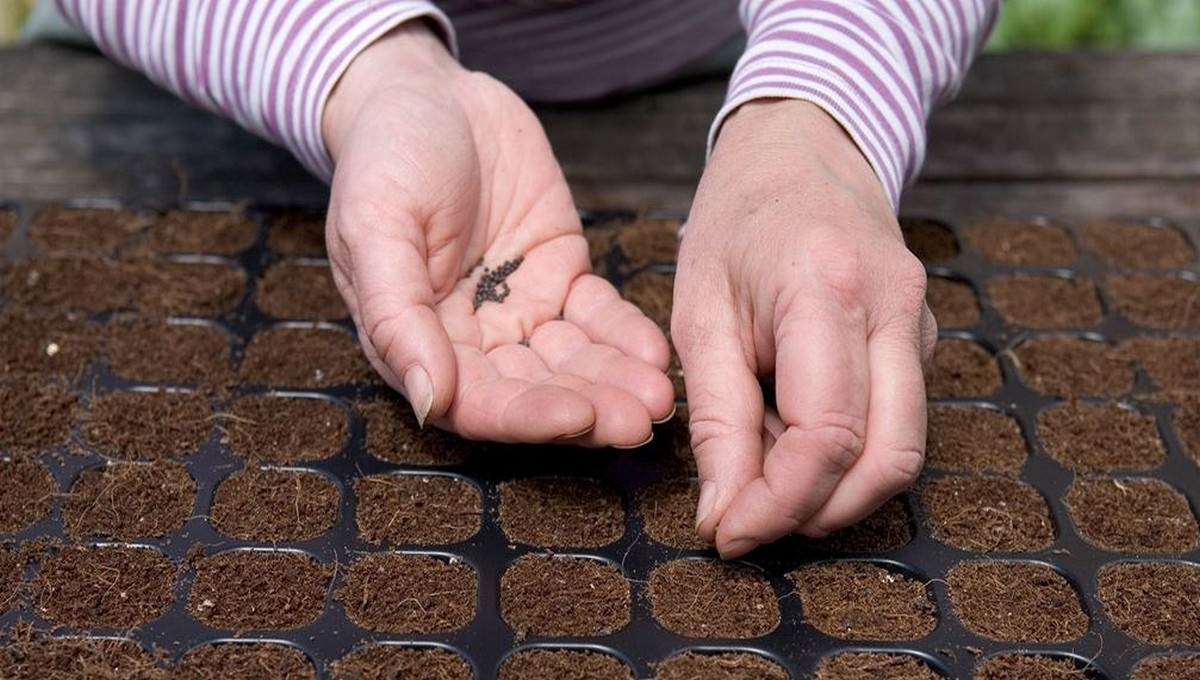
- SowingSeeds should be sown in moistened soil in pots or trays at a depth of about 1.5–2 cm. Sprouts usually appear within a week of sowing. When the seedlings reach the third true leaf stage, they can be transplanted into individual peat pots, leaving approximately 50–60 cm between plants.
- CareIt's important to monitor soil moisture levels, especially after transplanting. Try to maintain optimal moisture by watering the seedlings regularly. As the plants grow, ensure they receive sufficient light and nutrients. Once the seedlings are strong enough, they can be planted outdoors.
Sowing and planting marshmallow in open ground
When it comes to sowing marshmallow in open ground, the process requires careful preparation and attention to detail.
- Soil preparationIt's important to properly prepare the area for sowing. After the snow melts and the topsoil dries, the area should be raked. If the soil has become too compacted during the winter, its surface can be shallowly weeded and leveled. If the soil is poor, it's recommended to apply phosphorus-potassium fertilizers and till the soil.
- Sowing timeMarshmallows are sown outdoors in late April or early May. This time provides sufficient warmth and light for successful seed germination.
- Carrying out sowingMake small holes in the soil, approximately 3 cm deep, and plant the marshmallow seeds in them. After planting, it's recommended to water the beds thoroughly to ensure sufficient moisture for germination.
- Seedlings and careThe first shoots usually appear within three weeks. When planting closely, the plants should be spaced apart, trying to preserve the root ball to minimize transplant stress and maintain plant health. After this, ensure regular watering and keep the soil moist.
Caring for Marshmallow
Marshmallow is a low-maintenance plant, perfect for growing in your garden. 🏡 It's easy to care for and can thrive even with minimal care. ⏳ Even if you rarely visit your garden, marshmallow will remain vigorous and add beauty and charm to your property. 🌺
Watering
Proper watering is key to the flowering of marshmallows. 💧 During periods of severe drought, increase watering to support the plant. 🌱 However, overwatering can cause the plant to die, so it's important to avoid waterlogging. 🚱 Regular but moderate watering will help maintain the health and beauty of your marshmallow.
Top dressing
Fertilizing plays an important role in successfully growing marshmallows. 💡 In spring, when the snow melts, it is recommended to apply granular nitrogen complexes to the soil or over the snow. 💧 The recommended rate is 15 grams per square meter. If the winter was light on snow, the granules can be applied to the soil and lightly incorporated when loosening the soil. 🌨️ For decorative purposes, phosphorus-potassium fertilizers can be applied every two weeks during flowering. 🌸
Care tips
Regular loosening and weeding are important in marshmallow care. 🌱 These procedures should be performed approximately once a month. 🗓️ Loosening the soil helps provide the marshmallow roots with the space they need for active growth and development. 💪 Remember that weeds can compete with marshmallows for nutrients and moisture, which can lead to stunted growth. 🌿
Reproduction
Want to grow more marshmallows in your garden? It's entirely possible! 🌱 In the fall, you can dig up the rhizome and divide it into several pieces, then treat the cut sections with crushed charcoal and plant them in the ground. 👩🌾 These plants will begin to bloom vigorously as early as the second year after planting.
Another method of propagation is cuttings. From May to early June, growing shoots can be rooted. 🌿 Cuttings planted in a simple greenhouse quickly take root and begin active growth. 🌱 Most of them can even bloom in their first season, while marshmallow seedlings will bloom only in the second or third year.
Preparing for winter
In the fall, after the first frost, it's important to remove all above-ground parts of the marshmallow down to the soil level and clean the beds. 🍂 This will help prevent fungal diseases that can occur due to excess moisture on frozen stems.
There is no need to provide additional insulation for the marshmallow, as it is quite resistant to low temperatures. ❄️
Marshmallow diseases and pests, possible difficulties
Marshmallow is resistant to damage, but can occasionally be affected by the following diseases and pests:
| Pests/Diseases | Defeat | Methods of control |
| Malva aphid | It feeds on the underside of young leaves, causing them to become deformed and curl. Plant growth is slowed. | Apply pyrethrum dust at a rate of 20 to 25 kilograms per hectare. Treat aphids and leaf beetles at the onset of their emergence to prevent severe leaf curling or chewing. |
| Bedbugs | They feed on peduncles, buds, flowers, and fruits, which can lead to them falling off. | |
| Mallow leaf beetle | They gnaw leaves, causing damage to plants. | |
| Spider mite | It feeds on the undersides of leaves, causing light spots and marbled patterns. If severely damaged, leaves dry out and fall off. | |
| Mallow moth caterpillars | They damage stem tips, buds, flowers, and seeds. The larvae feed inside the stems, causing them to turn black and break off. | Use pyrethrum at the same dosages as for insects. Additionally, apply entobacterin at a rate of 5 kilograms per hectare. Ensure that leaf consumption does not exceed 25%. |
| Butterfly caterpillars | They gnaw at the edges of the leaves and eat out holes. | |
| Rust | Brown, round fungal pads form on the undersides of leaves. Leaves may dry out, and plants may become weak. | To combat diseases, use a 1% Bordeaux mixture. The first spray should be applied at the onset of disease, with subsequent sprays 7-10 days later. The final treatment should be applied at least 20 days before harvest. |
| Leaf spot | Gray or brown-gray spots appear on the leaves, which can lead to their drying out. | |
| White rot | It attacks stems, forming fungal sclerotia inside. Affected stems may dry out. |
To successfully grow marshmallow, certain requirements must be met:
- Maintain crop rotation and use proper agricultural practices.
- Ensure spatial isolation between new and old plantations of at least 1 km.
- 7-10 days before sowing, treat the seeds with TMTD 80% s.p. at a rate of 2-3 g/kg of seeds to prevent diseases.
Sometimes, a lack of flowering may occur. This may be due to the plant being too young or too old. In the former case, it is recommended to wait another year, while in the latter case, propagate older plants by dividing the rhizome or planting fresh seedlings.
Uses of Marshmallow
Marshmallow is widely used as an ornamental garden plant due to its beautiful blooms. 🌸 It is also widely used in medicine, cooking, cosmetology, and the paint and varnish industry. 💊🍲🧴🎨
In medicine
Marshmallow has found wide application in medicine due to its beneficial properties. It is used to produce medications that effectively treat respiratory and digestive disorders.
Marshmallow root has anti-inflammatory and expectorant properties. It soothes coughs, improves mucus removal, and reduces swelling of the palate and tonsils. Due to its high mucilaginous content, marshmallow is widely used for gastritis, stomach and duodenal ulcers, and colitis.
Traditional medicine
In folk medicine, marshmallow roots are often used to make compresses, lotions, and rinses for skin tumors, ringworm, and burns. Marshmallow roots are also used to make syrups, infusions, decoctions, and alcoholic tinctures.
Recipes:
- For whooping cough and bronchitisPour boiling water over 1 tablespoon of dried marshmallow flowers and let steep for an hour. Then strain and take 2 tablespoons 3 times daily.
- For flu and pneumoniaBrew an infusion of crushed dried marshmallow leaves in 200 ml of boiling water. Drink 50 ml three times a day.
- At the first signs of acute respiratory infections or sore throatPour 600 ml of boiling water cooled to 30°C over 2 tablespoons of crushed dried marshmallow root and let steep for 8 hours. Take 25 ml of the prepared solution 4 times daily and gargle at least 3 times daily. This infusion can also be used as a compress for prostate adenoma.
Marshmallow has no contraindications for use, however, individual intolerance to certain components of the plant is possible.
Cosmetology
Marshmallow infusions have a beneficial effect on the skin, relieving inflammation, irritation, and improving its regenerative properties.
For dry facial skin, it is recommended to use a marshmallow root infusion compress: add 1.5 tablespoons of dried root to 200 ml of water. Soak gauze folded in 3-4 layers in the solution and apply to the face for 15-20 minutes. After removing the gauze, do not rinse off any remaining mask.
You can also wipe your face with this infusion after shaving or cosmetic procedures such as peeling or vacuum massage.
Marshmallow seeds are also useful for hair restoration and treatment. To do this, heat the seeds (1 tablespoon) with vegetable oil (150 ml) in a double boiler for an hour. It is recommended to massage the mixture into the hair roots 2-3 times a week. A course of treatment is 15-20 times, and the oil can be reapplied after 2-3 weeks.
In cooking
🌿 Marshmallow also has culinary uses. Its leaves can be eaten stewed, boiled, or even raw when young after removing the sepals.
Marshmallow roots can also be used as food. They are boiled first. Dried and ground, they are added to baking flour because they are rich in starch. They can also be used to make porridge and kissels. Fresh roots are ideal for stewing and frying, enriching main dishes with their unique flavor and aroma.
🥗 Fresh young marshmallow leaves can be added to healthy salads and vitamin-rich soups, giving them freshness and an original taste.
Harvesting marshmallow raw materials
🌱 Marshmallow root, harvested from two- or three-year-old plants, is used for medicinal purposes. The herb is harvested in the second year of the marshmallow's growth.
🌿 When digging up the root to preserve the plant, leave approximately 25-30% of the root. The optimal time for harvesting is early spring or late fall, when the stems are completely dry. The root is harvested from a single plant no more than once every three to four years.
🛠 After digging, the marshmallow root is cleaned of soil and thoroughly washed. It is then hung in a ventilated area for 1-3 days to dry. After this, the root is cut lengthwise into 30-35 cm strips. The finished strips are dried in the oven at a temperature no higher than 50°C. Due to its high moisture absorption capacity, the dried root should be stored in dry, well-ventilated areas.
🌾 Sometimes the leaves and thin stems are used for harvesting. They are collected before flowering.
🕰 The beneficial properties of dried marshmallow are preserved for 3 years.