Ammobium is a unique plant that looks stunning as a solitary plant on mountain slopes. It is also excellent for creating fresh and winter bouquets. Interestingly, this plant's acquaintance began thanks to botanist Robert Brown (1773–1858), the founder of the "Brownian movement." He described Ammobium in the late 16th century, but its cultivation didn't begin until 1822. It's important to note that although Ammobium flowers aren't particularly beautiful or fragrant, they attract numerous bees, facilitating the pollination of other plants in the garden. 🌼🐝
Content
- 1 Brief characteristics of ammobium in the table
- 2 Ammobium photo gallery
- 3 Description of Ammobium
- 4 Ammobium Growing and Care Chart
- 5 Types and varieties of Ammobium
- 6 Features of sowing and growing ammoubium seedlings
- 7 Rules for caring for ammoubium
- 8 Potential problems when growing ammoubium
- 9 Using Ammobium in Landscape
- 10 Harvesting ammobium
Brief characteristics of ammobium in the table
| Characteristic | Description |
|---|---|
| Family | Asteraceae is a diverse family of plants found throughout the world, including Australia 🌏 |
| Spreading | These flowers grow in a variety of climates, and thrive in sandy soils and arid areas 🏜️ |
| Appearance | Plants from the Asteraceae family can be either perennial herbaceous plants or annuals, with leaves of varying shapes and sizes. |
| Stem | They are characterized by quadrangular stems covered with white fluff, reaching a height of more than 50 cm 🌱 |
| Leaves | The leaf blades are sparse and small, often having a silvery tint, which makes the plant attractive to the eye 👀 |
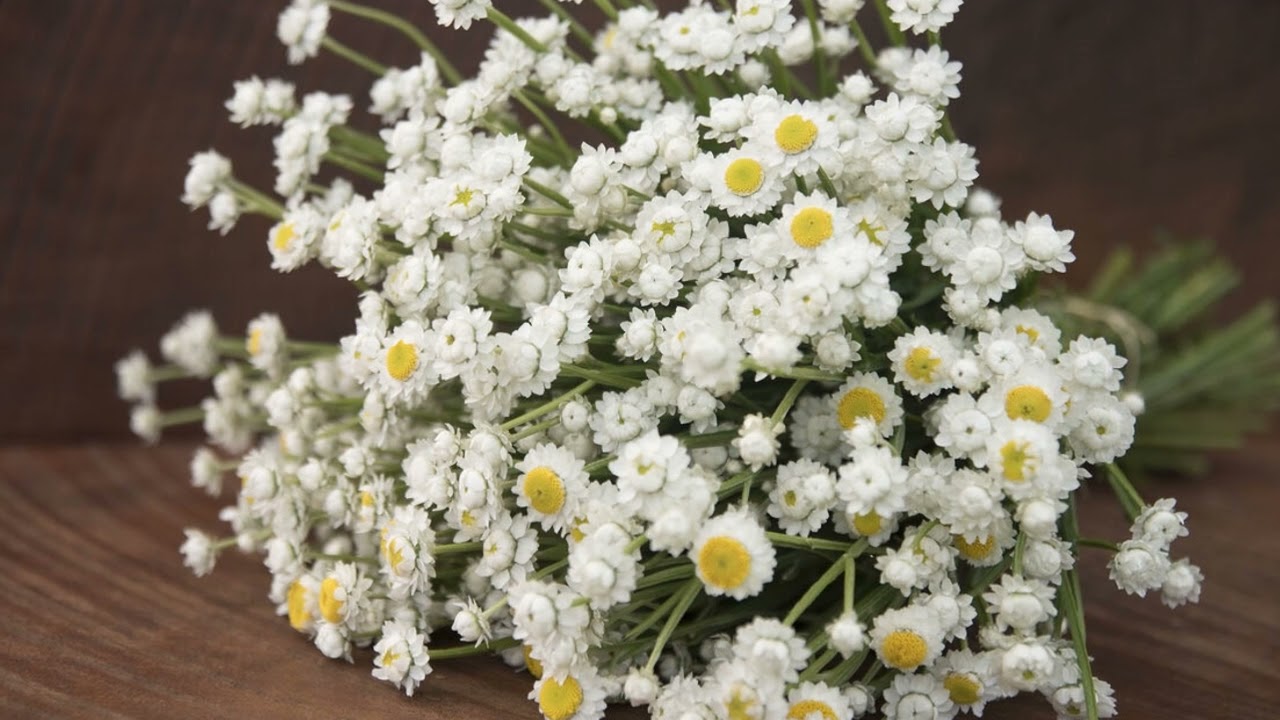
| Flowers | The flowers are bright yellow, tubular in shape, and the numerous scales of the wrapper add a special decorative effect 🌼 |
| Flowering time | The beautiful flowers of this plant delight the eyes from June to October 🌸 |
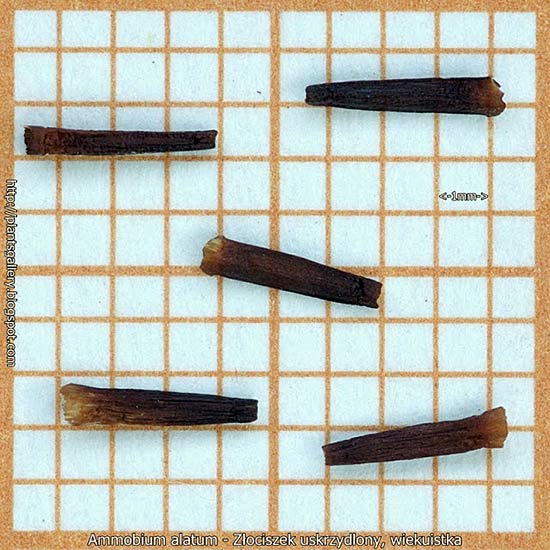
| Fruit | After flowering, seeds with a tuft, black or dark brown in color, are formed, which contribute to the reproduction of the plant 🌱🌰 |
Ammobium photo gallery
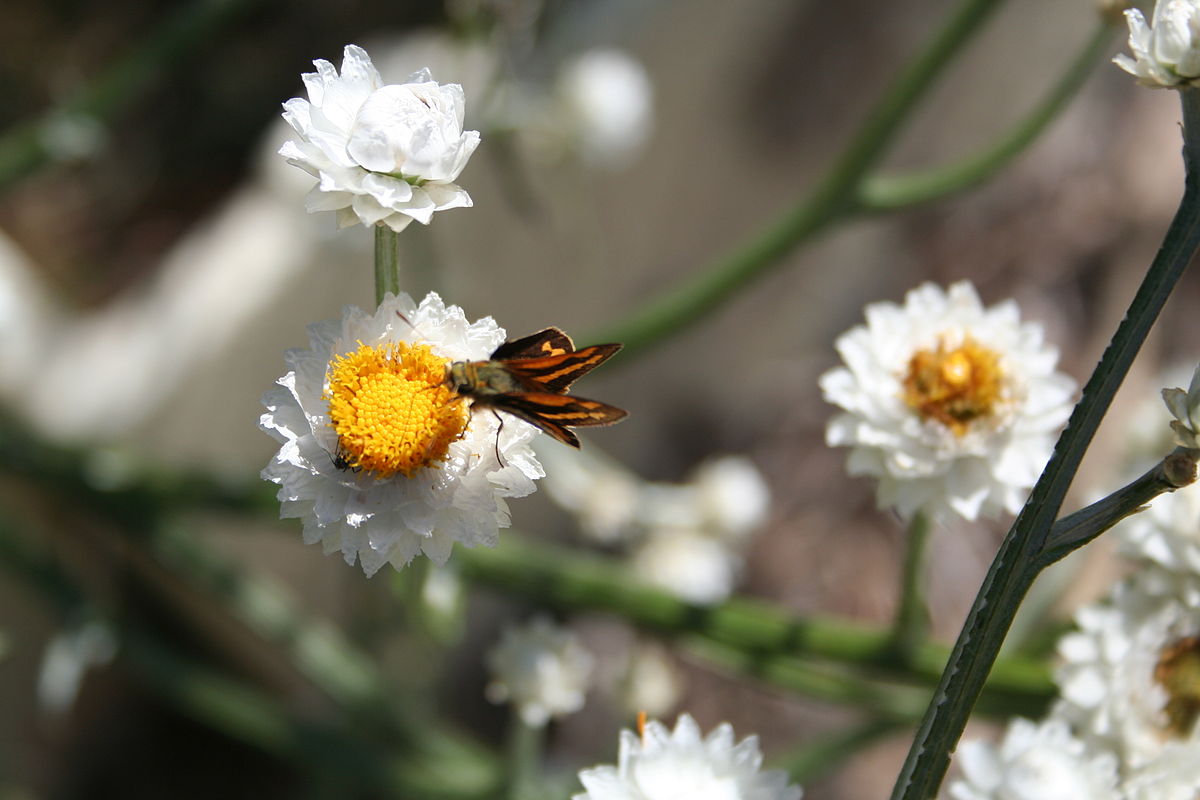
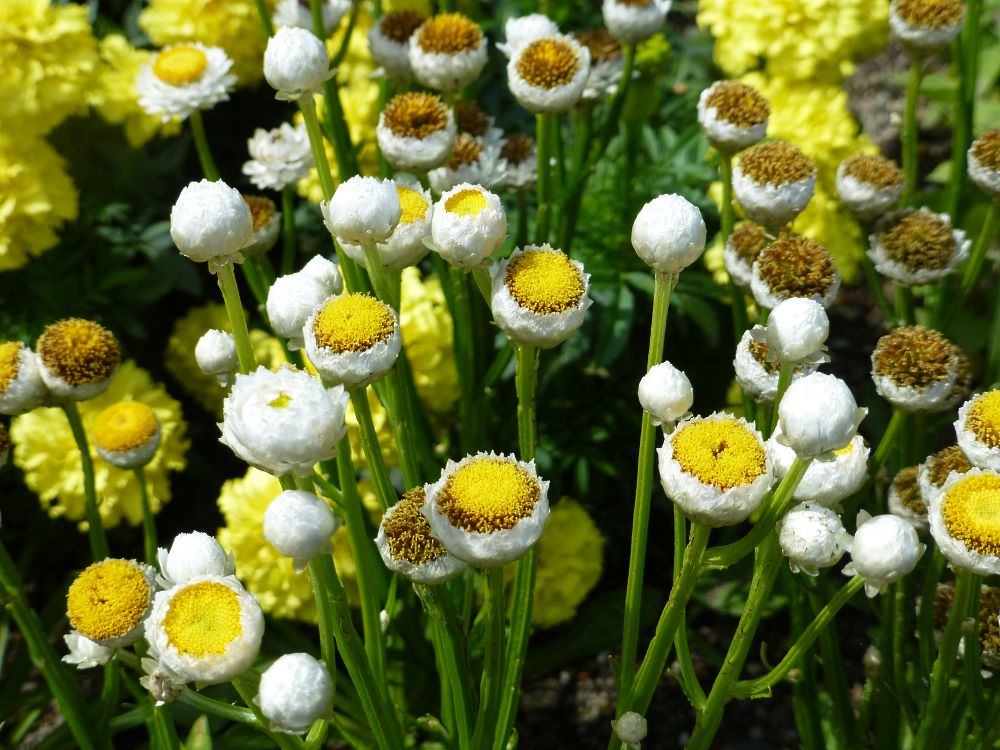
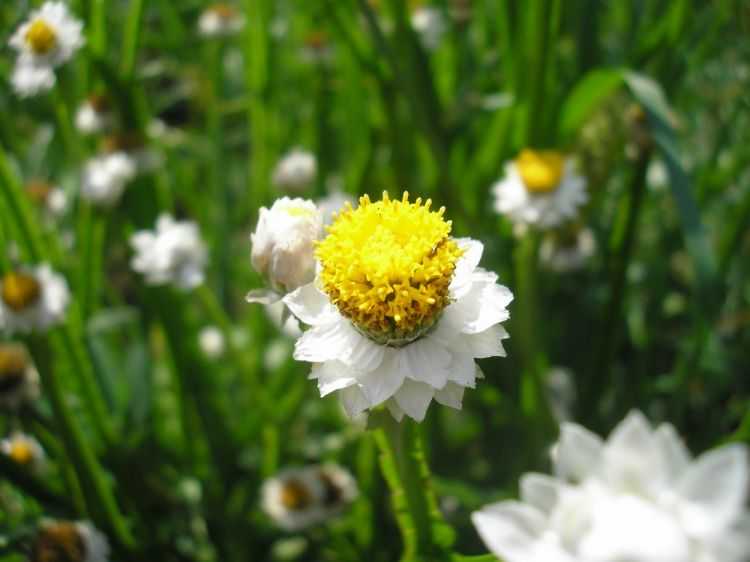
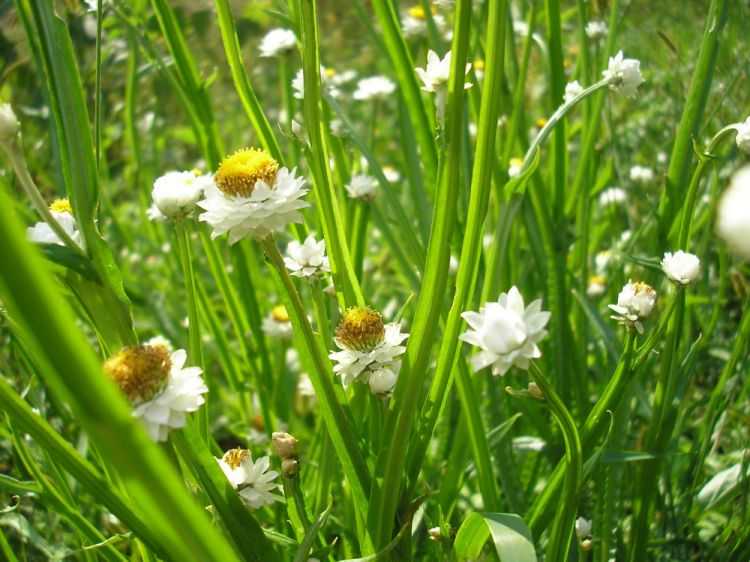
Description of Ammobium
Ammobium 🌼 is a beautiful plant that attracts attention with its unique characteristics. It belongs to the Asteraceae family, also known as Compositae. It is native to the vast expanses of Australia, particularly the New South Wales region, where arid and hot climates prevail. 🌏
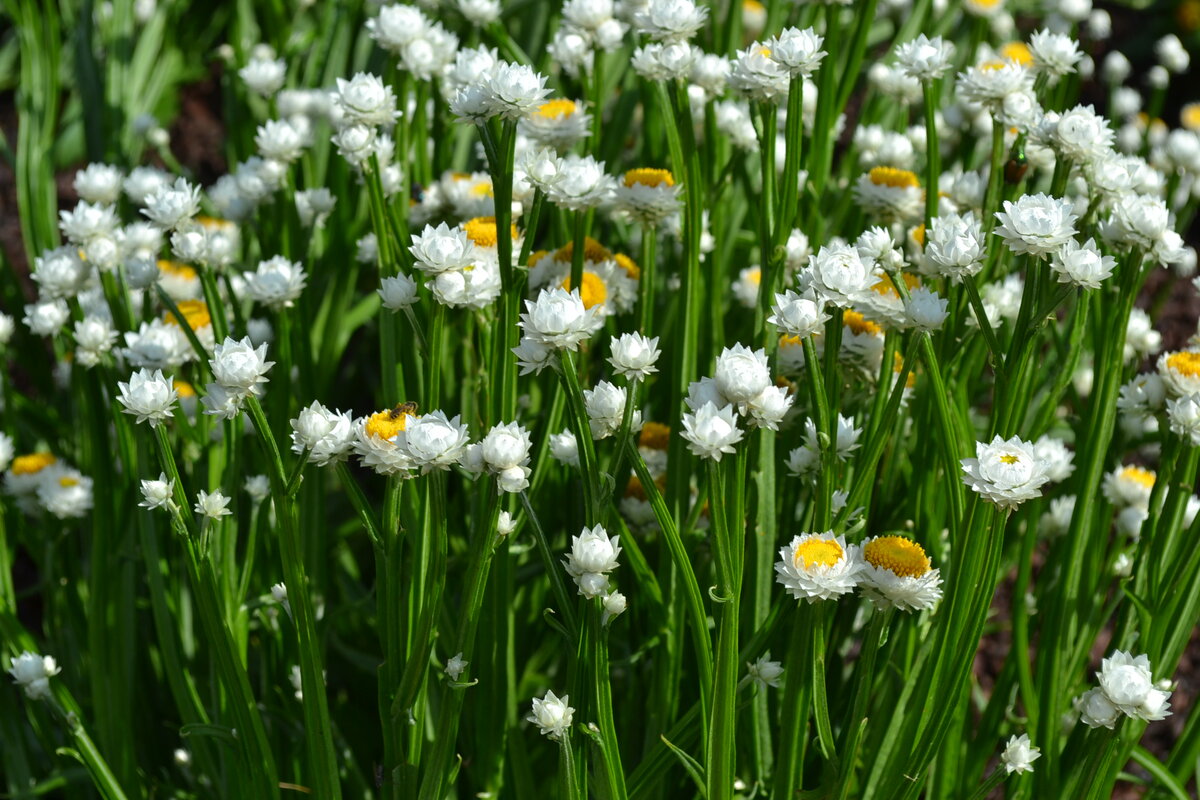
Ammobium 🌿's herbaceous stems can be spreading or upright, creating beautiful ornamental shrubs. The plant can reach 60 to 100 cm in height and is covered with fine whitish hairs that resemble felt. 🌱 The leaves form a luxurious rosette at the base of the stems. They are dark green, narrowly ovate with pointed tips, and their surface can be glabrous or slightly rough. 🍃
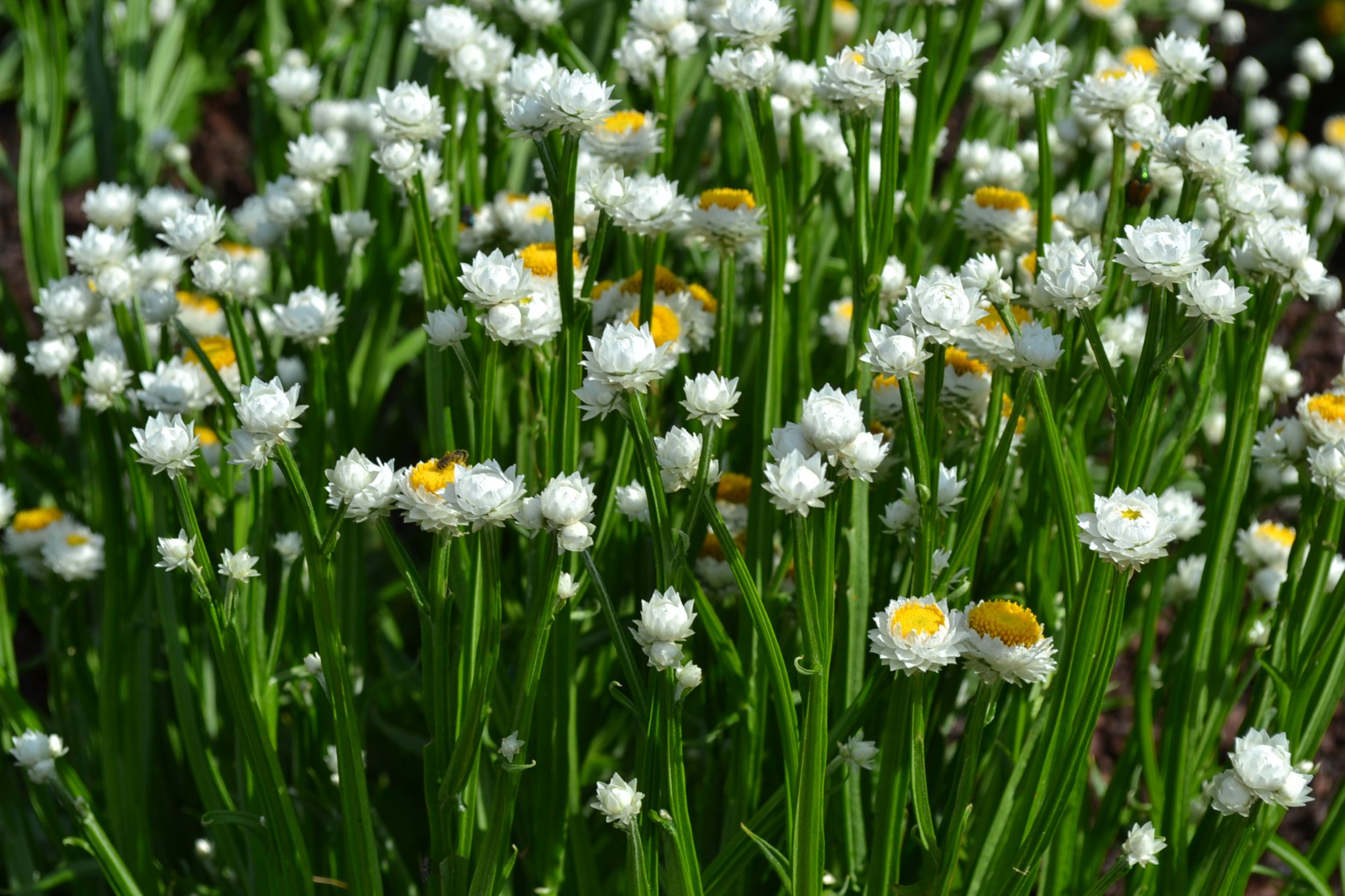
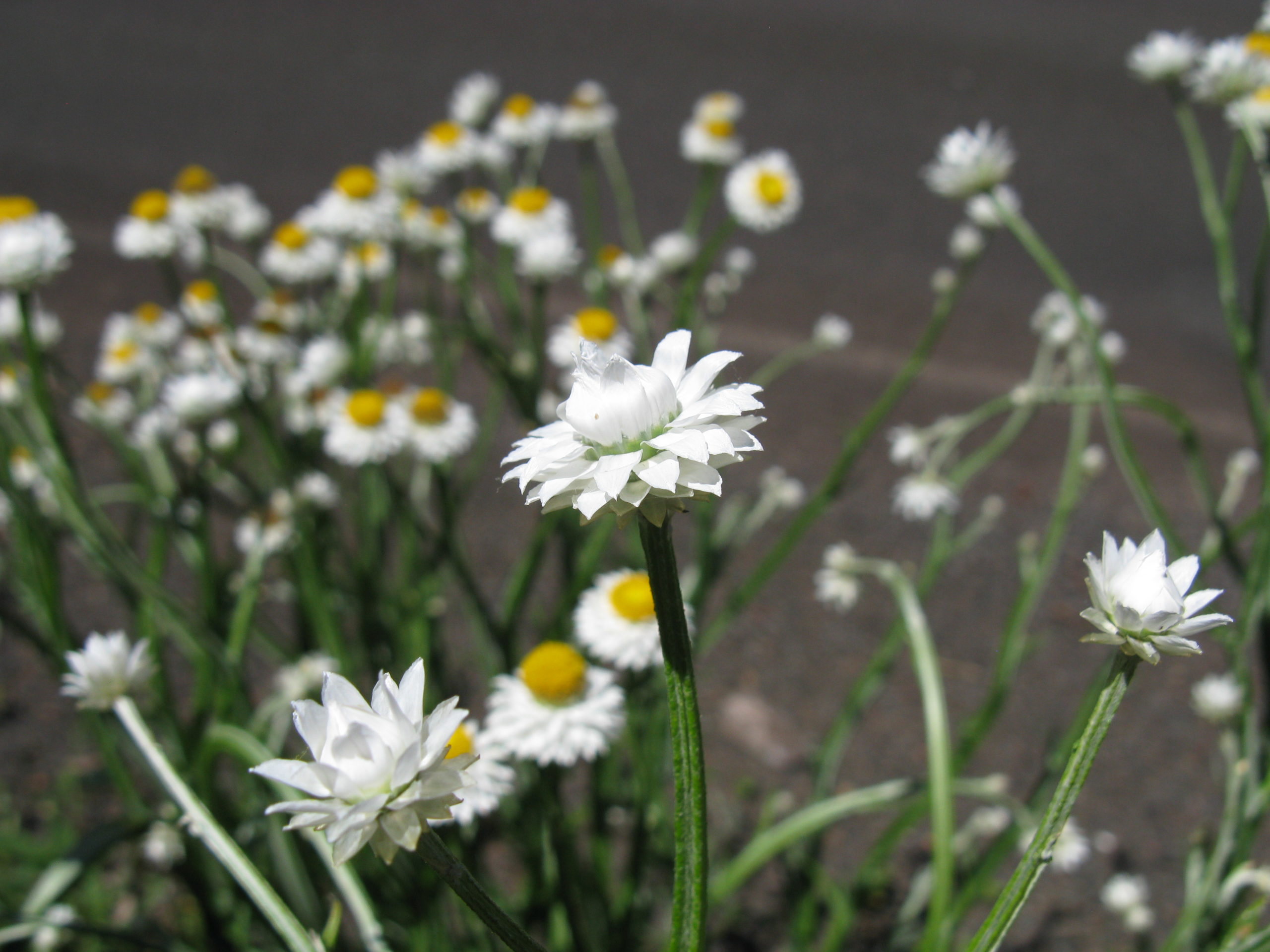
In early summer, the plant produces long, branched stems. At the tops of these stems, inflorescences open, containing numerous small, tubular flowers. The central flowers are bright yellow, surrounded by white bracts, creating an attractive contrast.
After flowering, the plant produces elongated seeds with membranous, fused lobes, giving them the shape of saucers. 🌾
Ammobium Growing and Care Chart
| Characteristic | Description |
|---|---|
| Location | Choose a well-lit location with direct sunlight. |
| Soil | Light, sandy, well-drained soil is preferred. A loose structure improves air access to the plant's roots. |
| Planting seedlings | Produced between March and May. |
| Planting in the ground | It is recommended to carry out this procedure from May to June, when frosts have passed. |
| Watering, humidity | Water moderately, avoiding overwatering. Dry soil is better than overly wet soil. |
| Top dressing | The first application of nitrogen-containing fertilizers is recommended one week after planting the seedlings. Later, after two weeks, you can use complex mineral or organic fertilizers. |
| Winter hardiness | Does not overwinter in open ground. Requires additional protection or digging up the bulbs for overwintering in cold regions. |
| Pests and diseases | Sensitive to rot. |
| Reproduction | It is carried out by seeds, through growing seedlings. |
Types and varieties of Ammobium
Ammobium is a small genus, comprising only three natural species. However, many original cultivars have been developed from these, enjoying great popularity among gardeners and plant enthusiasts. 🌿✨
Ammobium alatum
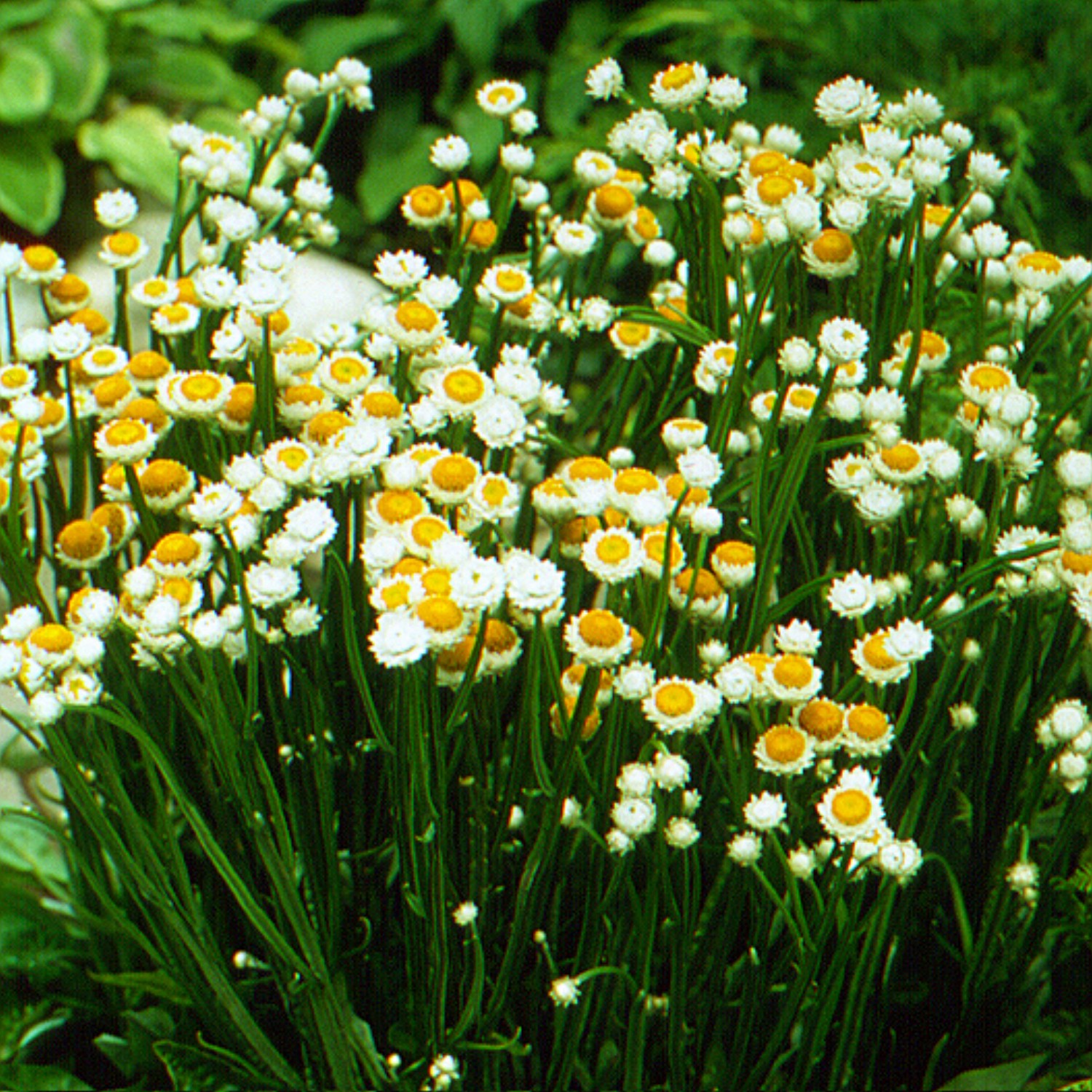
It gets its name from the distinctive wing-like shape of its leaves. 🍃 The stems of this herbaceous shrub can grow up to 0.7 meters in height, are straight and branched, and their surface is covered with downy hairs. The leaves are elongated with pointed tips.
In summer, basket-shaped inflorescences 🌸 appear at the ends of the stems, consisting of small tubular flowers surrounded by scales, giving them a petal-like shape.
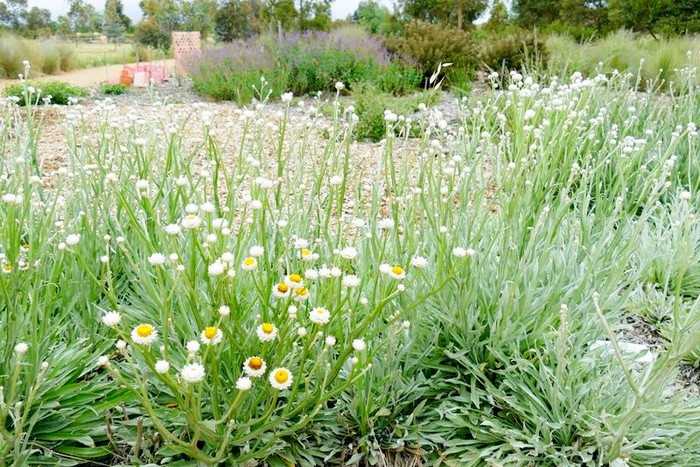
There are various cultivars of this species, varying in flower size and stem height. Some have larger flowers and shorter stems (approximately 40 cm), while others retain similar flower and leaf sizes. 🌼
| Variety | Description |
|---|---|
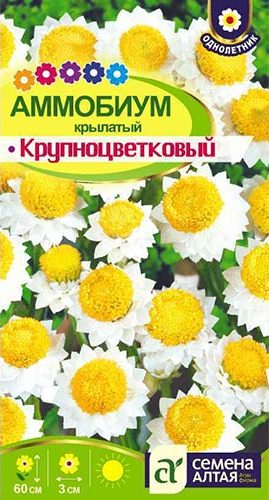
| Large-flowered
|
It is distinguished by tall shoots, reaching 72 cm or more. The flowers are large, with a diameter of 1.9 to 2 cm. This variety is grown from seedlings. |
| Bikini
|
Characterized by its compact size, the shoots do not exceed 40 cm. The flowers of this variety are uniform in size and shape. Cultivation is also carried out using seedlings. |
Ammobium craspedioides
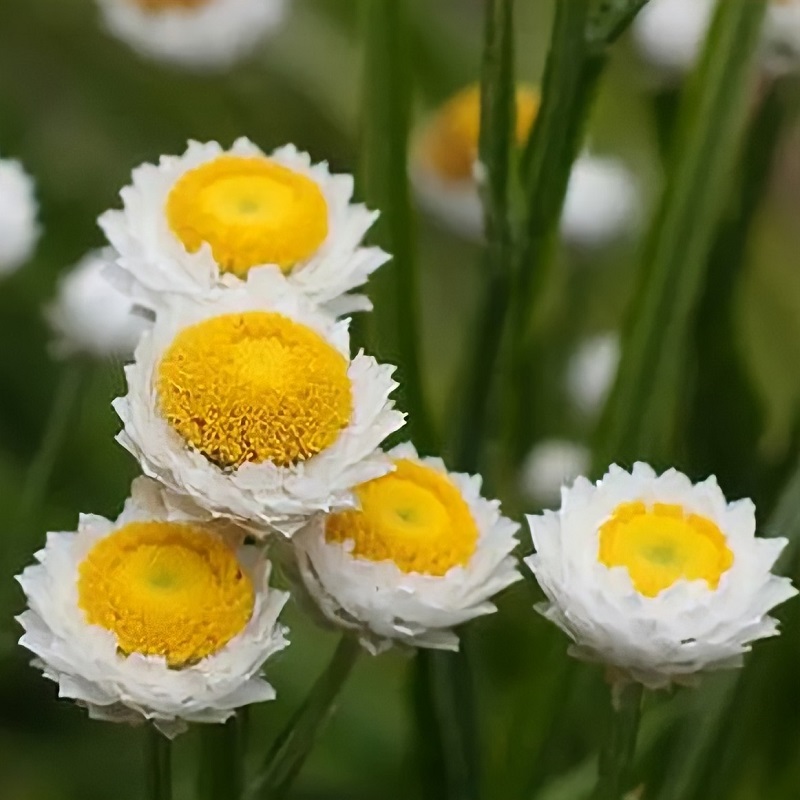
Also known as the Yassian daisy, this perennial forms rosettes with simple, single-headed stems. 🌼 The surface of their stems may be covered with hairs. The basal leaves have a variety of shapes, from oblong to lanceolate, and sometimes spoon-shaped. 🍃 The leaves range in length from 3 to 12 cm, and in width from 10 to 17 mm, with an acute apex. The upper surface of the foliage is covered with scale-like hairs, and the underside is woolly. The petiole is winged, ranging from 10 to 30 mm in length.
The stems rarely bear leaves, and these may be edged with narrow "wings." The rosettes die after flowering. The leaves on the stems are few and tiny. 🌿
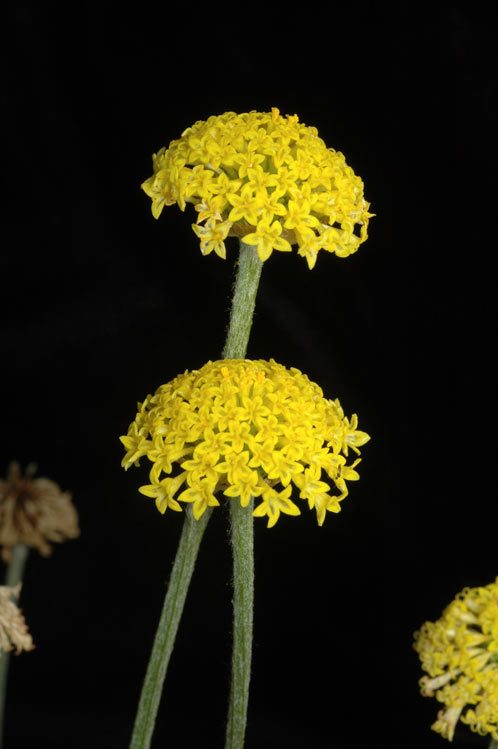
The spring flower heads of this species are hemispherical, button-like inflorescences up to 10–20 mm wide. They are surrounded by papery, leaf-like bracts. The solitary flower heads on unbranched stems reach a height of 30 to 60 cm. The inflorescences are straw-colored, with bright yellow tubular flowers inside.
After flowering, the plant produces seeds that are 4 mm long. Their surface is smooth and pale brown, with a calyx ranging from 1 to 1.5 mm in length, and awns that can reach up to 1.5 mm in length or are absent. 🌾
Ammobium calyceroides
A fairly rare species, distinguished by its short stems, never exceeding 20 cm. 🌿 In the wild, it is found in the alpine and subalpine meadows of New South Wales. The shoots of this plant are thick, pubescent on the surface, and have a greenish tint, sometimes turning reddish toward the tip. The leaves form rosettes at the base. The leaves are a rich green color, oblong, ovate-elongated, and pointed at the tips. 🍃 They may have hairs on their surface, or the foliage may be bare.
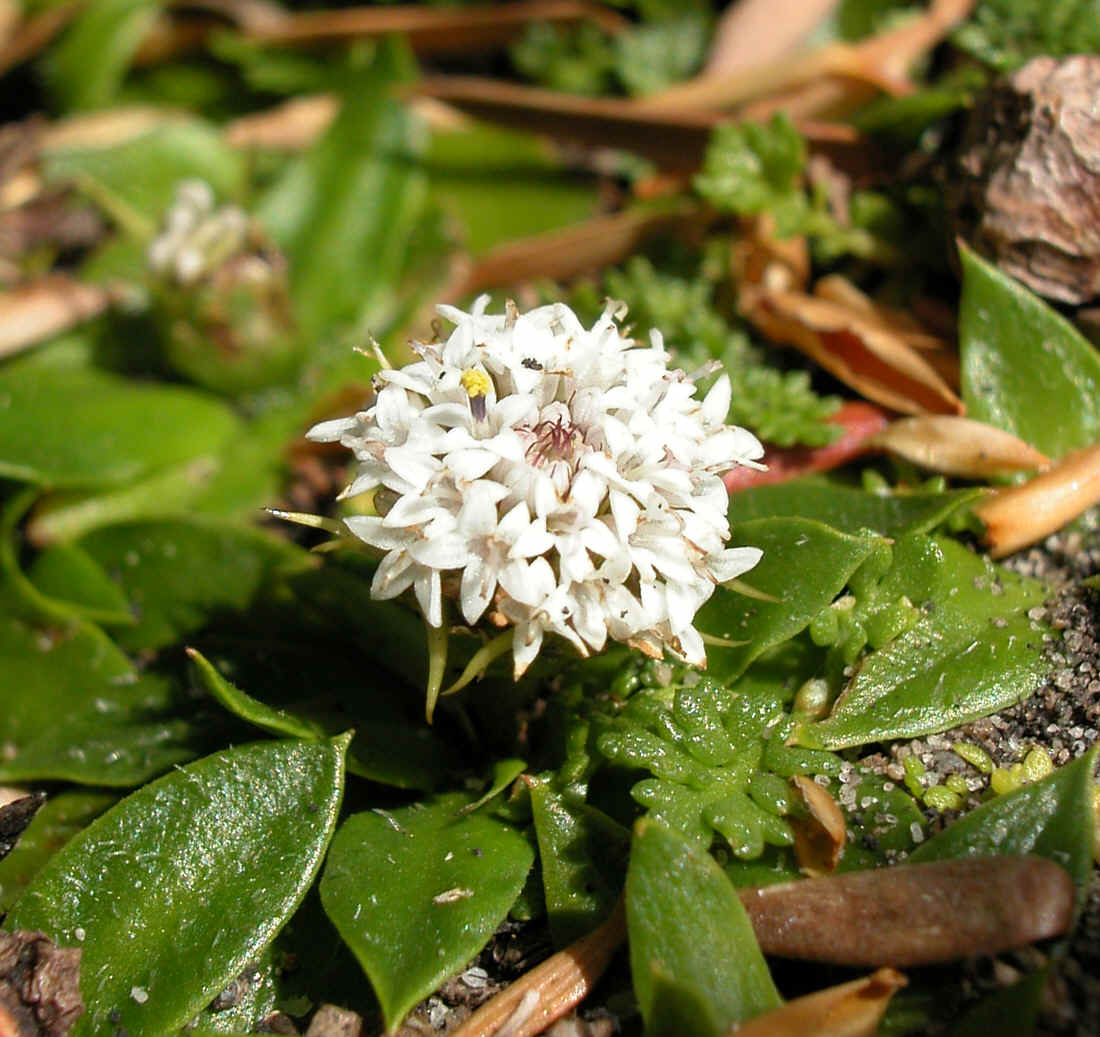
In summer, capitate inflorescences appear on unbranched flower stalks arising from the center of the rosette. They consist of numerous small whitish flowers. Each flower has a tubular corolla that opens into five lobes with pointed ends. Stamens with yellow anthers emerge from the flower. 🌼
Features of sowing and growing ammoubium seedlings
In southern regions with warm winters, ammoubium seeds are sown directly into flowerbeds, either in the fall or spring. However, in more northern latitudes, it is preferable to grow seedlings.
You should start growing seedlings in March or April. Fill the seedling trays with a special seedling substrate or a mixture of equal parts sand and peat. Since the seeds are very small, it is recommended to pre-mix them with sand to ensure even distribution over the soil surface. Then lightly dust them with a thin layer of the same substrate. Gently spray with warm water from a fine-mist spray bottle to prevent the seeds from being washed out of the soil.
Place the seed trays on a well-lit windowsill, but protect them from direct midday sunlight. You can cover them with a piece of glass or transparent film. Maintain soil moisture by regularly misting with warm water and ventilate the trays.
In a week or ten, you can expect the first shoots to appear. Once the ammoubium seedlings have two true leaves, they can be transplanted into individual pots or returned to their seedling trays, leaving approximately 7 cm between plants. It's preferable to use compressed peat pots for transplanting to avoid damaging the roots when subsequently transplanting them outdoors.
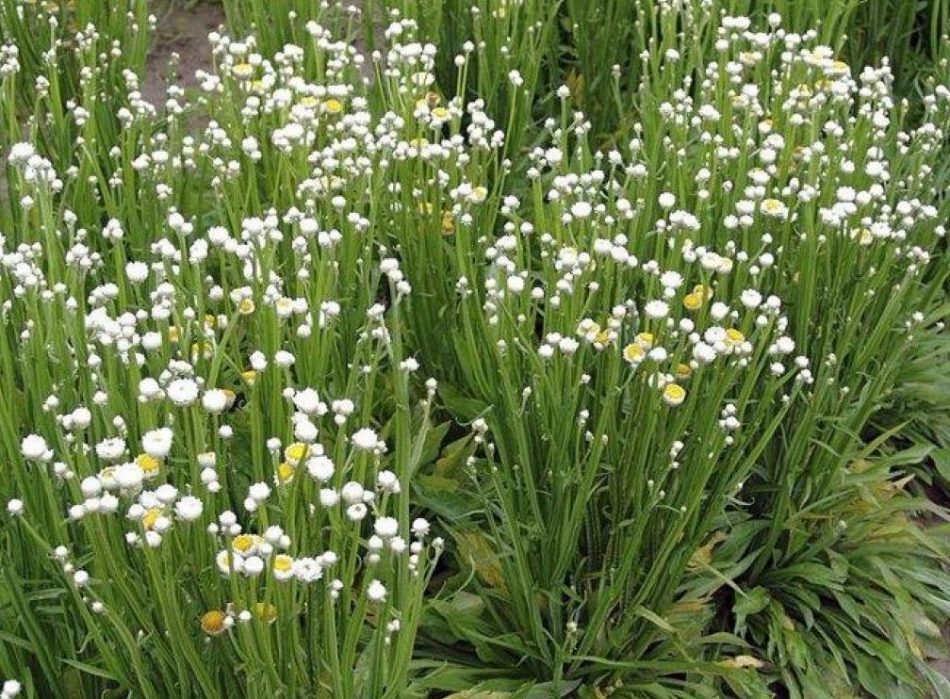
Transplant the ammoubium outdoors after the last frost, around the end of May. When planting, provide the plants with ample water and fertilizer to ensure successful establishment. 🌼
| Characteristic | Description |
|---|---|
| Family | Asteraceae is a diverse family of plants found throughout the world, including Australia 🌏 |
| Spreading | These flowers grow in a variety of climates, and thrive in sandy soils and arid areas 🏜️ |
| Appearance | Plants from the Asteraceae family can be either perennial herbaceous plants or annuals, with leaves of varying shapes and sizes. |
| Stem | They are characterized by quadrangular stems covered with white fluff, reaching a height of more than 50 cm 🌱 |
| Leaves | The leaf blades are sparse and small, often having a silvery tint, which makes the plant attractive to the eye 👀 |
| Flowers | The flowers are bright yellow, tubular in shape, and the numerous scales of the wrapper add a special decorative effect 🌼 |
| Flowering time | The beautiful flowers of this plant delight the eyes from June to October 🌸 |
| Fruit | After flowering, seeds with a tuft, black or dark brown in color, are formed, which contribute to the reproduction of the plant 🌱🌰 |
Rules for caring for ammoubium
To successfully grow ammobium, it's important to follow certain care guidelines, including choosing the right location, the right soil, watering, fertilizing, and pest control. In this guide, we'll cover the basic steps for caring for ammobium, helping to ensure healthy growth and beautiful blooms.
Location
When planting dried flowers, it's important to choose a well-lit location, so it's best to choose a flowerbed in an open area protected from drafts. Avoid locations where water can accumulate after rain, as the ammoubium can rot due to over-watered soil. If the soil is too wet, you can create a raised bed for growing this plant.
Priming
Ammobium, also known as "immortelle," prefers dry, well-drained soil. 🌱 It thrives in sandy soil with few nutrients. However, it can generally grow in soil with a slight clay content. 🏜️ Avoid overly wet or clayey soils, as this can cause root rot. 🚱 Good drainage can be ensured by adding coarse sand or fine expanded clay. ⚒️ The optimal soil pH is approximately 5.5–6.5, which provides conditions for the healthy growth of Ammobium. 📏 Before planting, it is necessary to thoroughly prepare the soil by removing root debris from other plants and digging it. 🌱
Watering
After planting, ammoubium requires moderate watering to help the bushes adapt. 💧 After this, the plant is usually quite drought-resistant and receives sufficient moisture from natural precipitation. 🌧️ Additional watering is only necessary in cases of severe and prolonged drought. 💦 The general rule for watering ammoubium is moderation. 🌱
Top dressing
For Ammobium, it is recommended to apply fertilizer one week after planting outdoors. 🌱 Nitrogen fertilizers, such as nitroammophoska, are suitable for stimulating foliage growth. 💧 It is important not to overdo it with nitrogen, so as not to suppress flowering and stimulate excessive foliage growth. 🌿 After another two weeks, you can switch to using complete mineral complexes, such as Fertika, Agricola, or Kemira-Universal, to feed the mature bushes. 🌼 Mullein infusion also has a positive effect on Ammobium growth. 🐄 Fertilizer should be applied only once during the growing season. 🌿
Rules for planting ammoubium
Planting Ammobium at the end of May is ideal, especially if using seedlings. 🌱 The planting hole should be a suitable size to accommodate the seedling and ensure the root collar is level with the soil. 🕳️ If the seedlings were grown without containers, they should be watered thoroughly before planting. 💧 It is best to remove the plants from the seedling tray with a tablespoon to maintain the soil ball around the roots. 🥄 The distance between seedlings should be approximately 30–35 cm. 📏 Before placing the plant in the hole, add drainage material and soil. 🌱 After planting, water thoroughly. 💦 If you are creating a raised bed, you can create it using the mounding method using a drainage layer and suitable materials. 🏞️ This will create optimal conditions for Ammobium growth, even if the soil is not ideal. 🌱 After preparing the bed and planting the plants, give it a few days to settle, and then you can do additional planting, if necessary. 🌿
Potential problems when growing ammoubium
Ammobium delights gardeners with its pest resistance, but improper watering can lead to rot. 🌿 If care instructions are not followed, a whitish or grayish coating may appear on the plant, and the leaves will begin to turn yellow and fall off. 🍂 To combat rot, remove the affected parts of the plant and treat it with fungicides, such as Fundazol or Topaz. 💧 After this, replant the bushes and adjust the watering schedule. 💦
Using Ammobium in Landscape
In the gardening world, ammobium may not command the same attention as exquisite roses or fragrant peonies. However, its presence can liven up the atmosphere in rock gardens and alpine gardens. 🌿 Plants of this species can complement each other beautifully, creating unique compositions. Ammobium is also suitable for dried bouquets, retaining its freshness and beauty for many years. 🌼
Harvesting ammobium
For dried arrangements with Ammobium, it's best to select buds just beginning to open. At this point, the flowers are not yet fully open, and the tubular flowers are protected by marginal scales. When collecting Ammobium stems, choose those that are approximately 25 cm long. Bundles of stems are hung in an attic or other dry, well-ventilated area, with the flower heads facing downwards and protected from direct sunlight.
However, it's worth remembering that after drying, the bright yellow color of the flowers darkens, so to preserve the attractiveness of the inflorescences, you can perform a belinia procedure. This involves treating the ammobium stems with sulfur vapor in an airtight box, where hot coals and sulfur powder create a special atmosphere. After this procedure, the inflorescences acquire a glossy white color around the edges with a bright yellow center. 💨
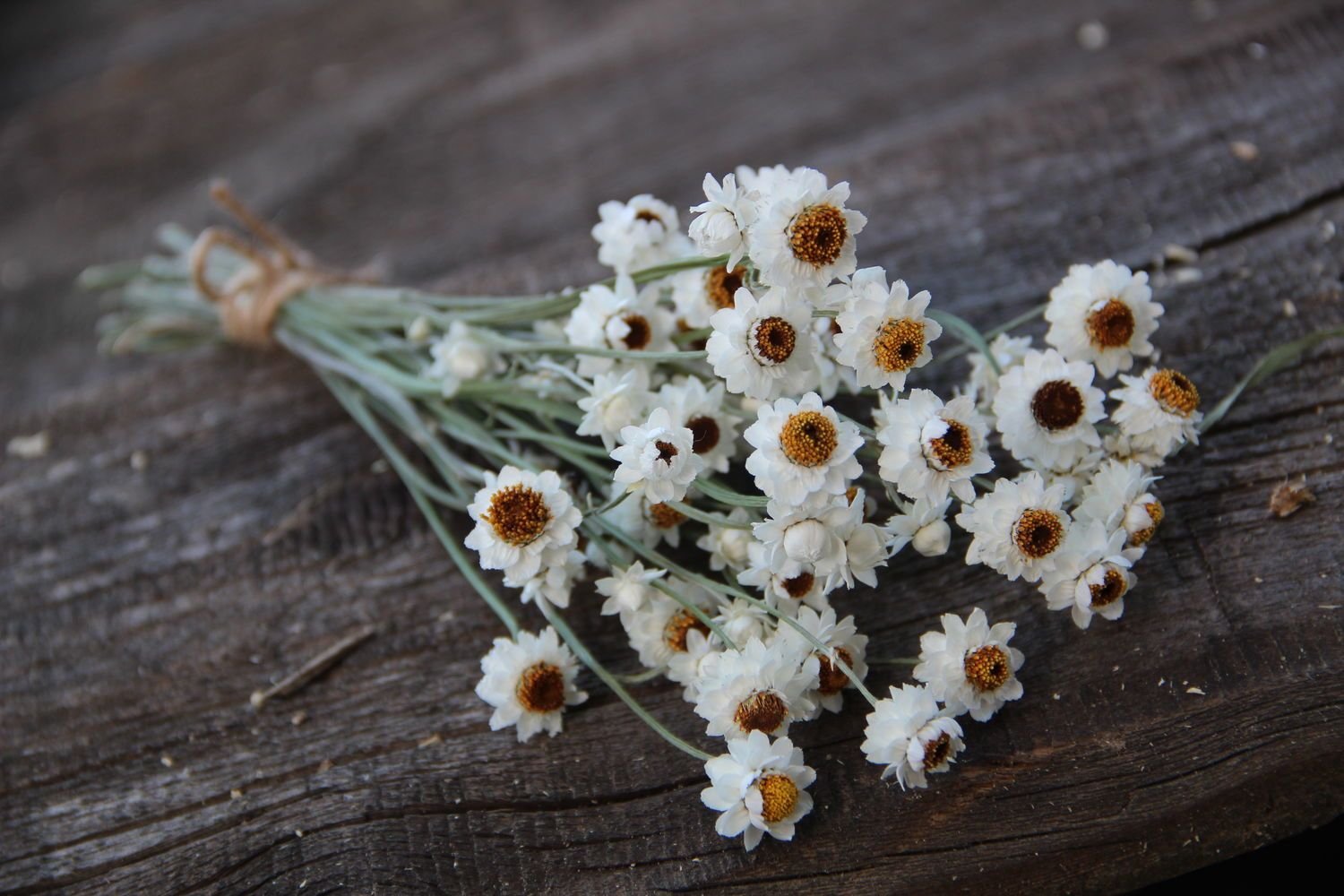
These dried ammobium flower "bouquets" can be used to create phyto-arrangements that will delight the eye for a long time and add a cozy touch to your home or office. By combining them with other plants, such as eryngiums, physalis, or helichrysum, you can create beautiful arrangements that will retain their beauty for a long time. 🌼