Lawn aeration involves piercing the turf to a specific depth to aerate the soil and improve the exchange of oxygen between the atmosphere and soil. This procedure improves the flow of water, nutrients, and oxygen to the roots, resulting in a more attractive lawn.
Why does your lawn need aeration?
Areas of compacted and hardened soil appear on the lawn. This prevents moisture and nutrients from reaching the soil. Carbon dioxide also accumulates, hindering plant growth.
If scarification (cleaning of the lawn) is not carried out for a long time, the following undesirable phenomena occur:
- the appearance of the lawn deteriorates, weeds and moss begin to grow, and dry clearings appear;
- The grass loses its resistance to precipitation and frost.
Aerating your lawn can help correct this. It doesn't have to be done over the entire area, just in problem areas.
What time of year do you do aeration?
The timing of the procedure depends on the grass growing in the area. If fescue or bluegrass is present, aeration can only be carried out in the fall, as these plants are late-ripening (but no later than October).
For heat-loving grass (for example, Bermuda grass), the procedure can be carried out in late spring or early summer.
To determine whether aeration is necessary, you can use the following method:
- Use a shovel to remove a piece of soil from the lawn.
- Inspect the grass rhizomes.
- If they are small (up to 50 mm), immediate ventilation is necessary, since not enough oxygen and nutrients are supplied.
It's enough to do it once per season (in spring or early fall). However, in some cases, more will be needed:
- sports turf (for example, on a football field) - 2-3 times;
- unfavorable climate (for example, frequent and heavy rainfall or drought) - additional ventilation;
- moss, yellow grass, etc. - immediate aeration.
Sandy soil needs to be aerated once, clay soil – 2-3 times, as it is subject to compression.
How to aerate
Ventilation can be mechanical, factory-made, or done by hand.
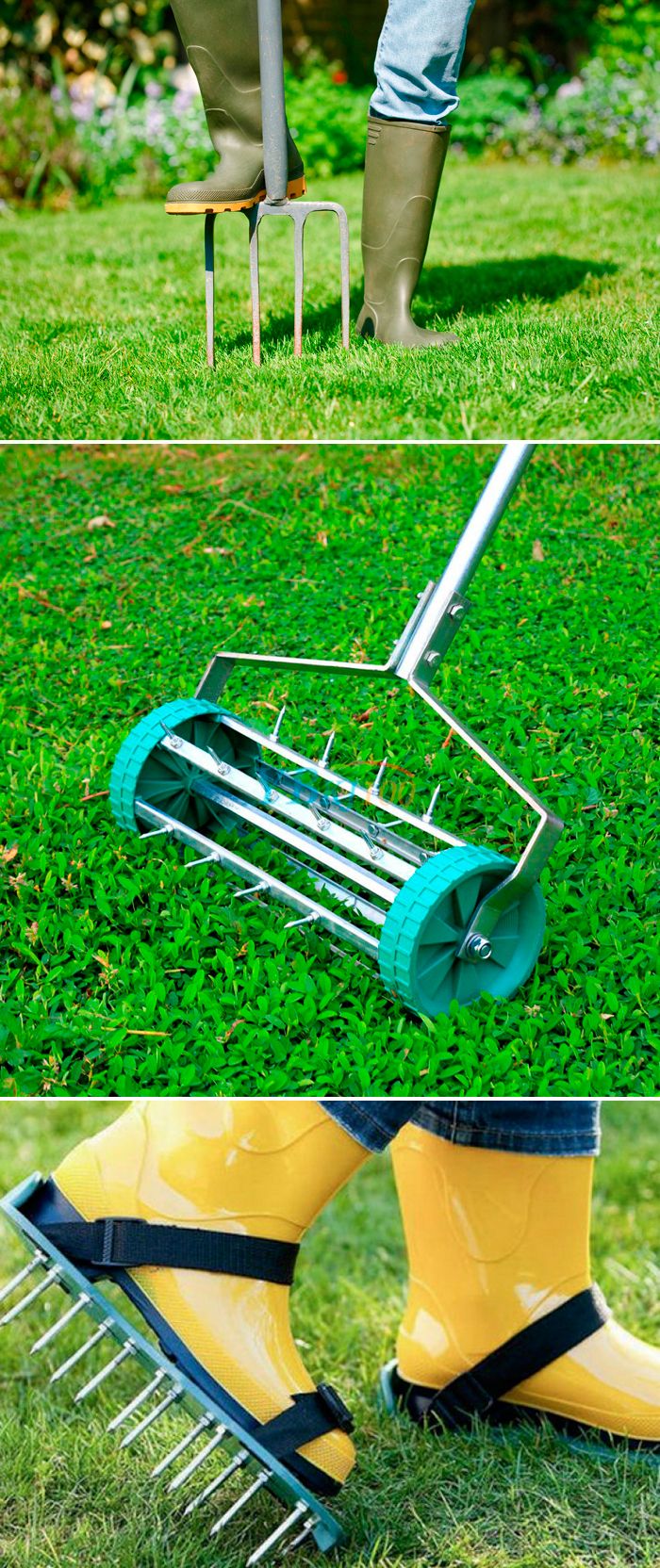
Methods of performing the procedure:
- piercing with metal pins without displacing the substrate;
- using specialized tools - aerators (they extract soil with a circumference of 1-2 cm and scatter it).
There are several types of aerators:
- core - do not compact the soil very much, remove the dried layer well;
- a rake made of thin steel rods in a sickle shape - makes a horizontal cut in the soil, combing out dry grass;
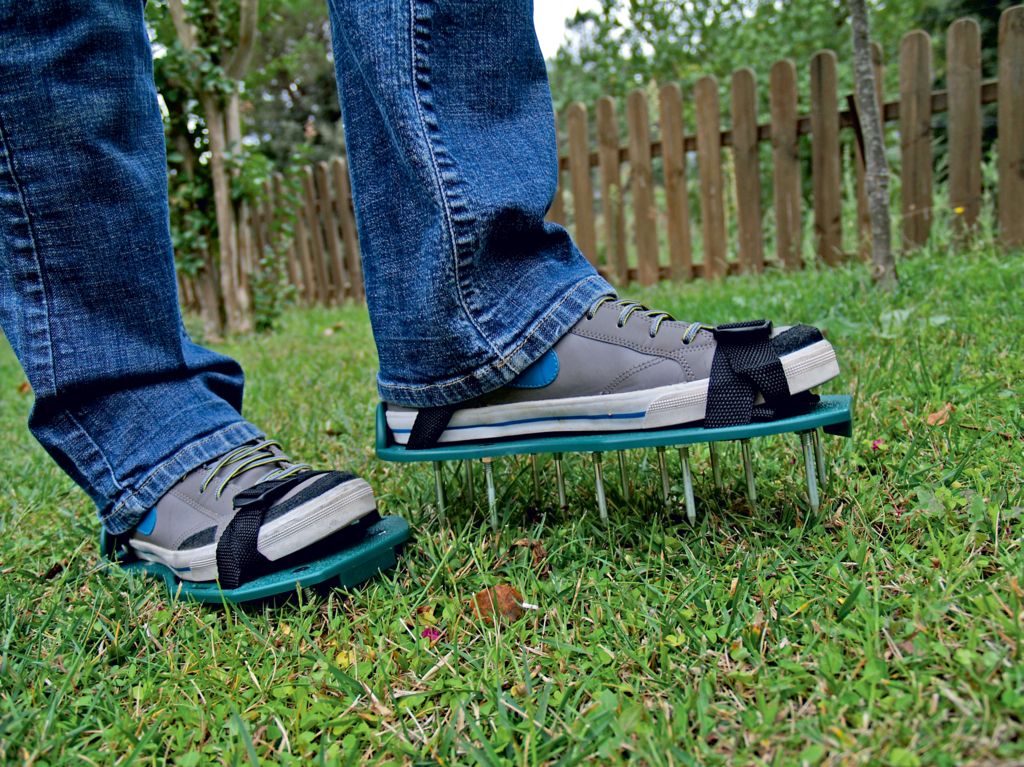
- aerator soles, where teeth are attached to the bottom of the shoes to help you walk on the lawn;
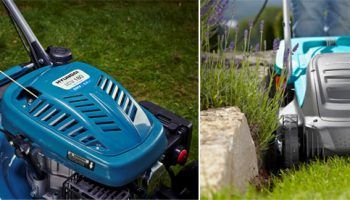
- Self-propelled machines - for deep ventilation with good performance.
Step by step process:
- Aeration during drought will harm lawn plants, so do not carry out this procedure in hot weather.
- Water the lawn a couple of days before the event. This can also be done after precipitation.
- Make punctures in rows with an overlap of 3-4 cm (if the soil density is too high, you will need another hole at an angle of 90 degrees to the first one).
- Wait 2 days for the removed soil clumps to dry. Chop them, apply fertilizer, and water the lawn.
- If there were bald spots, sow them with seeds and only then crush the clods, level them and water.
If you take the right steps, the grass will turn green and grow faster within a week.
How exactly do aerators work?
At its core, aeration is loosening. Therefore, all soil manipulation devices are equipped with spikes up to 15 cm long or hollow tubes 15-20 mm long for soil displacement.
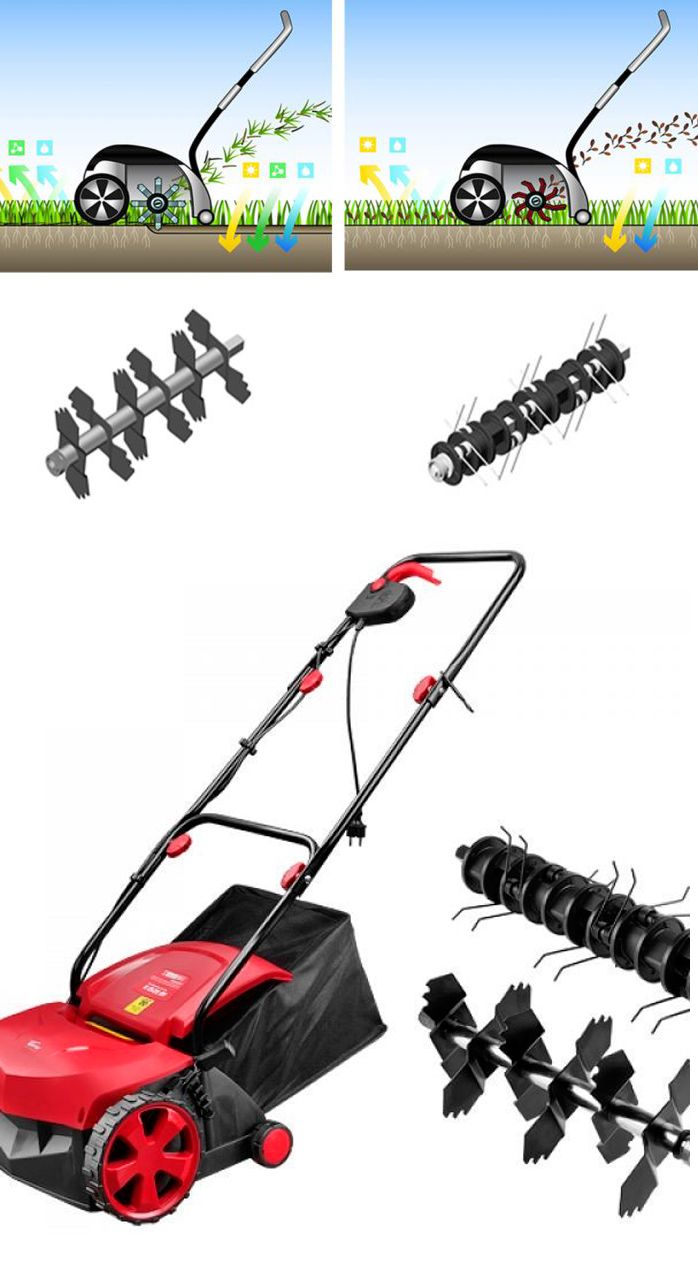
Automatic devices
Lawn aerators are designed to ventilate the soil beneath the grass layer. This is achieved by puncturing the substrate and partially removing compacted soil.
There are devices that can be used to scarify, aerate, and verticulate a lawn at once.
How to aerate with a pitchfork
This method is suitable if the area is not very large, because performing back-and-forth movements from bottom to top for a long time is tedious and difficult.
Aerator-forks - thin plates on the handle.
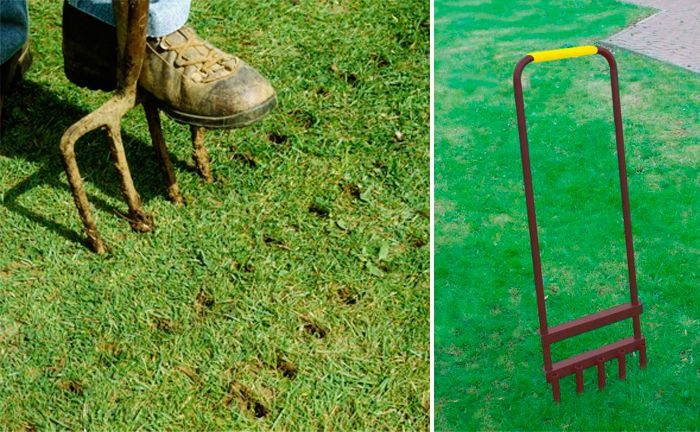
This device allows you to carefully trim the top layer of turf and comb it. The substrate should be thoroughly watered beforehand. You can buy a pitchfork or make your own.
How to aerate with sandals
You can make this device yourself.
You will need:
- A board, 30-50 mm thick plywood, or a piece of thick rubber. Metal is also possible, but it will be heavier.
- Self-tapping screws or nails from 10 cm.
- Fastening straps, such as various straps.
- Electric jigsaw.
- A screwdriver or a screwdriver, a hammer.
Step by step process:
- Cut two pieces of plywood or board. Make the size several times larger than your foot, as the device will be worn over regular shoes. Place your foot on the piece of wood and trace around it with chalk, leaving a few centimeters of allowance.
- Cut out the sketch along the outline. This will create wooden shoe trims.
- Hammer nails or screw 10-12 screws into each one. If using a metal base, weld the tenons in place with a welder.
- To attach the insoles to the shoes, make holes on the sides through which to thread the straps.
After that, all that remains is to put on your homemade sandals and start walking on the lawn.
This device is only suitable for areas with a small number of square meters, as even the most trained legs may not be able to withstand such a high physical load.
For large areas, it's best to use electric or gasoline-powered aeration equipment (such as a roller). These are quite expensive, but you can rent one, or use a special spiked roller, which is less expensive.
To summarize, to keep your lawn looking fresh and well-maintained, you need to aerate the soil at least once a season. Otherwise, the grass will turn yellow, grow poorly, and weeds will appear. You can use homemade or store-bought aeration tools for aeration.