Eggplant is considered a rather capricious vegetable. But if you know all the tricks of its cultivation, you can reap an excellent harvest of delicious fruit. In this article, we'll explore the specifics of greenhouse eggplant cultivation and list the most popular varieties among gardeners.
Content
- 1 What types of protected soil are used for growing eggplants?
- 2 31 Best Eggplant Varieties for Greenhouses
- 2.1 Eggplant variety Alekseevsky
- 2.2 Eggplant variety Diamond
- 2.3 Eggplant variety Bagheera F1
- 2.4 Eggplant variety Behemoth F1
- 2.5 Eggplant variety Bull's Heart F1
- 2.6 Eggplant variety Valentina F1
- 2.7 Eggplant variety Galich
- 2.8 Eggplant variety Mushroom Delight
- 2.9 Eggplant variety Destan F1
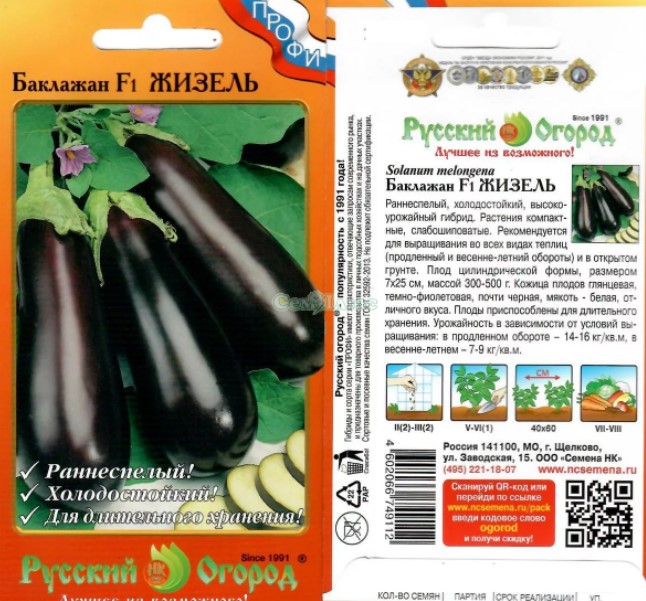
- 2.10 Eggplant variety Giselle
- 2.11 Eggplant variety Caviar F1
- 2.12 Eggplant variety Ilya Muromets
- 2.13 Eggplant variety King of the market
- 2.14 Eggplant variety King of the North F1
- 2.15 Eggplant variety Maria
- 2.16 Eggplant variety Samurai Sword
- 2.17 Eggplant variety Mishutka
- 2.18 Eggplant variety Robin Hood
- 2.19 Eggplant variety Roma F1
- 2.20 Eggplant variety Northern Indigo F1
- 2.21 Eggplant variety Siberian early ripening 148
- 2.22 Eggplant variety Solaris
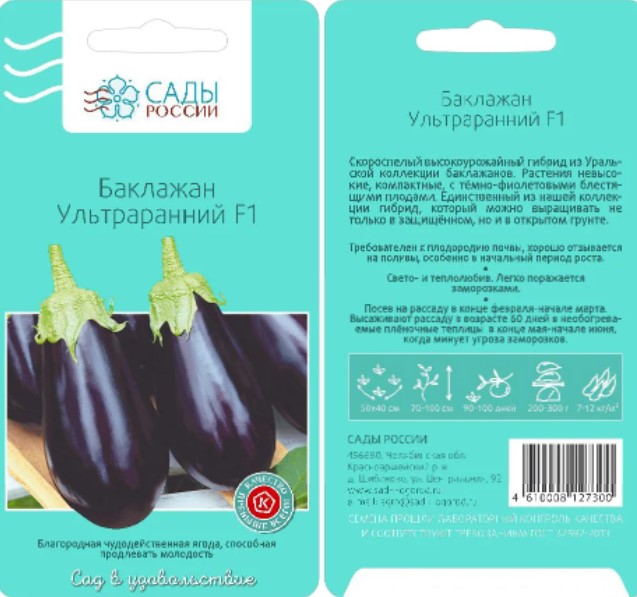
- 2.23 Eggplant variety Ultra early F1
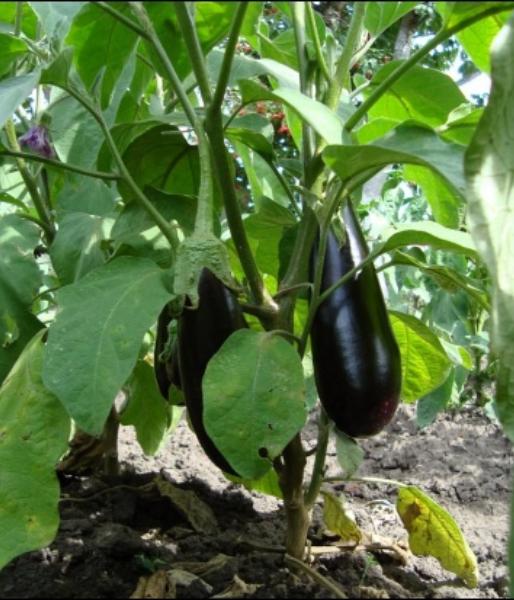
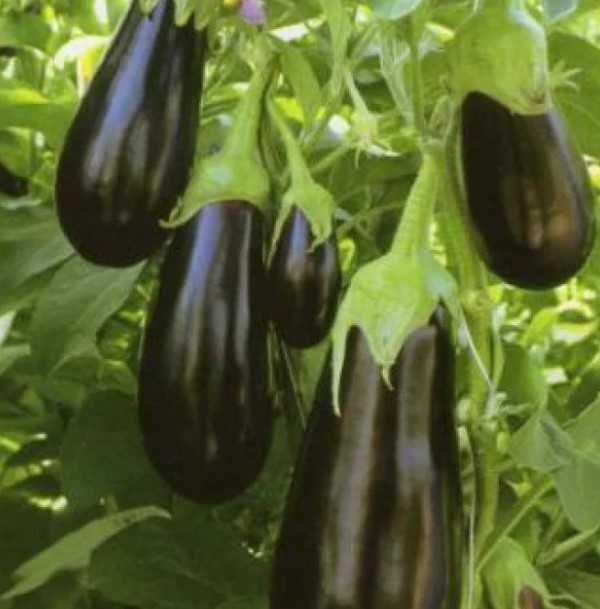
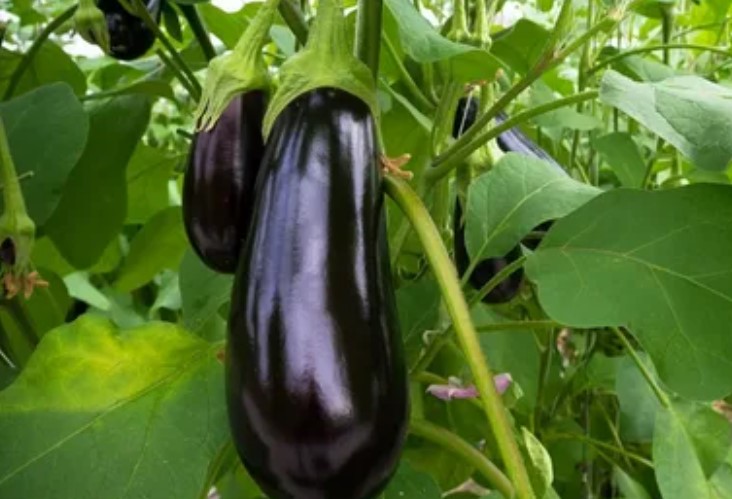
- 2.24 Eggplant variety Universal 6
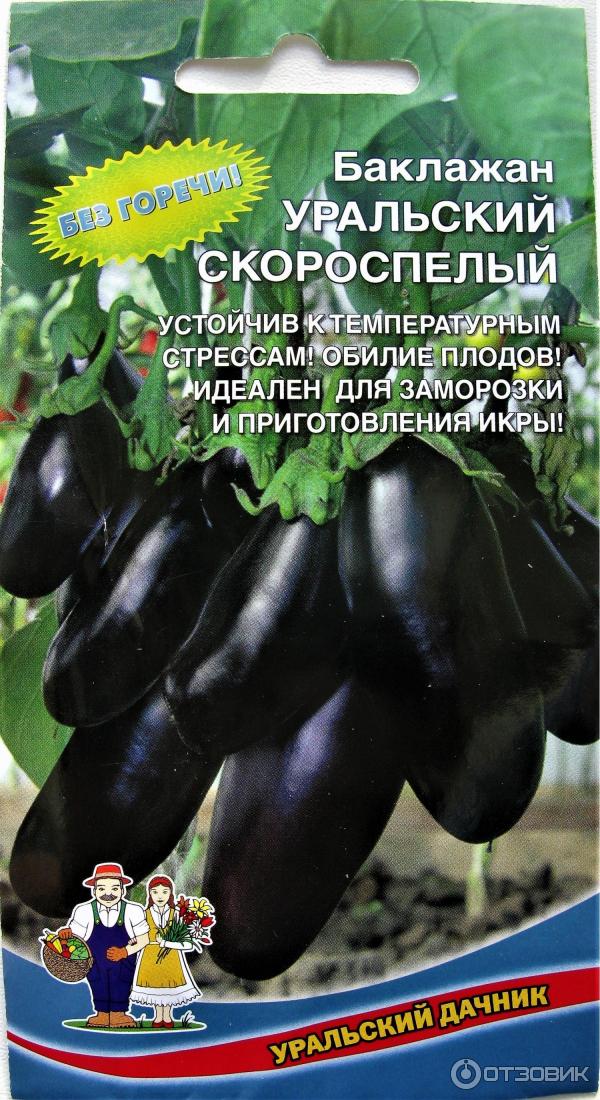
- 2.25 Ural early ripening eggplant variety
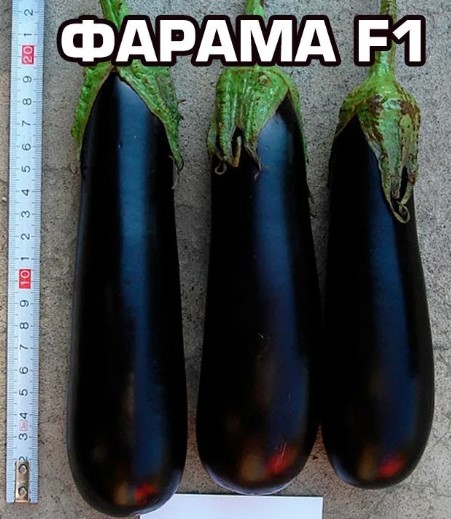
- 2.26 Eggplant variety Farama F1
- 2.27 Eggplant variety Purple Miracle F1
- 2.28 Eggplant variety Khalif F1
- 2.29 Eggplant variety Black Beauty
- 2.30 Eggplant variety Nutcracker F1
- 2.31 Eggplant variety Epic F1
- 3 Growing eggplant seedlings
- 4 When to plant eggplant seedlings in a greenhouse: optimal timing
- 5 Preparing the greenhouse before planting eggplants
- 6 Planting eggplant seedlings in a greenhouse step by step
- 7 Eggplant planting pattern in a greenhouse
- 8 How to fertilize eggplants in a greenhouse
- 9 How to water eggplants in a greenhouse
- 10 Growing Eggplants in a Greenhouse: Step-by-Step Instructions
- 11 Pinching out eggplants in a greenhouse
- 12 Scheme for tying up eggplants in a greenhouse
- 13 Greenhouse eggplant diseases and their treatment
- 14 What to do if eggplants turn yellow in a greenhouse
- 15 What to do if eggplants in a greenhouse are not setting fruit
- 16 What to do if eggplants are wilting in a greenhouse
- 17 Growing eggplants in a polycarbonate greenhouse: features
- 18 Tomatoes and eggplants in the same greenhouse: compatibility
- 19 Cucumbers, peppers and eggplants in one greenhouse
- 20 Growing eggplants in a greenhouse in the Moscow region: features and varieties
- 21 Growing eggplants in a greenhouse in the Leningrad region
- 22 Growing eggplants in a greenhouse in Siberia
- 23 Growing eggplants in a greenhouse in the Urals
- 24 Harvesting eggplants in a greenhouse
What types of protected soil are used for growing eggplants?
Among the varieties of protected soil, the following are usually distinguished:
- GreenhouseThis method is more suitable for regions with early springs and a stable climate. The greenhouse is installed directly on the ground, with a support built around the bed and covered with any covering material. Film is most commonly used. This helps protect the plants from wind, cold, and drafts.
- GreenhouseThere are many variations of greenhouse designs, the most common being the arched greenhouse. Greenhouses can be heated or traditional. They have a foundation, and the beds are usually quite high. They can have several compartments separated by a partition. Polycarbonate or glass can be used as the covering.
31 Best Eggplant Varieties for Greenhouses
Below are the most popular varieties of eggplants for greenhouse cultivation.
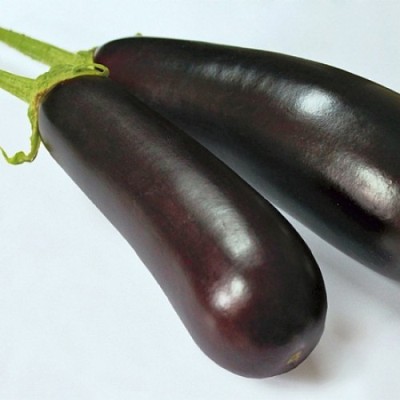
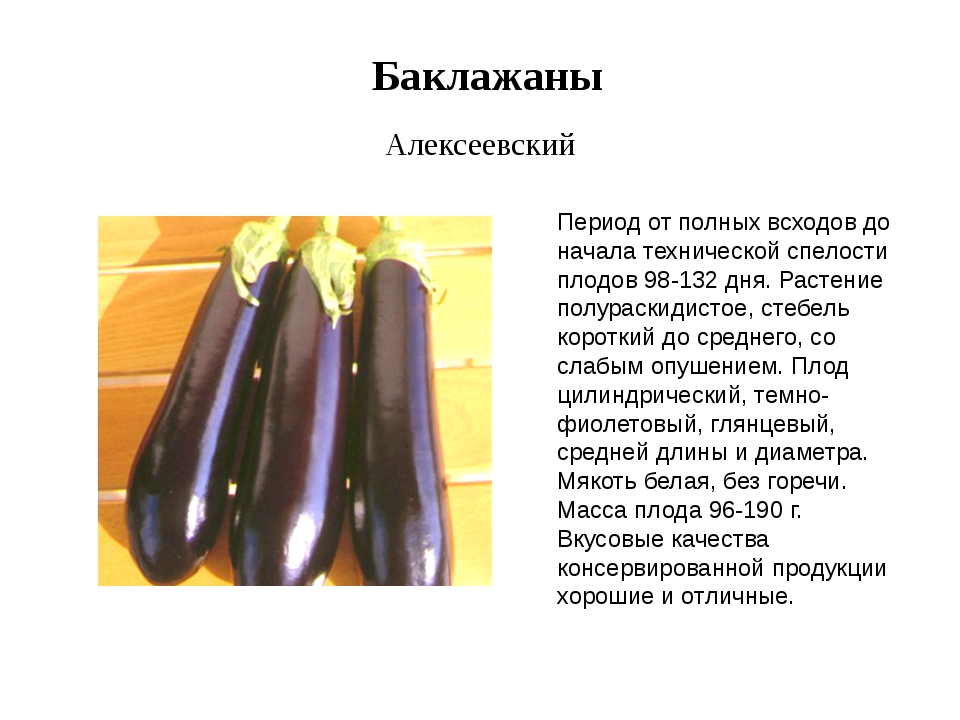
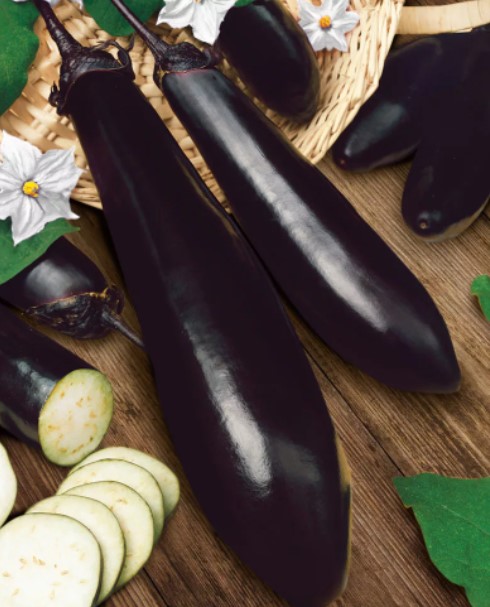
Eggplant variety Alekseevsky
| Description | A medium-sized variety of eggplant, suitable for growing in greenhouses and open ground. |
| Bush height and description | The plant is semi-spreading, up to 70 cm in height. |
| Fruit | Cone-shaped, length up to 18 cm, weight from 100 to 190 g |
| Productivity | 6-8 kg per square meter |
| Fruit ripening time | 95-100 days |
| Disease resistance | They are attacked by the Colorado potato beetle. |
| 2000 |
Photo gallery of eggplant variety Alekseevsky
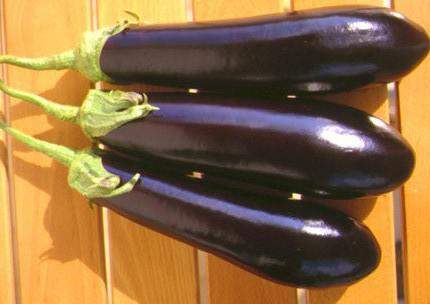


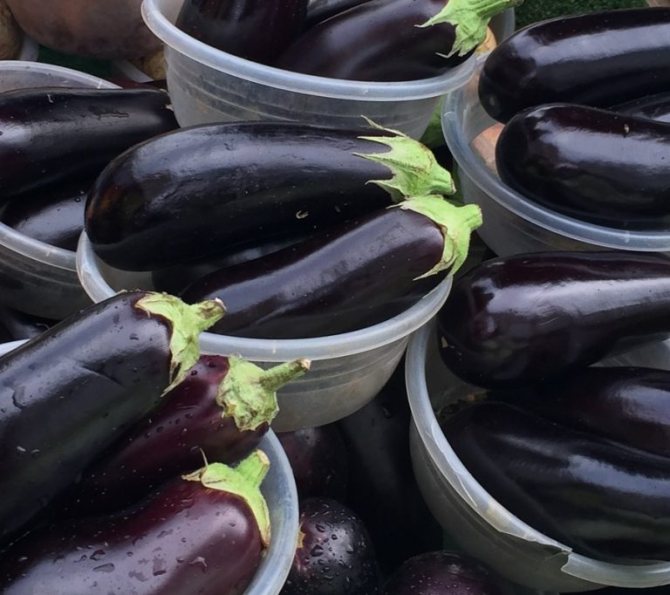
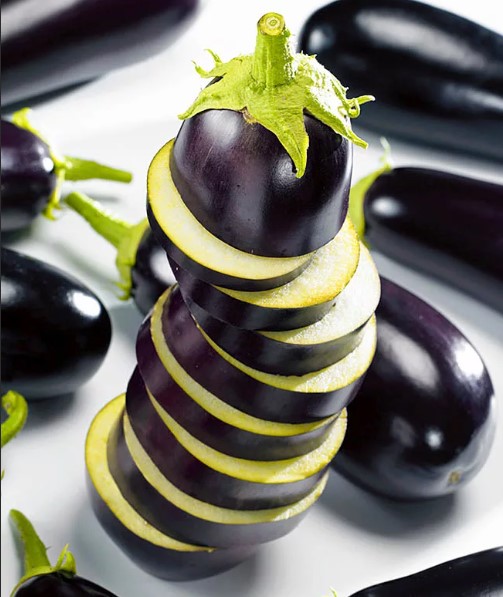
Review of eggplant variety Alekseevsky
Hello everyone! Spring is tomorrow, and I've started planting. This year, I bought some Alekseevsky eggplant seeds from Semko to try. I chose this variety because it's advertised as early-ripening. The packaging shows some very cute little eggplants.
On the back there is a description of the variety, the yield is promised to be good - 6-8 kg/sq. meter.
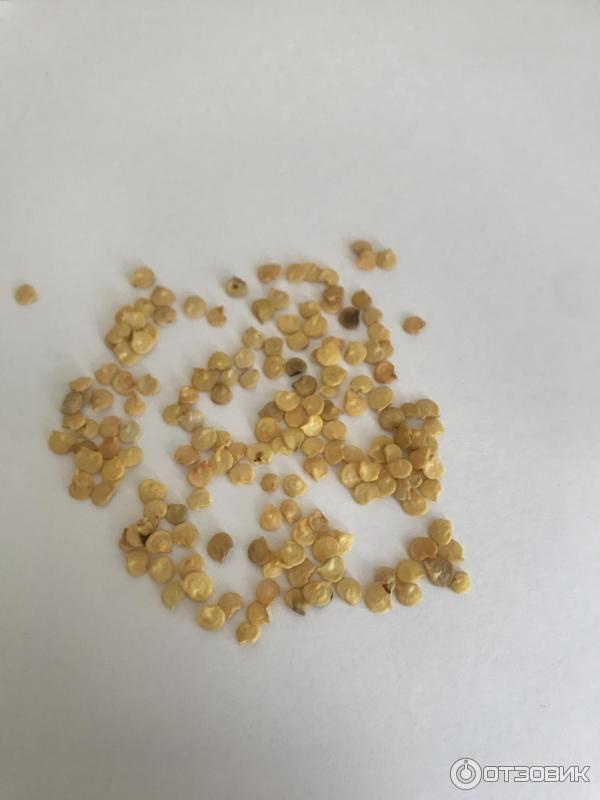
There are a lot of seeds, about 120 of them. I poured out half of them and left them to germinate, placing them between wet cotton pads. The seeds look good, with few defective ones.
Today, a day after germination began, I checked the seeds, and one seed of the Alekseevsky eggplant had already sprouted! Hooray, I hope this variety will have a good germination rate.
As the eggplant grows and develops, I'll post photos, if anything grows. Thanks to everyone who read! Wishing you a fantastic harvest in 2021!
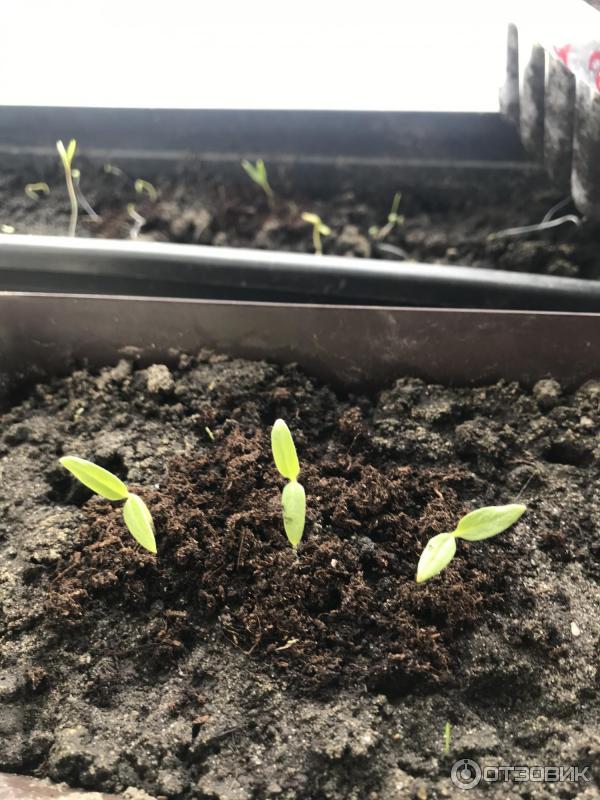
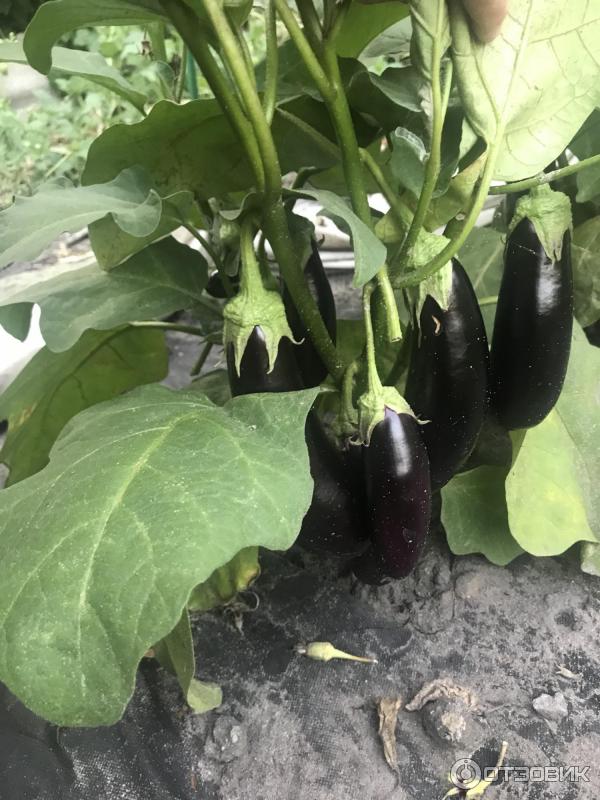
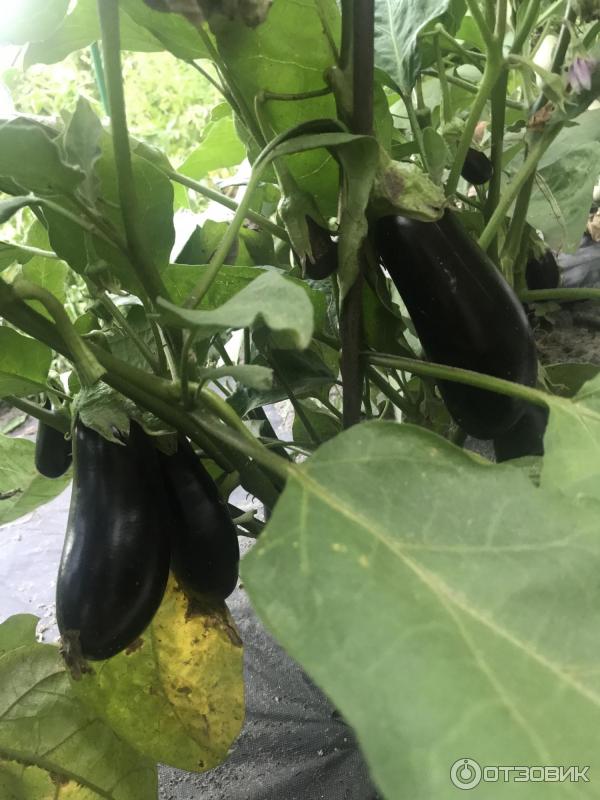
I'm adding the first photos; these eggplants were the first to sprout and the first to emerge. The photo shows a trio of "Alekseevsky" eggplants; we only have two leaves so far.


Eggplant variety Diamond
| Description | A classic variety with uniform ripening and good yield. |
| Bush height and description | The height of the bush reaches 45-56 cm, shoots appear early, leaves are medium-sized. |
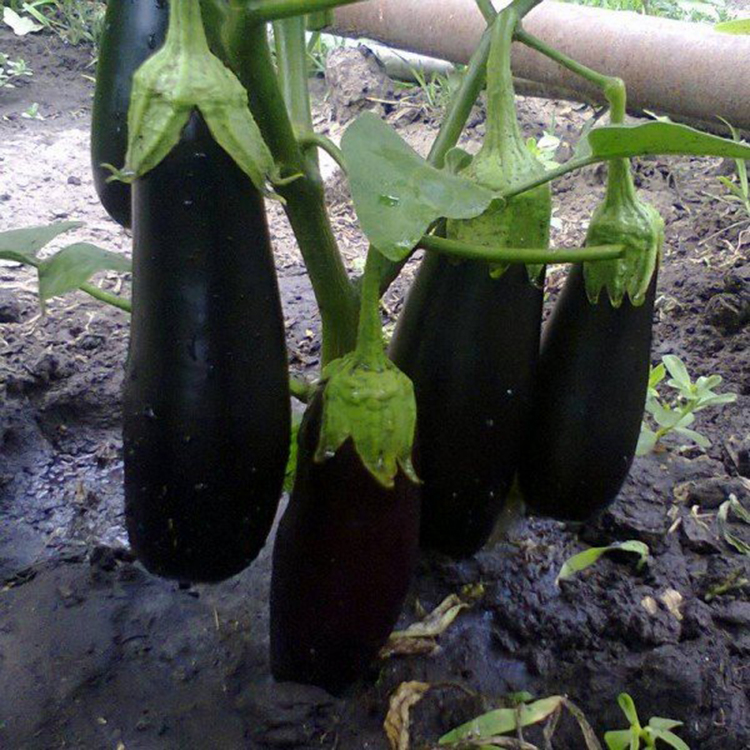
| Fruit | Teardrop-shaped, diameter up to 6 cm, length up to 17.5 cm. Weight from 100 to 164 g. |
| Productivity | 7.5 kg per square meter |
| Fruit ripening time | 109-149 days. |
| Disease resistance | Moderate resistance to late blight, blossom-end rot, verticillium wilt, and fusarium wilt. High resistance to stolbur and mosaic. |
| 1983 |
Photo gallery of eggplant variety Diamond
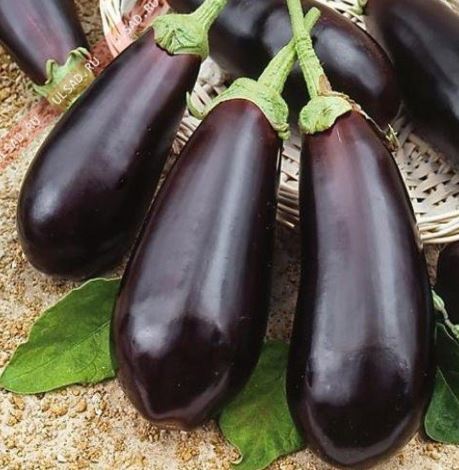
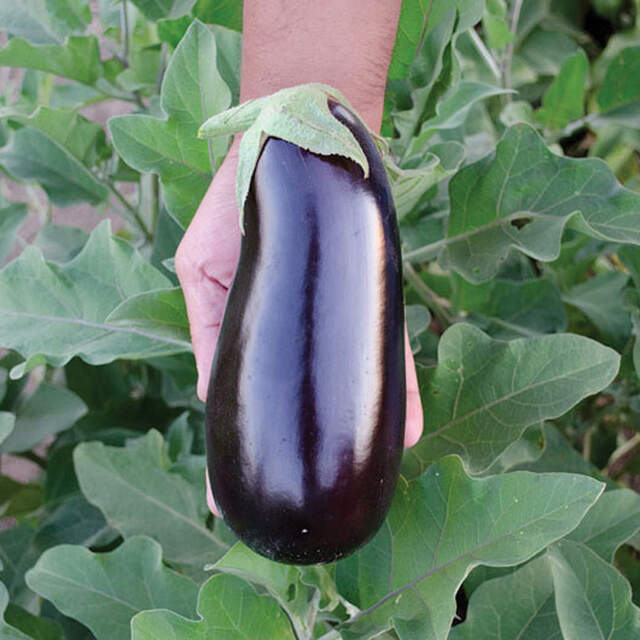

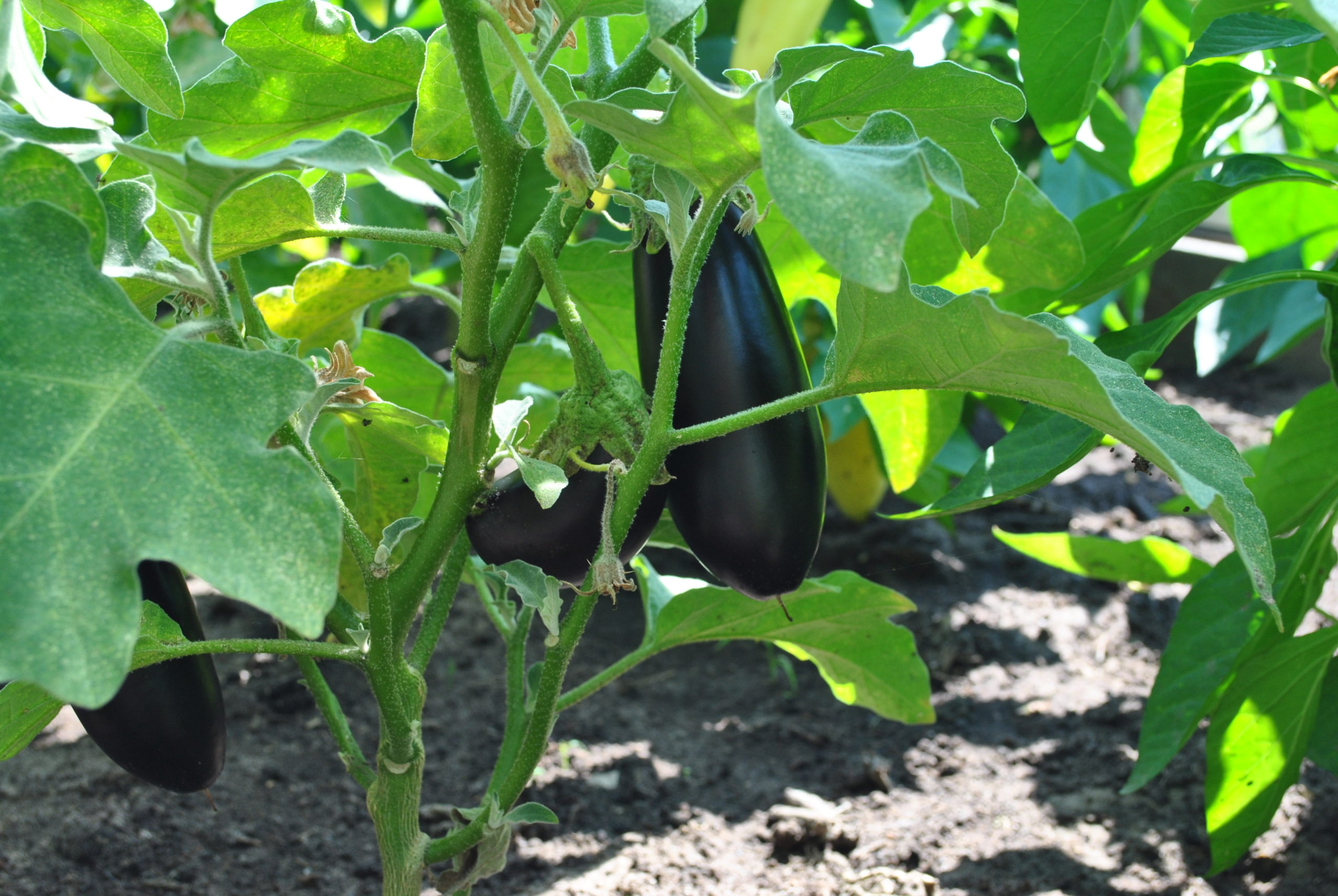
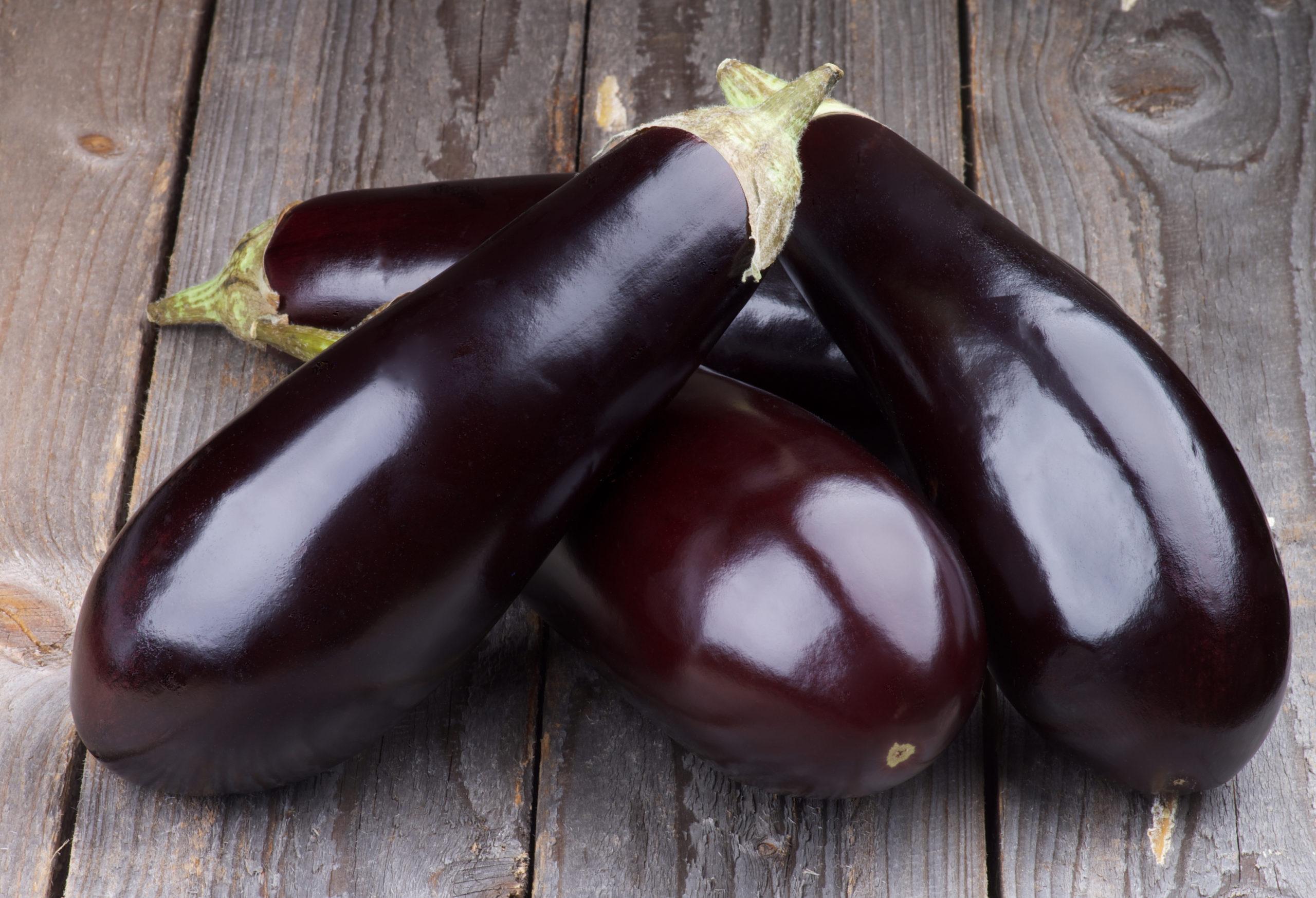
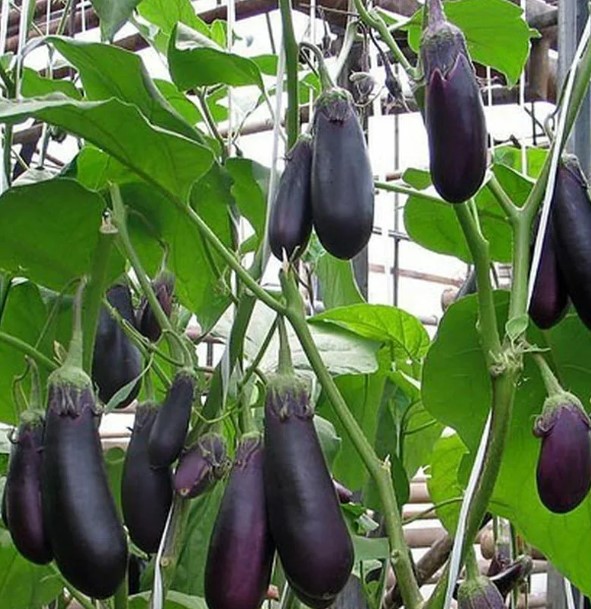
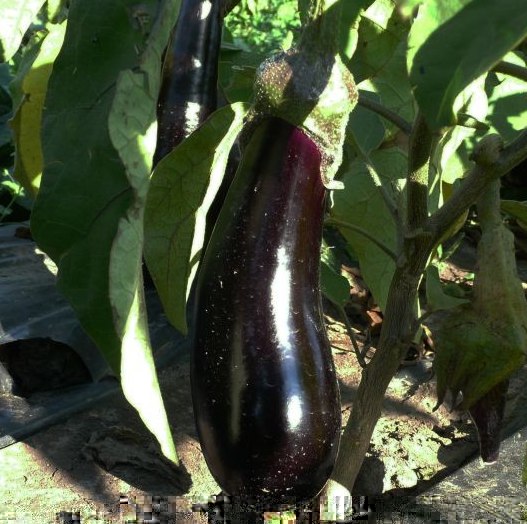
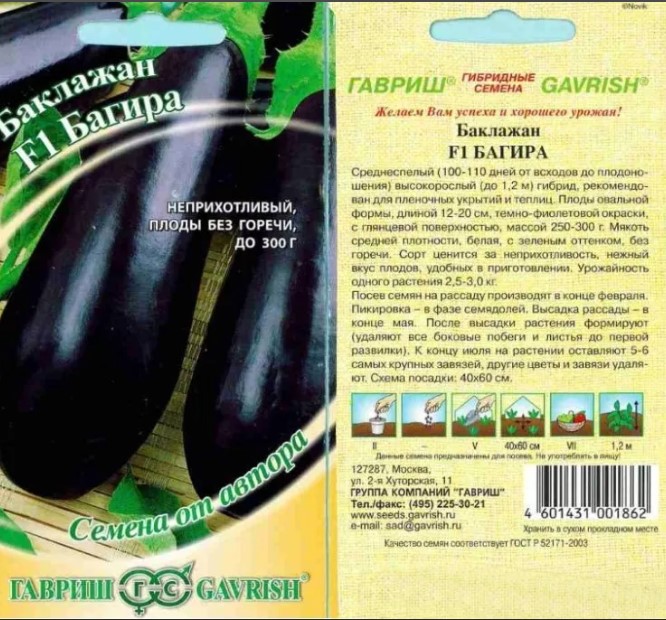
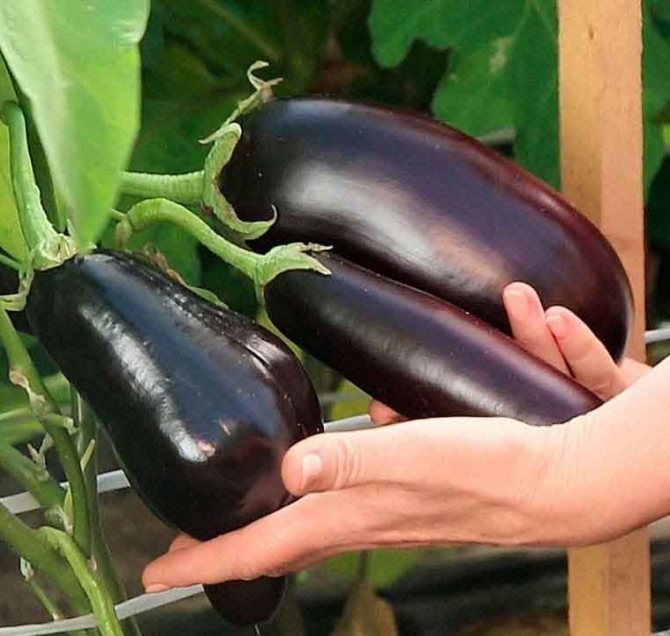
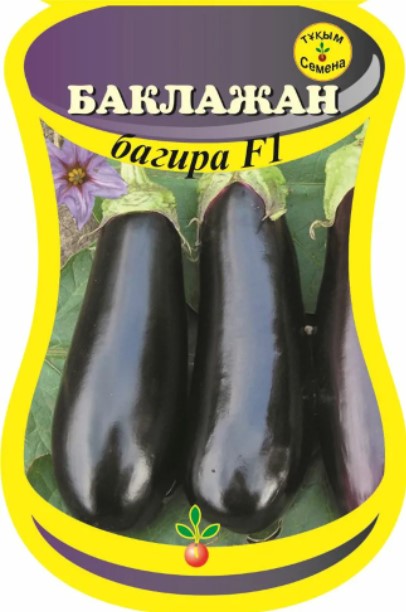
Eggplant variety Bagheera F1
| Description | A tall hybrid variety with large fruits and good disease resistance. |
| Bush height and description | The height of the bush is up to 120 cm, the shoots are powerful, medium spreading with large leaves. |
| Fruit | Oval, slightly elongated. Weight up to 350 g, length up to 20 cm. |
| Productivity | Up to 12 kg per square meter |
| Fruit ripening time | 100-110 days |
| Disease resistance | Complex disease resistance, often prey to slugs |
| 2003 |
Photo gallery of eggplant variety Bagheera F1

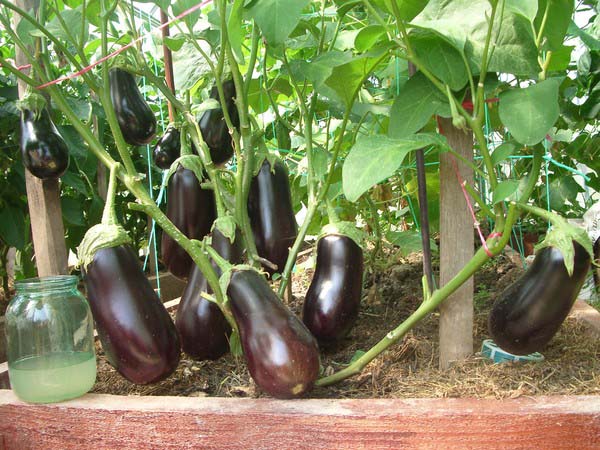
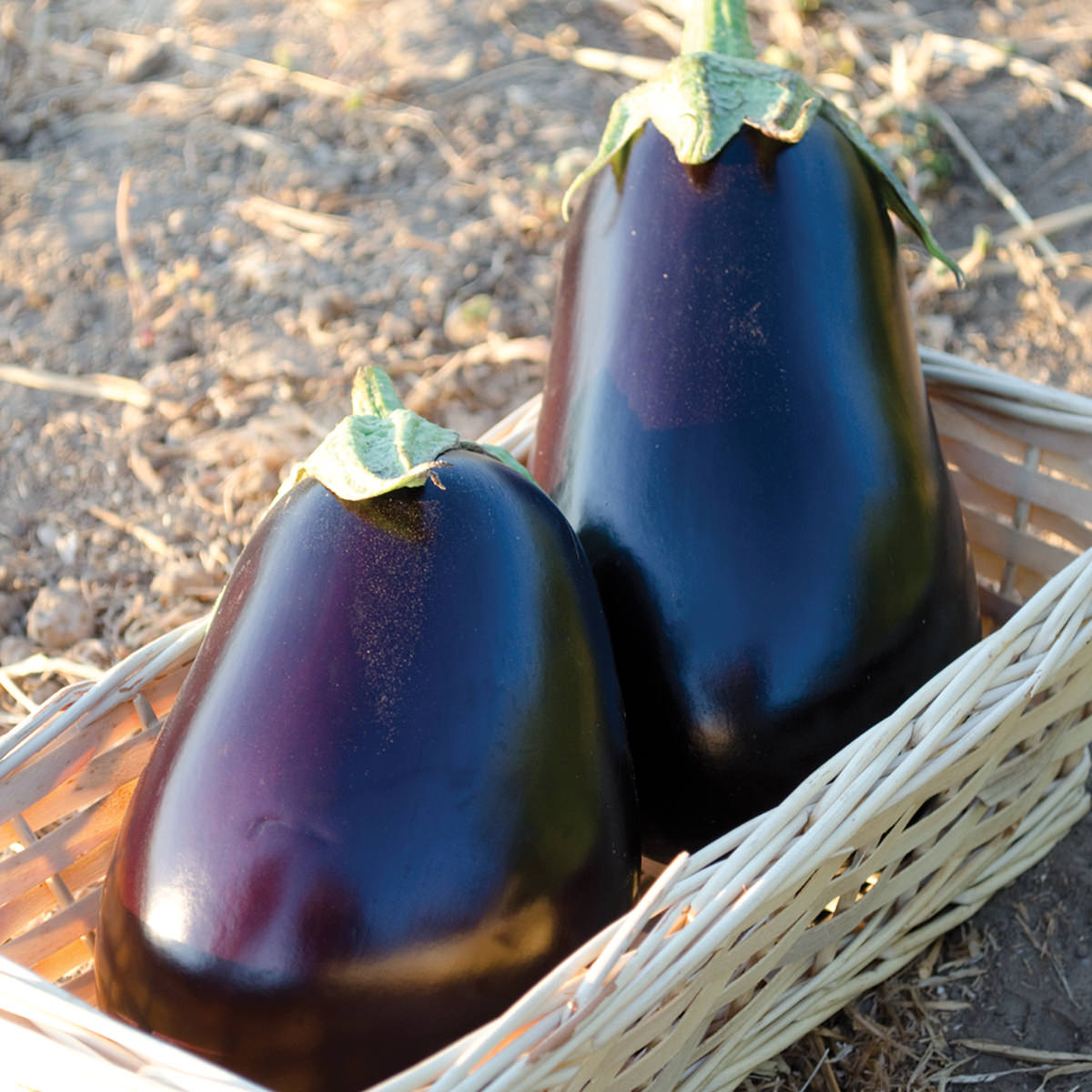
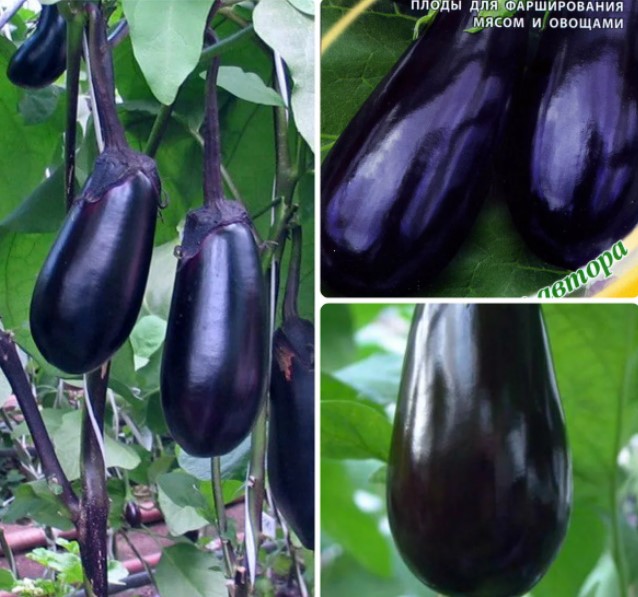
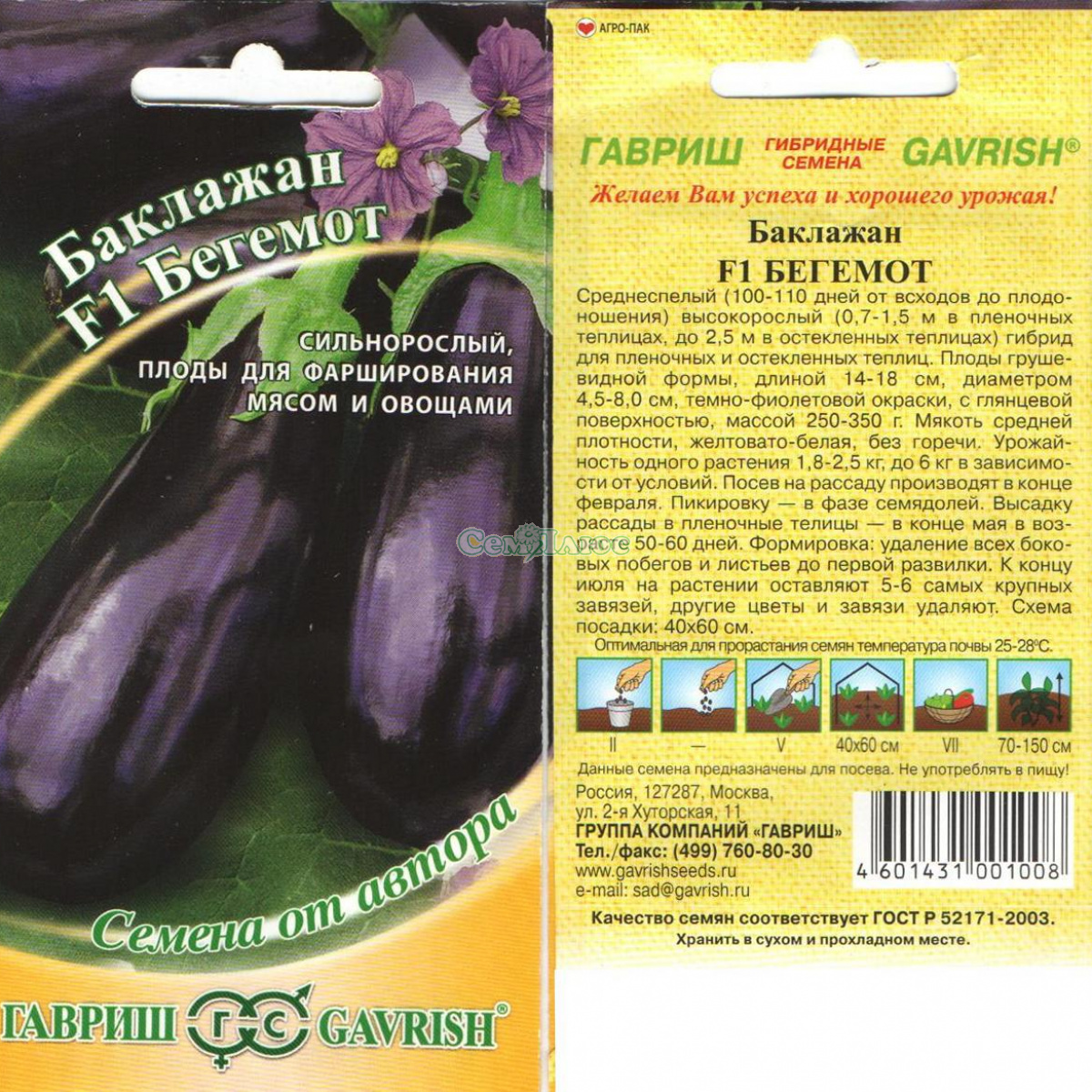
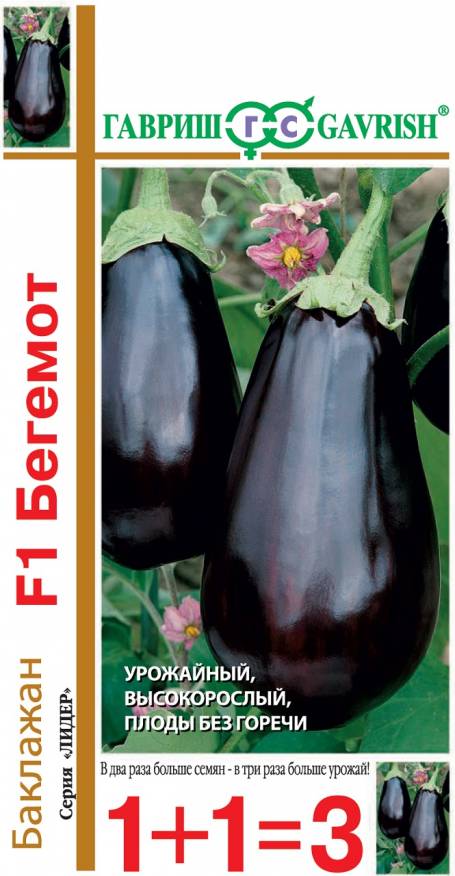
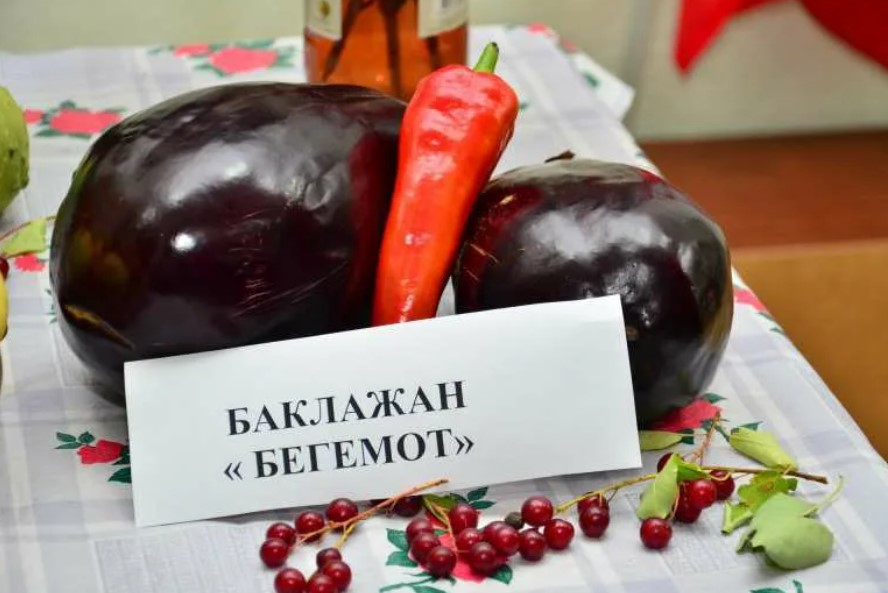
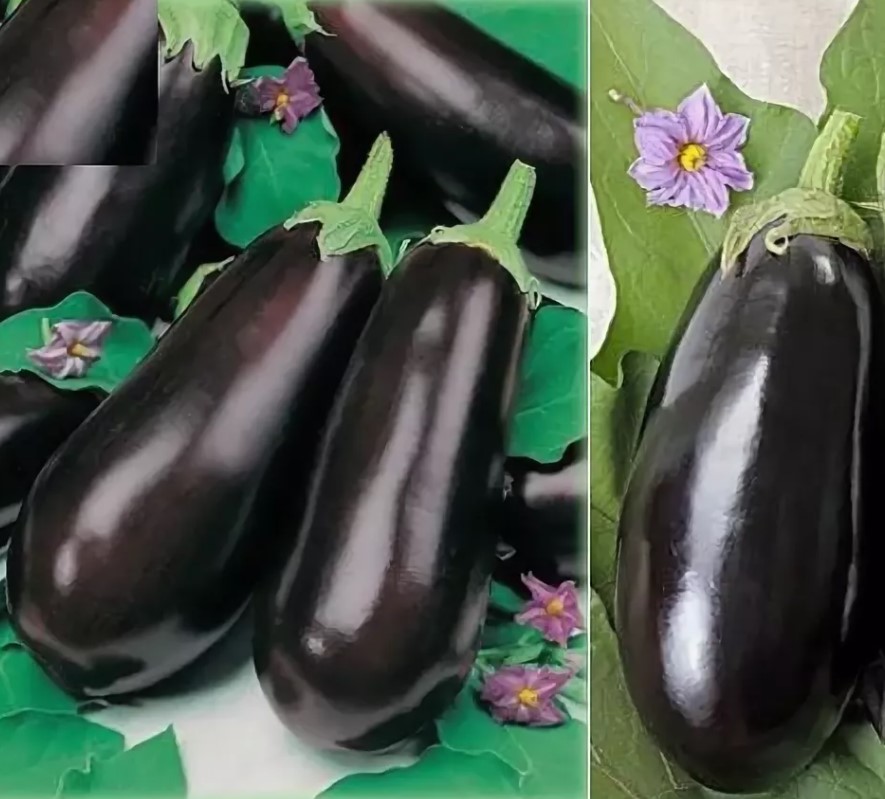
Eggplant variety Behemoth F1
| Description | A tall hybrid variety for the Central and Northern regions |
| Bush height and description | Depends on the growing method, in film greenhouses it reaches 2.5 m, in open ground 0.7 - 1.5 m |
| Fruit | Weight 250-350 g, shape smooth, oval, length up to 18 cm. |
| Productivity | 12-17 kg per square meter |
| Fruit ripening time | 110-130 days |
| Disease resistance | Resistant to tobacco mosaic virus and verticillium wilt, but susceptible to powdery mildew, fusarium and rot. |
| 1997 |
Photo gallery of eggplant variety Behemoth F1
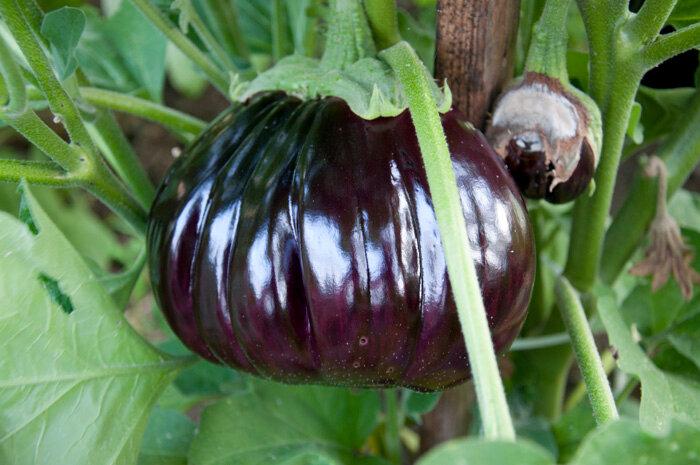
Eggplant variety Bull's Heart F1
| Description | A hybrid variety with highly marketable fruits |
| Bush height and description | The bushes are medium-sized, dense, but not spreading. Height up to 80 cm. |
| Fruit | Oval shape. Weight up to 300 cm. Taste without bitterness. |
| Productivity | Up to 5 kg per square meter |
| Fruit ripening time | 110-115 days |
| Disease resistance | Good resistance to major diseases. |
| 2007 |
Photo gallery of the eggplant variety Bull's Heart F1
Review of the eggplant variety Bull's Heart F1
Good day, friends!
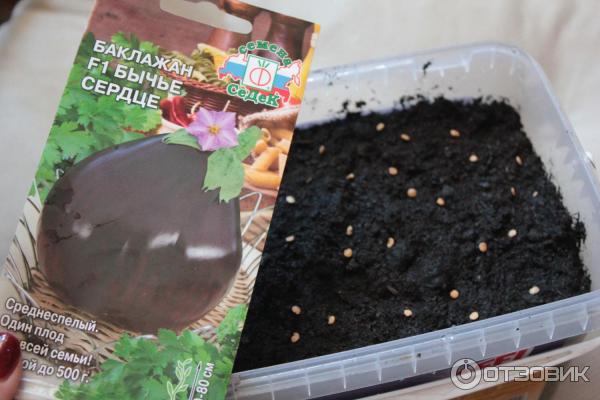
Another eggplant seed review, my final one this year. This time, I'll be talking about Sedek brand seeds. The variety is called "Bull's Heart F1."
Previously, I wrote about the eggplants "Purple Miracle" and "King of the North".
I bought the seeds myself. It was in February of this year. I don't remember the price. I do know that the price was reasonable, around 25-30 rubles.
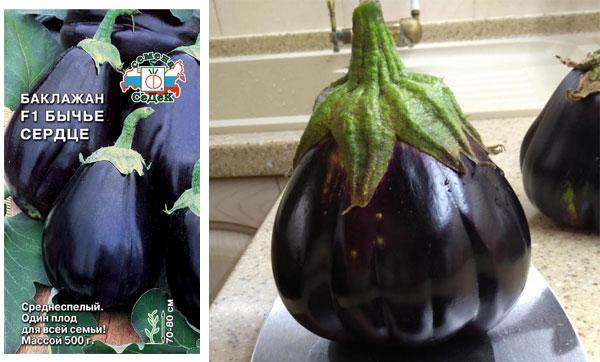
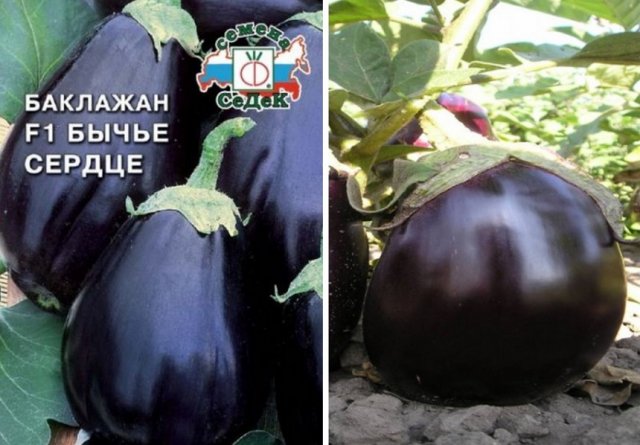
All about the variety is on the back of the packaging.
What to expect?
This hybrid is mid-season. The plant is vigorous, reaching up to 80 centimeters in height. The fruits are large, round, with white flesh and no bitterness.
There were a lot of seeds (2 grams). I didn't count the exact number.
I planted the seeds in the second half of February 2020.
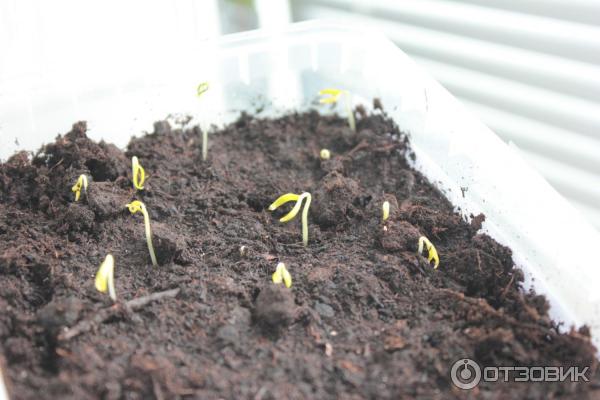
Germination is very good and quite fast.
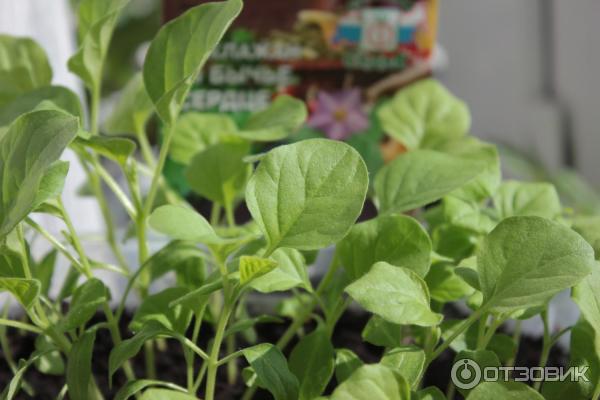
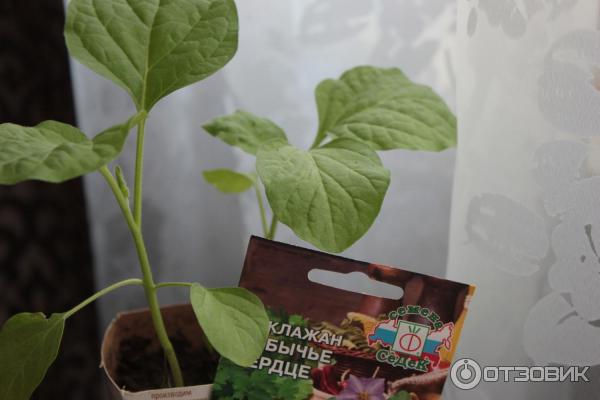
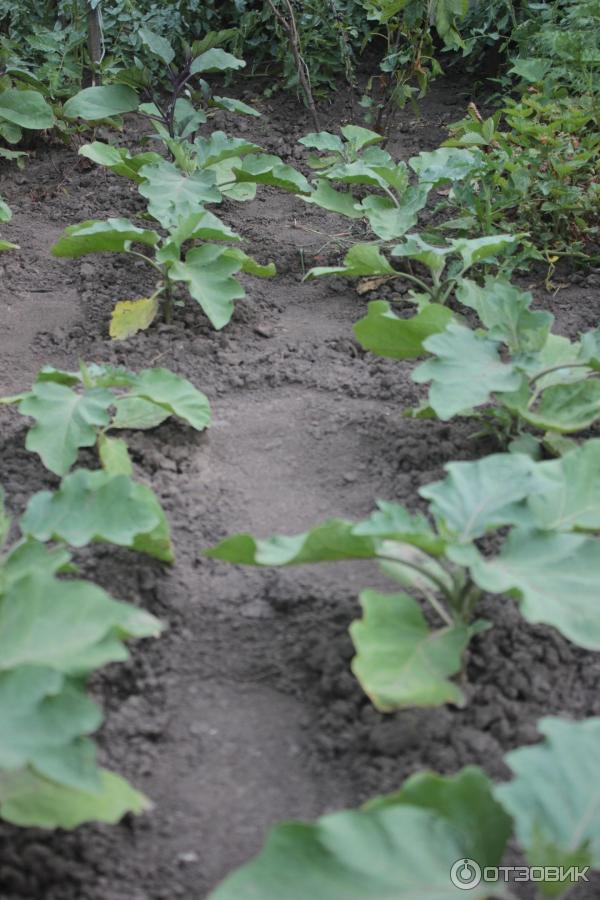
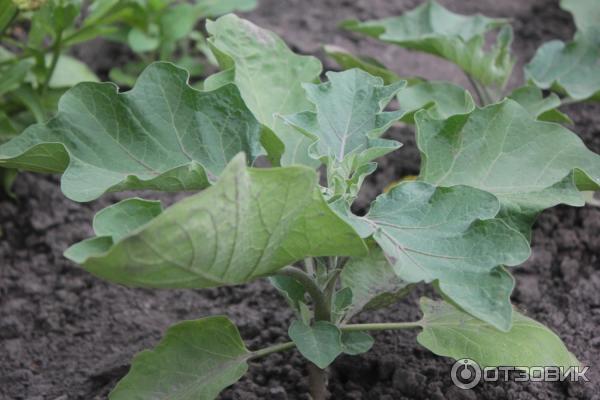
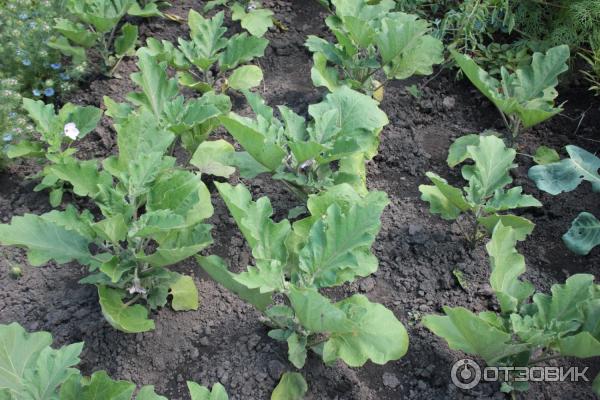
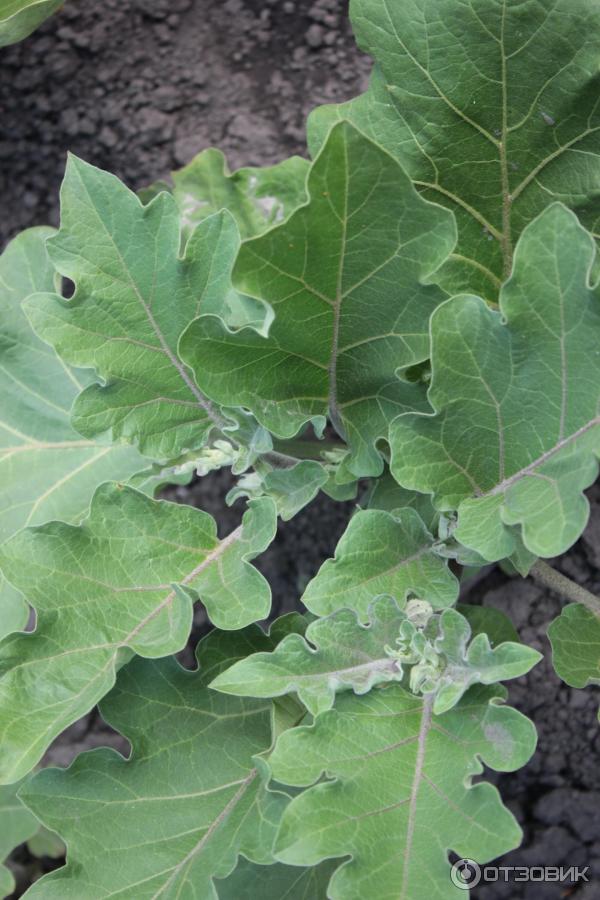
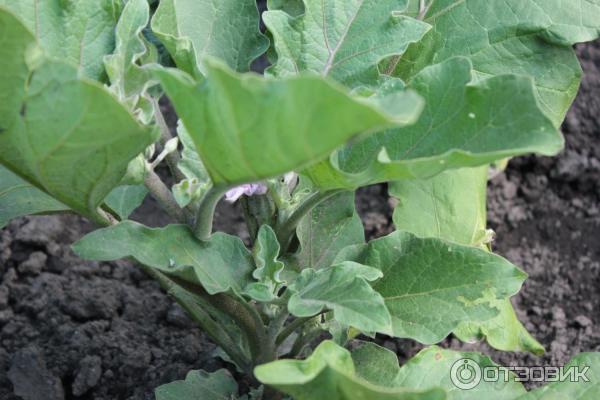
Eggplants "Bull's Heart" at the seedling stage (photo)
This year, spring arrived very early in our region. So we took a risk and planted all the eggplant seedlings outdoors early. Then, as often happens, a severe cold snap hit, and there were even several hailstorms. The eggplants' health suffered. The cold stunted their growth, and the hail destroyed their green leaves. Nevertheless, the eggplants survived, but the cold certainly impacted the first harvest.
Care.
Water occasionally. Fertilize only with chicken manure (once). And treat once for pests. Colorado potato beetles, and others, are very fond of eggplants.
What makes this variety of eggplant different?
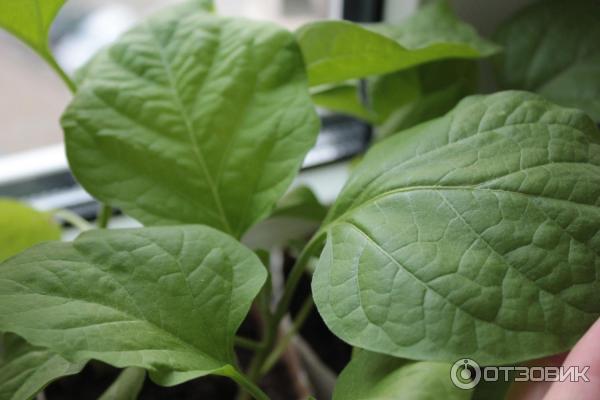
The bushes are low and very STRONG. The leaves are large and wide. The plants are STOCKY.
What didn't I like? This eggplant variety is PICY. Moreover, the spines appeared early on.
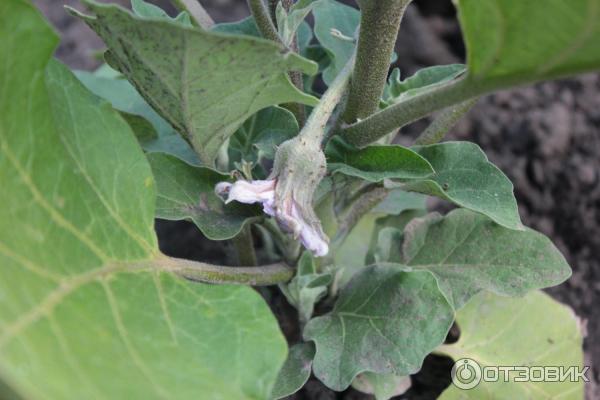
In our case, the flowering is not very abundant. The flowers are few, but they are very large and also prickly.
The first eggplants appeared late. Just a couple of weeks ago, I cut off the first two round eggplants.
These are the interesting eggplants that grew in our garden plot.
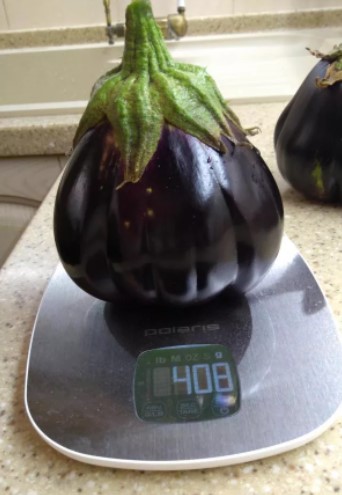
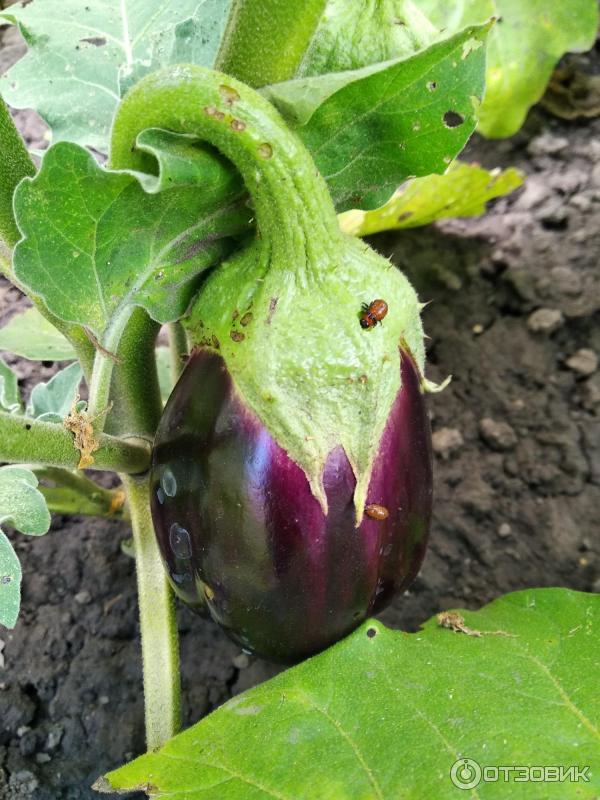
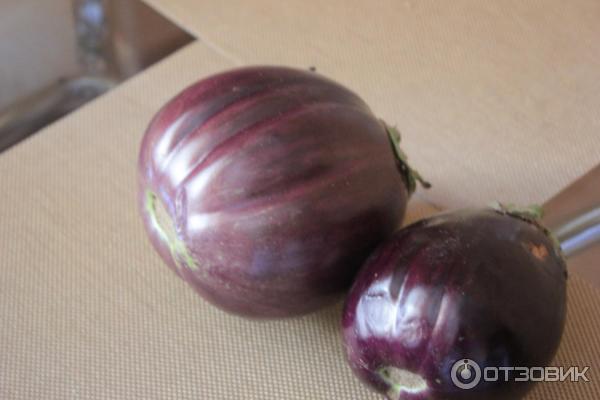
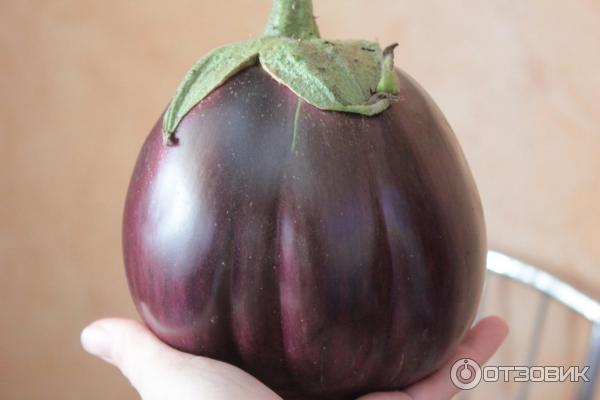
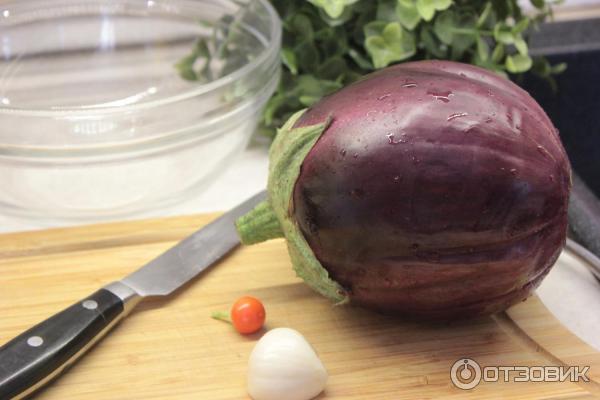
There is a resemblance to the picture. The fruits are indeed round, large, but not dark. Considering their size, the eggplants are not very heavy.
The surface color is light purple.
The weight of this fruit is almost 450 grams.
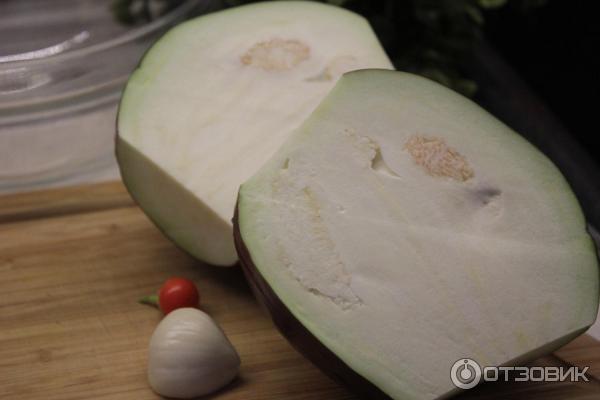
The pulp is white, without bitterness, with a minimum number of young seeds.
The eggplant is porous. The flesh is amazingly tender. It turns out it's also very tasty.
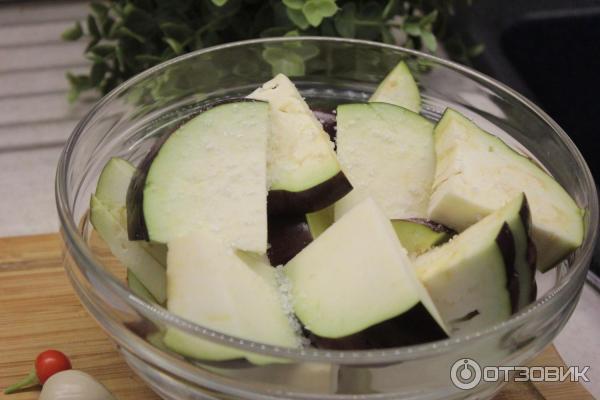
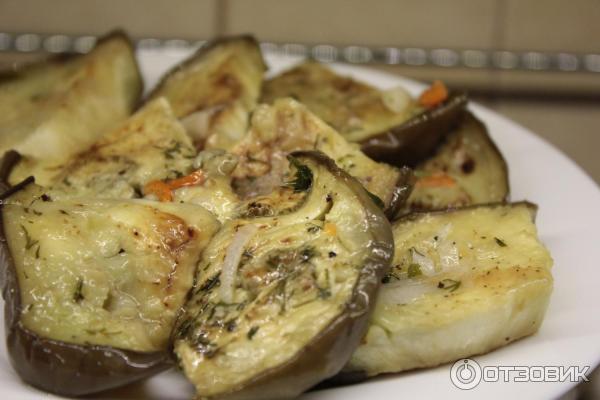
I love eggplants and cook them often, in a variety of ways, and in large quantities. Some of the harvest goes into canning, and some I freeze fresh and fried. There are tons of recipes. In the photo below, you can see fried eggplants that were then left to marinate for a long time in a savory marinade.
Resume.
The seed quality is excellent. The variety is good, but this year's yield isn't very high. The fruits are incredibly tasty and have a unique texture.
I recommend.



Eggplant variety Valentina F1
| Description | A hybrid variety, intended for cultivation in open ground and greenhouses. |
| Bush height and description | The bushes are semi-spreading, 70 to 100 cm in height. |
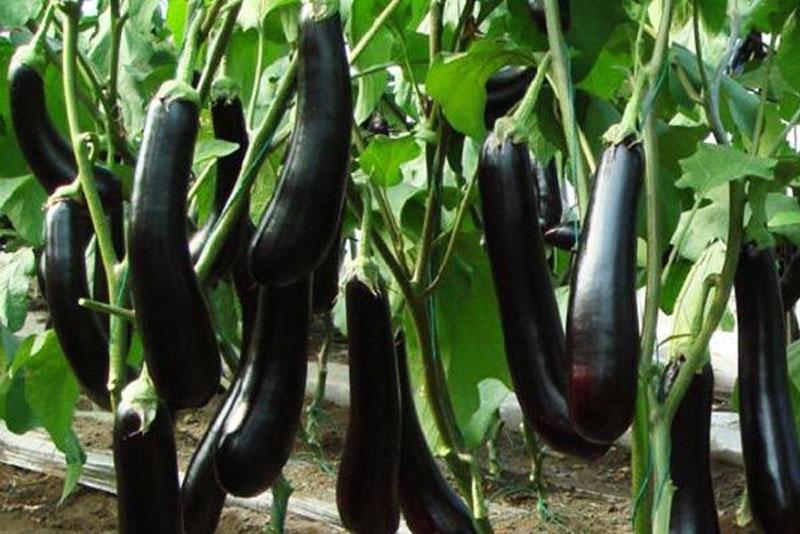
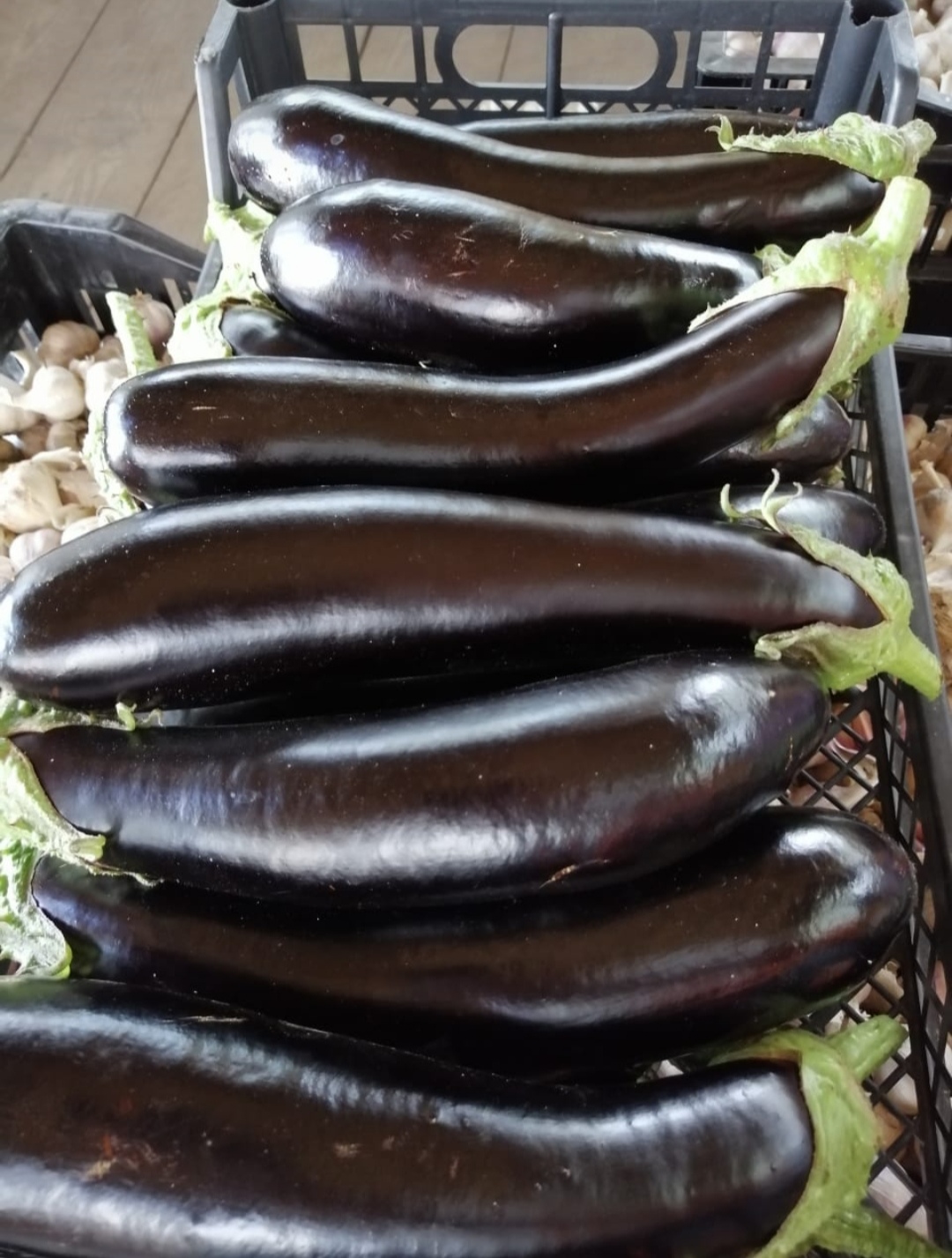
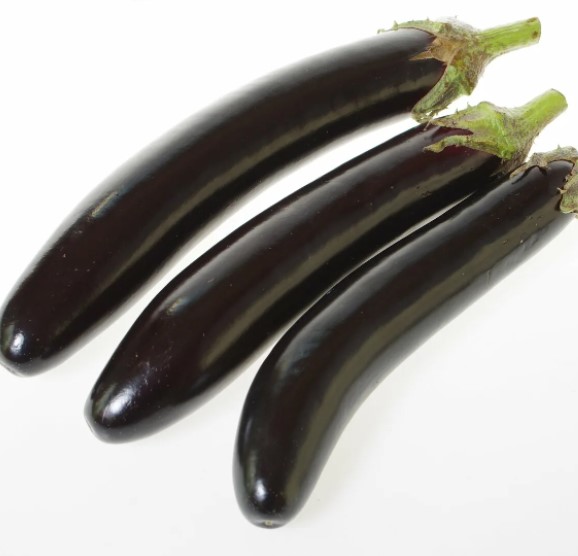
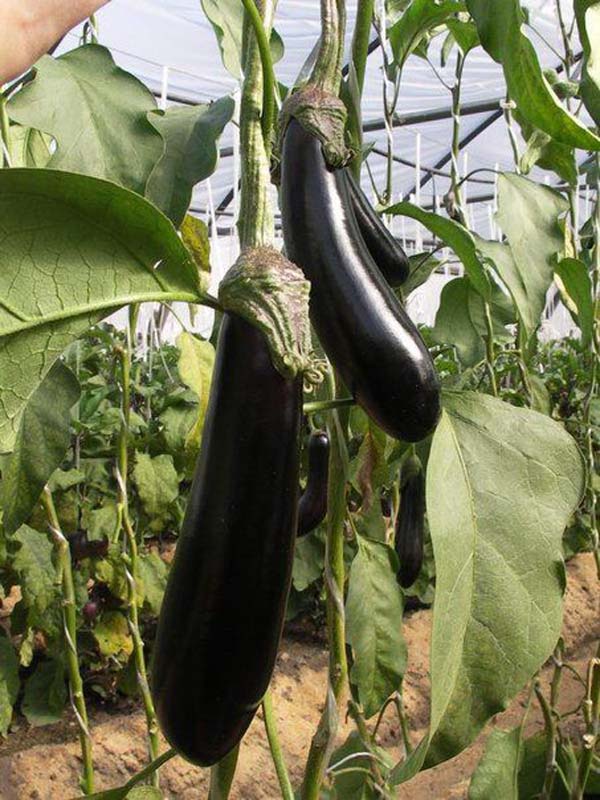
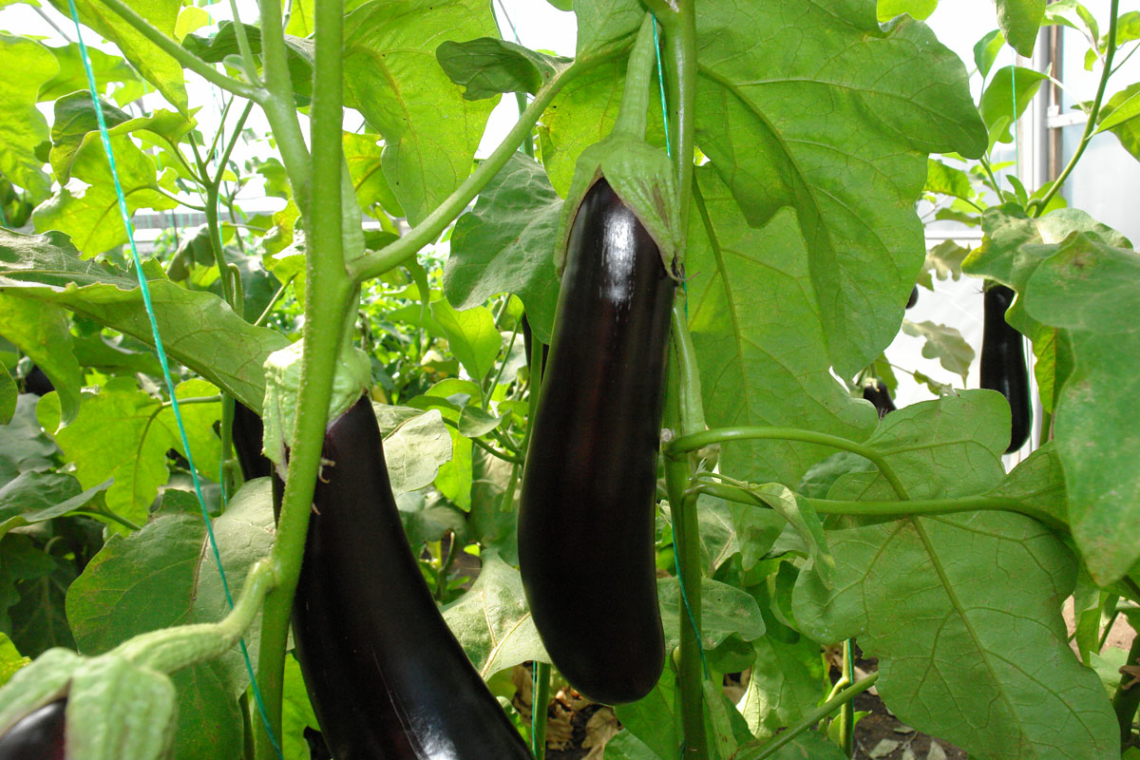
| Fruit | The fruits have excellent taste, are pear-shaped, up to 26 cm long, and weigh 200-220 g. |
| Productivity | 3.2 kg per square meter |
| Fruit ripening time | 105-110 days. |
| Disease resistance | Strong immunity, at high humidity it is affected by various types of rot. |
| 2007 |
Photo gallery of eggplant variety Valentina F1


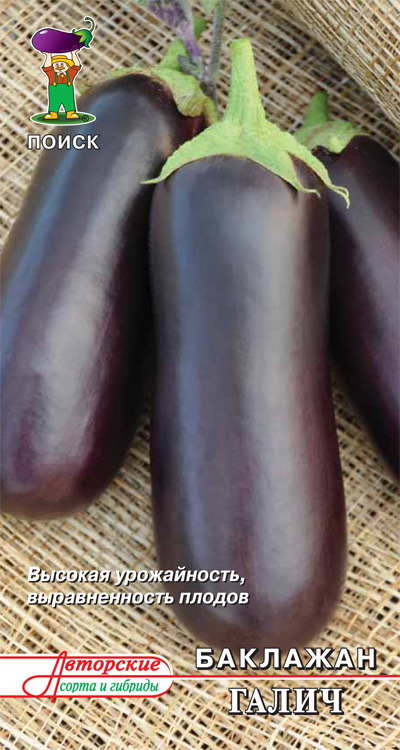
Eggplant variety Galich
| Description | A heat-loving variety with excellent yield and strong immunity |
| Bush height and description | The bushes are compact, powerful, up to 80 cm high. The leaves are medium-sized. |
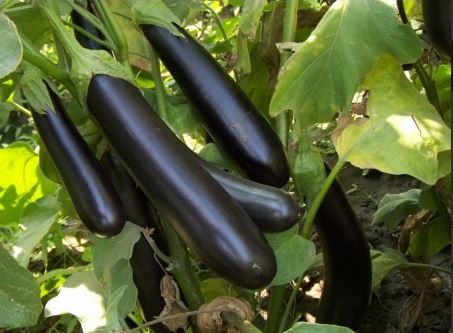
| Fruit | Cylindrical shape, length up to 18 cm, weight about 200 g. |
| Productivity | Up to 7.5 kg per square meter |
| Fruit ripening time | 110-145 days |
| Disease resistance | When treated prophylactically, it exhibits complex resistance to diseases. |
| 2010 |
Photo gallery of eggplant variety Galich
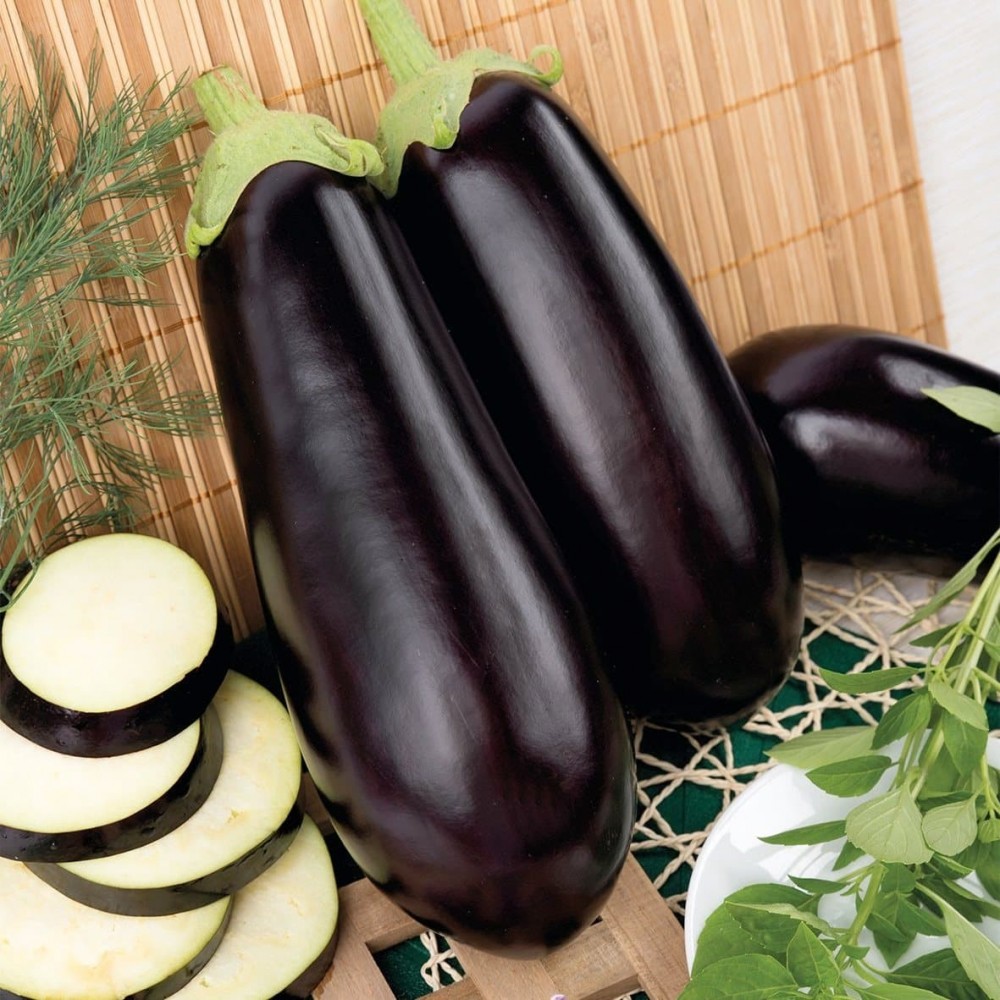

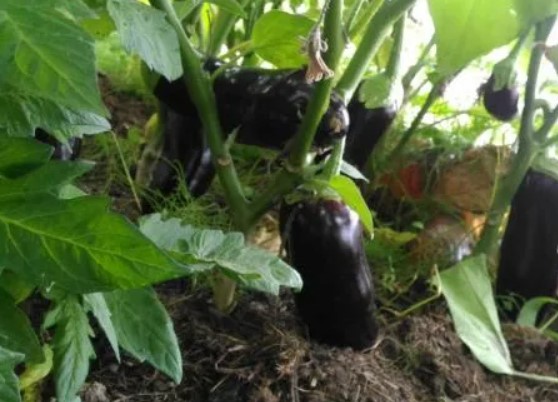
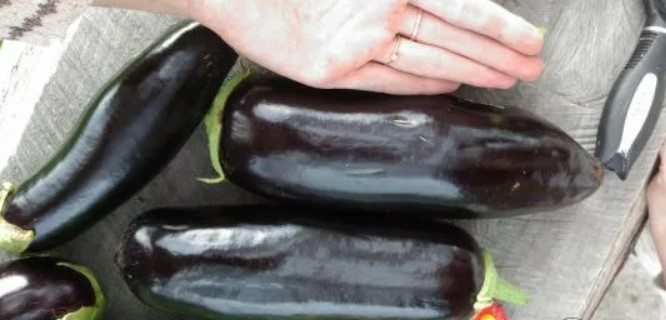
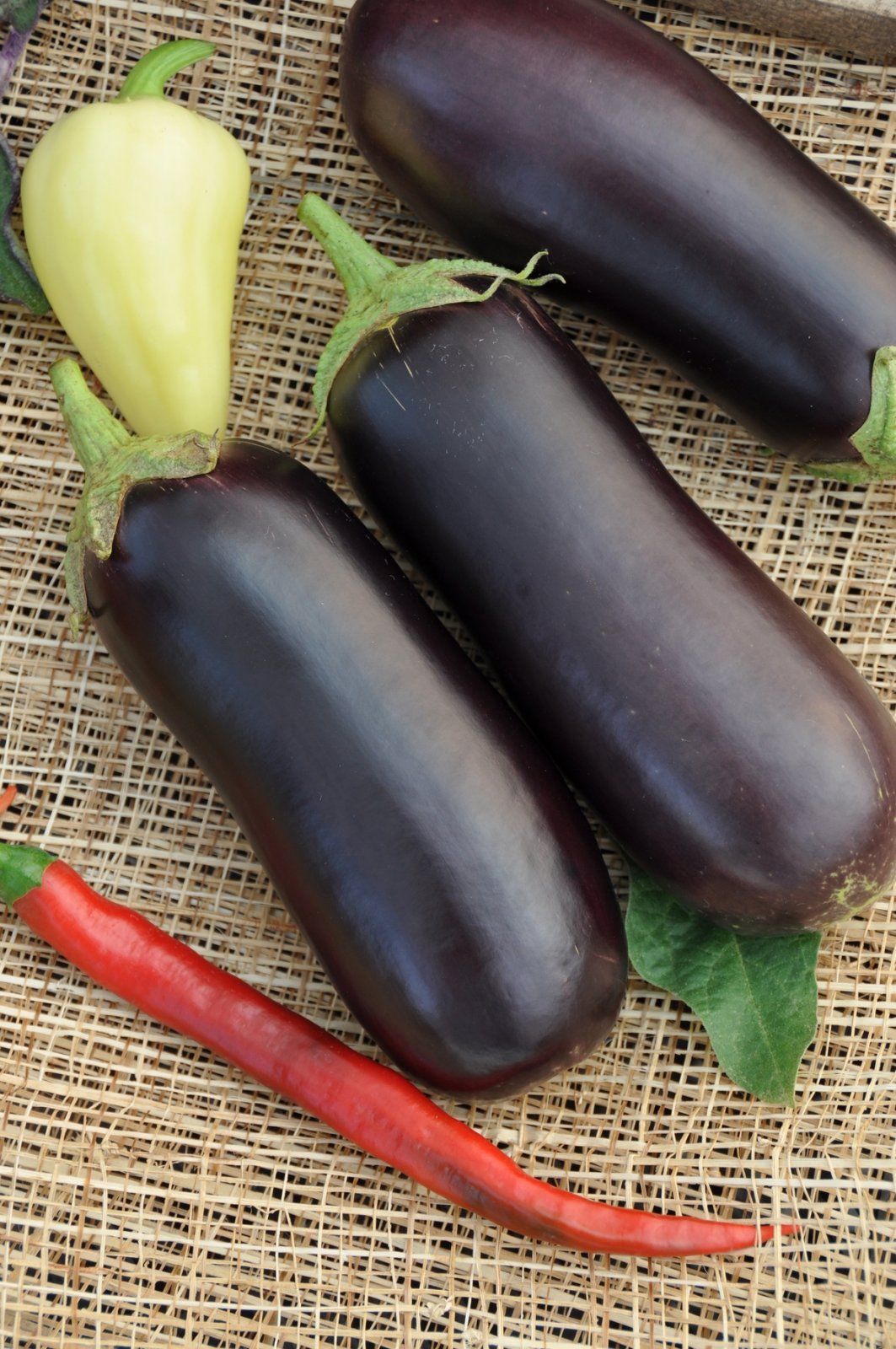
Review of the Galich eggplant variety
Good day, Otzovik readers.
I rarely write reviews about seeds, only about those that stand out in some way.
As soon as I saw the word "Galich" on some seeds at the store, I grabbed them without even looking. Nostalgia for the city of the same name played a decisive role. And now I'll tell you what came of it.The packaging is standard, glossy, beautiful and attractive.
Seed germination is about 90%.
I consider this result excellent. Even though all the other seedlings were sick, Galich held firm.
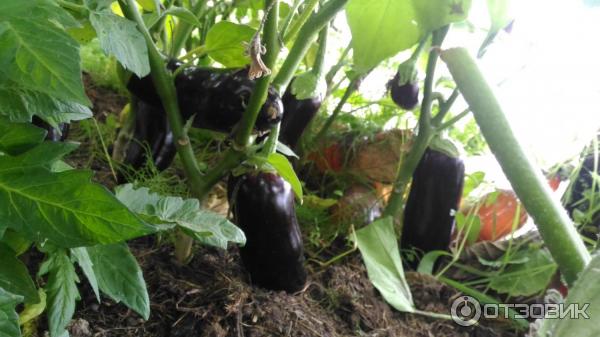
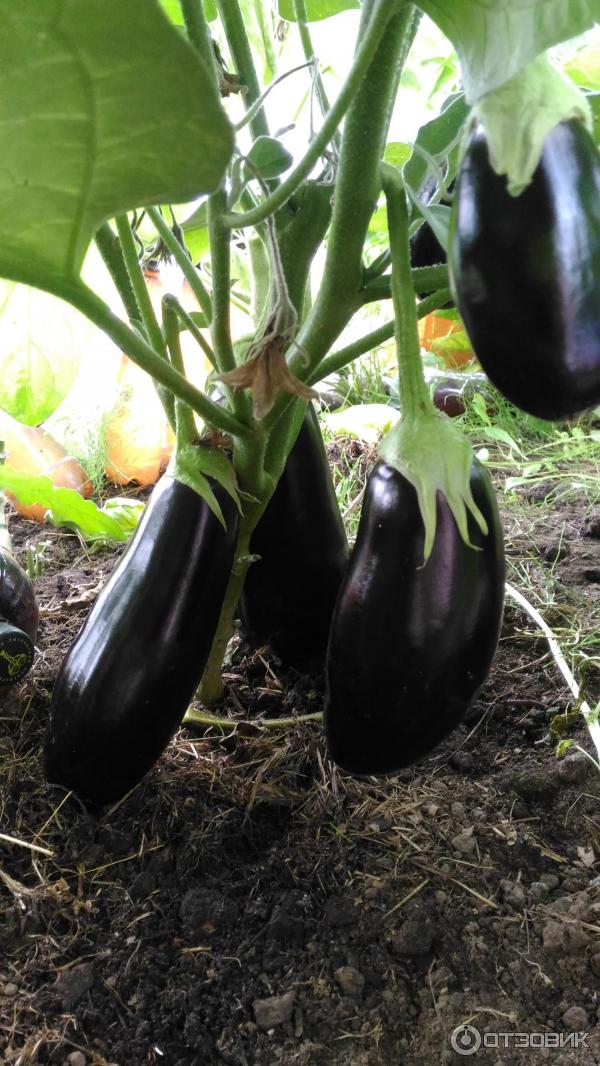
I planted the seedlings in the greenhouse quite early for the northwestern region. Nevertheless, not a single seedling died. I can confidently say that I've never had such beautiful eggplant bushes.
Not only were the stems strong and thick and the bushes did not require tying, but the number of fruits was also pleasing.
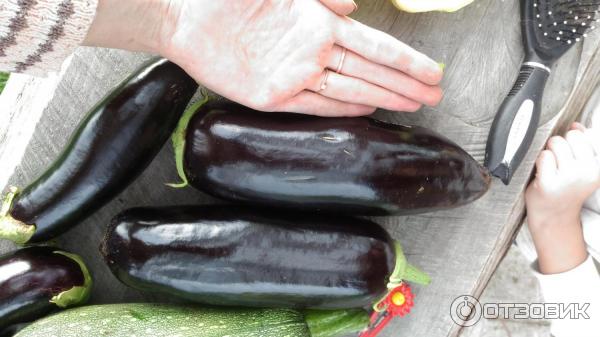
The fruits are the size of a good zucchini.
They were a pleasure to prepare and even better to eat.
It's the end of August now, and the bushes are still in bloom and setting fruit.
At the same time, I have already harvested a good harvest of eggplants.
The fruits are large and few-seeded, and hollow inside in places.
Eggplants without bitterness and with excellent taste.
Next year I will be specifically looking for this particular variety of eggplant.
I haven't had such a successful random purchase in a long time.
May all your purchases be successful.
Best wishes, JirafK.



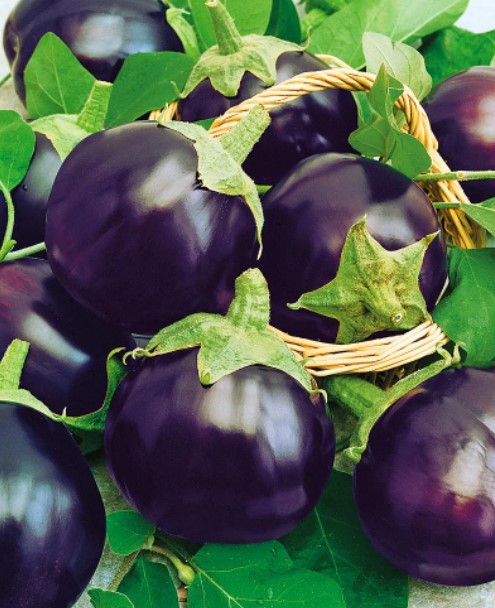
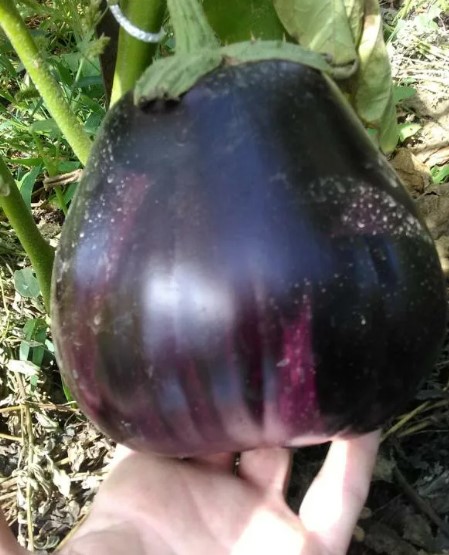
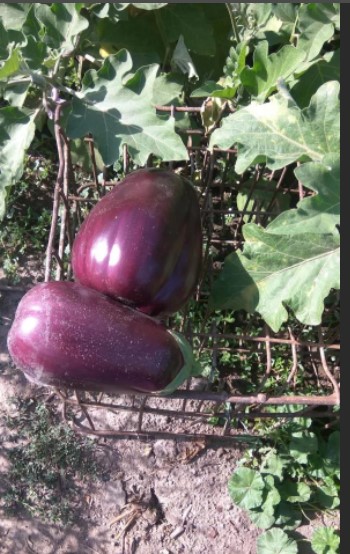
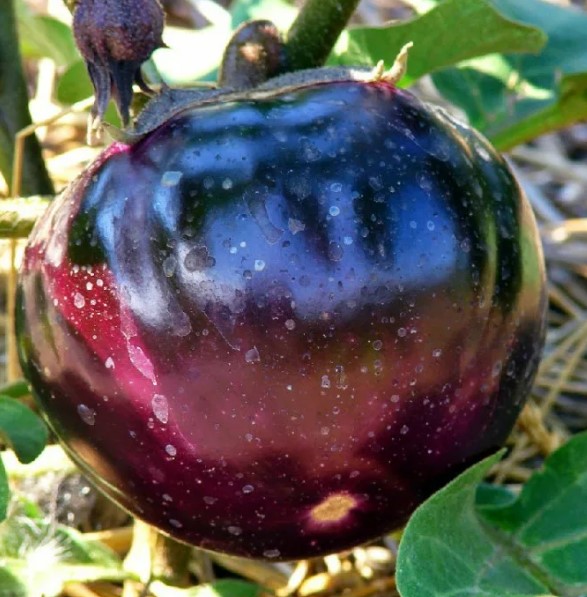
Eggplant variety Mushroom Delight
| Description | A hybrid variety of eggplant, suitable for growing in open ground and greenhouses. |
| Bush height and description | The bushes are semi-spreading, low-growing, up to 70 cm in height |
| Fruit | The fruits are pear-shaped, weighing from 250 to 450 g, the pulp has a mushroom aroma. |
| Productivity | Up to 7.8 kg per square meter |
| Fruit ripening time | 110-145 days |
| Disease resistance | Complex disease resistance |
| 2015 |
Photo gallery of the eggplant variety Mushroom Delight

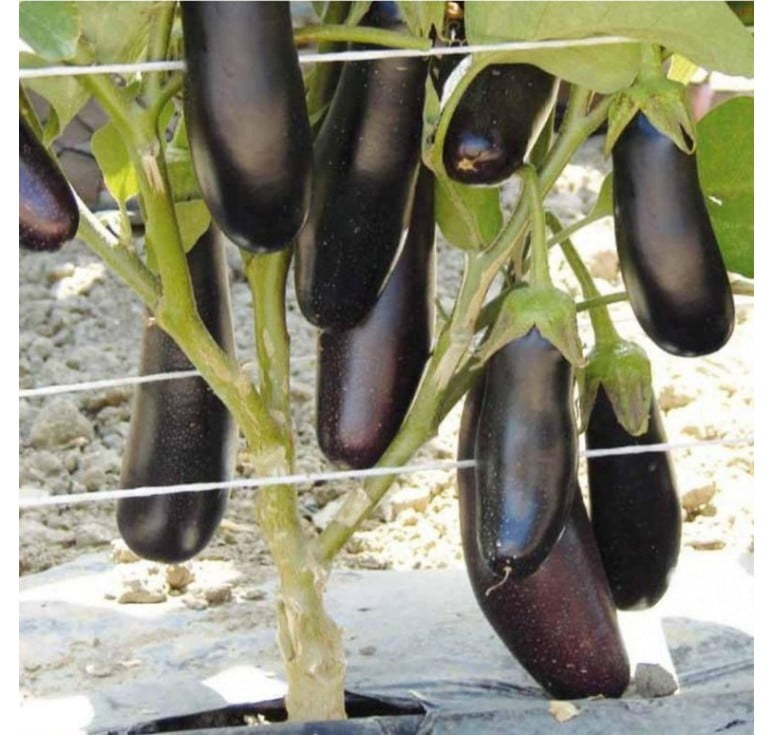
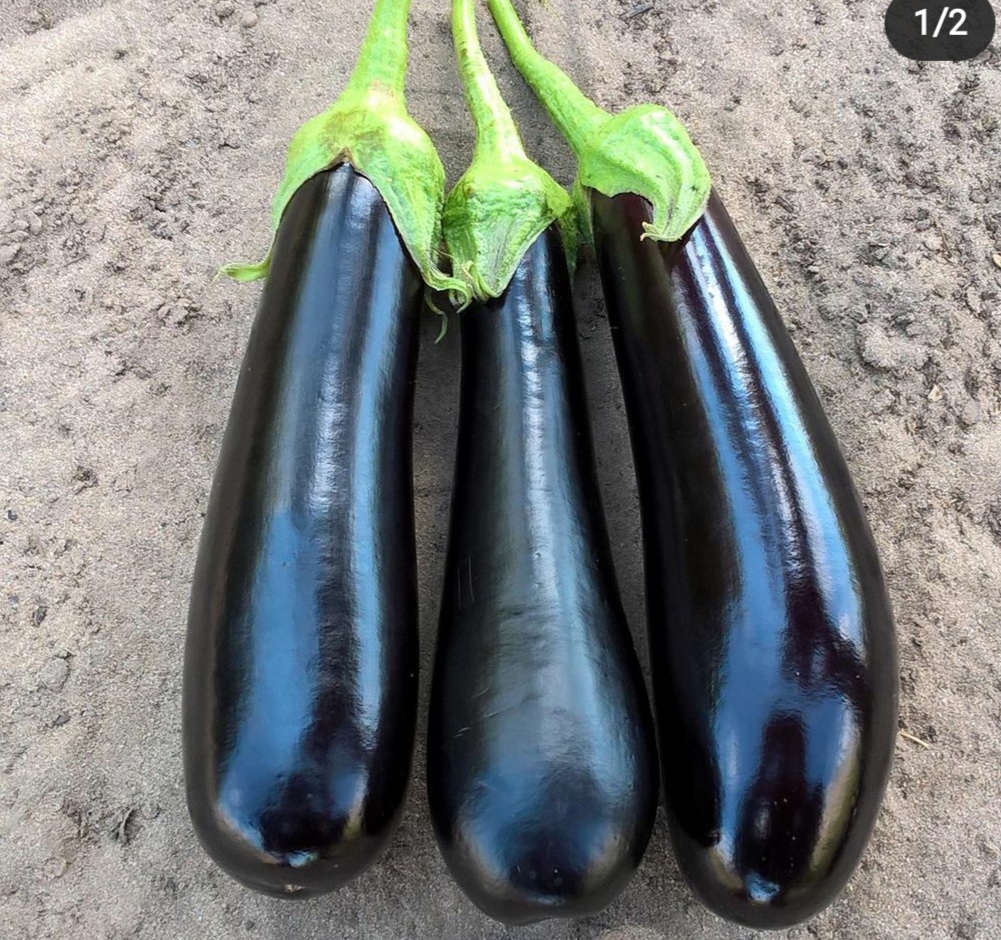
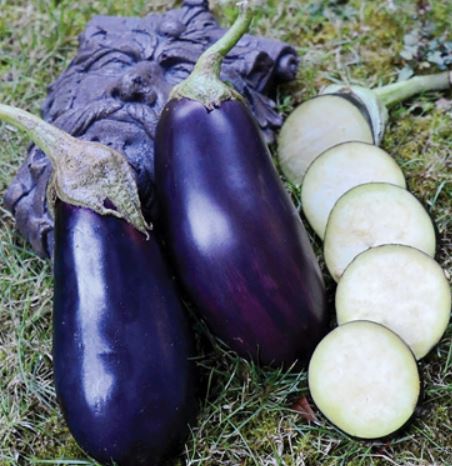
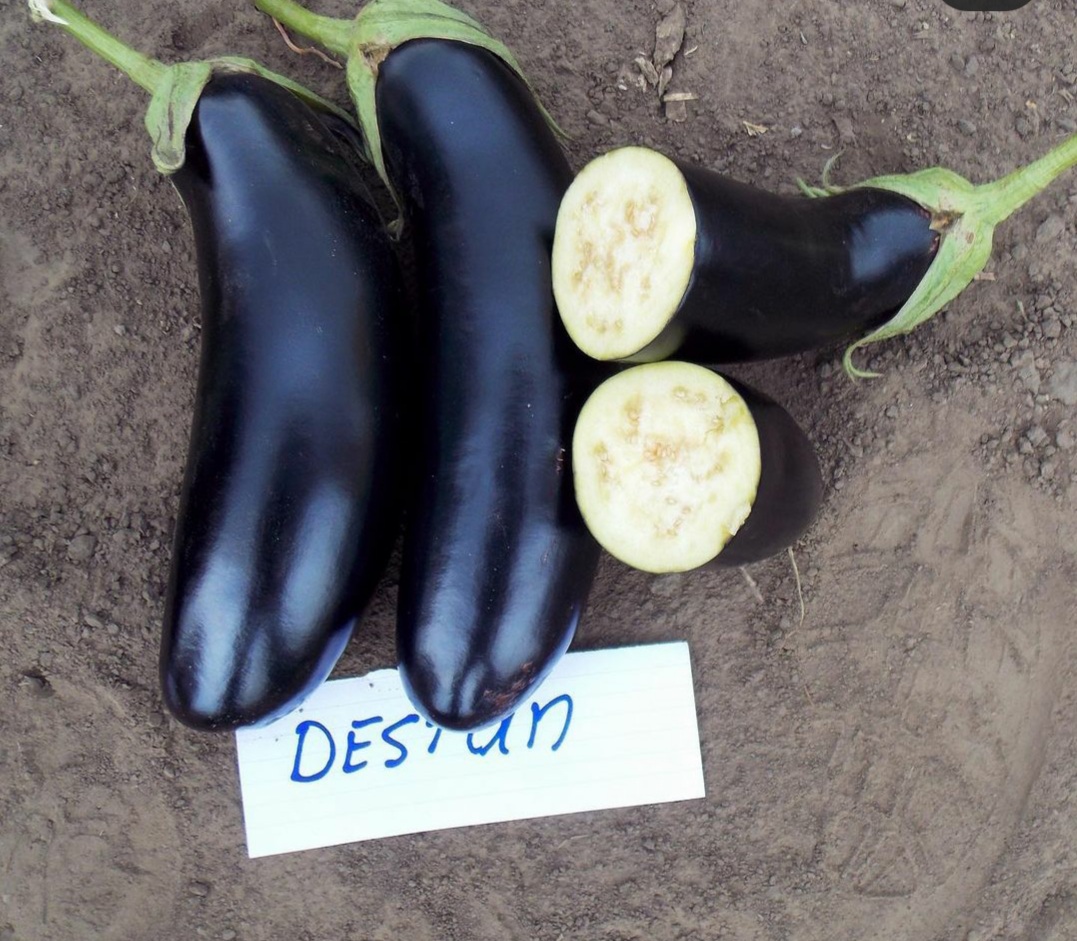
Eggplant variety Destan F1
| Description | A hybrid Dutch variety of eggplant, intended for cultivation in open and closed ground. |
| Bush height and description | The bushes are vigorous, semi-spreading, and sparsely foliated. Height reaches 70 cm. |
| Fruit | The fruits are drooping, weighing up to 300 g and up to 27 cm long. |
| Productivity | Up to 7 kg per square meter |
| Fruit ripening time | 100-115 days |
| Disease resistance | High resistance to TMV and fusarium |
| 2010 |
Photo gallery of eggplant variety Destan F1

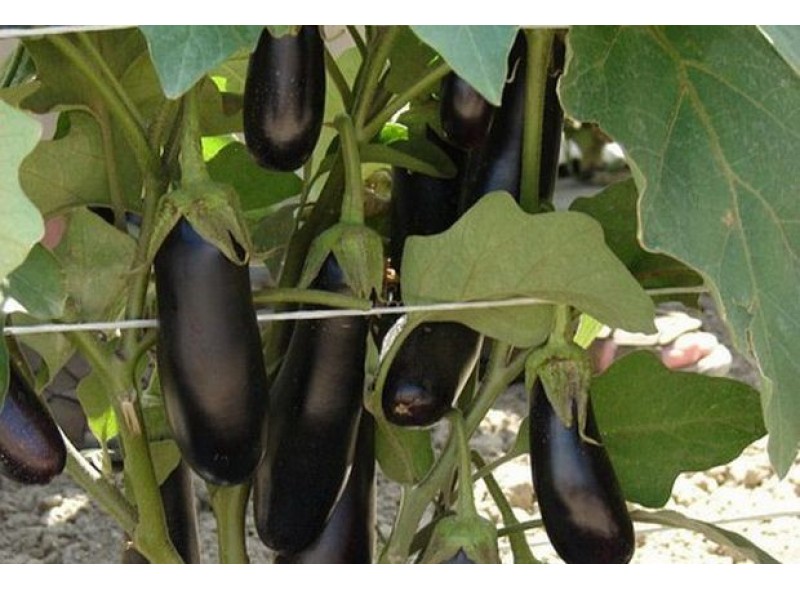
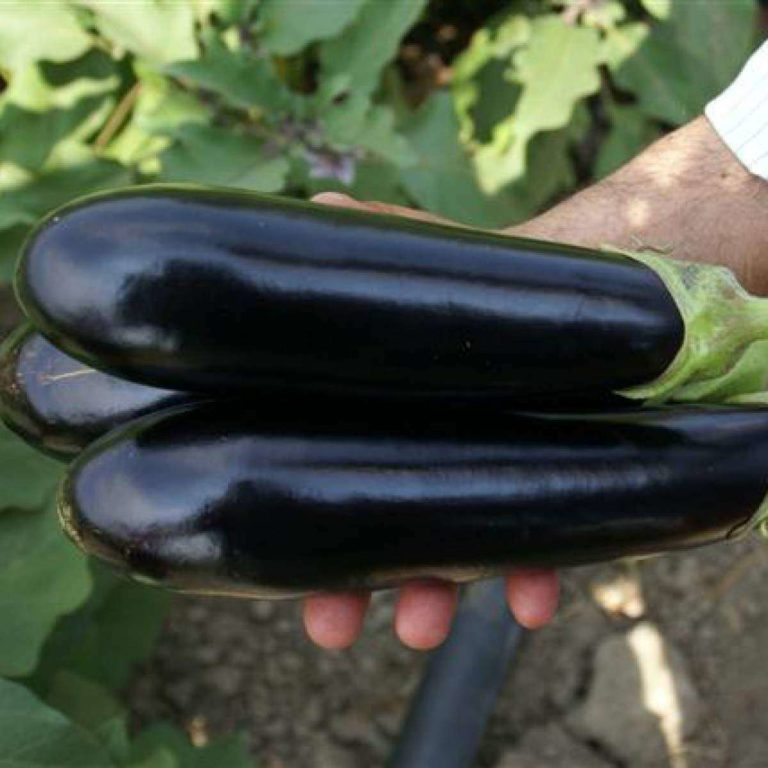
Eggplant variety Giselle
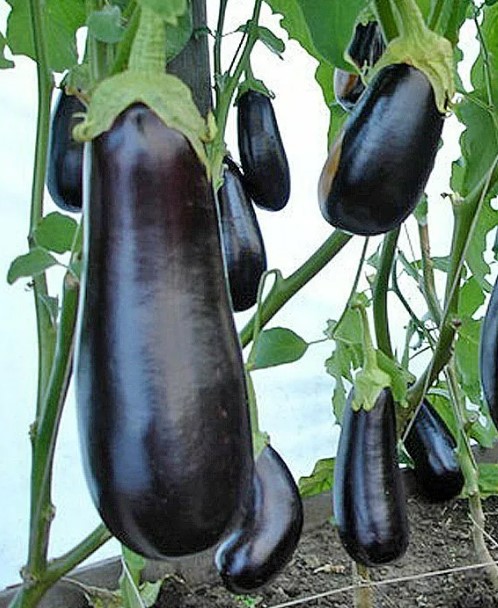
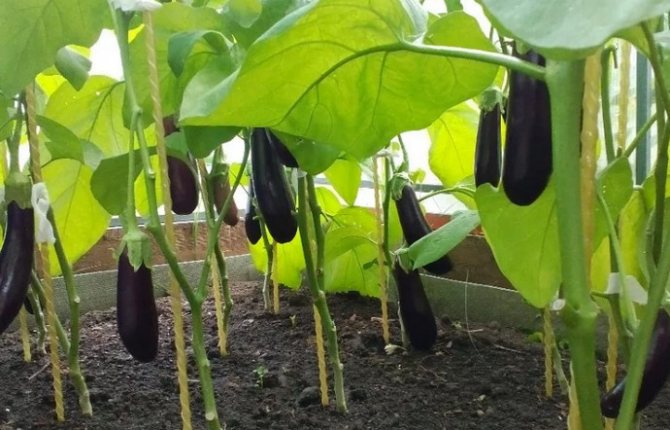
| Description | A tall, early-ripening hybrid variety |
| Bush height and description | A semi-spreading variety with an erect stem up to 190 cm tall. Suitable for growing in regions with cool weather and short summers. |
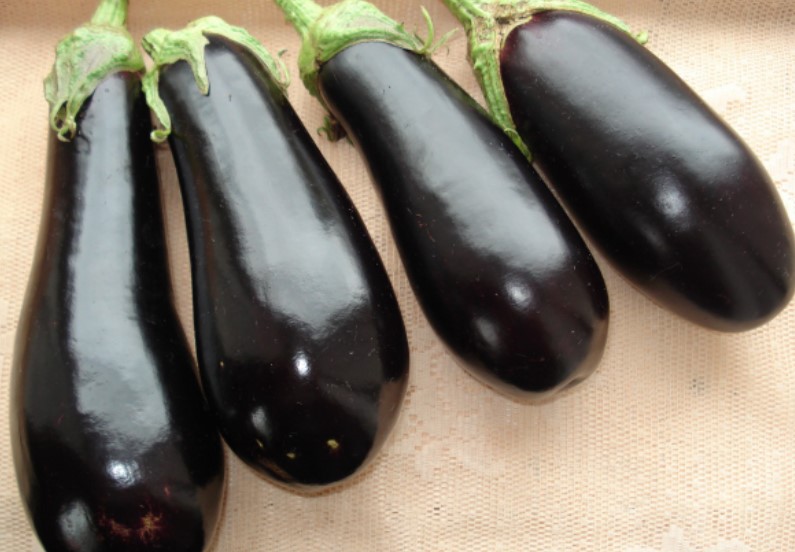
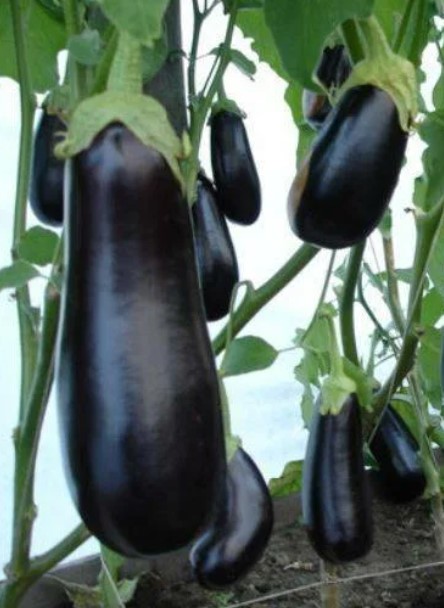
| Fruit | The fruits are elongated, oval-shaped, weighing up to 400 g, up to 30 cm in length, and 6-9 cm in diameter. |
| Productivity | 11-17 kg per square meter |
| Fruit ripening time | 107-117 days |
| Disease resistance | Complex resistance to diseases; if agricultural practices are not followed, it can be affected by late blight and moniliosis. |
| 2001 |
Photo gallery of eggplant variety Giselle
Eggplant variety Caviar F1
| Description | First generation hybrid, mainly grown in greenhouses |
| Bush height and description | The bushes are semi-spreading, up to 120 cm high with a well-developed root system. |
| Fruit | The fruits are large, weighing up to 300 g, up to 20 cm long and 6-7 cm in diameter. |
| Productivity | Up to 7.5 kg per square meter |
| Fruit ripening time | 100-110 days |
| Disease resistance | Complex disease resistance |
| 2011 |
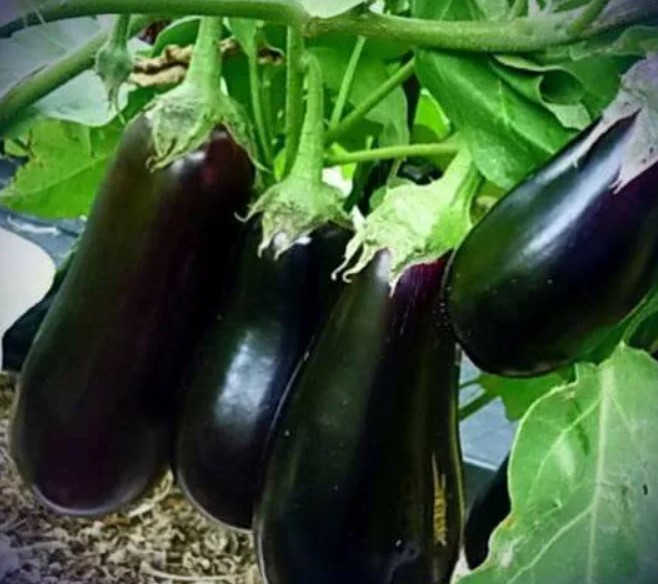
Photo gallery of the eggplant variety Ikorny F1
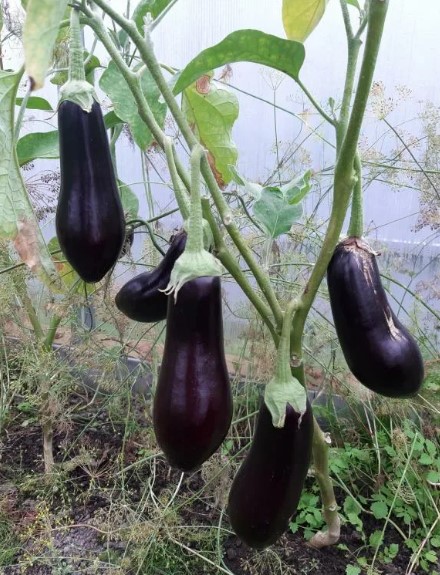
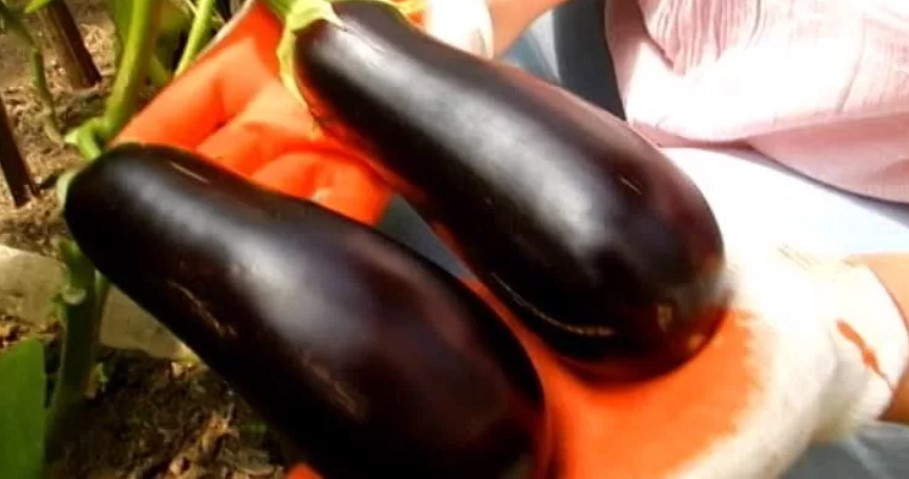

Review of the Ikorny F1 eggplant variety
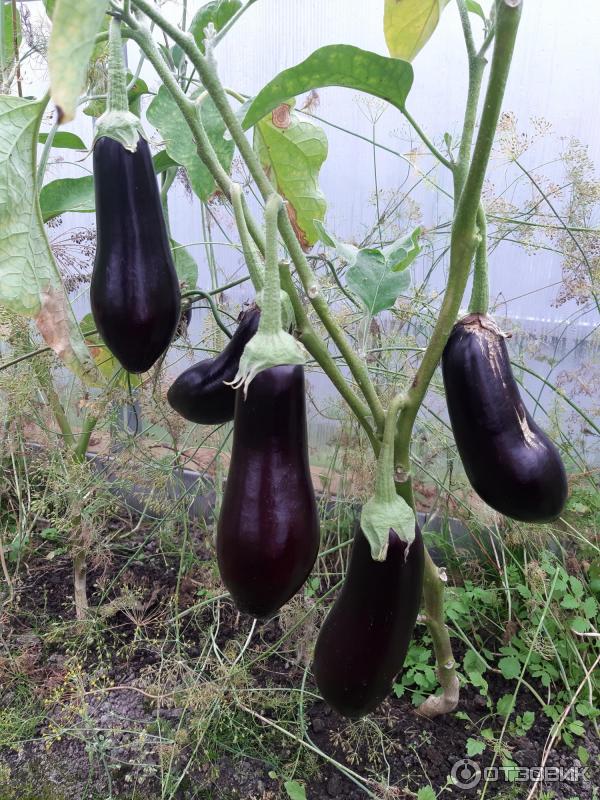
In the spring of 2020, we installed a greenhouse in our garden plot. Our gardening non-profit partnership (GNP) is located in the middle of a forest in the Istra district of the Moscow region, and it's also quite low-lying, with a high groundwater table. So, the location isn't ideal for farming. Until this year, we'd never tried growing eggplants, believing it was a waste of time and they wouldn't thrive in our conditions. In February, we sowed the seeds in a container and were pleasantly surprised by their germination. Every single one of them sprouted. I played it safe and sowed all the seeds in the packet, so I later had to give the seedlings away. We grew them indoors on a windowsill. The eggplants grew quickly and began to bulge, becoming crowded, so we soon had to transplant them into other trays. In the second half of May, we transplanted the seedlings into the greenhouse. After acclimation, the plants began to grow vigorously. This variety is tall, up to 1.2 m, mid-season (100-110 days from germination to fruiting), and is intended for greenhouses.
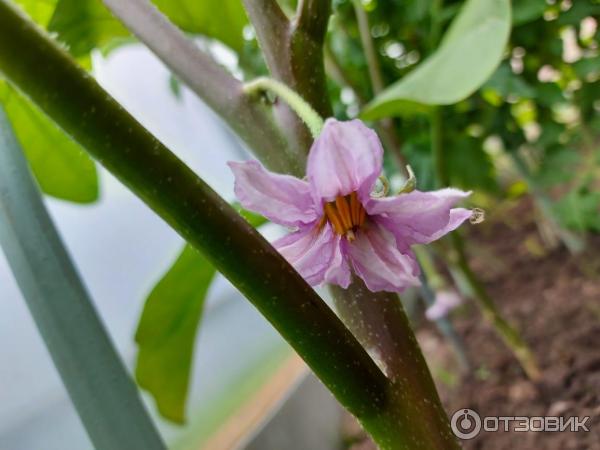
We used natural fertilizer—mullein (cow manure infused with water). We fertilized according to Oktyabrina Ganichkina's instructions, pinched out the side shoots, and removed excess leaves. Our eggplants began blooming around mid-July.
There were a lot of buds. In one video, an agronomist talked about leaving the six largest buds and plucking the rest, because then we'll get six full-sized large eggplants instead of a bunch of small ones.
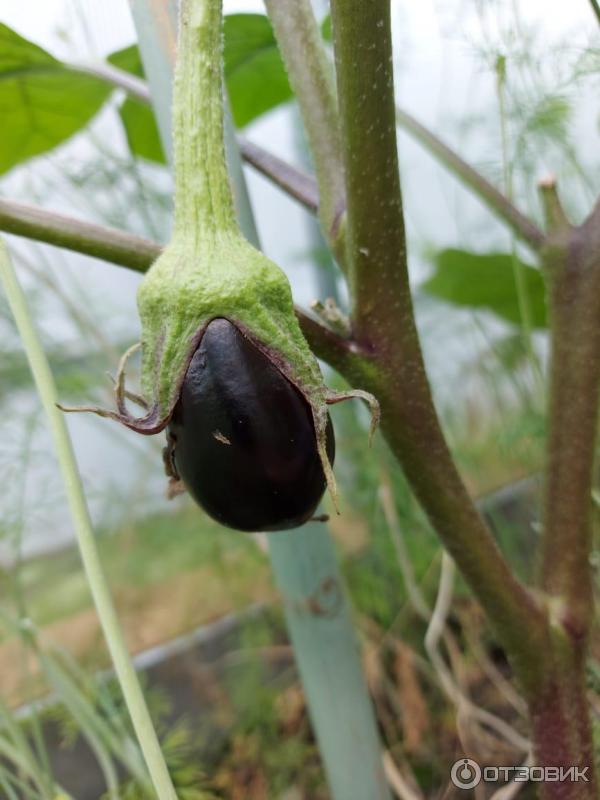
That's what we did. When the fruits grew to about 2 centimeters, they began to rot and fall off. There was little hope for a harvest, but then new buds appeared and new fruits set. In the second half of August, we cut the first eggplant. Then the rest began to ripen.
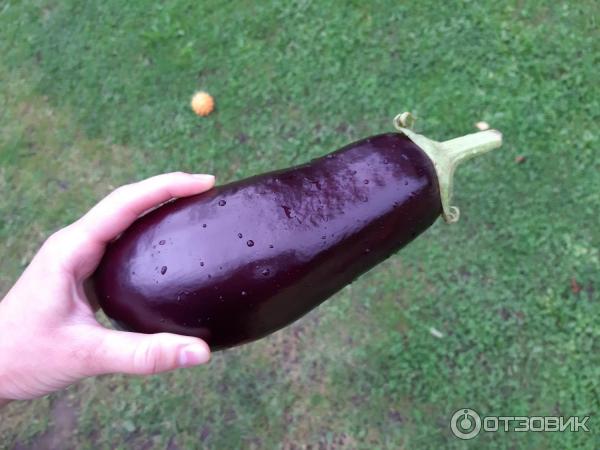
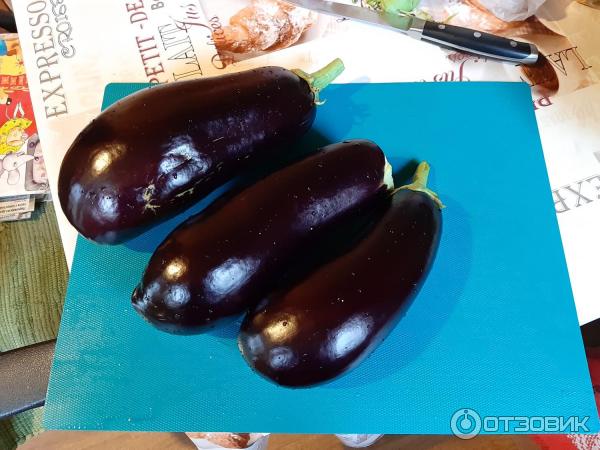
This variety has a very thin skin, which you can barely even feel after cooking. The eggplants are very beautiful, large, and shiny.
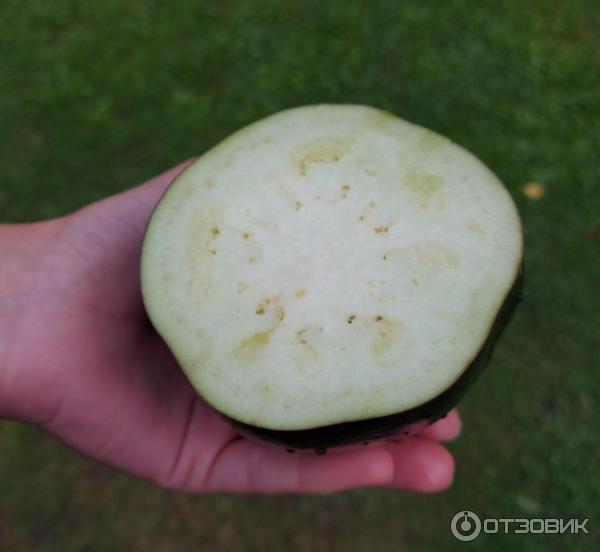
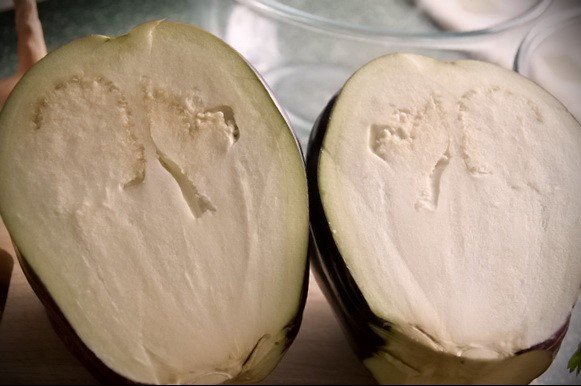
When cut, the flesh is white, slightly greenish, and contains few seeds.
These eggplants store very well. We kept them on the balcony for about a month and they were as good as new.
So we will definitely plant this variety again.

Eggplant variety Ilya Muromets
| Description | Does not belong to hybrids, suitable for open and closed ground |
| Bush height and description | A semi-spreading bush with medium foliage, height up to 100 cm. |
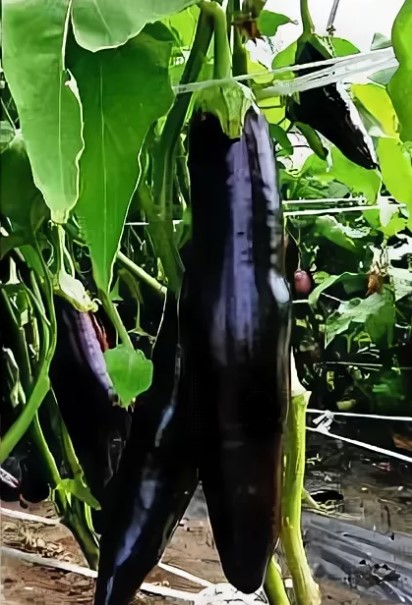
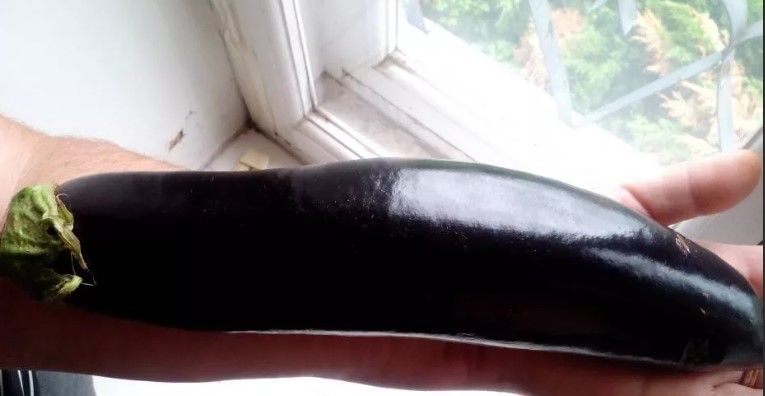
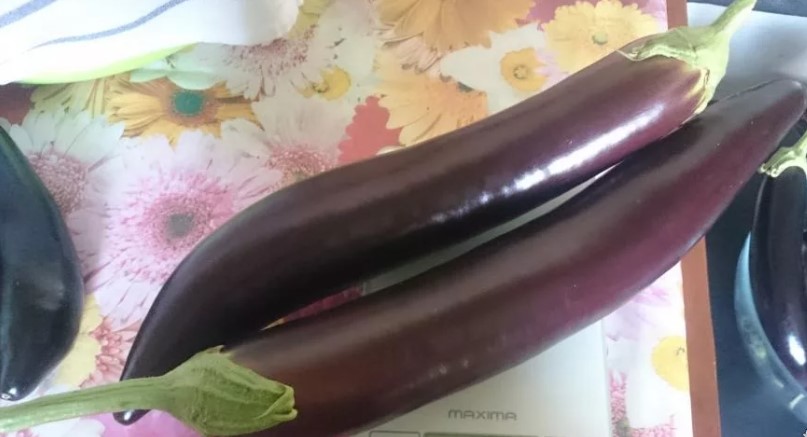
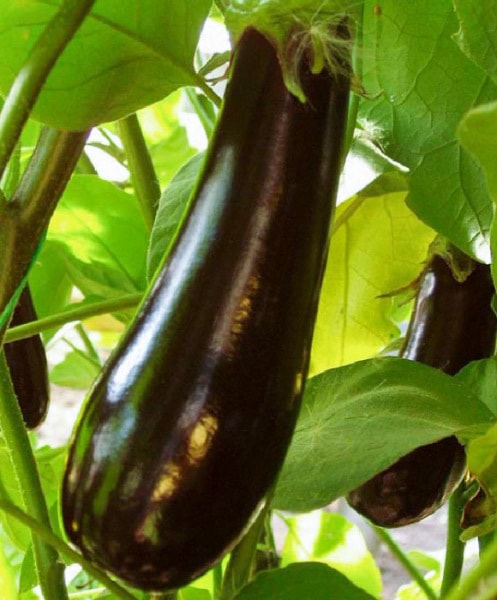
| Fruit | The fruits are very large, weighing up to 550 g, oval in shape, 35-40 cm in length, and up to 10 cm in diameter. |
| Productivity | Up to 6 kg per square meter |
| Fruit ripening time | 110-115 days |
| Disease resistance | With proper agricultural technology, it is not susceptible to diseases. |
| 2015 |
Photo gallery of the Ilya Muromets eggplant variety

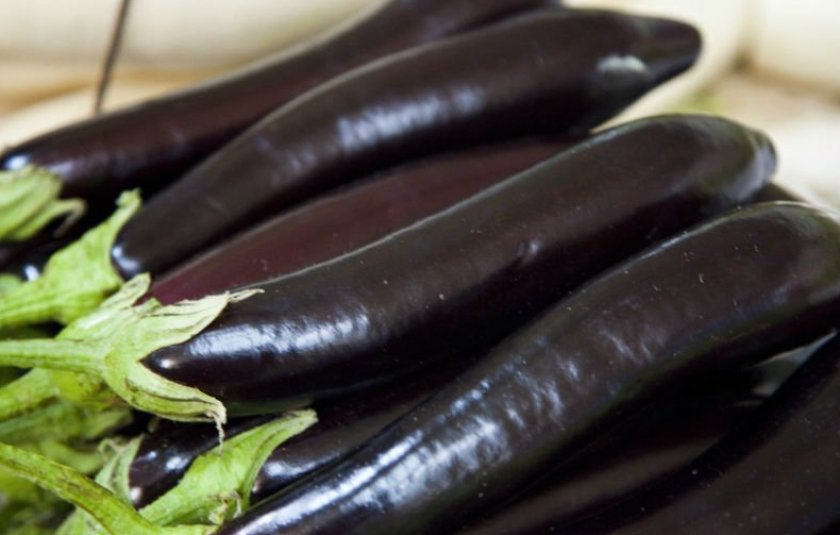
Eggplant variety King of the market
| Description | A hybrid variety, developed in 2009 by domestic breeders, intended for greenhouses and open ground |
| Bush height and description | The bushes are semi-spreading, up to 100 cm high, the central stem is very powerful, the foliage is average |
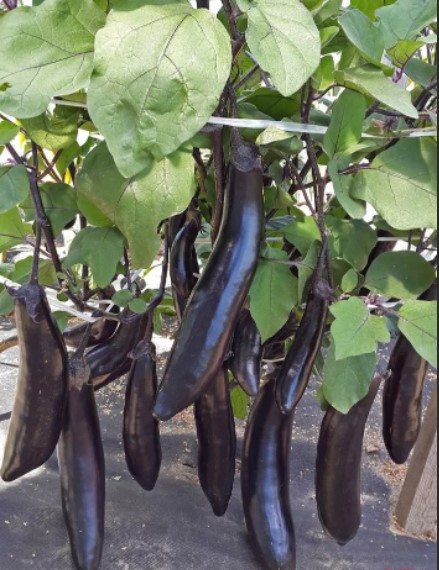
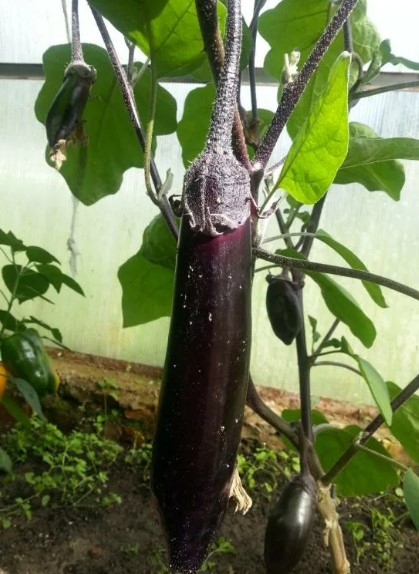
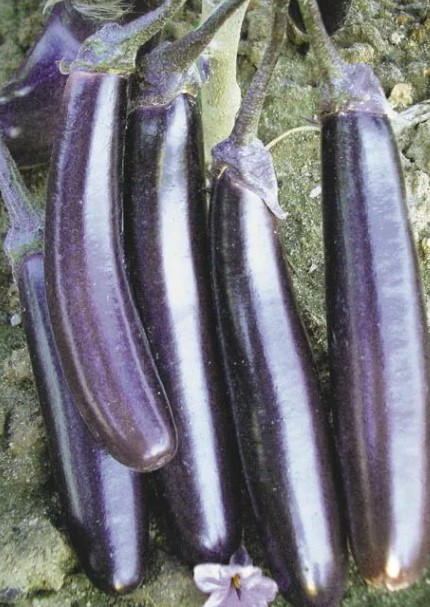
| Fruit | Elongated cylindrical shape, weight from 250 to 450 g, length up to 22 cm, diameter 5-6 cm. |
| Productivity | Up to 10 kg per square meter |
| Fruit ripening time | 100-110 days |
| Disease resistance | Complex disease resistance |
| Not included |
Photo gallery of eggplant variety King of the Market


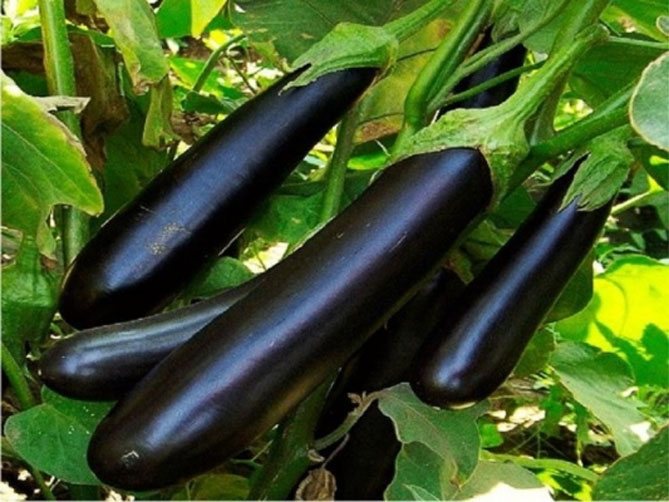
Eggplant variety King of the North F1
| Description | A hybrid, cold-resistant variety, suitable for growing in open and closed ground. |
| Bush height and description | From 40 to 100 cm depending on the growing method. |
| Fruit | The stems are strong, purple in color, the leaves are small and wrinkled. |
| Productivity | 95-105 days |
| Fruit ripening time | The fruits are pot-bellied, barrel-shaped, weighing up to 350 g, and up to 30 cm in length. |
| Disease resistance | Up to 15 kg per square meter |
| Not included |
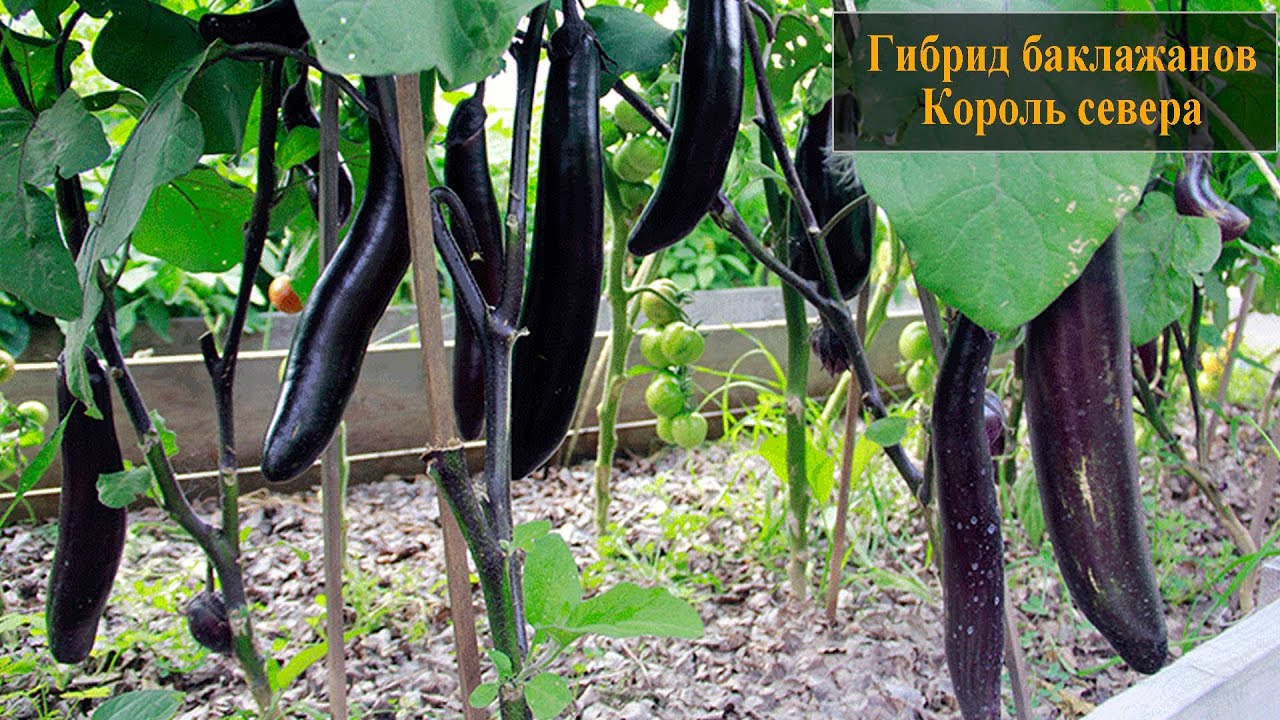
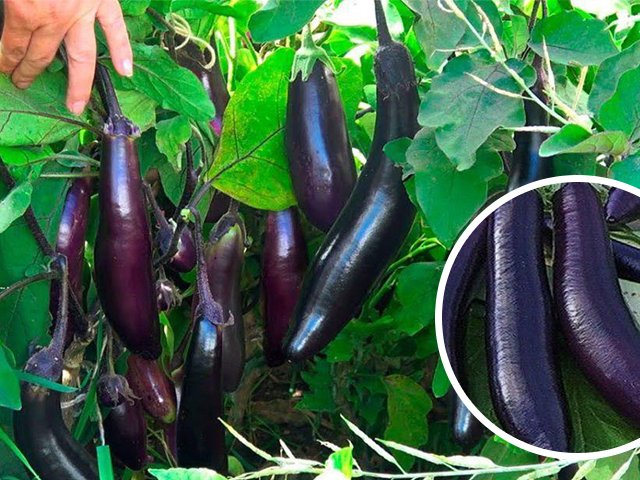
Photo gallery of eggplant variety King of the North F1

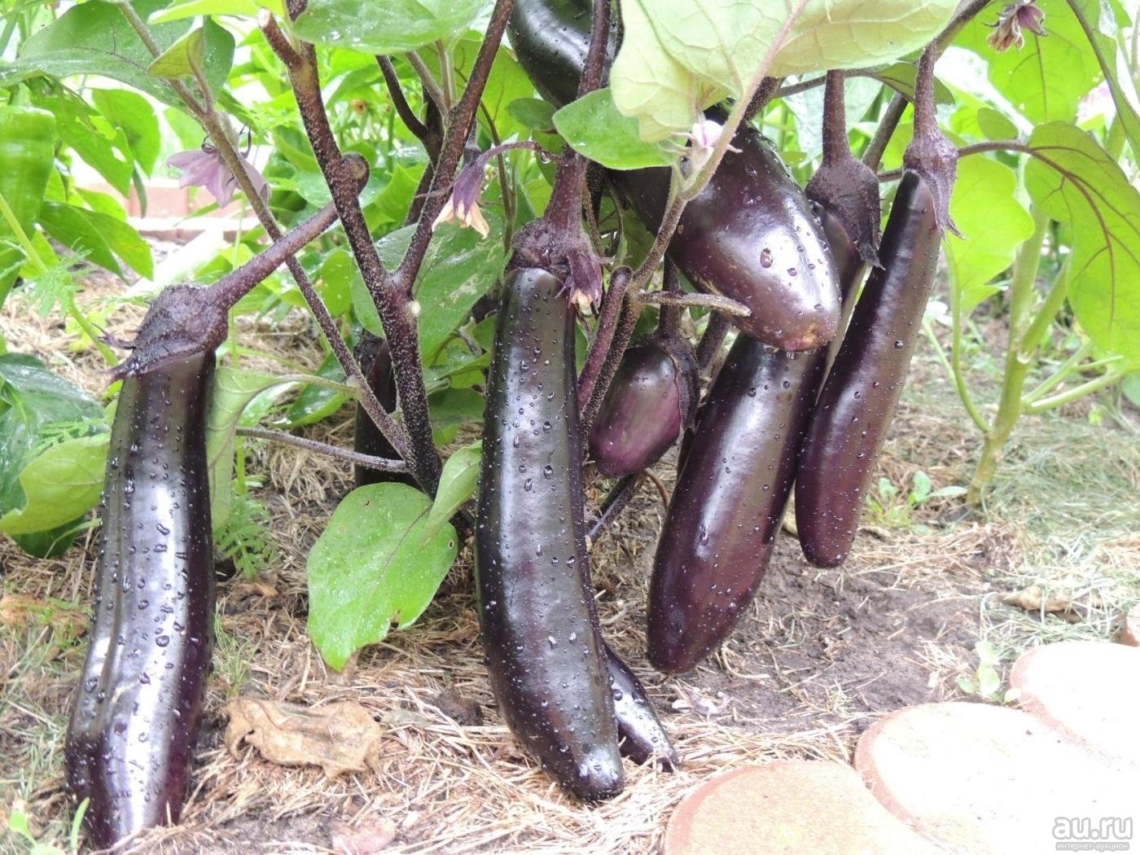
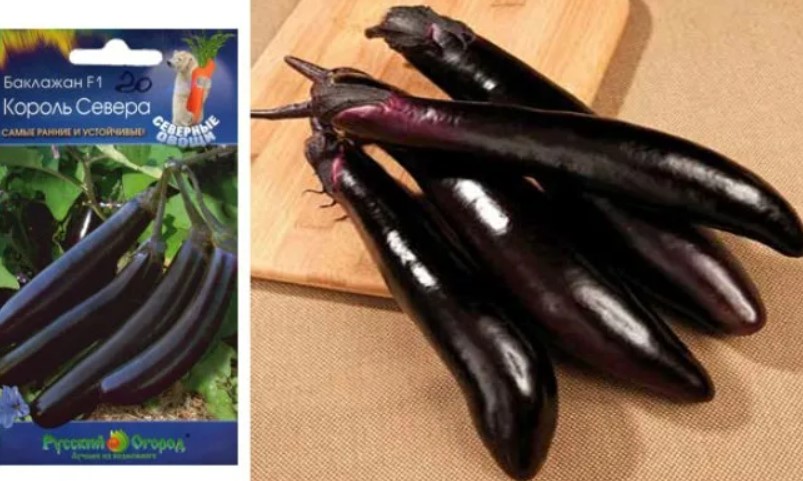
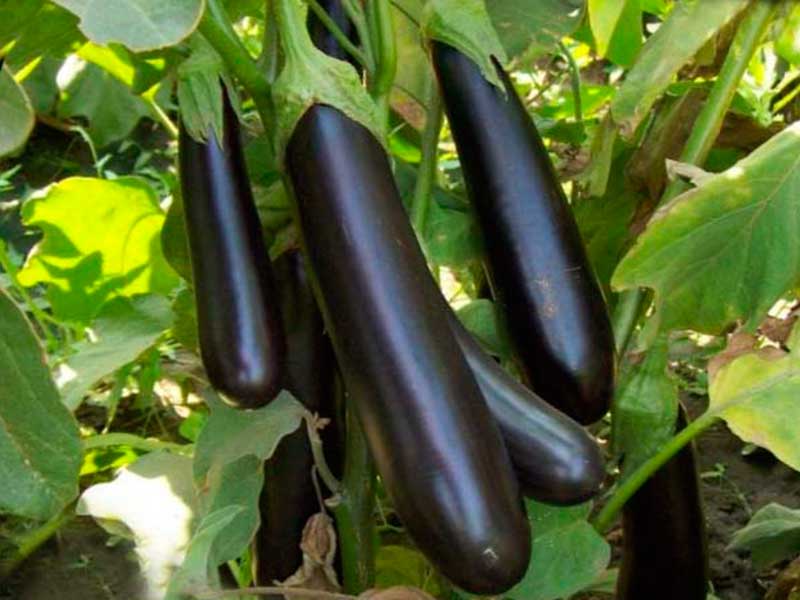
Review of the eggplant variety King of the North F1
For a long time, I had trouble growing eggplants in the Moscow region, until a few years ago, when I bought some "King of the North F1" seeds from the Russian Garden. Other varieties, also early and adapted to our climate, only yielded 2-3 fruits per plant, no more, and much later.
I was also pleased with the seed germination rate: 90-95%, always without any discrepancies. I sowed the seeds for seedlings as recommended on the seed packet. I transplanted them into the greenhouse with buds already formed in mid-May, depending on the weather.
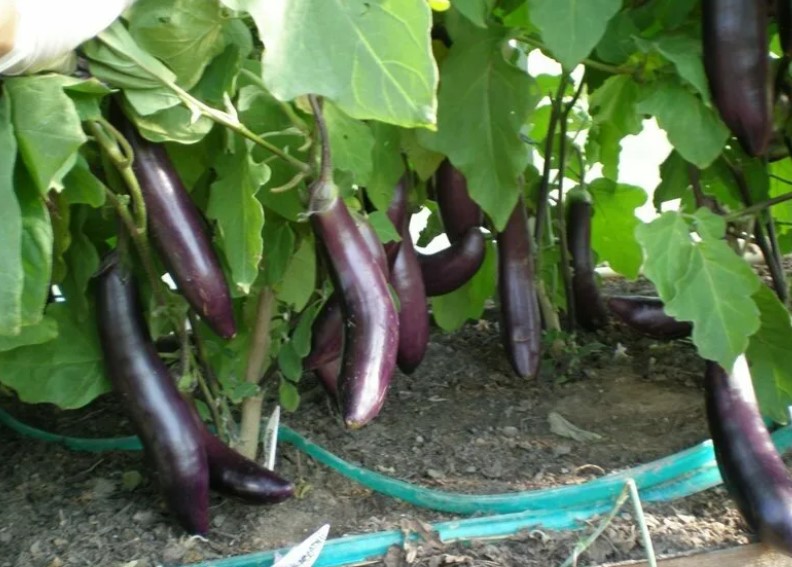
The first fruits ripen in late June - early July. Here are the first ones hanging.
The first eggplants are very large, the seeds are small, and not bitter. I also like the shape better. It's easier to make preserves.
After the first wave of harvest, the next eggplants begin to ripen actively, but in much larger quantities, although shorter than the first ones.
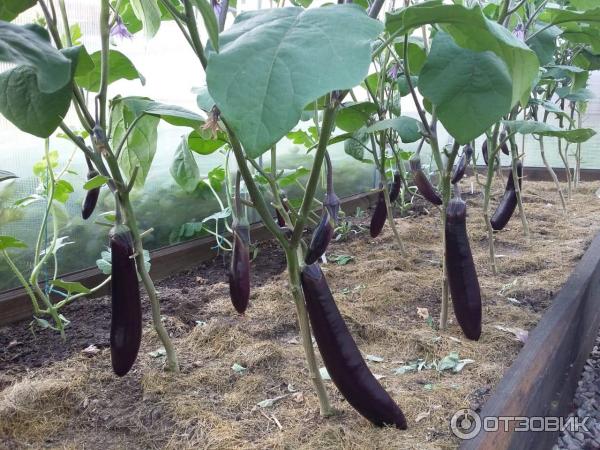
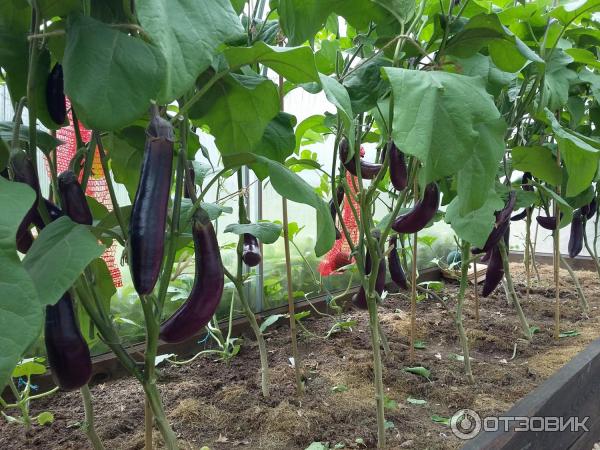
Greenhouse bushes grow up to 1.5 meters tall and strong, requiring support or staking. I gradually remove all leaves and side shoots up to the first fork after the first eggplant sets. Unlike peppers, eggplants don't need to have their crown buds removed; they don't slow down the plant's development, flowering, or subsequent fruit set.
It bears fruit until frost. A very hardy hybrid, it tolerates both heat and cold nights well, and is undemanding about soil and watering. I haven't had any problems with it.
Friends grow "King of the North F1" in open ground, under cover with non-woven materials in bad weather, and are also very pleased with the harvest.
The other day I received a parcel of seeds from the "Russian Garden", including eggplant "King of the North F1", 53 rubles per packet, 35 seeds.
So, if you live in the Moscow region or other regions with cool climates and short daylight hours and haven't yet found your perfect eggplant, I highly recommend trying this hybrid. It won't let you down.

Eggplant variety Maria
| Description | An early, cold-resistant variety, suitable for growing in greenhouses and open ground |
| Bush height and description | The bushes are semi-spreading, up to 70 cm high |
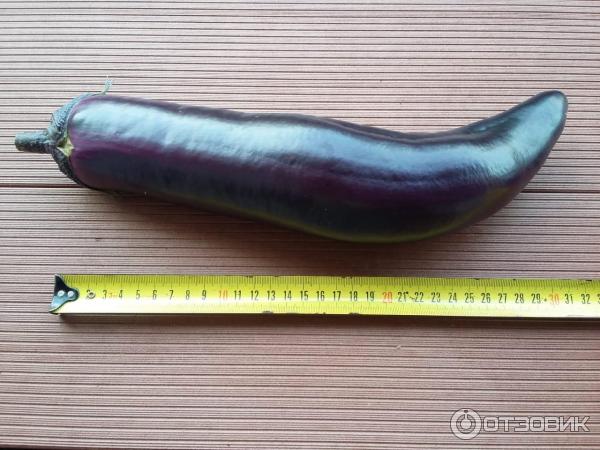
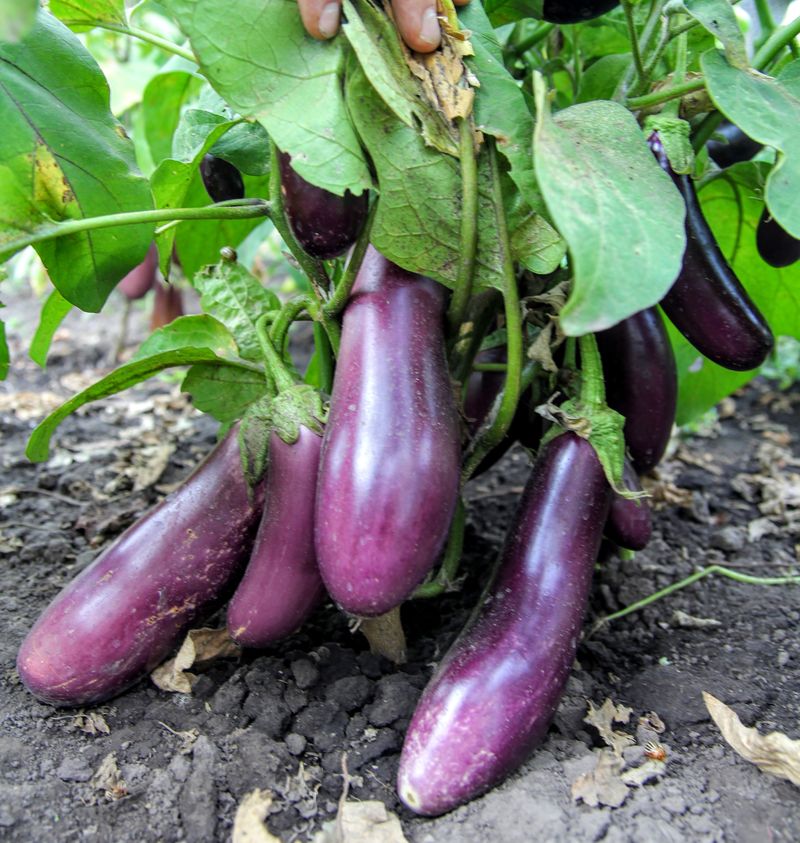
| Fruit | Cylindrical in shape, weighing about 200 g and up to 30 cm in length |
| Productivity | 5-6 kg per square meter |
| Fruit ripening time | 95-100 days |
| Disease resistance | Complex disease resistance. |
| 2007 |
Photo gallery of eggplant variety Maria

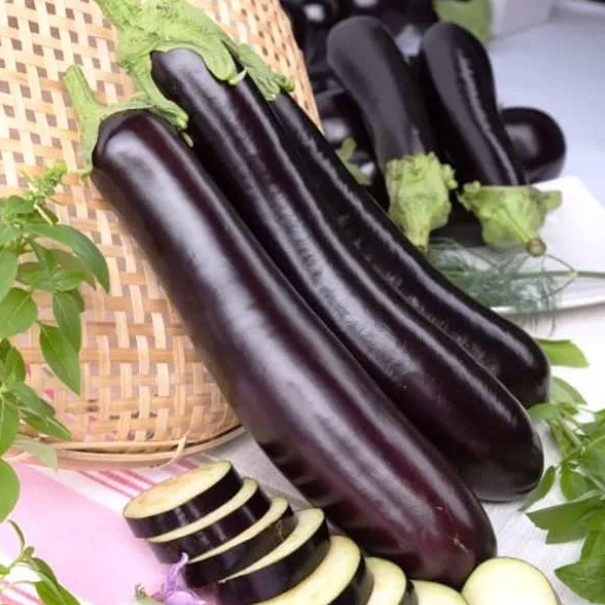
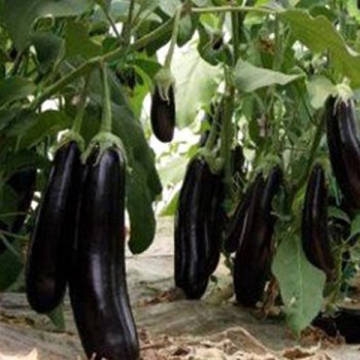
Eggplant variety Samurai Sword
| Description | A cold-resistant variety, grown in greenhouses and open ground |
| Bush height and description | The bushes are semi-spreading, compact, up to 70 cm high |
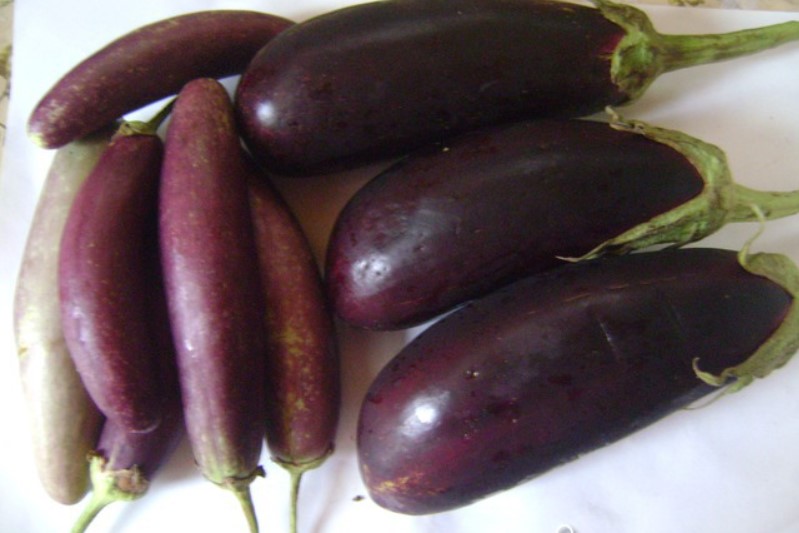
| Fruit | The fruits are elongated, sword-shaped, up to 22 cm long, up to 7 cm in diameter, weighing about 200 g. |
| Productivity | Up to 4.3 kg per sq.m. |
| Fruit ripening time | 110-120 days |
| Disease resistance | Susceptible to verticillium wilt and fusarium. |
| 2015 |
Photo gallery of eggplant variety Samurai Sword
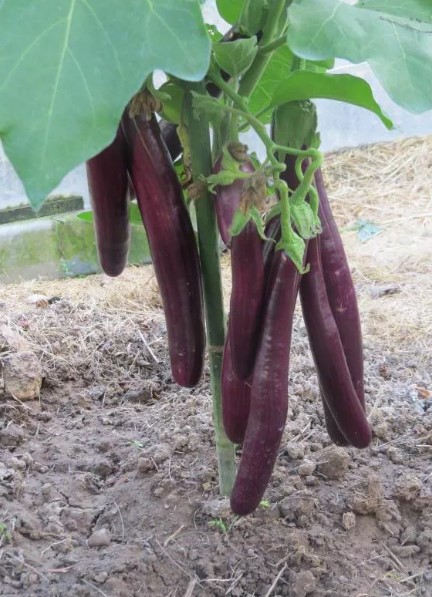
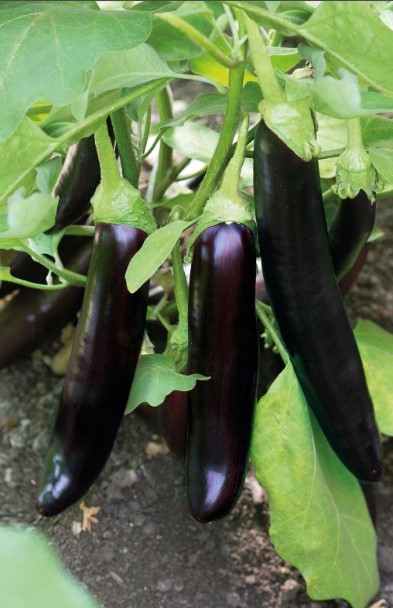
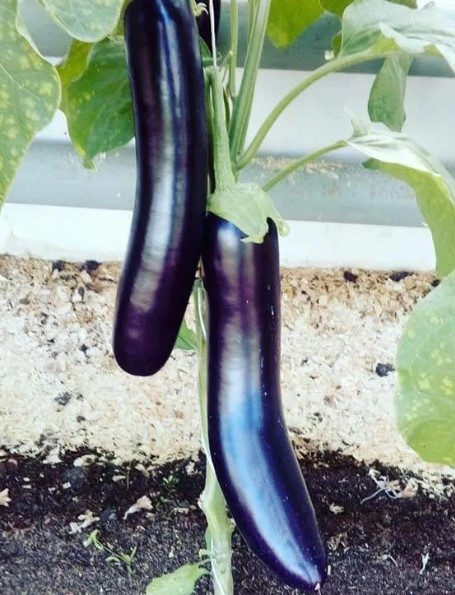

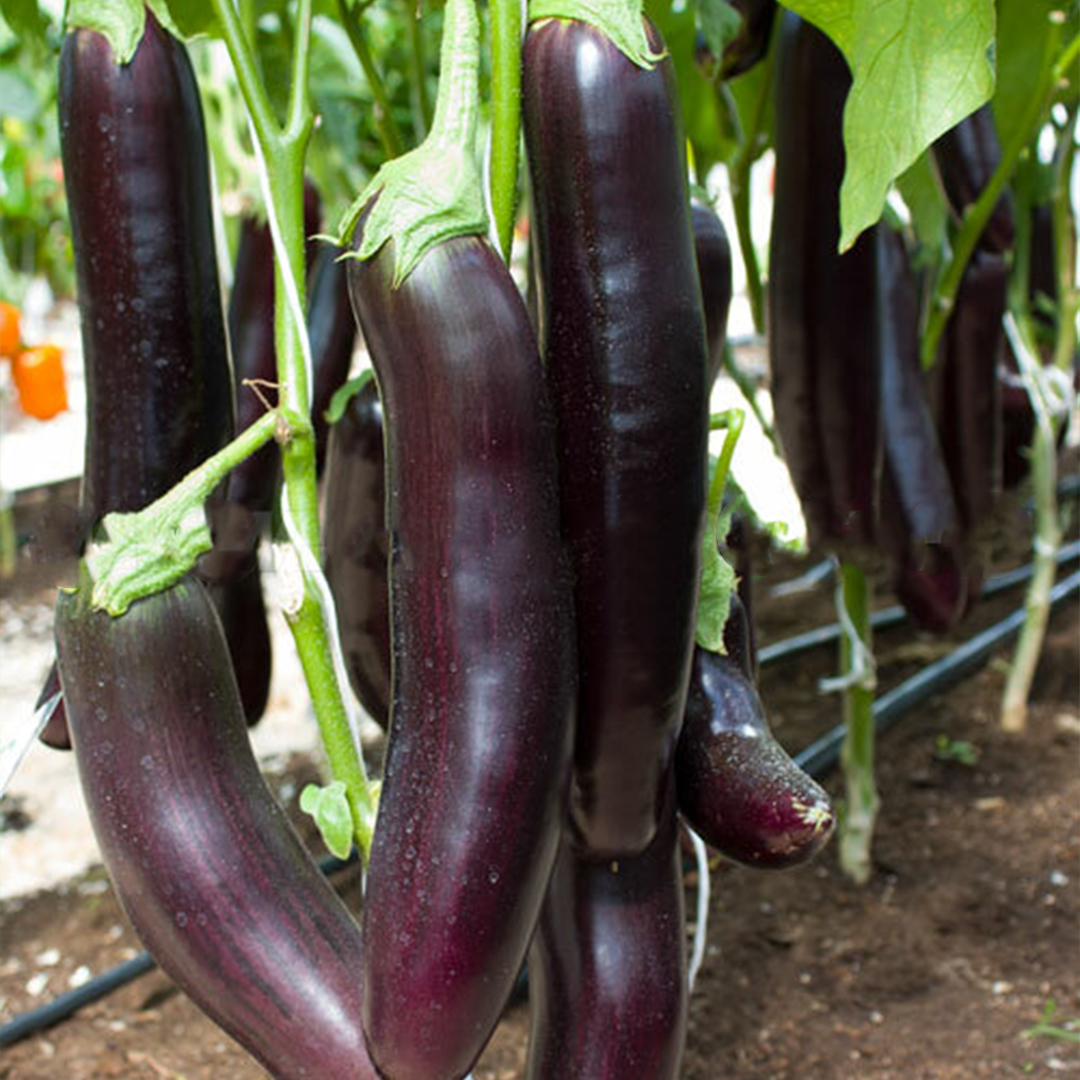
Review of the Samurai Sword eggplant variety
I grew the Samurai's Sword and Caliph varieties from Poisk the year before and last year. They were fine eggplants, productive, and disease-free; they're very similar. One year they grew in the open ground under temporary cover, the second in a greenhouse. They were fine in both places. I didn't plant them this year; they're long and rather thin. I've tried other varieties with thicker fruit. :)
I can't say anything about resistance to spider mites, I've never had one yet.
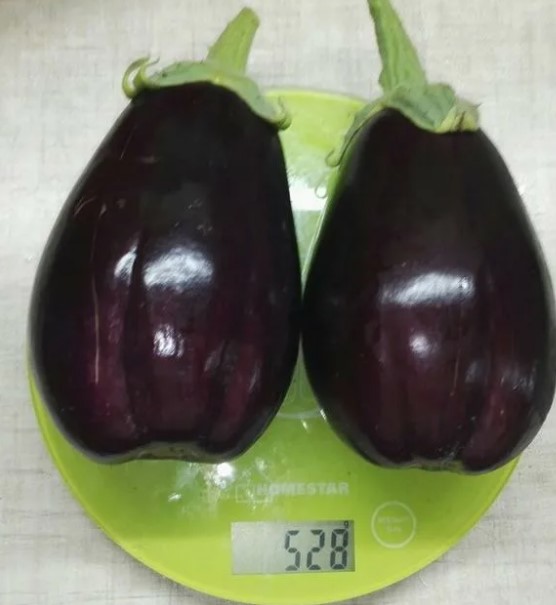
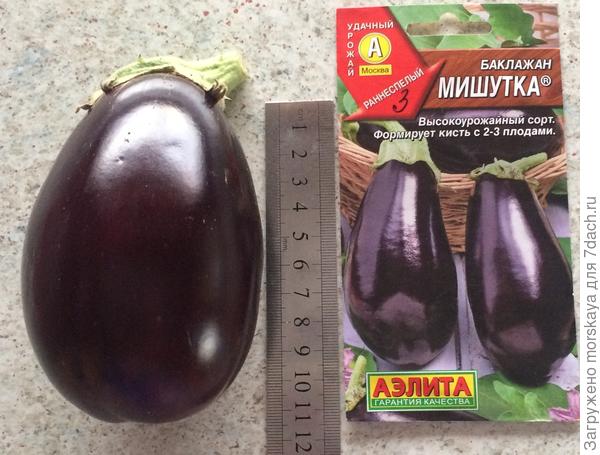
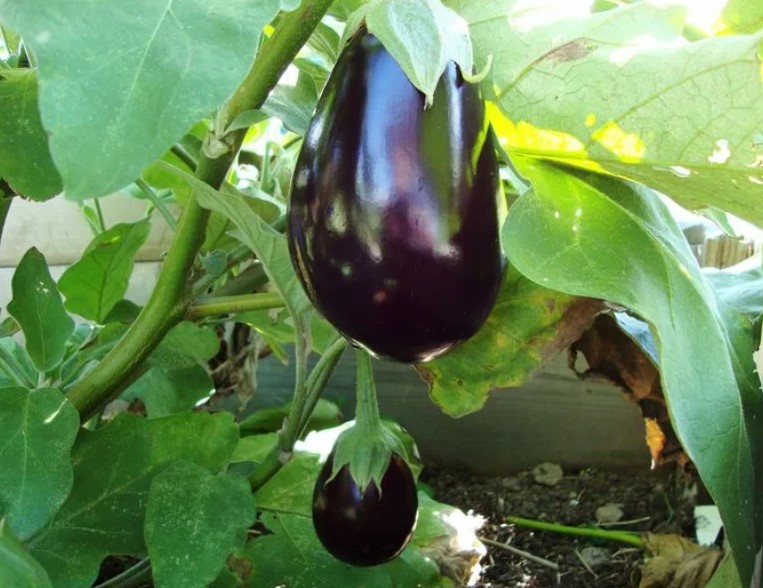
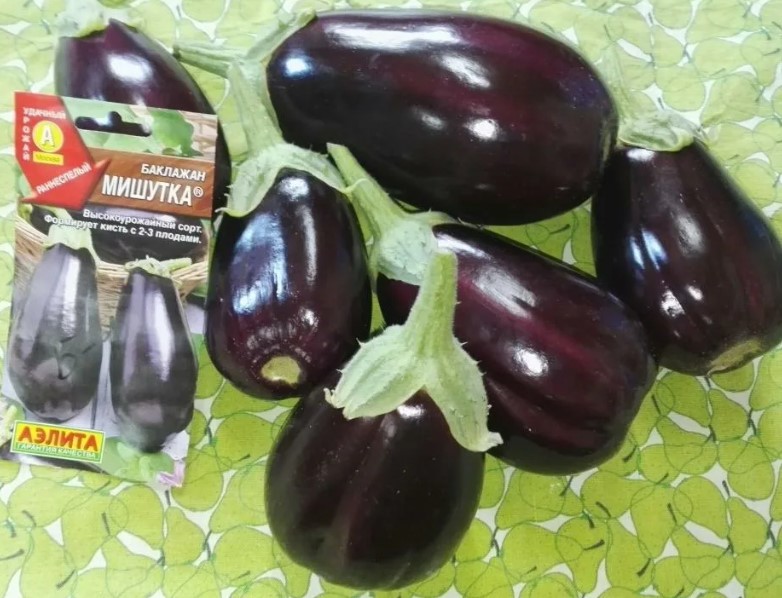
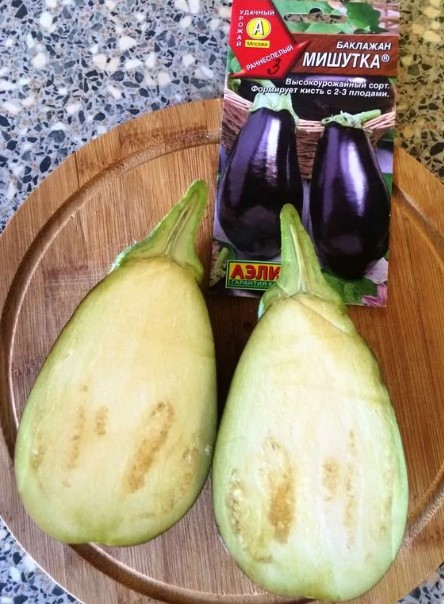
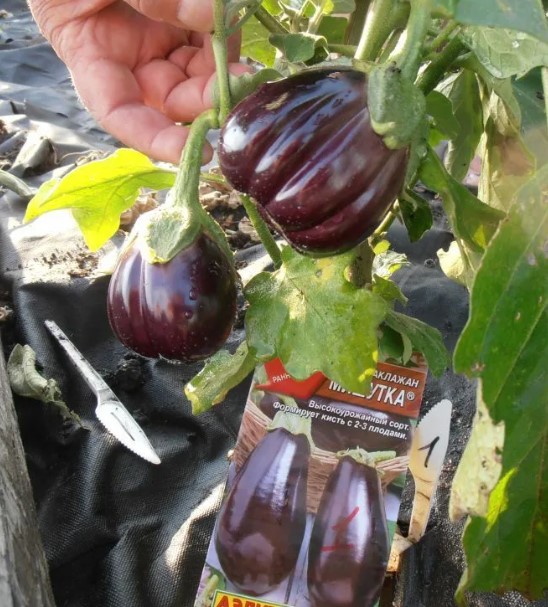
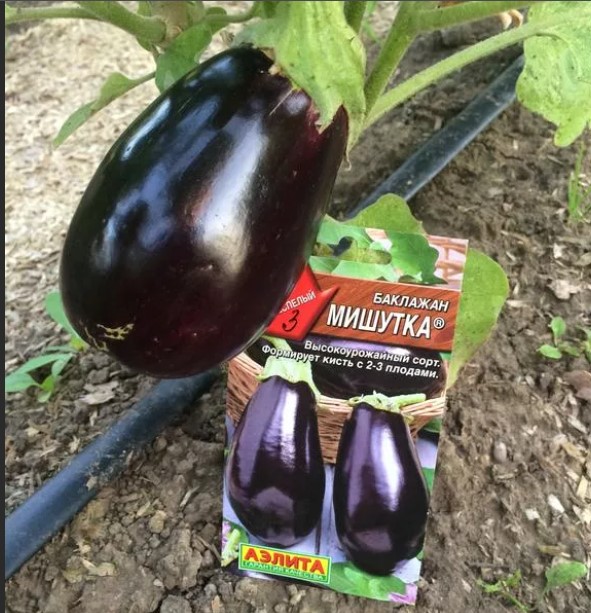
Eggplant variety Mishutka
| Description | A medium-sized variety, suitable for all regions, bears fruit well both in a greenhouse and in open ground. |
| Bush height and description | The bushes are medium-spreading, foliated, and have large leaf blades. Height up to 120 cm. |
| Fruit | The fruits are pear-shaped, up to 25 cm long, weighing up to 250 g |
| Productivity | 6-7 kg per square meter |
| Fruit ripening time | 100-115 days |
| Disease resistance | Complex disease resistance |
| 2008 |
Photo gallery of eggplant variety Mishutka
Eggplant variety Robin Hood
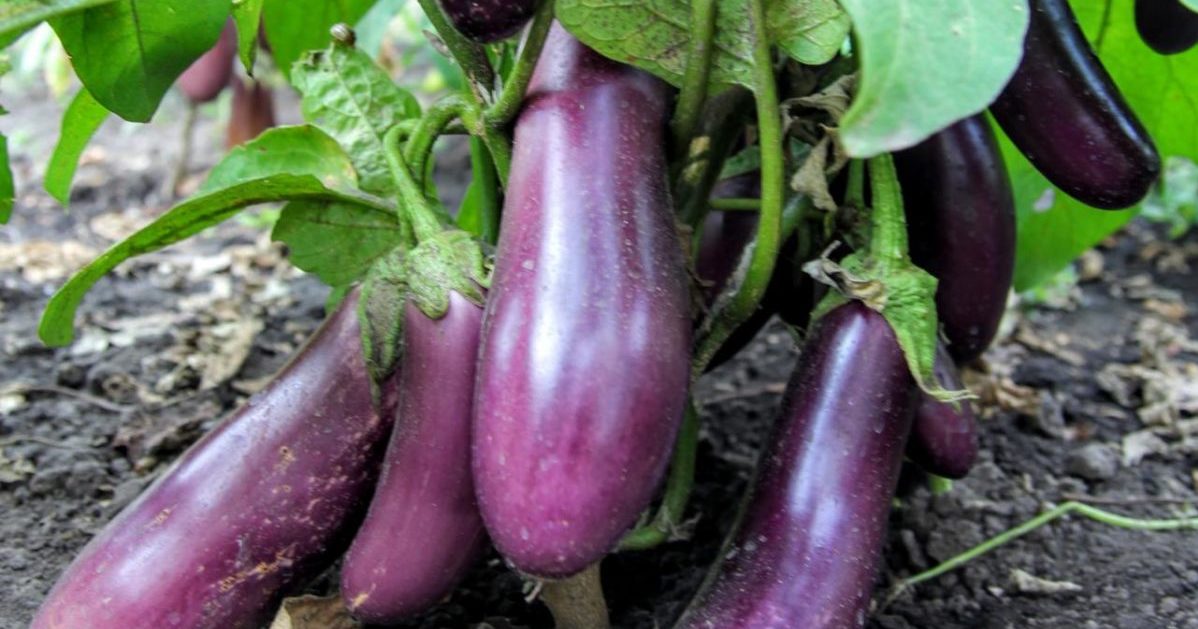
| Description | An ultra-early variety developed by Russian breeders |
| Bush height and description | Bushes are 70-100 cm tall, semi-spreading, with a dense stem |
| Fruit | The fruits are pear-shaped, weighing 200-300 g, up to 20 cm long and up to 9 cm in diameter. |
| Productivity | 90-100 days |
| Fruit ripening time | Up to 12 kg per sq. m. |
| Disease resistance | Often falls prey to aphids, spider mites and Colorado potato beetles |
| 2000 |
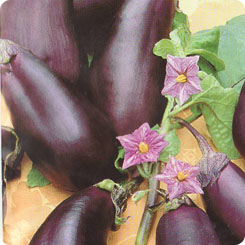
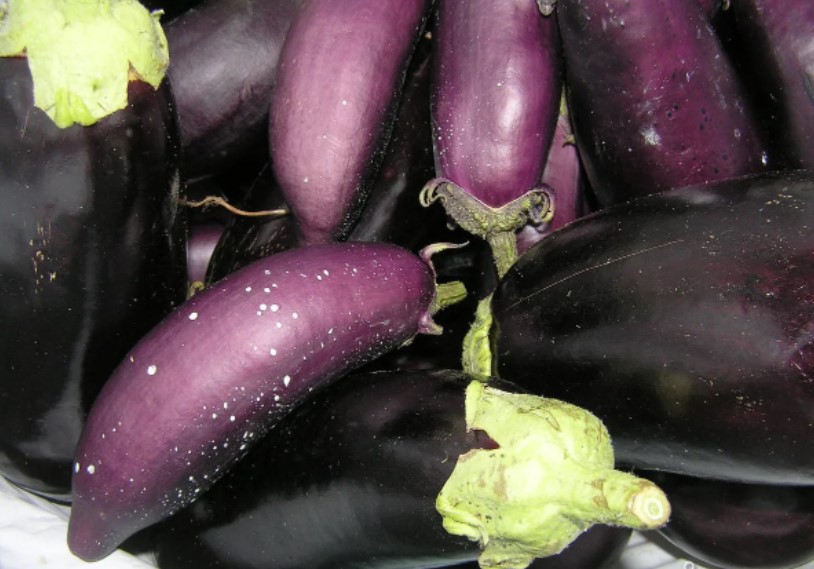
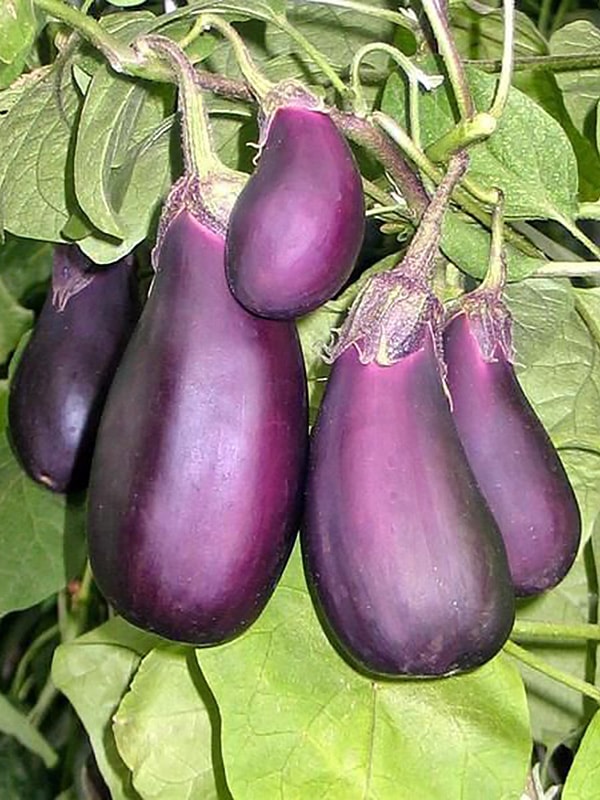
Photo gallery of eggplant variety Robin Hood

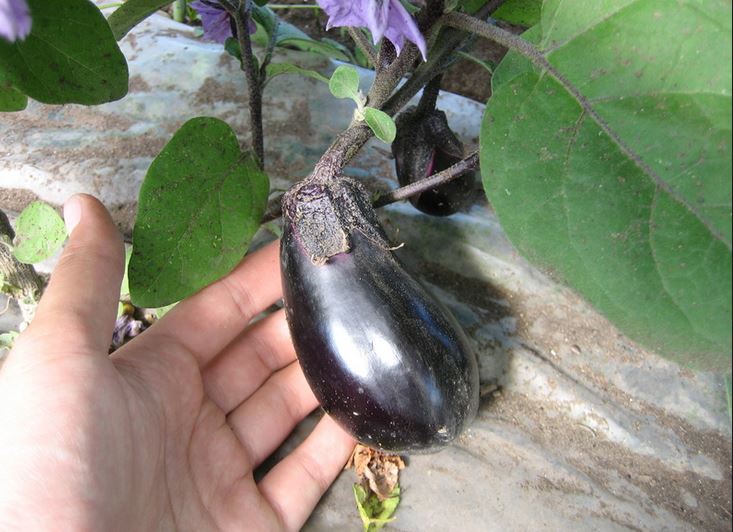
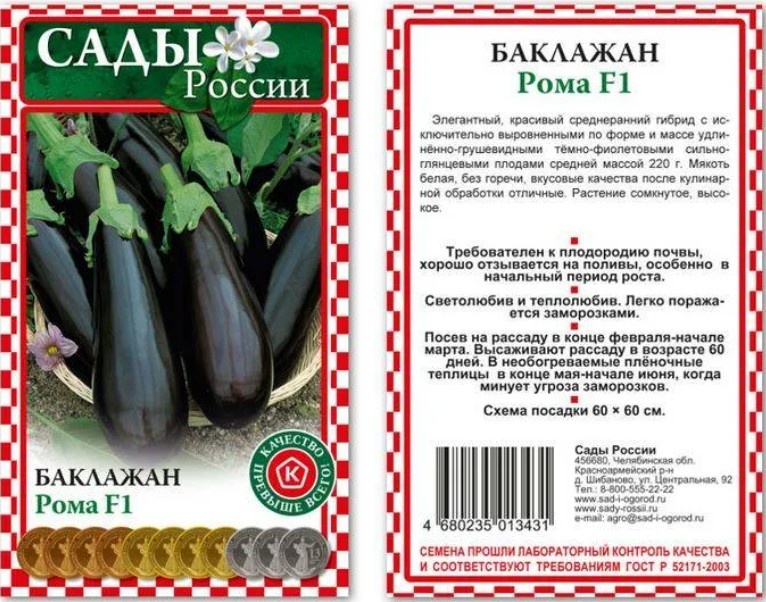
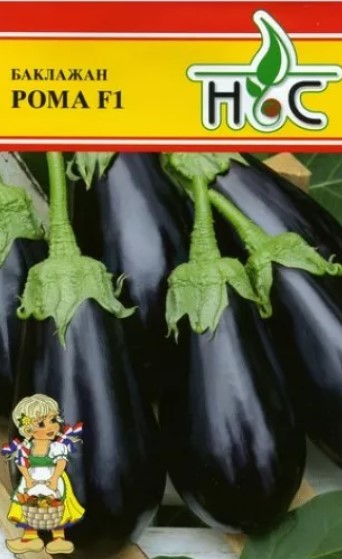
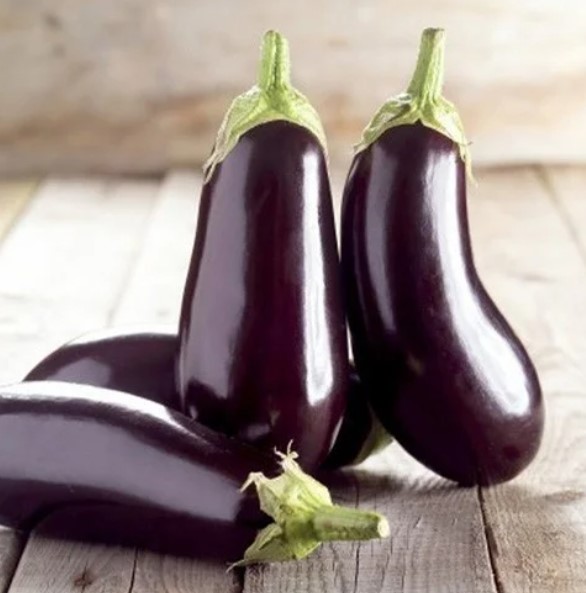
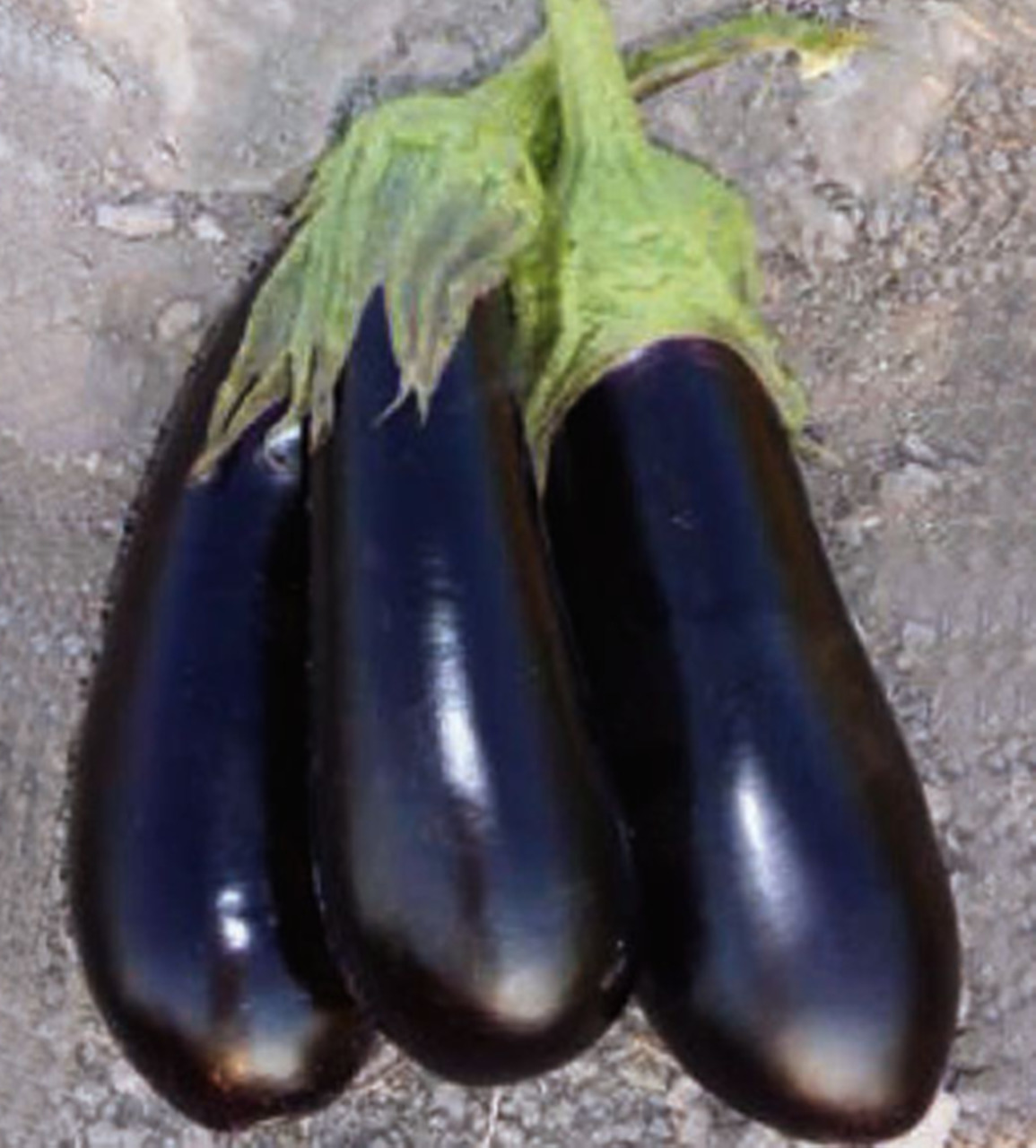
Eggplant variety Roma F1
| Description | A tall hybrid variety with a strong central shoot |
| Bush height and description | The bush is up to 200 cm high, requires support and tying, the leaves are wrinkled |
| Fruit | The shape is elongated, pear-shaped, weight 200-300 g, length about 20 cm, high shelf life and marketability |
| Productivity | Up to 10 kg per square meter |
| Fruit ripening time | 110-120 days |
| Disease resistance | Complex disease resistance |
| 2013 |
Photo gallery of eggplant variety Roma F1
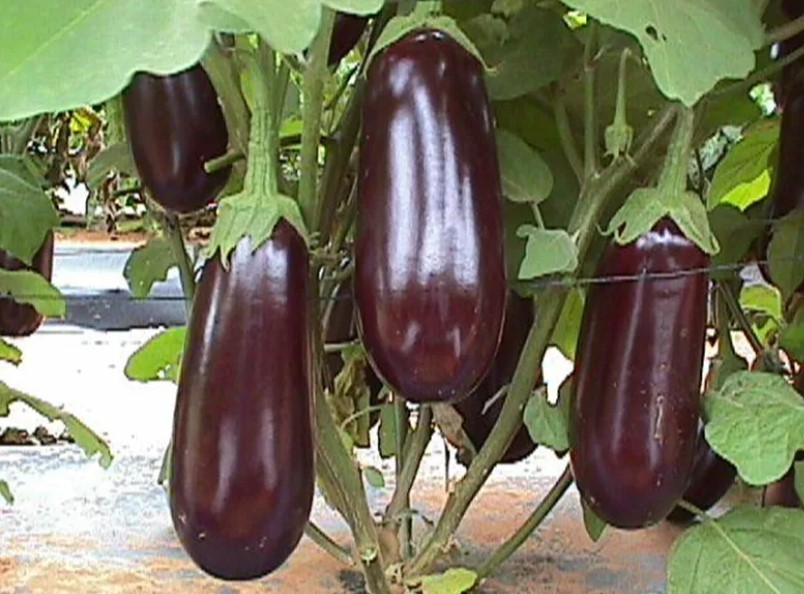
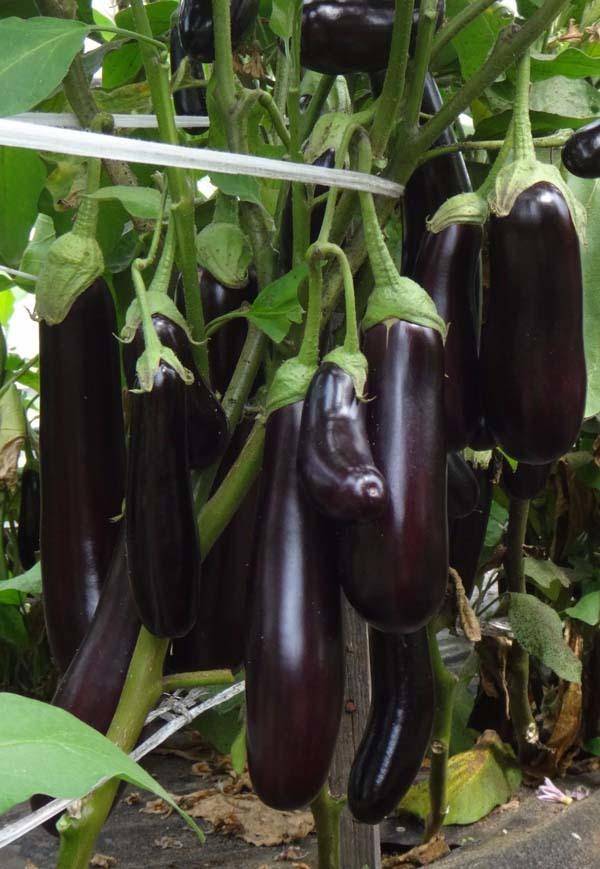
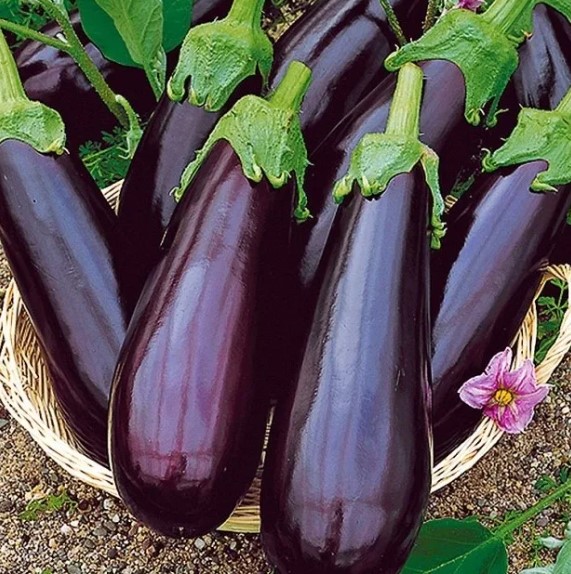


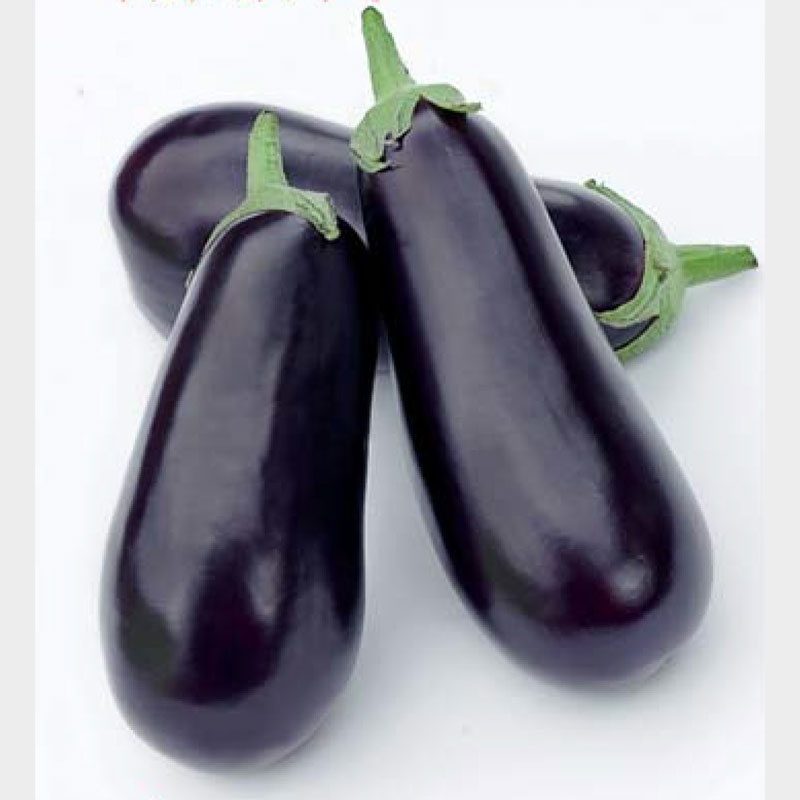
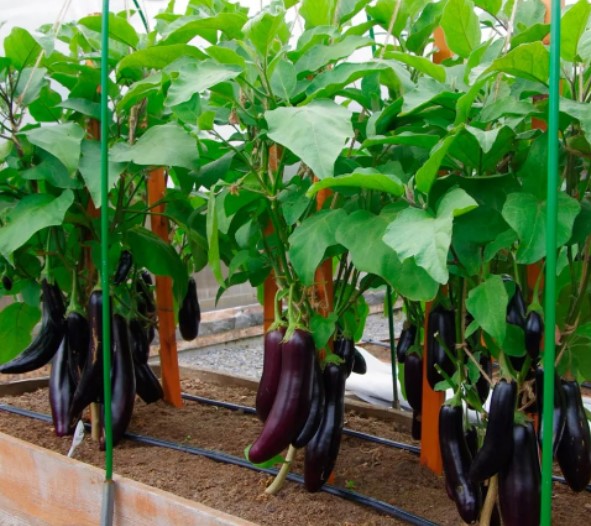
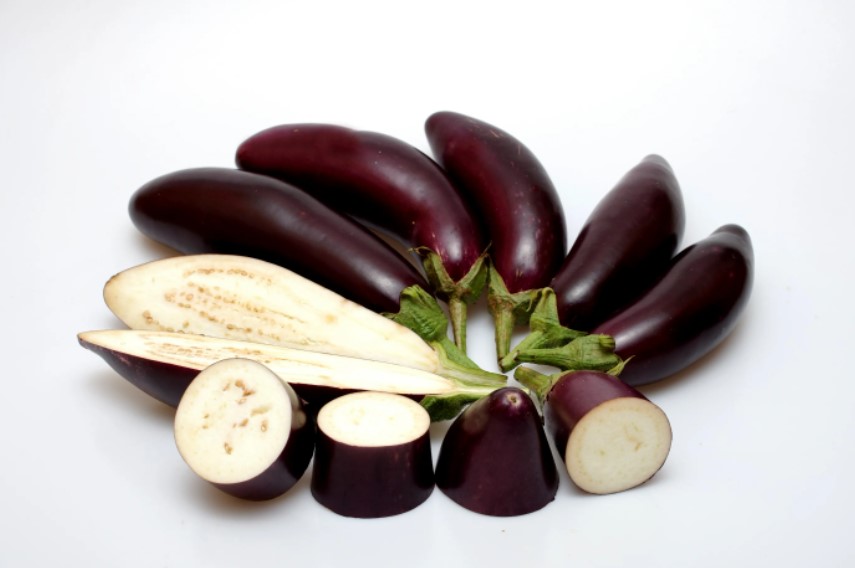
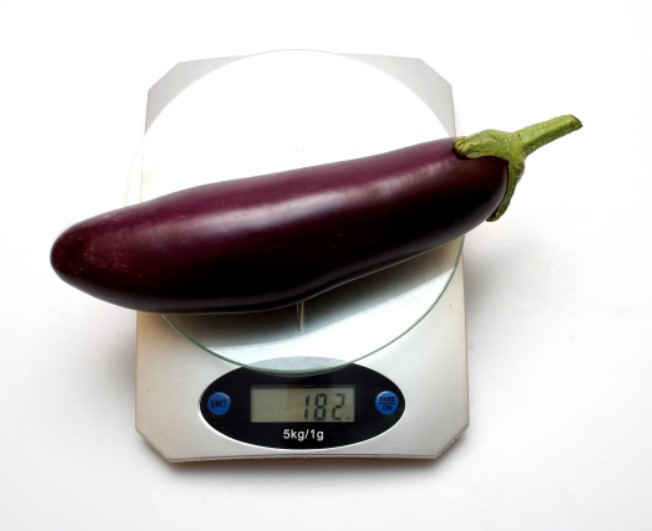
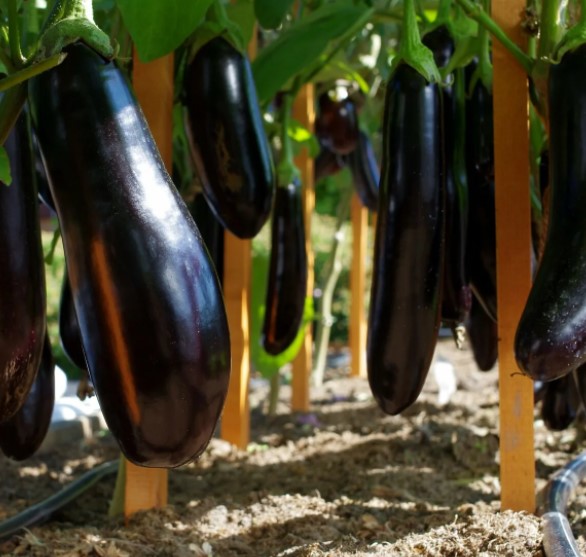
Eggplant variety Northern Indigo F1
| Description | Hybrid variety, suitable for all types of cultivation |
| Bush height and description | The bush is vigorous, semi-spreading, the height varies from 60 to 100 cm. |
| Fruit | The shape is cylindrical, moderately curved, weight is about 250 g, length is up to 20 cm |
| Productivity | 10-12 kg per square meter |
| Fruit ripening time | 105-110 days |
| Disease resistance | Complex disease resistance |
| 2020 |
Photo gallery of the eggplant variety Northern Indigo F1
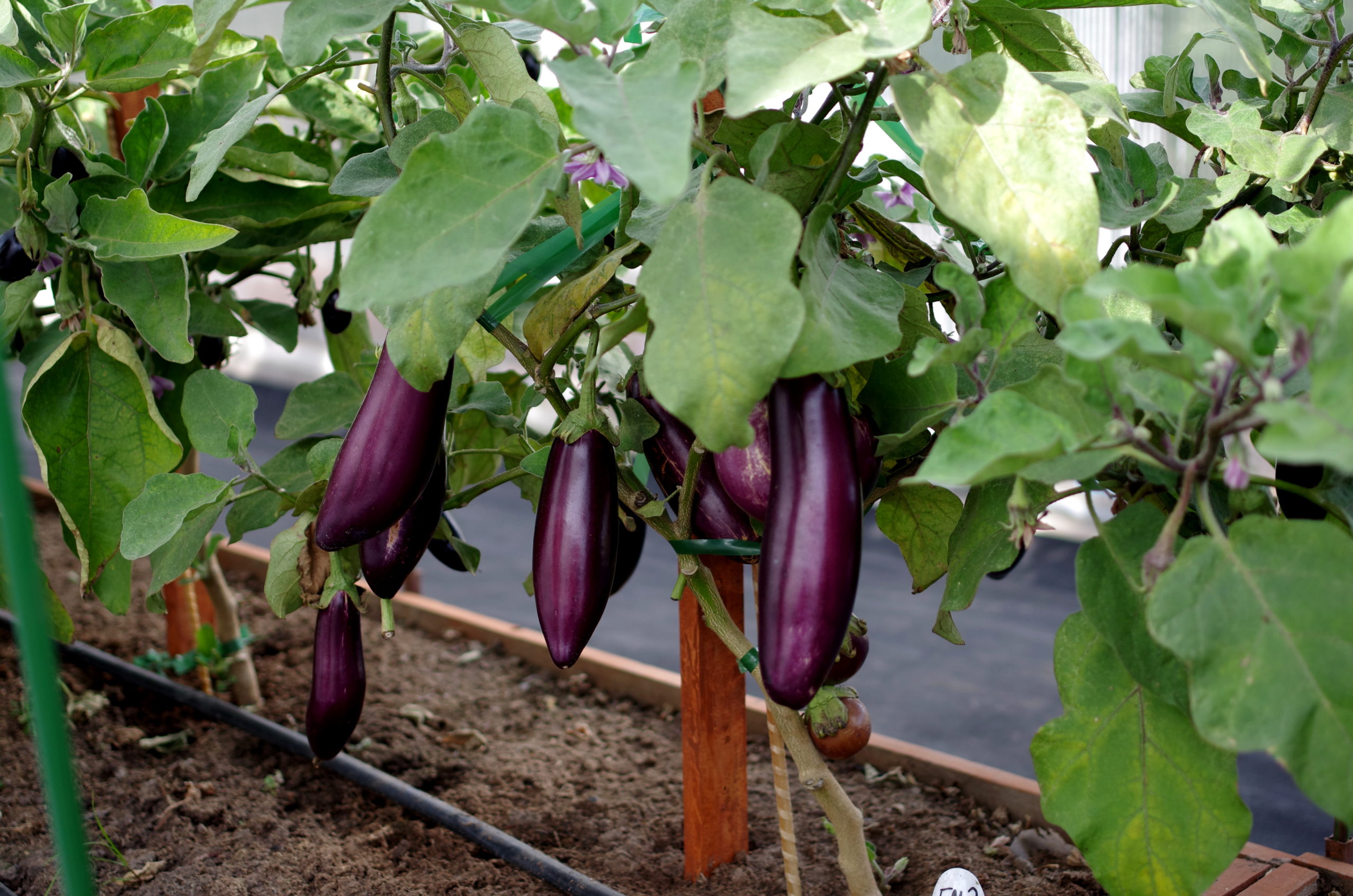
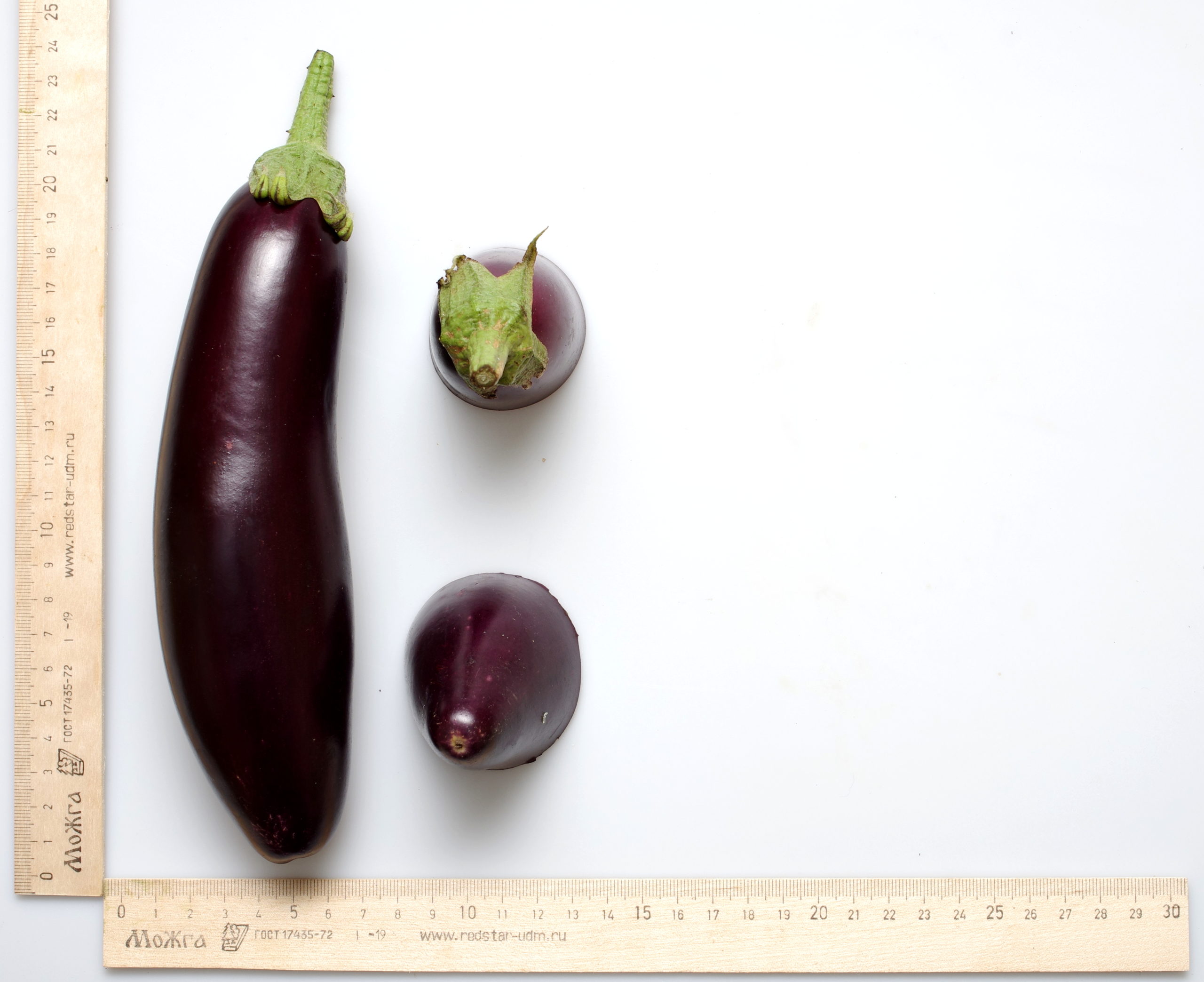
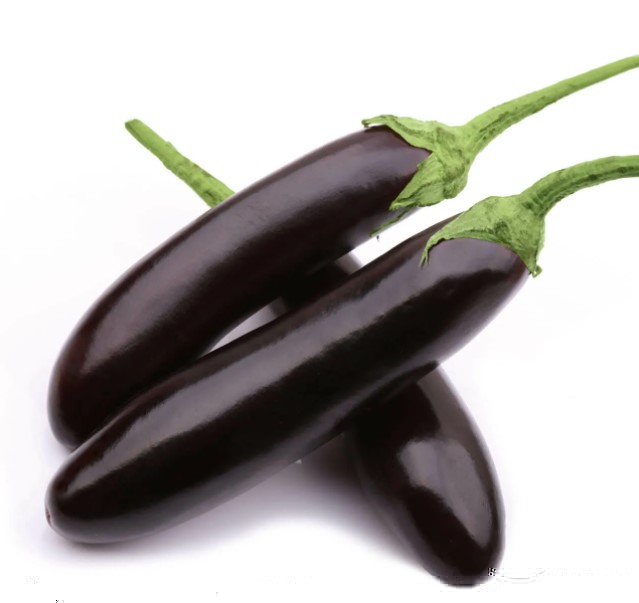

Eggplant variety Siberian early ripening 148
| Description | The variety was bred in Altai, tolerates low temperatures well and is suitable for all types of cultivation. |
| Bush height and description | The bushes are standard, compact, low-growing, about 50 cm high. |
| Fruit | The fruits are elongated, pear-shaped, weighing up to 200 g, up to 8 cm long and about 6 cm in diameter. |
| Productivity | 2.5-5 kg per square meter |
| Fruit ripening time | 110 days |
| Disease resistance | Complex disease resistance |
| Not included |
Photo gallery of the Siberian early-ripening eggplant variety 148
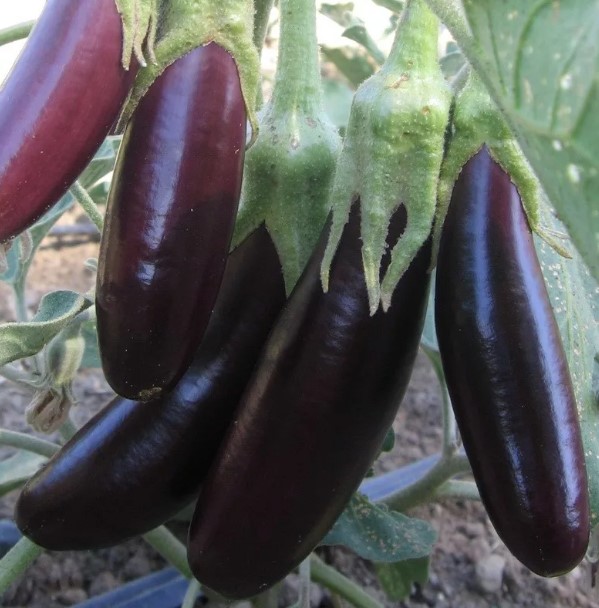
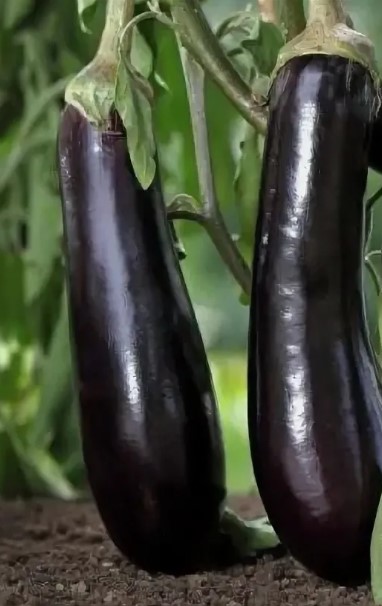
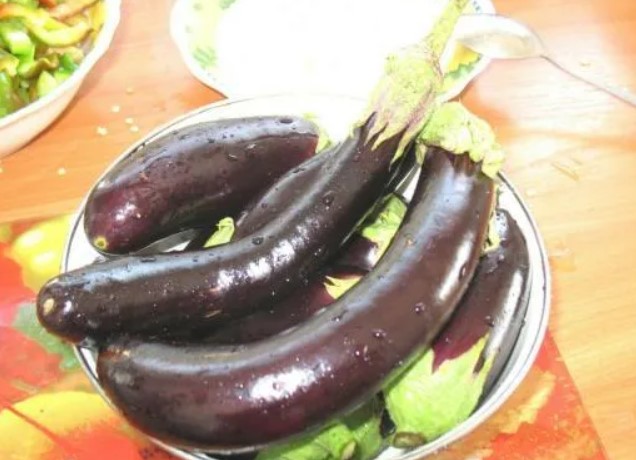
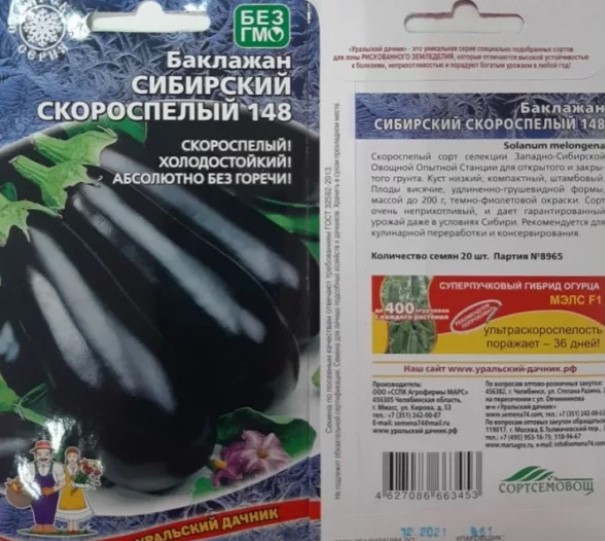
Review of the Siberian Early-Rising Eggplant Variety 148
Greetings, gardeners and vegetable growers. The new gardening season is about to begin. Eggplants are usually among the first to be sown.
This is only the second year I've been buying seeds like these. I really like the "blue ones" from Siberian selection, specifically bred for Siberian conditions.The packaging is a cardboard card with a cellophane bag containing the changes attached.
The packaging is very convenient: the seeds are in a transparent bag and are clearly visible. Look how wonderful they are! They're large, without any breaks—in short, excellent seeds.
The main characteristics of this variety are described on the back of the cardboard card. Even the number of seeds is listed—20. Usually, they're given in grams, but it's completely unclear—how much is that?
I like that the eggplants of this variety are long and quite large. They hang down from the bush, and the fruit usually forms at the top.
The skin is bright in color and the flesh is white and not at all bitter.
I can harvest up to five eggplants from one bush – it’s a productive variety.
I recommend the Skorospel'nyy eggplant! It's a wonderful variety: the eggplants are large and tasty. The seeds germinate beautifully.
Good luck with your planting and an excellent harvest!



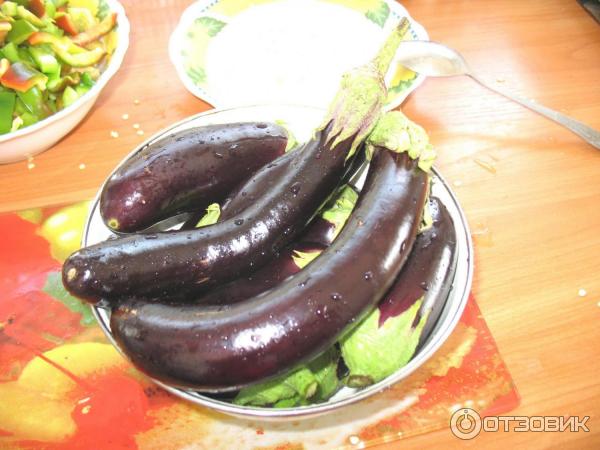
Eggplant variety Solaris
| Description | A vigorous, mid-early variety intended for private farms. |
| Bush height and description | The bushes are medium-spreading, indeterminate, 80-110 cm high |
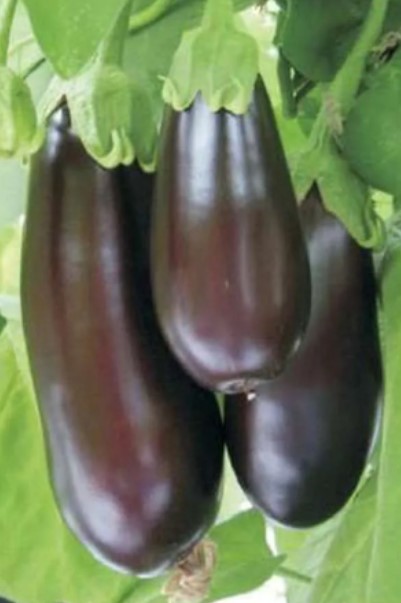
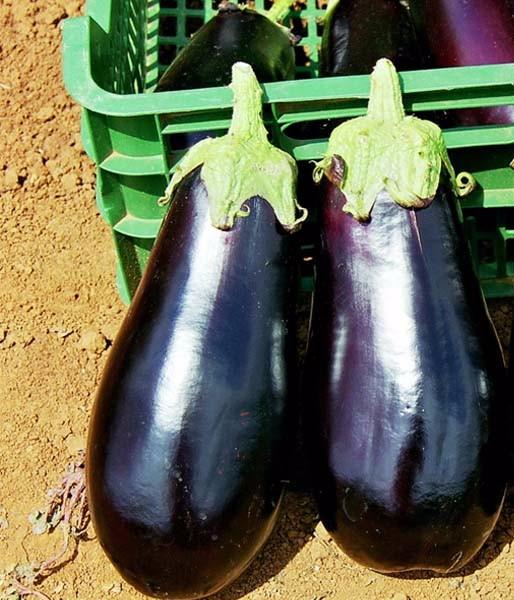
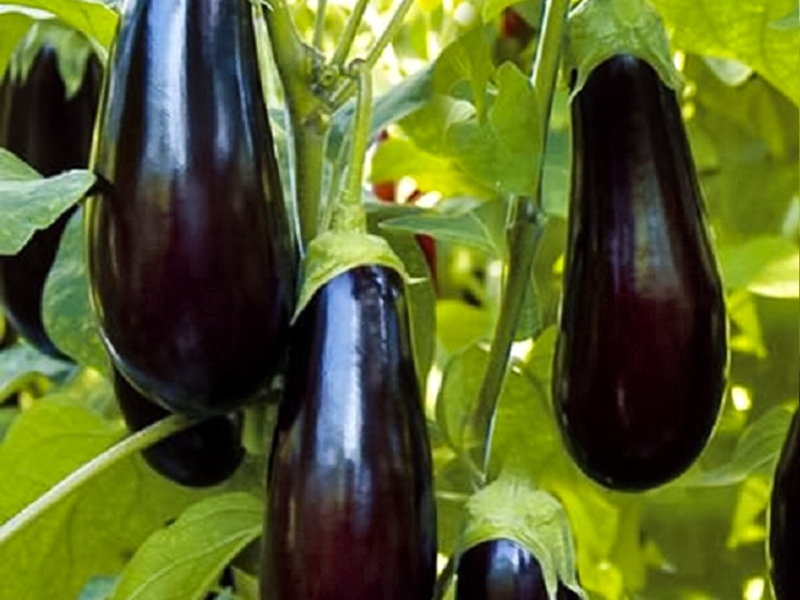
| Fruit | The fruits are elongated, pear-shaped, weighing 168-200 g, up to 30 cm in length, and about 5 cm in diameter. |
| Productivity | 3-6 kg per bush |
| Fruit ripening time | 114-120 days |
| Disease resistance | Strong immunity |
| 1999 |
Photo gallery of eggplant variety Solaris

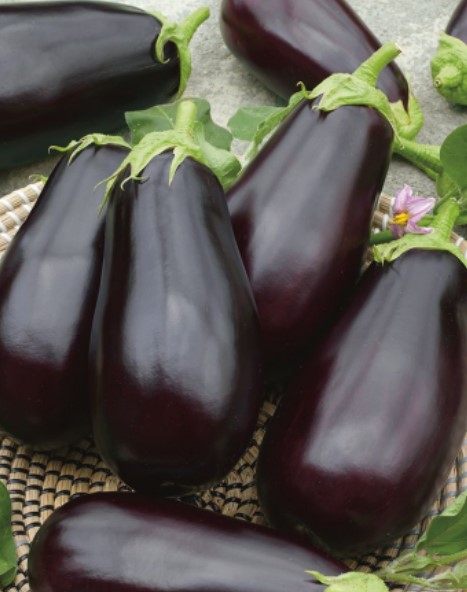

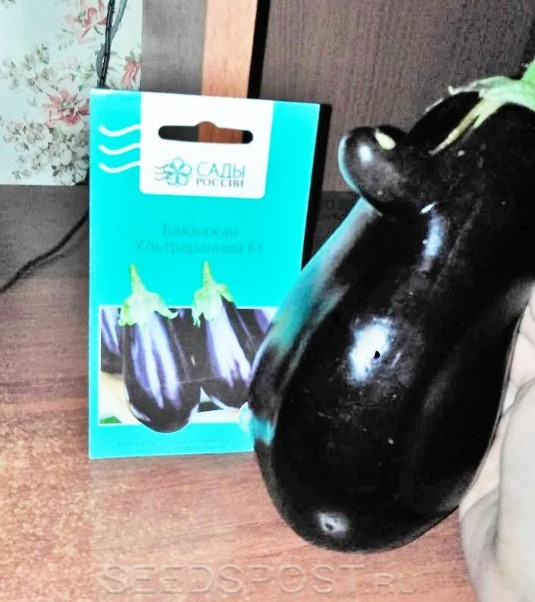
Eggplant variety Ultra early F1
| Description | An early variety of eggplant, sensitive to temperature fluctuations, but with excellent seed germination |
| Bush height and description | The bushes are determinate, compact, 70 to 100 cm in height. |
| Fruit | The fruits are cylindrical, weighing 200-300 g. |
| Productivity | 20-30 tons per hectare |
| Fruit ripening time | 80-85 days |
| Disease resistance | Complex disease resistance |
| Not included |
Photo gallery of eggplant variety Ultra Early F1
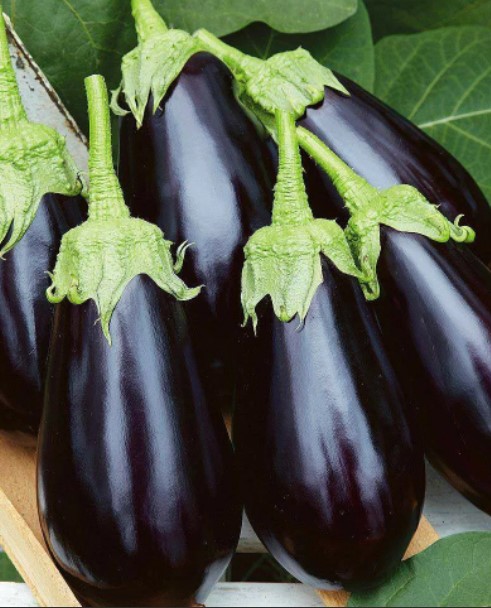

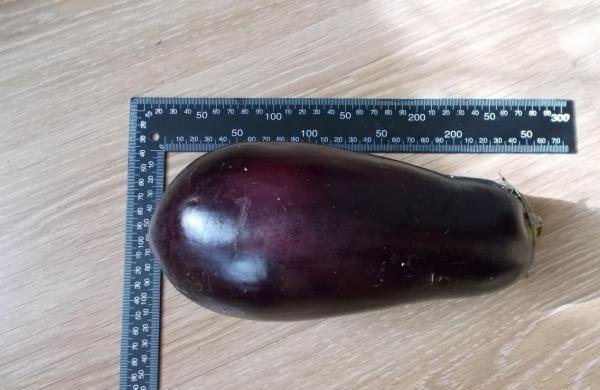

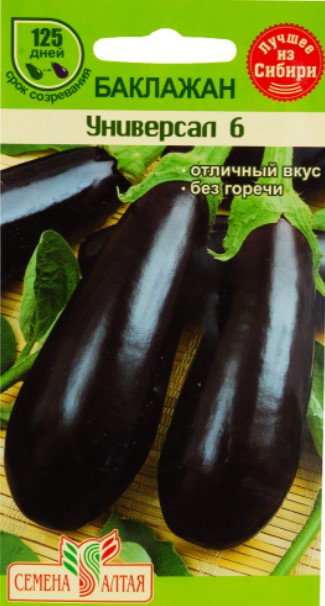
Eggplant variety Universal 6
| Description | A classic eggplant variety with a medium ripening period, preferring warm regions or greenhouse growing conditions. |
| Bush height and description | The bushes are tall, medium spreading, up to 90 cm in height |
| Fruit | Fruits are up to 19 cm long, up to 6 cm in diameter and weigh from 123 to 175 g |
| Productivity | 6.5 kg per square meter |
| Fruit ripening time | 130 days |
| Disease resistance | Average resistance to fusarium wilt and verticillium wilt |
| 1966 |
Photo gallery of eggplant variety Universal 6



Ural early ripening eggplant variety
| Description | An early ripening variety that is resistant to temperature fluctuations |
| Bush height and description | Determinate shoots 60-100 cm high |
| Fruit | Pear-shaped fruits weighing up to 300 g |
| Productivity | Up to 7 kg per square meter |
| Fruit ripening time | 98-100 days |
| Disease resistance | If agricultural practices are not followed, it may be affected by fungal diseases. |
| Not included |
Photo gallery of the Ural early ripening eggplant variety
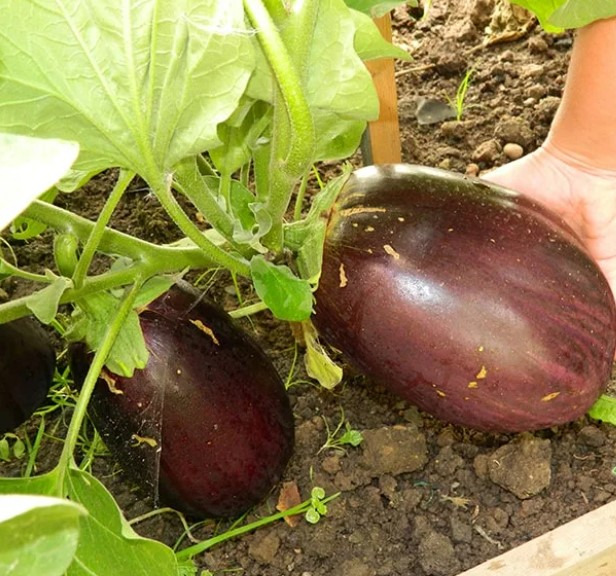

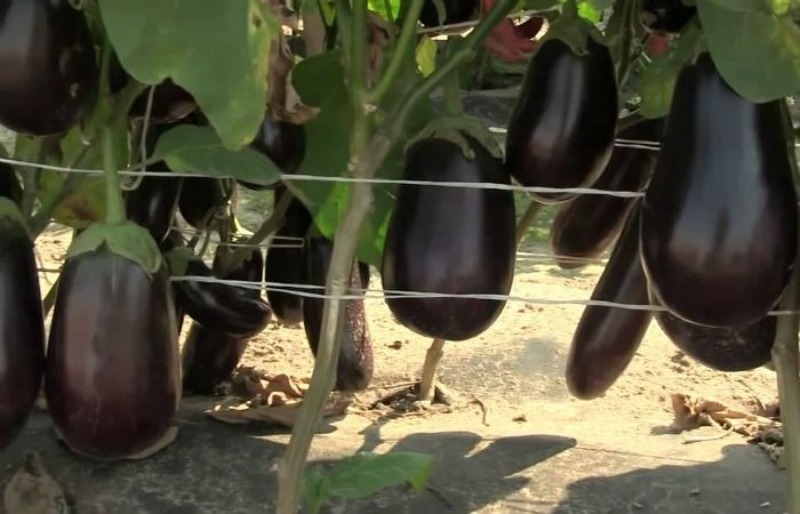
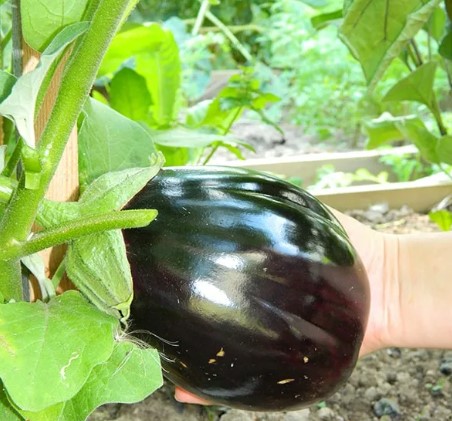
Review of the Ural early ripening eggplant variety
I'd like to introduce you to another wonderful eggplant variety, which is also one of my favorites. I already wrote a review about one: Siberian Garden "Early-ripening -148."
This variety is also considered early ripening, the name does not deceive.
And what can I say: I like the products of Uralskiy Dachnik.But back to the eggplant. Regardless of the characteristics contained in this variety's description, for now I'll tell you about the Ural Early Ripening Eggplant, based on my own experience.
This is a very resilient variety. Fruit formation occurs regardless of weather conditions. Of course, I'm talking about greenhouse cultivation. I haven't tried it in the ground and don't plan to.
As soon as the sun begins to warm the greenhouse, the seedlings can be planted with confidence. They'll survive the cold nights, and then the morning and afternoon return.Honestly, we didn't even notice or record when our seedlings bloomed. My wife came out of the greenhouse in amazement: "And the eggplants are still blooming!"
Maybe you didn’t notice, it’s such a small thing, but all the flowers were tied up as one!M the picture was exactly like this
They bore fruit abundantly—right up until the frost. This doesn't happen often, but they shared generously with their neighbors.
And everything else can be read on the back of the package.
Have a good harvest!
Thanks to everyone who read my review.

Eggplant variety Farama F1
| Description | A French hybrid with good yield and ultra-early ripening, suitable for open ground and greenhouses |
| Bush height and description | The bushes are compact, up to 60 cm high, the leaves are large and the flowers are small. |
| Fruit | The fruits are cylindrical, up to 25 cm long, 5-6 cm in diameter, weighing 155-203 g. |
| Productivity | 298-340 c/ha |
| Fruit ripening time | 50-60 days |
| Disease resistance | One of the most disease-resistant varieties |
| 2007 |
Photo gallery of eggplant variety Farama F1

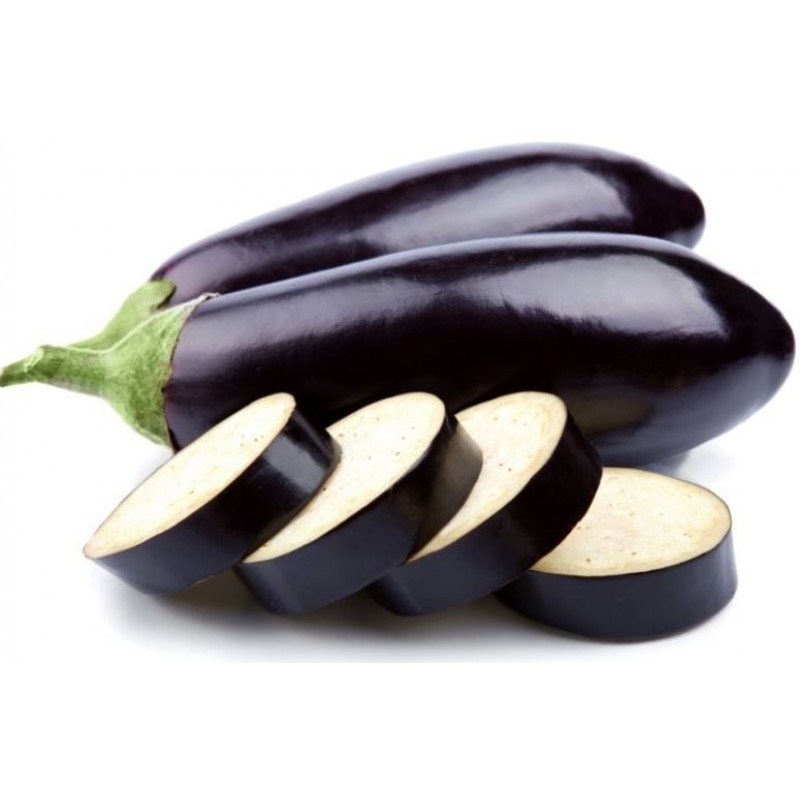


Eggplant variety Purple Miracle F1
| Description | A medium-sized variety intended for greenhouse cultivation |
| Bush height and description | The bush is medium-sized, medium-spreading, up to 70 cm in height. |
| Fruit | The fruits are cylindrical, slightly curved, weighing from 100 to 350 g. |
| Productivity | 5-8 kg per square meter |
| Fruit ripening time | 95-115 days |
| Disease resistance | Complex disease resistance |
| 1999 |
Photo gallery of the Purple Miracle F1 eggplant variety
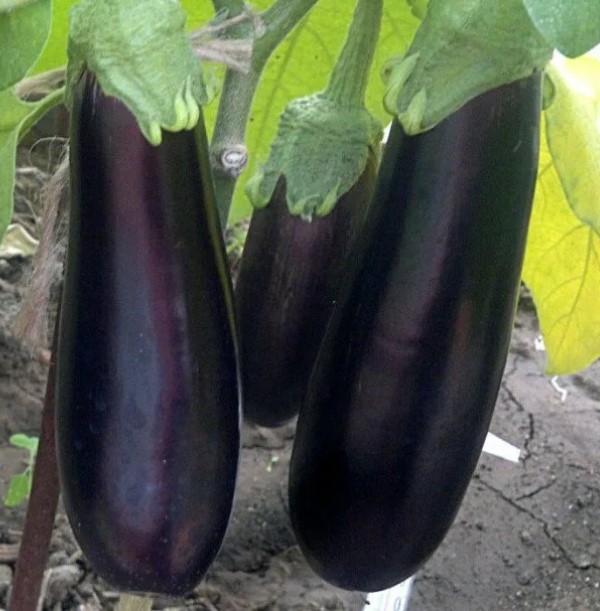

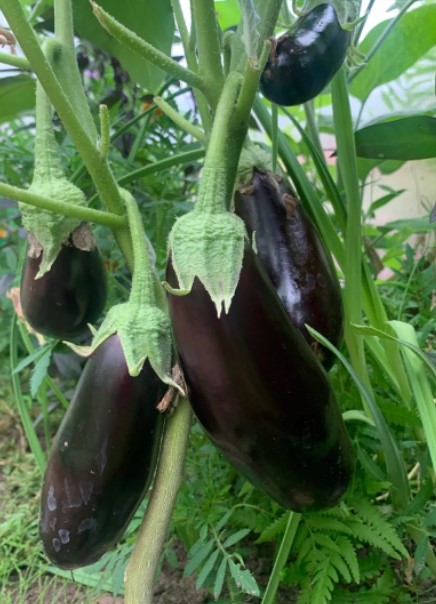

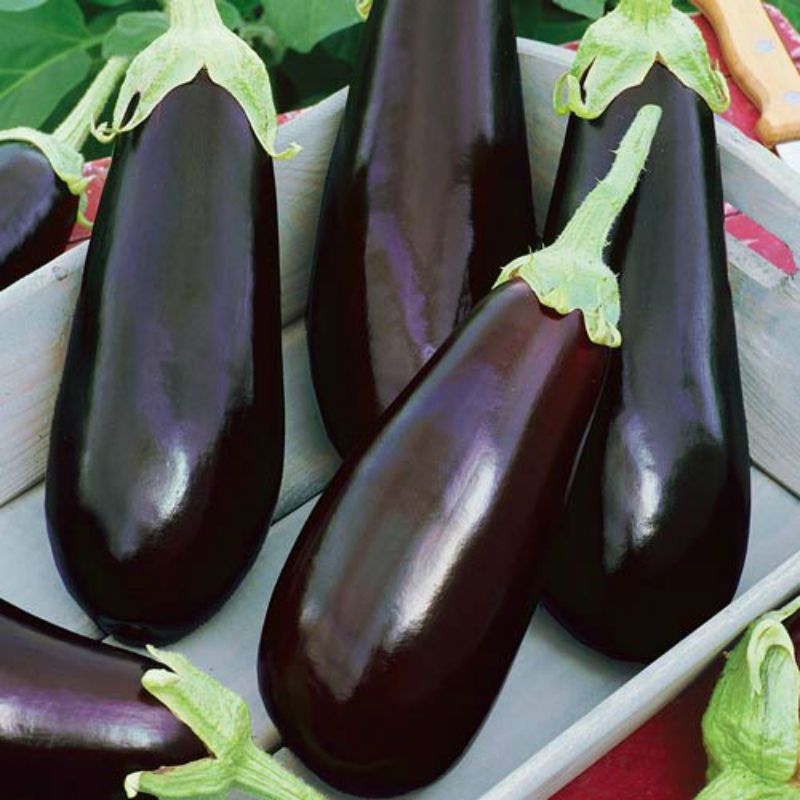

Eggplant variety Khalif F1
| Description | An unpretentious variety of eggplant that is suitable for growing in greenhouses and open ground. |
| Bush height and description | The bushes are medium-sized, up to 70 cm in height, there are no pointed growths on the fruit cup. |
| Fruit | The fruits are club-shaped, slightly elongated, weighing 200-250 g, up to 20 cm long, and 6 cm in diameter. |
| Productivity | 3.6 kg per square meter |
| Fruit ripening time | 110-115 days |
| Disease resistance | Complex stability, can |
| 2015 |
Photo gallery of eggplant variety Khalif F1
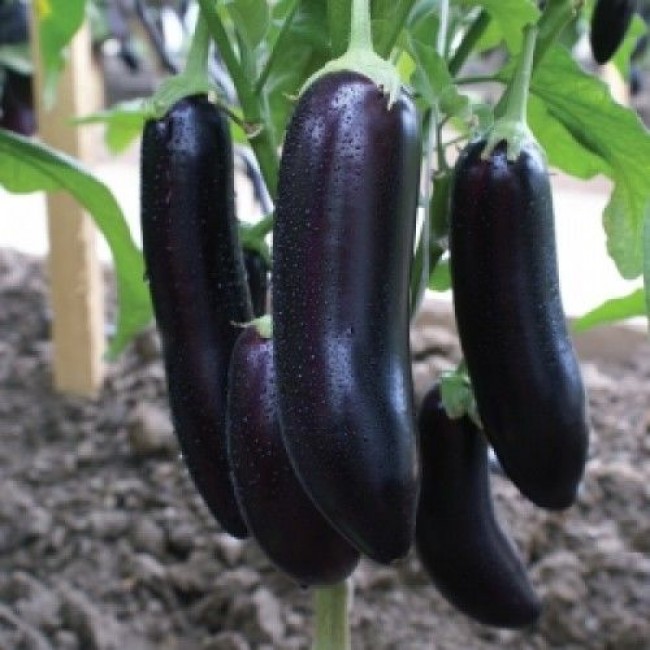
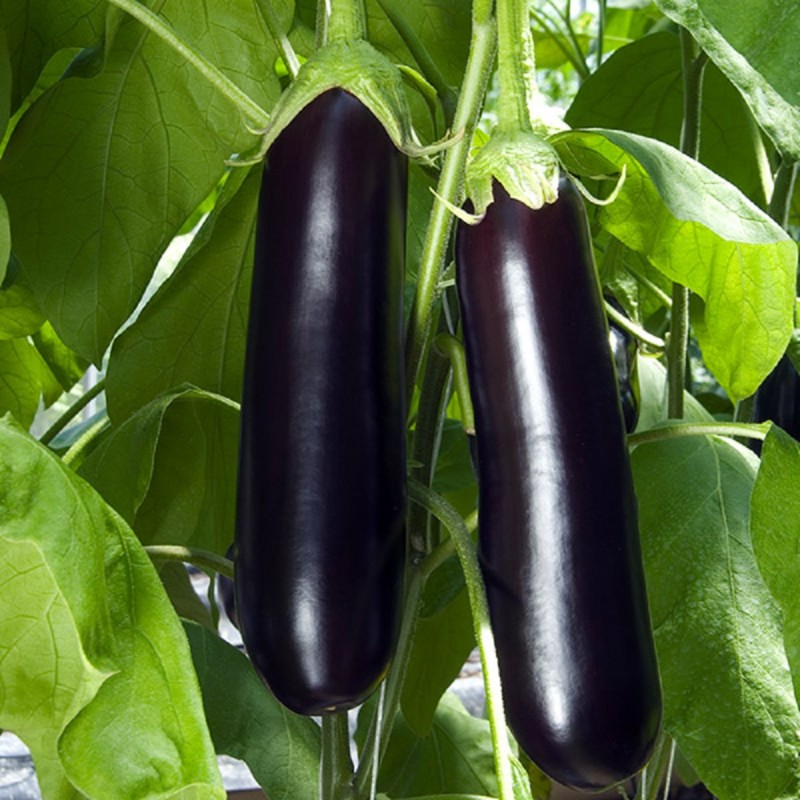
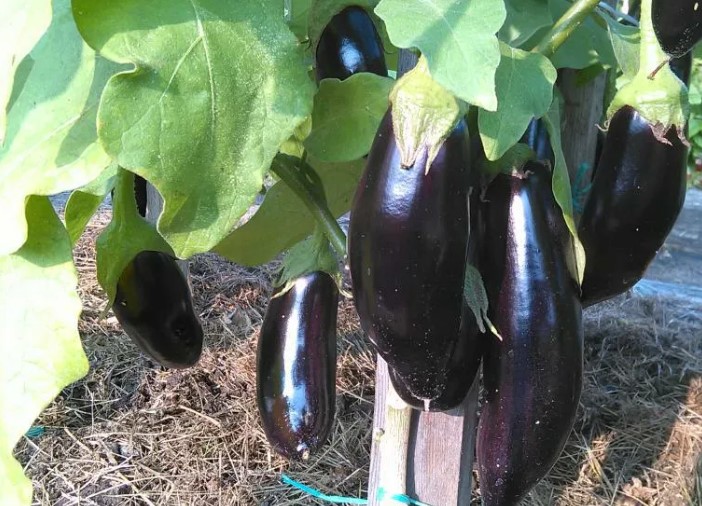
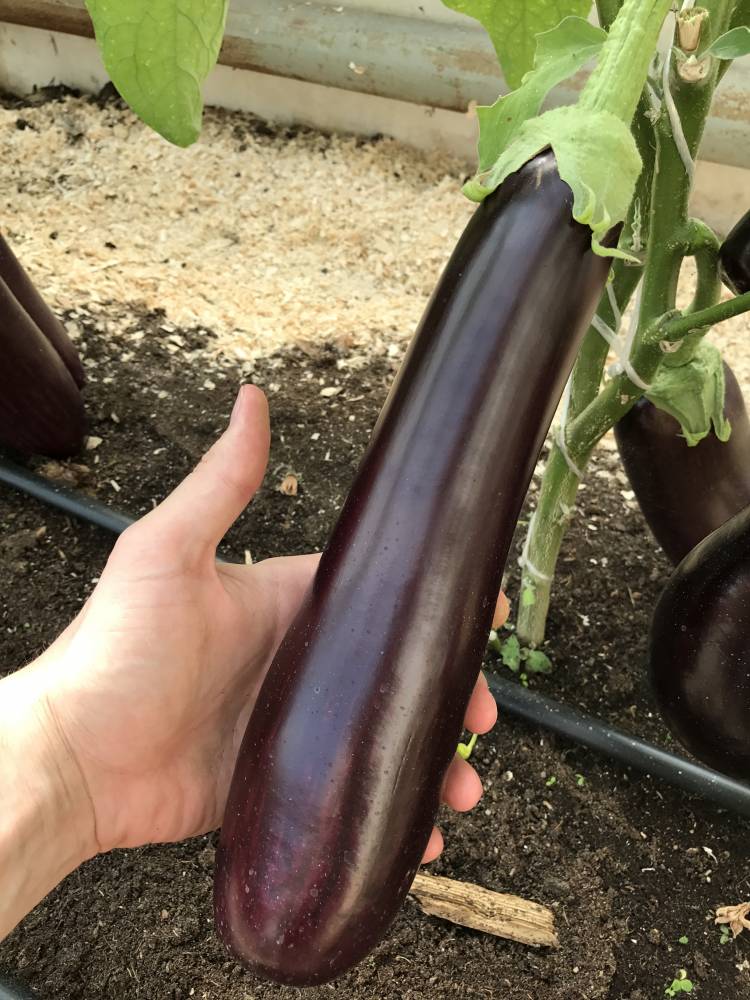
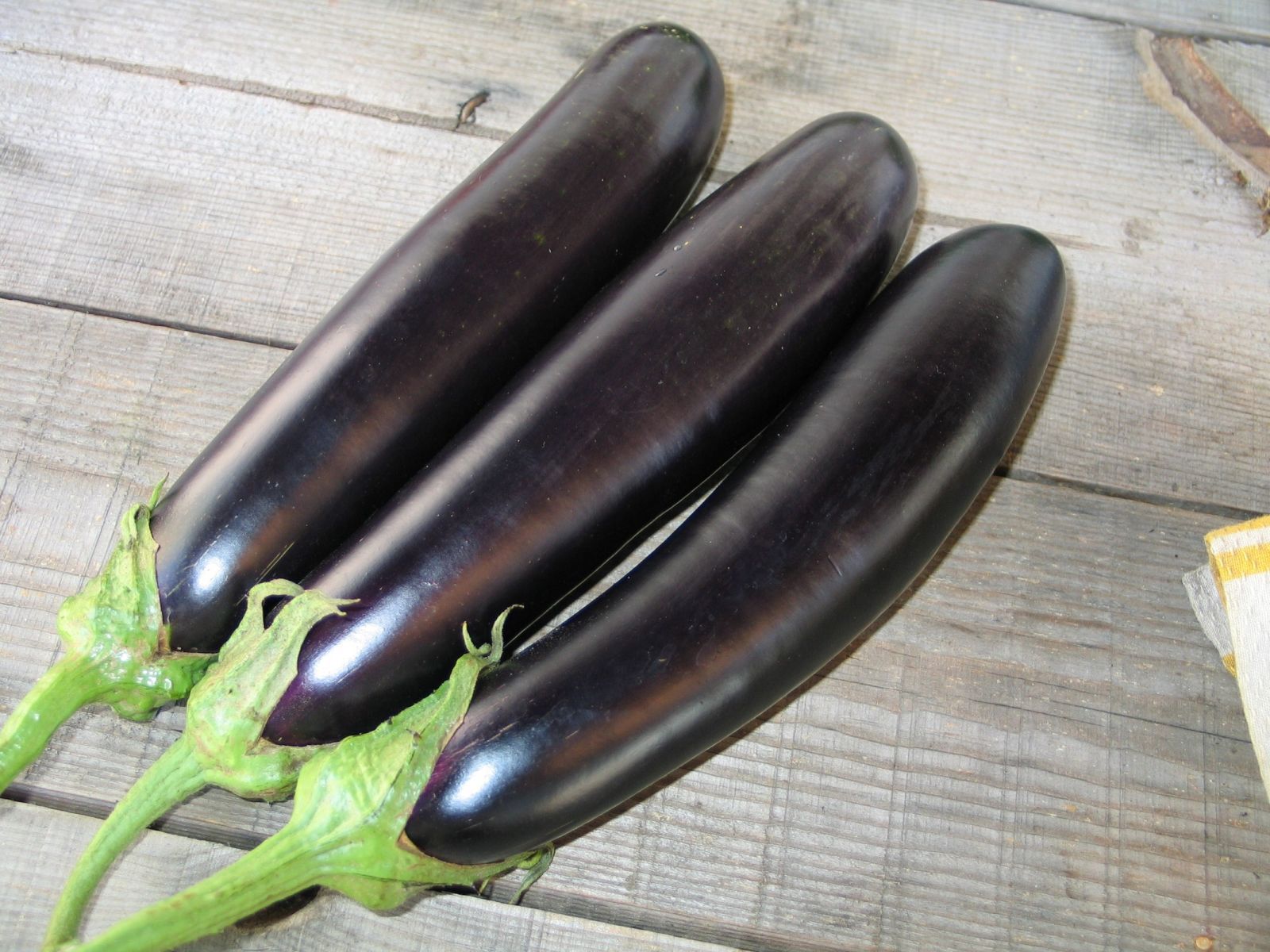
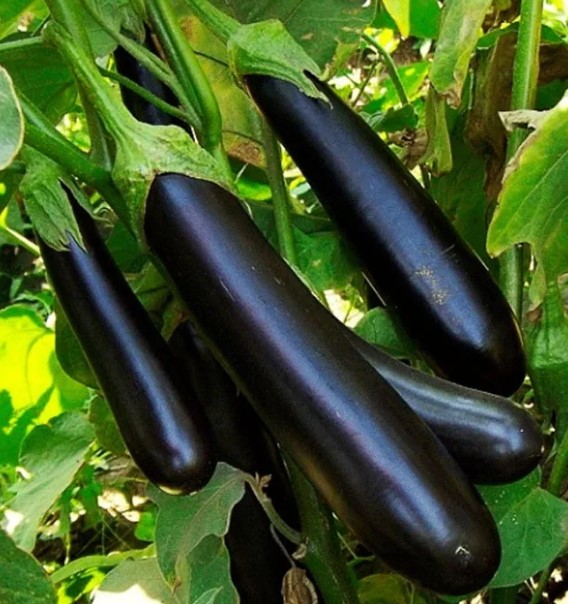
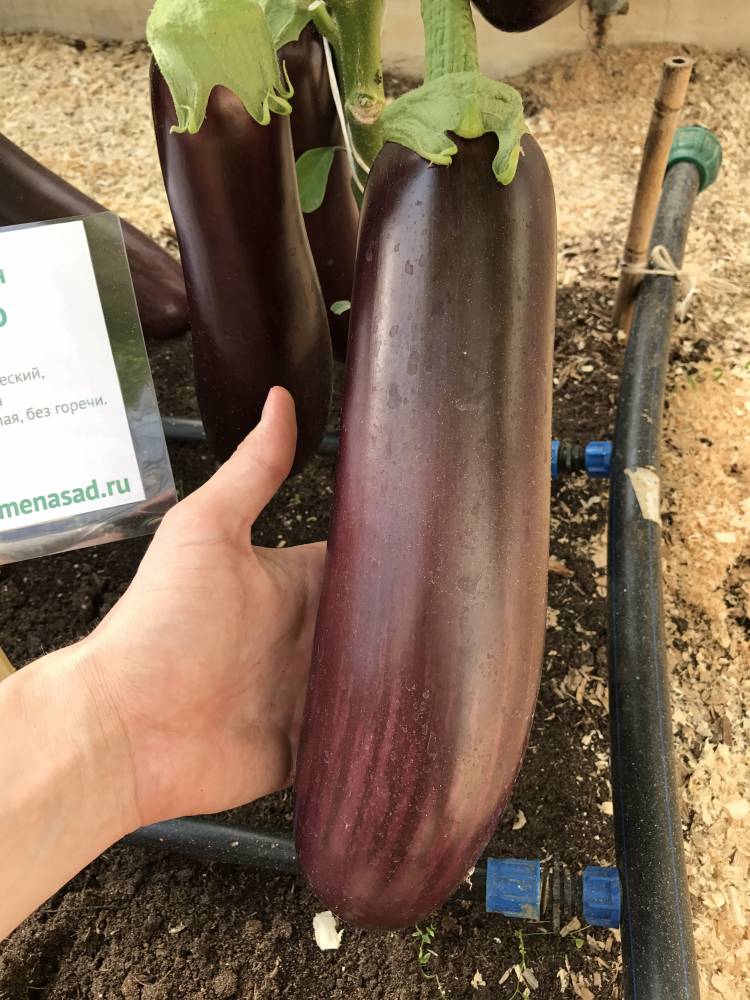
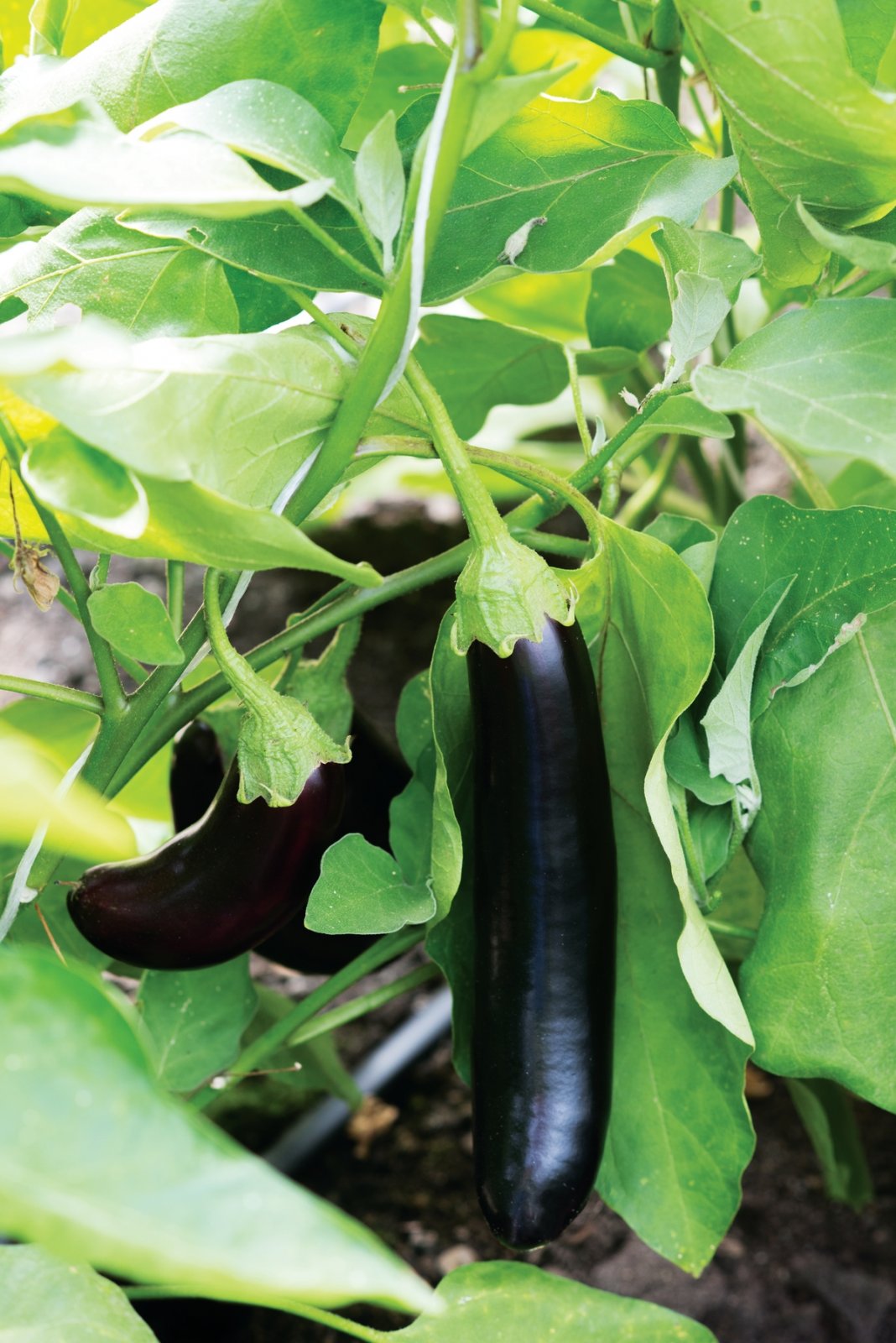

Eggplant variety Black Beauty
| Description | An early, productive variety that is intolerant to cold weather. |
| Bush height and description | The bushes are spreading, up to 70 cm high, the leaves are serrated |
| Fruit | The fruits are elongated, pear-shaped, up to 20 cm long, 5-6 cm in diameter, weighing 200-250 g. |
| Productivity | 7-8 kg per square meter |
| Fruit ripening time | 110-145 days |
| Disease resistance | If growing conditions are not met and there are cold spells, it is prone to diseases caused by fungi and bacteria. |
| 2006 |
Photo gallery of the eggplant variety Black Beauty
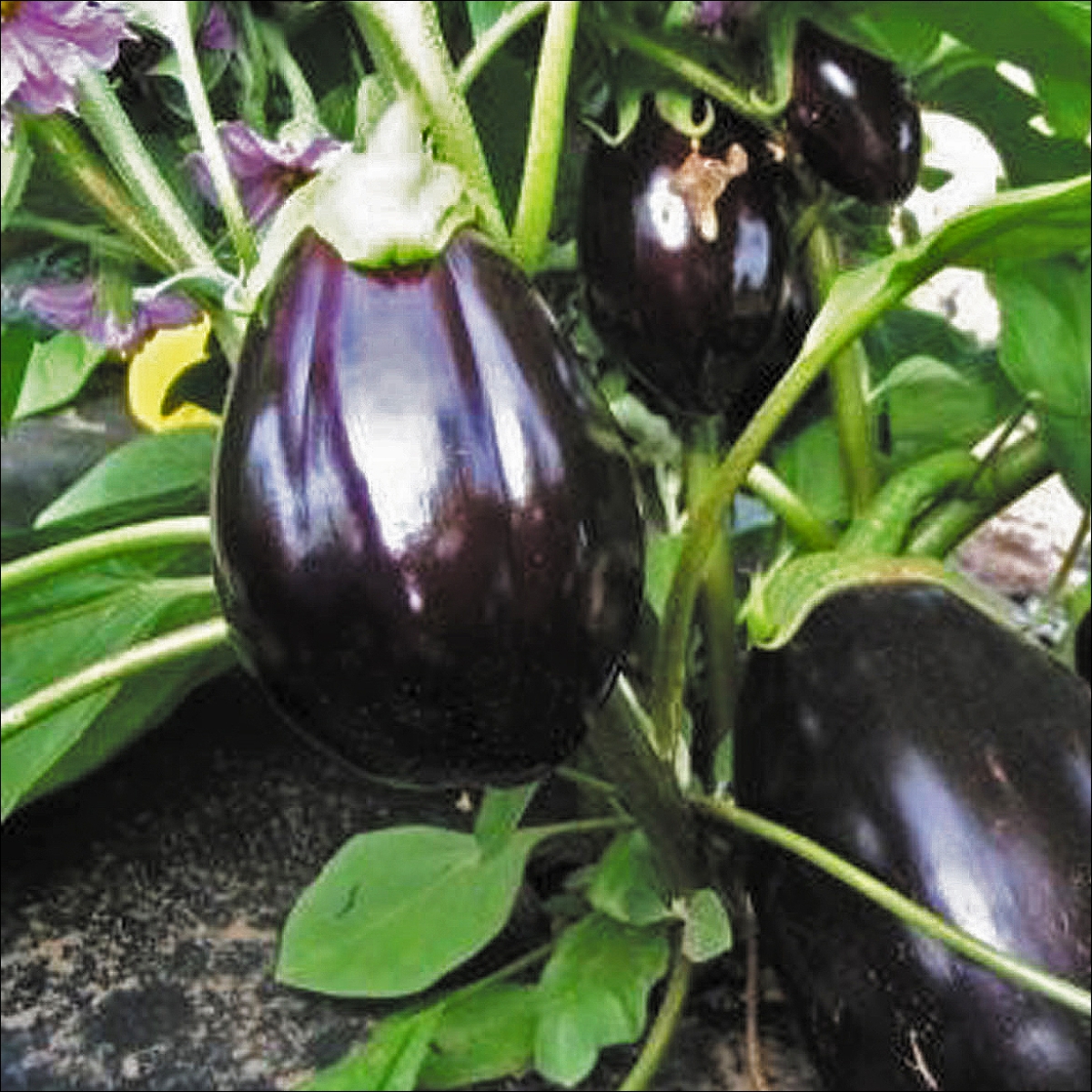
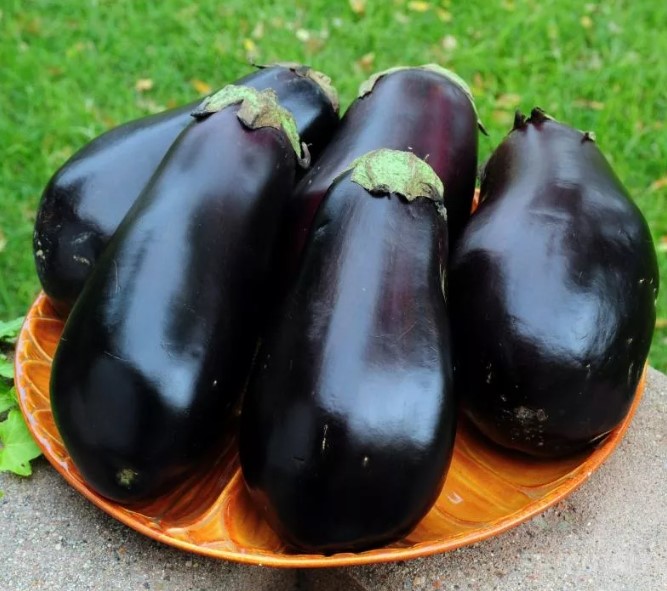
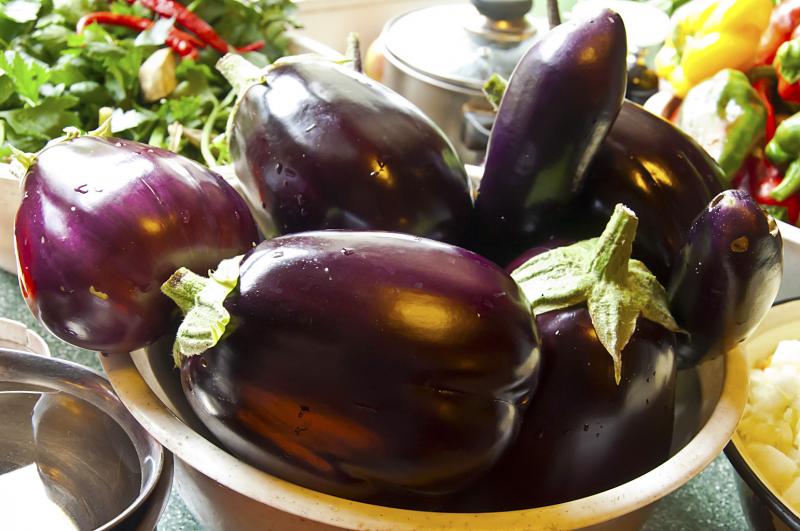
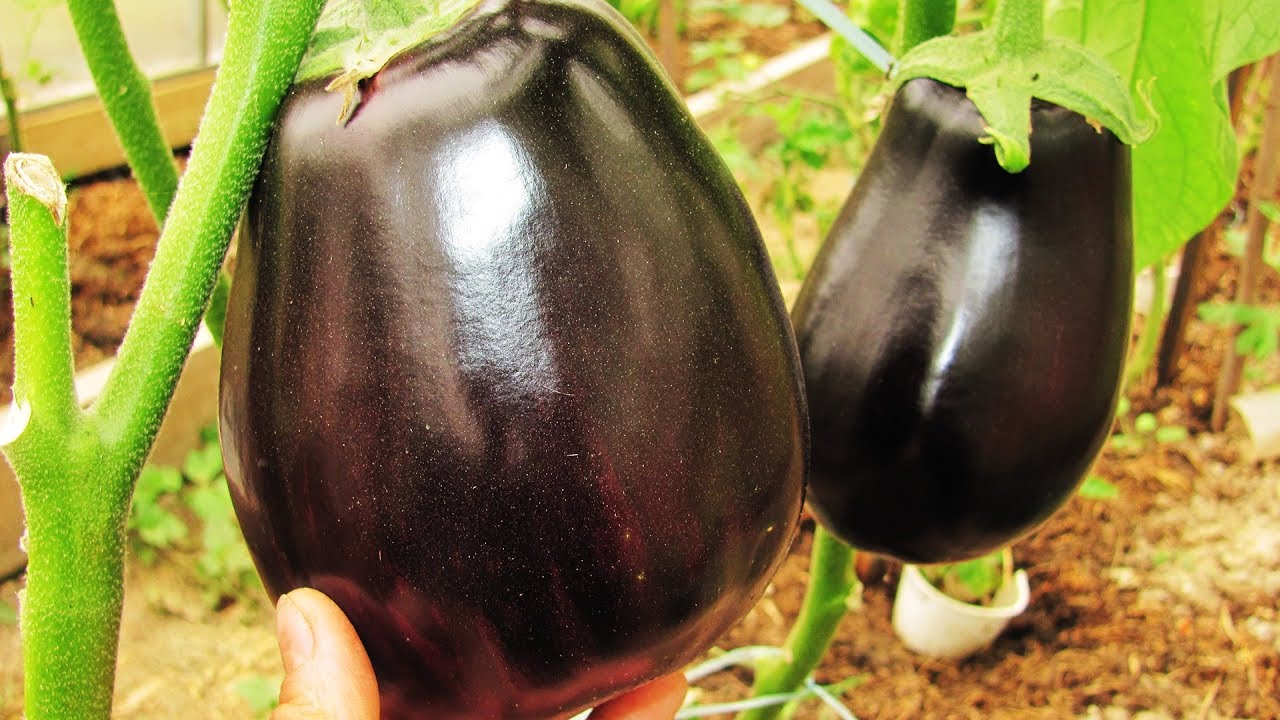
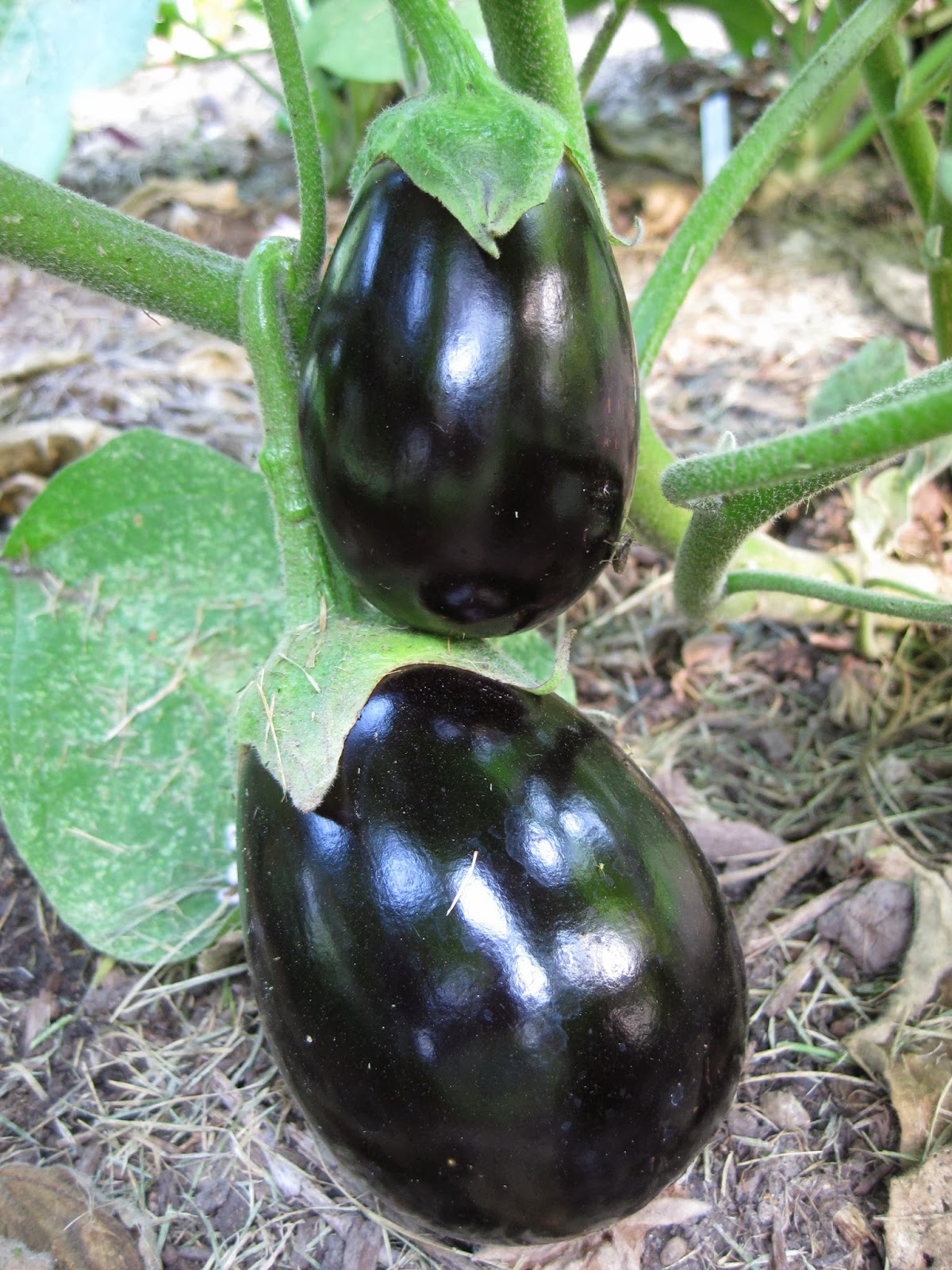
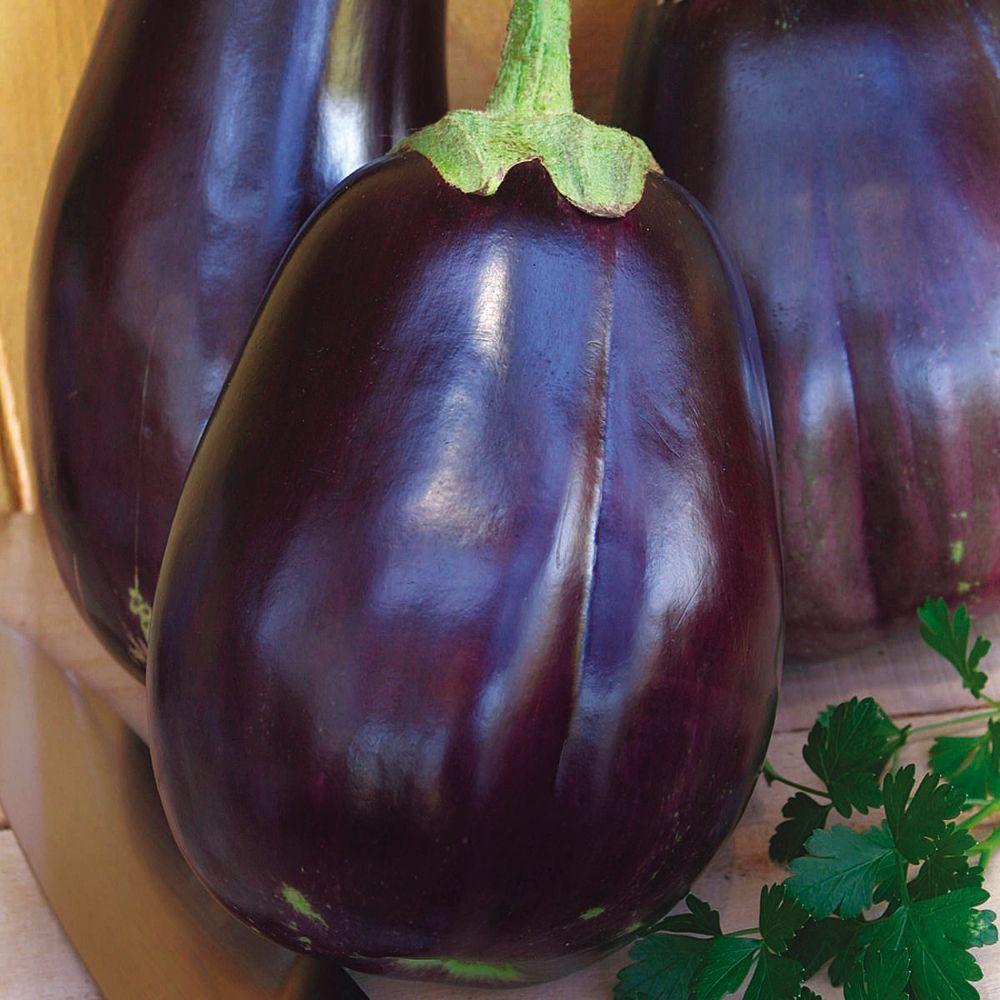
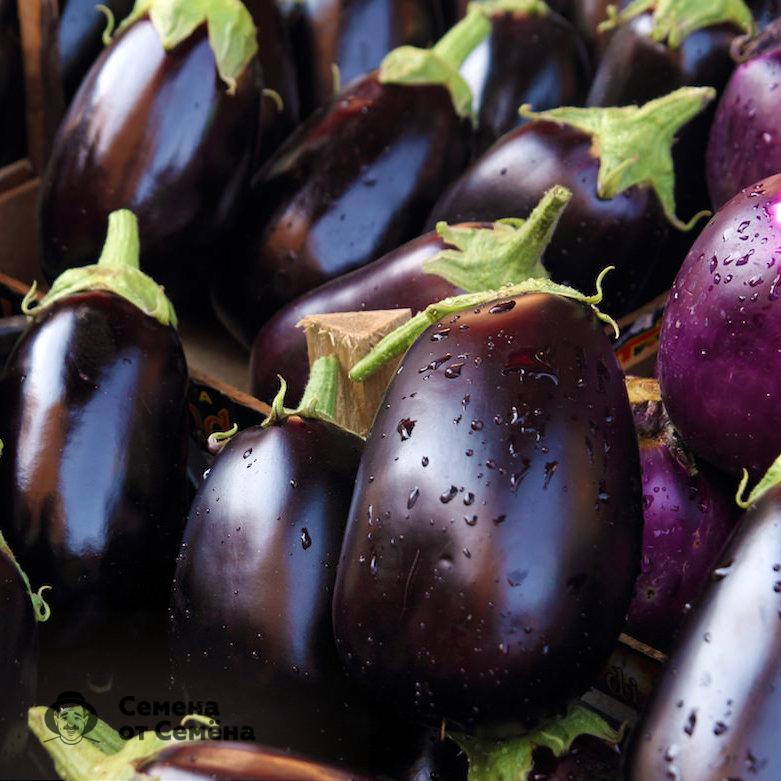
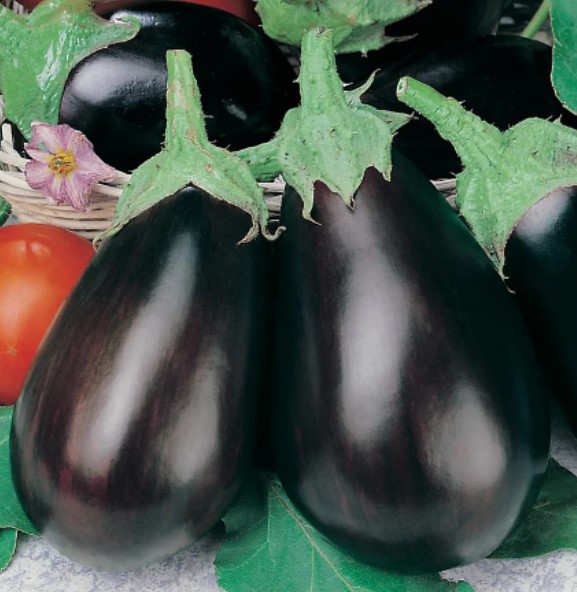
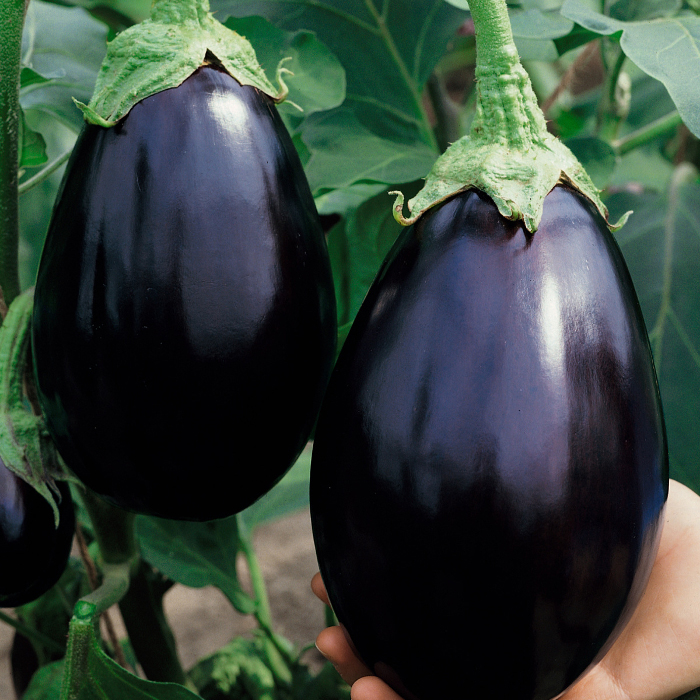
Review of the Black Beauty eggplant variety
For anyone who is partial to the eggplants and wants to grow a harvest of large and tasty eggplants, I recommend this variety.
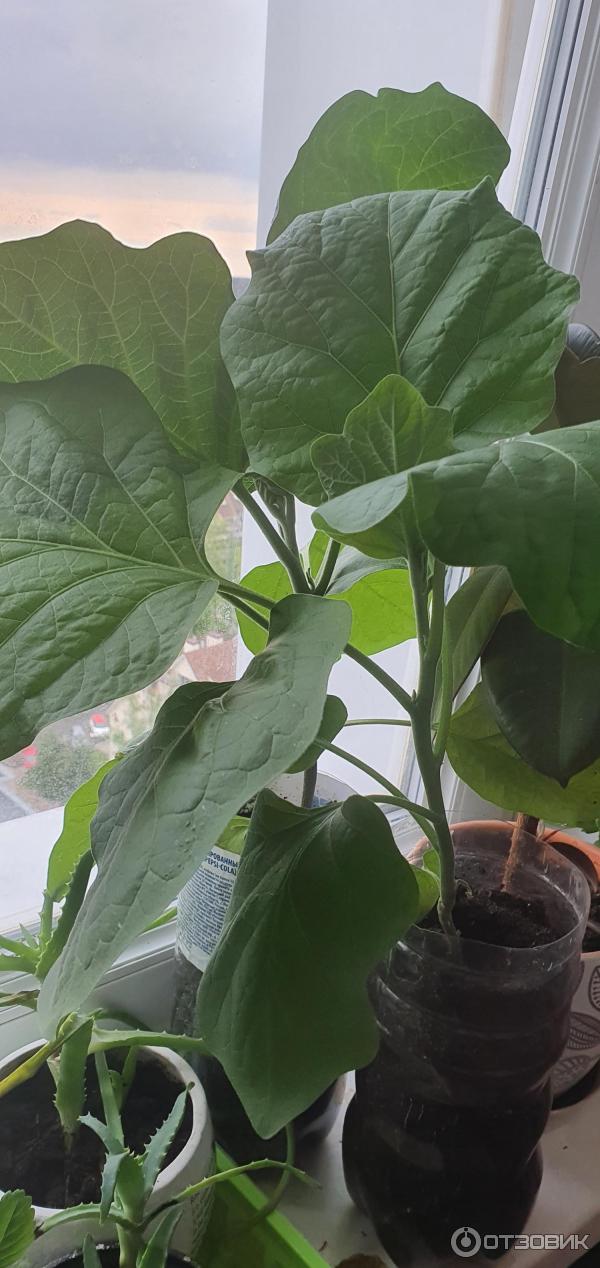
I'd never planted this crop in my garden before. Any urge to do so was immediately thwarted by the garden's caretakers, who said, "I've been digging in this soil for 30 years. Eggplants won't grow here. Don't waste the space. Plant potatoes." This spring, it sounded like a challenge.So, for a trial planting, I took 10 "black beauty" seeds, with some extra for when they wouldn't sprout or die, so I could have at least five plants. The germination rate was surprising. Ten out of the ten seeds sprouted leaves within about eight days. The seedlings developed well, with a couple of spider mite infestations from neighboring plants, but all ten cups survived. Due to circumstances, the seedlings had significantly outgrown the windowsill at home. I was a bit worried about transplanting such large plants, but everything turned out well.
During the season, I added ash solution to the soil about 2 times, and also treated the leaves with a boron-containing solution twice.
I grew the bushes in a greenhouse, with good ventilation and in the sunniest place.
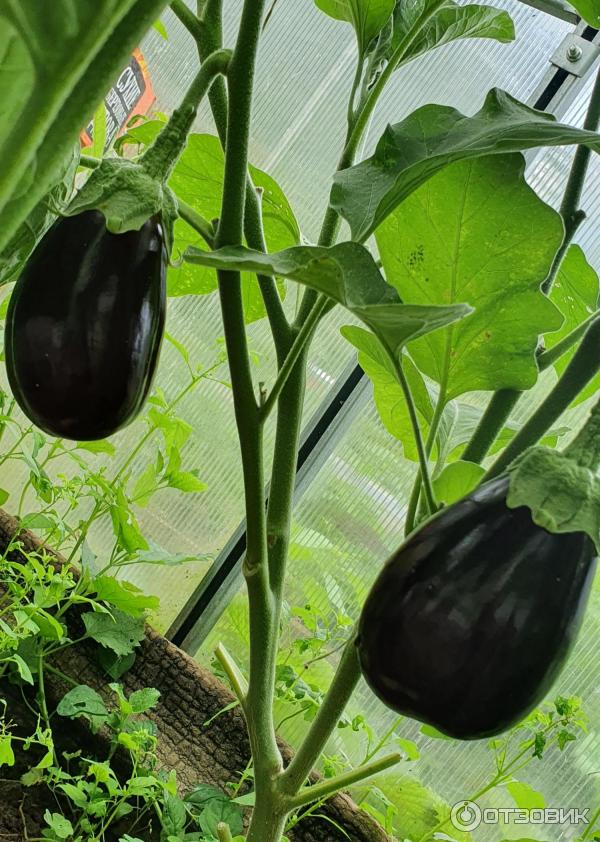
Not a single plant suffered from the typical diseases of greenhouses and nightshade crops. However, aphids and slugs took over the eggplants. I've never seen such a number of pests on any other crop. They're literally a magnet for all sorts of garden pests.The plant blooms profusely and requires shaping and pinching, otherwise it will grow into a huge bush. My plants reached a height of 1.1 m, after which I pinched the tops. It's important to provide favorable conditions for pollen maturation and pollination, otherwise many flowers will fall off. The pollen is very heavy and quickly sticks together in the anthers under poor conditions.
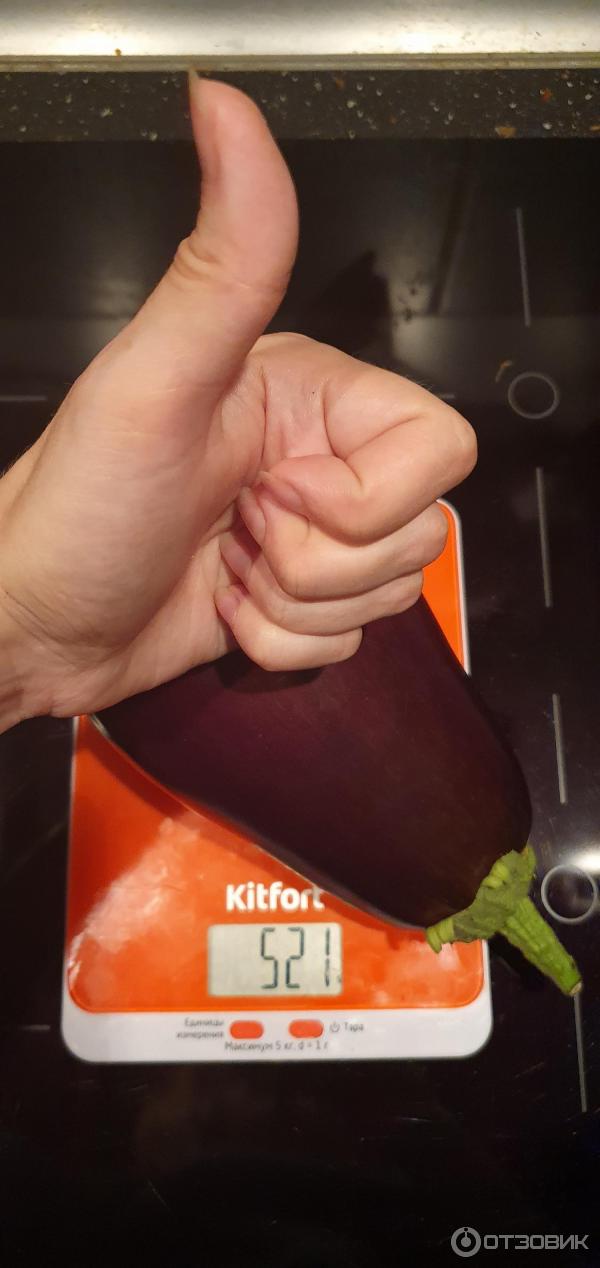
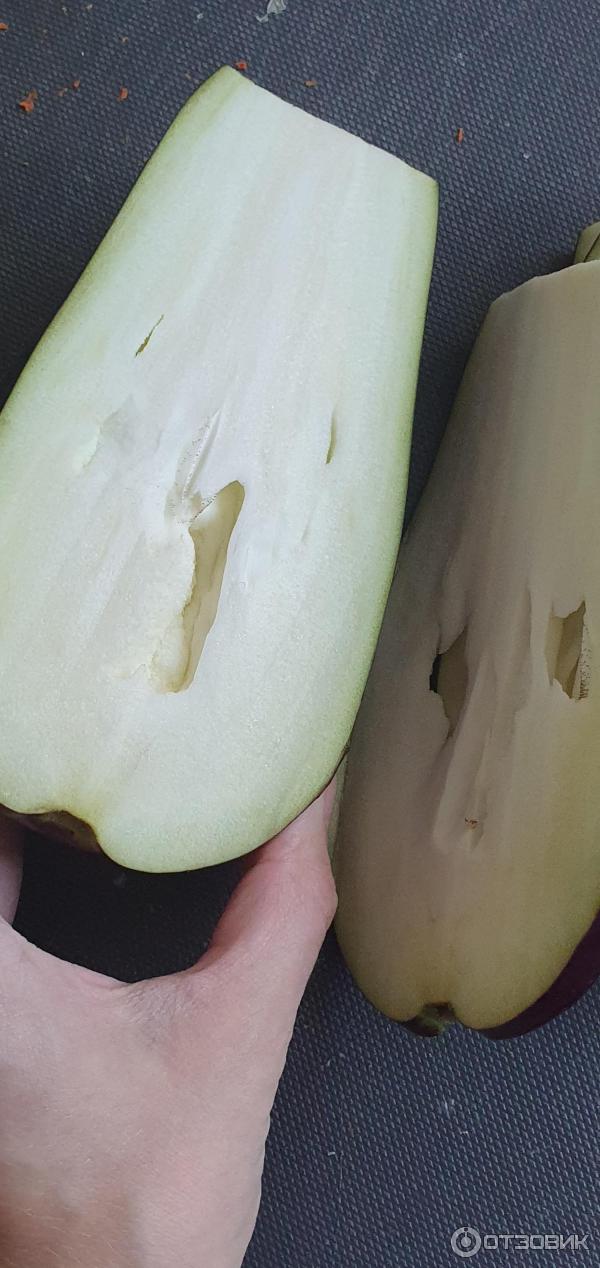
The fruits are large, teardrop-shaped, and pot-bellied. They are very fleshy. The seed chambers are hollow, but without a scattering of wooden seeds. They are generally faintly visible. The flesh is firm but tender. Excellent for grilling and baking.
Everyone in the family loved this variety, and I'll definitely keep it on my must-grow list.
Along with the list of "pest control".

Eggplant variety Nutcracker F1
| Description | A hybrid variety zoned for the Northern and Central regions. Can be grown outdoors and in greenhouses. |
| Bush height and description | A semi-spreading, medium-leaved bush 100-110 cm high |
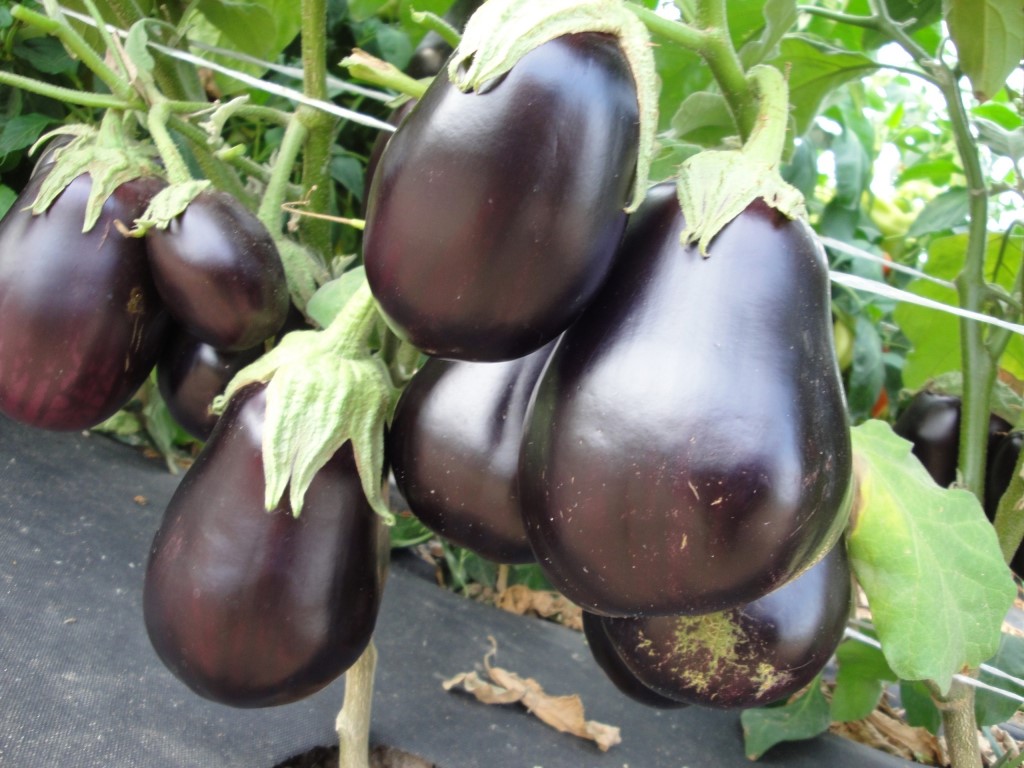
| Fruit | The fruits are even, oval or pear-shaped, weighing 238-350 g, up to 14 cm long. |
| Productivity | 12.8 kg per square meter |
| Fruit ripening time | 98-105 days |
| Disease resistance | Average disease resistance |
| 2001 |
Photo gallery of eggplant variety Nutcracker F1
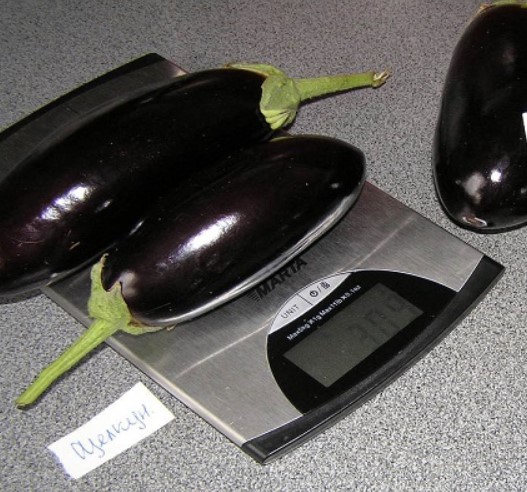
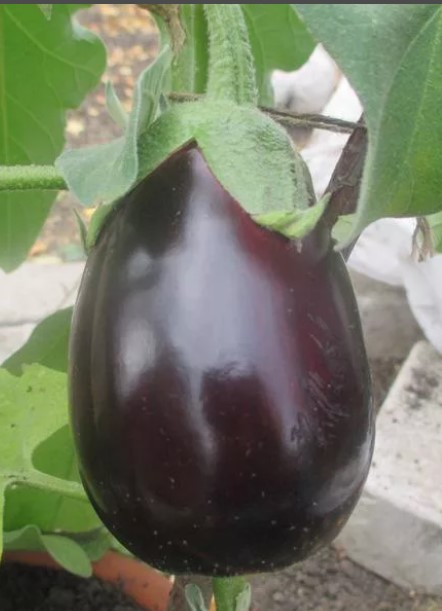
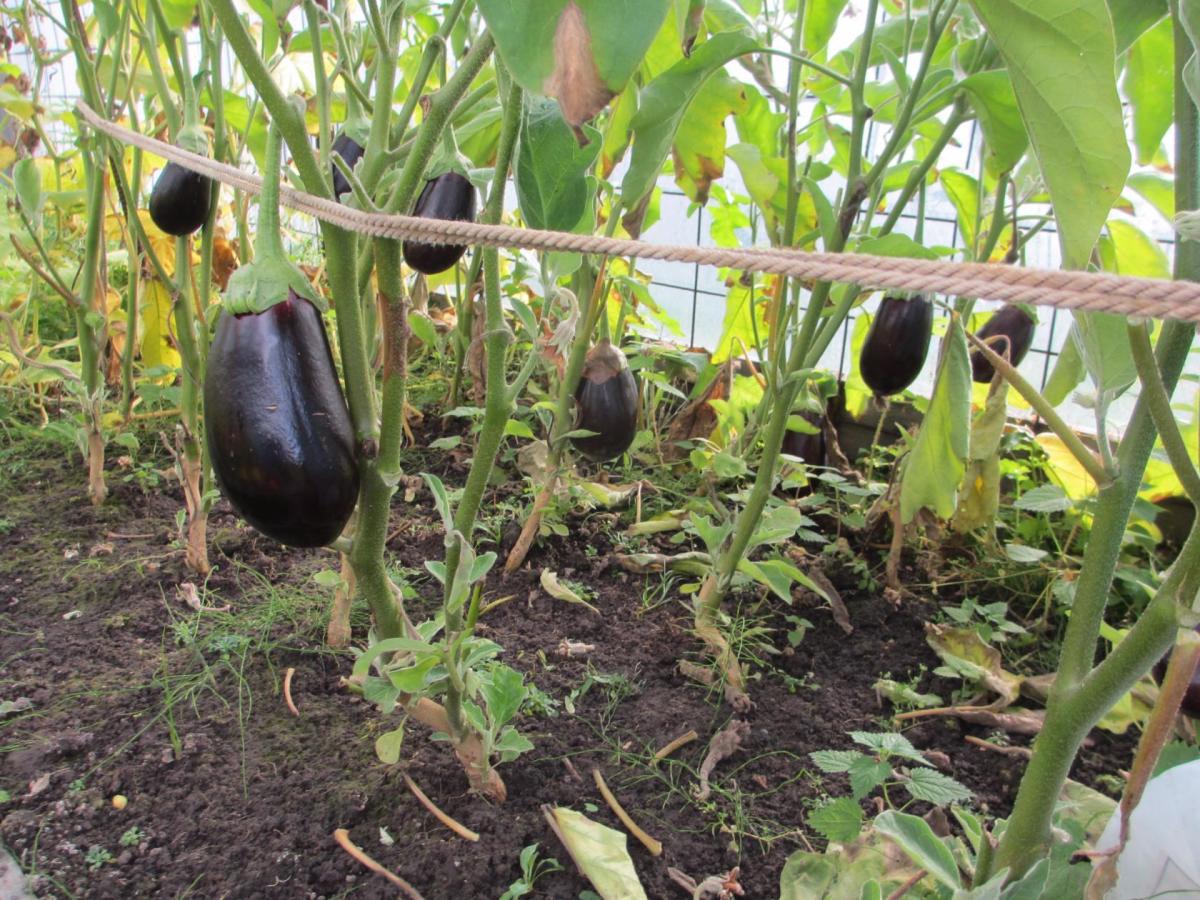
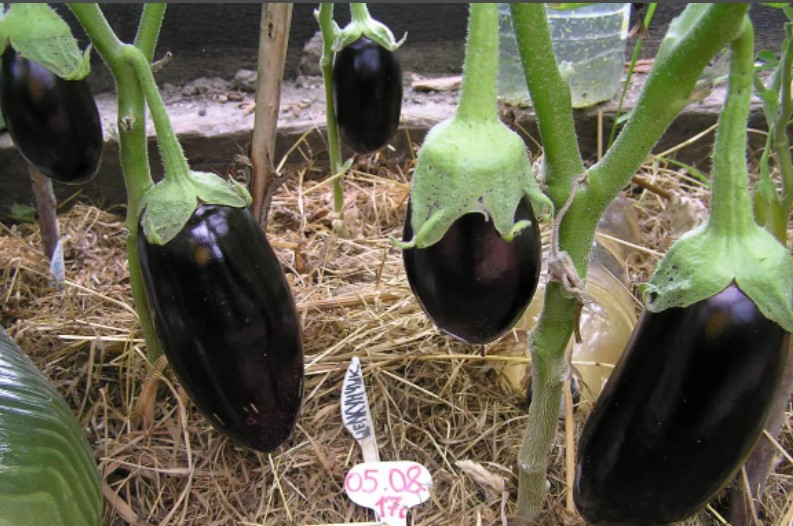
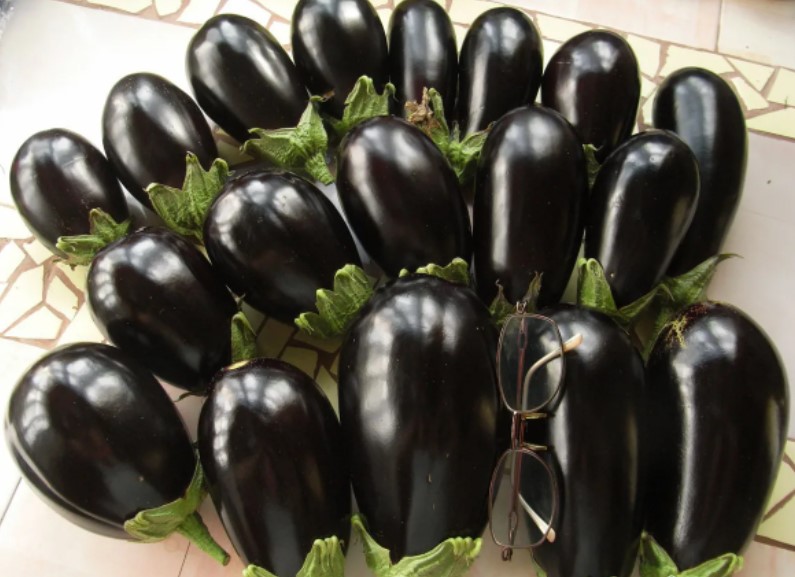

Eggplant variety Epic F1
| Description | An early maturing hybrid, well adapted to different regions |
| Bush height and description | The bushes are vigorous, spreading, up to 100 cm high |
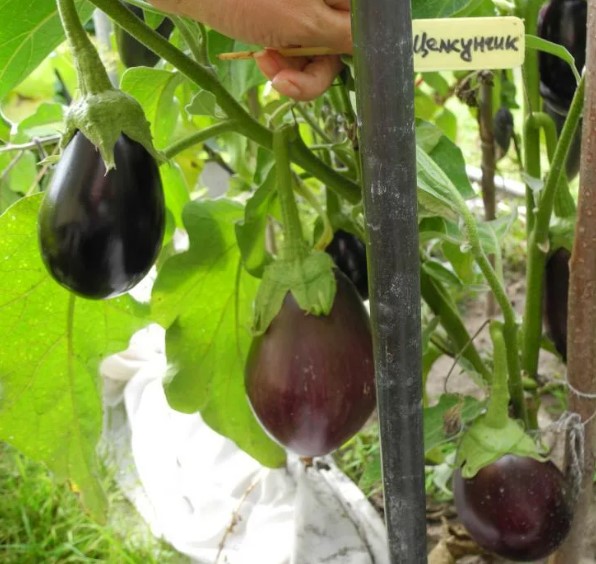
| Fruit | The fruits are cylindrical, up to 20 cm long, about 10 cm in diameter. Weight 220-230 g. |
| Productivity | 5.8 kg per square meter |
| Fruit ripening time | 105-110 days |
| Disease resistance | Complex disease resistance |
| 2008 |
Photo gallery of eggplant variety Epic F1
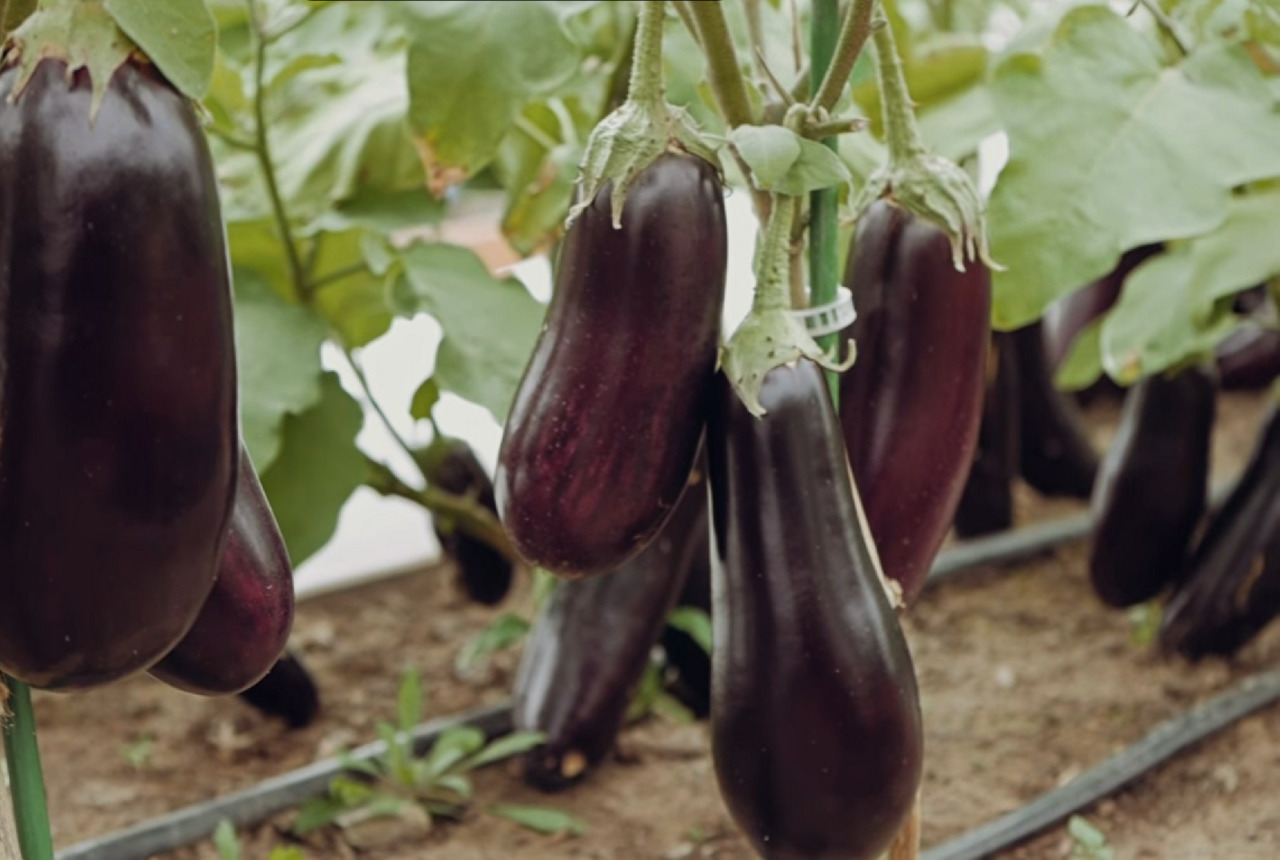


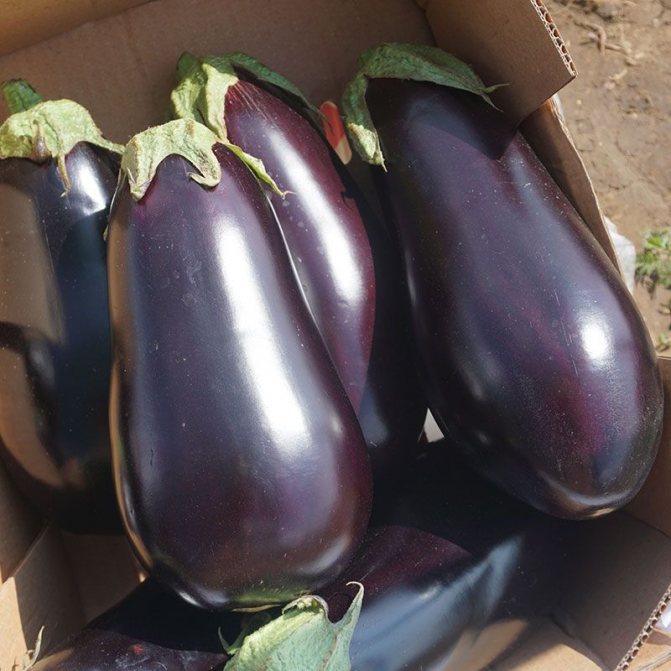

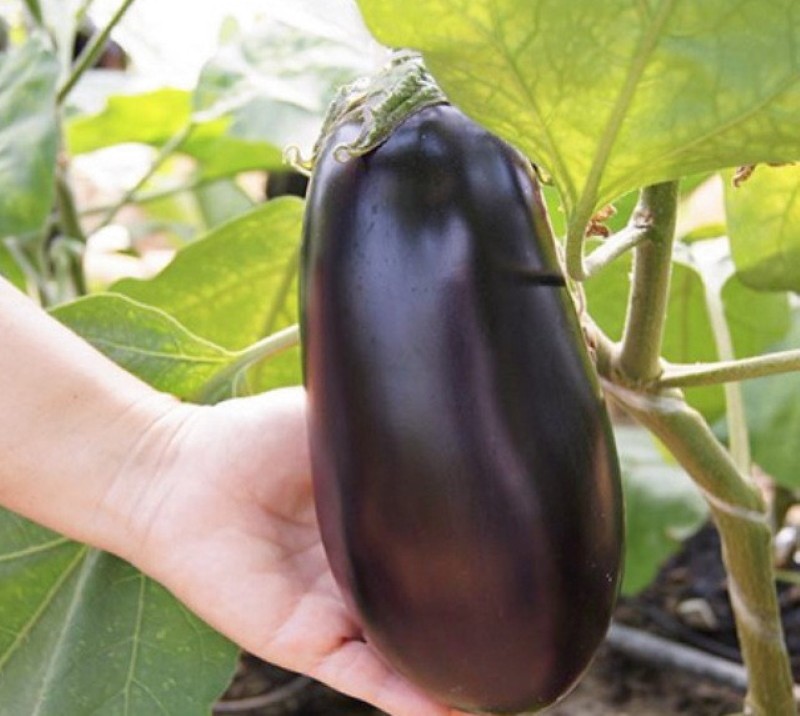
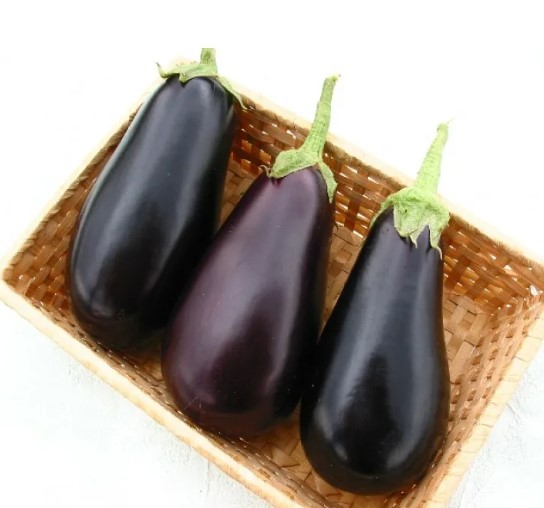
Growing eggplant seedlings
Eggplants are best grown using seedlings. Sowing the seeds varies by region. In temperate climates, sowing begins in the last ten days of February, with the seedlings transplanted to the greenhouse in the second half of May. By this time, the soil typically warms up to 15 degrees Celsius, which is crucial for growing eggplants.
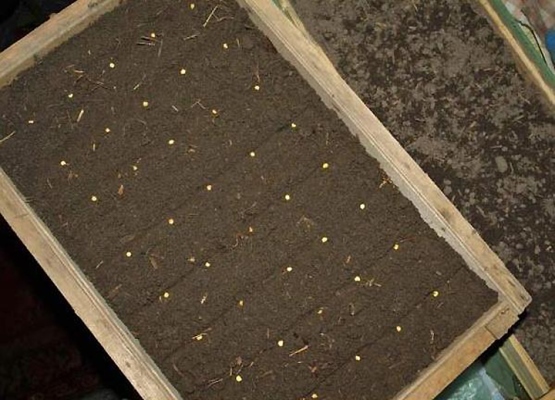
It is better to buy a ready-made soil mixture, but if necessary, you can make it yourself by adding the same amount of humus, one part peat and a little superphosphate to the soil according to the instructions.
Eggplants are best sown in individual containers to avoid damaging the roots when transplanting, but they can be planted in a common container. Planting depth should be no more than 15 mm, with at least 3 cm between plants when planting in a container.
Water the container, cover it with plastic wrap, and place it in a warm place. Next, maintain soil moisture, preventing condensation.
As soon as shoots appear, remove the covering and place the seedlings in a well-lit area. It's important to ensure that the eggplants are not exposed to direct sunlight.
The plant loves warmth and light, so gardeners strongly recommend purchasing a phytolamp to provide the plantings with 12 hours of daylight.
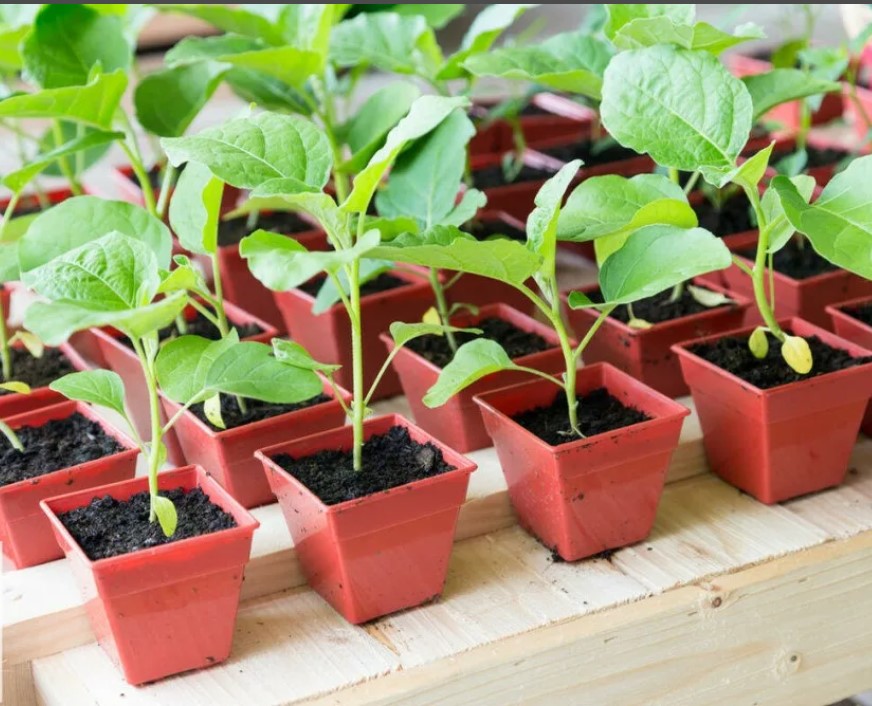
To prevent seedlings from becoming too tall at first, keep them in a room with a temperature of 14-16 degrees Celsius. Later, raise the temperature to 20-25 degrees Celsius.
When planting in a common container, it is necessary to transplant after 1-2 true leaves appear.
Read more about sowing and caring for eggplant seedlings in the articleSowing eggplant and pepper seedlings: instructions, picking, transplanting, timing.
When to plant eggplant seedlings in a greenhouse: optimal timing
The timing of planting eggplants in a greenhouse depends on the growing region.
- In the southern regions, eggplants are transplanted into a greenhouse in the second half of April.
- In the middle zone - from the second ten days of May.
- In the northern regions – in the first ten days of June.
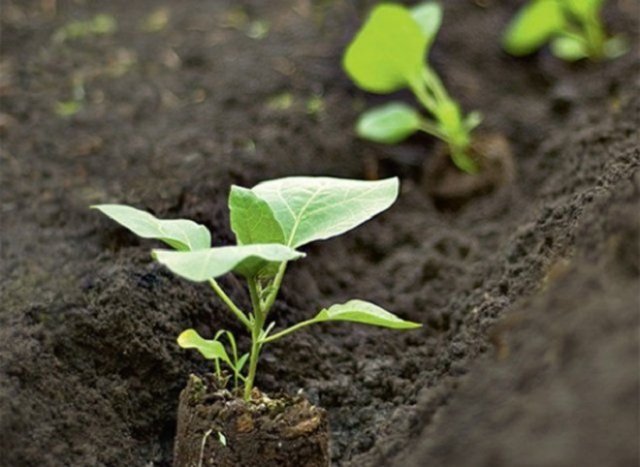
The following parameters are considered to be the main signs of seedling readiness:
- The presence of 9 true leaves.
- Plant age is 75 days.
- Well developed root system
- The height of the main stem is not less than 20 cm.
Important! The soil in the garden bed must be at least 15 degrees Celsius by the time of planting. Temperatures below this temperature are harmful to eggplants.
Preparing the greenhouse before planting eggplants
To minimize the risk of diseases and pests in your greenhouse, it needs to be properly prepared for the new season. This is done in several stages.
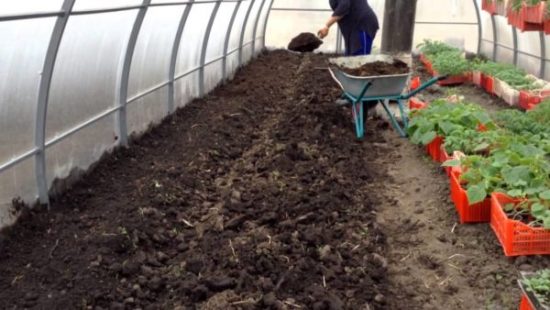
- DisinfectionThe interior of the greenhouse is treated with a weak solution of potassium permanganate, followed by ventilation. Iron structures can be wiped with water and a little vinegar. For wooden greenhouses, a sulfur candle, left inside the structure for three days, is ideal. All gardening tools can also be placed there.
- Cleaning up the remainsAll plant waste must be removed from the greenhouse, as it may harbor the larvae of dangerous pests.
- Soil cultivationThis can be done with a bleach solution or specialized biological products. Spray not only the surface of the bed, but also all the fences and plant supports. Some gardeners also pour boiling water over the soil.
Planting eggplant seedlings in a greenhouse step by step
Once all the preparatory work is complete and the seedlings are sufficiently strong, you can transplant the eggplants into the greenhouse. We offer step-by-step instructions for planting seedlings.
- Digging the soilIt's advisable to do this twice: at the end of the season and in the spring, adding fertilizer. Organic enthusiasts can add rotted manure at a rate of just over half a bucket per square meter.
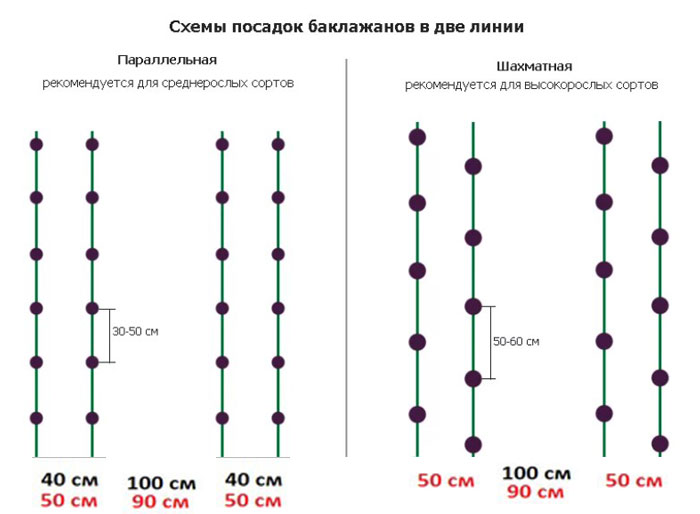
- Preparing the holesIt's best to plant eggplants in a greenhouse using a ribbon pattern. The holes can be in a straight line or staggered. They should be 15 cm deep and at least 35 cm apart. A row spacing of 60-70 cm is recommended.
- WateringThe prepared holes should be watered. You can add a small amount of manganese to disinfect the deeper layers of soil.
- LandingThe plants are carefully removed from the container and transferred to the hole along with the soil ball. There's no need to plant them too deep. If the seedlings were in a peat pot, they should be planted directly there.
- ConclusionAfter planting, water the bed with settled water, after which the surface of the bed is mulched.
Eggplant planting pattern in a greenhouse
The best way to plant eggplants in a greenhouse is to stagger the holes. They should be no more than 15 cm deep. The plant itself is quite spreading, but the root system is compact. The recommended distance between plants is 30-50 cm.
Before planting, it is necessary to think through the support system; a passage of 50-70 cm is left between rows.
How to fertilize eggplants in a greenhouse
Eggplants have specific soil requirements, so it's important to remember to fertilize them. This should be done 3-4 times per season.
- The first feeding is done 14-20 days after planting. It's best to use specialized fertilizers (Rastvorin, Kemira, Gumi-Omi, etc.) or nitroammophoska at a rate of 0.5 liters of solution per plant, mixed with 3 tablespoons of water per bucket.
- The plant is fertilized a second time during the flowering period. Specialized fertilizers or a mixture of 20 g of ammonium nitrate, 20 g of potassium chloride, and 50 g of superphosphate are ideal for this purpose. The mixture is diluted in 10 liters of warm water, followed by watering with 500 ml per plant.
- The third feeding is applied when the ovaries are forming. You can use a mullein solution at a 1:10 ratio or a nitrogen-phosphorus fertilizer. The watering volume is also 500 ml per plant.
If eggplants do not flower well, spray the plantings with boric acid (5 g per 10 l).
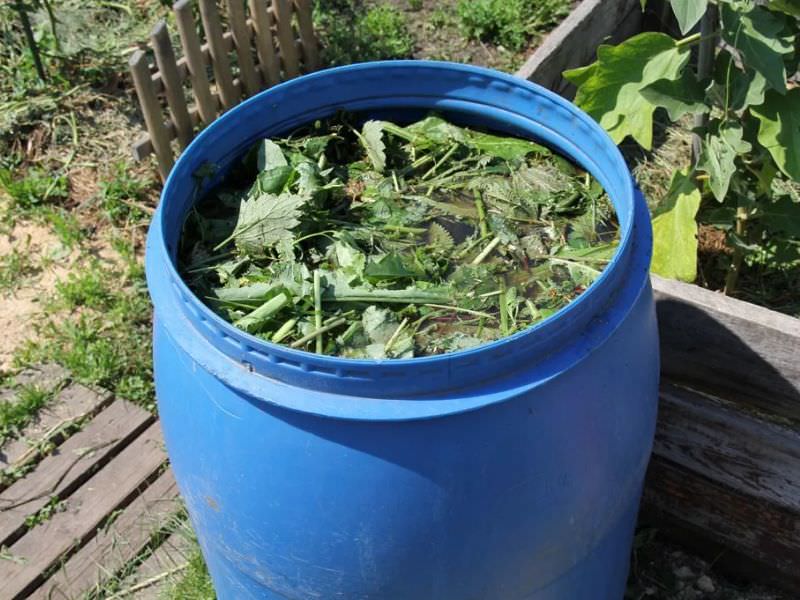
Those who prefer folk remedies can water the plants with an infusion of weeds; it stimulates root growth and fruit formation. Many gardeners prefer a yeast solution. It's easy to prepare: dissolve 2 tablespoons of sugar and 100 grams of yeast in 10 liters of warm water. Let the mixture ferment for about 3 hours, then water the plants at a rate of 250 ml per plant.
How to water eggplants in a greenhouse
A drip irrigation system is ideal for eggplants. It ensures the soil always remains sufficiently moist, preventing the plants from experiencing moisture deficiencies.
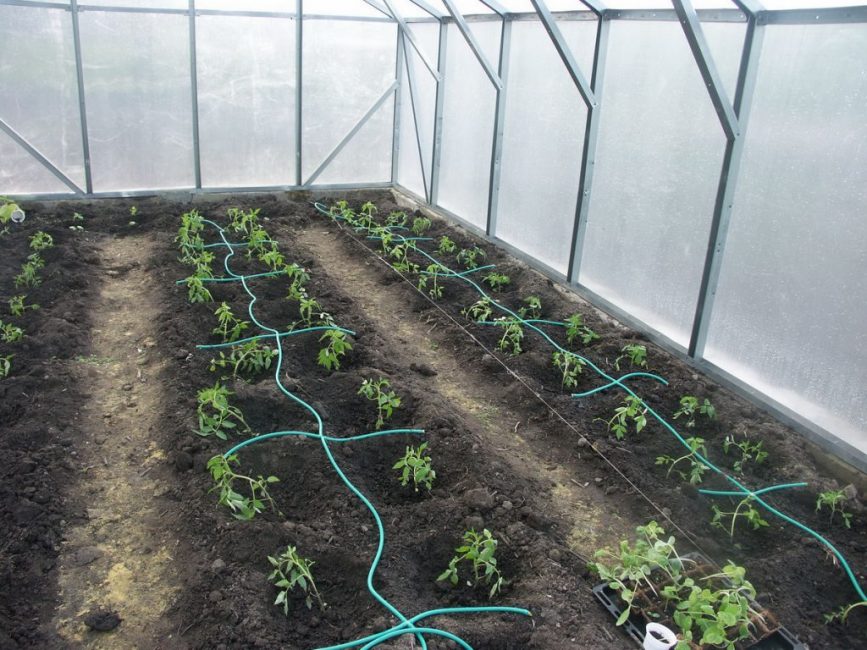
If this is not possible, then you must adhere to the following rules for watering eggplants:
- Watering is carried out only with water that has settled and been heated in the sun.
- Plantings must be watered strictly at the roots.
- The soil needs to be moistened early in the morning, while the sun's activity is minimal.
- The first watering is done 4-6 days after transplanting the eggplants into the greenhouse. Thereafter, it is done once a week. During the fruiting period, the eggplants are watered twice a week, and even more frequently in hot weather.
Growing Eggplants in a Greenhouse: Step-by-Step Instructions
Medium- and tall-growing eggplant varieties require bush shaping. This procedure is performed 10-14 days after transplanting. If the stems are weak, tie them up 1-2 weeks later.
There are three main ways to form a bush.
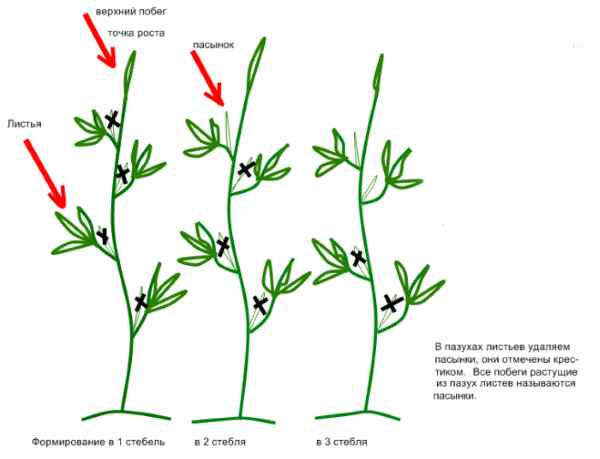
Forming eggplants into 1 stem
It's used in situations where space is limited and plants are planted close together. This type of training is also suitable for weak plants, as side shoots would otherwise prevent the main stem from developing fully.
All leaves and ovaries located below 3-4 leaves are removed from the stem.
Side shoots are pinched off at the 6th to 8th leaf level, leaving half of the side shoots intact.
Above the 10th leaf, find a leaf with an ovary, and pinch off all the side shoots located above. Leave shoots with ovaries on two leaves, and at the crown, leave shoots with ovaries on three leaves.
Forming eggplants into 2 stems
The most common method for shaping eggplants is to pinch off the top of the main stem when it reaches 35 cm. After this, the side shoots begin to actively grow, leaving the two strongest. Anything below that is removed. Side shoots and half of the ovaries should be removed from the remaining stems.
Forming eggplants into 3 or more stems
This method is used for growing low-spreading eggplant varieties and is suitable for large plots with well-fertilized soil. After the main shoot reaches 30-35 cm, pinch off the top. Later, shoots emerge from this top. All lower growth is removed. Next, one side shoot is left on each shoot. All other side shoots are pinched above the second leaf. There is no need to remove the ovaries. Thirty days before harvest, pinch off all growing points to allow the newly formed eggplants time to ripen.
Pinching out eggplants in a greenhouse
There are 4 basic rules for pinching out eggplants in a greenhouse that will help form a strong and healthy bush.
Pinching is done by pinching the shoot between your index finger and thumb. However, it's best to use disinfected pruning shears.
All leaves and shoots located below the main branching should be removed. Otherwise, they will rob the plant of nutrients and moisture.
In hot regions, the lower leaves are left - they create shade at the root and protect it from overheating.
Pinching of stepchildren is carried out no more than once every 14 days.
Scheme for tying up eggplants in a greenhouse
There are two main methods used to tie up eggplants in a greenhouse:
- To the support. A stake is driven into the ground next to each hole during planting. The shoots will be tied to it with pieces of soft fabric.
- A wire is attached to the roof supports, and a rope is tied to it. This rope will be used to tie up the shoots as they grow.
Greenhouse eggplant diseases and their treatment
To prevent diseases, eggplants should be sprayed every 7-10 days with specialized products such as Fitosporin, Baktofit, Alirin, and others. These measures will help prevent rot, fungus, and infections in the greenhouse.
Eggplants are most often attacked by aphids, and less often by the Colorado potato beetle, which has a harder time getting into a greenhouse.
To combat pests, it is recommended to use Aktara, Actellik, Extra and other products.
Experienced gardeners recommend not wasting time on folk remedies, although a wide variety of recipes are available. Eggplants are a finicky crop, and even a slight delay in active treatment can have a detrimental effect on yield.
What to do if eggplants turn yellow in a greenhouse
Some gardeners, when growing eggplants in a greenhouse, encounter the problem of yellowing leaves.
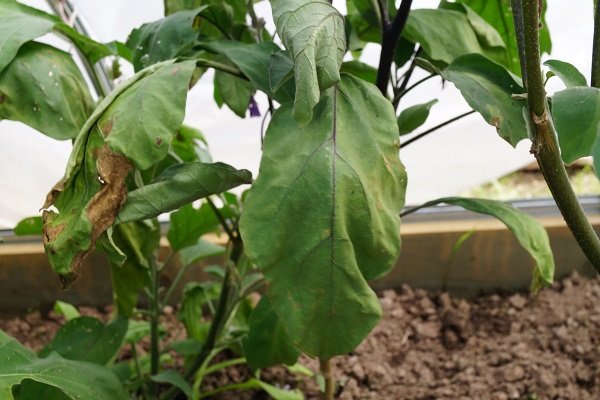
There may be several factors causing this.
- High temperatureSunlight causes yellow spots—scorch marks—on the leaves, which then begin to dry out. Eventually, the leaf dies. Ventilation is necessary to reduce daytime temperatures.
- Low humidityThe leaves are starting to curl and turn yellow. Water containers can be placed in the corners of the greenhouse.
- Natural yellowingOccurs on the lower leaves of eggplants after transplantation.
- Violation of watering rulesInsufficient moisture or water that is too cold can cause leaf blade death, which begins with yellowing. For watering, use settled, sun-warmed water.
- Lack of lightThe reason may be dense plantings.
- Nutrient deficienciesA nitrogen deficiency causes yellowing to begin on the lower leaves. A potassium deficiency causes the leaf blade to turn yellow at the edges. Chlorosis or iron deficiency causes the leaf to turn yellow, while the veins themselves remain green. A phosphorus deficiency causes the leaves to curl toward the stem, and the edges turn yellow. To correct these deficiencies, it is recommended to use complex fertilizers (Izumrud, Krepysh, Agricola, etc.).
What to do if eggplants in a greenhouse are not setting fruit
The appearance of barren flowers on eggplants is a sign that cultivation practices are improper. The air temperature may be too high, too low, or the humidity may be unsuitable for these delicate vegetables.
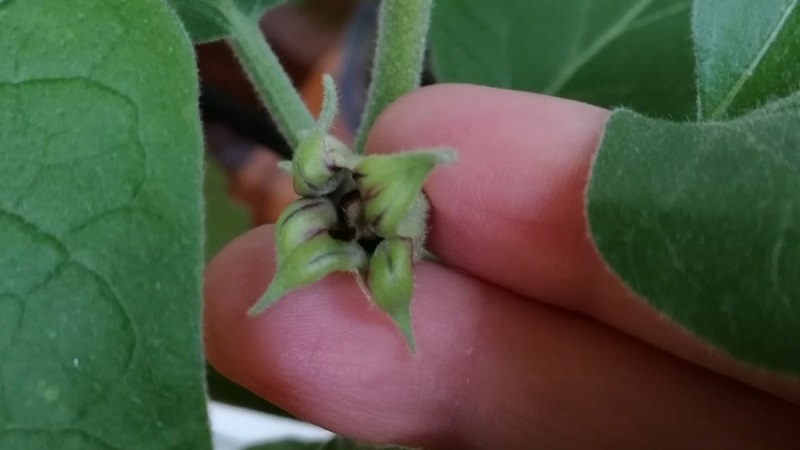
The lack of ovaries is often due to pests or diseases that weaken the plants.
Another possible cause is an overabundance or underabundance of fertilizer. It's best to use specialized supplements and apply them according to the instructions, rather than resorting to organic fertilizers and folk remedies. In this case, more isn't always better.
What to do if eggplants are wilting in a greenhouse
Sometimes gardeners face the problem of eggplants wilting in the greenhouse.
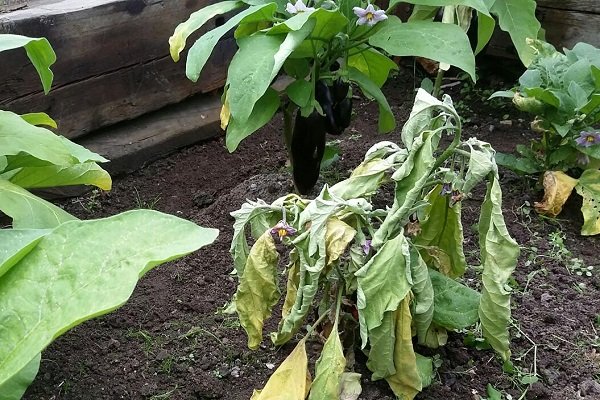
There may be several reasons for this:
- Acidified soilThis problem most often occurs when growing outdoors. To solve it, add dolomite flour to the soil before planting at a rate of 300 g per square meter. Regular loosening of the soil can help slightly reduce acidity.
- Temperature changesThe soil temperature during planting should not fall below 14-15 degrees Celsius. If the difference between day and night temperatures is too great, the plants will begin to wither. However, night frosts are the most dangerous for eggplants, so in open ground, provide cover to prevent low night temperatures.
- LightingEggplants can wilt if they receive too little or too much light. In the former case, it's necessary to provide an additional light source in the greenhouse. In the latter case, shade parts of the greenhouse, protecting the plants from direct sunlight, and ventilate the structure more frequently. Sunlight should only penetrate the greenhouse in the morning and evening hours; the rest of the time, it should be diffused.
- Violation of crop rotation rulesPoor eggplant growth and wilting often occur because they are planted in the same spot as last season. Members of the nightshade family are generally considered poor predecessors. Eggplants are best planted after cabbage, legumes, cucumbers, and perennial herbs.
- Nutritional deficienciesSometimes even experienced gardeners have trouble determining what nutrients their eggplants are lacking. If all other causes have been ruled out, you can fertilize the soil with a complex fertilizer.
- DiseasesDiseases and pests are often the cause of wilting. These can be detected by visual inspection of the bush.
- Verticillium wiltThis is a fungal disease, most often appearing during fruit formation. The leaves wilt from the edges to the center, then die. It is treated with Fundazol, Topsin-M, Previkur, and other medications.

- BlacklegOne of the most common and dangerous diseases. A black constriction appears at the base of the stem, after which the plant wilts and dies. It's best to dig up and destroy the bush.
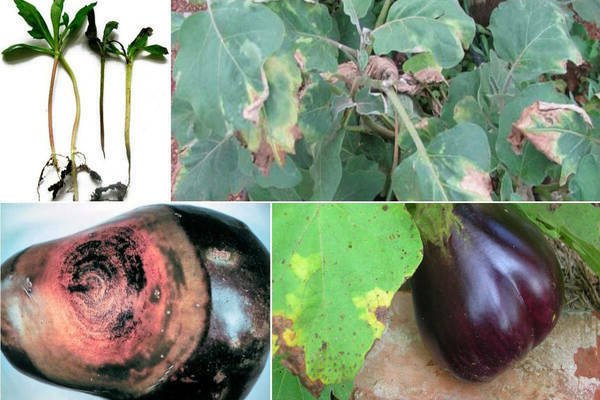
- Tobacco mosaicThe disease is caused by viruses, most often affecting plants grown indoors. Cold temperatures and insufficient light can also be the cause. Initially, the leaves become spotted, then turn yellow and wilt. There is no cure, but prevention is necessary.

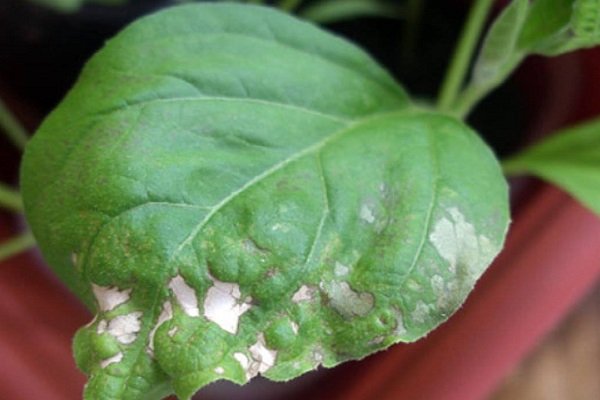
- White spotA fungal infection causes white spots to appear on the leaves. Stop watering when the soil dries and treat the affected plants with fungicides (Thanos). If spraying doesn't help, kill the diseased plants.
- Verticillium wiltThis is a fungal disease, most often appearing during fruit formation. The leaves wilt from the edges to the center, then die. It is treated with Fundazol, Topsin-M, Previkur, and other medications.
Growing eggplants in a polycarbonate greenhouse: features
A polycarbonate greenhouse is considered the most suitable place for growing eggplants. It creates ideal conditions for this crop.
It is better to choose medium-sized and tall varieties for the greenhouse in order to obtain the largest possible harvest.
A drip irrigation system is an excellent solution. Regular watering should only be done with warm, settled water.
To increase humidity inside the greenhouse, containers with water are placed in the corners.
To maintain a suitable temperature for eggplants, the greenhouse needs to be ventilated. For this purpose, it's advisable to install a window and install automatic closing systems on the door.
Before planting vegetables, it's essential to disinfect the inside of the greenhouse, as well as treat the beds and supports. All organic debris from the previous season should be removed.
In a greenhouse, plants need more nutrients, so it is necessary to apply fertilizers in a timely manner.
Tomatoes and eggplants in the same greenhouse: compatibility
Gardeners often try to plant as many different crops as possible in a single greenhouse. The most common neighbor is tomatoes. However, planting them next to eggplants is not recommended. These crops are susceptible to the same diseases and pests. If one crop is attacked by pests and becomes diseased, all neighboring plants will suffer.
Therefore, when growing eggplants together, it is better to choose peppers, zucchini, peas or cabbage as neighbors.
Cucumbers, peppers and eggplants in one greenhouse
Peppers are good companions for eggplants, so they can safely be planted in the same greenhouse. As for cucumbers, the conditions they require may differ. Cucumbers prefer humid air and don't tolerate drafts. Eggplants, on the other hand, prefer dry, warm air and require ventilation. When planting these vegetables in the same greenhouse, it's best to choose a south-facing location for eggplants and a north-facing location for cucumbers. The best option is to plant them in different parts of the greenhouse and stretch plastic between them.
Growing eggplants in a greenhouse in the Moscow region: features and varieties
Eggplant seedlings are planted in a greenhouse at the end of May. If the greenhouse is heated, this time can be delayed by at least three weeks. An important aspect of eggplant care in the Moscow region is watering in August. This should be done not early in the morning or evening, but around 10 a.m., and combined with ventilation. Bushes can be trained into one or more shoots.
The best varieties for the Moscow region are:
- Bagheera has excellent shelf life and marketability, with fruit weighing up to 350 g.
- Balagur is a variety with strong immunity and medium-sized bushes.
- Sofia is a mid-season variety with very tasty fruits.
- Epic is an early-ripening eggplant with strong immunity and excellent-tasting fruits.
Growing eggplants in a greenhouse in the Leningrad region
It's best to choose early and mid-early varieties. Seed planting begins in late February; after 70 days, the eggplants can be transplanted into the greenhouse.
The plants require light, as sunny days are scarce in the region. Bushes are trained to form 1-2 shoots.
The best varieties for planting in the Leningrad region:
- Bibo is a Dutch hybrid with early ripening periods.
- Bull's forehead is a large-fruited, early-ripening eggplant with good immunity; the eggplants are round in shape and weigh up to 250 g.
- Maria is a cold-resistant eggplant variety with compact bushes (up to 60 cm) and large fruits.
- A gardener's dream – a high-yielding variety with early ripening times, resistant to temperature fluctuations and major diseases.
Growing eggplants in a greenhouse in Siberia
Seeds are sown in late February or early March. Seedlings are transferred to the greenhouse no earlier than early June. To ensure excellent yields, the crown of the bush must be regularly trained.
Early-ripening eggplants are best for Siberia. The following are considered the best:
- Swan is a high-yielding variety (up to 18 kg per square meter) with yellowish fruits.
- Matrosik is a mid-early variety with strong immunity and tasty fruits without bitterness.
- Nutcracker is an ultra-early variety (up to 45 days) with fruits weighing up to 600 g.
Growing eggplants in a greenhouse in the Urals
In this region, it's best to grow eggplants in a greenhouse, as temperature fluctuations can be unpredictable. Planting seedlings in a greenhouse is done in the first two weeks of June, depending on weather conditions.
The most popular varieties of the Urals are: Rotonda, Donetsky Urozhdenny, Delikates Gribovsky-752, Dwarf Early-921.
Harvesting eggplants in a greenhouse
The timing of the eggplant harvest depends directly on the variety chosen and the growing method. In heated greenhouses, the first fruits can be harvested as early as late April, and the fruiting period can last until the first frost.
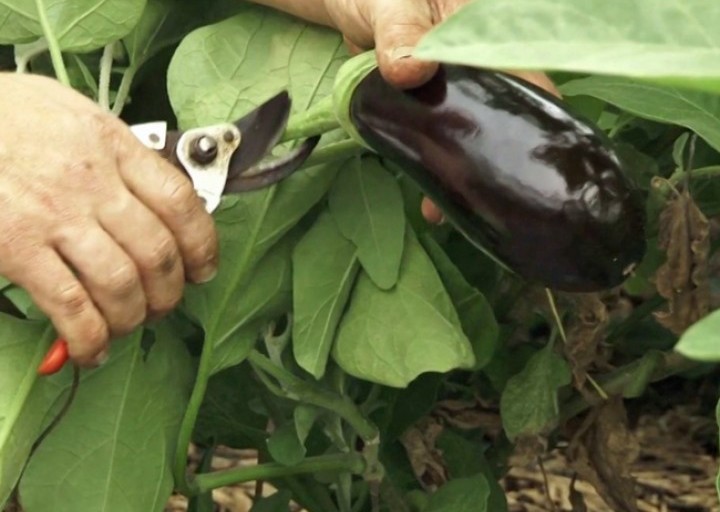
In open ground, fruit ripening takes 2-4 weeks longer than in closed ground.
Eggplants should be cut off along with the stalk using sharp pruning shears; it is better not to do this by hand, as there is a high risk of damaging the plant.
It's easy to tell when an eggplant is ripe. Its surface takes on a characteristic color and shine. If you press on the fruit, a dent will appear, which will quickly disappear on a ripe eggplant. If it's not yet ready, the dent won't appear. If it's overripe, however, the dent will remain and won't disappear. Eating such vegetables is dangerous, as the concentration of solanine, a toxic substance, increases. To neutralize it, you can soak the eggplant in salt water.
Ripe fruits can be stored for about 2-3 weeks in a cool, dark place.