Eggplants have recently become increasingly popular among gardeners. They're canned, baked, rolled into rolls, added to stews and salads—there are countless ways to use them. But to enjoy the taste of your own purple beauty, you need to approach the seedling cultivation process wisely.
The traditional way
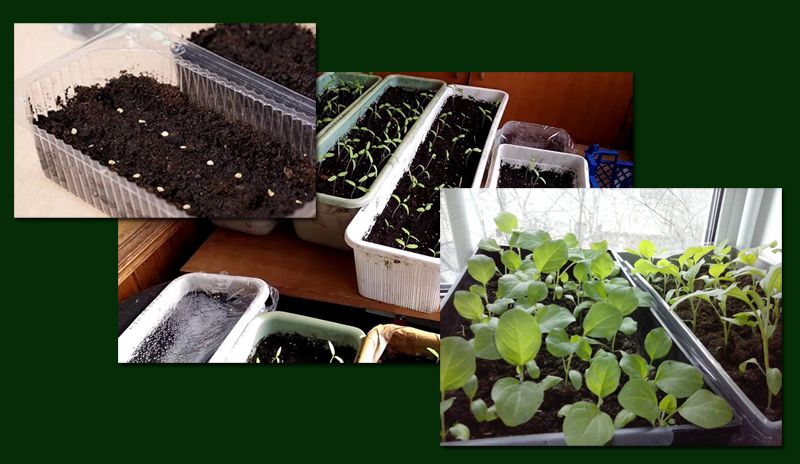
The most tried and true method for planting any seedling, familiar to many gardeners. For this:
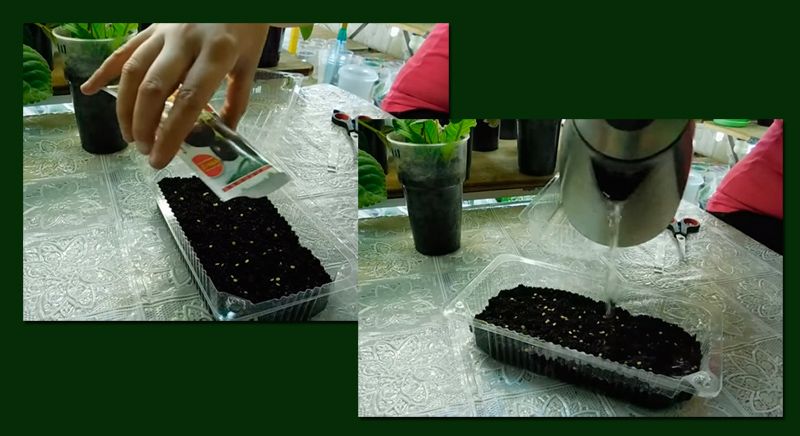
- Take a container with low sides, pour soil into it and level it.
- Using any available means, make grooves no more than 1 cm deep.
- Seeds are placed 1 cm apart from each other. It is not recommended to space the seeds any closer together to prevent the seedlings from interfering with each other.
- Carefully cover the plantings with soil and water. Avoid using a watering can, as its strong stream will wash away the soil and expose the plantings. A spray bottle with a mist attachment is best.
- After this, the container with seeds is covered with polyethylene, plastic or glass, creating a greenhouse effect.
- After the first shoots appear, the plantings are uncovered, accustoming them to the open air.
Landing in a snail
An interesting planting method that saves space and time. To implement it, you need:
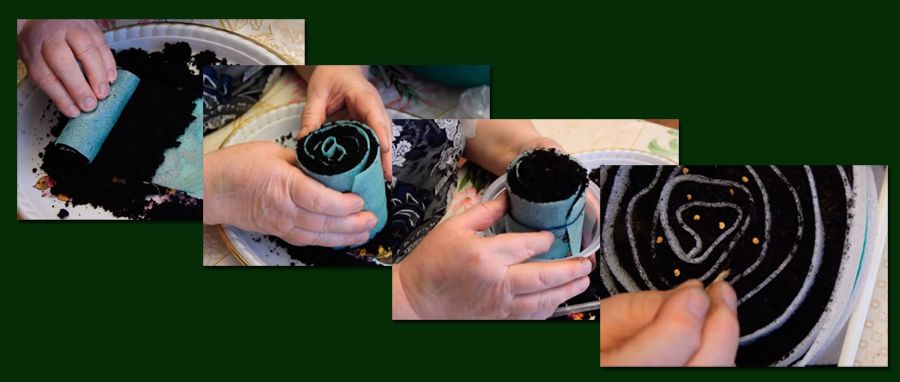
- Use any dense material that won't disintegrate in water. Laminate underlayment or thin insulation work well.
- Cut a strip of unlimited length (the thickness of the snail depends on it) 12 cm wide. Place a two-centimeter layer of soil on top of it, pressing it down lightly.
- Next, roll it all up and secure it with a rubber band. Press the soil slightly inward, freeing the edges of the snail.
- Pour everything with Epin solution.
- Plant the seeds in 1 cm deep holes, lightly covering them with soil.
- You can plant the seeds not only in the holes but also by laying them out on top of the soil at the desired distance and pressing them in with a thin object, such as a toothpick. The distance between the seeds should be at least 3 cm.
- Cover the snail with a tightly sealed plastic bag and place it in a warm place. Remove the bag when the first sprouts appear.
Planting using boiling water
- A plastic container with a lid or any other container with shallow sides is ideal for this method.
- A 4-cm layer of soil is added to the soil, and the seeds are placed on top of it. They can be planted in either furrows or depressions.
- After this, take boiling water that has stopped boiling a few minutes ago and water the planting with a thin stream to avoid washing away the soil.
- The seeds are not covered with soil, the greenhouse is covered with a lid and put in a warm place for 3-4 days until the first sprouts appear.
Planting in peat tablets
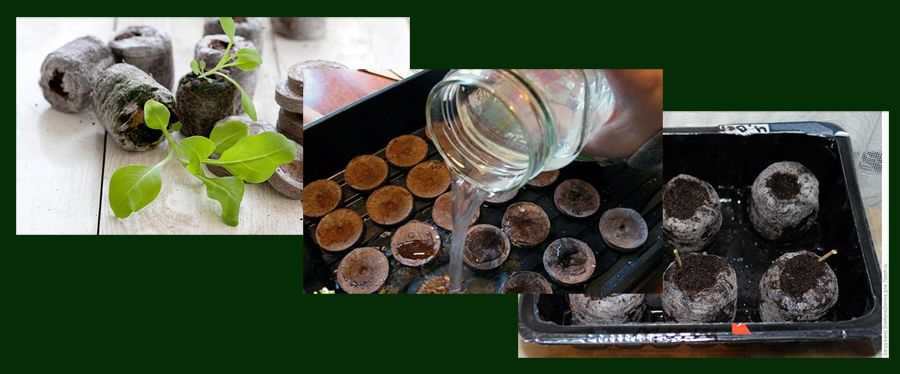
Eggplants don't like being transplanted or pricked out repeatedly, so planting in pellets is the most effective. This method is suitable for preparing small numbers of seedlings.
- Buy peat tablets in a tray, fill them with water and let them swell.
- As a disease preventative, you can add Fitosporin, diluted according to the instructions, to the water.
- After the tablets have soaked, you need to lightly press a seed inside and cover the tablets with a small amount of soil.
- Cover with a lid and put in a warm place.
This type of planting does not require additional watering.