
Thuja is considered an easy-to-grow plant that can be easily grown in your own garden. It fits perfectly into any landscape design and will become a beautiful addition. Cuttings can be planted in spring, summer, or fall. If the latter, do so in cooler weather, otherwise the plant will die.
However, experienced gardeners say that planting thuja in the fall is still preferable. This article will explain how to choose the right planting time and what rules to follow to grow a healthy and attractive tree.
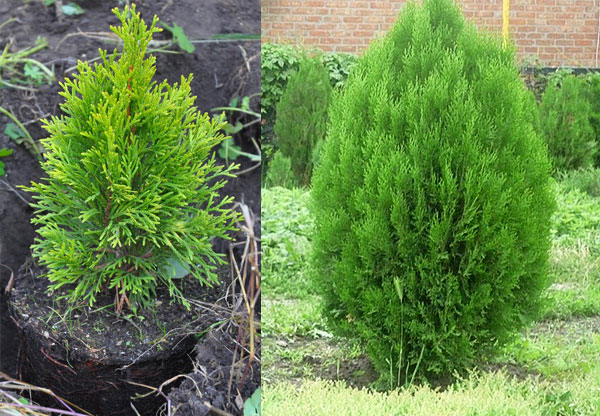
Planting dates for thuja in autumn
Planting in open ground should be done at least 14-21 days before the cold weather sets in to allow the seedling to establish itself. When choosing the right time, consider the weather. The preferred temperature for good rooting is 10 to 15°C during the day and 5°C at night.
Autumn planting dates for thuja by region
The weather in Russia varies by region. Therefore, planting times will vary depending on the following:
- middle zone, including the Moscow region - end of September - beginning of October;
- Siberia, Urals, North-West regions - September;
- Southern regions - October, if the weather is warm, then also the beginning of November.
Please note! Work must be carried out in dry and warm weather.
Thuja planting dates in the fall according to the lunar calendar for 2023
When deciding when to plant a thuja, it's also recommended to consult the lunar calendar. It indicates favorable and unfavorable dates for planting.
| Month | Favorable days | Unfavorable, prohibited days |
| September | 3 (from 18:00)-5 (until 23:05), 8 (from 07:59)-10 (until 19:35), 13, 16-20 (until 17:06), 23, 24 | 1 (from 16:25)-3 (until 18:00), 14, 15, 25-26, 28 (from 12:58 p.m.), 29, 30 |
| October | 1-3 (until 08:02), 5 (from 15:32)-7, 10 (from 15:02)-13 (until 20:55), 15 (from 14:04)-17 (until 22:36), 20-22 (until 09:06), 24-26 | 14,15,28,29. |
| November | 2-4 (until 10:20), 6 (from 22:39)-12 (until 12:26), 16 (from 10:41)-18 (until 14:27), 20 (from 17:29)-22 (until 20:19), 25-26 (until 12:16), 29 (from 09:53)-30 | 12 (from 12:26 p.m.),13, 14 (until 12:26 p.m.), 18 (from 2:27 p.m.)-20 (until 5:29 p.m., 22 (from 8:19 p.m.)-24, 26 (from 12:16 p.m.),27, 28 (until 12:16 p.m.) |
Read the articles:
- Lunar calendar for the gardener for 2023.
- Lunar calendar for gardeners for September 2023.
- Lunar calendar for the gardener for October 2023.
- Lunar calendar for the gardener for November 2023.
Rules for choosing planting material
There are two types of seedlings:
- Closed-root system (CRS). The roots are enclosed in a ball of soil, placed in a container. This type of cutting is recommended. It's easier to work with and takes root better. This is why such a seedling will be more expensive.
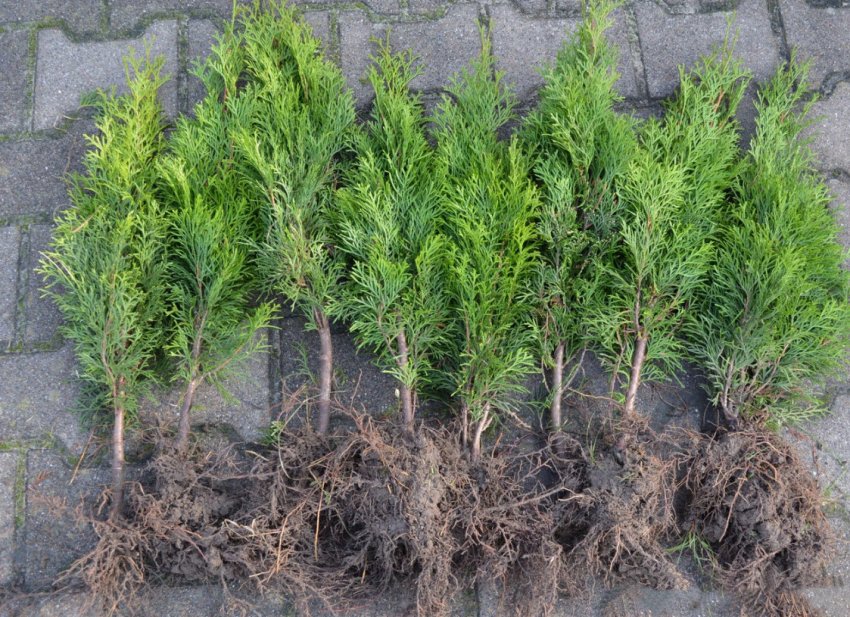
- Bare root system (ORS). The seedling is sold without a root ball, for example, in a plastic bag. While it's certainly cheaper, planting requires some effort. You'll also need to consider how to properly store the seedling if you purchased it in advance.
Important! When purchasing a closed root system (ZRS) seedling, remove the root ball just before planting. Otherwise, the roots will dry out immediately, which will negatively impact the tree's survival.
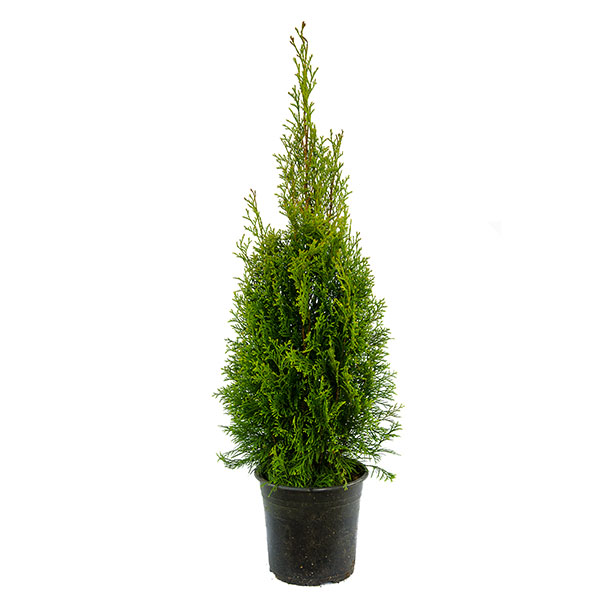
When purchasing, pay attention to the following points:
- It should not have any damage, symptoms of disease or insects.
- Age. A cutting that is 3-4 years old is more likely to take root.
- It is recommended to select young trees with a symmetrical shape.
- A healthy adult specimen should have a dense crown.
- The root system is healthy and well-developed. It's easy to see in an open root system. The roots are flexible, free of damage, dryness, rot, or mold. A suspicious, unpleasant odor should be a warning sign. For a closed root system (ORS) seedling, inspect the bottom of the container. No roots should be visible through the holes. You can also ask the seller to remove the cutting from the container. The roots should be a soft pinkish color, not brownish.
- The needles are a uniform greenish color, unless the variety specifies a different shade. Brown needles indicate care errors. Such a seedling may die shortly after planting.
- The needles should not fall off.
- The root ball should be moist, but not wet.
- If there are weeds in the container, that's good. This means the seedling has survived at least one winter, adapted to the climate, and will thrive.
Read the article to learn how to grow a thuja seedling from seeds.Propagation of thuja by cuttings and seeds in a pot and care
Tip! To check the quality of a closed root system seedling, gently pull it upward by the tip. If it comes out of the container easily, the roots are damaged and it won't take root.
In Russia, the Western thuja grows best.
Recommended varieties:
- Emerald;
- Brabant;
- Stolvik and others.
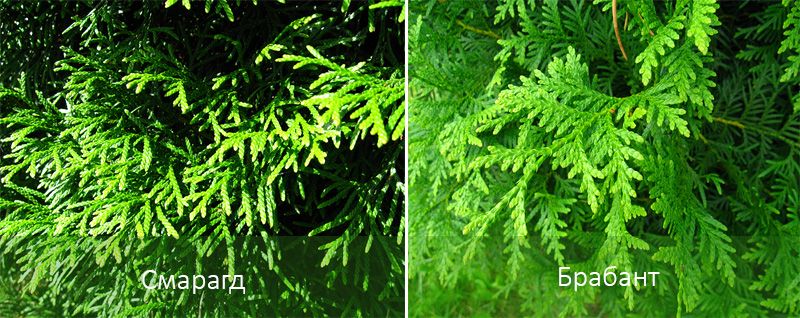
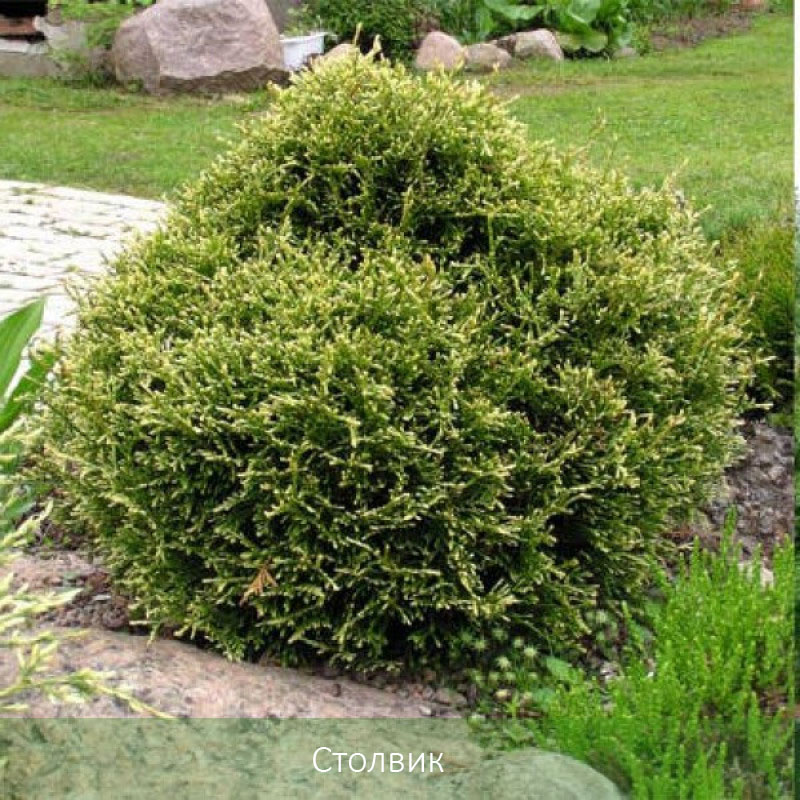
It's best to purchase seedlings from nurseries, stores, and garden centers. They sell higher-quality planting material. This applies to cuttings and seeds of any plant.
Read more about the varieties of thuja, planting and caring for them in the articlePlanting Thuja: Tips and recommendations for planting and care
Location and soil for thuja
When determining the location, the following rules must be observed:
- Give preference to the sunniest areas. The tree can be planted in shade or partial shade, but it will not grow lushly. The exception is hot and arid regions (for example, the Volgograd, Rostov, and Astrakhan regions). Here, some shade is acceptable.
- If you plan to grow a tree near a fence, house, or any other building, you need to keep a distance of 1-1.5 m from it.
- Thuja should not be placed next to other plants, such as juniper, etc. They should be kept at a distance of 3 m.
- The area must be protected from cold winds and drafts.
- The groundwater table should be at least 1 m deep. Avoid marshy, damp areas, lowlands, and other similar locations. Otherwise, root rot will occur, and the tree will die.
The land must meet the following characteristics:
- light;
- nutritious;
- with good moisture and air permeability;
- weak acidity.
Important! It is not recommended to plant thuja in heavy, clayey, or waterlogged soil.
Rules for planting thuja in autumn
Distance between trees:
- for group planting - 3 m;
- for tall varieties - 4-5 m;
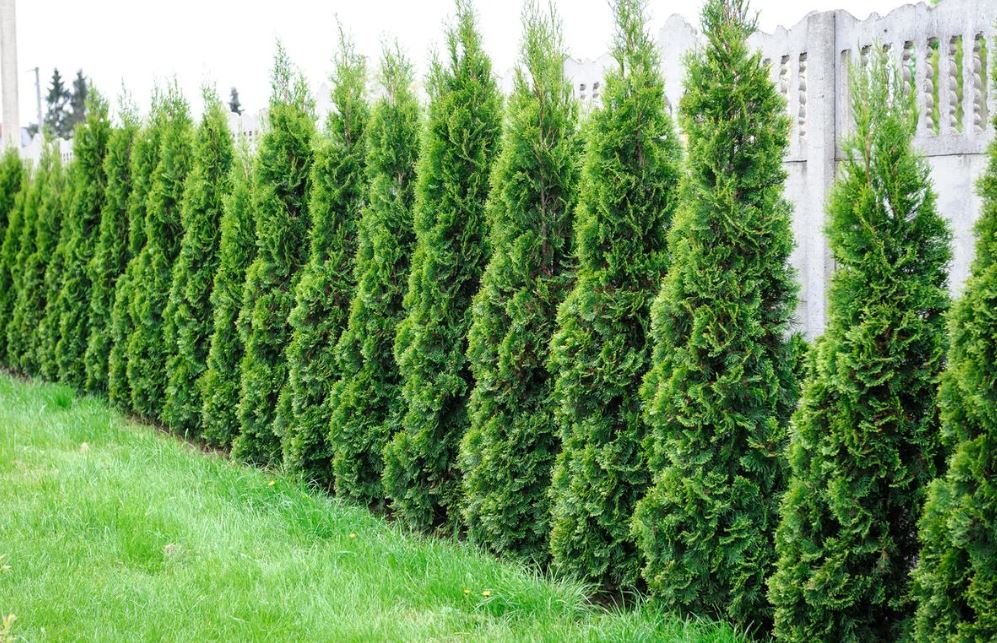
- hedges - 0.5-0.6 m;
- when planting in a checkerboard pattern - 1 m.
A more detailed technology and step-by-step description of thuja planting:
- Dig a hole twice as large as the roots. In loamy soil, the depth and diameter are typically 0.7 m each, and in clay soil, 0.9 m each.
- Lay out 10 cm of drainage.
- Fill the hole halfway with nutrient-rich soil (you can fertilize it with humus, compost, or wood ash). Water the soil to compact it.
- Water the potted thuja 2-3 hours before repotting. It is recommended to use Epin-Extra, Zircon, or Kornevin fertilizers.
- Remove the seedling from the container and plant it immediately. As mentioned earlier, the roots should not be exposed to air for long periods of time.
- Place the cutting in the center of the planting hole. Fill it with soil so that the root collar is exposed. If it sinks too deep, remove the seedling, add soil to the hole, and replant it.
- Create a 10-15 cm thick wall of soil around the edge of the hole. Water the seedling with 3 buckets of water. Pour gradually, waiting until the previous batch is completely absorbed.
- Mulch with sawdust, peat, bark, etc. This will protect the roots from frost and overheating, and will retain moisture and nutrients.
Important! New trees less than 4-5 years old should be covered and tied with twine for the winter. Young trees are very sensitive to low temperatures.
Rules for caring for thuja after planting
During the first few days after planting, thuja requires special care. The procedure is as follows:
- For 1.5 to 2 weeks after planting, the young tree should be shaded. A frame made of spunbond can be installed. The main thing is to ensure that the covering material does not come into contact with the thuja. This will help the seedling adapt and take root more quickly. This protection will also prevent it from drying out.
- For a couple of weeks after planting, provide regular watering (every 5-7 days). Apply 10 liters of water per tree. After this time, you can stop watering. The plant will receive sufficient moisture from rainfall.
- Check the soil after 3-4 days. If it has settled, add more substrate.
- A young tree is still quite fragile and can be broken by wind, rain, or snow. Therefore, it should be tied to a wooden support with soft twine.
- As mentioned earlier, the tree needs mulching. It can also be covered with spruce branches before the onset of cold weather. Provide additional cover before frost. Very young seedlings can be covered with a 5-liter bottle with the neck cut off. More mature specimens can be wrapped in agrofibre.
If you follow these simple rules, your thuja will delight you with a lush crown and a pleasant pine aroma.
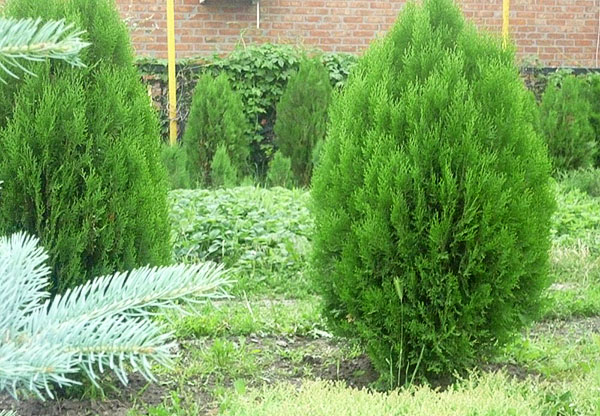
Common mistakes when planting thuja in autumn
Most often, typical mistakes are made, which are also common to other coniferous trees, which subsequently complicate cultivation:
- Disturbing the root ball during repotting. To prevent this, water the containerized plant a few hours before repotting. You can also wrap the root ball in burlap and secure it with wire. This will prevent it from disintegrating. Once it's in the hole, simply remove the wire, and the burlap will simply rot.
- The planting hole is the wrong size. The seedling shouldn't fit comfortably, but there should be enough space between the hole and the plant to accommodate the palm of an adult man.
- Deepening the root collar. You will need to clear it of soil or create air drainage.
Please note! Another common mistake is ignoring the individual needs of a particular variety. There are many different species, each with specific care requirements. This cannot be ignored.
Read about different coniferous plants in the articleConiferous trees: names with descriptions and photos
Gardening tips from Top.tomathouse.com
Here are some helpful tips to help you grow a healthy and attractive thuja:
- If you have no experience growing ornamental conifers, we recommend choosing the Western thuja. It is well adapted to Russian climate conditions and requires little additional care.
- During the first weeks after planting, remember to water regularly. It's also helpful to mist the crown periodically.
- The most common pest of arborvitaes is the arborvitae moth. It attacks trees in the spring, causing the needles to darken and shoots to die. Cypermethrin or other products containing it can be used to control the insect.
- When pruning, remove no more than 1/3 of the branches, otherwise the thuja may weaken. Use only disinfected and sharp tools to ensure a smooth cut and rapid healing, preventing infection.
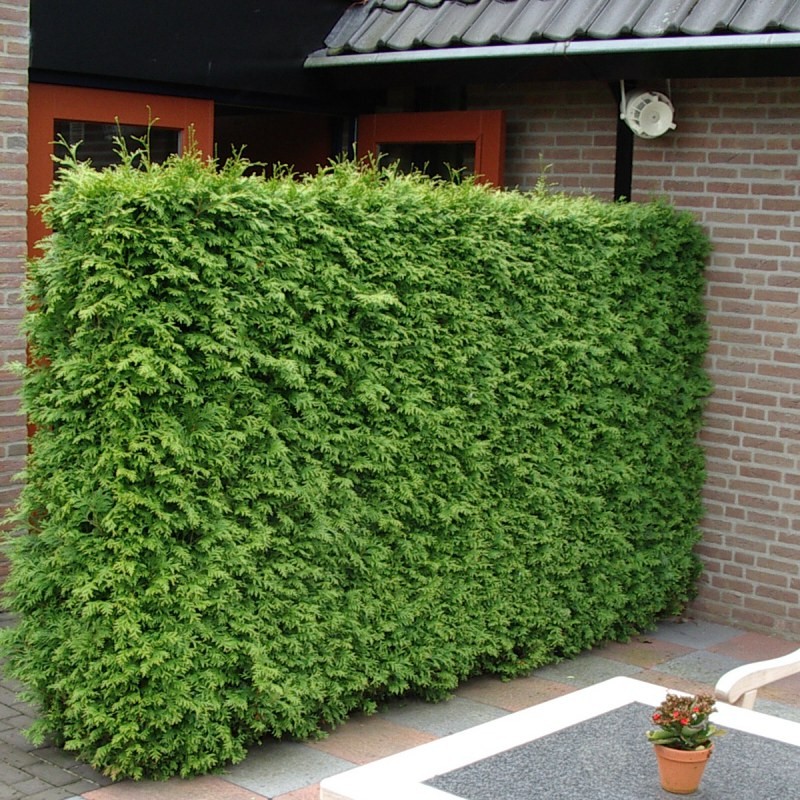
- Thuja can be grown in any climate. It will look beautiful in hedges, mixed borders, and rock gardens. Tall varieties are perfect for solitary planting in lawns. Dwarf varieties look neat in rose gardens and rock gardens.



Great collection, thanks!!! I'll share a couple for my collection)))