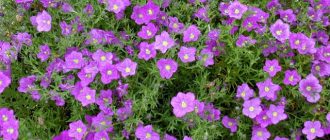
Common heather belongs to the Ericaceae family and is the only representative of its genus. There are approximately 500 species of this plant in the wild, scattered across the globe from Europe to the Atlantic coast of North America.
Heather is considered a very undemanding plant, growing well even on windswept rocky hills. Furthermore, heather has decorative properties, making it widely used in flowerbeds and landscape designs.
Content
- 1 Description of heather
- 2 121 heather varieties with photos and descriptions in tables
- 2.1 24 varieties of heather with green foliage and pink, crimson, red, and salmon-colored flowers
- 2.1.1 Allegro
- 2.1.2 Alexandra (Calluna Alexandra)
- 2.1.3 Arabella (Calluna vulgaris Arabella)
- 2.1.4 Harlequin (Calluna vulgaris Harlekin)
- 2.1.5 Gold Knight (Calluna vulgaris Gold Knight)
- 2.1.6 Holland (Calluna vulgaris Hollandia)
- 2.1.7 Calluna Darkness
- 2.1.8 Easter Bonfire (Calluna vulgaris Easter Bonfire)
- 2.1.9 Carmen (Calluna vulgaris Carmen)
- 2.1.10 Kir Royal (Calluna vulgaris Kir Royal)
- 2.1.11 Leslie Slinger (Calluna vulgaris Leslie Slinger)
- 2.1.12 Liebestraum (Calluna vulbaris Liebestraum)
- 2.1.13 Marco (Calluna Marko)
- 2.1.14 Mullion (Calluna vulgaris Mullion)
- 2.1.15 Radnor (Calluna vulgaris Radnor)
- 2.1.16 Ralph Purnell (Calluna vulgaris Ralph Purnell)
- 2.1.17 Roma (Calluna vulgaris Roma)
- 2.1.18 Ross Hutton
- 2.1.19 Red Pimpernel (Calluna vulgaris Red Pimpernel)
- 2.1.20 Sister Anne (Calluna vulgaris Sister Anne)
- 2.1.21 Forest Fire (Calluna vulgaris Forest Fire)
- 2.1.22 Heidesinfonie (Calluna vulgaris Heidesinfonie)
- 2.1.23 Heidezwerg (Calluna vulgaris Heidezwerg)
- 2.1.24 Calluna Hookstone
- 2.2 8 varieties of heather with white flowers and green foliage
- 2.2.1 Alba Praecox (Calluna vulgaris Alba Praecox)
- 2.2.2 Beoley Silver (Calluna vulgaris Beoley Silver)
- 2.2.3 Velvet Fascination (Calluna vulgaris Velvet Fascination)
- 2.2.4 Long White (Calluna vulgaris Long White)
- 2.2.5 Spring Cream (Calluna vulgaris Spring Cream)
- 2.2.6 Hammond's (Calluna vulgaris Hammondii)
- 2.2.7 Humpty Dumpty (Calluna Humpty Dumpty)
- 2.2.8 White Lawn (Calluna vulgaris White Lawn)
- 2.3 6 varieties of heather with silver foliage
- 2.4 26 Heather Varieties with Golden Foliage
- 2.4.1 Allegretto (Calluna vulgaris Allegretto)
- 2.4.2 Aurea (Calluna Aurea)
- 2.4.3 Barcelona (Calluna vulgaris Barcelona)
- 2.4.4 Bonita (Calluna vulgaris Bonita)
- 2.4.5 Boskoop (Calluna vulgaris Boskoop)
- 2.4.6 Westerly Gold (Calluna vulgaris Westerly Gold)
- 2.4.7 Wickware Flame (Calluna vulgaris Wickware Flame)
- 2.4.8 Gold Haze (Calluna vulgaris Gold Haze)
- 2.4.9 Dart's Parrot (Calluna vulgaris Dart`s Parrot)
- 2.4.10 David Hagenaars (Calluna vulgaris David Hagenaars)
- 2.4.11 Seestern (Calluna vulgaris Seestern)
- 2.4.12 Zeta (Calluna vulgaris Zeta)
- 2.4.13 Zoe (Calluna vulgaris Zoe)
- 2.4.14 Sonnenzwerg (Calluna vulgaris Sonnenzwerg)
- 2.4.15 Zora (Calluna vulgaris Zora)
- 2.4.16 Con Brio (Calluna vulgaris Con Brio)
- 2.4.17 Cottswood Gold (Calluna vulgaris Cottswood Gold)
- 2.4.18 Crimson Sunset (Calluna vulgaris Crimson Sunset)
- 2.4.19 Loni (Calluna vulgaris Loni)
- 2.4.20 Olympic Gold (Calluna vulgaris Olympic Gold)
- 2.4.21 Orange Queen (Calluna vulgaris Orange Queen)
- 2.4.22 Red Carpet (Calluna vulgaris Red Carpet)
- 2.4.23 Robert Chapman (Calluna vulgaris Robert Chapman)
- 2.4.24 Sesame (Calluna vulgarias Sesam)
- 2.4.25 Sandy (Calluna vulgaris Sandy)
- 2.4.26 Firefly (Calluna vulgaris Firefly)
- 2.5 25 varieties of heather with double and semi-double flowers
- 2.5.1 Alba Plena (Calluna Alba Plena)
- 2.5.2 Annabelle (Calluna vulgaris Annabel)
- 2.5.3 Annamaria (Calluna vulgaris Annemarie)
- 2.5.4 Anya (Calluna vulgaris Anja)
- 2.5.5 Bajazzo (Calluna vulgaris Bajazzo)
- 2.5.6 Dark Beauty (Calluna vulgaris Dark Beauty)
- 2.5.7 Dark Star (Calluna DARK STAR)
- 2.5.8 J.H. Hamilton (Calluna vulgaris J.H.Hamilton)
- 2.5.9 Jimmy Dyce (Calluna vulgaris Jimmy Dyce)
- 2.5.10 Disco Queen (Calluna vulgaris Disco Queen)
- 2.5.11 Monica (Calluna Monika)
- 2.5.12 County Wicklow (Calluna vulgaris County Wicklow)
- 2.5.13 Kinlochruel (Calluna vulgaris Kinlochruel)
- 2.5.14 Autumn Glow (calluna Autumn Glow)
- 2.5.15 Peter Sparks (Calluna vulgaris Peter Sparkes)
- 2.5.16 Radnor (Calluna vulgaris Radnor)
- 2.5.17 Red Sun (Calluna vulgaris Red Sun)
- 2.5.18 Red Favorite (Calluna vulgaris Red Favorite)
- 2.5.19 Rococo (Calluna vulgaris Rokoko)
- 2.5.20 Salsa (Calluna vulgaris Salsa)
- 2.5.21 Dormouse (Calluna vulgaris Sonja)
- 2.5.22 White Coral (Calluna vulgaris White Coral)
- 2.5.23 H.E. Beale (Calluna vulgaris H.E. Beale)
- 2.5.24 Elsie Purnell (Calluna vulgaris Elsie Purnell)
- 2.5.25 Jana (Calluna vulgaris Jana)
- 2.6 32 varieties of heather with non-opening buds
- 2.6.1 Agnes (Calluna vulgaris Agnes)
- 2.6.2 Alicia (Calluna vulgaris Alicia)
- 2.6.3 Amethyst (Calluna vulgaris Amethyst)
- 2.6.4 Athena (Calluna vulgaris Athene)
- 2.6.5 Aphrodite (Calluna vulgaris Aphrodite)
- 2.6.6 Vera (Calluna vulgaris Vera)
- 2.6.7 Golden Angie (Calluna vulgaris Golden Angie)
- 2.6.8 Juliana (Calluna vulgaris Juliane)
- 2.6.9 Calluna David Eason
- 2.6.10 Claire (Calluna vulgaris Claire)
- 2.6.11 Lisbeth (Calluna vulgaris Lisbeth)
- 2.6.12 Lily (Calluna vulgaris Lilli)
- 2.6.13 Liliana (Calluna vulgaris Liliane)
- 2.6.14 Loki (Calluna vulgaris Loki)
- 2.6.15 Madonna (Calluna vulgaris Madonna)
- 2.6.16 Marleen (Calluna vulgaris Marleen)
- 2.6.17 Moulin Rouge (Calluna vulgaris Moulin Rouge)
- 2.6.18 Nelly (Calluna vulgaris Nelly)
- 2.6.19 Nora (Calluna vulgaris Nora)
- 2.6.20 Pink Alicia (Calluna vulgaris Pink Alicia)
- 2.6.21 Pink Bettina (Calluna vulgaris Pink Bettina)
- 2.6.22 Red Marlies (Calluna vulgaris Red Marlies)
- 2.6.23 Red Angie (Calluna vulgaris Red Angie)
- 2.6.24 Romina (Calluna Romina)
- 2.6.25 Selly (Calluna vulgaris Selly)
- 2.6.26 Selma (Calluna vulgaris Selma)
- 2.6.27 Silvana (Calluna vulgaris Silvana)
- 2.6.28 Teresa (Calluna vulgaris Theresa)
- 2.6.29 Franca (Calluna vulgaris Franca)
- 2.6.30 Helena (Calluna vulgaris Helena)
- 2.6.31 Elisa (Calluna vulgaris Elisa)
- 2.6.32 Angie (Calluna vulgaris Angie)
- 2.1 24 varieties of heather with green foliage and pink, crimson, red, and salmon-colored flowers
- 3 Growing heather from seeds
- 4 Planting heather in open ground
- 5 Heather care
- 6 Diseases and pests of heather
- 7 Heather propagation
- 8 Uses of heather
- 9 Reviews of heather from flower growers
Description of heather
Heather is an evergreen, creeping shrub with shoots ranging from 30 to 70 cm tall. Its small, triangular leaves appear to be twisted into a tube. Initially, the leaf blades are green, but after frost, they turn burgundy or yellow.
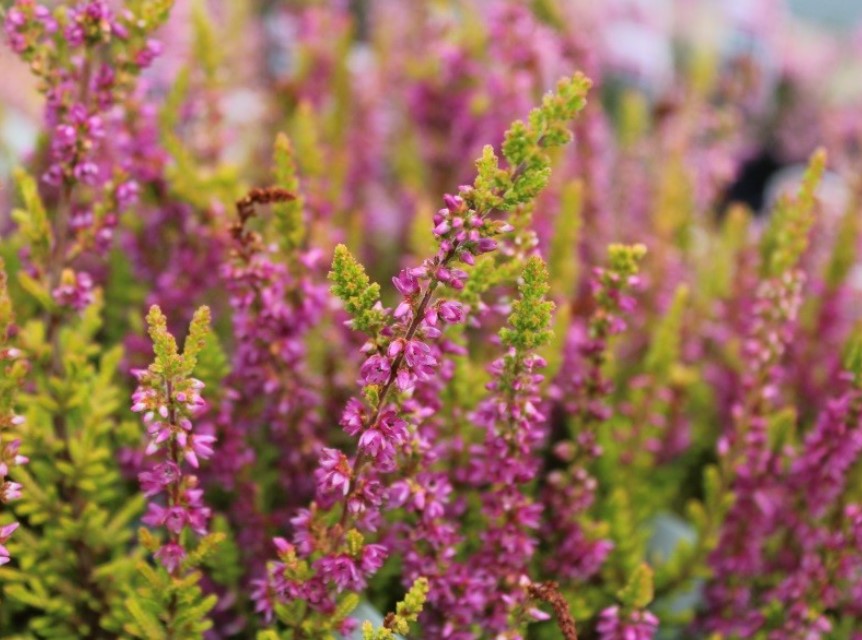
The flowers are small, bell-shaped, and lilac-pink in color. They form unilateral clusters and begin to appear as early as early June.
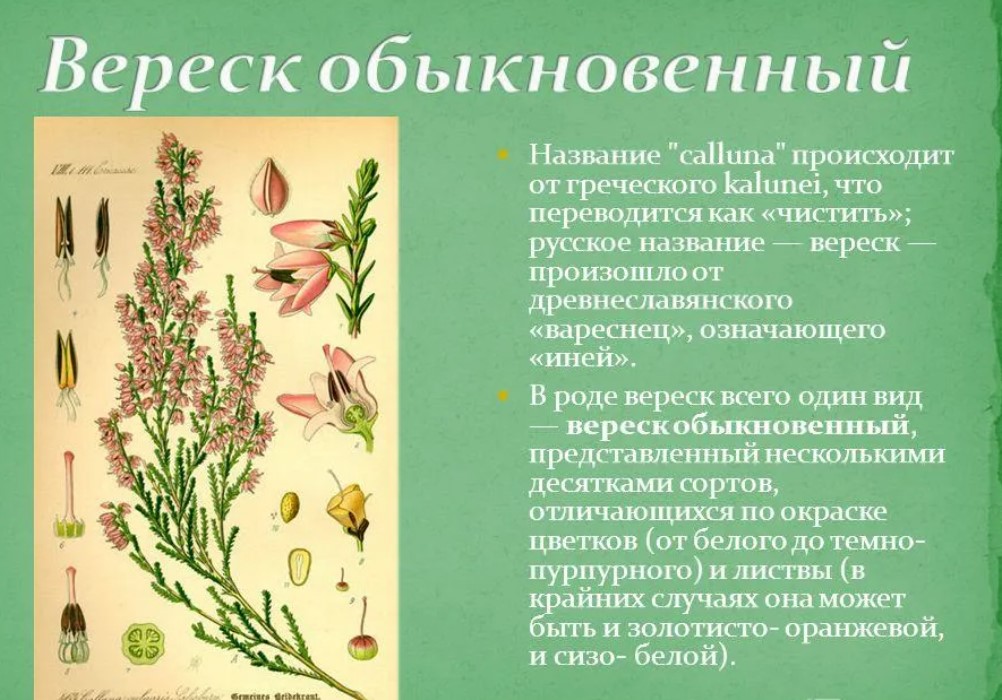
Heather is used to decorate borders and hedges, and looks especially attractive in the company of dwarf conifers.
121 heather varieties with photos and descriptions in tables
Below we will look at the most popular varieties of heather that are found in nature and most often used in landscape design.
24 varieties of heather with green foliage and pink, crimson, red, and salmon-colored flowers
Allegro
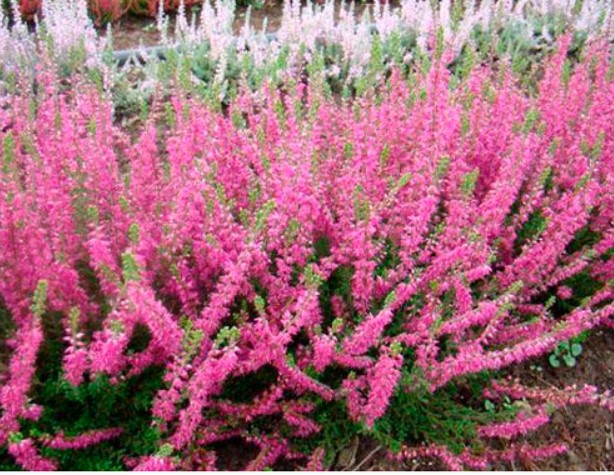
| Color of inflorescences and leaves | Flowering period | Height of shoots | Location and cultivation |
| The leaves are dark green, the flowers are red-carmine | Late July - late October | 60 cm | Grows well throughout the country. Requires winter protection. |
Alexandra (Calluna Alexandra)
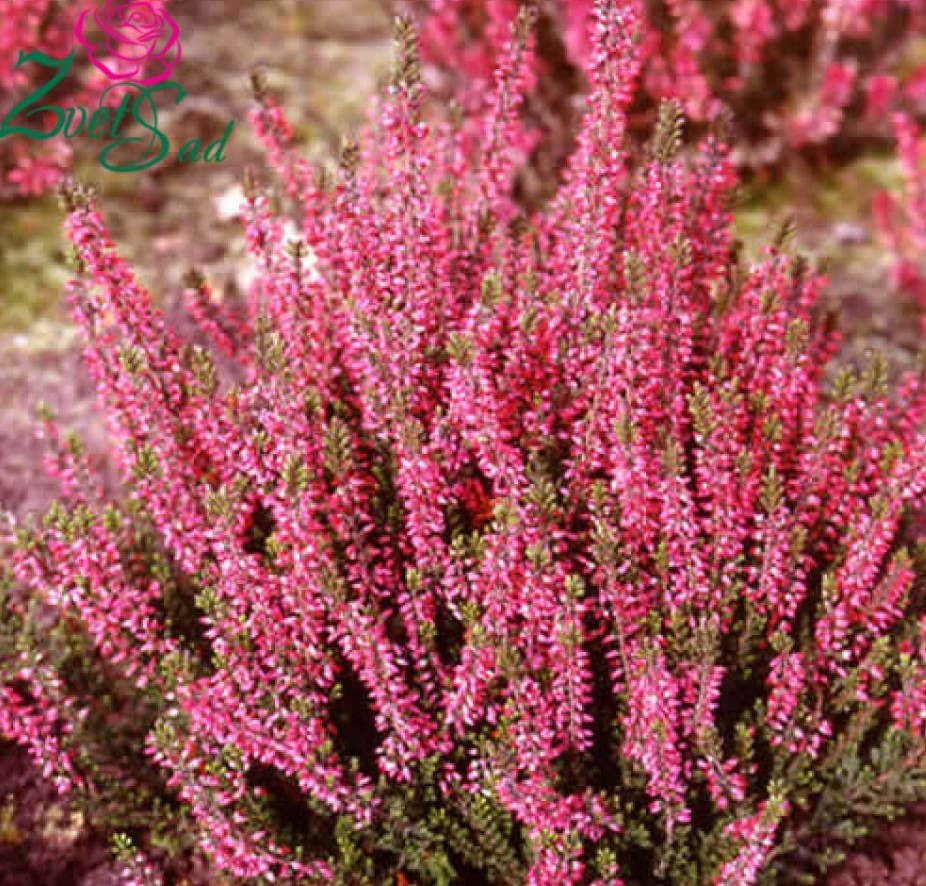
| Color of inflorescences and leaves | Flowering period | Height of shoots | Location and cultivation |
| As the flowers mature, they change color from cream to red. | July-September | The height of the shoots is up to 30 cm, the diameter of the bush is about 40 cm. | Prefers well-lit areas, but also grows well in shade. Requires winter protection. |
Arabella (Calluna vulgaris Arabella)
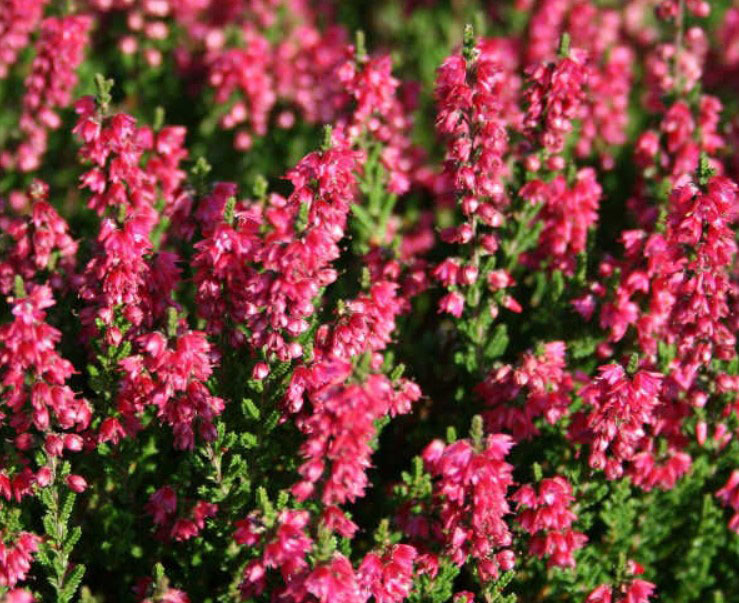
| Color of inflorescences and leaves | Flowering period | Height of shoots | Location and cultivation |
| The paniculate inflorescences are rich red in color, the leaves are dark green. | August-September | Up to 25 cm. | Prefers partial shade or sun, covered for the winter. |
Harlequin (Calluna vulgaris Harlekin)
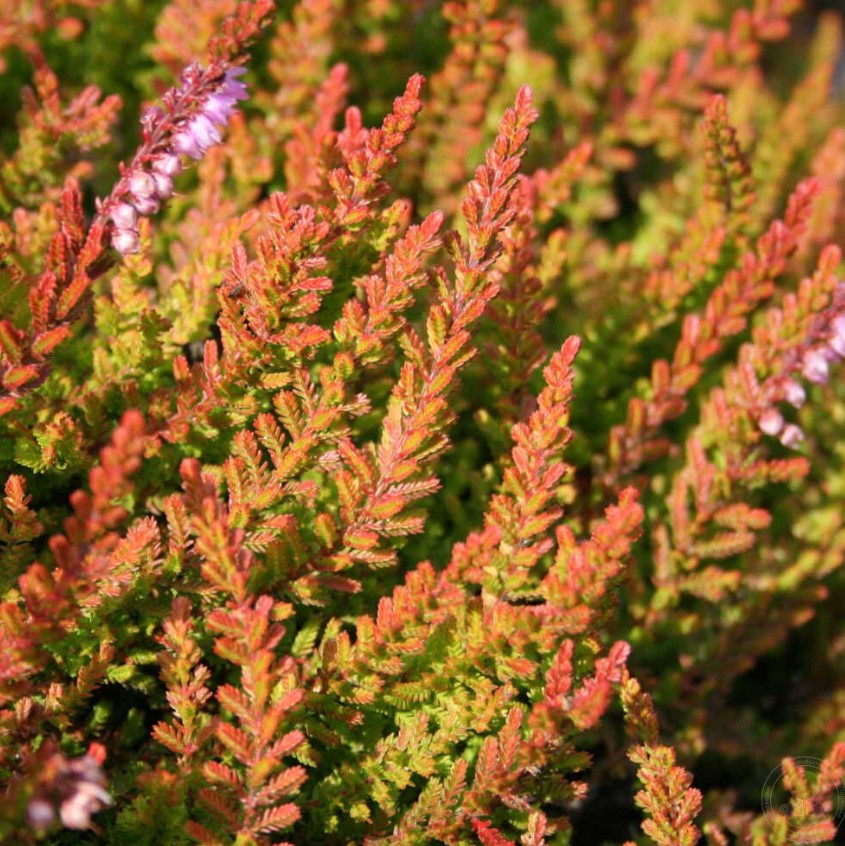
| Color of inflorescences and leaves | Flowering period | Height of shoots | Location and cultivation |
| The flowers are pink, the leaves are light yellow, more greenish on the inside. | Late August-September | 25-35 cm, bush width 30-40 cm. | Prefers well-lit areas, requires shelter in winter, and can withstand temperatures down to -25 degrees. |
Gold Knight (Calluna vulgaris Gold Knight)
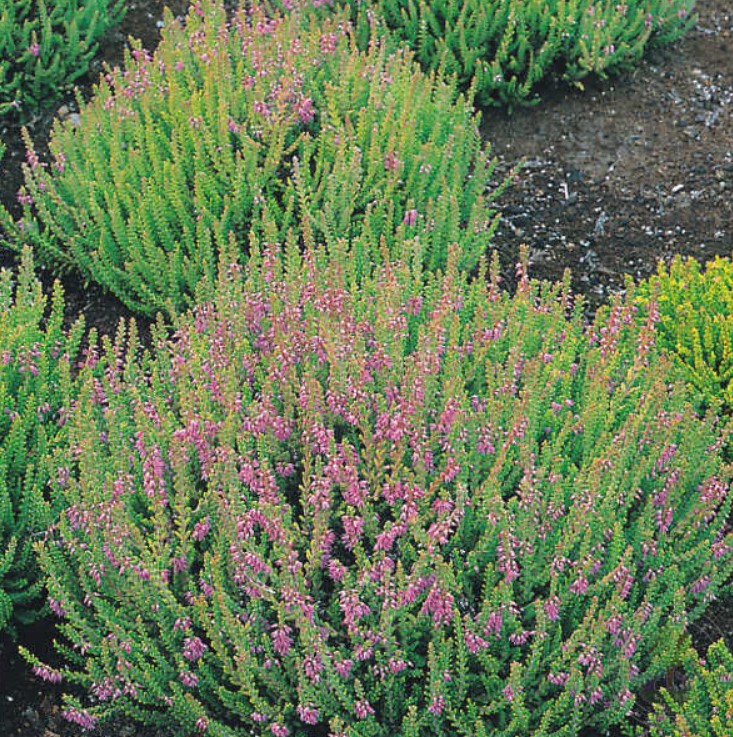
| Color of inflorescences and leaves | Flowering period | Height of shoots | Location and cultivation |
| The flowers are pinkish-lavender in colour, the leaves are golden at first, turning red as frost approaches. | July-August | Height up to 40 cm, bush diameter up to 50 cm. | Suitable for growing in rock gardens, containers, or as a groundcover. Choose a sunny location in sandy or light, peaty, moist soil without stagnant water. Mulch. Requires winter cover (peat or dry leaves and spruce branches). It tolerates temperatures down to -23°C. |
Holland (Calluna vulgaris Hollandia)
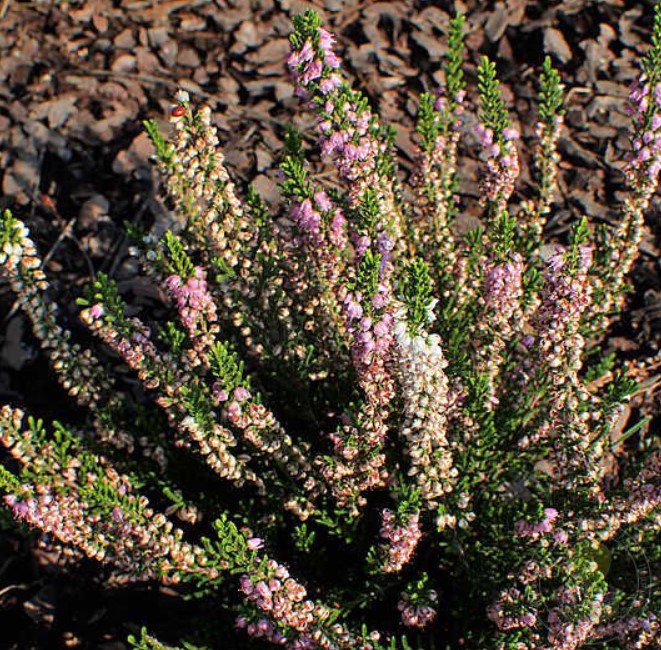
| Color of inflorescences and leaves | Flowering period | Height of shoots | Location and cultivation |
| Flowers are numerous. Purple-pink, leaves are dark green. | July-October | Up to 70 cm, width about 60 cm. | Suitable for rock gardens and containers. Grows in sunny areas. |
Calluna Darkness
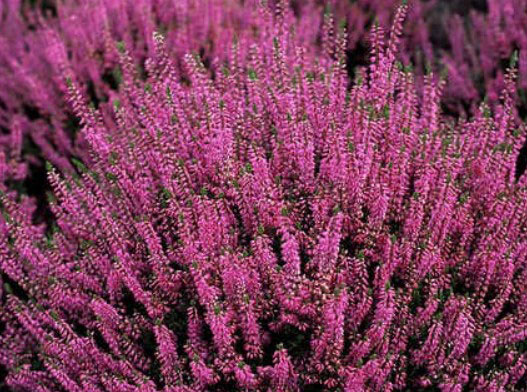
| Color of inflorescences and leaves | Flowering period | Height of shoots | Location and cultivation |
| The leaves are dark green, the flowers are crimson, collected in short brushes. | August-October | Up to 25 cm, bush diameter up to 45 cm. | Prefers a sunny location with acidic, well-drained soil. It tolerates temperatures down to -23 degrees Celsius. |
Easter Bonfire (Calluna vulgaris Easter Bonfire)
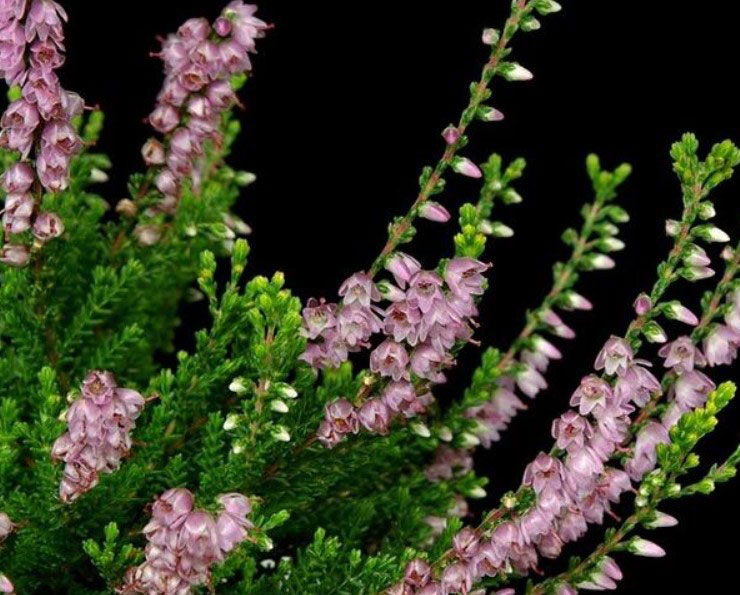
| Color of inflorescences and leaves | Flowering period | Height of shoots | Location and cultivation |
| The leaves are green, the flowers are pale lilac. | August-September | Up to 30 cm. | Prefers a sunny area with good humidity, covered for the winter, suitable for zones with temperatures down to -23. |
Carmen (Calluna vulgaris Carmen)
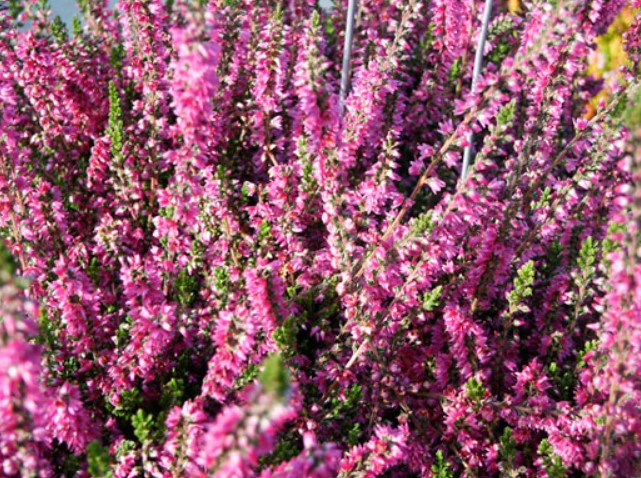
| Color of inflorescences and leaves | Flowering period | Height of shoots | Location and cultivation |
| The leaves are small and dark green. The flowers are simple, purple, with stems up to 10 cm long. | August-September | 30-40 cm. | It grows in well-lit areas and is covered for the winter. |
Kir Royal (Calluna vulgaris Kir Royal)
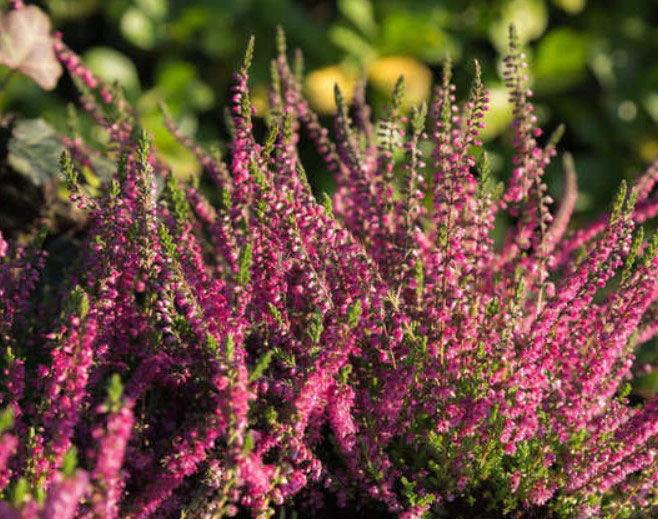
| Color of inflorescences and leaves | Flowering period | Height of shoots | Location and cultivation |
| The foliage is dark green, the inflorescences are red-purple. | September-October. | 20-25 cm. diameter 40-50 cm. | Sunny sites with light, moist soil, but no standing water. Cover the plantings with spruce branches during the winter. |
Leslie Slinger (Calluna vulgaris Leslie Slinger)
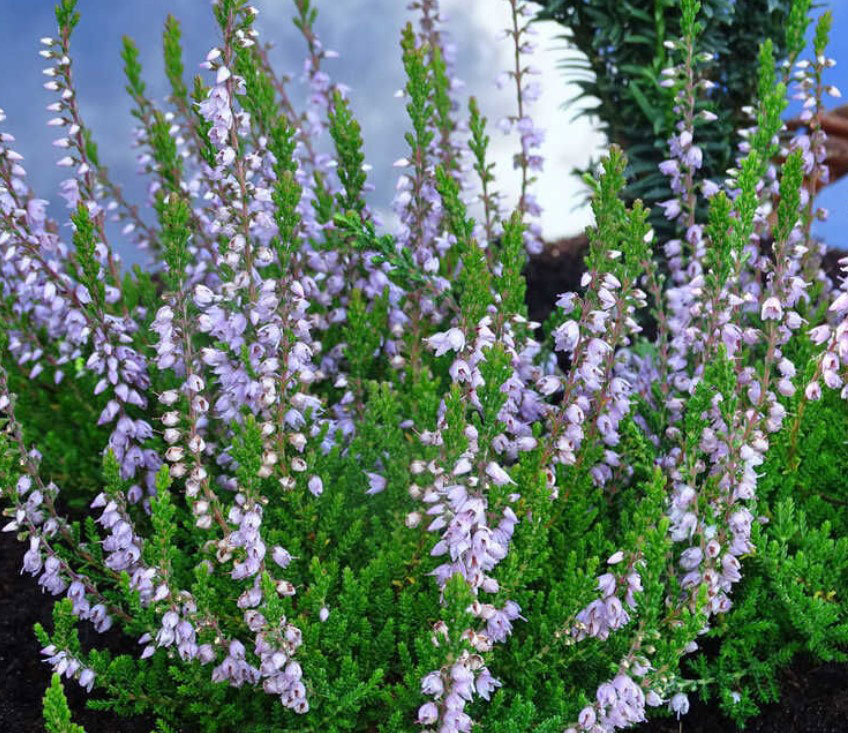
| Color of inflorescences and leaves | Flowering period | Height of shoots | Location and cultivation |
| The leaves are green, the flowers are raspberry or salmon. | August-September | 16-20 cm. Bush width up to 45 cm. | Sunny location with acidic and moist soil, needs shelter for the winter, frost-resistant variety. |
Liebestraum (Calluna vulbaris Liebestraum)
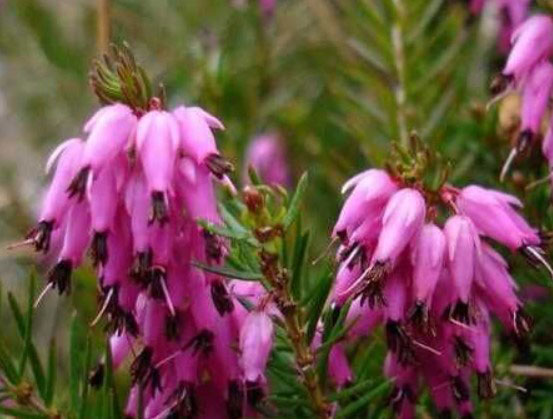
| Color of inflorescences and leaves | Flowering period | Height of shoots | Location and cultivation |
| The leaves change color from dark green to bronze-green. The flowers are red. | August-September | 30 cm | A sunny site with light, moist soil. Requires winter cover. Can withstand temperatures down to -23°C. |
Marco (Calluna Marko)
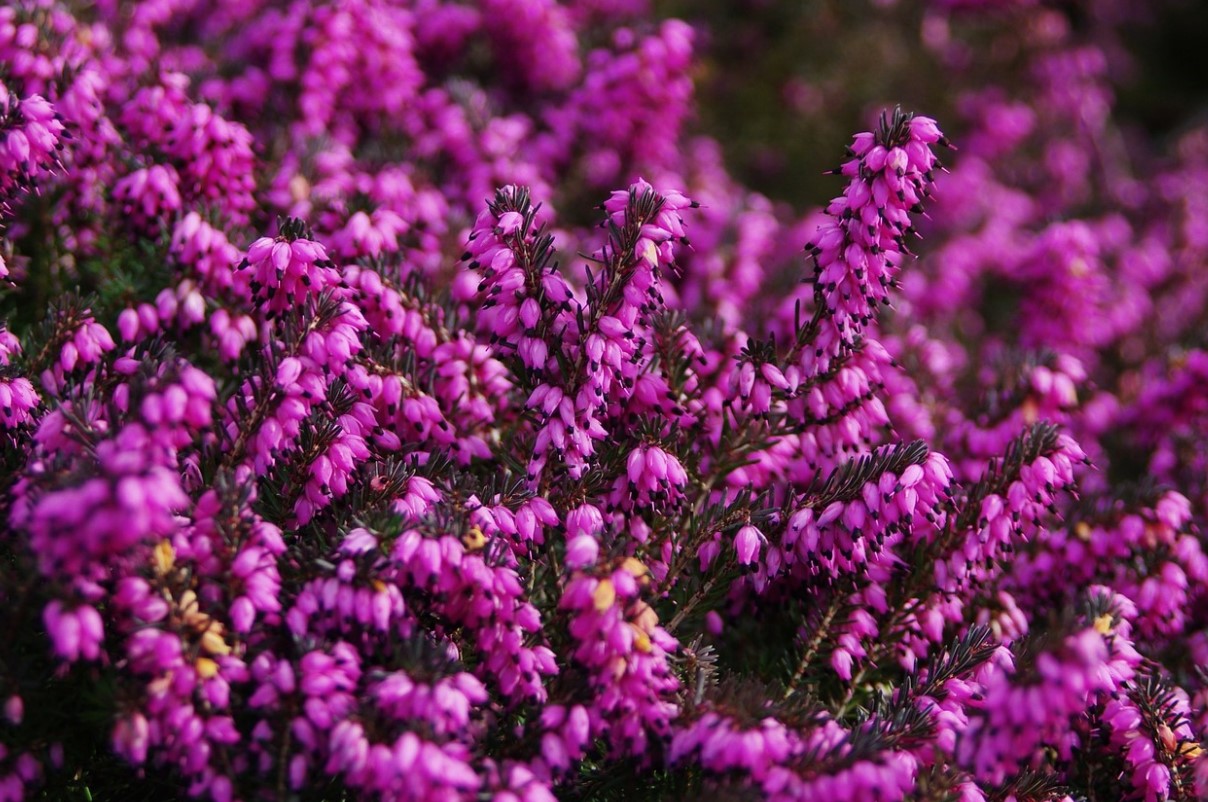
| Color of inflorescences and leaves | Flowering period | Height of shoots | Location and cultivation |
| The leaves are dark green, the flowers are dark ruby. | July-September | 40 cm. | They tolerate heat and drought well and prefer illuminated areas. |
Mullion (Calluna vulgaris Mullion)
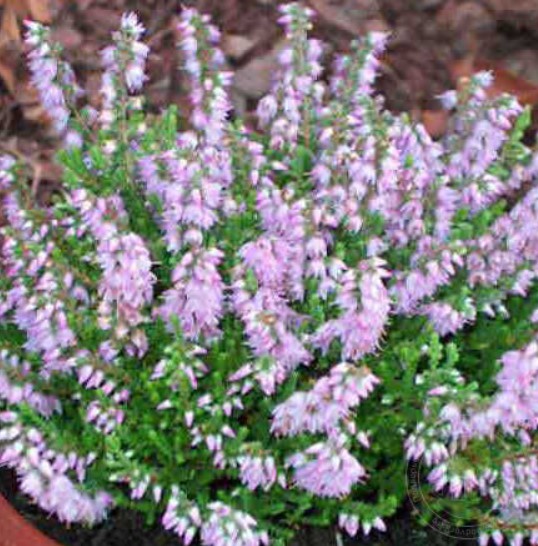
| Color of inflorescences and leaves | Flowering period | Height of shoots | Location and cultivation |
| Light green leaves, purple-pink inflorescences. | August-September. | Up to 40 cm. | Prefers light and well-moistened soil, loves the sun. |
Radnor (Calluna vulgaris Radnor)
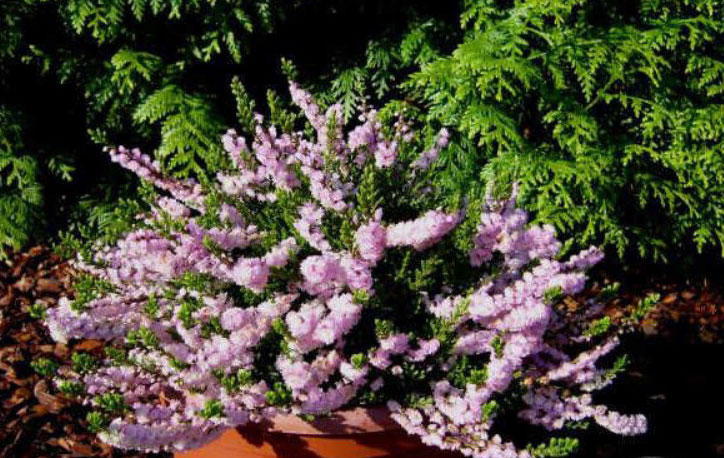
| Color of inflorescences and leaves | Flowering period | Height of shoots | Location and cultivation |
| The leaves are green, the flowers are pink or purple-pink, double. | August-September. | 20-25 cm. | They don't tolerate stagnant water, but prefer moist soil. They respond well to mulch and prefer open, sunny areas. |
Ralph Purnell (Calluna vulgaris Ralph Purnell)
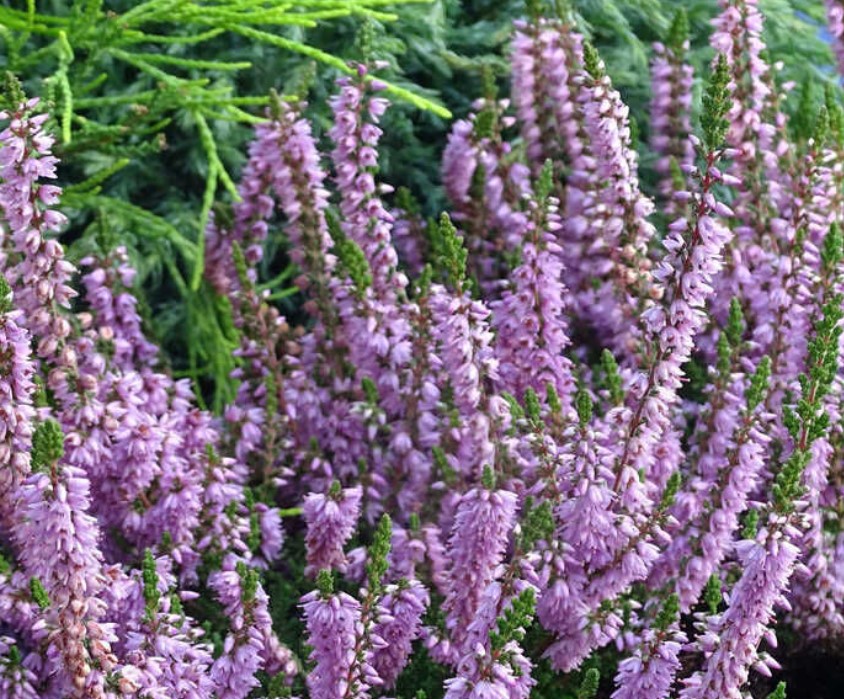
| Color of inflorescences and leaves | Flowering period | Height of shoots | Location and cultivation |
| The flowers are lilac-pink, forming short inflorescences. The foliage is dark green. | Late August-September. | 40 cm high and 60 cm wide. | Loves container growing, grows well in alpine gardens, does not tolerate stagnant water. |
Roma (Calluna vulgaris Roma)
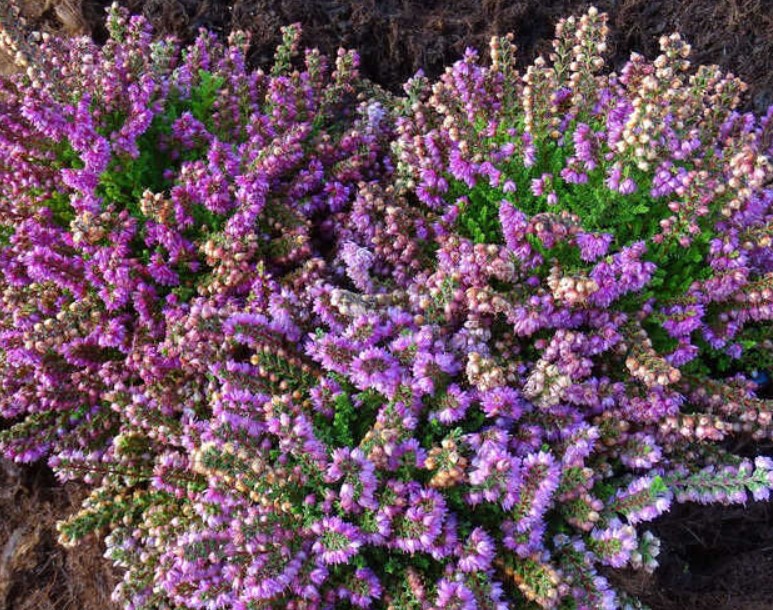
| Color of inflorescences and leaves | Flowering period | Height of shoots | Location and cultivation |
| The flowers are pinkish-lilac, bright. The leaves are dark green. | August-September. | 15-20 cm, width up to 45 cm. | Sunny site with sandy soil. Tolerates frosts down to -23°C. |
Ross Hutton
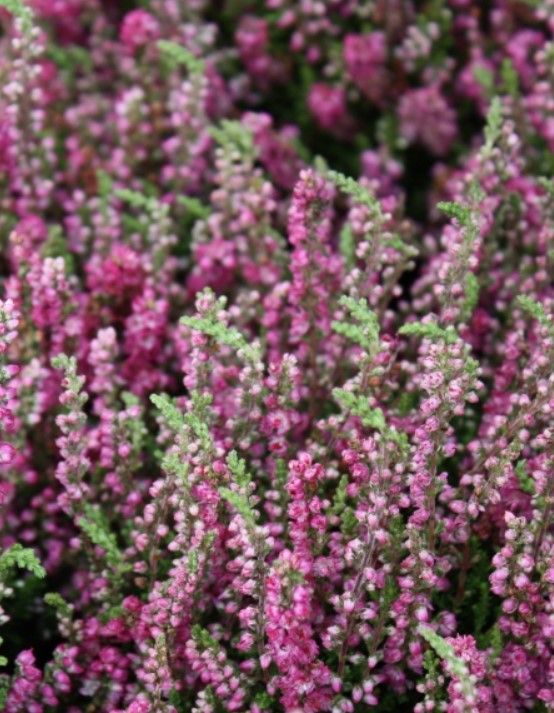
| Color of inflorescences and leaves | Flowering period | Height of shoots | Location and cultivation |
| In summer, the foliage is dark green. The flowers are double and raspberry-colored. | August-October. | 30-40 cm. | Grows slowly, tolerates shade well, and is frost-resistant. |
Red Pimpernel (Calluna vulgaris Red Pimpernel)
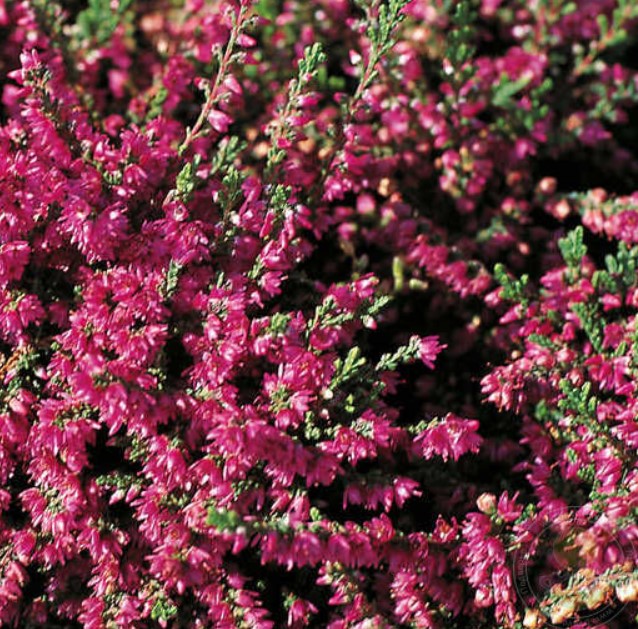
| Color of inflorescences and leaves | Flowering period | Height of shoots | Location and cultivation |
| Flowers are bright ruby, leaves are dark green. | Second half of August - end of September. | 20-25 cm. width up to 40 cm. | Sunny sites with light, acidic soil. Requires winter protection. |
Sister Anne (Calluna vulgaris Sister Anne)
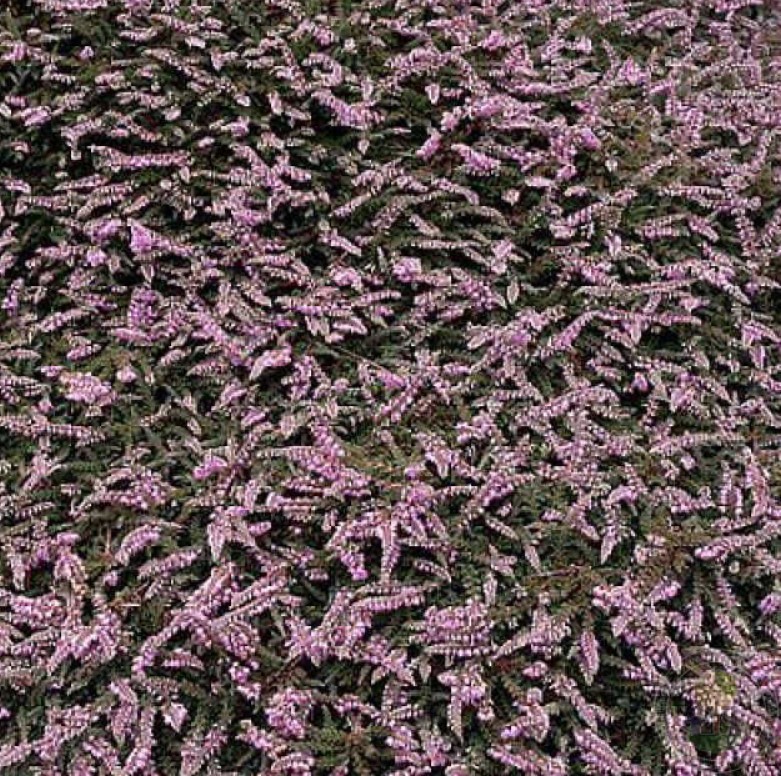
| Color of inflorescences and leaves | Flowering period | Height of shoots | Location and cultivation |
| The leaves are greyish-green, the flowers are pink. | August-September. | 30 cm. Bush diameter up to 45 cm. | Suitable for sunny areas, covered for the winter, it can withstand frosts down to -23. It enjoys mulching. |
Forest Fire (Calluna vulgaris Forest Fire)
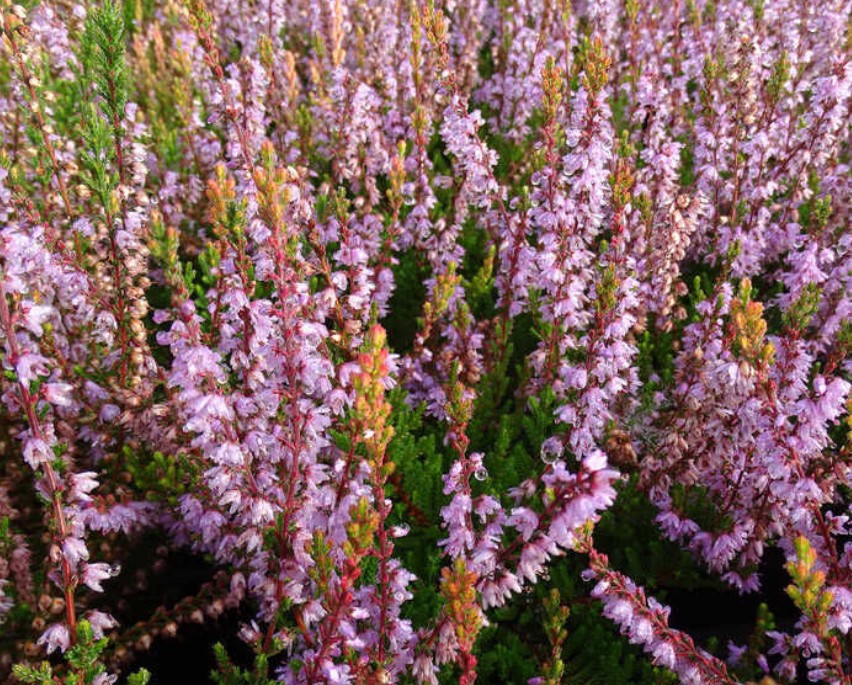
| Color of inflorescences and leaves | Flowering period | Height of shoots | Location and cultivation |
| Flowers are lilac with salmon tips at the beginning of flowering, leaves are green. | July-September. | 30 cm, width up to 35 cm. | Prefers acidic soil, well-lit areas, and likes mulch. |
Heidesinfonie (Calluna vulgaris Heidesinfonie)
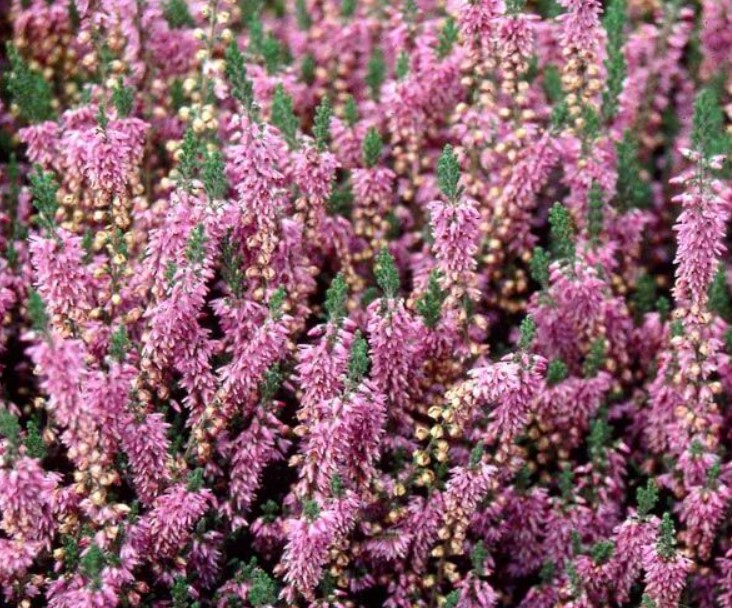
| Color of inflorescences and leaves | Flowering period | Height of shoots | Location and cultivation |
| Flowers are pink, leaves are dark green. | August-September. | 30-40 cm. | It does not tolerate stagnant water, prefers acidic soil and sunny locations. It needs to be covered for the winter. |
Heidezwerg (Calluna vulgaris Heidezwerg)
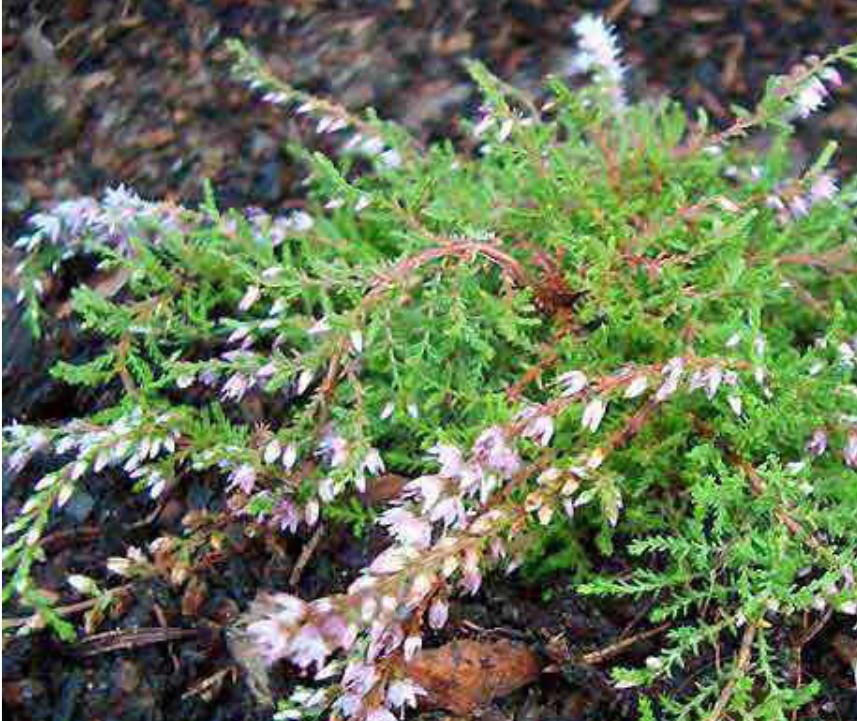
| Color of inflorescences and leaves | Flowering period | Height of shoots | Location and cultivation |
| The foliage is light green, the flowers are purple-pink. | August-September | 10-15 cm. | A sunny location with acidic, moist soil. |
Calluna Hookstone
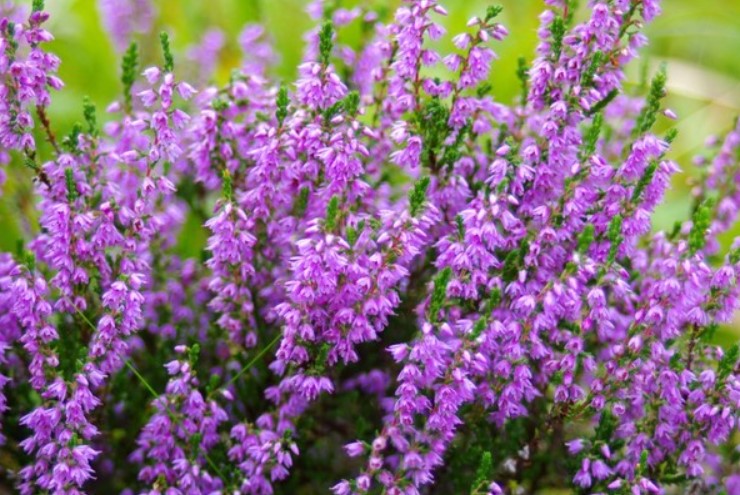
| Color of inflorescences and leaves | Flowering period | Height of shoots | Location and cultivation |
| The leaves are dark green, the flowers are salmon-colored, and they form elongated clusters. | Late August-September. | 60 cm. | Prefers sunny areas and likes mulching. |
8 varieties of heather with white flowers and green foliage
Alba Praecox (Calluna vulgaris Alba Praecox)
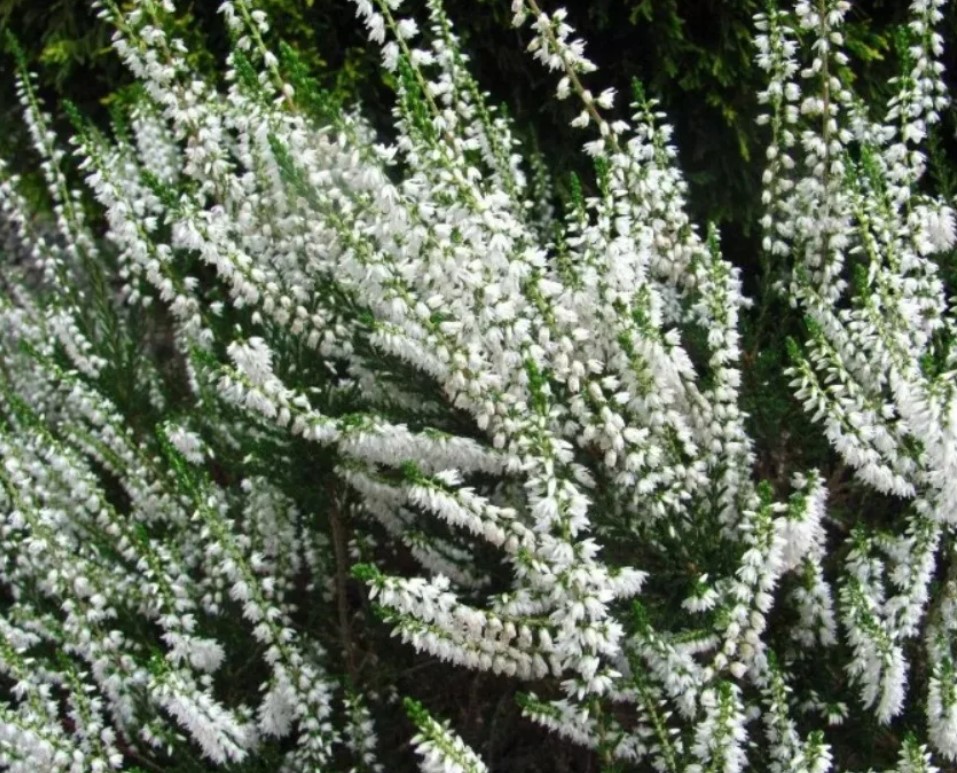
| Color of inflorescences and leaves | Flowering period | Height of shoots | Location and cultivation |
| Small white flowers, leaves initially bright green, then begin to darken. | July-September. | 30-35 cm. | A sunny location, an area without stagnant moisture, prefers mulching. |
Beoley Silver (Calluna vulgaris Beoley Silver)
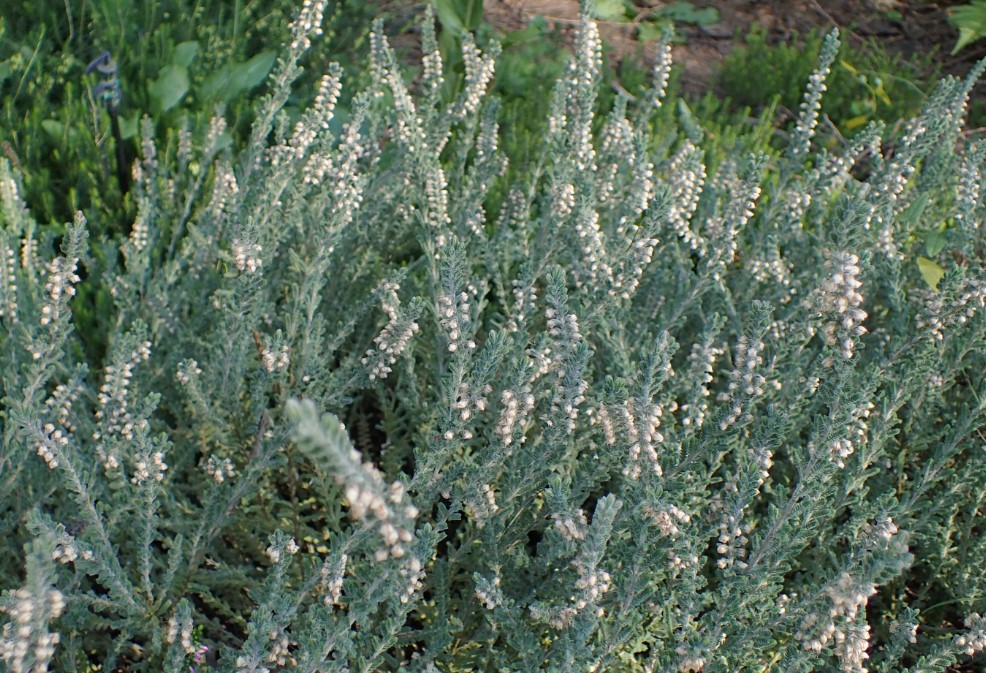
| Color of inflorescences and leaves | Flowering period | Height of shoots | Location and cultivation |
| Gray-silver leaves with pubescence. Flowers are white. | September-October. | 40 cm. | A sunny area without waterlogged soil. |
Velvet Fascination (Calluna vulgaris Velvet Fascination)
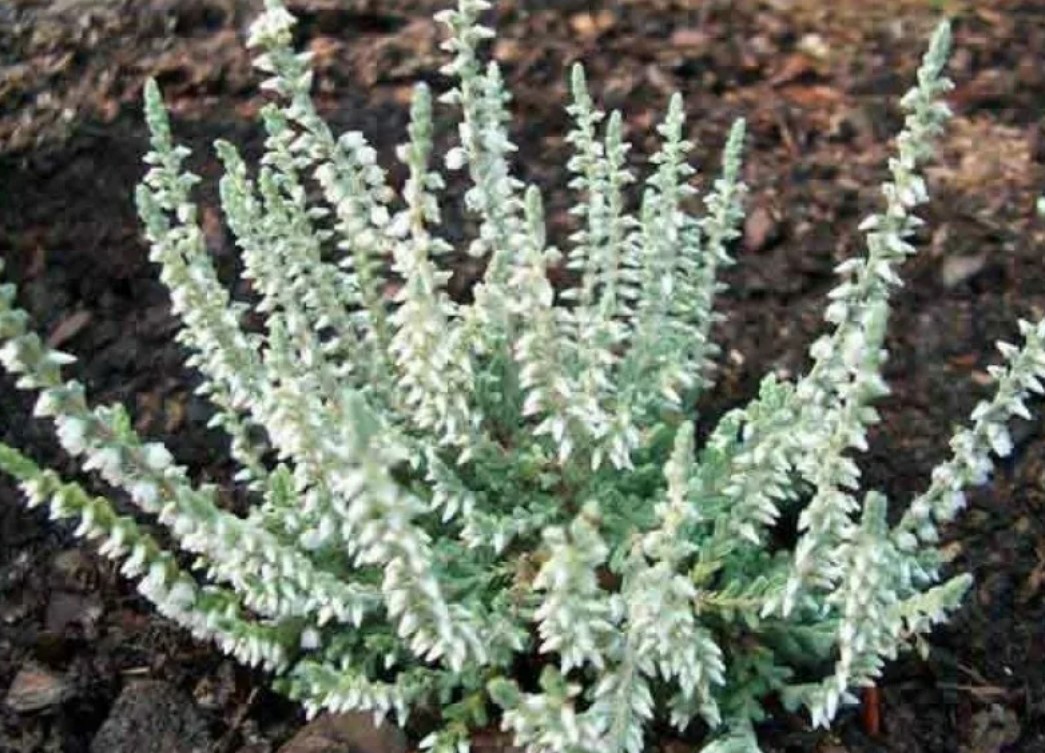
| Color of inflorescences and leaves | Flowering period | Height of shoots | Location and cultivation |
| The leaves are grey-green, the flowers are snow-white. | August-September. | 40 cm. | A sunny location, the flowers are covered for the winter and can withstand frosts down to -29. |
Long White (Calluna vulgaris Long White)
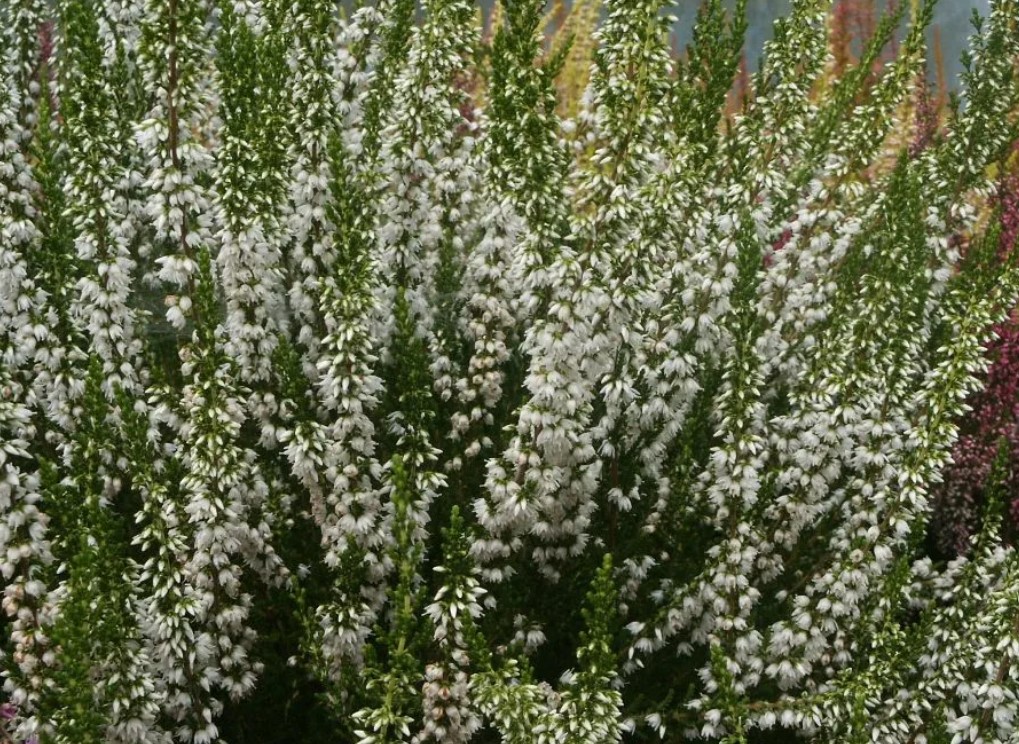
| Color of inflorescences and leaves | Flowering period | Height of shoots | Location and cultivation |
| Flowers are numerous and white. The leaves are small and green. | Late August-September. | 50 cm. | Prefers sun, mulch, and acidic soil. Doesn't tolerate stagnant water. Covered for the winter, it can withstand temperatures down to -23°C. |
Spring Cream (Calluna vulgaris Spring Cream)
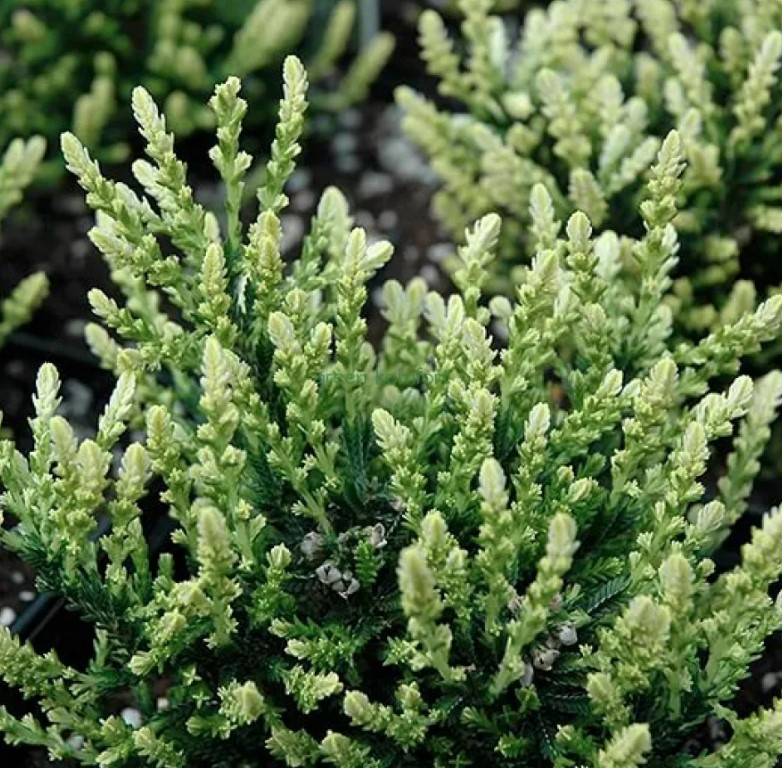
| Color of inflorescences and leaves | Flowering period | Height of shoots | Location and cultivation |
| The foliage is bright green, the flowers are white. | August-September. | 30-40 cm. | A sunny location with sandy soil and good moisture. Requires winter shelter. |
Hammond's (Calluna vulgaris Hammondii)
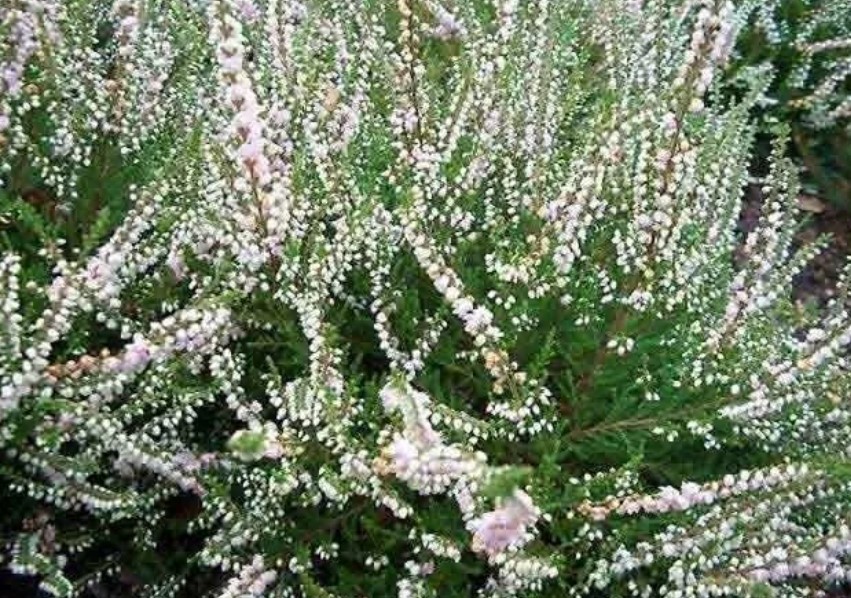
| Color of inflorescences and leaves | Flowering period | Height of shoots | Location and cultivation |
| Numerous white flowers and intense green leaves. | Second half of July-September. | 30-40 cm. | A sunny location with peaty soil can withstand frosts down to -23. |
Humpty Dumpty (Calluna Humpty Dumpty)
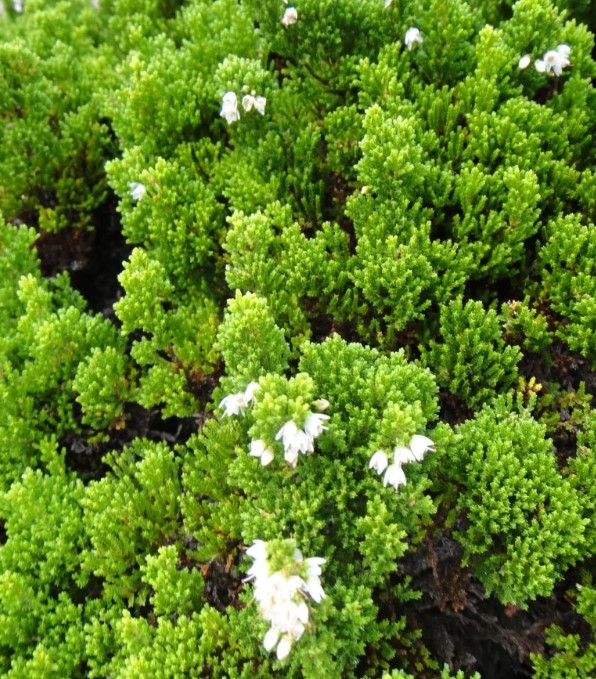
| Color of inflorescences and leaves | Flowering period | Height of shoots | Location and cultivation |
| Bright green leaves and small white flowers. | End of August. | A low-growing variety with shoots up to 5 cm and a width of up to 10 cm. | It can grow in shade, but blooms more profusely in the sun. |
White Lawn (Calluna vulgaris White Lawn)
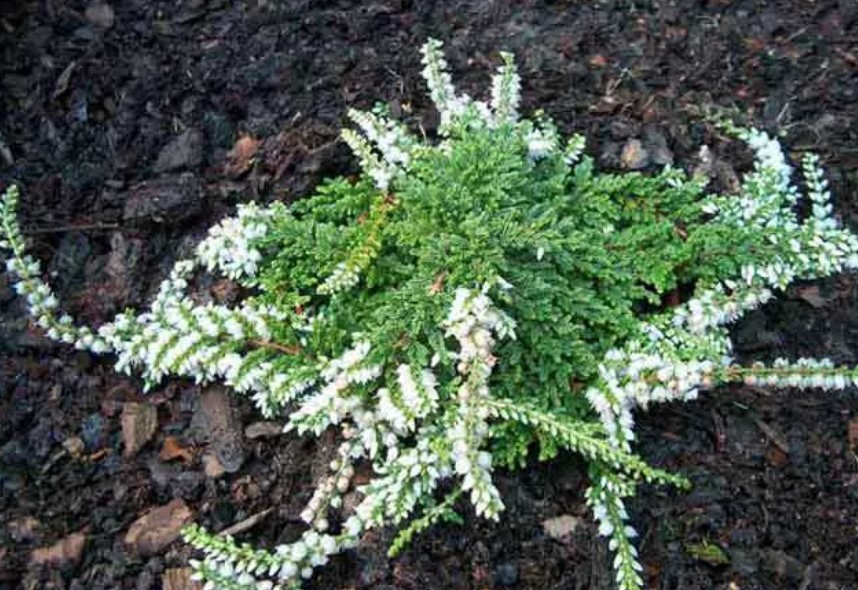
| Color of inflorescences and leaves | Flowering period | Height of shoots | Location and cultivation |
| Green foliage and white inflorescences. | August-September. | 10-15 cm. | Sunny sites with moist, acidic soil. Requires winter protection. Tolerates temperatures down to -23°C. |
6 varieties of heather with silver foliage
Annamaria (Calluna vulgaris Annemarie)
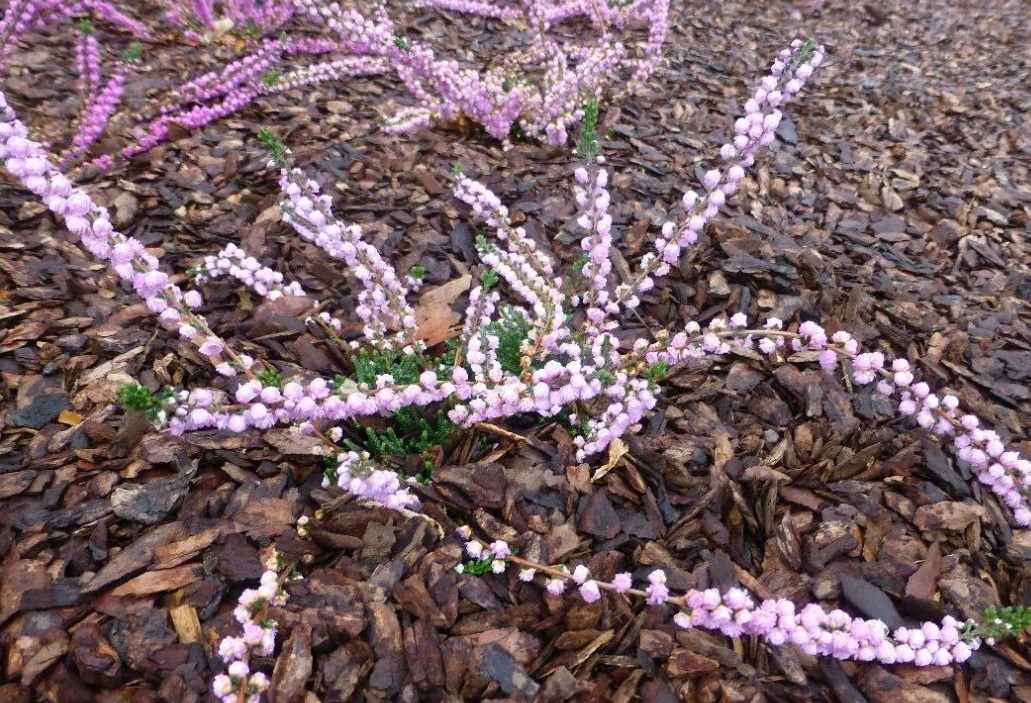
| Color of inflorescences and leaves | Flowering period | Height of shoots | Location and cultivation |
| The inflorescences are initially purple-violet, later becoming dark pink. The leaves are gray-green. Inflorescences are double. |
September-October. | 23-30 cm. | Acidic soil in a well-lit area. Cover for the winter. Tolerates temperatures down to -23°C. |
Velvet Fascination (Calluna vulgaris Velvet Fascination)
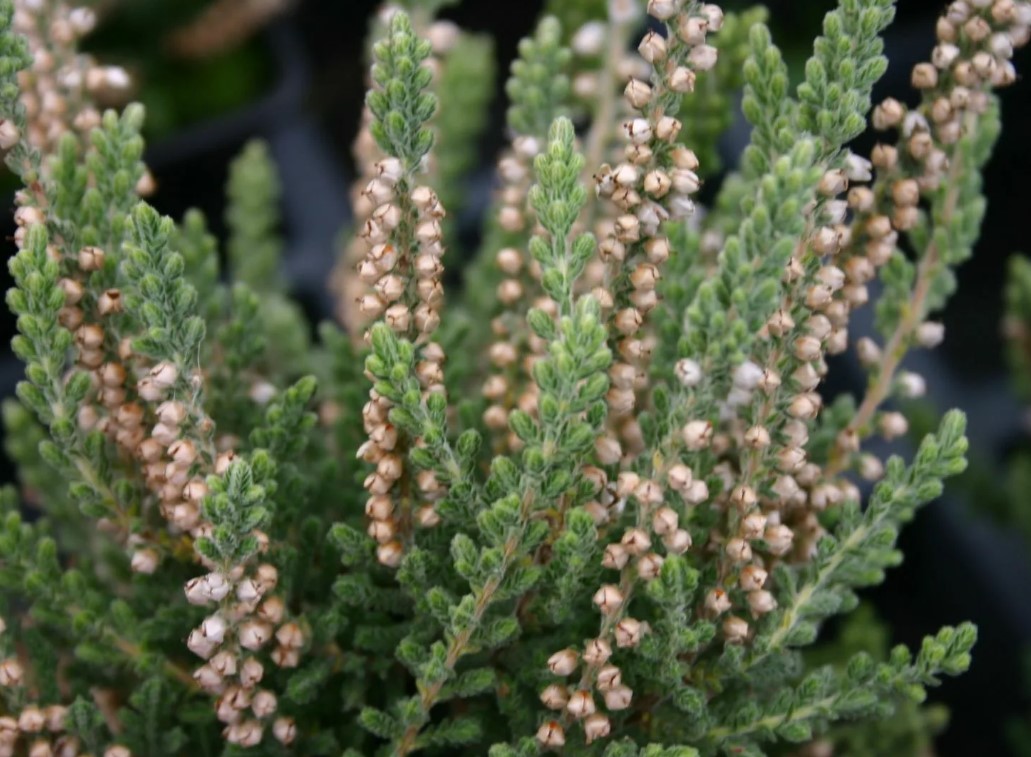
| Color of inflorescences and leaves | Flowering period | Height of shoots | Location and cultivation |
The leaves are greyish-green, the flowers are snow-white.
|
August-September. | 40 cm. | Sunny sites with light soil. Requires winter cover. Tolerates temperatures down to -29°C. |
Grizabella (Calluna vulgaris Grizabella)
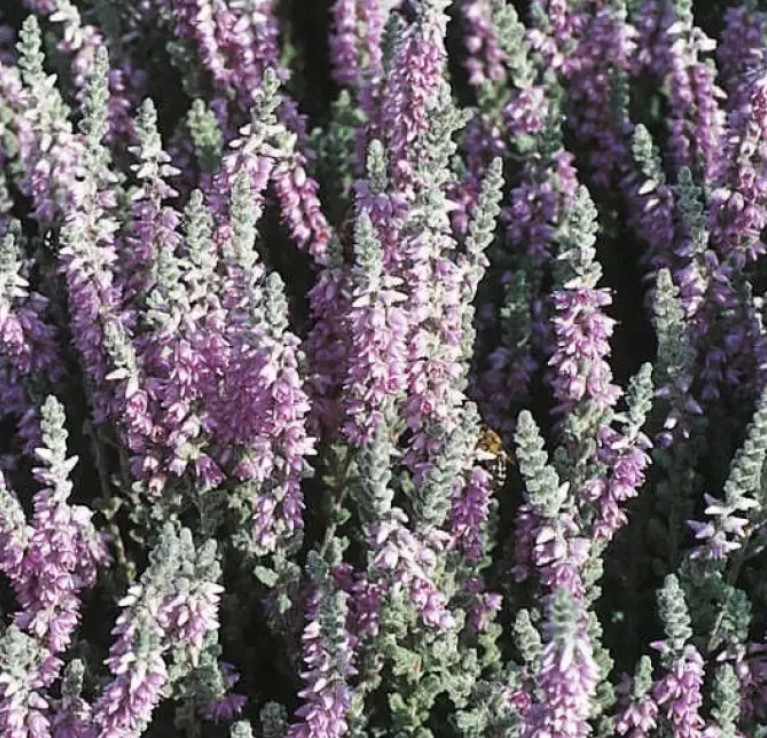
| Color of inflorescences and leaves | Flowering period | Height of shoots | Location and cultivation |
| The foliage is silvery-grey, the inflorescences are pinkish-purple. | July-September. | 30 cm. | Prefers sunny areas without stagnant moisture, grown in the company of conifers, rhododendrons, and ferns. |
Silver Knight (Calluna vulgaris Silver Knight)
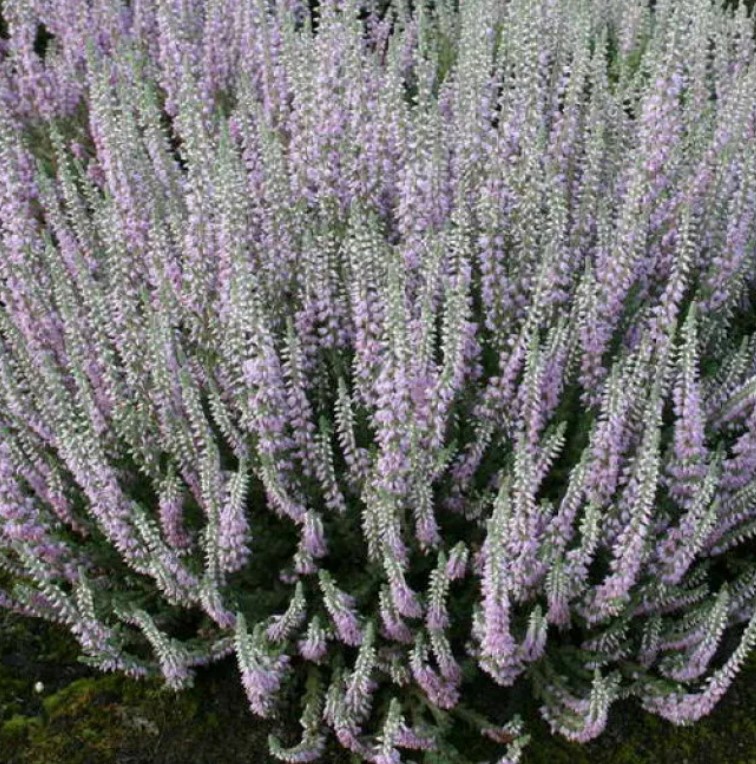
| Color of inflorescences and leaves | Flowering period | Height of shoots | Location and cultivation |
| The leaves change colour from greyish to burgundy at the end of the season, the flowers are pale purple or lilac. | August-September. | 30-40 cm. | Prefers sunny areas. Covers for the winter. |
Andrew Proudley (Calluna Andrew Proudley)
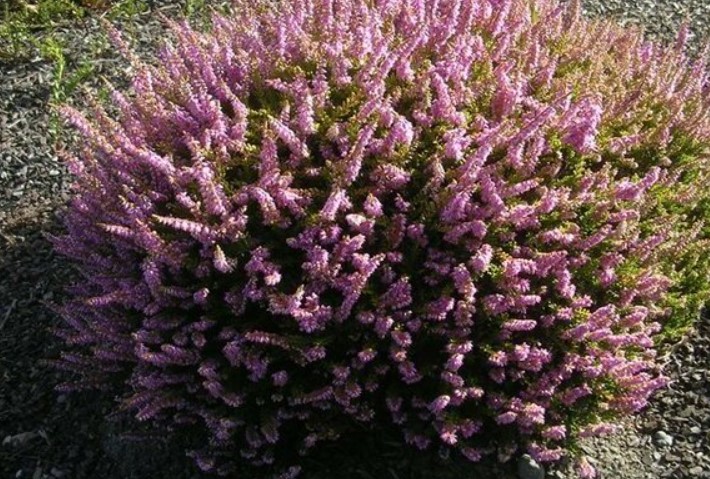
| Color of inflorescences and leaves | Flowering period | Height of shoots | Location and cultivation |
| Young leaves are orange with pale yellow tips. Flowers are pink and small. | August-September. | 15 cm. | They love sun, mulch, and moist soil. They need to be covered for the winter. |
Jan Dekker (Calluna vulgaris Jan Dekker)
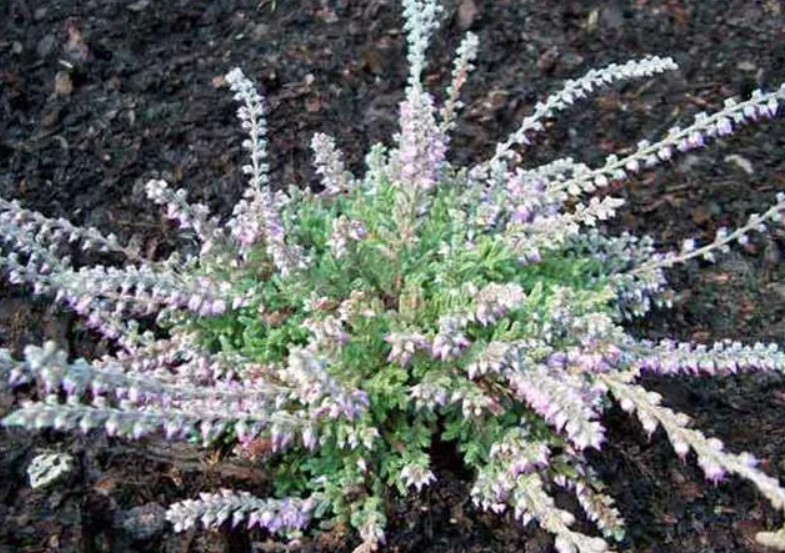
| Color of inflorescences and leaves | Flowering period | Height of shoots | Location and cultivation |
| The leaves are silvery-grey, the flowers are purple. | August-September. | 15-20 cm. | Prefers a well-lit place and is covered for the winter. |
26 Heather Varieties with Golden Foliage
Allegretto (Calluna vulgaris Allegretto)
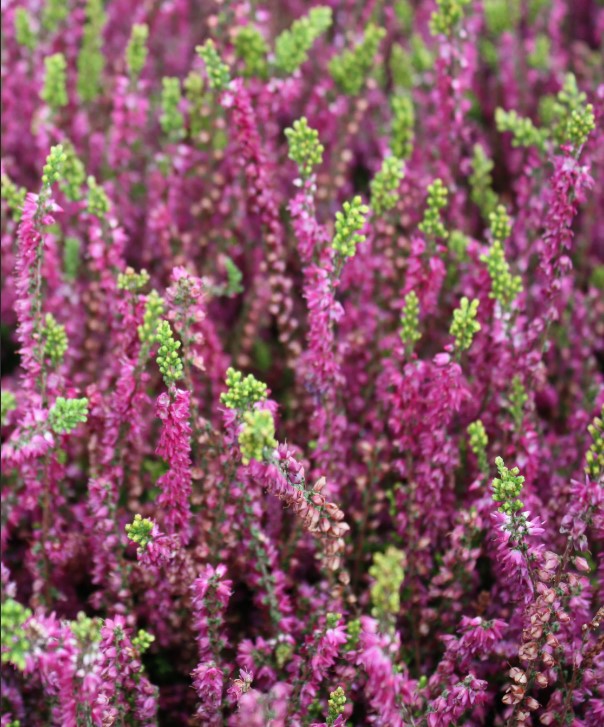
| Color of inflorescences and leaves | Flowering period | Height of shoots | Location and cultivation |
| The leaves change color from greenish-yellow to bronze. The flowers are purple. | End of July - mid-September. | 45-60 cm. | It grows slowly and prefers a sunny location with acidic, well-drained soil. It needs to be covered for the winter and can withstand temperatures down to -23°C. |
Aurea (Calluna Aurea)
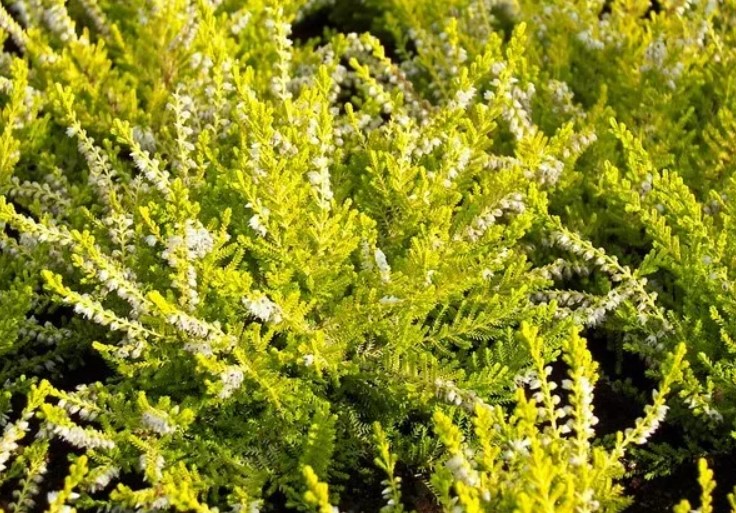
| Color of inflorescences and leaves | Flowering period | Height of shoots | Location and cultivation |
| The leaves are golden-yellow during the summer, turning red-brown with the arrival of cold weather. | Mid-August | 15 cm. | A drought-resistant variety. Does not tolerate frost. Prefers sunny areas. |
Barcelona (Calluna vulgaris Barcelona)
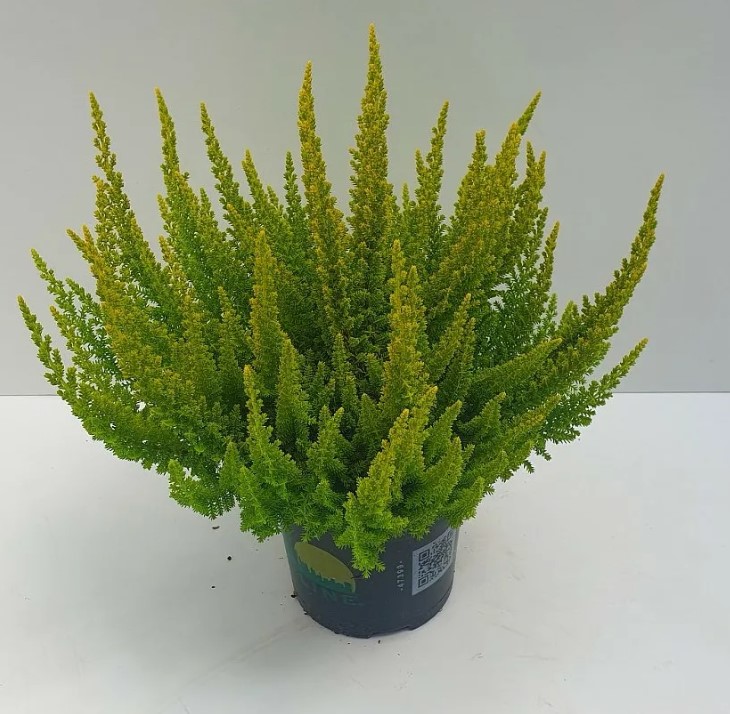
| Color of inflorescences and leaves | Flowering period | Height of shoots | Location and cultivation |
| The leaves are yellowish-green, the flowers are white. | August-October. | 30 cm. | Sunny location with acidic, well-drained soil. Mulching is necessary. Requires shelter. Frost resistance down to -23°C. |
Bonita (Calluna vulgaris Bonita)
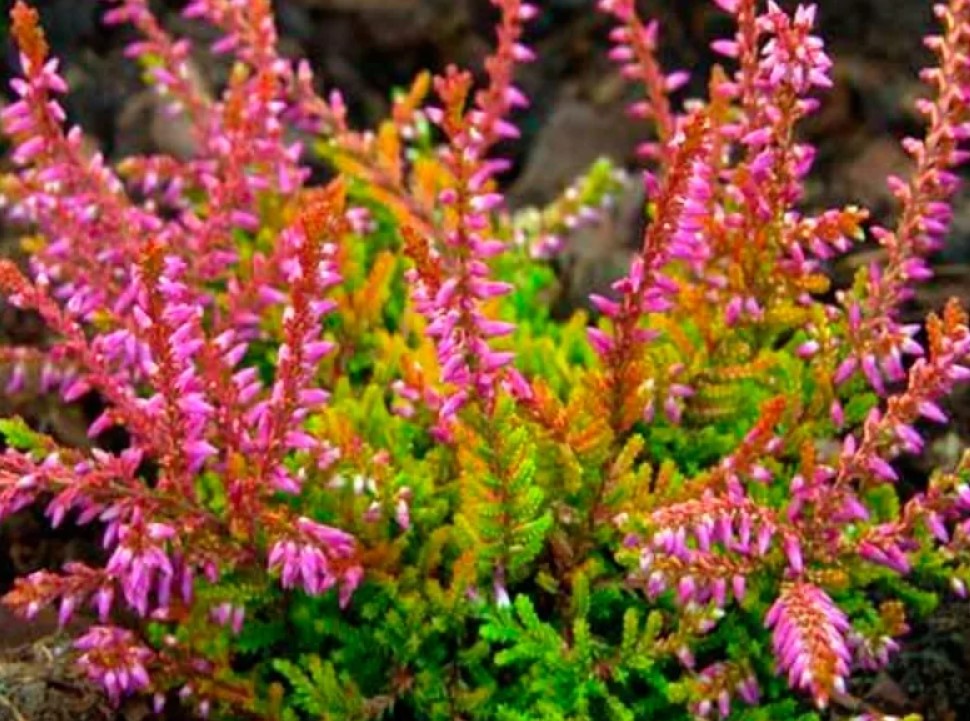
| Color of inflorescences and leaves | Flowering period | Height of shoots | Location and cultivation |
| Leaves are yellowish-orange at the beginning of the season, then turn red. | September-October. | 25 cm. | A sunny location with acidic, moist soil. Tolerates frosts down to -23°C. |
Boskoop (Calluna vulgaris Boskoop)
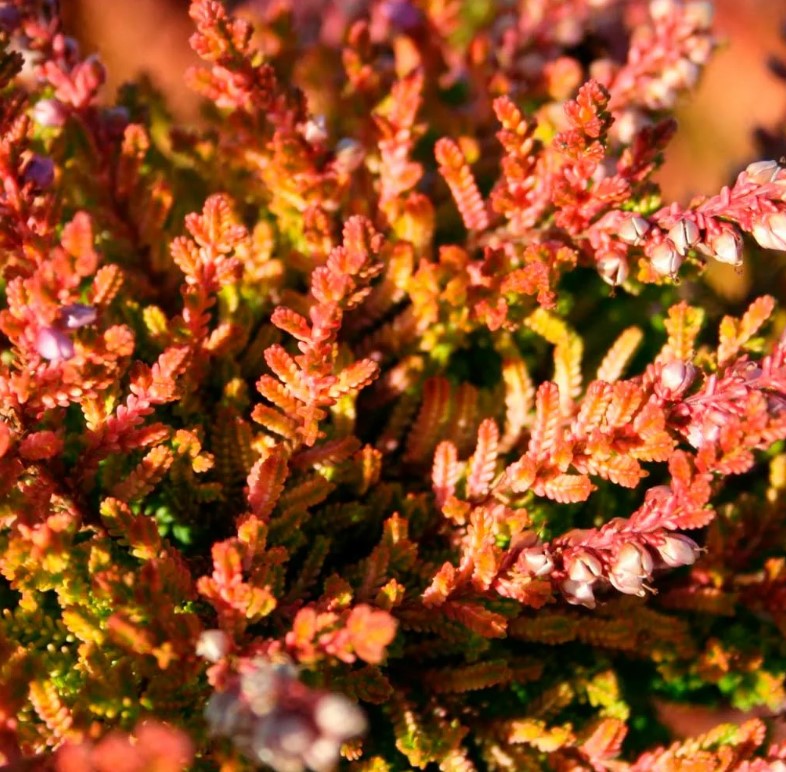
| Color of inflorescences and leaves | Flowering period | Height of shoots | Location and cultivation |
| The leaves are yellow, changing to copper-orange as they grow. The inflorescences are lilac. | August-September. | 15-20 cm. | Prefers sunny locations. It doesn't tolerate waterlogging and is grown in rock gardens. It tolerates temperatures down to -23°C (-23°F) and should be covered for the winter. |
Westerly Gold (Calluna vulgaris Westerly Gold)
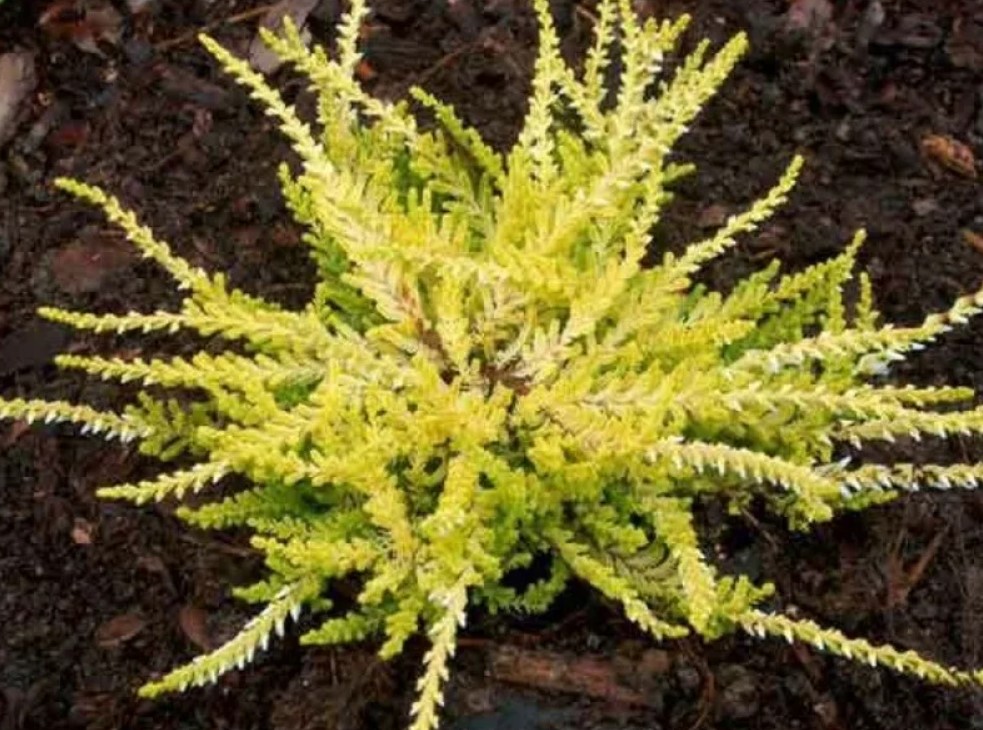
| Color of inflorescences and leaves | Flowering period | Height of shoots | Location and cultivation |
| The leaves are light yellow, the flowers are white. | August-September. | 25 cm. | Sunny site, acidic soil. Does not tolerate stagnant water, but can withstand temperatures down to -23°C. |
Wickware Flame (Calluna vulgaris Wickware Flame)
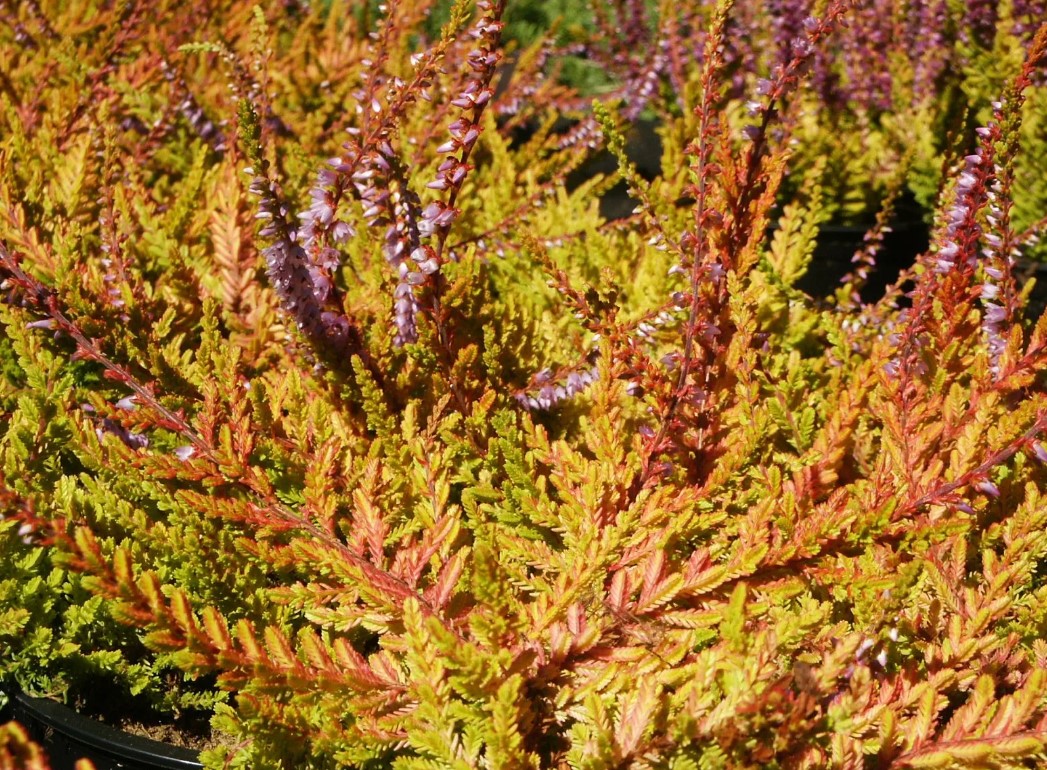
| Color of inflorescences and leaves | Flowering period | Height of shoots | Location and cultivation |
| The leaves are golden-yellow in summer and orange in winter. The flowers are lavender-pink. | August-September. | 30 cm, bush width up to 60 cm. | Sunny site, peaty, acidic soil. Requires winter cover. |
Gold Haze (Calluna vulgaris Gold Haze)
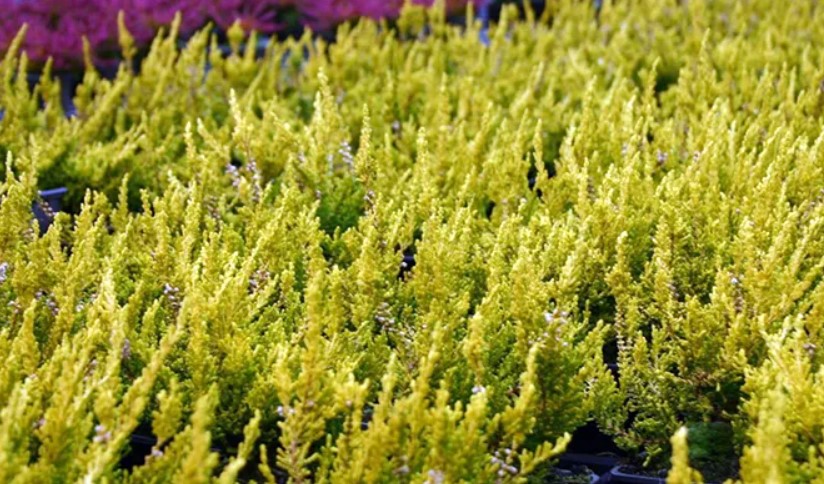
| Color of inflorescences and leaves | Flowering period | Height of shoots | Location and cultivation |
| The leaves are initially yellow, then acquire a greenish tint. | August-September. | 30-40 cm. | Sunny location, can withstand temperatures down to -23. |
Dart's Parrot (Calluna vulgaris Dart`s Parrot)
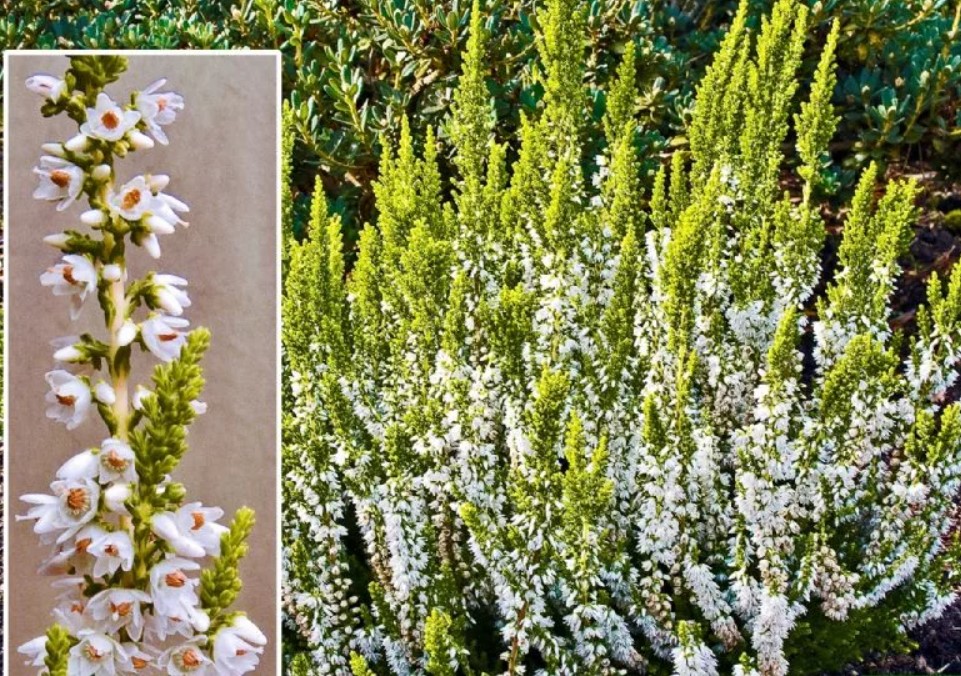
| Color of inflorescences and leaves | Flowering period | Height of shoots | Location and cultivation |
| The leaves are yellow-green, the flowers are white. | August-September. | 30-40 cm. | They love bright sun, but the plants need to be covered for the winter. |
David Hagenaars (Calluna vulgaris David Hagenaars)
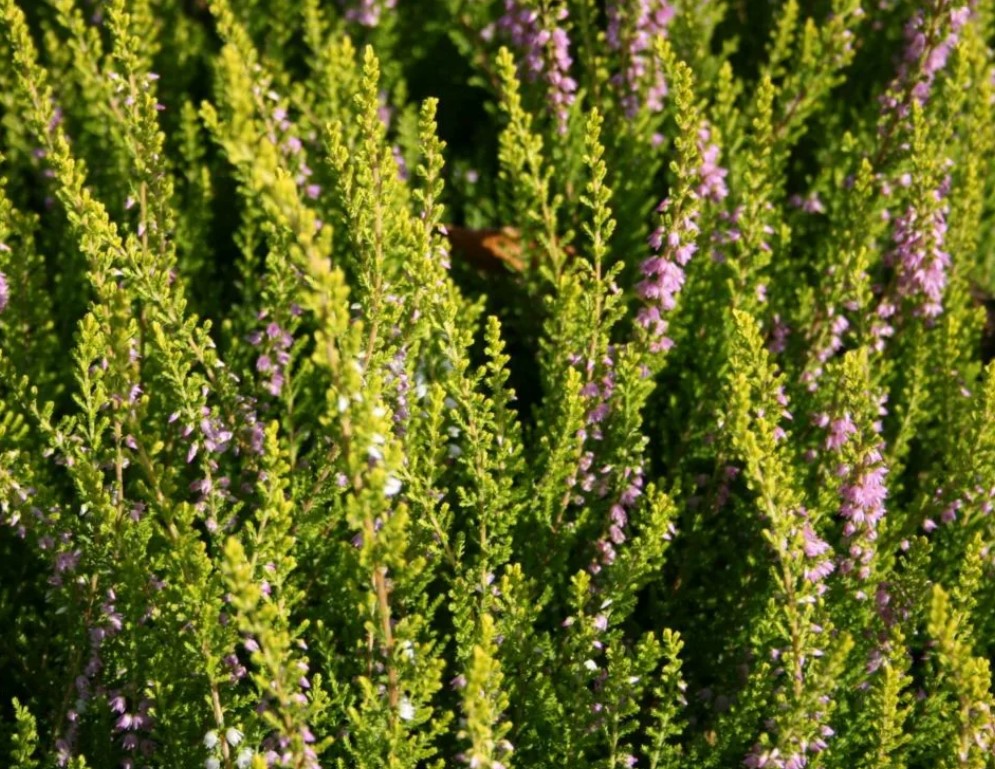
| Color of inflorescences and leaves | Flowering period | Height of shoots | Location and cultivation |
| Flowers are pink, leaves change color from lemon to golden yellow. | August-September. | 35 cm. | A sunny site. The soil is light, acidic, and not too wet. It can withstand temperatures down to -23°C in winter. |
Seestern (Calluna vulgaris Seestern)
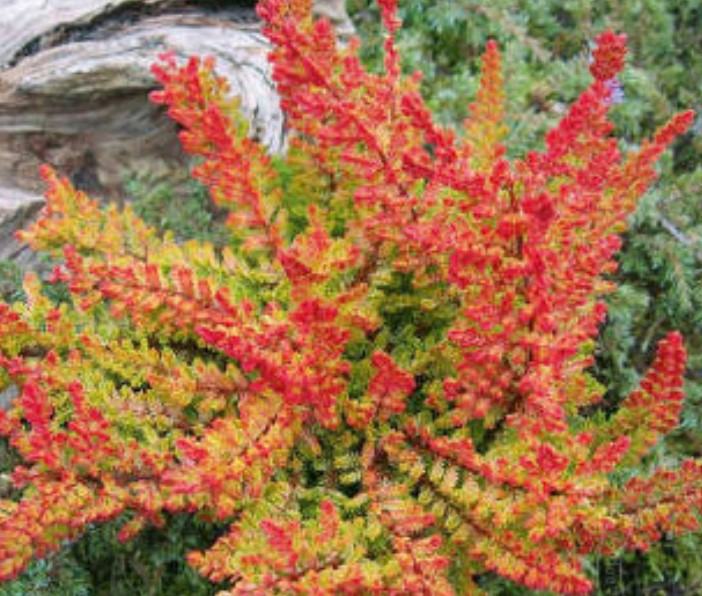
| Color of inflorescences and leaves | Flowering period | Height of shoots | Location and cultivation |
| The foliage is bright yellow, gradually turning orange as the weather gets colder. The flowers are light purple. | August-September. | 20 cm. | Grows in well-lit areas. Covered for the winter, it tolerates temperatures down to -23 degrees Celsius. |
Zeta (Calluna vulgaris Zeta)
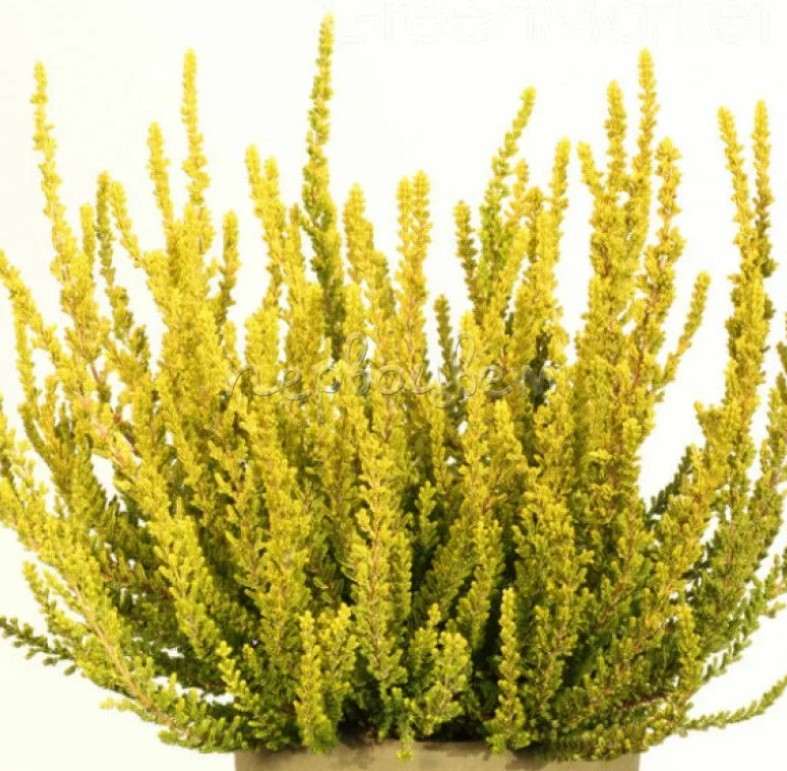
| Color of inflorescences and leaves | Flowering period | Height of shoots | Location and cultivation |
| It does not form inflorescences, the leaves are green and turn yellow over time. | It is not a flowering variety. | 50 cm. | Prefers sunny locations and is suitable for planting in pots. It requires winter cover. It tolerates temperatures down to -23°C. |
Zoe (Calluna vulgaris Zoe)
| Color of inflorescences and leaves | Flowering period | Height of shoots | Location and cultivation |
| The leaves are initially yellow, then turn orange. It blooms rarely. | September, rare flowering. | 25 cm. | Prefers sun, mulch, and moist soil. Covers for the winter. Tolerates temperatures down to -23°C. |
Sonnenzwerg (Calluna vulgaris Sonnenzwerg)
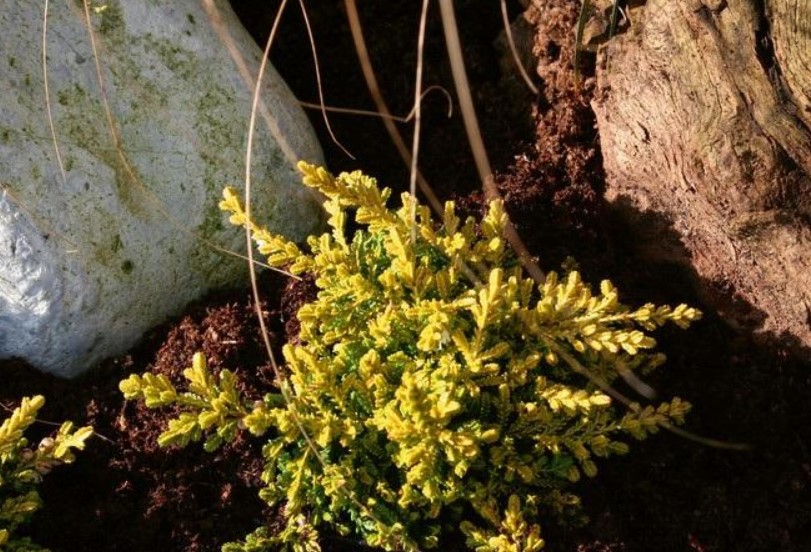
| Color of inflorescences and leaves | Flowering period | Height of shoots | Location and cultivation |
| White flowers, yellow leaves. | August-September. | 10-15 cm. | Prefers well-lit areas, withstands cold down to -23, and is covered for the winter. |
Zora (Calluna vulgaris Zora)
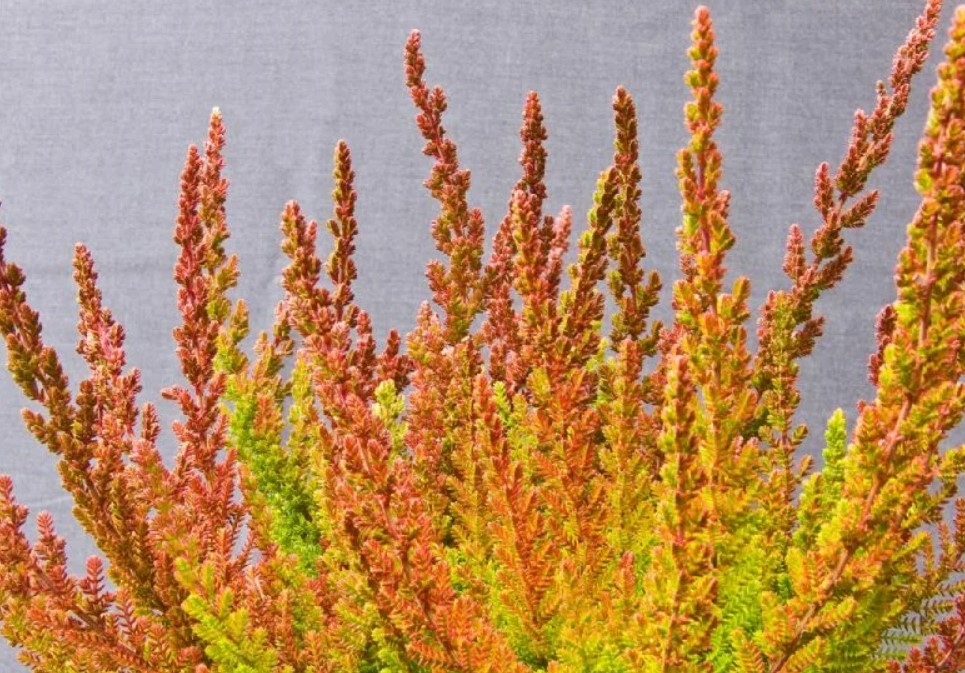
| Color of inflorescences and leaves | Flowering period | Height of shoots | Location and cultivation |
| Leaves are copper-orange or reddish-orange. | Flowers do not form. | 50 cm. | It grows in acidic, moist soil, prefers a sunny location, and looks good in pots and on alpine hills. |
Con Brio (Calluna vulgaris Con Brio)
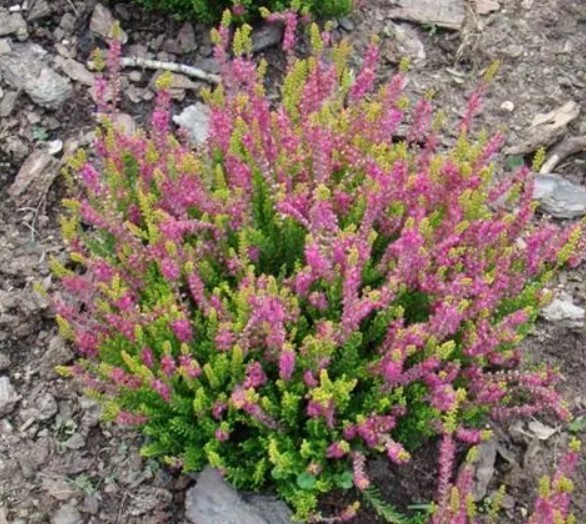
| Color of inflorescences and leaves | Flowering period | Height of shoots | Location and cultivation |
| In spring the leaves are golden-yellow with a slight reddish tint, in summer they turn green-yellow, and in autumn they turn bronze. | August-September | 35 cm. | Sunny location, alpine garden. Flowerbeds with conifers. Covered for the winter, tolerates frosts down to -23°C. |
Cottswood Gold (Calluna vulgaris Cottswood Gold)
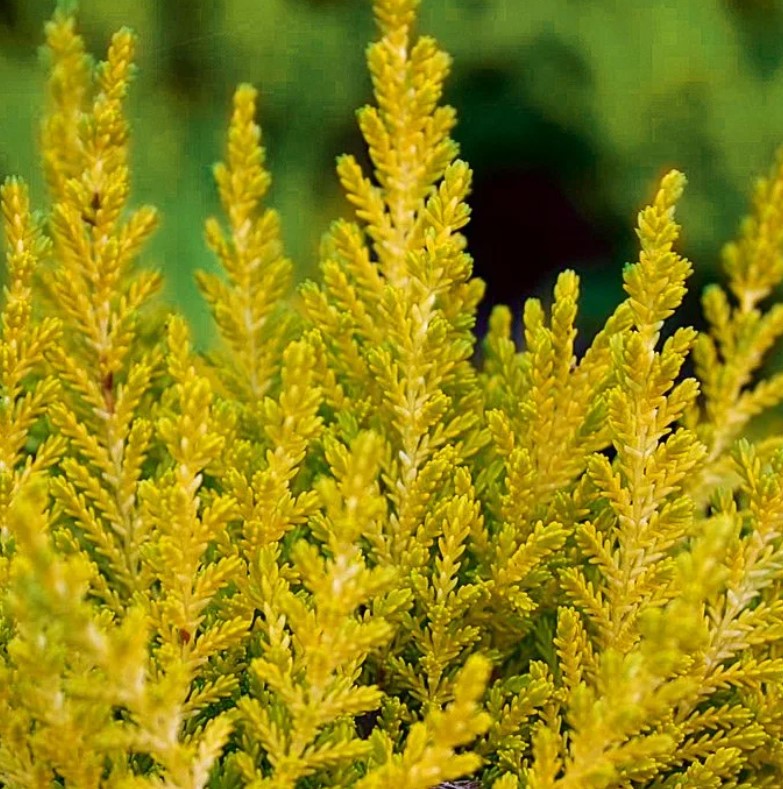
| Color of inflorescences and leaves | Flowering period | Height of shoots | Location and cultivation |
| The leaves are bright yellow, the flowers are white. | August-September. | 35 cm. | Prefers a sunny location, does not tolerate stagnant moisture, is covered for the winter, and does not die until the temperature drops to -23 degrees. |
Crimson Sunset (Calluna vulgaris Crimson Sunset)
| Color of inflorescences and leaves | Flowering period | Height of shoots | Location and cultivation |
| The color of the leaves changes from yellow to golden, the flowers are pinkish-purple. | September. | 20 cm. | Growth is slow. Prefers poor, sandy soils with high acidity. |
Loni (Calluna vulgaris Loni)
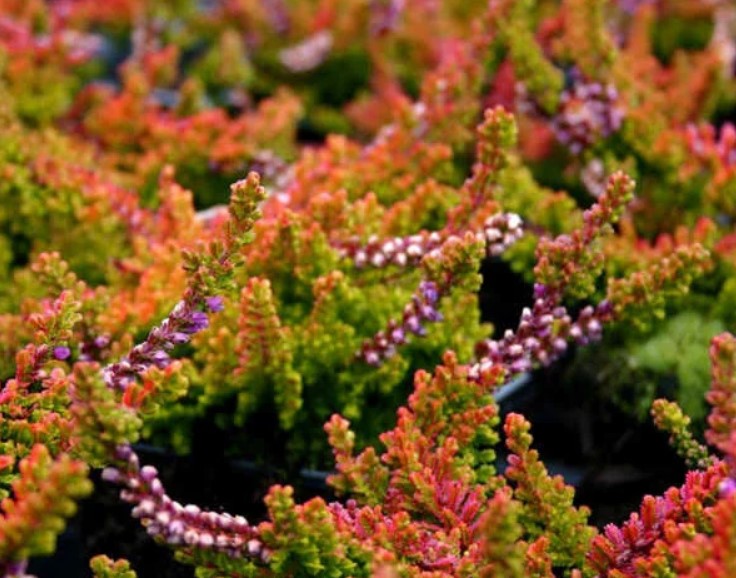
| Color of inflorescences and leaves | Flowering period | Height of shoots | Location and cultivation |
| The leaves are yellow-green, turning copper-orange in autumn. The flowers are ruby-red. | September-October. | 20cm. | A sunny site, prefers moist, light soil. Cover with spruce branches in winter. |
Olympic Gold (Calluna vulgaris Olympic Gold)
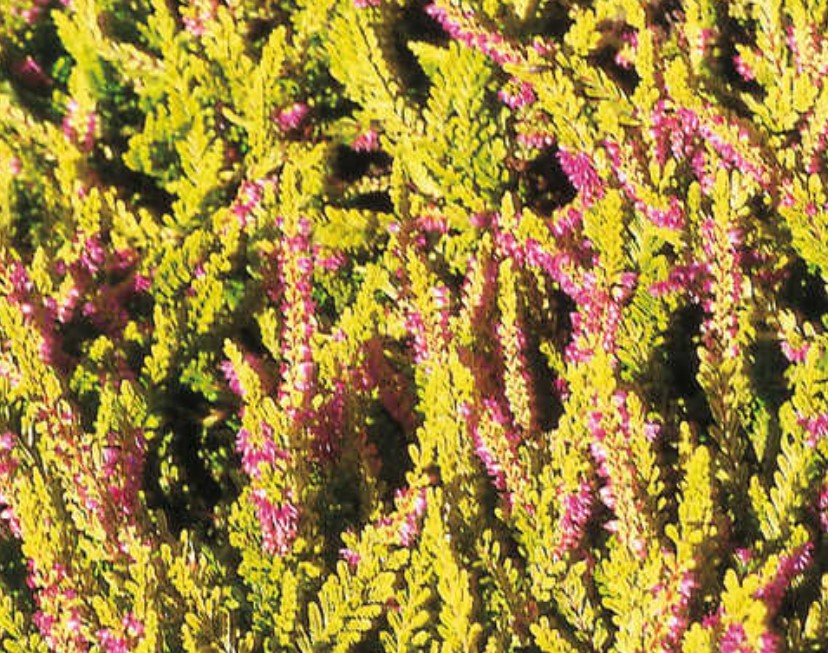
| Color of inflorescences and leaves | Flowering period | Height of shoots | Location and cultivation |
| The leaves are yellow throughout the season. The flowers are light purple. | September-October. | 30 cm. | Sunny locations, soil without stagnant moisture, mulched surface. Tolerates frosts down to -23. |
Orange Queen (Calluna vulgaris Orange Queen)
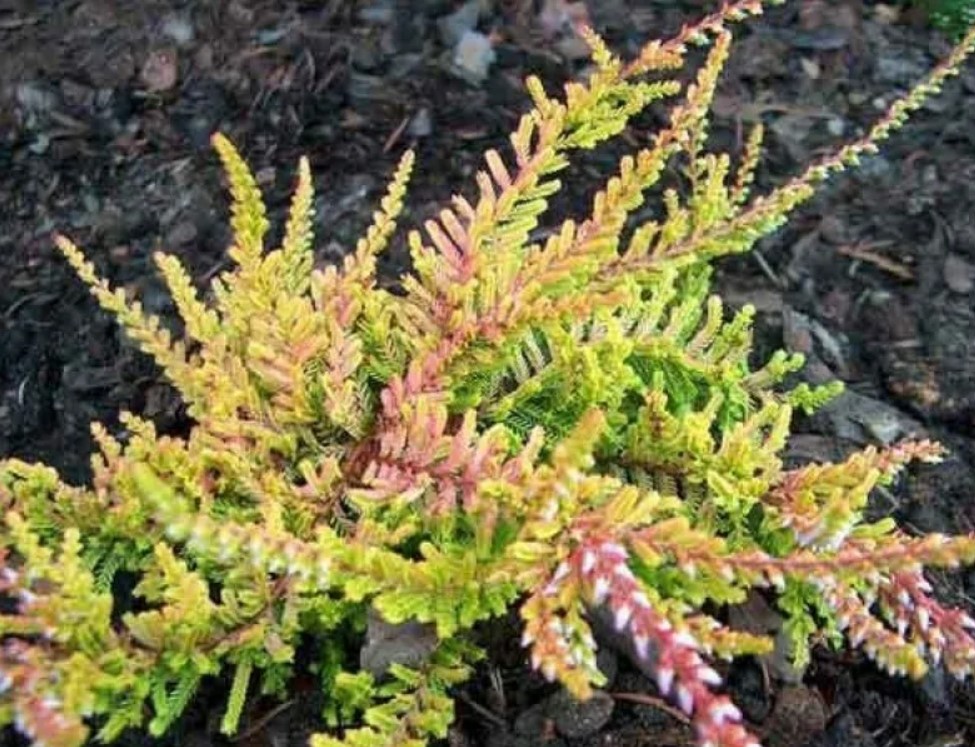
| Color of inflorescences and leaves | Flowering period | Height of shoots | Location and cultivation |
| The leaves are yellow, turning orange at the end of the season. The flowers are purple-red. | August-September. | 20-30 cm. | Sunny garden areas with acidic, moist soil. Requires shelter and annual pruning of inflorescences. |
Red Carpet (Calluna vulgaris Red Carpet)
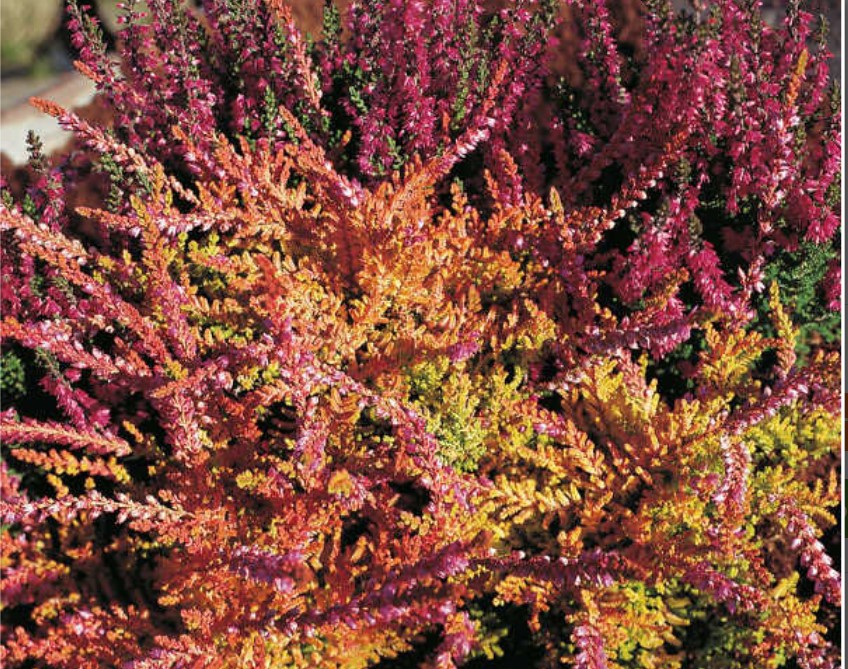
| Color of inflorescences and leaves | Flowering period | Height of shoots | Location and cultivation |
| Flowers are pink-purple, leaves are yellow, later turning orange. | September. | 20 cm. | They grow in well-drained, sunny garden areas and look great in rock gardens. They need to be covered for the winter and can withstand temperatures down to -23°C. |
Robert Chapman (Calluna vulgaris Robert Chapman)
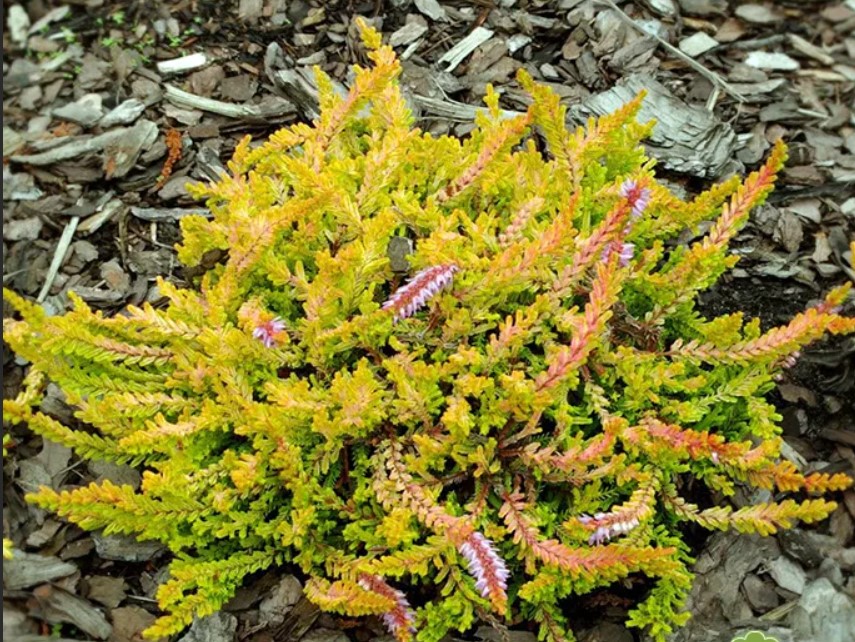
| Color of inflorescences and leaves | Flowering period | Height of shoots | Location and cultivation |
| The foliage is golden when first growing, later turning orange or dark red. The flowers are lavender. | August-September. | 25 cm, width up to 70 cm. | Well-lit areas with peaty soil without stagnant moisture. Requires winter cover. |
Sesame (Calluna vulgarias Sesam)
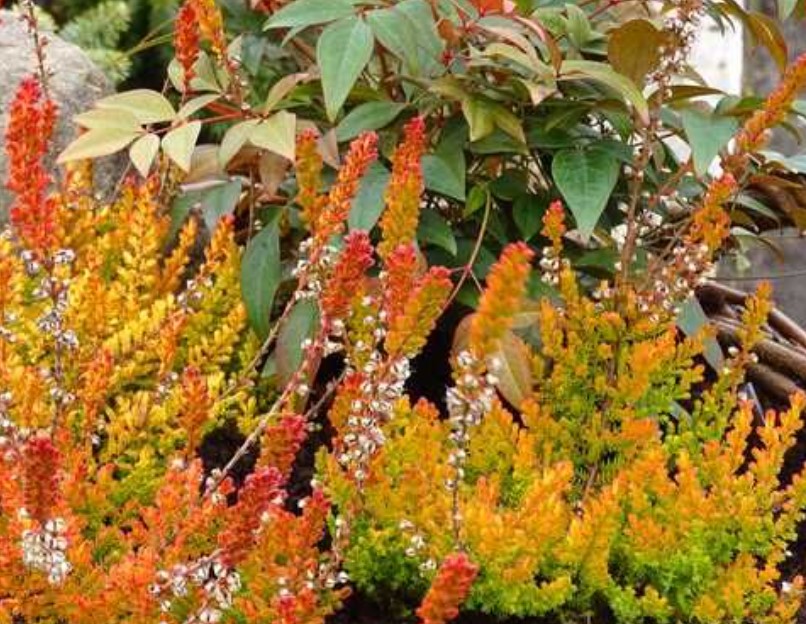
| Color of inflorescences and leaves | Flowering period | Height of shoots | Location and cultivation |
| The flowers are few and pink. The leaves range from bronze to deep yellow. | August-September. | 30-35 cm. | Sunny locations with acidic, well-drained soil. Tolerates temperatures down to -23°C. Cover for the winter. |
Sandy (Calluna vulgaris Sandy)
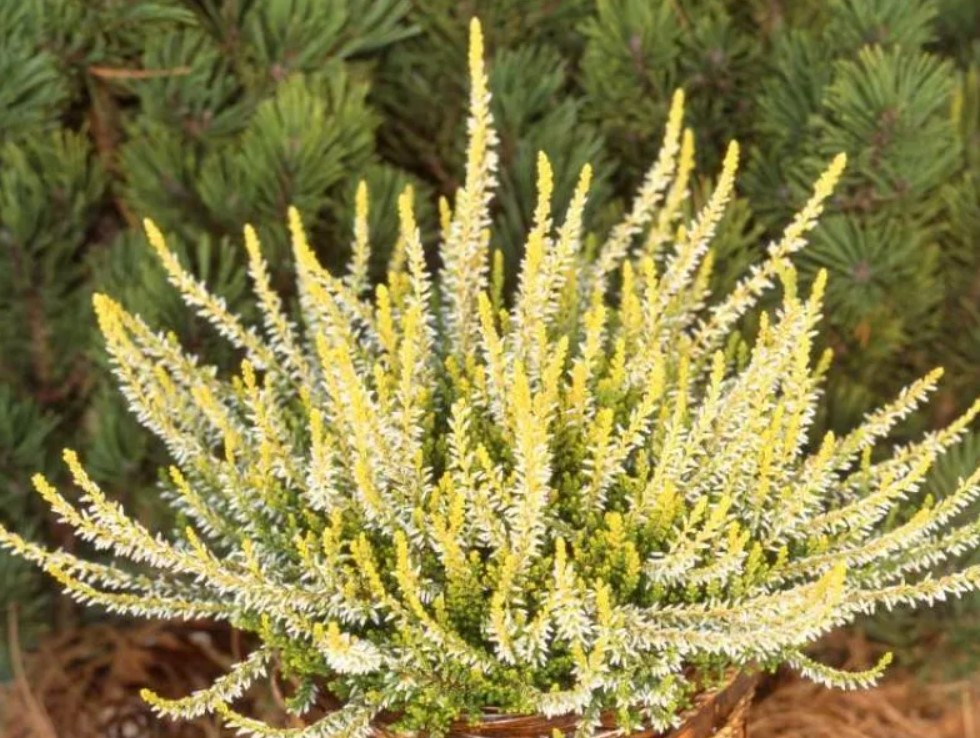
| Color of inflorescences and leaves | Flowering period | Height of shoots | Location and cultivation |
| Flowers are white, leaves are yellow. | August-November. | 30 cm. | Grows in sun or partial shade, withstands frosts down to -23. Covered for the winter. |
Firefly (Calluna vulgaris Firefly)
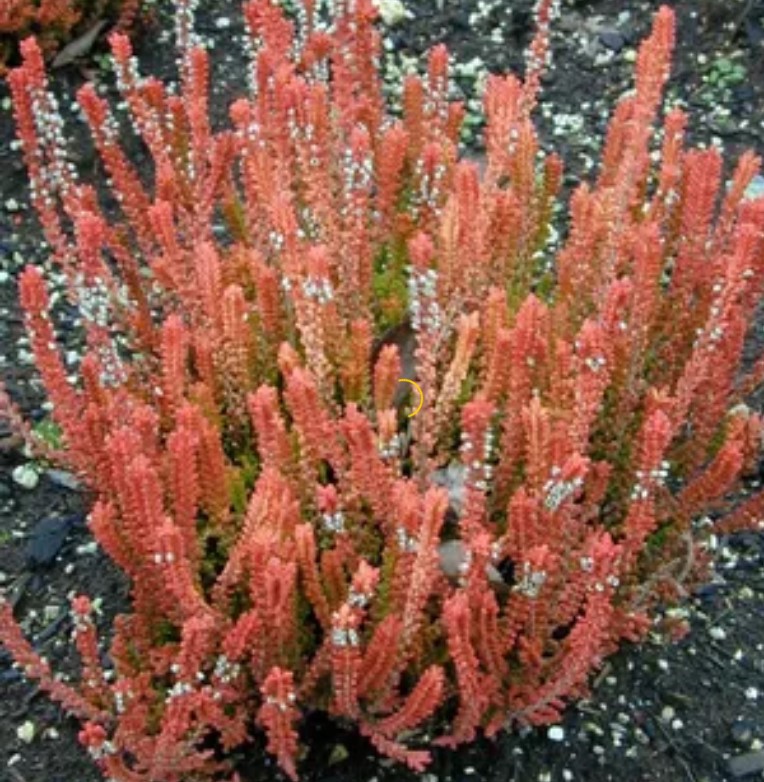
| Color of inflorescences and leaves | Flowering period | Height of shoots | Location and cultivation |
| The leaves are yellow in summer and red in winter. The flowers are red. | August-September. | 30 cm. | A sunny location with moist, acidic soil, without stagnant water. Suitable for rock gardens. Cover with peat for the winter; it can withstand temperatures down to -23°C. |
25 varieties of heather with double and semi-double flowers
Alba Plena (Calluna Alba Plena)
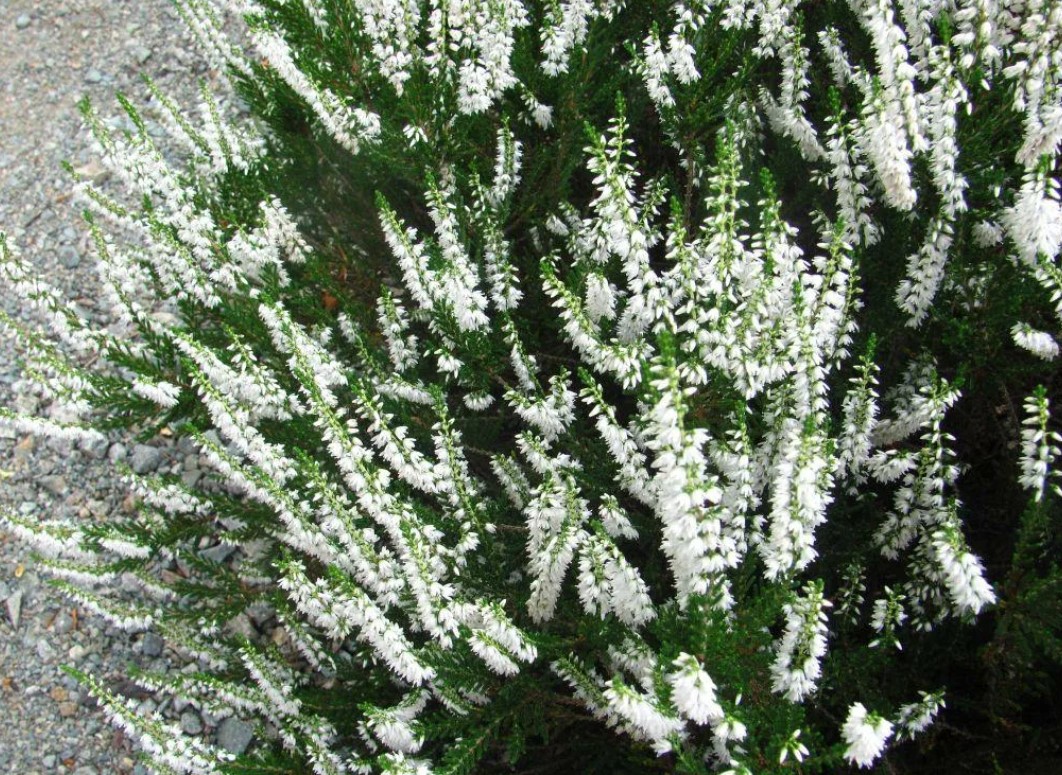
| Color of inflorescences and leaves | Flowering period | Height of shoots | Location and cultivation |
| Light green leaves and white double flowers. | Late July-September. | Up to 50 cm. | Prefers well-lit areas. Tolerates drought well, but is not frost-hardy. |
Annabelle (Calluna vulgaris Annabel)
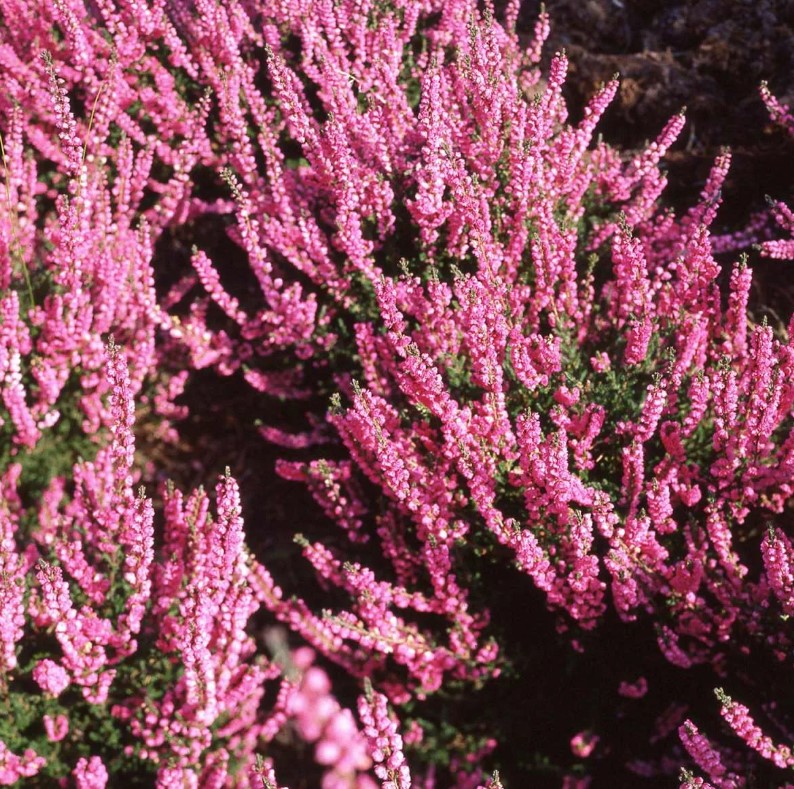
| Color of inflorescences and leaves | Flowering period | Height of shoots | Location and cultivation |
| The inflorescences are ruby-pink, double, the leaves are green. | September. | 25-30 cm. | Acidic soil in a well-lit area; requires shelter for the winter. |
Annamaria (Calluna vulgaris Annemarie)
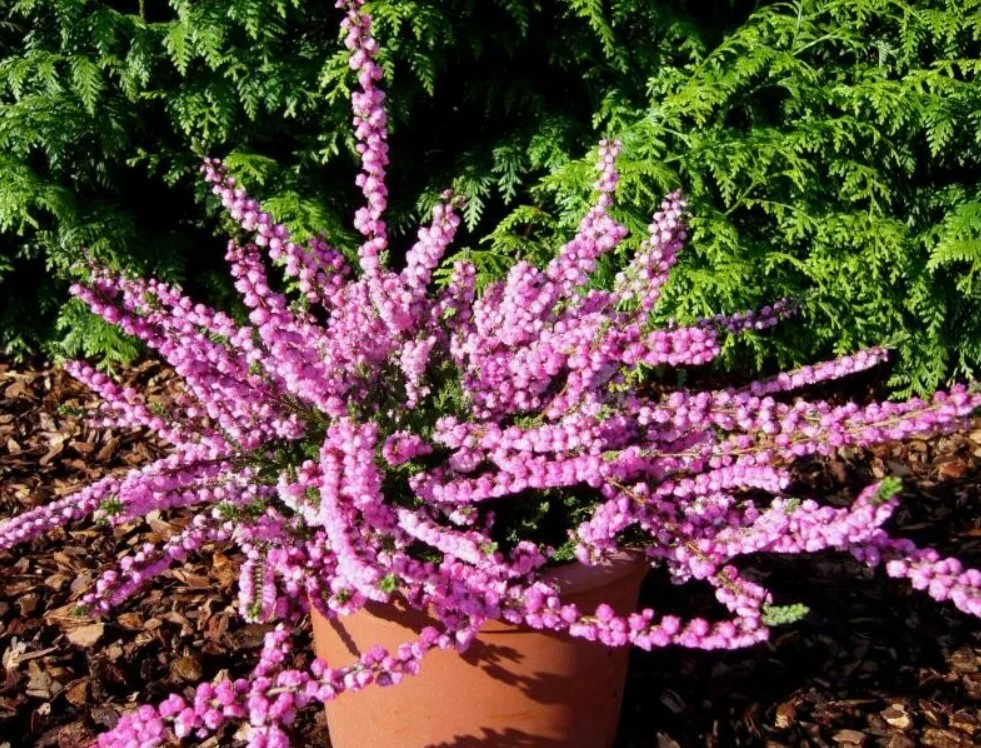
| Color of inflorescences and leaves | Flowering period | Height of shoots | Location and cultivation |
| Double inflorescences of purple or dark pink color. Silver foliage.
|
September-October. | 25-30 cm. | Sunny areas. Recommended for rock gardens. Plants should be covered for the winter and can withstand temperatures down to -23°C. |
Anya (Calluna vulgaris Anja)
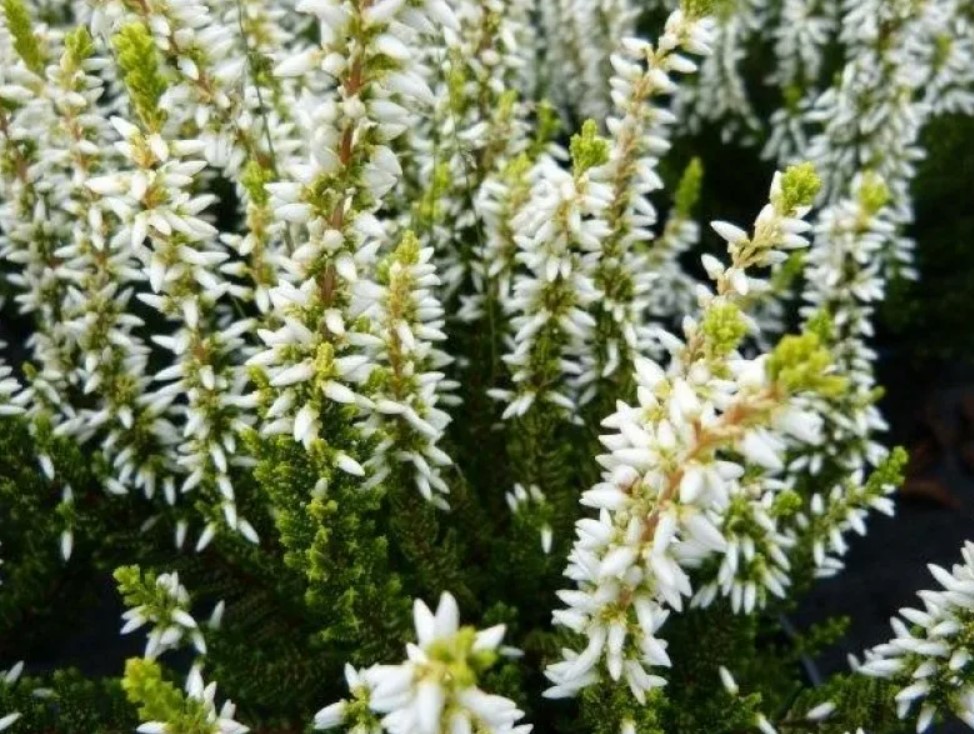
| Color of inflorescences and leaves | Flowering period | Height of shoots | Location and cultivation |
| The flowers are distinguished by the shape of the unopened bud and are white in color. The leaves are yellow. | September-October. | 30 cm. | Grows well in acidic soil. Requires annual pruning. |
Bajazzo (Calluna vulgaris Bajazzo)
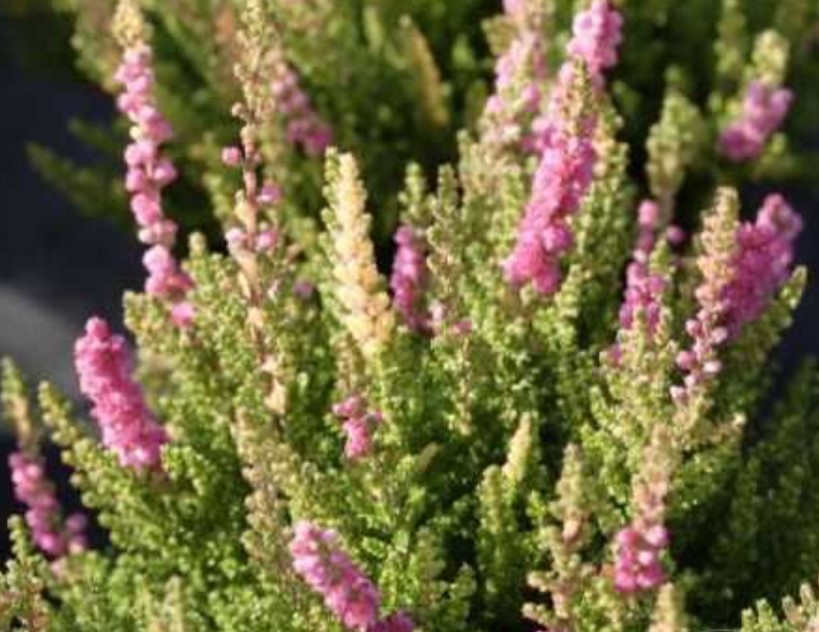
| Color of inflorescences and leaves | Flowering period | Height of shoots | Location and cultivation |
| Yellow-green leaves turn red and orange-red over time. Double pink flowers. | September-October. | 30 cm. | Prefers a well-lit location with acidic soil and appreciates mulching. It tolerates temperatures down to -23°C. |
Dark Beauty (Calluna vulgaris Dark Beauty)
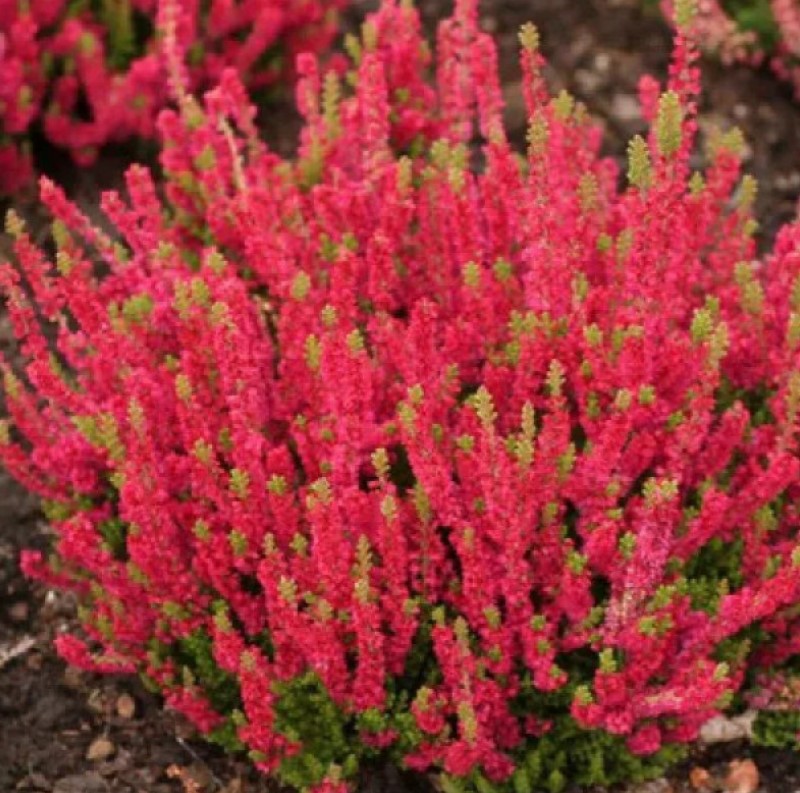
| Color of inflorescences and leaves | Flowering period | Height of shoots | Location and cultivation |
| The leaves are green, the flowers are dark red. | September-October. | 20 cm. | Acidic, moist soil, sunny areas, mulching. Tolerates temperatures down to -23°C. |
Dark Star (Calluna DARK STAR)
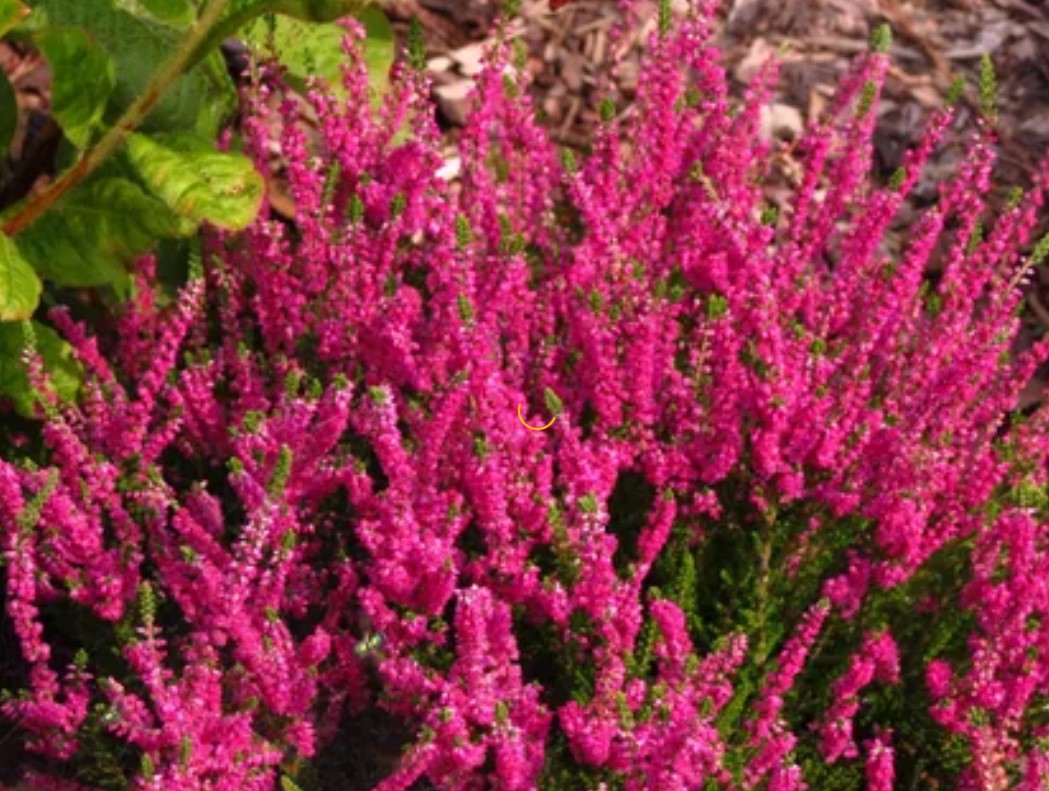
| Color of inflorescences and leaves | Flowering period | Height of shoots | Location and cultivation |
| The leaves are green, the flowers are dark red, semi-double. | September-October. | 20 cm. | A sunny location with acidic and moist soil, tolerates frosts down to -23. |
J.H. Hamilton (Calluna vulgaris J.H.Hamilton)
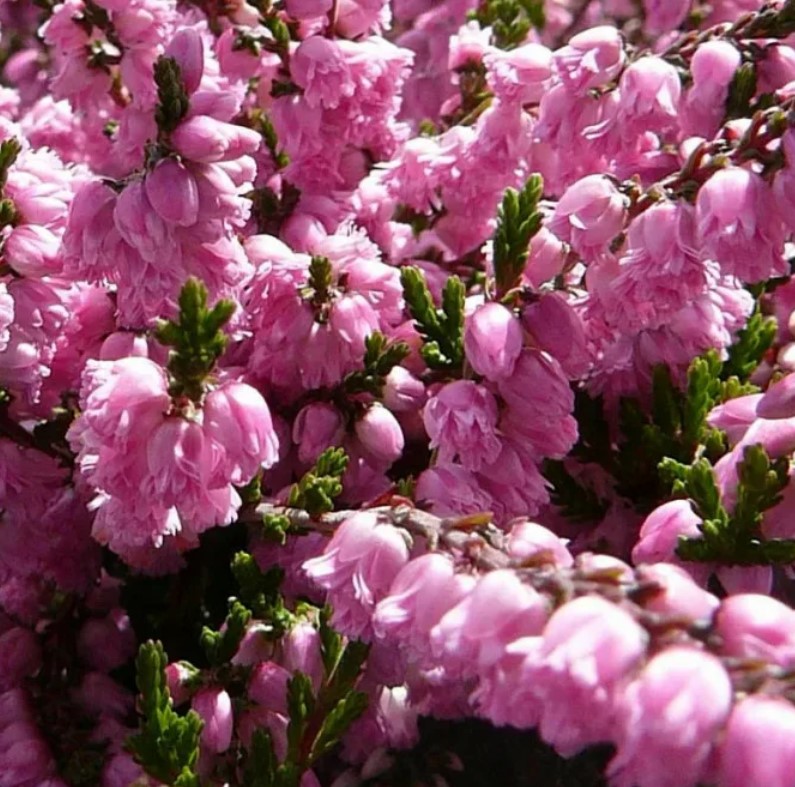
| Color of inflorescences and leaves | Flowering period | Height of shoots | Location and cultivation |
| Dark green leaves and double pink flowers that form dense inflorescences. | August-September. | 20-25 cm. | A sunny location with light, acidic soil is ideal. It requires winter protection and can withstand temperatures down to -23°C. |
Jimmy Dyce (Calluna vulgaris Jimmy Dyce)
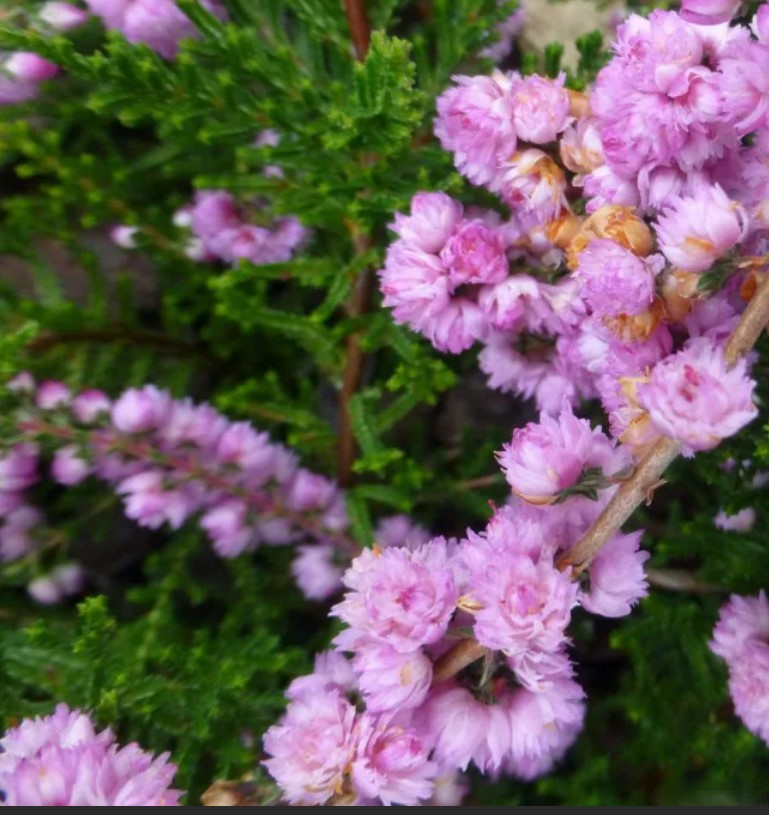
| Color of inflorescences and leaves | Flowering period | Height of shoots | Location and cultivation |
| The leaves are dark green, turning bronze in winter. The flowers are double, lilac-pink. | September-October. | 20 cm. | Prefers a sunny location and acidic soil. It tolerates temperatures down to -23°C. |
Disco Queen (Calluna vulgaris Disco Queen)
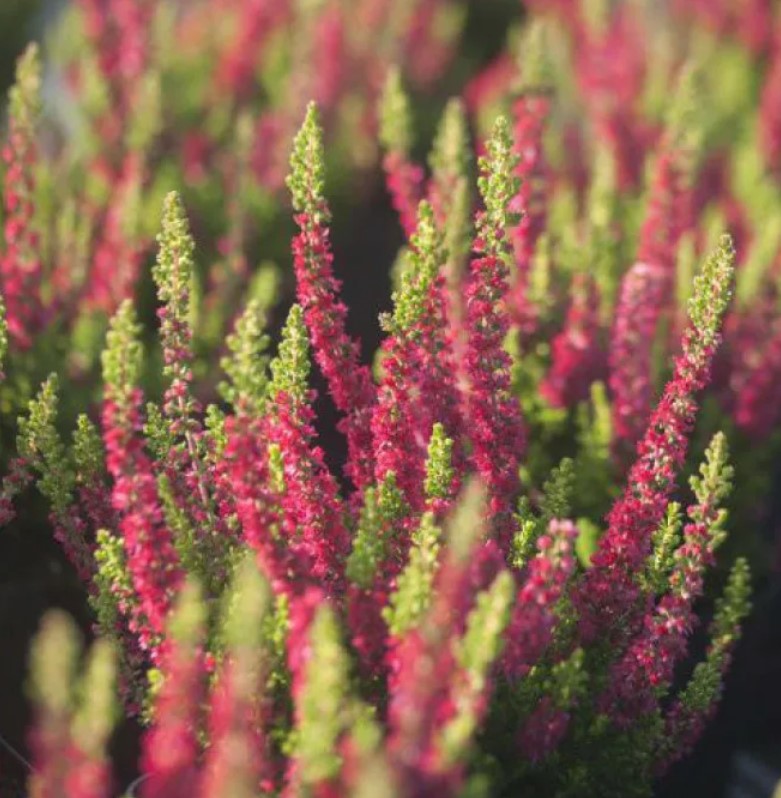
| Color of inflorescences and leaves | Flowering period | Height of shoots | Location and cultivation |
| The leaves are dark green, the flowers are large, purple-red. | September - first half of October. | 30-35 cm. | Grows in sunny areas, prefers mulch, and requires shelter. It can withstand temperatures down to -23°C. |
Monica (Calluna Monika)
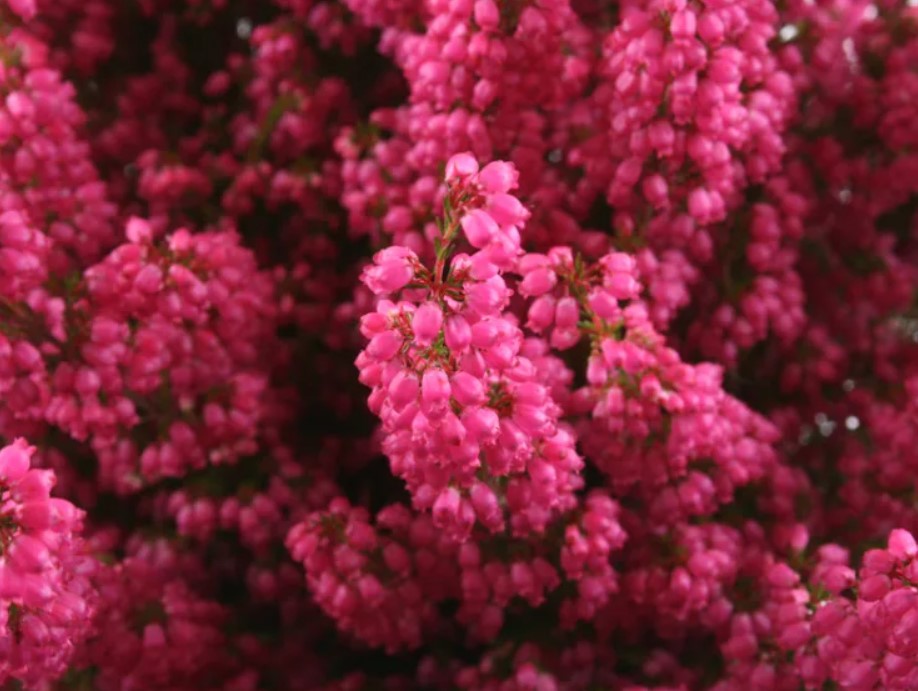
| Color of inflorescences and leaves | Flowering period | Height of shoots | Location and cultivation |
| The foliage is dark green, turning grayish in winter. The flowers are double, reddish-pink. | August-September. | 55 cm | Good lighting, acidic, moist soil. |
County Wicklow (Calluna vulgaris County Wicklow)
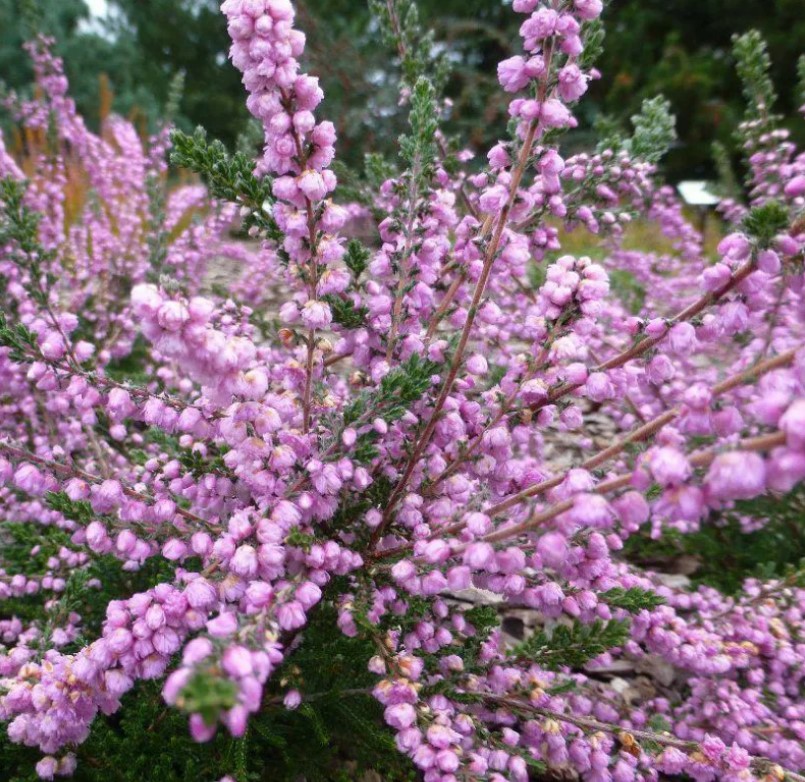
| Color of inflorescences and leaves | Flowering period | Height of shoots | Location and cultivation |
| Light pink double flowers, green leaves | August-September. | 15 cm. | A sunny location with acidic soil is ideal. Plants should be covered for the winter. They can withstand temperatures down to -23°C. |
Kinlochruel (Calluna vulgaris Kinlochruel)
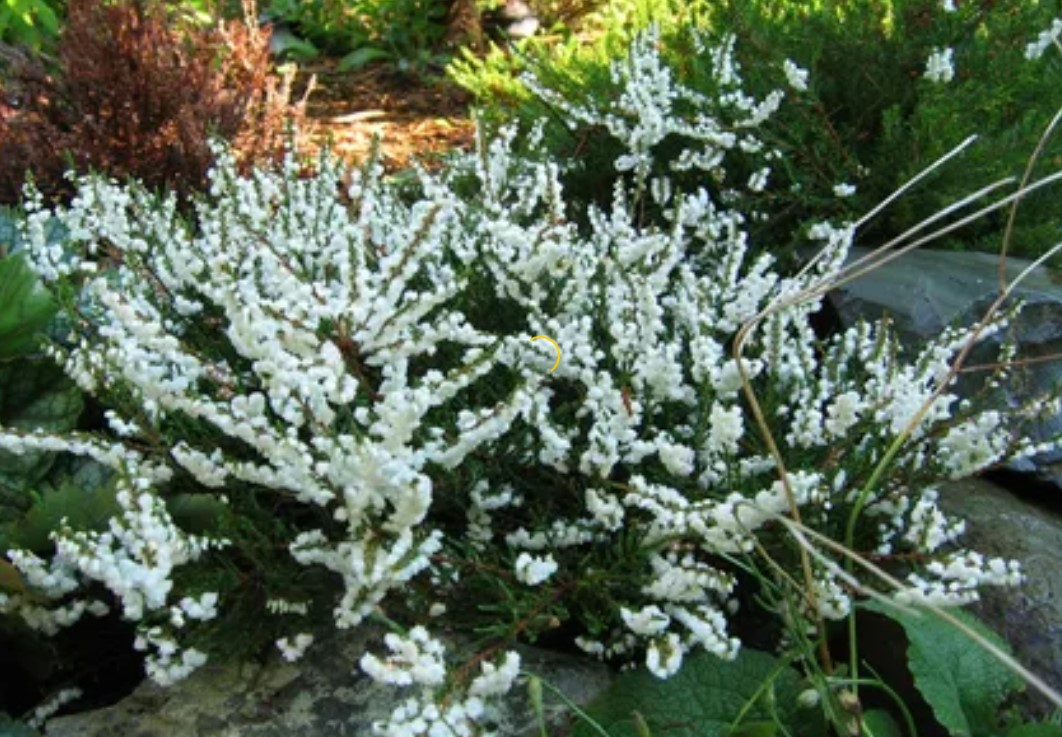
| Color of inflorescences and leaves | Flowering period | Height of shoots | Location and cultivation |
| The leaves are dark green, the flowers are white and double. | End of July - beginning of September. | 15-20 cm. | It prefers well-lit areas. It prefers moist, acidic soil. It requires winter protection and can easily withstand temperatures down to -23°C. |
Autumn Glow (calluna Autumn Glow)
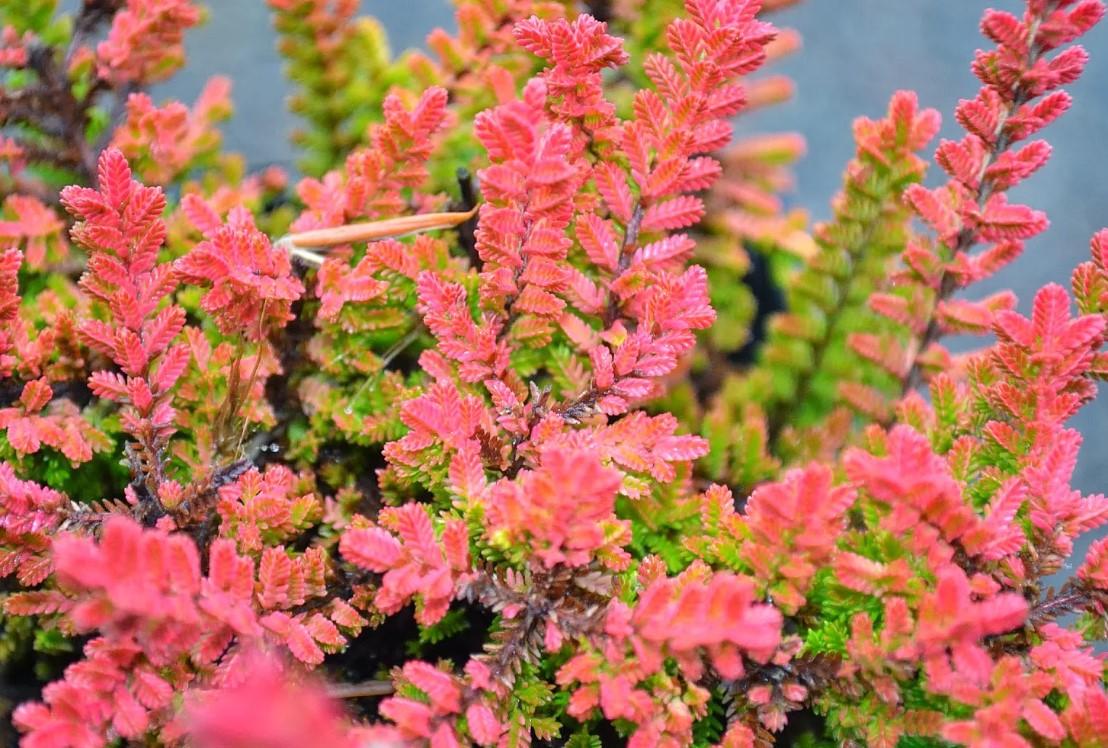
| Color of inflorescences and leaves | Flowering period | Height of shoots | Location and cultivation |
| The leaves are dark green, the flowers are double, pale purple. | August-September. | 30 cm. | Well-lit areas of the garden. |
Peter Sparks (Calluna vulgaris Peter Sparkes)
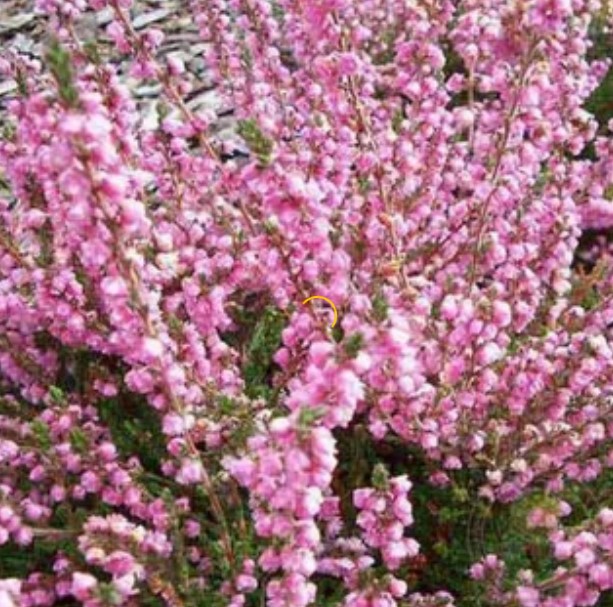
| Color of inflorescences and leaves | Flowering period | Height of shoots | Location and cultivation |
| Double. Ruby-pink flowers. Gray-green leaves. | September-October. | 30-40 cm. | A sunny site with light, moist soil. Winter cover is necessary. |
Radnor (Calluna vulgaris Radnor)
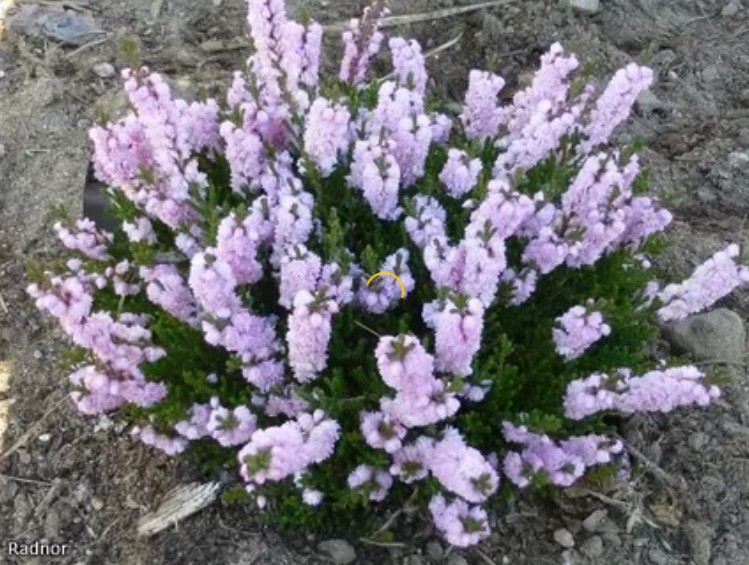
| Color of inflorescences and leaves | Flowering period | Height of shoots | Location and cultivation |
Pink or purple-pink flowers, green leaves.
|
August-September. | 20-25 cm. | Sunny areas without stagnant water. Cover with spruce branches for the winter. |
Red Sun (Calluna vulgaris Red Sun)
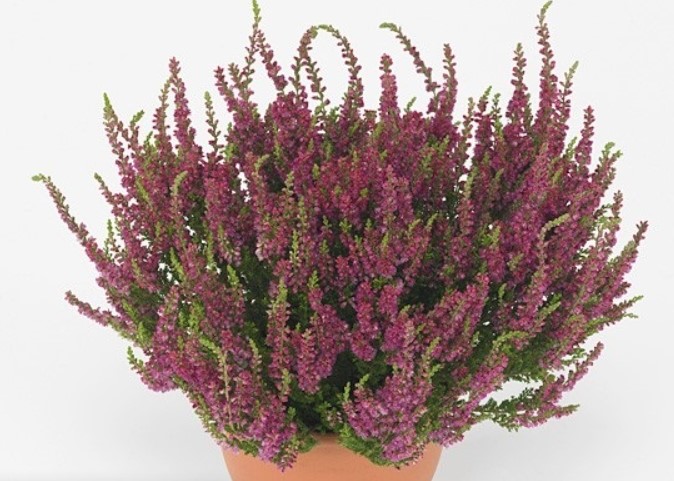
| Color of inflorescences and leaves | Flowering period | Height of shoots | Location and cultivation |
| The flowers are bright red, semi-double. | Mid-August. | 30 cm. | Prefers sunny sites with acidic, moist soil. Requires winter shelter; frost resistance down to -23°C. |
Red Favorite (Calluna vulgaris Red Favorite)
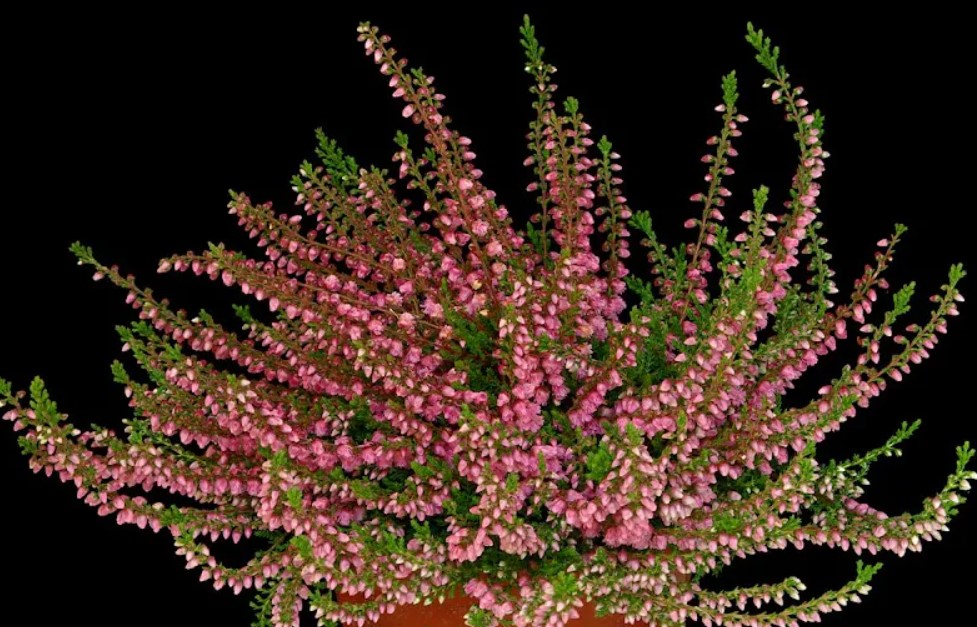
| Color of inflorescences and leaves | Flowering period | Height of shoots | Location and cultivation |
| The foliage is dark green, the flowers are dark pink, double. | August-September. | 20 cm. | Sunny areas with acidic, moist soil. Frost resistance down to -23°C. Heather is covered with spruce branches for the winter. |
Rococo (Calluna vulgaris Rokoko)
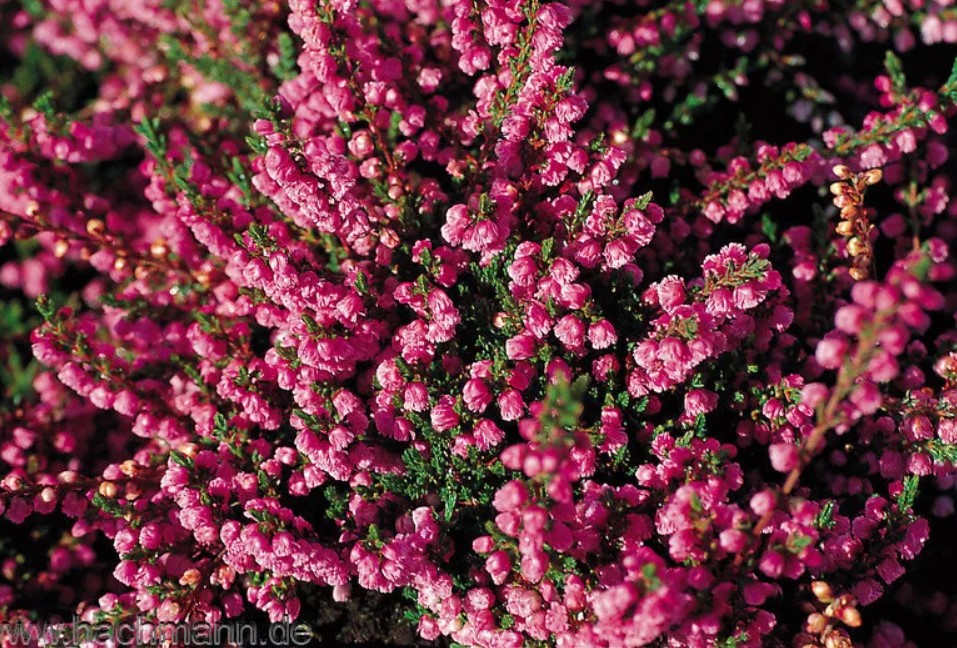
| Color of inflorescences and leaves | Flowering period | Height of shoots | Location and cultivation |
| The foliage is grey-green, the flowers are red and double. | September-October. | 35 cm. | They prefer to grow in full sun, appreciate mulch, and moist soil. They can withstand temperatures down to -23°C. |
Salsa (Calluna vulgaris Salsa)
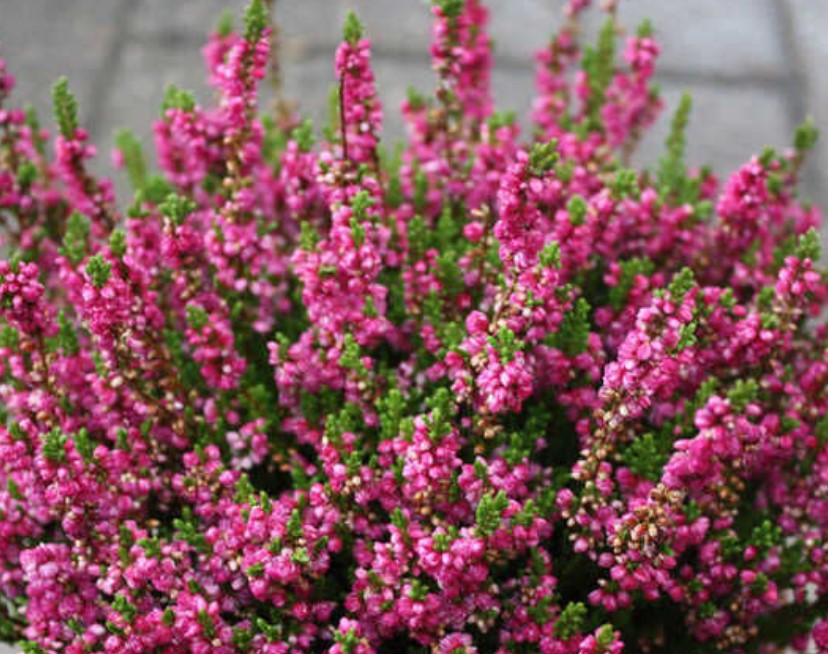
| Color of inflorescences and leaves | Flowering period | Height of shoots | Location and cultivation |
| The flowers are red and double. The foliage is dark green. | September-November. | 20 cm. | A sunny garden site with acidic soil. Cover with peat or spruce branches for the winter. It tolerates temperatures down to -29°C. |
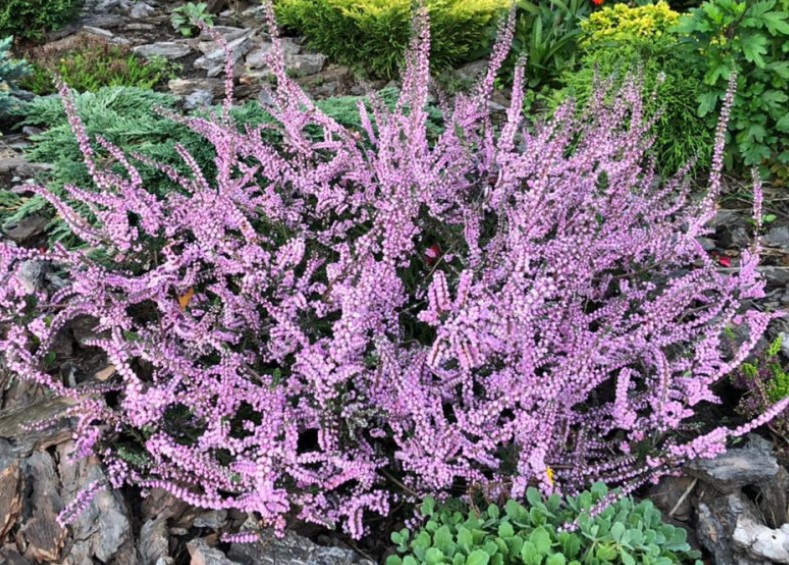
Dormouse (Calluna vulgaris Sonja)
| Color of inflorescences and leaves | Flowering period | Height of shoots | Location and cultivation |
| The leaves are dark green. The flowers are densely double, lilac. | August-September. | 20 cm. | A sunny location with acidic, moist soil without stagnant water, loves mulch, needs shelter for the winter, and can withstand cold temperatures down to -23. |
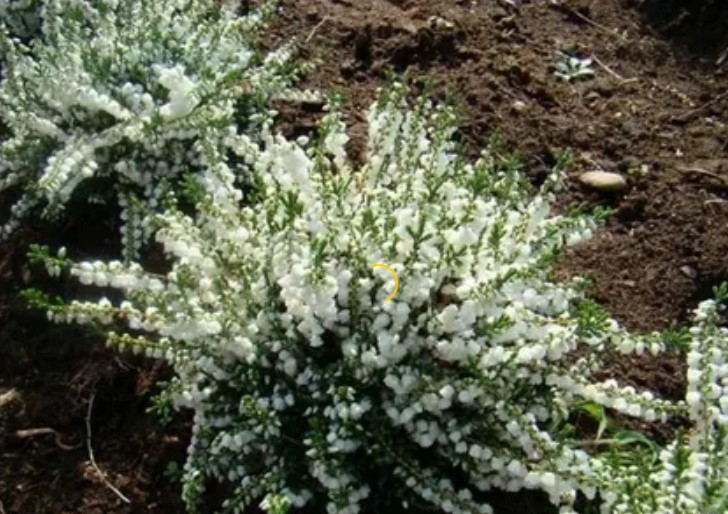
White Coral (Calluna vulgaris White Coral)
| Color of inflorescences and leaves | Flowering period | Height of shoots | Location and cultivation |
| Double white flowers, bright green leaves. | August-September. | 25-40 cm. | They grow in moist, acidic soil in a well-lit location. They are covered with spruce branches for the winter. |
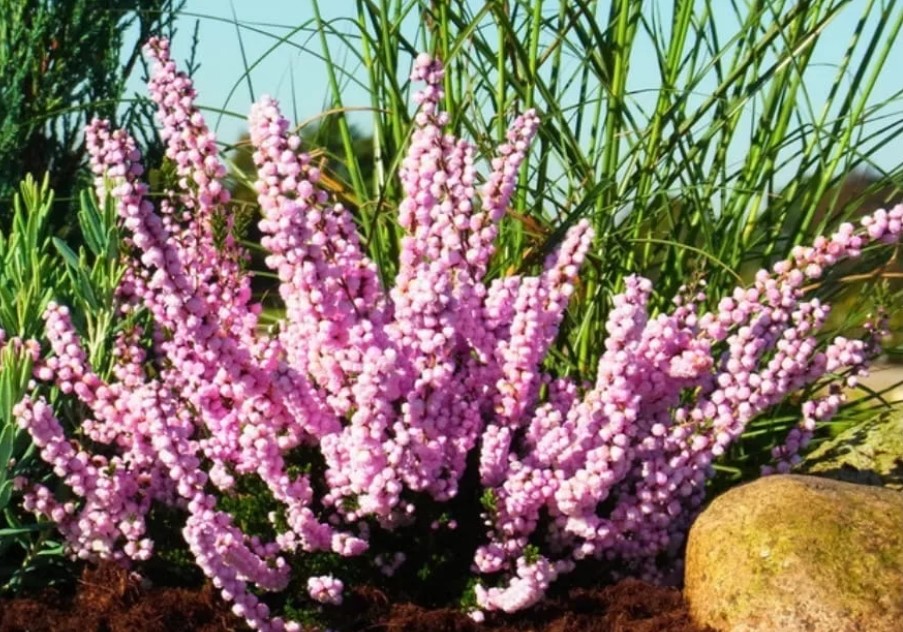
H.E. Beale (Calluna vulgaris H.E. Beale)
| Color of inflorescences and leaves | Flowering period | Height of shoots | Location and cultivation |
| Lilac-pink flowers with a light center. Dark green leaves. | August-October. | 30-35 cm. | A sunny location with sandy, acidic soil. Tolerates temperatures down to -29°C (-29°F). Requires winter shelter. |
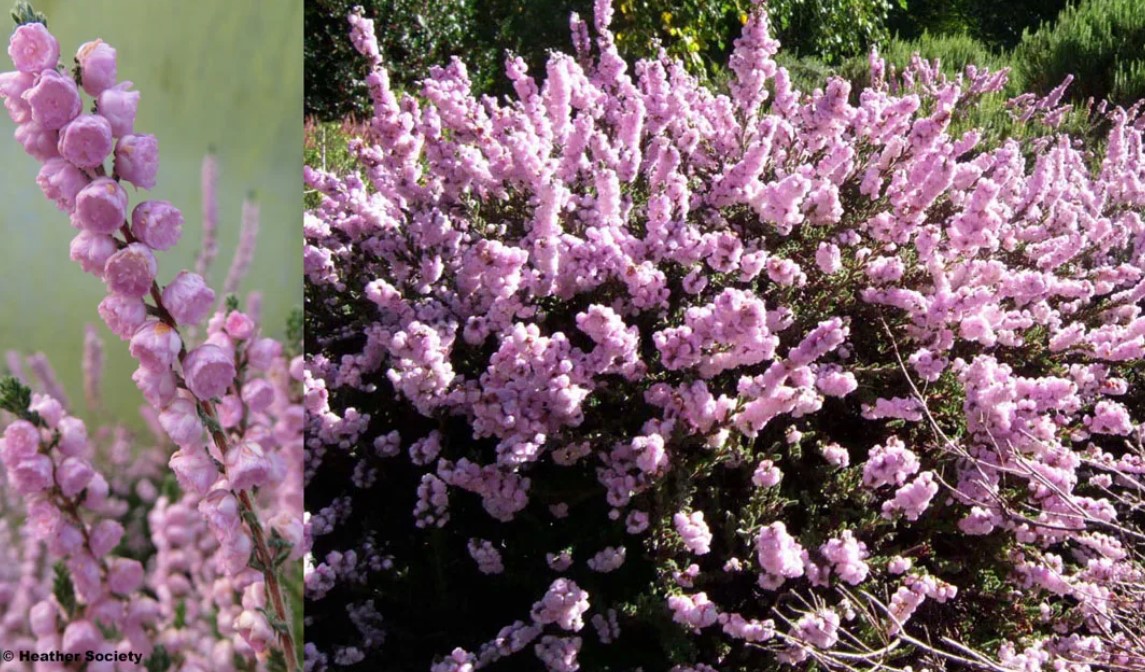
Elsie Purnell (Calluna vulgaris Elsie Purnell)
| Color of inflorescences and leaves | Flowering period | Height of shoots | Location and cultivation |
| The leaves change from green to grayish-brown. The flowers are double, lavender or lilac in color. | Beginning of September. | 35-45 cm. | It blooms well in sunny areas and prefers moist, acidic soil. It requires protection during the winter. |
Jana (Calluna vulgaris Jana)
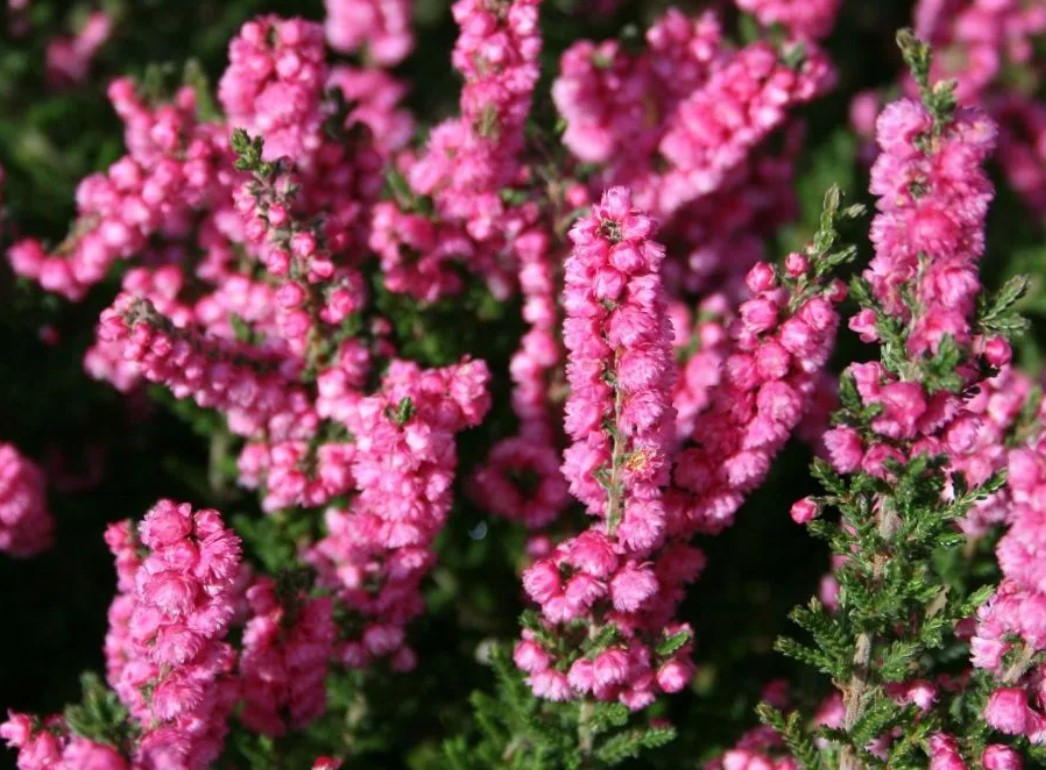
| Color of inflorescences and leaves | Flowering period | Height of shoots | Location and cultivation |
| Double pink flowers and light green leaves. | Mid-September. | 30 cm. | Sunny sites with moist, acidic soil. Requires winter protection; tolerates temperatures down to -23°C. |
32 varieties of heather with non-opening buds
Agnes (Calluna vulgaris Agnes)
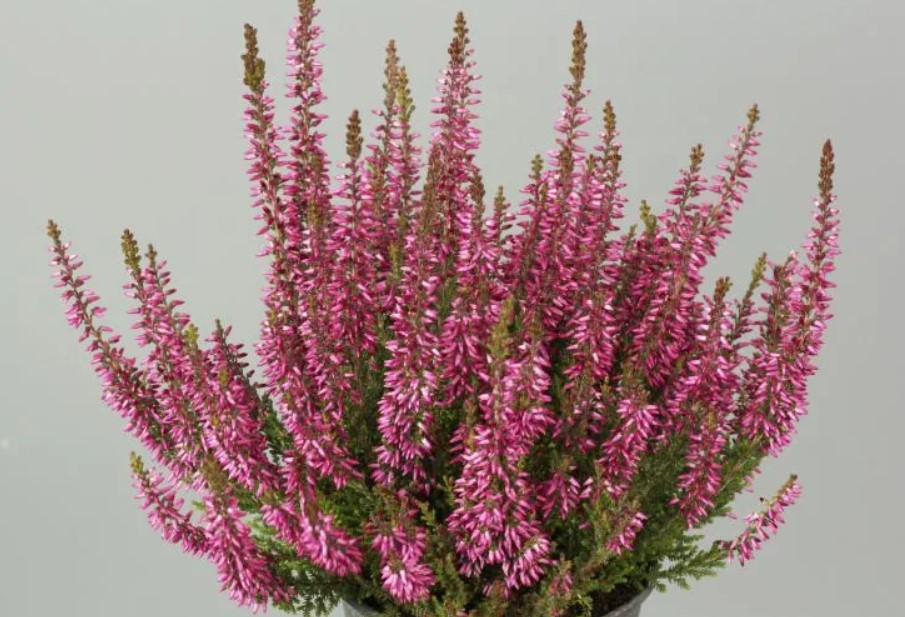
| Color of inflorescences and leaves | Flowering period | Height of shoots | Location and cultivation |
| Dark green leaves, lilac flowers. | September. | 40 cm. | A sunny location with sandy, well-drained soil without stagnant water. Tolerates temperatures down to -23°C. |
Alicia (Calluna vulgaris Alicia)
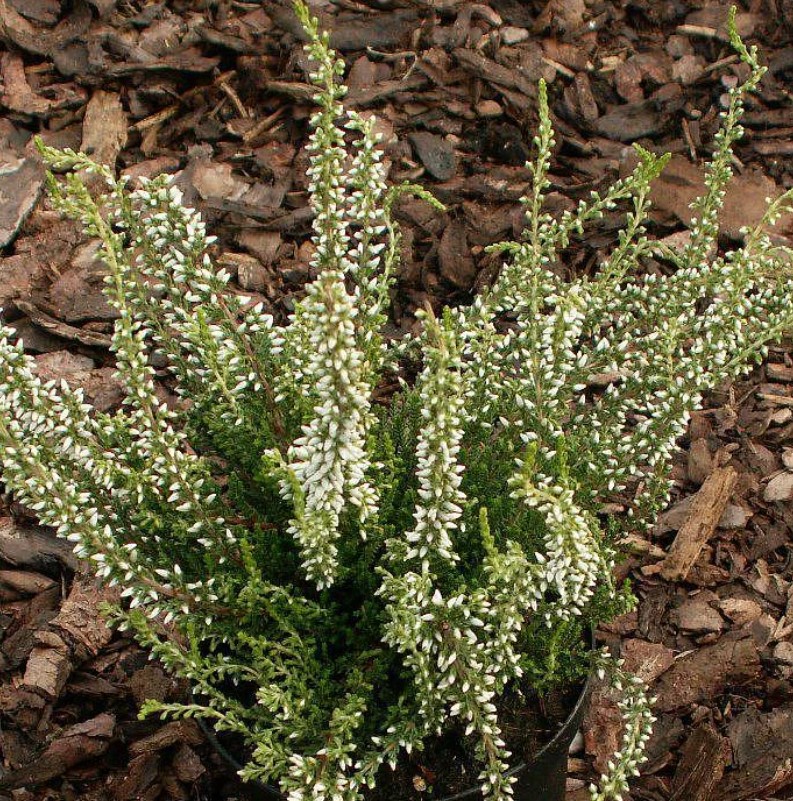
| Color of inflorescences and leaves | Flowering period | Height of shoots | Location and cultivation |
| The buds are snow-white, the leaves are bright green. | September. | 20-30 cm. | Well-lit areas with light, moist soil. Prefers mulching and winter cover. Tolerates temperatures down to -23°C. |
Amethyst (Calluna vulgaris Amethyst)
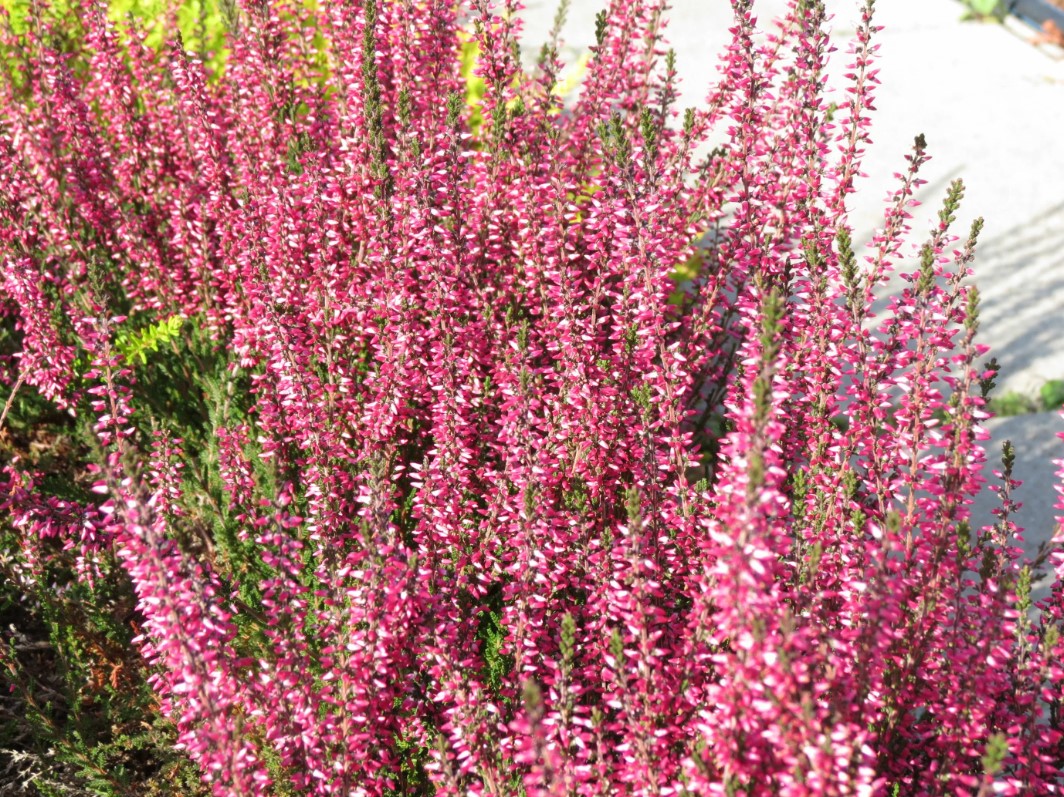
| Color of inflorescences and leaves | Flowering period | Height of shoots | Location and cultivation |
| The foliage is dark green, the flowers are crimson with a blue tint. | August-October. | 25-30 cm. | They tolerate frosts down to -29°C well. They love sun, moist soil, and mulching. |
Athena (Calluna vulgaris Athene)
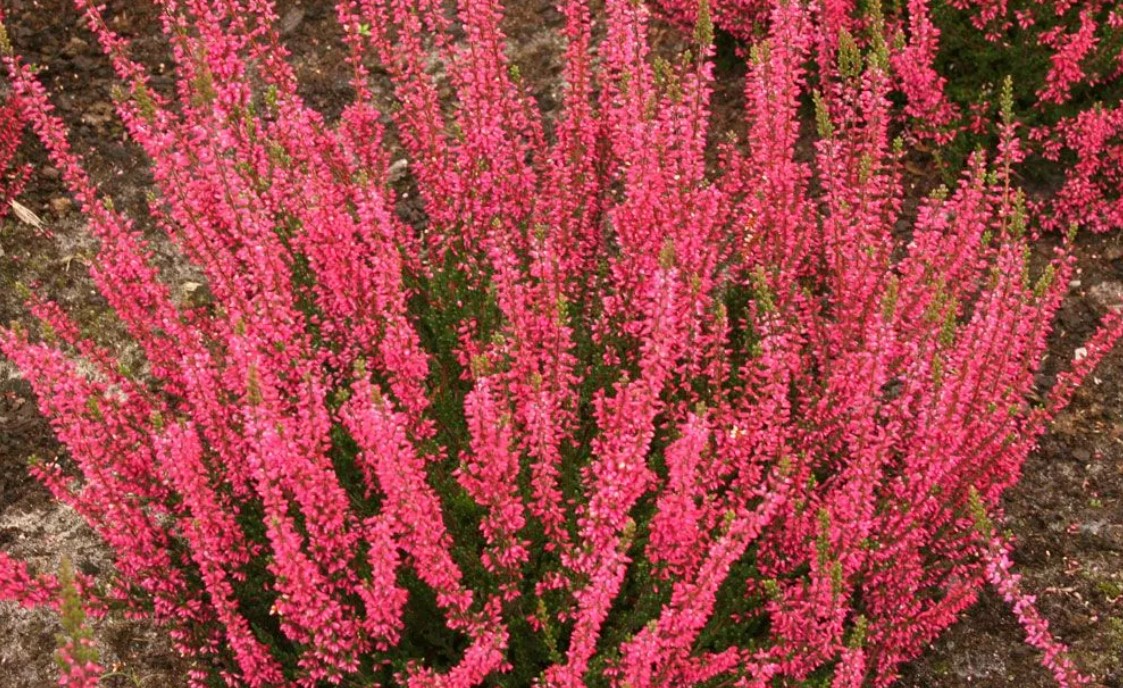
| Color of inflorescences and leaves | Flowering period | Height of shoots | Location and cultivation |
| The flowers are dark, purple-red. The leaves are green. | September-October. | 30 cm. | Well-lit garden areas, acidic soil without stagnant water. Tolerates frosts down to -29°C. |
Aphrodite (Calluna vulgaris Aphrodite)
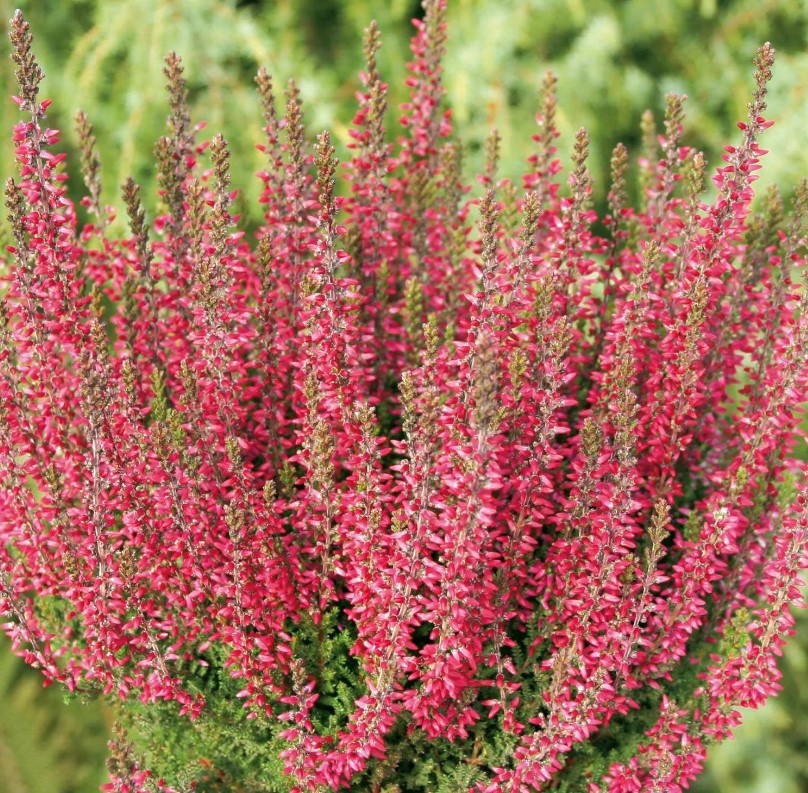
| Color of inflorescences and leaves | Flowering period | Height of shoots | Location and cultivation |
| Flowers are red. Do not open. Foliage is dark green. | September-October. | 35 cm. | A sunny location without overwatering. Covering is necessary for the winter. Tolerates temperatures down to -23°C. |
Vera (Calluna vulgaris Vera)
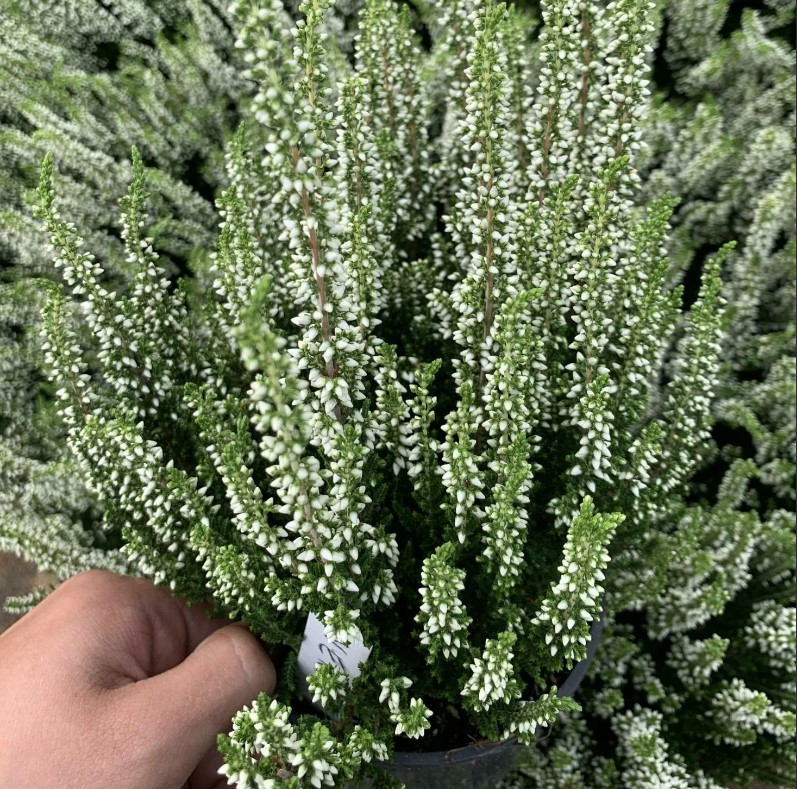
| Color of inflorescences and leaves | Flowering period | Height of shoots | Location and cultivation |
| Flowers are white buds, leaves are dark green. | August-September.
|
30-40 cm. | Sunny sites with acidic peat soil. They prefer mulching. Pruning is necessary. They need winter protection. They can withstand temperatures down to -23°C. |
Golden Angie (Calluna vulgaris Golden Angie)
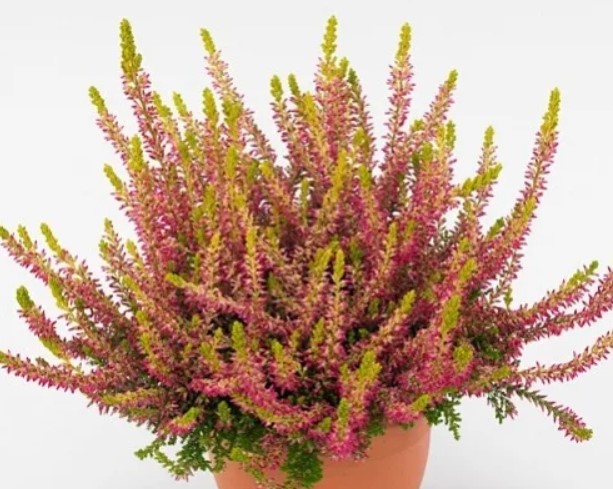
| Color of inflorescences and leaves | Flowering period | Height of shoots | Location and cultivation |
| The flowers are numerous and red. The leaves are bright golden. | September-November. | 50 cm. | Sunny sites with acidic soil, without stagnant water. Tolerates temperatures down to -29°C. |
Juliana (Calluna vulgaris Juliane)
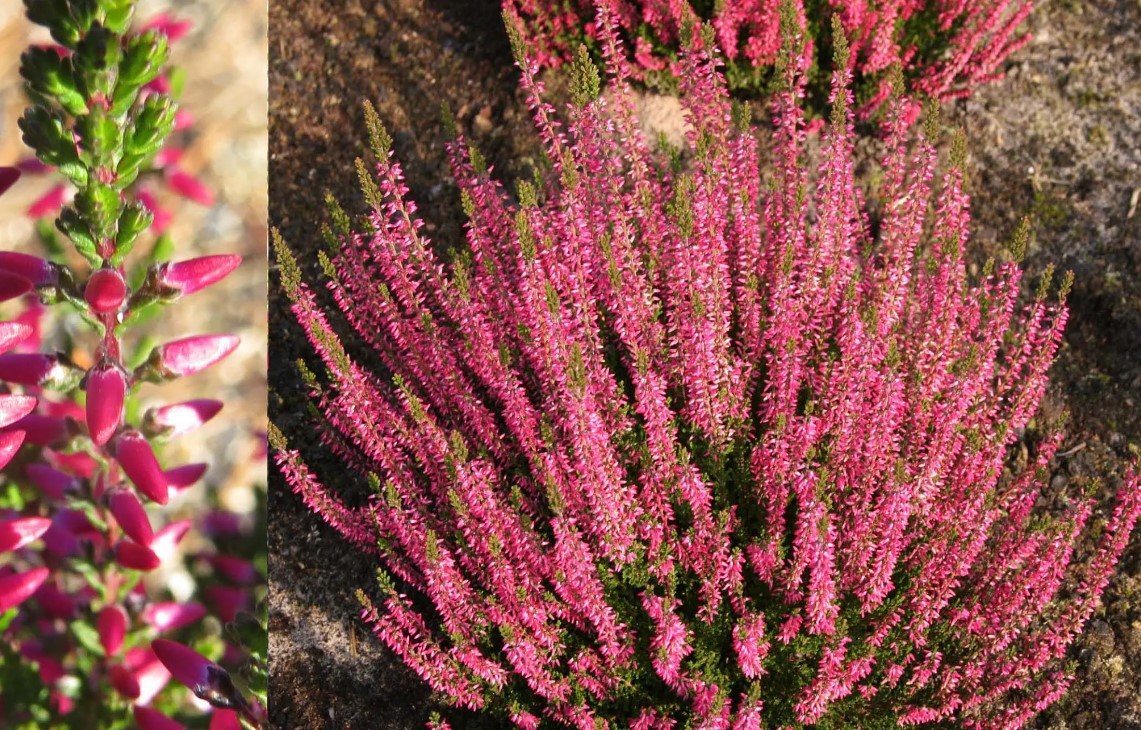
| Color of inflorescences and leaves | Flowering period | Height of shoots | Location and cultivation |
| The buds are red, the foliage is dark green. | From September to November. | 20-30 cm. | A sunny location with moist peat soil that doesn't allow water to stagnate around the roots. Tolerates temperatures down to -23°C. |
Calluna David Eason
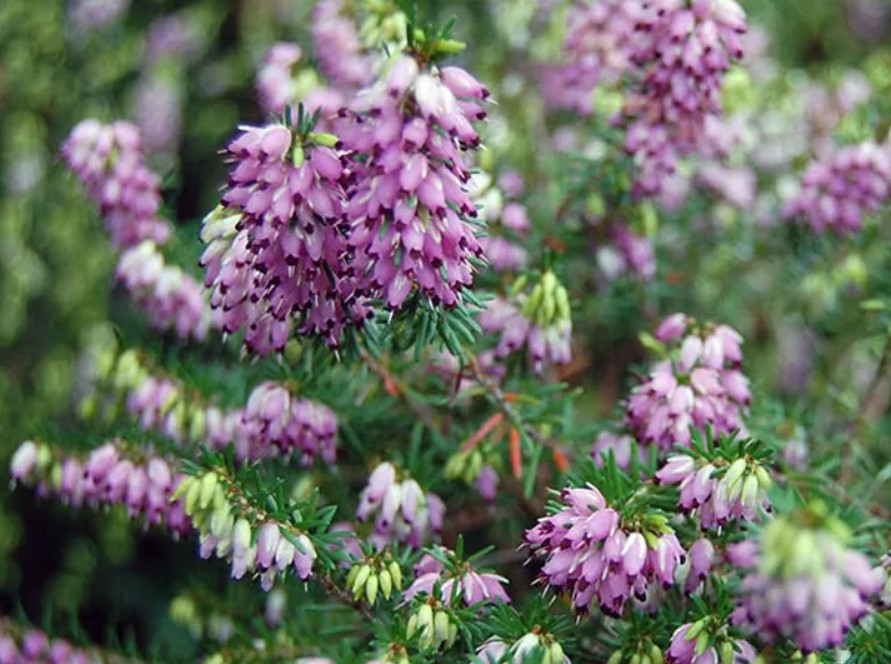
| Color of inflorescences and leaves | Flowering period | Height of shoots | Location and cultivation |
| The leaf blades are dark green, the flowers are pink or purple. | September-October. | 25 cm. | Sunny sites with light, acidic soil. Requires winter shelter. |
Claire (Calluna vulgaris Claire)
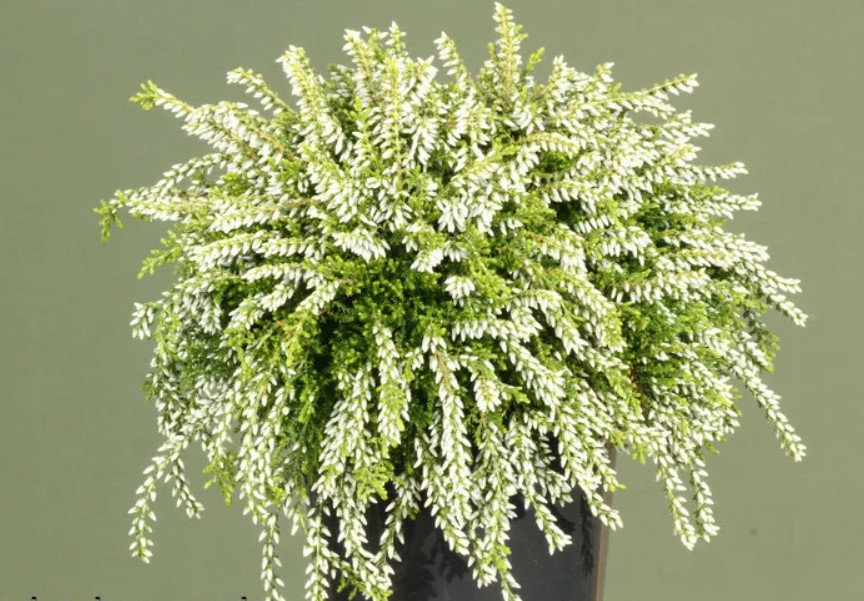
| Color of inflorescences and leaves | Flowering period | Height of shoots | Location and cultivation |
| Flowers are white, leaves are light green. | September-October. | 18-20 cm. | Sunny sites with acidic peat soil. They prefer mulching. They require winter protection. They can withstand temperatures down to -23°C. |
Lisbeth (Calluna vulgaris Lisbeth)
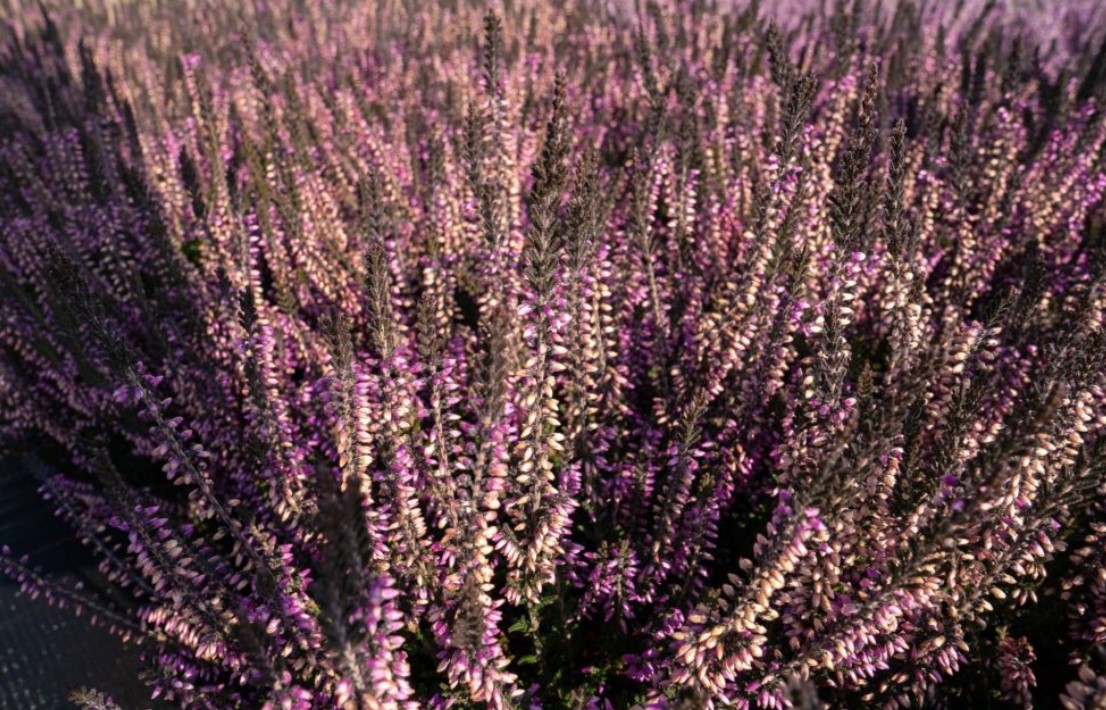
| Color of inflorescences and leaves | Flowering period | Height of shoots | Location and cultivation |
| The inflorescences are purple-pink with a light spot at the base. The leaves are green. | Mid-August. | 50 cm. | They love sun. Acidic, moist soil, mulch. They need to be covered for the winter. |
Lily (Calluna vulgaris Lilli)
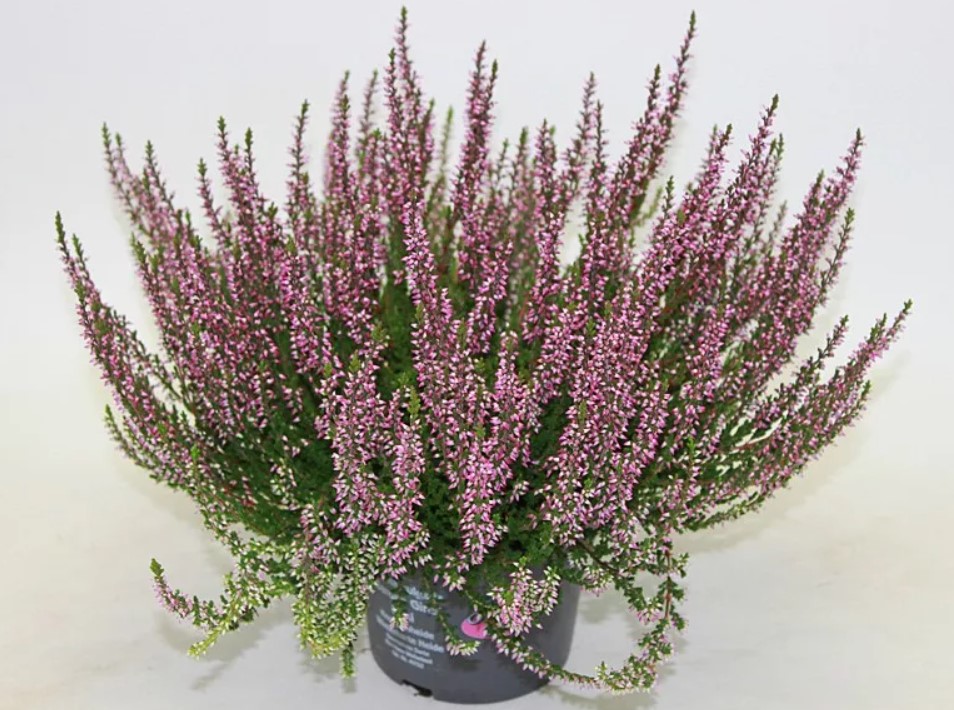
| Color of inflorescences and leaves | Flowering period | Height of shoots | Location and cultivation |
| Purple-violet buds with a bluish tint. Green leaves. | August-October. | 40 cm. | Prefers plenty of light, moisture (but not too much), and mulching. It can withstand temperatures down to -23°C. |
Liliana (Calluna vulgaris Liliane)
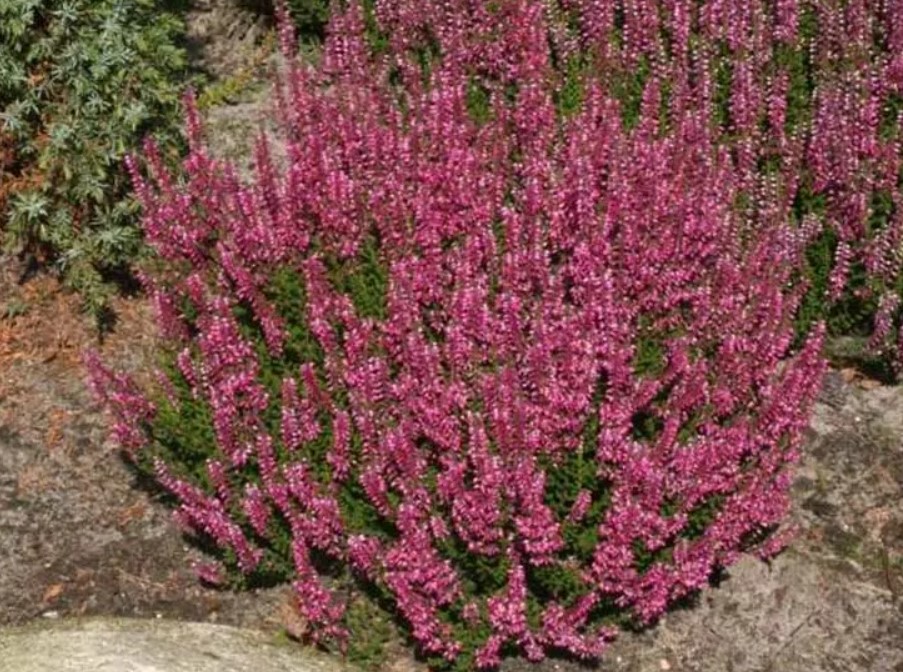
| Color of inflorescences and leaves | Flowering period | Height of shoots | Location and cultivation |
| Flowers are purple, foliage is dark green. | October. | 40 cm. | Prefers sunny locations with peaty, well-moistened soil. Cover with spruce branches for the winter. |
Loki (Calluna vulgaris Loki)
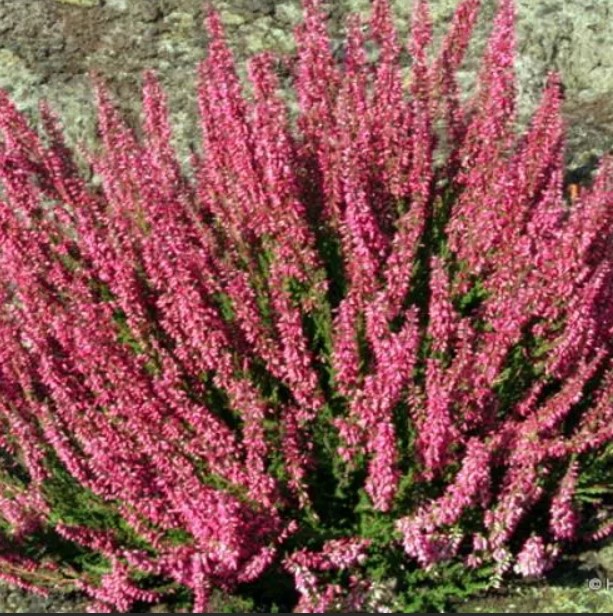
| Color of inflorescences and leaves | Flowering period | Height of shoots | Location and cultivation |
| Flowers are cherry, foliage is dark green. | Mid-August. | 30 cm. | Sunny areas, acidic, moist, peaty soil. Requires winter cover. |
Madonna (Calluna vulgaris Madonna)
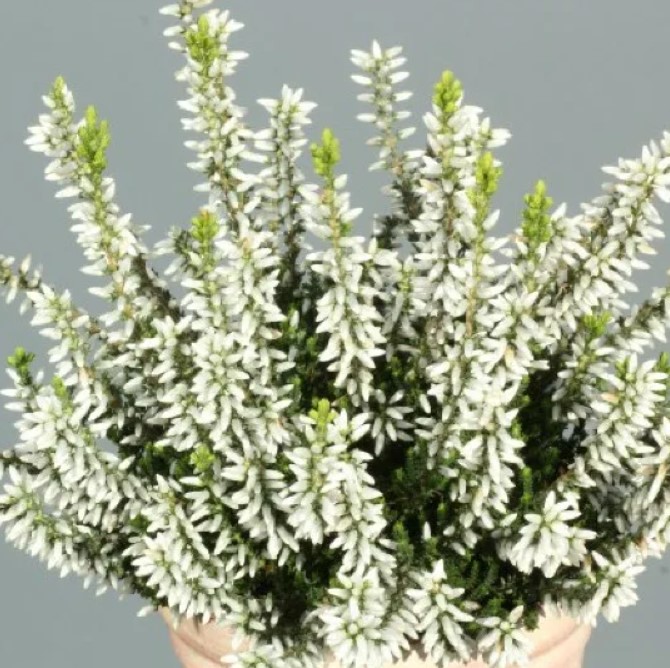
| Color of inflorescences and leaves | Flowering period | Height of shoots | Location and cultivation |
| Flowers are white, leaves are green. | September-October. | 40 cm. | Prefers a sunny location. It prefers acidic, moist soil. Cover with spruce branches for the winter. It can withstand temperatures down to -29°C. |
Marleen (Calluna vulgaris Marleen)
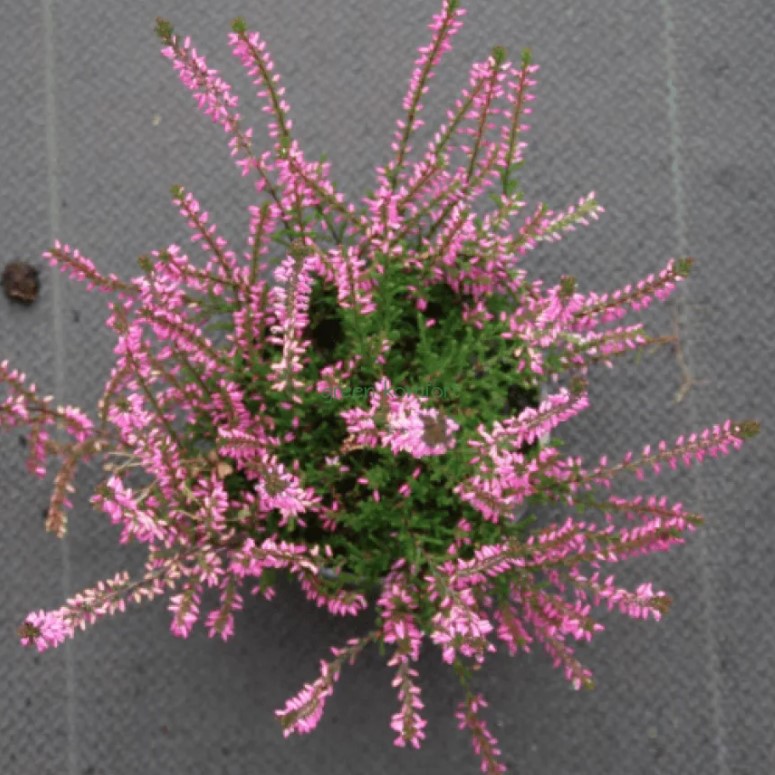
| Color of inflorescences and leaves | Flowering period | Height of shoots | Location and cultivation |
| The buds are inopening, purple, the leaves are green. | September-October. | 20-30 cm. | Prefers a sunny place with moist soil and likes mulching. |
Moulin Rouge (Calluna vulgaris Moulin Rouge)
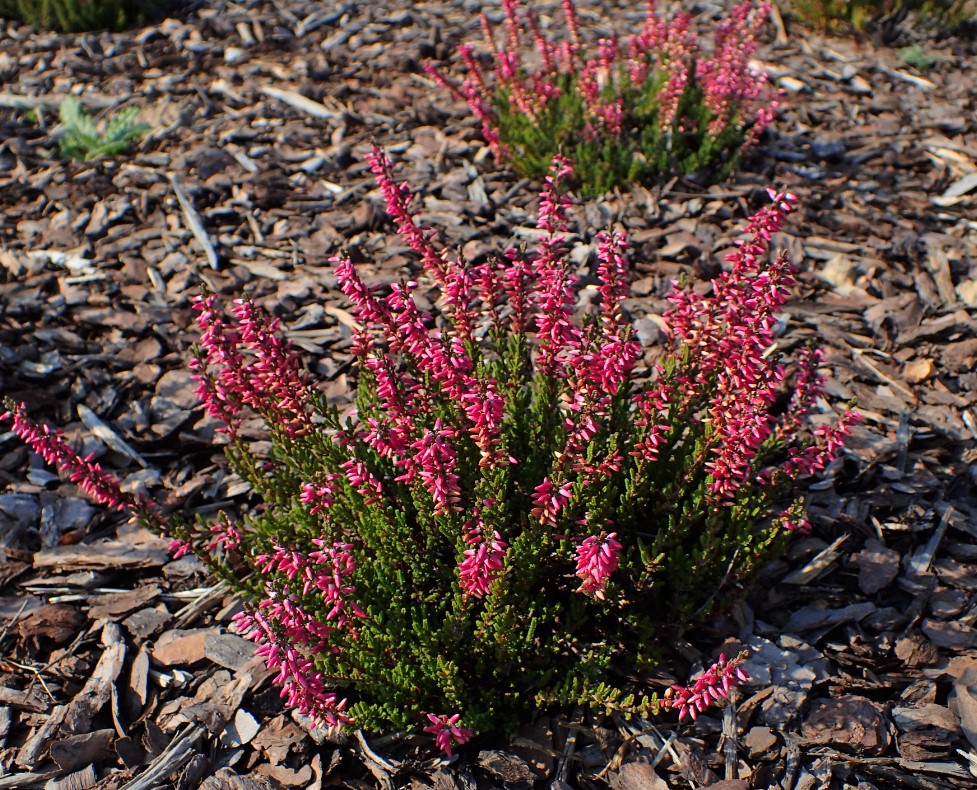
| Color of inflorescences and leaves | Flowering period | Height of shoots | Location and cultivation |
| The foliage is dark green, the flowers are red. | September-November. | 30 cm. | A sunny location with acidic, moist soil. It can withstand temperatures down to -23°C (-23°F) and requires winter cover. |
Nelly (Calluna vulgaris Nelly)
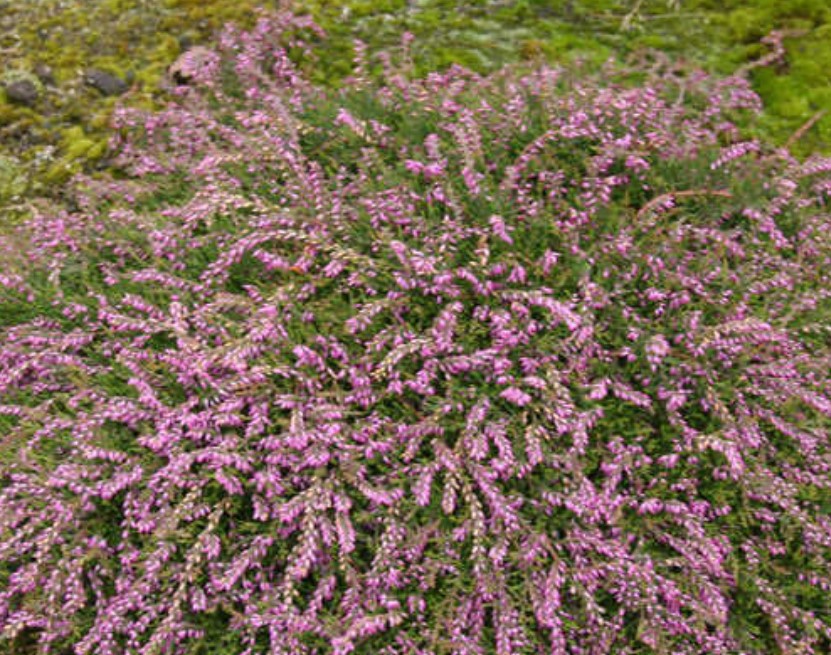
| Color of inflorescences and leaves | Flowering period | Height of shoots | Location and cultivation |
| The buds are inopening, purple-violet. The leaves are green. | September-November. | 20-25 cm. | A sunny location with acidic peat soil. Frost-resistant to -29°C. |
Nora (Calluna vulgaris Nora)
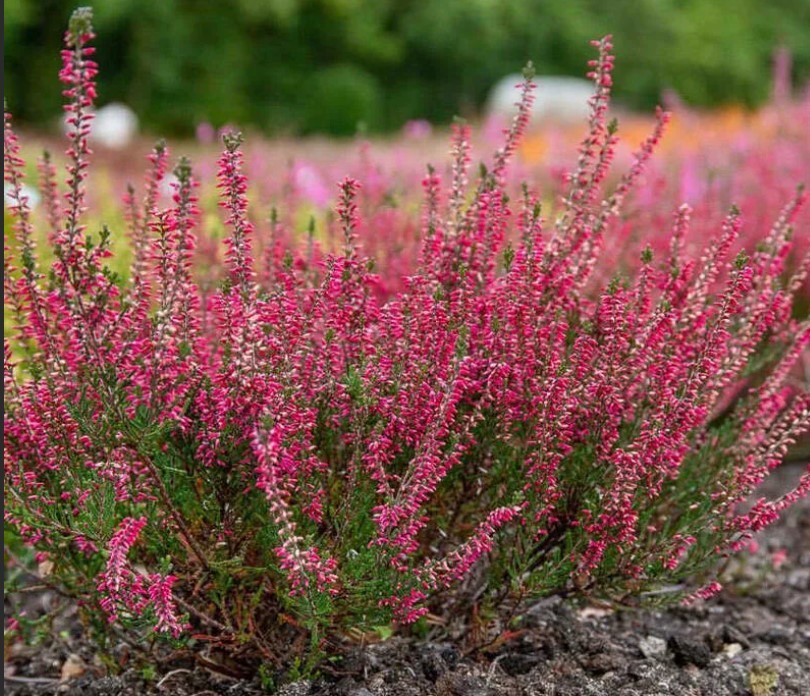
| Color of inflorescences and leaves | Flowering period | Height of shoots | Location and cultivation |
| Dark red numerous flowers and green leaves. | September-October. | 25 cm. | Prefers sunny sites, acidic, well-moistened soil, and mulching. It tolerates temperatures down to -23°C. |
Pink Alicia (Calluna vulgaris Pink Alicia)
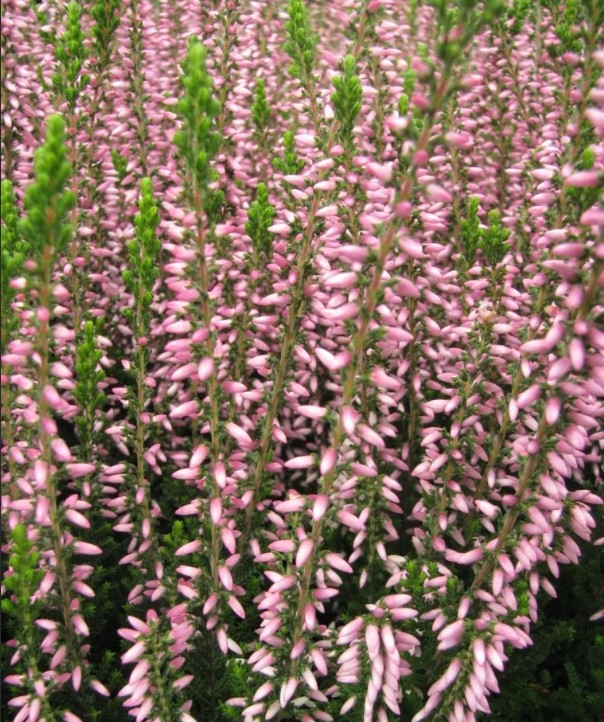
| Color of inflorescences and leaves | Flowering period | Height of shoots | Location and cultivation |
| The foliage is dark green, the flowers are pink. | September-October. | 20-30 cm. | A sunny location with sandy soil is ideal. Winter shelter is required; it can withstand temperatures down to -23°C. |
Pink Bettina (Calluna vulgaris Pink Bettina)
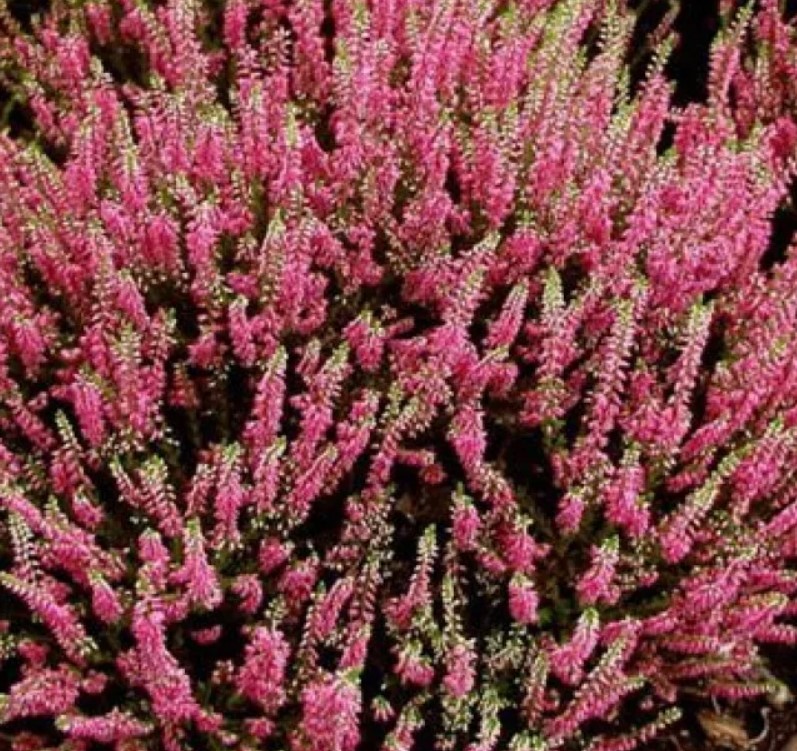
| Color of inflorescences and leaves | Flowering period | Height of shoots | Location and cultivation |
| The leaves are dark green, the flowers are pink and numerous. | August-October. | 40 cm. | Loves full sun. Prefers moist, acidic soil and mulch. Cover with peat for the winter and can withstand temperatures down to -23°C. |
Red Marlies (Calluna vulgaris Red Marlies)
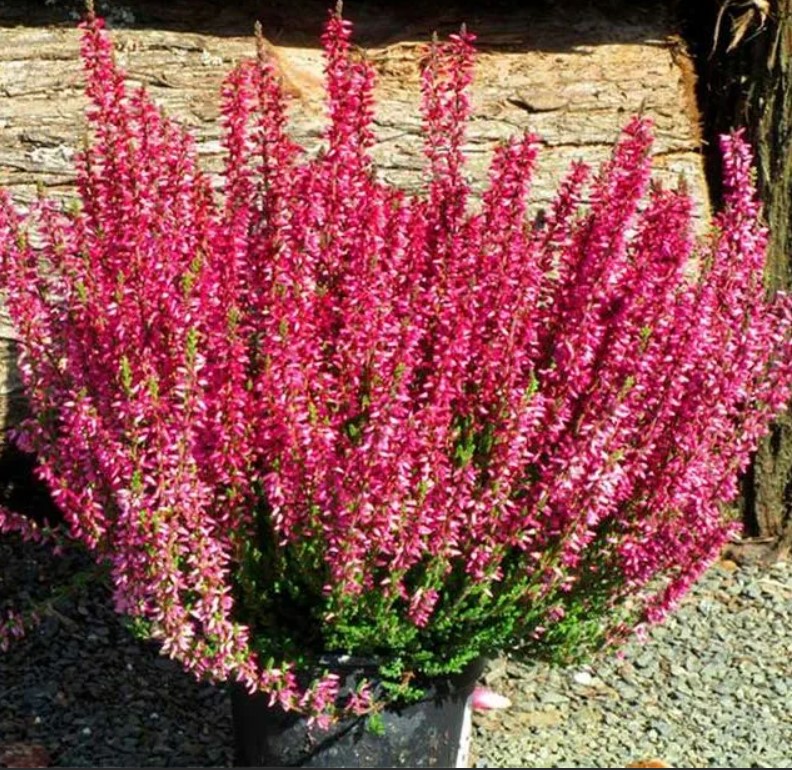
| Color of inflorescences and leaves | Flowering period | Height of shoots | Location and cultivation |
| The buds are red and do not open. The leaves are dark green. | August-November. | 60 cm. | Slow growing. Prefers sunny garden spots in peaty, acidic soil. Frost hardiness down to -23°C. |
Red Angie (Calluna vulgaris Red Angie)
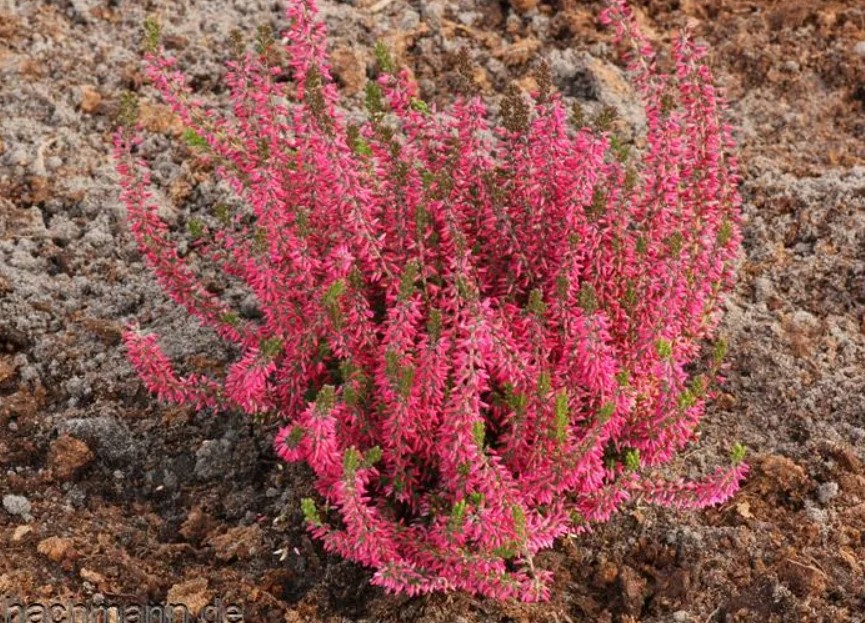
| Color of inflorescences and leaves | Flowering period | Height of shoots | Location and cultivation |
| The buds are dark red. The leaves are green. | Since September. | 50 cm. | Sunny areas, grows well in rock gardens. Requires winter shelter and can withstand temperatures down to -29°C. |
Romina (Calluna Romina)
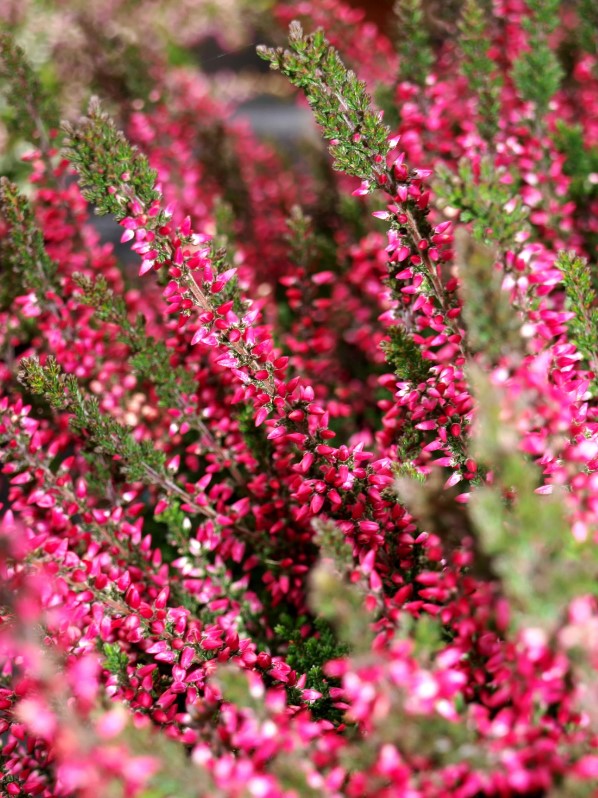
| Color of inflorescences and leaves | Flowering period | Height of shoots | Location and cultivation |
| Green leaves and red-pink flowers. | July-September | 30 cm. | Sunny areas, light soil. Requires winter cover. |
Selly (Calluna vulgaris Selly)
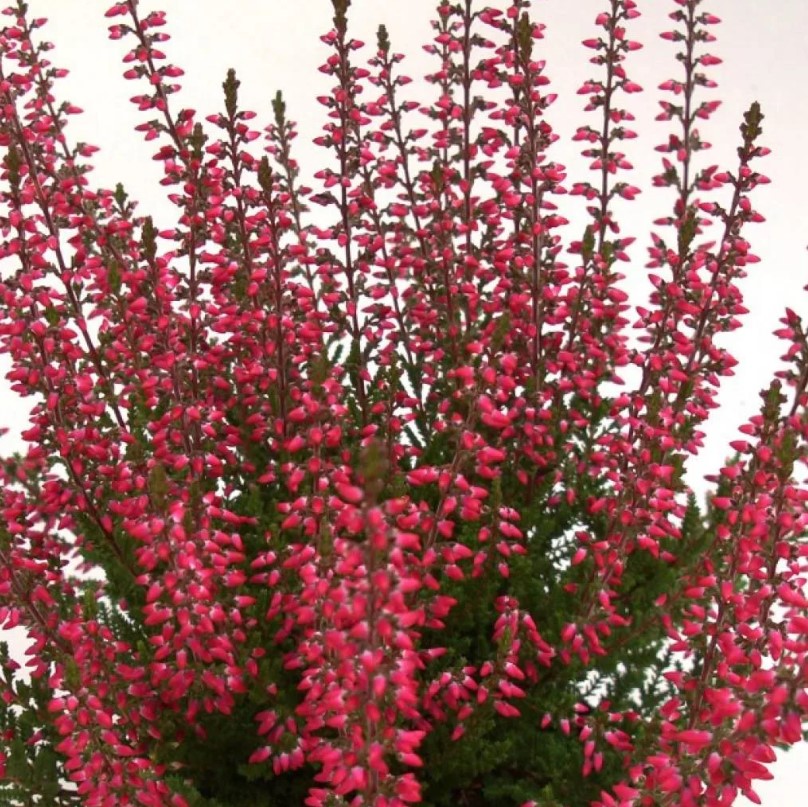
| Color of inflorescences and leaves | Flowering period | Height of shoots | Location and cultivation |
| The buds are red, the leaves are dark green. | August-October. | 30-45 cm. | Prefers sunny locations. Well suited for rock gardens. Prefers acidic, moist, mulched soil. Cover for the winter; frost resistance down to -23°C. |
Selma (Calluna vulgaris Selma)
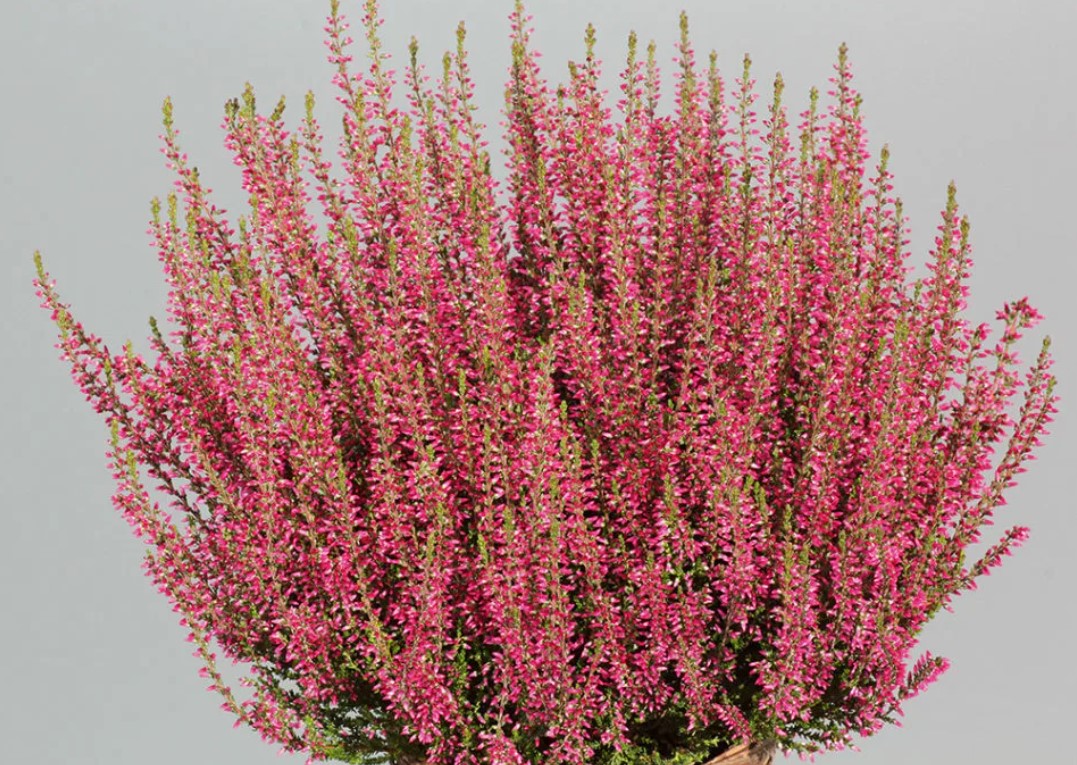
| Color of inflorescences and leaves | Flowering period | Height of shoots | Location and cultivation |
| Flowers are red, leaves are dark green. | September-October. | 40 cm. | Sunny locations with acidic soil, suitable for planting in pots. Cover for the winter. Frost hardiness down to -23°C. |
Silvana (Calluna vulgaris Silvana)
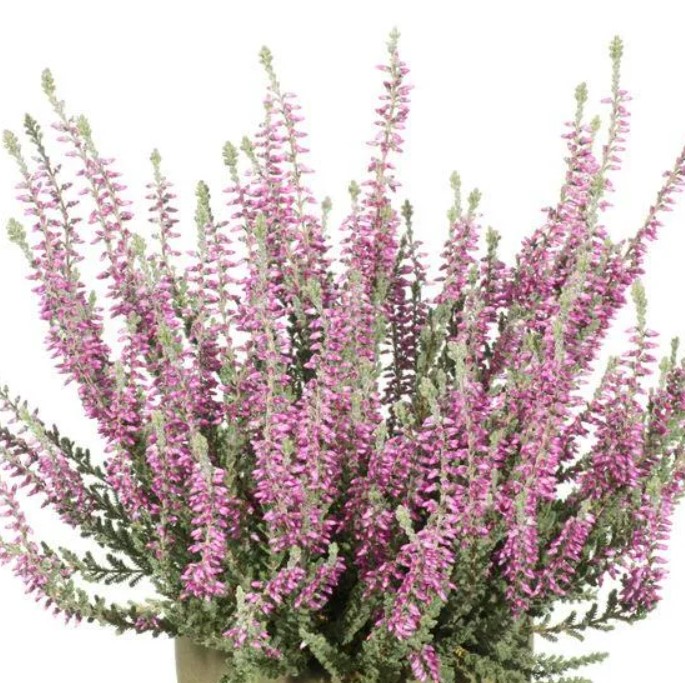
| Color of inflorescences and leaves | Flowering period | Height of shoots | Location and cultivation |
| Flowers are lilac-pink, leaves are grey-green, turning silvery at the end of flowering. | Late September-November. | 40-50 cm. | It thrives in sunny locations and rock gardens, preferring moist, acidic soil and mulching. It is frost-resistant down to -23°C. |
Teresa (Calluna vulgaris Theresa)
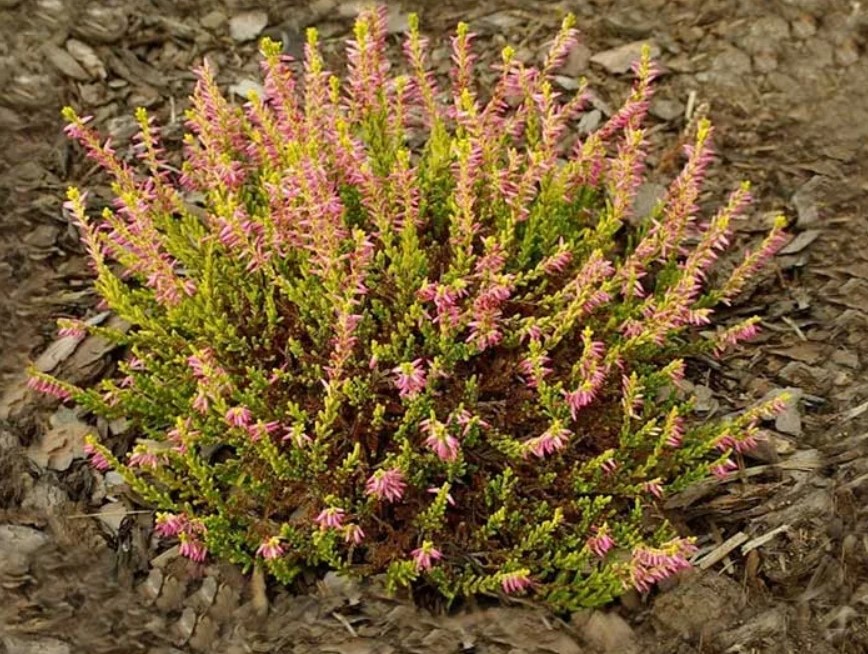
| Color of inflorescences and leaves | Flowering period | Height of shoots | Location and cultivation |
| The leaves are light yellow, the flowers are pinkish. | Since September. | 45 cm, growth is slow. | Sunny location with light, acidic soil. Cover for the winter; frost resistance down to -29°C. |
Franca (Calluna vulgaris Franca)
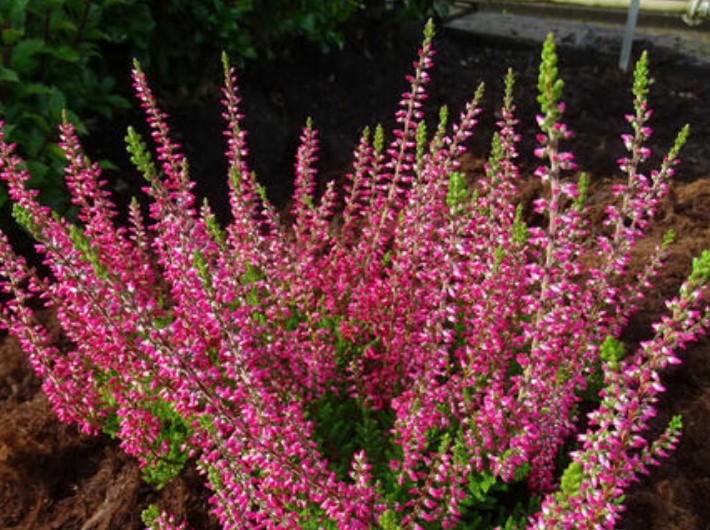
| Color of inflorescences and leaves | Flowering period | Height of shoots | Location and cultivation |
| The leaves are light green, the flowers are velvety, red-pink, very bright. | September-November. | Up to 60 cm. | The location is sunny, the soil is moist and acidic, without stagnation, and it is resistant to frosts down to -29. |
Helena (Calluna vulgaris Helena)
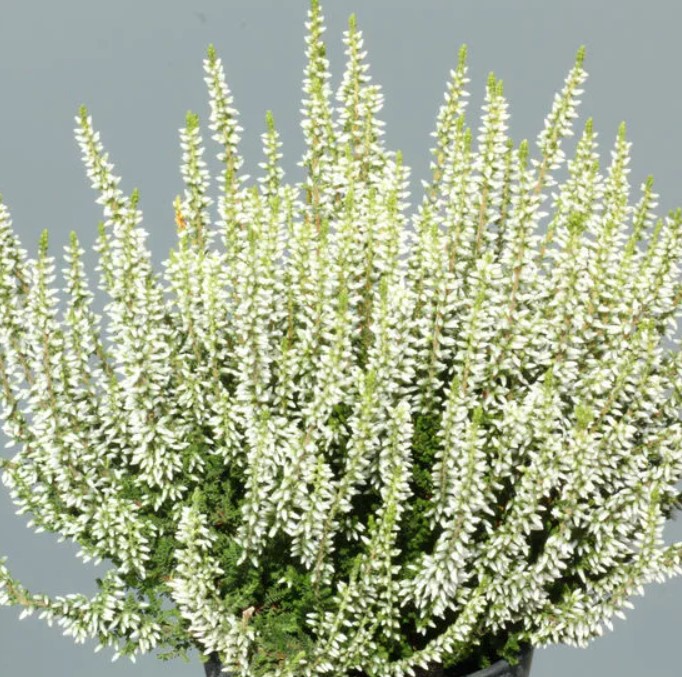
| Color of inflorescences and leaves | Flowering period | Height of shoots | Location and cultivation |
| The leaves are green. The flowers are white. | End of September. | 40 cm. | Sunny location. Acidic soil. Moist; requires winter cover. Grows on terraces and balconies. |
Elisa (Calluna vulgaris Elisa)
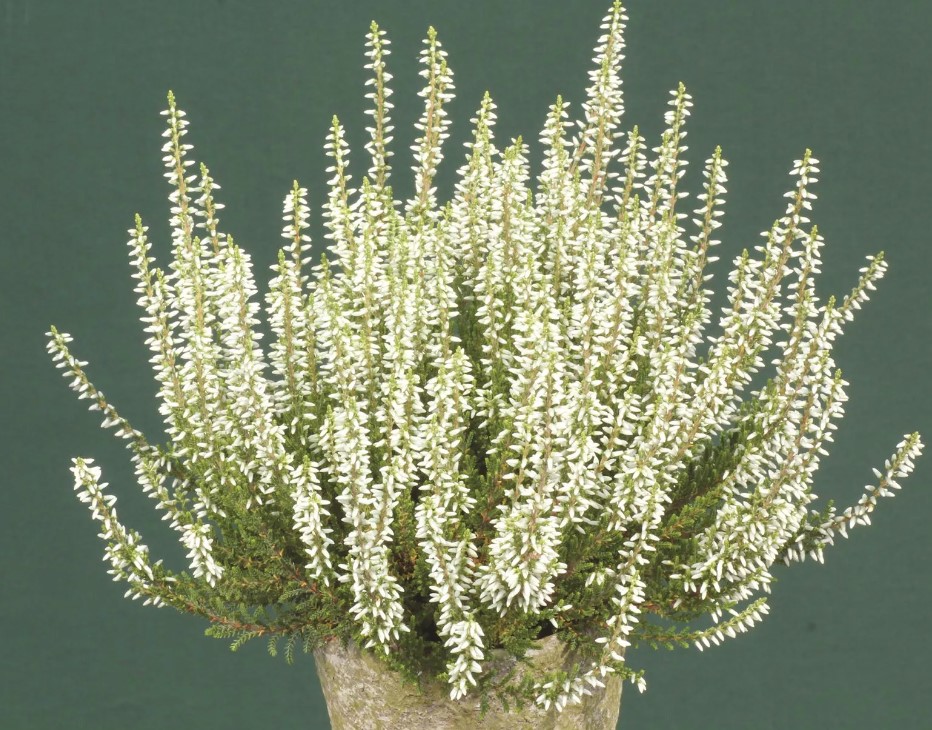
| Color of inflorescences and leaves | Flowering period | Height of shoots | Location and cultivation |
| The buds are white and do not open. The leaves are dark green. | October-November. | 40 cm. | Sunny locations with light, highly acidic soil. Loves mulching. Cover with spruce branches in winter. Frost hardiness down to -23°C. |
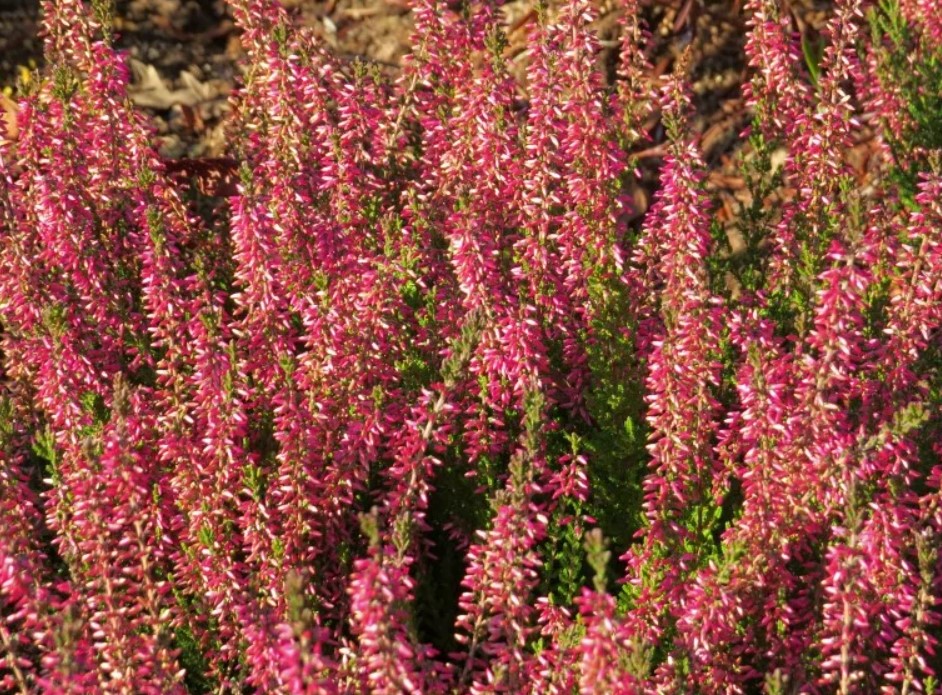
Angie (Calluna vulgaris Angie)
| Color of inflorescences and leaves | Flowering period | Height of shoots | Location and cultivation |
| The foliage is dark green, the inflorescences are bright red. | Since the end of September. | 60 cm. | Prefers peaty, moist, acidic soil. A sunny location is recommended. Winter shelter is required. Frost resistance down to -29°C. |
Growing heather from seeds
Heather can be grown by sowing seeds in open ground or using seedlings. We'll discuss each method in more detail below.
Sowing seeds
Heather seeds have a high germination rate, but they are so small that it is better to mix them with sand when planting.
You can use any all-purpose soil, or mix sand, soil, and peat in equal proportions. Fill the selected container with soil, and sprinkle the seeds on top. There's no need to press them down or cover them with soil.
Next, the plantings should be carefully watered with a syringe or spray bottle, covered with plastic wrap, and placed in a warm location. The greenhouses should be periodically ventilated, and the soil should be moistened as needed.
After approximately 28 days, the first shoots will appear on the surface; the cover should be removed. As the seedlings grow, they are pricked out into individual containers or larger ones.
Growing seedlings
After the seeds have sprouted, transplant the seedlings into individual containers. They are then placed in a cooler room. In good weather, the plants can be moved outside, only being brought in at night. The recommended temperature for normal growth is 10-12 degrees Celsius.
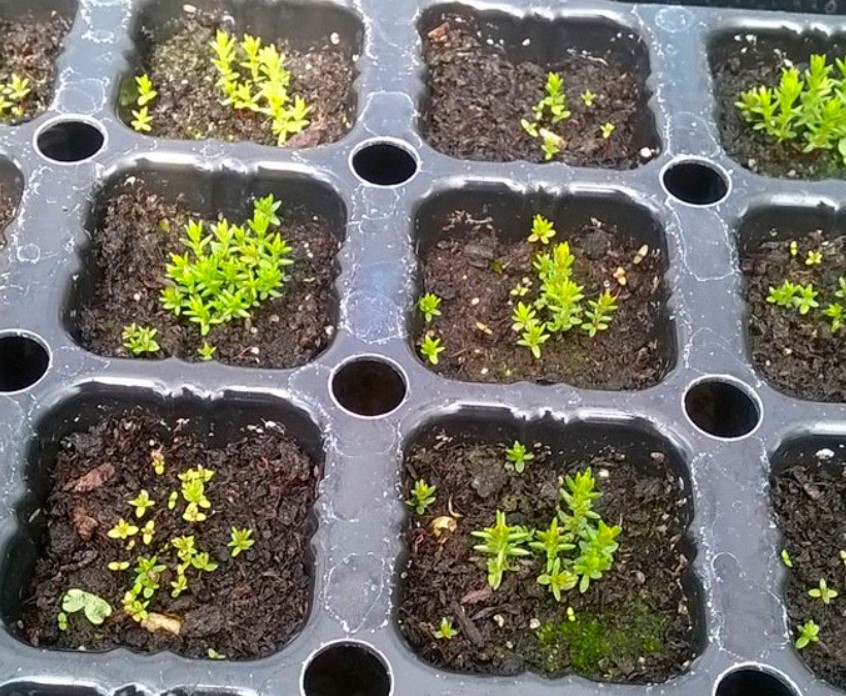
Heather can only be planted in a permanent bed when it is two years old. However, such plants will not retain the characteristics of the parent plant, so you should not expect the variety to exhibit its characteristic external features.
Planting heather in open ground
Depending on the region, seedlings can be planted outdoors in mid- or late spring. Below, we'll discuss all the nuances of this process.
Landing dates
Heather seedlings are transplanted only after the threat of night frosts has passed and the air temperature has warmed to 12 degrees Celsius. In spring, this time falls between late April and mid-May in most regions. However, planting can also be done before winter, before frost sets in—in late September or early October.
Location and soil
Heather thrives best in a well-lit garden area that doesn't retain moisture after rain or snowmelt. The soil should be loose, moist, and acidic. You can add pine soil, peat, and sand to the bed. Many gardeners add red high-moor peat to acidify the soil. In poor clay soil, it's best to create a raised bed filled with peat and soil in a ratio of 3:1.
Heather does not tolerate drafts well in the early stages of growth, so tall rhododendrons or conifers make good neighbors for them.
Landing features
Before planting heather, prepare holes twice the diameter of the root system. They are dug 25-50 cm apart, depending on the variety chosen: the more compact the plant, the closer the spacing. The depth of such a hole is 15-20 cm. Ten to 15 plants can be planted per square meter. Keep in mind that some heather varieties grow very quickly, so dense planting is not recommended.
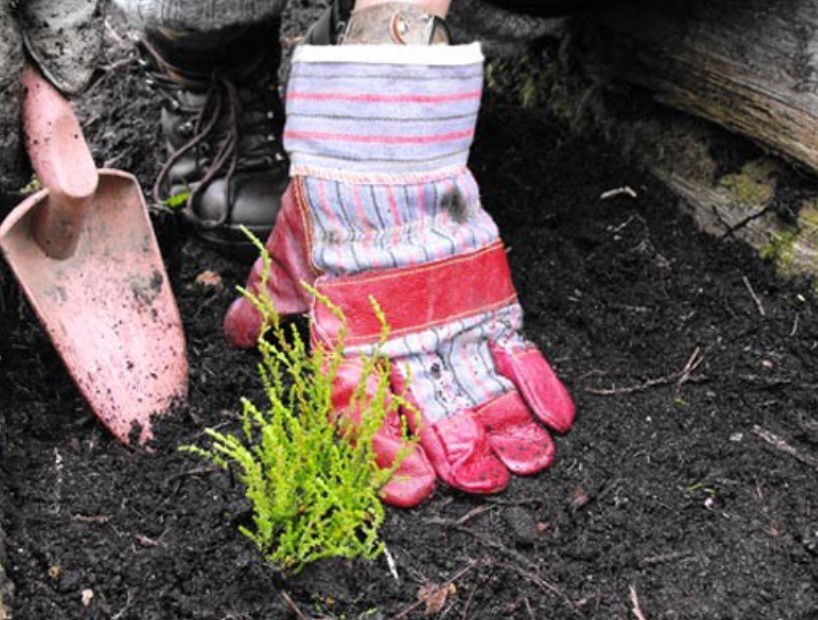
Heather loves mulch, so after planting, it is recommended to cover the surface of the bed with a layer of bark, straw, or other suitable material.
If necessary, heather can be planted in a pot and displayed outdoors or on a veranda. For this method, it's best to use a mixture of garden soil and peat in a 2:1 ratio.
Heather care
Heather is an unpretentious plant; caring for it does not require any special effort from gardeners.
Watering
Heather prefers moist soil. However, it can easily survive on natural rainfall. If the summer is extremely hot, it's recommended to moisten the soil with sun-settled water once a week. The key is to avoid overdoing it and allowing water to stagnate around the roots, as heather does not tolerate this very well.
Fertilizer
Fertilizer is added to the soil only if it was initially poor, and this is reflected in the bush's appearance—it becomes pale, stunted, and produces sparse blooms. In these circumstances, the plants can be fed with any complex fertilizer for garden flowering plants. Avoid overdoing it with calcium-rich fertilizers, as heather does not tolerate excess calcium in the soil.
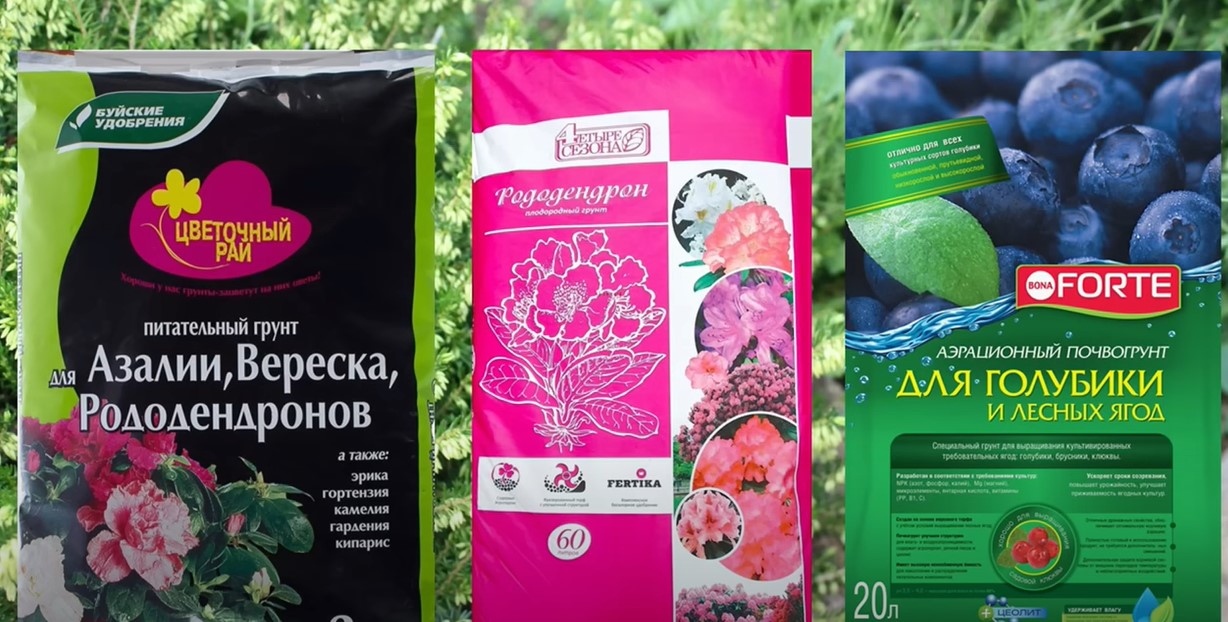
In spring, you can use granular fertilizer, which is gradually absorbed into the soil along with the moisture that falls on it.
Trimming
Every year after flowering, old shoots and flower heads should be removed. Cut them just below the flowering shoot, leaving a small "panicle" intact, from which new shoots will form the following season. If this is not done, the old shoots will dry out and become pressed to the ground, creating an unsightly appearance.
To rejuvenate the bushes, it is necessary to cut all shoots close enough to the ground every 3-4 years to allow young stems to grow.
Wintering
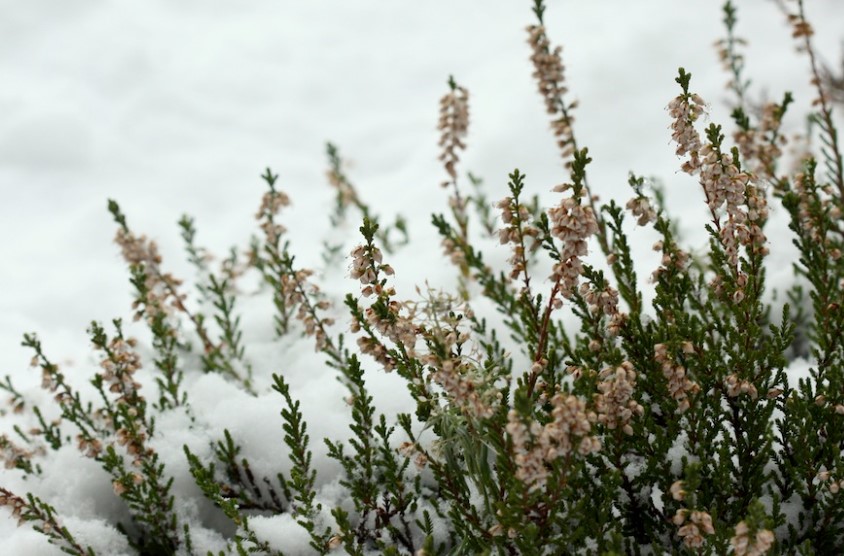
Although most varieties can withstand temperatures of -23°C and below, experienced gardeners strongly recommend covering plantings with spruce branches or special nets during the winter. This is done in November, and the covering is removed in the spring with the first warmth to prevent the plants from rotting and pests from breeding.
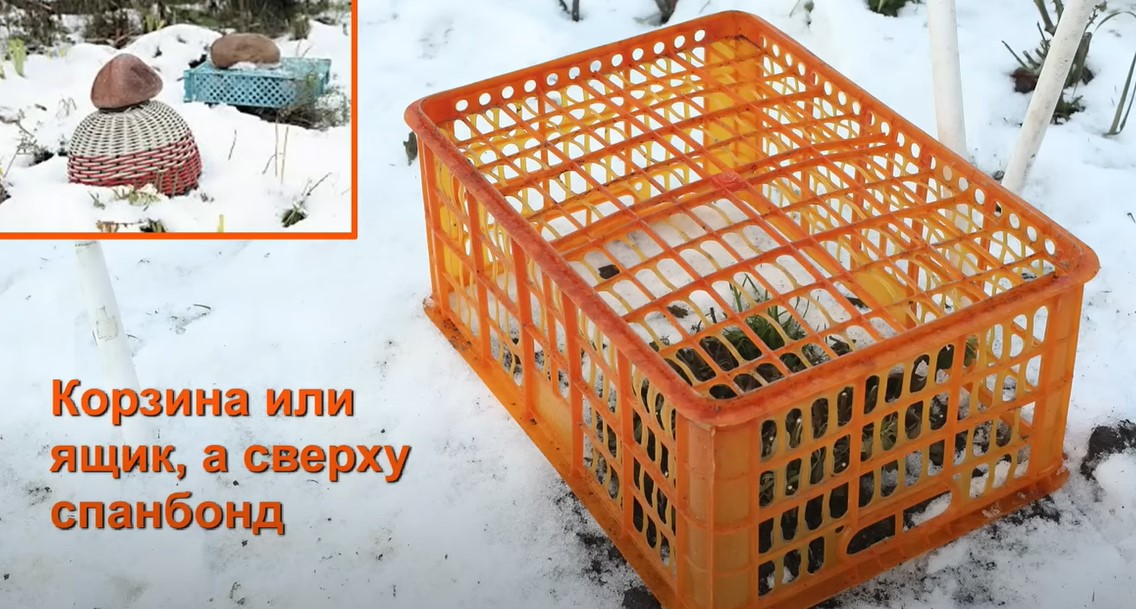
Heather grown in pots or planters requires mandatory cover; in such cases, special agrofibre can be used.
Diseases and pests of heather
The table below lists the main heather diseases and pests, as well as methods for controlling them.
| Disease | Signs | Prevention and treatment |
| Late blight | Blackening appears on the shoots and leaves, then the rot spreads to the neck, and the plant dries up. | Spraying with Fitosporin and Alirin is suitable for prevention. Avoid overwatering the soil and water stagnation at the roots. Damaged bushes are removed. At the first signs of disease, treat the plants with Albit, Ordan, and Abiga-Peak. |
| Root rot | Growth slows, shoots begin to turn yellow. Growths can be seen on the roots. | Diseased plants are destroyed. To prevent and eradicate the disease in its early stages, you can use products such as Baktofit, Maxim Dachnik, and others. Diseased bushes are dug up and destroyed. |
| Gray mold | Soft swellings appear on the shoots, which acquire a grayish tint. | Treat the affected areas with Fitosporin, Skor, Chistotsvet in accordance with the instructions. |
| Powdery mildew | The leaves and petioles become covered with a white coating, which eventually turns brown. The lower leaf blades turn red. | For prevention, use Fitosporin and Alirin. In the spring, fungicide treatment is recommended. For large areas of infestation, spray with Chistotsvet, Topaz, Skor, and Thiovit Jet. |
Heather propagation
Heather can be propagated in several different ways: by seeds, layering, cuttings, and division. We'll cover each method in more detail below.
Seeds
Growing heather from seed is a lengthy process. General-purpose soil and containers are used for planting. After sowing, the seeds should not be covered with soil to avoid deepening them. Experienced gardeners recommend pre-germinating the seeds for 2-3 weeks by placing them in a bowl with a damp cloth. These seeds sprout much faster. Seedlings should only be transplanted outdoors 1.5-2 years after planting; otherwise, they will not take root.
Layers
In natural conditions, heather propagates spontaneously by layering, when shoots take root and produce numerous shoots. To obtain a layer more quickly, a mature, strong shoot is secured in soil and covered with peat. After a year, a full-fledged seedling will form, which can be separated and transplanted to a separate flowerbed.
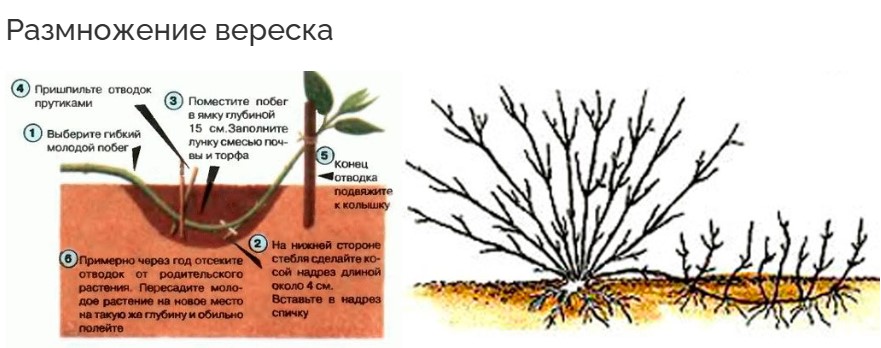
cuttings
At the end of the season, the tops of healthy, strong shoots are cut off, but without flowering parts. They are then rooted in pots with peat and sand (3:1 ratio) and placed in a room with a temperature of 15-18 degrees Celsius. It is recommended to feed the plantings with micronutrient fertilizers every three weeks. The cuttings will root well over the winter and can be planted in the flowerbed in the spring.
Dividing rhizomes
Dividing rhizomes is the fastest and easiest way to propagate heather. A mature bush is dug out of the soil, and the root is cut so that each section is attached to a young shoot. Old stems are removed by pruning, and the remaining portion is planted in a flowerbed.
Uses of heather
Heather is widely used not only as a decorative element in flower beds, but also for various other purposes.
Economic use in ancient times
- The name "heather" comes from the ancient Greek word for "sweeping." This refers to the paniculate inflorescences, but in ancient times, heather was often used as a broom.
- In some countries (Ireland, Scotland), heather is used for roofing. The dried shoots are mixed with clay and straw to create a relatively strong building material.
- In mountain villages, baskets were woven from heather.
- People from different countries stuffed their beds and mattresses with heather.
- In agriculture, the plant was used to make bedding for livestock.
- Heather flowers were used decades ago to produce a dye used to color tanned leather.
In beekeeping
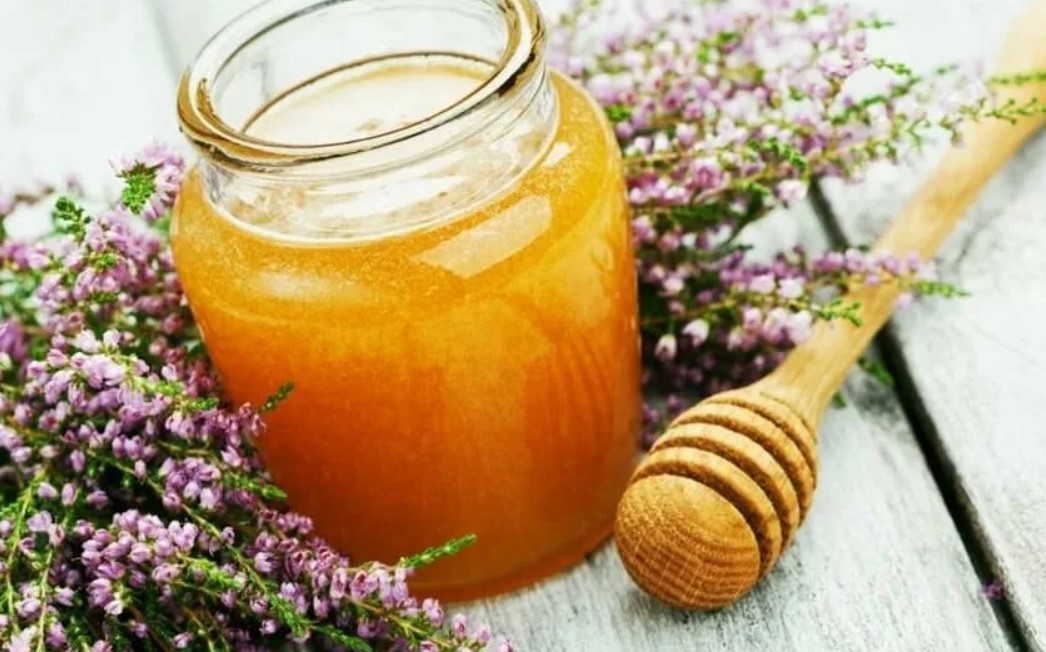
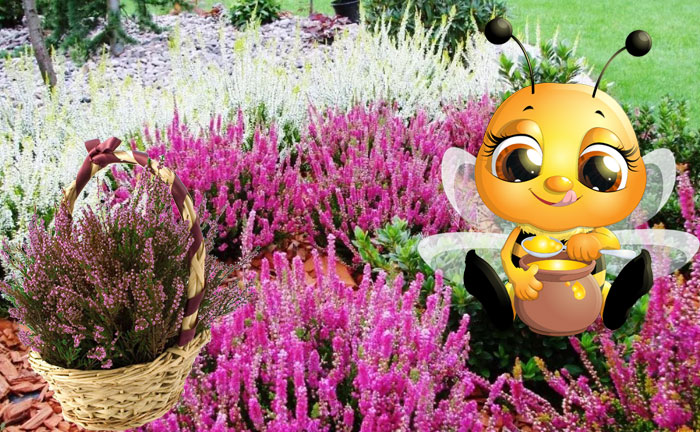
Heather is considered an excellent honey plant, so it is widely used in beekeeping in the central and northern regions of the country. It is also popular because it tolerates frost well, and its flowering period can last until mid-autumn. Heather honey plants are very productive, and the honey itself is aromatic and thick. It can only be consumed after boiling due to its toxic content. It is typically used in folk medicine.
In medicine
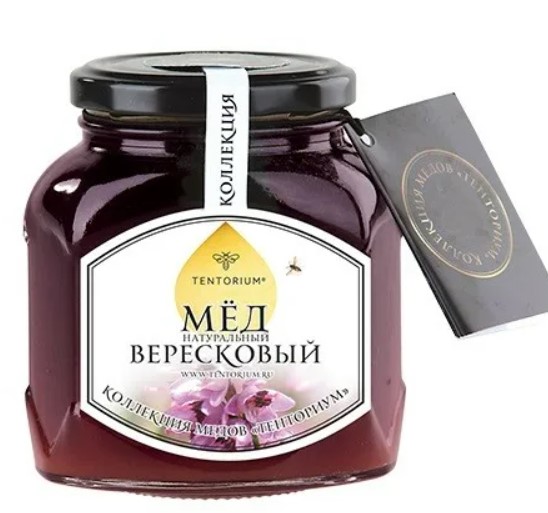
- Heather honey has an antiseptic effect.
- After boiling, it can be used to treat bronchial asthma, bladder and kidney stones, gout and rheumatism.
- Some sources note heather's ability to fight the herpes virus.
- It is also used as a diuretic and diaphoretic.
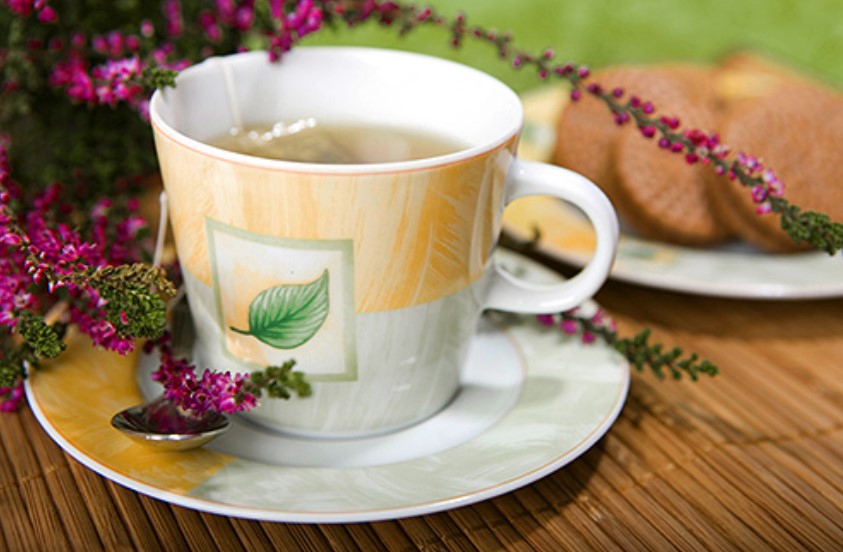
Use in landscape
In landscape design, heather is used as an independent planting.
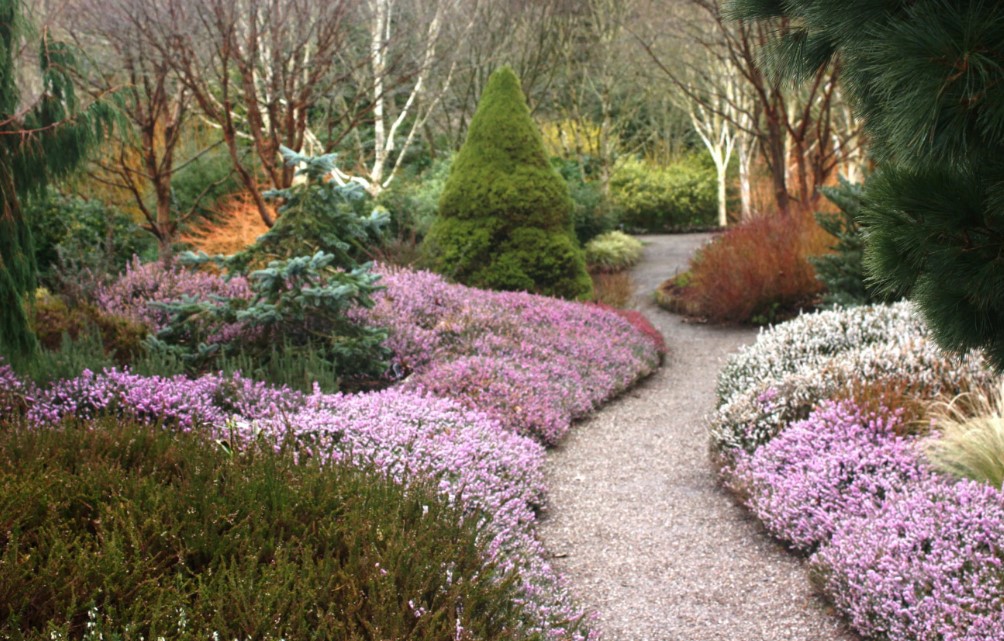
But it will look no less advantageous when used in complex compositions.
- Planting heather in rock gardens is considered an excellent solution. Low-growing varieties can replace lawn grass and add vibrant color to the garden's exterior.
- Heather also looks good in pots, on terraces, verandas and balconies.
- It is recommended to plant heather with rhododendrons or some conifers (juniper, azalea, etc.).
Reviews of heather from flower growers
Everyone loves heather for its rich hues, which reach their fullest potential in late summer and early fall, when most flowerbeds have already begun to droop. This riot of color will not only decorate your garden but also lift your spirits on gloomy autumn days.
Review: Garden plant "Common Heather" - Although "common", it is very attractive
ADVANTAGES:
Nice bush, easy care
FLAWS:
No
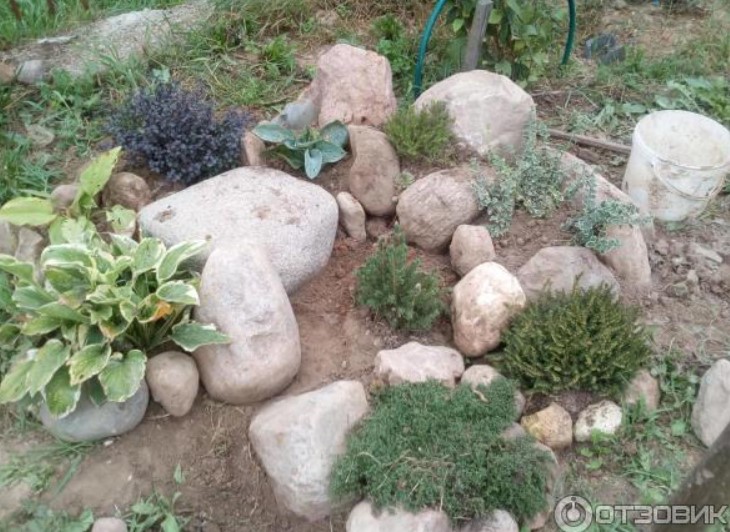
Continuing with the topic of plants for an alpine slide, I would like to mention heather.
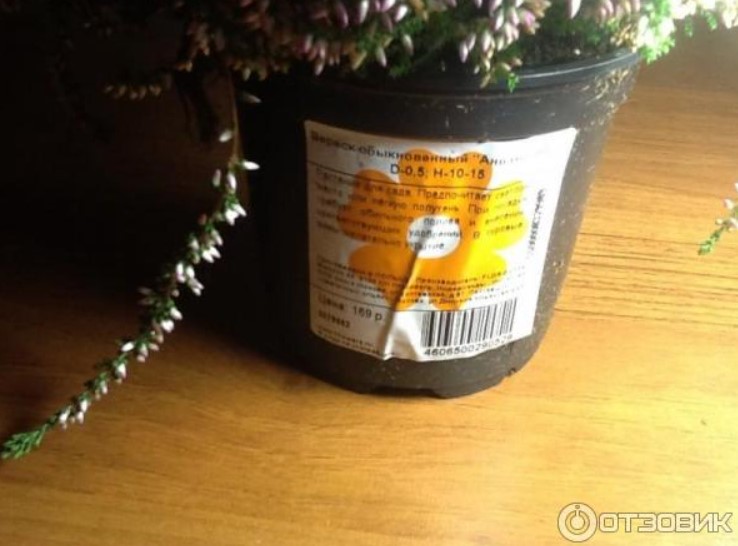
Buy common heather
In Moscow you can go to Obi.
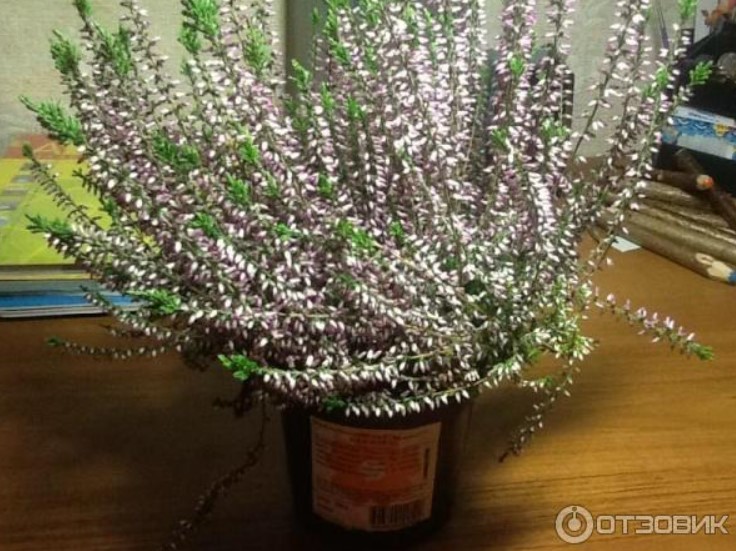
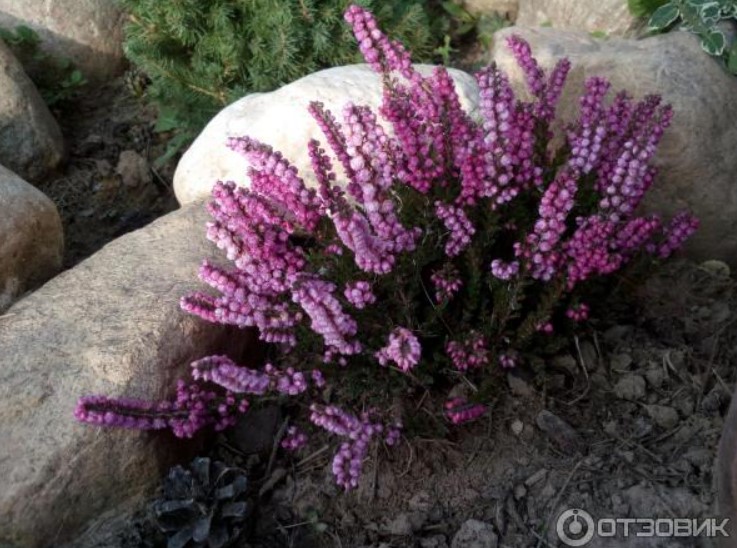
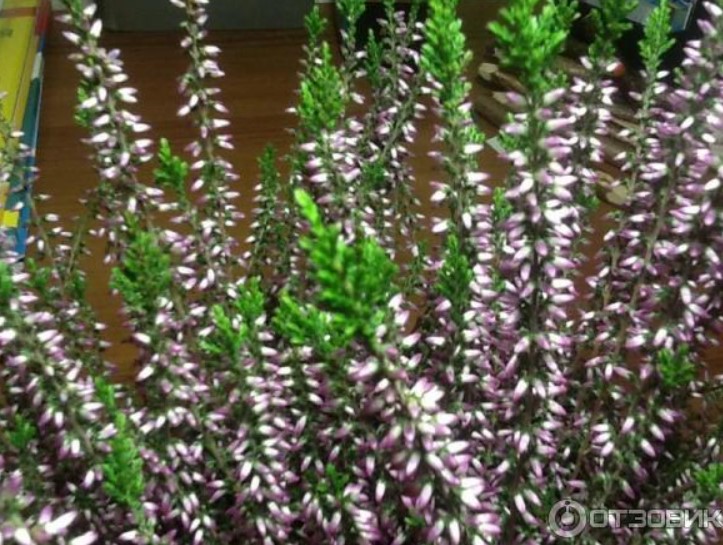
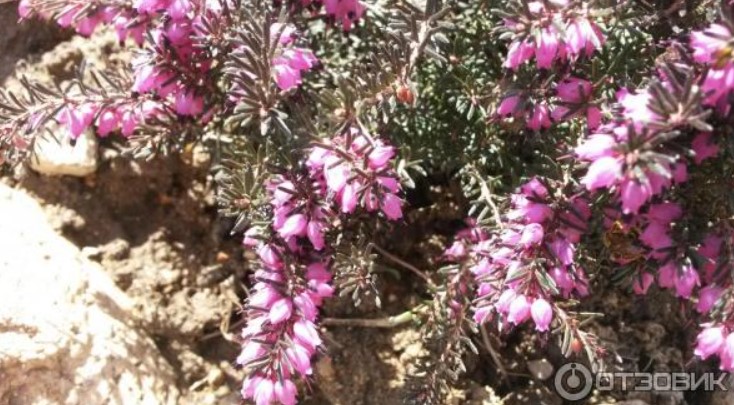
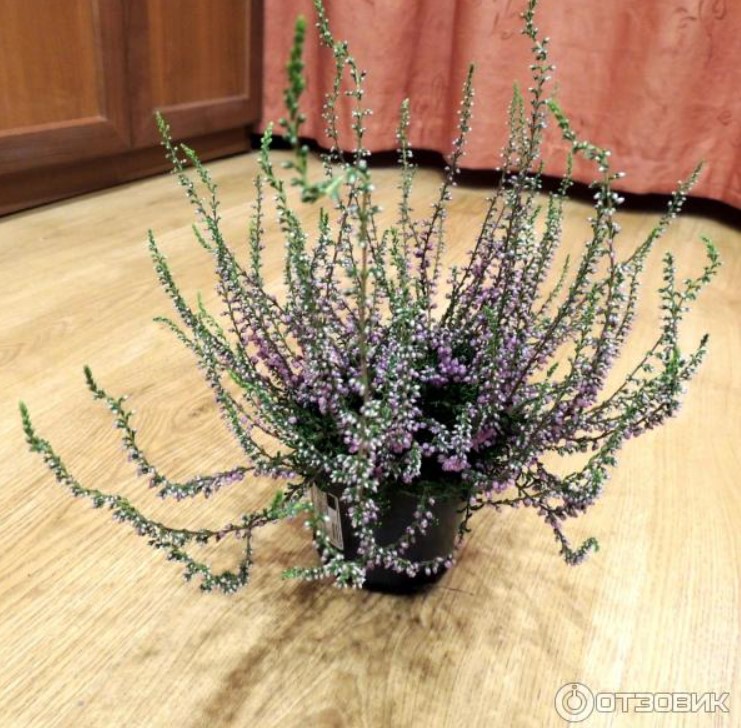
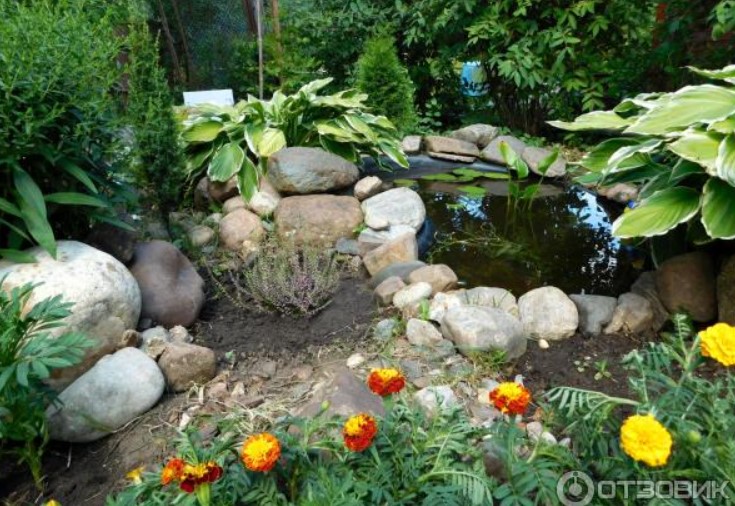
I've been wanting to plant heather in my rock garden and near my stone retaining wall for a long time. I finally decided to buy it. The flower turned out to be very delicate and pretty.
The flowering branches end in bright green tips.
Heather is a very easy-to-grow plant, but it does have its own characteristics. It thrives in acidic soil.
Peat, sand and coniferous soil should be added to the planting holes.
So you'll have to go to the forest and stock up on soil from under the fir trees.
Heather comes in a variety of colors, so you'll need to buy a few more bushes of a different color to create a multi-colored flower arrangement.
You can add erica, also a type of heather, to a heather garden. It's twice as expensive, but it's more decorative and fragrant.
Heather can be propagated later. This can be done by layering, cuttings, or division, but only after my bush has become stronger.
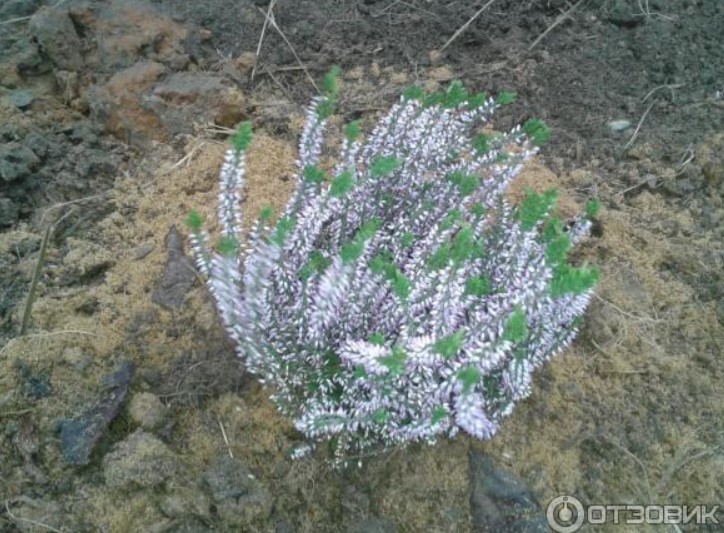
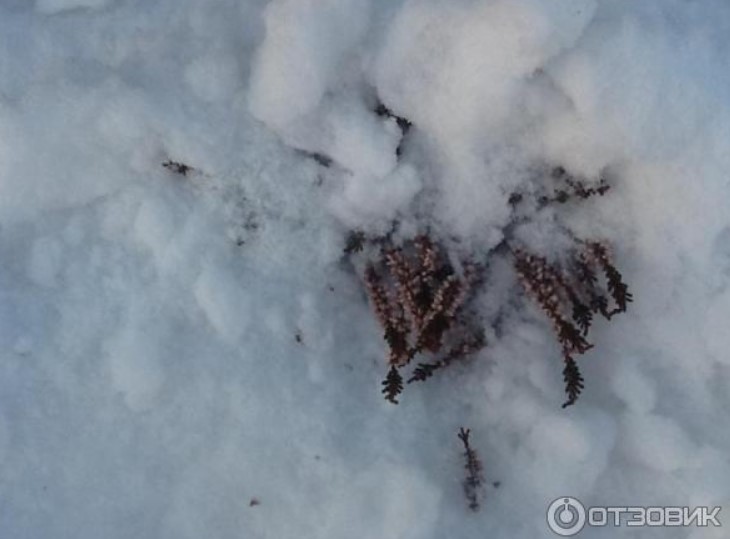
The heather survived the winter safely; a blanket of snow reliably covered the plant.
If the winter is frosty and there is little snow, the heather bush should be covered with spruce branches.
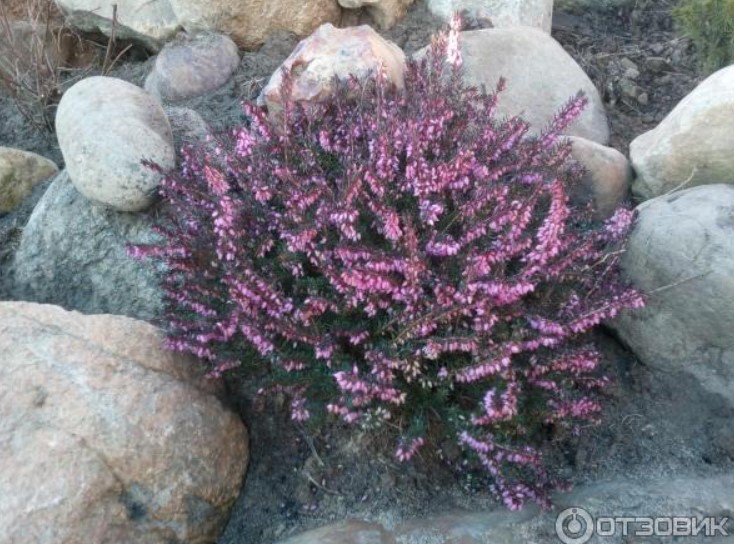
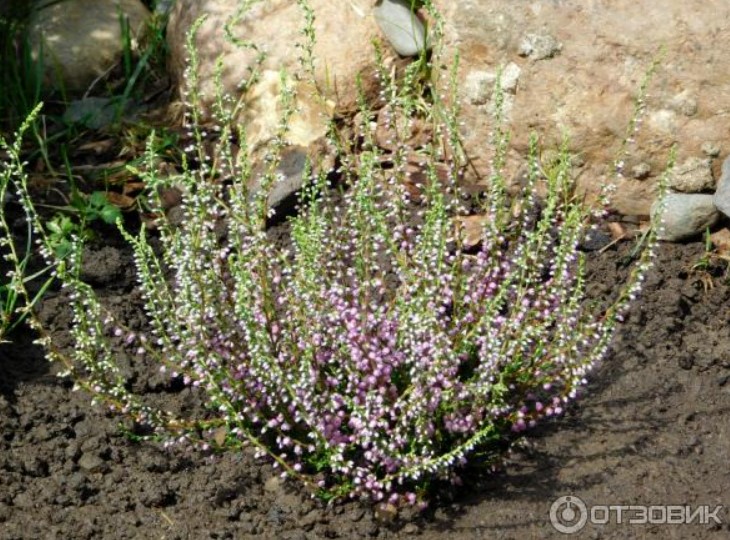
The photo shows another bush in bloom.
My heather collection is gradually expanding.
Heather blooms are very attractive.
Review: Garden plant "Common Heather" - A nice honey plant.
ADVANTAGES:
Quite unpretentious. Attracts insects. Beautiful appearance.
FLAWS:
No.
My son bought this plant to decorate his dacha corner. He bought the seedling from the Lazarevskoye nursery for 230 rubles.
It's best planted in a sunny spot, although it also thrives in partial shade, provided the soil is sandy or peaty. The seedling tolerated the transplant well and took root immediately. Regular watering is required. Overall, this plant is quite low-maintenance and looks beautiful. It grows into a large, flat bush with small, delicate lilac flowers.
For my son, an important factor in purchasing this plant was the fact that heather attracts insects: bumblebees, butterflies, and bees. Well, my son, of course, is primarily interested in butterflies; that's his thing. But for all gardeners, attracting bees and bumblebees should be a plus—it helps pollinate the garden. Heather is an excellent honey plant, after all.
This plant can be propagated in all ways: cuttings, layering, seeds and division of the bush.
This is my son’s corner, his patrimony. My son works here himself, everything is done by his hands. The heather was recently transplanted here.
Here he is, another week later.
Overall, this plant thrives in our area. Our winters can be quite frosty and snowless, so it's best to prepare the heather for winter: sprinkle it with peat and then cover it with spruce branches.
Review: Garden plant "Common Heather" - Survived the winter and is a delight
ADVANTAGES:
Beautiful flowering from July until frost, honey plant
FLAWS:
Capricious character
I bought heather at the Magnit supermarket around September 20, 2022. I'd been eyeing the purple flower for a while and decided to give it a try.I spent a lot of time researching online how to help the shrub survive the winter and bloom. I identified four key points:
- no waterlogging in spring;
- acidic, peaty soil;
— frost protection:
— protection from temperature changes in spring.
I planted it on a slope. I added some store-bought soil. By the way, the site is loamy. In the fall, I covered it with a tray and laid some branches on top.
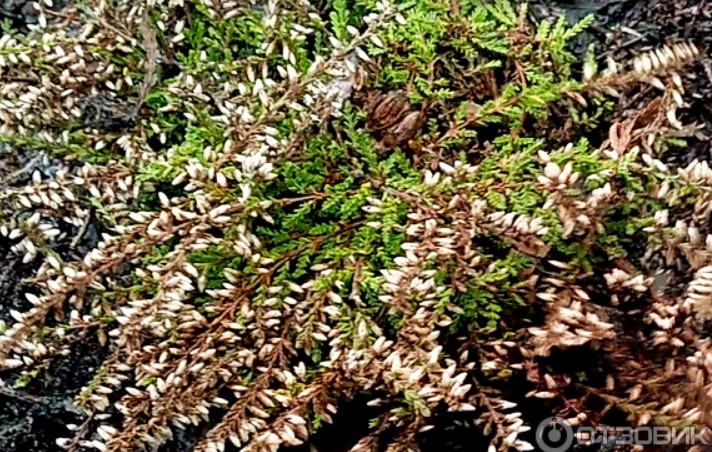
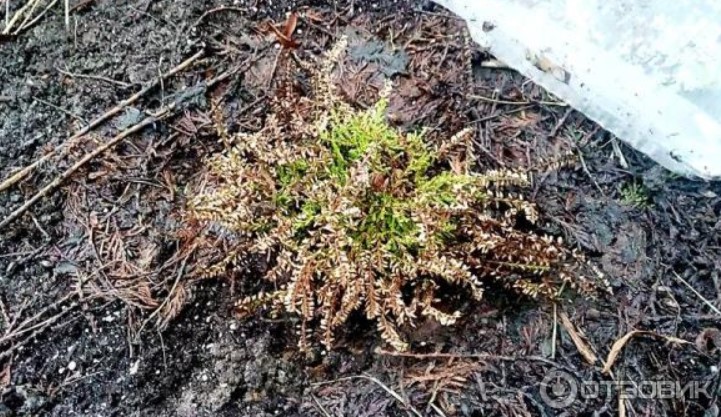
I did it. And this spring, in March 2023, I'm summing up the results. Green leaves have sprouted from the center, which means the heather is enjoying itself. It's growing on a slope. The west side of the house.
I'm planning to add some special soil. I'm also considering fertilizer. Maybe it will get the same fertilizer I'll be spreading on the other plants. Nitrogen fertilizers in the spring, and organic and complex mineral fertilizers in the summer.
I recommend everyone buy a beautiful flower. It costs about 300 rubles.