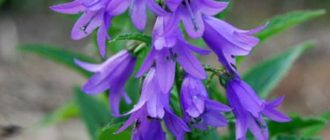
Nierembergia is a flowering plant that came to our region from sunny Argentina. There, it blooms year-round, reproducing through numerous seeds. However, in Russia, due to cold winters, nierembergia is grown as an annual, starting seedlings from seed.
Content
- 1 Description of Nierembergia
- 2 Nierembergia species
- 3 Growing Nierembergia from seeds at home
- 4 Planting Nierembergia in open ground
- 5 Caring for Nierembergia in open ground
- 6 Diseases and pests of Nierembergia
- 7 Nierembergia in landscape design + photo
- 8 Real reviews and advice from gardeners about growing Nierembergia
Description of Nierembergia
Nierembergia is a herbaceous subshrub. Its shoots can be ascending or creeping, and there are many of them, all covered with alternately arranged narrow leaves. The leaf blade may be attached directly to the stem or have a short petiole.
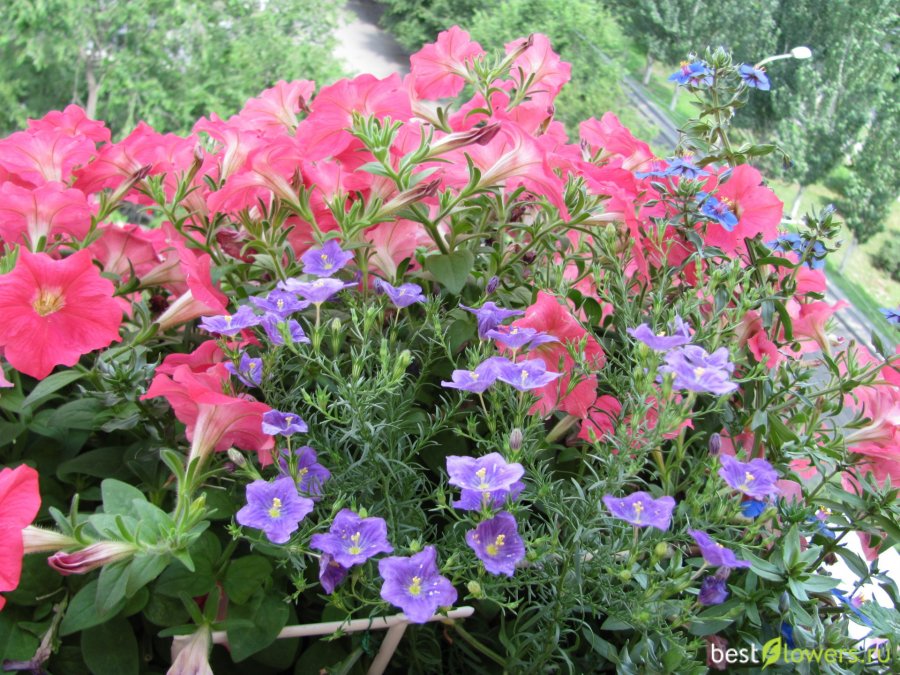
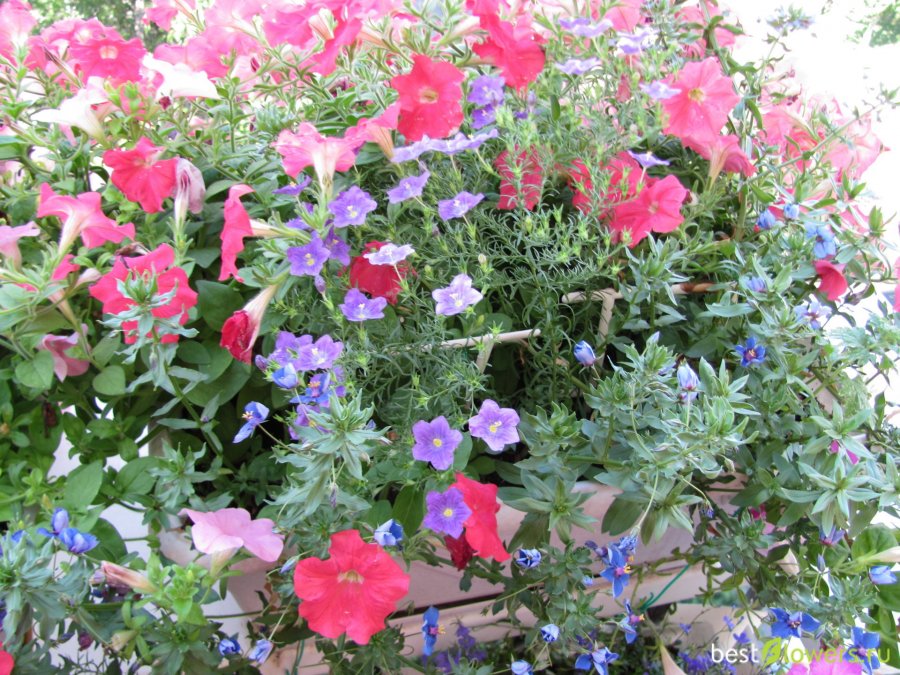
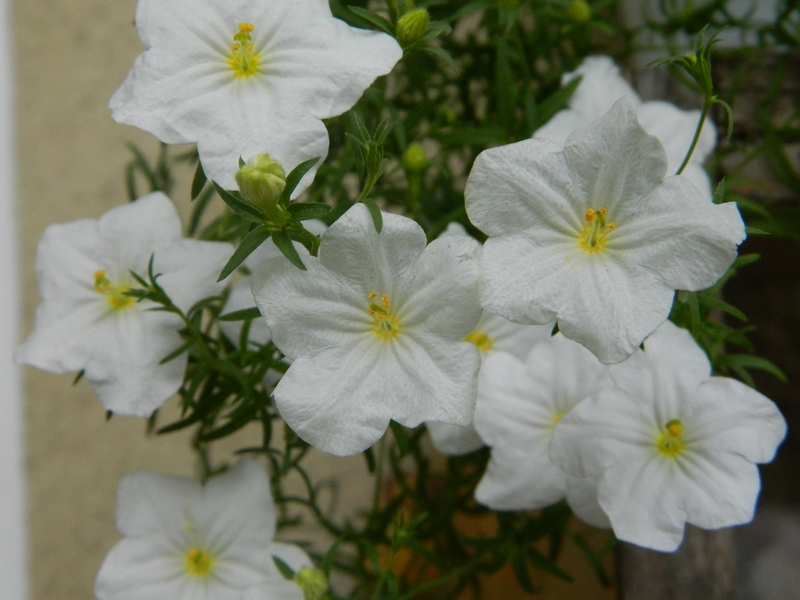
The flowers are shallow and wide-open. They range in color from blue, bluish, white, or lilac. In early summer, the buds open, and flowering continues for three months. At the end of the season, a small, two-valved capsule forms in the place of the fallen petals, containing numerous seeds. Once harvested, these seeds can be used for up to four years.
Nierembergia species
There are 35 varieties of Nierembergia in nature, but only a few of them are grown in culture.
Blue Nierembergia (Nierembergia coerulea) + varieties and photos
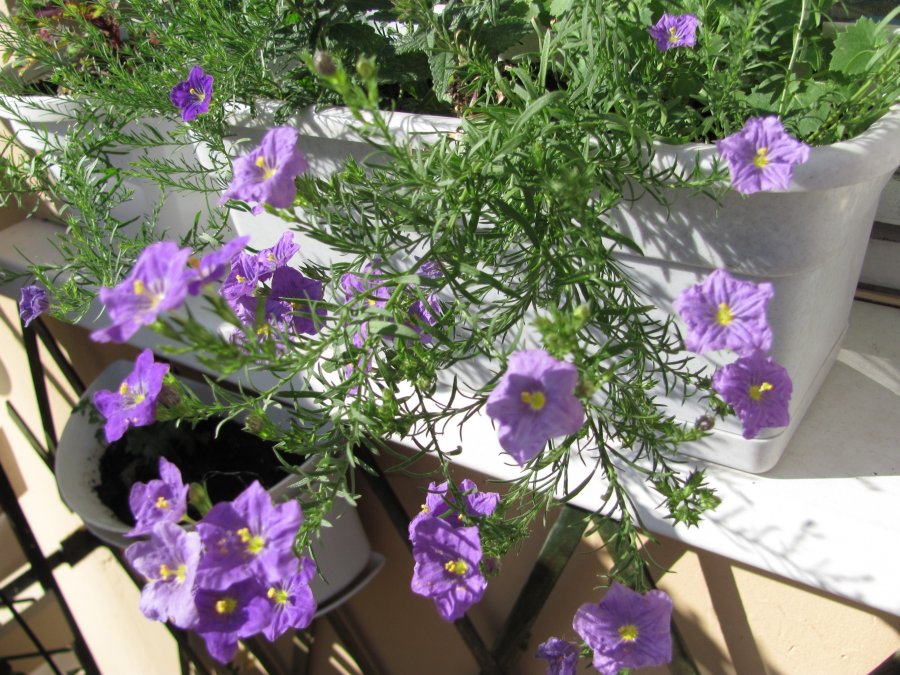
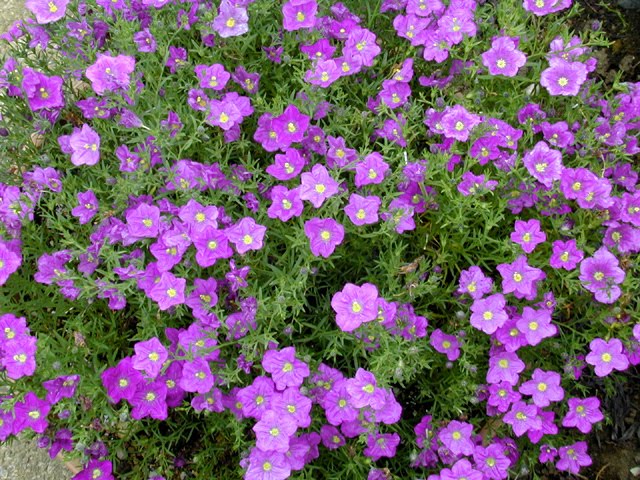
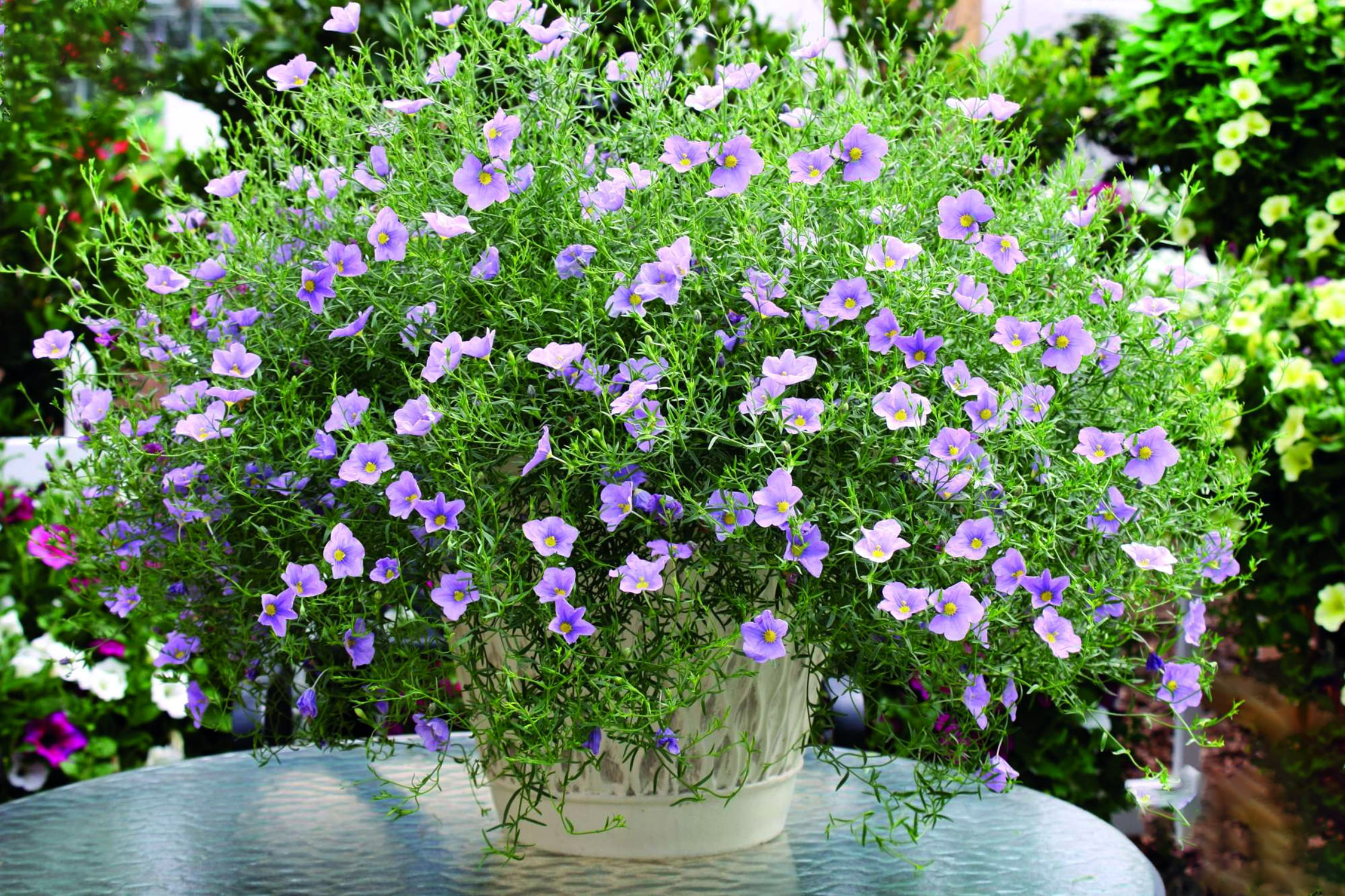
It is often used as a decorative element in landscape design due to its beautifully spreading shoots, ranging from 15 to 30 cm in length. In June, the subshrub is covered with a cap of lavender flowers, approximately 3 cm in diameter. Nierembergia blooms vigorously throughout the summer and requires no special care.
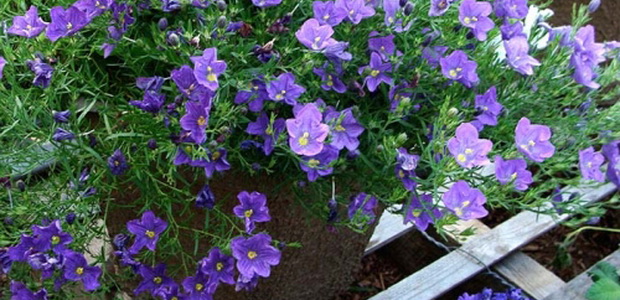
The most popular varieties of blue Nierembergia:
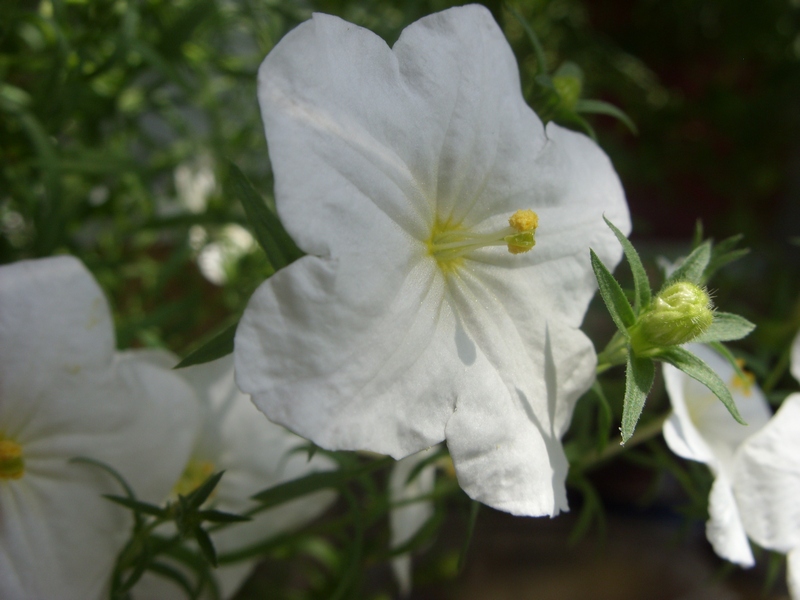
- Shining Crystal – creeping shoots, up to 20 cm long. Funnel-shaped flowers, up to 2.5 cm in diameter, white with a yellowish center.
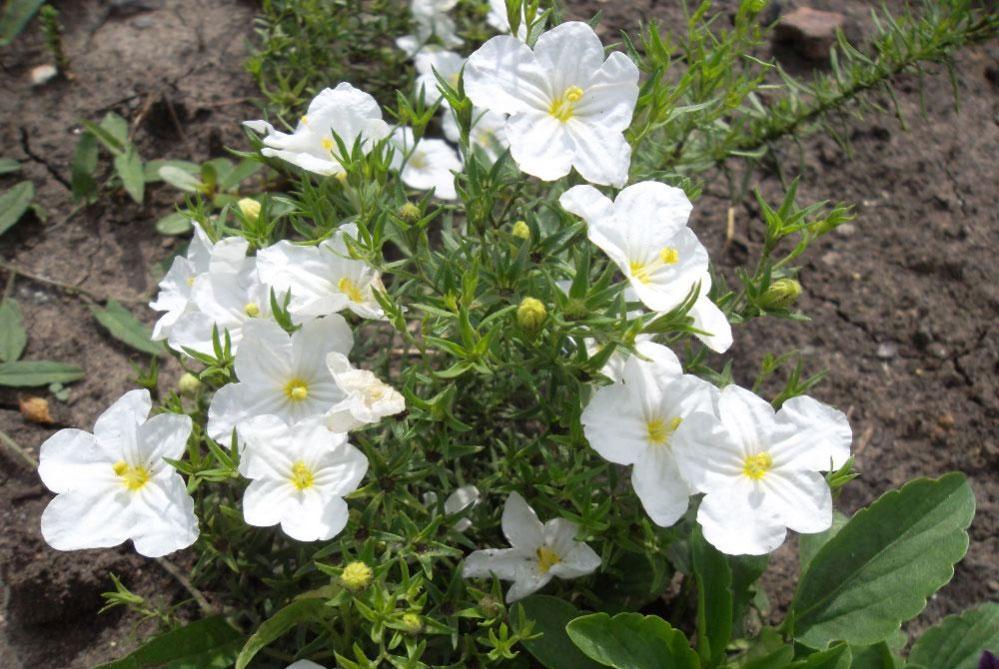
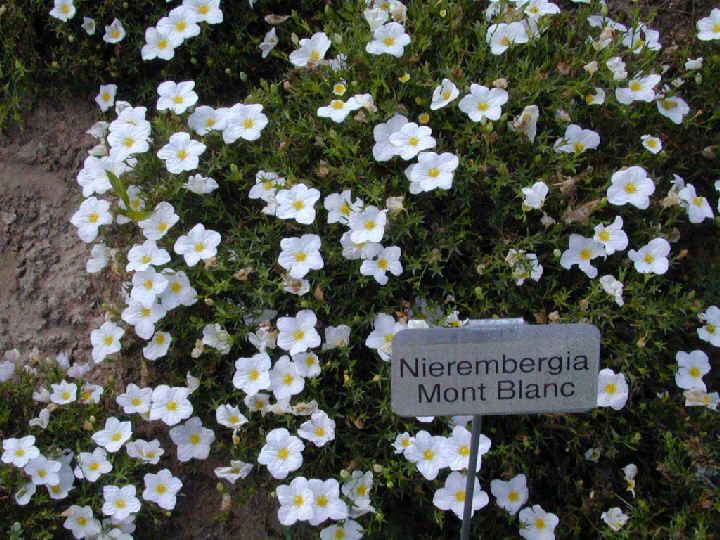
- Mont Blanc or Mont Blanc (White Mountain) is a very compact plant, with shoots no longer than 12 cm. Creeping stems form a lush "cap" of green leaves and white flowers with a bright yellow center in the flowerbed.
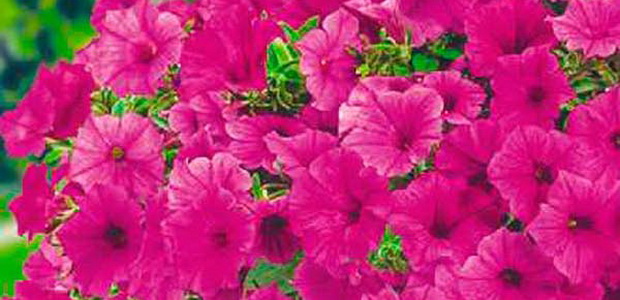
- Ruby – characterized by classic shoots up to 25-30 cm long and bright purple flowers.
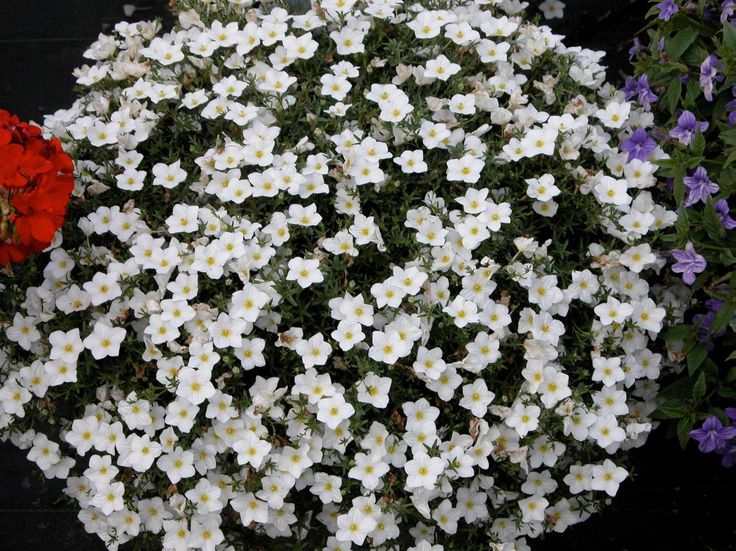
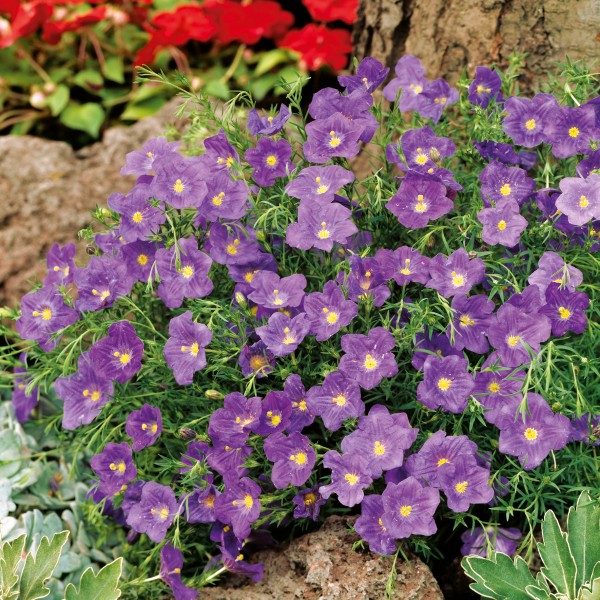
- White Robe and Purple Robe are low-growing varieties with white or purple flowers, respectively.
Nierembergia scoparia
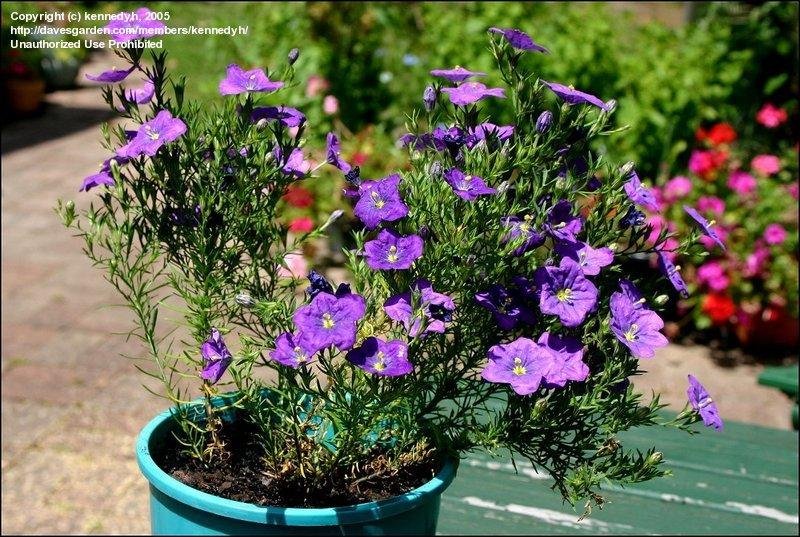
A compact plant with slender stems up to 20 cm long and narrow leaves. The flowers are light lilac, with purple stripes running from the center to the edges of the petals.
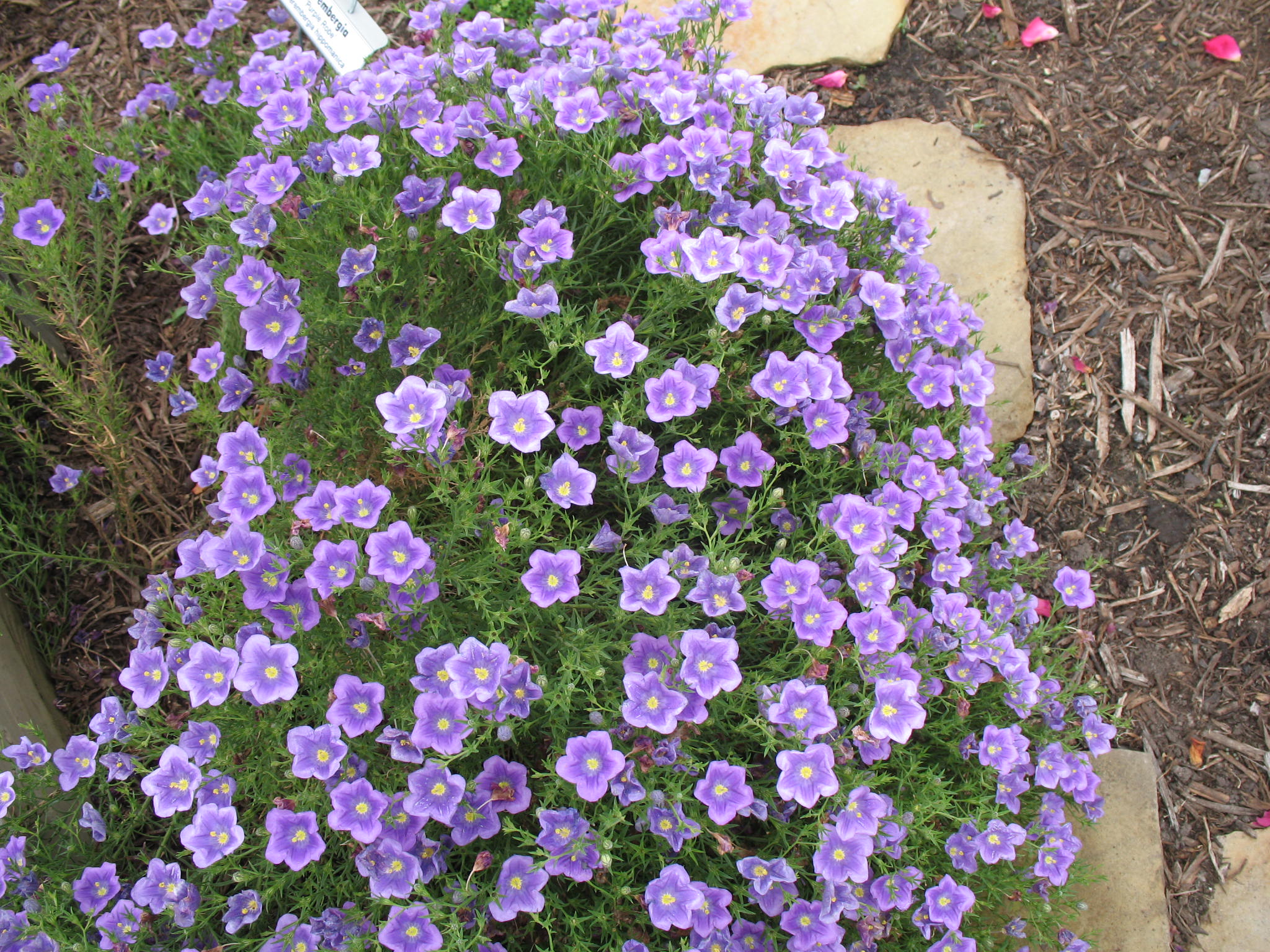
Nierembergia frutescens
A tall species. The shoots can reach 80 cm in length. The flowers are bell-shaped, 2 to 3 cm in diameter, and come in white, lilac, blue, or violet.
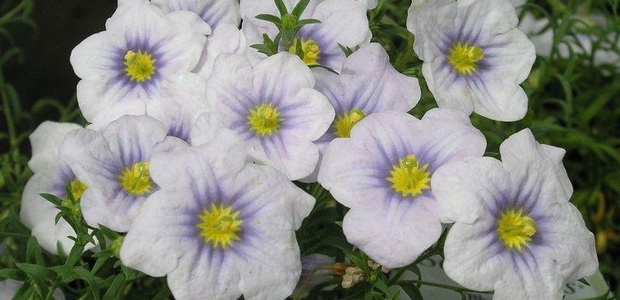
Nierembergia gracilis
It is distinguished by its compact size and thin stems, which reach a length of only 20 cm. The flowers are white, with purple veins running along the petals, and a yellow center.
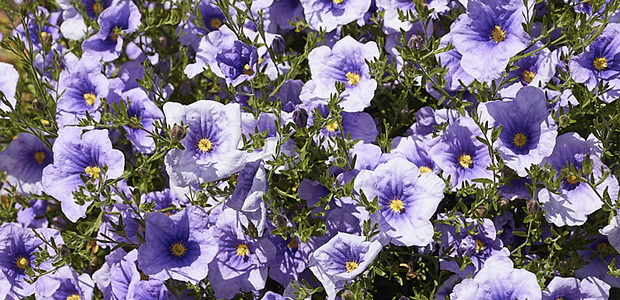
Nierembergia hippomanica
The shoots are erect and branched. The main distinguishing feature of this species is the presence of slight pubescence on the leaf blades. Depending on the variety, the flowers are white or purple.
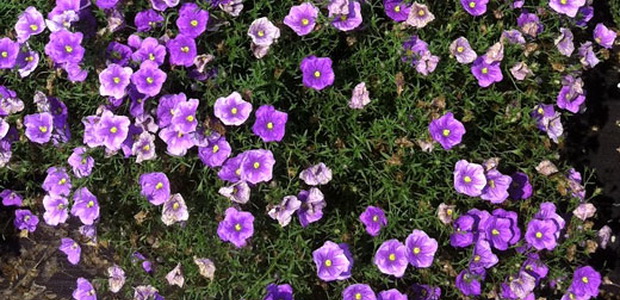
Creeping Nierembergia (Nierembergia repens)
Grown as a groundcover, the shoots are neat and creeping, no more than 30 cm long. The color mix can vary depending on the variety. The most popular colors are white and blue.
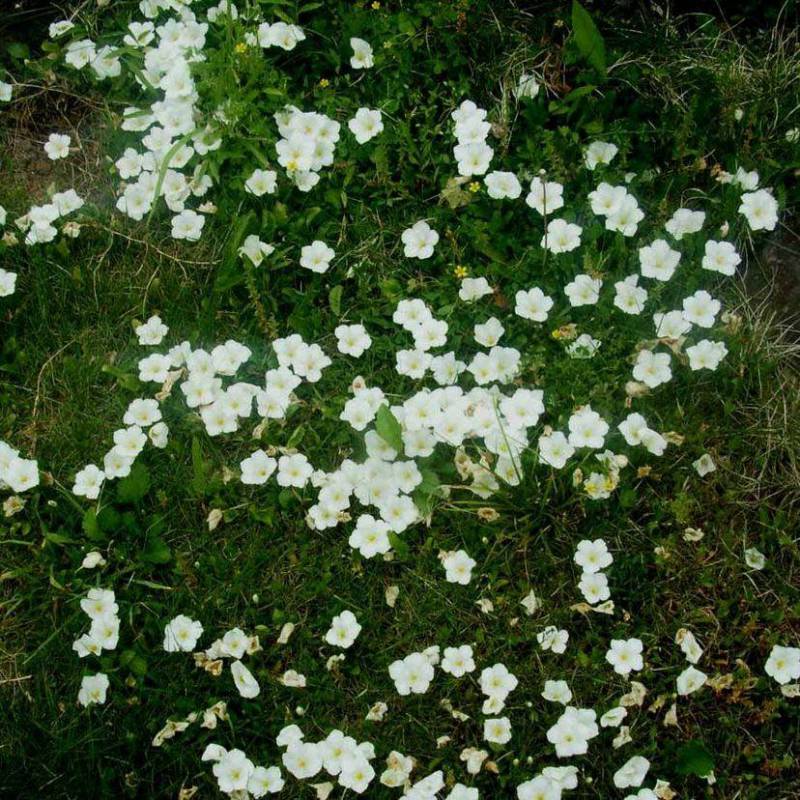
Growing Nierembergia from seeds at home
Nierembergia seeds can be collected independently or purchased from a specialty store. Many gardeners don't wait for the seed pods to form and instead trim off spent flower buds to encourage new ones to form.
Seeds should be sown 2-2.5 months before planting in the ground. If you plan to plant the Nierembergia in a flowerbed in mid-May, the seeds should be sown in the first week of March.
You can use a universal soil suitable for flowering plants. Fill the selected container 2/3 full with soil, then carefully place the seeds on top. The seeds are very small, so for ease of use, you can mix them with disinfected sand. Cover the seedlings with a thin layer of soil, no more than 8-10 mm thick, and mist with a spray bottle. Then cover the container with plastic wrap and place it in a warm place.
Once the seedlings sprout, the film can be removed. This happens approximately two weeks after planting. Until then, the soil will need to be periodically moistened to ensure the seeds develop properly and don't suffer from moisture stress.
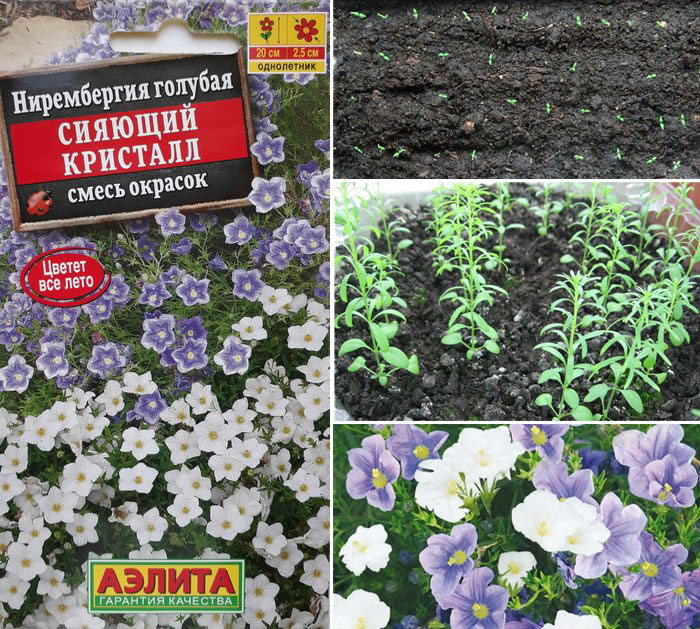
Once two full leaves have emerged, transplant the seedlings into individual cups. Three seedlings can be placed in a single container. At this time, you can apply any complex flower fertilizer to help the seedlings adapt more quickly to their new location.
Planting Nierembergia in open ground
Planting and caring for Nierembergia doesn't require much effort from the gardener. The seedlings are transplanted to the open ground (garden) only when the threat of night frosts has been reduced to a minimum. In central Russia, this period typically doesn't begin before May 20th. In southern regions, the work is carried out a few weeks earlier. Accordingly, in Siberia, the deadline shifts a couple of weeks closer to summer.
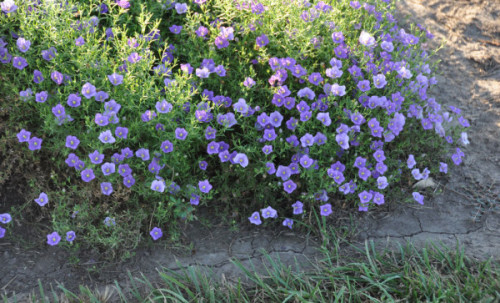
Nierembergia prefers slightly acidic soil with good drainage. Before planting, prepare holes and add the necessary mineral fertilizers depending on the soil quality in the area. The optimal distance between plants is 30 cm. Planting is carried out with the root ball carefully removed from the pot along with the roots.
To ensure lush and vibrant blooms, it's recommended to choose a well-lit spot in the garden for Nierembergia. However, if the summer sun in your region is scorching, some shade is acceptable.
Caring for Nierembergia in open ground
The main rule for caring for Nierembergia, as with any flowering plant, is to monitor moisture levels. Too much moisture will cause the root system to rot. Too little moisture will cause buds to form reluctantly, and flowering will be sparse.
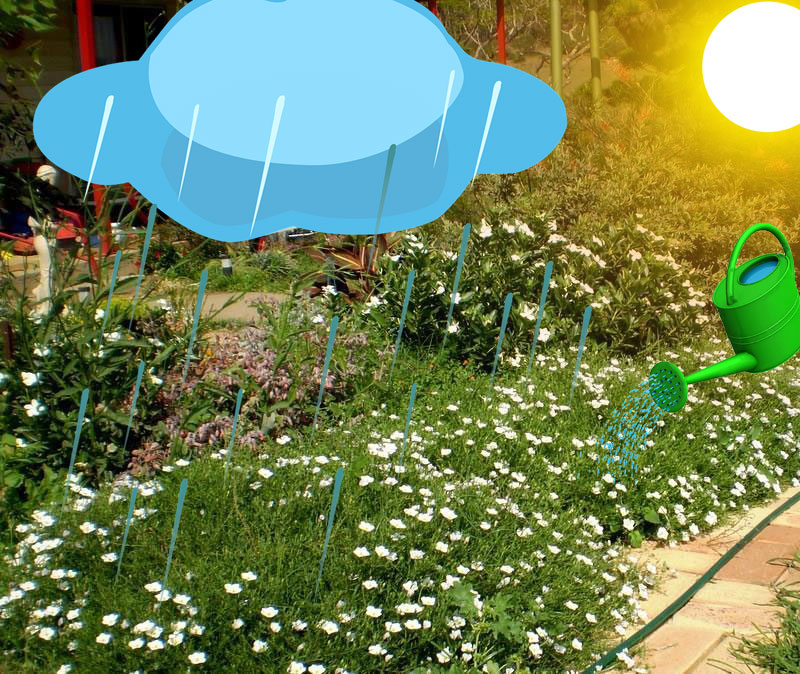
In typical summer conditions in the temperate zone, watering is done twice a week. If the weather is very hot, you'll need to water the soil every other day. It's recommended to water in the evening, when the sun's rays have subsided.
After watering, you can apply fertilizer. This should be done no more than 2-3 times per season. Any fertilizer for ornamental garden plants will do.
Diseases and pests of Nierembergia
If watering rules are followed, Nierembergia is rarely susceptible to fungal diseases.
Among insect pests, the only ones likely to be of interest are aphids and whiteflies. At the first sign of pest infestation, it is recommended to treat the plantings with specialized products.
Nierembergia in landscape design + photo
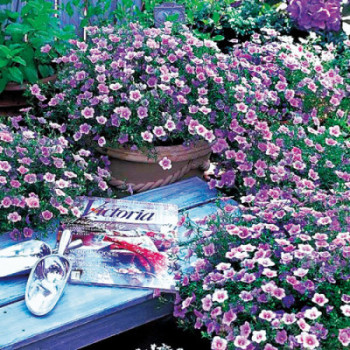
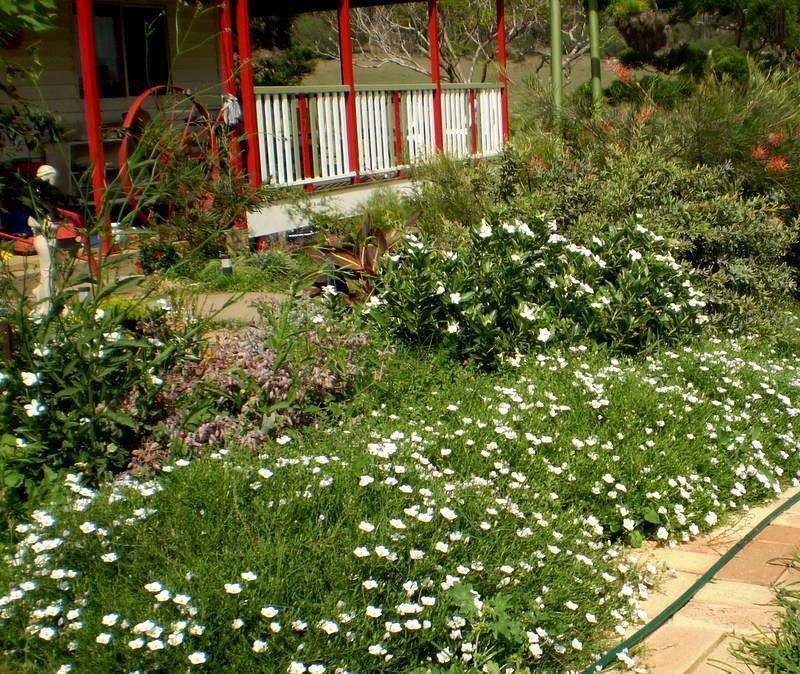
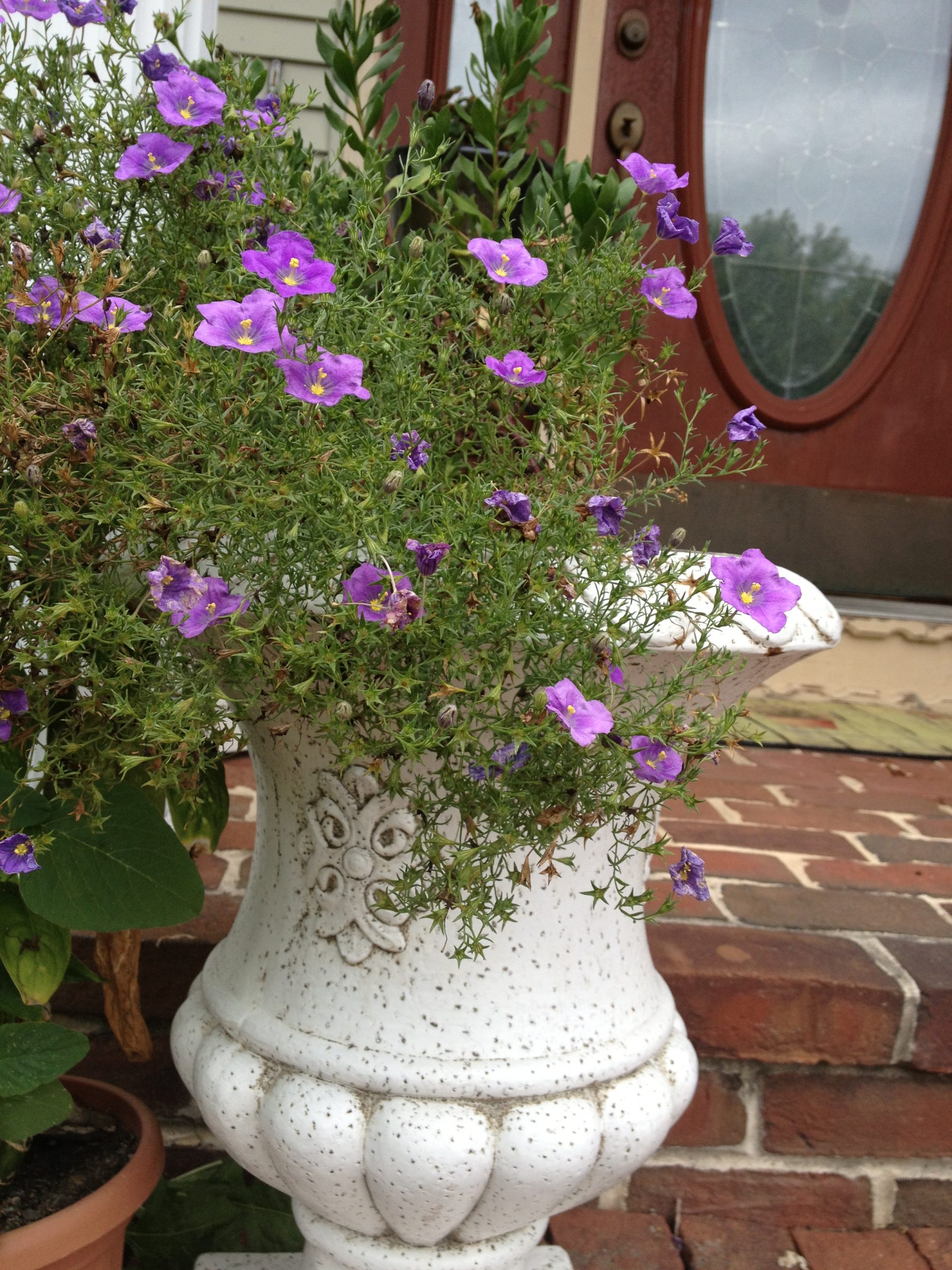
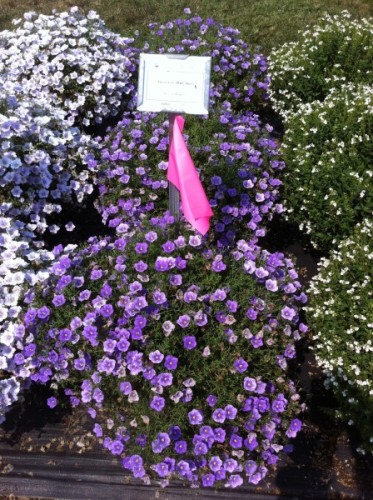
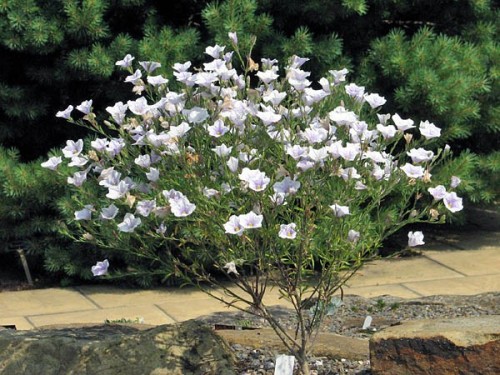
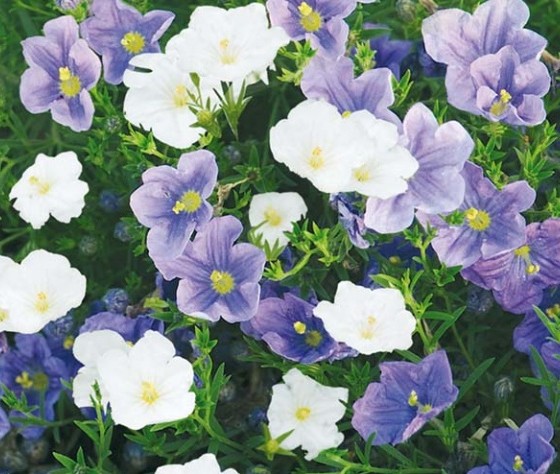
Nierembergia is often used in landscape design to create striking compositions. Low-growing varieties take center stage in complex flowerbeds or are used to decorate borders along paths.
Varieties with long stems can be placed horizontally in a flowerbed, creating a flowering carpet effect. They can also be planted in pots and used to decorate arbors or verandas. The spreading stems form a beautiful crown, which extends beyond the pot like a lush cloud.
By the way, many gardeners leave the Nierembergia to overwinter in its pot, only bringing it indoors when the cold weather sets in; it's best to keep it on a glazed balcony.
Photo gallery of Nierembergia in the landscape + 8 photos:
Real reviews and advice from gardeners about growing Nierembergia
Yarlena, Smolensk region
Hi everyone! I bought Nierembergia seeds and am now wondering where to plant them. Should I plant them in a flowerbed or a box? If anyone has planted this plant, please share your thoughts.
Natalia, Volgograd
YarlenaI grew Nierembergia on the balcony; it thrives on sun and flowers poorly in the shade. It retains its greenery for a long time, despite the heat.
Nymphea
Yarlena, better in a box or flowerpot. It will cascade beautifully.
And it reproduces easily! And it can be stored in a cool room at +10 to +12 near a window.
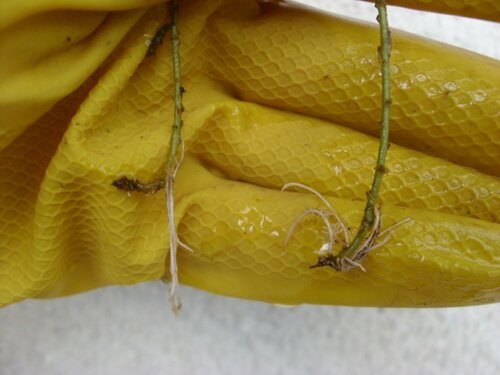
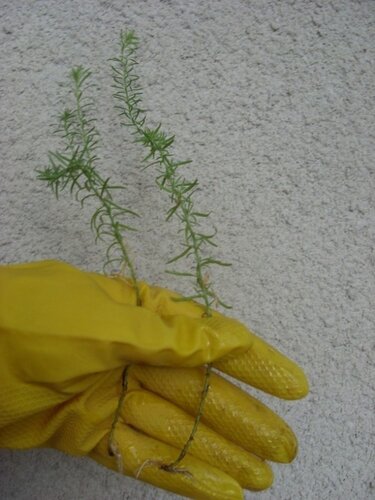
Yesterday I planted rooted cuttings from a saved Nierembergia. I'll do more.
Nice plant!
Blue Nierenbergia - Nirenbergia hippomanica. From the Solanaceae family. It's grown as an annual, but in nature it's a perennial. So I decided to save two plants. They're already sprouting new shoots, like a young fir tree. I'll propagate them under grow lights while they're available. I'll see what happens before planting them in the ground.
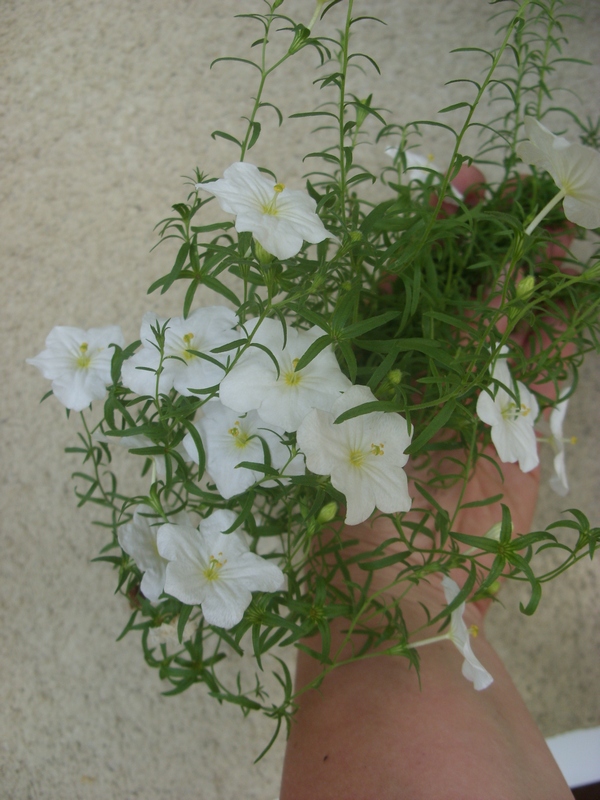
The stems are highly branched, slender, 30-90 cm tall. The leaves are elongated. The flowers are up to 2.5 cm in diameter, simple, with a bluish-lilac corolla and a short yellow tube. Blooms from June to September. Fruiting occurs.It produced few seeds, and I didn't immediately notice them. The capsule is microscopic compared to the stipules.
The flower is actually 3 cm. You can see it in the photo on my palm.
The whips didn't reach 90 cm, but they were definitely 60 cm.
This is her flower. Isn't it a petunia?
Blue Nirenbergia - Nirenbergia hippomanica Family - Solanaceae
The name is sometimes called Nierenbergia, and sometimes Nierembergia. Nierenbergia is a perennial herbaceous plant, but in our country it is grown as an annual. The following year, this flower can be kept indoors (dug up in a dacha or balcony) on a cool windowsill (temperature 10-12 degrees).Blue Nirenbergia can be grown as a hanging plant, provided it is protected from winds. Then its stems can reach up to 90 cm.
But there are also dwarf and low-growing varieties of Nierembergia (particularly those of white color), which are recommended for placement in rock gardens and in the foreground of flower beds, in borders.
Nirenbergia propagates well by seed. Seeds are generally sown in March to produce seedlings (in southern regions, it's best to sow at the end of February).
It takes approximately 3-3.5 months from sowing to flowering. Since Nierembergia seeds are very small, it's best to mix them with sand before sowing.
When sowing, there is no need to bury them in the soil, but just press them lightly, like petunia seeds.
Nierembergia seedlings will emerge in about 10-12 days. Once grown, the seedlings, with several true leaves, can be pricked out, three per pot.
I've never grown nirenbergia from seed myself. For several years, I bought them from my regular seller. I only needed three for a season—three for 100 rubles.
This year, the market where she sold seedlings was undergoing renovations—her small stall was demolished. I'm afraid I might not see her again this year. I'll have to think about growing this flower from seed.
This pot holds three seedlings, which is a bit tight. The nirenbergia in the photo is already grown; I bought it as a seedling—about 6 cm above the ground.
Nierembergia should definitely be placed in full sun; it doesn't bloom well in the shade. Every flower counts.