Thunbergia is an exotic plant that can be grown in Russian gardens during the summer. It requires little care and grows quickly. Besides its ornamental value, it can also be used in traditional medicine. However, it should be noted that only one species—Thunbergia laurifolia—has medicinal properties. Let's take a closer look at the existing varieties of this plant and their growing characteristics.
Content
- 1 Brief description of Thunbergia care
- 2 Description of Thunbergia
- 3 6 species and varieties of Thunbergia with photos and descriptions
- 4 Growing Thunbergia from seeds at home
- 5 Planting and caring for Thunbergia in open ground
- 6 Diseases and pests of Thunbergia
- 7 Collecting Thunbergia seeds
- 8 Preparing Thunbergia for winter
- 9 Thunbergia in landscape design + photos
- 10 The benefits and use of Thunbergia in folk medicine
- 11 Real reviews of growing Thunbergia from seeds
- 12 Conclusion
Brief description of Thunbergia care
Growing and caring for Thunbergia, basic requirements:
| Parameter | Recommendations |
| Planting dates |
|
| Light | Penumbra |
| Priming | Nutritious, with a neutral acidity level, containing lime, with good drainage. |
| Watering |
|
| Top dressing | Complex mixture for flowering plants, apply once a month. |
| Tying up | The plant is considered to be an ampelous one, so it needs to be tied to a wire or a trellis. |
| Reproduction | By seeds and cuttings. |
| Insects/infections |
|
Description of Thunbergia
Thunbergia is a herbaceous flowering plant belonging to the Acanthaceae family. There are perennial and annual species. In just one growing season, this climbing vine can reach 800 cm.
According to the description, the plant has a robust root system and several shoots. The leaves are a rich emerald hue, heart-shaped or oval, and are arranged in pairs on short petioles. The entire surface of the leaves is covered with fine, textured veins. The leaves are either entire or serrated along the perimeter. The undersides are lightly pubescent.
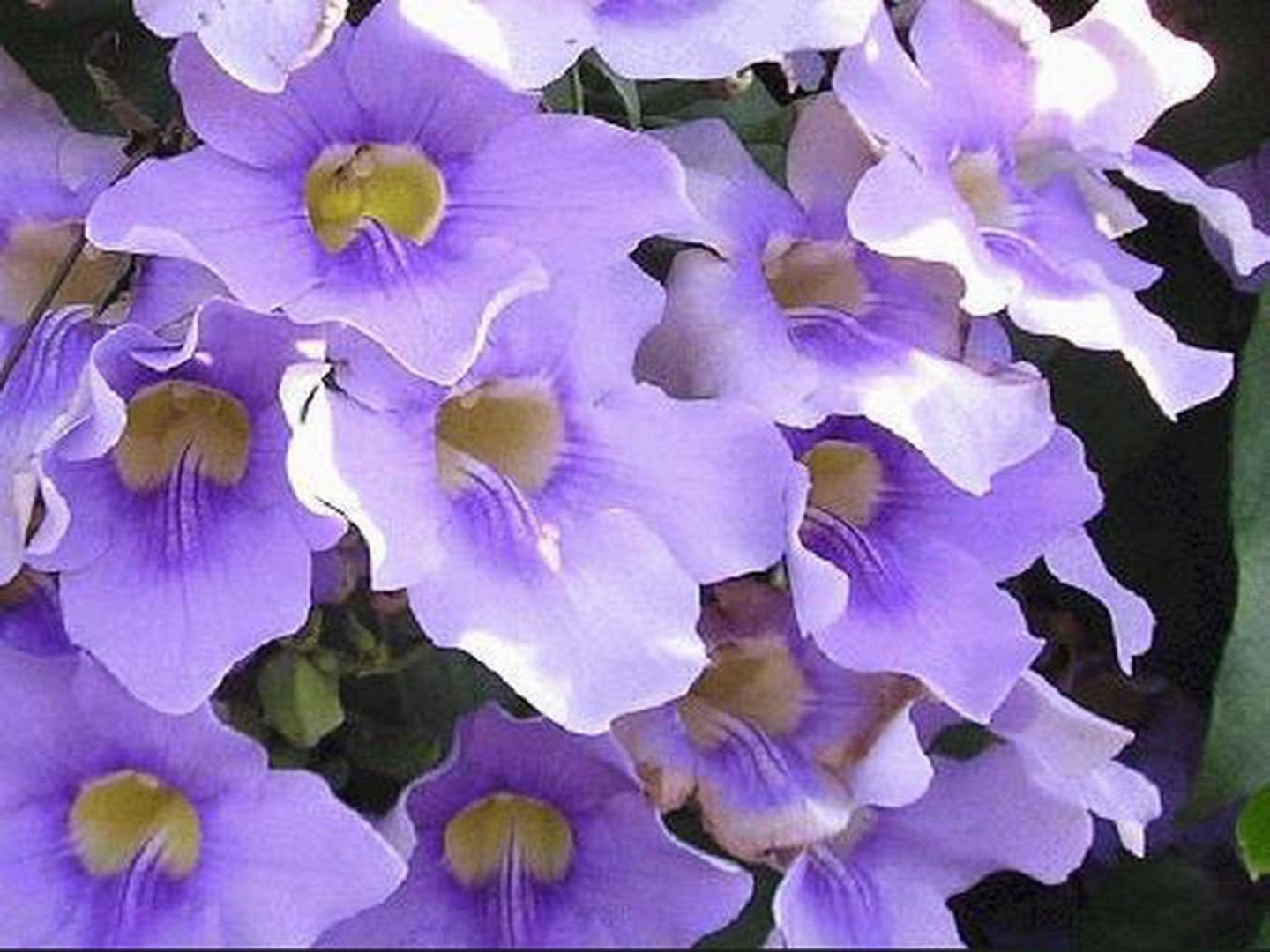
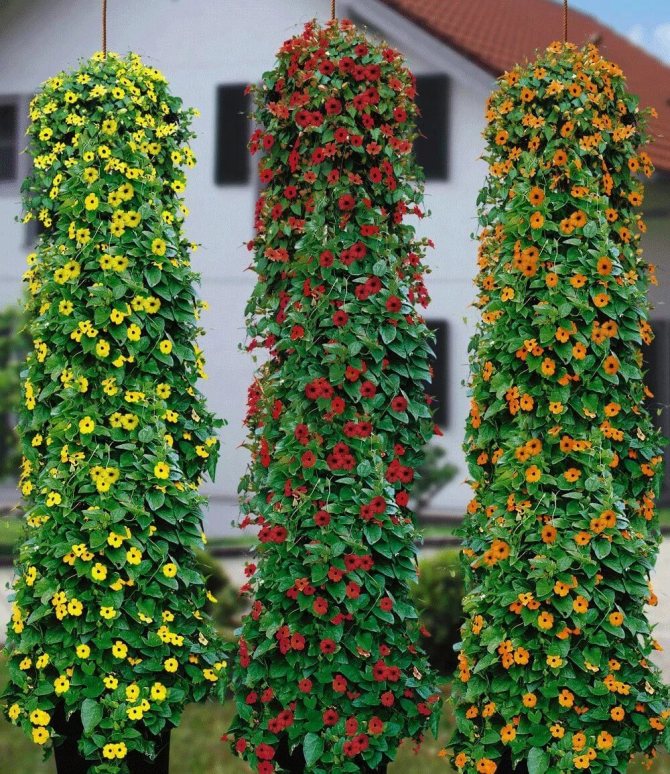
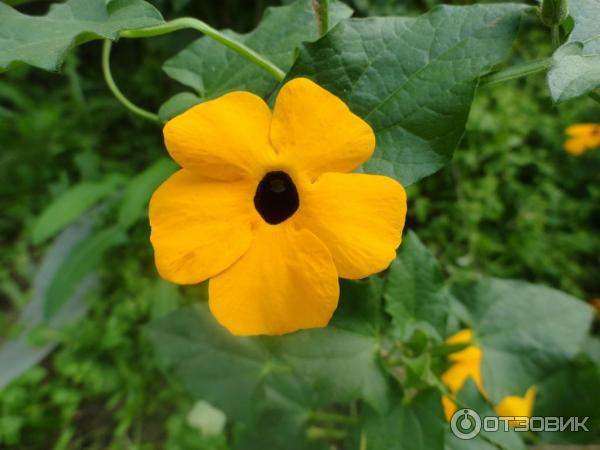
Thunbergia is native to Asia and Africa. In the wild, it blooms year-round. In Russian flowerbeds, it blooms from July until autumn. The flowers are solitary, arranged in axils. The buds consist of five petals and a dark, downy center. Colors can vary: white, orange, yellow, pinkish, scarlet, purple, and blue. You can see what they look like in the photo.
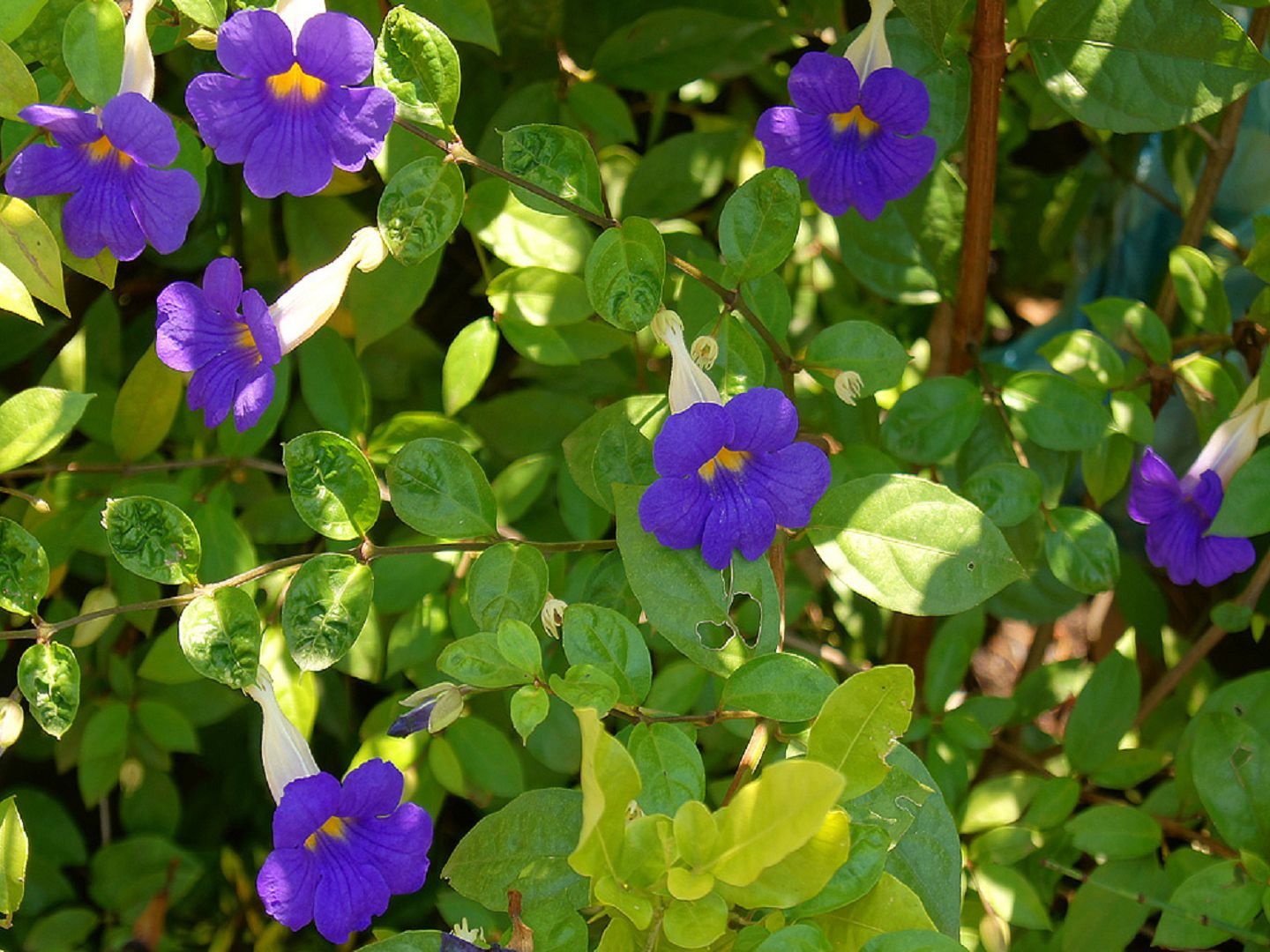
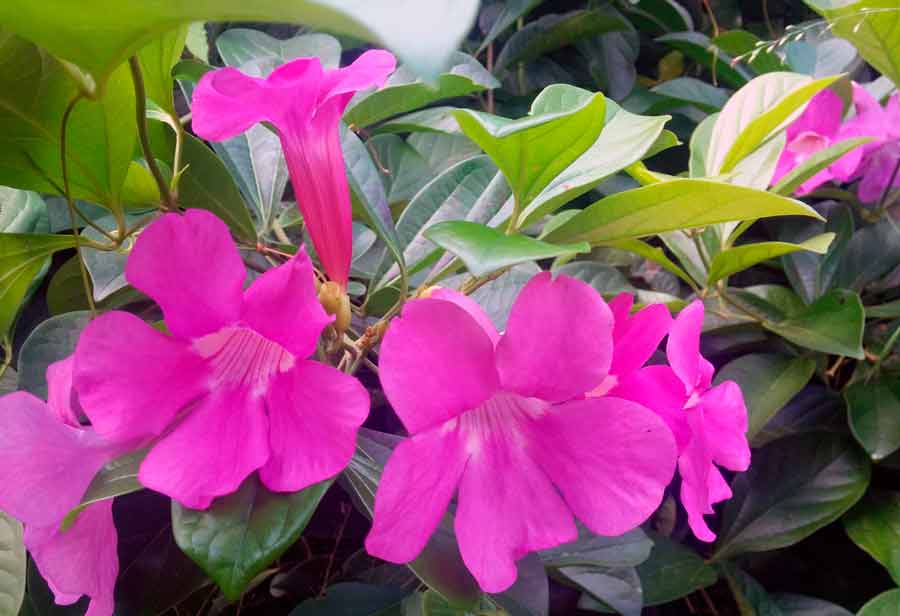
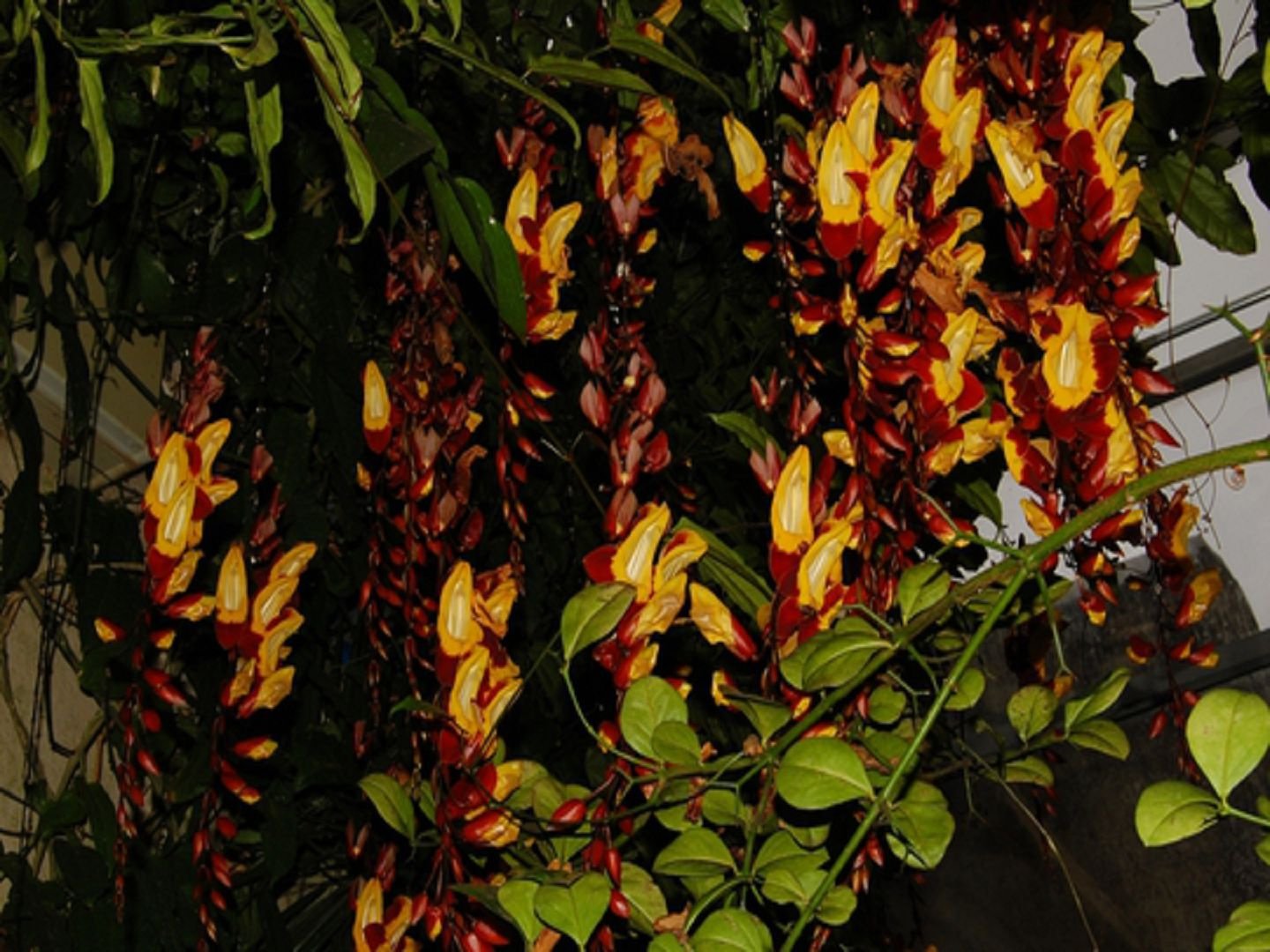
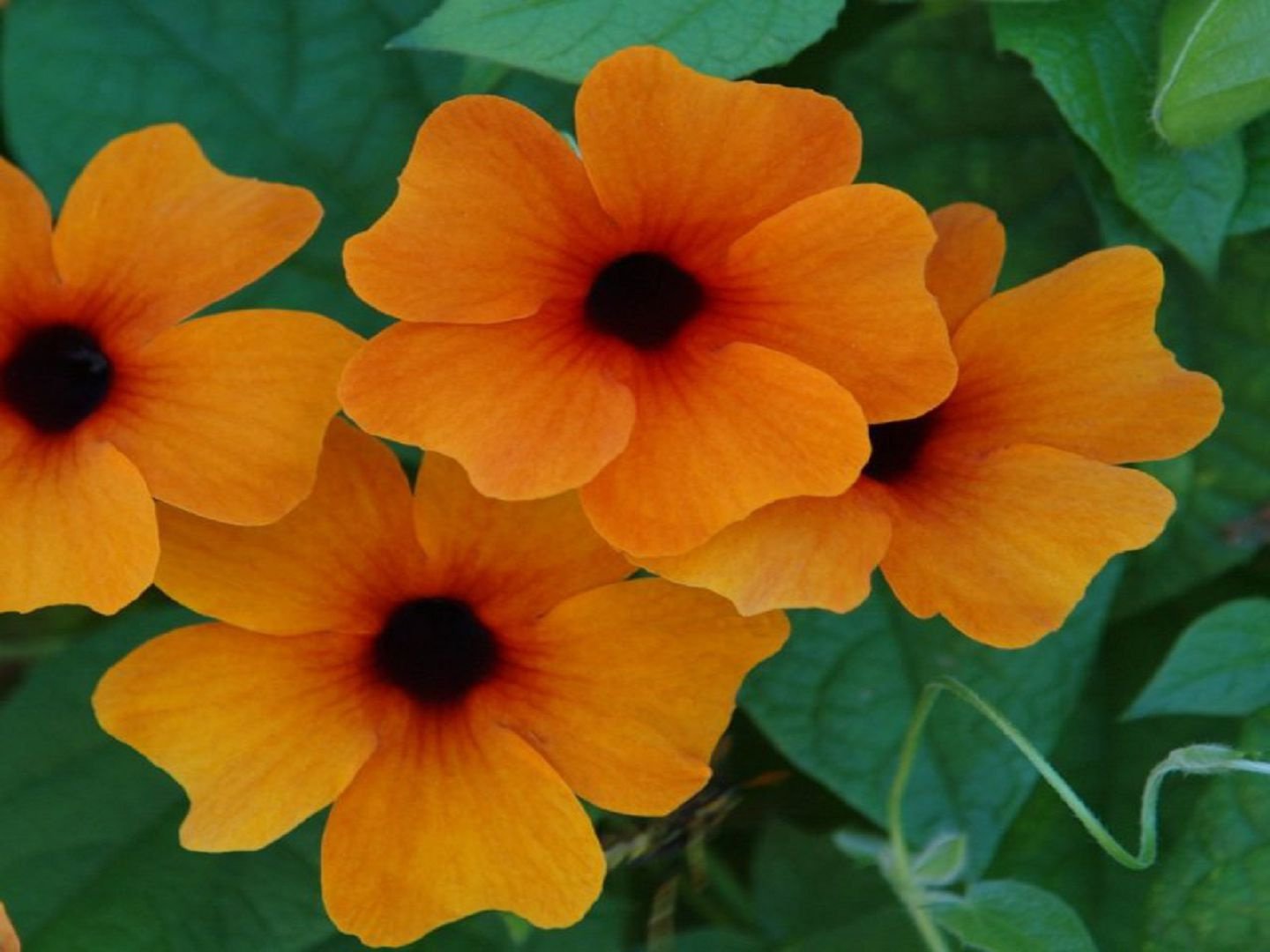
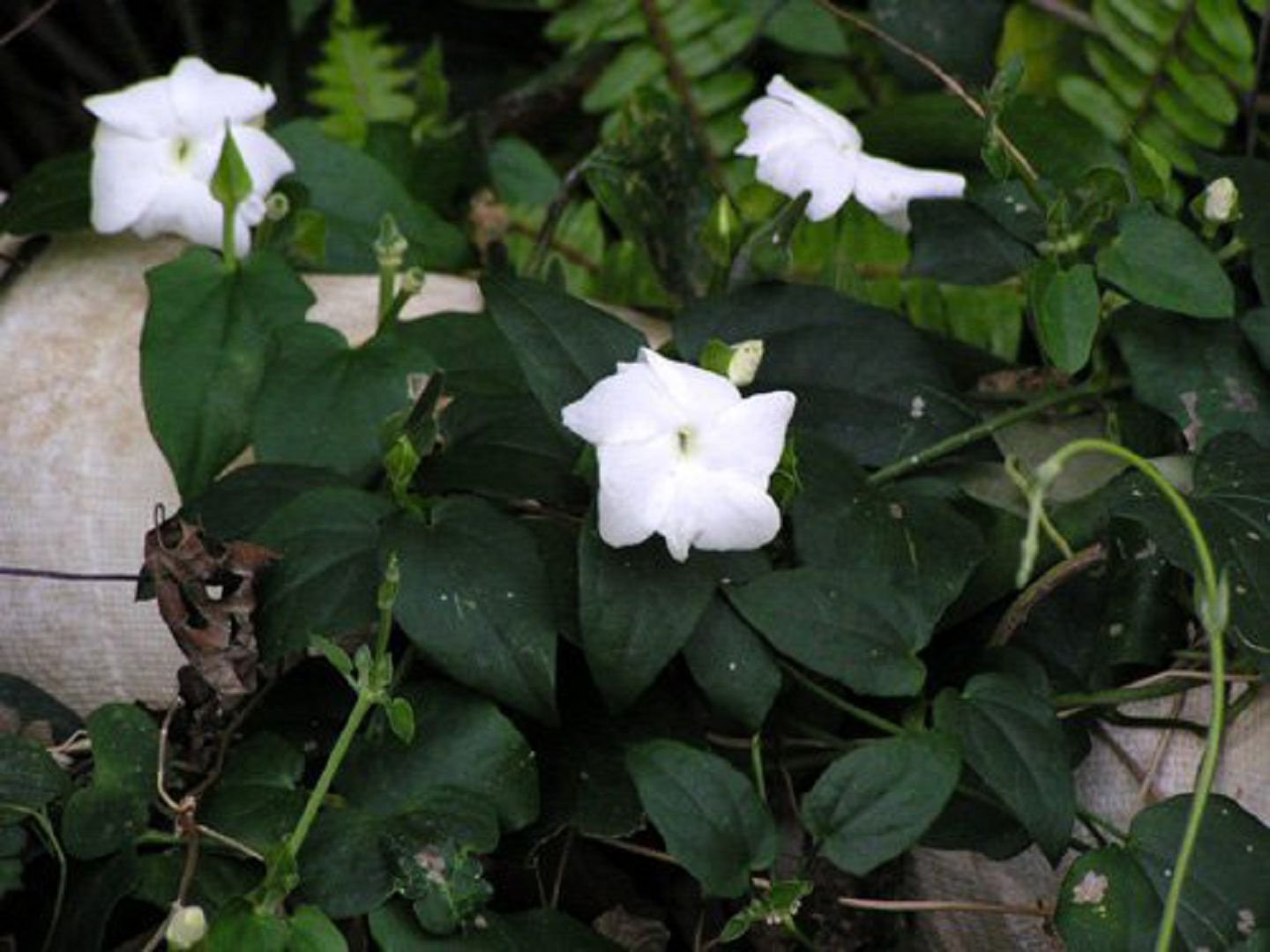
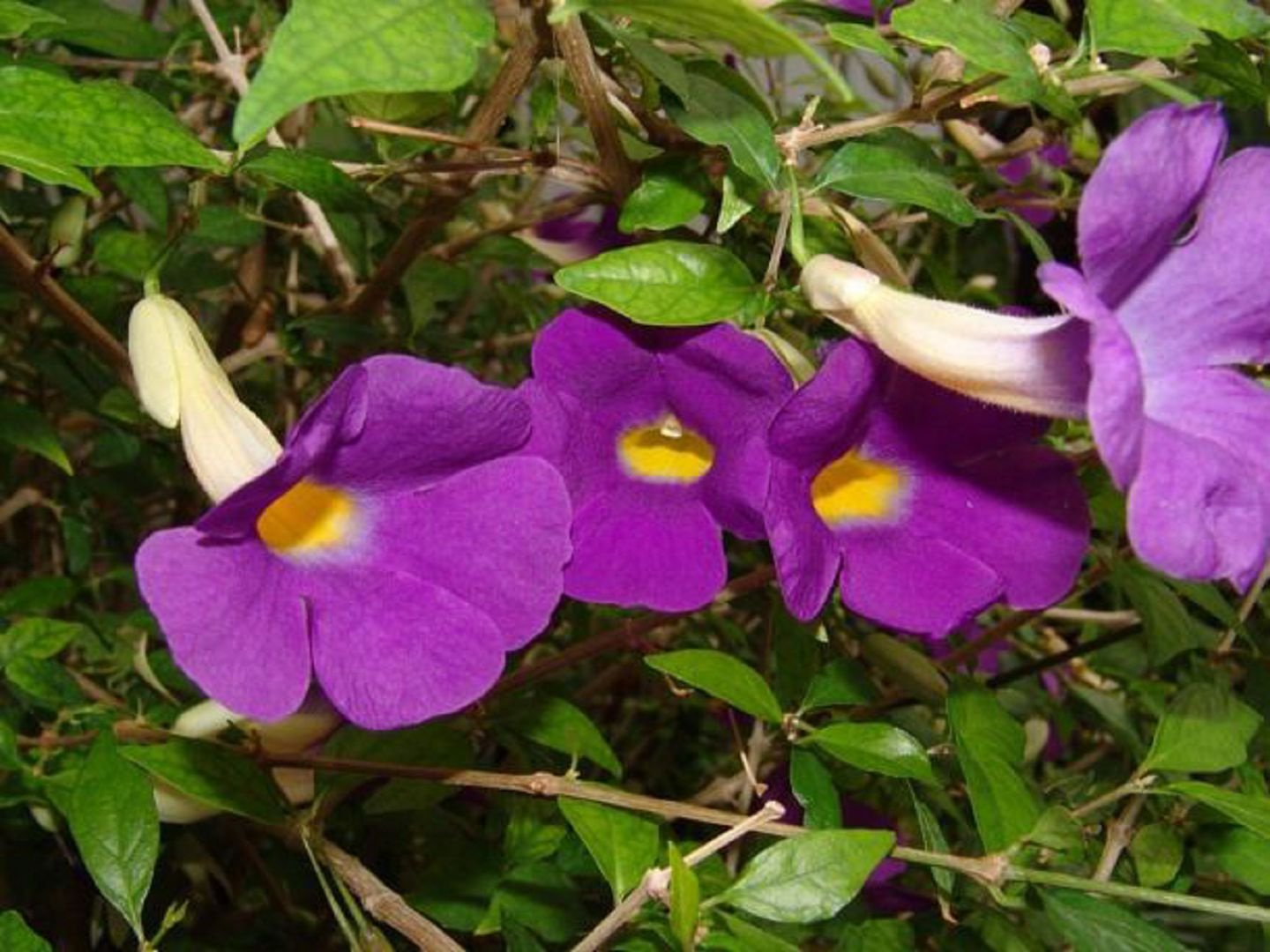
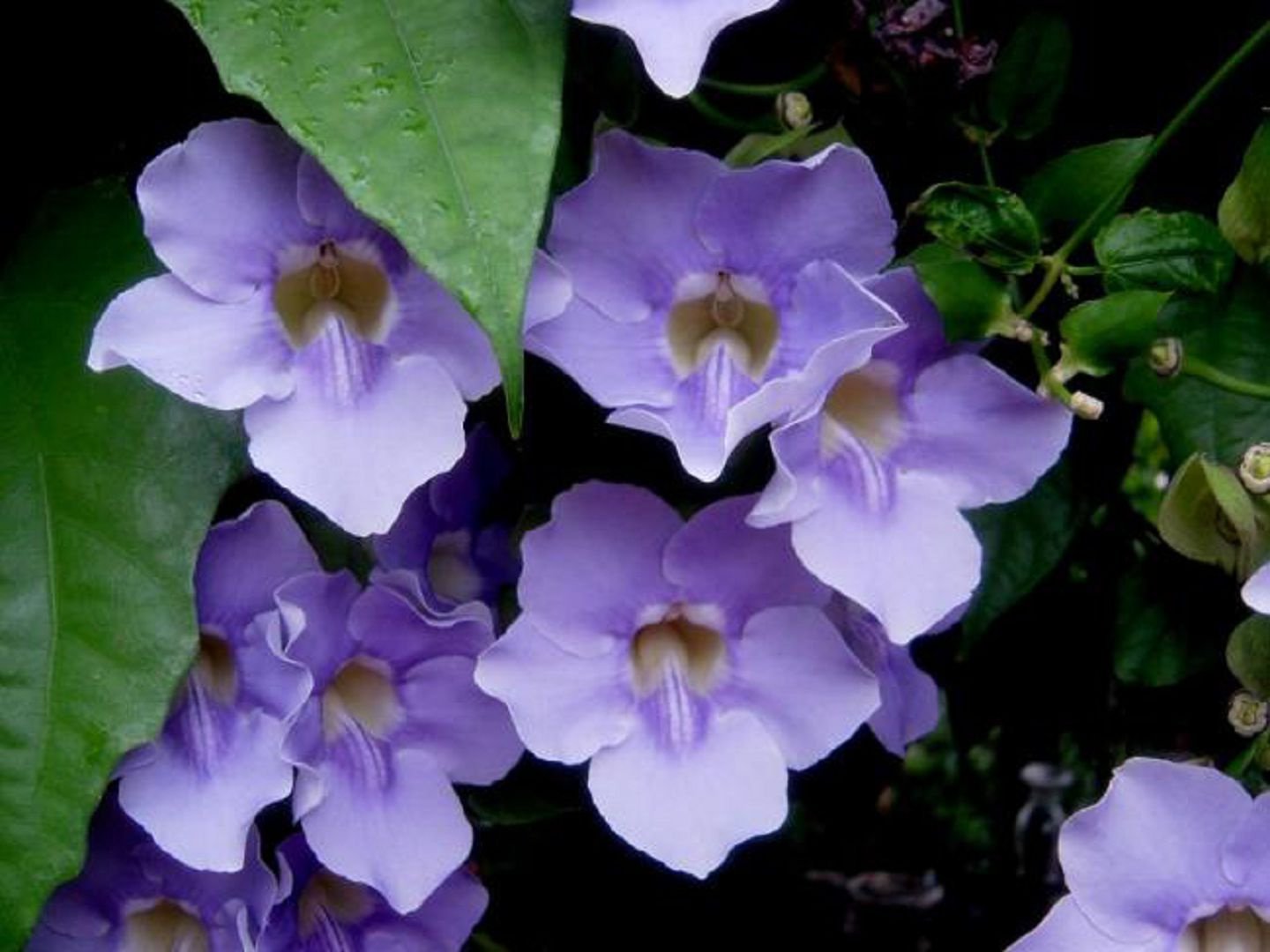
After flowering, a seed capsule forms. It contains several oblong seeds with rough, brown skin, reaching 4 mm in size.
6 species and varieties of Thunbergia with photos and descriptions
There are a huge number of Thunbergia varieties. Let's look at the characteristics of those suitable for growing in Russia's climate:
Winged
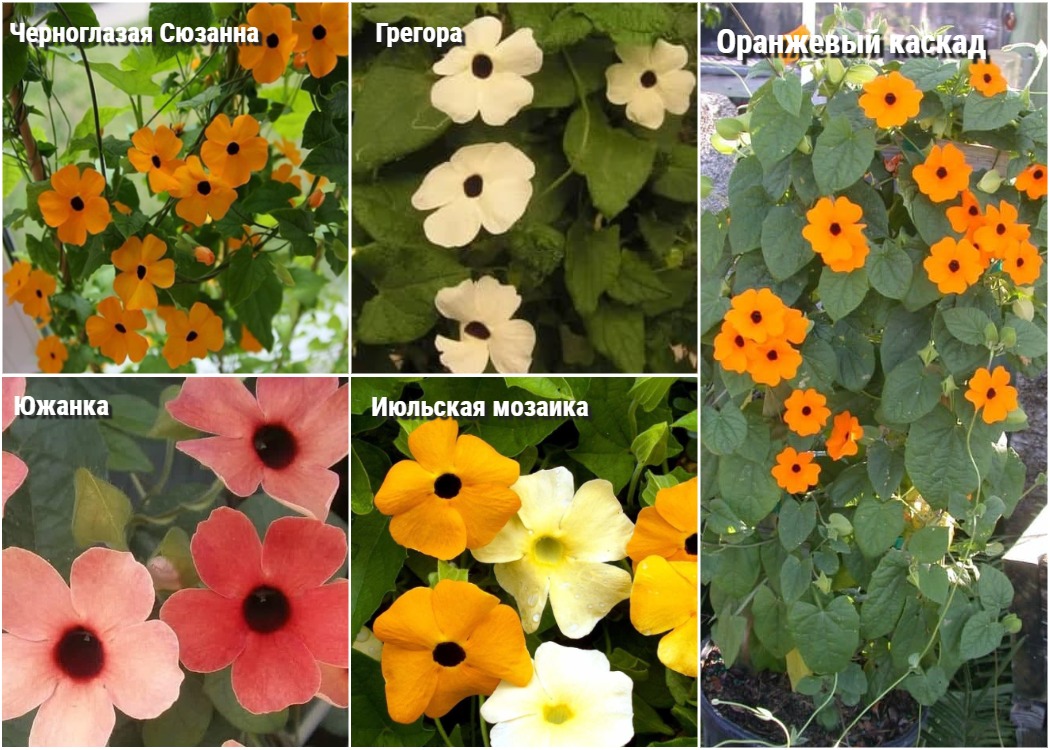
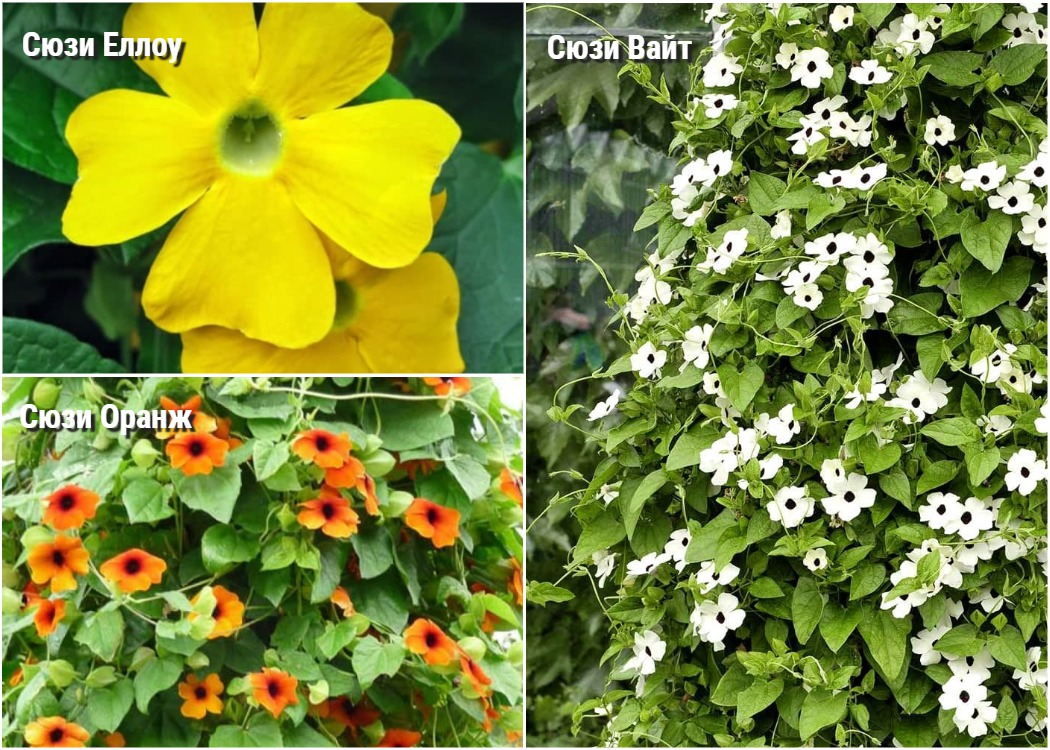
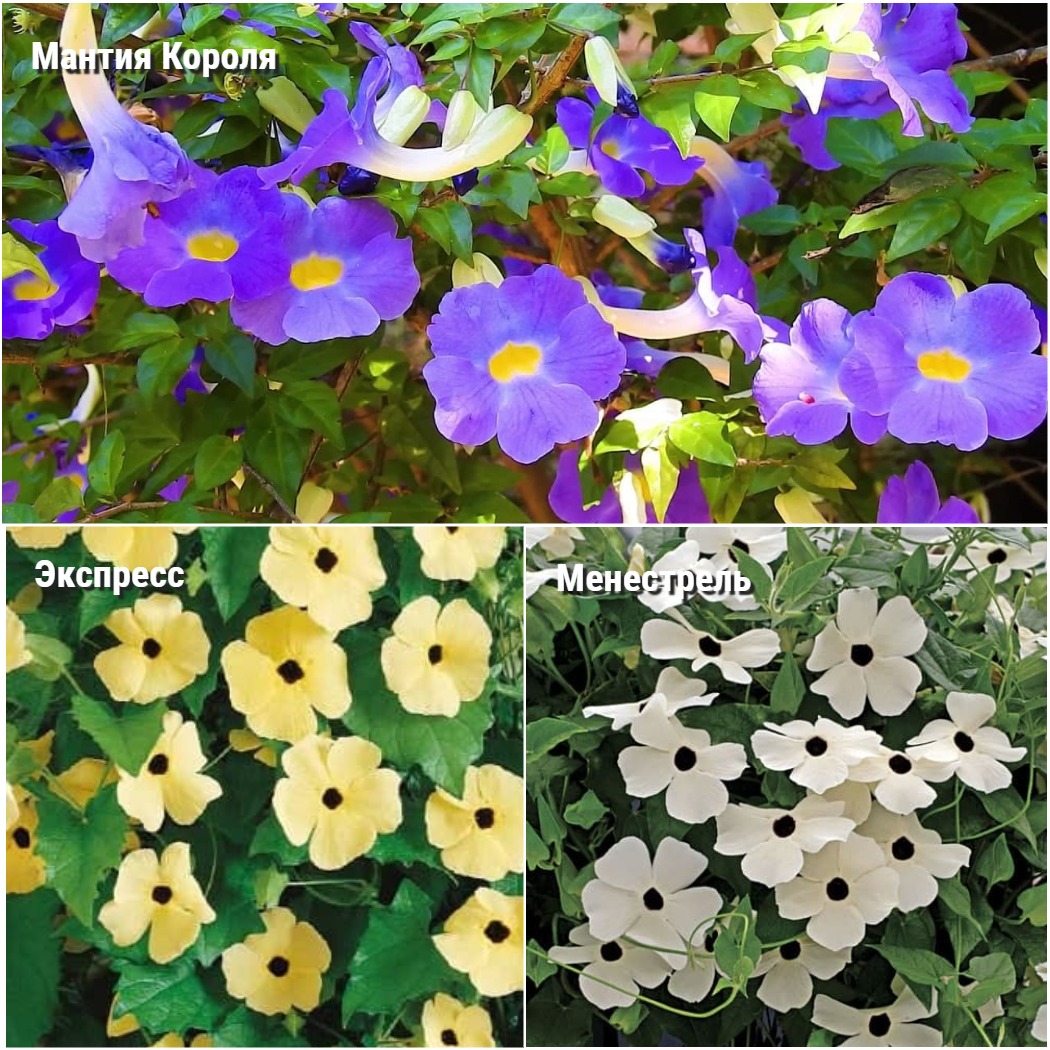
It reaches 2 m in height. The buds can reach 3 cm in diameter. According to gardeners, the best varieties are Black-Eyed Susanna, Gregora, Southerner, July Mosaic, Suzy White, Orange and Yellow, Express, Orange Cascade, King's Mantle, and Minstrel. Flowers come in a variety of colors.
Large-flowered (Grandiflora)
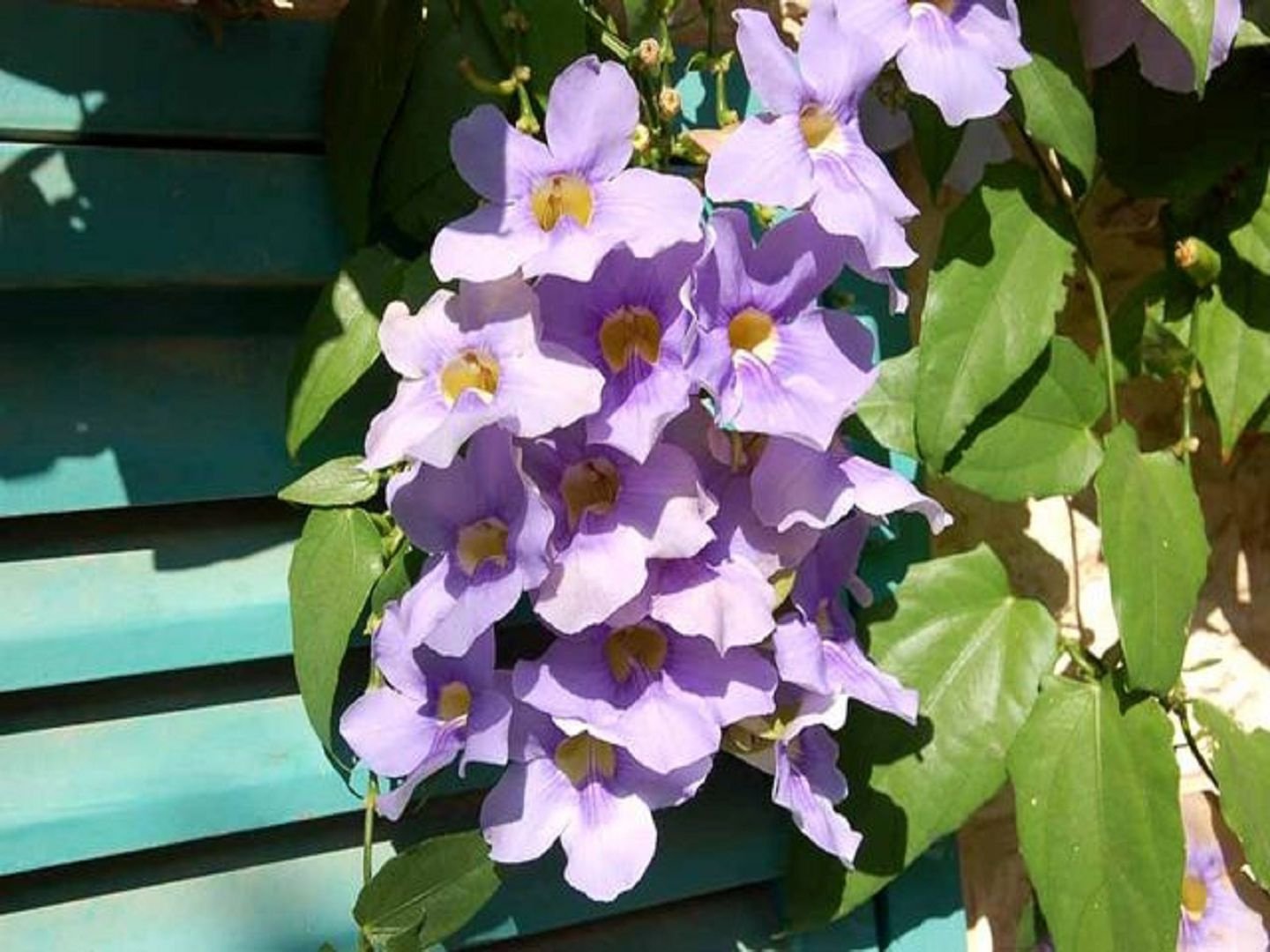
A species with large blue or lilac petals. Flowers can reach 75 mm in length and width. They are usually borne in drooping racemes, but can also be solitary. The fragrant, snow-white buds open in the morning and close at night. They can be up to 5 cm in circumference and emit a sweet scent.
Mysore or Myzore
Distinguished from other species, it has variegated yellow-red petals (bicolor). It reaches 5 m in length. The flowers are tubular.
Laurel-leaved (Laurifolia)
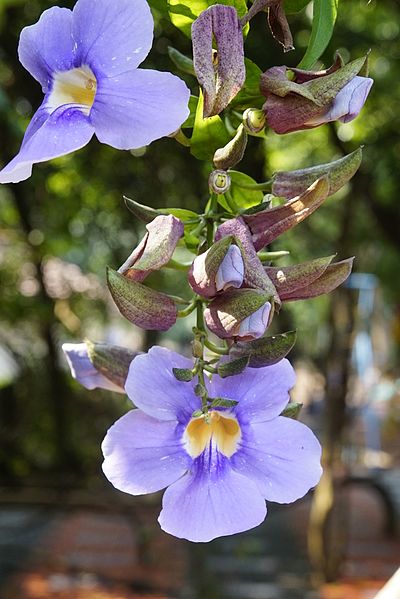
A variety with pale lilac, bluish flowers. Its extract has medicinal properties. Read about its properties below.
Upright
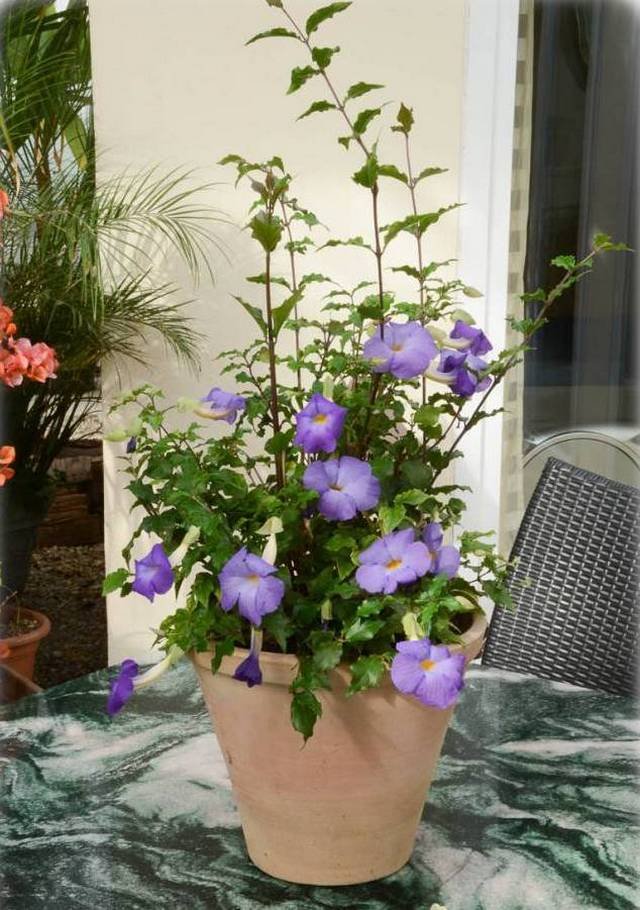
A species with light purple buds (Erecta). It is not a vine, but a branched shrub growing up to 1.2 m. The shoots require support as they develop.
Battiscombe
With deep blue petals, this variety is similar to Thunbergia erecta, but has a different bud color and larger leaves.
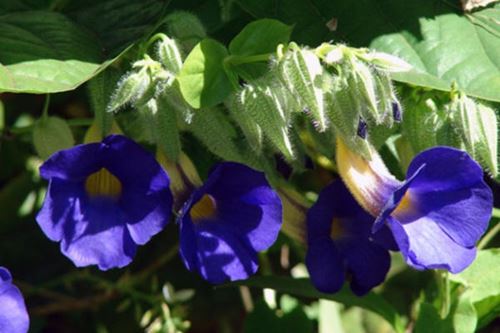
Please note! Many varieties of Winged Thunbergia are grown not only outdoors but also indoors in pots or hanging baskets. This plant is an excellent choice for landscaping a balcony or loggia.
Growing Thunbergia from seeds at home
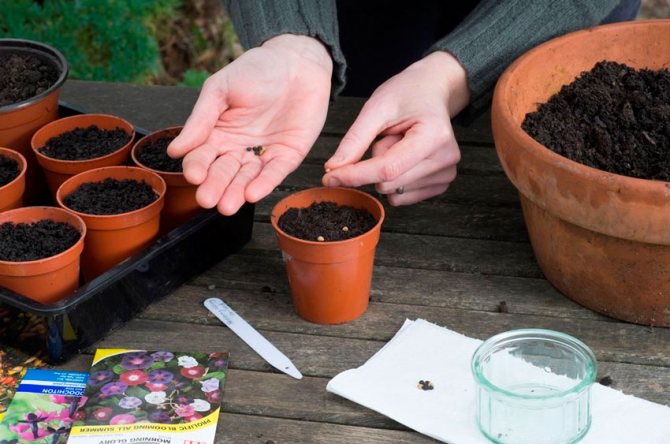
Growing from seeds indoors takes place in late February or early March. When choosing a day, it's recommended to consider the phases of the moon.
Read the article Lunar calendar for gardeners for 2023 by month.
How to sow step by step:
- Prepare containers filled with moistened soil made from turf, peat and sand (in equal proportions).
- Treat the seed with Epin or Fumar. You can first scarify the seeds (partially break the seed coat) using fine sandpaper or a file.
- Scatter the prepared seeds over the surface of the soil and cover with a thin layer of soil.
- Gently moisten the top with a spray bottle.
- Cover with plastic wrap or glass and place on a well-lit, warm windowsill. Protect from ultraviolet rays.
- Remove the covering daily to allow air to circulate and moisten the seedlings. The soil should be kept slightly moist at all times.
The optimal temperature is 22…24 ºC. Under these conditions, the first shoots will appear in 7-8 days. After this, the cover can be removed completely.
If the seedlings are too dense, they will need to be thinned out or pricked out at the two true leaf stage. When they reach 12-15 cm, pinch off their tips.
If you want to increase foliage, it's recommended to apply nitrogen-containing mixtures once a week after transplanting. If the goal is abundant and prolonged flowering, no fertilizers are needed.
A useful tip! If you don't want to thin out rows and transplant, sow in peat pellets instead of pots or containers.
Planting and caring for Thunbergia in open ground
The vine is heat-loving, so you can start planting it outdoors in late May or early June, when the temperature stabilizes (even later in Siberia and the north).
Location and soil
The plant thrives in a location on the south or southwest side of the plot. Partial shade is acceptable, but avoiding drafts is crucial.
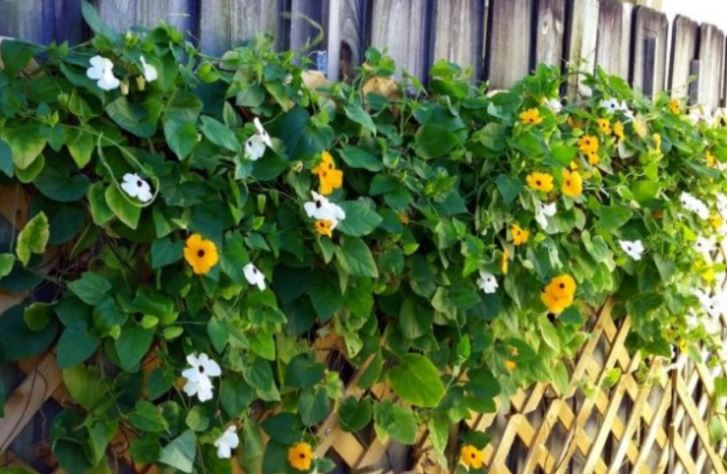
Liana has the following soil requirements:
- fertile;
- with drainage;
- with a neutral acidity level.
Helpful information! If the soil is too acidic, lime should be added during fall tilling.
The distance between holes should be 0.3-0.4 m. After planting, the plants should be watered generously and mulched to protect from ultraviolet rays and retain moisture.
If the seedlings have grown vigorously, they will quickly adapt to the new conditions and begin blooming 3-3.5 months after the first pinching, which was done indoors. Further care will be straightforward.
Watering and fertilizing
The vine requires ample watering, especially during the flowering period. If it doesn't get enough water, the leaves will turn yellow and the buds will fall off. Thunbergia requires not only moist soil but also air. Therefore, in extremely hot weather, misting should be done in the evening.
Complex fertilizers should be applied once a month. During bud formation, this can be done every two weeks. The final feeding is in September.
Tying up
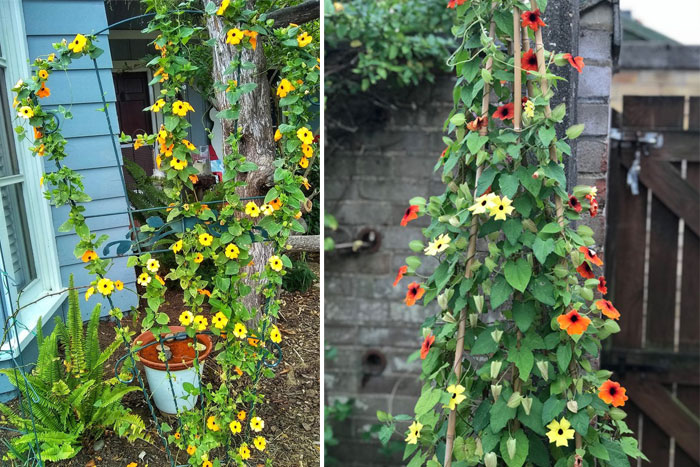
Thunbergia requires support, such as wire or slats. The shoots must be tied to ensure proper growth direction. Any excess or diseased stems should be trimmed back. Pinching the tops is recommended to promote denser foliage.
Inspect the vines daily. Remove any wilting flowers or leaves. This will prolong the flowering period.
Diseases and pests of Thunbergia
If agricultural practices are not met or stress is experienced (unsuitable temperature, dampness, drafts, etc.), the vine's immunity is weakened. This leads to the development of various fungal diseases. To combat these, chemicals (insecticides) must be used, and weakened specimens should be fed with a complex mineral fertilizer.
When overcrowded and underexposed to light, Thunbergia loses its decorative appeal. Its shoots become thin, its leaves grow sparsely, and flowering is weak or absent entirely. Therefore, it's important to maintain proper spacing when planting and ensure good lighting.
The most common pest is spider mites. If the infestation is minor, treat the shoots with a soapy solution daily until the insects disappear.
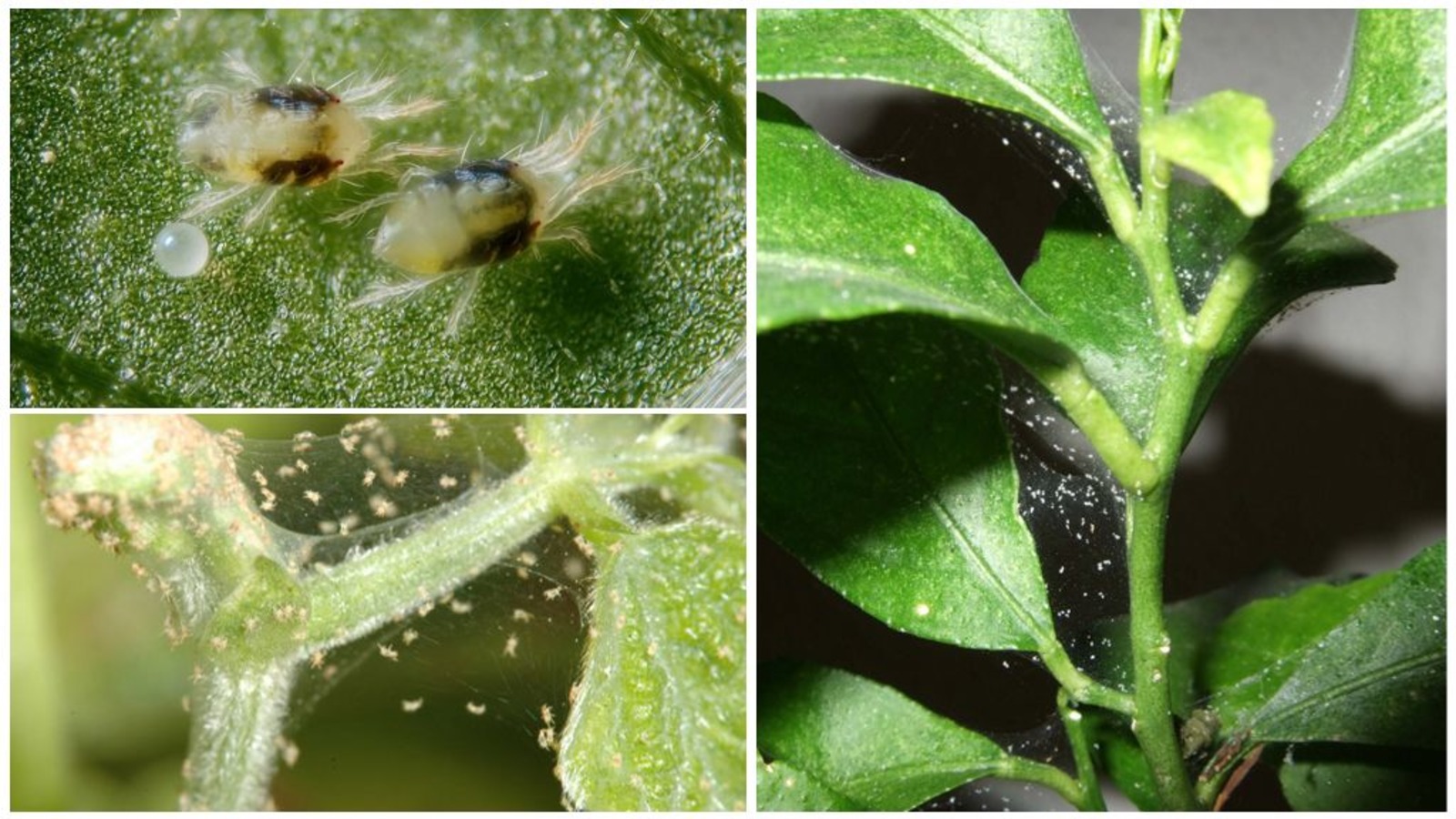
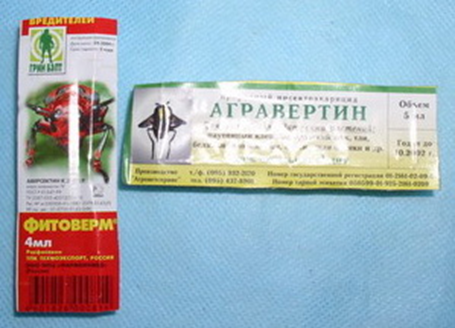
If there are a large number of pests, you can use the following preparations:
- Agravertin;
- Fitoverm.
Less commonly, the vine can be attacked by aphids, scale insects, and whiteflies. The products mentioned above can also be used to control them.
For your information! To prevent spider mites, the plant should be sprayed regularly during hot weather. The insects only reproduce in dry air and high temperatures.
Collecting Thunbergia seeds
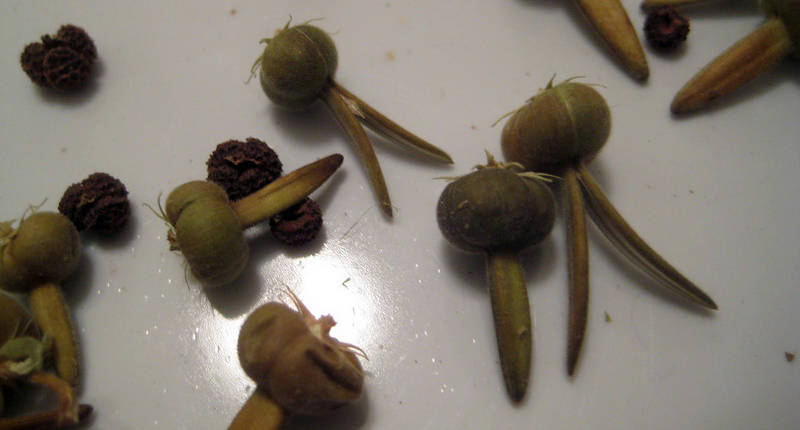
After flowering, seed pods form where the buds once were. These should be collected before they open and spill their contents. If stored indoors, cut them open and spread the seeds on a piece of paper to dry. Then, place them in small bags. They will remain viable for up to two years.
Please note! Thunbergia can be propagated by cuttings. However, this is a rather labor-intensive process. Furthermore, the cuttings do not take root well. Therefore, this propagation method is rarely used.
Preparing Thunbergia for winter
If planted outdoors in Russian gardens, Thunbergia will not survive the winter, even if it's mild. Therefore, it will need to be disposed of in the fall. However, if the plant was planted in a pot or tub, the shoots can be cut back, leaving only 4-5 buds, and then the vine can be moved indoors. It should be placed in a cool room with a temperature of 15ºC (59ºF). As the top layer of soil dries out, moisten it. In the spring and summer, the plant can be moved outdoors again.
Thunbergia in landscape design + photos
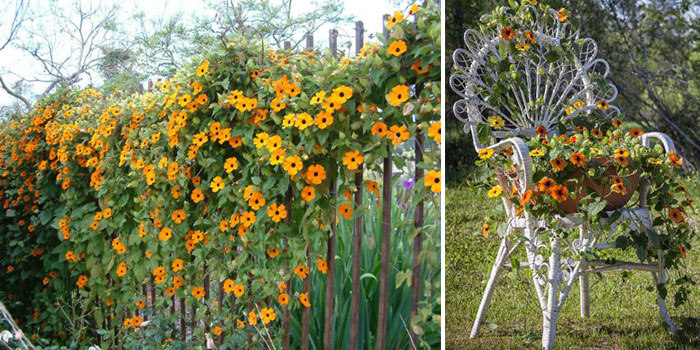
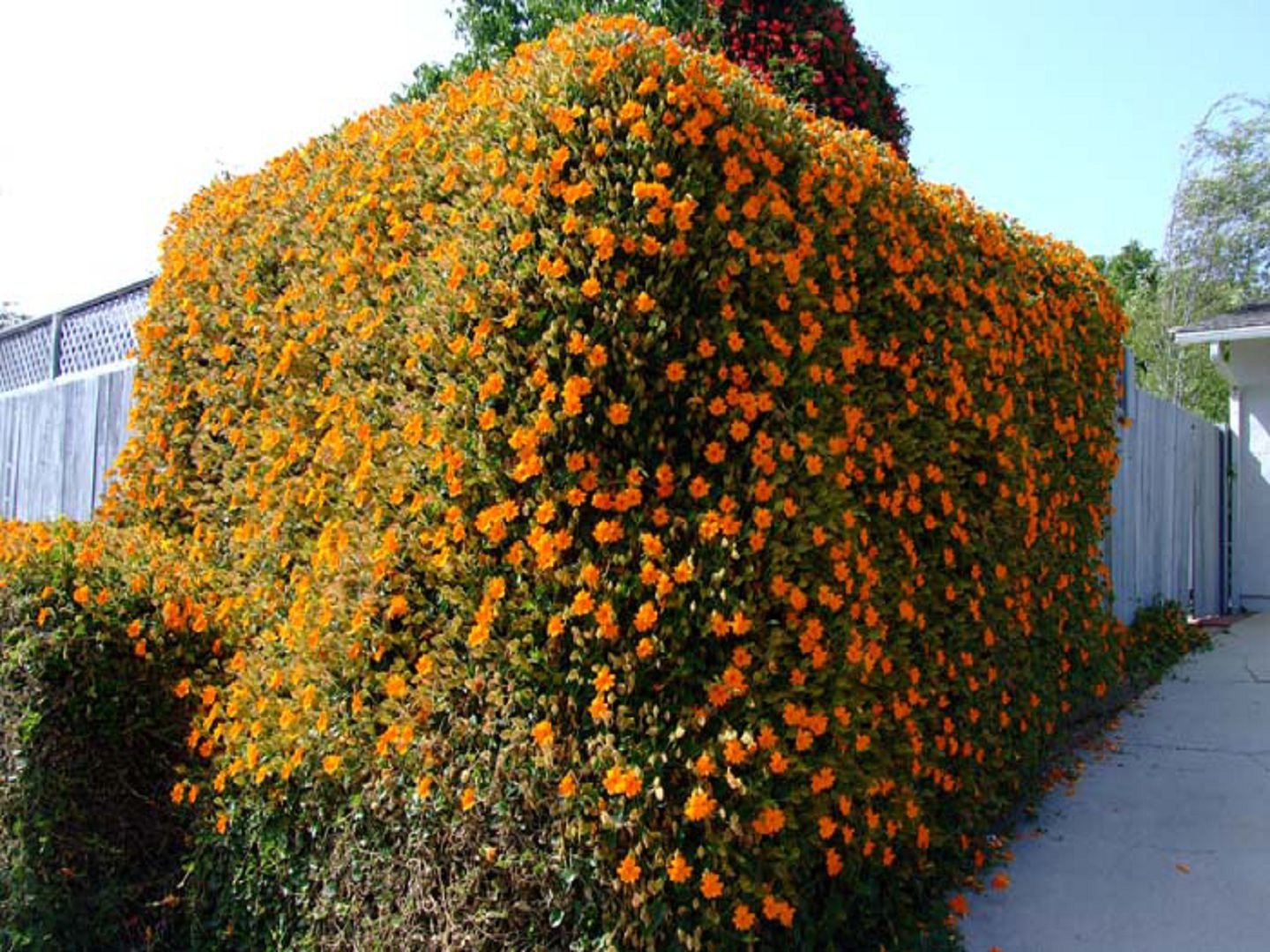
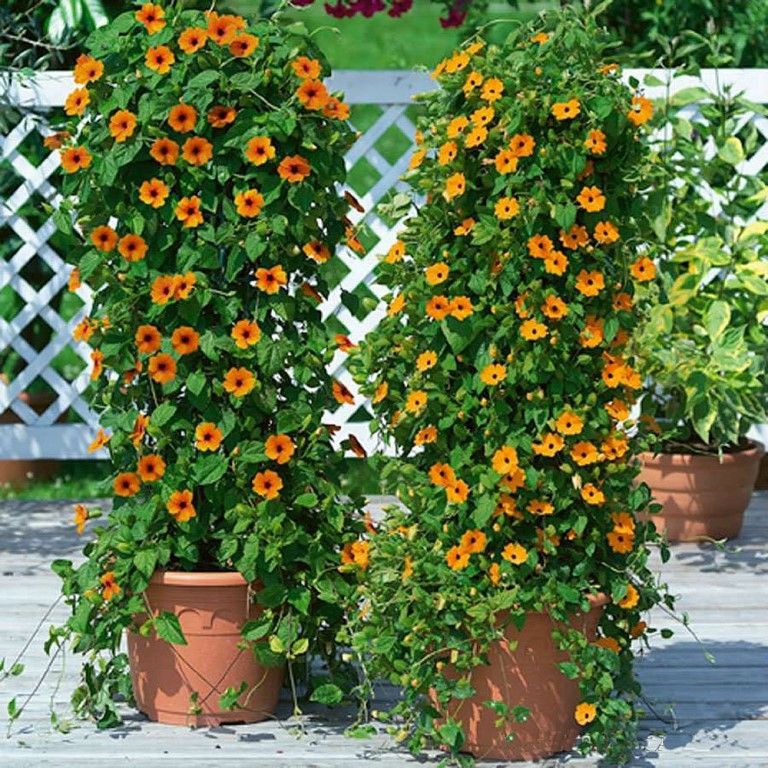
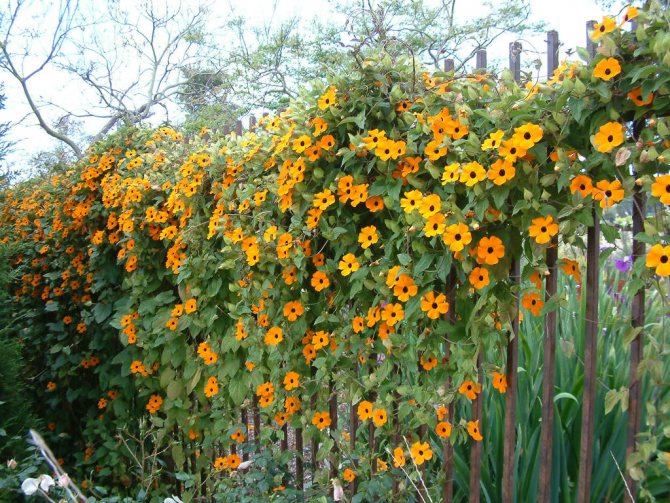
There are many uses for vines in landscape design, such as:
- to give an attractive appearance to an old building;
- camouflage the compost heap;
- decorate an unsightly fence;
- decorate columns, gazebos;
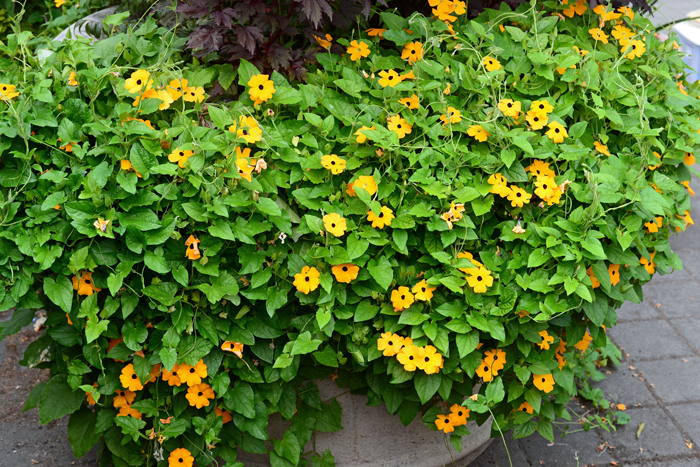
- use as a groundcover plant for planting in hard-to-reach areas of the site or on gentle slopes.
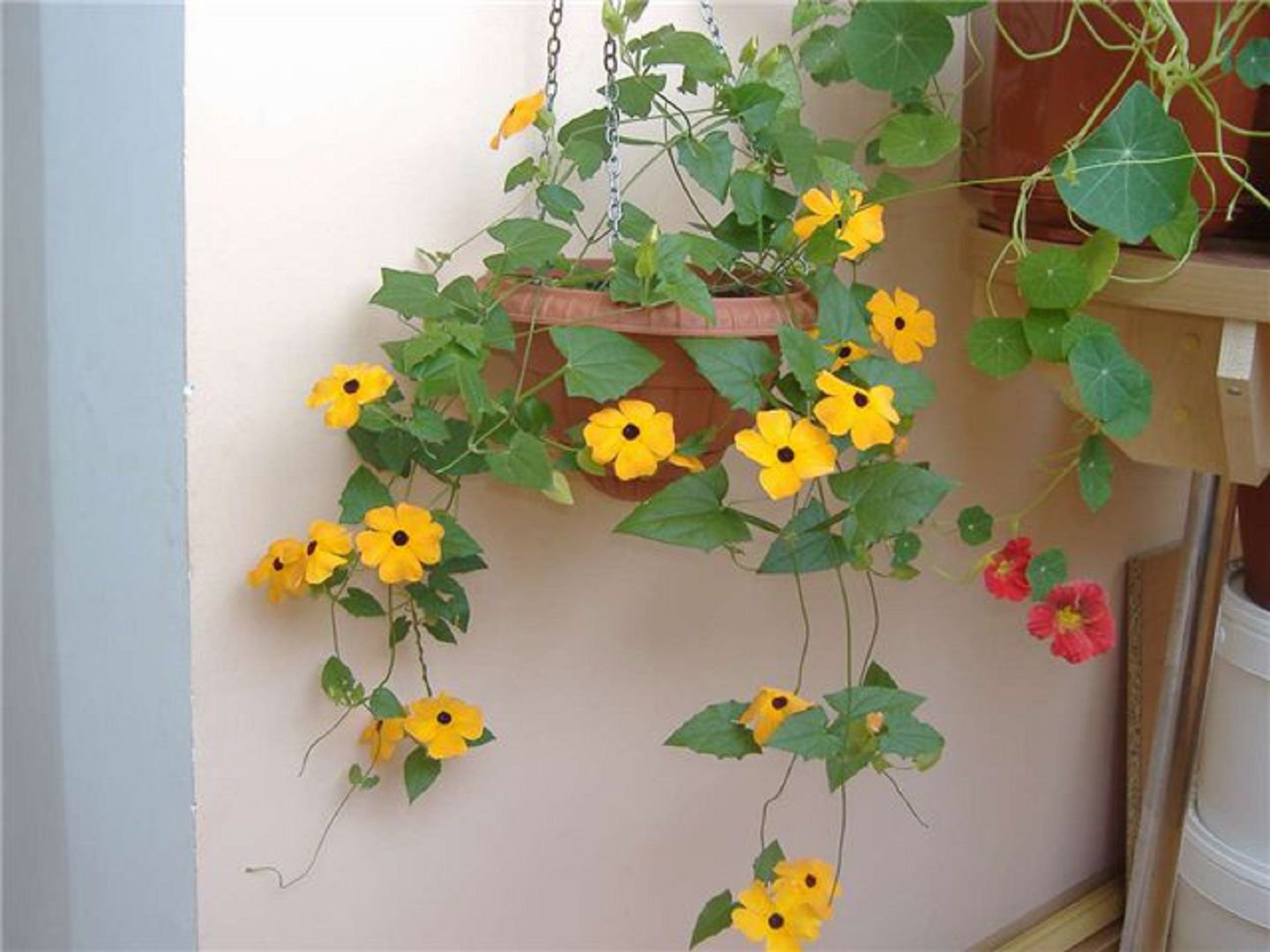
The vine can also be used to decorate a room. It looks attractive in hanging pots.
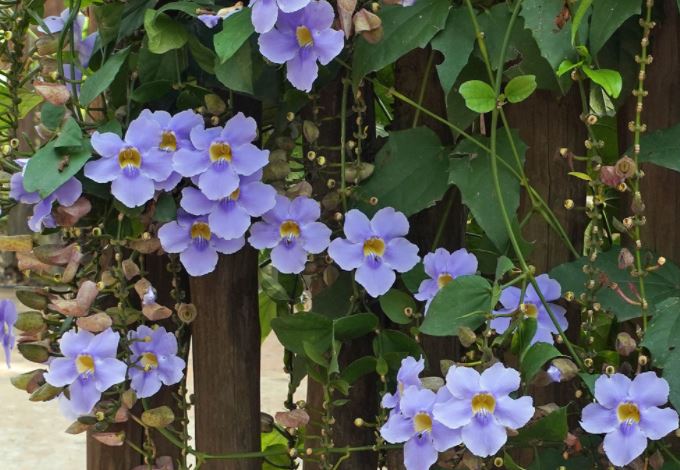
Photo gallery of Thunbergia in landscape design (8 photos):
The benefits and use of Thunbergia in folk medicine
Thunbergia laurel-leaved has medicinal properties, which is why it is widely used in alternative medicine. It has the following beneficial effects on the body:
- stimulates immunity;
- lowers temperature;
- protects the liver;
- relieves inflammation;
- normalizes metabolic processes;
- suppresses thirst and hunger;
- removes harmful elements;
- normalizes sugar levels;
- reduces sweating.
Thunbergia has been used since ancient times in Thai, Tibetan, and Malaysian medicine for the following purposes:
- addiction treatment;
- in case of various types of poisoning, living in regions with poor environmental conditions, bites of poisonous insects and snakes;
- reducing the load on the liver;
- recovery from chemotherapy and cancer prevention;
- in the fight against allergies;
- problems with excess weight;
- menstrual cycle disorders;
- treatment of wounds and boils;
- combating depression and stress.
Various medications (capsules, tablets, tinctures, infusions) are even produced based on Thunbergia.
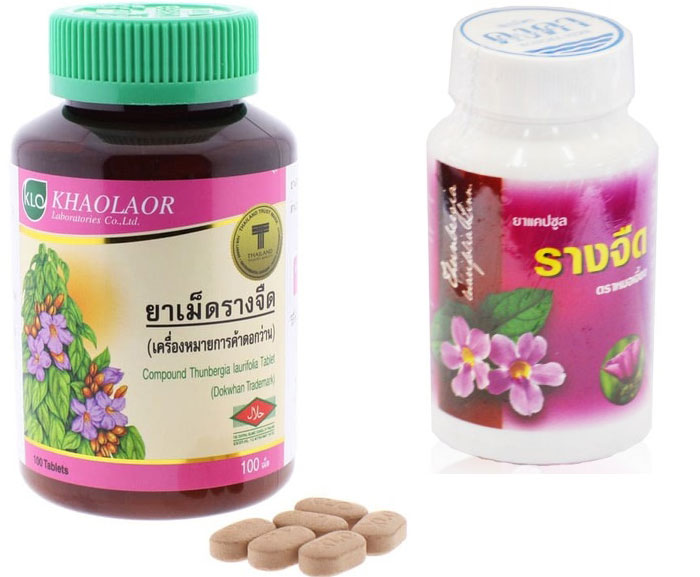 However, before using them, you need to take into account that the plant has contraindications:
serious mental disorders;
- pregnancy and lactation;
- children under 12 years of age;
- individual intolerance to the constituent components.
Real reviews of growing Thunbergia from seeds
Greetings to you, gardeners and sympathizers!
Apparently, I already miss the garden - I really want to write reviews about plants.
Thunbergia has many commercial names, and "Lace" is one of them. So, I won't dwell on the fantasies of seed sellers. But I will explain the origin of this vine's name.
Once upon a time, there lived a Swede named Carl Peter Thunberg. He lived a long time ago—in the 18th and 19th centuries. He didn't just stay in his native Sweden; he traveled extensively, as he was a naturalist—an explorer of the flora and fauna of South Africa and Japan. He well deserved the title "Father of South African Botany." One of the places where Thunbergia spread worldwide was the tropics of South Africa. It's not hard to guess that this plant was named after Carl Peter Thunberg.
The genus Thunbergia belongs to the Acanthaceae family and, according to various sources, has from 100 to 200 species.
I'll continue my story about one of them—Thunbergia alata. Its seeds are quite easy to buy in Russia. And just as easy to grow in your own garden.
But that's not all! Thunbergia is a perfect choice for indoor plant lovers. And paired with petunias and pelargoniums, it will add an exotic touch to any balcony, making your neighbors envious. Or perhaps even happier—neighbors come in all shapes and sizes.
Incidentally, in Europe, Thunbergia is called Black-Eyed Susan. Although, if you look closely, the flower's eye is dark purple.
True, there are species of winged Thunbergia without this enticing eye.
I've seen yellow, white, and yellow Thunbergia seeds, but with an orange tint. I once bought blue Thunbergia seeds (grandiflora) in the Czech Republic, but I couldn't grow them—the seeds didn't germinate. And no wonder: the seeds of this plant remain viable for no more than two years. The Czechs let me down.
Of course, in our conditions this perennial is grown as an annual vine, if we are talking about open ground in gardens.
Thunbergia seeds are large, and the seed pod is very... mmm... funny. It resembles some kind of organ that's not usually discussed in polite society.
And growing it is easy, if you follow some rules.
Before sowing, it's best to soak the pea seeds in Zircon or any other stimulator for about 5 hours. The best time to sow is from late February to early March. In this case, they will be ready by mid-summer. And the timing is quite arbitrary: the sooner you sow the Thunbergia, the sooner it will reveal its full beauty. We've had it bloom before, even at home.
Don't plant the seeds too deeply. It's better to press them into the soil surface and cover with a 0.5 cm layer. Don't forget about humidity! Cover the container with a lid or plastic wrap and keep it warm: the temperature should be at least 22 degrees Celsius, and even better, 24 degrees Celsius. And in a week, the seedlings will be there! Remove the covers and wait for a couple of true leaves to emerge, as only the cotyledons have emerged.
Once the leaves appear, it's time to transplant. Considering we're growing a vine, we'll immediately prepare its first light support.
Planting in open ground should be done after the danger of frost has passed. After that, it's up to you. I mean, provide support.
Here's my experience: Without further ado, we stick a sturdy stake deep into the ground, leaving about a meter of surface. If it's not deep and sturdy, the stake will eventually tilt, and the Thunbergia will grow crookedly.
With this method, the plant can be planted in a flowerbed or as a solitary plant—it will twine around a pole or stick. It will then curl around itself, forming a ball or cone.
We place several seedlings in container pots and grow them as hanging plants.
A planting location in partial or dappled shade is best. Our Thunbergia has grown in full sun, but it doesn't like it as much. However, it thrives in full shade, where the sun never shines.
All the best to you! See you later.
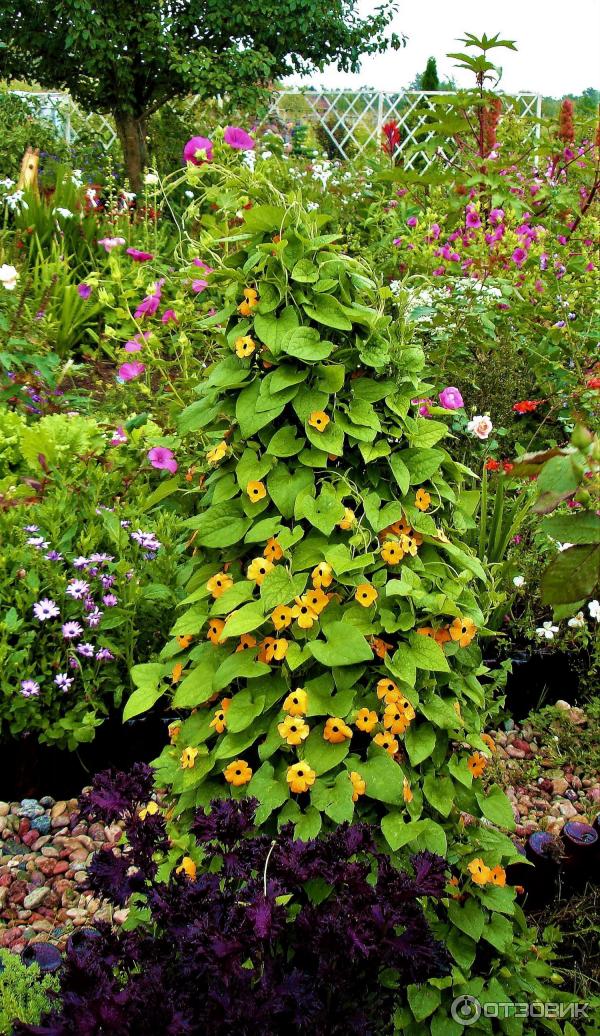
Thunbergia ampel in full shade (container)
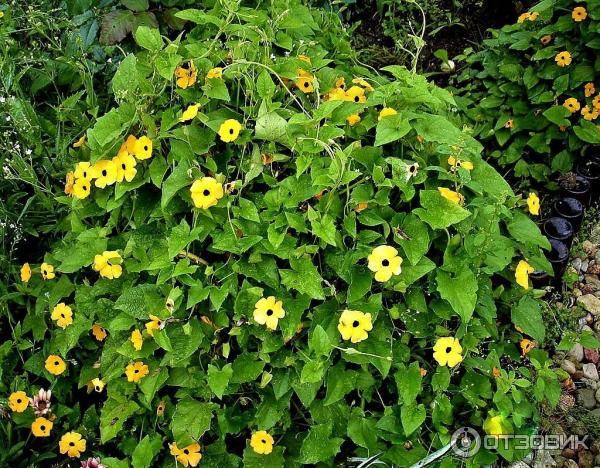
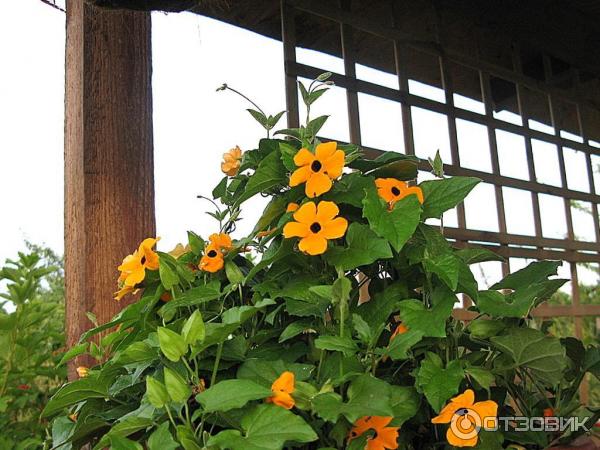
User FARDO88, Russia, Usolye-Sibirskoye, April 13, 2017
Thunbergia alata is the most unpretentious liana of all the little-known ones.
It shouldn't be planted too early as seedlings; it tolerates transplanting easily. It grows quickly, sometimes blooming even indoors.
Ideal for a houseplant, it grows up to 2-3 meters in a greenhouse or in the ground. It blooms profusely, with flowers ranging in color from dirty brown to intense yellow. The plants produce numerous seeds over the summer. The flowers glow in the dark and are resistant to rain. The plant's roots are weak and do not tolerate stagnant water. No pests have been found.
Of all the perennial plants I used, Thunbergia completely died by fall, both indoors and outdoors. As soon as the bright days of summer and the remnants of autumn had passed.
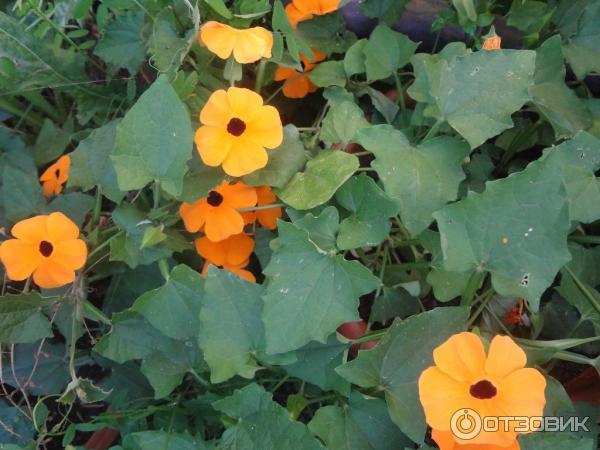
User Yulia2207, Russia, Moscow, April 12, 2020
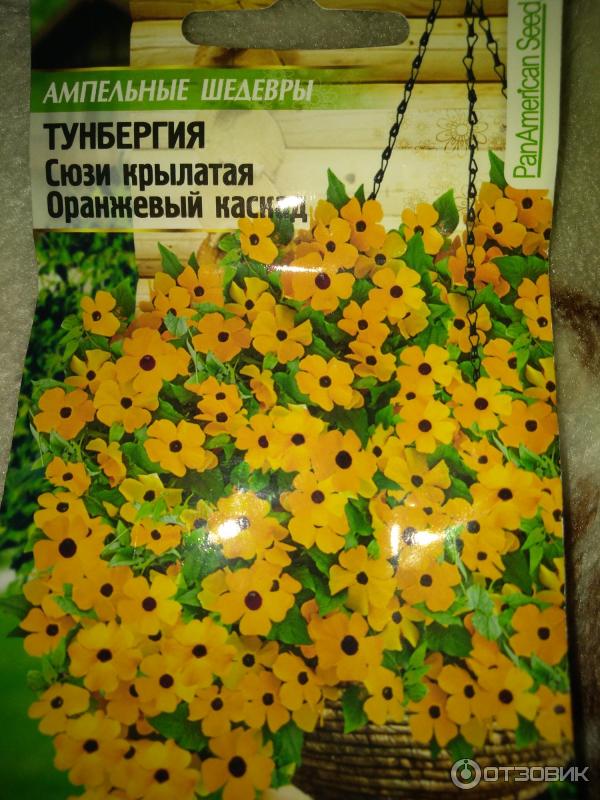
Today we'll talk about the orange Cascade Thunbergia winged Susie, a trailing masterpiece. A guaranteed big harvest from the Altai Seeds company (Altai Seeds, Barnaul, Proletarskaya Street 254A). This fast-growing vine is grown in gardens as an annual. It's a beautiful, delicate, climbing plant with profuse flowering with vibrant inflorescences. It also has another name—Black-Eyed Susan—for its flowers with a dark throat (eye). Stems are 2.5 m long, with numerous heart-shaped leaves that cling to bright orange flowers with a black eye, up to 5 cm in diameter. The plant appears three-dimensional due to the special arrangement of the leaves and flowers. It can be grown as a climber on a support or as an ampelous plant in hanging baskets, planters, and boxes. Pinching the shoots can make the plant more lush, with abundant and long-lasting flowering from June to September. This light, heat-loving plant is grown in wind-free, uneven areas with limed soil and moderate watering. When growing seedlings, cover the seeds in February-March in seedling boxes. Plant the seeds lengthwise at a depth of 0.5-1 cm at a temperature of 18°C (65°F). Seedlings emerge in 14-20 days. Seedlings are planted outdoors in late May or early June. In the garden, plant Thunbergia on the west or south side, with a 60 cm spacing between plants. The plant will need protection from the wind and regular watering.
Conclusion
Thunbergia fits perfectly into any landscape design, adding a special appeal and helping to conceal imperfections. The plant also has medicinal properties, so it can be used for the treatment and prevention of many pathological conditions. Caring for this vine is simple; however, it does not tolerate cold well, so it must be planted as an annual or brought indoors for the winter.