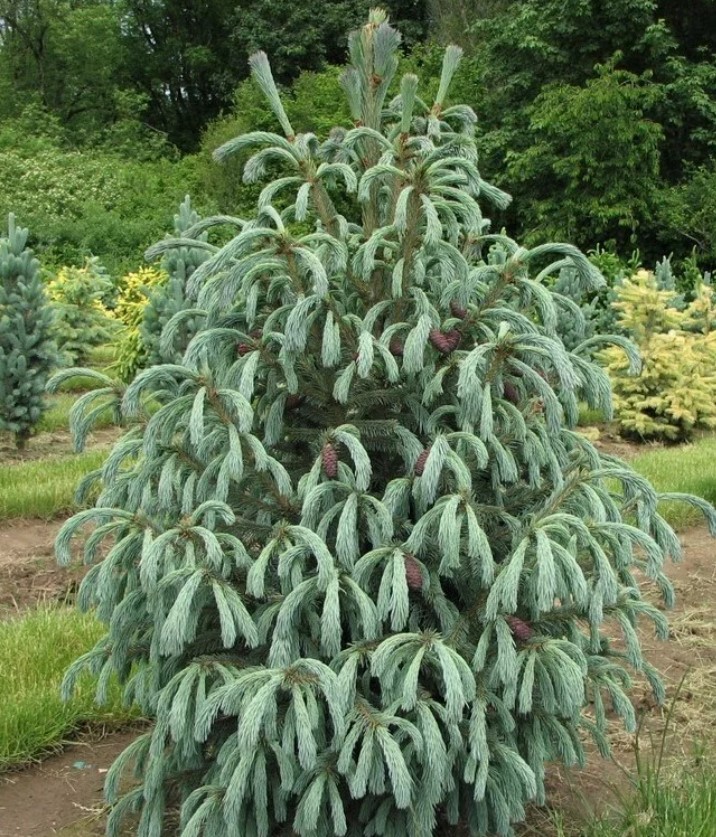
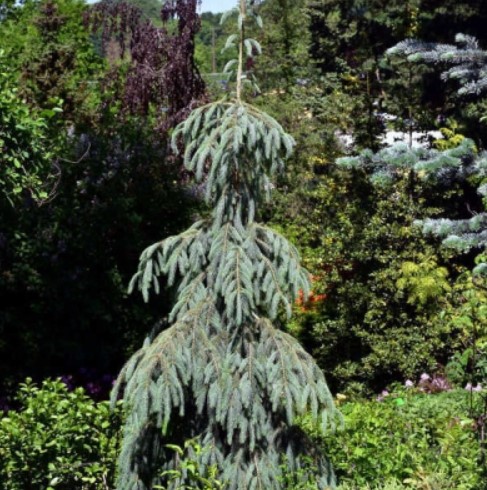
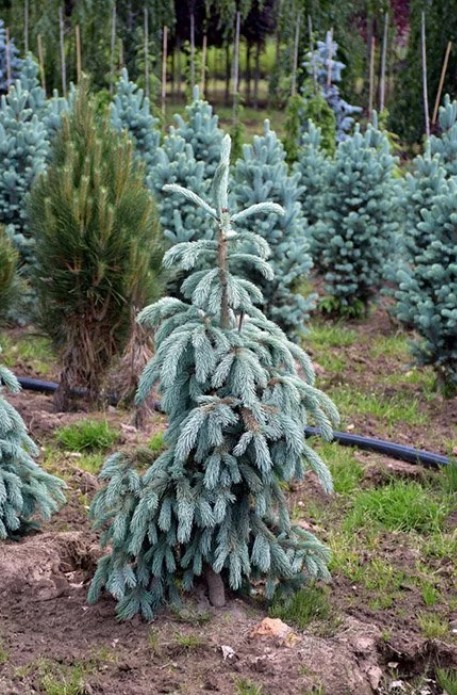
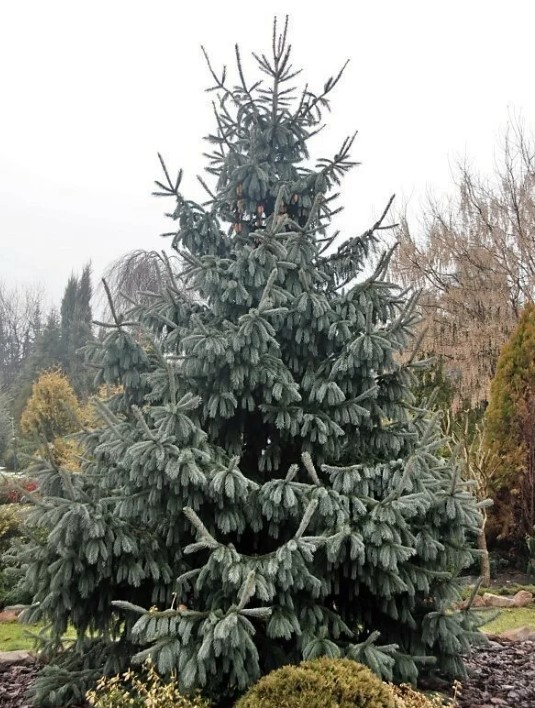
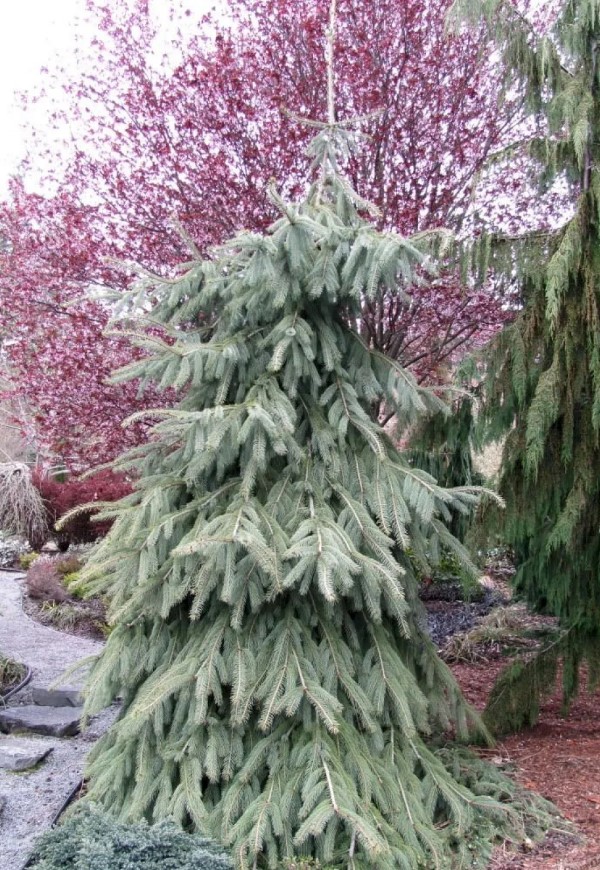
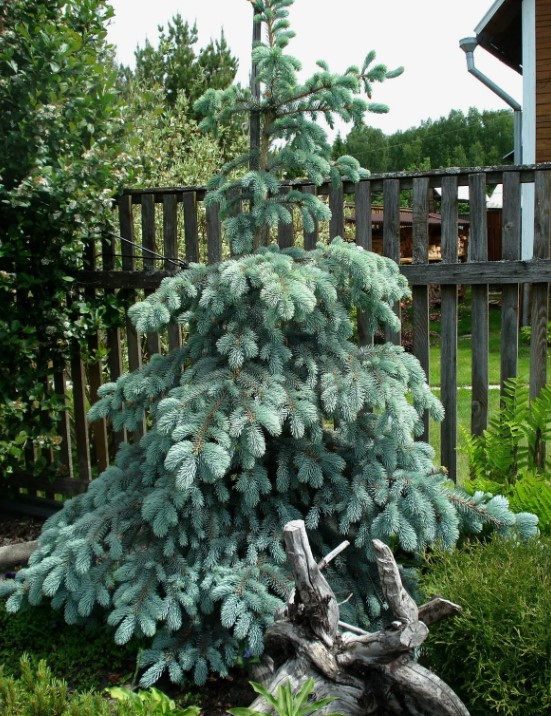
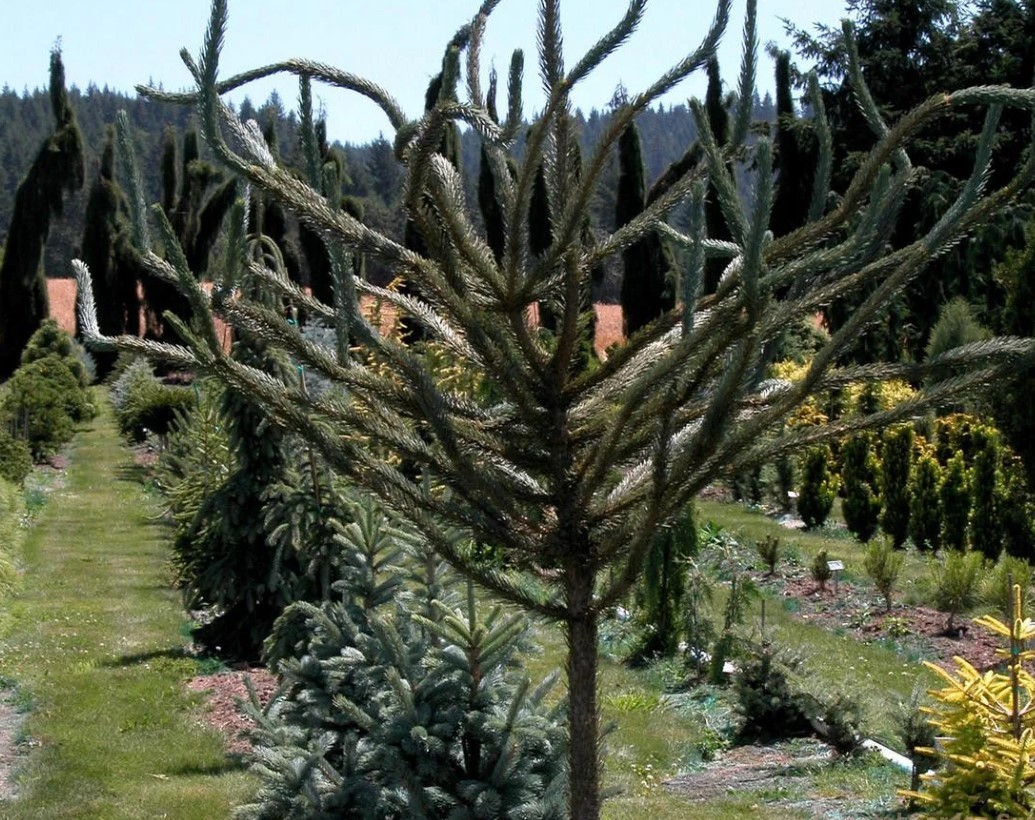
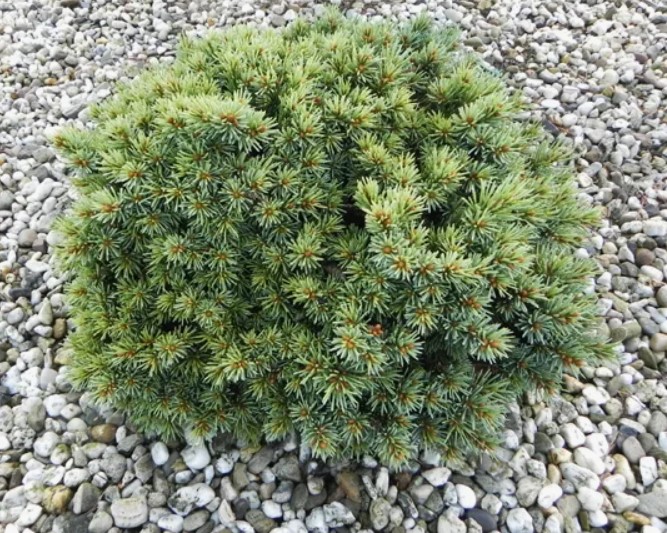
Spruce trees are often used for landscaping gardens, parks, and other areas. There are a huge number of varieties of this tree, each with its own characteristics. This article lists popular spruce species with photos and names.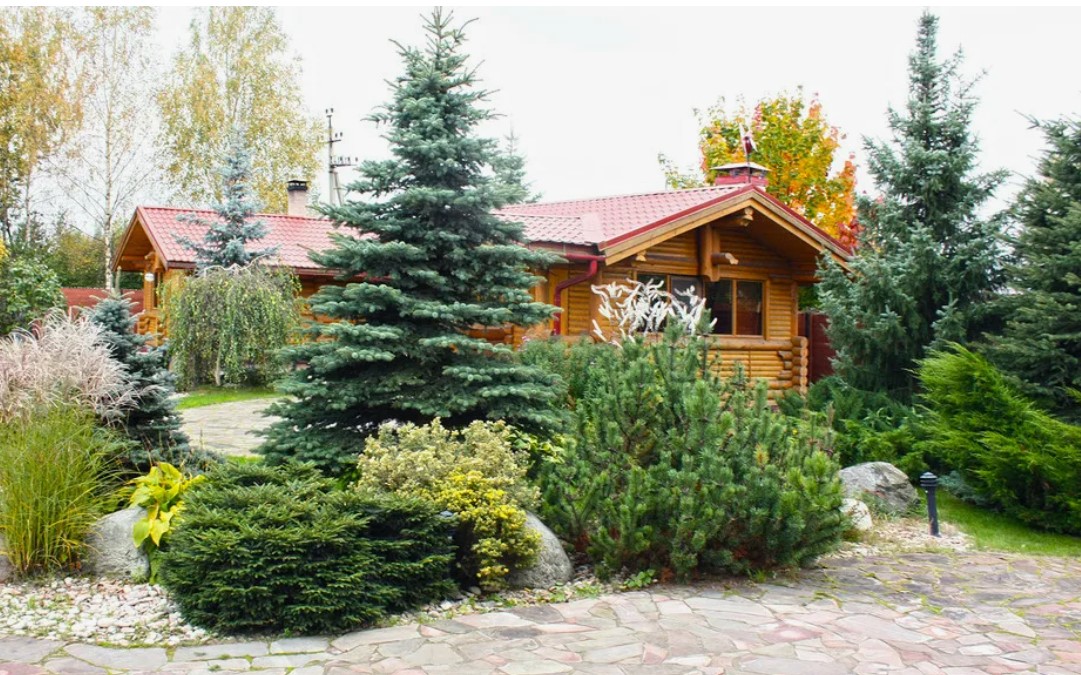
Content
- 1 Spruce description
- 2 Categories of spruce trees
- 3 Spruce trees – species and their distribution
- 4 Brewer's spruce
- 5 Eastern spruce
- 6 Blue spruce (prickly)
- 7 Two-colored spruce (Alcocca)
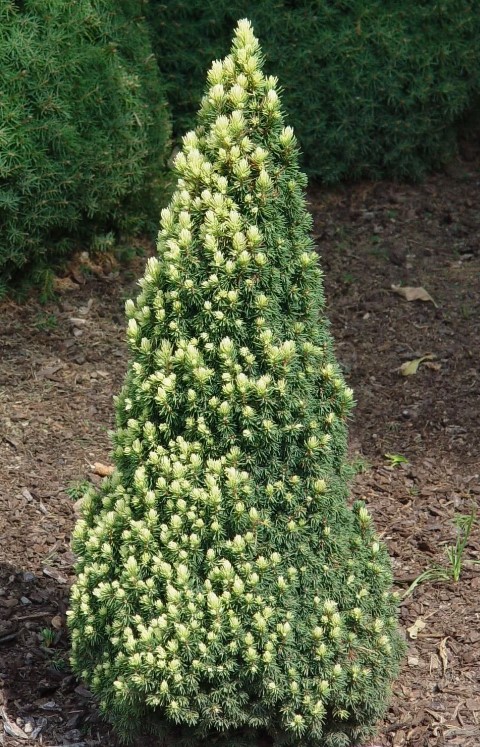
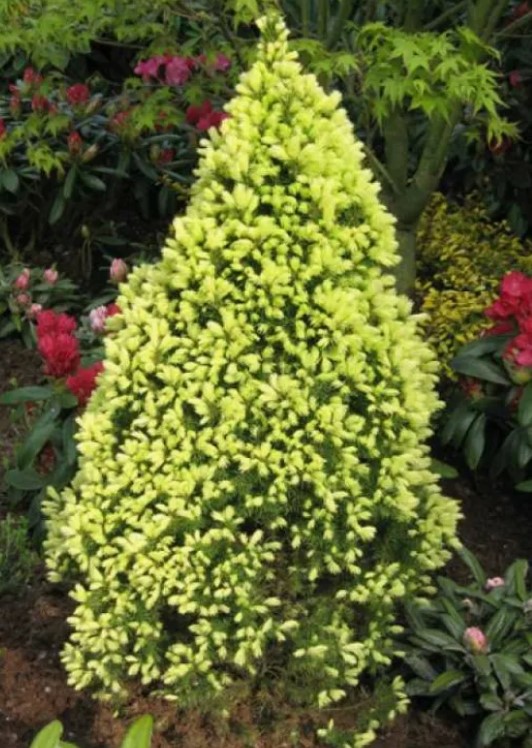
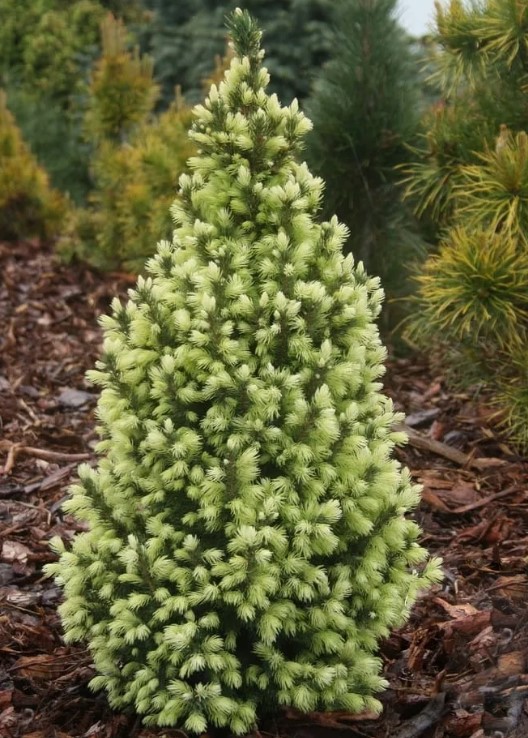
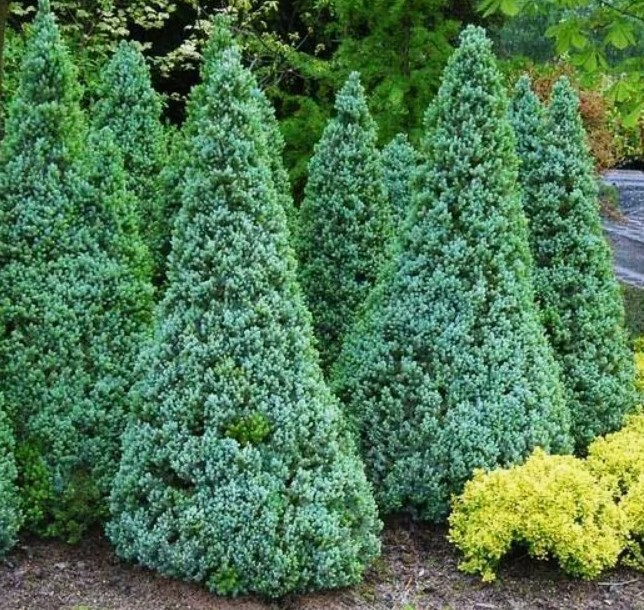
- 8 Canadian spruce (gray, white)
- 9 Korean spruce
- 10 Norway spruce (European)
- 11 Serbian spruce
- 12 Siberian spruce
- 13 Sitka spruce
- 14 Black spruce (Canadian)
- 15 Engelmann spruce
Spruce description
Spruce trees can reach heights of up to 50 m. However, these trees typically grow no more than 30 m. Their crown diameter ranges from 6 to 8 m.
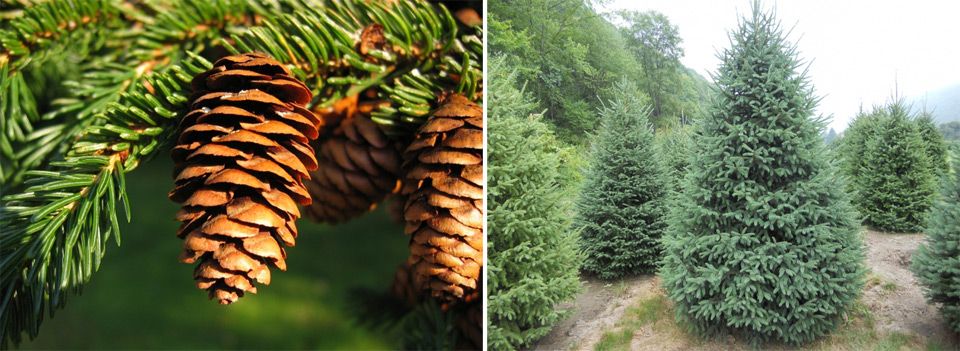
The needles are arranged spirally, ranging from 1 to 2.5 cm in length. The needles change color depending on the season, ranging from green to yellow and even multicolored. The cones are oblong-cylindrical.
The spruce trunk diameter can reach 3 meters. The wood contains little resin and has a white-golden color.
Spruce trees grow significantly in height during their first 15 years. During this time, the tree's trunk and taproot develop.
Categories of spruce trees
Trees are usually classified by shape and height.
By form
The crown shape of a spruce can be of three types:
- pyramidal - most often, varieties with a height of more than 10 m in adulthood have this shape;
- conical or spherical - this shape is typical for slow-growing decorative spruce trees;
- creeping (weeping) - this category includes some varieties of common spruce.
Pyramid-shaped spruces are most often used for individual plantings. Conical or spherical spruces are suitable for artistic compositions.
By height
According to this parameter, types of Christmas trees are usually divided as follows:
- tall – reach a height of 10 to 17 m;
- medium-sized – grow from 2 to 5 m;
- low-growing – have a height of up to 0.5-2 m.
Spruce trees – species and their distribution
According to the Royal Botanic Gardens, Kew, there are 37 primary spruce species and four hybrid species. When choosing the most suitable variety, consider its tolerance to low temperatures.
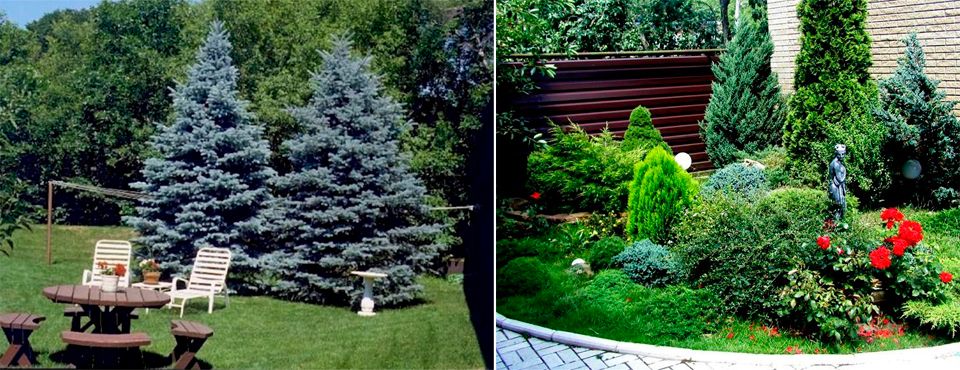
There are several hardiness zones (USDA):
| Zone | Temperature range |
| 2 | from -45°C to -40°C |
| 3 | from -40°C to -34°C |
| 4 | from -34°C to -29°C |
| 5 | from -29°C to -23°C |
| 6 | from -23°C to -18°C |
| 7 | from -18°C to -12°C |
Brewer's spruce
This tree has unusual blue-green needles. It grows up to 40 m, and its trunk can reach a diameter of 150 cm. It has a conical crown, decorated with weeping branches. Young shoots of this tree are reddish-brown, later turning silvery-gray. The bark is grayish-brown. The buds are rounded, 5 to 7 mm long. The needles are dark green on top and matte gray underneath. They reach a length of 16 to 35 mm. The cones are cylindrical, 6.5 to 12 cm long. Initially, they are reddish-pink, and when ripe, they acquire a reddish-brown color. It lives up to 900 years. Weeping branches form only after 10-20 years. Before this point, the tree can be confused with the Serbian spruce.
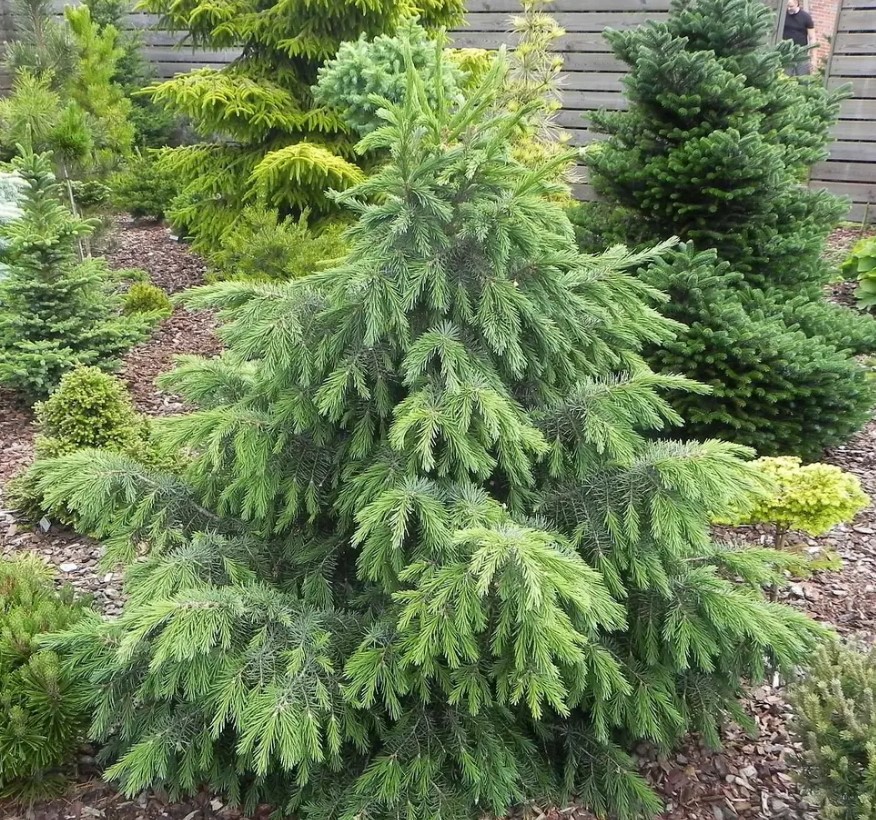
It is unpretentious when it comes to growing conditions. However, it does not tolerate dry and polluted air. It prefers to grow in full sun, sheltered from winter winds. It tolerates hot summers fairly well, but periodic watering is recommended during prolonged droughts. Spruce is also winter-hardy and can survive in Zone 5, with temperatures down to -29°C.
Eastern spruce
The bark is scaly, brown in young spruce trees and dark gray in mature trees. The needles are four-sided, dull and rough, with a bright sheen. The cones are cylindrical, 6 to 11 cm long and 2 cm thick. Young cones are red, while mature cones turn light brown.
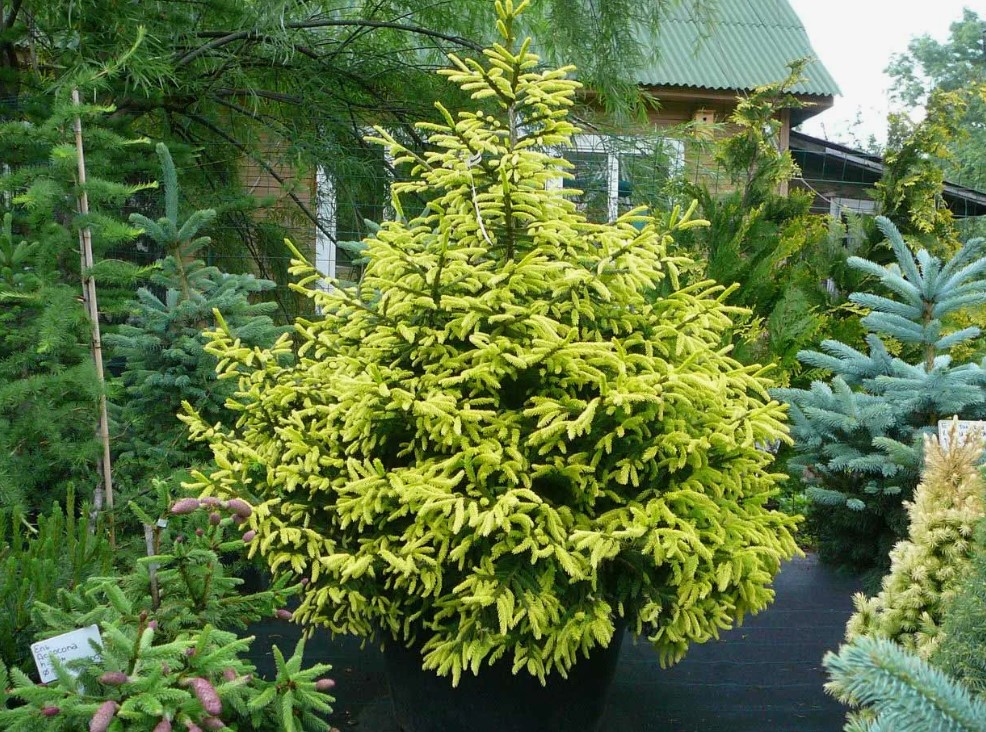
The eastern spruce grows slowly. It thrives even in dry soils, rocks, and loose stones. It is a long-lived tree. This spruce is suitable for planting in most areas, but does not tolerate cold well.
| Variety | Characteristics (crown shape, height/width, annual growth) frost resistance (zone) | Use in landscape |
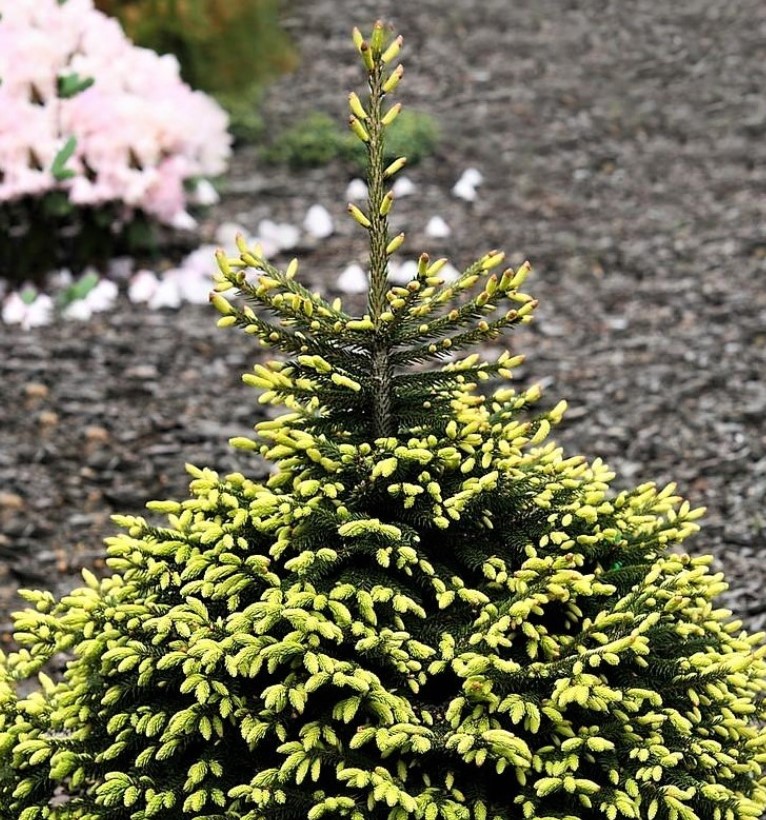
| Aureospicata
|
Cone-shaped; 8-12 m/5 m; 15 cm, 5 |
A solitaire, but can be mixed in group compositions with other conifers, be they trees or shrubs. |
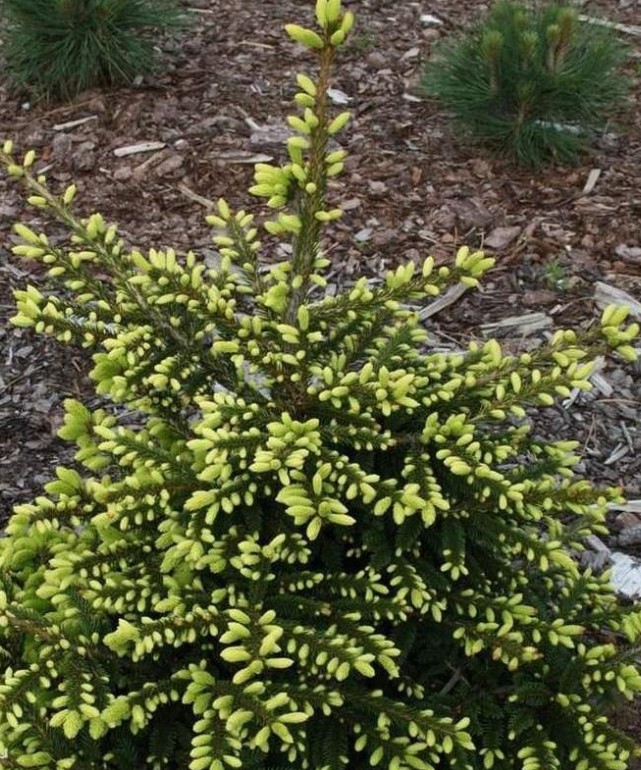
| Golden Start
|
Widely conical; 3-4 m/1.5 m; 20 cm;
5 |
Planting along the perimeter of a plot and in rock gardens. Suitable for Japanese gardens and patios. Pairs well with dark coniferous species. |
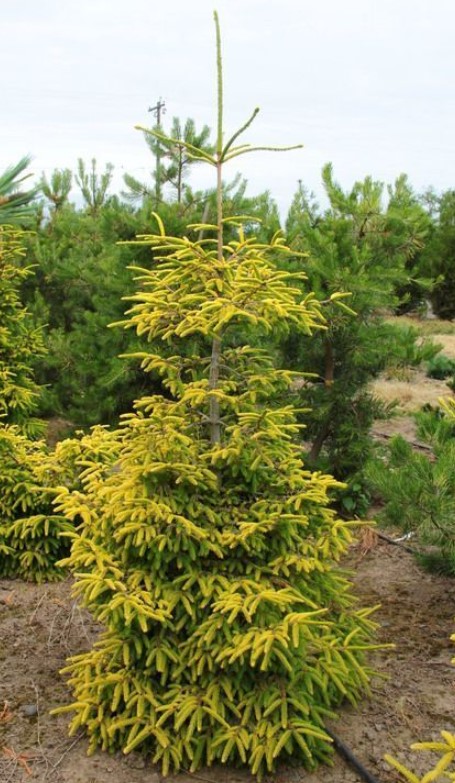
| Summergold
|
Conical irregular; 6-8 m/2.5 m; 20 cm; 4 |
Ideal for parks and gardens as a single plant. However, it also looks great in larger compositions, especially in colorful ones. |
| Skylands
|
Conical; 7 m/4 m; 25-30 cm;
5 |
For planting along plot boundaries and in rock gardens. Pairs well with dark coniferous species. |
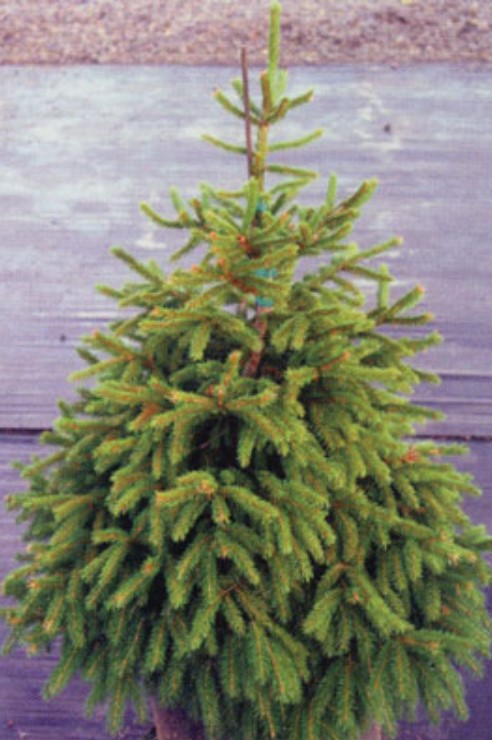
| Nigra Compacta
|
Pyramid; 3 m/1.8 m; 15 cm; zones 4-7 |
For single and group planting. |
Blue spruce (prickly)
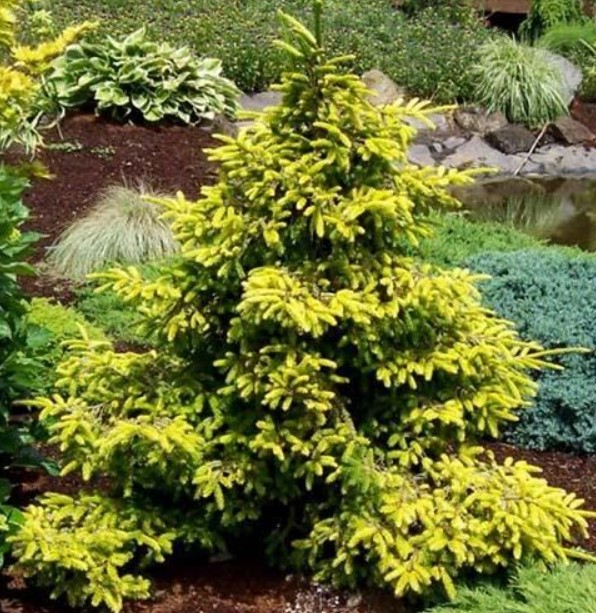
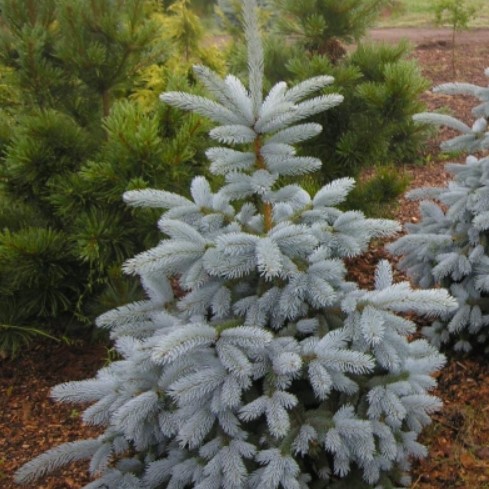
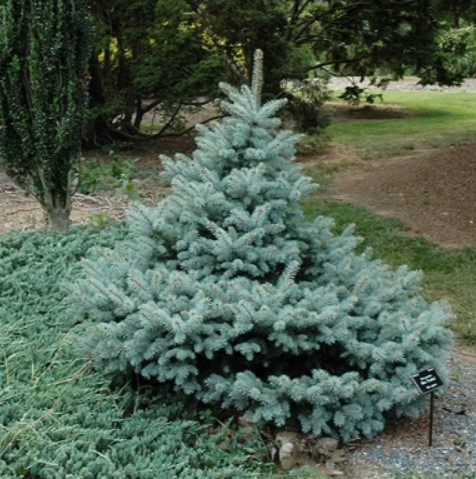
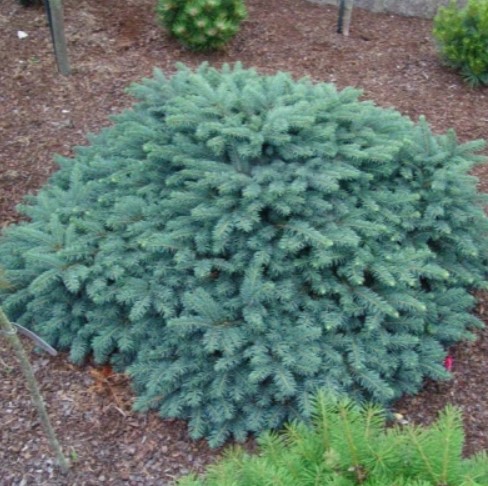
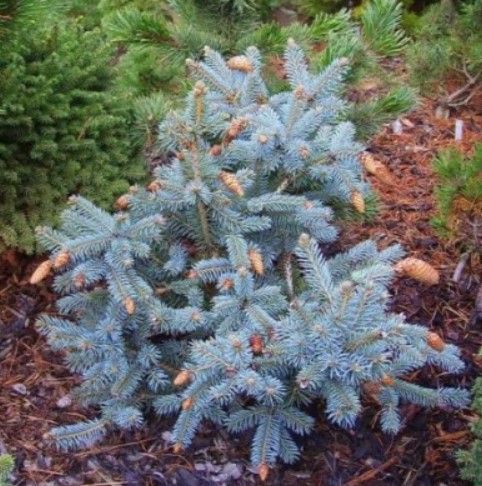
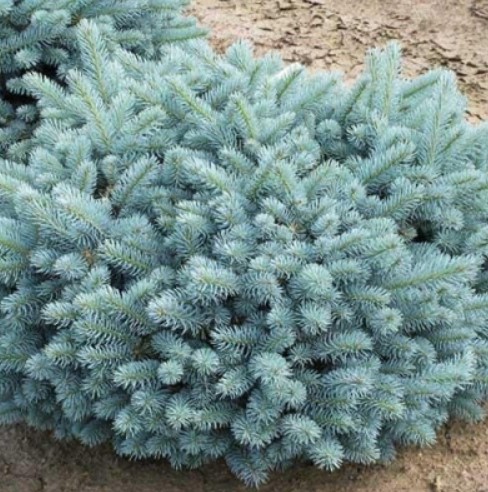
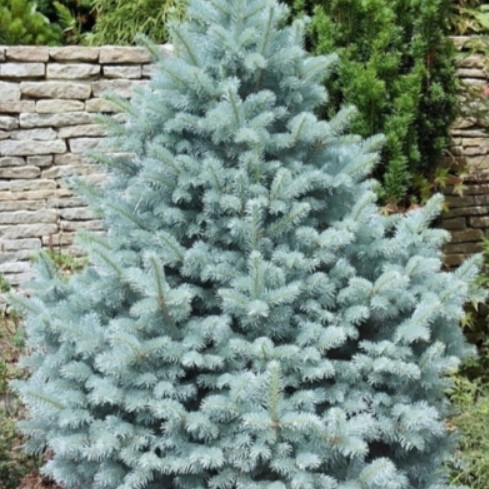
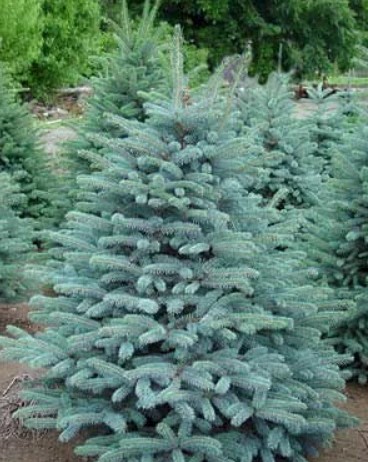
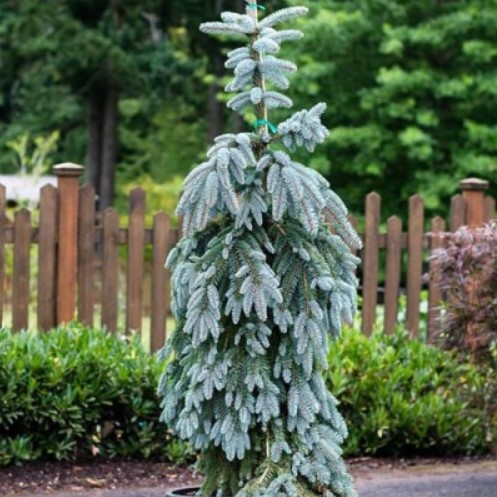
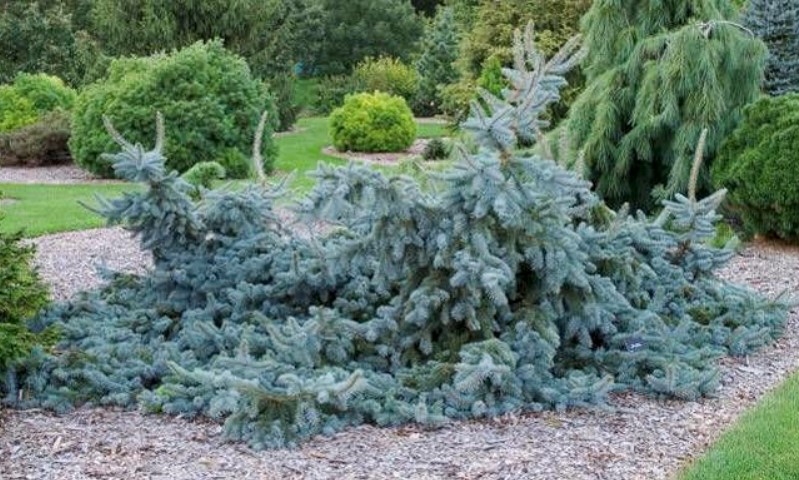
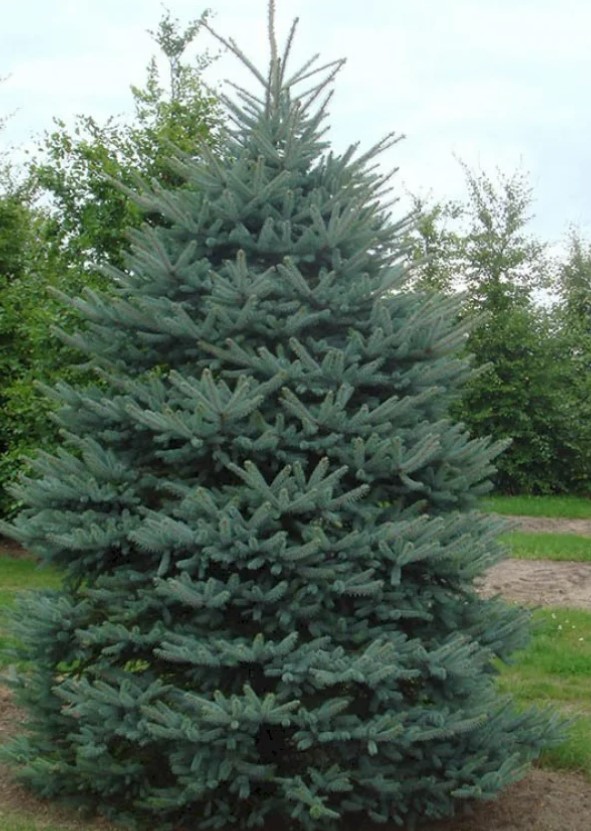
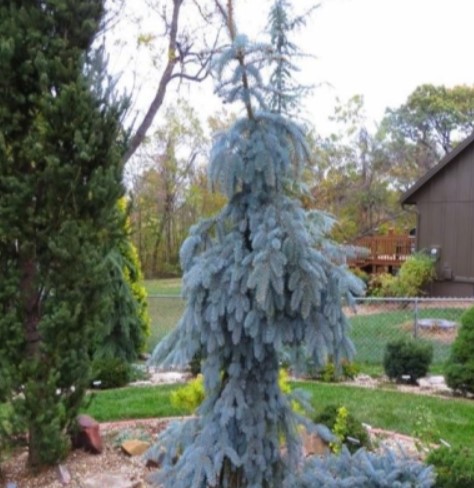
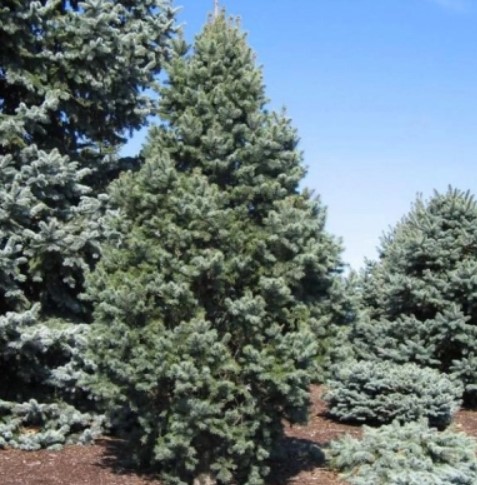
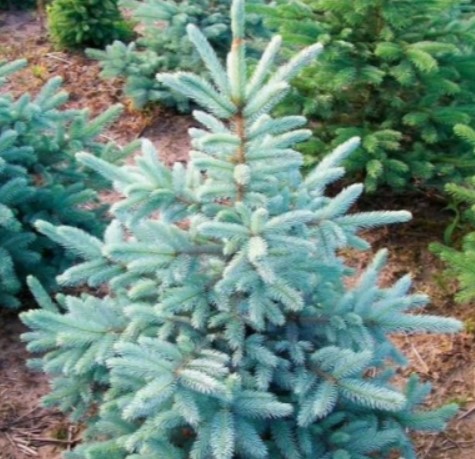
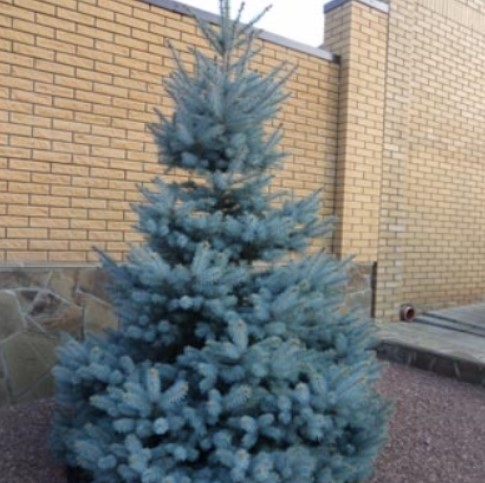
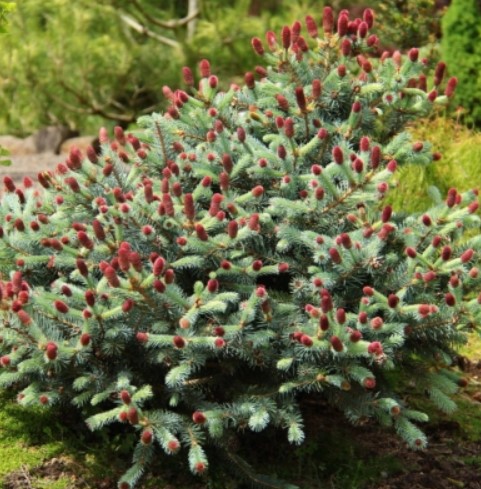
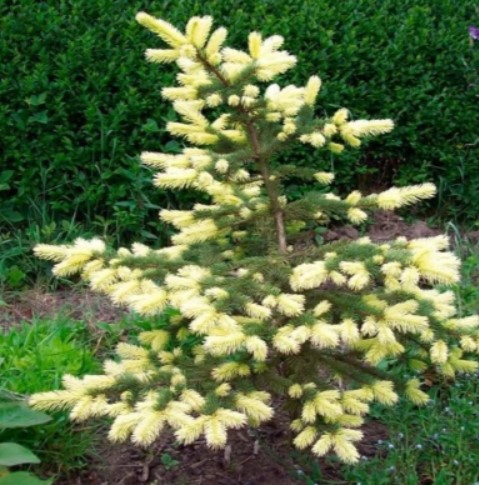
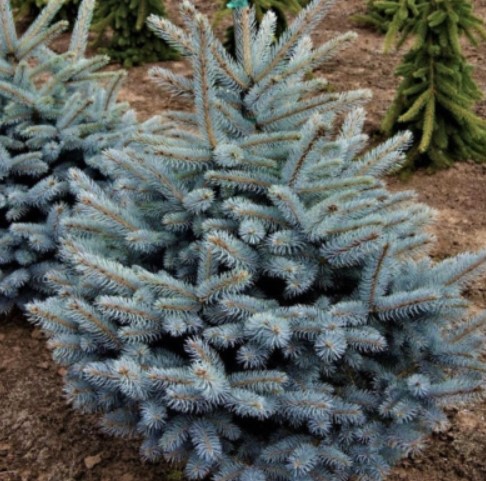
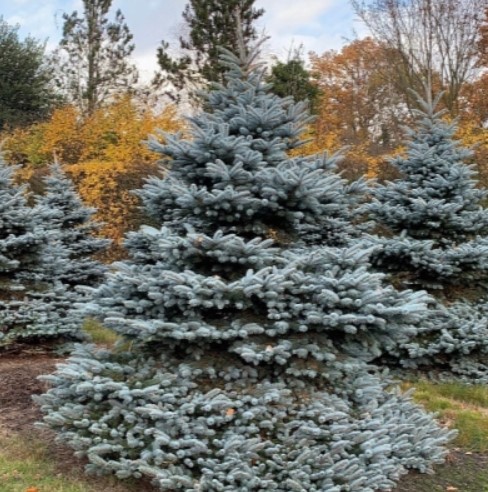
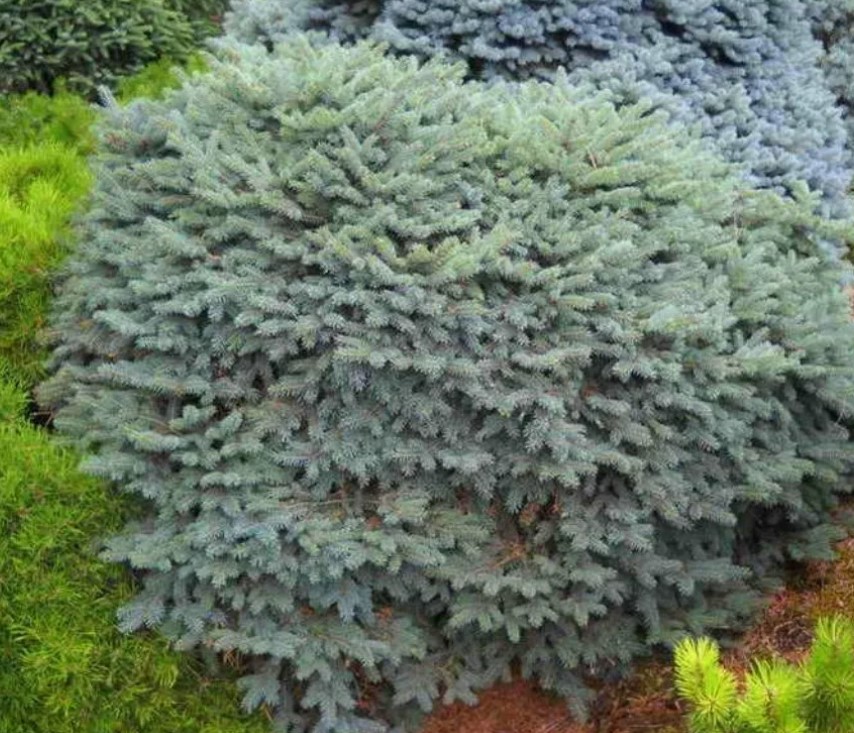
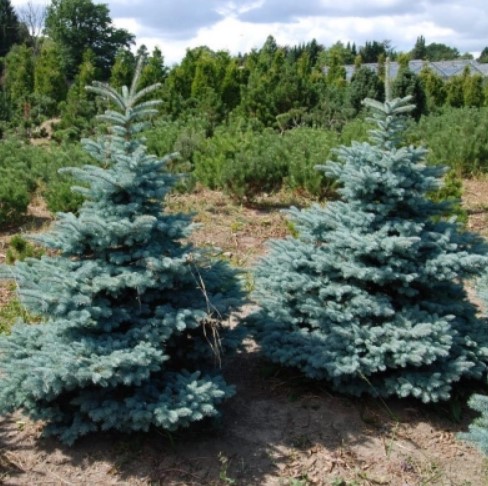
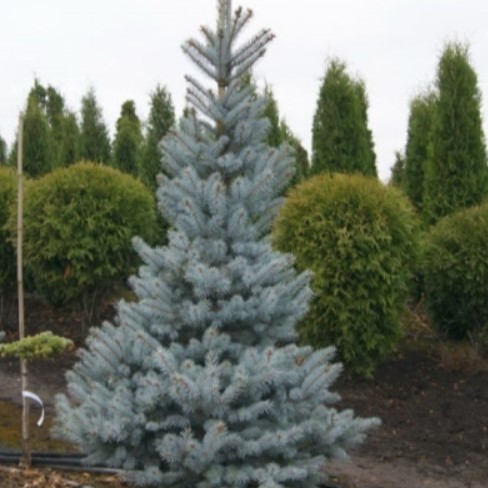
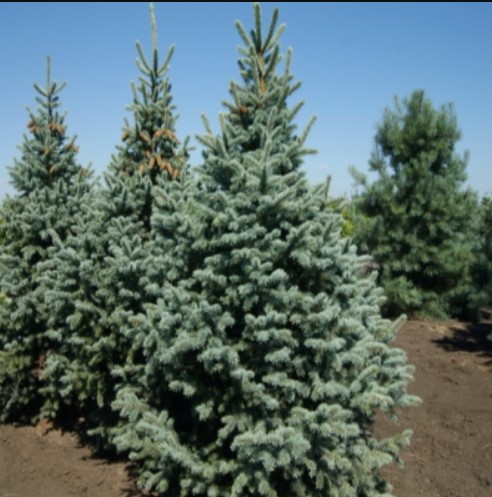
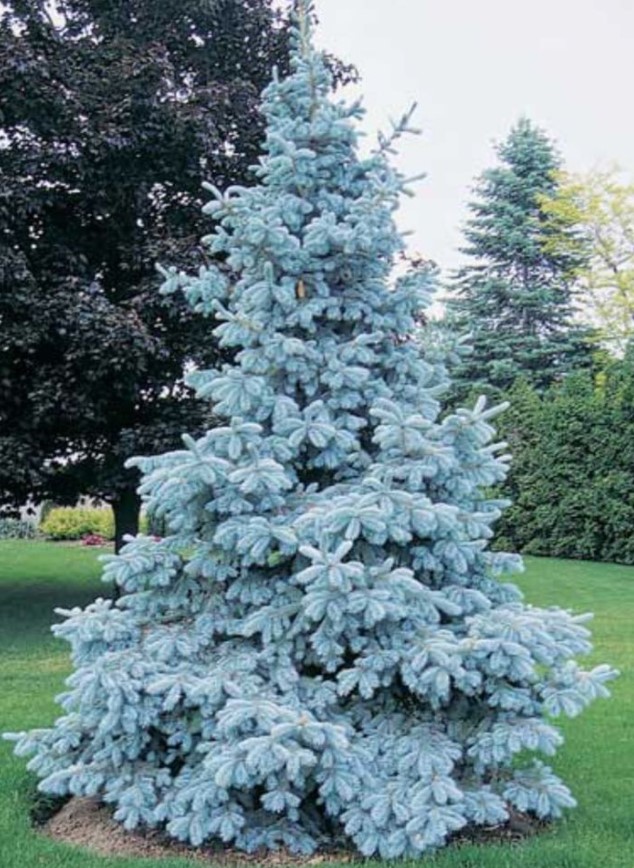
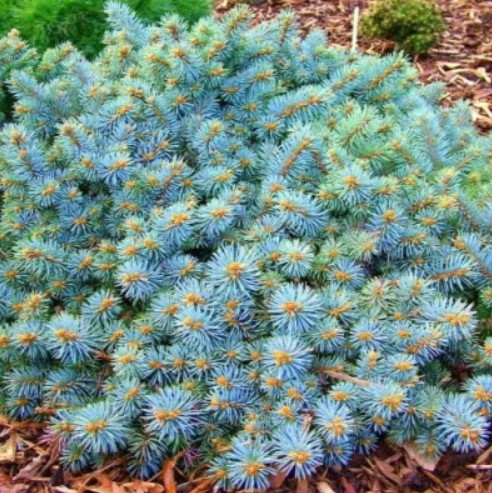
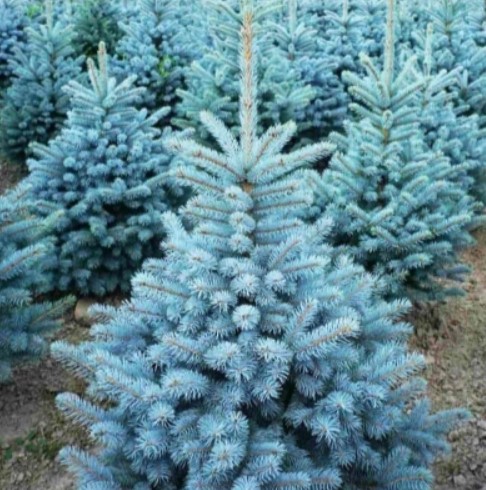
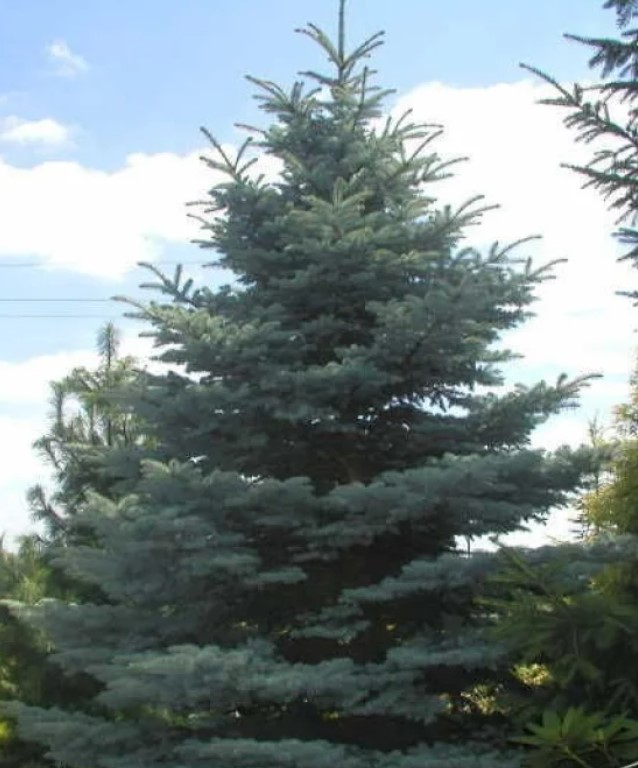
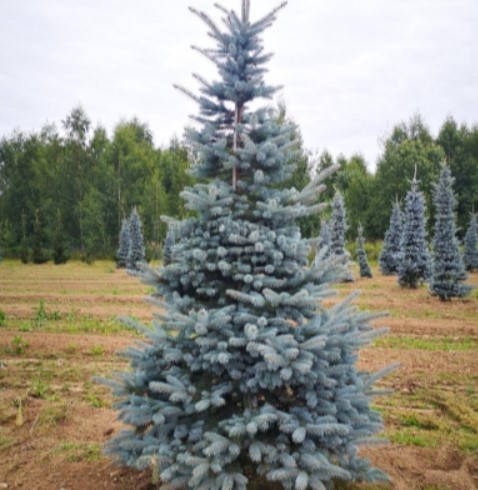
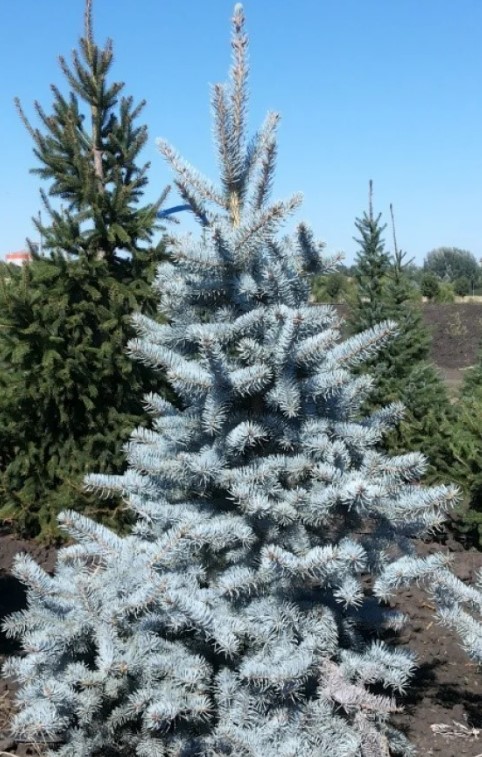
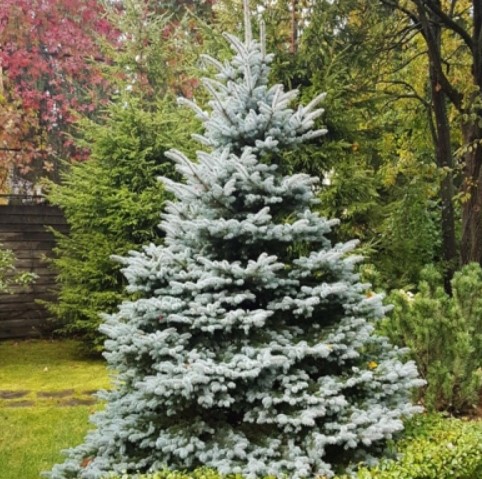
The tree's root system is close to the ground's surface. Despite this, it is robust and weather-resistant. It grows wild in western North America and thrives not only in the wild but also in private gardens.
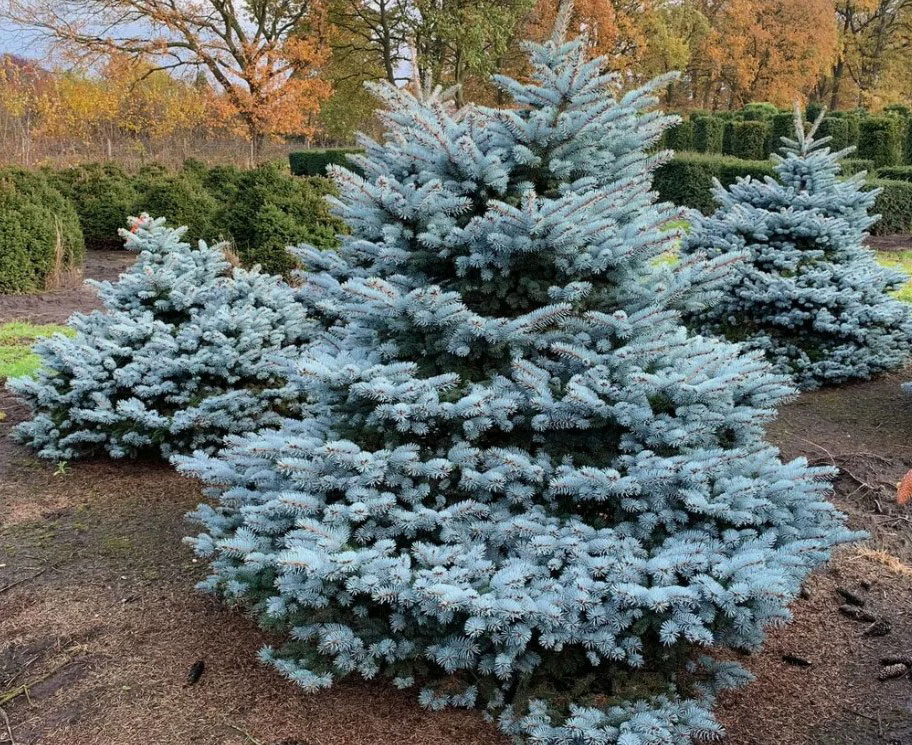
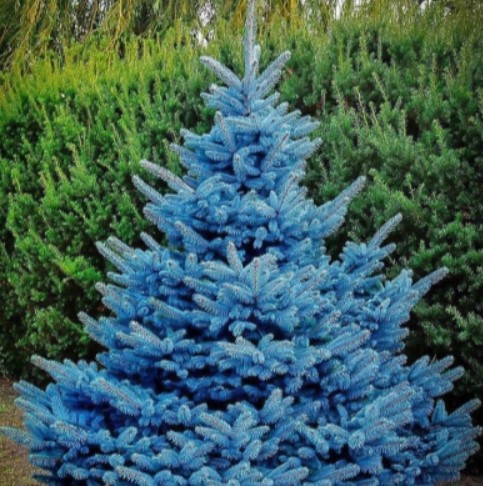
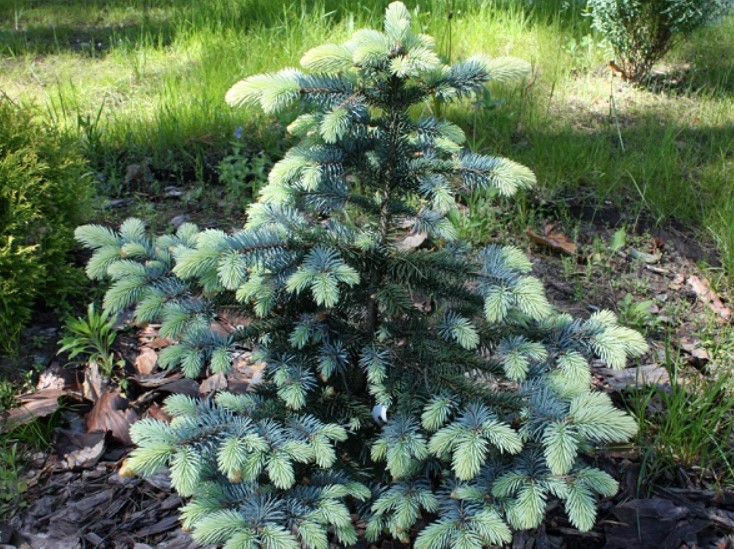
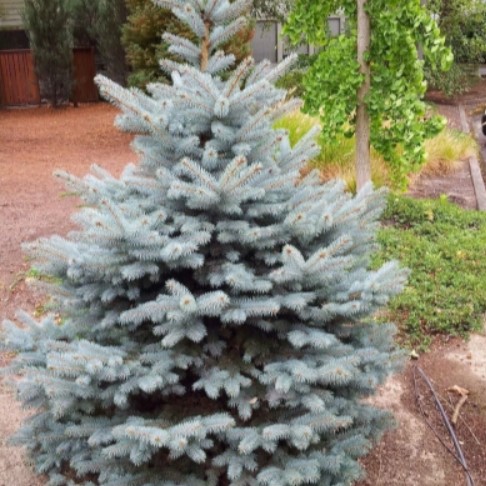
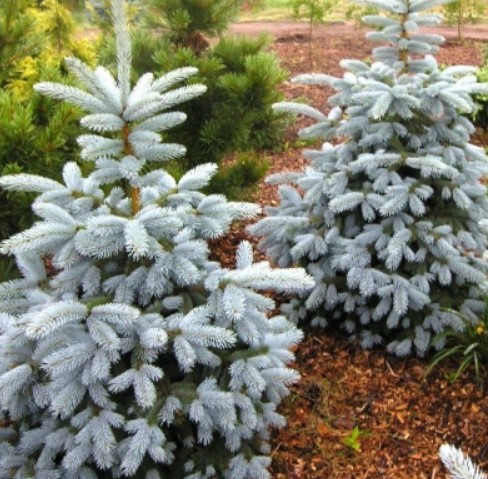
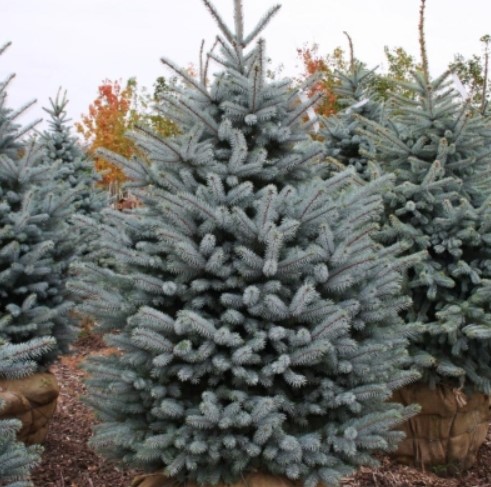
It is found in areas located near bodies of water. Although the spruce's name suggests its bluish color, the needles themselves can vary in color, taking on silvery, white, or green hues. This characteristic makes the plant decorative.
| Variety | Characteristics (crown shape, height/width, annual growth,
frost resistance (zone)) |
Use in landscape |
| Baby Blue Ice
|
Wide pyramidal; 4-5 m/2-3 m; 8-10 cm;
3 |
For single plantings and tree-shrub groups. |
| Bialobok
|
Wide conical; 5 m/3 m; 5-10 cm; 3 |
For single planting and in combination with other trees and flowers. |
| Blue Diamond
|
Broadly conical; 6 m/2 m; 20-30 cm;
3 |
|
| Blue Mountain
|
Broadly conical; 15 m/4 m; 30-35 cm; 4 |
|
| Blue Trinket
|
Cone-shaped; 6-8 m/4 m; 10 cm;
4 |
|
| Waldbrun
|
Broadly conical; 0.8 m/1 m; 5 cm; 4 |
|
| Hermann Nau
|
Cone-shaped; 1.5 m/2 m; 5-10 cm;
2-3 |
For patios and single plantings in small gardens, alpine slides, and rock gardens. |
| Glauca Globosa
|
Cushion-shaped, later broadly conical; 3 m/2 m; 5-10 cm; 2 |
For single and group plantings along paths or as a hedge. |
| Glauca Majestic Blue
|
Conical; 10-20 m/6-8 m; 15-20 cm;
3 |
For parks, estates, and gardens. For creating hedges and decorating for the New Year holidays. |
| Glauca Marcia
|
Conical; 3 m/3 m; 20-30 cm; 3 |
In parks and gardens. |
| Glauca Pendula
|
Weeping; 5-10 m/3 m; 30 cm;
4 |
Solitaire, planted in groups. |
| Glauka Prostrata
|
Pyramidal; 3 m/2-3 m; 5-10 cm; 3 |
|
| Glauca Select
|
Conical; 15 m/3 m; 20-30 cm;
3 |
For creating forest compositions, hedges and decorating alleys. |
| The Blues
|
Creeping, weeping cascade; 3 m/2 m; 15-30 cm;
3 |
For single and group plantings |
| Iseli Fastigiata
|
Narrow conical; 12 m/4.5 m; 20 cm;
3 |
For decorating summer cottages, courtyards, parks as a free-standing tree or as a hedge. |
| Keibab
|
Asymmetrical when young, later broadly conical; 15 m/8 m; 15-25 cm;
4 |
For single and group plantings in parks, summer cottages, squares and alleys. |
| Bonfire
|
Correct conical; 15 m/5 m; 20 cm;
4 |
Suitable for single or group planting. Used to decorate formal areas. |
| Lucky Strike
|
Irregular conical; 2 m/1.5 m; 8-12 cm; 4 | For single planting, creating seasonal compositions. |
| Maygold
|
Cone-shaped; 6 m/3 m; 25-30 cm;
3 |
Mixed plantings can be created. |
| Misty Blue
|
Pyramidal or conical, regular shape; 30 m/5 m; 8-10 cm;
3 |
Mainly for single planting, but can also be used for various group compositions. |
| Montgomery
|
Spherical, then conical; 1.8 m/2 m; 6-7 cm;
3 |
For large rock gardens, as a solitaire on a lawn or meadow. |
| Nidiformis Kalous
|
Globular; 4-5 m/9-10 m; 4-5 cm;
4 |
As a solitaire for group planting with conifers. |
| Oldenburg
|
Broadly conical; 12-15 m/5-7 m; 30 – 35 cm;
3 |
On alleys, in parks and in summer cottages. |
| Omega
|
Conical; 10 m/5 m; 30 cm;
3 |
|
| Retroflex
|
Columnar; 5-10 m/1 m; 15-30 cm;
3 |
|
| Royal Blue
|
Conical; 4-5 m/2-3 m; 8-15 cm;
3 |
For single and group planting, as well as in mixed compositions with deciduous and coniferous crops. |
| Sonya
|
Wide pyramidal; 0.7 m/0.7 m; 5 cm;
4 |
|
| Super Blue Seeding
|
Conical; 15 m/3.5 m; 30 cm;
4 |
In parks, squares, public areas. |
| Tuem
|
Conical; 3 m/1 m; 8 cm;
4 |
Suitable for single and group plantings. Perfect for a Christmas tree. |
| Fat Albert
|
Cone-shaped; 3-10 m/1.5 m; 30 cm;
3 |
For parks and squares. |
| Hoopsie
|
Pyramidal; 12-15 m; 12 cm;
4 |
For landscaping parks and garden areas. Suitable for single or group planting. |
| Schouwenhorst
|
Pyramidal; 10-15 m/5-6 m; 8-10 cm;
4 |
Recommended for single planting and in combination with other vegetation, especially medium-sized shrubs. |
| Edith
|
Conical; 6-8 m/3 m; 10-15 cm;
4 |
The variety is universal. |
| Erich Frahm
|
Conical; 10 m/3 m; 6 cm;
3 |
In alpine and coniferous gardens, next to perennials. |
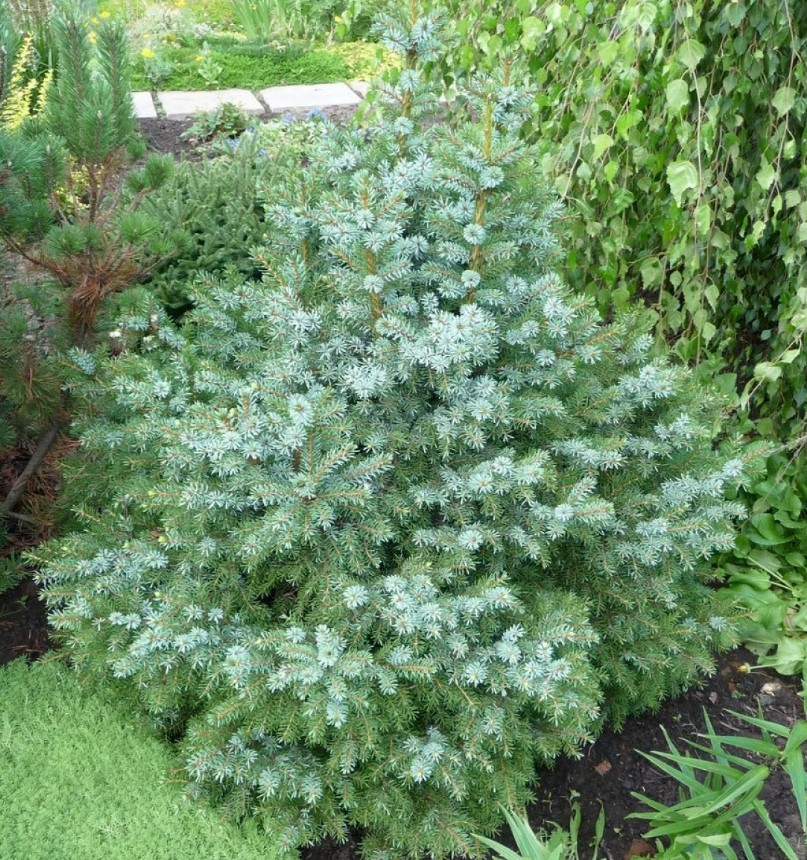
How to choose a blue spruce
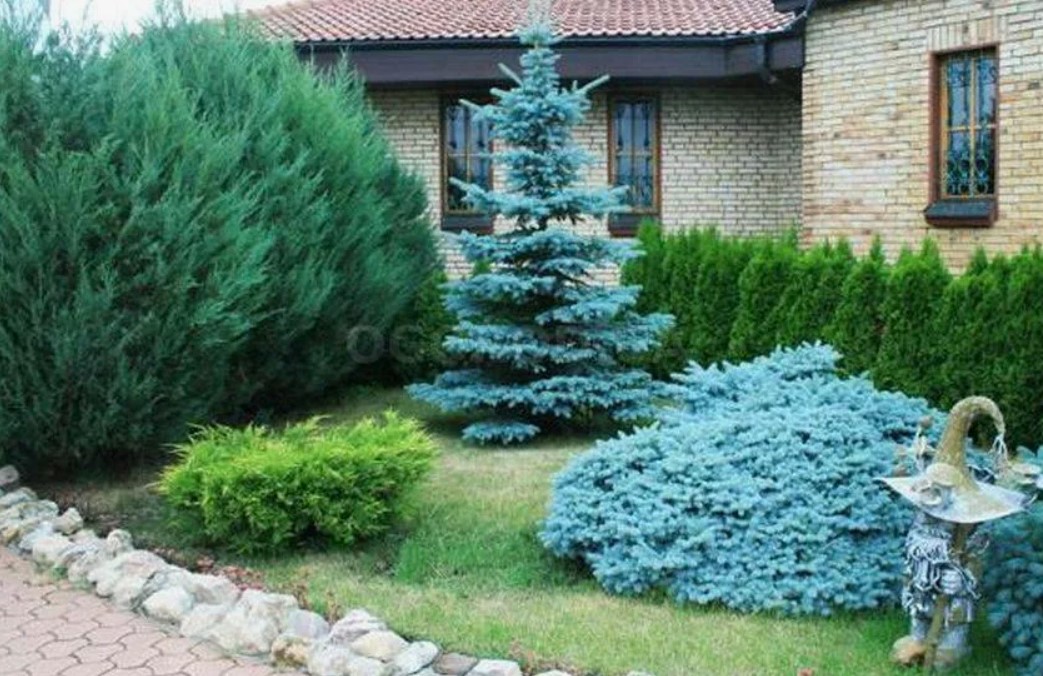
If you plan to plant a blue spruce in your garden, it's important to carefully select the right variety. First, consider your ability to care for the plant well. If you're unsure of your time and energy, it's best to choose less demanding varieties. The plant's appearance is also important—it should blend harmoniously into the landscape. If you have a small garden plot, choose dwarf varieties. If you have more space, you can plant taller spruce trees.
Two-colored spruce (Alcocca)
The tree gets its name from the color of its needles: green on top and blue underneath. The velvety bark is initially purple-brown, but over time it acquires a gray-brown hue. The branches are thin, smooth, and ribbed, reddish-brown. Young shoots are glossy, ranging in color from yellow to reddish-brown. Blue spruce needles are sharp, leathery, and tetrahedral in cross-section.
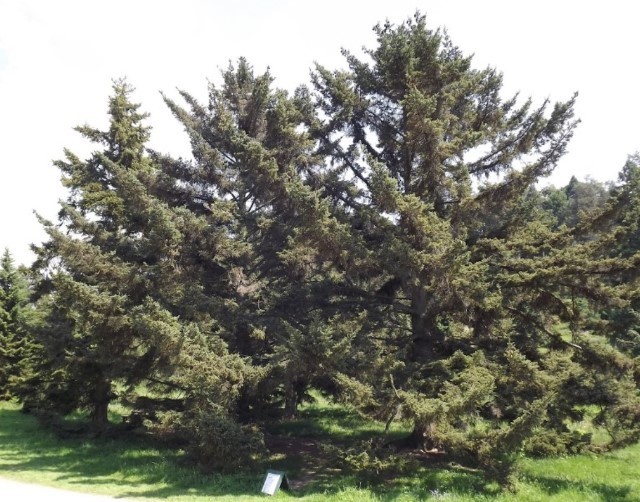
The bicolor spruce grows at an altitude of 1,500-2,000 meters above sea level in Japan, in the subalpine forest zone. The climate there is cool, with snowy winters and annual precipitation of 1,000-2,500 mm. The soil in these areas is of volcanic origin.
| Variety | Characteristics (crown shape, height/width, annual growth, frost resistance (zone)) | Use in landscape |
| Acicularis
|
Cone-shaped; 1 m/0.6 m; 2-3 cm;
3 |
For single and group planting. |
| Bicolor
|
Conical; 8-10 m/3-4 m; 10 cm;
3 |
For decoration of gardens and parks. |
Canadian spruce (gray, white)
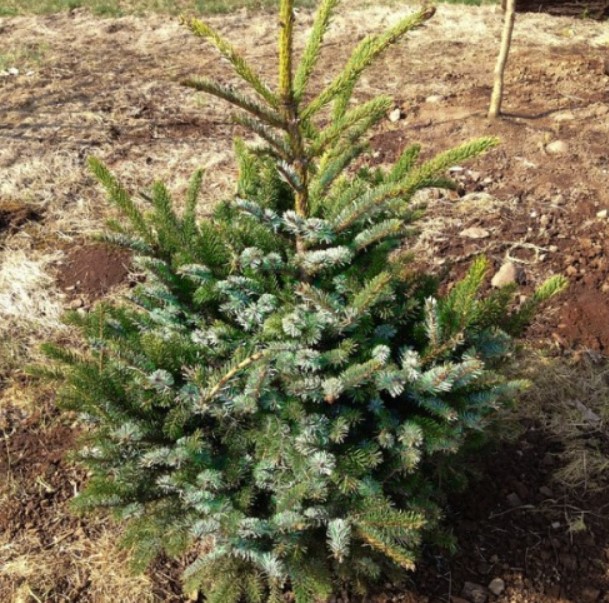
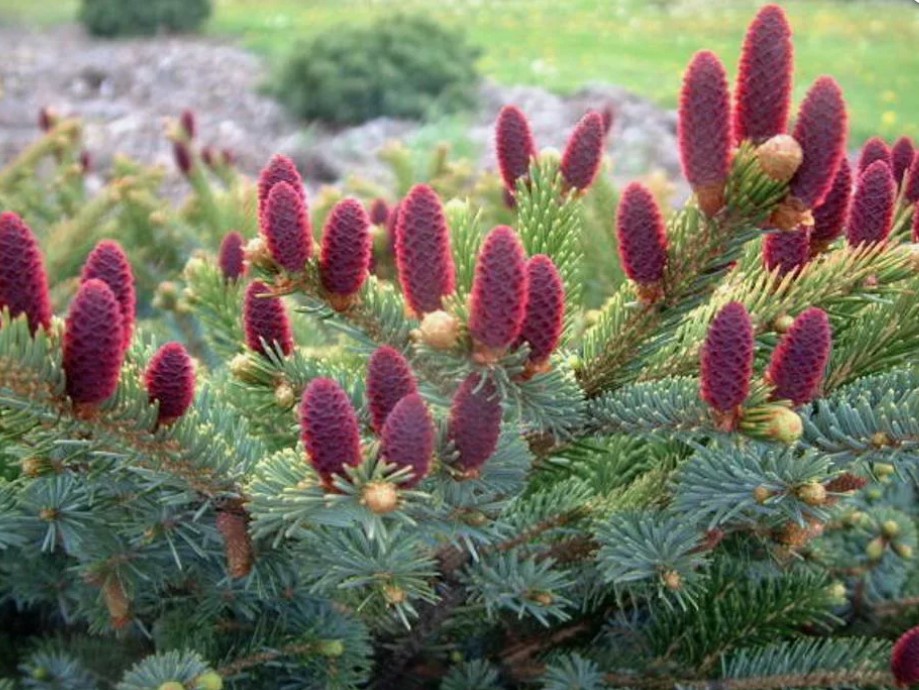
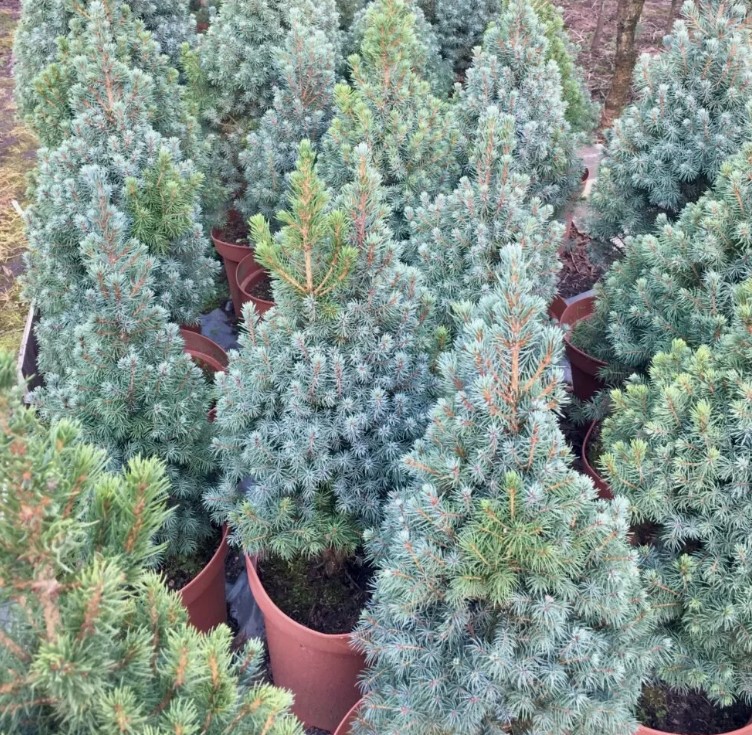
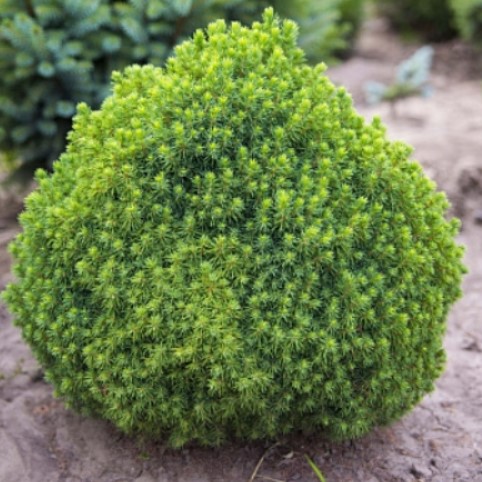
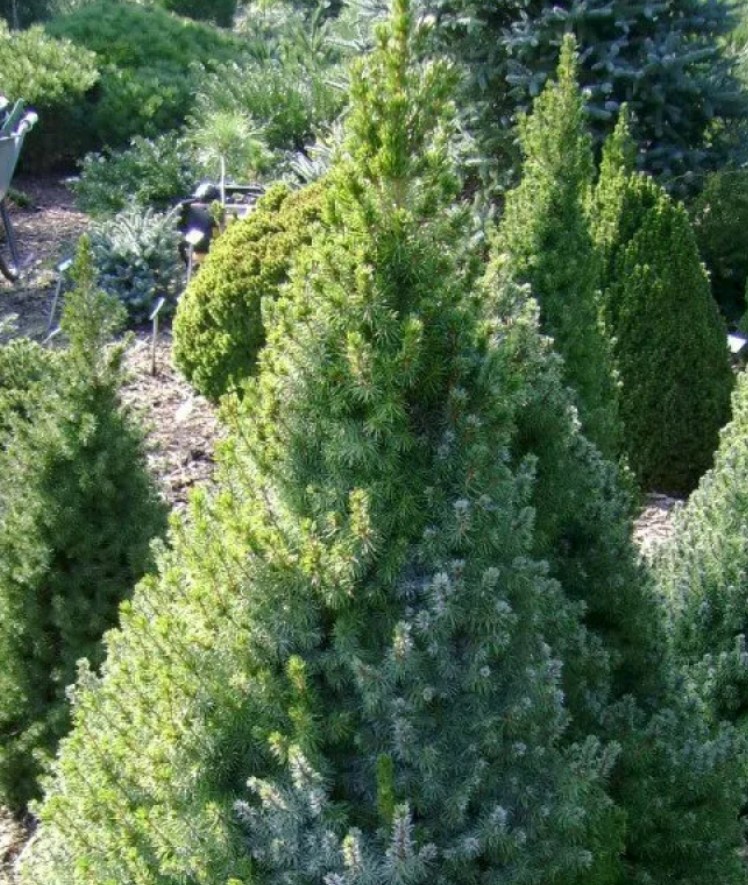
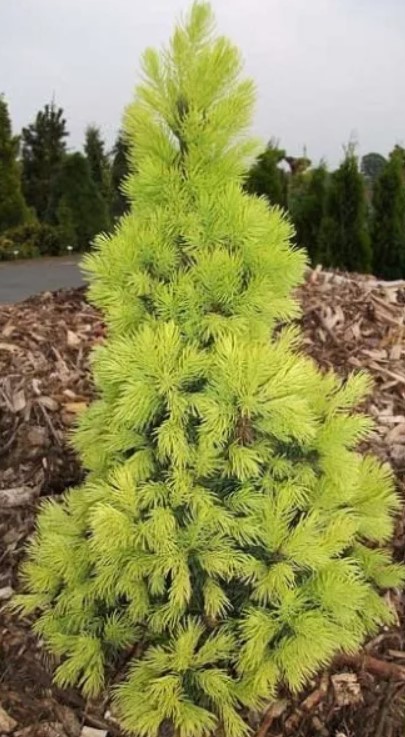
The bark is thin and scaly. The needles range from 12 to 20 mm in length. The upper side of the needles is blue-green, while the underside is bluish-white. The cones are slightly cylindrical, ranging from 3 to 7 cm in length and up to 2.5 cm in width. Young cones are green or red, while mature cones turn brown.
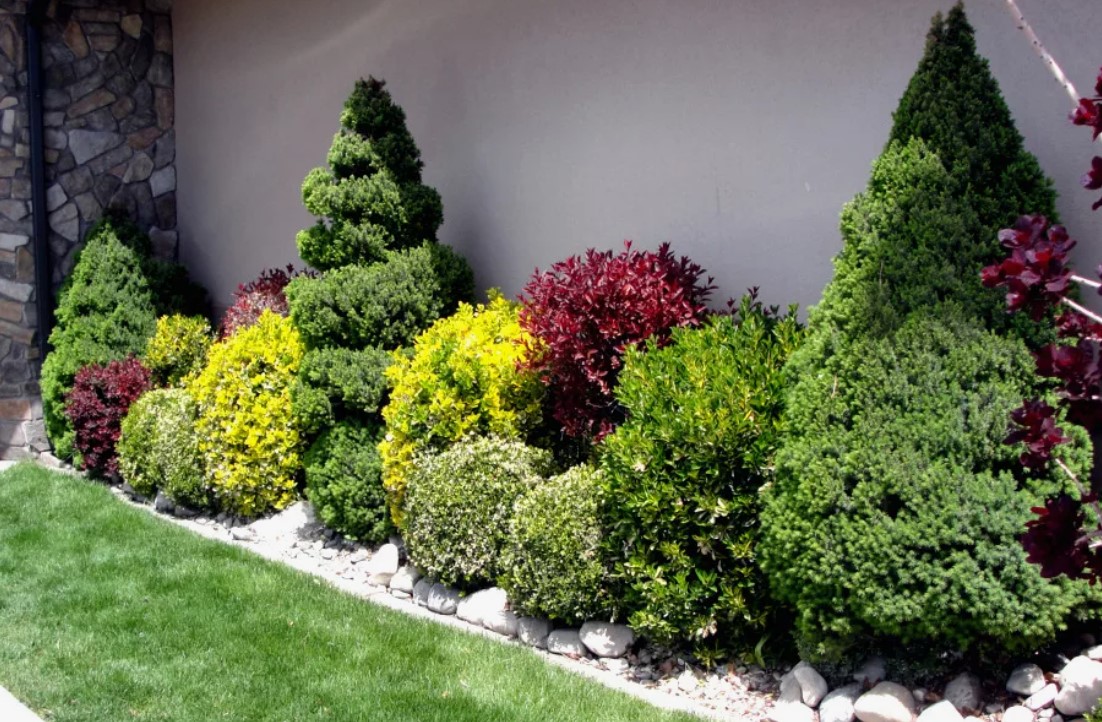
It has good drought and winter hardiness. It is undemanding of soil nutrients and prefers moderately moist and well-drained loams. Young growth can be damaged by sun exposure in early spring, so many varieties require partial shade during this time.
| Variety | Characteristics (crown shape, height/width, annual growth, frost resistance (zone)) | Use in landscape |
| Alberta Blue
|
Pyramidal; 2-3 m/1-1.5 m; 2-3 cm;
5 |
In small areas and on alleys. |
| Alberta Globe
|
Globular; 0.5 m/1 m; 2-3 cm;
4 |
For oriental-style compositions, heather and rock gardens, for container growing. |
| Arnesons Blue Variegata
|
Conical; 2 m/1 m; 8-10 cm;
4 |
It is used for decorating terraces, balconies and even home interiors. |
| Bisenthaler Frühleng
|
Conical and pyramidal; 3 m/1 m; 6-8 cm;
4 |
For single planting or in small groups in gardens and rock gardens. |
| Blue Wand
|
Conical; 1.8 m/0.8 m; 3-5 cm;
5 |
For creating rock gardens, rock gardens and heather landscapes. |
| Blue Planet
|
Globular; 0.7 m/0.7 m; 5 cm;
5 |
For rock gardens and alpine gardens. |
| Dwarf
|
Conical; 1 m/1 m; 2.5 cm;
4 |
For single and group planting. |
| Daisy White
|
Broadly conical with a pointed apex; 3 m/ 2 m; 3-4 cm;
4 |
Combines harmoniously with rockeries, alpine gardens, small borders and flower beds. |
| Dendropharma Gold
|
Conical; 1 m/1.2 m; 4-6 cm;
4 |
For small gardens and rock gardens. Perfectly complements flowers and small shrubs. |
| Keoruleia
|
Conical; 3 m/2 m; 15-20 cm;
4
|
Can be combined with compositions of shrubs and trees. |
| Konika
|
Conical; 1.5 m/0.8-1 m; 3-4 cm;
4 |
For single and group plantings, as well as for creating compositions. |
| Konika December
|
Conical; 1.5 m/0.8-1 m; 8-15 cm;
4 |
Alpine hills, rock gardens. |
| Laurin
|
Cushion; 1.5 m/2.2 m; 2 cm;
4 |
Rockeries and lawns. |
| Lilliputian
|
Conical; 1 m/0.4-0.6 m; 2-3 cm;
4 |
For group and single plantings, container growing. |
| Lorin
|
Conical; 1-2 m/1.5-2 m; 1.5-2.5 cm;
5 |
Single and group plantings in rocky and heather gardens. |
| Meigold
|
Conical; 2 m/1 m; 6-7 cm;
4 |
For single or group plantings in rockeries and for growing in containers. |
| Nana
|
Globular; 2 m/1 m; 4-6 cm;
4 |
For group plantings, for growing in containers, for greening roofs and balconies. |
| Pendula
|
Conical; 10 m/2.5 m; 15-30 cm;
3 |
Single and group plantings. Perfect for planting on lawns or along walkways. |
| Perfect
|
Broadly conical; 4 m/2 m; 3-4 cm;
4 |
Single or in group compositions. |
| Piccolo
|
Pyramidal; 1 m/0.6 m; 8-10 cm;
4 |
Group and single plantings, rockeries, alpine gardens and rock gardens. |
| Pixie
|
Conical; 1 m/0.6 m; 5 cm;
4 |
Planting in rock gardens in groups and containers. |
| Rainbow End
|
Pyramidal; 1.5-2 m/1 m; 5-6 cm;
3 |
For decorating rock gardens together with herbaceous and other miniature coniferous plants, rock gardens. |
| San on the Sky (Radiant Sun)
|
Conical; 2 m/0.7 m; 5-6 cm;
4 |
For single and group planting in parks and gardens. |
| Sanders Blue
|
Broadly conical; 3 m/2 m; 5-7 cm;
3 |
For decorating rockeries, alpine gardens and garden flower beds. |
| Cinderella
|
Cone-shaped; 1-2 m/1 m; 10 cm;
3-7 |
For single and group planting. |
| Echiniformis
|
Cushion-shaped; 0.6 m/1 m; 2-4 cm;
4 |
For planting in rockeries and alpine gardens together with other miniature shrubs and heathers. |
| Apple Gold
|
Globular; 0.8m/0.8m; 3-4 cm;
4 |
Single and group planting in a rocky or heather garden, in an alpine garden, in a flowerbed or flower garden. |
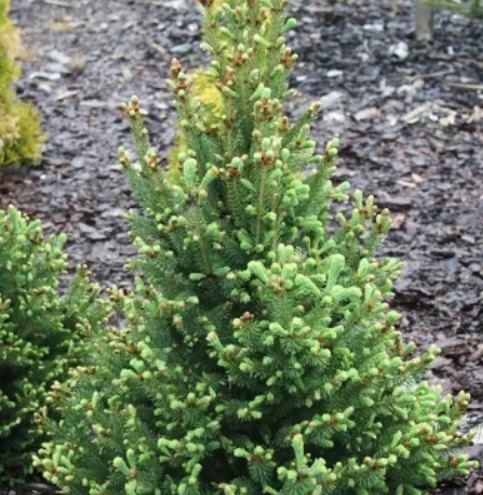
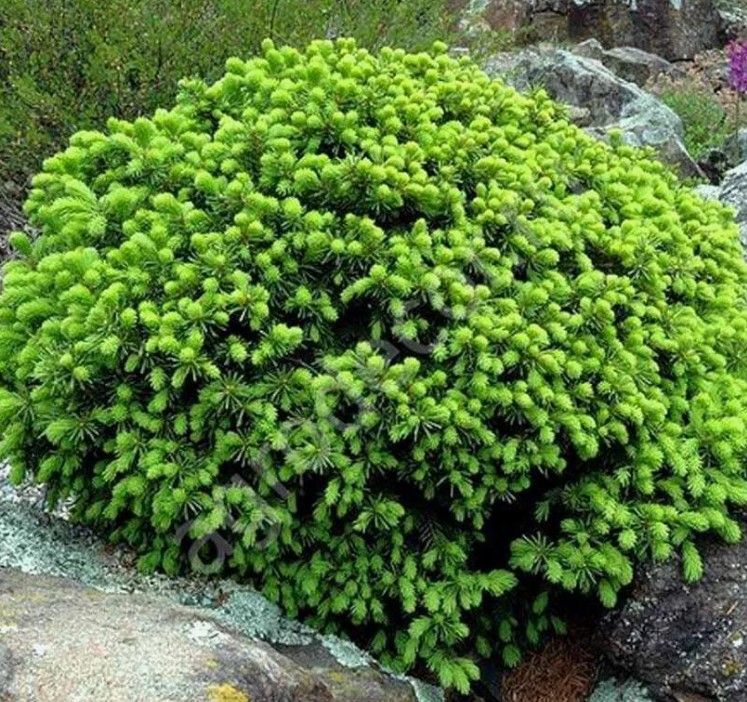
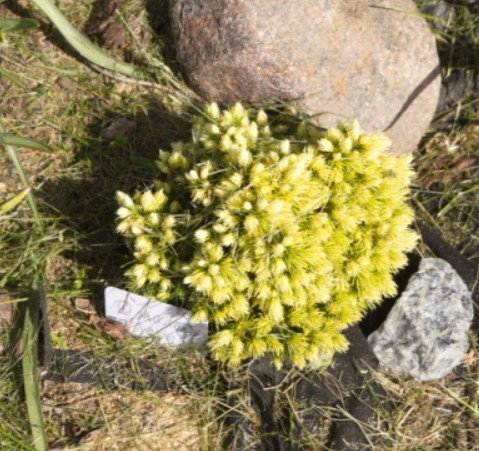
How to choose a Canadian spruce
A few things to consider when purchasing:
- Winter hardiness is a very important criterion when choosing. Most varieties possess this quality, but some are more resistant than others.
- Sunscald resistance. If it is low, such a tree should not be planted in exposed areas.
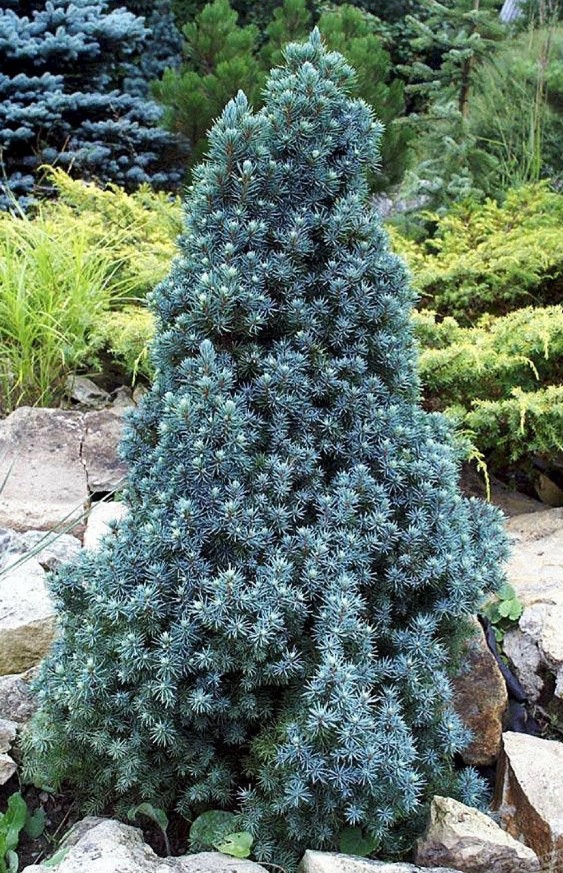
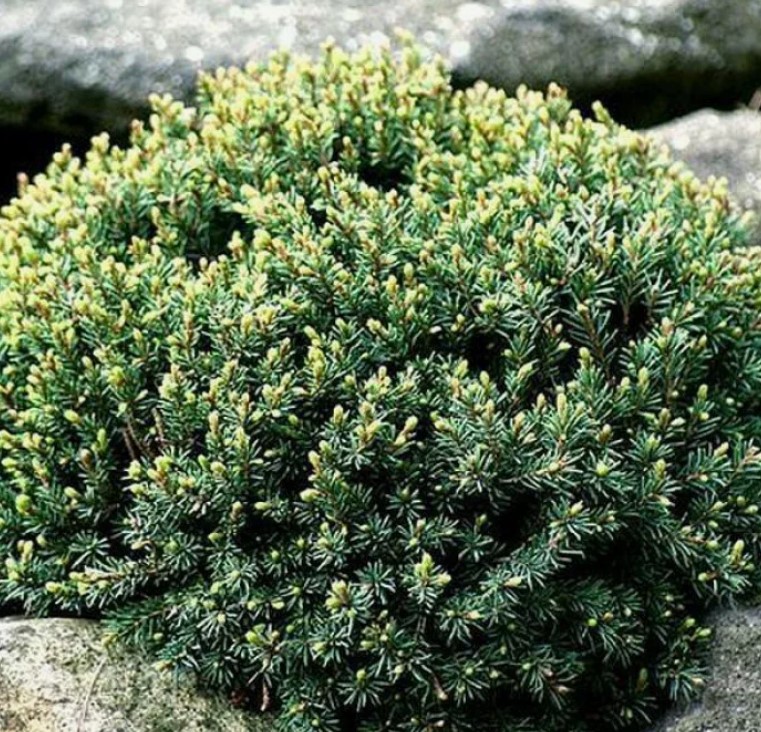
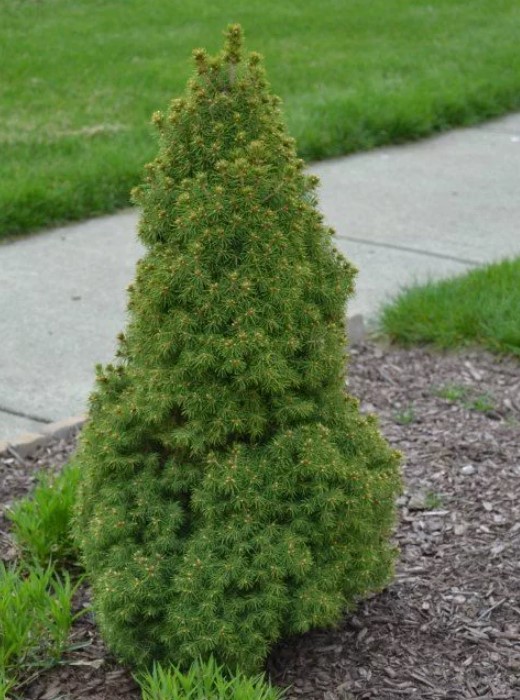
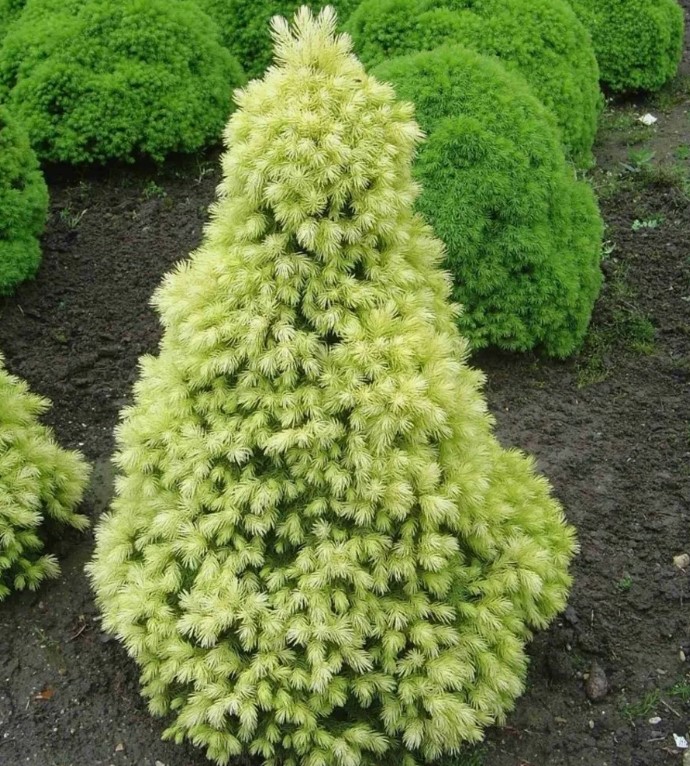
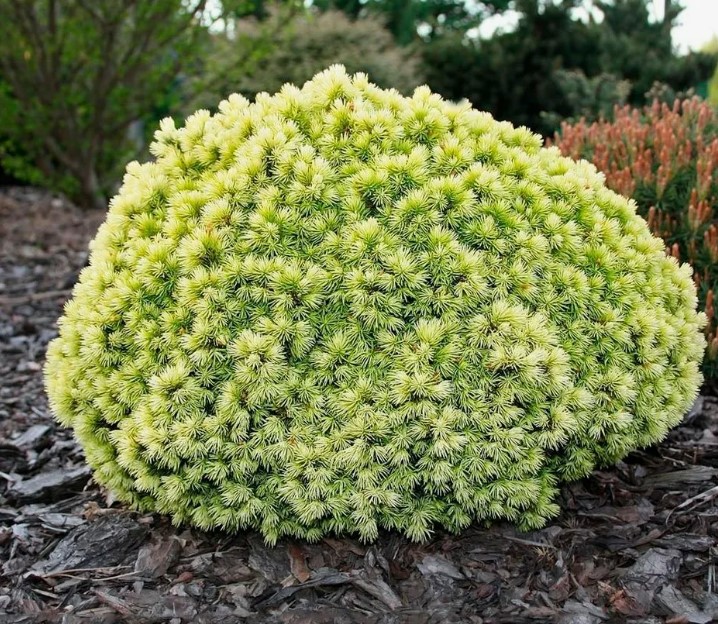
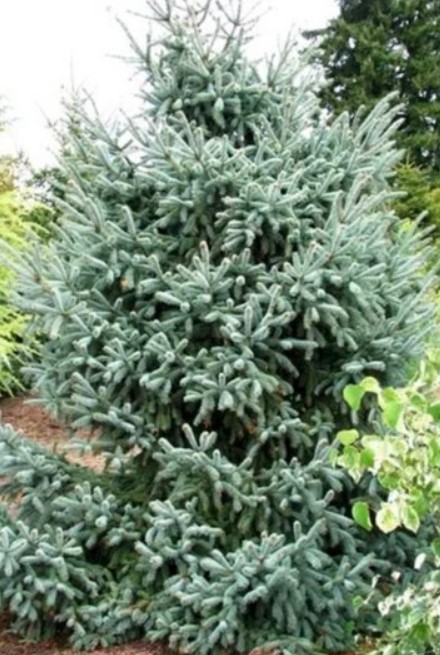
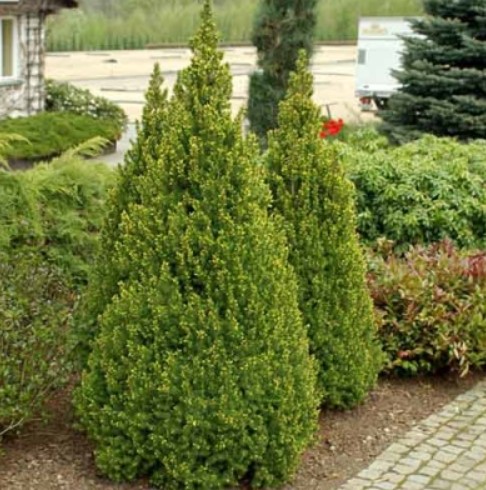
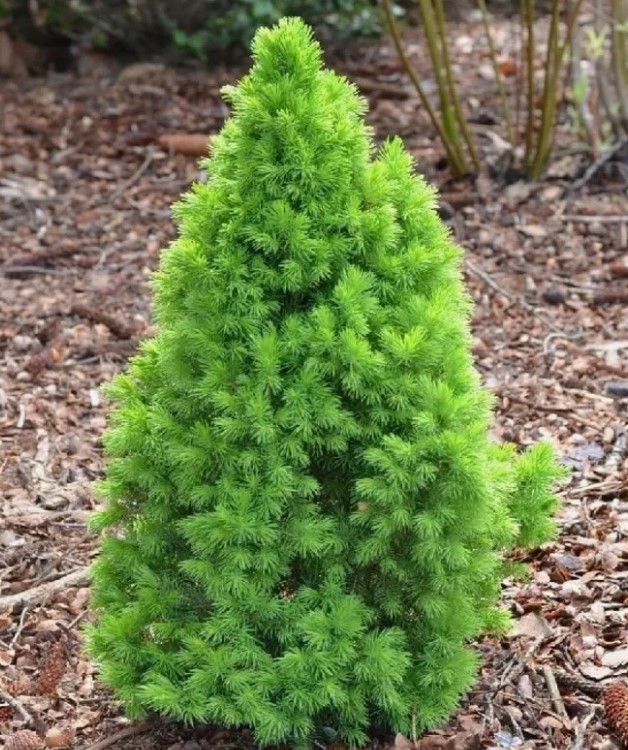
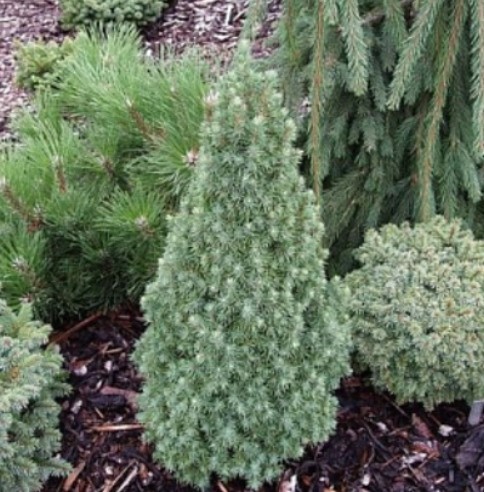
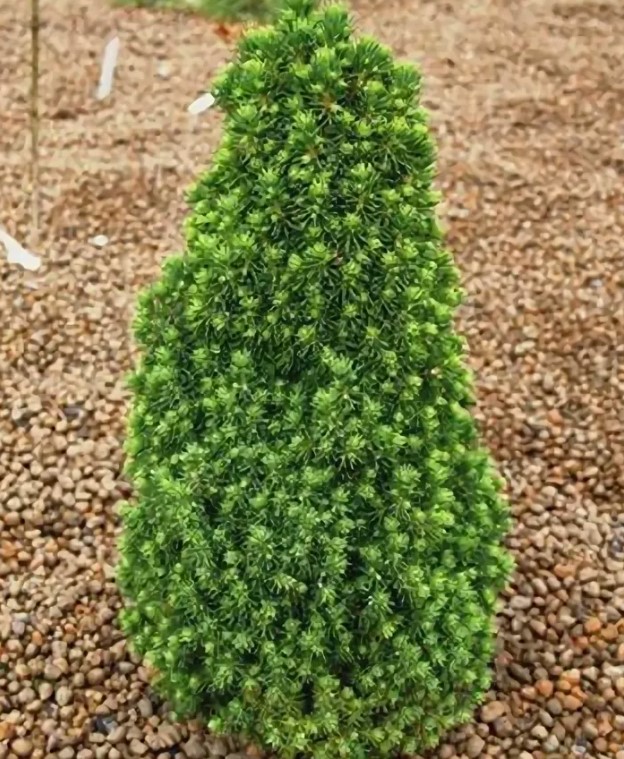
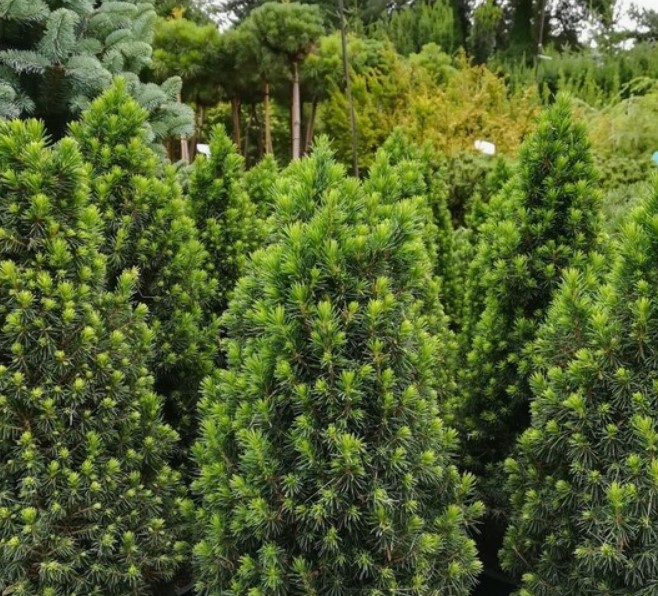
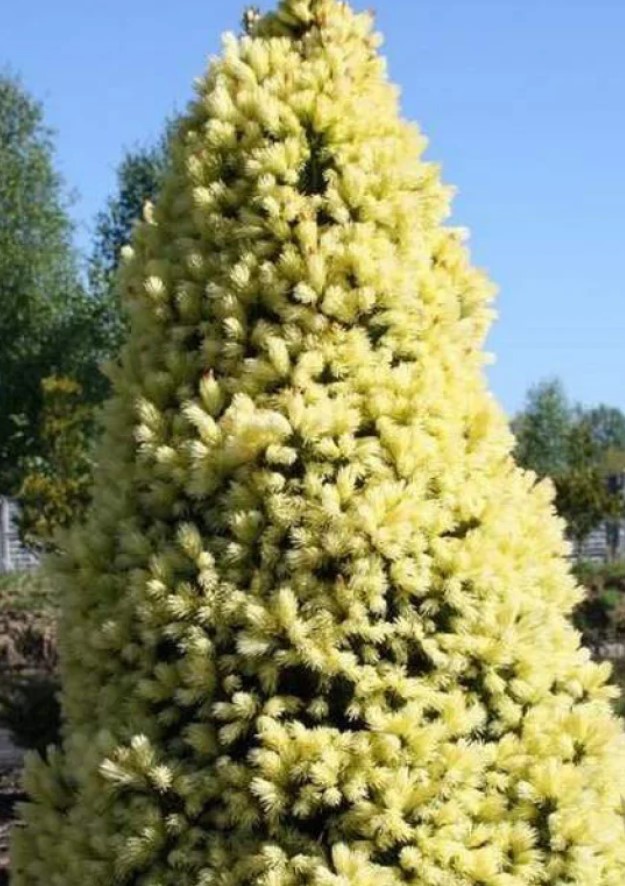
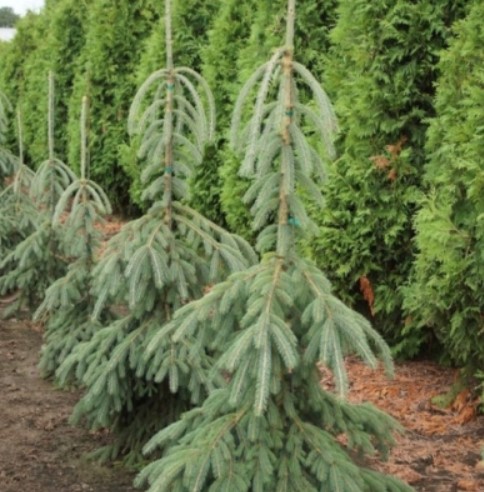
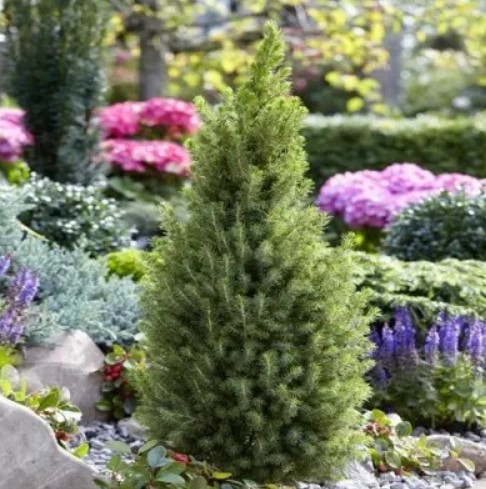
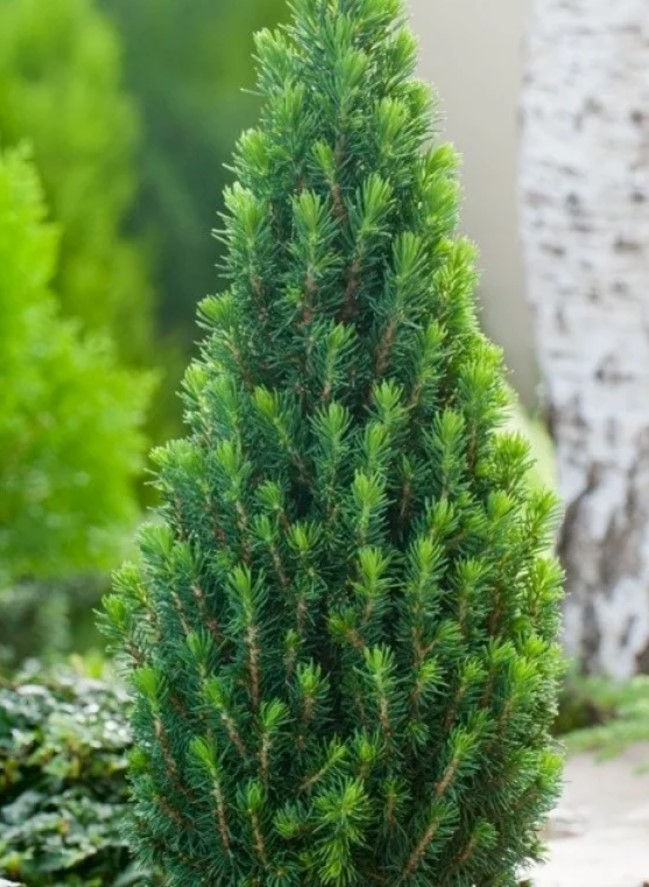
- Shape. The choice is vast: standard trees, those with cushion-shaped or spherical crowns, and weeping trees with drooping branches. Look at photos of all types of spruce trees to get an idea of how they will look in your yard.
- Needle color. Some spruce trees have needles closer to a light green, others are a rich green, and still others are blue.
- Needle type. The length and density of the needles affect the overall appearance of the tree. If the needles are sparse, gaps in the crown will be visible, while if they are dense, light will have difficulty penetrating their fluffy branches.
- Final size and growth rate. The final size of a tree after 10 or 50 years will depend on its variety. It's important to confirm this information with the seller, as different spruce varieties vary in size and growth rate.
If you need a dwarf conifer for your landscape, click here. Here.
Korean spruce
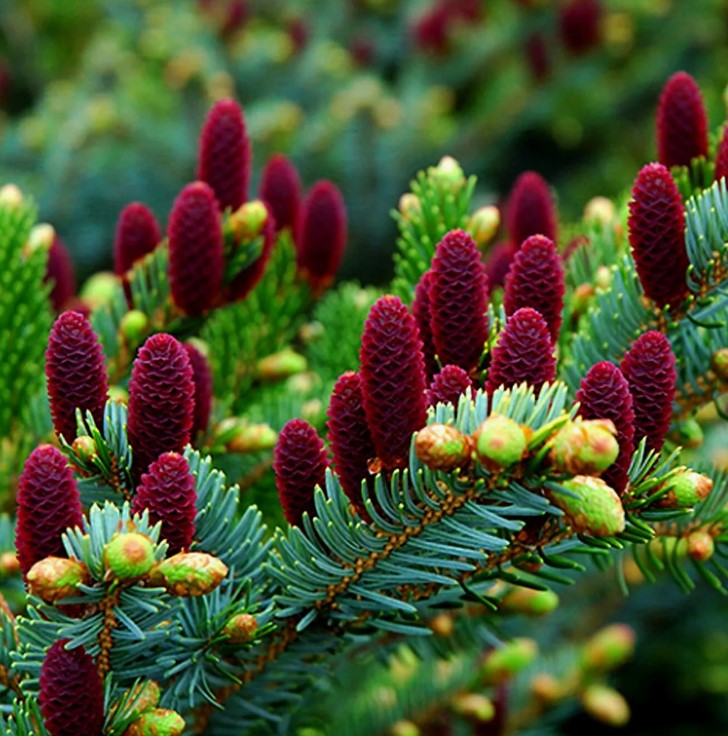
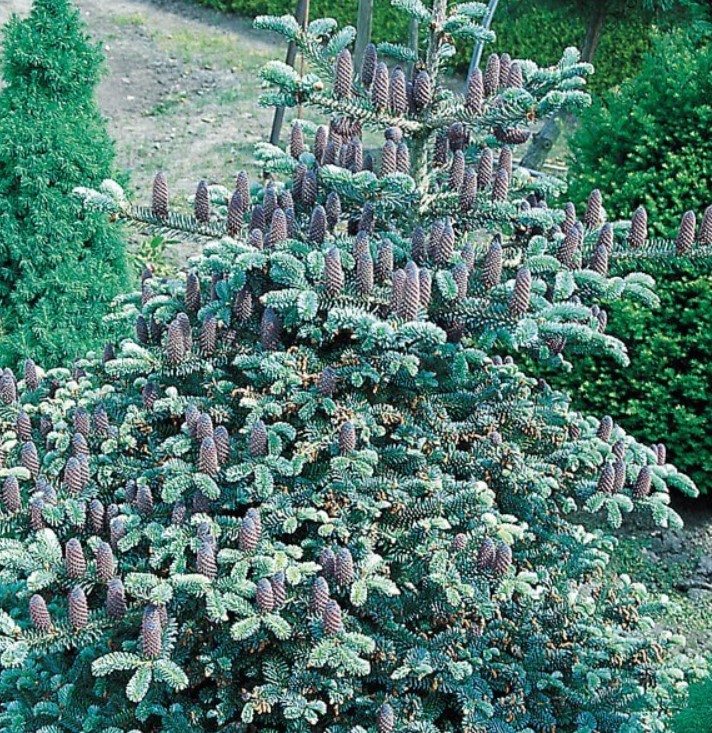
The bark is reddish-brown and flaky. Young shoots are yellowish-brown, while mature shoots are reddish-brown. The buds are elongated and conical, reddish-brown, and slightly resinous. The needles range from 9 to 22 mm in length and 1.5 to 2 mm in width. Old trees have green needles, while young trees have a glaucous-green, glossy finish. The cones are oblong-ovoid, ranging from 6 to 9.5 cm in length and 2.5 to 4 cm in thickness. Young cones are green, while mature cones turn brown.
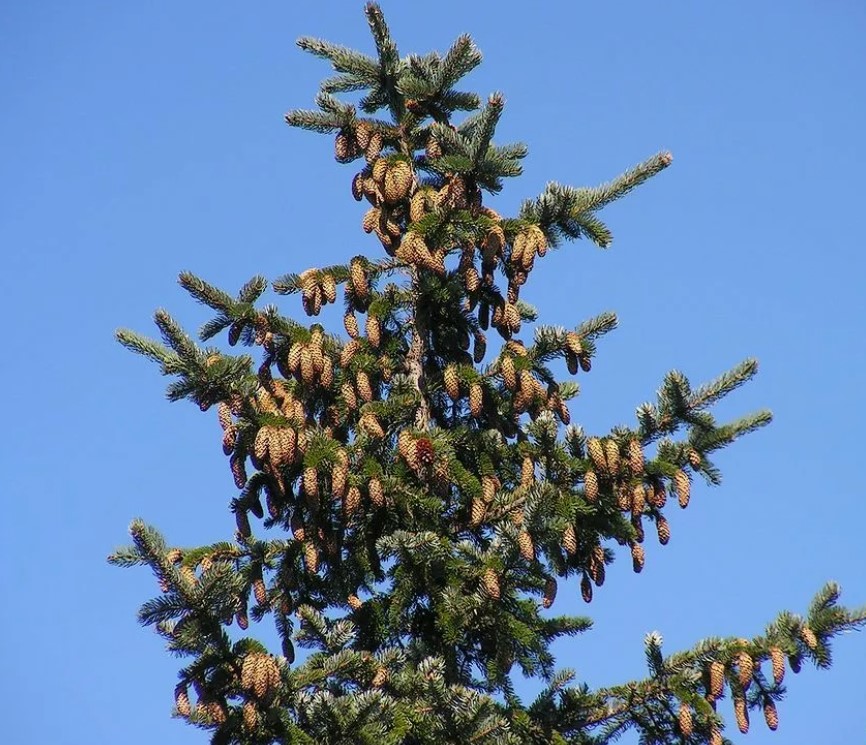
It grows in the Russian Far East, the Korean Peninsula, northeastern China, and regions with a moderately humid climate, cold, long winters, and warm summers. It is the most sun-loving and fastest-growing of all members of the genus. It prefers rich, well-drained, and moist soils. Its lifespan is approximately 300 years.
| Variety | Characteristics (crown shape, height/width, annual growth, frost resistance (zone)) | Use in landscape |
| Picea koraiensis Nakai
|
Pyramidal; 30-35 m/1 m; 3 cm; 4 | Take a look at this spruce species in the photo to see how it will look in the landscape. Suitable for both single and group plantings. |
| Picea koraiensis Farjon
|
Pyramidal or conical; 30 m/0.6-0.8 m; 20 cm; 4 |
Norway spruce (European)
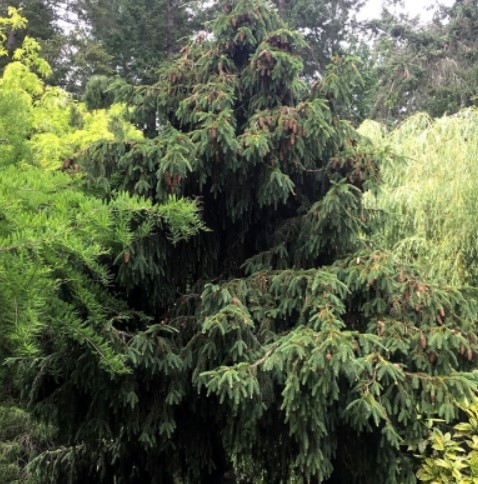
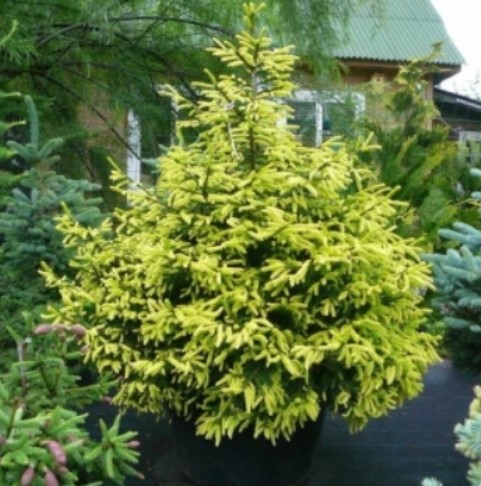
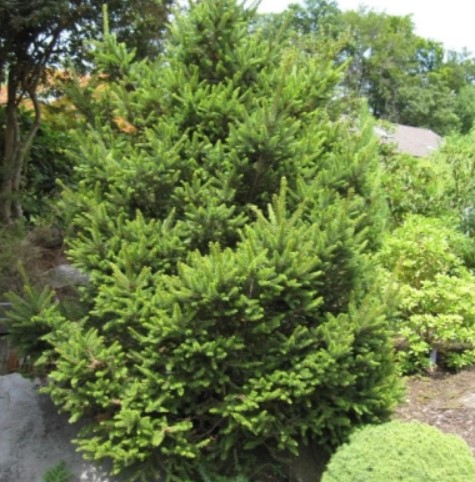
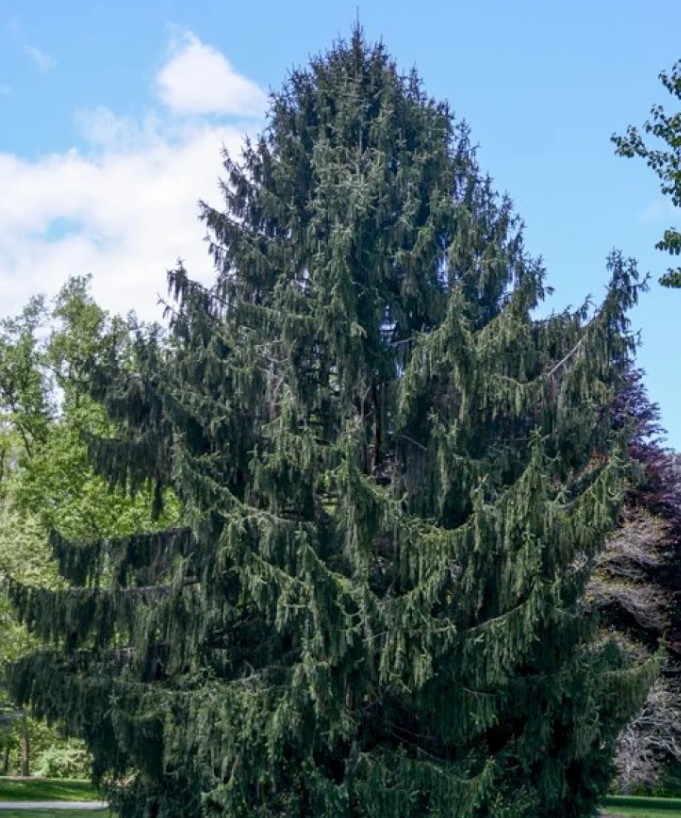
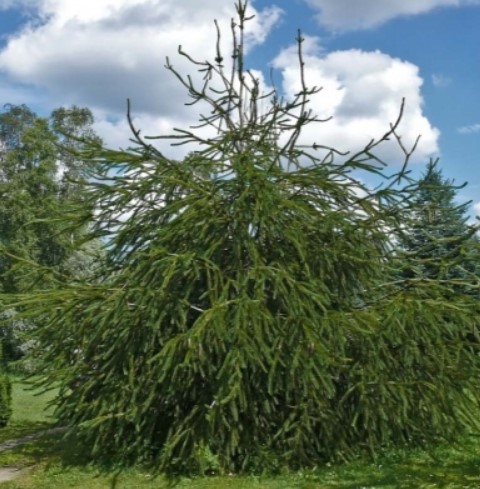
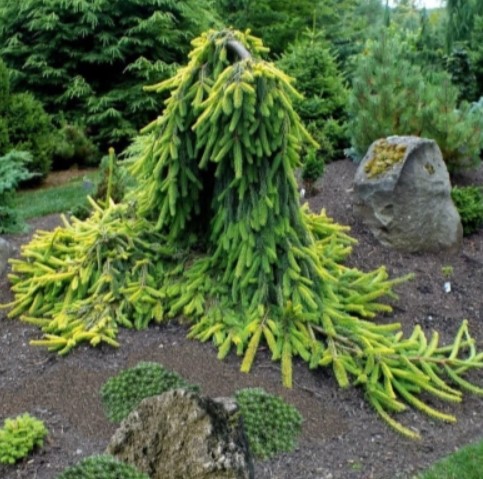
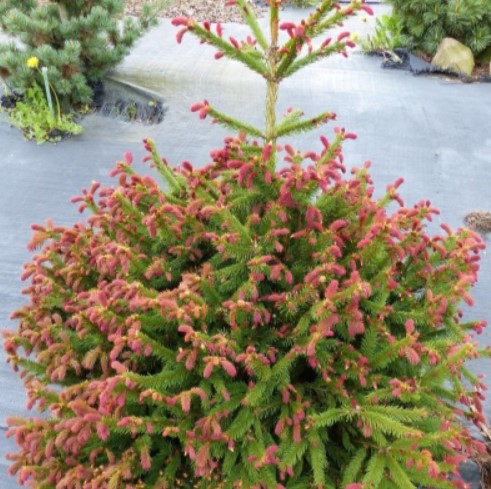
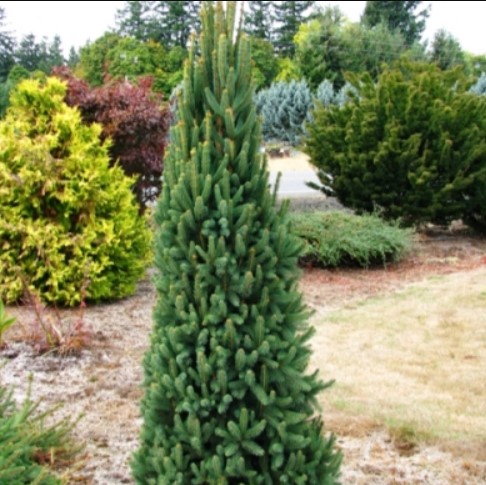
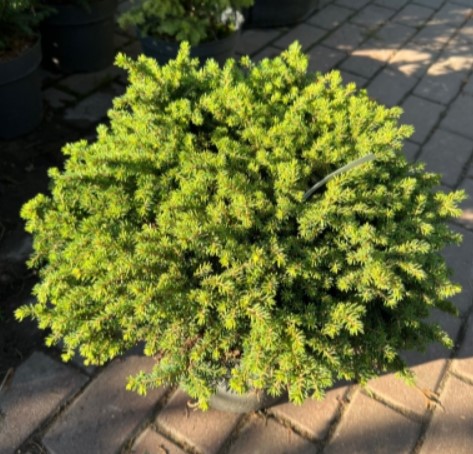
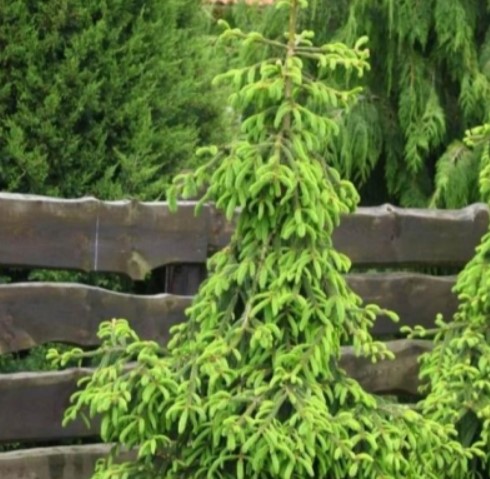
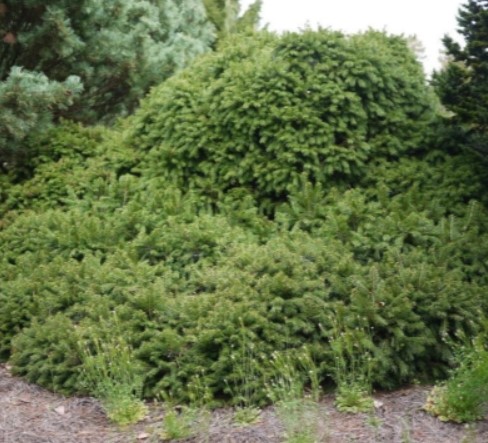
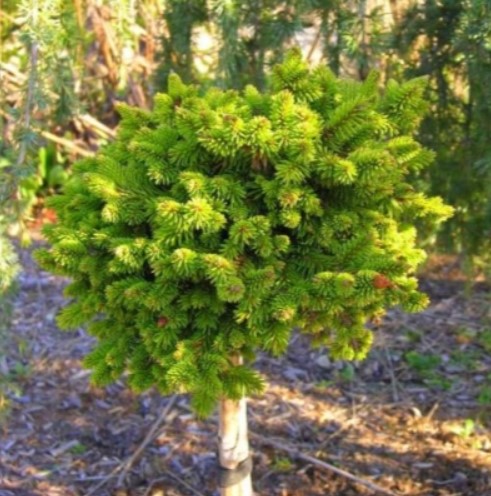
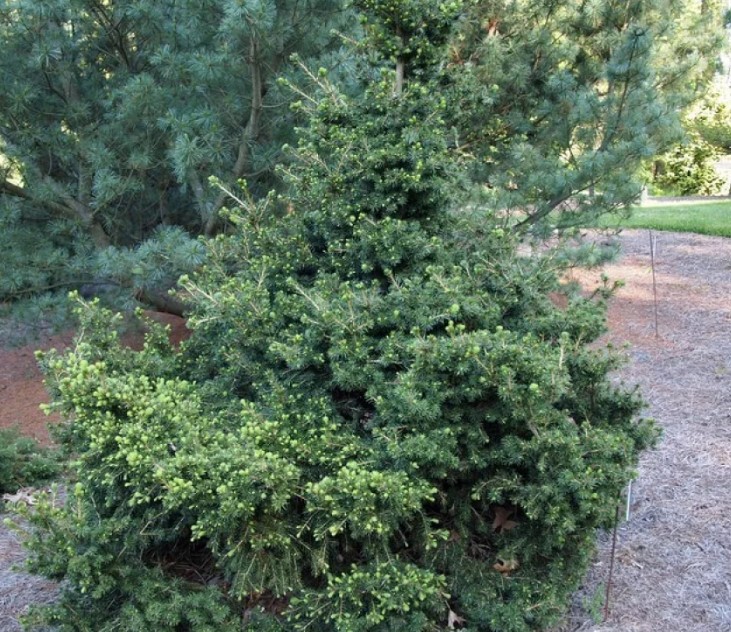
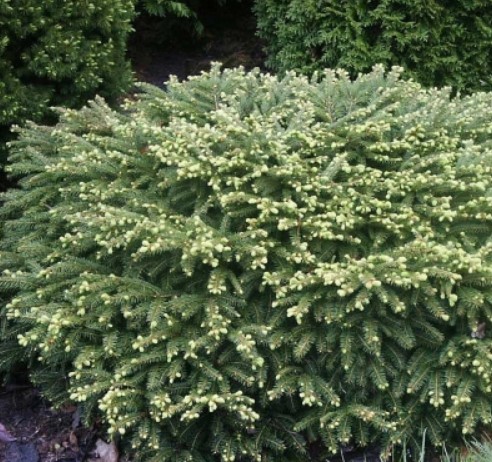
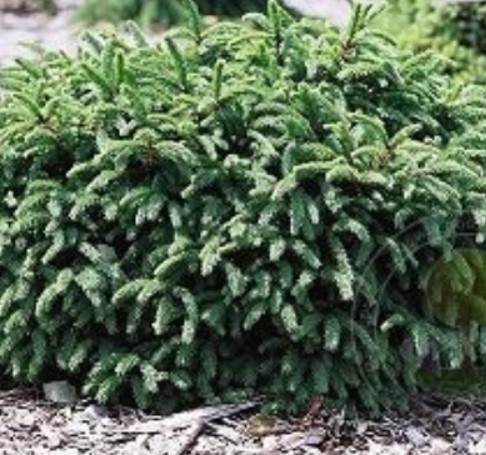
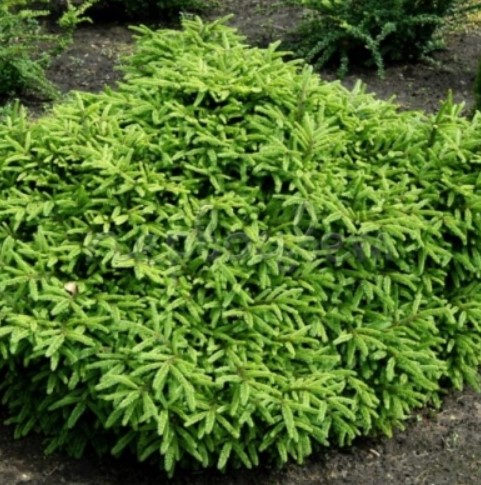
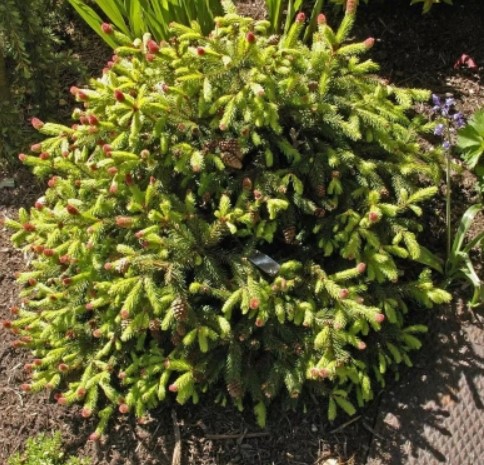
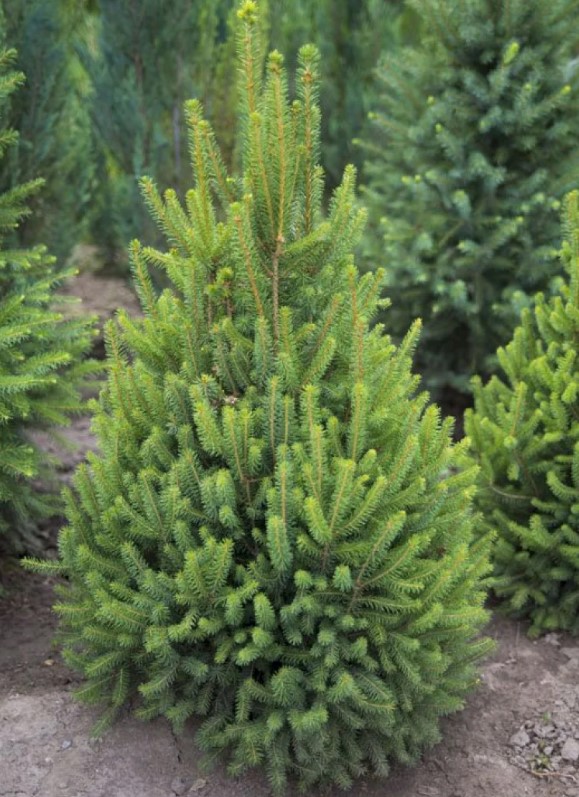
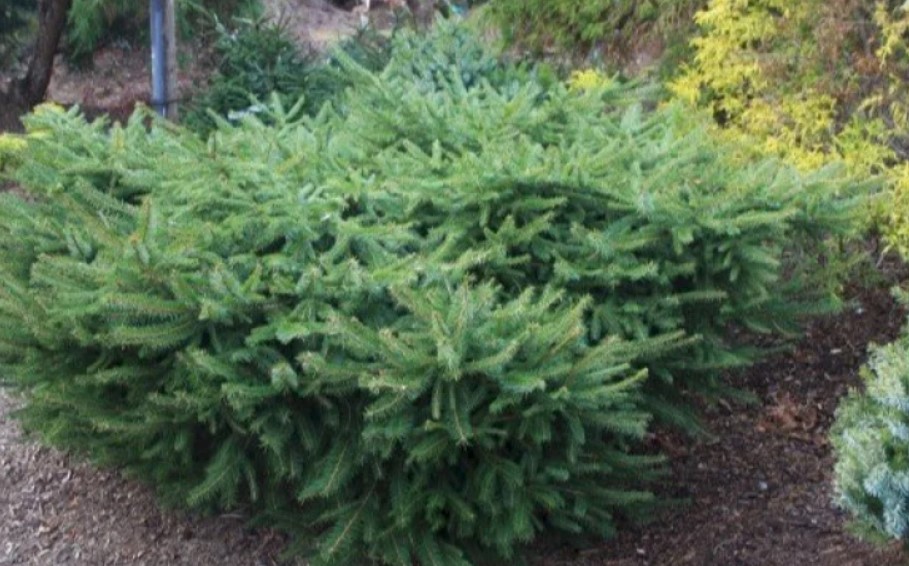
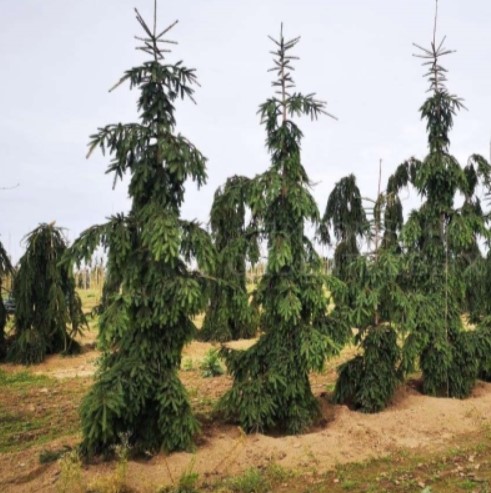
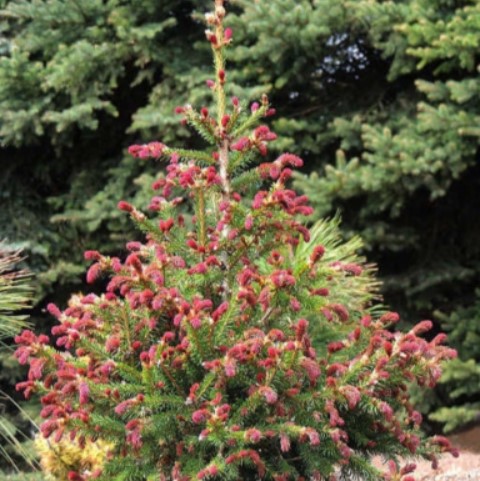
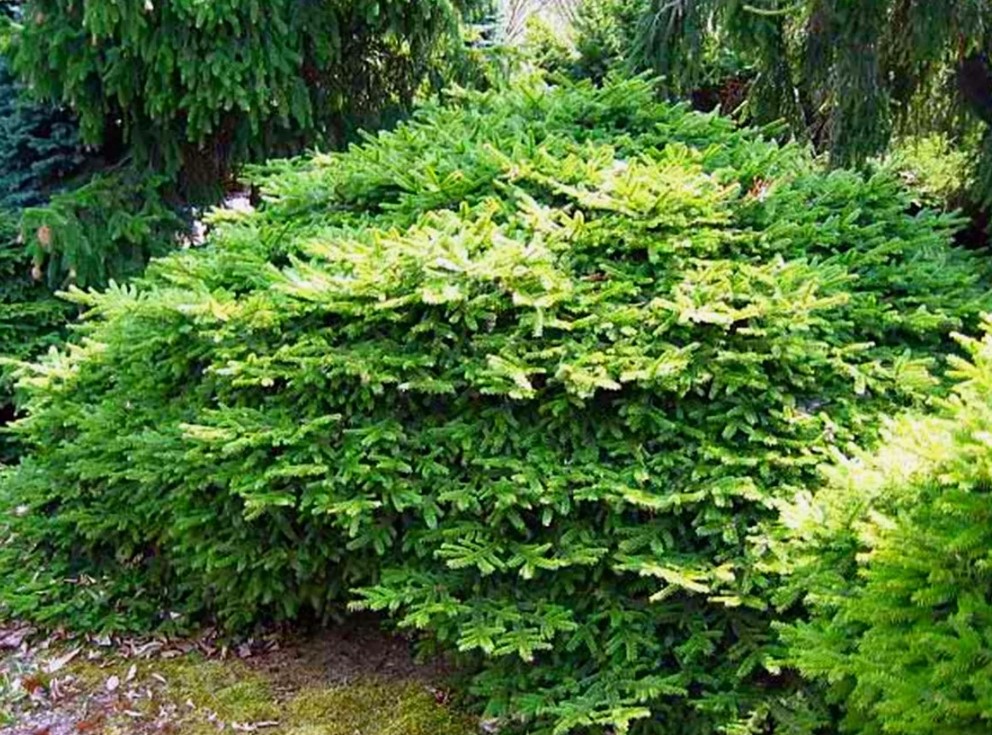
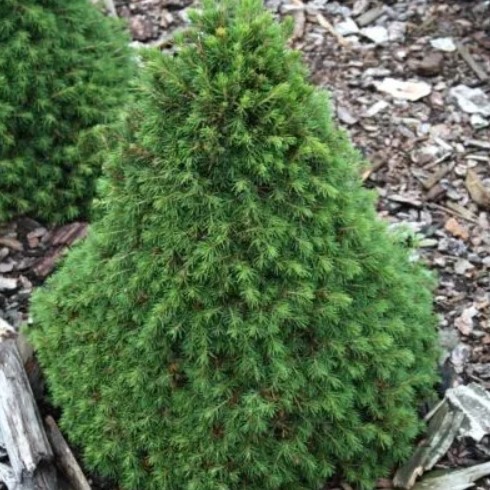
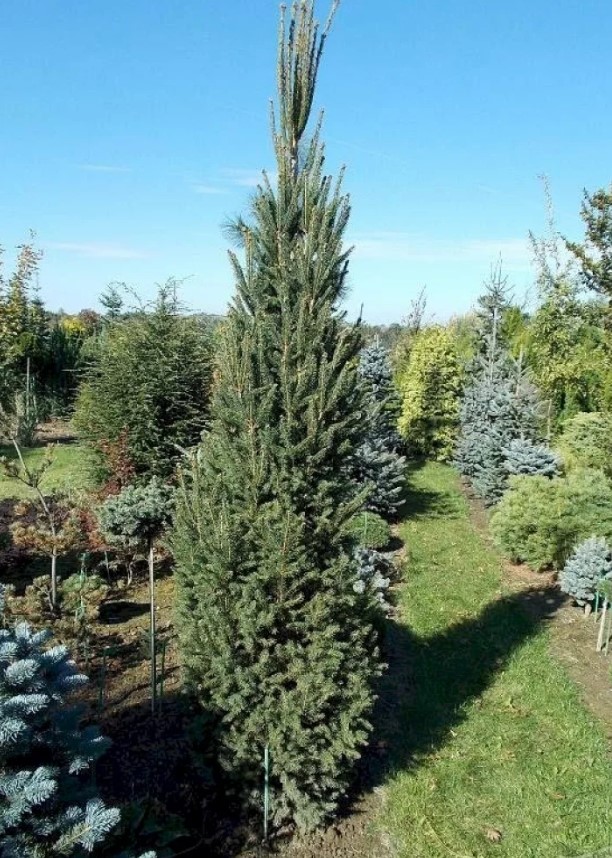
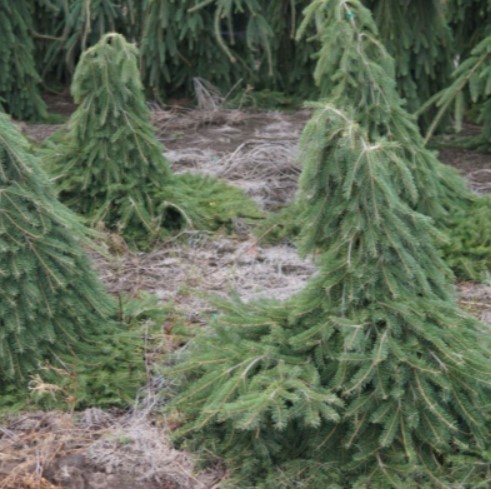
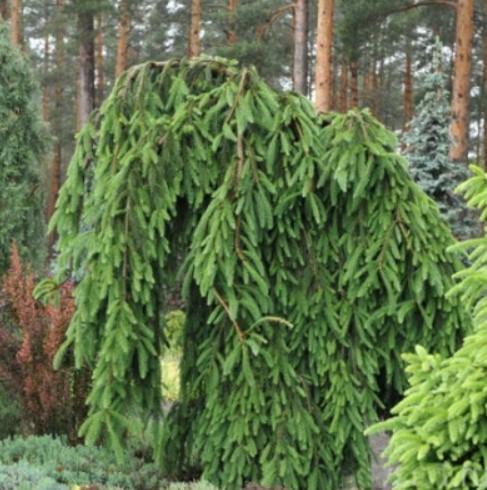
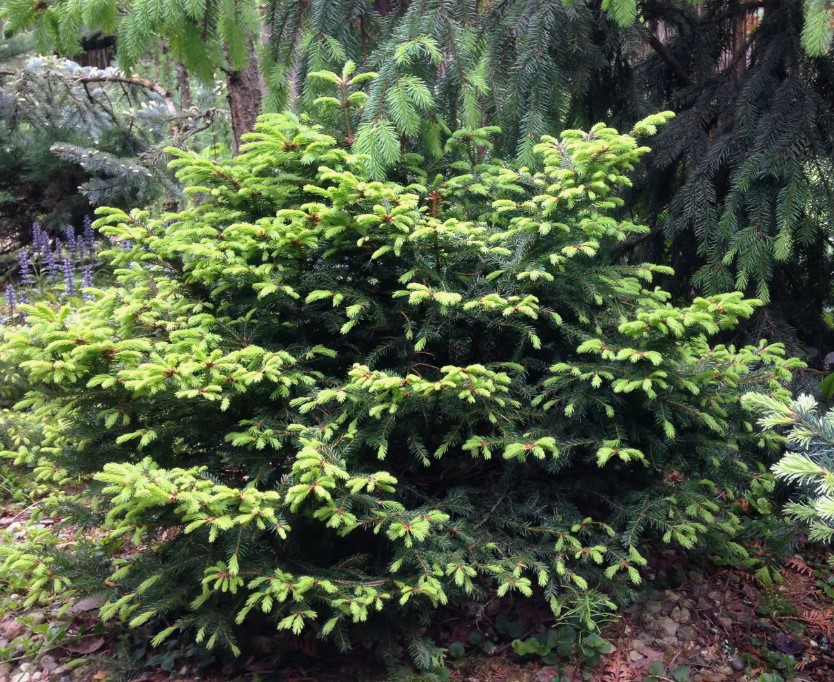
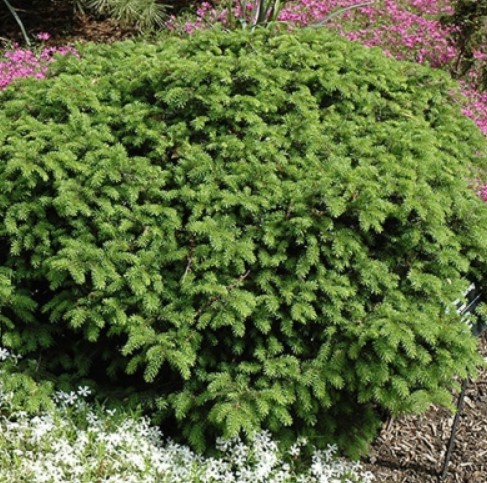
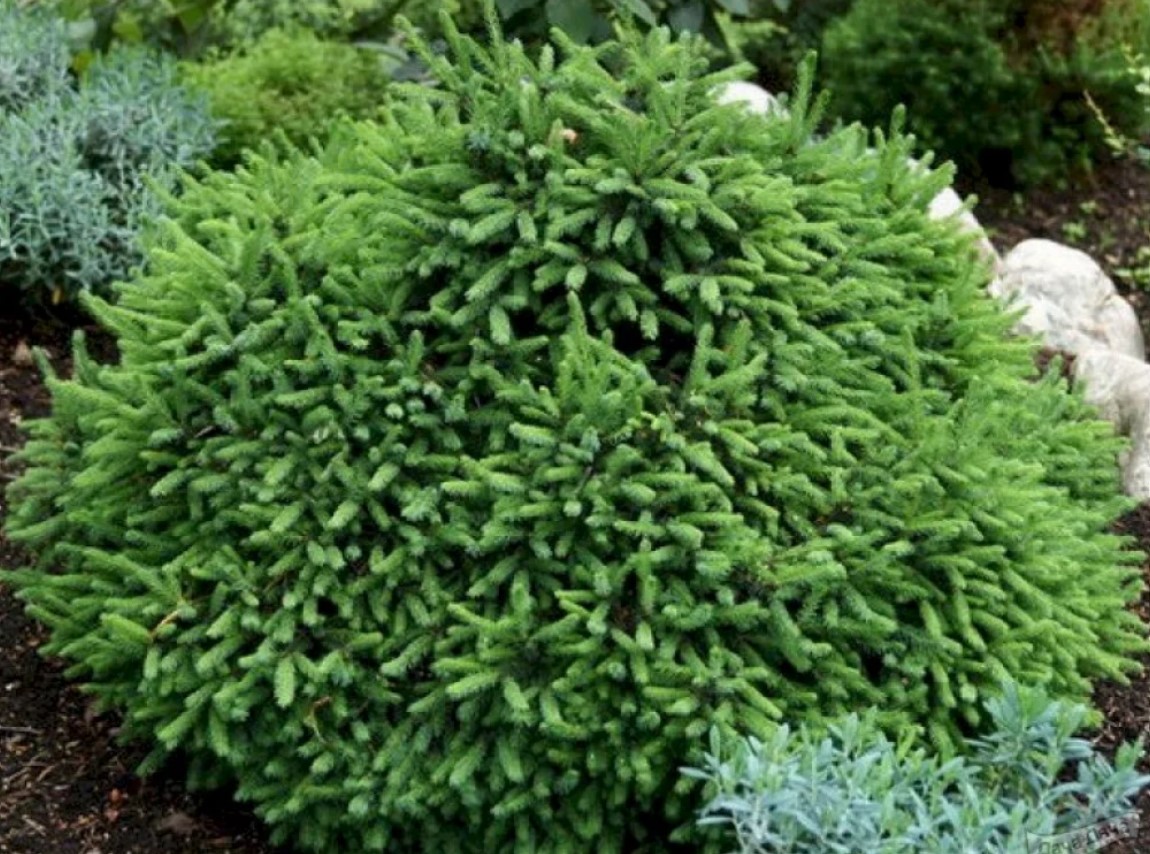
The root system is shallow, making the tree vulnerable to windthrow. The bark is gray and peels off in thin sheets. The shoots are bare, brown, reddish, or reddish-yellow. The buds are light brown, ovoid-conical, and approximately 4-5 mm long. The needles range in length from 1 to 2.5 cm, and their lifespan is six years or more. The cones are 10-15 cm long and 3-4 cm wide. Initially, they are light green or dark purple, but mature cones turn light brown or reddish-brown.
It can live for 250-500 years. It can grow in any soil, including marshy areas. It prefers sunny locations, but can also grow in partial shade, and sometimes even in the shade.
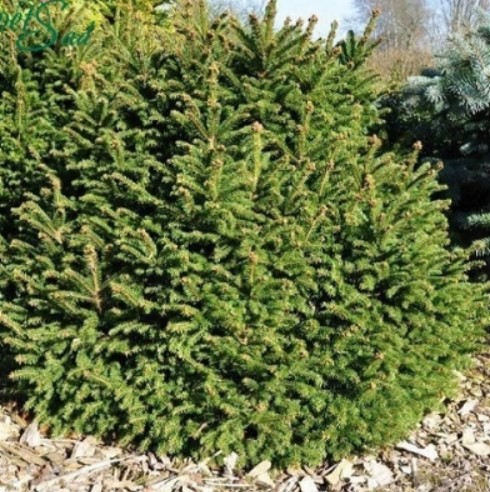
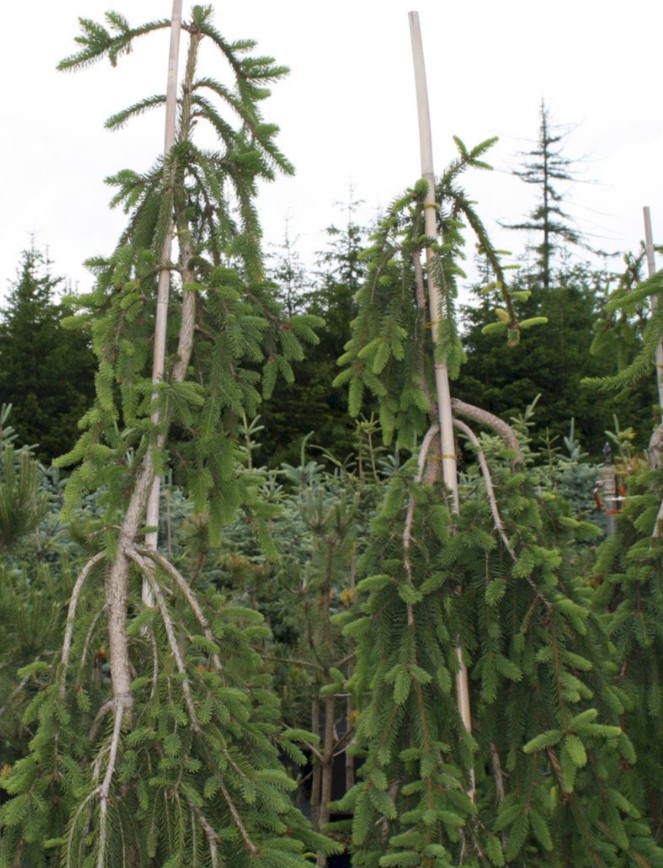
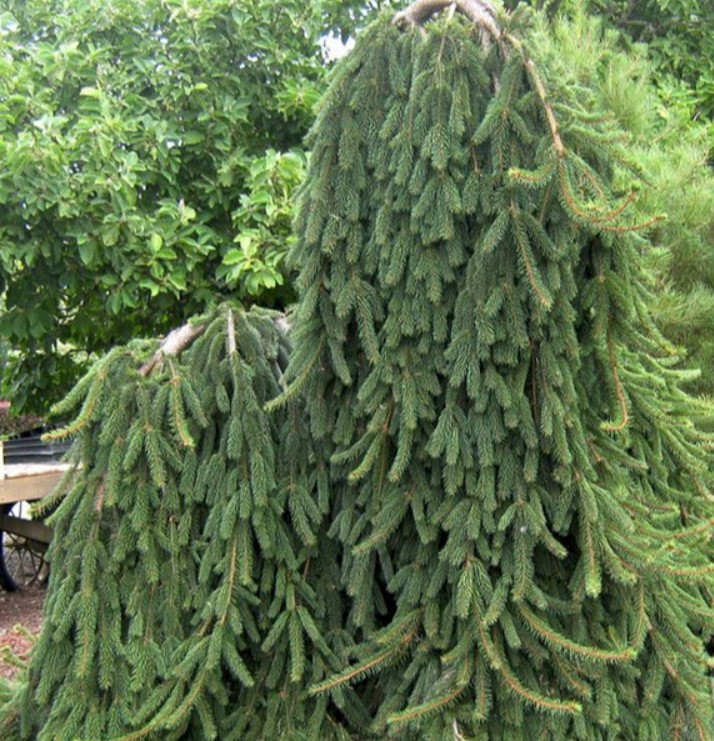
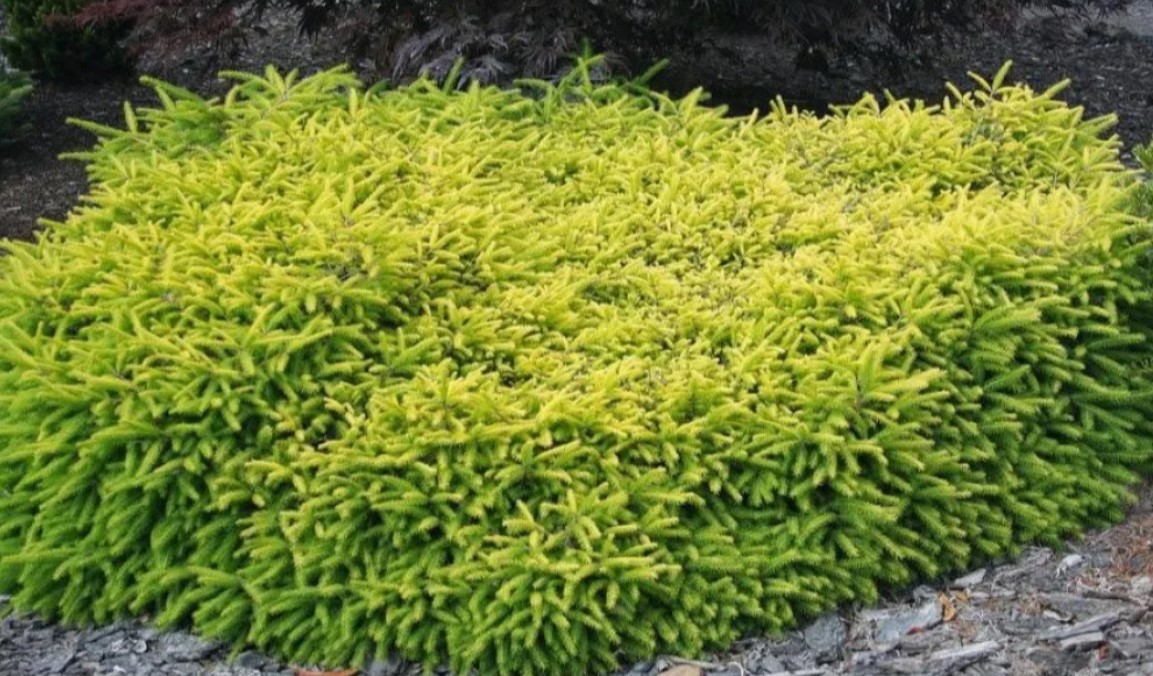
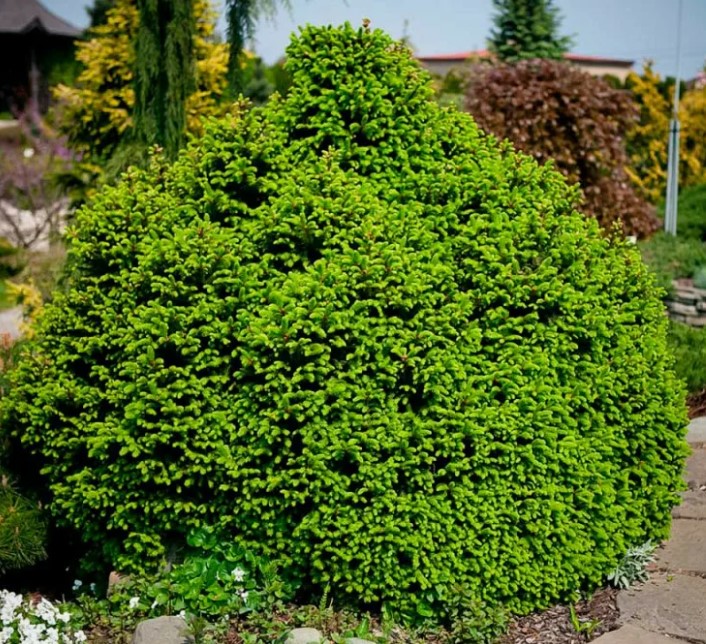
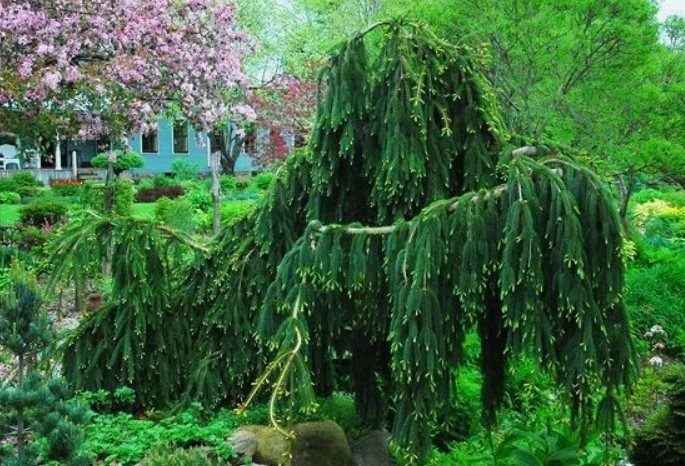
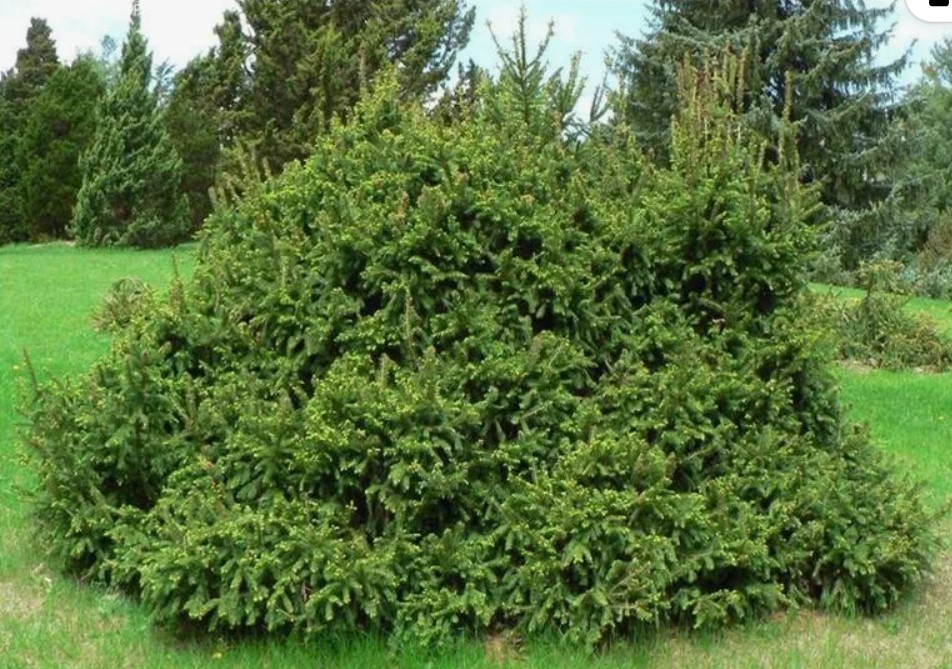
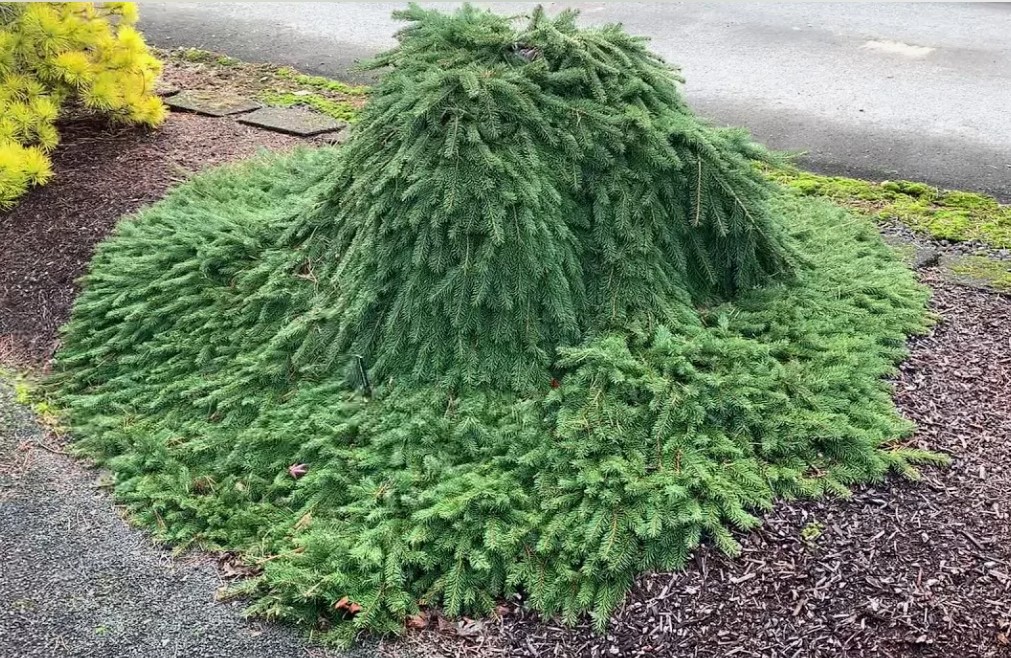
Varieties and types of Norway spruce
| Variety | Characteristics (crown shape, height/width, annual growth, frost resistance (zone)) | Use in landscape |
| Acrocona
|
Broad cone-shaped; 5 m/4 m; 10 cm;
3 |
Single plantings and garden compositions. |
| Aurea
|
conical; 15 m/6-7 m; 15-20 cm;
4 |
For single and group plantings, as well as in gardens, parks, and for decorating formal areas. |
| Barry
|
Rounded later conical; 2 m/3 m; 5 cm;
3 |
Single or group planting. |
| Bohemianism
|
Weeping; 10 m/2 m; 50 cm;
4 |
|
| Bohemica Perdula
|
Conical weeping; 15 m/2 m; 15-30 cm;
3 |
Single and group planting in home gardens, parks, and as part of landscape compositions. |
| Vermont Gold
|
Globular; 1 m/2 m; 7-10 cm;
3 |
For home gardens, rock gardens and alpine gardens. |
| Wills Zwerg
|
Cone-shaped; 2 m/1-2 m; 5-15 cm;
4 |
For single and group plantings. |
| Viminalis
|
Conical; 20 m/5 m; 40 cm;
3 |
For small group and single plantings. |
| Virgata
|
Cone-shaped; 7-10 m/4 m; 35 cm;
3-4 |
Single and group plantings in gardens and parks. |
| Gold Drift
|
Weeping; 1.5-3/1-1.5 m; 10-15 cm;
3 |
Compositions in small garden plots, alpine gardens and in certain areas of parks. |
| Gregoriana
|
Spherical; 1/1 m; 2 cm;
3 |
For single or group plantings in parks, for rock gardens. |
| Inversa
|
Without a distinct shape; 6-8 m/2.5 m; 20 cm; 3 | Designed for garden ponds, rock gardens, and paths. Prefers solitary planting. |
| Columnaris
|
Columnar; 15 m/1.5 m; 30 cm;
4 |
Single and mixed plantings. Creating alleys and living walls. |
| Compact
|
Widely conical; 1.5-2 m/2 m; 5 cm;
3 |
For single and group plantings rock gardens, rock gardens. |
| Kruenta
|
Pyramidal; 5-7 m/3 m; 1-20 cm;
3 |
Group and single plantings. |
| Cupressina
|
Conical; 9 m/3 m; 15 cm;
3 |
Single and group plantings, alleys, arrays, hedges. |
| Little Jam
|
Globular; 0.5 m/1 m; 2 cm;
4 |
Oriental style gardens, rock gardens, containers and as bonsai. |
| Lorelei
|
Weeping; 1.2-1.5 m; 8-15 cm;
3 |
Single and group plantings, rock garden. |
| Maxwell
|
Cushion-shaped; 1.5 m/2 m; 5 cm;
3 |
In single and group plantings, alleys, alpine hills, arrays, hedges. |
| Jellyfish
|
Dwarf cushion-shaped; 0.3 m/0.45 m; 2-4 cm;
3 |
Alpine slides and rockeries, Japanese and heather gardens, around tall trees. |
| Measurements
|
Globular; 1 m/1 m; 2.5 cm;
3 |
Single and group plantings. |
| Nidiformis
|
Cushion-shaped; 1 m/3 m; 3-4 cm;
3 |
Rocky and alpine hills, along paths, in single planting on the lawn as an accent, in rockeries. |
| Ohlendorf
|
Conical; 2-5 m/2.5-4 m; 6 cm;
3 |
Single plantings, cultivation in alpine hills. |
| Pendula Major
|
Weeping; 20 m/2 m; 15-30 cm;
3 |
Decorating gardens and parks. Mainly used for single plantings. |
| Pygmy
|
Broadly conical, uneven; 1.5-2 m/2 m; 3-7 cm;
3 |
Single and group plantings in rockeries and lawns. Suitable for growing in decorative containers. |
| Procumbens
|
Cushion-shaped; 1 m/1.5 m; 3-5 cm;
4 |
For large parks and gardens. Single plantings in rock gardens and alpine hills. |
| Pumilio Nigra
|
Globular; 1 m/3 m; 5-7 cm;
3 |
As part of rockeries and alpine gardens. Group and single plantings. |
| Pumila Glauka
|
Flattened-rounded; 1-2 m/3-4 m; 3 cm;
3-6 |
Plantings on rocky hills, in gardens. |
| Push
|
Cushion-shaped; 0.3 m/0.6 m; 2-5 cm;
3 |
Single plantings and garden compositions. |
| Repairs
|
Conical; 4 m/1.8-2 m; 2-3 cm;
3 |
|
| Repens
|
Spreading or creeping; 1 m/1.5 m; 2-4 cm;
3 |
|
| Rothenhaus
|
Conical; 6 m/1 m; 30-40 cm;
4 |
Solitaire and group plantings. |
| I cried
|
Pyramidal; 3 m; 6-8 cm;
3 |
Planting singly and in groups. |
| Tabuliformis
|
Umbrella-shaped; 2 m/2.5 m; 3-4 cm;
3 |
In single plantings, in groups, on rocky hills. |
| Tompa
|
Cone-shaped; 2 m/1.5 m; 3-5 cm;
3 |
For rock gardens and alpine gardens. |
| Fastigiata
|
Conical; 10 m/2 m; 5-7 cm;
3 |
Tapeworm. |
| Formanek
|
Weeping; 0.4-0.5 m/1.5 m; 5 cm;
3 |
Planting on lawns, in rock gardens, in containers and in compositions. |
| Frohburg
|
Weeping; 5 m/2 m; 20 cm;
3-4 |
Single or group planting in parks, gardens, rock gardens. |
| Hanksgarden Beauty
|
Globular; 2 m/2.5 m; 4 cm;
3 |
|
| Elegance
|
Globular; 0.6-0.9 m/0.9-1.2 m; 2-5 cm;
3 |
Single plantings. |
| Echinoformis
|
Umbrella-shaped; 1 m/0.5 m; 3-5 cm;
4 |
Single and group plantings in gardens and parks. |
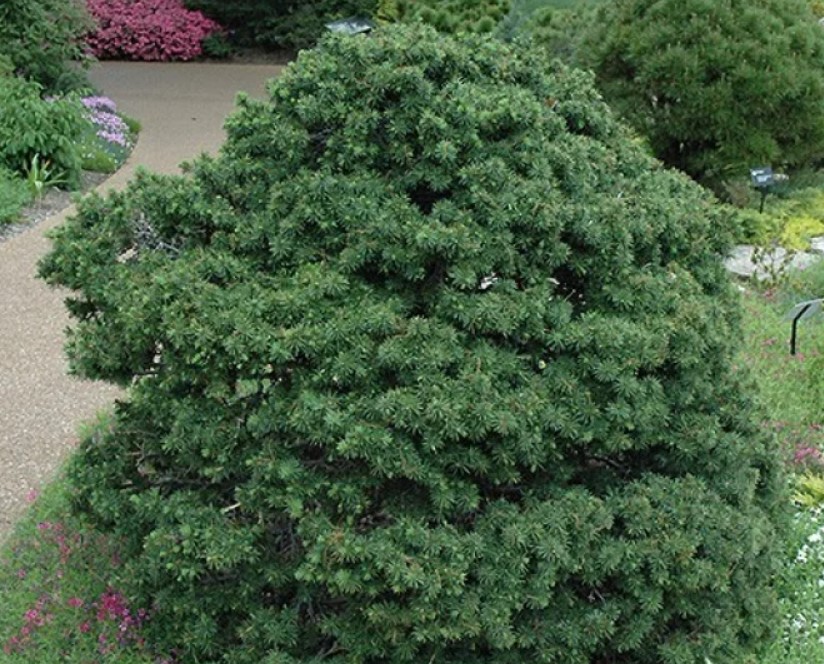
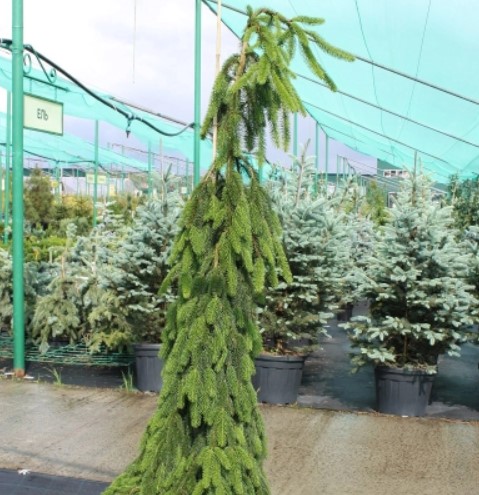
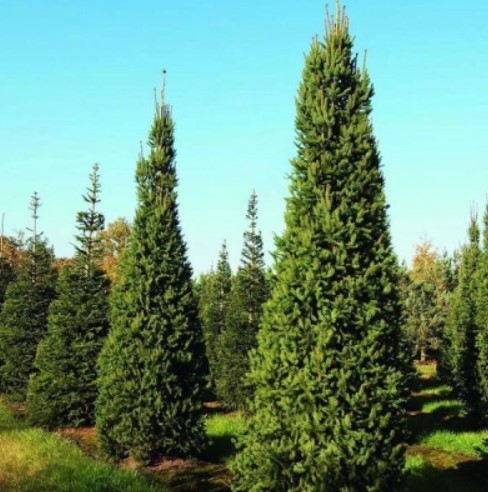
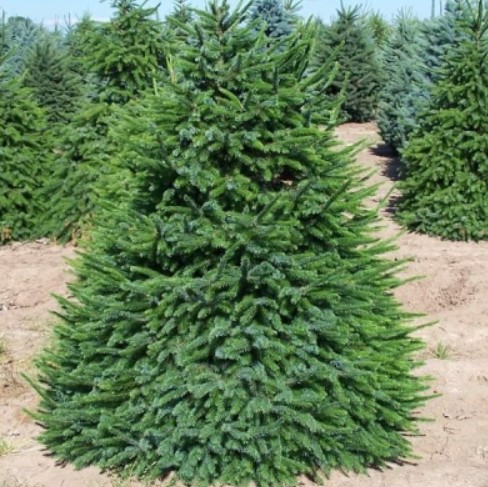
How to choose a Norway spruce for planting
It's important to consider the specific conditions in which the tree will grow. For Russia, the most winter-hardy species should be selected. Dwarf varieties are less demanding in terms of winter frost resistance, as they are usually covered with snow during the winter. However, it's important to consider the plant's tolerance to snowfall and ice, as this can pose a threat to the trees. Furthermore, when choosing a tree, it's important to consider the availability of adequate light and moisture.
Serbian spruce
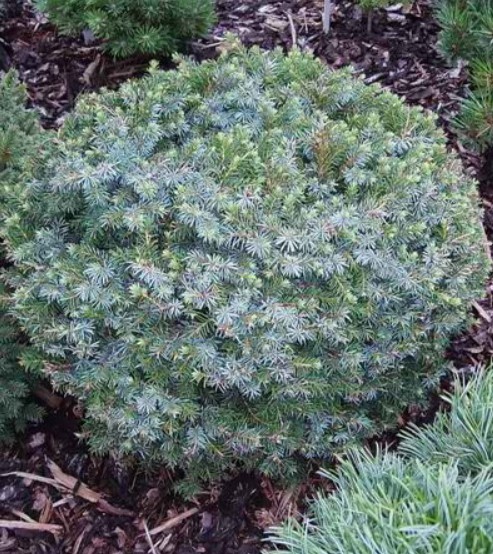
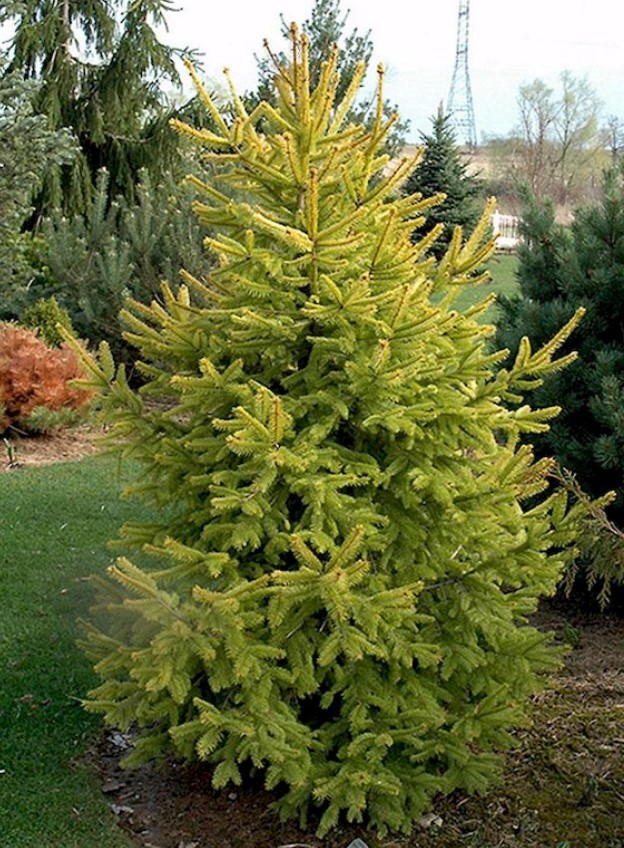
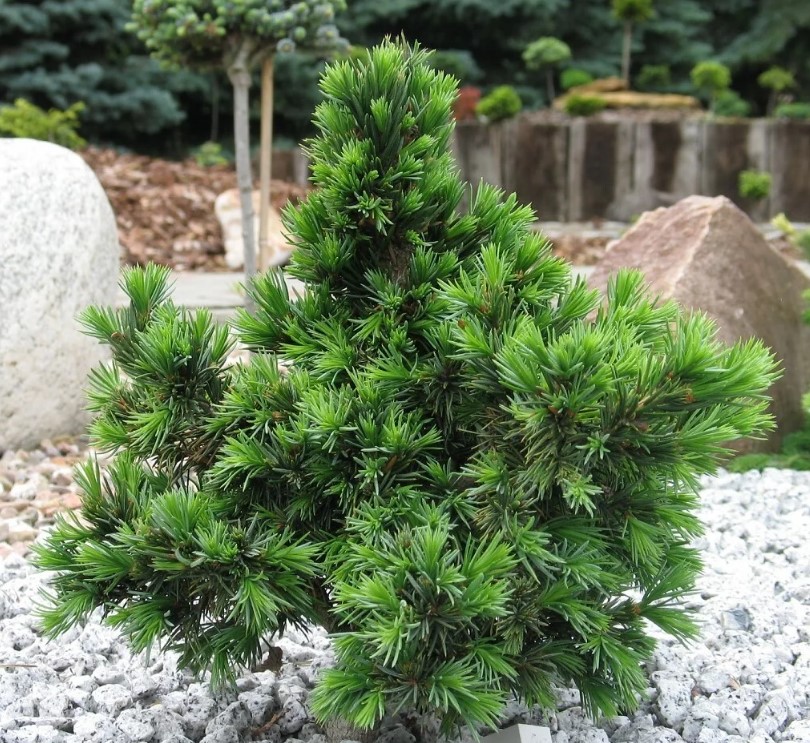
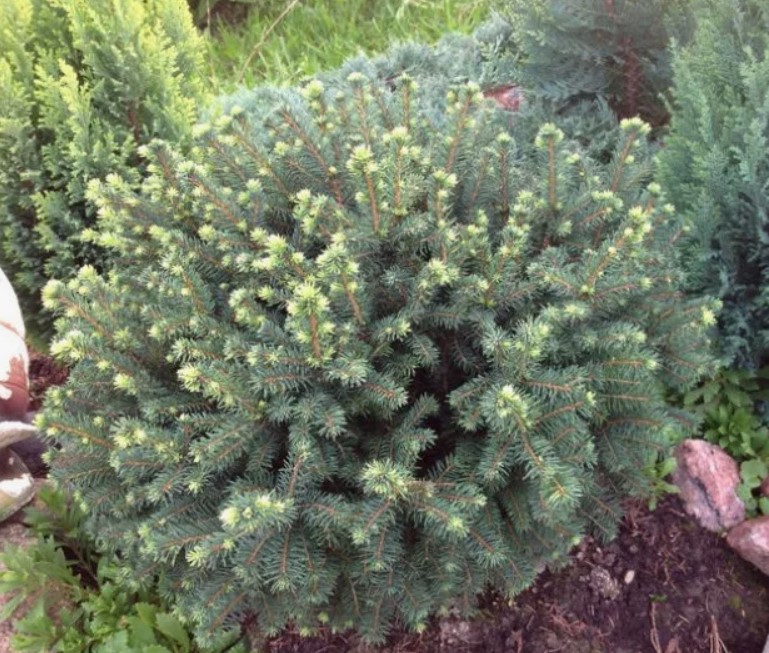
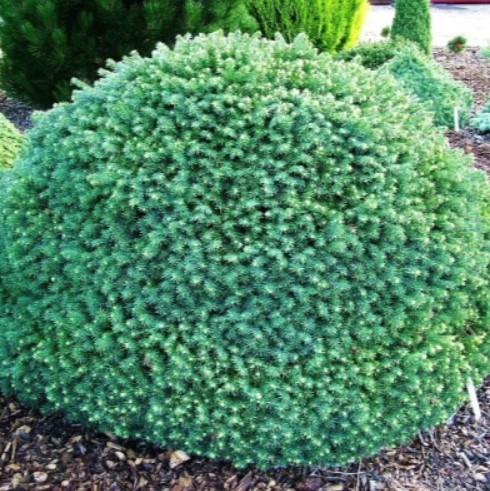
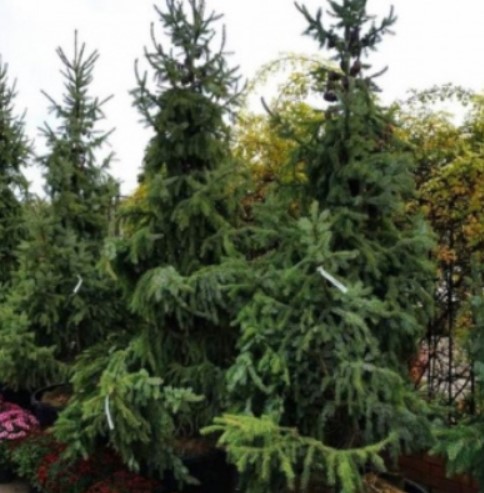
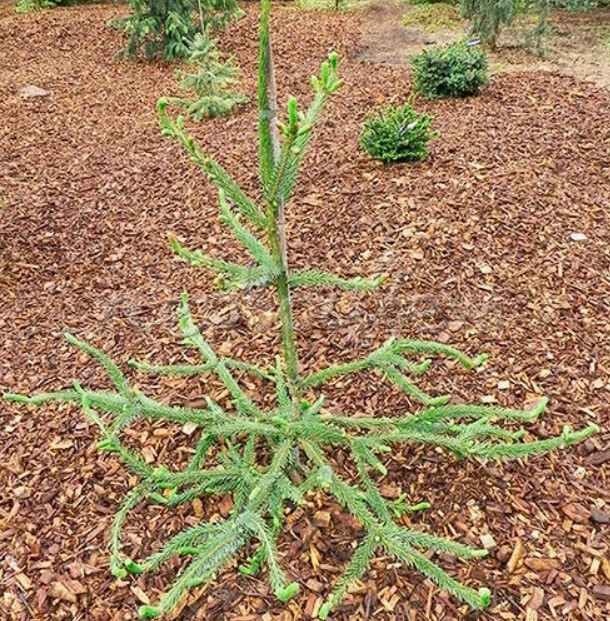
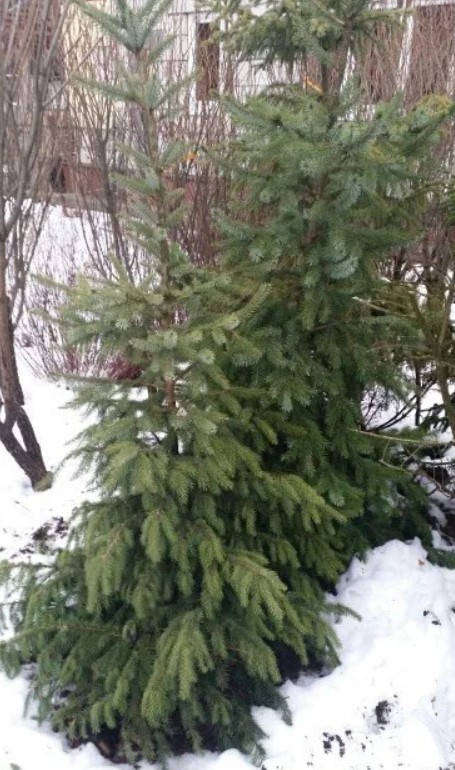
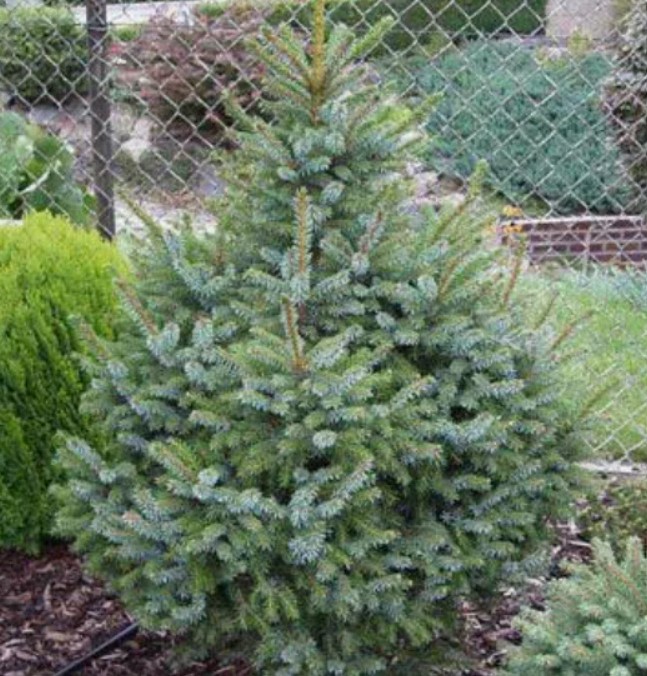
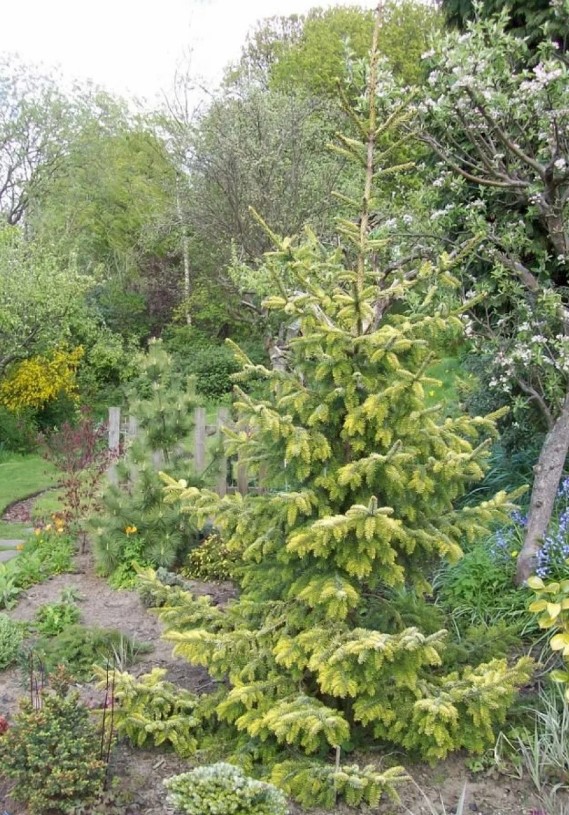
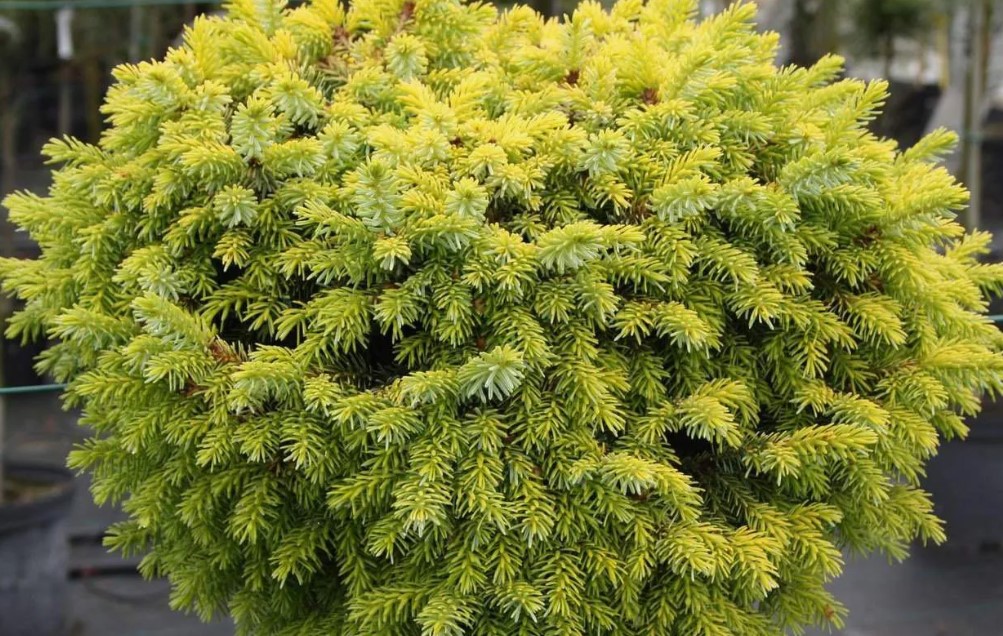
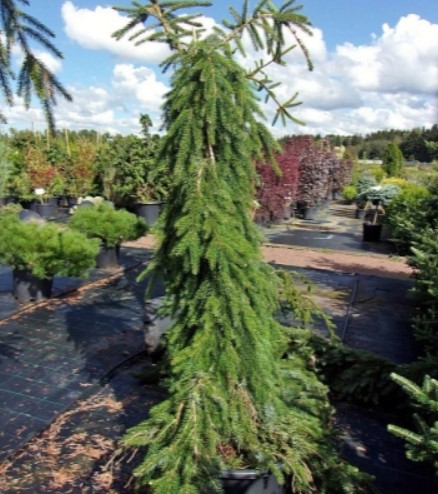
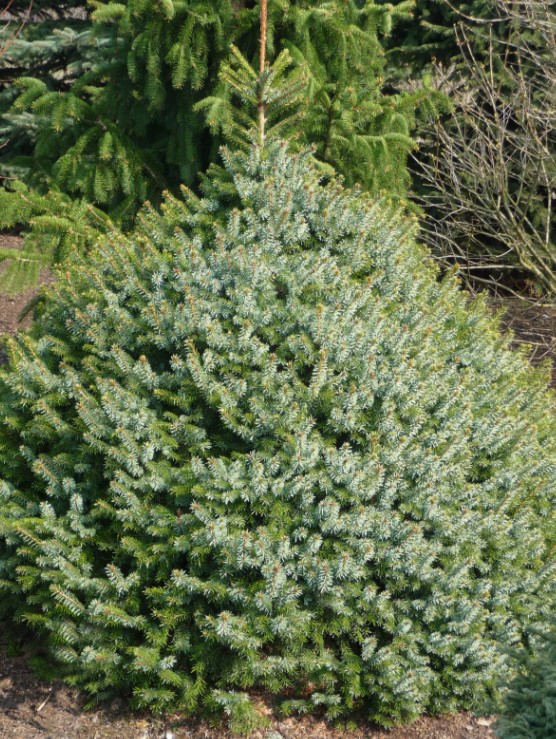
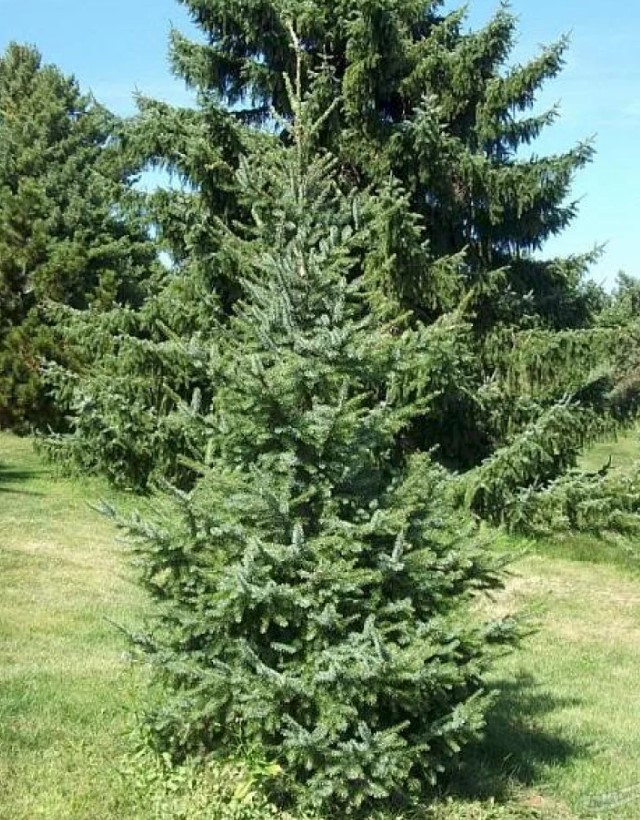
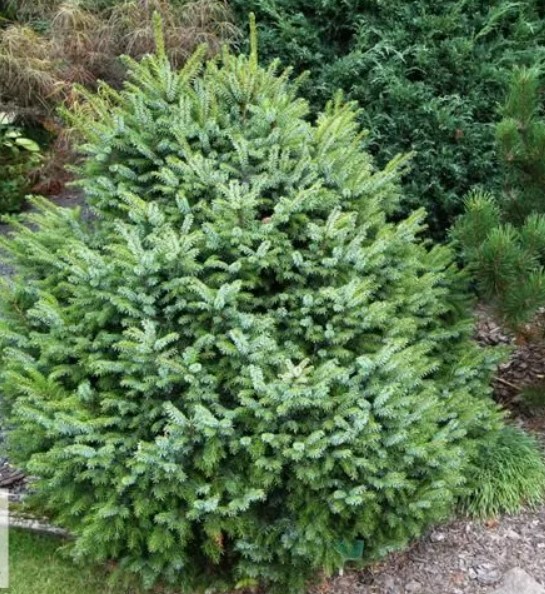
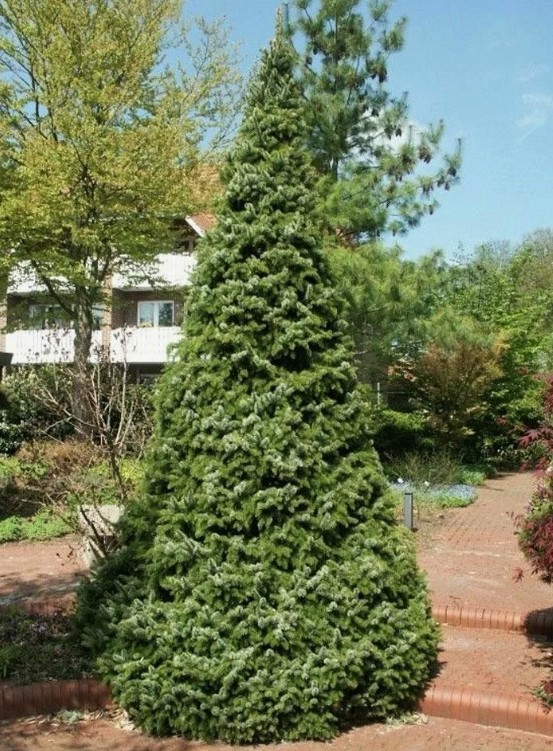
One of the rarest species in the wild, it has become popular among gardeners due to its low maintenance and resilience. The crown is narrowly pyramidal. The shoots are yellowish-brown. The needles are blue-green on top and white-blue on the bottom, 10-20 mm long. The cones are spindle-shaped, about 4-7 mm long. Young cones are dark purple, while mature cones are dark brown.
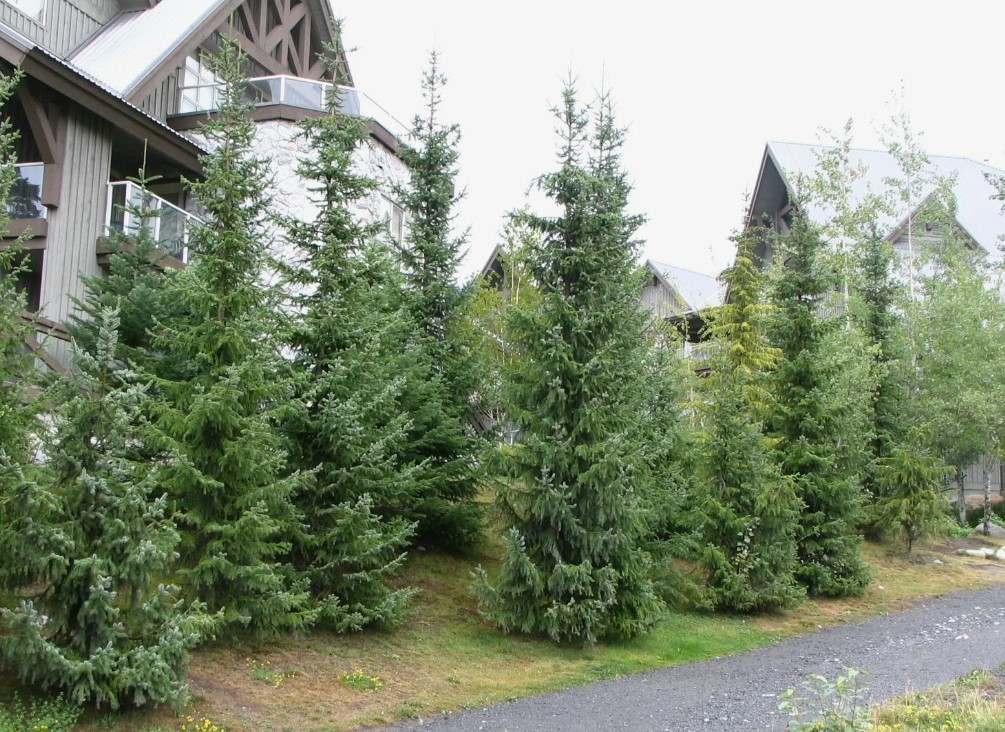
The soil should be well-drained to prevent moisture retention, which can lead to root rot. Maintenance is straightforward. It's important to water the tree regularly during its first few years to prevent the young roots from drying out.
| Variety | Characteristics (crown shape, height/width, annual growth, frost resistance (zone)) | Use in landscape |
| Alexandra
|
Globular, 2 m/0.5-1 m; 3 cm;
4 |
Group planting, rock gardens, rock and heather gardens. |
| Aurea
|
Narrow conical; 12 m/6 m; 30 cm;
4 |
Single plantings and garden compositions. |
| Vodan
|
Pyramid; 1.5 m/0.5 m; 20 cm;
4 |
For container gardening. |
| Dwarf
|
Globular; 1.5 m/1 m; 10 cm;
4 |
For rock gardens. |
| Karelian
|
Spherical or cushion-shaped; 0.8 m/1 m; 3-5 cm;
4 |
|
| Linda
|
Conical, narrow pyramidal; 15-20 m/2.5-4 m; 35 cm;
4 |
In single and group plantings, on alleys. |
| Jellyfish
|
Compact, scaly; 1.5-2 m/1.5 m; 15-20 cm; 4 | Tapeworm. |
| Merlin
|
Conical, spreading; 15-20 m/3-4 m; 35 cm;
3 |
Group landing. |
| Nana
|
Wide conical; 3 m/1.5 m; 10-15 cm;
4 |
In single and group compositions, rock gardens, containers, hedges. |
| Nana aurea
|
Conical; 9 m/5 m; 25-40 cm;
5 |
Tapeworm. |
| Peve Tidjin
|
Conical; 0.6 m/0.75 m; 8 cm;
4 |
House plots, rock and heather gardens, container growing. |
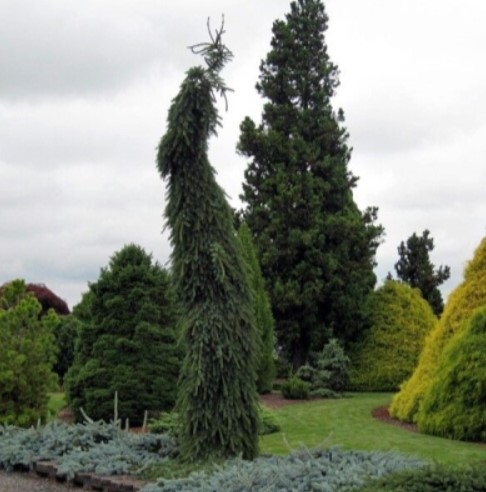
| Pendula
|
Pyramidal; 8-10 m/1.5 m; 10 cm;
4 |
For single and group plantings on lawn parterres, in rock gardens and rock gardens. |
| Pendula Bruns
|
Columnar; 6-10 m/1-1.5 m; 10 cm;
5 |
Single and group plantings, small garden plots, as a solitaire and for landscape compositions. |
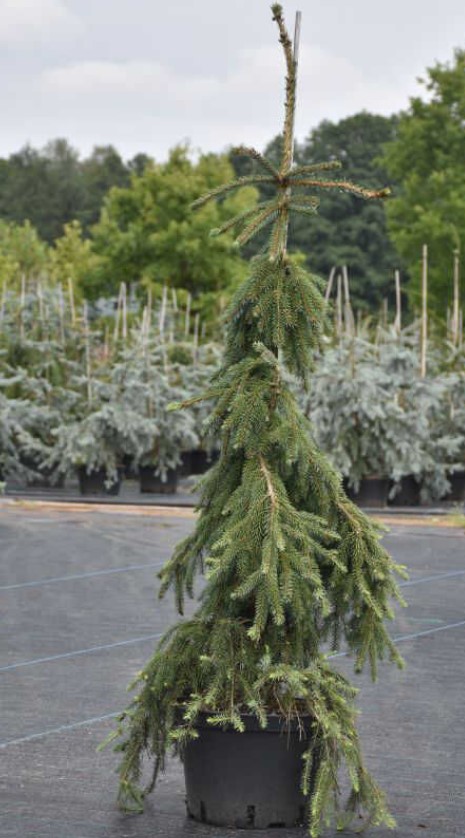
| Pendula Cook
|
Weeping; 5-10 m/1.5 m; 10 cm;
4 |
For single and group plantings on lawn parterres, in rock gardens, for rock gardens. |
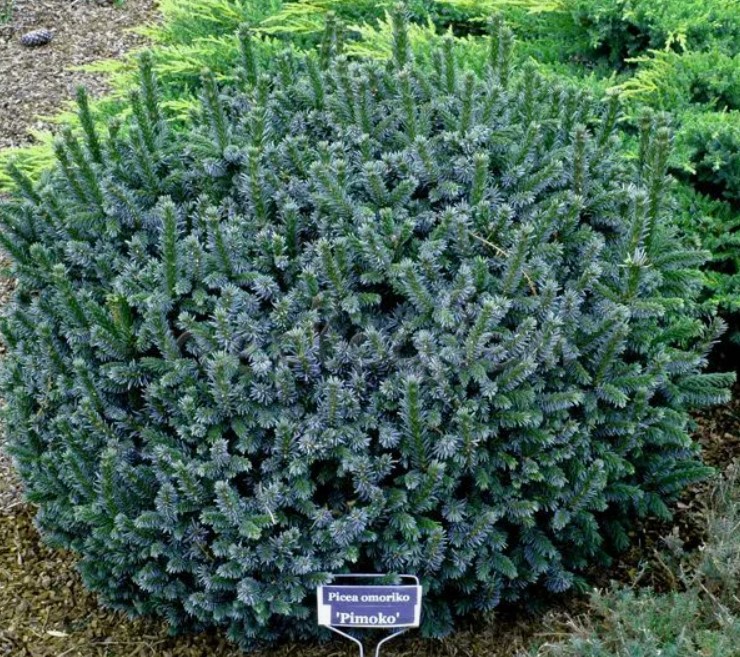
| Pimoko
|
Globular; 0.3 m/0.4 m; 7 cm;
4 |
For rock garden. |
| Roter Hawk
|
Narrow conical; 15-20 m/2.5-4 m; 20-25 cm;
5 |
Single and group plantings. |
| Treblitsh
|
Spherical; 0.6 m/0.8 m; 2-4 cm;
4 |
For rock gardens. |
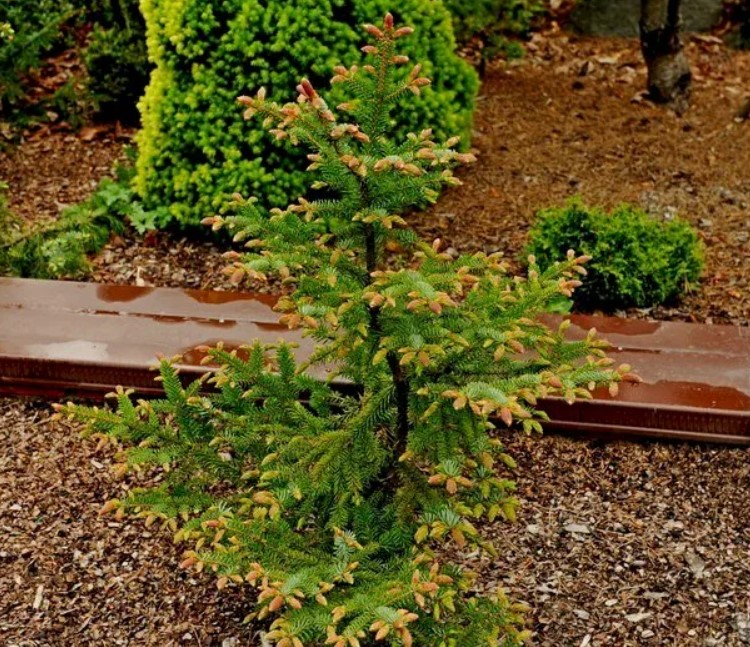
| Freya
|
Conical or pyramidal; 2.5-4 m/1-1.5 m; 2-3 cm;
5 |
Tapeworm. |
| Frontleiten
|
Round, conical; 0.7-1 m/0.4 m; 7 cm;
4 |
|
| Zikerhut
|
Conical or pyramidal; 2-2.5 m/1.5 m; 8-10 cm;
4 |
How to choose a Serbian spruce
Almost all Serbian spruce species can be grown in temperate and northern latitudes, including the Moscow region. However, choosing the right seedling variety is important. When choosing, consider the tree's height, crown width, needle and cone color, and its suitability for your location.
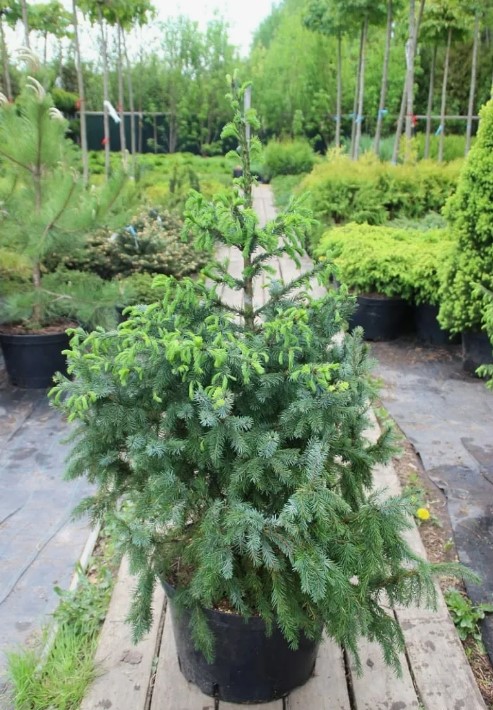
The best time to purchase seedlings is closer to spring, just before planting. To avoid unpleasant surprises, it's recommended to seek professional help and purchase healthy plants from specialized nurseries. These nurseries grow them in open ground, which helps them adapt better to their new surroundings. There are two types of seedlings: bare-root and closed-root. In the former case, it's important to plant them quickly to prevent the root system from drying out.
Siberian spruce
The trunk is straight and massive. The bark is initially thin and light, but over time it turns brown. The lateral shoots are dense and branched from the base of the trunk. It is distinguished by stiff, 4-sided, dark green needles no more than 2 cm long. The cones are brown, up to 6 cm long. They ripen in early autumn.
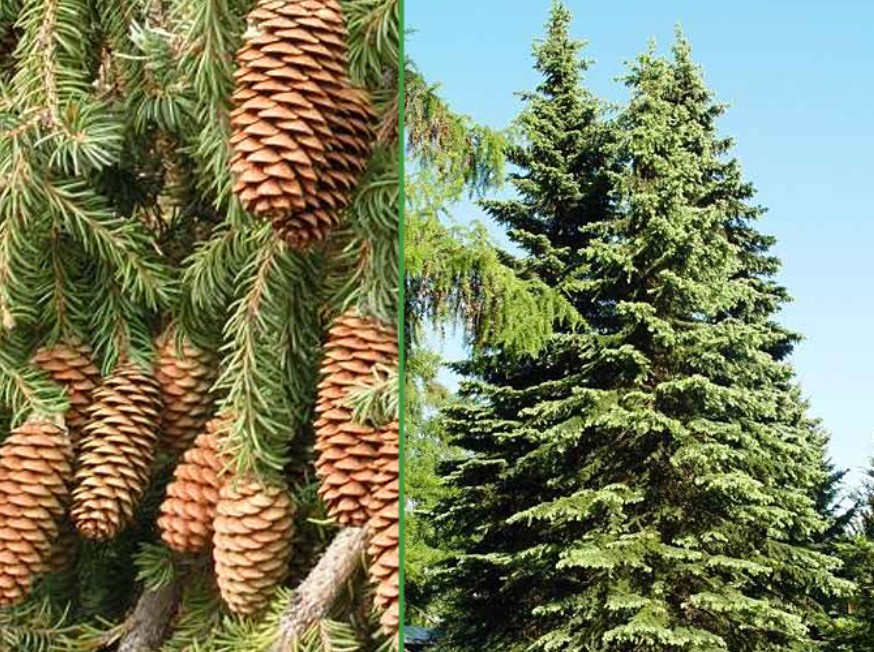
The Siberian spruce is quite demanding of soil, unlike other varieties. It prefers moisture and light, but does not tolerate air pollution well. It can live for at least 350 years.
| Variety | Characteristics (crown shape, height/width, annual growth,
frost resistance (zone) |
Use in landscape |
| Pechorskaya
|
Conical; 30 m.0.8-1 m; 2-3 cm; 15 cm;
2 |
For single or group planting, creating hedges. |
| Blue
|
Conical or narrow-conical; 20-25 m/0.5-1 m; 50 cm;
2 |
Sitka spruce
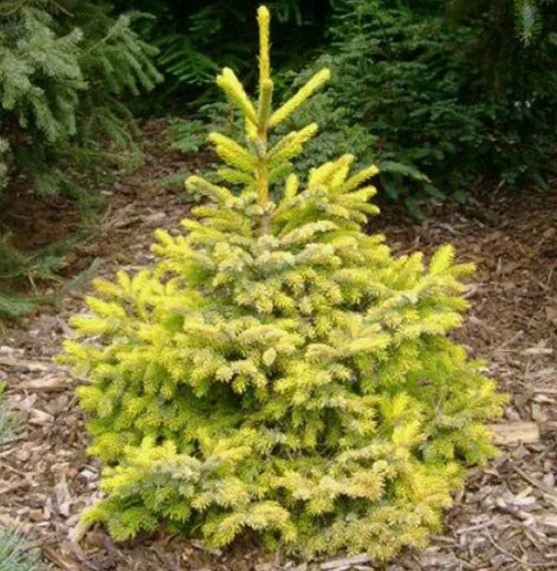
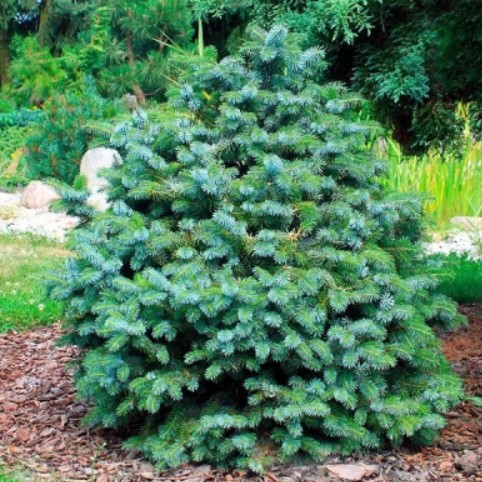
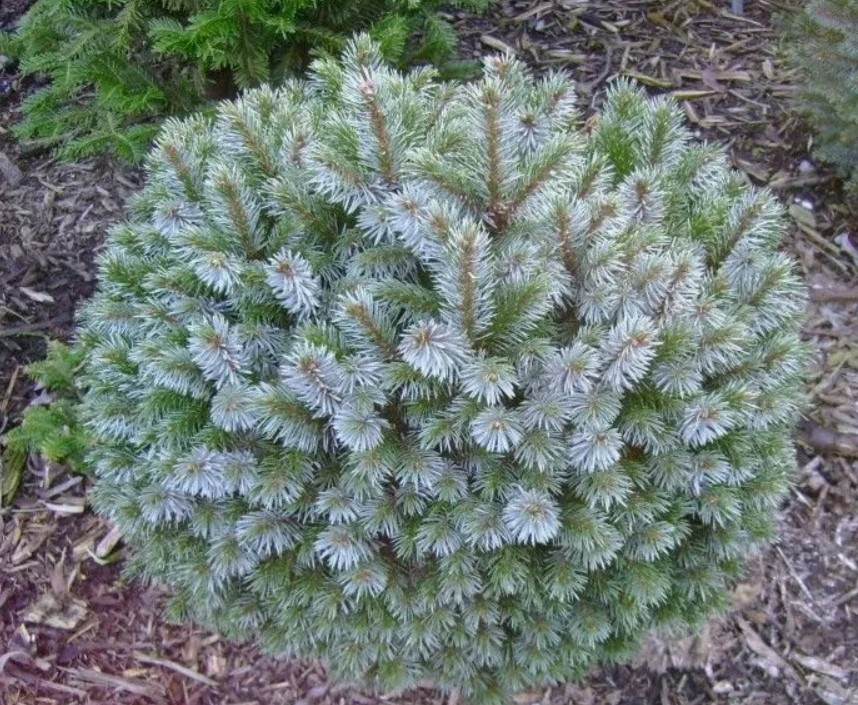
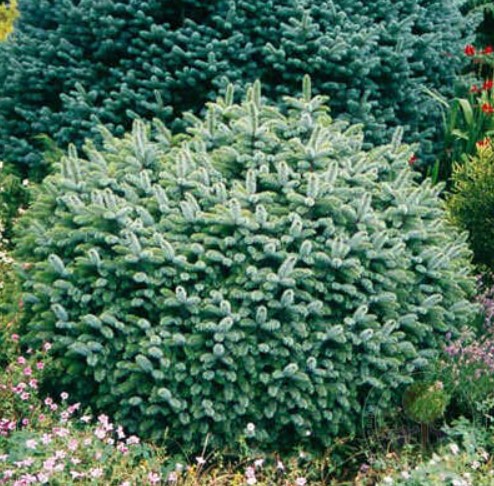
The bark is thin, scaly, gray or reddish-brown-gray. The shoots are bare and light brown. The needles are 15 to 18 mm long and less than 1 mm wide, straight, green on top and silvery underneath. The cones are initially yellow-green, then light brown when ripe, and fall off after a few months. They are 5 to 10 cm long and 2.5 to 3 cm wide.
Most commonly found in mountainous areas of North America, it grows near rivers and lakes. It is shade-tolerant but thrives in bright light.
| Variety | Characteristics (crown shape, height/width, annual growth, frost resistance (zone) | Use in landscape |
| Aurea
|
Conical; 2 m/1.2 m; 10 cm;
3 |
Tapeworm. |
| Silberzwerg
|
Spherical; 1 m/0.8-1 m; 6 cm;
5 |
Single planting on the lawn, group planting. |
| Nana
|
Globular; 1 m/0.8 m; 5-6 cm;
4 |
In oriental-style landscapes, rock gardens, rockeries, and alpine gardens. |
| Midget
|
Globular; 0.5-0.8 m/1.1.2 m; 3-4 cm;
5 |
For rock gardens, rockeries, alpine gardens, and pond banks. Pairs well with other conifers, low-growing ornamental shrubs, and colorful perennials. |
| Papuz
|
Spherical, round; 1 m/1 m; 9-15 cm;
3 |
Tapeworm. |
| Tenas
|
Spherical; 0.6-0.9 m/0.9 and 1.2 m; 4-6 cm;
5 |
Single plantings, low landscape accents. |
| Sugar Loaf
|
Broadly pyramidal; 1.5-2 m/0.9-1.2 m; 10-15 cm;
4 |
Rocky gardens, banks of dry streams, forest compositions. |
Black spruce (Canadian)
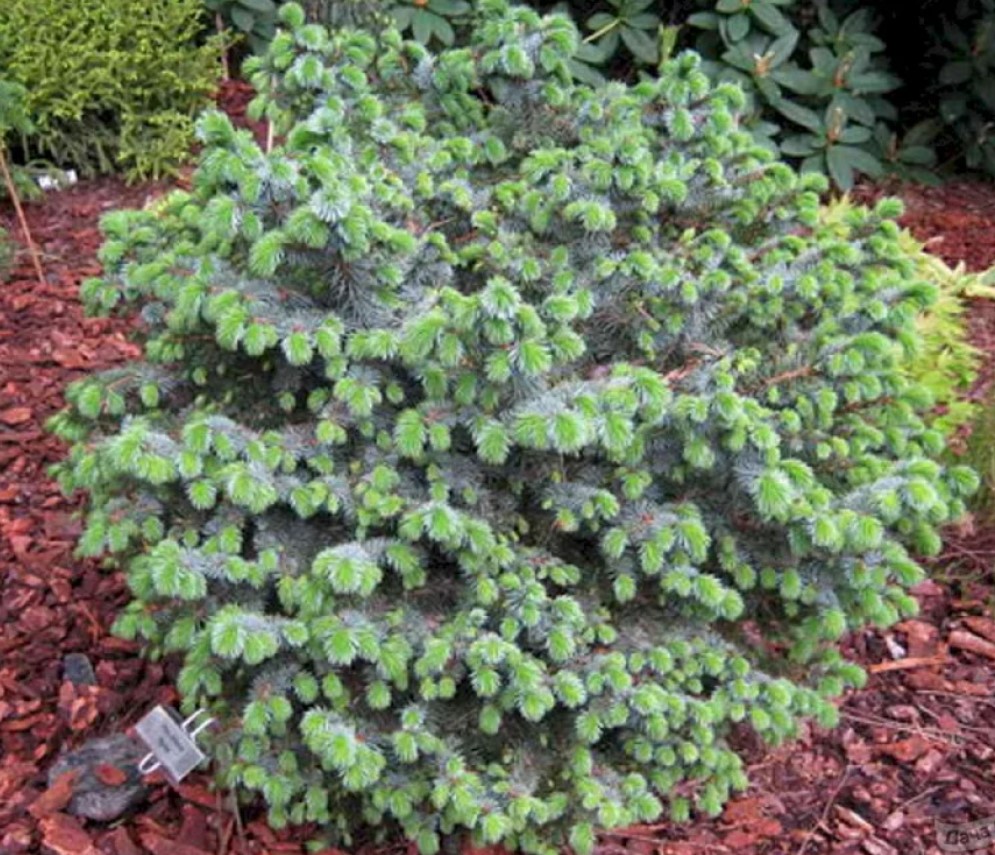
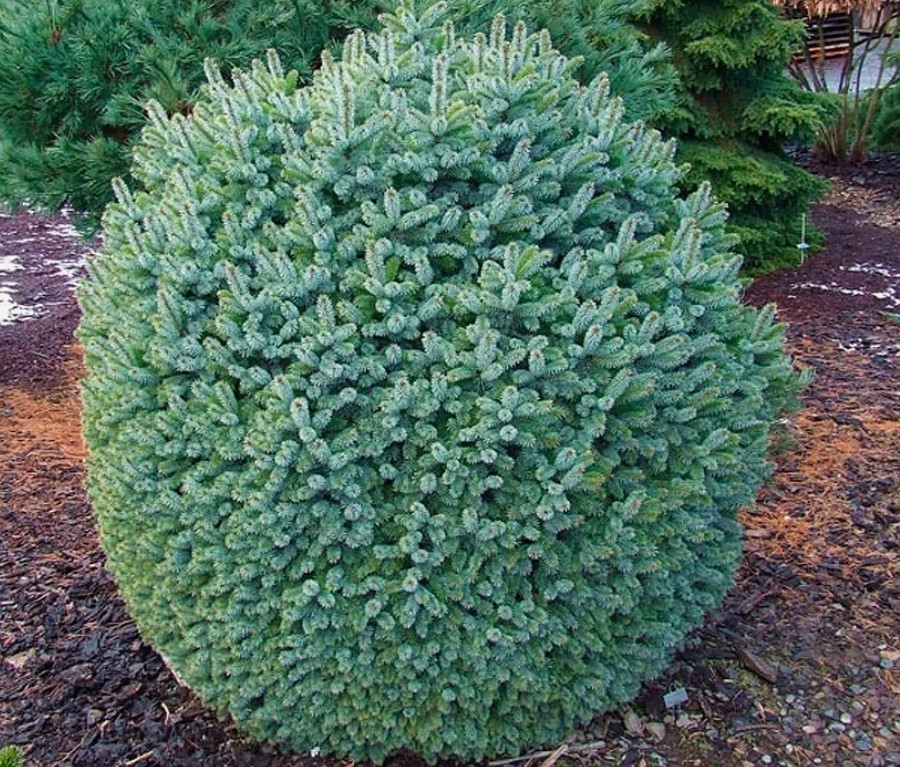
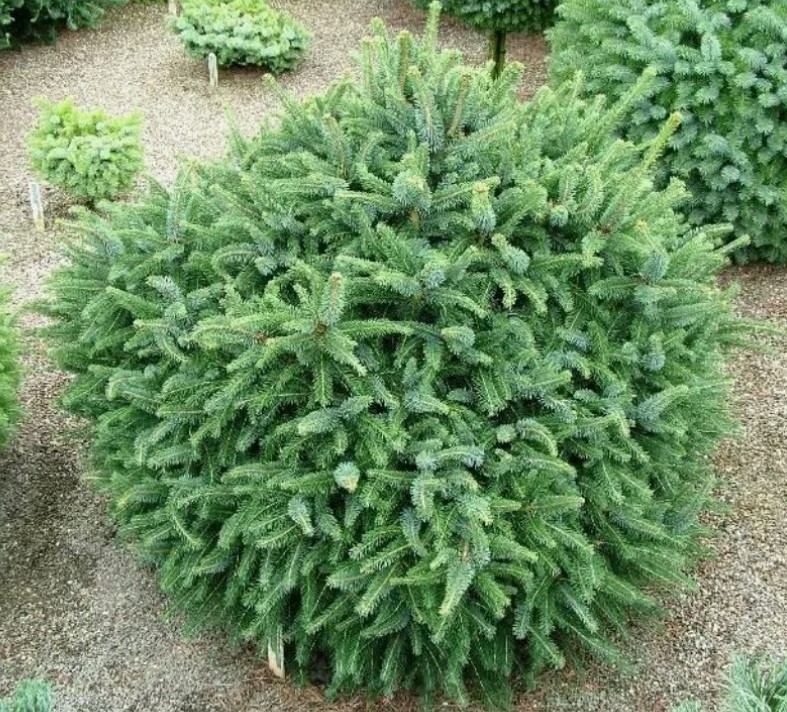
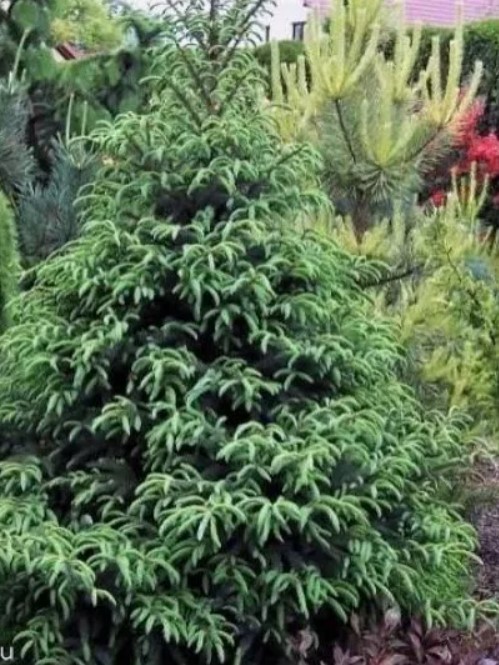
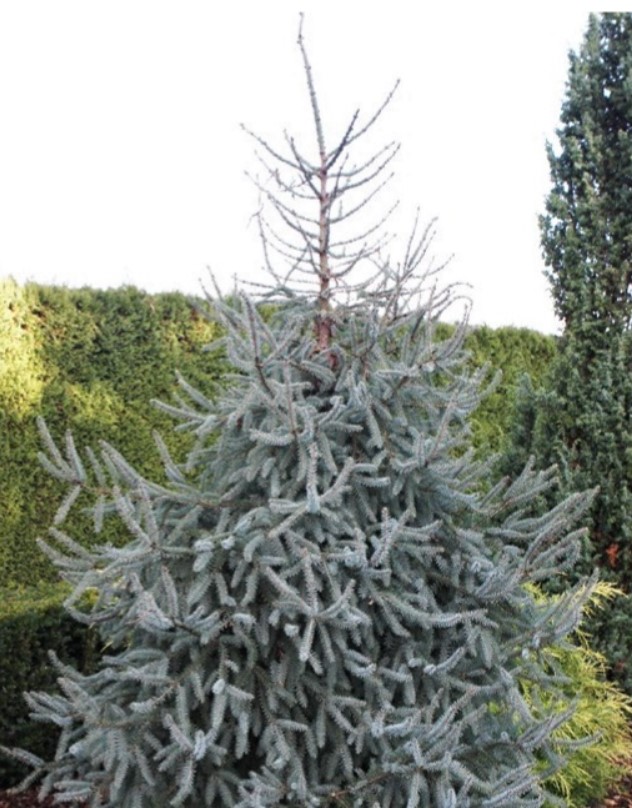
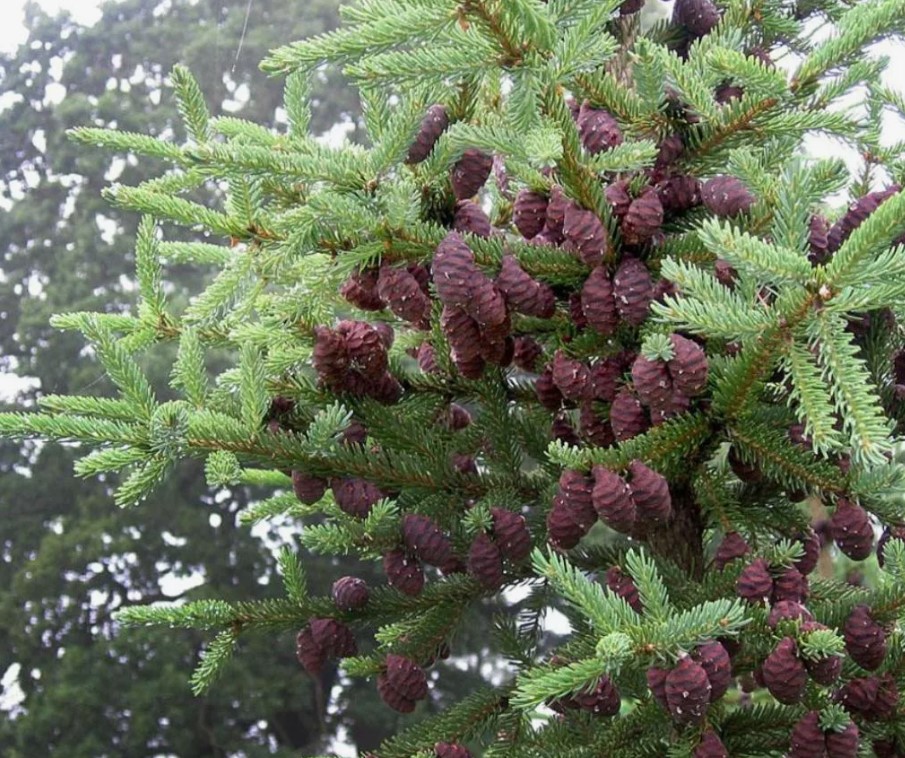
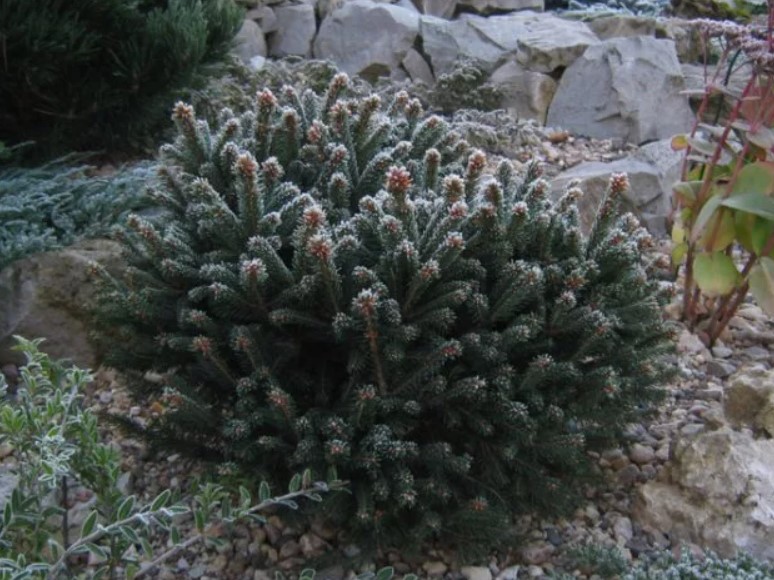
The bark is thin and gray-brown. The plant has needles ranging from 6 to 15 mm in length, blue-green or green in color. Black spruce cones are among the smallest of all spruce species, ranging from 2.5 to 4 cm in length and 1 to 2 cm in width. The cone color can range from reddish-brown to purple.
It has a shallow root system that doesn't penetrate deep into the soil, growing primarily in width. Therefore, strong winds can be a problem for this species, as they can topple the tree.
Please note! Do not confuse this species with the blue spruce, also known as the Canadian spruce.
| Variety | Characteristics (crown shape, height/width, annual growth,
frost resistance (zone) |
Use in landscape |
| Aurea
|
Cone-shaped; 2 m/0.8 m; 20 cm;
3 |
For garden plots. |
| Baisneri
|
Wide-round; 5-6 m/2 m; 15-20 cm;
3 |
Single and group plantings, untrimmed hedges. |
| Doumeti
|
Wide conical, 10 m/2 m; 10-15 cm;
3 |
In parks, squares, and plazas. |
| Kobolt
|
Globular; 5 m/5 m; 5 cm;
3 |
Landscaping of parks and squares. |
| Nana
|
Globular; 0.3 m/0.8 m; 5-6 cm;
3 |
For rock gardens. |
Engelmann spruce
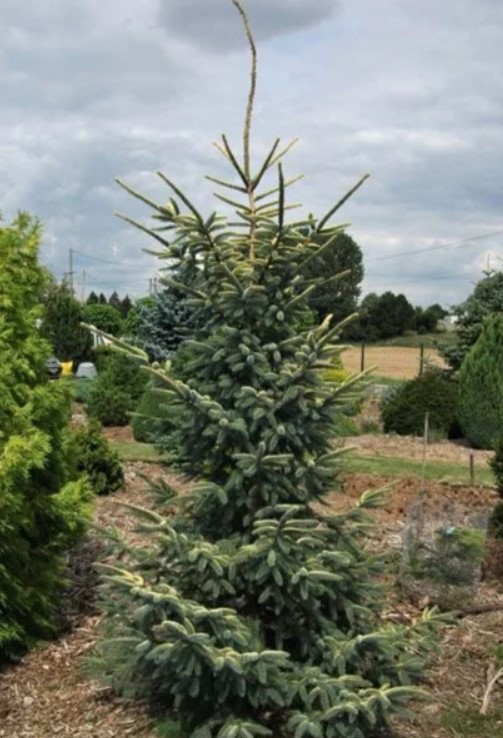
The bark is thin, scaly, reddish-brown. Young shoots are yellowish-brown. The needles are square, pointed, and 15-20 mm long. The cones are burgundy before maturity, and light brown when mature.
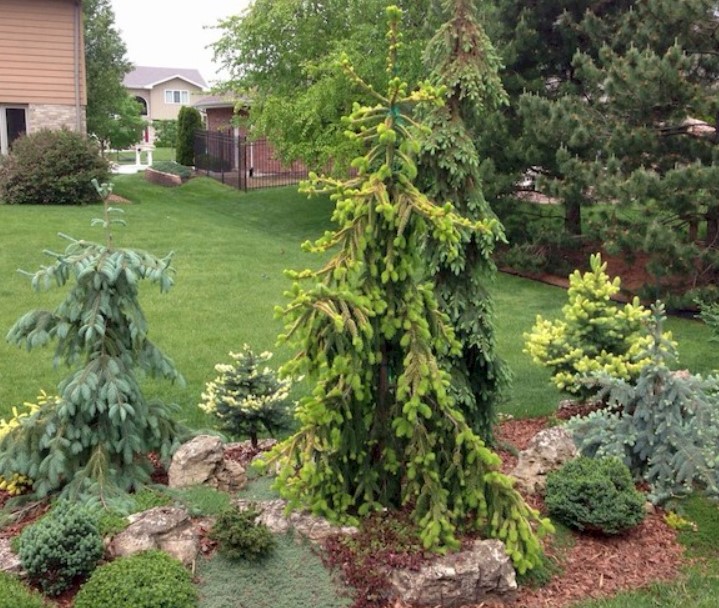
It has high frost resistance and is undemanding regarding soil conditions. It can survive in the shade, but grows better in bright light.
| Variety | Characteristics (crown shape, height/width, annual growth,
frost resistance (zone) |
Use in landscape |
| Blue Magoo
|
Weeping; 1.8 m/1.2 m; 10-15 cm;
4 |
For solitaire, alleys, as a New Year tree. |
| Bush Lace
|
Narrow, vertical; 5 m/1 m; 25-30 cm;
3 |
In single planting, for landscape compositions. |
| Blue Harbor
|
Correct, symmetrical; 3-4 m/2.5 m; 4-6 cm;
3 |
Pairs well with green spruce trees. It also looks spectacular with green arborvitaes and against a green lawn. |
| Glauca
|
Symmetrical, conical; 2 m/1.2 m; 20-30 cm;
2 |
In single plantings, as a solitaire in group plantings. |
| Lace
|
Narrow, vertical; 5 m/1 m; 25-30 cm;
3 |
In single and group plantings. |
| Pendula
|
Pyramidal with drooping branches; 10-15 m/4-5 m; 10 cm;
3 |
For planting in parks and garden plots. |
| Snake
|
Compact, scaly; 2-2.5 m/0.6-0.7 m; 20-25 cm;
4 |
Tapeworm in a group. |
| Talbot Lake
|
Spherical; 25 m/30 cm; 2.5 cm;
4 |
For alpine gardens and rockeries. |